Certifications: ISO 9001, ASTM B564 / ASME SB-564, AMS 4675, API 6A, EN 10204-3.1/3.2, ABS, DNV, BV
Lead Time: 45 days (standard) / 60 days (fully custom)
Shipping: FOB Shanghai / CIF main ports; USA, EU, UK, Australia, Middle East
Manufacturer: Jiangsu Liangyi, Jiangyin City, Jiangsu, China — founded 1984
Jiangsu Liangyi is a leading manufacturer of Monel 400 (UNS N04400) forged components with more than 40 years of production experience. We mainly produce custom Alloy 400 open-die forgings and seamless rolled rings for the marine, chemical, nuclear, and oil & gas industries, supplying customers across the USA, EU, UK, Australia, and the Middle East.
Definition: Monel 400 (UNS N04400, also called Alloy 400 or W.Nr. 2.4360) is a nickel-copper solid-solution alloy which contains 63–70% nickel and 28–34% copper, governed by ASTM B564 / ASME SB-564 (forgings) and ASTM B164 / ASME SB-164 (bar and rod). It is one of the most widely used corrosion-resistant alloys in heavy industry, originally developed by the International Nickel Company and named after company founder Ambrose Monell.
Main characteristics that make Monel 400 the best choice for many industries:
It has great resistance to seawater and chloride environments — corrosion rate < 0.025 mm/year in seawater
It has good resistance to hydrofluoric acid (below 80 °C), alkaline solutions and it can reduce the acid media
It has high strength and toughness at a wide temperature range — from cryogenic service to 500 °C (932 °F)
It has single-phase solid-solution microstructure — no sensitization risk during welding or heat treatment
It has good weldability (GTAW, GMAW, SMAW) and machinability in the annealed condition
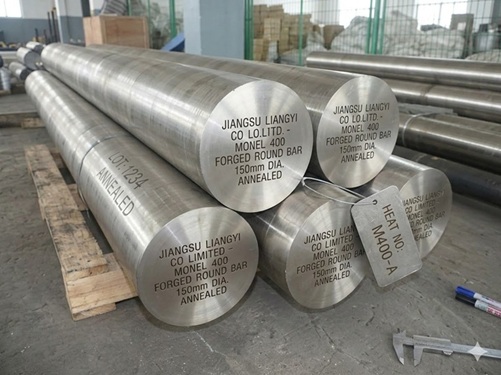
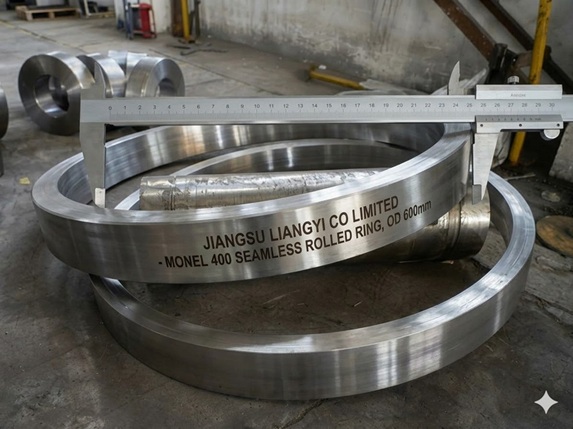
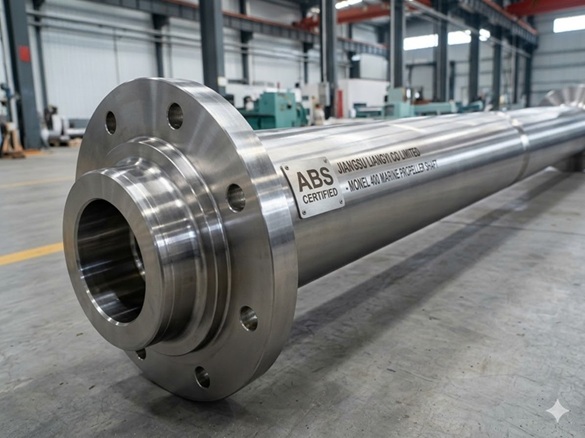
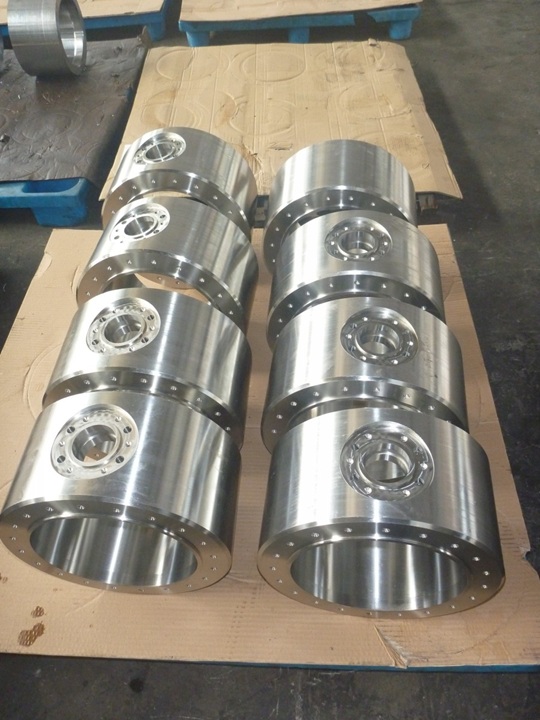
Monel 400 (UNS N04400) Forged Product Range
Jiangsu Liangyi manufactures a full range of Monel 400 forged products in standard and custom sizes to meet the requirements of different global industries.
Case Study 1 — U.S. Oil & Gas Company: Monel 400 Wellhead Valve Bodies (API 6A)
Project BackgroundAn independent oil producer in Texas required 48 valve bodies for high-pressure acidic gas wellheads with a working pressure of 103 MPa (15,000 psi) and the presence of H₂S.
Technical ChallengePrevious 316L stainless valve bodies showed pitting corrosion and SCC within 18 months. The customer needed API 6A PSL-3G certified components with NACE MR0175 compliance and UT inspection to ASTM E428.
Jiangsu Liangyi SolutionSupplied Monel 400 (UNS N04400) open-die forged valve bodies per ASTM B564 / ASME SB-564. Full annealing at 927 °C; 100% UT per ASTM A388; NACE MR0175 hardness < 35 HRC confirmed; TUV EN 10204-3.2 certificates issued.
Result & DeliveryAll 48 valve bodies delivered FOB Houston within 45 days. 3-year field service follow-up confirmed zero corrosion incidents and maintenance cost reduced by over 70% vs. previous 316L components.
"The delivery was on time, the UT report was clean and the TUV 3.2 certificate was undoubtedly accepted by our client's inspectors." — Procurement Manager, Texas, USA
Case Study 2 — Australian Shipyard: Monel 400 Marine Propeller Shafts (ABS / DNV)
Project BackgroundA Western Australia offshore vessel operator ordered 12 Monel 400 propeller shafts — OD 180 mm × 4,200 mm length — for a fleet of offshore support vessels operating in the Timor Sea.
Technical ChallengeHigh-chloride tropical seawater environment required < 0.025 mm/year corrosion rate, with ABS and DNV-GL dual certification, and shaft straightness ≤ 0.5 mm/m over full length.
Jiangsu Liangyi SolutionOpen-die forged Monel 400 round bars, full annealed. Corrosion rate confirmed at 0.018 mm/year by independent immersion test (ASTM G31, 90 days, 3.5% NaCl). Straightness 0.3 mm/m achieved. ABS and DNV-GL dual certificates issued.
Result & Delivery12 shafts shipped CIF Fremantle within 42 days.After four consecutive years of service in seawater, there were no records of pitting corrosion, crevice corrosion or measurable dimensional changes during the annual dry dock inspection.
"Corrosion data from the immersion test exceeded our specification. The ABS surveyor approved the 3.2 certificates on first review." — Chief Engineer, Perth, Australia
Case Study 3 — German Chemical Plant: Monel 400 Seamless Rolled Rings (EN 10204-3.2)
Project BackgroundA leading specialty chemicals producer in Germany required 20 Monel 400 seamless rolled rings for rotating flange connection of a 70% HF acid alkylation reactor, which had an OD of 620 mm × ID 480 mm × H 90 mm and a working temperature of 65 °C.
Technical ChallengesStrict size tolerance (OD ±2 mm) and comprehensive PMI traceability in accordance with DIN EN ISO 14284 were required, with EN 10204-3.2 inspection witnessed by a third party. Compliance with the German Pressure Equipment Directive (PED 2014/68/EU) was mandatory.
Jiangsu Liangyi SolutionSeamless ring rolling is carried out using Monel 400 billets certified by ASTM B564 / ASTM B164. Fully annealed at 954 °C. OD tolerance achieved ±1.5 mm. TUV SÜD-witnessed inspection; PED-compliant 3.2 certificate issued. PMI report included for every ring.
Result & Delivery20 rings shipped DAP Hamburg in 52 days. After 5 years of continuous HF acid service at 65 °C, measured corrosion rate 0.04 mm/year — well within the 0.10 mm/year design limit. Zero unplanned shutdowns.
"The TUV 3.2 certificates and PMI reports were fully compliant with our QA requirements. The rings have been in HF service for five years with no issues whatsoever." — Plant Engineer, Frankfurt, Germany
Monel 400 Material Selection Guide — When to Choose & When to Upgrade
Common Procurement Mistakes to Avoid
⚠ Mistake 1 — Substituting Monel 400 for 316L Stainless in HF Service
316L stainless steel corrodes rapidly in hydrofluoric acid (HF) at even low concentrations. Monel 400 is the industry standard alloy for HF alkylation units and HF acid pipelines. Direct substitution with 316L usually leads to accelerated pitting corrosion, stress corrosion cracking and part failure within a few months.
⚠ Mistake 2 — Using Monel 400 in Oxidising Acid Environments
Monel 400 is a reducing-environment alloy. In concentrated nitric acid (HNO₃) or fuming sulfuric acid — both strongly oxidising — corrosion rates become unacceptably high. The correct alloy for oxidising acids is Inconel 625 or Hastelloy C-276.
⚠ Mistake 3 — Ignoring the risk of stress corrosion cracking (SCC) in wet chlorine uses
Monel 400 is susceptible to SCC in damp, aerated hydrofluoric acid vapor and high-temperature mercury-containing environments. Always confirm the operating medium and temperature before specifying Monel 400 for new projects.
Monel 400 vs. Inconel 625 vs. Hastelloy C-276 — Selection Decision Guide
Choose Monel 400 (UNS N04400) when:
Seawater / marine serviceHF acid process equipmentAlkaline / caustic environmentsCryogenic to 500 °C serviceCost-sensitive projectGood weldability required
Upgrade to Inconel 625 (UNS N06625) when:
Service temperature > 500 °COxidising acid exposureHigher tensile strength requiredMixed acid / aggressive chloride
Upgrade to Hastelloy C-276 (UNS N10276) when:
Wet chlorine gas serviceOxidising + reducing mixed acidsChloride stress corrosion riskFGD / flue gas desulfurisation
Monel 400 (UNS N04400) — Technical Specifications
Applicable Standards for Monel 400 Forged Components:
ASTM B564 / ASME SB-564 — Nickel Alloy Forgings: the primary standard governing open-die forgings and seamless rolled rings.It covers the inspection requirements for chemical composition, mechanical properties, heat treatment and forged parts.
AMS 4675 — Monel 400 Forgings (Aerospace): SAE Aerospace Material Specification for Monel 400 forgings used in aerospace and defense uses. Specifies tighter grain size control and additional qualification requirements.
ASTM B164 / ASME SB-164 — Nickel-Copper Alloy Rod, Bar and Wire: applies to the raw material billet used in our forging process, and to forged bar/rod product forms.
Note: Values are indicative based on published literature. Actual rates depend on flow velocity, oxygen content, and specific plant conditions. Contact our engineering team for project-specific assessment.
Stress Corrosion Cracking (SCC) Risk in Monel 400
Monel 400 has a strong track record in most corrosive environments, but SCC susceptibility must be considered in two specific conditions:
Moist hydrofluoric acid vapour above 100 °C: Aerated HF vapour can cause SCC in Monel 400 under stress. For high-temperature HF vapour service, use stress-relieved forgings and design to minimise tensile stress at exposed surfaces.
Mercury-contaminated environments: Mercury causes liquid metal embrittlement (LME) in nickel-copper alloys. Monel 400 should not be used in process streams with mercury contamination above trace levels (e.g. certain natural gas streams).
In all standard seawater, chemical, nuclear and oil & gas applications within the specified temperature range, Monel 400 forgings from Jiangsu Liangyi have demonstrated zero SCC failures under 40+ years of field service.
Monel 400 Forged Parts — Typical Dimensional Tolerances
Tolerances per ASTM B564 / customer drawings. Tighter tolerances available on request.
Choosing Monel 400 or Monel K-500 depends on required strength and weldability:
Monel 400 (UNS N04400) vs. Monel K-500 (UNS N05500)
Property
Monel 400 (UNS N04400)
Monel K-500 (UNS N05500)
Ni Content
63–70%
63–70%
Cu Content
28–34%
27–33%
Al + Ti additions
None
Al 2.3–3.15%; Ti 0.35–0.85%
Tensile Strength
517–620 MPa
900–1100 MPa
Yield Strength
172–345 MPa
620–760 MPa
Hardening Mechanism
Cold work only
Age-hardening (precipitation)
Weldability
Excellent
Good (post-weld age required)
Corrosion Resistance
Excellent
Excellent (similar)
Forging Standard
ASTM B564 / AMS 4675
ASTM B564 / AMS 4676
Best For
Valves, heat exchangers, pump casings
High-torque shafts, springs
Relative Cost
Lower
Higher (~20–30%)
Monel 400 vs. Duplex 2205 vs. Titanium Grade 2 — Uses Comparison
For seawater and chemical uses, buyers often compare Monel 400 with Duplex 2205 stainless steel and Titanium Grade 2. The table below outlines the main differences:
Monel 400 vs. Duplex 2205 vs. Titanium Grade 2 — Material Selection
Property
Monel 400 (UNS N04400)
Duplex 2205 (UNS S32205)
Titanium Grade 2 (UNS R50400)
Tensile Strength
517–620 MPa
620–860 MPa
345–485 MPa
Yield Strength
172–345 MPa
450–650 MPa
275–380 MPa
Density
8.80 g/cm³
7.80 g/cm³
4.51 g/cm³
Seawater Resistance
Excellent (flowing)
Good (low velocity)
Excellent
HF Acid Resistance
Excellent
Poor
Not recommended
Chloride SCC Resistance
Excellent
Moderate (pitting risk)
Excellent
Max Service Temp.
500 °C
300 °C (duplex limit)
315 °C
Weldability
Excellent
Good (needs PWHT control)
Good (inert atmosphere)
Forgeability
Excellent
Good
Moderate (cost premium)
Relative Material Cost
Medium
Medium-Low
High
Best For
HF acid, seawater, nuclear
Structural, offshore, general marine
Aerospace, medical, oxidising acid
How Monel 400 Forgings Are Manufactured — Step-by-Step Process
Every Monel 400 forging at Jiangsu Liangyi follows a rigorous 10-step production process to ensure full traceability and compliance with international standards.
Raw Material Verification: PMI (Positive Material Identification) test the chemistry of ASTM B564 / ASTM B164-certified billet and mill certificate. Heat number will be written down so that it could be traced back to its source.
Billet Heating: Billets heated to 900–1150 °C in a sulfur-free furnace atmosphere to ensure uniform temperature distribution and prevent surface contamination.
Open-Die Forging / Seamless Ring Rolling: Correct reduction ratios can help to get continuous grain flow, eliminate porosity and ensure mechanical property uniformity throughout the cross-section.
Full Annealing Heat Treatment: Anneal in a sulfur-free atmosphere at 870-982°C (1600-1800°F) to complete recrystallization. Relieve stress at 538-566°C for 1-2 hours as needed.
Rough Machining & Size Inspection: Near-net-shape machining and tested as per clients' drawing.
Non-Destructive Testing (NDT): Ultrasonic testing (UT according to ASTM A388) + surface crack detection (MT or PT). Results recorded in the test certificate.
Mechanical Testing: Tensile, yield, elongation and Brinell/Rockwell hardness tests on samples from the same heat per ASTM B564 / ASME SB-564.
Chemical Analysis: Complete spectral analysis makes sure that the Ni content is 63-70%, the Cu content is 28-34%, and the contents of all trace elements meet the ASTM B564 / ASTM B164 standard.
Third-Party Inspection & Certification: Inspected by TUV, DNV, ABS or BV as specified. EN 10204-3.1 or 3.2 certification issued.
Export Packing & Shipment: Export packing as per ISPM 15 . FOB Shanghai or CIF main ports; 45–60 days delivery.
Monel 400 (UNS N04400) Heat Treatment
Heat treatment is strictly controlled for every Monel 400 open-die forging to ensure optimal mechanical properties and corrosion resistance.
Full Annealing: 870–982 °C (1600–1800 °F) in a sulfur-free atmosphere. Lower end of range makes finer grain size.
Stress Relieving: 538–566 °C (1000–1050 °F) for 1–2 hours — relieves residual forging stresses without recrystallisation.
Open-Die Forging & Seamless Ring Rolling: The right forging temperature ensures grain-flow continuity and structural integrity in all Alloy 400 forged rings.
Monel 400 Machinability & Welding Guide
Monel 400 can be machined and welded successfully with correct procedures. Its primary challenge is a strong tendency to work-harden during cutting, which requires sharp tooling and steady, consistent feeds.
Monel 400 Processing Suggestions
🔧 Cutting Tools
Hard alloy tool heads or hard alloy cutting tools are preferred
High-speed steel (HSS) is suitable for low-speed operations
Positive rake Angle (8-15°) reduces the work hardening
Sharp cutting edge - Change the tool before wear causes friction
Try to avoid interrupting the cutting
⚙Cutting Parameters
Turning (hard alloy):30 to 75 meters per minute, with a feed rate of 0.15 to 0.40 millimeters per revolution
Do not use stainless steel filler — causes galvanic incompatibility
🌡 Preheat & Interpass Temperature
Preheat: Not required for base metal < 25 mm thickness
For heavy sections (> 25 mm): warm to 100–150 °C
Maximum interpass temperature: 150 °C
Minimize heat input — use stringer beads, not weave
Back-purge with argon for GTAW root passes
✅ Post-Weld Treatment
Full anneal at 870–982 °C recommended for pressure-retaining welds
Stress relieve at 538–566 °C / 1–2 hrs if full anneal not practical
Remove all weld spatter — it can initiate pitting in corrosive media
Pickle or passivate weld HAZ for seawater or HF acid service
⚠ Prevention of Common Welding Defects
Hot cracking: Caused by sulfur contamination — ensure that the base material and mold are sulfur-free
Porosity: Use clean, dry fillers; store the electrodes in accordance with the manufacturer's instructions
Lack of integration: Slightly increase the speed of progress; Avoid over-weaving
Heat-affected zone sensitization:Monel 400 (single-phase alloy) does not need to be considered
Quality Assurance and Certifications
Each batch of Monel 400 forgings undergoes strict quality inspection and is accompanied by complete certification documents. Jiangsu Liangyi is an ISO 9001-certified manufacturer.
✓ ASTM B564 / ASME SB-564 Nickel Alloy Forgings
✓ AMS 4675 Monel 400 Forgings — Aerospace
✓ ASTM B164 / ASME SB-164 Nickel-Copper Alloy Bar and Rod
Monel 400 Forged Parts — Full Test Certificate includes
Heat number and melting method
Dimensional inspection results
Full heat treatment process record
Chemical composition analysis
Mechanical test results (hardness, tensile, yield, elongation)
Ultrasonic testing (UT) and surface crack detection (MT/PT) results
Surface inspection
Client's other additional tests per drawing or purchase order
Why Choose Jiangsu Liangyi as Your Monel 400 Forgings Manufacturer?
⭐ 40+ Years of Experience (since 1984): Over four decades of proven expertise in Monel 400 open-die forging, with components delivered to customers in more than 50 countries.
⭐ Fully Custom Production: All Monel 400 forgings are manufactured to customer drawings — any shape, any dimension, with no minimum order quantity.
⭐ Strict Quality Control: ISO 9001 certified; all testing is conducted in-house and independently verified by accredited third-party inspectors including TUV, DNV, ABS, and Bureau Veritas.
⭐ On-Time Delivery: 45-day standard lead time with a proven track record of reliable, on-schedule delivery to customers in the USA, EU, UK, Australia, and the Middle East.
⭐ Competitive Pricing: As a direct manufacturer with no intermediaries, we offer highly competitive pricing on premium-quality Monel 400 forgings — without compromising on specification compliance.
⭐ Full Traceability: EN 10204-3.1/3.2 certificates; heat traceability from melt to finished forging.
⭐ Professional Engineering Support: Our metallurgical engineers bring deep expertise in nickel alloy processing and are available to assist with material selection, drawing review, and full technical consultation.
A: Monel 400 (UNS N04400, Alloy 400) is a nickel-copper solid-solution alloy which contains 63–70% nickel and 28–34% copper, governed by ASTM B564 / ASME SB-564 (forgings) and ASTM B164 / ASME SB-164 (bar and rod). It has great resistance in seawater (< 0.025 mm/year), hydrofluoric acid and alkaline environments, with a service temperature from cryogenic to 500 °C (932 °F).
Q: What are the physical properties of Monel 400?
A: Monel 400 (UNS N04400) physical properties are as below: Density 8.80 g/cm³ (0.318 lb/in³); Melting range 1300–1350 °C (2372–2462 °F); Thermal expansion coefficient 13.9 µm/m·°C (20–100 °C); Thermal conductivity 21.8 W/m·K at 20 °C; Specific heat 427 J/kg·K; Electrical resistivity 0.511 µΩ·m.
Q: How does Monel 400 work in corrosive media?
A: Monel 400 works well in seawater (corrosion rate < 0.025 mm/year), hydrofluoric acid (below 80 °C), dilute hydrochloric acid (room temperature), alkaline solutions (NaOH), and high-temperature steam up to 500 °C. It is not recommended for use in strong oxidising acids such as concentrated nitric acid or fuming sulfuric acid.
Q: What is the lead time for custom Monel 400 forgings?
A: Normally 45 days for standard sizes if stock raw material available, and 60 days for fully custom Monel 400 forgings. We make sure on-time delivery to our global customers in the USA, EU, UK, Australia and Middle East.
Q: Do Monel 400 forgings comply with ASME and API standards?
A: Yes. Our Monel 400 forgings comply with ASTM B564 / ASME SB-564 (the primary nickel alloy forging standard), AMS 4675 (aerospace forgings) and ASTM B164 / ASME SB-164 (bar and rod). The forgings also comply with other certifications including API 6A (oil and gas), ASME Section III (nuclear) and ABS / DNV Rules (marine).
Q: Can you accept third-party inspection?
A: Yes.We can accept inspections by third-parties such as TUV, DNV, ABS, BV (Bureau Veritas) and Lloyd's Register. We will provide the EN 10204-3.2 inspection certificate for each batch of forgings.
Q: What are the differences between Monel 400 and Monel K-500?
A: Monel 400 (UNS N04400) is an annealed alloy (tensile strength 517–620 MPa) with good weldability. Monel K-500 (UNS N05500) adds Al (2.3–3.15%) and Ti (0.35–0.85%) for age-hardening, raising tensile strength to 900–1100 MPa. Choose Monel 400 when weldability and cost are priorities; choose Monel K-500 when higher strength is required.
Q: How is Monel 400 forging manufactured step by step?
A: Monel 400 open-die forging is produced in 10 steps: (1) PMI raw material verification; (2) Heating to 900–1150 °C; (3) Open-die forging or ring rolling; (4) Annealing at 870–982 °C; (5) Rough machining & CMM inspection; (6) UT + MT/PT NDT testing; (7) Mechanical testing per ASTM B564 / ASME SB-564; (8) Chemical analysis; (9) Third-party inspection & EN 10204-3.2 certificate; (10) Export packing and global shipment in 45–60 days.
Q: What kind of heat treatment is suitable for Monel 400 forgings?
A: Monel 400 forgings are full annealed at 870–982 °C (1600–1800 °F) in an atmosphere without sulfur so that they can fully recrystallize and be resistant to corrosion as possible. Stress relieving at 538–566 °C (1000–1050 °F) for 1–2 hours is done when you need to reduce residual stresses without making the grains grow.
Q: What is the approximate price of Monel 400 forgings per kg?
A: The price of Monel 400 forgings varies with the global nickel and copper market prices, the complexity of the forgings, the quantity and the certification requirements. As a general guideline, the price of standard Monel 400 forged bars and rings is usually between $25 and $55 per kilogram, depending on the size and specification. Custom shapes, heavy-section forgings, or those requiring EN 10204-3.2 / API 6A certification carry a premium. Contact us with your drawing and quantity for a firm quotation within 24 hours.
Q: What is the maximum size of the forgings that Jiangsu Liangyi can make of Monel 400?
A: We can produce Monel 400 open-die forgings up to about 8,000 kg per piece. For seamless rolled rings, we can get an outer diameter of up to 3,000 millimeters. For forged bars and shafts, lengths up to 6,000 mm are achievable. Maximum dimensions are subject to raw material availability and furnace capacity. Please send your drawing for confirmation.
Q: Can Monel 400 forgings be supplied to NACE MR0175 / ISO 15156?
A: Yes. Monel 400 (UNS N04400) is included in NACE MR0175 / ISO 15156-3 for use in sour oil and gas environments (H₂S-containing).The hardness of our Monel 400 forgings is controlled at ≤35 HRC (or ≤35 HRB), and there are complete mechanical test records confirming compliance with the requirements. According to the requirements, indicate compliance with NACE MR0175 on the en10204-3.1 or 3.2 test certificate.
Q: What is the difference between Monel 400 and Monel 404?
A: Monel 400 (UNS N04400) is a standard commercial alloy with a Ni content of 63-70% and a Cu content of 28-34%. It is widely used in the chemical, marine, nuclear energy and oil and gas industries. Monel 404 (UNS N04404) is a low-permeability variant with stricter composition control (especially lower iron and silicon content), specifically developed for uses that require extremely low permeability - such as magnetic compass housings and instrument components.For all standard structural and chemical process uses, Monel 400 is the correct choice. Monel 404 is a specialty product produced in limited quantities.
Q: Do you hold Monel 400 forging stock? What standard sizes are available?
A: Jiangsu Liangyi maintains raw material billet stock of Monel 400 (UNS N04400) certified to ASTM B564 / ASTM B164, which significantly reduces lead times. Common near-net forged sizes available from stock billet include round bars from 50 mm to 500 mm diameter, and seamless rings from OD 150 mm to OD 1,000 mm. For standard sizes from stock billet, lead time is typically 30–35 days. Contact us with your target dimensions and we will confirm stock availability and the fastest possible lead time.
Monel 400 (UNS N04400) Forged Components — Global Supply
Jiangsu Liangyi supplies precision custom Monel 400 forgings to customers worldwide. As one of China's most experienced Monel 400 forging manufacturers, we offer competitive pricing, good lead times and dependable delivery to the USA, EU, UK, Australia and the Middle East.
The following resources are available to support your engineering evaluation and procurement process. Contact us to request the document and we will send it to your email within one business day.
📄
Monel 400 Technical Data Sheet
2-page PDF: chemical composition, mechanical properties, physical properties, heat treatment, and corrosion data per ASTM B564 / ASME SB-564 and ASTM B164 / ASME SB-164.
The edited sample inspection certificates, display formats, test data structures and third-party signatories are used for the delivery of our Monel 400.