Official Permanent Page: https://www.jnmtforgedparts.com/incoloy-907-forged-parts.html
Professional Incoloy 907 Forging Manufacturer in Jiangsu, China
Established in 1997, Jiangsu Liangyi Co.,Limited is an ISO 9001:2015 certified professional manufacturer of Incoloy 907 (UNS N19907, Alloy 907) open die forging parts and seamless rolled forged rings, located in Jiangyin City, Jiangsu Province – China's core forging industry cluster. With 25+ years of industry experience, we supply high-quality, custom Incoloy 907 forged components to global clients across nuclear power, gas turbine, petrochemical, power generation, marine and mining industries, fully complying with international standards including ASTM, AMS, API, DIN, EN and JIS. Last updated: .
Our factory is located in Jiangyin City, which sits at the heart of Jiangsu Province's Yangtze River Delta manufacturing belt — one of China's densest concentrations of metallurgical and forging expertise. Within 50 kilometers, we have direct access to certified VIM+VAR/ESR remelted superalloy ingot suppliers, specialist heat treatment facilities, and China's most experienced precision machining clusters, allowing us to maintain tight process control over every stage of the Incoloy 907 supply chain from certified raw ingot to finished forged component.
Our production footprint covers 80,000 m² and is equipped with a full fleet of heavy forging presses ranging from 800 tons to 5,000 tons hydraulic open die forging presses, plus ring rolling mills capable of producing seamless rolled rings up to 6,000 mm outer diameter. For Incoloy 907 specifically — a material that demands precise deformation control due to its narrow hot-working window — our operators have accumulated over 15 years of dedicated processing experience with this alloy, with documented process parameters for each product form and weight category. This accumulated know-how cannot be replicated simply by installing equipment; it lives in our standardized work instructions, temperature log databases, and the institutional memory of our forging teams.
Incoloy 907 is a precipitation age-hardening nickel-iron-cobalt superalloy, featuring ultra-high strength (tensile strength ≥1350 MPa), excellent fatigue resistance, and a uniquely low coefficient of thermal expansion (CTE ≈ 7.6 × 10⁻⁶/°C from 20°C to 200°C). Compared to conventional low-expansion alloys such as Invar 36 (which offers a CTE of ~1.6 × 10⁻⁶/°C but very low strength), Incoloy 907 strikes the critical engineering balance between dimensional stability under thermal cycling and the structural load-bearing capacity required by rotating machinery and pressure-containing equipment. This dual characteristic — tight thermal stability plus high mechanical strength — is exactly what makes Incoloy 907 indispensable in gas turbine systems, nuclear coolant loops, and high-pressure valve applications where interference fits must remain precisely controlled across a wide operating temperature range.
Our Incoloy 907 forgings are supplied to end users and engineering contractors in the United States, Germany, United Kingdom, United Arab Emirates, Saudi Arabia, South Korea, Japan, Australia, Singapore, the Netherlands, France, and more than 50 countries and regions worldwide. We welcome clients to visit our factory for process audit and qualification assessment at any time.
Full Range of Incoloy 907 Forged Product Forms & Size Capabilities
We manufacture custom Incoloy 907 (UNS N19907, Alloy 907) forged products across a comprehensive range of shapes, sizes and weight classes. Every product form benefits from our full in-house process chain: certified ingot sourcing, controlled hot forging, precision heat treatment, and complete mechanical + NDT testing before delivery. Below are our standard product categories with their dimensional capability envelopes:
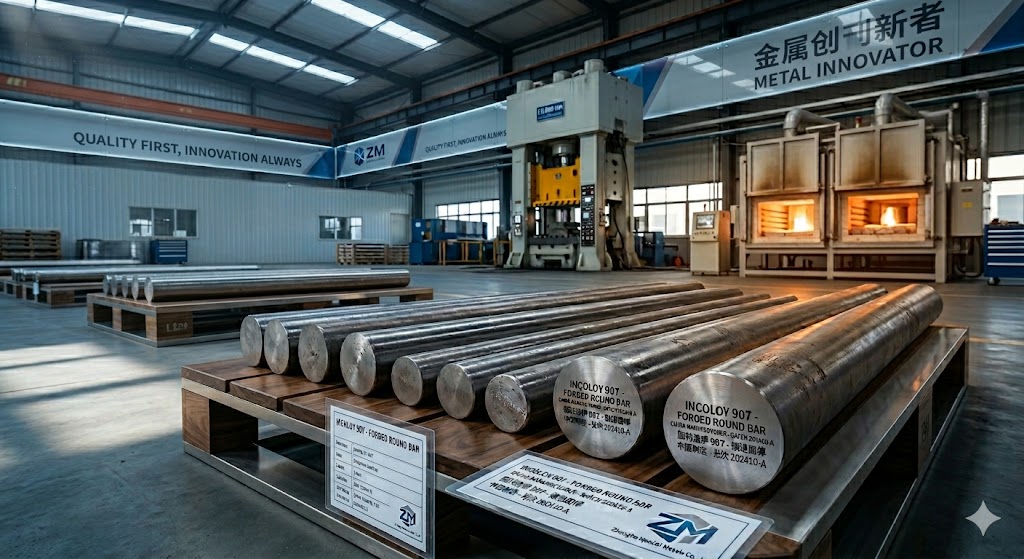
Incoloy 907 Forged Round Bars & Step Shafts
We produce Incoloy 907 forged round bars and solid shafts in diameters from 50 mm up to 650 mm, in lengths up to 4,000 mm, and in finished weights from 30 kg to approximately 8,000 kg. Step shafts (multi-diameter shafts with integrated flanges, shoulders or gear seats) are routinely produced to net or near-net shape using our 3,000-ton and 5,000-ton hydraulic presses, minimizing material waste and machining time for the customer. Dimensional tolerances on as-forged round bars typically hold ±3 mm on diameter; after rough machining in our own workshop, we achieve tolerances of ±0.1 mm or better. Typical surface roughness after finish machining is Ra 1.6–3.2 µm. Applications include turbine shaft blanks, impeller mandrels, valve spindle blanks, rotating machinery drive shafts, and pump shaft cores.
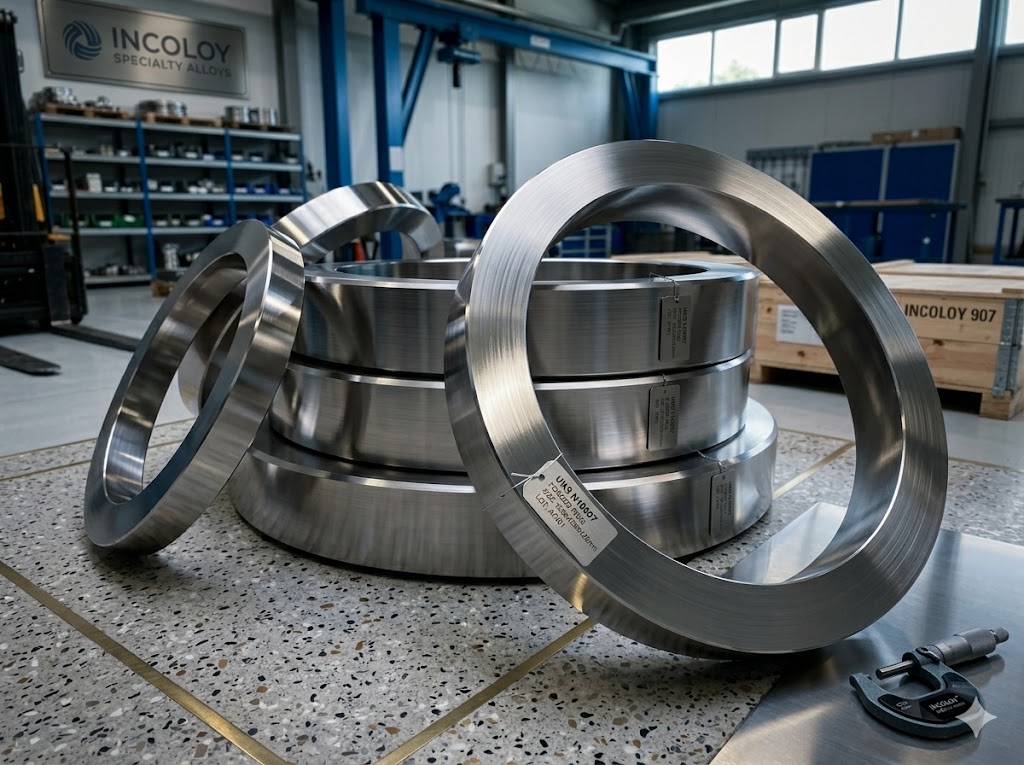
Incoloy 907 Seamless Rolled Forged Rings
Our UNS N19907 seamless rolled rings are produced on radial-axial ring rolling mills with an outer diameter (OD) capability of 200 mm to 6,000 mm, inner diameter (ID) from 150 mm, ring height from 30 mm to 900 mm, and wall thickness from 20 mm upward. Contoured (profiled) ring rolling is available for near-net-shape flanges, bearing races, and turbine casing segments with integrated ribs or tapered profiles — significantly reducing buy-to-fly ratio for customers in aerospace-adjacent industries. As-rolled ring dimensional tolerances on OD are typically within +5 mm / -0 mm (can be tightened to ±2 mm with controlled cooling fixtures). Applications include turbine casing rings, compressor diaphragm rings, valve body preforms, flange rings, bearing outer races, gear rings, and structural retention rings for nuclear pressure boundary components.
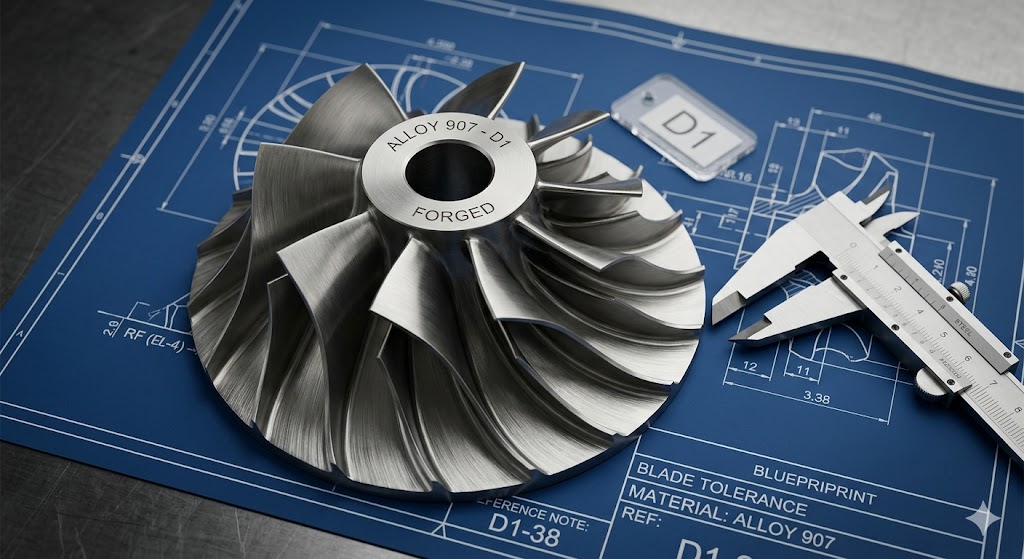
Incoloy 907 Forged Discs, Disks & Blocks
We supply Incoloy 907 forged discs and blocks from 200 mm to 2,500 mm diameter, in thicknesses from 30 mm to 500 mm, and in finished weights up to 12,000 kg. Our large-section disc forgings are produced with controlled deformation ratios (minimum 3:1 overall forging ratio) to ensure uniform grain refinement through the full cross-section, which is critical for turbine disk applications where a coarse-grained core would act as a fatigue crack initiation site. We routinely perform macro-etch inspection on transverse slices to verify grain structure uniformity before final dispatch. Applications include gas turbine compressor disks, power generation rotor blanks, impeller blanks, valve disc blanks, and structural plate blocks for custom machined components.
Incoloy 907 Forged Hollow Parts, Sleeves & Hubs
We produce Incoloy 907 forged hollow cylinders, thick-walled sleeves, hubs, and bushings using mandrel forging techniques that maintain controlled wall thickness concentricity, reducing ID/OD eccentricity to within 3 mm on as-forged parts. OD range: 150 mm – 2,000 mm; ID range: 50 mm – 1,700 mm; height up to 1,500 mm. The hollow forging route eliminates a center-drilled core of often inferior-quality material, delivering a sounder, more uniform product than can be achieved by machining down from solid bar. Applications include coolant pump housing blanks, compressor barrel preforms, seal chamber bodies, valve body forgings, thick-walled ring-to-hub transition components, and pressure vessel shell sections.
Incoloy 907 Forged Pipes, Tube Shells & Pressure Vessel Components
We forge Incoloy 907 thick-walled pipe shells, boiler drums, tube sheets, nozzles, channel flanges, baffle plates, and dished heads for high-temperature pressure equipment operating under ASME VIII, EN 13445, and other recognized vessel codes. Typical tube shell OD: 200–1,500 mm; wall thickness: 20–200 mm; length: up to 3,000 mm. Tube sheet diameter: up to 2,500 mm; thickness: 80–400 mm. All pressure-retaining forgings are provided with full material traceability, heat number coding, and MTC documentation aligned with EN 10204 3.1 or 3.2 as required. Applications include nuclear heat exchangers, high-pressure reactor nozzles, cryogenic vessel components, steam generator tube sheet forgings, and petrochemical process vessel closures.
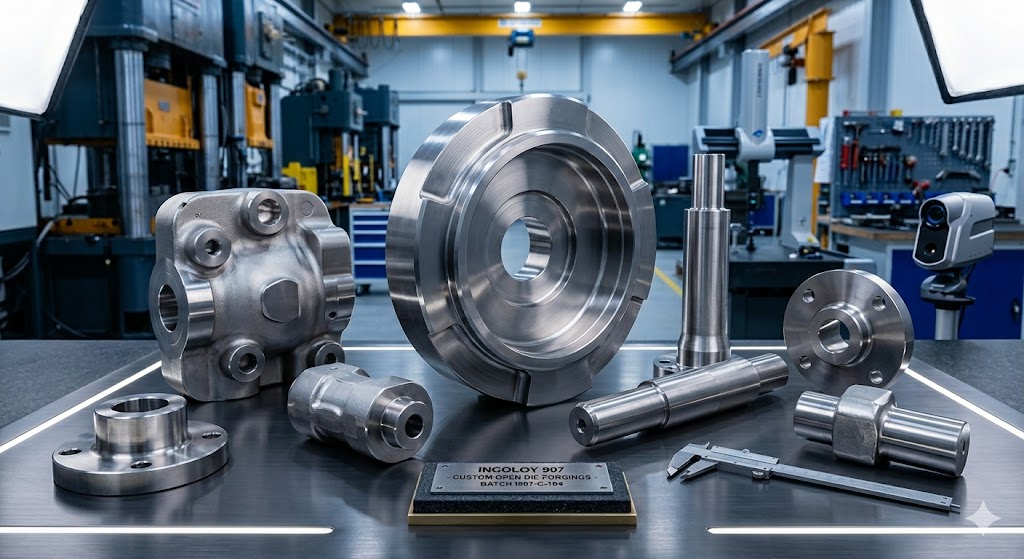
Custom Incoloy 907 Forged Components to Drawing
For non-standard geometries — flanged shafts, blisk preforms, complex valve body near-net forgings, asymmetric structural blocks — we work directly from customer CAD drawings or DXF/STEP files to develop a forging plan that optimizes grain flow orientation relative to principal stress directions in service. Our engineering team will propose forging direction, die design, and pre-form geometry to ensure the finished machined part derives maximum benefit from the wrought fibrous microstructure of the forging. This upfront engineering engagement, at no additional charge, is what differentiates a precision forging supplier from a commodity material cutter. View our complete product portfolio on our Products Page.
Incoloy 907 Product Form Size Capability Summary
| Product Form | Max Outer Dimension | Max Weight (kg) | Typical Tolerance (as-forged) |
|---|---|---|---|
| Round Bar / Solid Shaft | Ø 50–650 mm × L 4,000 mm | 8,000 | ±3 mm on diameter |
| Seamless Rolled Ring | OD up to 6,000 mm, H up to 900 mm | 15,000 | +5/–0 mm on OD |
| Disc / Block | Ø up to 2,500 mm × T 500 mm | 12,000 | ±4 mm on diameter |
| Hollow / Sleeve / Hub | OD 150–2,000 mm, H 1,500 mm | 10,000 | Wall eccentricity ≤3 mm |
| Pipe Shell / Tube Sheet | OD 200–1,500 mm × L 3,000 mm | 8,000 | Wall thickness ±5% |
| Custom Profile (to drawing) | Envelope up to 3,000 mm | 30,000 | Per drawing ± agreed tol. |
Incoloy 907 Forgings: Core Applications, Engineering Rationale & Verified Field Cases
The selection of Incoloy 907 over competing nickel alloys or conventional steels is driven by a specific combination of physical and mechanical requirements that this alloy uniquely satisfies. The sections below explain not just where we supply Incoloy 907 forgings, but why this particular alloy is specified — the engineering logic that design teams rely on when approving an Incoloy 907 component for a critical application.
Nuclear Power Equipment — Primary Loop Components
The primary loop of a nuclear reactor coolant system operates at coolant temperatures of 280–330°C and pressures of 15–17 MPa in a high-neutron-flux radiation environment. Components in this loop must maintain dimensional integrity — particularly interference-fit clearances between rotating impeller and stationary casing — across both cold shutdown and full-power operating temperature cycles. A material with a conventional CTE of 12–15 × 10⁻⁶/°C would cause clearances to shift by several tenths of a millimeter across this thermal range, risking contact between rotating and stationary parts or coolant bypass leakage. Incoloy 907's CTE of approximately 7.6 × 10⁻⁶/°C reduces thermal-induced clearance shift by 35–45% compared to standard austenitic stainless steels, enabling tighter nominal clearance design and improved pump hydraulic efficiency. The alloy's high tensile strength (≥1,350 MPa at RT) further ensures that thick-section forgings retain adequate yield margin even after neutron embrittlement dose accumulation over a 40-year plant life cycle.
Industrial Gas & Steam Turbine Systems
In a heavy industrial gas turbine (IGT), the compressor and turbine casings, rotor disks, labyrinth seals, and retaining rings face a critical requirement: the labyrinth seal-to-rotor tip clearance must remain below 0.5–1.0 mm over millions of thermal start-stop cycles. A casing ring material with high CTE expands faster than the rotor during rapid load ramp-up, temporarily enlarging clearance and allowing compressor stage surge. Incoloy 907's dimensional stability under thermal cycling — combined with its high tensile strength at elevated temperature (≥900 MPa UTS at 649°C / 1,200°F) — makes it the material of choice for these clearance-critical structural forgings. The alloy also exhibits excellent high-cycle fatigue strength (≈ 620 MPa at 10⁷ cycles at room temperature), critical for rotor disks that experience one fatigue cycle per engine start-stop event. We supply turbine disks, impellers, blisks, wheel discs, labyrinth shaft seals, guide rings, seal rings, LPT 1st & 2nd stage turbine casings, reheat valve discs, and main steam valve components (spindles, seats, cores, bonnets, sleeves).
High-Pressure Valve Components — Supercritical & Ultra-Supercritical Steam
Ultra-supercritical (USC) thermal power stations operate main steam at 600–620°C and 25–30 MPa, where conventional valve stem alloys reach the upper boundary of their long-term creep-rupture capability. Incoloy 907's precipitation-hardened condition provides a 100,000-hour rupture strength of approximately 380 MPa at 600°C — substantially higher than austenitic stainless steels (~120 MPa at the same temperature). For main steam isolation valve stems, dimensional stability during thermal cycling is equally critical: a stem that elongates excessively under thermal load alters the preload on the seat ring and causes valve leakage. Incoloy 907's combination of high creep strength and low CTE directly addresses this dual requirement. We supply a full set of valve forgings including balls, bonnets, bodies, stems, closures, seat rings, spindles, and discs for gate, globe, check, ball, and H-type back-pressure valve types.
Centrifugal Compressor & High-Speed Industrial Pump Impellers
Centrifugal compressor impellers for natural gas, LNG, and petrochemical service routinely operate at tip speeds of 350–500 m/s, generating centrifugal stresses at the impeller bore of 500–800 MPa. At these stress levels, the bore material must have a yield strength well above the operating centrifugal stress — and Incoloy 907's yield strength of ≥1,100 MPa at room temperature (and ≥970 MPa at 538°C) provides a healthy design margin. The alloy's relatively low density (8.19 g/cm³) is also advantageous: at 12,000 RPM, a 600 mm OD impeller generates measurably lower centrifugal stress at the bore compared to heavier alloys, extending fatigue life between inspection intervals. For sour-gas (H₂S-containing) service, Incoloy 907 shows adequate resistance to sulfide stress cracking in the age-hardened condition below NACE MR0175 hardness limits. We manufacture shrouded impellers, pump casings, barrels, impeller shafts, housings, wear rings, and seal components for turbo centrifugal compressors and industrial pumps.
Heat Exchangers, Pressure Vessels & Specialty Applications
In heat exchanger service, Incoloy 907 tube sheet forgings are specified where differential thermal expansion between tube bundle and shell must be minimized — for example, in cryogenic nitrogen heat exchangers or nuclear steam generators where a high-CTE tube sheet would generate large thermal stresses at the tube-to-tubesheet joint during every thermal cycle. In glass-to-metal sealing and ceramic-to-metal hermetic connector applications, the alloy's CTE falls within the required matching window for many standard borosilicate glass and alumina ceramic compositions used in instrumentation and defense electronics hermetic packaging. We also supply Incoloy 907 forged components for ceramic molding dies, precision metrology instrument frames, aerospace structural fittings, and marine propulsion components.
Our Incoloy 907 Forging Process — From Certified Ingot to Finished Component
Incoloy 907 is a technically demanding alloy to forge correctly. Its hot-working window is smaller than that of standard austenitic stainless steels. If the temperature isn't controlled well enough, the surface cracks at grain boundaries or doesn't recrystallize enough, which makes the grain structure mixed and doesn't meet microstructural acceptance criteria. Following is our documented and validated seven-step process chain:
Step 1: Raw Material Sourcing & Incoming Inspection
We source Incoloy 907 ingots exclusively from VIM+VAR or VIM+ESR qualified melt shops with certified chemical composition traceable to AMS 2269 requirements. Every heat lot receives a full incoming chemical analysis on our in-house optical emission spectrometer (OES), cross-checking all 9 specified elements plus trace elements (Pb, Bi, Se) before acceptance. Non-conforming heat lots are quarantined and returned. This incoming inspection step is not optional — it is the foundation of our quality assurance system and is documented with a separate Incoming Inspection Report that becomes part of the final MTC package.
Step 2: Billet Heating & Temperature Control
Incoloy 907 is heated to a forging temperature of 1,050–1,150°C in our calibrated pit furnaces and box furnaces, with maximum soak time set to prevent grain coarsening (the alloy's grain growth rate accelerates significantly above 1,150°C). We use Type-K thermocouples calibrated to ±5°C with continuous temperature logging. For heavy sections (billet diameter >400 mm), we apply a controlled pre-heat ramp of no more than 100°C/hour below 600°C to prevent thermal shock cracking in the dense, low-conductivity ingot cross-section.
Step 3: Open Die Forging or Seamless Ring Rolling
For solid forgings (bars, discs, blocks), we use our 3,000-ton or 5,000-ton hydraulic presses with flat or contoured die sets, designed to achieve a minimum total reduction ratio of 4:1 from ingot cross-section to finished forging cross-section, ensuring complete dendrite breakup and uniform grain refinement. For ring forgings, we use our radial-axial ring rolling mill. The pre-form (donut) is pierced from a disc forging, then rolled in coordinated radial and axial rolling passes to achieve the target OD/ID/height combination. Wall thickness uniformity is monitored in real time on our rolling mill's integrated measurement system.
Step 4: Solution Annealing (Pre-Aging)
After forging and prior to aging, Incoloy 907 components are solution annealed at 980–1,010°C for 1 hour per 25 mm of cross-section thickness (minimum 2 hours), followed by rapid air cooling or water quench depending on section size. This step dissolves any non-equilibrium phases formed during the final forging passes and establishes a uniform, homogeneous solid-solution matrix ready for controlled precipitation hardening. Omitting or improperly performing this step — a common deficiency in less experienced suppliers — leads to non-uniform aging response and property scatter that causes mechanical test failures on incoming inspection.
Step 5: Precipitation Age-Hardening Heat Treatment
Age-hardening is performed in our calibrated aging furnaces equipped with calibrated thermocouples, with furnace temperature uniformity controlled within ±8°C. One of two standard cycles is applied depending on the application specification: the standard strength-maximizing cycle (720°C/8h → FC → 620°C/8h → AC) or the rupture-limited cycle (775°C/12h → FC → 620°C/8h → AC). Full temperature and time data are logged and provided in the MTC documentation package.
Step 6: Mechanical Testing & NDT
Mechanical test specimens are machined from integral test coupons (ITC) sourced from the same heat batch and heat treatment lot. A full range of testing is conducted based on relevant standards, which include room-temperature and high-temperature tensile testing, hardness inspection, impact testing, and creep‑rupture evaluation.Non-destructive testing is carried out by ASNT Level II qualified technicians, with UT, PT and MT implemented as required by product type and service application. The final mill test certificate (MTC) documentation package includes all of the inspection and test data in an organized way.
Step 7: Machining & Final Dimensional Inspection
Rough machining (turning, milling, boring) is performed in our on-site machining workshop to customer-specified rough-turned dimensions and surface roughness requirements. Finish machining to tight drawing tolerances is available for chosen product forms. Final dimensional inspection is performed on our CMM for complex profiles, or using calibrated manual instruments for standard geometries. All inspection records are referenced on the MTC.
Incoloy 907 Chemical Composition, Elemental Roles & Metallurgical Standards
Chemical Composition (Weight %, per AMS 2269)
| Element | Content Range (wt%) | Metallurgical Role |
|---|---|---|
| Nickel (Ni) | 35.0 – 40.0 | Austenite stabilizer; contributes to low CTE matrix; solid-solution strengthener |
| Cobalt (Co) | 12.0 – 16.0 | Reduces CTE further; increases high-temperature strength and creep resistance; raises stacking fault energy |
| Iron (Fe) | Balance (~38–43%) | Cost-effective matrix component; lowers overall alloy density vs. pure nickel base; provides base ductility |
| Niobium (Nb) | 4.3 – 5.2 | Primary precipitation hardener — forms Ni₃Nb (γ″ phase, body-centered tetragonal) coherent precipitates; controls grain size during hot working |
| Titanium (Ti) | 1.3 – 1.8 | Secondary precipitate former — combines with Nb and Al to form η (eta) and γ′ phases; contributes to creep resistance; deoxidizer |
| Aluminum (Al) | 0.20 Max | Intentionally kept very low to suppress γ′ (Ni₃Al) formation which would increase CTE; serves as deoxidizer at trace levels |
| Silicon (Si) | 0.07 – 0.35 | Minor solid-solution strengthener; oxidation resistance contributor; controlled upper limit prevents excessive δ-phase formation |
| Lead (Pb), Bismuth (Bi), Selenium (Se) | Strict zero-tolerance maximum (AMS 2269) | These elements segregate to grain boundaries and drastically reduce hot ductility and creep-rupture life. AMS 2269 mandates no variation over the maximum limit for these three elements — a requirement unique to this specification. |
Why Incoloy 907's Composition Design Is Unique Among Superalloys
Most nickel superalloys maximize high-temperature strength by maximizing γ′ (Ni₃Al) precipitation. Incoloy 907 takes a fundamentally different approach: it deliberately limits aluminum to a trace level and relies instead on Niobium-rich γ″ (Ni₃Nb) precipitation for strengthening — a phase that forms with only a very small volumetric misfit relative to the austenite matrix. This tiny misfit suppresses the coherency strain-driven lattice expansion that would otherwise increase CTE. The result is an alloy that is simultaneously precipitation-hardened to very high strength levels AND maintains a CTE closely matched to structural steel shafts and ceramic mating components — a combination that no conventional austenitic stainless steel or standard nickel alloy achieves.
Melt Route, Material Purity & Compliance Documentation
All Incoloy 907 material we source is produced by the VIM+VAR or VIM+ESR double-melt route. The VIM step establishes precise chemical composition and removes dissolved gases (O₂, N₂, H₂) and volatile impurities. The VAR or ESR re-melt step refines the ingot macrostructure, breaks up segregation banding, and ensures a uniform, fine-grained microstructure through the full cross-section — critical for heavy-section forgings where centerline properties must match surface properties. Our Incoloy 907 forgings comply with: AMS 2269, ASTM B906, API 6A, API 17D, ASME Section II Part B, ASME Section III, DIN 17744, EN 10269, JIS G4901/G4902, and further standards as specified. Third-party inspection by SGS, Bureau Veritas, TUV, Lloyd's Register, DNV, and other IAS-accredited inspection bodies is fully supported. See our Equipment Page for production capability details.
Incoloy 907 Heat Treatment Specifications, Physical Properties & Full Mechanical Data
Complete Heat Treatment Process Sequence
Achieving consistent, specification-compliant mechanical properties in Incoloy 907 forgings requires a precisely controlled two-stage thermal processing sequence. An incorrectly performed solution anneal leaves residual deformation substructure in the matrix and produces a non-uniform aging response, often causing tensile test failures. Our documented process:
- Solution Anneal (Pre-age): 980–1,010°C, 1 hour per 25 mm of cross-section thickness (minimum 2 hours), followed by rapid air cooling or water quench for sections >100 mm. Dissolves non-equilibrium phases and establishes a homogeneous solid-solution matrix.
- Standard Precipitation Age-Hardening (Strength-Limited Applications): 1,325°F (720°C) / 8 hours → furnace cool at 100°F (55°C) per hour → 1,150°F (620°C) / 8 hours → air cool. Produces peak-density γ″ precipitates for maximum tensile and yield strength.
- Rupture-Limited Application Age-Hardening (Creep/Stress Rupture Critical): 1,425°F (775°C) / 12 hours → furnace cool at 100°F (55°C) per hour → 1,150°F (620°C) / 8 hours → air cool. The higher initial aging temperature produces a slightly coarser γ″ precipitate distribution, sacrificing a small amount of room-temperature tensile strength in exchange for measurably better creep and stress rupture resistance above 500°C.
Room Temperature Mechanical Properties (Precipitation Hardened Condition)
| Mechanical Property | Standard Guaranteed Value | Typical Achieved Value |
|---|---|---|
| Tensile Strength (UTS) | ≥ 1,350 MPa (196,000 psi) | 1,380–1,450 MPa |
| Yield Strength (0.2% Offset) | ≥ 1,100 MPa (160,000 psi) | 1,120–1,200 MPa |
| Elongation at Break | ≥ 10% | 12–18% |
| Reduction of Area | ≥ 36% | 40–55% |
| Poisson's Ratio | 0.36 | 0.35–0.37 |
| Hardness | 36–44 HRC (typical range) | 38–42 HRC |
Elevated Temperature Mechanical Properties
| Test Temperature | UTS (MPa) | 0.2% YS (MPa) | Elongation (%) |
|---|---|---|---|
| 23°C (73°F) — RT | ~1,400 | ~1,140 | ~15 |
| 315°C (600°F) | ~1,280 | ~1,090 | ~13 |
| 427°C (800°F) | ~1,170 | ~1,050 | ~12 |
| 538°C (1,000°F) | ~1,060 | ~970 | ~13 |
| 649°C (1,200°F) | ~900 | ~810 | ~15 |
Physical Properties of Incoloy 907
| Physical Property | Value | Condition |
|---|---|---|
| Density | 8.19 g/cm³ (0.296 lb/in³) | Room temperature |
| Mean CTE (20–100°C) | 7.6 × 10⁻⁶/°C (4.2 × 10⁻⁶/°F) | Precipitation hardened |
| Mean CTE (20–300°C) | 8.3 × 10⁻⁶/°C | Precipitation hardened |
| Mean CTE (20–600°C) | 9.2 × 10⁻⁶/°C | Precipitation hardened |
| Elastic Modulus | 155 GPa (22.5 × 10⁶ psi) | Room temperature |
| Thermal Conductivity | ~11 W/(m·K) | 20°C |
| Specific Heat Capacity | ~460 J/(kg·K) | 20°C |
| Electrical Resistivity | ~1.02 µΩ·m | Room temperature |
| Melting Range | 1,315–1,370°C (2,400–2,500°F) | Solidus–Liquidus |
Incoloy 907 vs Comparable Alloys: Material Selection Guide
Engineers specifying a low-thermal-expansion, high-strength alloy for demanding structural applications often compare Incoloy 907 against several alternatives. The table below provides our engineering team's direct comparison based on documented material data and hands-on forging and testing experience with all these alloys:
| Property | Incoloy 907 (N19907) | Incoloy 909 (N19909) | Inconel 718 (N07718) | Invar 36 (K93600) | Kovar (K94610) |
|---|---|---|---|---|---|
| CTE (20–100°C), × 10⁻⁶/°C | 7.6 | 7.7 | 13.0 | 1.6 | 5.5 |
| UTS (RT, aged/hardened) | ≥1,350 MPa | ≥1,240 MPa | ≥1,275 MPa | ~480 MPa | ~517 MPa |
| Yield Strength (0.2%, RT) | ≥1,100 MPa | ≥1,000 MPa | ≥1,035 MPa | ~276 MPa | ~345 MPa |
| Max Useful Temp. (strength) | ~650°C | ~620°C | ~700°C | ~200°C | ~450°C |
| Creep Resistance at 600°C | Excellent | Good | Excellent | Poor | Poor |
| Strengthening Mechanism | γ″ (Ni₃Nb) precipitation | γ″ + η precipitation | γ″ + γ′ precipitation | Solid solution | Solid solution |
| Forging Difficulty | High (narrow window) | High (narrow window) | Moderate-High | Low-Moderate | Low-Moderate |
| Primary Application | Turbine disks, nuclear pumps, USC valves | Aero turbine casings, seals | Turbine disks, compressor blades, fasteners | Glass-to-metal seal, metrology | Hermetic electronics packaging |
Key Takeaway for Material Selection: Choose Incoloy 907 when you need the combination of low CTE (matched to structural steel or ceramic counterparts) AND high tensile/creep strength at service temperatures up to 650°C. If your application only needs very low CTE at low stress and low temperature, Invar 36 or Kovar is more cost-effective. If maximum high-temperature creep strength above 650°C is the priority and CTE is less critical, Inconel 718 or a higher-temperature superalloy is the correct choice. For slightly better aerodynamic surface quality in thin aero-engine casings with a small strength reduction accepted, Incoloy 909 is the closer alternative to 907.
Comprehensive Quality Control System for Incoloy 907 Forged Parts
Our quality management system is ISO 9001:2015 certified and supported by an in-house laboratory staffed by trained and qualified NDT inspectors and testing technicians. Every Incoloy 907 forged part passes through a documented inspection gate at each production stage — from incoming ingot to final dispatch — with all records retained and traceable for a minimum of 10 years.
Chemical Composition Analysis
We operate a calibrated Optical Emission Spectrometer (OES) capable of simultaneously analyzing all regulated elements in Incoloy 907 including Ni, Co, Fe, Nb, Ti, Al, Si, and the critical trace elements Pb, Bi, and Se. Every incoming heat of material is tested before release to production. Post-forging check analysis is performed on coupon material from each heat treatment lot. All OES calibration standards are certified and traceable to national reference materials.
Mechanical & Physical Testing Laboratory
Our in-house mechanical testing laboratory is equipped with servo-hydraulic universal testing machines (UTM) with full load-cell calibration certificates and high-temperature furnace attachments for elevated-temperature tensile testing up to 800°C. Specific tests performed on Incoloy 907 forgings include: room temperature and elevated temperature tensile testing (UTS, YS, elongation, RA); Charpy V-notch impact testing (temperature range −196°C to +350°C); Vickers and Rockwell hardness testing; high-temperature creep and stress rupture testing (available on request); and metallographic section preparation and grain size evaluation per ASTM E112.
Non-Destructive Testing (NDT) — Full ASNT Capability
Our NDT personnel are trained, qualified, and hold recognized certifications in their respective NDT methods. Examinations are conducted per ASNT SNT-TC-1A recommended practice or equivalent. For Incoloy 907 forgings, the following NDT is applied based on product form and application criticality:
- Ultrasonic Testing (UT): 100% volumetric UT of all heavy-section forgings per ASTM A388, AMS 2631, or customer specification. We use phased-array UT (PAUT) equipment for complicated geometries. Calibration reference blocks are machined from Incoloy 907 material to replicate the acoustic velocity and attenuation of the test part.
- Liquid Penetrant Testing (PT): Applied to all accessible surfaces after final machining per ASTM E165 or ASME Section V Article 6. Fluorescent penetrant (Type 1, Method D) is used for maximum sensitivity on nuclear-grade parts.
- Magnetic Particle Inspection (MT): Applied where applicable; MT suitability is evaluated per-lot based on actual magnetic permeability measurement, as Incoloy 907 can be weakly ferromagnetic in certain processing conditions.
- Dimension Test: CMM measurement for complicated near-net profiles; calibrated OD/ID micrometers, bore gauges, height gauges, and optical comparators for standard dimensions. All measuring equipment calibrated per ISO 10012.
- Macro-Etch Inspection: Hot acid etching of transverse cross-section slices to reveal grain flow pattern, segregation banding, and internal defects (pipe, bursts, laps) per ASTM A604.
- Pyrometry & Furnace Calibration: All heat treatment furnaces are equipped with calibrated thermocouples and temperature controllers maintaining ±8°C uniformity. Thermocouple calibration records and temperature uniformity survey (TUS) reports are included in the MTC documentation package.
Documentation Package — MTC & Full Traceability
Every delivery of Incoloy 907 forgings is accompanied by a complete Mill Test Certificate (MTC) package compliant with EN 10204 3.1 (standard) or 3.2 (with third-party countersignature), containing: chemical composition test report (product analysis); mechanical test report covering all required properties; heat treatment record with actual furnace time-temperature data for both solution anneal and aging cycles; all NDT inspection reports with examiner certification numbers; dimensional inspection report; heat and lot number traceable to the original VIM+VAR ingot; and the QC release signature of our certified quality manager. Complete documentation is provided in both electronic (searchable PDF) and physical form.
Frequently Asked Questions About Incoloy 907 Forgings
Incoloy 907 (UNS N19907, Alloy 907) is primarily used for components that simultaneously require very high strength AND low thermal expansion — a rare combination in a single material. Primary applications include: gas turbine compressor disks, labyrinth seal rings and turbine casings; nuclear reactor coolant pump impellers, casing rings and seal chambers; main steam valve stems, seat rings and bonnets for ultra-supercritical thermal power plants operating at 600°C and 25+ MPa; centrifugal compressor impellers and pump shafts for natural gas, LNG and petrochemical service; heat exchanger tube sheets for cryogenic and high-temperature service; glass-to-metal sealing mandrels and ceramic molding dies; and precision structural frames where thermal-cycle-induced dimensional changes must be minimized.
The mean CTE of Incoloy 907 in the precipitation-hardened condition is approximately 7.6 × 10⁻⁶/°C (4.2 × 10⁻⁶/°F) from 20°C to 100°C, rising to approximately 8.3 × 10⁻⁶/°C from 20°C to 300°C and 9.2 × 10⁻⁶/°C from 20°C to 600°C. This is roughly 35–40% lower than standard austenitic stainless steel (~17 × 10⁻⁶/°C) and about 42% lower than standard Inconel 718 (~13 × 10⁻⁶/°C), while remaining significantly higher than Invar 36 (~1.6 × 10⁻⁶/°C). The CTE of Incoloy 907 is specifically matched to borosilicate glass and many alumina ceramic grades used in hermetic electronic packaging and instrumentation sealing applications — this matched expansion is what prevents cracking at the glass-metal or ceramic-metal interface during thermal cycling.
Incoloy 907 (UNS N19907) per AMS 2269 has the following nominal chemical composition (weight %): Nickel 35.0–40.0%; Cobalt 12.0–16.0%; Iron balance (~38–43%); Niobium 4.3–5.2%; Titanium 1.3–1.8%; Aluminum max 0.20%; Silicon 0.07–0.35%. The specification also mandates strict maximum limits for trace elements Lead, Bismuth, and Selenium — elements that segregate to grain boundaries and severely reduce hot ductility and creep-rupture life. AMS 2269 explicitly states that no variation over the maximum limit for these three elements is permitted at both heat analysis and product analysis levels, making Incoloy 907 one of the most strictly composition-controlled commercial nickel alloys.
First, 907 has a higher tensile strength (≥1,350 MPa UTS vs. ≥1,240 MPa for 909) and better creep-rupture resistance at the same temperatures. This makes it better for applications that need to hold a lot of weight, like turbine disks and nuclear pump parts. Second, the limits on aluminum content are different: Incoloy 907 limits Al to a maximum of 0.20%, while Incoloy 909 allows a little more Al, which changes the balance between the γ″ and γ′ precipitation phases and changes the CTE a little. Third, Incoloy 909 is better at resisting surface oxidation at high temperatures, which has historically made it a better choice for use in aero-engine casing. Incoloy 907 is the best choice for ground-based industrial uses where maximum strength and resistance to creep at service temperatures ≤650°C are the most important factors.
The density of Incoloy 907 in the precipitation-hardened condition is 8.19 g/cm³ (0.296 lb/in³) at room temperature. This is somewhat lower than Inconel 718 (8.22 g/cm³) and substantially lower than tungsten-based heavy alloys, making it advantageous for rotating components where minimizing centrifugal stress at high rotational speeds is important. For a design engineer calculating centrifugal hoop stress in a turbine disk or compressor impeller, every reduction in material density directly reduces bore stress at a given tip speed — which is why Incoloy 907's combination of low density, low CTE, and high strength is particularly attractive for high-speed rotating applications at service temperatures up to approximately 650°C.
Incoloy 907 can be welded but requires careful process control due to its susceptibility to strain-age cracking (reheat cracking) in the heat-affected zone (HAZ) during post-weld heat treatment. The alloy is best welded in the solution-annealed condition (not in the fully aged condition), using matching filler metal where available, with low heat input, and strict pre-heat and inter-pass temperature control (typically maximum 50°C inter-pass temperature for thin sections). To reduce restraint stress, post-weld aging must be done with a carefully controlled ramp rate through the precipitation temperature range. For most heavy structural forgings that Jiangsu Liangyi makes, machined connections and bolted joints are better than welding whenever the design allows. This completely gets rid of the HAZ problem. For thin-section precision joints, electron beam welding (EBW) or laser welding is best because they don't add much heat and have a narrow HAZ width.
The hot forging temperature range for Incoloy 907 is 1,000–1,150°C (1,830–2,100°F). The upper limit of 1,150°C is set by the alloy's rapid grain growth rate above this temperature — excessive grain coarsening above 1,150°C is irreversible during subsequent forging passes and leads to rejection during mandatory macro-etch grain structure inspection. The lower limit of 1,000°C represents the point where flow stress rises steeply and hot-shortness cracking at grain boundaries becomes a risk on heavily reduced sections. Forgings must be returned to the furnace for reheating if surface temperature falls below 950°C during pressing operations. This narrow hot-working window of approximately 150°C — compared to 200–300°C for standard austenitic stainless steels — is what makes Incoloy 907 technically demanding to forge correctly, and why 15+ years of material-specific processing experience is critical when selecting a forging supplier for this alloy.
Our Incoloy 907 forgings comply with: AMS 2269 (chemical composition check analysis — primary material specification); ASTM B906; API 6A and API 17D (for valve and subsea wellhead components); ASME Section II Part B and Section III (for nuclear pressure boundary applications); DIN 17744, EN 10269; JIS G4901/G4902; and PED 2014/68/EU. Our ISO 9001:2015 quality system covers all production processes. Mill test certificates are issued per EN 10204 3.1 standard or 3.2 with third-party countersignature from SGS, Bureau Veritas, TUV, Lloyd's Register, DNV, or other IAS-accredited inspection bodies as specified by the customer.
Yes — custom-to-drawing forged parts are our core business. We accept DXF, DWG, STEP, IGES, and PDF drawing formats. Our engineering team reviews the drawing for forging feasibility, proposes a forging process plan optimized for your part (press sequence, die design, pre-form geometry, forging ratio), and provides a detailed quotation including material grade, heat treatment, machining, and testing scope. We produce custom Incoloy 907 forged components ranging from 30 kg to 30,000 kg, from single prototype pieces through large-volume production runs, with standard commercial terms of 30% deposit on order confirmation and balance against shipping documents.
Our minimum order quantity (MOQ) for Incoloy 907 forged parts is 1 piece — we support both one sample orders and large volume mass production orders. For very small pieces (less than 50 kg each), we usually group orders together so that we can share the fixed costs of material heat certification and heat treatment furnace loads. This keeps the price per unit competitive even for small amounts. For forgings with sections larger than 5,000 kg, each piece is like its own production event with its own ingot heat. This makes MOQ = 1 reasonable from a production organization point of view. Please keep in mind that the minimum heat size at our qualified melt shops for VIM+VAR material orders is usually 1,500 kg. If you only need a small amount of material, we can get it from our existing certified stock inventory if it's available.
Standard lead times for custom Incoloy 907 forgings are 15–30 days for simple geometry forgings (bars, standard rings, discs) from available certified ingot stock, and 30–60 days for complicated near-net profile forgings, large-diameter rings, or orders requiring new ingot melting. The important path typically includes: ingot sourcing and incoming inspection (3–7 days from stock; 15–25 days for new heat) → hot forging (1–3 days) → solution anneal + aging (3–5 days) → mechanical testing and NDT (5–10 days) → rough machining (3–10 days) → final inspection and documentation (2–3 days). We also can speed up production for urgent orders. Contact our sales team with detailed requirements for a precise delivery commitment.
Yes — we provide comprehensive Mill Test Certificates (MTC) per EN 10204 3.1 as standard with every delivery of Incoloy 907 forgings. The 3.1 MTC is validated and signed by our certified Quality Manager. The MTC package contains: full chemical composition test report (product analysis of actual forging, not just ingot heat analysis); mechanical test report covering all required properties (UTS, YS, elongation, RA, hardness, Charpy impact if specified); heat treatment record with actual furnace data (time, temperature, ramp rate) for both solution anneal and aging cycles; all NDT inspection reports with examiner certification numbers; dimensional inspection report; and full material traceability chain from VIM+VAR ingot heat number to finished forging marking. EN 10204 3.2 certificates (countersigned by an accredited third-party inspector) are available at additional cost when specified at time of order.
Incoloy 907 is strengthened by a two-stage thermal processing sequence. Stage 1 — Solution Annealing at 980–1,010°C for a minimum of 1 hour per 25 mm of section thickness, followed by rapid cooling — establishes a uniform solid-solution matrix. Stage 2 — Precipitation Age-Hardening using one of two standard cycles: (1) Standard strength cycle: 720°C (1,325°F) / 8 hours → furnace cool at 55°C/hour → 620°C (1,150°F) / 8 hours → air cool; produces peak γ″ precipitate density for maximum tensile and yield strength. (2) Rupture-limited creep cycle: 775°C (1,425°F) / 12 hours → furnace cool at 55°C/hour → 620°C (1,150°F) / 8 hours → air cool; produces coarser precipitate distribution with slightly lower room-temperature tensile strength but significantly better long-term creep and stress-rupture resistance at service temperatures above 500°C. All heat treatment is performed in calibrated furnaces with temperature uniformity controlled within ±8°C, and complete time-temperature records are provided in the MTC documentation.
Inquire About Custom Incoloy 907 Forging Parts Today
Jiangsu Liangyi is your reliable China-based manufacturer of high-quality Incoloy 907 (UNS N19907, Alloy 907) forged forging parts. Whether you need standard size products or custom-engineered components for your critical project, we can provide tailored solutions with competitive pricing, fast lead times and strict quality control.
📧 Inquiry Email: sales@jnmtforgedparts.com
📞 Phone/WhatsApp: +86-13585067993
🌐 Official Website: https://www.jnmtforgedparts.com
📍 Factory Address: Chengchang Industry Park, Jiangyin City, Jiangsu Province, China