15-5PH (UNS S15500, XM-12) Forging Parts | China Jiangsu Liangyi
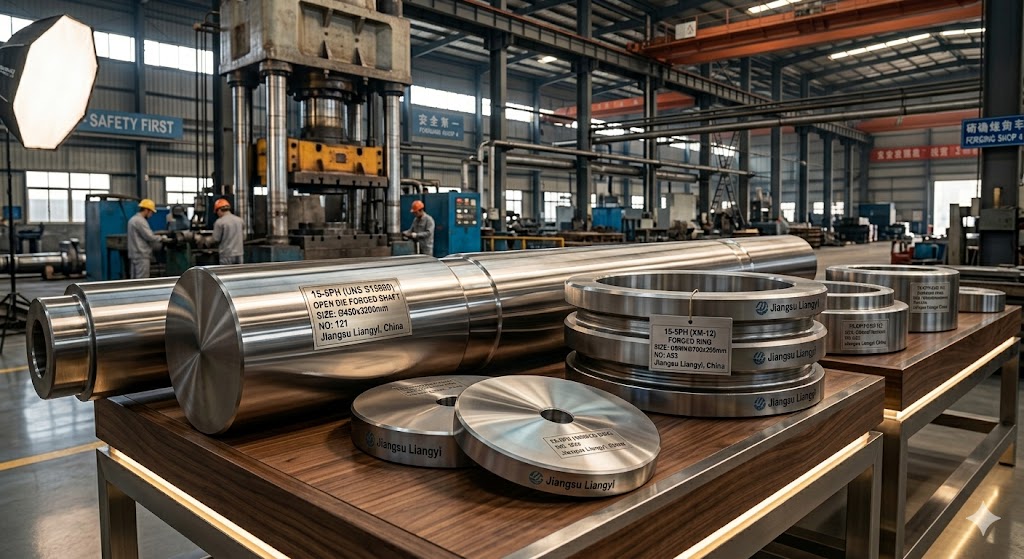
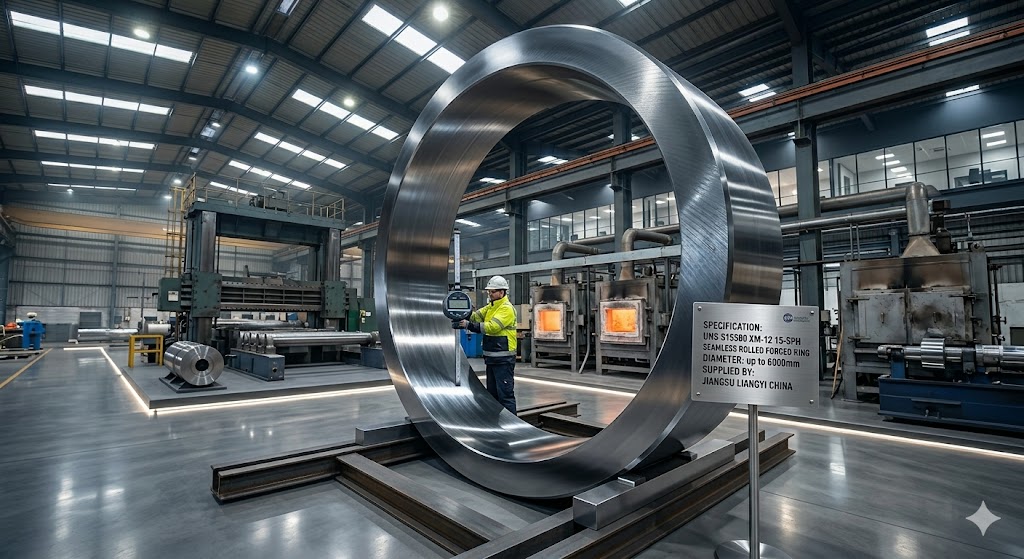
15-5PH Precipitation Hardening Stainless Steel Forgings Overview
Jiangsu Liangyi, a professional ISO 9001:2015 certified China manufacturer and supplier of 15-5PH (UNS S15500, XM-12, 15-5 PH, 15/5 Ph) forging parts, is located in Chengchang Industry Park, Jiangyin City, Jiangsu Province, with over 25 years of specialized experience in custom open die forging and seamless rolled ring manufacturing. We provide ASTM A564/A705 standard 15-5 stainless steel forgings to industrial customers across more than 50 countries, including the United States, Germany, the United Kingdom, the United Arab Emirates, Saudi Arabia, Singapore, Australia, and Southeast Asia.
Our comprehensive range of 15-5PH forged components is available in all standard precipitation hardening conditions — including H900, H925, H1025, H1075, H1100, H1150, H1150M, and H1150D — with complete in-house heat treatment, precision CNC machining, and complete non-destructive testing (NDT) capabilities. Explore our full portfolio of forged product solutions on our Products page.
What is 15-5PH Stainless Steel?
15-5PH is a low-carbon martensitic precipitation hardening stainless steel, alloyed with chromium (14.00–15.50%), nickel (3.50–5.50%), copper (2.50–4.50%), and niobium (≤0.45%), delivering an improved combination of ultra-high strength, excellent transverse toughness, and superior corrosion resistance. 15-5PH gets its great mechanical properties from a controlled low-temperature aging heat treatment process (480–620 °C), which eliminates the risk of distortion and cracking that is common in traditional hardening cycles. This is different from regular martensitic stainless steels, which need to be quenched at high temperatures.
15-5PH was made to be a better version of 17-4PH (UNS S17400) that could be used in thick-section forged parts. The alloy designers made the structure more martensitic by lowering the amount of chromium and raising the amount of nickel. This made the material much more resistant to impact and more flexible in the transverse direction. This is why 15-5PH is the best choice for critical structural forgings in industrial settings where failure is not an option.
Metallurgy & Strengthening Mechanism of 15-5PH
Engineers and procurement professionals need to know the basic metallurgy and strengthening mechanism of 15-5PH in order to make smart choices about materials. This part gives a very detailed explanation that goes well beyond what you would find on a typical supplier datasheet.
Phase Constitution & Microstructure
In the solution-treated condition (Condition A), 15-5PH consists of a body-centered cubic (BCC) low-carbon lath martensitic matrix with minimal retained austenite. The carefully balanced alloy composition is specifically designed to minimize the formation of delta ferrite — a phase that is detrimental to transverse mechanical properties, particularly in heavy-section forgings. While 17-4PH may contain up to 5–10% delta ferrite in thick sections, 15-5PH typically contains less than 1–2%, which is the fundamental metallurgical reason for its superior transverse toughness.
The martensitic matrix of 15-5PH is characterized by a high density of crystallographic defects — dislocations, sub-grain boundaries, and lath boundaries — that serve as preferential nucleation sites for precipitates during the subsequent ageing treatment. This refined lath structure, with individual lath widths ranging from 0.1 to 0.5 µm, it provides a uniform template for precipitation hardening, which can make sure consistent mechanical properties throughout the whole cross-section of the forging.
Precipitation Hardening Mechanism
The exceptional strength of 15-5PH originates from nano-scale precipitation hardening during controlled ageing heat treatment. The primary strengthening mechanism involves two distinct types of precipitates:
- Copper-rich ε-Cu Precipitates:When the temperature is between 480 °C (H900) and 620 °C (H1150), copper atoms in a supersaturated solid solution group together and form coherent face-centered cubic (FCC) ε-Cu precipitates in the martensitic matrix. In the H900 condition, when the particles are at their most stable, these precipitates are about 2–5 nm in diameter and are evenly spaced apart by 10–30 nm. Their coherent interface with the martensitic matrix creates elastic strain fields that strongly impede dislocation movement, which cause the yield strength to rise dramatically from about 725 MPa (Condition A) to 1170 MPa (H900).
- Niobium Carbonitride (NbCN) Precipitates: Niobium combines with residual carbon and nitrogen to form thermally stable NbCN precipitates. These precipitates have two very important jobs: (1) they hold the grain boundaries in place during solution treatment and forging, which makes the previous austenite grain size smaller and stops the grains from getting bigger, and (2) they add more precipitation strengthening. NbCN particles are more stable than Cu-rich precipitates . This means that they provide consistent baseline strengthening across all heat treatment conditions.
Overageing Behavior & Property-Temperature Relationship
As the ageing temperature increases from H900 (480 °C) through H925, H1025, H1075, H1100 to H1150 (620 °C), the Cu-rich precipitates progressively coarsen and lose their coherent relationship with the matrix. This transition from coherent to semi-coherent to incoherent precipitates progressively reduces the precipitation hardening contribution, which results in decreased strength but increased ductility and toughness. This is not a disadvantage, and it is a precisely engineered design feature that allows engineers to select the optimum balance of strength, toughness, and corrosion resistance for each specific application.
International Standard Cross-Reference Designations
International standards recognize 15-5PH stainless steel under a number of different names. The following cross-reference table helps engineers, procurement teams, and quality inspectors from all over the world find the right equivalent grade in their own regional standard system. The chemical composition requirements are mostly the same, but there may be small differences in specifications. Our engineering team can help you find the right grade for your project.
| Standard System | Designation | Specification |
|---|---|---|
| USA (UNS) | UNS S15500 | ASTM A564 / ASTM A705 / AMS 5659 |
| USA (ASTM) | XM-12, Type 15-5PH | ASTM A564 Type XM-12 |
| USA (AMS) | AMS 5659 | Bars, Forgings & Rings |
| Europe (EN) | 1.4545 / X5CrNiCu15-5 | EN 10088-1 / EN 10088-3 |
| Germany (DIN) | X5CrNiCu15-5 | DIN EN 10088-3 |
| Japan (JIS) | SUS XM-12 / SUS 630J1 | JIS G 4303 |
| China (GB) | 05Cr15Ni5Cu4Nb | GB/T 1220 / GB/T 1221 |
| France (AFNOR) | Z6CNU15-05 | NF EN 10088-3 |
| ISO | X5CrNiCu15-5 | ISO 15510 |
| API (Oil & Gas) | 15-5PH per API 6A | API 6A PSL 1–4 / API 6A718 |
| NACE | 15-5PH, H1150/H1150-M | NACE MR0175 / ISO 15156 |
Chemical Composition & Role of Each Alloying Element
The following table lists the standard chemical composition of 15-5PH (UNS S15500) per ASTM A564/A705. We don't just give you a list of alloys; we also explain how each one affects the metal's properties so that engineers can understand why the composition is the way it is.
| Element | Range | Metallurgical Role in 15-5PH |
|---|---|---|
| Carbon (C) | ≤ 0.07% | Kept intentionally low to maximize toughness and weldability. Combines with Nb to form NbCN precipitates for grain refinement. Low carbon reduces the risk of sensitization during welding. |
| Chromium (Cr) | 14.00 – 15.50% | Main element that protects against corrosion by forming a passive oxide film. Set lower than 17-4PH to reduce delta ferrite tendency in thick sections. It can make sure adequate passivation in atmospheric and mild chemical environments. |
| Nickel (Ni) | 3.50 – 5.50% | Austenite stabilizer that encourages complete martensitic transformation and lowers the amount of delta ferrite. The main reason 15-5PH is stronger in the transverse direction than 17-4PH is that it has more Ni. Also makes it more resistant to corrosion in acidic environments. |
| Copper (Cu) | 2.50 – 4.50% | The primary precipitation hardening element. Forms nano-scale coherent ε-Cu precipitates during ageing (480–620 °C) that dramatically increase strength. Cu content is carefully balanced to achieve target strength levels across all ageing conditions from H900 to H1150. |
| Niobium (Nb) | ≤ 0.45% | Forms thermally stable NbCN precipitates that pin grain boundaries during solution treatment, preventing grain coarsening during forging. Also provides supplementary precipitation strengthening. Lower maximum Nb than 17-4PH reduces the risk of Nb-rich segregation bands in large forgings. |
| Manganese (Mn) | ≤ 1.00% | Deoxidizer during steelmaking. Weak austenite stabilizer that slightly assists in minimizing delta ferrite. |
| Silicon (Si) | ≤ 1.00% | Deoxidizer during steelmaking. Increases strength through solid solution hardening. Excessive Si promotes delta ferrite, hence the upper limit control. |
| Phosphorus (P) | ≤ 0.03% | Residual impurity element which is strictly controlled to prevent grain boundary embrittlement, particularly important for thick-section forgings subjected to long-term ageing at intermediate temperatures. |
| Sulphur (S) | ≤ 0.02% | Residual impurity element. Controlled to keep sulfide inclusions to a minimum, which lowers transverse ductility and fatigue performance. ESR/VAR refining can get the S level down to ≤ 0.005% for high-end uses. |
| Molybdenum (Mo) | ≤ 0.50% | Optional addition that improves resistance to pitting and crevice corrosion. This is especially useful for marine and chemical processing applications. Also strengthens the martensitic matrix in a solid way. |
| Iron (Fe) | Balance | This is the main metal that makes up about 72–76% of the alloy. Delivers the BCC martensitic crystal structure needed for precipitation hardening. |
15-5PH vs 17-4PH Forging: Detailed Technical Comparison
As a specialized 15-5PH and 17-4PH forging manufacturer with over 25 years of industry expertise, we frequently guide global customers in optimal material selection. The following is the most detailed head-to-head technical comparison available, based on our extensive production data and field performance feedback from over 50 countries.
| Comparison Parameter | 15-5PH (UNS S15500) | 17-4PH (UNS S17400) | Practical Significance for Forgings |
|---|---|---|---|
| Chromium Content | 14.00 – 15.50% | 15.00 – 17.50% | Lower Cr in 15-5PH reduces delta ferrite tendency in thick sections |
| Nickel Content | 3.50 – 5.50% | 3.00 – 5.00% | Higher Ni in 15-5PH promotes fuller martensitic transformation |
| Delta Ferrite Content | Typically < 1–2% | Typically 3–10% in thick sections | 15-5PH has dramatically better transverse properties in heavy forgings |
| Transverse Charpy Impact (H1025) | 50–80 J typical | 20–40 J typical | 15-5PH provides 50–100% higher transverse impact toughness |
| Peak Hardness (H900) | 40 HRC typical | 42–44 HRC typical | 17-4PH slightly harder at peak; 15-5PH close and sufficient for most applications |
| Tensile Strength (H900) | 190,000 psi (1310 MPa) | 190,000 psi (1310 MPa) | Essentially equivalent peak tensile strength |
| Corrosion Resistance | Slightly better | Good | 15-5PH's optimized Cr/Ni balance provides better pitting resistance |
| Weldability | Better | Good | 15-5PH's lower Cr reduces hot cracking tendency during welding |
| Sour Service (NACE MR0175) | Qualified in H1150/H1150-M | Qualified in H1150/H1150-M | Both qualify, but 15-5PH has better SSC resistance in practice due to less ferrite |
| Cryogenic Toughness (−40 °C) | Better retained toughness | Moderate | 15-5PH is preferred for cryogenic valve and pump applications |
| Maximum Forging Weight | 30 tons (our capacity) | 30 tons (our capacity) | Both available to maximum capacity at our factory |
| Cost | 5–10% higher raw material | Standard baseline | Higher Ni content slightly increases raw material cost; offset by better performance |
15-5PH vs Other Precipitation Hardening Stainless Steels
Over the common 15-5PH vs 17-4PH comparison, engineers often need to evaluate 15-5PH against other precipitation hardening grades. The following comparison includes the most commonly specified alternatives in the forging industry.
| Grade | UNS | Peak UTS (MPa) | Corrosion Resistance | Cost Level | Best Suited For |
|---|---|---|---|---|---|
| 15-5PH | S15500 | 1310 | Good | Moderate | Heavy-section forgings, oil & gas, valves, turbines, nuclear |
| 17-4PH | S17400 | 1310 | Good | Moderate | Thin-section parts, general high-strength applications |
| 13-8Mo (PH 13-8Mo) | S13800 | 1520 | Very Good | High | Aerospace, landing gear, ultra-high-strength structural parts |
| Custom 450 | S45000 | 1240 | Better than 15-5PH | High | Marine, chemical, superior corrosion with moderate strength |
| Custom 455 | S45500 | 1720 | Good | Very High | Aerospace, ultra-high-strength, military applications |
| 17-7PH | S17700 | 1380 | Good | Moderate-High | Springs, flat products, cold-worked strip |
| A286 | S66286 | 1000 | Excellent | High | High-temperature service up to 700 °C, jet engines, gas turbines |
For most industrial forging applications that require a combination of high strength (UTS ≥ 1000 MPa), adequate corrosion resistance, good toughness, and reasonable cost, 15-5PH has the best overall value proposition. It occupies the sweet spot between the commonly available but transverse-property-limited 17-4PH and the more expensive specialty grades like 13-8Mo and Custom 455. For applications requiring corrosion resistance beyond 15-5PH's capabilities, duplex stainless steels (e.g., UNS S31803, UNS S32750) or nickel-based alloys (e.g., Alloy 625 (UNS N06625), Alloy 718 (UNS N07718)) may be considered — all of which are also available from our factory.
Heat Treatment Conditions, Mechanical Properties & Selection Guide
All our 15-5PH forging parts are supplied with complete in-house heat treatment as per customer requirements, with full mechanical property testing and EN 10204 3.1/3.2 mill test certification. The following table details each standard condition with its specific ageing temperature, time, and resulting mechanical properties per ASTM A564.
| Condition | Ageing Temp. °C (°F) | Time (h) | UTS min. psi (MPa) | YS min. psi (MPa) | El. min. % | RA min. % | Hardness |
|---|---|---|---|---|---|---|---|
| Condition A | 1038 (1900) Solution | 0.5/inch | — (≤ 931) | — (≤ 724) | ≥ 12 | — | ≤ 363 Bhn |
| H900 | 480 (900) | 1.0 | 190, 000 (1310) | 170, 000 (1170) | 6 | 15 | 388 Bhn (40 HRC) |
| H925 | 496 (925) | 4.0 | 170, 000 (1170) | 155, 000 (1070) | 7 | 20 | 375 Bhn (38 HRC) |
| H1025 | 552 (1025) | 4.0 | 155, 000 (1070) | 145, 000 (1000) | 8 | 35 | 331 Bhn (35 HRC) |
| H1075 | 580 (1075) | 4.0 | 145, 000 (1000) | 125, 000 (862) | 9 | 35 | 311 Bhn (32 HRC) |
| H1100 | 593 (1100) | 4.0 | 140, 000 (965) | 115, 000 (793) | 10 | 40 | 302 Bhn (31 HRC) |
| H1150 | 621 (1150) | 4.0 | 135, 000 (931) | 105, 000 (724) | 11 | 40 | 277 Bhn (28 HRC) |
| H1150-M | 760 (1400)+621 (1150) | 2.0+4.0 | 115, 000 (793) | 75, 000 (517) | 14 | 45 | 255 Bhn (25 HRC) |
| H1150-D | 621 (1150) double | 4.0+4.0 | 125, 000 (862) | 95, 000 (655) | 12 | 40 | 269 Bhn (27 HRC) |
Mechanical Properties at Elevated & Cryogenic Temperatures
One of the most important but often ignored parts of the 15-5PH specification is how it works at temperatures above normal. The following information, which comes from published research and our own testing, is very helpful for applications that have very high service temperatures.
Elevated Temperature Properties
15-5PH retains useful strength at elevated temperatures up to approximately 315 °C (600 °F) for continuous service. Above this temperature, long-term exposure may cause overageing (strength reduction) or temper embrittlement. The following table shows typical short-term tensile properties at elevated temperatures for the H1025 condition.
| Test Temperature | UTS (MPa) | YS 0.2% (MPa) | Elongation (%) |
|---|---|---|---|
| Room Temperature (20 °C / 68 °F) | 1070 | 1000 | 8 |
| 204 °C (400 °F) | 1000 | 930 | 9 |
| 315 °C (600 °F) | 950 | 880 | 10 |
| 427 °C (800 °F) | 860 | 810 | 12 |
| 538 °C (1000 °F) | 620 | 570 | 18 |
Cryogenic Temperature Properties
15-5PH stays very tough even when the temperature drops below zero, so it can be used in cryogenic valves and pumps. The table below shows typical Charpy V-notch impact values at low temperatures for a few different situations.
| Temperature | H1025 (J) | H1100 (J) | H1150 (J) |
|---|---|---|---|
| +20 °C (68 °F) | 50–80 | 70–100 | 80–120 |
| −40 °C (−40 °F) | 30–50 | 50–75 | 60–90 |
| −73 °C (−100 °F) | 20–35 | 35–55 | 45–70 |
| −196 °C (−320 °F, LN₂) | 10–20 | 20–35 | 30–45 |
For cryogenic applications requiring service temperatures below −40 °C, the H1100, H1150, or H1150-M conditions are recommended. These overaged conditions provide the best combination of adequate strength and retained cryogenic toughness. Our engineering team can advise on condition selection for specific cryogenic service requirements.
Corrosion Resistance & Environmental Performance
Understanding the corrosion behavior of 15-5PH is critical for correct material specification. This section provides practical corrosion resistance guidance based on environment type — information rarely found in standard supplier datasheets.
General Atmospheric Corrosion
15-5PH provides corrosion resistance superior to conventional martensitic stainless steels (410, 420, 431) and broadly comparable to Type 304 austenitic stainless steel in mild atmospheric environments. The 14–15.5% chromium content is enough to form a stable passive oxide film in normal atmospheric, fresh water, and mild chemical environments. In industrial or coastal atmospheres, 15-5PH performs well with no visible corrosion after years of exposure, provided the surface is clean and free from embedded iron contamination.
Pitting & Crevice Corrosion
15-5PH is moderately resistant to pitting in environments with chloride, such as seawater, brackish water, and process fluids that have been contaminated with chloride. The Pitting Resistance Equivalent Number (PREN=%Cr + 3.3 × %Mo + 16 × %N) for 15-5PH is about 14.5–17. This is lower than the PREN for 316L (PREN ~24) and duplex grades (PREN 34–43). Duplex stainless steels (UNS S31803, S32750) or nickel alloys are best for aggressive chloride environments where PREN > 25. 15-5PH is still a good choice for moderate chloride exposure and high-strength needs (like marine propeller shafts and offshore valve stems). This is especially true in the H1100 or H1150 conditions, where the overaged microstructure is more resistant to corrosion than the peak-aged conditions.
Sour Service Performance (NACE MR0175 / ISO 15156)
15-5PH is acceptable for sour service (H₂S-containing environments) in the oil and gas industry when heat treated to conditions that limit hardness to 33 HRC maximum (typically H1150 or H1150-M). In these conditions, 15-5PH demonstrates good resistance to sulfide stress cracking (SSC) and has been commonly provided in sour gas wellhead equipment, Christmas trees, and subsea components across the Middle East, North Sea, and Gulf of Mexico. The more uniform microstructure of 15-5PH (compared to 17-4PH) generally provides more consistent SSC test results, reducing rejection rates during qualification testing.
Stress Corrosion Cracking (SCC)
In the H900 condition, which is the best for aging, 15-5PH doesn't do well against SCC in chloride environments. SCC resistance improves progressively with overageing — the H1100 and H1150 conditions provide the best SCC resistance. For applications where SCC is a primary concern (marine environments, chemical processing), specifying H1100 or higher overaged conditions is strongly recommended.
Custom 15-5PH Forged Product Manufacturing Capabilities
We manufacture a comprehensive range of custom 15-5PH (UNS S15500, XM-12) forged steel products in different shapes and dimensions, 100% according to international standards and customer technical drawings. We can process the parts from raw material melting through forging, heat treatment, CNC machining, to final NDT inspection which can make sure complete quality traceability and consistent product performance. Our production range covers:
Forged Bars & Shafts
15-5PH forged steel round bars, square bars, flat bars, rectangular bars, step shafts, gear shafts, turbine shafts, pump shafts, and custom forged rods. We provide a maximum forging diameter of up to 2 meters, a maximum length of up to 15 meters, and a single-piece weight capacity of up to 30 tons, with complete EN 10204 3.1/3.2 mill test certification available. Multi-pass upset-draw forging is part of our shaft forging process. It refines the as-cast macrostructure and makes sure that the forging ratio is at least 3:1 for the best mechanical properties.
Seamless Rolled Forged Rings
UNS S15500 seamless rolled forged rings, contoured rings, gear rings, seal rings, flanged rings, and custom profile rings. Our large-size ring rolling capacity reaches up to 6 meters in diameter, with a single-piece weight capacity of up to 30 tons, which makes them ideal for critical rotating and high-pressure applications in turbines, valves, and pressure vessels. The seamless ring rolling process produces a circumferentially oriented grain flow that maximizes hoop strength which is a critical advantage for pressure-containing components.
Hollow Forgings & Sleeves
15-5 PH forged steel hubs, housings, shells, sleeves, bushes, casings, hollow bars, heavy wall cylinders, pipes, and tubings. Our seamless hollow forging capacity covers an outer diameter of up to 3000 mm, with custom wall thickness and length to meet your specific application requirements. Hollow forgings are produced through mandrel forging or piercing-and-drawing processes, which can make sure a defect-free inner bore surface suitable for high-pressure containment applications.
Custom Forged Discs, Blocks & Plates
XM-12 forged steel discs, disks, blocks, plates, flanged blanks, and custom forged blanks, with a maximum diameter of up to 3 meters and a single-piece weight capacity of up to 20 tons. All products are completely heat treated and tested to make sure uniform mechanical properties across the whole section, with optional ultrasonic testing to SA-388 or EN 10228-3 standards.
Valve & Pump Forged Components
Custom 15-5PH forged valve balls, valve bonnets, valve bodies, valve stems, valve seat rings, valve cores, valve discs, as well as pump casings, impellers, shafts, housings, and wear rings for ball valves, check valves, gate valves, cryogenic high-performance butterfly valves, and various industrial pump applications. We provide optional cobalt alloy 6 or cobalt alloy 21 hardfacing overlay for valve sealing surfaces to provide exceptional wear and erosion resistance.
Machining Guidelines for 15-5PH Forgings
15-5PH is a moderately difficult material to machine due to its high strength and work hardening characteristics. The following practical machining guidelines are based on our in-house CNC machining experience with thousands of 15-5PH forged components, and are provided to help our customers' machine shops achieve better results.
Machinability Rating & General Advice
The machinability of 15-5PH is approximately 45–50% of free-machining steel AISI 1212 (100% baseline). Machining is best performed in the solution-treated Condition A (softest state, ≤ 363 Bhn) whenever possible, followed by final ageing heat treatment to the required delivery condition. If machining must be performed after ageing (e.g., finish machining of hardened parts), carbide or ceramic tooling with rigid setups and adequate coolant is essential.
Recommended Cutting Parameters
| Operation | Tool Material | Speed (m/min) | Feed (mm/rev) | Depth of Cut (mm) |
|---|---|---|---|---|
| Rough Turning (Cond. A) | Coated Carbide (C6/C7) | 80–120 | 0.25–0.50 | 2.0–5.0 |
| Finish Turning (Cond. A) | Coated Carbide (C7) | 100–150 | 0.10–0.25 | 0.5–2.0 |
| Rough Turning (Aged H1025) | Coated Carbide (C6) | 50–80 | 0.20–0.40 | 1.5–4.0 |
| Finish Turning (Aged H1025) | Coated Carbide/Cermet | 70–110 | 0.08–0.20 | 0.3–1.5 |
| Drilling (Cond. A) | HSS-Co (M42) / Carbide | 15–30 | 0.08–0.20 | — |
| Milling (Cond. A) | Coated Carbide | 60–100 | 0.10–0.20/tooth | 1.5–4.0 |
| Grinding (All Conditions) | Aluminum Oxide (A46-J) | 25–30 m/s wheel | Table: 10–20 m/min | 0.01–0.05 |
Welding & Repair Welding Procedures
15-5PH is easier to weld than 17-4PH because it has less chromium, which makes it less likely for delta ferrite to form in the heat-affected zone (HAZ).
However, proper welding procedures can maintain the mechanical properties and corrosion resistance of the welded joint.
Recommended Welding Processes
- GTAW (TIG): It is the best method for important uses. Gas: 99.997% pure Argon. Gives you the best control over how much heat goes in and makes the best welds.
- GMAW (MIG): It is suitable for production welding of thicker sections. Gas: 98% Ar / 2% O₂ or 75% Ar / 25% He.
- SMAW (Stick): Acceptable for field repair welding. Use low-hydrogen electrodes.
- SAW: Suitable for heavy-section automated welding. Neutral flux required.
Filler Metal Selection
The preferred filler metals are matching 15-5PH (AWS A5.9 ER630 modified) or standard 17-4PH ER630 wire/electrodes. For dissimilar metal joints (e.g., 15-5PH to carbon steel or 304L), Alloy 625 / ERNiCrMo-3 (UNS N06625) filler is recommended to prevent dilution-related cracking. For sour service applications, the filler metal must also meet the requirements of NACE MR0175.
Pre-Heat & Post-Weld Heat Treatment (PWHT)
Preheat is generally not required for 15-5PH, but a light preheat of 100–150 °C is recommended for thick sections (> 25 mm) or when welding in cold environments (< 5 °C ambient). Interpass temperature should not exceed 175 °C. For optimum mechanical properties in the welded joint, complete post-weld heat treatment (solution treatment at 1038 °C followed by re-ageing to the specified condition) is recommended. When complete PWHT is not practical (e.g., field repairs), direct ageing after welding is acceptable for non-critical applications — this will partially restore strength in the HAZ but may not fully recover corrosion resistance.
Surface Treatment & Coating Options
While 15-5PH's inherent corrosion resistance is adequate for many applications, certain service environments may benefit from additional surface treatments. The following options are available for our 15-5PH forgings:
Passivation (ASTM A967 / AMS 2700)
Citric acid or nitric acid passivation is the most common surface treatment for 15-5PH. Passivation removes free iron and contaminants from the surface, enhancing the protective chromium oxide passive layer. We recommend passivation for all 15-5PH components destined for corrosive environments, especially after machining or grinding operations that may have embedded free iron into the surface. Our standard process uses 20–25% nitric acid at 50 °C for 30 minutes, followed by thorough rinsing and drying.
Cobalt-Based Hardfacing Overlay
We provide cobalt-based hardfacing alloys for valve sealing surfaces. These include cobalt alloy 6 (Co-28Cr-4W-1C) and cobalt alloy 21 (Co-27Cr-5Mo-0.25C), which are often called Stellite® in the trade. They can be applied by GTAW or PTA (Plasma Transferred Arc) overlay welding. Cobalt alloy 6 has excellent wear and erosion resistance for general valve service, however cobalt alloy 21 has better corrosion resistance in sour and marine environments. Minimum overlay thickness is typically 3 mm before final machining.
Electroless Nickel Plating (ASTM B733)
Electroless nickel plating (ENP) gives a smooth, non-line-of-sight coating that is very hard (46–50 HRC as-plated, 68 HRC after baking at 400 °C) and very resistant to corrosion. People often use ENP on hydraulic cylinder rods, valve stems, and 15-5PH pump shafts that work in places where corrosion is a problem. The usual thickness of a coating is 25 to 75 µm.
Hard Chrome Plating
Industrial hard chrome plating, which is usually 25 to 250 µm thick, is put on pump plungers, hydraulic cylinder piston rods, and other surfaces that slide or wear. Chrome plating makes things very hard (68–72 HRC), has a low friction coefficient, and is very resistant to wear. Hexavalent chromium plating is becoming harder to do because of environmental rules. We can help you find alternatives like trivalent chrome or HVOF.
HVOF Thermal Spray Coatings
High Velocity Oxygen Fuel (HVOF) thermal spray coatings such as WC-Co (tungsten carbide-cobalt) and Cr₃C₂-NiCr (chromium carbide-nickel chromium) provide exceptional wear, erosion, and corrosion resistance for demanding applications. HVOF coatings are applied to 15-5PH pump components, compressor rods, and downhole tool surfaces operating in abrasive slurry or sand-laden flow environments.
15-5PH Forging Process & Quality Control Standards
Our 15-5PH forging parts are manufactured with strict complete-process control to make sure optimal material performance, dimensional accuracy, and long service lifecycle. The following details our complete forging and quality control process with the metallurgical reasoning behind each step — information that distinguishes a specialist forging manufacturer from a general steel trader.
Standard Forging Process
- Step 1 — Uniform Heating: Uniformly heat the 15-5PH billet or ingot to 1176–1204 °C (2150–2200 °F), with a holding time of at least 15 minutes before forging. For large sections over 19 mm (0.75 in.) thickness, the holding time is extended to 0.5 hour per inch (25.4 mm) of thickness. This extended soaking makes sure complete austenitization and dissolution of Cu-rich precipitates into solid solution, which is essential for achieving uniform properties after subsequent heat treatment.
- Step 2 — Forging Temperature Control: Make sure the forging temperature stays between 1176 and 1204 °C. If the temperature goes above 1204 °C, the grains get too coarse and too much delta ferrite forms. Delta ferrite doesn't dissolve during heat treatment, so it permanently weakens transverse toughness. If the material gets too hot by mistake, it is cooled down to below 32 °C (90 °F) and then heated back up to the right range before forging can start again.
- Step 3 — Finish Forging Temperature: Forging is completed above the minimum finish forging temperature of approximately 955 °C (1750 °F). Forging at lower temperatures risks inducing residual stresses and work hardening that are difficult to fully relieve during heat treatment. For large forgings, it may be necessary to reheat the material several times during the whole forging process to keep it in the right temperature range.
- Step 4 — Post-Forging Cooling: Cooling After Forging: The material cools down to below 32 °C (90 °F) at a controlled rate after it is forged. This step of cooling must go through the martensite start (Ms) temperature, which is about 132 °C, to make sure that the martensitic transformation is complete. Incomplete cooling can result in retained austenite, which may lead to dimensional instability and inconsistent mechanical properties.
- Step 5 — Solution Treatment (Condition A): All 15-5PH forged parts are solution treated at 1022–1050 °C (1875–1925 °F) for a minimum amount of time based on how thick the section is. Then, they are cooled in the air (or oil quenched for small, simple shapes) to below 32 °C (90 °F). This step breaks down any Cu-rich precipitates that may have formed during slow cooling, mixes the alloy's composition, and sets up the supersaturated martensitic matrix that is needed for effective precipitation hardening in the next step of aging.
- Step 6 — Precipitation Ageing: The final ageing heat treatment is done at the temperature and time that match the delivery condition needed (H900 to H1150-M, as shown in the heat treatment table above). The part is air cooled to room temperature after ageing. Complete mechanical property testing which including tensile, impact, hardness, and reduction of area, these are performed to make sure the parts follow ASTM A564/A705 standards and any additional customer specifications.
Material Refinement & Quality Assurance
Our standard 15-5PH stainless steel forgings are produced from air-melted (AM) raw material, with optional premium refinement processes available for high-demand applications:
- Electroslag Remelting (ESR): Lowers the amount of sulfur and oxide inclusions, makes the metal easier to work with when it's hot, and makes it more flexible in all directions. Recommended for thick-section forgings where properties across the section are very important.
- Vacuum Arc Remelting (VAR): Further reduces gas content (oxygen, nitrogen, hydrogen), disperses and minimizes non-metallic inclusions, and reduces alloy segregation. Required for aerospace (AMS 5659) and nuclear applications. VAR-processed 15-5PH meets the stringent magnetic particle inspection requirements of AMS 2300 (compared to AMS 2303 for air-melted material).
- Double Melt (ESR + VAR): The best premium refinement, which combines the best parts of both processes. Specified for the most demanding rotating parts, like gas turbine disks and centrifugal compressor impellers, where material cleanliness and fatigue life are very important.
All our products undergo 100% non-destructive testing (UT per ASTM A388/SA-388, MT per ASTM A275/E709, PT per ASTM E165/E1417) as required, with complete chemical composition testing (optical emission spectrometry), mechanical property testing, and metallographic examination (grain size per ASTM E112, delta ferrite content, inclusion rating per ASTM E45) to make sure 100% according to international standards and customer requirements.
Certifications & Manufacturing Standards Capability
Certified Quality System:
- ISO 9001:2015 Quality Management System Certification
Product Manufacturing Standards Capability (we have proven experience manufacturing to the following standards as required by customers):
- ASTM A564 / ASTM A705 — Standard specifications for 15-5PH forgings and bars
- API 6A — Wellhead and Christmas Tree Equipment requirements (PSL 1–4)
- PED 2014/68/EU — Pressure Equipment Directive requirements for European market
- ASME Boiler and Pressure Vessel Code (Section II, VIII, IX) requirements
- NACE MR0175 / ISO 15156 — Sour service material requirements
- AMS 5659 — Aerospace material specification for bars, forgings, and rings
- EN 10204 3.1 / 3.2 Mill Test Certificates with full traceability
Third-Party Inspection: We support on-site inspection by SGS, Bureau Veritas, TÜV, Lloyd's Register, DNV, and other international inspection agencies appointed by our customers.
15-5PH Forging Parts Industry Applications & GEO Project Case Studies
Our 15-5PH (UNS S15500, XM-12) forging parts are used in important industrial areas all over the world, and we have project references in more than 50 countries on 6 continents. The next section goes into more detail about our main application areas, including specific component examples, technical requirements, and project references from around the world. This is the most complete application overview you can find from any 15-5PH forging supplier.
Oil & Gas Onshore & Offshore Projects
As a trusted Tier-1 supplier for the global oil and gas industry, we have supplied over 10, 000 sets of 15-5PH forged components to major onshore and offshore projects in the Middle East (UAE, Saudi Arabia, Qatar, Kuwait), North America (United States, Canada), Southeast Asia (Malaysia, Indonesia, Thailand), and the North Sea (UK, Norway). Our oil & gas product portfolio includes:
- Wellhead Christmas tree body forgings and casing heads (manufactured to API 6A, PSL 3/4 and NACE MR0175 requirements)
- Tubing hangers and tubing head spools for high-pressure/high-temperature (HP/HT) wells
- Downhole drilling tool components: MWD/LWD tool housings, mud motor stator housings
- Frac pump fluid end bodies and plungers for hydraulic fracturing operations
- Blowout preventer (BOP) body forgings and ram blocks
- Ultrasonic flow meter bodies and venturi cone meter bodies for fiscal metering
- Subsea X-tree high-pressure elbows, connectors, and hub forgings
All oil & gas components are manufactured to meet the requirements of API 6A and NACE MR0175 standards as specified by our customers, with complete material traceability, third-party inspection support, and comprehensive documentation packages including MTR, UT report, MT/PT reports, hardness maps, and PMI (Positive Material Identification) certificates.
Power Generation Steam & Gas Turbine Systems
We have made custom 15-5PH forged parts for many thermal power plants and renewable energy projects in Asia and Europe, such as in Germany, the UK, Italy, and China. Our power generation products include gas compressor turbine blades, steam turbine disks and disk stacks, turbine impellers, turbine blisks, double-ended studs and fasteners, guide rings, seal rings, industrial gas turbine rotors, and centrifugal compressor impellers. These parts can handle extreme conditions like high temperatures, high pressures, and fast rotations. For example, rotors that spin at speeds of 3,000 to 10,000 RPM need to be very well balanced and resistant to wear and tear.
Industrial Valve Manufacturing
We are a long-term strategic supplier for global leading valve manufacturers in the United States, Germany, Japan, Italy, and South Korea, producing precision 15-5PH forged valve balls, valve bonnets, valve bodies, valve stems, valve seat rings, valve cores, and valve discs for ball valves, check valves, gate valves, globe valves, cryogenic high-performance butterfly valves, and pressure control valves. These components are suitable for high-pressure (up to ANSI Class 2500 / PN 420), low-temperature (down to −196 °C), and highly corrosive service environments, with optional cobalt-based hardfacing (Stellite® or equivalent) and precision CNC machining to tolerances of ±0.02 mm.
Nuclear Power Industry
Our 15-5PH forgings are applied in nuclear power equipment for domestic and international nuclear power plant projects. Our nuclear product portfolio includes reactor coolant pump (RCP) rotor forgings, impellers, volute casing shells, containment seal chambers, and other critical components. Nuclear products are manufactured with VAR-refined raw material and are produced to meet stringent material performance, non-destructive testing (UT to ASME SA-388 Level C), and full heat-by-heat traceability requirements as specified by our nuclear industry customers. Third-party inspection by customer-designated nuclear inspection agencies is supported.
Marine & Shipbuilding Industry
We provide forged 15-5PH marine propeller shafts, intermediate shafts, rudder stocks, rudder pintles, hydraulic cylinder piston rods for miter gates and tainter valves, and mooring system parts to shipbuilding companies all over the world, including in Europe, Asia, and Oceania, such as Australia, Singapore, and South Korea. Our marine products are very resistant to corrosion in harsh marine salt spray environments. As needed by our clients, we support on-site inspections and witness tests by major classification societies like DNV, Lloyd's Register, Bureau Veritas, ABS, and CCS.
Aerospace & Defense
15-5PH forgings are widely used in aerospace structural components where high strength-to-weight ratio and moderate corrosion resistance are required. Our aerospace-grade 15-5PH forgings (manufactured to AMS 5659, available in VAR or double-melt ESR+VAR) are used in landing gear components, flap tracks, engine mount brackets, actuator housings, and missile guidance system housings. All aerospace products are manufactured under our ISO 9001:2015 quality management system with full material traceability and documentation to support our customers' aerospace quality requirements.
General Industrial & Hydraulic Machinery
Our 15-5PH forged components are commonly used in gas and air compressor rotors, homogenizer plungers, hydraulic cylinder piston rods, intake gate hoist cylinders, load cells, venturi cone meter bodies, post tensioning bars, injection molding machine tie bars, and food processing equipment shafts, including construction machinery, chemical processing, water treatment, paper and pulp, food and beverage, and other industrial fields.
Verified Delivery Case Studies with Full Technical Details
We chose these two delivery cases from our recent project archives to show how we can handle the whole process of 15-5PH forging, from the first technical review and material engineering to forging, heat treatment, machining, and final inspection. For each case, we include the contract reference, full technical specifications, the main manufacturing problems we faced, and the engineering solutions we used to meet our customer's needs.
Frequently Asked Questions About 15-5PH Forging Parts
What is the difference between 15-5PH and 17-4PH stainless steel?
15-5PH has less chromium (14.00–15.50%) and more nickel (3.50–5.50%) than 17-4PH, which has 15.00–17.50% Cr and 3.00–5.00% Ni. Because of this difference in composition, thick-section forgings have a lot less delta ferrite (usually less than 1–2% vs. 3–10% for 17-4PH). This makes them up to 30% tougher in transverse Charpy impact tests, have a more uniform microstructure, be easier to weld, and be more resistant to corrosion. In the H900 condition, 17-4PH has a peak hardness of 42–44 HRC, which is slightly higher than the 40 HRC of 15-5PH. However, for critical structural forgings with cross-sections larger than 75 mm, 15-5PH performs better overall.
What standards do your 15-5PH forgings comply with?
Our 15-5PH forgings are manufactured in accordance with ASTM A564 and ASTM A705 standards. We also have extensive production experience manufacturing to the requirements of API 6A (PSL 1–4), ASME BPVC (Section II, VIII, IX), PED 2014/68/EU, NACE MR0175/ISO 15156, and AMS 5659 as specified by our customers. Our quality management system is ISO 9001:2015 certified. EN 10204 3.1/3.2 mill test certificates are provided with complete heat-by-heat traceability.
Can 15-5PH stainless steel be used in sour service environments?
Yes, 15-5PH can be used in mild to moderate sour service environments when heat treated to H1150 or H1150-M condition (maximum hardness 28–33 HRC) and qualified per NACE MR0175 / ISO 15156 standards. In these overaged conditions, it demonstrates good resistance to sulfide stress cracking (SSC) and is widely proven in sour gas wellhead equipment and subsea components across the Middle East and North Sea. Its more uniform microstructure generally provides more consistent SSC test results than 17-4PH.
What is the maximum size of 15-5PH forgings you can produce?
We produce 15-5PH forgings with single-piece weight from 30 kg up to 30 tons. Specific dimensional capabilities: forged bars and shafts — max. diameter 2 meters, max. length 15 meters; seamless rolled rings — max. outer diameter 6 meters; hollow forgings — max. OD 3000 mm; forged discs and blocks — max. diameter 3 meters, max. weight 20 tons.
Can you provide CNC machining for 15-5PH forged components?
Yes, we provide complete in-house precision CNC machining services for 15-5PH forged components, which including turning, milling, drilling, boring, grinding, and cobalt-based hardfacing overlay. We provide complete finished, ready-to-assemble components per your drawings and specifications, with typical machining tolerances of ±0.02 mm for precision applications and surface finishes down to Ra 0.8 µm.
What is the lead time for custom 15-5PH forging parts?
Standard lead time is 3–4 weeks for raw forged and heat treated components, and 4–6 weeks for complete machined finished components. For large forgings (> 10 tons) or special melting requirements (ESR/VAR), lead time may extend to 6–10 weeks which depends on raw material availability. Expedited schedules are available for urgent project requirements.
Do you supply 15-5PH forgings to the United States and Europe?
Yes, we have been supplying 15-5PH forgings to the US, Germany, the UK, Italy, France, the Netherlands, and other EU countries for a long time. Our products are manufactured according to ASME, API, and PED requirements as specified by our customers. All exports include comprehensive documentation packages suitable for customs clearance and end-user quality acceptance.
What is the minimum order quantity for custom 15-5PH forging parts?
We can accept both single-piece orders and large-scale production. No minimum weight or quantity restriction for standard 15-5PH grades. For special melt requirements (ESR/VAR) or non-standard alloy chemistry modifications, minimum ingot weight requirements may apply — please contact us for details.
What is the strengthening mechanism of 15-5PH stainless steel?
15-5PH achieves its high strength through precipitation hardening. During ageing at 480–620 °C, nano-scale copper-rich ε-Cu precipitates (2–5 nm diameter) and niobium carbonitride (NbCN) precipitates form within the low-carbon lath martensitic matrix. These coherent precipitates impede dislocation movement through coherency strain fields, dramatically increasing yield strength from approximately 725 MPa (Condition A) to 1170 MPa (H900) without requiring high-temperature quenching.
Can 15-5PH forgings be welded?
Yes, 15-5PH is easier to weld than 17-4PH because it has less chromium, which makes it less likely to crack when it's hot. GTAW (TIG), GMAW (MIG), and SMAW with matching ER630 or 15-5PH filler metal are all good ways to weld. Post-weld heat treatment (full solution treatment + re-ageing) is the best way to get the best properties. For non-critical joints, it is okay to re-age right after welding. Alloy 625 / ERNiCrMo-3 (UNS N06625) filler is best for joints made of different metals.
What is the corrosion resistance of 15-5PH compared to 304 and 316L?
15-5PH offers corrosion resistance broadly comparable to 304 in mild atmospheric and fresh water environments, and superior to all conventional martensitic stainless steels (410, 420, 431). However, its PREN (Pitting Resistance Equivalent Number) of approximately 14.5–17 is significantly lower than 316L (PREN ~24), so it does not match 316L in aggressive chloride or acid environments. The primary advantage of 15-5PH is its unique combination of high strength (up to 1310 MPa UTS) with moderate corrosion resistance — a combination that 304 and 316L cannot provide.
What are the equivalent international designations of 15-5PH?
15-5PH is recognized internationally as UNS S15500 (ASTM/UNS), AMS 5659 (aerospace), 1.4545 / X5CrNiCu15-5 (European EN 10088), SUS XM-12 (Japan JIS), 05Cr15Ni5Cu4Nb (China GB/T 1220), and Z6CNU15-05 (France AFNOR). These designations refer to the same base alloy with broadly equivalent chemical composition requirements, though minor specification differences may exist between standards.
What is the maximum service temperature for 15-5PH?
15-5PH retains useful strength for continuous service up to approximately 315 °C (600 °F). Above this temperature, long-term exposure causes overageing (progressive loss of strength) and risk of "475 °C embrittlement" due to spinodal decomposition. For short-term exposure (less than a few hours), 15-5PH can tolerate temperatures up to 427 °C (800 °F) with modest strength reduction. For continuous service above 315 °C, nickel-based superalloys (e.g., Alloy 718 (UNS N07718)) or iron-based superalloys (e.g., A286) are recommended.
Is 15-5PH magnetic?
Yes, 15-5PH is always magnetic. Its body-centered cubic crystal structure, which is called martensitic, is naturally ferromagnetic. Its relative permeability is usually between 50 and 100, depending on the heat treatment condition. This is an important thing to think about when using near sensitive electronic equipment, MRI systems, or when magnetic interference needs to be avoided. In these cases, austenitic grades like 316L or non-magnetic PH alloys should be used instead.
What forging ratio do you use for 15-5PH forgings?
We provide a minimum forging ratio of 3:1 for all 15-5PH forgings to make sure adequate hot working of the cast structure. For critical applications (aerospace, nuclear, rotating components), we use forging ratios of 4:1 to 6:1 or higher. Higher forging ratios refine the as-cast dendritic structure, close internal porosity, break up segregation bands, and produce a more uniform, fine-grained microstructure with superior mechanical properties and fatigue resistance. The specific forging ratio is documented on the mill test certificate for complete traceability.
Get Custom 15-5PH Forging Parts Quotation
Jiangsu Liangyi is your trusted China manufacturer of high-quality 15-5PH (UNS S15500, XM-12) forging parts, we have over 25 years of specialized experience in open die forging and seamless rolled ring manufacturing. We provide end-to-end custom forging solutions which from steel melting (AM/ESR/VAR), forging, heat treatment, to precision CNC machining and final NDT. All our products 100% according to your detailed drawings and technical requirements. Whether you need a single prototype or a large production order, we deliver competitive pricing, reliable quality, and responsive technical support. Welcome to contact us for a detailed quotation!
Inquiry Email: sales@jnmtforgedparts.com
Phone / WhatsApp: +86-13585067993
Official Website: https://www.jnmtforgedparts.com
Factory Address: Chengchang Industry Park, Jiangyin City, Jiangsu Province, China