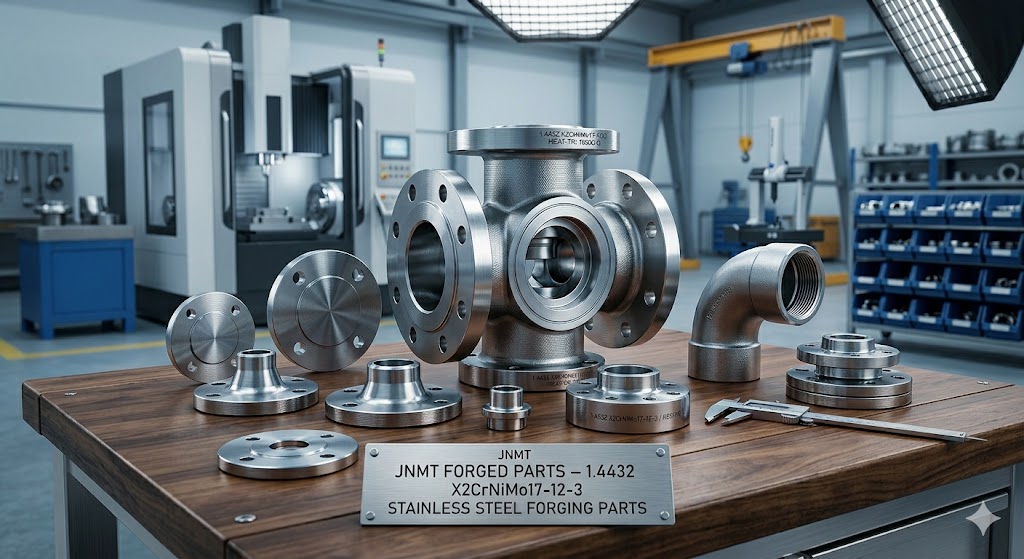
1.4432 (X2CrNiMo17-12-3) Stainless Steel Forging: What Sets It Apart and Who Needs It
Established in 1997, Jiangsu Liangyi Co.,Limited is a professional China-based ISO 9001:2015 certified manufacturer, specializing in custom open die forging parts and seamless rolled steel forged rings made from 1.4432 (X2CrNiMo17-12-3, also written as X2CrNiMo17123 or X2CrNiMo17.12.3) austenitic stainless steel. With an 80,000㎡ production base, 40 million USD fixed assets, and 120,000 tons annual manufacturing capacity, we supply high-performance 1.4432 forging parts to global industrial buyers across Europe, North America, the Middle East, Southeast Asia, and Australia.
1.4432 (X2CrNiMo17-12-3) is a European standard low-carbon austenitic chromium-nickel-molybdenum stainless steel governed by EN 10088-1 and EN 10088-3, functionally equivalent to AISI 316L / UNS S31603 in the ASTM system. The designation "X2" reflects its ultra-low carbon ceiling of 0.03%, which is the defining difference from standard 316 (1.4401, X5CrNiMo17-12-2, max C 0.07%). This single metallurgical constraint eliminates the risk of chromium carbide precipitation (sensitization) in the 425–870°C heat-affected zone during welding — making 1.4432 the preferred engineering choice for welded assemblies that must resist intergranular corrosion over their service life without post-weld annealing.
What truly distinguishes 1.4432 from standard 316L (1.4404) in practice is its tighter molybdenum window: 2.50–3.00% versus 2.00–2.50% for 1.4404. This additional molybdenum content systematically improves the Pitting Resistance Equivalent (PRE = Cr + 3.3×Mo + 16×N), pushing 1.4432 forgings into the PRE range of 26–28, compared to 24–26 for typical 1.4404 forgings. In seawater, coastal, and high-chloride chemical environments, that PRE difference translates directly into measurably longer service life and fewer field replacements — which is why European and Middle Eastern process engineers routinely specify 1.4432 rather than generic 316L where moderate chloride exposure is expected.
Key Technical Advantages of 1.4432 (X2CrNiMo17-12-3) in Forged Form
Higher PRE vs Standard 316L (1.4404)
PRE of 26–28 vs 24–26 for 1.4404. The extra Mo (2.50–3.00%) delivers measurably better pitting and crevice corrosion resistance in chloride environments: seawater, brine, coastal chemical plants, and offshore oil & gas applications where 316L frequently underperforms.
Zero Sensitization Risk in Welded Structures
Carbon ≤ 0.03% completely suppresses chromium carbide precipitation at grain boundaries during welding and service up to 450°C. Unlike standard 316, 1.4432 welded joints require no post-weld heat treatment (PWHT) to maintain corrosion resistance — a significant cost and lead time advantage for fabricated assemblies.
Stable Performance from −196°C to +450°C
The fully austenitic microstructure (typically ≤1% delta ferrite) provides consistent toughness at cryogenic temperatures down to −196°C (LNG applications), while maintaining oxidation resistance in continuous service up to 450°C and intermittent use up to 800°C — covering the widest temperature range of any common stainless steel forgings grade.
Forging Improves Properties Cast Billets Cannot Match
Our forging process achieves a minimum 4:1 reduction ratio for all 1.4432 components. This mechanical working refines the as-cast dendritic structure, closes internal porosity, breaks up oxide inclusions, and aligns grain flow with part geometry. The result: 15–30% higher fatigue strength, superior impact toughness, and dramatically better UT inspection cleanliness compared to cast equivalents.
Full Multi-Standard Dual Compliance
A single forging batch from our facility can be certified to EN 10088-3 + EN 10222-5 and ASTM A182 F316L simultaneously, with EN 10204 3.1 MTC included as standard. For projects requiring PED compliance, we can coordinate with client-nominated EU Notified Bodies to support the required documentation — the PED compliance declaration is issued by the equipment manufacturer or client, not the material supplier. This dual-standard capability eliminates the need to source from separate EU and North American suppliers for the same material grade.
One-Stop: Melt → Forge → Machine → Inspect
We own the entire supply chain: EAF/LF/VD melting, open die forging, ring rolling, heat treatment, CNC rough and finish machining, and full NDT inspection — all under one roof at Jiangyin. No raw material traceability gaps, no sub-contractor quality risks, and a single point of responsibility for every part we deliver worldwide.
1.4432 Forging Parts: Complete Manufacturing Specifications
The table below summarizes our standard production capability ranges for 1.4432 (X2CrNiMo17-12-3) forged components. All parameters can be adjusted to match your specific engineering drawings and project requirements:
Swipe left to view full table on mobile
| Parameter | Standard Range | Notes & Customization |
|---|---|---|
| Single Piece Weight | 30 kg – 35 tons | Ultra-large or ultra-light pieces available on request |
| Forged Bars / Round Bars | Φ80 mm – Φ1,200 mm | Max length 16,000 mm; stepped/contoured profiles available |
| Seamless Rolled Rings (OD) | Φ200 mm – Φ5,000 mm | Wall thickness ratio (OD/ID) and height up to 1,200 mm customizable |
| Discs / Plates / Blocks | Φ100 mm – Φ2,500 mm | Thickness from 30 mm; irregular shapes from drawing |
| Hollow Forgings / Sleeves | OD Φ150 mm – Φ1,800 mm | Bore ratio and wall thickness per drawing |
| Minimum Forging Ratio | ≥ 4:1 | Higher ratios (6:1, 8:1) available for critical structural parts |
| As-Forged Tolerance | ±3 mm – ±8 mm typical | Per EN 10243 or customer standard |
| Finish Machining Tolerance | ±0.02 mm – ±0.5 mm | CNC precision machining per customer drawing |
| Surface Finish (Ra) | Ra 0.8 – Ra 6.3 μm | Turned, ground, or polished; as-forged also available |
| ASTM Grain Size | ≥ ASTM No. 5 | Finer grain (No. 7–9) available for high-fatigue applications |
| Delta Ferrite Content | ≤ 1% (fully austenitic) | Controlled by chemistry and heat treatment; Ferritescope tested |
| Production Standards | EN, ASTM, API | Dual EN+ASTM certification available; PED material documentation supported |
| Standard Lead Time | 15 – 30 working days | Expedited production; schedule discussed after RFQ review |
Custom 1.4432 (X2CrNiMo17-12-3) Forged Shapes & Products We Supply
Our 1.4432 forging capability spans the full range of open die forgings and seamless rolled rings demanded by global process and mechanical industries. Every shape below can be delivered as rough-forged, rough-machined, or fully finish-machined to your drawing, with EN 10204 3.1 MTC as standard:
1.4432 Forged Bars, Shafts & Step Shafts
We produce X2CrNiMo17-12-3 forged round bars (Φ80–Φ1,200 mm), flat bars, square bars, rectangular bars, step shafts, gear shafts, splined shafts, turbine shafts, pump shafts, and crankshafts in any length up to 16,000 mm. Forged bars offer a fundamentally superior internal structure compared to rolled bar stock: the controlled reduction ratio (≥4:1) and directional grain flow along the bar axis deliver 20–35% higher impact toughness and fatigue life — critical for rotating and reciprocating shaft applications in pumps, compressors, and turbines. Surface condition options include as-forged black, turned (Ra 3.2–6.3 μm), or precision ground (Ra 0.8–1.6 μm).
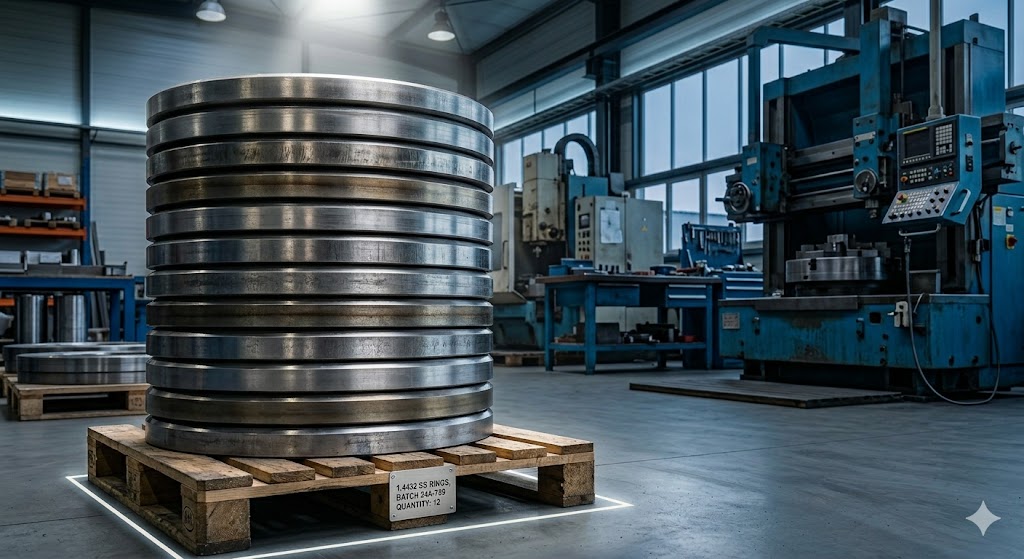
1.4432 Seamless Rolled Forged Rings
Our 1M and 5M ring rolling machines produce seamless X2CrNiMo17-12-3 rings from Φ200 mm OD to Φ5,000 mm OD, with heights up to 1,200 mm and virtually any wall thickness. Product forms include: cylindrical rings, contoured (profiled) rings, gear rings, slewing bearing rings, flange rings, and custom ring blanks for machining into valve seats, bearing housings, and ring-type pressure vessel components. The circumferential grain flow inherent to the ring rolling process gives our rings a fatigue resistance advantage over equivalent discs or machined plate rings — an important consideration for cyclic pressure and rotational applications. We support ring rolling to EN 10243-2 and custom tolerancing to your acceptance drawing.
1.4432 Hollow Forgings, Sleeves & Housings
Custom 1.4432 forged hubs, housings, shells, sleeves, bushings, casings, and hollow bars are produced by piercing and drawing solid billets on our hydraulic presses, achieving seamless hollow cross-sections that cannot be produced by drilling alone on large diameters. OD range: Φ150–Φ1,800 mm. Typical applications include pump barrels, valve bonnets, impeller housings, and bearing carriers for fluid handling and high-pressure service. We machine bores to H7/H8 tolerance class as standard, with tighter tolerancing available for interference-fit or precision-alignment applications.
1.4432 Forged Discs, Blocks, Plates & Tube Sheets
X2CrNiMo17-12-3 forged discs and circular plates (Φ100–Φ2,500 mm, thickness from 30 mm) deliver the clean, inclusion-free interior that pressure vessel design codes demand. We forge tube sheets, baffle plates, blind flanges, valve bodies, and custom structural blocks in this geometry. For tube sheets exceeding Φ800 mm, we consistently achieve UT inspection Class 3 per EN 10228-3 / ASTM SA-388, with zero lamination or porosity indications — a level of internal quality that rolled plate cannot reliably deliver at large diameters.
Custom 1.4432 Pipe & Tube Forgings, Fittings & Nozzles
We produce 1.4432 forged pipe sections, boiler shell forgings, reactor nozzles, swept branch outlets, swept saddles, venturi meter bodies, transition cones, reducing pieces, and forged piping components designed for pressure piping systems to EN 13480 and ASME B31.3. These products are forged from solid billets (not cast or welded), guaranteeing full wall integrity and seamless microstructure throughout — essential for piping systems in chemical plants, nuclear power, and offshore platforms where weld seams in fittings present unacceptable risk.
Complex Custom & Near-Net-Shape 1.4432 Forgings
Beyond standard geometries, our open die forging and CNC machining capabilities allow us to produce near-net-shape complex forgings — Christmas tree wellhead components, impeller blanks with integral hubs, multi-step flanged shafts, eccentric shapes, and forged valve balls (tighter concentricity and rounder profile than cast equivalents). For high-volume repeat orders, we can develop closed-die or semi-closed-die tooling to reduce machining allowances and per-unit cost.
Get Custom Drawing Quote →1.4432 vs. Other Stainless Steel Grades: How to Choose the Right Material for Your Forging
One of the most common — and costly — specification errors we see from global buyers is selecting the wrong stainless grade because the EN and ASTM designations appear interchangeable on a data sheet. The following comparison draws on 25+ years of forging and field experience to clarify when 1.4432 is the right choice, and when an alternative may serve you better:
Swipe left to view full table on mobile
| Grade | EN / ASTM Designation | C Max (%) | Mo Range (%) | Ni Range (%) | PRE (typical) | Best Use Case |
|---|---|---|---|---|---|---|
| 1.4432 ★ | X2CrNiMo17-12-3 / ~316L | 0.03 | 2.50–3.00 | 10.5–13.0 | 26–28 | Welded assemblies in moderate chloride exposure; EN-governed projects; material supports PED compliance documentation |
| 1.4404 | X2CrNiMo17-12-2 / 316L | 0.03 | 2.00–2.50 | 10.0–13.0 | 24–26 | General corrosion service; cost-sensitive projects; lower Mo acceptable |
| 1.4401 | X5CrNiMo17-12-2 / 316 | 0.07 | 2.00–2.50 | 10.0–13.0 | 24–26 | Non-welded mechanical parts only; avoid where IGC risk exists; being phased out in EU projects |
| 1.4435 | X2CrNiMo18-14-3 / 316L* | 0.03 | 2.50–3.00 | 12.5–15.0 | 27–29 | Pharmaceutical, high-purity, food & beverage; bio-pharma reactors where higher Ni/reduced ferrite is mandated by ASME BPE |
| 1.4462 | X2CrNiMoN22-5-3 / 2205 Duplex | 0.03 | 2.50–3.50 | 4.5–6.5 | 33–38 | High mechanical stress + high chloride (seawater, offshore); higher strength than austenitic but more restrictive in temperature range (−50 to +280°C) |
| 1.4539 (904L) | X1NiCrMoCu25-20-5 / N08904 | 0.02 | 4.00–5.00 | 23.0–28.0 | 36–40 | Highly aggressive acids (H₂SO₄, H₃PO₄), very high chloride; 2–3× cost of 1.4432; justified only where 1.4432 demonstrates insufficient corrosion life |
Practical selection guidance from our engineering team: If your project involves welding, moderate chloride exposure (e.g. seawater spray, cooling water, food-grade brine), and requires EN material standards compliance — 1.4432 is almost always the optimal cost/performance solution. If the Ni content must be ≥12.5% for ASME BPE compliance or electropolishing passivation requirements, step up to 1.4435. If your stress-to-corrosion environment is severe enough to need PRE above 30, evaluate duplex (1.4462) for its strength advantage. Contact us to discuss your specific media, temperature, and pressure conditions — we can provide material selection advice based on field experience across 500+ global projects.
Ask Our Engineers: Which Grade Is Right for My Application?Why Forged 1.4432 Outperforms Cast or Machined-from-Bar Alternatives
Procurement teams occasionally ask whether cast 316L or machined-from-bar 316L plate can substitute for a forged 1.4432 component when lead times are tight or when forgings appear cost-premium. Based on our metallurgical expertise and on field failure analysis data from returned components, the differences are engineering-significant — not cosmetic:
Swipe left to view full table on mobile
| Property / Factor | 1.4432 Open Die Forging (Ours) | 316L Investment / Sand Casting | 316L Machined from Rolled Plate |
|---|---|---|---|
| Internal Soundness | Fully dense; porosity eliminated by ≥4:1 reduction ratio; UT Class 3 routinely achieved | Inherent microporosity and shrinkage cavities; UT inspection limited by coarse dendritic grain | Laminar inclusions from rolling; risk of delamination at large diameters or when cutting transverse to rolling direction |
| Grain Structure | Fine, equiaxed, ASTM No. 5–8; grain refined by mechanical working and solution treatment | Coarse dendritic; grain size ASTM No. 0–2 typical; difficult to inspect ultrasonically | Elongated fibrous grain along rolling plane; anisotropic — properties differ between longitudinal and transverse directions |
| Fatigue Strength | ~280–320 MPa at 10⁷ cycles; isotropic grain flow aligned with part geometry | ~180–220 MPa; stress concentrations at pores reduce fatigue life unpredictably | ~240–270 MPa longitudinal, significantly lower transverse — design must account for anisotropy |
| Impact Toughness (Charpy, −46°C) | ≥ 100 J typical (routinely ≥ 150 J) | 40–80 J; highly variable between castings | 60–120 J longitudinal; much lower in short-transverse direction for thick plates |
| NDT Acceptability | UT, MT, PT fully applicable; clean background enables reliable indication detection | UT limited by acoustic noise from dendritic grain; RT preferred but costly for heavy sections | UT effective on simple shapes; edge zones near plate surface may mask indications |
| PED / ASME Code Suitability | EN 10222-5 / ASTM A182 F316L — directly listed in pressure equipment design codes with published allowable stress tables; supports client's PED compliance documentation | Requires design factor penalties in ASME (casting quality factor Ec typically 0.8) or EN PED category escalation | Plate standard (EN 10028-7) allowable stresses may differ from forging standard; inspector qualification required |
| Material Traceability | Full heat traceability from ingot to finished part; EN 10204 3.1 MTC per heat and piece | Traceability to casting heat; chemical composition verified by spectrometer but no reduction ratio record | Plate heat number traceable; but original ingot forging ratio and directionality not documented |
The conclusion from 25+ years of experience: for any 1.4432 component that will be subjected to cyclic stress, operating in a pressure-containment role under a recognized design code, or requiring third-party NDT acceptance — open die forging is not a premium option, it is the technically correct manufacturing method.
1.4432 (X2CrNiMo17-12-3) Forgings: Industry Applications & Proven Project Cases
Our 1.4432 forging parts serve demanding industrial environments in over 50 countries. The depth of application-specific experience our engineering team has built over 25+ years allows us to proactively anticipate specification challenges — surface condition requirements for media contact, dimensional stability after solution treatment on large-diameter rings, filler metal compatibility for weld-overlay on forged seat surfaces — that commodity suppliers simply do not address. Below are our core application sectors with genuine project case details:
Valve & Fluid Control Industry
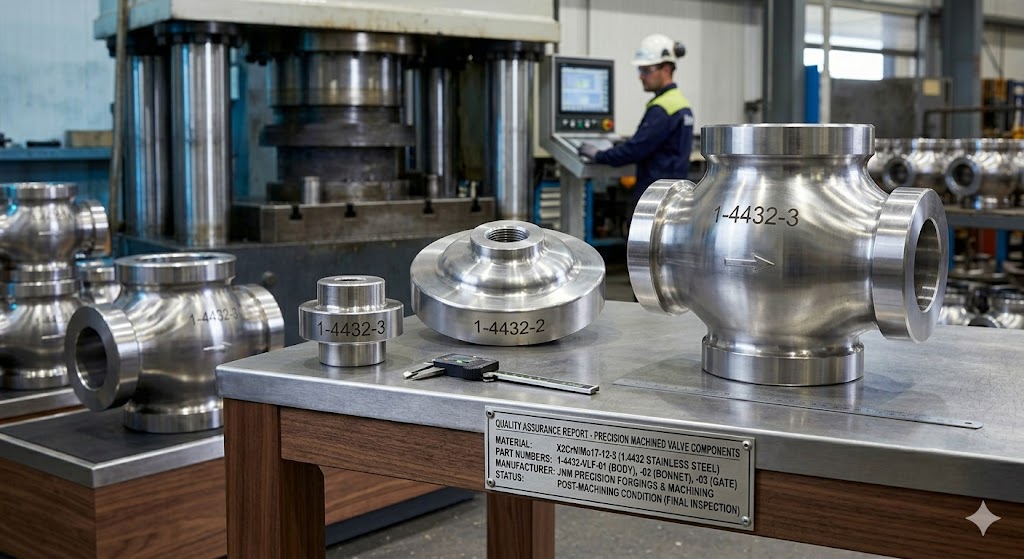
Forged 1.4432 valve components are substantially superior to cast equivalents for all pressure-containing valve bodies, bonnets, and trim: they pass UT inspection routinely (important for high-pressure valve applications), they meet Cv and flow path geometries closer to design intent because machining allowances are predictable, and they eliminate the risk of casting cold shuts or shrinkage porosity causing fugitive emission failures during hydrotest. Our X2CrNiMo17-12-3 forged valve product range covers: globe valve bodies and bonnets (PN10–PN400), ball valve shells (floating and trunnion-mounted, API 6D compliant), gate valve bodies (full-bore and reduced-bore), check valve bodies and discs, butterfly valve bodies and main spindles (EN 593 / API 609), control valve bodies, cryogenic valve components (tested to −196°C), and all associated trim parts including stems, seat rings, discs, and plugs.
Oil & Gas Wellhead & Downhole Equipment
The oil and gas industry has some of the toughest mechanical and corrosion requirements for forged parts. All wellhead forgings must meet API 6A for material chemistry, mechanical properties, NDT, and paperwork. We produce 1.4432 forgings based on API 6A material specifications and dimensional tolerances, and provide full manufacturing process documentation for customers’ quality engineering review and approval. Our wellhead forging product range encompasses:Christmas tree bodies and spools, casing head housings, tubing head spools, casing hangers, tubing hangers, studded adapter flanges (SAF), integral mud flanges (IMF), studded crosses, target tees, splined drive shafts for downhole mud motors, and electrical submersible pump (ESP) shaft forgings.
All wellhead-grade forgings for API 6A service are produced in accordance with a formal, documented Manufacturing Process Plan (MPP). This procedure document is fully reviewed and approved by the client’s QC team in advance of production, which makes sure every part has standardized process control, full material traceability, and consistent quality.
Chemical Processing & Reaction Engineering
In the chemical industry, 1.4432 (X2CrNiMo17-12-3) is specified by name — not simply as "316L" — by engineering procurement contractors (EPCs) across Germany, the Netherlands, France, and Belgium, because the EN designation guarantees the tighter Mo and C limits required for welded pressure vessel compliance under PED. Our chemical industry forging products include: pressure vessel nozzles and shell forgings, reactor heads and flanges, heat exchanger tube sheets (single-pass and multi-pass), swept branch outlets (SBO) and swept saddles for process piping, venturi flow meter bodies, vessel support rings, agitator and mixer shaft forgings, and process pump components for aggressive media service. We support full EPC documentation packages including material certificates, WPS/WPQR documentation for forging-to-fabrication welds, and material documentation packages to support the equipment manufacturer's PED compliance process.
Power Generation & Energy Industry
We supply high-quality 1.4432 (X2CrNiMo17-12-3) forged components for power generation and energy infrastructure applications. Our ISO 9001:2015 quality management system, full material traceability from ingot to finished part, and 15-step inspection process support the demanding quality requirements of the energy sector. Product forms include: pump casing forgings, impeller blanks, pressure vessel nozzles, heat exchanger components, and structural forgings for thermal power, hydroelectric, and industrial energy plant projects. For projects with specific industry qualification requirements, we recommend early engagement to align our manufacturing documentation with your project's inspection and test plan (ITP).
Turbomachinery, Pumps & Rotating Equipment
Rotating machinery imposes a dual challenge on forged components: dimensional precision (tight tolerance on bore, OD, face runout, and balance bore concentricity) combined with microstructural integrity (fine, uniform grain to ensure consistent machining behavior and vibration resistance). Our 1.4432 forged products for turbomachinery and pump applications include: centrifugal compressor impeller blanks (closed and semi-open types), pump casing forgings, pump shaft forgings, wear ring forgings, diffuser ring blanks, and labyrinth seal carrier rings. We regularly hold bore tolerance to H7 (±0.01–0.025 mm depending on diameter) as-machined, with face runout ≤0.02 mm TIR — meeting the dimensional requirements of API 610 (centrifugal pumps) and API 617 (centrifugal compressors) without secondary grinding operations.
Shipbuilding, Offshore & Marine Engineering
Marine environments present the most aggressive chloride exposure scenario for stainless steel forgings. The PRE advantage of 1.4432 (26–28) over 1.4404 (24–26) becomes field-meaningful in seawater-wetted or spray-exposed components. We supply 1.4432 forged shaft sleeves, propeller shaft bearing housings, seawater valve bodies (compliant with EN ISO 21457 / NORSOK M-630), offshore structural connectors, ROV component forgings, and deck machinery shaft forgings to shipyards and offshore equipment manufacturers in South Korea, Japan, Norway, the Netherlands, and Singapore. We can support client-arranged Class Society inspection (DNV, Lloyd's Register, Bureau Veritas) for marine forging orders — please specify your inspector requirements and HOLD points at RFQ stage and we will accommodate accordingly.
1.4432 (X2CrNiMo17-12-3) Material Properties: Full Technical Reference
Chemical Composition — EN 10088-3 Requirements for Forgings
The following composition limits govern all 1.4432 forged products we deliver under EN 10088-3 / EN 10222-5. Our internal chemistry aim points are controlled tighter than the standard minimum/maximum to ensure consistent PRE and mechanical properties across heats:
Swipe left to view full table on mobile
| Element | EN 10088-3 Limit | Our Internal Target | Metallurgical Function |
|---|---|---|---|
| Carbon (C) | ≤ 0.030% | ≤ 0.020% aim | Suppresses sensitization; ultra-low C eliminates chromium carbide precipitation risk even after multi-pass welding |
| Silicon (Si) | ≤ 1.00% | 0.40–0.80% | Deoxidation; high Si can promote sigma phase; controlled for microstructural stability |
| Manganese (Mn) | ≤ 2.00% | 1.00–1.80% | Austenite stabilizer; aids hot workability during forging; replaces some Ni at lower cost |
| Phosphorus (P) | ≤ 0.045% | ≤ 0.030% | Segregates to grain boundaries; low P essential for weldability and pitting resistance |
| Sulfur (S) | ≤ 0.015% | ≤ 0.008% | Ultra-low S for improved UT cleanliness, reduced MnS inclusions (pitting initiation sites), and NACE compliance |
| Chromium (Cr) | 16.50–18.50% | 17.0–18.0% | Primary corrosion barrier; passivation layer forming element; minimum 16% Cr required for "stainless" classification |
| Nickel (Ni) | 10.50–13.00% | 11.0–12.5% | Stabilizes austenitic structure; suppresses martensitic transformation; improves corrosion resistance in reducing acids |
| Molybdenum (Mo) | 2.50–3.00% | 2.65–2.95% | Largest PRE contributor after Cr; dramatically improves pitting and crevice corrosion resistance; key differentiator over 1.4404 |
| Nitrogen (N) | ≤ 0.11% | 0.04–0.09% | Interstitial strengthener; contributes 16×N to PRE formula; improves pitting resistance without compromising weldability |
Mechanical Properties of 1.4432 Forgings (Solution-Annealed Condition, EN ISO 6892-1)
Swipe left to view full table on mobile
| Property | EN 10222-5 Minimum | Typical Achieved Value | Test Method |
|---|---|---|---|
| Tensile Strength (Rm) | 500 MPa | 540–620 MPa | EN ISO 6892-1 (RT) |
| Yield Strength Rp0.2 | ≥ 200 MPa | 220–280 MPa | EN ISO 6892-1 (RT) |
| Elongation (A) | ≥ 40% | 45–55% | EN ISO 6892-1 |
| Reduction of Area (Z) | ≥ 50% | 60–75% | EN ISO 6892-1 |
| Impact Energy (KV, −196°C) | ≥ 60 J (average 3 specimens) | ≥ 120 J typical | EN ISO 148-1, Charpy V-notch |
| Hardness | ≤ 215 HB | 140–175 HB | EN ISO 6506-1 |
| ASTM Grain Size | ≥ No. 5 | No. 5–8 | ASTM E112 / EN ISO 643 |
| Delta Ferrite Content | ≤ 1% (project-specific) | 0.1–0.8% | Ferritescope (Fischer) per piece |
| Modulus of Elasticity (E) | — | 196–200 GPa at 20°C | EN ISO 6892-1 |
| PRE (Calculated) | — | 26.0–28.5 | Calculated from MTC chemistry: Cr + 3.3×Mo + 16×N |
Physical & Thermal Properties of 1.4432 Stainless Steel
Swipe left to view full table on mobile
| Physical Property | Value | Condition / Notes |
|---|---|---|
| Density | 8.0 g/cm³ | At 20°C; slightly lower than carbon steel (7.85 g/cm³) |
| Thermal Conductivity | 14–16 W/(m·K) | At 20–100°C; approx. ⅓ of carbon steel — relevant for heat exchanger design |
| Specific Heat Capacity | ~500 J/(kg·K) | At 20°C |
| Thermal Expansion Coefficient | 16.0 × 10⁻⁶ /K | 20–100°C; ~50% higher than carbon steel — critical for differential expansion in assemblies |
| Electrical Resistivity | ~0.75 μΩ·m | At 20°C |
| Magnetic Permeability | ≤ 1.02 μᵣ (non-magnetic) | In solution-annealed condition; cold working or heavy deformation may induce slight magnetic response |
| Melting Range | 1375–1400°C | Solidus to liquidus range |
| Max Continuous Service Temp | 450°C | Above 450°C, sigma phase formation risk increases; consult metallurgist for higher-temperature applications |
| Min Service Temp (cryogenic) | −196°C | Maintains full toughness to liquid nitrogen temperature; no ductile-to-brittle transition in austenitic grades |
1.4432 Forgings Production Standards, Melting Process Selection & Heat Treatment
Applicable International Production Standards
Every 1.4432 forging we produce is manufactured to at least one of the following standards, with dual or triple certification available where your project requires simultaneous EN and ASTM compliance. We hold the standard documents in-house and can advise on which clauses govern your specific forging geometry and application category:
- EN 10088-3: Stainless Steels — Technical delivery conditions for semi-finished products, bars, rods, wire, sections and bright products (the primary composition and property standard for 1.4432 bar and forging feedstock)
- EN 10222-5: Steel Forgings for Pressure Purposes — Martensitic, Austenitic and Austenitic-Ferritic Stainless Steels (a recognized forging product standard for pressure vessel and pressure piping applications; supports PED documentation when required by the equipment manufacturer)
- EN 10028-7: Flat Products Made of Steels for Pressure Purposes — Stainless Steels (for disc and plate forgings used as vessel components)
- EN 10272: Stainless Steel Bars for Pressure Purposes (for forged bar supplied to pressure equipment fabricators)
- EN 10253 Series: Butt-Welding Pipe Fittings for Wrought Austenitic and Duplex Stainless Steels (for forged fittings: elbows, tees, reducers)
- ASTM A182 / ASME SA-182: Standard Specification for Forged or Rolled Alloy and Stainless Steel Pipe Flanges, Forged Fittings, and Valves — F316L designation; required for ASME pressure piping and power piping code compliance
- ASTM A479 / ASME SA-479: Stainless Steel Bars and Shapes for Use in Boilers and Other Pressure Vessels — Type 316L
- API 6A (21st Edition): Specification for Wellhead and Christmas Tree Equipment — governing wellhead forging design, material, testing, and documentation requirements
- NACE MR0175 / ISO 15156-3: Materials for use in H₂S-containing environments in oil and gas production — hardness, ferrite, and chemical limits for sour service austenitic forgings
Melting Method Selection: Why It Matters for 1.4432 Forgings
The choice of melting route is not a cost lever — it is an engineering decision that determines the ultimate cleanliness, homogeneity, and traceability of your 1.4432 forging. We have several melting routes in-house and pick the best one for your needs, testing needs, and end-use standard:
- EAF (Electric Arc Furnace) alone: Adequate for general industrial forgings without stringent gas content limits. Typical O₂ content 30–60 ppm, H₂ 2–4 ppm. Used for: general mechanical components, non-PED forgings.
- EAF + LF (Ladle Furnace) + VD (Vacuum Degassing): Removes hydrogen to ≤2 ppm, reduces oxygen to ≤15 ppm, enables precise alloy trimming (Mo ±0.05%, C ≤0.020%). Used for: pressure vessel forgings, EN 10222-5 Class 2, API 6A PSL-3 material.
- EAF + LF + ESR (Electro Slag Remelting): ESR secondary refining removes oxide inclusions to ≤5 μm size, dramatically improves transverse properties and UT cleanliness. Used for: large-diameter tube sheets, high-pressure valve bodies, important structural parts needing UT Class 3 acceptance.
- EAF + LF + PESR (Protective Atmosphere ESR): Inert atmosphere ESR deletes nitrogen pickup during remelting. Used for: aerospace structural forgings and high-purity applications needing N ≤0.03% with simultaneous ESR cleanliness.
- VIM + PESR (Vacuum Induction Melting + Protective Atmosphere ESR): Ultra-high purity route; achieves O₂ ≤5 ppm, H₂ ≤1 ppm, N ≤0.01%. Used for: important rotating machinery, aerospace parts, and any application where total inclusion content must be below standard EAF capability.
Forging Process Control: Where Microstructure Is Determined
The properties of a finished 1.4432 forging are largely determined during the hot working stage. Our process control parameters — documented in the Manufacturing Process Plan (MPP) submitted for client approval before every new project — include:
- Heating Rate: Maximum 150°C/hour below 800°C to prevent thermal shock in large section ingots; then full power to forging temperature
- Forging Temperature Window: Start forging ≤1,150°C, finish forging ≥850°C. Below 850°C, work hardening and partial recrystallization can create heterogeneous grain structure — all deformation below this limit is prohibited in our MPP
- Minimum Total Reduction Ratio: ≥4:1 from ingot cross-section to finished forging cross-section as standard; ≥6:1 for high-fatigue and critical structural applications. This ratio is calculated, documented, and reported in every MTC
- Inter-heat Reheats: For forgings requiring multiple reduction passes, each reheat returns the workpiece to the full forging temperature window. Cool-to-reheat cycles are recorded in the furnace log and attached to the MTC
- Die Design and Bite Ratio: Our semi-automatic forging presses with programmable press controls keep consistent bite ratio (pass-to-pass reduction) to prevent folding defects and guarantee consistent plastic deformation through the cross-section
Heat Treatment: Solution Annealing — The Critical Final Step
For austenitic stainless steel forgings, solution annealing (supersaturation treatment) is not optional — it is the heat treatment that dissolves carbides and secondary phases, recrystallizes the deformed grain structure, restores maximum corrosion resistance, and brings mechanical properties to the levels reported in the standard. Key parameters:
- Solution Annealing Temperature: 1,050°C – 1,100°C, held for sufficient time to achieve full temperature equalization through the section thickness (minimum 1 minute per millimeter of section thickness, minimum 30 minutes total)
- Quenching: Water quench (preferred for sections >20 mm) or rapid air cool. Slow cooling through 600–900°C sigma phase formation range and 425–870°C sensitization range is prohibited — our furnace thermocouples log the actual quench start temperature for every heat treatment batch
- Temperature Uniformity: Our heat treatment furnaces keep ±10°C uniformity throughout the working volume, verified by quarterly furnace surveys per periodic furnace temperature uniformity survey (TUS) methodology
- Sigma Phase Risk: Sigma phase (an intermetallic compound) can form in Mo-containing austenitic grades between 600°C and 900°C, causing brittleness and reduced corrosion resistance. Our strict quenching protocol deletes sigma phase formation risk. We perform metallographic examination on production test coupons to confirm absence of sigma phase for all critical component orders
Manufacturing Equipment & Production Capacity for 1.4432 Forgings
The breadth and precision of our production equipment is what enables us to offer a genuine one-stop service — from custom alloy melting through finished, inspected, and certified components. Below is our full equipment inventory relevant to 1.4432 forging production:
Melting & Refining Equipment
- 30t Electric Arc Furnace (EAF): Primary melting of stainless steel heats; automated electrode control and continuous off-gas analysis
- 30t Ladle Refining Furnace (LF): Precise alloy chemistry trimming to ±0.03% on Mo, ±0.005% on C; desulfurization to ≤0.005%; calcium treatment for inclusion shape modification
- 30t Vacuum Oxygen Decarburization (VOD) / Vacuum Degassing (VD) unit: Degassing to H₂ ≤2 ppm; low-carbon stainless production without nitrogen pickup
- 2t Medium-Frequency Induction Furnace: Small heats for prototype forgings, small-batch custom alloy compositions, and ESR electrode remelt
Heating & Forging Equipment
- 6 Mobile-Hearth Heating Furnaces: Loading capacities 10t, 15t, 20t, 30t, 50t, and 80t; centralized programmable temperature cycle control; thermocouple-logged time-temperature records attached to every MTC
- 6,300t Semi-Automatic Hydraulic Forging Press: Our largest press; capable of producing single-piece forgings up to 35 tons; automated press control with programmable bite sequence ensures consistent reduction per pass; real-time force monitoring
- 4,000t Semi-Automatic Hydraulic Forging Press: Mid-range heavy forgings; optimized for shaft and step-shaft forgings in the 500 kg – 15 ton range
- 2,000t Semi-Automatic Hydraulic Forging Press: Smaller forgings and ring rolling preforms; high throughput for production orders
- 0.75t – 9t Electro-Hydraulic Forging Hammers: For precision shaping, forged-to-close-tolerance blocker operations, and small complex forgings where press equipment would over-reduce
- 5M Ring Rolling Machine: Produces rings up to Φ5,000 mm OD; automatic ring diameter and height control; real-time eccentricity monitoring during rolling to ensure roundness ≤0.5% of OD
- 1M Ring Rolling Machine: High-cycle production of smaller rings Φ200–Φ1,000 mm; multiple machine tool changes allow rapid shape transitions between contoured ring profiles
Heat Treatment Equipment
- 10+ Heat Treatment Furnaces (various sizes): Solution annealing to 1,100°C with water quench; annealing; stress relief; all with temperature uniformity ±10°C (verified by periodic furnace surveys); automated quench transfer time ≤45 seconds from furnace exit to water entry for sections up to 200 mm
CNC Machining Equipment
- Heavy-duty CNC turning centers: max swing Φ3,200 mm, max length 8,000 mm between centers; C-axis and live tooling for complex contours
- CNC boring mills (horizontal and vertical): workpiece weight capacity to 40t; available for large disc, flange, and tube sheet precision boring
- CNC milling centers: 5-axis capability for complex forged shapes; used for near-net-shape forging finish operations
- Deep-hole drilling: L/D ratio up to 80:1 for hollow shaft and barrels
NDT & Metrology Equipment
- Ultrasonic Testing (UT): Phased array UT (PAUT) and conventional A-scan; immersion UT for small forgings; compliance with EN 10228-3, ASTM A388, and project-specific acceptance criteria
- Magnetic Particle Testing (MT): For surface-open indications on ferromagnetic forgings; YOKE and prod techniques
- Liquid Penetrant Testing (PT): Color contrast and fluorescent PT for surface indication detection on austenitic (non-magnetic) forgings; preferred over MT for stainless
- Hardness Testing: Brinell (HB), Vickers (HV), and Rockwell (HRC) testers; portable Leeb rebound hardness for large forgings on the shop floor
- Optical Emission Spectrometer (OES): Direct-reading spectrometer for PMI (Positive Material Identification) and incoming chemistry verification; results available within 5 minutes per heat
- Universal Tensile Testing Machine: 600 kN capacity; high-temperature tensile testing to 900°C
- Charpy Impact Testing Machine: To −196°C (liquid nitrogen); automated specimen positioning; calibrated to EN ISO 148-1
- Metallographic Microscope: Grain size determination (EN ISO 643), microstructure examination for carbide precipitation, sigma phase, and ferrite content
- Ferritescope (Fischer): Quantitative ferrite measurement per piece; critical for NACE MR0175 sour service compliance and ASME BPE requirements
- CMM (Coordinate Measuring Machine): 3D dimensional inspection; tolerance verification for complex machined geometries; report output in standard GD&T format
Total production capacity: up to 35 tons per single forging piece, 120,000 tons annual output across all materials and grades. This scale allows us to simultaneously run prototype qualification forgings and production volume orders for the same client without schedule conflict.
1.4432 Forgings Quality Control: Full-Process Inspection & Certification System
Quality management at Jiangsu Liangyi is not limited to final inspection. We operate a 15-checkpoint full-process quality control system, from raw material procurement through shipping — every checkpoint is documented, time-stamped, and traceable to the specific forging piece(s) it covers. The following is the actual inspection flow our QC department follows for every custom 1.4432 forging order:
Swipe left to view full table on mobile
| QC Step | Activity | Acceptance Standard | Record |
|---|---|---|---|
| 1 — MPP Review | Manufacturing Process Plan submitted to client QE for approval before any material is ordered | Client sign-off required; no production start without approval | Signed MPP document, revision control log |
| 2 — Ingot / Raw Material Incoming | Chemical composition verification by OES spectrometer on every incoming heat | EN 10088-3 composition limits; our internal tighter aim points | Incoming inspection report; suppliersʼ 3.1 MTC cross-referenced |
| 3 — Ingot UT Pre-Inspection | UT scan of ingot/billet before forging to establish baseline soundness and exclude grossly defective material | Ingot-specific acceptance criteria per EN 10228-3 pre-forging class | UT scan report with C-scan or A-scan printout |
| 4 — Furnace Temperature Verification | Thermocouple log confirms ingot reached forging window (850°C – 1,150°C) before first press stroke | Forging temperature per MPP; no forging below 850°C | Digital furnace log (time-stamped); attached to MTC package |
| 5 — In-Process Forging Ratio Verification | Forging supervisor records cross-section dimensions after each reduction pass; forging ratio calculated and confirmed ≥4:1 | Minimum 4:1 total reduction ratio (or as specified in MPP) | Forging log card with reduction calculations |
| 6 — As-Forged Visual & Dimensional | Visual inspection for cracks, laps, folds; dimensional check of forging envelope against pre-machining drawing | No rejectable surface conditions per EN 10243; forging allowance confirmed | As-forged dimensional report |
| 7 — Heat Treatment Temperature Log | Solution annealing temperature and hold time confirmed by thermocouple; quench transfer time recorded | 1,050°C – 1,100°C per EN 10222-5; transfer to quench ≤45 seconds | Heat treatment chart (time-temperature curve); signed by QC |
| 8 — Hardness Survey | Brinell hardness checked at multiple locations on the post-HT forging | ≤215 HB (EN 10222-5 / NACE ≤22 HRC for sour service) | Hardness test report with measurement location map |
| 9 — Chemical Composition (Final) | PMI by OES on finished forging; confirms no heat mix-up during production | EN 10088-3 chemistry for 1.4432; all elements within limits | Final PMI report; part marked with heat number |
| 10 — Mechanical Property Testing | Tensile test + Charpy impact test on coupon from same forging heat; high-temp tensile if required by project spec | EN 10222-5 / ASTM A182 minimums; project-specific addenda | Mechanical test report (stress-strain curve, impact energy per specimen) |
| 11 — NDT (UT, PT / MT) | Full-body UT scan for volumetric integrity; 100% surface PT for all austenitic forgings | UT: EN 10228-3 / ASTM A388 Class 3 or project-specific; PT: EN ISO 23277 Level 2 | NDT report with scan maps; signed by Level II/III operator |
| 12 — Ferrite Content (if required) | Ferritescope measurement at prescribed locations per NACE MR0175 / client spec | ≤1% (or ≤0.5% for sour service per NACE); ≤1% for ASME BPE | Ferrite measurement report with measurement point map |
| 13 — Final Dimensional Inspection | CMM or conventional measurement of all critical dimensions against customer drawing; GD&T tolerances verified | All dimensions within drawing tolerance; Go/No-Go gauge for threaded features | Final dimensional inspection report with actual vs. nominal data |
| 14 — Third-Party Inspection (if required) | Client-nominated TPi (BV, SGS, TÜV, DNV, Lloyd's, etc.) witnesses any or all of the above inspections at designated HOLD points | Per client's inspection and test plan (ITP) | TPi witness report; EN 10204 3.2 certificate signed by TPi |
| 15 — MTC Compilation & Shipment Release | Full MTC package compiled: chemistry, mechanical test, HT chart, NDT, dimensional, ferrite, hardness; QC manager sign-off; part marked per drawing | EN 10204 3.1 (standard) or 3.2 (with TPi); all certificates cross-referenced by heat number and piece mark | Bound MTC package; retained in QC archive for minimum 10 years |
Certifications, Standards Compliance & Quality Capabilities
- ISO 9001:2015 — Quality Management System (annual third-party surveillance audit; certificate available on request)
- Production to PED 2014/68/EU material standards — We manufacture forgings to EN 10222-5 and EN 10088-3, the material standards recognized under the Pressure Equipment Directive. PED compliance declarations are issued by the equipment manufacturer or client (not the material supplier). We can provide all required material documentation to support your PED compliance process.
- Production to API 6A material and dimensional specifications — We produce wellhead forging components to API 6A material requirements with full MPP documentation. Project-specific API compliance review is subject to client QC approval process.
- NACE MR0175 / ISO 15156-3 material compliance — Our 1.4432 forgings meet the hardness, ferrite, and chemistry requirements of NACE MR0175 for austenitic stainless steels in sour service. Material compliance statements available per order.
- EN 10204 3.1 MTC — Issued as standard with every order, covering chemistry, mechanical properties, heat treatment, hardness, and dimensional inspection.
- EN 10204 3.2 with client-nominated TPi — TÜV, BV, SGS, DNV, Lloyd's and other inspectors welcomed; we accommodate witness HOLD points at any production stage.
- First Article Inspection (FAI) — Available with full dissection and destructive testing for new parts entering long-term supply agreements.
Why Global Buyers Choose Jiangsu Liangyi for 1.4432 Forging Parts
The questions global procurement engineers ask us most often are: "Why you rather than a European forging supplier?" and "How can a Chinese manufacturer reliably meet our quality requirements?" After 25+ years and 500+ global clients, our answers are grounded in specifics, not marketing language:
Vertically Integrated: Melt to Finished Part
We own every step: EAF melting, LF/VD refining, forging presses up to 6,300t, ring rolling to Φ5,000 mm, heat treatment furnaces, and CNC machining. No sub-contracted processes means no traceability gaps and one accountable supplier.
25+ Years & 500+ Global Clients Since 1997
We have supplied 1.4432 and 316L forgings to buyers in Germany, the Netherlands, France, the US, Canada, UAE, Australia, Singapore, Japan, and South Korea — typically under long-term supply agreements that renew because first-batch quality matches the 5th year of supply.
Dual EN + ASTM Certification in One Order
A single forging batch can be produced and documented to both EN 10222-5 and ASTM A182 F316L — supporting your EU and North American project compliance requirements without sourcing from separate suppliers for the same material.
Competitive Price Without Sacrificing Quality
Because we own our melting furnaces and do not purchase semi-finished bar for re-forging, our raw material cost is 15–25% lower than forging shops that buy mill bar. We pass this saving to our customers — not to cut quality corners, but to provide genuine value in cost-competitive global markets.
Engineering Support: More Than a Metal Supplier
Our technical team can review your drawing for forging-specific issues (parting line placement, draft angles, minimum achievable wall thickness, grain flow orientation), advise on material grade selection, and propose process optimizations that reduce machining cost — before you commit to tooling or purchase order.
Fast, Transparent Lead Times
After confirming the PO and drawing, it takes 15 to 30 business days to make standard 1.4432 forgings. With every order confirmation, we send a detailed production milestone schedule, not just a vague delivery window. If anything changes, we let you know within 24 hours.
Global Logistics & Documentation Expertise
Our export documentation team handles EUR.1 certificates (for EU preferential tariff), CO (Certificate of Origin), packing lists in dual language, and MSDS/SDS for stainless steel. We support FOB, CIF, CFR, EXW, DDP terms — and have active freight relationships at Shanghai, Ningbo, and Qingdao ports for cost-optimized routing to your destination.
Third-Party Inspection: Full Transparency
We welcome and actively support client-nominated TPi (TÜV, Bureau Veritas, SGS, DNV, Lloyd's) at any stage of production at our factory, from melting to forging to heat treatment to final inspection. We have a witness area on site that is set up for TPi witnessing without getting in the way of the flow of the production line.
How to Submit Your 1.4432 Forging RFQ: What Information We Need
To deliver an accurate quotation within 24 hours, our team requires the following main information. Incomplete RFQs will cause quoting delays and force generalized assumptions that may deviate from your actual technical and commercial requirements. Full upfront details guarantee a fast, precise, and fully compliant tailored quote:
- Material Standard: Confirm whether you need EN 10088-3 / EN 10222-5 (1.4432), ASTM A182 F316L, or dual certification. If your project has special chemistry requirements (lower S, controlled ferrite, specific PRE minimum), note them explicitly.
- Part Drawing or Sketch: A PDF drawing with dimensions, tolerances, and surface finish callouts is good. A hand sketch with main dimensions is acceptable for budget pricing. Indicate whether dimensions are as-forged, as-machined (rough), or fully finish-machined.
- Quantity: RFQ quantity + expected annual volume if this will be a repeat order. Larger committed volumes allow us to optimize raw material procurement and offer better unit pricing.
- Required Standards & Certificates: Which product standard governs acceptance (EN 10222-5, ASTM A182, API 6A material specification, etc.)? Certificate type required: EN 10204 3.1 or 3.2? Third-party inspector name and HOLD points?
- Special Testing Requirements: Cryogenic impact test temperature? NACE MR0175 compliance required? Ferrite content limit? Intergranular corrosion test (EN ISO 3651-2)? Positive Material Identification (PMI)?
- Delivery Terms and Timeline: Required delivery date, preferred Incoterms (FOB/CIF/DDP), and destination port or address.
Send your RFQ with drawings and requirements to sales@jnmtforgedparts.com. Our technical sales engineers will review your requirements, confirm any open questions, and respond with a full quotation and preliminary production schedule within 24 business hours.
Frequently Asked Questions About 1.4432 (X2CrNiMo17-12-3) Forging Parts
Both 1.4432 and 1.4404 are low-carbon (≤0.03% C) austenitic stainless steels and are often loosely called "316L" — but they are not identical. The key difference is molybdenum content: 1.4432 requires Mo 2.50–3.00%, while 1.4404 requires only 2.00–2.50%. In practice, this gives 1.4432 a higher Pitting Resistance Equivalent (PRE 26–28 vs. 24–26 for 1.4404) and measurably better resistance to pitting and crevice corrosion in chloride environments. For projects governed by EN standards (particularly PED-compliant equipment in the EU), the two grades are listed separately in EN 10088-1 and EN 10222-5 and are not automatically interchangeable without client approval. If your project specification explicitly calls for 1.4432, you should not accept a 1.4404 substitution without verifying that the actual Mo content of the supplied heat meets ≥2.50% — which many "316L" mill products do not. We can supply either grade; we always recommend specifying the Mo range explicitly in your PO to eliminate ambiguity.
1.4432 is functionally equivalent to AISI 316L / UNS S31603 and is the EN designation most commonly cross-referenced to ASTM A182 Grade F316L. However, there is a compositional overlap issue: ASTM A182 F316L has a Mo range of 2.00–3.00%, which is broader than 1.4432's 2.50–3.00%. A heat of F316L with Mo at 2.20% would comply with ASTM but would not meet 1.4432. Conversely, a heat of 1.4432 with Mo ≥2.50% will always satisfy ASTM F316L requirements. We routinely produce forgings with simultaneous EN 10222-5 (1.4432) and ASTM A182 (F316L) certification in a single MTC, specifically stating the heat chemistry meets both standards. If your project is ASME code-governed (e.g., ASME BPVC Section VIII), we provide ASME SA-182 F316L certification with the same MTC package.
Yes, with important qualifications. 1.4432 performs well in seawater splash zones and periodic seawater exposure (spray, splash, occasional immersion) thanks to its PRE of 26–28. However, for continuous seawater immersion — particularly in stagnant or low-flow seawater, or in crevice geometries (flange gaskets, submerged bolt connections) — crevice corrosion can initiate even at ambient temperature, especially above ~25°C. For continuous seawater service, super duplex (PRE ≥40, e.g. 1.4501) or 6Mo austenitic grades (PRE ≥42, e.g. 1.4547) are generally preferred. That said, we supply 1.4432 forgings successfully for intermittent seawater service components, seawater-treated piping, offshore structural connectors not in continuous immersion, and valve bodies where seawater is the control medium rather than the structural environment. Our engineering team is happy to review your specific media, temperature, flow velocity, and crevice geometry to advise whether 1.4432 is appropriate or whether a higher-PRE grade is warranted.
Our minimum single-piece weight is 30 kg for open die forgings. There is no fixed MOQ by piece count — we accept single-piece prototype orders (e.g., one complex valve body forging for qualification testing) as well as production runs of thousands of pieces. For very small prototype quantities (1–3 pieces), we do apply a small-batch engineering fee to cover MPP preparation and process setup costs; this fee is credited against the first production order. For ring rolling, the minimum practical ring weight is approximately 50 kg due to the preform geometry requirements of the rolling process.
Standard lead time for custom 1.4432 forgings is 15–30 working days from PO confirmation and drawing approval, covering melting, forging, heat treatment, rough machining, NDT, and MTC compilation. Lead time may deffer by coplication: a simple forged bar may be completed in 15 days, while a complicate near-net-shape forging needing multi-pass die work and multiple NDT inspections may need 25–30 days. For orders needing EN 10204 3.2 certificates with third-party witness inspection, add 3–7 days for TPi scheduling. We also can speed up prodution for urgent orders — typically achievable in 10–15 working days for standard geometries; contact our sales team with your required delivery date and we will advise on feasibility without delay.
We apply a minimum forging ratio of 4:1 (ratio of ingot cross-sectional area to finished forging cross-sectional area) as a standard process requirement for all 1.4432 forgings. For high-fatigue, critical structural, or ultrasonic Class 3 acceptance components, we specify 6:1 or higher in the MPP. Forging ratio matters because it governs the degree of mechanical working that breaks down the as-cast dendritic ingot structure, closes porosity, and redistributes non-metallic inclusions. Below 3:1 reduction, the forging interior may retain dendritic segregation, reducing transverse toughness and making UT inspection unreliable. Above 4:1, we consistently achieve grain size ASTM No. 5 or finer and UT cleanliness meeting Class 3 acceptance under EN 10228-3 — levels routinely verified and reported in our MTC packages.
Yes. Our in-house CNC machining department provides complete one-stop service: rough turning, boring, face milling, finish turning (Ra 1.6–3.2 μm standard), precision grinding (Ra 0.8 μm), and thread cutting (metric, UNC, UNF, API), all according to your drawing. Our CNC turning centers handle workpieces to Φ3,200 mm swing; our horizontal boring mills handle workpiece weights to 40 tons. We maintain dimensional tolerances to H7/h6 for bore/shaft fits and ±0.02 mm for critical length dimensions as standard, with tighter tolerancing to your requirement. After machining, 100% dimensional inspection with CMM report is provided for complex geometries.
For every 1.4432 forging order, we send out a standard set of documents that includes an EN 10204 3.1 Mill Test Certificate (MTC) that shows the full chemical composition (all elements, reported to 3 significant figures), a tensile test report (Rm, Rp0.2, A%, Z% at room temperature), a hardness report, a heat treatment time-temperature record, and a dimension test report. On request, we can additionally provide: Charpy impact test at any temperature from RT to −196°C; intergranular corrosion test per EN ISO 3651-2 (Strauss test); PT/UT NDT report; ferrite content report (Ferritescope); EN 10204 3.2 certificate with named third-party inspector (TÜV, SGS, BV, DNV, Lloyd's, etc.); PED compliance declaration; NACE MR0175 / ISO 15156-3 compliance statement; and API 6A production documentation package (subject to client MPP approval process). All certificates reference the specific heat number and piece marks and are archived digitally for minimum 10 years.
Yes. 1.4432 (X2CrNiMo17-12-3) austenitic stainless steel is listed as an acceptable material for sour service in NACE MR0175 / ISO 15156-3, subject to specific hardness and delta ferrite limits. Main requirements: (1) Hardness ≤22 HRC (approximately 237 HV or 220 HB) — our standard solution-annealed 1.4432 forgings achieve 140–175 HB, well within limits. (2) Delta ferrite content ≤1% by volume — we control chemistry and heat treatment to achieve ≤0.8% delta ferrite in all austenitic forgings, verified by Ferritescope measurement on each piece. (3) Material must be in the solution-annealed condition — which is our standard delivery condition. For project-specific NACE compliance documentation, we issue a NACE MR0175 compliance statement referencing the specific clause number and confirming that the supplied heat's hardness, ferrite, and chemistry satisfy all tabulated requirements for austenitic stainless steels.
Yes, we ship to more than 50 countries around the world. We send packages to Germany, the Netherlands, France, Italy, Spain, the UK, the US, Canada, the UAE, Saudi Arabia, Australia, Singapore, South Korea, and Japan on a regular basis. We accept all standard Incoterms 2020, including FOB (Shanghai/Ningbo/Qingdao), CIF, CFR, EXW (our factory gate), and DDP (delivery duty paid to your door). For DDP shipments to the EU, we take care of the CN customs export declaration, the EUR.1 movement certificate, the EU import customs clearance, and the final delivery by a bonded freight carrier. We can also set up air freight for quick deliveries of small lots of prototypes. Our export documentation team will provide all the necessary business papers, such as a Commercial Invoice, Packing List, Bill of Lading, CO (Chamber of Commerce origin certificate), Phytosanitary certificates for wooden packaging (ISPM 15 compliant), and MSDS/SDS.
Yes — factory audits are actively encouraged and supported by our team. We receive client qualification audits (QMS audit, manufacturing process audit, equipment capability review, and witnessing of live production) from buyers across Europe, North America, and the Middle East on a regular basis. Our dedicated international visitor coordination team makes sure that English-speaking visitors get help with their visas, transportation, factory tours, production demonstrations, and document reviews. If you can't travel in person, we can also do remote video audits with live camera access to our melting, forging, and inspection areas and translation at the same time. Contact our sales team at sales@jnmtforgedparts.com to schedule your qualification audit — advance notice of 2 weeks is preferred to arrange the best production demonstration for your specific material and process of interest.
When Mo-bearing austenitic stainless steels, like 1.4432, are kept at temperatures between 600°C and 900°C for a long time, they can form an intermetallic compound called sigma phase (σ-phase).Once formed, sigma phase causes severe embrittlement (reducing room-temperature Charpy impact energy from 150+ J to below 30 J) and dramatically reduces corrosion resistance by depleting Cr and Mo from the adjacent matrix. Sigma phase cannot be detected by standard chemical analysis — it requires metallographic examination. The primary prevention is proper solution annealing: heating to ≥1,050°C (which dissolves sigma phase) followed by rapid quenching through the formation range without pause. Our heat treatment protocol — water quench from ≥1,050°C with quench transfer time ≤45 seconds — completely prevents sigma phase formation in finished forgings. We additionally perform metallographic examination on production test coupons for all critical component orders to positively confirm absence of sigma phase prior to MTC release.
Inquire About Custom 1.4432 (X2CrNiMo17-12-3) Forging Parts Today
Jiangsu Liangyi Co.,Limited is your reliable China-based partner for high-quality custom 1.4432 (X2CrNiMo17-12-3) forging parts. Whether you need standard forged bars, rings, or custom complex components for demanding industrial projects, we can provide tailored solutions with competitive prices, short lead times, and strict quality assurance. We support global delivery to over 50 countries, with professional import and export service for global buyers.
Official product page: https://www.jnmtforgedparts.com/1-4432-x2crnimo17-12-3-forging-parts.html
Send Your Drawing & Get Free Quote Now📧 Inquiry Email: sales@jnmtforgedparts.com
📞 Phone/WhatsApp: +86-13585067993
🌐 Official Website: https://www.jnmtforgedparts.com
📍 Factory Address: Chengchang Industry Park, Jiangyin City, Jiangsu Province, China