SAF 2304 (UNS S32304, Alloy 2304, Grade 2304) Duplex Stainless Steel Forgings | China Manufacturer
Jiangsu Liangyi Co., Limited is a professional ISO 9001:2015 certified manufacturer of open die forgings and seamless rolled rings in SAF 2304, UNS S32304, Alloy 2304, and Grade 2304 lean duplex stainless steel, operating from our purpose-built factory at Chengchang Industry Park, Jiangyin City, Jiangsu Province, China — 80 km from Shanghai port. Over 25+ years our metallurgists and forging engineers have developed in-house process parameters specifically tuned to the narrow hot-working window of duplex stainless steels, where maintaining the austenite-to-ferrite phase ratio between 45% and 55% is critical to achieving the material's advertised mechanical and corrosion performance. This technical focus — combined with our VIM+ESR+VAR triple-melt capability, 6,000-tonne open die presses, and full in-house NDT laboratory — allows us to produce SAF 2304 forgings from 30 kg single pieces to 30,000 kg heavy rings for customers across oil & gas, chemical processing, marine, power generation, and pulp & paper industries in more than 50 countries.
SAF 2304 (UNS S32304) — Key Facts at a Glance
- Material Type
- Lean duplex (austenitic-ferritic) stainless steel
- UNS / ASTM Designation
- UNS S32304 · ASTM A182 F60
- Trade / Common Names
- SAF 2304, Alloy 2304, Grade 2304, 2304 DSS
- Yield Strength
- ≥ 577 MPa (≈ 2× that of 316L stainless steel)
- Tensile Strength
- ≥ 685 MPa
- Max Operating Temp
- 300 °C (572 °F) for continuous service
- PREN (Pitting Resistance)
- ~24 (superior to 316L at ~23)
- Key Advantage
- High strength + excellent SCC resistance at lower cost than 2205
- Primary Industries
- Oil & gas · Chemical · Marine · Power generation · Pulp & paper
- Forging Weight Range
- 30 kg – 30,000 kg per piece
- Lead Time
- 4–6 weeks standard; 6–8 weeks custom
- Certifications Held
- ISO 9001:2015 · MTC 3.1 / MTC 3.2 per EN 10204
- Third-Party Inspection (Available on Request)
- BV · SGS · TÜV · DNV · Intertek · Customer-nominated
SAF 2304 is a lean duplex stainless steel with a nominal composition of 23% Cr – 4% Ni – 0.3% Mo – 0.1% N, standardized under UNS S32304 and EN 1.4362. The term "lean" refers to its lower molybdenum content (≤ 0.6%) compared to standard duplex 2205 (3% Mo). At room temperature the microstructure is approximately equal parts austenite and ferrite — this two-phase structure is the fundamental reason the alloy achieves roughly twice the yield strength of single-phase austenitic grades such as 316L, while retaining excellent toughness and ductility. The minimum service temperature is typically −40°C (certified impact testing); the maximum continuous service temperature is 300°C (572°F), above which sigma-phase embrittlement becomes a long-term risk. SAF 2304 complies with NACE MR0175 / ISO 15156 for sour-gas (H₂S-containing) service when the hardness is controlled to ≤ 36 HRC at the surface and ≤ 36 HRC in the core.
Trademark note: "SAF®" is a registered trademark of Sandvik AB. Jiangsu Liangyi manufactures forgings to the UNS S32304 / EN 1.4362 material specification and is not affiliated with or authorized by Sandvik AB. "SAF 2304" is used here as a material designation standard in the industry.
Why Jiangsu Liangyi's SAF 2304 Forgings Are Different: Most forging suppliers purchase billet and forge it — we melt our own steel. Our in-house triple-melt process (VIM → ESR → VAR) eliminates segregation and non-metallic inclusions that plague conventionally cast duplex steels, delivering a forging with measurably better fatigue life and impact toughness than market-standard material. Every heat is traceable through our Manufacturing & Quality Control Plan (MQCP) with frozen melting parameters, and every forging ships with a 3.1 or 3.2 mill test certificate. Our Jiangyin factory sits 80 km from Shanghai, giving customers in Europe, North America, and the Middle East shorter transit times than inland Chinese suppliers.
Quick Navigation
Available SAF 2304 Forged Product Shapes, Dimensions & Weight Range
SAF 2304's relatively narrow hot-working window (typically 1,050–1,200 °C) demands tight furnace control and fast transfer to the press — capability that distinguishes purpose-built duplex forging shops from general forging contractors. At Jiangsu Liangyi every shape listed below is produced from triple-melted billet under our own roof, not subcontracted, ensuring consistent phase balance and full dimensional traceability. All UNS S32304 forgings are supplied to final dimensions per customer drawings, or as rough machined (machining allowance typically +3 to +6 mm per side), or in as-forged condition for further machining by the customer.
| Product Form | Typical Dimensions | Max Weight | Common Standards |
|---|---|---|---|
| Round Bars & Rods | Ø 50 mm – Ø 2,000 mm; length up to 6,000 mm | 30,000 kg | ASTM A182 F60, ASTM A276 |
| Seamless Rolled Rings | OD 200 mm – 6,000 mm; height 50–1,500 mm | 30,000 kg | ASTM A182 F60, EN 10222-5 |
| Forged Shafts & Step Shafts | Ø 50–800 mm; length up to 15,000 mm | 20,000 kg | ASTM A182 F60, customer spec |
| Hollow Bars & Sleeves | OD up to 3,000 mm; wall thickness ≥ 30 mm | 25,000 kg | ASTM A182 F60, NACE MR0175 |
| Blocks, Plates & Discs | Up to 3,000 × 2,000 × 600 mm | 15,000 kg | ASTM A182 F60, EN 10222-5 |
| Custom Flanges & Valve Bodies | Per drawing; OD up to 2,500 mm | 10,000 kg | ASME B16.5, ASME B16.47, API 6A |
| Impellers & Pump Components | Ø 100–1,500 mm; custom profiles | 5,000 kg | Customer drawing & spec |
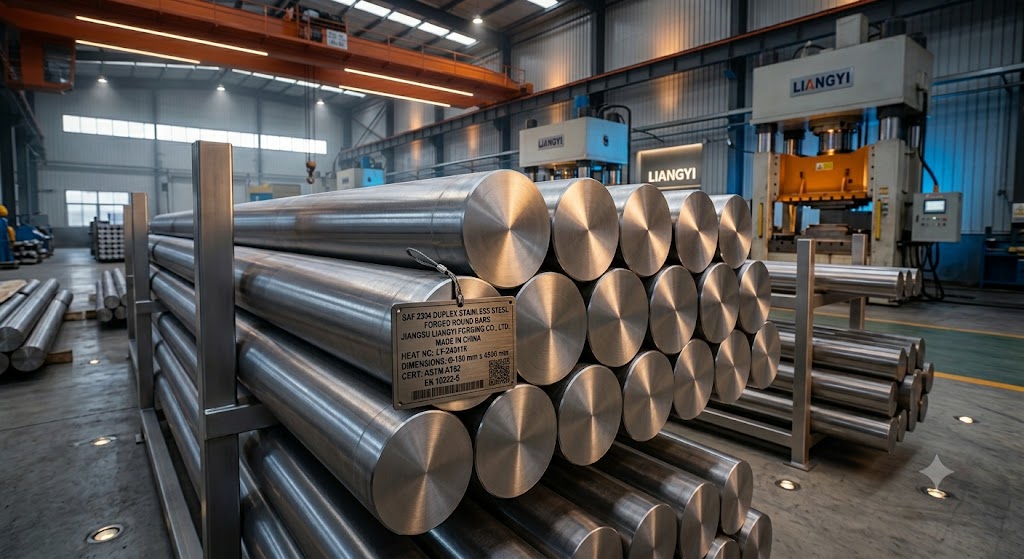
- Forged Bars & Rods: Round bars (Ø 50–2,000 mm), square bars, flat bars, rectangular bars — all supplied solution-annealed and water-quenched per ASTM A182
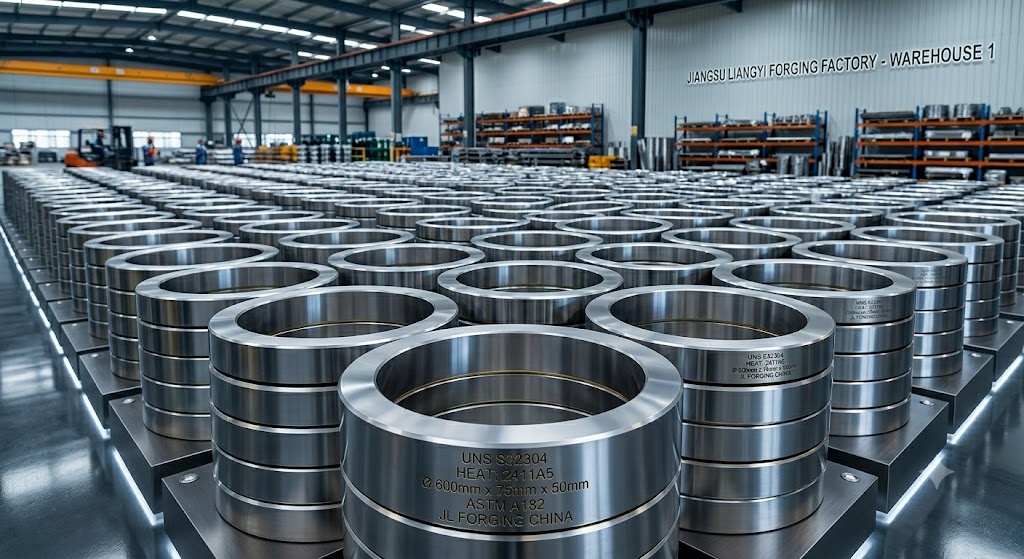
- Seamless Rolled Rings: Custom forged rings up to 6 metres OD and 30 tonnes; profiled rings (flanged, T-section, L-section) available without machining waste
- Forged Shafts: Straight shafts, step shafts, gear shafts and turbine shafts up to 15 metres long; minimum forging reduction ratio 3:1 guaranteed
- Hollow Components: Hubs, housings, shells, sleeves, bushes and hollow bars up to 3,000 mm OD — cored by our own boring equipment to minimise buy-to-fly ratio
- Plates & Blocks: Flat-die forged discs, blocks and plates; superior internal soundness versus rolled plate for high-pressure vessel nozzle forgings
- Pipe Shells & Pressure Vessel Components: Piping shells, casings, barrels and housings meeting ASME Section VIII or PED 2014/68/EU
- Custom Components: Flanges, gears, impellers, valve balls, bonnets and bodies — 2D/3D drawing review included at no cost before order confirmation
Technical Properties & Engineering Advantages of SAF 2304 Duplex Stainless Steel
SAF 2304 (UNS S32304) derives its performance from its duplex microstructure: roughly equal volumes of austenite (γ) and ferrite (δ) phases, each with distinct but complementary properties. The ferrite phase delivers high strength and resistance to stress corrosion cracking; the austenite phase contributes toughness, ductility and resistance to general corrosion. Neither phase alone could match what the combination achieves — and this is why duplex grades have displaced austenitic steels in demanding chloride-bearing environments over the past three decades.
Mechanical Properties — What the Numbers Mean for Your Design
The yield strength of SAF 2304 at ≥ 577 MPa is not simply a bigger number than 316L's ≥ 170 MPa — it translates directly into design savings. Pressure vessel codes such as ASME VIII and EN 13445 use yield strength in their wall thickness calculations, so switching from 316L to SAF 2304 can reduce material weight by 35–40% in pressure-retaining components. This weight reduction cascades through the project: lighter flanges, smaller support structures, lower foundation loads and reduced shipping cost.
- Yield Strength (Rp0.2) ≥ 577 MPa — 3.4× higher than 316L; enables thinner, lighter wall sections in pressure-retaining components
- Tensile Strength (Rm) ≥ 685 MPa — high ultimate strength with a conservative yield-to-tensile ratio (~0.84) that provides a visible warning before fracture
- Elongation (A) ≥ 22% — sufficient ductility for cold forming operations, though bending radii should be 2–3× those used for austenitic grades
- Charpy Impact (Kv) ≥ 31 J at 20°C — certified at −40°C on request (typical values exceed 50 J at −40°C from our triple-melted material, vs. the minimum 31 J at +20°C)
- Hardness ≤ 321 HB (≤ 36 HRC) — within NACE MR0175 limits for sour-service applications without additional heat treatment
- Fatigue Endurance Limit ~350 MPa — approximately 60% of UTS, significantly higher than 316L in absolute terms; beneficial for rotating shafts and cyclic-pressure vessels
- Elastic (Young's) Modulus 200 GPa — same as carbon steel; unlike austenitic grades (193–195 GPa), deflection calculations transfer directly from carbon steel designs
Physical Properties — Often Overlooked Engineering Advantages
Physical properties drive practical fabrication and service behaviour. SAF 2304's physical property profile differs meaningfully from both carbon steel and austenitic stainless steels, and understanding these differences prevents costly design errors:
| Physical Property | SAF 2304 Value | 316L Austenitic | Engineering Implication |
|---|---|---|---|
| Density | 7.80 g/cm³ | 7.99 g/cm³ | Slightly lighter per unit volume |
| Thermal Conductivity (20°C) | ~18 W/m·K | ~14 W/m·K | 28% better heat transfer; lower distortion during welding |
| Thermal Expansion Coefficient | 13.0 × 10⁻⁶/°C | 16.0 × 10⁻⁶/°C | Close to carbon steel (12×10⁻⁶); easier bimetallic design, less weld distortion |
| Specific Heat | ~490 J/kg·K | ~500 J/kg·K | Similar; minor difference in heat treatment cycle times |
| Electrical Resistivity | ~0.80 μΩ·m | ~0.74 μΩ·m | Relevant for cathodic protection current distribution calculations |
| Magnetic Permeability | ~10 (slightly magnetic) | ~1.02 (non-magnetic) | Not suitable for fully non-magnetic applications (MRI rooms, degaussing); verify if required |
| Min. Service Temperature | −40°C (standard) / −50°C (with extended impact test) | −196°C | Not recommended for cryogenic service below −50°C |
The lower thermal expansion coefficient (13.0 vs 16.0 × 10⁻⁶/°C) is particularly valuable in two scenarios: first, when welding SAF 2304 to carbon steel — the thermal expansion mismatch is small, reducing weld joint stress during heat cycles; second, in heat exchangers where differential expansion between tube and shell must be managed.
Corrosion Resistance — The Engineering Detail Behind the Claims
Corrosion resistance in UNS S32304 is governed by the Pitting Resistance Equivalent Number (PREN = %Cr + 3.3×%Mo + 16×%N). With a PREN of approximately 24–25, SAF 2304 sits above 316L (PREN ~23) and well above 304 (PREN ~19), but below standard 2205 (PREN ~35). What does this mean practically?
- Stress Corrosion Cracking (SCC) resistance: The ferritic phase in the duplex microstructure is essentially immune to chloride SCC — the primary cause of 316L failures in warm seawater and coastal atmospheres. Critical chloride threshold for SAF 2304 SCC onset is typically > 2,000 ppm Cl⁻ at 80°C, compared to < 200 ppm Cl⁻ for 316L at the same temperature.
- Pitting corrosion resistance: Critical pitting temperature (CPT) for SAF 2304 in 1M NaCl is typically 25–35°C; for 316L it is 10–15°C. SAF 2304 is safe in seawater at ambient temperatures but may show pitting in stagnant hot seawater above 40°C — where 2205 (CPT ~55°C) would be preferred.
- Crevice corrosion: Critical crevice temperature (CCT) in artificial seawater is approximately 0–10°C; 2205 achieves ~25°C. For tight crevice situations (flange facings, under gaskets), verify with corrosion engineering whether SAF 2304 is sufficient or 2205 is required.
- General corrosion in acids: SAF 2304 contains approximately 0.3% Cu which, combined with chromium and nitrogen, provides better resistance to dilute sulfuric and phosphoric acid than 316L. Not recommended for concentrated acids (use 904L or Alloy 20 for concentrated H₂SO₄).
- Intergranular corrosion: Low carbon content (≤ 0.030%) prevents sensitization during welding; no risk of intergranular corrosion in the heat-affected zone under normal welding conditions.
Weldability — Practical Guidelines for SAF 2304
SAF 2304 is one of the more weldable duplex grades, but duplex stainless steels require more care than austenitic grades because the phase balance (and therefore properties) is sensitive to heat input and interpass temperature. Key practical guidelines our Jiangsu engineering team provides to customers:
- Filler metal: Use matching duplex filler such as AWS A5.9 ER2209 (slightly over-alloyed for better weld metal properties) or proprietary Sandvik 22.8.3.L. Do not use 308L or 316L fillers — they produce an all-austenite weld metal with poor SCC resistance.
- Heat input range: 0.5–2.5 kJ/mm for GTAW/GMAW. Low heat input risks excessive ferrite in the HAZ (brittle); high heat input causes sigma-phase precipitation and chromium nitride precipitation (reducing corrosion resistance).
- Interpass temperature: Maximum 150°C — not 250°C as sometimes incorrectly stated for austenitic welds. Exceeding this promotes sigma-phase formation in previously deposited passes.
- Shielding gas: For GTAW, use Ar + 2–3% N₂ backing gas to prevent nitrogen depletion in the weld root (nitrogen depletion creates a ferritic root bead with poor properties).
- Post-weld heat treatment (PWHT): Not required for most applications in thicknesses up to 50 mm. For thick sections (> 50 mm) or critical corrosion service, solution annealing at 980–1,060°C followed by water quench restores full properties.
- Post-weld inspection: Ferrite content should be measured by Feritscope in the weld metal and HAZ; target 35–65% ferrite. ASTM A923 corrosion test or microstructural examination to ASTM A923 Method A is recommended for critical welds.
✔ Key Engineering Takeaways — Why Specify SAF 2304 for Your Next Project
- 35–40% wall thickness reduction vs. 316L: Yield strength 577 MPa vs. 170 MPa means you need 40% less material by ASME/EN pressure vessel code — directly reducing material purchase cost and component weight.
- SCC threshold > 10× higher than 316L in chlorides: Critical chloride concentration for SCC onset at 80°C is > 2,000 ppm for SAF 2304 vs. < 200 ppm for 316L — eliminating the primary austenitic failure mode in coastal and offshore service.
- Lower alloy cost than 2205, covers 80% of 2205 environments: No significant molybdenum and 3% less nickel than 2205 makes SAF 2304 15–25% less expensive per kg, while its PREN of ~24 is sufficient for the majority of oil & gas and chemical processing environments that specify 2205.
- Thermal expansion matches carbon steel: At 13.0 × 10⁻⁶/°C, SAF 2304 produces far less differential expansion stress at welds and flanged joints to carbon steel than 316L does — a practical advantage ignored in most material selection guides.
- Weldable without PWHT for most thicknesses: Saves 1–3 days per weld joint versus post-weld heat treatment required for P91 or Inconel weldments in the same pressure service.
- NACE MR0175 / ISO 15156 compliant: Hardness ≤ 36 HRC satisfies sour-service requirements for H₂S-containing upstream oil & gas without additional annealing or qualification testing.
SAF 2304 vs 2205 vs 316L vs 904L: Complete Material Selection Guide
Selecting the wrong duplex or austenitic grade is one of the most common and costly specification errors in the process industries. The table below extends the standard property comparison with the criteria that actually drive selection decisions — corrosion thresholds, code compliance, fabrication cost and total installed cost — rather than just listing raw mechanical numbers.
| Property / Criterion | SAF 2304 (UNS S32304) |
2205 Duplex (UNS S32205) |
316L Austenitic (UNS S31603) |
904L Austenitic (UNS N08904) |
|---|---|---|---|---|
| Yield Strength Rp0.2 (MPa) | ≥ 577 | ≥ 450 | ≥ 170 | ≥ 220 |
| Tensile Strength Rm (MPa) | ≥ 685 | ≥ 620 | ≥ 485 | ≥ 490 |
| Elongation A (%) | ≥ 22 | ≥ 25 | ≥ 40 | ≥ 35 |
| PREN (Pitting Resistance) | ~24 | ~35 | ~23 | ~34 |
| Critical Pitting Temp (°C) in 1M NaCl | ~25–35 | ~50–60 | ~10–15 | ~40–50 |
| SCC Resistance (Cl⁻ at 80°C) | Excellent (>2,000 ppm) | Excellent (>5,000 ppm) | Poor (<200 ppm) | Good (~1,000 ppm) |
| Min. Service Temp (°C) | −40 (standard) | −40 (standard) | −196 (cryogenic OK) | −196 (cryogenic OK) |
| Max. Continuous Temp (°C) | 300 | 315 | 870 (dry); 925 (oxidising) | 400 |
| NACE MR0175 Sour Service | Yes (≤36 HRC) | Yes (≤36 HRC) | Yes | Yes (solution annealed) |
| Weld PWHT Required | No (up to 50 mm) | No (up to 50 mm) | No | Recommended |
| Relative Material Cost | Medium | Medium-High | Medium | High |
| Total Installed Cost vs. 316L | Similar or lower (thinner walls) | Slightly higher | Baseline | 30–40% higher |
When to Choose SAF 2304 — and When Not To
Choose SAF 2304 (UNS S32304) when your application combines: chloride-bearing media (seawater, brackish water, coastal atmospheres, process brine, dilute acids) + temperatures between −40°C and +300°C + strength requirements that make 316L walls too thick + a budget that makes 2205 hard to justify. The classic SAF 2304 "sweet spot" is offshore topside piping, wellhead spool bodies, seawater heat exchanger shells, and desalination plant components where 316L has historically failed by SCC and 2205 is overspecified.
Do NOT specify SAF 2304 when:
- Temperature > 300°C: Sigma-phase embrittlement and strength loss make 2205 or Alloy 825 necessary.
- Cryogenic service (< −50°C): Impact toughness drops sharply below −50°C; use 316L, 304L, or 6% Mo austenitic grades.
- High-chloride stagnant hot water (> 40°C): Pitting resistance (CPT ~30°C) may be insufficient; evaluate 2205 (CPT ~55°C) or 2507 super duplex.
- Concentrated acids (H₂SO₄ > 60%, HCl > 2%): High chromium-nickel alloys such as Alloy 20 or 904L perform better.
- Fully non-magnetic requirement: SAF 2304 is slightly magnetic (permeability ~10); use 316L, 310S or manganese-nitrogen austenitic grades.
- Elevated temperature oxidation resistance (> 600°C): Use 309S, 310S or heat-resistant alloys.
Chemical Composition of SAF 2304 (UNS S32304) — Element Roles Explained
Understanding why each alloying element is present in SAF 2304 helps engineers predict performance in edge cases and make better substitution decisions. The composition below meets UNS S32304 per ASTM A182, EN 1.4362, and ISO 15510. Jiangsu Liangyi's in-house spectrographic analysis and OES equipment verify every heat against these ranges before forging commences — no forging is started without a passing heat analysis report.
| Element | Symbol | Weight % (UNS S32304) | Role in SAF 2304 Performance |
|---|---|---|---|
| Chromium | Cr | 21.5 – 24.5 | Primary corrosion-resistance element. Forms Cr₂O₃ passive film; minimum 18% Cr needed for stainlessness, 22–24% gives the elevated PREN (~24) versus 304/316L. Ferrite stabiliser — maintains dual-phase balance. |
| Nickel | Ni | 3.0 – 5.5 | Stabilises the austenite phase. Lower nickel (4% vs. 5–6% in 2205) is responsible for SAF 2304's "lean" designation and lower alloy cost. Improves toughness and acid corrosion resistance. |
| Nitrogen | N | 0.05 – 0.20 | Interstitial strengthener — contributes ~150 MPa to yield strength without reducing toughness or ductility. Strong austenite stabiliser (replaces some Ni). Raises PREN by 16×%N, significantly improving pitting resistance. Prevents chromium nitride precipitation during cooling if kept in solution. |
| Molybdenum | Mo | 0.05 – 0.60 | Strong pitting resistance enhancer (3.3×%Mo in PREN formula). SAF 2304's low Mo is its key cost advantage versus 2205 (3% Mo). The small Mo addition still provides measurable pitting resistance improvement over Mo-free grades. Ferrite stabiliser. |
| Copper | Cu | 0.05 – 0.60 | Improves corrosion resistance in reducing acids (H₂SO₄, H₃PO₄). Mildly austenite-stabilising, helping maintain phase balance. A distinguishing feature versus 2205 which typically contains no deliberate Cu addition. |
| Iron | Fe | Balance (~65–72) | Matrix element. Ferrite stabiliser. Lower Fe content (relative to C.S.) contributes to higher alloy content per unit weight. |
| Manganese | Mn | ≤ 2.5 | Mild austenite stabiliser. Can partially replace nickel. At higher levels (>3%) reduces pitting resistance; kept below 2.5% in S32304. |
| Silicon | Si | ≤ 1.0 | Deoxidant during steelmaking. At higher levels (>1%) promotes sigma-phase formation; controlled to ≤ 1.0% for this reason. |
| Carbon | C | ≤ 0.030 | Controlled to ultra-low levels to prevent chromium carbide precipitation (sensitization) at grain boundaries during welding. The "L" (low carbon) designation in many stainless grades addresses this same concern; SAF 2304 is inherently low-carbon. |
| Phosphorus | P | ≤ 0.040 | Tramp element controlled at low levels. At elevated levels (>0.05%) reduces toughness, particularly impact toughness at low temperatures. |
| Sulfur | S | ≤ 0.030 | Tramp element. MnS inclusions reduce pitting resistance — sulfur is a primary target of our ESR/VAR remelting process, which typically achieves S < 0.010% in finished forgings, well below the UNS limit. |
Note on our triple-melt advantage: Standard electric arc furnace (EAF) production of UNS S32304 typically achieves S ≤ 0.020% and P ≤ 0.030%. Our VIM+ESR+VAR process routinely delivers S < 0.010% and P < 0.020% — significantly cleaner than the specification minimum. This measurably improves fatigue life (fewer inclusion-initiated cracks) and pitting resistance in aggressive environments.
Mechanical Properties of UNS S32304 Forgings — Room Temperature and Elevated Temperature Data
UNS S32304 forgings from Jiangsu Liangyi are supplied in the solution-annealed and water-quenched condition per ASTM A182 / EN 10222-5. The properties below are minimum requirements per specification; our typical production values (reported on actual MTC 3.1 certificates) typically exceed these minimums by 10–20% due to the grain refinement achieved through our triple-melt + controlled forging reduction process.
| Property | Symbol | Minimum (Spec) | Typical Actual (Our Product) | Test Standard |
|---|---|---|---|---|
| Yield Strength (0.2% proof) | Rp0.2 | 577 MPa | 620–680 MPa | ASTM A370 / EN ISO 6892-1 |
| Tensile Strength | Rm | 685 MPa | 730–800 MPa | ASTM A370 / EN ISO 6892-1 |
| Elongation (gauge L₀ = 4d) | A | 22 % | 28–35 % | ASTM A370 / EN ISO 6892-1 |
| Reduction of Area | Z | 45 % (typical requirement) | 55–65 % | ASTM A370 |
| Charpy Impact at +20°C | Kv | ≥ 31 J | 80–120 J | ASTM A370 / EN ISO 148-1 |
| Charpy Impact at −40°C | Kv | ≥ 40 J (if specified) | 55–85 J | EN ISO 148-1 (supplementary) |
| Hardness | HBW | ≤ 321 HBW | 260–310 HBW | ASTM A370 / EN ISO 6506-1 |
Elevated Temperature Mechanical Properties of SAF 2304
Design codes for pressure equipment (ASME VIII Div.1, EN 13445) require elevated temperature strength values for components operating above ambient. The table below shows how SAF 2304's properties change with temperature — note the strength advantage over austenitic grades remains substantial even at 250–300°C:
| Temperature | Rp0.2 (MPa) | Rm (MPa) | 316L Rp0.2 (MPa) for comparison |
|---|---|---|---|
| 20°C (room temp) | ~620 | ~750 | ~230 |
| 100°C | ~510 | ~680 | ~185 |
| 200°C | ~470 | ~640 | ~165 |
| 300°C | ~430 | ~610 | ~145 |
Note: Values above are indicative average values for solution-annealed forged material. Actual allowable stress values per design code (ASME, EN) should be taken from the respective code tables and confirmed with the applicable edition. Contact our engineering team for specific code-compliant design stress data.
Applicable International Standards for SAF 2304 Forgings
Jiangsu Liangyi manufactures Grade 2304 forgings to the following widely recognized international standards. If your project requires a standard not listed, please contact us — we regularly produce to customer-specific technical specifications derived from multiple codes:
| Standard | Scope | Grade Designation |
|---|---|---|
| ASTM A182 | Forged fittings, flanges and valves for high-temperature service | Grade F60 |
| ASTM A276 / A479 | Stainless steel bars and shapes | UNS S32304 |
| ASTM A789 / A790 | Seamless and welded duplex stainless steel tubing/piping | UNS S32304 |
| EN 10222-5 | Steel forgings for pressure purposes — duplex steels | Grade P460QS / 1.4362 |
| EN 10088-3 | Stainless steels — semi-finished, bars, rods, wire | 1.4362 |
| NACE MR0175 / ISO 15156 | Materials for H₂S service (sour gas / sour oil) | UNS S32304 (hardness limited) |
| API 6A | Wellhead and Christmas tree equipment | Duplex SS (material class DD/EE) |
Comprehensive Industrial Applications of SAF 2304 Forged Components — Engineering Context
The applications below are not simply a list of component names. Each subsection explains why Grade 2304 duplex stainless steel solves specific engineering problems in that industry — the corrosion mechanism it prevents, the failure mode it eliminates, and the design or cost advantage it delivers versus the alternatives. This context comes from 25+ years of working directly with process engineers, inspection authorities and end users across five continents.
Oil & Gas Industry — Preventing Chloride SCC in Wellhead Equipment
The driving force behind SAF 2304 adoption in upstream oil and gas is the chloride stress corrosion cracking (SCC) failures that plagued 316L wellhead and Christmas tree components during the 1990s and 2000s, particularly in produced-water handling where chloride concentrations routinely exceed 10,000 ppm at temperatures of 60–120°C. SAF 2304's ferritic phase fraction eliminates the austenitic SCC mechanism entirely. Our UNS S32304 forged components for oil and gas include:
- Christmas trees and wellhead spool bodies — typically forged to API 6A, PSL 3 or PSL 4, with UT 100% coverage and MPI on all machined surfaces
- Casing heads, tubing heads, casing hangers and tubing hangers — critical bore-integrity components where forging (rather than casting) provides guaranteed internal soundness
- Tubing spools, casing spools and spacer spools — often specified to NACE MR0175 for sour-service compliance
- Double studded adapter flanges and integral mud flanges — high-cycle fatigue components where the forging's superior fatigue limit (vs. casting) provides safety margin
- Downhole drilling tools and mud motor splined drive shafts — combined torsion + bending loading in chloride mud environments
- Electrical submersible pump (ESP) motor splined shafts — exposed to hot produced water with high chloride content
- Flowline components and manifold systems — subsea and topside, where wall thickness savings vs. 316L reduce support structure costs offshore
Valve Manufacturing — Combining Strength and Corrosion Resistance in Trim Components
Valve bodies and trim components face a demanding combination of mechanical loading (pressure cycle fatigue, seating loads), corrosion (process media on wetted surfaces) and regulatory compliance (NACE MR0175 for sour service, PED for European markets, API 6A for wellhead). Alloy 2304's strength-to-corrosion-resistance balance eliminates the traditional trade-off between material toughness and corrosion protection. Our Grade 2304 valve forgings include:
- Valve balls — the strength of SAF 2304 allows thinner ball walls, reducing torque and actuator size
- Valve bonnets, bodies, stems and closures — produced to ASME B16.34 or API 6A as required
- Valve seat rings, valve cores and valve discs — tight dimensional tolerances (±0.1 mm) achievable from our in-house precision machining
- Components for ball valves, gate valves, check valves and butterfly valves — all pressure-boundary parts to PED 2014/68/EU or ASME code as required
- Butterfly valve main shafts and spindles — torsional fatigue loading; SAF 2304's higher fatigue endurance limit reduces shaft diameter vs. 316L by 15–20%
- Cryogenic high-performance butterfly valve (HPBV) shafts — tested to −196°C impact requirements available for 316L insert; SAF 2304 body rated to −40°C
- Oil measurement valve spools, ultrasonic flow meter bodies, Venturi cone meter bodies
Power Generation — Conventional and Industrial Applications
Power generation equipment is designed for service lives of 30–60 years under demanding cyclic loading and corrosive cooling water conditions. SAF 2304 forgings are used in conventional power generation and industrial rotating machinery applications where long service life and SCC resistance are required:
- Reactor coolant pump (RCP) casings, shells and bodies for conventional (non-nuclear) industrial applications — produced as forged components for guaranteed internal soundness versus castings
- Pump containment seal chambers for industrial fluid handling — precision dimensional tolerances per customer drawing and specification
- Turbomachinery and turbo centrifugal compressor impellers — benefit from SAF 2304's higher strength (thinner vanes, lower rotational inertia) and resistance to process gas condensate corrosion
- Compressor shrouded impellers — complex internal flow paths finished by 5-axis CNC
- Rotors, impellers and shafts for industrial power equipment
- Heat exchanger components and pressure vessels for cooling water systems
Note: Nuclear power plant applications require project-specific qualification (ASME N-stamp or equivalent) beyond our current standard ISO 9001:2015 scope. Please contact us to discuss your specific nuclear project requirements before specification.
Chemical & Petrochemical Processing — Resisting the Full Spectrum of Process Corrosion
UNS S32304 occupies a useful performance tier in chemical plant material selection: more resistant than 316L to chloride-containing process streams, resistant to dilute acids through its Cr-Ni-Cu-N chemistry, and significantly less expensive than 904L or Alloy 825 for environments that don't require the higher-alloy grades' extreme acid resistance. Applications include:
- Pressure vessels, reactors and heaters handling chloride-containing process streams (e.g., cooling water contamination, chlorinated solvents, brine processing)
- Heat exchangers — tube sheets and baffle plates in seawater-cooled or brackish-water-cooled exchangers where 316L has shown pitting or SCC failures
- Nozzle forgings and channel flanges for pressure vessels — where ASME UG-84 requires forged construction for NPS ≥ 4 high-pressure nozzles
- Cargo tanks and pipe systems in chemical tankers (IMO Type II and III) handling corrosive liquid cargoes
- Flue-gas cleaning (FGD) equipment — SAF 2304's resistance to dilute H₂SO₄ / HCl condensate in gas desulfurization plants
- Pump casings, impellers and shafts in process services combining moderate chlorides with pH 4–9 process media
Marine & Offshore — Seawater Resistance Without Excessive Alloy Cost
Seawater is one of the most demanding corrosion environments: it combines chlorides (typically 18,000–20,000 ppm Cl⁻), dissolved oxygen, marine organisms (biofouling), galvanic coupling risks and mechanical loads. Alloy 2304 is viable for seawater service at ambient temperatures (< 40°C); above 40°C or in stagnant seawater, the higher PREN of 2205 or 2507 should be evaluated. Applications from our Jiangyin forging factory:
- Seawater system components in ships and offshore platforms — pump shafts, impellers, valve bodies for firefighting, ballast and cooling seawater systems at ambient temperature
- Desalination plant components — SAF 2304 is used in low-temperature MSF (multi-stage flash) and RO (reverse osmosis) plant equipment where process temperature stays below 40°C
- Firewalls and blast walls on offshore platforms — structural forgings benefiting from SAF 2304's higher strength-to-weight ratio
- Marine bridge structural components and clamp connectors — where weight reduction over 316L justifies the duplex specification
- Storage tanks and pressure vessels for corrosive-fluid storage in port and ship environments
Pulp & Paper Industry — Resisting Caustic and Acidic Pulping Chemicals
The pulp and paper industry subjects process equipment to alternating acidic (pH 2–4 in bleaching) and alkaline (pH 11–13 in kraft cooking) environments, often at elevated temperatures, combined with chloride bleaching agents. Historically, 316L suffered intergranular corrosion and SCC in these environments; SAF 2304's low carbon content (≤ 0.030%) prevents sensitization, while the duplex microstructure resists SCC. Applications include:
- Digester components and black liquor tanks — kraft cooking liquor (high temperature NaOH/NaS) service where SAF 2304 replaces carbon steel and 316L
- Bleaching plant equipment (chlorine dioxide, hydrogen peroxide stages) — where oxidising chlorine compounds would attack less resistant grades
- Pump and valve components handling white liquor, green liquor and weak black liquor
- Press rolls and cylinder shells — benefiting from SAF 2304's hardness and corrosion resistance combination
Our SAF 2304 Forging Manufacturing Process — Step-by-Step with Process Parameters
Manufacturing a high-quality SAF 2304 (UNS S32304) forging is more demanding than forging carbon steel or standard austenitic grades. Duplex stainless steels have a narrower hot-working temperature window, a higher flow stress (requiring more press tonnage per unit area), and a phase balance that is sensitive to incorrect forging temperatures and cooling rates. The following describes how Jiangsu Liangyi controls each step — process parameters our competitors rarely publish because they reveal the difference between a technically competent forging house and one that simply hammers whatever steel they receive.
Step 1: Premium Triple-Melt Steel Production (VIM → ESR → VAR)
We produce our own SAF 2304 steel rather than purchasing commercial billet. This single decision separates our product quality from the majority of Chinese forging suppliers. Our melting sequence:
- Vacuum Induction Melting (VIM): Primary melt in a 60t EAF + ladle furnace (LF) + VD/VOD tank degassing system. VIM removes dissolved gases (H₂, O₂, N₂) and controls carbon to < 0.015% — well below the UNS S32304 maximum of 0.030%. Nitrogen is precisely added at this stage to achieve the target 0.10–0.18% N range that drives the PREN and strengthening.
- Electroslag Remelting (ESR): VIM electrode is remelted through a controlled fluoride slag in our ESR plant (max capacity 32t per heat). ESR removes sulfide and oxide inclusions, producing a clean, directionally solidified ingot with homogeneous composition. Our post-ESR S content is typically < 0.010%, versus the spec maximum of 0.030% — critical for fatigue life.
- Vacuum Arc Remelting (VAR): Second remelting step in a vacuum furnace, eliminating any remaining macro-segregation and gas pores from the ESR ingot. VAR produces a fine, equiaxed grain structure in the solidified ingot that responds optimally to subsequent forging.
- Manufacturing & Quality Control Plan (MQCP): Every re-melting method runs with frozen (locked) parameters recorded in our MQCP — furnace power curves, electrode weights, slag compositions, vacuum levels and cooling rates. This prevents process drift between production campaigns and is a key element in our ISO 9001:2015 QMS.
Step 2: Controlled Heating and Hot Working Temperature Management
This is the most technically demanding step in duplex stainless steel forging — and the step most commonly performed incorrectly by less experienced shops. The hot-working window for SAF 2304 is approximately 1,050–1,200°C. Outside this window:
- Above 1,250°C: Excessive ferrite formation (the austenite-to-ferrite transformation accelerates steeply above 1,200°C). A forging finished above 1,250°C may contain > 80% ferrite at the surface — producing low impact toughness and poor corrosion resistance. Our heating furnaces are controlled to ±10°C with calibrated thermocouples.
- Below 1,000°C (finishing temperature): The material's flow stress rises steeply, risking surface cracking (orange-peel), die fill failure in complex shapes, or internal adiabatic shear banding. We never finish forging below 1,020°C — pieces are returned to the reheating furnace if temperature falls below our process limit.
- Forging reduction ratio: Minimum 3:1 (cross-sectional area reduction) for standard bar stock; 5:1 for critical rotating or pressure-boundary components. This guarantees the cast ingot's columnar grain structure is fully broken down and replaced by an equiaxed, forged microstructure. Our typical reduction ratios are 4:1 to 8:1 depending on the final section size.
Equipment: Our SAF 2304 forgings are produced on 3,200t, 4,200t and 6,000t open die hydraulic presses with 60t manipulators for large components. Heating furnaces accept billets up to 150t. Forging temperature is monitored by optical pyrometers at the press, with infrared imaging available for complex profiles.
Step 3: Solution Annealing and Water Quenching — Restoring Phase Balance
After forging, SAF 2304 must be solution annealed to dissolve any intermetallic phases (sigma, chi) that precipitate during the forging cooling pass, and to restore the target 45–55% austenite / 45–55% ferrite phase balance. Our process:
- Solution anneal temperature: 980–1,060°C, held for a time calculated from section thickness (minimum 30 minutes per 25 mm of thickness, minimum 1 hour total). Our semi-automatic heat treatment furnaces are up to 18 m long, accommodating shafts and rings of any length we produce.
- Atmosphere control: Slightly oxidising or neutral atmosphere prevents surface decarburisation and nitrogen depletion at the surface — both of which would reduce corrosion resistance in the surface layer.
- Water quenching: Rapid quench in tanks up to 16 m long ensures the high-temperature phase balance is "frozen in" and does not allow sigma or chi phase to re-precipitate during slow cooling. For large sections (> 150 mm thickness), forced water circulation is used to ensure adequate quench rate at the core.
- Post-anneal phase balance verification: For critical components, we perform Feritscope measurements (FN content) and/or ASTM A923 Method A (metallographic) or Method C (electrochemical) testing to confirm no detrimental intermetallic phases are present.
Step 4: Precision Machining (Rough or Finish)
SAF 2304 is more abrasive to cutting tools than austenitic stainless steels due to its higher hardness and work-hardening rate. Our machining centre provides:
- CNC turning centres up to 3,000 mm swing, 10,000 mm between centres — for large shafts and rings
- 5-axis CNC machining for complex geometries (impellers, custom valve bodies)
- Boring and deep-hole drilling for hollow bars and housings
- Hard turning as an alternative to grinding for bore and OD finishing (Ra ≤ 1.6 μm achievable)
- Thread cutting to ASME/API standards for wellhead and valve components
Step 5: Comprehensive Quality Testing and Inspection
All UNS S32304 forgings undergo the following testing matrix before any material leaves our factory. The exact test scope is agreed with the customer at order review and documented in our Inspection and Test Plan (ITP):
Mechanical Testing (per ASTM A370 / EN ISO 6892, EN ISO 148)
- Tensile testing at room temperature — yield strength, tensile strength, elongation, reduction of area
- Elevated temperature tensile testing (100–300°C) when required by design code
- Charpy V-notch impact testing at +20°C standard; −40°C or −50°C on request
- Vickers or Brinell hardness testing — surface and core, multiple locations
- Fatigue testing upon request (rotating beam or axial, to S-N curve)
Non-Destructive Testing (NDT)
- Ultrasonic Testing (UT): 100% volumetric coverage per EN 10228-3 / ASTM A388 or customer specification (e.g., ASTM A388 Level 3 for critical components)
- Magnetic Particle Testing (MT): All accessible surfaces after final machining, per EN ISO 9934 / ASTM E709
- Liquid Penetrant Testing (PT): Internal bores and complex profiles where MT is impractical, per EN ISO 3452 / ASTM E165
- Radiographic Testing (RT): Upon customer request for weld repairs (ASME Section V) or cast inserts
- Dimensional inspection: Full dimensional report against customer drawing using CMM (coordinate measuring machine) for tolerances tighter than ±0.5 mm
Chemical and Metallurgical Verification
- OES (Optical Emission Spectrometry) chemical analysis — every heat, from product, not just ladle sample
- Ferrite content measurement by Feritscope — verifies 35–65% ferrite (target 45–55%) after solution anneal
- ASTM A923 intermetallic phase detection — Method A (metallographic) or Method C (EPR electrochemical) for critical applications
- Macroetch testing (ASTM A604) for heavy forgings — verifies grain flow and absence of pipe, segregation and bursts
- Microstructure examination and grain size determination (ASTM E112) when required
Standards referenced in our testing: ASTM A370, ASTM A604, ASTM A751, ASTM A923, ASTM E112, ASTM E140, ASTM E709, ASTM E165, ASTM A388, EN ISO 6892-1, EN ISO 148-1, EN ISO 9934, EN ISO 3452, EN 10228-3.
We issue complete mill test certificates (MTC) 3.1 (manufacturer-witnessed) or 3.2 (independently witnessed by an accredited third-party inspector) with every shipment. Third-party inspection by BV, SGS, TÜV Rheinland, DNV, Intertek, Bureau Veritas or customer-nominated inspectors is coordinated as standard on request — no additional administrative fee.
Ordering Custom SAF 2304 Forgings from China — What to Include in Your Inquiry
Jiangsu Liangyi processes hundreds of custom Alloy 2304 forging enquiries per year from engineering companies, procurement departments and project management consultancies across North America, Europe, the Middle East and Asia-Pacific. The quality of the information in your initial enquiry directly determines the quality and accuracy of the quotation we can provide — and how quickly. To help you get a fast, accurate response, our engineering team has compiled the following guidance:
Information That Always Leads to a Same-Day Response
- Dimensioned drawing (PDF or DXF): Even a sketch with critical dimensions is better than a written description. Include all tolerances, surface finish requirements (Ra value), and identify datum surfaces for inspection.
- Material specification: "SAF 2304" or "UNS S32304" is sufficient; if you have a project-specific material specification (e.g., your company's SP-XXXX or a client specification), include it — we review these at no charge.
- Order quantity and delivery date: Quantity affects whether we approach this as a single-heat forging or can batch with another order; delivery date determines whether standard or expedited scheduling is needed.
- Test and inspection requirements: State the required MTC grade (3.1 or 3.2), list any NDT requirements (UT Class, MT/PT level), and name any third-party inspection agency if already selected.
- Applicable standards and codes: ASTM, EN, API, ASME, NACE — the more specific the better. If you know the design code (e.g., ASME VIII Div.1, EN 13445, API 6A), state it.
- End application or service environment (if shareable): Knowing the process medium, temperature and pressure helps our metallurgists flag potential issues (e.g., if your temperature is 310°C, we will recommend 2205 instead of 2304 and save you a later problem).
Our Custom Forging Capabilities — Full Scope
- Engineering review and DFM (Design for Manufacturability): We review your drawing before quoting, flag unmanufacturable features and suggest modifications that reduce cost without compromising function — at no charge
- Prototype and first-article (FAIR): Single-piece prototypes with full dimensional and material certification; typical lead time 8–10 weeks for complex shapes
- Small and medium batch production: 1–50 pieces with individual serialised MTC per piece
- High-volume production: 50–500+ pieces with statistical SPC (statistical process control) documentation
- Complete machining to finished dimensions: Delivered ready for assembly, no additional machining required
- Surface treatment: Passivation (ASTM A380), electropolishing, shot blasting (Sa 2.5), pickling — as required
- Marking and traceability: Electrochemical etching, low-stress stamping, paint marking or laser marking as specified
- Preservation and packaging: VCI packaging, wooden crate (ISPM 15 heat-treated lumber for export), or sea-worthy packing as required by destination
Frequently Asked Questions About SAF 2304 (UNS S32304) Forgings
SAF 2304 and UNS S32304 are the same alloy. "SAF 2304" is the proprietary trade name first introduced by Sandvik AB of Sweden in the 1980s — "SAF" standing for Sandvik Austenitic-Ferritic. UNS S32304 is the Unified Numbering System (UNS) designation assigned by ASTM/SAE to the same composition range, and EN 1.4362 is the equivalent European designation used in EN 10088 and EN 10222-5. The alloy is also marketed as "Alloy 2304," "Grade 2304," and occasionally "2304 DSS" (Duplex Stainless Steel). From a forging and metallurgical standpoint, all these designations refer to the same 23Cr-4Ni-0.3Mo-0.1N lean duplex stainless steel. At Jiangsu Liangyi we accept purchase orders using any of these designations and manufacture to the same composition and mechanical property requirements in all cases.
Yes, SAF 2304 is weldable by GTAW (TIG), GMAW (MIG), SMAW (stick), SAW (submerged arc) and FCAW (flux-core). Compared to austenitic grades, three additional precautions must be taken with duplex stainless steels: (1) Use duplex filler metal (AWS ER2209 is the most common, slightly over-alloyed to compensate for nitrogen loss) — do NOT use 308L or 316L fillers; (2) Control heat input to 0.5–2.5 kJ/mm and limit interpass temperature to 150°C maximum, to prevent both excessive ferrite (low heat input) and sigma-phase formation (high heat input / slow cooling); (3) For GTAW root passes, use Ar + 2–3% N₂ as backing gas to prevent nitrogen depletion and the resulting ferritic root microstructure. Post-weld heat treatment (solution anneal + water quench) is not required for most applications up to 50 mm section thickness, but is recommended for highly aggressive corrosion service or sections exceeding 50 mm. Our engineering team provides detailed WPS (Welding Procedure Specifications) guidance on request.
The maximum recommended continuous service temperature for SAF 2304 (UNS S32304) is 300°C (572°F). Above this temperature, sigma phase and chi phase intermetallics begin to precipitate within the duplex microstructure, causing embrittlement and reduced corrosion resistance over time. Intermittent excursions to 350°C may be tolerable if total exposure time is limited, but this should be evaluated by a materials engineer for each specific case. At the low end, SAF 2304 is rated to a minimum design temperature of −40°C under standard Charpy impact certification. If your project requires service below −40°C (down to −50°C), we can supply forgings with supplemental low-temperature impact testing at −50°C to verify fitness for purpose — contact us with your specific temperature requirement. Below −50°C, the ferritic phase becomes brittle and austenitic grades (316L, 6% Mo) or nickel alloys should be used instead.
SAF 2304 and 316L serve different engineering needs. Choose SAF 2304 when: (a) your application involves chloride-containing media (seawater, brine, coastal atmospheres) at temperatures above 25°C where 316L is known to fail by stress corrosion cracking — the SCC threshold for SAF 2304 is > 2,000 ppm Cl⁻ at 80°C vs. < 200 ppm for 316L; (b) your design is strength-limited and you want to reduce wall thickness — SAF 2304's yield strength of ≥ 577 MPa vs. 316L's ≥ 170 MPa allows 40% thinner walls per pressure vessel codes, reducing material cost and weight; (c) you have a moderate chloride environment and want better performance than 316L at a lower cost than 2205. Choose 316L instead when: service temperature is below −50°C (316L retains toughness to cryogenic temperatures); the application is non-magnetic (316L has permeability ~1.02, SAF 2304 is ~10); or the process stream contains concentrated reducing acids (HCl > 2%, H₂SO₄ > 60%) where high-nickel alloys outperform both grades.
Lead times from our Jiangyin factory depend primarily on section weight, complexity and test scope. As a general guide: standard forged bars and rings under 5,000 kg with standard test scope (MTC 3.1, UT, hardness) are typically completed in 4–6 weeks from receipt of purchase order and approved drawing. Custom components with machining, complex profiles or special test requirements (low-temperature impact, ferrite measurement, ASTM A923, third-party inspection) typically require 6–10 weeks. Very large heavy forgings (> 15,000 kg) or items requiring nuclear QA documentation may require 10–16 weeks. Expedited production (3–4 week turnaround for standard items) is available for urgent orders subject to scheduling availability — please flag urgent requirements clearly in your enquiry. Our Jiangyin location 80 km from Shanghai means ocean freight to Europe (Rotterdam, Hamburg, Antwerp) takes approximately 28–32 days; to the US East Coast approximately 30–35 days; to the Middle East (Dubai, Abu Dhabi) approximately 18–22 days.
Our quality management system is certified to ISO 9001:2015 by an accredited third-party certification body. Standard documentation with every shipment includes:
- Mill Test Certificate 3.1 (signed by our authorized quality representative) or 3.2 (co-signed by an independent third-party inspector — your choice of agency)
- Chemical analysis report (OES spectrographic analysis from product, not ladle sample)
- Mechanical test report (tensile, Charpy impact, hardness)
- Dimensional inspection report against customer drawing
- NDT reports (UT, MT/PT as required by agreed Inspection and Test Plan)
- Heat treatment chart with recorded time-temperature profile
Available on request (scope and cost confirmed at order review):
- NACE MR0175 / ISO 15156 material compliance statement (based on chemical composition and hardness test data — self-declaration per standard criteria)
- Ferrite content measurement report (Fischer Feritscope or equivalent)
- ASTM A923 intermetallic phase detection test report (Method A or Method C)
- EN 10204 3.1 / 3.2 certificates
- Material traceability matrix from heat to finished component
- Third-party inspection coordination: BV, SGS, TÜV Rheinland, DNV, Intertek, or customer-nominated agency — arranged at customer's cost and direction
Note: Jiangsu Liangyi currently holds ISO 9001:2015 certification. Product inspection and certification is available via independent third-party agencies arranged on request. Project-specific qualification requirements (e.g., ASME nuclear N-stamp, PED Notified Body, API Monogram) should be discussed at enquiry stage — we will advise honestly whether our current scope covers your specific requirement or whether a qualified intermediary is needed.
All our SAF 2304 forgings are manufactured to meet the material requirements of ASTM A182, ASTM A276, EN 10222-5 and EN 10088 as applicable.
SAF 2304 (UNS S32304) and 2205 (UNS S32205/S31803) are both duplex stainless steels with 50:50 austenite-ferrite microstructures, but they differ significantly in alloying and performance: (1) Molybdenum content — 2304 contains ≤ 0.6% Mo vs. 2205's 3.0–3.5% Mo; this is the primary driver of 2205's higher PREN (~35 vs. ~24 for 2304), making 2205 significantly better in aggressive chloride-pitting environments (hot seawater above 40°C, concentrated brine). (2) Cost — 2304 is typically 15–25% less expensive per kg than 2205 due to lower Mo and slightly lower Ni content. (3) Strength — interestingly, 2304 has a higher minimum yield strength (577 MPa) than 2205 (450 MPa per older S31803 specification; 515 MPa per updated S32205) due to its higher nitrogen content. (4) Application fit — 2304 covers approximately 80% of the environments for which 2205 is specified, at lower cost. Use 2205 instead of 2304 when: chloride concentration exceeds 2,000 ppm at temperatures above 60°C; CPT requirement exceeds 35°C; crevice corrosion resistance is critical in tight-fitting joints; or the specification explicitly calls for PREN > 30. Our engineering team can review your application and help determine which grade is more appropriate.
Forging and casting produce different microstructures with meaningfully different performance characteristics, and understanding the difference is important for critical components. Forgings have: (a) Superior internal soundness — forging mechanically breaks down the cast ingot structure, closes porosity, and produces a fully dense, wrought microstructure; castings are inherently susceptible to shrinkage porosity, gas porosity and inclusions that cannot be fully eliminated by heat treatment. (b) Better directional properties — the forging process aligns the grain flow with the principal stress direction, giving superior fatigue strength and fracture toughness in the primary load direction; (c) Higher yield and tensile strength — wrought (forged) duplex stainless steel typically achieves 10–20% higher strength than the equivalent cast grade (e.g., CD-4MCuN), which is why forging is preferred for pressure-boundary and rotating components in API 6A PSL 3/4 and EN 13480 pressure piping applications. Castings are preferred when: component geometry is too complex for forging (e.g., multi-directional branch connections, pump volutes with complex internal passages); quantities are very low and tooling cost must be minimised; or the applicable specification explicitly permits casting (API 6A PSL 1/2 for non-critical applications). Jiangsu Liangyi only produces forgings, but we are glad to review your component drawing and advise whether forging is technically appropriate and cost-competitive for your specific geometry and service condition.
Yes. SAF 2304 (UNS S32304) is listed in NACE MR0175 / ISO 15156-3 (Materials for use in H₂S-containing environments in oil and gas production — Part 3: Cracking-resistant CRAs and other alloys) as an acceptable material for sour service when the hardness is controlled to ≤ 36 HRC (equivalent to ≤ 321 HBW or ≤ 345 HV10) throughout the component cross-section. This hardness limit is inherent to properly solution-annealed SAF 2304 forgings — our standard production achieves 260–310 HBW, well within the NACE limit. For API 6A sour service (DD/EE/FF/HH material class), additional requirements may apply including: maximum yield strength ≤ 860 MPa (SAF 2304 inherently meets this), specific Charpy impact testing, and documentation of heat treatment parameters. All these requirements are routinely met in our standard SAF 2304 forging production. NACE compliance is declared on the MTC upon customer request and confirmed by hardness test results on each individual piece.
Request a SAF 2304 Forging Quotation from Jiangsu Liangyi — Jiangyin, China
Jiangsu Liangyi is a technically differentiated China forging manufacturer for SAF 2304, UNS S32304, Alloy 2304, and Grade 2304 duplex stainless steel. We are not a trading company or broker — we melt, forge, heat treat, machine and inspect every piece in our own Jiangyin facility. This vertical integration means you deal with a single accountable supplier from raw material chemistry to final shipping, with no hidden subcontracting risk.
Since 1999 we have supplied duplex stainless steel forgings to engineering companies, EPC contractors and end users in more than 50 countries across industries including oil and gas, chemical processing, desalination, marine, and power generation. We can discuss our supply experience in specific industries upon request.
To receive an accurate quotation within 24 hours on business days, please email us with: your drawing (PDF acceptable), material specification (UNS S32304 / SAF 2304 / EN 1.4362), required quantity, target delivery date, and applicable inspection/testing standards. Our engineering team reviews every enquiry personally — you will receive a response from a metallurgist or senior engineer, not a sales agent reading from a price list.
Email Your Drawings — Get a Quote in 24 Hours