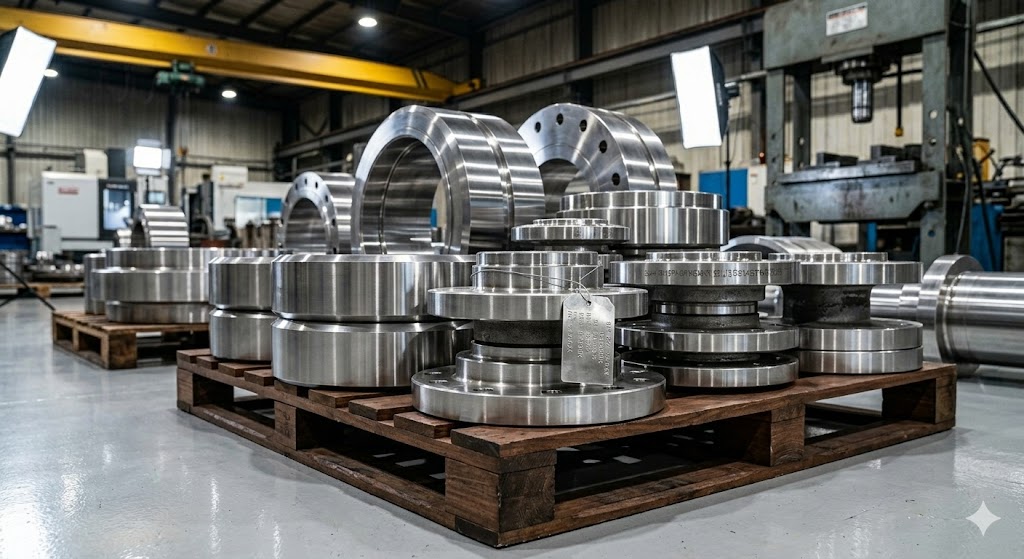
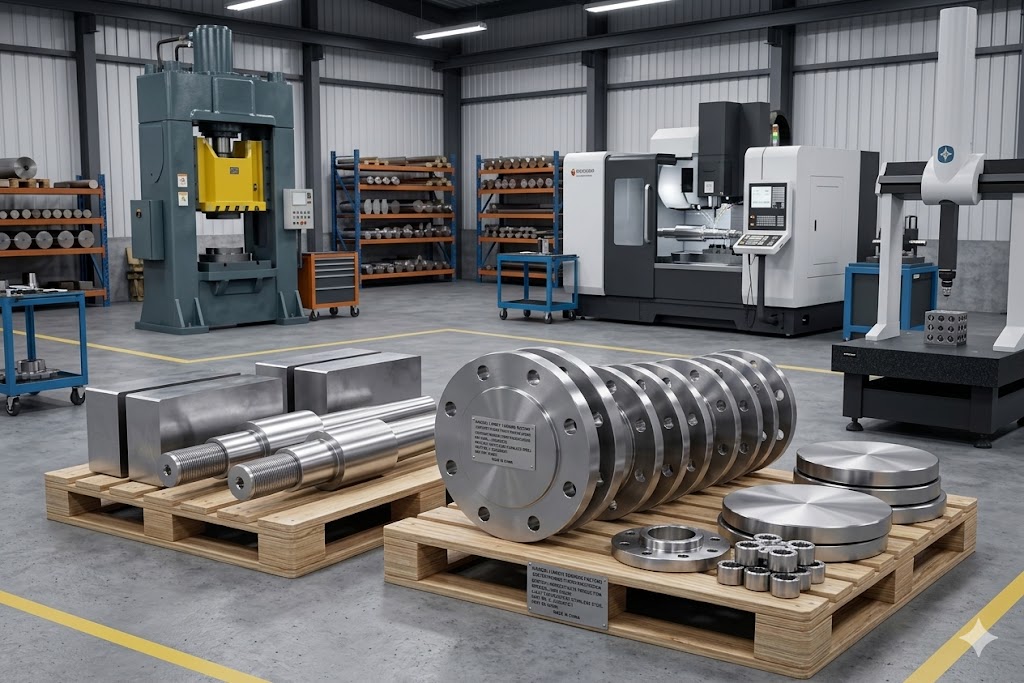
Jiangsu Liangyi Co., Limited is a professional ISO 9001:2015 certified manufacturer and supplier of Duplex 2205 (UNS S32205, Alloy 2205, Grade 2205) stainless steel open die forgings and seamless rolled rings, located in Jiangyin City, Jiangsu Province — China's core forging industry cluster. With over 25 years of manufacturing experience, we supply custom 2205 duplex steel forged parts to clients in more than 50 countries across Europe, North America, the Middle East, Southeast Asia, and Oceania, covering full production from steel melting, forging, heat treatment to precision CNC machining, fully compliant with ASTM A182, EN, API 6A, Norsok and other international standards.
Duplex 2205 (UNS S32205) is the most widely used premium duplex stainless steel grade, featuring a balanced ferritic-austenitic microstructure (40-50% ferrite in annealed condition). This unique structure combines the ultra-high strength of ferritic stainless steels with the excellent corrosion resistance of austenitic grades, making it the industry-preferred material for aggressive environments where standard 304 and 316L stainless steels fail. It is globally recognized as the most reliable solution to chloride-induced stress corrosion cracking (SCC), the primary failure risk of austenitic stainless steels in marine, oil & gas, and chemical processing applications. Request a free quotation today!
Compared to standard austenitic stainless steels like 316L, Grade 2205 duplex stainless steel forgings offer unparalleled performance advantages for heavy-duty industrial applications:
Performance Parameter
Duplex 2205 Stainless Steel
316L Austenitic Stainless Steel
0.2% Proof Yield Strength
Min 450 MPa
Min 170 MPa
Ultimate Tensile Strength
650-880 MPa
485-620 MPa
Chloride SCC Resistance
Excellent
Poor
Pitting Resistance Equivalent (PREN)
34-38
24-26
Weight Reduction Potential
Up to 50% (higher strength)
Base Reference
Core Performance Advantages of UNS S32205 Forgings
Outstanding Corrosion Resistance: Excellent resistance to pitting, crevice corrosion, and chloride-induced stress corrosion cracking in harsh environments, suitable for marine, offshore, and high-chloride chemical applications.
Superior Mechanical Strength: Nearly 2.5x the yield strength of 316L stainless steel, allowing for thinner wall designs, reduced component weight, and lower material costs without compromising pressure resistance.
Wide Temperature Adaptability: Stable performance in temperatures from -50°C to 300°C, suitable for both cryogenic LNG applications and high-temperature process equipment.
Excellent Weldability & Formability: Good welding performance with matching filler materials, retaining its duplex microstructure and mechanical properties after proper welding and heat treatment, ideal for custom forged components of complex geometries.
Full Range of UNS S32205 (Alloy 2205) Forged Parts from China Factory
Our Jiangyin factory produces a full range of custom Duplex 2205 stainless steel forged components with single-piece weight ranging from 30kg to 30,000kg, fully customizable to your drawings and technical specifications. Explore our full product range for more details. Our core product range includes:
Duplex 2205 Forged Bars & Custom Shafts
We manufacture Alloy 2205 forged round bars, square bars, flat bars, rectangular bars, as well as custom step shafts, gear shafts, crankshafts, turbine shafts, and valve spindles. Our forging capacity supports a maximum diameter up to 2 meters and maximum length up to 15 meters, with full EN10204 3.1/3.2 material certification available for every batch. Our 2205 forged bars are widely supplied to European valve manufacturers, North American oilfield service companies, and Southeast Asian petrochemical plants.
UNS S32205 Seamless Rolled Forged Rings
Our Grade 2205 seamless rolled rings are available up to 6 meters in diameter and 30 tons in weight, including gear rings, valve seat rings, flange blanks, bearing races, and custom contoured rolled rings. Produced on our advanced seamless rolling machines, our 2205 forged rings deliver uniform microstructure and mechanical properties, ideal for critical rotating and pressure applications in oil & gas wellhead equipment, industrial valves, and turbomachinery. We supply these rings to major Middle East oil & gas projects and German power generation facilities.
Alloy 2205 Seamless Hollow Forgings & Sleeves
We supply custom UNS S32205 forged hubs, housings, shells, sleeves, bushes, hollow bars, heavy wall cylinders, and pipe tubing components with outer diameter capacity up to 3000 mm. Our seamless hollow forgings eliminate weld seams, reducing failure risks in high-pressure applications, and are widely used in pressure vessels, heat exchangers, downhole drilling tools, and subsea equipment. These components are fully compliant with API 6A standards for North American offshore drilling projects.
Our production range also includes Duplex 2205 forged discs, disks, blocks, plates, flanges, tube sheets, baffle plates, reactor nozzles, and fully custom forged components manufactured to your exact drawings. We support small-batch prototype production and large-scale mass production, with in-house CNC machining, heat treatment, and full quality testing to ensure every part meets your requirements. Send us your drawings for a detailed quote!
Our Specialized Forging Process for Duplex 2205 Stainless Steel
Duplex 2205 stainless steel requires strict control of forging temperature, deformation rate, and heat treatment to retain its balanced duplex microstructure and optimal performance. With over 25 years of experience in duplex steel forging, we have developed a specialized production process for UNS S32205 material, supported by our advanced forging equipment in Jiangsu factory:
1. Steel Melting & Raw Material Control
All our 2205 duplex steel raw materials are produced via primary melting in a 30t electric arc furnace (EAF), followed by ladle refining (LF) and vacuum degassing (VOD) to ensure ultra-low impurity content and precise chemical composition, fully meeting ASTM A182 and EN 10088-3 standards. We conduct 100% material verification before forging to avoid non-conforming raw materials.
2. Precision Forging Process
We use our 2000T-6300T hydraulic forging presses and 1T-9T electro-hydraulic forging hammers to produce 2205 forgings, with strict control of forging temperature between 950°C and 1230°C. We ensure a minimum forging ratio of 4:1 for all components, which breaks down the cast structure, refines the grain, and improves the mechanical properties and corrosion resistance of the final product. Our forging process is fully documented and traceable for every batch.
3. Solution Annealing Heat Treatment
All our UNS S32205 forgings undergo solution annealing at 1020°C-1100°C, followed by rapid water quenching. This critical process ensures the formation of a balanced 50/50 austenitic-ferritic microstructure, eliminating harmful intermetallic phases that can reduce corrosion resistance and toughness. We use 10 fully computer-controlled heat treatment furnaces to ensure uniform temperature control within ±5°C, guaranteeing consistent performance across every part.
4. Precision Machining & Finishing
We provide in-house CNC machining services, from rough machining to finish machining, to deliver ready-to-install components. Our machining team has extensive experience in duplex stainless steel, using specialized tooling and machining parameters to avoid work hardening and ensure dimensional accuracy up to IT6 level.
5. Key Technical Recommendations for Duplex 2205
Pitting Resistance Equivalent Number (PREN) Calculation
The PREN value is a critical indicator of a stainless steel's resistance to pitting and crevice corrosion. For Duplex 2205, the PREN value is calculated as follows:
PREN = %Cr + 3.3x(%Mo + 0.5x%W) + 16x%N
With a PREN value of 34-38, Duplex 2205 is classified as a "super pitting resistant" stainless steel, suitable for seawater and high-chloride environments.
Welding Recommendations
To maintain the balanced duplex microstructure and optimal performance of Duplex 2205, we recommend the following welding practices:
Use GTAW/TIG or GMAW/MIG welding processes
Use ER2209 filler metal to match the chemical composition of Duplex 2205
Control the interpass temperature to below 150°C
For thick sections (≥10mm) or critical applications, perform post-weld solution annealing at 1020°C-1100°C followed by rapid water quenching
Grade 2205 Duplex Stainless Steel Material Specifications & Standards
Chemical Composition of Duplex 2205 (UNS S32205)
Element
Content Range (Weight %)
Standard Requirement
Iron (Fe)
63.75 - 71.92
Balance
Chromium (Cr)
21.0 - 23.0
ASTM A182
Nickel (Ni)
4.50 - 6.50
ASTM A182
Molybdenum (Mo)
2.50 - 3.50
ASTM A182
Nitrogen (N)
0.080 - 0.20
ASTM A182
Manganese (Mn)
Max 2.0
ASTM A182
Silicon (Si)
Max 1.0
ASTM A182
Carbon (C)
Max 0.030
ASTM A182
Phosphorus (P)
Max 0.030
ASTM A182
Sulfur (S)
Max 0.020
ASTM A182
Mechanical Properties of 2205 Duplex Stainless Steel Forgings (Delivery Condition)
Mechanical Property
Guaranteed Value
Test Standard
Ultimate Tensile Strength
650 – 880 MPa
ASTM A370
0.2% Proof Yield Strength
Min 450 MPa
ASTM A370
Elongation (A5)
Min 25 %
ASTM A370
Maximum Hardness
270 HB
ASTM E10
Impact Toughness (KV@-40°C)
Min 40 J
ASTM E23
International Production Standards
Our Duplex 2205 (UNS S32205) forging parts are manufactured in full compliance with global industry standards, including:
ASTM A276, ASTM A479, ASTM A182 (North American Standard)
EN 10088-3, EN 10228-3 (European Union Standard)
Norsok M-630 MDS D44/D47 (North Sea/Offshore Standard)
API 6A (Oil & Gas Wellhead Equipment Standard)
ASME BPVC Section VIII (Pressure Vessel Standard)
We also offer custom material grades to meet your specific project requirements.
Physical & Thermal Properties of Duplex 2205 (UNS S32205)
In addition to its outstanding mechanical performance, Duplex 2205 (UNS S32205) offers a distinctive set of physical and thermal properties that make it highly suitable for precision engineering, heat transfer equipment, and cryogenic applications. The following data applies to the annealed condition at room temperature (20°C):
Property
Value
Unit
Note
Density
7.82
g/cm³
At 20°C, annealed
Elastic Modulus (Young's Modulus)
200
GPa
At 20°C
Thermal Conductivity
19
W/m·K
At 100°C; ~2x higher than 316L
Thermal Expansion Coefficient
13.0
10⁻⁶/K
20–300°C; lower than 316L (16.0)
Specific Heat Capacity
480
J/kg·K
At 20°C
Electrical Resistivity
0.85
µΩ·m
At 20°C
Magnetic Permeability
~40–80
µr (relative)
Slightly magnetic (ferritic phase)
Melting Range
1380 – 1440
°C
Solidus to liquidus
💡 Engineering Note: The lower thermal expansion coefficient of Duplex 2205 compared to austenitic grades (316L: 16.0 × 10⁻⁶/K) reduces thermally induced stress in heat exchangers and pressure vessels, contributing to a longer service life in cyclic temperature environments.
💡 Magnetic Note: Duplex 2205 is weakly magnetic due to its ferritic phase content. This is a normal characteristic and does not indicate material non-conformance. Buyers using induction-based equipment should account for this property in their design.
Corrosion Resistance & Temperature Limitations of Duplex 2205
Corrosion Resistance Performance
Duplex 2205 (UNS S32205) delivers exceptional corrosion resistance across a wide range of aggressive environments, making it the first-choice material for engineers designing equipment for marine, chemical, and oil & gas applications. Key corrosion resistance data:
Corrosion Type
Performance
Test Standard
vs 316L
Pitting Corrosion (PREN)
34 – 38
ASTM G48 Method A
~40% better than 316L (PREN 24–26)
Critical Pitting Temperature (CPT)
> 35°C
ASTM G48 Method E
316L CPT: ~15°C
Critical Crevice Temperature (CCT)
> 20°C
ASTM G48 Method D
316L CCT: ~0°C
Chloride SCC Resistance
Excellent
ASTM G36 / ISO 6957
316L: Poor; SCC threshold ~50 ppm Cl⁻
Sour Service (H₂S)
Compliant
NACE MR0175 / ISO 15156
Suitable for oil & gas sour environments
Intergranular Corrosion Resistance
Excellent
ASTM A262 / ISO 3651
Low C content (≤0.030%) prevents sensitization
Temperature Limitations & Metallurgical Risks
While Duplex 2205 offers outstanding performance across a wide temperature range, engineers must be aware of the following critical temperature limitations to avoid microstructural degradation:
Temperature Range
Risk / Phenomenon
Impact
Recommendation
Below -50°C
Ductile-to-brittle transition
Reduced impact toughness
Use super duplex or austenitic grades for cryogenic service below -50°C
300°C – 475°C
475°C Embrittlement (α' precipitation)
Significant loss of toughness & corrosion resistance
Avoid sustained operation in this range; limit short-term exposure
600°C – 1000°C
Sigma (σ) phase & chi (χ) phase formation
Severe embrittlement & corrosion resistance loss
Never use in this temperature range; rapid cooling through this range during heat treatment
Above 300°C (continuous)
Gradual strength reduction
Design strength derated at elevated temperatures
Consult ASME BPVC Section II Part D for elevated-temperature design values
⚠️ Important: The recommended continuous service temperature for Duplex 2205 (UNS S32205) is -50°C to +300°C. For applications above 300°C, consult our technical team for alternative grade recommendations. All our forgings undergo solution annealing at 1020°C–1100°C followed by rapid water quenching to eliminate sigma and chi phases before delivery.
NACE MR0175 / ISO 15156 Sour Service Compliance
Our Duplex 2205 (UNS S32205) forgings are manufactured and tested in full compliance with NACE MR0175 / ISO 15156 for use in oil & gas production environments containing H₂S (sour service). Key compliance parameters include:
Maximum hardness: 36 HRC (355 HV / 340 HB) as per NACE MR0175 Table A.3 for duplex stainless steels
Maximum ferrite content: 50–65% (measured by ferrite scope or metallographic cross-section) to avoid excessive strength that could cause Hydrogen-Induced Cracking (HIC)
NACE TM0177 Method A (tensile test) and Method D (double cantilever beam) available as supplementary testing options
Full material traceability and NACE-compliant documentation package available upon request
Duplex 2205 vs Other Stainless Steel Grades — Full Comparison
Selecting the right stainless steel grade is critical for project success. The following table compares Duplex 2205 (UNS S32205) against the most commonly specified alternative grades across key performance parameters, to help engineers and procurement teams make the most informed material selection decision:
Parameter
Duplex 2205 (S32205)
316L (S31603)
Super Duplex 2507 (S32750)
904L (N08904)
Yield Strength (0.2%)
Min 450 MPa
Min 170 MPa
Min 550 MPa
Min 220 MPa
Tensile Strength
650–880 MPa
485–620 MPa
800–1000 MPa
490–690 MPa
PREN
34–38
24–26
38–45
32–36
Chloride SCC Resistance
Excellent
Poor
Superior
Good
Max Service Temperature
300°C
870°C (oxidation)
260°C
400°C
Weldability
Good
Excellent
Moderate (strict control)
Good
Relative Material Cost
Medium
Low
High
Medium-High
Typical Applications
Oil & gas, valves, desalination, marine
Food, pharma, light chemical
Subsea, deep-sea, severe chloride
Sulfuric acid, phosphoric acid
💡 Selection Guide: Choose Duplex 2205 when you need significantly higher strength than 316L with good corrosion resistance at a moderate cost premium. Upgrade to Super Duplex 2507 only when environments involve seawater temperatures above 35°C or chloride concentrations exceeding 10,000 ppm. For sulfuric or phosphoric acid environments, consider 904L.
Why Choose Duplex 2205 Forgings Over Castings?
When specifying Duplex 2205 (UNS S32205) components for critical applications, the choice between forgings and castings significantly impacts component reliability, service life, and total cost of ownership. Here is a direct comparison of the two manufacturing routes:
Parameter
Duplex 2205 Forgings
Duplex 2205 Castings
Microstructure
Refined, uniform grain structure — no porosity or shrinkage voids
Coarser, dendritic cast structure — porosity and shrinkage voids possible
Mechanical Strength
Up to 30% higher tensile and yield strength vs equivalent casting
Lower strength due to cast microstructure
Impact Toughness
Excellent — min 40 J @ -40°C (ASTM E23)
Lower toughness, higher scatter in values
Fatigue Resistance
Superior — continuous grain flow follows component geometry
Inferior — no controlled grain flow; prone to fatigue cracks at porosity sites
Corrosion Resistance
Consistent, fully tested by NDT on every component
May vary due to microstructural non-uniformity; harder to NDT inspect
Dimensional Tolerances
Tight tolerances achievable via CNC machining after forging
Near-net-shape possible but tolerances typically looser
NDT Inspectability
Excellent — 100% UT and MT/PT inspection on every piece
Limited — porosity can mask defect signals in UT
Compliance & Certification
Full EN 10204 3.1/3.2 MTC, API 6A, Norsok M-630
Limited compliance options for high-integrity codes
Lead Time
4–12 weeks depending on complexity and size
6–16 weeks (tooling and pattern making required)
Cost Efficiency (Total Life)
Lower total cost of ownership — longer service life, fewer failures
Lower initial unit cost, but higher risk of field failure and replacement
For critical pressure-retaining components, rotating equipment, and offshore applications, Duplex 2205 forgings from Jiangsu Liangyi provide superior reliability and full code compliance that castings cannot match. Our forgings are used in API 6A wellhead equipment, NACE MR0175 sour service environments, and Norsok M-630 certified subsea systems where component failure is not an option.
Industrial Applications & Global Project Cases of Duplex 2205 Forgings
Our UNS S32205 (Alloy 2205) duplex stainless steel forgings are widely used in the most demanding industrial environments worldwide, with proven project references across 50+ countries. Below are our core application scenarios and regional project references:
Oil & Gas Upstream & Downstream Industry
Duplex 2205 is the gold standard material for oil & gas equipment, offering exceptional resistance to sour service environments, chloride corrosion, and high pressure. Our core products and project cases include:
Wellhead & Christmas Tree Equipment: We supply custom Duplex 2205 forged wellhead spool bodies, casing heads, tubing heads, casing hangers, and Christmas tree components for major onshore and offshore oilfield projects. We have delivered over 5000 sets of these components to major national oil company projects in the Middle East, and offshore drilling operators in the Gulf of Mexico (North America), fully compliant with API 6A standards.
Blowout Preventer (BOP) Components: We manufacture heavy-duty Alloy 2205 forged BOP bodies, RAM blocks, and annular components for onshore and offshore drilling operations. These parts are engineered to withstand extreme pressure up to 15000 PSI, with 100% UT testing to ensure structural integrity. We supply these components to leading oilfield service companies in the US, Canada, and Brazil.
Downhole Drilling Tool Components: Our Grade 2205 forged drill pipes, drill collars, risers, connectors, mud motor drive shafts, and ESP motor shafts are widely used in global offshore drilling projects in the North Sea, Southeast Asia, and Australia. These components deliver high tensile strength and excellent resistance to sulfide stress cracking (SSC) in sour well environments.
Valve & Fluid Control Industry
Our UNS S32205 forged valve components are supplied to leading valve manufacturers worldwide, offering long-term durability in corrosive process media. Our core products and project cases include:
Industrial Valve Components: We produce a full range of Duplex 2205 forged valve bodies, bonnets, stems, balls, seat rings, discs, and cores for ball valves, gate valves, check valves, butterfly valves, and backpressure valves. We have supplied over 10,000 sets of valve components to German and Italian valve manufacturers for use in European chemical processing plants, LNG terminals, and water treatment facilities.
High-Performance & Cryogenic Valve Components: Our Alloy 2205 forged main shafts for cryogenic and high-performance butterfly valves (HPBV) are certified to EN and ASME standards, delivering reliable performance in extreme temperature environments down to -196°C. These components are widely used in LNG terminals in Singapore, South Korea, and Australia.
Power Generation Industry
Our Grade 2205 duplex stainless steel forgings are used in both conventional and renewable power generation facilities, offering excellent corrosion resistance and structural stability in long-term operation. Our core products and project cases include:
Nuclear Power Plant Components: We manufacture Duplex 2205 forged nuclear reactor coolant pump casings, seal chambers, and heat exchanger components for nuclear power projects in China, Pakistan, and Eastern Europe. Our components meet strict nuclear industry safety standards, with full traceability and third-party inspection certification.
Thermal & Geothermal Power Equipment: Our UNS S32205 forged pressure vessel components, tube sheets, and flow meter bodies are used in thermal power plants and geothermal energy facilities in Southeast Asia, Turkey, and New Zealand. These components offer exceptional resistance to high-temperature corrosion and erosion in geothermal brine environments.
Petrochemical & Process Industry
Our Alloy 2205 forged components are the preferred choice for petrochemical plants, chemical processing facilities, and desalination plants, where standard stainless steels cannot withstand aggressive process media. Our core products and project cases include:
Heat Exchanger & Pressure Vessel Components: We supply Duplex 2205 forged tube sheets, baffle plates, channel flanges, reactor nozzles, and pressure vessel shells for boilers, heat exchangers, and chemical reactors. We have delivered these components to petrochemical plants in the Middle East, India, and Europe, where they provide reliable performance in high-chloride and acidic process environments.
Desalination Plant Components: Our Grade 2205 forged pump components, piping shells, and flow meter bodies are widely used in seawater reverse osmosis (SWRO) desalination plants in the Middle East, Mediterranean, and Caribbean. The material's excellent chloride corrosion resistance ensures a 2x longer service life compared to 316L stainless steel.
Turbomachinery & Industrial Pump Industry
Our UNS S32205 forged components are used in centrifugal compressors, industrial pumps, and turbines, offering high strength, fatigue resistance, and corrosion resistance in rotating equipment applications. Our core products include:
Centrifugal Compressor & Turbine Components: We manufacture Duplex 2205 forged impellers, labyrinth shaft seals, rotors, and compressor casings for turbo centrifugal compressors and turbines used in oil & gas processing and petrochemical plants. These components are supplied to leading turbomachinery manufacturers in the US, Germany, and China.
Industrial Pump Components: Our Alloy 2205 forged pump casings, impellers, shafts, wear rings, and housings are supplied to global pump manufacturers, used in chemical processing, offshore water injection, and desalination plants. These components offer superior resistance to cavitation and corrosion in aggressive fluid environments, with a significantly longer service life than 316L components.
Duplex 2205 Forging Project Case Studies
The following three project case studies are drawn from our actual supply records over the past decade. Each case illustrates how Jiangsu Liangyi's Duplex 2205 (UNS S32205) forgings solved real engineering challenges across different industries and geographies. These cases are shared with the consent of our clients and represent the depth of engineering support we provide beyond simple component supply.
Case Study 1: Wellhead Spool Body & Casing Head Forgings for an Offshore Gas Field Development in the Arabian Gulf
An international EPC contractor was executing a new offshore gas field development project in the Arabian Gulf, involving the installation of 26 subsea production wellheads in water depths ranging from 45 to 120 meters. The field's reservoir conditions included a bottomhole temperature of 135°C, a wellhead operating pressure of 5,000 PSI (34.5 MPa), and a produced gas composition containing 2.8–4.1 mol% H₂S and 5.2 mol% CO₂ — classifying the environment as a severe sour service application under NACE MR0175 / ISO 15156.
Each wellhead assembly required a full set of forged spool bodies (10¾" × 7⅛" nominal bore), casing heads (13⅜" casing OD), tubing heads (7" tubing OD), and mandrel casing hangers — totaling 312 individual forged components across all 26 wellheads, with spare parts included for the project's 25-year design life.
Challenge
The EPC contractor's material specification team had initially evaluated three candidate materials for the wellhead forgings: AISI 4130 low-alloy steel with a high-chrome overlay weld, 316L austenitic stainless steel, and Duplex 2205 (UNS S32205). The primary engineering challenge was threefold:
Sour service compliance at elevated hardness: The required design wall thickness for the spool bodies — calculated at 87 mm for 5,000 PSI rating — meant that large-section forgings were necessary. For Duplex 2205 under NACE MR0175, the hardness must not exceed 36 HRC (approximately 355 HV10) throughout the full cross-section of the forging, not just at the surface. This is particularly difficult to achieve in thick-section forgings where the cooling rate from solution annealing is slower at the core, risking hardness elevation due to sigma phase or incomplete solution treatment.
Ferrite content control across variable section thicknesses: The spool bodies had variable cross-sections ranging from 40 mm to 87 mm within a single component. The specification required a ferrite content of 40–55% (measured per ASTM E562 metallographic point count) consistently across all sections. Excessive ferrite (>60%) in thick sections would increase hardness beyond NACE limits and reduce toughness; insufficient ferrite (<35%) would compromise yield strength.
Third-party inspection requirement: The client's project quality plan mandated witnessed inspection at the manufacturer's facility by a Bureau Veritas (BV) Level II inspector for all raw material intake, solution annealing heat treatment, mechanical testing, and final NDT — with a full EN 10204 3.2 material test certificate (MTC) signed by both the manufacturer's QC representative and the BV inspector. No alternative certification path was accepted.
Two potential Chinese suppliers had been pre-qualified by the contractor but were subsequently rejected: one failed the hardness requirement at the forging core in pre-qualification test samples (measuring 38–41 HRC after solution annealing of 90 mm test blocks), and one lacked an active BV inspector approval and could not arrange witnessed inspection within the project's procurement schedule.
Our Solution
Material & Melting Control: We sourced all UNS S32205 billets from a single qualified steel mill (VIM + VOD melting route) with a certified chemistry target of Cr 22.1%, Ni 5.4%, Mo 3.1%, N 0.165% — positioned in the upper-middle range of the ASTM A182 specification window specifically to provide a ferrite factor (Creq/Nieq) that would yield 45–52% ferrite across all section thicknesses after our standard solution annealing cycle. All incoming billets were 100% verified by our in-house OES spectrometer before any forging commenced.
Forging & Heat Treatment: The spool body forgings were produced on our 6,300-ton hydraulic forging press with a forging ratio of 5.5:1 minimum (exceeding the API 6A requirement of 4:1), with forging temperature controlled between 1,050°C and 1,180°C using calibrated pyrometers. For the solution annealing step — the most critical process variable — we ran a dedicated furnace campaign at 1,080°C ± 5°C (verified by 9-point thermocouple survey of the furnace chamber) with a hold time calculated at 2.5 minutes per mm of maximum section thickness (218 minutes total for the 87 mm sections), followed by immediate water quench with an agitated water pool at <35°C. The transfer time from furnace door opening to water immersion was monitored and held to under 30 seconds for all pieces.
Quality & NDT Program: Each forging underwent the following inspection sequence with BV witnessing at every stage:
Chemical analysis: OES (in-house) + ICP-OES confirmation at an accredited third-party laboratory (two specimens per heat)
Mechanical testing: Tensile + CVN impact at -40°C (3 specimens each), Brinell hardness at surface, quarter-thickness, and center of maximum cross-section per ASTM A370
Ferrite content measurement: Metallographic cross-section per ASTM E562 on one sacrificial test ring per heat batch — results: 46–53% ferrite across all 6 heats
Hardness survey: 9-point HRC mapping across the full cross-section of one sacrificial slice per heat — results: 26–31 HRC throughout, fully compliant with NACE MR0175
NDT: 100% UT per EN 10228-3 Level 3 (most stringent), 100% MT per EN 10228-1, dimensional survey with CMM on all critical bore and flange dimensions
Documentation: Full EN 10204 Type 3.2 MTCs, NACE MR0175 compliance declarations, heat treatment charts, NDT reports, dimensional reports, and packing lists were compiled into a project-specific document package and submitted electronically to BV and the EPC contractor's document control system 5 working days before each shipment.
Result & Client Feedback
All 312 forged components were delivered across 4 shipments over a 16-week production period, with zero NCRs (Non-Conformance Reports) raised by the BV inspector across all witnessed inspection sessions. The components arrived at the project's pre-assembly yard in Abu Dhabi and passed the contractor's incoming inspection without any rejections or dimensional deviations.
As of 2024, the wellheads have been in continuous sour service operation for 3 years with no reported corrosion failures, leaks, or material-related maintenance events reported back to us. The EPC contractor placed a follow-on order in 2023 for Duplex 2205 forged Christmas tree components for the same field's Phase 2 expansion — our second consecutive sole-source award on this project.
✓ Zero NCRs across 312 pieces✓ Full EN 10204 3.2 + NACE MR0175 compliance✓ 3 years field operation — zero corrosion failures✓ Follow-on Phase 2 order awarded
Case Study 2: High-Pressure Pump Shaft & Impeller Forgings for a 150,000 m³/day Seawater Reverse Osmosis Desalination Plant in the Mediterranean
🌍 Region: Mediterranean (Southern Europe)🏭 Industry: Desalination / Water Treatment📋 Standard: EN 10088-3 / CE PED 2014/68/EU📦 Quantity: 48 shafts + 96 impellers📅 Year: 2022–2023
Project Background
A Spanish engineering firm specializing in large-scale water infrastructure was contracted to design, supply, and commission a 150,000 m³/day seawater reverse osmosis (SWRO) desalination plant on the Mediterranean coast — intended to serve as a primary drinking water source for a coastal city with a population of approximately 400,000. The plant design called for 24 high-pressure multistage centrifugal feed pumps (operating at a discharge pressure of 65–70 bar, flow rate of 300 m³/h per pump) plus 24 energy recovery device (ERD) booster pumps operating at 45 bar.
Each high-pressure pump required 2 forged pump shafts (shaft diameter 120 mm, total length 1,850 mm, with multiple stepped diameters and keyway grooves) and 4 forged closed impellers (outer diameter 480 mm, hub bore 122 mm, passage geometry profile-machined in our facility). A total of 48 shafts and 96 impellers were required across all 24 main feed pumps, with a delivery schedule split across two phases to match the plant's phased commissioning plan.
Challenge
The Spanish engineering firm's materials specification was unusually stringent, driven by three interconnected lessons learned from a previous 2018 SWRO project in North Africa where 316L stainless steel pump shafts had suffered severe pitting corrosion and two catastrophic shaft fatigue failures within 14 months of commissioning. The failures were traced to chloride pitting in the impeller-to-shaft interface zone, which had initiated fatigue cracks at the stress concentration created by the keyway. The project resulted in significant unplanned downtime and a €2.3 million emergency repair contract.
To prevent recurrence on the Mediterranean plant, the firm's specification department issued the following enhanced requirements that went beyond standard EN 10088-3:
Mandatory ASTM G48 Method A pitting test at 25°C for 24 hours on representative test specimens from each heat batch — acceptance criterion: zero pitting sites greater than 0.1 mm depth. This eliminated 316L (which would typically pit at 15°C or above) and required a material with CPT > 30°C in 6% FeCl₃ solution.
Minimum fatigue strength requirement of 280 MPa at 10⁷ cycles (R = -1, rotating bending test, in 3.5% NaCl solution) for the shaft material. This ruled out cast duplex equivalents and required the grain refinement and directionality achievable only through forging, since cast 2205 typically achieves only 200–220 MPa in this configuration.
Maximum surface roughness Ra ≤ 1.6 µm on all wetted surfaces of the impeller passages and shaft body, requiring finish machining and polishing after forging — including the complex internal impeller passage geometry.
CE marking under PED 2014/68/EU Category III (highest risk category) requiring a Notified Body (NoBo) — specifically TÜV SÜD — to audit the manufacturer's QMS, approve the material, and certify each batch. TÜV SÜD's pre-qualification audit of our facility had to be completed before the first production order was placed.
Our Solution
Pre-qualification Process: We invited TÜV SÜD's auditor to conduct a 2-day manufacturing capability audit at our Jiangyin facility in March 2022. The audit covered our ISO 9001:2015 QMS documentation, forge shop calibration records, heat treatment furnace calibration (including furnace uniformity surveys per AMS 2750 Class 3 — which we maintain voluntarily as best practice), metallurgical laboratory accreditation, NDT personnel certification records, and our documented production procedures for UNS S32205. Following the audit, TÜV SÜD's China-based inspector provided per-batch CE PED Category III certification support for all subsequent production batches under this project.
Shaft Forging: The stepped pump shafts were produced by open die forging from 420 mm diameter UNS S32205 billets, forged down to a maximum diameter of 140 mm (forging ratio 8.7:1, significantly exceeding the minimum 4:1 requirement) to ensure complete breakdown of the cast billet structure and maximum grain refinement — critical for achieving the 280 MPa fatigue target. The high forging ratio also improved the material's resistance to fatigue crack initiation at the keyway stress concentration zone. After solution annealing and quenching, each shaft blank was rough-machined and then placed in our coordinate measuring machine (CMM) for dimensional verification before final machining commenced.
Impeller Forging & Machining: The impeller blanks were produced as closed-die upset forgings from 300 mm diameter billets, forged to a disc shape of 530 mm × 110 mm with a central pre-pierced hub, followed by ring rolling to achieve the correct hub diameter tolerance. After solution annealing, the impeller blanks were 5-axis CNC machined using custom Sandvik Coromant tooling selected for duplex stainless steel — with controlled cutting speeds (80–100 m/min), high feed rates, and flood coolant to avoid work hardening — to produce the internal vane profile. Surface finish on wetted surfaces was verified by Mitutoyo SJ-412 surface roughness tester: measured Ra values ranged from 0.82 to 1.44 µm across all 96 impellers.
Corrosion Testing: ASTM G48 Method A pitting tests were conducted on 3 test specimens per heat batch (6 heats total) at our partnered accredited corrosion laboratory in Shanghai. All 18 specimens passed with zero pitting sites detected after 24 hours at 25°C in 6% FeCl₃ — confirming a CPT significantly above the test temperature. Fatigue test specimens (6 per heat, 36 total) were tested at a third-party ISO 17025-accredited mechanical testing laboratory at a maximum stress of 300 MPa for 10⁷ cycles — all 36 specimens survived without failure, confirming the fatigue target was met with margin.
Result & Client Feedback
Phase 1 delivery (24 shafts + 48 impellers) was completed in October 2022, 2 weeks ahead of the contracted delivery date, enabling the client to commence pump assembly earlier than planned. Phase 2 delivery was completed in February 2023. TÜV SÜD issued CE PED Category III declarations of conformity for all 144 components without any non-conformances or deviation requests.
The desalination plant commenced full commercial operation in August 2023. As of early 2025, after 18 months of continuous operation at design flow rates in full Mediterranean seawater (chloride concentration 38,000–42,000 ppm, pH 7.8–8.1), no pump shaft or impeller failures have been reported. The client's maintenance records show pump vibration signatures consistent with new equipment — confirming no degradation in shaft geometry due to corrosion or fatigue. The Spanish engineering firm has subsequently specified Duplex 2205 forgings from Jiangsu Liangyi as the preferred material-manufacturer combination in their internal procurement approved vendor list (AVL) for all future SWRO projects requiring shaft and impeller forgings.
✓ Passed ASTM G48 — zero pitting on 18 specimens✓ Fatigue strength ≥ 300 MPa @ 10⁷ cycles✓ CE PED Category III — TÜV SÜD certified✓ 18 months operation — zero failures✓ Added to client's global AVL
Case Study 3: Cryogenic Butterfly Valve Main Shaft Forgings for a Large-Scale LNG Import Terminal in Southeast Asia
🌍 Region: Southeast Asia (Singapore / Batam)🏭 Industry: LNG / Industrial Valves📋 Standard: EN 10088-3 / BS EN 12516 / ASME B16.34📦 Quantity: 220 valve shafts (2 sizes)📅 Year: 2020–2021
Project Background
A leading European valve manufacturer with its regional production facility in Batam, Indonesia was awarded a contract to supply 110 sets of DN500 (20") and DN600 (24") high-performance butterfly valves (HPBV) for cryogenic LNG service to a new LNG import and regasification terminal under construction in Singapore. The terminal was designed to receive, store, and regasify approximately 3 million tonnes per annum (MTPA) of LNG, with the HPBVs to be installed on the LNG send-out lines at the terminal's regasification unit — a service involving cycling between cryogenic LNG temperatures (as low as -162°C at atmospheric pressure, or -150°C at operating pressure) and ambient temperature during warm-up periods.
Each HPBV required a single forged main shaft (the central structural and torque-transmitting element of the butterfly valve disc assembly): DN500 valves required a shaft of 110 mm stem diameter × 2,250 mm total length with 95 mm drive-end square section; DN600 valves required a shaft of 130 mm stem diameter × 2,650 mm total length with 115 mm drive-end square section. With 110 valves of each DN size, the total order was 220 forged shafts, all to the same specification and required delivery in two batches of 110 pieces each, spaced 8 weeks apart.
Challenge
The cryogenic LNG service environment created a cluster of interrelated engineering challenges that made material and supplier selection particularly demanding:
Extreme low-temperature toughness requirement: The valve manufacturer's specification required Charpy V-notch (CVN) impact toughness of minimum 60 J at -196°C (liquid nitrogen temperature), tested on transverse specimens per EN ISO 148-1. This is significantly more stringent than the standard ASTM A182 requirement for Duplex 2205 (min 40 J at -40°C). Achieving 60 J at -196°C requires a precisely controlled duplex microstructure with tight ferrite content (ideally 40–48%) and a very fine grain size (ASTM grain size number ≥ 7), because at liquid nitrogen temperatures the ferritic phase in duplex steel becomes the dominant contributor to brittle fracture — making ferrite content control at the lower end of the acceptable range essential.
Dimensional stability under cryogenic thermal cycling: The shafts would experience hundreds of thermal cycles between -162°C and +50°C over the terminal's 30-year design life. The differential thermal contraction between the duplex steel shaft (thermal expansion coefficient 13.0 × 10⁻⁶/K) and the valve body material (also Duplex 2205 casting) had to be accounted for in the shaft's dimensional tolerance specification — particularly at the disc-to-shaft locking mechanism and the bearing journal diameters. The bearing journal diameter tolerance was specified as +0/−0.018 mm (IT5 class) after finish grinding, which required us to maintain extremely tight dimensional control throughout forging, heat treatment, and rough machining to leave sufficient — but not excessive — stock for the final grind.
Drive-end square section geometry: The drive-end square sections (95 mm and 115 mm across flats) had to be forged with a maximum corner radius of 2 mm and a straightness tolerance of ≤ 0.3 mm over the full square length of 280 mm. Achieving this by forging rather than machining from round bar (which would have wasted 35–40% of the forged material at the square section) required a dedicated square swaging die set custom-designed by our tooling team for these shaft dimensions.
Accelerated delivery schedule: The terminal's construction schedule had been compressed by 6 weeks due to the COVID-19 pandemic's impact on other supply packages. The valve manufacturer needed Batch 1 (110 shafts) delivered to Batam within 10 weeks of purchase order, not the originally planned 14 weeks — while maintaining the full inspection program including third-party testing of CVN specimens at -196°C, which required shipping test specimens to an accredited cryogenic testing laboratory in Germany (GmbH) via international air freight and awaiting results before issuing the MTC.
Our Solution
Microstructure Optimisation for Cryogenic Performance: Based on our in-house research data correlating ferrite content with CVN impact energy at -196°C (developed through a 3-year internal material characterisation program on Duplex 2205 with ferrite contents ranging from 38% to 58%), we defined a target ferrite content of 42 ± 4% for this application. To achieve this target consistently, we selected UNS S32205 billets from a steel mill with a chemistry positioned at the lower-Cr / higher-Ni / higher-N end of the specification (Cr 21.3%, Ni 6.1%, Mo 2.9%, N 0.185%), which shifts the ferrite-to-austenite ratio toward the austenite-richer end. The solution annealing temperature was set at 1,095°C (rather than our standard 1,080°C) to further promote austenite formation and reduce residual ferrite — validated by metallographic cross-section measurement on three test blocks before any production forging commenced.
Forging of Complex Shaft Geometry: The shaft blanks were forged in three stages: (1) upsetting of the billet to break down as-cast structure; (2) draw-out forging to the round shaft profile at 6:1 forging ratio; (3) square-end swaging using our custom-designed closed dies on our 4,000-ton press to form the drive-end square sections. The square section geometry was formed at 1,100°C to ensure the material was sufficiently soft for die filling while remaining above the 950°C minimum duplex forging temperature, avoiding the 475°C embrittlement zone during the entire forging sequence. After solution annealing, each shaft blank was straightened on our hydraulic press straightening table and dimensionally verified by laser tracker before rough machining.
Precision Machining Program: The bearing journal diameters were rough-turned to +0.4/+0.6 mm oversize, then semi-finish turned to +0.08/+0.12 mm oversize, then cylindrical ground on our Junker JUMAT 6000 grinding centre to final tolerance +0/−0.018 mm (IT5). All 220 shafts were 100% verified on a Zeiss Prismo CMM in a temperature-controlled room (20°C ± 0.5°C) against a calibrated standard. The drive-end square section straightness was verified by a precision-calibrated straight edge with dial gauge, with all 220 pieces measuring ≤ 0.18 mm deviation — well within the 0.3 mm specification.
Cryogenic CVN Testing Logistics: To meet the compressed 10-week delivery, we air-freighted CVN test specimens from Batch 1 (2 specimens per heat, 8 heats = 16 specimens) to the accredited testing laboratory in Germany on Day 28 after PO receipt. The laboratory fast-tracked testing (turnaround 5 working days) and emailed certified test reports on Day 35. All 16 specimens achieved CVN impact energies of 68–94 J at -196°C — comfortably exceeding the 60 J minimum. The certified cryogenic test reports were incorporated into the EN 10204 3.1 MTC package signed on Day 38 and submitted digitally to the valve manufacturer. Batch 1 was physically shipped from Jiangyin on Day 62 (10 days ahead of the 10-week deadline) via ocean freight to Batam port.
Result & Client Feedback
Batch 1 (110 shafts) was delivered to the Batam valve assembly facility on Day 69 from PO receipt — 5 days ahead of the compressed 10-week deadline. Batch 2 (110 shafts) followed 8 weeks later as scheduled. The valve manufacturer's incoming inspection team verified all critical dimensions on 100% of pieces using their own CMM; no dimensional deviations were found on any shaft. All 220 butterfly valve assemblies were completed and factory acceptance tested (FAT) by the terminal owner's inspection team and DNV GL representative without any valve-related NCRs.
The LNG terminal achieved first LNG send-out in Q3 2022, with all 220 HPBVs fully operational. In a follow-up technical review in early 2024 — after 18 months of LNG service and approximately 340 full thermal cycles between -162°C and ambient — the valve manufacturer's field service team reported that all shafts remained dimensionally within specification at the bearing journal and disc-locking interfaces, with no evidence of cryogenic fatigue crack initiation or abnormal wear. The valve manufacturer subsequently adopted Jiangsu Liangyi as their preferred supplier for Duplex 2205 cryogenic valve shaft forgings across their global valve product line, placing a framework agreement in 2023 covering an estimated 800–1,200 shafts per year across multiple projects.
✓ CVN at -196°C: 68–94 J (min 60 J required)✓ Bearing journal: IT5 tolerance — 220/220 passed✓ Delivered 5 days ahead of compressed deadline✓ 340 cryogenic thermal cycles — zero failures✓ Framework agreement: 800–1,200 shafts/year
Global Compliance & Certifications
As a professional China duplex stainless steel forging manufacturer with 25+ years of export experience, we ensure all our Duplex 2205 (UNS S32205) forgings meet the compliance requirements of your target market. Our core certifications and compliance include:
ISO 9001:2015 Quality Management System Certification - Global standard for manufacturing quality control
CE/PED Compliant Manufacturing - Our forgings can be manufactured in compliance with the European Pressure Equipment Directive (PED 2014/68/EU) upon customer request, with third-party Notified Body inspection available
API 6A Compliant Manufacturing - Our forgings can be produced in compliance with API 6A requirements for oil & gas wellhead equipment upon customer request, with full documentation support
Norsok M-630 Compliance - For offshore oil & gas projects in the North Sea, Norway, and the UK
EN 10204 3.1/3.2 Material Certification - Full mill test certification for every batch, with third-party inspection support from BV, SGS, TUV, and DNV
Quality Control & Non-Destructive Testing (NDT)
The quality of our Duplex 2205 (UNS S32205) stainless steel forgings is backed by our state-of-the-art in-house metallurgy and chemistry laboratories, with full production traceability from raw material to finished product. We implement a strict 5-step quality control system for every component:
Raw Material Inspection: 100% chemical composition analysis and material verification before forging, with full traceability of every steel billet.
Forging Process Control: Full documentation of forging temperature, forging ratio, and heat treatment parameters for every batch.
Heat Treatment Verification: Hardness testing and microstructure inspection after heat treatment to ensure balanced duplex microstructure and optimal mechanical properties.
Mechanical Property Testing: Tensile testing, yield strength testing, elongation testing, and impact toughness testing for every heat batch, conducted in our in-house mechanical testing laboratory.
Final Non-Destructive Testing (NDT): All finished UNS S32205 forged parts undergo mandatory NDT inspection before delivery, including:
100% Visual Inspection (VT)
100% Ultrasonic Testing (UT) in accordance with EN 10228-3 (Table 3), with inspection types tailored to component geometry
Magnetic Particle Testing (MT) / Penetrant Testing (PT) for surface defect inspection
Additional NDT options available: Radiographic Testing (RT), Hardness Testing (HT), Dimensional Testing (DT) as per customer requirements
All our products are tested and certified in full compliance with international standards and customer specifications, with full support for third-party inspection from global authoritative agencies.
Frequently Asked Questions (FAQ) About Duplex 2205 Stainless Steel Forgings
What is Duplex 2205 (UNS S32205) stainless steel?
Duplex 2205 is a premium duplex stainless steel grade with a balanced ferritic-austenitic microstructure (40-50% ferrite in annealed condition). It combines the ultra-high strength of ferritic stainless steels with the excellent corrosion resistance of austenitic grades, making it the industry-preferred material for aggressive environments.
What is the difference between Duplex 2205, UNS S32205, Alloy 2205 and Grade 2205?
Duplex 2205, UNS S32205, Alloy 2205, and Grade 2205 all refer to the same duplex stainless steel grade. UNS S32205 is the unified numbering system designation in the US, Duplex 2205 is a common industry name, and Alloy 2205/Grade 2205 are common industry names. All have the same chemical composition and mechanical properties, compliant with ASTM A182 and EN 10088-3 standards.
What is the PREN value of Duplex 2205?
The Pitting Resistance Equivalent Number (PREN) of Duplex 2205 is 34-38, calculated using the formula: PREN = %Cr + 3.3x(%Mo + 0.5x%W) + 16x%N. This high PREN value ensures excellent resistance to pitting and crevice corrosion in seawater and high-chloride environments.
What welding process and filler metal are recommended for Duplex 2205?
GTAW/TIG or GMAW/MIG welding are recommended for Duplex 2205, using ER2209 filler metal to maintain the balanced duplex microstructure. Post-weld heat treatment (solution annealing at 1020°C-1100°C followed by rapid water quenching) is recommended for thick sections or critical applications to restore optimal corrosion resistance and mechanical properties.
Where to buy Duplex 2205 (UNS S32205) stainless steel forgings in China?
Jiangsu Liangyi Co., Limited, an ISO 9001:2015 certified China manufacturer located in Jiangyin City, Jiangsu Province (China's core forging industry cluster), specializes in custom Duplex 2205 (UNS S32205) stainless steel forgings. Contact us at sales@jnmtforgedparts.com or +86-13585067993 for a free quote.
What international standards do your Duplex 2205 forgings comply with?
Our Duplex 2205 (UNS S32205) forgings comply with ASTM A182, ASTM A276, ASTM A479, EN 10088-3, EN 10228-3, Norsok M-630 MDS D44/D47, API 6A, and ASME BPVC Section VIII. We are ISO 9001:2015 certified, and our products can be manufactured in compliance with CE/PED and API 6A requirements upon customer request, with EN 10204 3.1/3.2 material certification and third-party inspection support from BV, SGS, TUV, and DNV.
What is the maximum size of Duplex 2205 forged rings and bars you can produce?
Jiangsu Liangyi can produce Duplex 2205 seamless rolled forged rings up to 6 meters in diameter and 30 tons in weight. For forged bars and shafts, the maximum diameter is up to 2 meters and maximum length up to 15 meters. Hollow forgings and sleeves can be produced up to 3000mm outer diameter. Single-piece weight capacity ranges from 30 kg to 30,000 kg.
Lead Time, Minimum Order Quantity (MOQ) & Export Packaging
Lead Time
Our standard production lead times for Duplex 2205 (UNS S32205) forgings are as follows. Lead times are calculated from receipt of confirmed purchase order and approved drawings:
Product Type
Standard Lead Time
Expedited Lead Time
Forged Bars & Shafts (stock size)
2 – 4 weeks
1 – 2 weeks (subject to material availability)
Seamless Rolled Rings (< 2m OD)
4 – 6 weeks
3 – 4 weeks
Seamless Rolled Rings (≥ 2m OD)
6 – 10 weeks
5 – 7 weeks
Custom Open Die Forgings (< 5 tons)
4 – 8 weeks
3 – 5 weeks
Custom Open Die Forgings (≥ 5 tons)
8 – 14 weeks
6 – 10 weeks
Fully Machined Components
Add 2 – 4 weeks to forging lead time
Add 1 – 3 weeks
Lead times may vary for components requiring third-party inspection (BV, SGS, TUV, DNV), special NDT, or customer-witnessed testing. Please contact our sales team for a project-specific delivery schedule.
Minimum Order Quantity (MOQ)
Standard forged bars and rings: No minimum order quantity — we accept single-piece orders for prototype and R&D projects.
Custom open die forgings: MOQ is 1 piece; pricing is more competitive for orders of 5+ pieces per batch.
Mass production orders: We offer volume discounts for orders exceeding 10 tons per material grade per order. Contact us for a volume pricing quotation.
Export Packaging & Shipping
All Duplex 2205 (UNS S32205) forged components are professionally packaged for safe international ocean freight and air freight export, compliant with ISPM 15 (International Standards for Phytosanitary Measures) requirements for wooden packaging:
Standard packaging: Heat-treated wooden pallets or wooden crates (ISPM 15 certified), with VCI (Volatile Corrosion Inhibitor) anti-rust film wrapping and moisture-proof desiccant bags inside each package
Heavy components (> 5 tons): Custom-fabricated steel frame + wooden crate combination, designed by our in-house packaging engineer for safe handling with crane and forklift
Precision machined parts: Individual component protection with bubble wrap + foam padding + plastic bag sealing, inside wooden crate
Shipping terms available: EXW, FOB Tianjin/Shanghai/Ningbo/Guangzhou, CIF, CFR, DAP — we work with your freight forwarder or arrange shipping via our freight partners
Marking: Each package is clearly marked with purchase order number, item number, material grade, heat number, weight, and destination port in English and Chinese
Related Material Grades & Alternative Forgings
Jiangsu Liangyi manufactures a complete range of corrosion-resistant alloy forgings beyond Duplex 2205. If your project requires a different material grade — for higher corrosion resistance, different cost profile, or specific code compliance — explore our related material grades below:
Super Duplex 2507 (UNS S32750 / F53)
Higher PREN (38–45), superior seawater resistance. Ideal for subsea, deep-sea, and severe chloride environments where Duplex 2205 may be borderline.
Standard austenitic grade for less demanding applications. Lower cost than 2205, suitable for food processing, pharmaceutical, and light chemical service.
Nickel-based alloy forgings for the most extreme corrosion environments — hot concentrated acids, high-pressure H₂S, and temperatures above 300°C where duplex grades are unsuitable.
Premium nickel-molybdenum-chromium alloy with the broadest corrosion resistance of all engineering alloys — wet chlorine, oxidizing acids, and mixed acid environments.
Need help selecting the right material grade for your project? Our technical team has 25+ years of experience in corrosion-resistant alloy selection for oil & gas, chemical processing, and offshore applications. Contact us for a free material selection consultation.
Contact Us for Custom UNS S32205 Forged Solutions
Jiangsu Liangyi is your trusted China manufacturer of high-quality Duplex 2205 (UNS S32205, Alloy 2205, Grade 2205) stainless steel forgings. We provide custom forging solutions tailored to your drawings, material requirements, and project specifications, with competitive pricing and reliable lead times for global clients. Whether you need small-batch prototype parts or large-scale mass production, we can meet your needs.
Factory Address:Chengchang Industry Park, Jiangyin City, Jiangsu Province, China
Welcome to send us your custom drawings, material requirements, and order quantity for a detailed quotation. Our technical sales team will get back to you within 24 hours with a tailored solution and competitive pricing for your project. Contact us today!