Key Takeaways – PH15-7Mo Forging Parts
- Material Identity: PH15-7Mo is a semi-austenitic precipitation-hardening stainless steel (UNS S15700, AISI 632, 15-7PH, ASTM A693 Grade 632). Its unique NiAl intermetallic precipitation mechanism produces tensile strengths up to 1828 MPa while maintaining stainless-grade corrosion resistance.
- Manufacturer: Jiangsu Liangyi Co., Limited — ISO 9001:2015 certified, Chengchang Industry Park, Jiangyin City, Jiangsu Province, China (Yangtze River Delta, 150 km from Shanghai Port). 25+ years, 120,000 tons/year capacity.
- Products: Open die forged bars (≤2000 mm dia.), seamless rolled rings (≤6 m dia.), hollow forgings (≤3000 mm OD), custom components — 30 kg to 30 T single-piece weight.
- Heat Treatment: TH1050 (>1448 MPa, HRC 42–46, best ductility), RH950 (>1655 MPa, HRC 46–50, high strength), CH900 (>1828 MPa, HRC 50–54, maximum strength).
- Key Advantage: PREN of 23.25 (vs 16.0 for 17-4PH) — 45% superior pitting resistance. Maintains properties to 315°C (600°F). Near-zero distortion during hardening (<0.0005 in/in).
- Complete Technical Coverage: This page provides metallurgical phase transformation science, physical & fatigue properties, PREN & SCC analysis, forging process parameters, welding/brazing/machining guidelines, international standards cross-reference, 5-grade material selection decision framework, and 4 real-world engineering case studies.
- Industries: Power generation, oil & gas, valve manufacturing, marine, aerospace & defense, industrial pump & compressor.
- Lead Time: 4–8 weeks standard, 2–4 weeks expedited. EN10204 3.1/3.2 MTC. Independent third-party inspection available upon request. Export to 50+ countries.
About PH15-7Mo (UNS S15700, AISI 632, 15-7PH) Forging Steel
Jiangsu Liangyi Co., Limited, strategically located in Chengchang Industry Park, Jiangyin City, Jiangsu Province, China – the heart of the Yangtze River Delta advanced manufacturing hub – is a leading, ISO 9001:2015 certified manufacturer of PH 15-7 Mo (UNS S15700, AISI 632, 15-7PH, Alloy 15-7Mo, ASTM A693 Grade 632) open die forgings and seamless rolled steel forged rings. With over 25 years of specialized forging experience, we produce our PH15-7Mo products in three primary precipitation hardening conditions: TH1050, RH950, and CH900, to meet the most demanding performance requirements across critical global industries.
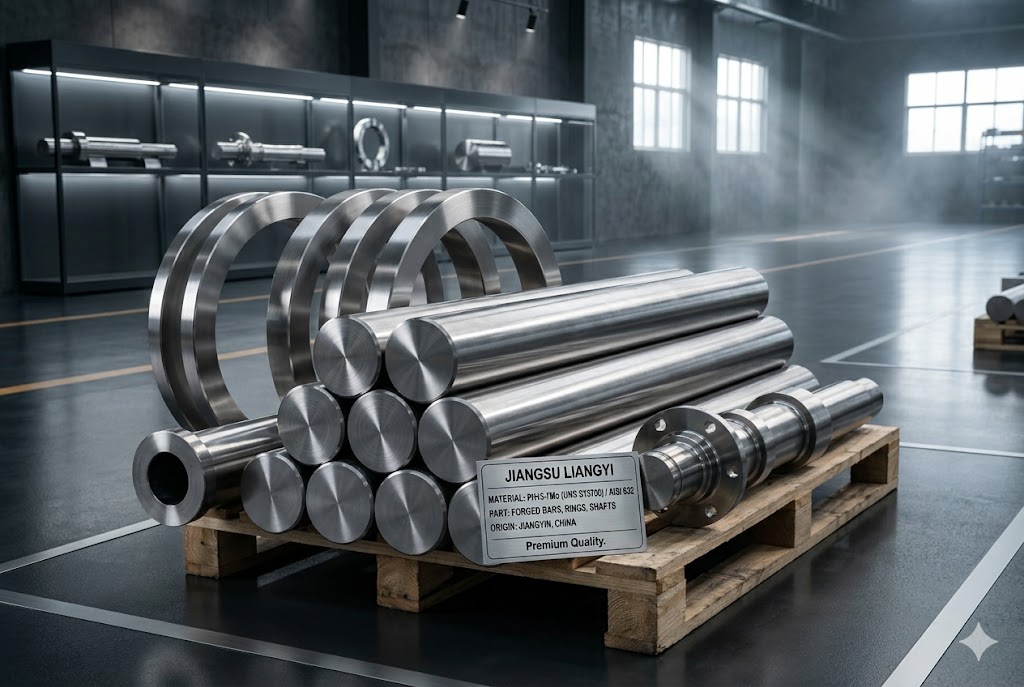
PH15-7Mo is a high-performance semi-austenitic precipitation-hardening stainless steel that has an exceptional combination of ultra-high strength, excellent pitting and general corrosion resistance, and minimal dimensional distortion during heat treatment. You can easily shape, weld, and braze this alloy when it is in the annealed state, and you can use simple, controlled heat treatment processes to get best mechanical properties. PH15-7Mo is much stronger than other common PH stainless steels like 17-4PH (UNS S17400) and it can keep its tensile and yield strength at high temperatures up to 600°F (315°C). This makes it suitable for high-temperature industrial applications.
Why Choose Jiangsu Liangyi as Your PH15-7Mo Forging Partner?
- Complete in-house production chain: We can process the parts from steel melting (30t EAF, LF, VOD, IM) to forging, heat treatment, machining, and final inspection
- Advanced forging equipment: We have 6300-ton hydraulic press, 5-meter seamless rolling machine, 0.75–9T electro-hydraulic forging hammers
- Strict quality control: We are ISO 9001:2015 certified, we can do 100% inspection for our products, we can also provide EN10204 3.1/3.2 MTC
- Large production capacity: we can process the parts with single-piece weight ranging from 30 kg to 30,000 kg, with annual output 120,000 tons
- Global export experience: we have 25+ years experience in exporting to 50+ countries across Europe, North America, Asia-Pacific, the Middle East, and more
- Competitive pricing & fast delivery: Our company located near Yangtze River Delta supply chain advantages and Shanghai Port proximity (150 km)
Metallurgical Science & Phase Transformation Mechanism of PH15-7Mo
Engineers need to know a lot about the metallurgical principles behind PH15-7Mo in order to choose the right heat treatment condition, predict how it will behave in service, and figure out what went wrong when it fails. PH15-7Mo is a semi-austenitic steel, which means that its microstructure changes in a complex, multi-step phase transformation sequence. This gives the alloy its unique combination of being easy to shape when it is annealed and having ultra-high strength after final aging.
Crystal Structure & Phase Transformation Pathway
When PH15-7Mo is in Condition A (annealed), its microstructure is mostly austenitic (face-centered cubic, FCC) with a little bit of delta ferrite. This austenitic matrix is metastable, which means that it is not stable in terms of thermodynamics but is stable in terms of kinetics at room temperature. The balanced Cr-Ni-Mo-Al chemistry is what makes the alloy metastable. The nickel content (6.5–7.75%) is kept deliberately lower than in complete austenitic grades, which place the alloy's martensite start (Ms) temperature just below room temperature. This is the critical design feature that distinguishes PH15-7Mo from both complete austenitic steels (which never transform) and martensitic PH steels (which transform spontaneously upon cooling).
The complete phase transformation pathway proceeds as follows:
- Step 1 — Solution Treatment (Condition A): Heating to 1950°F (1066°C) dissolves all precipitates and homogenizes the chemistry, producing a soft, ductile, predominantly austenitic matrix. In this condition, the steel has tensile strength of only ~130 ksi (896 MPa) and is readily formable, weldable, and brazable. The key metallurgical point is that cooling from solution temperature does not trigger martensite transformation because the Ms temperature is below room temperature.
- Step 2 — Austenite Conditioning: Austenite Conditioning: This is what makes semi-austenitic PH steels different from other types. When the temperature is raised to a middle point (1400°F for T-condition or 1750°F for R-condition), the austenite matrix becomes unstable because carbide precipitation occurs. Fine chromium carbides (Cr₂₃C₆) form at the grain boundaries and within the matrix, taking carbon and chromium out of the austenite around it. This change in composition makes the Ms temperature higher than room temperature. When it cools down again (or is treated at sub-zero temperatures), the unstable austenite turns into martensite. Refrigeration at -100°F (-73°C) for 8 hours in the R-condition almost completely changes the material (>95% martensite). This is why R-conditions are stronger than T-conditions.
- Step 3 — Precipitation Hardening (Aging): The final step heats the martensitic matrix to 900–1050°F (482–566°C), which can cause NiAl (B2-ordered) intermetallic precipitates to nucleate and grow coherently within the martensite. These nano-scale precipitates (typically 2–10 nm diameter) create intense elastic strain fields that impede dislocation motion, which can produce the dramatic strength increase. Lower aging temperatures (900°F) produce finer, more densely distributed precipitates and higher strength but lower toughness; higher temperatures (1050°F) allow precipitate coarsening, trading some strength for improved ductility.
Why Semi-Austenitic Transformation Matters for Forging
The semi-austenitic transformation pathway gives PH15-7Mo several critical advantages specifically relevant to forging applications:
- Minimal Distortion: The martensite transformation happens evenly across the cross-section during controlled austenite conditioning (not during quenching like in regular hardened steels). This means that PH15-7Mo forgings change size in a very consistent and predictable way during hardening, usually by less than 0.0005 in/in. This is a big plus for precision parts like turbine blades, valve seats, and structural members in aerospace.
- Uniform Through-Hardness: In PH15-7Mo, diffusion-controlled precipitation makes the hardness uniform across the entire cross-section, no matter how thick the section is. This is different from regular quench-and-temper steels, where the hardness decreases toward the core of thick sections. This is especially useful for Jiangsu Liangyi's heavy-section forgings, which can weigh up to 30,000 kg.
- Post-Forging Formability: In Condition A, the austenitic structure permits extensive cold working, welding, and brazing — operations that would be difficult or impossible with an already-martensitic steel. Components can be completely fabricated and then hardened, which can simplify manufacturing sequences.
Precipitation Kinetics & Over-Aging Considerations
The NiAl precipitation in PH15-7Mo adheres to conventional nucleation and growth kinetics. During the first stage of aging, coherent NiAl precipitates form with a cube-on-cube orientation relationship with the martensite matrix. This causes the most lattice strain and the highest hardness. When the aging process takes too long or the temperatures are too high, the precipitates grow too big (>15 nm), lose their connection to the matrix, and become semi-coherent or incoherent. This over-aging phenomenon reduces strength but increases ductility and toughness.
Microstructural Comparison: PH15-7Mo vs 17-4PH vs 15-5PH
| Metallurgical Feature | PH15-7Mo (UNS S15700) | 17-4PH (UNS S17400) | 15-5PH (UNS S15500) |
|---|---|---|---|
| PH Family | Semi-austenitic | Martensitic | Martensitic |
| Annealed Structure | Austenite + δ-ferrite | Martensite + δ-ferrite | Martensite + δ-ferrite |
| Hardening Precipitate | NiAl (B2 ordered) | Cu-rich ε-phase | Cu-rich ε-phase |
| Precipitate Size | 2–10 nm (very fine) | 10–50 nm | 10–50 nm |
| Transformation Method | Austenite conditioning + cooling/refrigeration | Spontaneous on cooling from solution | Spontaneous on cooling from solution |
| Distortion During Hardening | Very Low (<0.0005 in/in) | Moderate (0.001–0.003 in/in) | Moderate (0.001–0.003 in/in) |
| Formability Before Hardening | Excellent (austenitic) | Limited (martensitic) | Limited (martensitic) |
| Max Achievable Tensile Strength | 1828 MPa (CH900) | 1310 MPa (H900) | 1380 MPa (H900) |
PH15-7Mo Forged Product Shapes & Custom Forms
We manufacture a comprehensive range of PH15-7Mo (UNS S15700, AISI 632) forging steel products in different standard and custom shapes, sizes, and configurations, strictly adhering to international standards such as ASTM, AMS, AISI, API 6A, DIN, EN, and JIS, as well as customer-specific drawings and technical requirements:
PH15-7Mo Forged Bars & Rods
- Round bars: Up to 2000 mm diameter
- Square bars, flat bars, rectangular bars
- Step shafts, gear shafts, turbine shafts, crankshafts
- Custom lengths up to 15 meters
- Available in TH1050, RH950, CH900 conditions
PH15-7Mo Seamless Rolled Rings
- Seamless rolled rings: Up to 6 meters diameter
- Contoured rings, custom profile rings
- Gear rings, seal rings, labyrinth rings, guide rings
- Single-piece weight up to 30 tons
- Ideal for rotating and pressure applications
PH15-7Mo Hollow Forgings
- Sleeves, bushes, hollow bars
- Pipes, tubes, casings, shells, barrels
- Heavy-wall cylinders: Up to 3000 mm OD
- Custom wall thicknesses and lengths
- Perfect for high-pressure fluid handling
PH15-7Mo Custom Forged Components
- Discs, plates, flanged blanks, blocks
- Hubs, housings, valve bodies, bonnets
- Turbine discs, impellers, blisks
- Valve balls, stems, seat rings, closures
- Complete design assistance available
Chemical Composition of PH15-7Mo (UNS S15700, AISI 632)
The precise chemical composition of PH15-7Mo stainless steel is carefully controlled to make sure its exceptional mechanical properties and corrosion resistance. According to ASTM A693 Grade 632 and UNS S15700 standards, the detailed chemical composition range is as follows:
| Element | Composition Range (%) | Key Function in PH15-7Mo |
|---|---|---|
| Carbon (C) | Maximum 0.09 | Controls hardness and strength; minimized to maintain corrosion resistance |
| Manganese (Mn) | Maximum 1.0 | Improves hot workability and deoxidizes the steel |
| Phosphorus (P) | Maximum 0.04 | Minimized to enhance toughness and reduce hot cracking risk |
| Sulfur (S) | Maximum 0.04 | Minimized to improve corrosion resistance and machinability |
| Silicon (Si) | Maximum 1.0 | Deoxidizes the steel and strengthens the ferrite matrix |
| Chromium (Cr) | 14.0 – 16.0 | Primary element providing excellent general and pitting corrosion resistance |
| Nickel (Ni) | 6.5 – 7.75 | Stabilizes the austenite phase, improves toughness, and aids precipitation hardening |
| Molybdenum (Mo) | 2.0 – 3.0 | Significantly enhances pitting and crevice corrosion resistance, especially in chloride environments |
| Aluminum (Al) | 0.75 – 1.5 | Key precipitation hardening element, forming NiAl intermetallic compounds for ultra-high strength |
Physical Properties of PH15-7Mo (UNS S15700)
Engineers who use PH15-7Mo need accurate data on its physical properties for thermal analysis, stress calculations, vibration analysis, and electromagnetic design, in addition to its mechanical performance. The following physical constants are for the RH950 condition, unless otherwise noted. It's important to remember that the microstructure changes with heat treatment, which changes the physical properties (the ratio of austenite to martensite and the volume fraction of precipitate).
| Property | Value | Unit | Engineering Significance |
|---|---|---|---|
| Density | 7.80 | g/cm³ (0.282 lb/in³) | Critical for weight-sensitive designs (aerospace, rotating components) |
| Melting Range | 1400–1440 | °C (2550–2625°F) | Defines maximum service temperature and welding parameters |
| Modulus of Elasticity (E) | 200 | GPa (29 × 10⁶ psi) | Stiffness calculations, deflection analysis, natural frequency |
| Shear Modulus (G) | 77 | GPa (11.2 × 10⁶ psi) | Torsional stiffness of shafts and springs |
| Poisson's Ratio (ν) | 0.30 | — | FEA stress analysis, multi-axial stress states |
| Thermal Conductivity | 16.4 | W/(m·K) at 100°C | Lower than carbon steel — consider thermal gradients in thick sections |
| Coefficient of Thermal Expansion | 10.8 | µm/(m·°C) (20–100°C) | Thermal stress calculations, fits/clearances, mating components |
| Specific Heat Capacity (Cp) | 460 | J/(kg·°C) | Heat treatment energy calculations, thermal transient analysis |
| Electrical Resistivity | 0.80 | µΩ·m | Eddy current inspection sensitivity, electromagnetic shielding |
| Magnetic Permeability (hardened) | Ferromagnetic | — | Martensitic matrix is magnetic; important for MPI and sensor design |
Elevated Temperature Properties
A critical differentiator of PH15-7Mo over 17-4PH and 15-5PH is its superior strength retention at elevated temperatures. While all PH stainless steels lose strength above their aging temperature due to precipitate coarsening (over-aging), PH15-7Mo retains useful engineering strength to significantly higher temperatures thanks to its NiAl precipitates having greater thermal stability than the Cu-rich precipitates in 17-4PH/15-5PH.
| Temperature | Tensile Strength (MPa) | 0.2% Yield Strength (MPa) | Strength Retention (%) |
|---|---|---|---|
| Room Temp (20°C / 68°F) | 1655 | 1552 | 100% |
| 150°C (300°F) | 1590 | 1490 | 96% |
| 205°C (400°F) | 1540 | 1430 | 93% |
| 260°C (500°F) | 1480 | 1370 | 89% |
| 315°C (600°F) | 1400 | 1290 | 85% |
| 370°C (700°F) | 1290 | 1170 | 78% |
| 425°C (800°F) | 1100 | 970 | 66% |
Engineering Note: 315°C (600°F) is the highest long-term service temperature that is recommended for PH15-7Mo. If you stay at this temperature for too long, it will cause progressive over-aging (precipitate coarsening), which will permanently weaken the material and can't be fixed by re-aging. If you need to use something that works at temperatures above 600°F for a long time, think about using a different alloy, like A-286 (UNS S66286), UNS N07001, or Alloy 718 (UNS N07718).
Fatigue & Fracture Properties
For rotating components (turbine discs, impellers, pump shafts) and cyclically loaded parts (springs, valve stems), fatigue performance is often the governing design criterion. PH15-7Mo in the RH950 condition has very high resistance to fatigue:
- Rotating Beam Fatigue Endurance Limit (10⁷ cycles): ~about 690 MPa (100 ksi), which is about 42% of the ultimate tensile strength. This is normal for high-strength precipitation-hardened steels.
- Axial Fatigue Strength (R = -1, 10⁷ cycles): ~550 MPa (80 ksi)
- Fracture Toughness (KIC): 55–75 MPa√m (RH950), 80–110 MPa√m (TH1050) — the TH1050 condition offers significantly better damage tolerance due to its higher ductility
- Fatigue Crack Growth Rate: PH15-7Mo exhibits Paris-law behavior with exponent m ≈ 3.2, comparable to high-strength aerospace steels
At Jiangsu Liangyi, we improve the fatigue performance of our PH15-7Mo forgings by: (1) carefully controlling the forging ratio (at least 3:1) to improve the grain structure; (2) making sure the fiber flow is aligned correctly during open die forging to direct the grain flow along the primary stress axis; and (3) using surface treatments like shot peening (intensity 0.008–0.014A Almen) to add compressive residual stresses that slow down the start of fatigue cracks.
PH15-7Mo International Standards & Specification Cross-Reference
Many international and industry-specific standards say what PH15-7Mo should be. The table below is a complete cross-reference that will help engineers and procurement teams choose the right material for their needs and make sure that it is the same across different standards systems:
| Standards Body / System | Designation | Product Form / Notes |
|---|---|---|
| UNS | S15700 | Unified Numbering System |
| AISI | 632 | American Iron and Steel Institute type number |
| Common Trade Name | 15-7PH, PH15-7Mo, Alloy 15-7Mo | Industry-recognized designations |
| ASTM A693 | Grade 632 (Type 632) | Plate, sheet, and strip for precipitation-hardening stainless steels |
| ASTM A564 / A564M | Type 632 | Hot-rolled and cold-finished bars and shapes |
| ASTM A705 / A705M | Grade 632 | Age-hardening stainless steel forgings |
| AMS 5520 | — | Sheet, strip, and plate (Condition A) |
| AMS 5657 | — | Bars, forgings, tubing, and rings (Condition A) |
| AMS 5812 | — | Welding wire |
| ASME SA-693 | Grade 632 | ASME adoption of ASTM A693 (material specification, not manufacturer certification) |
| ASME SA-705 | Grade 632 | ASME adoption of ASTM A705 (material specification, not manufacturer certification) |
| DIN / EN | 1.4532 (X7CrNiAl17-7) | European designation (closest equivalent) |
| JIS | SUS632 | Japanese Industrial Standards |
| GB (China) | 0Cr15Ni7Mo2Al | Chinese national standard |
| GOST (Russia) | — | No direct equivalent; specify by UNS S15700 |
| API 6A (Oil & Gas) | Material listed per Table 5 | Material suitable for wellhead equipment; API monogram license held by end-user/OEM, not by material supplier |
| NACE MR0175 / ISO 15156 | Listed for specific conditions | Sour service (H₂S environments) — consult latest edition for allowable hardness limits |
Procurement Tip: When requesting quotations for PH15-7Mo forgings, always specify both the material designation (e.g., UNS S15700) and the applicable product-form specification (e.g., ASTM A705 Grade 632) along with the required heat treatment condition (TH1050, RH950, or CH900). This makes sure there is no ambiguity in the material, testing, and documentation requirements. Our team at Jiangsu Liangyi can help you identify the correct specification for your application.
PH15-7Mo vs 17-4PH vs 15-5PH: Material Performance Comparison
To help you select the PH stainless steel for your application, we have prepared a detailed performance comparison of PH15-7Mo, 17-4PH, and 15-5PH:
| Property | PH15-7Mo (RH950) | 17-4PH (H900) | 15-5PH (H900) |
|---|---|---|---|
| Tensile Strength (MPa) | >1655 | >1310 | >1380 |
| Yield Strength (MPa) | >1552 | >1170 | >1240 |
| Elongation (%) | >6 | >10 | >9 |
| Corrosion Resistance | Excellent (best among three) | Good | Very Good |
| High-Temperature Strength (up to 600°F) | Excellent | Good | Good |
| Cost | Higher | Lower | Moderate |
Corrosion Resistance of PH15-7Mo – In-Depth Analysis
One of the primary reasons engineers specify PH15-7Mo over 17-4PH and 15-5PH is its significantly superior corrosion resistance, particularly in chloride-containing environments. This advantage stems directly from its chemistry — specifically the 2.0–3.0% molybdenum content that is absent in both 17-4PH and 15-5PH.
Pitting Resistance Equivalent Number (PREN)
The Pitting Resistance Equivalent Number is the most commonly used index for predicting a stainless steel's resistance to localized pitting corrosion in chloride environments. The standard formula is:
PREN = %Cr + 3.3 × %Mo + 16 × %N
- PH15-7Mo: PREN = 15.0 + 3.3 × 2.5 + 0 = 23.25 (using mid-range values)
- 17-4PH: PREN = 16.0 + 3.3 × 0 + 0 = 16.0
- 15-5PH: PREN = 15.0 + 3.3 × 0 + 0 = 15.0
PH15-7Mo's PREN of 23.25 is approximately 45% higher than 17-4PH — a substantial improvement that translates directly into superior service life in marine, offshore, chemical processing, and other chloride-exposure environments.
Corrosion Performance in Specific Environments
| Environment / Medium | PH15-7Mo | 17-4PH | Engineering Notes |
|---|---|---|---|
| Atmospheric (rural/urban) | Excellent | Good | Both perform well; PH15-7Mo advantageous in coastal/industrial atmospheres |
| Seawater (ambient) | Good | Poor–Fair | PH15-7Mo's Mo content provides significant crevice/pitting resistance advantage |
| Chloride solutions (NaCl, CaCl₂) | Good | Poor | 17-4PH highly susceptible to pitting in chlorides above ~50 ppm at elevated temperatures |
| Dilute sulfuric acid (H₂SO₄ <5%) | Fair | Poor | Neither grade recommended for concentrated acids — consider nickel-based corrosion-resistant alloys or duplex SS |
| Nitric acid (HNO₃) | Good | Good | Both passivate well in oxidizing acids |
| Caustic soda (NaOH) | Good | Good | Acceptable for moderate concentrations and temperatures |
| H₂S environments (sour gas) | Conditional | Conditional | Both require hardness limits per NACE MR0175; PH15-7Mo TH1050 (HRC ≤46) preferred |
| CO₂-containing produced water | Good | Fair | PH15-7Mo's Mo content provides additional protection against CO₂ corrosion |
| Steam (high-temperature) | Excellent | Good | Superior oxide layer stability at elevated temperatures |
| Food & pharmaceutical | Excellent | Good | Both grades acceptable; PH15-7Mo offers wider pH range tolerance |
Stress Corrosion Cracking (SCC) Resistance
Stress corrosion cracking is a critical failure mode for high-strength stainless steels in chloride environments. PH15-7Mo's SCC resistance depends strongly on heat treatment condition and applied stress level:
- TH1050 Condition (HRC 42–46): Best SCC resistance. Recommended for applications where chloride exposure is expected and safety factors are critical. The lower strength level and higher toughness provide a greater threshold stress intensity for SCC initiation (KISCC ≈ 40–50 MPa√m).
- RH950 Condition (HRC 46–50): Good SCC resistance for most industrial environments. KISCC ≈ 25–35 MPa√m. Design should maintain applied stress intensity factor well below this threshold.
- CH900 Condition (HRC 50–54): Most susceptible to SCC among the three conditions due to its very high hardness. Not recommended for service in chloride-containing or sour gas environments without thorough corrosion engineering evaluation.
Best Practice: For PH15-7Mo forgings destined for oil & gas service in sour (H₂S) environments, we always process according to the latest edition of NACE MR0175 / ISO 15156. At Jiangsu Liangyi, we can do testing which including NACE TM0177 Method A (tensile test in H₂S-saturated solution) and HIC/SSC testing upon request.
PH Stainless Steel Material Selection Guide: When to Choose PH15-7Mo
Selecting the precipitation-hardening stainless steel from the available grades requires balancing multiple competing requirements: strength, corrosion resistance, temperature capability, cost, availability, and manufacturing constraints. Based on our 25 years of experience providing PH stainless steel forgings to a wide range of industries, here is how our engineering team makes decisions:
Choose PH15-7Mo (UNS S15700) When:
- You need tensile strength above 200 ksi (1380 MPa) combined with stainless-level corrosion resistance — no other PH stainless steel matches this combination
- The application involves chloride exposure (seawater, brackish water, de-icing salts, brine, produced water) where 17-4PH and 15-5PH have insufficient pitting/crevice resistance
- Minimal dimensional distortion during hardening is critical — for example, precision turbine blades, thin-wall valves, or tight-tolerance aerospace structures
- The component operates at sustained temperatures up to 315°C (600°F) and must retain its complete mechanical properties
- The manufacturing sequence requires welding, brazing, or extensive forming before hardening — PH15-7Mo's austenitic condition permits operations impossible with martensitic PH grades
- The design requires superior fatigue strength in a corrosive environment — the combination of high strength and Mo-enhanced corrosion resistance gives PH15-7Mo the best corrosion-fatigue performance in the PH family
Choose 17-4PH (UNS S17400) Instead When:
- The application does not involve significant chloride exposure and general atmospheric corrosion resistance is adequate
- Maximum required strength is below 180 ksi (1240 MPa)
- Budget is the primary concern — 17-4PH is typically 20–35% less expensive than PH15-7Mo due to simpler chemistry and wider availability
- Lead time is critical — 17-4PH raw material is more commonly stocked
Choose 15-5PH (UNS S15500) Instead When:
- You need better transverse mechanical properties than 17-4PH (15-5PH has more uniform wrought structure with less delta ferrite) at moderate cost
- The application requires good corrosion resistance but not the complete molybdenum-enhanced pitting resistance of PH15-7Mo
- The component is thick-section and requires uniform through-thickness toughness
Consider Other Alloys When:
- Alloy 455 (UNS S45500): When you need the highest toughness among PH grades combined with high strength (>220 ksi). This alloy uses titanium-based precipitation hardening.
- A-286 (UNS S66286): When sustained service temperature exceeds 600°F (315°C) up to 1300°F (700°C). A-286 is an austenitic PH alloy with Fe-Ni-Cr base.
- Alloy 718 (UNS N07718): This is the best choice when the service temperature is above 1000°F (540°C) and you need a nickel-based alloy to work.
- Duplex 2205 / Super Duplex 2507: When the main need is corrosion resistance (PREN >35) and strength of about 120 ksi (830 MPa) is enough.
Heat Treatment & Mechanical Properties of PH15-7Mo
Jiangsu Liangyi offers PH15-7Mo forgings in three primary, industry-standard heat treatment conditions, each carefully designed to provide specific mechanical property characteristics to suit your unique application requirements:
TH1050 Condition (Balanced Strength & Ductility)
- Solution Treatment: Heat to 1950°F (1066°C) and air cool to room temperature
- Austenite Conditioning: Reheat to 1400°F (760°C), hold for 90 minutes, rapidly cool to 55°F (13°C) within 1 hour, and hold for 30 minutes
- Precipitation Hardening: Reheat to 1050°F (566°C), hold for 90 minutes, then air cool to room temperature
- Key Mechanical Properties:
- Tensile Strength (Rm): >1448 MPa (210,000 psi)
- Yield Strength (Rp0.2): >1379 MPa (200,000 psi)
- Elongation (A): >7%
- Hardness: HRC 42–46
- Recommended Applications: Components requiring a good balance of strength, ductility, and toughness, such as turbine blades, impellers, and general structural parts
RH950 Condition (High Strength & Good Toughness)
- Solution Treatment: Heat to 1950°F (1066°C) and air cool to room temperature
- Austenite Conditioning: Reheat to 1750°F (954°C), hold for 10 minutes, air cool to room temperature, then rapidly cool to -100°F (-73°C) within 1 hour, hold for 8 hours, and warm to room temperature in air
- Precipitation Hardening: Reheat to 950°F (510°C), hold for 90 minutes, then air cool to room temperature
- Main Mechanical Properties:
- Tensile Strength (Rm): >1655 MPa (240,000 psi)
- Yield Strength (Rp0.2): >1552 MPa (225,000 psi)
- Elongation (A): >6%
- Hardness: HRC 46–50
- Recommended Applications: High-stress components requiring excellent strength and good toughness, such as valve stems, seat rings, downhole drilling tools, and aerospace landing gear components
CH900 Condition (Maximum Strength)
- Condition C: Transformed to martensite at the mill by controlled cold reduction
- Fabrication: Components are fabricated in Condition C
- Precipitation Hardening: Reheat to 900°F (482°C ±10°F), hold for 60 minutes, then air cool to room temperature
- Key Mechanical Properties:
- Tensile Strength (Rm): >1828 MPa (265,000 psi)
- Yield Strength (Rp0.2): >1793 MPa (260,000 psi)
- Elongation (A): >2%
- Hardness: HRC 50–54
- Recommended Applications: Ultra-high-strength components where limited ductility is acceptable, such as springs, retaining rings, diaphragms, and high-pressure fasteners
PH15-7Mo Open Die Forging Process Engineering
To forge PH15-7Mo, you need to know a lot about metallurgy and be able to control the process very precisely. PH15-7Mo is a semi-austenitic precipitation-hardening steel. It has hot working properties that are very different from those of regular austenitic (304/316) or martensitic (410/420) stainless steels. We have been forging PH15-7Mo at Jiangsu Liangyi for more than 25 years, and during that time we have learned how to get the best mechanical properties out of every process parameter.
Critical Forging Parameters for PH15-7Mo
| Parameter | Recommended Range | Critical Notes |
|---|---|---|
| Soaking Temperature | 1120–1175°C (2050–2150°F) | Soak for minimum 1 hour per 25 mm of maximum thickness; ensure uniform core temperature |
| Forging Start Temperature | 1120°C (2050°F) maximum | Never exceed 1175°C — excessive temperature causes delta-ferrite coarsening and grain boundary liquation |
| Forging Finish Temperature | ≥925°C (1700°F) | Finishing below this temperature risks strain-induced martensite formation and cracking in thick sections |
| Forging Ratio (Minimum) | 3:1 (preferred 4:1–6:1) | Ensures adequate grain refinement and closure of cast porosity; higher ratios improve fatigue lifecycle |
| Post-Forging Cooling | Air cool (Condition A forms) | Do NOT quench — air cooling from forging temperature produces the desired metastable austenitic structure |
| Reheating Between Passes | Reheat to 1120°C when temperature drops below 950°C | Working below 950°C requires excessive force and risks surface cracking |
| Maximum Reduction Per Pass | 15–25% of cross-section | PH15-7Mo has higher flow stress than 304L; moderate reductions prevent surface tearing |
Why Open Die Forging is Superior for PH15-7Mo
Open die forging provides several decisive metallurgical advantages over casting, machining from bar stock, or closed-die forging for PH15-7Mo components:
- Grain Flow Optimization: Open die forging allows the smith to orient the metal grain flow (fiber direction) parallel to the primary stress axis of the component. This improves fatigue lifecycle by 30–50% compared to machined-from-bar components where grain flow is randomly oriented relative to the stress axis. For turbine blades, for example, we orient grain flow radially to resist centrifugal loading.
- Cast Structure Elimination: The high forging ratios that can be achieved with open die forging (4:1 to 10:1) completely break down the coarse columnar dendritic structure of the cast ingot, closing micro-porosity and segregation. This makes a wrought structure with the same mechanical properties all the way through the cross-section.
- Near-Net Shape Capability: Our experienced forging team, using our 6300-ton hydraulic press and precision tooling, can produce forgings within 5–15 mm of final machining dimensions, which significantly reduce material waste and machining time compared to machining from oversized bar stock.
- Large Section Capability: Unlike closed-die forging which is limited by die size and press capacity, our open die process can produce PH15-7Mo components up to 30,000 kg — orders of magnitude larger than closed-die limitations.
Seamless Ring Rolling for PH15-7Mo
For ring-shaped PH15-7Mo components (seal rings, turbine guide rings, flanges, gear blanks), our 5-meter diameter seamless ring rolling machine produces rings with several advantages over open-die forged rings: 100% circumferential grain flow (no weld or joint), tighter dimensional tolerances (±2 mm on OD/ID), superior surface finish (eliminates die flash and parting lines), and more efficient material utilization (buy-to-fly ratio as low as 1.5:1 versus 3:1+ for machined-from-block).
Welding & Joining Guidelines for PH15-7Mo Forgings
One of the best things about its semi-austenitic design is that PH15-7Mo is easy to weld when it is in Condition A (annealed). The austenitic structure is very ductile and doesn't crack when it gets hot during welding. However, choosing the right procedure is very important for making strong joints which with all of their mechanical properties.
Recommended Welding Processes
- GTAW (TIG): Preferred process for critical applications. Use AWS ER630 or matching PH15-7Mo filler (AMS 5812). Shield with 99.99% pure argon at 15–20 CFH; back-purge with argon.
- GMAW (MIG): Acceptable for non-critical joints. Use short-circuit transfer for thin sections, spray transfer for heavy sections. Same filler metals as GTAW.
- SMAW (Stick): Use E630-XX electrodes. Acceptable for field repairs and less critical applications.
- Electron Beam Welding (EBW): It is great for making strong joints in aerospace. Little damage from heat, deep penetration, and little distortion.
- Resistance Welding: Because the structure is austenitic, spot welding and seam welding in Condition A are easy.
Critical Welding Procedure Requirements
- Pre-Weld Condition: Always weld in Condition A. Welding in the hardened condition (TH1050, RH950, CH900) will cause HAZ cracking due to the brittle martensitic matrix.
- Preheat: Not usually needed for Condition A material. A mild preheat of 100–150°C (200–300°F) is recommended for heavy sections (>50 mm) to lower residual stress.
- Interpass Temperature: Maximum 175°C (350°F). Excessive interpass temperature promotes sensitization (Cr₂₃C₆ precipitation).
- Post-Weld Heat Treatment (PWHT): After welding, the complete weldment must undergo the complete heat treatment cycle (solution treatment + austenite conditioning + aging) to develop uniform mechanical properties across the base metal, HAZ, and weld metal.
- Filler Metal Selection: For highest joint strength, use matching PH15-7Mo filler (AMS 5812). For dissimilar joints to carbon steel or austenitic stainless, use Alloy 625 (ERNiCrMo-3) filler for corrosion resistance.
Brazing Compatibility
PH15-7Mo in Condition A can be successfully vacuum-brazed or furnace-brazed using nickel-based (BNi-2, BNi-7) or silver-based (BAg-1, BAg-8) brazing alloys.At 1900–1950°F, vacuum brazing also serves as the solution treatment, so there is no need for a separate heat treatment step. A lot of people in the aerospace industry use this method to make honeycomb sandwich structures and heat exchangers.
Machining Guidelines for PH15-7Mo Forgings
PH15-7Mo presents unique machining challenges compared to conventional stainless steels. Its machinability varies dramatically with heat treatment condition, and selecting the wrong parameters can cause rapid tool wear, work hardening, poor surface finish, or dimensional instability. We have made thousands of PH15-7Mo parts in-house, and these guidelines are based on that experience.
Machinability by Heat Treatment Condition
| Parameter | Condition A (Annealed) | TH1050 (HRC 42–46) | RH950 (HRC 46–50) |
|---|---|---|---|
| Machinability Rating (vs 1212 steel = 100%) | ~45% | ~30% | ~20% |
| Turning Speed (Carbide, m/min) | 60–90 | 40–60 | 25–40 |
| Feed Rate (mm/rev) | 0.15–0.30 | 0.10–0.25 | 0.08–0.20 |
| Depth of Cut (mm) | 1.5–4.0 | 1.0–3.0 | 0.5–2.0 |
| Tool Material | Coated carbide (TiAlN) | Coated carbide (TiAlN/AlCrN) | CBN or ceramic for finishing |
| Coolant | Flood (water-soluble, 8–10% concentration) | Flood, high-pressure preferred | High-pressure coolant (70+ bar) essential |
| Work Hardening Tendency | High (austenitic) | Moderate | Low |
Main Machining Best Practices
- Rough Machine in Condition A, Finish After Hardening: For precision components, rough machine to within 2–3 mm of final dimensions in the soft Condition A, perform complete heat treatment, then finish machine to final size.This method makes use of the fact that Condition A is easy to machine while also taking into account the small, predictable changes in size that happen during hardening.
- Avoid Light Cuts in Condition A: The austenitic structure in Condition A is very likely to work harden. Light cuts (less than 0.5 mm deep) don't cut; they rub, which makes a hardened surface layer that greatly shortens the life of the tool on later passes. A cut should always be at least 1.0 mm deep.
- Use Positive Rake Angles: Positive rake geometry (6–12° positive) makes cutting easier and less hot. Negative rake tools are stronger, but they make too much heat, which makes the work harden.
- Rigid Setup: PH15-7Mo's high strength in the hardened condition generates significant cutting forces. Ensure maximum machine rigidity, minimize tool overhang, and use the shortest possible tool holders. Vibration (chatter) causes catastrophic tool failure with this material.
- Drilling: Use split-point 135° cobalt or carbide drills. Peck drill with frequent chip clearing (peck depth = 1× drill diameter). Feed rate: 0.05–0.10 mm/rev in hardened condition.
- Grinding: For final finishing of hardened PH15-7Mo, use aluminum oxide wheels (60–80 grit, medium hardness) with copious coolant. Grinding is better than cutting for achieving surface finishes below Ra 0.8 µm.
At Jiangsu Liangyi, our in-house CNC machining center includes lathes (up to 2500 mm swing, 10 m between centers), vertical boring mills (up to 3200 mm table), and 5-axis CNC milling machines capable of producing PH15-7Mo components from rough-machined condition to completely finished, ready-to-install precision (Ra 0.8 µm or better, tolerances to ±0.02 mm).
PH15-7Mo Forging Parts Applications & Industry Solutions
PH15-7Mo (UNS S15700, AISI 632) forgings are commonly used in a diverse range of demanding, high-stakes industrial applications where ultra-high strength, excellent corrosion resistance, minimal dimensional distortion, and reliable performance at elevated temperatures are critical. We make custom applications for the following main global industries with our PH15-7Mo products:
Power Generation Industry
- Gas and steam turbine blades, discs, impellers, and blisks for combined-cycle power plants, thermal power plants, and industrial gas turbines
- Turbine guide rings, seal rings, labyrinth rings, packing seal diaphragms, and rotor end rings
- Turbo centrifugal compressor impellers, shrouded impellers, and compressor shafts
- Large-scale pump rotors, impellers, casings, and containment components for critical power generation equipment
- Boiler and heat exchanger components including tube sheets, nozzles, channel flanges, and pressure vessel parts
Oil & Gas Industry
- Downhole drilling tool components including mud motor splined drive shafts, downhole electric submersible pump (ESP) motor splined shafts, and drill collars
- High-pressure pipes, tubes, shells, tubing, and casing for offshore and onshore oilfield equipment
- Wellhead components, Christmas tree parts, tubing hangers, casing hangers, and pressure vessel components
- Valve bodies, stems, seat rings, balls, and closures for high-pressure, high-temperature (HPHT) service
- Subsea equipment components requiring excellent corrosion resistance in harsh seawater and chloride environments
Valve Manufacturing Industry
- Valve balls, bonnets, bodies, stems, closures, and yokes for industrial valves
- Valve seat rings, valve cores, and valve discs with precision-machined seating surfaces (Ra 0.8µm or better)
- Components for ball valves, gate valves, globe valves, check valves, back pressure valves, and control valves
- High-pressure and high-temperature valve components for power plants, petrochemical plants, and oil & gas facilities
- Cryogenic valve components for LNG terminals, industrial gas plants, and aerospace applications
Marine & Shipbuilding Industry
- Marine ship and boat propeller shafts, stern tubes, and rudder stocks
- Marine engine components including crankshafts, connecting rods, camshafts, and cylinder heads
- Pump and compressor components for shipboard cooling, fire protection, and fuel systems
- Corrosion-resistant marine hardware, structural components, and mooring system parts
- Offshore platform equipment, riser components, and subsea hardware
Industrial Pump & Compressor Industry
- Pump casings, covers, barrels, impellers, diffusers, and wear rings for centrifugal, positive displacement, and reciprocating pumps
- Pump shafts, housings, shells, and mechanical seal components
- Gas compressor components including impellers, diaphragms, casings, and crankshafts
- Ultra-high pressure water jet cutting machine intensifier pump sealing heads and cylinders
- Hydraulic system components requiring high strength, fatigue resistance, and minimal distortion
Aerospace & Defense Industry
Note: PH15-7Mo is a very common material used in aerospace. During the quoting process, you should tell us your specific certification requirements for aerospace projects, like AS9100, NADCAP, or customer-specific approvals
- Aircraft structural components including bulkheads, frames, spars, and wing ribs
- Landing gear components, actuation systems, and structural fasteners
- Jet engine components including turbine blades, discs, shafts, and casings
- Retaining rings, springs, diaphragms, and bellows
- Welded and brazed honeycomb paneling and structural assemblies
Engineering Case Studies: PH15-7Mo Forgings in Real-World Applications
The following case studies show how Jiangsu Liangyi's PH15-7Mo forging solutions address real engineering challenges across industries. These examples are representative of our typical project scope and capabilities. Customer names and proprietary details have been anonymized for confidentiality.
Case Study 1: Industrial Gas Turbine Compressor Impeller – European Power Generation OEM
Challenge: A European company that makes gas turbines needed a compressor impeller with a diameter of 650 mm that could run at 12,000 RPM and handle gas temperatures of 280°C (536°F). The impeller would be exposed to combustion gases that had small amounts of chlorides and sulfur compounds in them. After 18 to 24 months, previous impellers made from 17-4PH H900 showed signs of pitting corrosion on the blade surfaces. This made them less aerodynamic and meant they had to be replaced sooner than expected.
Solution: We suggested upgrading to PH15-7Mo in TH1050 condition for three technical reasons: (1) the 45% higher PREN (23.25 vs. 16.0) would make it much more resistant to pitting in the chloride/sulfur gas environment; (2) TH1050's tensile strength (>1448 MPa) was higher than the 1200 MPa minimum required by the OEM's stress analysis; and (3) TH1050's superior ductility (>7% elongation) gave it a greater safety margin against catastrophic burst failure than the RH950 condition.
Manufacturing Process: The manufacturing process started with a 1200 kg vacuum-degassed ingot. We performed a multi-step forging sequence: upset from Ø350 mm to Ø550 mm pancake, draw back to Ø400 mm intermediate billet, final upset to Ø700 × 200 mm disc shape. Total forging ratio: 5.2:1. After heat treatment to TH1050, we rough-machined the disc and then precision 5-axis CNC-milled the blade profiles to ±0.05 mm tolerance.The final UT inspection according to ASTM A388 Class A found no recordable signs.
Result: The PH15-7Mo impeller has been in use for more than 36 months without any pitting corrosion. This is twice as long as the previous 17-4PH component. The customer has converted all orders to PH15-7Mo TH1050 since then.
Case Study 2: Subsea Valve Seat Ring – Middle East Offshore Oil & Gas
Challenge: A major Middle Eastern NOC needed 48 seat rings (Ø220 mm OD × Ø160 mm ID × 80 mm height) for subsea ball valves that worked at 350 bar (5000 psi) in water with 3.5% NaCl, 50 ppm CO₂, and 5 ppm H₂S at 85°C. The specification called for a minimum hardness of HRC 40 and a maximum hardness of HRC 47 (to meet NACE MR0175). The sealing surface finish had to be Ra ≤ 0.2 µm, and the inspection had to be 100% UT + MPI.
Solution: The PH15-7Mo TH1050 condition (HRC 42–46) met all of the requirements perfectly. The hardness range fell within the NACE-allowable window, the strength exceeded valve design requirements by 25%, and the Mo-enhanced corrosion resistance provided confidence for long-term subsea service. We produced the rings by seamless ring rolling from punched and pierced blanks.
Manufacturing Process: Forging is the process of making an upset ingot with a punch Ø170 mm center hole. Then, the ingot is expanded on a mandrel to Ø180 ID × Ø260 OD. Finally, it is rolled into a seamless ring with final dimensions of Ø230 OD × Ø165 ID × 90 mm (with a 5 mm machining allowance per surface). Full TH1050 cycle with temperature control of ±5°F for heat treatment. Machining: CNC lathe turning to final dimensions, followed by precision lapping of sealing surfaces to Ra 0.15 µm. We checked 100% of the rings with UT according to ASTM A388, 100% of the rings with MPI according to ASTM E1444 (Level 1), hardness mapping (12 points per ring), and NACE TM0177 Method A testing on witness samples.
Result: All 48 rings passed the first inspection (no rings were rejected). The full delivery was finished six weeks after the order was confirmed. The customer ordered more than 120 extra seat rings in different valve sizes.
Case Study 3: Aerospace Retaining Ring Set – North American Aircraft Engine Program
Challenge: An aircraft engine maker needed PH15-7Mo retaining rings (snap rings) in CH900 condition for a compressor stator assembly. The rings had to be made from a flat strip and then hardened to a yield strength of more than 260 ksi (1793 MPa). When we tried to use pre-hardened material before, the spring-back made it impossible to form.
Solution: We gave the customer PH15-7Mo forged flat bars in Condition A (annealed, austenitic, soft), which lets them cold-form the rings into their complicated shapes without any spring-back problems. After forming, the rings were heat-treated through the full CH900 cycle at the customer's facility. The NiAl precipitation during the 900°F aging step produced the required >260 ksi strength without causing any dimensional distortion — the rings maintained their formed shape to within 0.001" of nominal.
Result: This approach eliminated the forming problems entirely and reduced the customer's scrap rate from 35% (with pre-hardened material) to less than 2%. This case perfectly illustrates the unique manufacturing advantage of PH15-7Mo's semi-austenitic nature: form it soft, harden it in place.
Case Study 4: Heavy-Duty Industrial Coolant Pump Shaft – Asian Power Plant
Challenge: An Asian power plant needed a new coolant pump shaft that weighed 8,500 kg when it was finished and 3,200 kg when it was forged. The shaft was 420 mm wide and 4,800 mm long, and it had several step diameters. The specifications called for PH15-7Mo RH950, 100% volumetric UT per ASTM A388 (supplementary requirement S1, acceptance level 1), EN10204 3.2 certification with an independent third-party witness, and full traceability from melt to finished part.
Solution: We made the shaft from a triple-melted (EAF + LF + VOD) ingot to make sure it was as clean as possible (inclusion rating ASTM E45 Method A: A-thin ≤1.0, B-thin ≤1.5, C-thin ≤0.5, D-thin ≤1.0). The forging process included upsetting the ingot (2:1 ratio), drawing (3:1 ratio), re-upsetting, and finally drawing to a total forging ratio of 6.5:1. This is much higher than the minimum 4:1 ratio usually required for critical rotating equipment.
Result: The shaft passed all of the UT, mechanical property, and dimensional tests on the first try. The report from the third-party surveyor said that the UT results were "exceptionally clean" and the quality records were "well-documented." The whole project, from placing the order to getting it delivered to the CIF destination port, took 10 weeks.
Quality Assurance & Inspection Process for PH15-7Mo Forgings
At Jiangsu Liangyi, quality is our top priority and the foundation of our reputation. All our PH15-7Mo (UNS S15700, AISI 632) forging steel products undergo multi-stage quality control and inspection processes at every stage of production from raw material receipt to final packaging which can make sure they meet or exceed the highest international standards and customer-specific requirements:
Raw Material Inspection
- Chemical Composition Analysis: Using advanced spectrometer to verify compliance with ASTM A693 Grade 632 and UNS S15700 specifications
- Positive Alloy Material Identification (PAMI): 100% verification of material grade using X-ray fluorescence (XRF)
- Visual Inspection: For surface defects, cracks, and inclusions
- Material Certification Verification: Review and validation of mill test certificates from our steel suppliers
Forging Process Inspection
- Temperature Monitoring: Continuous monitoring of forging temperature using pyrometers
- Dimensional Inspection: After each forging step using calipers, micrometers, and coordinate measuring machines (CMM)
- Visual Inspection: For surface cracks, folds, and other forging defects
Heat Treatment Inspection
- Temperature Uniformity Verification: Regular calibration and monitoring of our 10+ heat treatment furnaces
- Hardness Testing: Using Rockwell (HRC), Brinell (HB), and Vickers (HV) methods
- Microstructure Examination: Using metallographic microscope to verify proper phase transformation and precipitation hardening
Final Inspection
- Mechanical Property Testing: Tensile testing, bending testing, and impact testing (Charpy V-notch) per ASTM standards
- Nondestructive Testing (NDT):
- Ultrasonic Testing (UT) per ASTM A388 / SA-577
- Magnetic Particle Inspection (MPI) per ASTM E165 / E1444
- Dye Penetrant Testing (PT) per ASTM E165 / E1417
- X-ray Testing (RT) for critical components
- Corrosion Testing: Intergranular corrosion testing (Huey test) per ASTM A262 Practice E
- Dimensional Inspection: 3D dimensional inspection using coordinate measuring machines (CMM) and laser scanners
- Surface Finish Measurement: Using profilometer to verify compliance with customer requirements
All PH15-7Mo forgings are provided with complete EN10204 3.1 Mill Test Certificates (MTC) as standard, which include all chemical composition, mechanical property, and inspection results. We can also provide EN10204 3.2 certificates with independent third-party inspection from reputable international organizations upon request.
Custom PH15-7Mo Forging Services & Production Timeline
We specialize in providing custom PH15-7Mo forging solutions according to your unique application requirements. Our experienced engineering team can work closely with you from the initial design stage to final delivery which can make sure your components are improved for forging, performance, and cost-effectiveness:
Our Custom Forging Capabilities Include:
- Free Design Assistance: Our engineering team can help optimize your component design for forging, reducing material waste and production costs
- Prototype Development: Small-batch prototype production for testing and validation
- High-Volume Production Runs: Scalable production capacity to meet your ongoing needs
- Complete In-House Machining: CNC turning, milling, drilling, grinding, boring, gear cutting, and surface treatment
- Surface Treatment & Coating: Shot peening, sandblasting, passivation, electroless nickel plating (ENP), and cobalt-chromium hardfacing
- Custom Packaging & Labeling: To meet your specific shipping and storage requirements
- Just-in-Time (JIT) Delivery: Flexible delivery options to support your production schedule
Typical PH15-7Mo Forging Production Timeline:
- Quotation & Order Confirmation: 24–48 hours for quotation, 1–3 days for order confirmation
- Raw Material Procurement: 1–2 weeks (if not in stock)
- Forging: 1–2 weeks (depending on size and complexity)
- Heat Treatment: 1–2 weeks (depending on condition)
- Machining: 1–3 weeks (depending on complexity)
- Inspection & Testing: 3–7 days
- Packaging & Shipping: 1–3 days
Total Typical Lead Time: 4–8 weeks (standard), 2–4 weeks (expedited, available upon request)
Frequently Asked Questions (FAQ) About PH15-7Mo Forgings
PH15-7Mo (UNS S15700, AISI 632) is used in demanding industrial applications requiring high strength, good corrosion resistance and minimal distortion. Common applications include gas/steam turbine blades, discs, impellers, valve balls, stems, seat rings, aerospace structural components, springs, retaining rings, downhole drilling tools and high-pressure equipment.
There are three main heat treatment conditions for PH15-7Mo: TH1050 (balanced strength >1448 MPa and ductility >7%), RH950 (high strength >1655 MPa and good toughness >6%), and CH900 (maximum strength >1828 MPa with limited ductility >2%). A certain order of solution treatment, austenite conditioning, and precipitation hardening is needed to get each condition.
PH15-7Mo has higher tensile/yield strength (>1655 MPa vs >1310 MPa), better pitting corrosion resistance (especially in chloride environments due to its 2.0–3.0% molybdenum content), and maintains its mechanical properties at higher temperatures (up to 600°F/315°C) than 17-4PH. However, 17-4PH is more readily available and generally less expensive. PH15-7Mo is a semi-austenitic grade while 17-4PH is martensitic.
According to ASTM A693 Grade 632, PH15-7Mo has the following amounts of elements: Carbon max 0.09%, Chromium 14.0–16.0%, Nickel 6.5–7.75%, Molybdenum 2.0–3.0%, Aluminum 0.75–1.5%, Manganese max 1.0%, Silicon max 1.0%, Phosphorus max 0.04%, and Sulfur max 0.04%. Adding molybdenum and aluminum is what makes it so resistant to corrosion and able to precipitation harden.
Yes, Jiangsu Liangyi specializes in custom PH15-7Mo forgings produced according to international standards (ASTM, AMS, AISI, API 6A, DIN, EN, JIS) and customer drawings (PDF/DXF/STEP formats). Our engineering team also provides free design assistance to optimize components for forging.
We can produce PH15-7Mo forgings from 30 kg to 30,000 kg in weight. Our seamless rolled rings can be up to 6 meters in diameter, forged bars up to 2000 mm in diameter and 15 meters in length, and hollow forgings up to 3000 mm OD.
Yes, we offer complete in-house CNC machining services including turning, milling, drilling, grinding, boring and gear cutting. We can supply PH15-7Mo forgings in rough machined, semi-finished or fully finished condition with Ra 0.8µm surface finish available.
We are ISO 9001:2015 certified. All PH15-7Mo products come with EN10204 3.1 Mill Test Certificates (MTC) as standard. If you want, we can also give you EN10204 3.2 certificates with an inspection by a third party.
All PH15-7Mo forgings undergo rigorous inspection at every stage: raw material (chemical analysis, PAMI), forging (temperature monitoring, dimensional check), heat treatment (hardness, microstructure), and final (tensile/bending/impact, UT/MPI/PT/X-ray, intergranular corrosion, 3D dimensional, surface finish).
Lead time may be different which depends on complexity and size of products, order quantity and heat treatment process. The standard PH15-7Mo products can be delivered in 4–6 weeks. Custom forgings may take 6 to 8 weeks. We can also speed up production to 2–4 weeks for urgent needs.
Yes, we send our PH15-7Mo forgings to more than 50 countries around the world. Some of these countries are Germany, France, Italy, the UK, the US, Canada, Australia, Japan, South Korea, the UAE, and Saudi Arabia. We know a lot about shipping goods internationally, getting them through customs, and Incoterms (FOB, CIF, CFR, and EXW).
Our PH15-7Mo forging factory is located in Chengchang Industry Park, Jiangyin City, Jiangsu Province, China where is the heart of the Yangtze River Delta manufacturing hub, with convenient access to Shanghai Port (150 km) for global shipping.
Please send us your custom drawing (PDF/DXF/STEP), material specification, quantity, heat treatment requirement and any special instructions to sales@jnmtforgedparts.com or call/WhatsApp us at +86-13585067993. Our sales team will provide a detailed quotation within 24–48 hours.
Contact Jiangsu Liangyi for a Free PH15-7Mo Forging Quotation
Jiangsu Liangyi Co., Limited is your best choice for China PH15-7Mo forging manufacturer. Our company is located in Chengchang Industry Park, Jiangyin City, Jiangsu Province which is the center of China's advanced forging industry. We have the expertise, equipment, and global export experience which can meet all your PH15-7Mo (UNS S15700, AISI 632, 15-7PH, Alloy 15-7Mo, ASTM A693 Grade 632) forging needs.
We have over 25 years of forging experience, and we have provided thousands of high-quality PH15-7Mo components to customers all over the world for applications in power generation, oil & gas, marine, aerospace, valve manufacturing, and other critical industries. Our excellent quality, competitive pricing, on-time delivery, and excellent customer service have made us the best supplier for many leading international companies.
Contact us today with your custom drawing, material requirements, and quantity for a free, no-obligation quotation. We look forward to partnering with you on your next project!