Maraging 250 (VASCOMAX 250, UNS K92890) Forged Parts | China Leading Forging Manufacturer — Jiangsu Liangyi
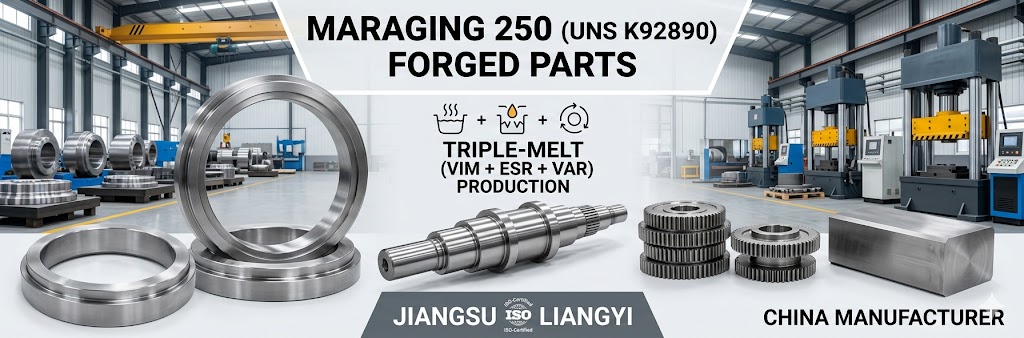
Jiangsu Liangyi Co., Limited is China's leading ISO 9001:2015 certified specialist in Maraging 250 (VASCOMAX 250, UNS K92890, Maraging C-250) forged parts, open die forgings, and seamless rolled rings. Founded in 1999 in Jiangyin, Jiangsu Province — China's premier heavy industry forging corridor — we have spent 25+ years refining every detail of maraging steel forging: from triple-melt ingot chemistry control, to precision grain-flow forging sequences, to the exacting 480°C age hardening cycle that transforms this alloy's soft martensitic microstructure into one of the highest-performance engineering materials available today. Our products serve more than 50 countries across eight critical industrial sectors and are delivered with full EN 10204 3.1/3.2 mill test certificates (MTC) as standard on every order, with third-party inspection by BV, SGS, TÜV, DNV, and Lloyd's Register available upon request.
The Metallurgical Science Behind Maraging 250 — Why It Outperforms Conventional Ultra-High Strength Steels
Most high-strength engineering materials achieve strength at the cost of toughness — the classic trade-off. Maraging 250 breaks this rule through a fundamentally different hardening mechanism. Understanding the underlying metallurgy helps engineers select and specify this material with confidence, and helps procurement teams evaluate supplier quality claims critically.
The Precipitation Hardening Mechanism: High Strength Without Carbon
Conventional high-strength steels (AISI 4340, H13, 300M) rely on carbon to form high-hardness martensite during quenching, then tempering to partially recover toughness — but carbon simultaneously limits toughness, weldability, and corrosion resistance. Maraging 250 eliminates this trade-off by keeping carbon below 0.03% and using a two-stage thermal cycle instead:
- Solution Annealing (820–845°C, air cool): All alloying elements dissolve into austenite, which transforms to a soft, low-carbon martensite on cooling to room temperature — producing approximately 28–32 HRC. This is a very different martensite from high-carbon steels: tough, ductile, easily machined, and free of the carbon-induced lattice distortion that causes brittleness. This is the condition in which all precision machining is ideally performed.
- Age Hardening (480–500°C, 3–6h, air cool): Fine intermetallic precipitates — primarily Ni₃Ti and Ni₃Mo, with secondary Ni₃Mo and Fe₂Mo contributions — nucleate and grow within the martensite matrix. These precipitates are coherent with the matrix crystal lattice, creating intense elastic stress fields that block dislocation movement throughout the material. Tensile strength rises from ~1000 MPa to 1860 MPa+ while toughness drops only moderately — producing the exceptional strength-toughness combination that defines this grade.
After 25 years and thousands of aging furnace cycles, our heat treatment engineers have confirmed that 480°C ± 3°C for 3.5–4.5 hours produces the most consistent peak-strength results for standard section thicknesses (50–200mm). Aging above 510°C initiates austenite reversion — small islands of soft retained austenite replace the martensite matrix — which softens the material unpredictably and permanently. This is why we monitor aging temperature to ±2°C using calibrated multi-zone furnaces with independent thermocouple logging on every charge. Temperature overshoot across the 510°C boundary cannot be corrected without a full re-solution-anneal: a costly process requiring complete heat treatment restart. Prevention is the only acceptable strategy.
Why Titanium Is the Most Critical — and Most Sensitive — Element
Titanium is responsible for Ni₃Ti formation, the primary strengthening precipitate in Maraging 250. However, titanium has an extremely high chemical affinity for oxygen, nitrogen, and sulfur. At parts-per-million (ppm) concentrations, these impurities react preferentially with titanium to form TiN, TiO₂, and TiS inclusions that serve two damaging functions: (1) they remove titanium that would otherwise contribute to precipitation hardening, reducing achievable aged strength by 30–50 MPa per 0.01% Ti loss to inclusions; and (2) they create sharp-cornered hard particles that act as fatigue crack initiation sites, dramatically reducing high-cycle fatigue life and fracture toughness far below expected values. This is the fundamental metallurgical reason why single-vacuum-melt Maraging 250 is entirely inadequate for aerospace, nuclear, or critical oil and gas applications — and why our triple melt (VIM+ESR+VAR) process is a firm metallurgical requirement, not a marketing distinction. Each remelting step targets a specific class of contamination that the others cannot address.
Grain Flow Direction and Its Effect on Fatigue Life — A Critical Factor Most Suppliers Don't Discuss
Unlike bar stock or plate with uncontrolled random grain flow, a precision open die forging deliberately shapes grain flow to follow the geometry of the finished component. In a turbine disc, the dominant working stress is circumferential (hoop stress from centrifugal loading). Our forging process sequences ensure grain flow runs circumferentially around the disc geometry — aligning the strongest direction of the forged material with the direction of maximum service stress. Independent fatigue testing data confirms that correctly grain-flow-aligned maraging steel forgings exhibit 20–35% higher high-cycle fatigue life compared to machined-from-bar equivalents of identical chemistry and heat treatment. For API 6A sour service valve bodies, axial grain flow running parallel to the bore prevents stress corrosion cracking paths from propagating radially through the wall thickness — a failure mode responsible for documented field incidents involving improperly manufactured valve components. When you receive a proposal from any forging supplier for Maraging 250 components, ask specifically how grain flow direction is controlled and verified in their process — the answer reveals much about their metallurgical depth.
Maraging 250 vs Alternative Ultra-High Strength Materials — Detailed Engineering Comparison
Engineers and procurement specialists frequently ask: "When should we specify Maraging 250 instead of 4340, H13, 17-4 PH, or 300M?" This table draws on 25 years of material selection consultation across eight industries to provide the data needed to answer that question objectively.
| Property | Maraging 250 (UNS K92890) | AISI 4340 (HT) | H13 Tool Steel | 17-4 PH (H900) | 300M (AMS 6419) |
|---|---|---|---|---|---|
| Tensile Strength UTS | 1860 MPa min. | ~1480 MPa | ~1570–1700 MPa | ~1310 MPa | ~1930 MPa |
| Yield Strength Rp0.2 | 1725 MPa min. | ~1380 MPa | ~1380–1570 MPa | ~1170 MPa | ~1655 MPa |
| Fracture Toughness KIc | 80–100 MPa·m⁰·⁵ | ~55–70 MPa·m⁰·⁵ | ~25–35 MPa·m⁰·⁵ | ~55–70 MPa·m⁰·⁵ | ~60–80 MPa·m⁰·⁵ |
| KIscc/KIc in H₂S | 0.70–0.90 | 0.20–0.40 | 0.15–0.30 | 0.50–0.70 | 0.25–0.45 |
| Heat Treatment Distortion | <0.05% linear | 0.2–0.8% (quench) | 0.3–1.0% (quench) | 0.05–0.15% | 0.3–0.8% (quench) |
| Pre-Hardening Machinability | Excellent (~30 HRC) | Good (~28 HRC) | Moderate (~20 HRC) | Good (~33 HRC) | Moderate (~28 HRC) |
| Weldability (No Preheat) | Excellent | Poor (200°C+ preheat) | Poor (300°C+ preheat) | Good | Poor |
| NACE MR0175 Sour Service | Approved (Table A3) | Restricted ≤22 HRC | Not approved | Restricted (H1150 max) | Not approved |
| Carbon Content | <0.03% | 0.38–0.43% | 0.32–0.45% | <0.07% | 0.40–0.46% |
Specify Maraging 250 when your component must simultaneously satisfy three or more of these conditions: (1) UTS >1600 MPa; (2) Fracture toughness KIc >60 MPa·m⁰·⁵; (3) NACE MR0175 sour service approval required; (4) Post-machining dimensional change must be <0.1%; (5) Field weldability without preheating is required. Maraging 250 is the only commercially available forged steel that can satisfy all five simultaneously in a single, commercially practical heat treatment cycle. If your application requires only two of these conditions, a less costly alternative may be appropriate — contact our engineering team for an objective material selection consultation.
We receive regular RFQs where 17-4 PH H900 has been specified but the application actually requires Maraging 250 performance. 17-4 PH H900 achieves approximately 1310 MPa UTS — 550 MPa less than the minimum guaranteed by Maraging 250. More critically, in H₂S-containing environments where NACE MR0175 Table A3 applies, 17-4 PH at H900 condition (above 33 HRC) is restricted to non-wetted component surfaces; it cannot be used in direct contact with sour process media. Maraging 250 has explicit approval for sour service at its full aged strength level. If your design requires >1600 MPa yield strength in sour service: Maraging 250 is the only correct specification — do not substitute.
Chemical Composition of Maraging 250 (UNS K92890) — Element-by-Element Engineering Rationale
The chemical composition of our Maraging 250 (VASCOMAX 250, UNS K92890) forged steel strictly complies with ASTM A538 Grade C, AMS 6512, and UNS K92890. Understanding the engineering rationale for each element — and why impurity limits are set where they are — is essential for correctly qualifying supplier materials and interpreting MTC data:
| Element | Specification (Wt%) | Engineering Rationale & Limit Justification |
|---|---|---|
| Carbon (C) | ≤0.03% Max | Carbon forms TiC carbides consuming Ti (primary strengthening element), reduces toughness, impairs weldability, and introduces brittle phases. Our VIM process routinely achieves ≤0.015% C — significantly below the specification limit. Every 0.01% C above 0.02% reduces achievable aged strength by approximately 20–30 MPa through Ti consumption. |
| Silicon (Si) | ≤0.10% Max | Deoxidizer during melting. Must be minimized: Si promotes retained austenite and reduces Charpy impact energy at the required strength level. Excess Si also promotes sigma phase formation at grain boundaries during aging, which catastrophically reduces inter-granular toughness. |
| Manganese (Mn) | ≤0.10% Max | Austenite stabilizer that suppresses martensite start (Ms) temperature if above limit. Higher Mn lowers Ms below room temperature, producing undesirable retained austenite after solution annealing — the retained austenite does not contribute to precipitation hardening during aging and reduces final mechanical properties. |
| Nickel (Ni) | 18.5% Nominal | The defining element. Sets the martensite transformation temperatures (Ms ≈ 200°C, Mf ≈ 150°C) to ensure complete transformation to martensite during air cooling from solution anneal. Also the Ni source for Ni₃Ti and Ni₃Mo precipitation. Deviation from 18.5% nominal by ±0.3% shifts Ms/Mf temperatures, affecting retained austenite content and final aged strength. Not negotiable on nominal composition. |
| Cobalt (Co) | 7.5% Nominal | Reduces Mo solubility in the martensite matrix, driving more Mo into Ni₃Mo and Fe₂Mo precipitates and increasing precipitation hardening response by approximately 150 MPa compared to Co-free compositions. Also raises Ms temperature (beneficial for complete martensitic transformation). Co content is the primary structural differentiator between Maraging 200 (8.5% Co), 250 (7.5% Co), and 300 grades (9.0% Co) — each grade's characteristic aging response is determined largely by Co-Mo interaction. |
| Molybdenum (Mo) | 4.8% Nominal | Second most important precipitate-forming element. Forms Ni₃Mo and Fe₂Mo intermetallics during aging. Also improves corrosion resistance and pitting resistance. At 4.8% Mo (Maraging 250), the Mo:Co ratio is optimized for peak-toughness aging response — the specific Mo level that maximizes KIc while maintaining 1860 MPa+ UTS. Maraging 300 uses 5.0% Mo, sacrificing approximately 15 MPa·m⁰·⁵ of toughness for 200 MPa more strength. |
| Titanium (Ti) | 0.40% Nominal | Primary strengthening element through Ni₃Ti precipitation. Most contamination-sensitive element: every 0.01% Ti "lost" to TiN/TiO₂ formation reduces aged tensile strength by 30–50 MPa. Ti content must be precisely controlled in the finished ingot — this requires VAR as the final melt step. In our triple-melt process, Ti recovery from VIM through ESR through VAR averages 96–98%, ensuring nominal Ti content in the finished forging. |
| Aluminum (Al) | ≤0.10% Max | Deoxidizer and minor Ni₃Al precipitation contributor at low levels. Excess Al (>0.10%) forms coarse Ni₃Al precipitates at grain boundaries rather than within grains — this configuration promotes inter-granular stress corrosion cracking under H₂S exposure and is specifically restricted in NACE MR0175 qualified materials. |
| Phosphorus (P) | ≤0.010% Max | Tramp impurity with no beneficial role. Segregates to grain boundaries during solidification, severely reducing inter-granular toughness — each 0.001% P above 0.005% reduces Charpy impact energy by approximately 3–5 J. The 0.010% limit in ASTM A538 is a maximum; our process routinely achieves ≤0.006% P through careful scrap selection and ESR slag chemistry control. |
| Sulfur (S) | ≤0.005% Max | Forms MnS and TiS inclusions that cause anisotropic toughness (significantly lower transverse vs. longitudinal), reduce fatigue life, and provide hydrogen trapping sites in sour service. ESR slag (CaF₂-CaO system) is specifically designed to desulfurize. Our process routinely achieves ≤0.002% S — 60% below the specification limit. |
| Iron (Fe) | Balance | Matrix element providing the body-centered cubic (BCC) crystal structure of the martensite phase. The Fe matrix hosts all precipitation reactions and determines the elastic modulus (~200 GPa) and thermal expansion coefficient (~10.8 × 10⁻⁶/°C) of the alloy. |
Mechanical Properties of Maraging 250 — Guaranteed Minimums, Typical Achieved Values, and Supplemental Data
Our Maraging 250 (UNS K92890) forged parts are delivered in aged condition meeting ASTM A538 Grade C requirements. We present both guaranteed minimums and the typical values achieved in our current production — critical for engineers performing fitness-for-service analysis or design margin calculations:
ASTM A538 Grade C Guaranteed
0.2% Proof Stress Guaranteed
Typical, Transverse
ASTM E18
Guaranteed Minimum
Guaranteed Minimum
| Property | ASTM A538 Grade C Minimum | Typical Achieved (JL Production) | Test Standard |
|---|---|---|---|
| Ultimate Tensile Strength (UTS) | 1,860 MPa | 1,900–1,970 MPa | ASTM E8 / ASTM A370 |
| 0.2% Proof Stress (Rp0.2) | 1,725 MPa | 1,780–1,850 MPa | ASTM E8 / ASTM A370 |
| Elongation (4D Gauge) | 12% | 12–16% | ASTM E8 / ASTM A370 |
| Reduction of Area | 50% | 55–70% | ASTM E8 / ASTM A370 |
| Charpy V-Notch (Room Temp.) | 20 J | 28–50 J | ASTM A370 |
| Charpy V-Notch (−40°C) | Not specified | 18–35 J (typical) | ASTM A370 |
| Fracture Toughness KIc (Long.) | Not specified | 90–110 MPa·m⁰·⁵ | ASTM E399 |
| Fracture Toughness KIc (Trans.) | Not specified | 80–100 MPa·m⁰·⁵ | ASTM E399 |
| Hardness (Aged) | 50–53 HRC | 50–53 HRC | ASTM E18 |
| Hardness (Solution-Annealed) | ~30 HRC nominal | 28–33 HRC | ASTM E18 |
| Dimensional Change After Aging | Not specified | <0.05% linear | Internal dimensional inspection |
| Grain Size (ASTM E112) | ≥5 (AMS 6512) | 6–8 (typical post-forging) | ASTM E112 |
Standard Heat Treatment Specification: (1) Solution Annealing: 820–845°C, hold 1 hour per 25mm section thickness (minimum 1 hour), air cool to room temperature. This produces approximately 28–32 HRC — the optimal condition for precision CNC machining. (2) Age Hardening: 480–500°C, hold 3 hours per 25mm section (minimum 3 hours, maximum 6 hours), air cool to room temperature. Temperature control: ±3°C maintained throughout the aging cycle per documented furnace temperature uniformity requirements. Critical upper limit: 510°C must never be exceeded — above this threshold, austenite reversion begins and reduces strength irreversibly. The only correction is a full re-solution-anneal followed by a new aging cycle.
Advanced Triple Melt (VIM+ESR+VAR) Manufacturing Process — The Standard Critical Applications Cannot Compromise On
The single most important manufacturing decision for Maraging 250 performance is the melting route. At Jiangsu Liangyi, VIM+ESR+VAR triple melt is our fixed process for all Maraging 250 — never substituted, never abbreviated. Each stage removes what the others cannot, and skipping any one stage leaves a class of defects in the final product that will undermine service life in ways not detectable by routine inspection.
Stage 1 — Vacuum Induction Melting (VIM): Precision Chemistry & Dissolved Gas Removal
All raw materials are charged into the VIM induction furnace and melted under hard vacuum (<0.1 Pa, typically 0.01–0.05 Pa). Key achievements: (1) Precise alloy chemistry — all 11 elements metered to ±0.05% of nominal using real-time direct-reading spectrometer feedback; (2) Dissolved gas extraction — hydrogen from 5–8 ppm ambient-melt to <1.5 ppm, eliminating hydrogen embrittlement risk in finished parts; nitrogen and oxygen similarly reduced; (3) Maximum titanium recovery — in vacuum, Ti reacts with Ni and Fe rather than with atmospheric O₂ and N₂, preserving 96–98% of charged Ti for precipitation hardening use in the final aged microstructure.
Stage 2 — Electroslag Remelting (ESR): Inclusion Removal & Directional Solidification
The VIM electrode is remelted through a reactive slag system (CaF₂-CaO-Al₂O₃ at 1550–1600°C). As liquid metal droplets fall through the slag layer, three simultaneous processes occur: (1) Oxide inclusion removal — CaO in the slag chemically absorbs Al₂O₃, TiO₂, and SiO₂ inclusions, transferring them from the metal to the slag phase. Oxygen content drops from 40–80 ppm post-VIM to <15 ppm post-ESR; (2) Sulfide removal — slag chemistry desulfurizes to <0.003% S, eliminating MnS and TiS inclusions that cause anisotropic toughness and hydrogen trapping in sour service; (3) Controlled directional solidification — the water-cooled ESR mold produces a fine columnar grain structure free of pipe shrinkage and macro-segregation. The ESR step alone takes Maraging 250 to approximately ISO 4992 Class E quality — adequate for some industrial applications, but insufficient for aerospace and nuclear, where the VAR step is mandatory.
Stage 3 — Vacuum Arc Remelting (VAR): AMS 2300 Cleanliness & Final Gas Removal
The ESR ingot becomes the consumable electrode for VAR, remelted under hard vacuum via a direct current arc. What VAR achieves that neither VIM nor ESR can: (1) Dissolved hydrogen to <0.5 ppm — the hard vacuum arc environment provides thermodynamic conditions for hydrogen extraction beyond what the bulk VIM melt can achieve; (2) Micro-inclusion elimination — any residual oxide or nitride particles surviving ESR are further reduced and removed; (3) Equiaxed grain structure — by precisely programming melt rate, current, and helium cooling gas flow, we produce a VAR ingot with near-uniform equiaxed grain structure, free of the columnar zones and central porosity typical of ESR or single-vacuum products. The result meets AMS 2300 Premium Aircraft Quality — ≤Rating B/C-1 for thin and heavy inclusions per ASTM E45 Method A — the highest commercially specified inclusion cleanliness standard for structural steel.
Stage 4 — Ingot Homogenization
Before forging, VAR ingots are homogenized at 1180–1200°C for 10–24 hours (depending on ingot diameter) in atmosphere-controlled furnaces. Ti, Mo, and Co diffuse slowly in the solid state and require extended high-temperature soak to distribute uniformly throughout the ingot cross-section. An un-homogenized ingot will produce finished forgings with localized Ti-depleted zones that age to 50–150 MPa below nominal strength — undetectable by surface hardness testing but revealing in tensile test from that zone. We verify homogeneity by spectrometric sampling from three positions (top, mid, bottom) of each ingot before forging release.
Stage 5 — Precision Open Die Forging & Seamless Ring Rolling
Forging begins at 1100–1200°C initial temperature and must finish above 850°C to avoid deformation in a microstructure already beginning to precipitate intermetallics. Below 850°C, adiabatic heating from rapid deformation can locally exceed 900°C+ in isolated zones, creating recrystallized regions with uncontrolled grain size — undetectable in routine inspection but with fatigue life impact. We maintain a minimum 3:1 total reduction ratio for complete dendritic structure breakdown and grain refinement to ASTM No. 6+. For high-fatigue applications (turbine discs, aerospace structural), additional pass sequences achieve ASTM No. 7–8 through controlled intermediate reheats within the acceptable temperature window. Equipment: 2000T, 3150T, 5000T, and 6300T hydraulic forging presses; 1M, 2M, 3M, and 5M radial-axial ring rolling machines.
Stage 6 — Controlled Solution Annealing + Age Hardening
Heat treatment is performed in dedicated furnaces with multi-zone independent temperature control (±3°C uniformity verified by system accuracy test before each charge), with all temperature uniformity records logged per charge. Solution annealing at 820–845°C dissolves all precipitates, producing a homogeneous low-carbon martensitic microstructure. Age hardening at 480–500°C for 3–6 hours develops the Ni₃Ti/Ni₃Mo distribution yielding 1860 MPa+ with <0.05% linear dimensional change. Each charge is recorded with a 5-position thermocouple map and archived with the MTC. Large sections (>200mm) receive extended aging hold time (0.5h additional per extra 25mm above 200mm baseline) to ensure full through-section precipitation at the minimum specified temperature.
Stage 7 — Precision CNC Machining (Where Specified)
Our in-house CNC workshop offers 3-axis, 4-axis, and 5-axis machining centers (max workpiece 3m swing, 8m length), CNC vertical and horizontal lathes, and precision grinding. The Maraging 250 "machine-then-age" workflow — rough and finish machine to IT7 in solution-annealed condition (~30 HRC), then age harden with <0.05% change — eliminates hard machining of aged surfaces for all but sub-5-micron tolerance requirements. This workflow saves 40–60% of machining time compared to machining aged components, while producing superior fatigue resistance (no surface residual tension from hard grinding). For sub-5-micron tolerances, a final light CBN grinding pass after aging is available.
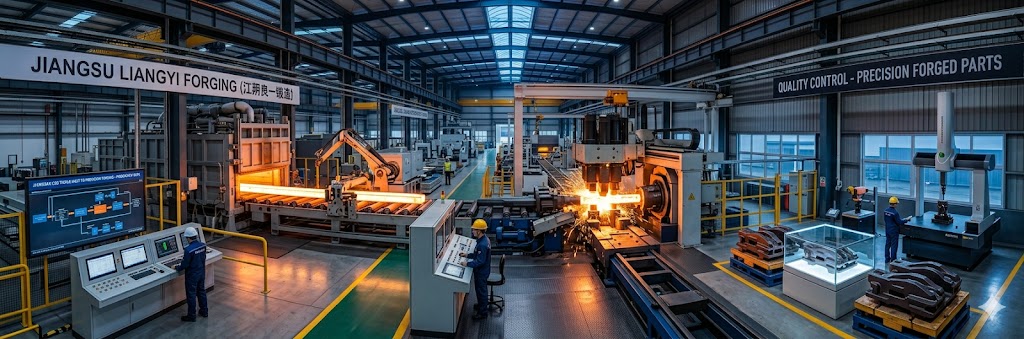
Full Range of Custom Maraging 250 Forged Steel Products
Jiangsu Liangyi delivers a complete portfolio of custom Maraging 250 (VASCOMAX 250, UNS K92890) forged products, all manufactured from our standard VIM+ESR+VAR triple-melt material to client drawings and international standards:
Maraging 250 Forged Bars, Rods & Billets
Custom Maraging 250 forged round bars, square bars, flat bars, and profiled rod billets. Maximum forged diameter: 2 meters. Maximum length: 15 meters. Weight: up to 30 tons per piece. Forged bars carry controlled directional grain flow along the bar axis — improving fatigue and SCC resistance versus rolled bar with uncontrolled flow. Supplied in solution-annealed or aged condition. 100% UT per EN 10228-2. Applications: valve stems, turbine shafts, drive shafts, actuator rods, structural members.
VASCOMAX 250 Seamless Rolled Rings & Flanges
Custom VASCOMAX 250 seamless rolled rings, contoured rings, and flanges. Maximum outer diameter: 6 meters. Weight: up to 30 tons. Wall thickness: 50–800mm. Continuous circumferential grain flow — the optimal orientation for ring components subjected to hoop stress — rather than the radially-oriented flow of rings machined from bar stock. UT per EN 10228-4. Applications: turbine rings, valve seat rings, labyrinth seal rings, pressure vessel flanges, bearing races, gear ring blanks.
UNS K92890 Hollow Forgings, Shells & Cylinders
Custom UNS K92890 hollow forgings, hubs, housings, heavy-wall cylinders, and pressure vessel shells. Maximum OD: 3000mm. Maximum wall thickness: 500mm. Produced by punching and mandrel elongation — preserving continuous grain flow around the bore, eliminating weld seams and their associated HAZ residual stress concentrations. Applications: pump casings, valve bodies, reactor nozzles, compressor housings.
Maraging C-250 Forged Discs, Impellers & Plates
Custom Maraging C-250 turbine discs, compressor impellers, blisks, flat forgings, and end covers. Maximum disc diameter: 3.5 meters. For rotating disc components, our pancake-forging sequences ensure grain flow runs circumferentially — maximizing hoop strength and fatigue resistance in the direction of centrifugal loading. Applications: gas turbine discs, steam turbine rotor discs, centrifugal compressor impellers, valve discs, pressure vessel covers.
Custom Machined Maraging 250 Components & Complex Assemblies
Fully machined custom components: valve balls, bonnets, bodies, stems, seat rings, turbine blade root sections, reactor nozzles, tube sheets, channel flanges, transition pieces, and fastener blanks. Complete in-house manufacturing: forge near-net shape → solution anneal → CNC machine to IT6–IT7 → age harden → verify (IT6 check) → NDT → ship. No subcontracting of any process step. Single point of accountability for chemistry, heat treatment, machining, and inspection.
Industry Applications & Proven Global Project Cases — Eight Sectors, Five Continents
Oil & Gas — API 6A, NACE MR0175, Sour Service
In sour service environments (H₂S partial pressure >0.0003 MPa), ultra-high strength steels face catastrophic risk from sulfide stress cracking (SSC) — hydrogen embrittlement so severe that 4340 steel above 36 HRC has been documented to fail within hours of H₂S exposure. Maraging 250 provides three simultaneous defenses: its low carbon content eliminates the carbon-enriched grain boundary zones where hydrogen absorption concentrates; its homogeneous martensitic microstructure has no galvanic micro-cells to accelerate localized corrosion; and its inherently high fracture toughness (KIc 80–100 MPa·m⁰·⁵) means that even if a small crack initiates, the material arrests rather than propagates it catastrophically. These properties, verified by NACE TM0177 SSC testing, make Maraging 250 the preferred — and in many cases the only viable — choice for API 6A high-pressure sour service components.
We manufacture the complete API 6A valve component family: valve balls, bonnets, bodies, stems, gate closures, seat rings, valve cores, and back-pressure valve components. Pressure class: 2000 psi to 20,000 psi (138–1380 bar). All components comply with API 6A material requirements (PSL 2 to PSL 4) with NACE MR0175/ISO 15156 documentation included in MTC.
Representative Application: High-Pressure Sour Service Wellhead & Subsea Valve Components
We regularly supply Maraging C-250 forged valve bodies, stems, seat rings, and bonnets for high-pressure sour service wellhead and subsea applications. Typical requirements include API 6A PSL-2 or PSL-4, NACE MR0175/ISO 15156 compliance, and NACE TM0177 SSC testing. Maraging 250 is selected in these projects where conventional high-strength steels have failed hydrogen embrittlement qualification, or where 17-4 PH cannot meet the required pressure class at full material strength. All components are delivered with full EN 10204 3.1 or 3.2 MTC and third-party inspection available upon request.
Nuclear Power Industry — KEPIC, ASME Section III, Radiation Stability
Nuclear applications impose an additional constraint absent from every other industrial sector: material properties must remain stable under prolonged neutron irradiation. Research has confirmed that Maraging 250's precipitation hardening mechanism — intermetallic pinning of dislocations — is substantially more radiation-stable than tempered martensite: the Ni₃Ti and Ni₃Mo precipitates do not dissolve under neutron bombardment at dose rates typical of reactor coolant pump locations. The very low carbon content also eliminates carbide dissolution-reprecipitation phenomena that cause radiation-induced embrittlement in carbon-bearing steels. We supply nuclear-grade Maraging 250 forgings manufactured to client-supplied KEPIC MN (upon client specification), ASME Section III, or RCC-M requirements upon agreement, with full serial-number-level traceability from ingot heat number through finished component.
Representative Application: Nuclear Power — Reactor Coolant Pump Components
We manufacture forged UNS K92890 reactor coolant pump components — casings, shaft forgings, and impeller blanks — for nuclear power customers who specify Maraging 250 for its radiation-stable precipitation hardening mechanism and dimensional stability under repeated thermal cycling. These projects require tight bore tolerances (typically ±0.05mm), full serial-number traceability from ingot heat number, and comprehensive NDT including UT, MT, PT, and RT. All critical dimensions are verified post-aging; dimensional change is typically within ±0.03–0.05mm of solution-annealed machined values. Nuclear-grade inspection documentation is prepared to client-specified standards upon agreement.
Power Generation & Turbomachinery — Long-Term Fatigue Reliability
Gas and steam turbines operate in one of engineering's most demanding fatigue environments: 10,000–30,000 RPM under centrifugal stresses approaching 400 MPa, cycling through hundreds of start-stop events annually that impose thermal gradients from ambient to 550°C+. For rotating disc applications, fracture toughness is as critical as static strength: a material with insufficient KIc may meet all static design requirements but fail by fatigue crack growth between inspection intervals. Maraging 250's combination of 1860 MPa+ UTS with 80–100 MPa·m⁰·⁵ KIc allows turbine maintenance intervals to be based on crack growth analysis (damage-tolerant design) rather than safe-life assumptions — extending maintenance intervals by 30–50% compared to lower-toughness alternatives at equivalent strength.
Representative Application: Thermal Power — Turbine Discs, Steam Valve Components
Maraging 250 forged turbine discs, main steam valve spindles, control valve discs, seat rings, and stems are used in thermal power plant applications where high-cycle fatigue life and dimensional stability under steam cycling are paramount. Maraging 250's grain-flow-aligned forging structure provides substantially higher fatigue endurance compared to bar-stock machined alternatives. Components supplied with full EN 10204 3.1 or 3.2 MTC, UT, and mechanical test data. Long-term service data from customers in this sector consistently show stable microstructure — no evidence of over-aging or fatigue crack initiation at inspection intervals.
Aerospace & Defense — AMS 6512, Strength-to-Weight, Dimensional Stability
Aerospace applications demand the highest possible strength-to-weight ratio in components that operate at the absolute limit of structural design margins. Maraging 250 achieves a specific strength of approximately 230 kN·m/kg — comparable to Ti-6Al-4V at roughly half the material cost for equivalent section sizes. Its near-zero heat treatment distortion is uniquely valuable for aerospace structural components: conventional high-strength steels require post-hardening grinding that cuts into the compressive residual stress layer created by machining, reducing fatigue life. Maraging 250 avoids this by hardening with <0.05% change, preserving the surface integrity developed during precision machining. We produce components compliant with AMS 6512 material requirements and ISO 9001:2015 aerospace quality management.
Representative Application: Aerospace & Defense — Drive Shafts, Structural Components, Actuator Housings
We supply Maraging 250 forged drive shaft sections, structural components, and actuator housings for aerospace and defense applications requiring AMS 6512 material compliance and AMS 2300 inclusion cleanliness. These projects specify IT5–IT7 bore tolerances machined in solution-annealed condition, exploiting Maraging 250's <0.05% dimensional change during aging to eliminate post-aging hard machining. Full 100% UT and comprehensive mechanical test sets are standard. Customers in this sector have consistently qualified additional component families following initial first-article qualification — a pattern we attribute to consistent inter-batch metallurgical uniformity delivered by triple-melt material control.
Industrial Pump Systems — Erosion Resistance & Dimensional Stability
Heavy-duty pumps handling abrasive slurries, high-pressure process fluids, or chemically aggressive media require casings and impellers that combine tensile strength (pressure containment), surface hardness (erosion resistance), and dimensional stability (tight rotating/stationary clearances). Maraging 250's aged hardness of 50–53 HRC provides erosion resistance comparable to hardened tool steel, while toughness of 80–100 MPa·m⁰·⁵ prevents the brittle fracture that causes tool steel pump components to shatter under trapped particle impact loading. We manufacture pump casings, impeller blanks, diffuser rings, shaft sleeves, and bearing housings for high-pressure boiler feed pumps, process pumps, slurry pumps, and offshore seawater injection systems.
Machining, Welding & Fabrication Guidelines for Maraging 250
Many engineers encounter unexpected difficulties with Maraging 250 fabrication by applying parameters developed for 4340 or H13. Maraging 250 is a distinct material with a unique optimal machining window and specific welding behavior. The following guidance is drawn from our 25 years of in-house machining and documented client feedback.
Machining in the Solution-Annealed Condition
The economically correct workflow: forge → solution anneal → rough machine → finish machine to IT7/IT6 on all critical dimensions → age harden (480–500°C) → verify dimensions (expect <0.05% change) → inspect → ship. This deletes hard machining of aged surfaces in all but the tightest tolerance applications.
| Operation | Insert Grade | Cutting Speed (Vc) | Feed Rate | Depth of Cut | Coolant |
|---|---|---|---|---|---|
| Rough Turning | TiAlN-coated Carbide K10–K20 | 60–80 m/min | 0.15–0.30 mm/rev | 2–5 mm | Flood — Mandatory |
| Finish Turning | TiAlN-coated Carbide K05–K10 | 80–110 m/min | 0.05–0.15 mm/rev | 0.3–1.5 mm | Flood — Mandatory |
| Face Milling | TiAlN-coated Carbide K10 | 60–90 m/min | 0.08–0.20 mm/tooth | 1–4 mm axial | Flood or HPC |
| Drilling | TiAlN-coated Carbide | 40–60 m/min | 0.05–0.12 mm/rev | Full diameter | Flood — Mandatory |
| Post-Aging Grinding (if needed) | CBN Wheel 100–120 grit | 20–30 m/s wheel speed | 0.005–0.02 mm/pass | 0.005–0.02 mm | Grinding fluid — Mandatory |
Maraging 250 in solution-annealed condition work-hardens at a moderate rate under rubbing contact. A worn or chipped insert that slides across the surface without cutting creates a severely work-hardened surface layer (up to 5–10 HRC increase in 0.1–0.3mm depth) that dramatically accelerates subsequent tool wear and may initiate fatigue cracks in the hardened zone. Always change inserts at defined scheduled intervals regardless of apparent visual condition, and always use sharp new inserts for finish passes. Never allow interrupted cuts or tool dwelling. This discipline is non-negotiable for maraging steel machining quality.
Welding Procedure for Maraging 250
Maraging 250 is one of the most weldable ultra-high strength steels due to its <0.03% carbon content. Recommended procedure: Preferred process: GTAW (TIG) or GMAW (MIG); Preheat: not required — weld at room temperature 20–50°C; Filler wire: matching Maraging 250 composition (VASCOMAX 250 filler); Inter-pass temperature: <150°C; Post-weld: inspect by UT and PT, then age harden at 480–500°C for 3–6 hours, air cool. This restores approximately 90–95% of base metal UTS in the weld metal and HAZ simultaneously. No solution annealing between welding and aging is needed if welding is performed in the solution-annealed base condition.
Strict Quality Control & Inspection Standards — Seven Gate Points, Zero Compromise
Every Maraging 250 forged part from Jiangsu Liangyi passes seven quality gate points, from raw material through delivery. Quality is embedded in the process, not added at the end.
- Gate 1 — Ingot Incoming: Full chemistry by direct-reading spectrometer (ASTM E38) at top/mid/bottom of each ingot; macro etch inspection; UT scan of full cross-section. Non-conforming ingots rejected before any processing.
- Gate 2 — Forging Process: Furnace temperature chart review before each heat; workpiece temperature pyrometer measurement; deformation ratio calculation verifying ≥3:1 reduction; dimensional check after each pass sequence.
- Gate 3 — Heat Treatment: Dedicated furnaces with multi-zone independent temperature control and logged temperature uniformity records; 5-position thermocouple logging per aging charge; hardness survey of charge witness piece; temperature chart archived with MTC.
- Gate 4 — NDT: 100% UT per EN 10228-3; MT per EN ISO 9934-1; PT per EN ISO 3452-1; RT per ASTM E94 available; PAUT for complex geometries on request.
- Gate 5 — Mechanical Testing: Tensile (ASTM E8/A370), Charpy impact (ASTM A370), hardness (ASTM E18), metallographic analysis (ASTM E112 grain size, ASTM E45 inclusion rating, microstructure) from each heat number.
- Gate 6 — Dimensional Inspection: CMM inspection of all critical dimensions; full dimensional report provided on request.
- Gate 7 — MTC Sign-Off: Quality manager reviews all test data before EN 10204 3.1/3.2 MTC is issued. Single non-conformance at any gate triggers formal NCR and corrective action — no waivers on safety-critical dimensions or properties.
Available certification bodies for third-party witness and document stamping: Bureau Veritas (BV), SGS, TÜV, DNV, Lloyd's Register.
Procurement Guide — How to Specify and Source Maraging 250 Forgings Correctly
Based on 25 years of consulting with procurement teams and design engineers globally, these are the most common specification gaps that create problems after delivery — and how to eliminate them at the PO stage.
Five Elements Every Maraging 250 Purchase Order Must Include
- Material Standard and Grade: Specify "Maraging 250 per ASTM A538 Grade C" or "UNS K92890 per AMS 6512." Never write only "Maraging Steel" — this could be interpreted as Grade 200 (1380 MPa) or Grade 300 (2070 MPa). If both Grade 250 and Grade 300 fall within your design margin, state both explicitly so the supplier can quote the most economical option.
- Melting Route — Mandatory: "Triple Melt: VIM+ESR+VAR required." For aerospace, nuclear, or API 6A PSL 2+ applications, this is non-negotiable. The 8–15% cost difference between double and triple melt is irrelevant compared to the risk of a field failure in these applications. If your project standard does not specify melting route, add it explicitly in your PO special requirements.
- Delivery Condition: "Solution-annealed condition" (for buyer-side machining and aging), "Aged condition (SA+Aged, ASTM A538 Grade C properties)," or "Solution-annealed, CNC machined per drawing, then aged (complete machined component)." This is the most common source of disputes in Maraging 250 procurement. Every PO must state it unambiguously.
- MTC Standard: "EN 10204 3.1 certificate mandatory" for standard orders. "EN 10204 3.2 certificate with third-party witness" for nuclear, aerospace, or critical oil and gas components. Never accept plain EN 10204 2.2 certificates for any structural Maraging 250 application.
- NDT Acceptance Class: State specifically: "EN 10228-3 Class 3" (standard industrial) or "Class 4/Class 5" (aerospace/nuclear). Without a stated acceptance class, manufacturers may default to Class 1 — the least stringent. For API 6A applications, reference the applicable API 6A UT acceptance criteria explicitly.
Why Jiangsu Liangyi — Not Just Another Forging Supplier
🔬 Single-Material Deep Specialization
We are not a generalist shop that occasionally processes Maraging 250. For 25 years, it has been our focus material. Our heat treatment engineers know the aging curve from direct experimental data on thousands of production cycles. This depth translates into fewer non-conformances, faster FAI qualification, and better on-time delivery than generalist competitors.
🏭 Fully Integrated — Zero Subcontracting
Triple-melt material receiving, forging, heat treatment, CNC machining, NDT, and packaging — all under one roof at our Jiangyin facility. No inter-supplier scheduling delays. No outsourced heat treatment with unverified furnace calibration. Single accountable point for every line in your MTC.
📐 China's Largest Maraging 250 Forging Capability
6300T press, 5M ring rolling machine, 30-ton single-piece maximum weight. For 3m+ OD rings, 2m+ diameter bars, or 20T+ disc forgings, we are often the only Chinese manufacturer with proven capability to produce in a single piece without weld joints or assembly.
🌍 Multi-Standard Global Compliance
ASTM, AMS, EN, DIN, API, JIS, KEPIC, ASME, NACE MR0175, ISO 9001:2015 — our quality team maintains active working knowledge of every major international standard referencing Maraging 250. Unusual standards (NF, GOST, KS, AS, BS) are reviewed and a deviation analysis issued rather than a generic "compliant" assertion.
⚙️ Engineer-Led Technical Pre-Sales Support
Every inquiry is reviewed by a materials engineer before pricing. We identify specification gaps, flag standard-vs-application inconsistencies, and propose the most economical manufacturing route meeting your actual performance requirement. We aim to send you a component that works — not the cheapest interpretation of an ambiguous specification.
✈️ 25-Year Global Export Track Record
50+ countries, eight critical sectors, 15,000+ components shipped — zero formal quality escapes reaching end-users in the past 10+ years. Full export documentation, ECCN export classification, customs clearance, insurance, and international logistics handled in-house as standard services.
Frequently Asked Questions — Maraging 250 (VASCOMAX 250, UNS K92890) Forged Parts
Maraging 250 (VASCOMAX 250, UNS K92890, Maraging C-250) is an 18% nickel ultra-high strength steel achieving 1860 MPa+ tensile strength through age hardening — precipitation of Ni₃Ti and Ni₃Mo intermetallics within a martensitic matrix — rather than through carbon content like conventional steels. This gives it four capabilities no conventional high-strength steel can match simultaneously: (1) excellent weldability without preheating, due to <0.03% C; (2) <0.05% dimensional change during hardening, enabling machine-then-age workflow; (3) 80–100 MPa·m⁰·⁵ fracture toughness at 1860 MPa+ strength — 2–3× higher than H13 or 300M at equivalent strength; and (4) NACE MR0175 approval for sour service, which no conventional ultra-high strength steel achieves at this strength level.
The grades differ primarily in titanium (0.40% vs 0.65%) and molybdenum (4.80% vs 5.00%) content. Maraging 300 achieves up to 2070 MPa UTS but at lower fracture toughness (~60–80 vs 80–100 MPa·m⁰·⁵), reduced machinability, and higher susceptibility to over-aging embrittlement. For oil and gas, nuclear, turbomachinery, and most aerospace applications, Maraging 250's 1860 MPa with higher toughness is the correct balance. Maraging 300 is justified only when absolute maximum strength is required and the designer has explicitly evaluated the toughness trade-off in the structural analysis. When in doubt, consult our engineering team — we will tell you objectively which grade your application actually requires.
Triple melt is essential because titanium — Maraging 250's primary strengthening element — reacts instantly with residual oxygen, nitrogen, and sulfur to form TiN, TiO₂, and TiS inclusions. These inclusions: (1) reduce available Ti for Ni₃Ti precipitation, cutting achievable aged strength by 30–50 MPa per 0.01% Ti lost; and (2) create sharp fatigue crack initiation sites that reduce high-cycle fatigue life far below expected values. VIM removes dissolved gases; ESR removes oxide and sulfide inclusions via reactive slag; VAR achieves AMS 2300 inclusion cleanliness — each stage removes what the others cannot. Double melt (VIM+VAR, no ESR) is occasionally acceptable for non-fatigue-critical, non-sour-service industrial applications — we can supply on request. But for aerospace, nuclear, API 6A PSL 2+, or any rotating component: triple melt is the non-negotiable minimum. The cost difference is approximately 8–15%; the risk difference in a critical component failure is unmeasurable.
The standard process: (1) Solution Anneal: 820–845°C, 1h per 25mm section (min. 1h), air cool to room temperature — produces ~28–32 HRC soft martensitic microstructure for machining. (2) Age Harden: 480–500°C, 3h per 25mm (min. 3h, max. 6h), air cool — Ni₃Ti and Ni₃Mo precipitate, achieving 1860 MPa+ UTS. The critical upper limit is 510°C. Above this threshold, austenite reversion occurs — soft austenite islands replace the martensitic matrix, causing unpredictable strength reduction of 150–400 MPa that cannot be corrected without a complete re-solution-anneal followed by a new aging cycle. Under-aging (too short time or too low temperature) is correctable by a second aging cycle. Over-aging is not. Our furnaces with logged multi-zone temperature uniformity records maintain ±2°C temperature uniformity to ensure this boundary is never approached.
Yes. Maraging 250 is explicitly approved in NACE MR0175 / ISO 15156 Table A3 for sour service contact with H₂S-containing hydrocarbon media. Requirements: hardness ≤52 HRC per individual component (verify — some high-end aged batches may reach 53 HRC; individual measurement is required, not only MTC average); heat treatment per NACE requirements (solution anneal + age at 480–510°C); MTC must reference NACE MR0175 compliance. Maraging 250's KIscc/KIc ratio of 0.7–0.9 retains 70–90% of fracture toughness in H₂S environments — making it one of the very few ultra-high strength steels approved for sour service at strength levels above 1700 MPa. We include NACE MR0175 compliance documentation in the standard MTC package for all oil and gas orders — no surcharge, no special request needed.
vs H13: Maraging 250 has higher UTS (1860 vs max ~1700 MPa), substantially higher toughness (80–100 vs 25–35 MPa·m⁰·⁵), excellent weldability vs H13's need for 300°C+ preheat, and <0.05% heat treatment distortion vs H13's 0.3–1.0%. H13 is preferred only for hot-work tooling applications requiring hot hardness retention above 500°C — where Maraging 250 loses strength. vs 4340: Maraging 250 has significantly higher toughness at equivalent strength, NACE MR0175 sour service approval (4340 fails SSC above 22 HRC in H₂S), and <0.05% dimensional change vs 4340's 0.2–0.8% quench distortion. vs 17-4 PH H900: 17-4 PH H900 reaches only 1310 MPa UTS — 550 MPa less — and is restricted in H₂S service above 33 HRC in NACE MR0175. Maraging 250 provides more than 40% higher tensile strength and full sour service approval. The only application where 17-4 PH is genuinely superior is where corrosion resistance is the primary requirement at moderate strength levels — 17-4 PH's chromium content provides better general corrosion resistance than Maraging 250.
Yes — Maraging 250 is among the most weldable ultra-high strength steels. Process: GTAW (TIG) preferred for critical applications; GMAW (MIG) for production welds. Base condition: weld in solution-annealed condition (~30 HRC). Preheat: none required — weld at room temperature. Filler wire: matching Maraging 250 composition; do not use 4340 or any high-carbon filler. Inter-pass temperature: <150°C. Post-weld inspection: UT and PT before aging. Post-weld heat treatment: age at 480–500°C for 3–6 hours, air cool — restores approximately 90–95% of base metal UTS in weld metal and HAZ simultaneously. No solution annealing between welding and aging is required if the base metal was in solution-annealed condition before welding. This is a major advantage over conventional ultra-high strength steels (4340, H13, 300M) which require complex preheating and post-weld procedures and typically produce only 80–85% weld efficiency at best.
Our Maraging 250 forged parts comply with: ASTM A538 Grade C (primary standard); AMS 6512 (aerospace); EN 10083-3 (European); DIN 17211 (German); API 6A (wellhead equipment); JIS G 4103 (Japanese); KEPIC MN (upon client specification) (South Korean nuclear); ASME Section III / VIII (upon client specification) (nuclear and pressure vessel); NACE MR0175 / ISO 15156 (sour service); ISO 9001:2015 (aerospace quality management). MTC: EN 10204 3.1 standard on all orders; EN 10204 3.2 with third-party witness available. Third-party inspection: BV, SGS, TÜV, DNV, Lloyd's Register — any body coordinated upon request. Not sure which standard applies to your application? Share your project specification — our engineering team will confirm within 24 hours.
Our maximum production capabilities: Forged bars: diameter up to 2000mm, length up to 15000mm, weight up to 30 tons; Seamless rolled rings: OD up to 6000mm, height up to 1500mm, wall 50–800mm, weight up to 30 tons; Hollow forgings: OD up to 3000mm, wall up to 500mm; Discs/plates: diameter up to 3500mm. All sizes produced with minimum 3:1 forging reduction ratio. For dimensions approaching our maximums, we perform a forgeability analysis before accepting the order to confirm that the required reduction ratio and grain size can be achieved within the material's temperature window. We never overcommit on capability: if a component genuinely exceeds our capacity, we tell you so and help identify alternatives rather than accepting an order we cannot fulfill to specification.
Standard lead times: ≤10 pieces: 3–4 weeks; >10 pieces: 4–6 weeks. This includes triple-melt material verification, forging, heat treatment, CNC machining (if specified), full NDT, and MTC preparation. Expedite options: If we hold stock triple-melt Maraging 250 ingot of compatible size for your component, we can reduce lead time by 1–2 weeks by bypassing raw material procurement scheduling. Contact us before PO finalization — a 10-minute technical call can save 2 weeks if stock ingot exists. Minimum expedite surcharge applies for confirmed-PO-to-ship under 2 weeks. For recurring programs, we maintain consignment ingot stock on agreement to guarantee lead times of 2–3 weeks regardless of material availability in the market.
In solution-annealed condition (~28–33 HRC): Insert grade: TiAlN-coated carbide ISO K10–K20 (sharp geometry, not worn). Rough turning: Vc = 60–80 m/min, f = 0.15–0.30 mm/rev, ap = 2–5 mm. Finish turning: Vc = 80–110 m/min, f = 0.05–0.15 mm/rev, ap = 0.3–1.5 mm. Milling: Vc = 60–90 m/min, fz = 0.08–0.20 mm/tooth. Coolant: Mandatory flood coolant on all operations — Maraging 250 work-hardens moderately under sliding contact from worn tools or excessive heat. Machine all critical dimensions to IT6–IT7 before aging; post-aging dimensional change is <0.05% linear, eliminating the need for hard machining aged surfaces in most applications. Post-aging grinding (CBN wheel) available for sub-5-micron tolerance requirements.
UT: 100% immersion or contact UT per EN 10228-3 (Classes 1–5 selectable) or ASTM A388; phased array UT (PAUT) for complex geometry. MT: Wet fluorescent magnetic particle per EN ISO 9934-1, acceptance per EN 10228-1. PT: Fluorescent liquid penetrant per EN ISO 3452-1. RT: Per ASTM E94, acceptance per ASTM E446 — available on request for nuclear or aerospace applications. Mechanical testing: Tensile (ASTM E8/A370), Charpy impact (ASTM A370), hardness (ASTM E18), metallographic (ASTM E112 grain size, ASTM E45 inclusion rating, microstructure analysis). Chemistry: Direct-reading spectrometer per ASTM E38, certified results included in MTC. All NDT personnel qualified per NB/T 47013 with documented competency records. NDT records archived minimum 10 years.
Fracture toughness (KIc) determines the maximum tolerable crack-like defect size before catastrophic fracture. A material with twice the KIc can tolerate a defect four times larger before failure (since KIc is proportional to the square root of defect size in the fracture mechanics relationship). Practically: higher KIc means longer fatigue life between inspections, greater tolerance of impact events and overloads, and lower probability of catastrophic failure if a defect exists below NDT detection threshold. Maraging 250's typical KIc of 80–100 MPa·m⁰·⁵ is 2–4× higher than H13 (25–35 MPa·m⁰·⁵) and significantly higher than 4340 at equivalent strength (~55–70 MPa·m⁰·⁵). For rotating machinery, pressure vessels, and sour service valves — where a brittle fracture failure has safety, financial, and environmental consequences far exceeding the component cost — this toughness advantage is the primary justification for specifying Maraging 250 over lower-cost alternatives.
We export to 50+ countries across 5 continents. Standard export documentation: Commercial Invoice, Packing List, Bill of Lading or Airway Bill, Certificate of Origin, EN 10204 3.1 or 3.2 MTC. Available on request: ECCN classification letter (US EAR compliance), MSDS, Insurance Certificate, Apostille-certified MTC (for countries requiring notarized documents), Form A (GSP for applicable countries). Logistics options: By sea (FCL or LCL), by air (small urgent batches), by express courier (documents and small samples). We maintain established relationships with freight specialists in oversized industrial cargo for forgings exceeding standard shipping dimensions or requiring special sea fastening. For first-time buyers, we provide a complete trade document checklist tailored to the destination country's import requirements upon request.
Our quality system operates on seven mandatory control gates — no waivers on safety-critical properties at any gate: (1) Ingot incoming — full chemistry, macro etch, UT scan, reject before processing if non-conforming; (2) Forging — temperature chart review, deformation ratio calculation, grain size verification from first piece of each batch; (3) Heat treatment — multi-zone furnaces with 5-position thermocouple logging per aging charge, hardness survey of each charge witness; (4) NDT — 100% UT per specified standard, MT/PT surface inspection; (5) Mechanical testing — tensile, Charpy impact, hardness, metallographic analysis per heat number and per applicable project standard; (6) Dimensional — CMM inspection of all critical dimensions, full report provided on request; (7) MTC sign-off — quality manager reviews all data before certificate issuance. Any non-conformance at any gate triggers formal NCR and corrective action report, archived with the MTC. This system has delivered zero quality escapes to end-users in 10+ consecutive years of operation.
Request a Custom Quote for Maraging 250 (UNS K92890) Forged Parts
Send us your drawing, material specification, quantity, required delivery date, and destination. A Jiangsu Liangyi materials engineer will review your requirement and respond with a technical proposal and price within 24 hours.
Send Technical Inquiry NowContact Jiangsu Liangyi Co., Limited — Maraging 250 Forging Specialists
Inquiry Email: sales@jnmtforgedparts.com
Phone / WhatsApp: +86-13585067993
Official Website: https://www.jnmtforgedparts.com
Factory Address: Chengchang Industry Park, Jiangyin City, Jiangsu Province, China 214400
Business Hours: Monday–Friday 08:00–18:00 CST (UTC+8)
Trademark Notice: VASCOMAX® is a registered trademark of Carpenter Technology Corporation. Jiangsu Liangyi Co., Limited is an independent manufacturer of maraging steel forgings and is not affiliated with, endorsed by, or a licensee of Carpenter Technology Corporation. The designation "VASCOMAX 250" is used solely to indicate material grade equivalence (UNS K92890, ASTM A538 Grade C) for customer reference.