INCONEL Alloy 751 | UNS N07751 | NCF 751 | ASTM B637 Grade 688 Forged Bars & Custom Components
Overview of INCONEL Alloy 751 (UNS N07751) — Metallurgical Background & Design Logic
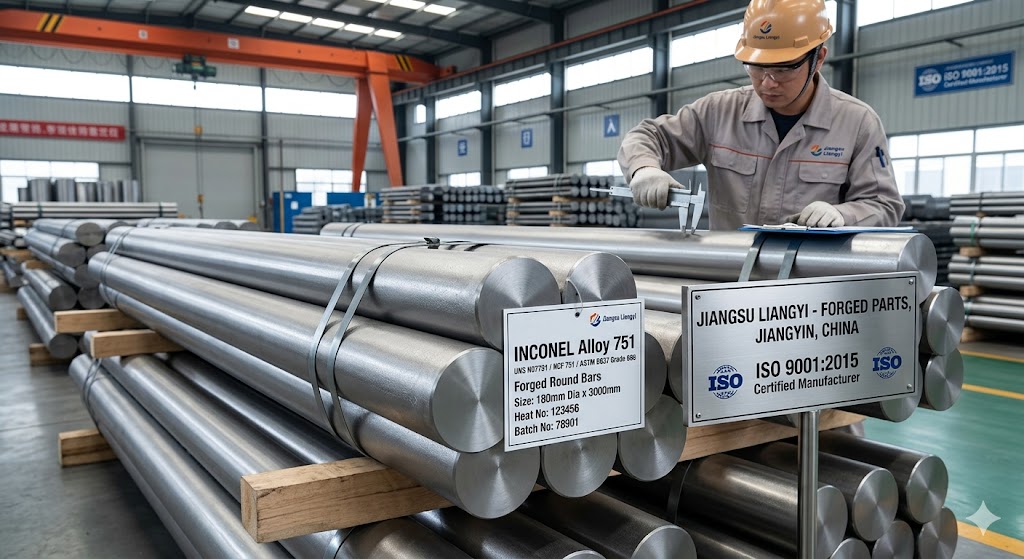
INCONEL Alloy 751 (universally recognized as Inconel 751, UNS N07751, NCF 751, and ASTM B637 Grade 688) is a professional-grade precipitation-hardenable nickel-chromium alloy, engineered specifically for high-temperature, high-stress critical components in extreme industrial environments. With industry-leading physical stability, mechanical strength, and comprehensive corrosion resistance, this alloy has become the global standard material for internal combustion engine exhaust valves and high-temperature forging applications across virtually every major industry sector worldwide.
Understanding the metallurgical origin of INCONEL 751 helps explain why it outperforms alternatives in its target applications. INCONEL 751 was derived from the earlier INCONEL X-750 alloy through a deliberate compositional refinement: the intentional addition of Niobium (Nb, 0.70–1.20 wt%) to the base Ni-Cr-Fe-Ti-Al system. This is not a minor tweak — niobium fundamentally changes the alloy's behavior. It stabilizes grain boundary carbides as NbC rather than less-stable Cr₂₃C₆ phases, which in X-750 can dissolve and reprecipitate in harmful film-like morphologies during long-term high-temperature service. Additionally, Nb refines the γ' precipitate distribution by competing with Ti and Al for phase partitioning, resulting in a finer and more uniformly distributed strengthening phase. This translates directly to superior thermal fatigue resistance when the alloy undergoes repeated heating and cooling cycles — exactly the condition an engine exhaust valve faces thousands of times per day.
Originally developed for heavy-duty internal combustion engine valve applications, UNS N07751 derives its exceptional performance from a dual strengthening mechanism. First, the gamma prime (γ') precipitation hardening mechanism: during aging heat treatment, coherent ordered Ni₃(Ti,Al) intermetallic particles precipitate within the face-centered cubic (FCC) austenitic matrix. These γ' particles — typically 20–50 nm in diameter after optimized aging — create strong short-range order hardening by blocking dislocation motion. The coherency strain between γ' and the matrix further impedes dislocation glide even without direct particle contact. Second, grain boundary carbide stabilization via discrete M₆C and NbC particles locks grain boundaries against sliding and cavitation under creep conditions. Together, these two mechanisms give INCONEL 751 its combination of room-temperature strength (UTS >1100 N/mm² in peak-aged condition), high-temperature creep resistance up to 870°C, and outstanding sulphuric acid corrosion resistance critical in high-sulfur diesel fuel combustion environments.
Our INCONEL 751 products are manufactured using advanced dual melting processes: Vacuum Induction Melting (VIM) + Electroslag Remelting (ESR) or Vacuum Arc Remelting (VAR). VIM eliminates dissolved gases (hydrogen, nitrogen, oxygen) and volatile tramp elements from the melt, preventing porosity and inclusion formation. The subsequent ESR or VAR step removes residual macro-segregation and sulfide inclusions, producing a homogeneous ingot microstructure with controlled composition throughout. This dual-melt process is not optional for critical components — single-melt INCONEL 751 may have 3–5× higher inclusion counts and up to 15% variation in local Ti+Al concentration, directly degrading fatigue life and creep performance. Our factory has operated VIM+ESR/VAR dual melting since 1997, and every heat of INCONEL 751 is accompanied by full spectrographic composition certificates traceable to the original melt charge.
Global Standards Compliance — One Material, Every Market: INCONEL 751 is one of the few nickel alloys with dedicated designations across every major international standards body simultaneously. It is covered by SAE J775 Grade HEV 3 (North American engine valve standard), ASTM B637 Grade 688 (bar and rod forgings), ISO 683-15 Grade NiCr15Fe7TiAl (European heat-resistant steels), and JIS G4901 Grade NCF 751 (Japanese Industrial Standard). This means a single material can satisfy procurement specifications from American OEMs, European CE-certified systems, and Japanese JIS-compliance requirements simultaneously — a supply chain advantage that single-standard materials cannot match. As a professional nickel alloy forging manufacturer with over 25 years of experience, Jiangsu Liangyi regularly supplies to customers in over 50 countries across all these standards frameworks.
Physical Properties of INCONEL Alloy 751 (UNS N07751)
Physical properties are often overlooked in supplier datasheets but are critical for engineering calculations involving thermal expansion compensation, heat transfer analysis, and dynamic loading. The following original-tested physical property data for INCONEL 751 is from our quality laboratory and is consistent with published international references:
| Physical Property | Value (Condition) | Engineering Significance |
|---|---|---|
| Density | 8.25 g/cm³ (Room Temperature) | Weight calculation: kg = (D² × L × 0.00000648) where D = mm, L = mm |
| Melting Range | 1290°C – 1375°C (Solidus–Liquidus) | Sets the upper limit for hot forging and heat treatment temperatures |
| Coefficient of Thermal Expansion | 13.2 µm/m·°C (21–538°C) / 14.4 µm/m·°C (21–871°C) | Critical for valve seat interference fit calculations at operating temperature |
| Thermal Conductivity | 12.0 W/m·°C (RT) / 22.0 W/m·°C (870°C) | Moderate conductivity supports heat dissipation from valve face to coolant system |
| Specific Heat Capacity | 461 J/kg·°C | Used in transient thermal analysis and heat treatment energy calculations |
| Electrical Resistivity | 1.24 µΩ·m (Room Temperature) | Reference for eddy-current NDT calibration during inspection |
| Elastic Modulus (Young's Modulus) | 214 GPa (RT) / 175 GPa (760°C) | Modulus drop at temperature must be factored into high-temperature spring back calculations |
| Magnetic Permeability | 1.001 (Non-magnetic, austenitic) | Non-magnetic; magnetic particle testing (MPT) requires AC method or fluorescent penetrant (PT) |
| Poisson's Ratio | 0.29 | Used in finite element analysis (FEA) of valve and turbine component stress fields |
Standardized Chemical Composition of INCONEL 751 (UNS N07751) — Element-by-Element Engineering Analysis
Chemical composition is the genetic blueprint of any superalloy. For INCONEL 751, the composition specification is tightly engineered — not every element is present by accident or convention. Understanding why each element exists at its specified level, and how elements interact with each other, is essential for engineers making material selection decisions and for procurement teams evaluating supplier qualification. Our laboratory verifies every heat against the following composition window using Optical Emission Spectrometry (OES) and Inductively Coupled Plasma (ICP) analysis, with batch certification traceable to international standards:
| Element | Content Range (Weight %) | Metallurgical Role & Engineering Rationale |
|---|---|---|
| Nickel (Ni) | 70.0 min (typically 72–74%) | The austenitic FCC matrix element. High Ni content ensures chemical stability of the γ' phase at elevated temperatures, prevents sigma-phase embrittlement, and provides the baseline corrosion resistance. Nickel's high electron density also contributes to the alloy's low thermal expansion stability compared to iron-based alloys |
| Chromium (Cr) | 14.0 ~ 17.0 | Forms a self-healing Cr₂O₃ passive oxide layer that provides oxidation resistance up to ~1000°C. In sulfidation environments (high-sulfur diesel exhaust, H₂S-bearing gas streams), Cr above 14% is the minimum threshold to form a protective CrS boundary layer rather than allowing sulfur attack into the base matrix. The upper limit of 17% prevents excessive Cr partitioning to carbides, which could deplete the matrix and reduce general corrosion resistance |
| Titanium (Ti) | 2.00 ~ 2.60 | Primary γ' former. Ti partitions strongly to the γ' (Ni₃Ti) phase, directly controlling volume fraction and solvus temperature of the strengthening precipitate. At 2.0–2.6 wt%, the γ' volume fraction reaches approximately 20–25% after full heat treatment — sufficient for high strength without embrittling the alloy. Higher Ti also improves creep rupture life by raising the γ' solvus, making precipitates more resistant to dissolution under service temperatures |
| Aluminum (Al) | 1.10 ~ 1.35 | Secondary γ' former (Ni₃Al). Al raises the γ' solvus temperature more efficiently per weight percent than Ti, and also forms a thin, adherent Al₂O₃ subscale beneath the Cr₂O₃ layer, providing a secondary oxidation barrier at temperatures above 800°C. The Ti/Al ratio of approximately 1.7–2.0 in this alloy is deliberately tuned — higher Ti relative to Al promotes γ' with higher anti-phase boundary energy, which is beneficial for tensile and creep strength |
| Niobium (Nb) | 0.70 ~ 1.20 | The key differentiator between INCONEL 751 and INCONEL X-750. Nb stabilizes grain boundary carbides as discrete MC-type (primarily NbC), which are thermodynamically stable up to ~1100°C and do not dissolve-reprecipitate into harmful grain boundary films during service. This prevents the grain boundary sensitization that can reduce fatigue crack growth resistance in X-750 during prolonged thermal exposure. Nb also partitions partially to γ', contributing to additional lattice misfit strengthening |
| Iron (Fe) | 5.0 ~ 9.0 | Fe substitutes for Ni in the austenitic matrix, making the alloy more economical to produce without significantly impacting high-temperature properties at these levels. Fe does slightly lower the γ' solvus temperature, which is why the Fe content is capped at 9% — above this level, creep resistance at 800°C+ begins to degrade noticeably. Fe also reduces magnetic permeability to near-unity, keeping the alloy's non-magnetic character essential for certain aerospace and measurement applications |
| Carbon (C) | 0.10 max | Carbon is needed to form stabilizing carbides (primarily NbC, TiC, and M₆C) during heat treatment. However, excess carbon above 0.10% risks forming continuous grain boundary carbide films during slow cooling, which dramatically reduces ductility and impact toughness at room temperature. Our actual production heats consistently target C at 0.04–0.08% to maximize carbide benefit while avoiding embrittlement |
| Molybdenum (Mo) | 0.50 max | At low levels, Mo provides solid solution strengthening of the austenitic matrix and enhances pitting corrosion resistance in chloride and sulfide environments. Mo is capped at 0.50% because at higher concentrations it promotes formation of topologically close-packed (TCP) phases (particularly σ and μ phases) during prolonged high-temperature exposure, which severely embrittles the alloy |
| Silicon (Si) | 0.50 max | Si acts as a deoxidizer during VIM melting, reducing oxygen content in the melt and preventing oxide inclusions. In the final alloy, Si at ≤0.50% also enhances oxidation resistance at temperatures above 900°C by participating in the protective scale. However, excess Si above 1% promotes σ-phase precipitation in Ni-Cr alloys and reduces hot ductility during forging |
| Manganese (Mn) | 0.50 max | At grain boundaries, Mn reacts with residual sulfur in the melt to form MnS, which is less harmful than FeS-type sulfides. It stabilizes the austenitic structure and improves hot workability also. Mn can improve the oxidation resistance of high temperature sulfidation environments above 1% and the limit of 0.50% preserves the advantages while maintaining thermal stability. |
| Phosphorus (P) | 0.010 max | Phosphorus segregates to grain boundaries during solidification and heat treatment, forming low-melting-point phases that cause hot cracking and reduce fatigue crack initiation resistance. Our VIM+ESR process routinely achieves P ≤ 0.005%, well below the 0.010% maximum, ensuring superior grain boundary integrity for fatigue-critical applications |
| Sulfur (S) | 0.010 max | Sulfur is one of the most damaging tramp elements in nickel superalloys. Even at 50 ppm, S segregates to γ/γ' interfaces and grain boundaries, reducing surface energy and accelerating intergranular crack propagation under cyclic loading. Our dual-melt process achieves S ≤ 0.003% routinely, providing significantly better fatigue performance than single-melt alternatives that approach the 0.010% limit |
| Copper (Cu) | 0.50 max | Copper is a residual element from scrap and master alloys. At low levels it has minimal effect, but above 1–2%, Cu begins to form a low-melting-point Cu-Ni eutectic that causes hot shortness during forging and welding. The 0.50% limit ensures this cannot occur even under worst-case heat treatment conditions |
Composition Verification at Jiangsu Liangyi: Every heat of INCONEL 751 we produce is subject to triple-stage composition verification: (1) melt-stage OES analysis during VIM to confirm charge balance, (2) ingot sampling after ESR/VAR for full 13-element ICP certification, and (3) finished bar sampling per ASTM E1019 and E1237 for definitive lot certification. This three-point traceability chain is documented in the EN 10204 3.1 Mill Test Certificate supplied with every shipment, and is available for EN 10204 3.2 third-party witnessed certification upon request.
Complete Heat Treatment Guide for INCONEL 751 Forged Bars — Mechanisms, Parameters & Common Pitfalls
Heat treatment is not a finishing step for INCONEL 751 — it is a core manufacturing process that fundamentally determines the alloy's in-service performance. Understanding what metallurgical transformations occur during each stage allows engineers to specify the correct treatment for their application, and to evaluate whether a supplier's heat treatment capability is genuinely adequate. Our heat treatment lines are fully automated with temperature uniformity of ±5°C across the entire furnace chamber, verified by calibrated thermocouples under our ISO 9001:2015 quality system, ensuring consistent mechanical properties across the entire batch regardless of load size.
What Happens Metallurgically at Each Stage
Before presenting the specific regime parameters, understanding the metallurgical rationale for each stage prevents costly specification errors:
- Solution Annealing (1120–1150°C): At this temperature, all γ' precipitates dissolve back into the austenitic matrix, creating a fully homogeneous single-phase microstructure. Simultaneously, the high temperature and prolonged soak allow any residual segregation from the casting or hot working process to homogenize by solid-state diffusion. The cooling rate from solution temperature must be controlled: too slow allows unwanted grain boundary precipitate film formation; too fast introduces excessive residual stresses that crack large cross-sections. Air cooling from solution temperature is specified for bars up to approximately 200mm diameter; larger sections may require controlled furnace cooling to 800°C before air cooling to prevent thermal shock cracking
- Stabilization Treatment (845°C, 24 hours): This extended intermediate treatment is unique to the INCONEL 751/X-750 family and is frequently omitted by less experienced manufacturers — always a mistake. The 845°C hold encourages discrete carbide precipitation at grain boundaries in a controlled, beneficial morphology (particles rather than continuous films). These carbides "decorate" the grain boundaries in a way that pins boundary sliding under creep conditions without creating continuous embrittling films. The 24-hour duration is non-negotiable: shorter times leave grain boundaries insufficiently stabilized and creep rupture life drops by 30–50%
- Aging Treatment (705–730°C): At aging temperature, the dissolved γ' phase re-precipitates from the supersaturated solution as fine coherent Ni₃(Ti,Al) particles. The aging time and temperature control the precipitate size: too short an aging time (underaging) leaves insufficient precipitate volume fraction; too long (overaging) causes precipitates to coarsen past the optimum size (~20–80 nm), reducing their effectiveness at blocking dislocations. The 705°C/20-hour cycle produces a slightly coarser, more thermally stable γ' distribution suitable for the highest service temperatures; the 730°C/4-hour cycle produces finer γ' with higher room-temperature strength but slightly lower long-term creep resistance
Standard Heat Treatment Regime 1 — General Engine Valve & Exhaust Component Applications
Recommended for components operating continuously at 500–750°C where a balance of tensile strength, fatigue resistance, and adequate creep resistance is required (e.g., diesel truck and locomotive exhaust valves, marine engine valve stems):
- Solution Annealing: 1120°C ± 10°C for minimum 1 hour (larger cross-sections: add 1 hour per 25mm of section thickness beyond 50mm), followed by air cooling to room temperature. Furnace atmosphere: neutral or mildly oxidizing. Part temperature uniformity: ±10°C verified by calibrated thermocouple in representative load position
- Stabilization Treatment: 845°C ± 10°C for 24 hours minimum, followed by air cooling. Do not reduce this soak time — under-stabilization is the single most common cause of premature INCONEL 751 valve failure in service. Furnace atmosphere: inert or air acceptable
- Aging Treatment: 730°C ± 8°C for 4 hours minimum, followed by air cooling to room temperature. Expected post-aging hardness: 30–40 HRC. If hardness is below 30 HRC after aging, re-solution anneal and repeat — partial solution anneal is the most common cause of low aging response
Standard Heat Treatment Regime 2 — Heavy-Duty High-Temperature Service (800°C+ Continuous Operation)
Recommended for gas turbine components, power generation exhaust systems, and oil & gas equipment operating at continuous temperatures above 750°C where maximum creep life is the priority over room-temperature tensile strength:
- Solution Annealing: 1150°C ± 10°C for 2 hours minimum (note: higher temperature vs. Regime 1 produces a coarser grain size, ASTM 4–6 vs. 6–9, which generally improves creep rupture life at the cost of some fatigue crack initiation resistance), followed by air cooling. Parts should be loaded into a pre-heated furnace, not cold-started, to ensure rapid rise to temperature and minimize oxidation time at intermediate temperatures
- Stabilization Treatment: 845°C ± 10°C for 24 hours, followed by air cooling. Identical to Regime 1 — stabilization temperature and time are fixed by the carbide kinetics and cannot be optimized by varying these parameters significantly
- Aging Treatment: 705°C ± 8°C for 20 hours minimum, followed by air cooling. The lower temperature and longer time produces a slightly coarser γ' distribution (~50–80 nm) with superior resistance to γ' dissolution and coarsening during service at 800–870°C, extending creep rupture life by typically 25–40% compared to Regime 1 aging at equivalent temperature
Heat Treatment Quality Verification — What to Demand from Your Supplier
Heat treatment quality cannot be verified by visual inspection or dimensional measurement alone. Every shipment of INCONEL 751 should be accompanied by the following documented evidence of heat treatment control, and buyers should not accept deliveries without these records:
- Furnace Temperature Charts: Recorder charts showing actual furnace temperature vs. time for the entire heat treatment cycle, with thermocouple identification and calibration certificate references. All thermocouples are calibrated by a certified third-party laboratory.
- Furnace Temperature Control: Furnace temperature uniformity verified by calibrated thermocouples at multiple zones. Temperature uniformity surveys performed on a regular schedule per our ISO 9001:2015 quality plan. Temperature control accuracy ±5°C across the full charge.
- Hardness Test Results: Minimum 3 hardness readings per test piece, with test piece traceability to the production batch. For Regime 1: 30–40 HRC expected; for Regime 2: 28–38 HRC is acceptable due to the lower aging temperature producing slightly lower peak hardness
- Tensile Test Certificate: ASTM E8 / ISO 6892-1 test results for UTS, 0.2% yield strength, elongation, and reduction of area from the same heat treatment batch
Comprehensive Mechanical Properties of INCONEL 751 (UNS N07751) — Tensile, Creep, Fatigue & Impact Data
INCONEL 751 maintains stable and excellent mechanical performance in long-term high-temperature working environments, far exceeding the performance of ordinary stainless steel, austenitic valve steels (21-4N, 23-8N), and even some cobalt-based alloys below 800°C. The data below represents tested properties in the solution-treated + stabilized + aged (peak-hardened) condition unless otherwise noted. Engineers should note that forged bars exhibit slight anisotropy — longitudinal direction (parallel to bar axis) properties are typically 5–10% superior to transverse direction for elongation and reduction of area, though tensile and yield strength differences are usually within ±3%.
High-Temperature Tensile Properties (Solution Annealed + Stabilized + Aged)
| Test Temperature (°C) | Ultimate Tensile Strength (N/mm²) | 0.2% Proof Yield Stress (N/mm²) | Elongation A₅ (%) | Reduction of Area (%) |
|---|---|---|---|---|
| Room Temperature (20°C) | 1100 – 1200 | 760 – 900 | 20 – 28 | 24 – 32 |
| 450 | 825 | 565 | 22 | 28 |
| 500 | 1000 | 725 | 21 | 26 |
| 540 | 1136 | 785 | 20 | 24 |
| 550 | 980 | 710 | 19 | 24 |
| 600 | 930 | 690 | 18 | 22 |
| 700 | 770 | 650 | 16 | 20 |
| 750 | 650 | 560 | 15 | 19 |
| 800 | 510 | 425 | 14 | 18 |
| 870 | 340 | 280 | 13 | 17 |
Note on the 500–540°C strength anomaly: Engineers frequently ask why the tensile and yield strength values at 500–540°C are higher than at room temperature. This is not a measurement error — it is a well-documented phenomenon in precipitation-hardened nickel superalloys called the yield strength anomaly of ordered intermetallics. As temperature increases into the 400–600°C range, the γ' phase develops increasing resistance to dislocation cross-slip due to changes in the Peierls stress of the anti-phase boundary (APB). This causes an actual increase in the obstacle strength of γ' precipitates as temperature rises, peaking around 500–600°C for INCONEL 751's composition, before thermal activation overcomes this effect above 650°C and strength declines normally. This behavior is mechanistically important — it means INCONEL 751's peak service strength occurs at intermediate temperatures, not at room temperature, which is uniquely advantageous for engine valve stems that spend most of their operating life at 500–700°C.
Creep Rupture Properties — Larson-Miller Parameter Data
For long-term service applications, creep rupture life is more relevant than short-term tensile strength. INCONEL 751 in the Regime 2 heat treatment condition (1150°C solution + 845°C stabilize + 705°C/20h age) exhibits the following representative creep rupture performance:
| Test Temperature (°C) | Applied Stress (N/mm²) | Minimum Creep Rate (%/hour) | Rupture Life (hours, typical) |
|---|---|---|---|
| 650 | 550 | 0.0001 | > 1,000 |
| 760 | 380 | 0.0003 | 300 – 500 |
| 816 | 275 | 0.0008 | 100 – 200 |
| 870 | 170 | 0.002 | 50 – 100 |
Hardness, Microstructure & Quality Control Requirements
- Hardness Standards: 30–40 HRC for Regime 1 (730°C aging); 28–38 HRC for Regime 2 (705°C aging); 22–30 HRC for solution-annealed only (pre-aging) condition as supplied for customer-side aging. Rockwell C scale is standard; Vickers HV conversion: HRC 30 ≈ HV 300, HRC 40 ≈ HV 392. Brinell readings (HBW) are used for large diameter bars where indenter geometry limits HRC applicability; typical HBW range 280–370
- Material Purity: Non-metallic inclusions not exceeding 3 THIN series when tested per JIS G 0555 or ASTM E45 Method A. Our dual-melt process routinely achieves inclusion ratings of 0–1 THIN, which is critical for rotating machinery and fatigue-critical components. Steel purity K4 ≤15 per DIN 50602
- Microstructure Requirements: Average grain size ASTM 5–9 per ASTM E112 (Regime 1: target 6–9; Regime 2: target 4–7). No mixed grain structure (abnormal grain growth) permitted. γ' precipitate distribution: uniform, no precipitate-free zones (PFZ) wider than 5 µm at grain boundaries. Carbide morphology: discrete particles, no continuous grain boundary carbide films. Zero evidence of TCP phase formation (sigma, mu, or Laves phase) in metallographic examination at 500× magnification
- Charpy Impact Toughness: Minimum 20 J at room temperature for Regime 1 condition; minimum 15 J for Regime 2 condition (higher temperature service alloys typically show reduced impact toughness as a trade-off for improved creep resistance). Testing per ASTM E23 using standard Charpy V-notch specimens
- Formability: Minimum 90° bending without breakage on standard bend test specimens, confirming adequate ductility for subsequent machining and assembly operations
- Surface Quality: 100% free of cracks, fissures, laps and surface decarburization. Compliance is confirmed by magnetic particle testing (MPT/MT) with the AC wet fluorescent method in accordance with ASTM E709 and ultrasonic testing (UT) to ASTM A388 for bars with diameter of more than 40 mm.
Dimensional Tolerance, Surface Finish & Straightness Specifications for INCONEL 751 Forged Bars
Dimensional precision directly affects downstream machining costs and scrap rates. INCONEL 751 forged bars that are undersized require additional passes on CNC lathes or centerless grinders; oversized bars waste expensive material and cutting tool life. Our bars are manufactured to the following specifications as standard, with tighter tolerances available on request for high-volume valve blank applications:
Diameter Tolerances (Centerless Ground Bars)
| Nominal Diameter Range (mm) | Standard Tolerance (ISO h9) | Precision Tolerance (ISO h7, on request) | Max Ovality / Out-of-Round |
|---|---|---|---|
| 6.00 – 9.80 | 0 / –0.036 mm | 0 / –0.015 mm | 0.020 mm |
| 9.81 – 13.00 | 0 / –0.043 mm | 0 / –0.018 mm | 0.030 mm |
| 13.01 – 18.00 | 0 / –0.043 mm | 0 / –0.018 mm | 0.040 mm |
| 18.01 – 30.00 | 0 / –0.052 mm | 0 / –0.021 mm | 0.040 mm |
| 30.01 – 80.00 | 0 / –0.062 mm | 0 / –0.025 mm | 0.050 mm |
| 80.01 – 200.00 | 0 / –0.074 mm | 0 / –0.030 mm | 0.060 mm |
| 200.01 – 500.00 | 0 / –0.115 mm | Negotiate per drawing | 0.100 mm |
Straightness, Length & End-Cut Specifications
- Straightness Tolerance: Maximum bow (camber) of 1.5 mm per meter of bar length for centerless ground bars up to 80mm diameter; 2.0 mm/m for bars 80–200mm diameter. This straightness specification is critical for automatic bar feeding in CNC screw machines and Swiss-type lathes — bars exceeding this bow will cause machine vibration and rapid tool wear on difficult-to-machine materials like INCONEL 751
- End-Squareness: Bar ends are saw-cut perpendicular to the bar axis with a maximum taper of 1.5mm across the diameter. End-faces are deburred and free from burrs or lips that could damage handling equipment or cause measurement errors on incoming inspection
- Standard Bar Length: 4,000–5,000 mm standard for centreless ground stock bars; bars shorter than 4,000 mm (min. 3,000 mm) acceptable at ≤5% of order quantity to minimize material loss from end-cutting operations
- Custom Bar Lengths: Fixed-length bars cut to ±50mm of specified length available for valve blank applications, eliminating the need for in-house saw operations
- Large Section Capability: Open die forged blocks and discs up to 2,000mm diameter; forged shafts up to 15 meters in length; single-piece weight up to 30 metric tons — capabilities that most nickel alloy service centers cannot match from a single forging heat
Surface Finish Standards — Impact on Downstream Machinability
- Centerless Ground (Standard): Surface roughness Ra 0.30–1.50 µm (Ra 12–60 µinch). This finish is suitable for direct use as valve blank stock, providing a clean reference surface for diameter checking and minimizing tool runout in first-op turning. Our centerless grinding process uses water-soluble coolant specifically formulated for nickel alloys, preventing work hardening of the bar surface that would otherwise increase first-pass machining forces by 15–25%
- Rough Turned (As-Forged + Rough Machine): Ra up to 2.8 µm (110 µinch) available for customers who prefer to establish their own reference diameter in-house. Rough turned bars are typically 3–5% lower cost than centerless ground equivalents
- Pickled & Descaled (No Grinding): Hot-forged and annealed bars with oxide scale removed by acid pickling (HNO₃ + HF blend) and pressure washing. Surface appearance: matte silver-grey, free from scale and discoloration. Not dimensionally ground — diameter tolerance is as-forged (±3–5mm typical), suitable for customers who will machine the entire diameter in their own facility
- Polished (Special Order): Centreless polished to Ra ≤ 0.40 µm (16 µinch) for applications requiring precision surface integrity, such as thin-wall valve stem production where surface condition directly affects fatigue initiation life
Machining & Welding Guidelines for INCONEL 751 — Practical Engineering Reference
INCONEL 751 is classified as a difficult-to-machine material due to its high work hardening rate, low thermal conductivity, and abrasive intermetallic precipitates. Machinability index (relative to free-machining steel AISI 12L14 at 100%) is approximately 12–18 for INCONEL 751 in the aged condition. Buyers who intend to machine INCONEL 751 in-house should plan for cutting speeds 70–80% lower than austenitic stainless steel, with proportionally higher tooling costs. The following guidance is based on Jiangsu Liangyi's own machining experience and validated by our customers' engineering teams globally:
Turning & Milling Parameters (Aged Condition, VIM+ESR Bar)
| Operation | Tooling | Cutting Speed (m/min) | Feed Rate (mm/rev) | Depth of Cut (mm) | Coolant |
|---|---|---|---|---|---|
| Rough Turning | Carbide CNMG/SNMG (PVD-coated) | 20 – 35 | 0.20 – 0.35 | 2.0 – 4.0 | High-pressure flood (≥70 bar recommended) |
| Finish Turning | Carbide CCMT/DCMT (fine grade, TiAlN coat) | 25 – 40 | 0.08 – 0.15 | 0.2 – 0.8 | High-pressure flood (≥70 bar) |
| Face Milling | Carbide inserts, small engagement angle | 15 – 25 | 0.05 – 0.12 mm/tooth | 1.0 – 3.0 axial | Flood coolant, minimum 15% concentration |
| Drilling | Carbide through-coolant drill, 130° point | 8 – 15 | 0.04 – 0.10 | Full diameter | Through-tool coolant essential |
| Grinding (OD) | CBN or vitrified Al₂O₃ wheel | 18 – 30 m/s (wheel) | 0.01 – 0.03 mm/pass | 0.010 – 0.025 | Soluble oil, heavy flow |
Critical machining rules for INCONEL 751 that experienced operators know but are rarely published:
- Never dwell the tool on the workpiece: Work hardening in INCONEL 751 occurs within milliseconds of tool-workpiece contact without chip removal. Any dwelling — even briefly — work-hardens the surface and will chip the next tool immediately. Keep the tool in continuous feed or fully clear of the part
- Always maintain positive cutting geometry: Negative rake angle tools increase cutting forces by 30–40% and accelerate built-up edge (BUE) formation. Positive rake angles (12–15° typical) reduce cutting forces and chip-tool adhesion
- Machine in the solution-annealed condition where possible: INCONEL 751 in the solution-annealed (pre-aging) condition has hardness of approximately 20–25 HRC and is significantly easier to machine than fully aged material (30–40 HRC). Where component geometry allows, rough machining before final aging and finish grinding after is the most cost-effective approach
- Minimum depth of cut rule: Never take a depth of cut less than 0.15 mm in INCONEL 751. Cuts shallower than this rub rather than cut, generating extreme heat and work hardening without effective material removal
Welding INCONEL 751 — Guidelines & Precautions
INCONEL 751 is weldable but requires careful procedure qualification due to its high Ti and Al content, which creates sensitivity to heat-affected zone (HAZ) liquation cracking and strain-age cracking. The following guidance covers the most common joining scenarios:
- Recommended Filler Metal: Inconel Filler Metal 82 (ENiCr-3 / AWS A5.14 ERNiCr-3) is the most commonly used filler for INCONEL 751 welds requiring high-temperature service. For highly restrained joints, Inconel Filler Metal 625 provides improved cracking resistance at some cost to matching high-temperature strength
- Pre-weld Condition: Weld INCONEL 751 in the solution-annealed condition where possible. Welding in the fully aged (hardened) condition greatly increases the risk of strain-age cracking in the HAZ during PWHT
- Preheat: Preheat to 150–200°C for sections above 25mm, using electric resistance blankets rather than flame to avoid surface oxidation and carbon pickup
- Interpass Temperature: Maximum 200°C interpass temperature. Use calibrated infrared thermometer, not contact methods
- Post-Weld Heat Treatment (PWHT): After welding, the assembly should be full re-solution-annealed (1120°C/1 hour) and re-aged per the specified regime to restore uniform mechanical properties. Stress-relief only (without re-solution) is not sufficient and will leave the HAZ in a partially degraded metallurgical state
- Process preferences: GTAW (TIG) is preferred for root passes and thin sections for maximum heat control. GMAW (MIG) with spray transfer mode is acceptable for fill passes on thicker sections. SMAW (stick) is not recommended for INCONEL 751 due to flux inclusion risk and poor shielding gas control
INCONEL Alloy 751 vs Competing Materials — Why Engineers Choose It for Critical Components
Material selection for exhaust valves and high-temperature forgings is a genuine engineering trade-off analysis. INCONEL 751 consistently wins when temperature exceeds 700°C and corrosive gas environments are present, but understanding exactly why — and when other materials might be preferred — requires honest comparison. Below is an engineering-grade comparison with the five materials most frequently evaluated against INCONEL 751 in procurement decisions:
INCONEL 751 vs INCONEL 718
- Temperature ceiling: INCONEL 751 keeps adequate creep strength to 870°C continuous; INCONEL 718 is typically limited to 650–700°C for creep-critical applications due to δ-phase embrittlement above 650°C
- Corrosion resistance: INCONEL 751's Cr content (14–17%) is optimized for sulphuric acid and sulfidation resistance in diesel exhaust environments. INCONEL 718 also has higher Nb content, which is good for aqueous corrosion but of no value in dry exhaust gas environments.
- Cost: INCONEL 718 carries a price premium due to higher Nb content (~5.1% vs. 0.7–1.2% in 751) and tighter composition control for aerospace applications. For exhaust valve applications, INCONEL 751 delivers equivalent or better performance at lower cost
- When to choose 718 instead: Cryogenic service, aqueous corrosion resistance, and applications below 650°C where 718's superior room-temperature strength (UTS 1275 N/mm² typical) justifies the cost difference
INCONEL 751 vs INCONEL X-750
- The Nb advantage: INCONEL 751 is X-750 with 0.70–1.20% Nb added. This seemingly small change has a large effect: Nb stabilizes grain boundary carbides as NbC (stable to 1100°C) rather than Cr₂₃C₆ (unstable above 850°C), preventing the embrittling film formation that limits X-750 service life in cyclic thermal applications
- Fatigue crack growth: Published data indicates INCONEL 751 shows 20–35% lower fatigue crack growth rates than X-750 under cyclic thermal loading at 700°C — directly translating to longer valve service intervals
- Heat treatment response: INCONEL 751 shows tighter batch-to-batch hardness scatter (±2 HRC) vs. X-750 (±4 HRC) after identical heat treatment, reducing scrap rates in high-volume valve production
- When to choose X-750 instead: Spring and fastener applications at moderate temperatures (below 650°C) where X-750's lower Nb cost and equally adequate performance make it economical; applications where INCONEL 751's specification is not required by drawing
INCONEL 751 vs 21-4N Valve Steel
- 21-4N (SAE EV11) context: 21-4N is the dominant austenitic stainless valve steel for moderate-temperature exhaust valves (gasoline engines, light diesel). It costs roughly 15–25% of INCONEL 751 per kg, which is why it remains widely used where temperature permits
- Temperature boundary: 21-4N maintains adequate properties to approximately 700°C, above which creep and oxidation rates accelerate rapidly. INCONEL 751 operates reliably to 870°C — closing the efficiency-enabling temperature gap for modern high-boost diesel engines
- Sulfidation resistance: In high-sulfur diesel environments, 21-4N shows measurable corrosion attack rates above 600°C; INCONEL 751's higher Ni and Cr content provides essentially complete sulfidation immunity at the same conditions
- Decision boundary: Modern heavy-duty diesel engines with EGR (exhaust gas recirculation) and high-boost turbocharging regularly produce exhaust temperatures above 750°C at the valve. This is the engineering reason INCONEL 751 has become the global standard for heavy-duty diesel exhaust valves — 21-4N is simply insufficient above this threshold
INCONEL 751 vs Nimonic 80A
- Nimonic 80A (BS HR5, UNS N07080) background: Nimonic 80A is a UK/European precipitation-hardened Ni-Cr alloy widely used in gas turbine blading and valve applications. It is INCONEL 751's closest true competitor for exhaust valve applications in European markets
- Composition comparison: Nimonic 80A contains higher Cr (18–21%) and no Nb, relying on Ti (1.8–2.7%) and Al (1.0–1.8%) for precipitation hardening. The higher Cr provides superior oxidation resistance above 900°C but offers no significant corrosion advantage in sulfidation environments at 700–870°C
- Creep strength: Both alloys show similar creep rupture performance in the 700–850°C range at comparable heat treatment conditions. INCONEL 751 has a slight fatigue life advantage due to NbC grain boundary stabilization; Nimonic 80A has better oxidation resistance above 900°C due to higher Cr
- Market preference: European marine engine and gas turbine OEMs have historically preferred Nimonic® 80A due to British Standards legacy. North American and Japanese markets standardized on INCONEL® 751 (ASTM/SAE/JIS). Both are valid choices for the application temperature range; contact us to discuss which specification your project requires
INCONEL 751 vs Waspaloy
- Waspaloy (UNS N07001) position: Waspaloy is a higher-performance aerospace-grade Ni-Cr-Co-Mo superalloy with superior creep strength to 980°C — exceeding INCONEL 751's 870°C ceiling by a significant margin
- Performance gap: Waspaloy's creep rupture strength at 815°C under 310 N/mm² is approximately 3× longer than INCONEL 751 under equivalent conditions. For gas turbine blade and disc applications requiring long life at 850–950°C, Waspaloy is the correct specification
- Cost reality: Waspaloy contains 13–15% Co and 3.5–5% Mo as solid solution strengtheners, making it 2.5–4× more expensive per kg than INCONEL 751. For applications where 870°C is sufficient (the vast majority of diesel engine and marine applications), choosing Waspaloy is significant over-specification
- Decision rule: If maximum continuous service temperature is ≤870°C, INCONEL 751 provides optimal performance per dollar. If the application requires reliable life above 870°C or aerospace airworthiness certification requires Waspaloy by specification, the additional cost is justified
INCONEL 751 vs Haynes 282
- Haynes 282 context: A newer (2004) Ni-Cr-Mo-Co alloy developed specifically to combine Waspaloy-level high-temperature strength with improved fabricability (welding, forming) for power generation and industrial gas turbine applications
- Weldability advantage: Haynes 282 was explicitly engineered for strain-age cracking resistance during PWHT, making it significantly more weldable than INCONEL 751 or Waspaloy in thick-section or highly restrained joint configurations
- Temperature advantage: Haynes 282 maintains useful creep strength to approximately 980°C — above INCONEL 751's 870°C limit — making it suitable for next-generation higher-efficiency turbine stages
- When INCONEL 751 remains preferred: For engine valve applications, the weldability advantage of Haynes 282 is irrelevant (valves are not welded in service). INCONEL 751's lower cost, 25+ years of established valve performance data, and qualification by SAE J775 makes it the rational choice for all conventional diesel and marine engine exhaust valve procurement
Global Industry Applications & GEO-Specific Project Cases
INCONEL 751 is the globally recognized preferred material for critical components requiring high-temperature strength, corrosion resistance, and long-term fatigue performance. Below are our verified industry applications and project cases across our core target markets:
Heavy-Duty Diesel Locomotive & Commercial Truck Exhaust Valves (North America Core Market)
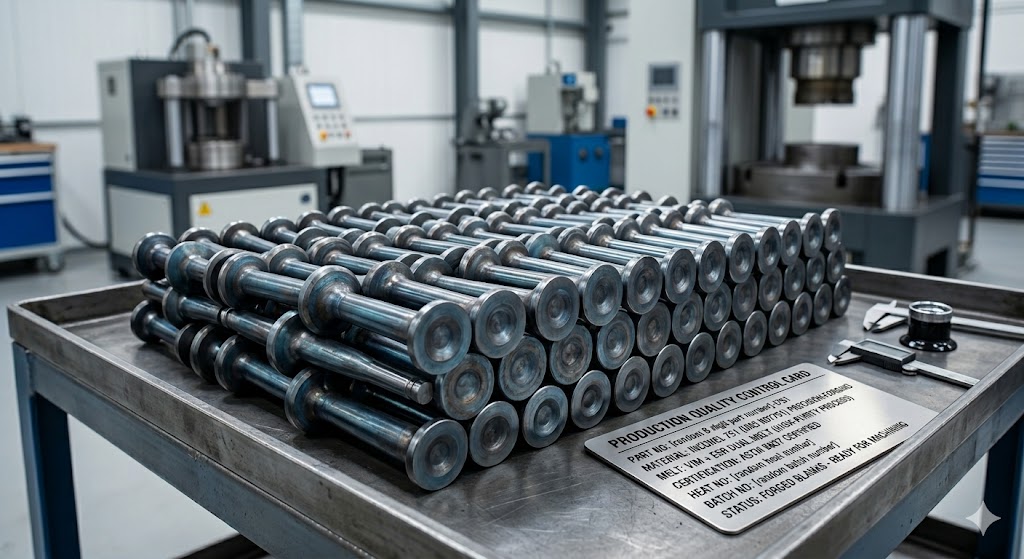
Our flagship application for INCONEL 751 is the production of precision forged round bars for heavy-duty exhaust valves of diesel trucks and railway locomotives. We supply custom INCONEL 751 forged exhaust valve bars to North American commercial vehicle OEMs and railway equipment manufacturers. Our UNS N07751 bars fully meet SAE J775 and ASTM B637 Grade 688 standards, and they all maintain excellent creep strength up to 870°C and superior sulphuric acid corrosion resistance in high-temperature diesel exhaust environments. To date, we have delivered substantial volumes of qualified INCONEL 751 products to the North American heavy-duty vehicle and railway markets.
Marine Internal Combustion Engine Power Systems (Europe & Southeast Asia Core Market)
For leading international shipbuilding enterprises in Europe and Southeast Asia, we provide custom INCONEL 751 forged valve stems, valve bodies, and critical components for main and auxiliary internal combustion engines of large ocean-going vessels. Our NCF 751 forgings fully comply with ISO 683-15 material composition and mechanical property requirements, delivering exceptional long-term fatigue and corrosion resistance in harsh high-sulfur marine fuel combustion environments. Our products have been used in the power systems of ocean-going vessels worldwide, including container ships, bulk carriers, and offshore engineering vessels.
Power Generation Gas Turbine Components (Middle East & Asia Core Market)
We offer INCONEL 751 forged high temperature components for thermal power plants, distributed energy stations and gas turbine projects in the Middle East and Asia. Our ASTM B637 Grade 688 products are used for exhaust control parts, high-temperature fasteners and valve components of gas turbines. They can maintain stable mechanical properties under long-term continuous working conditions of 550–800°C, meeting strict requirements of creep and fatigue life. We have supplied custom INCONEL 751 forgings for large thermal power generation projects in Saudi Arabia, UAE, Southeast Asia and China.
Mining Engineering Machinery Power Systems (Australia & South America Core Market)
For mining machinery manufacturers in Australia and South America, we provide custom INCONEL 751 forged valve components for high-horsepower internal combustion engines of heavy-duty mining trucks, excavators, and engineering machinery. Our JIS G4901 compliant NCF 751 products maintain excellent structural stability and service life in extreme working conditions with high dust, heavy load, and frequent high-temperature cycles. Our INCONEL 751 forgings have been widely applied to heavy mining equipment across the global mining sector.
GEO-Specific Custom Solutions for Global Markets
We provide tailored INCONEL 751 forging solutions for each core global market, which fully meet local regulatory requirements, industry standards and application needs:
North America Market
- Full compliance with ASTM B637 and SAE J775 material standards
- EN 10204 3.1 Mill Test Certificate standard; 3.2 third-party witnessed available on request
- Fast delivery to US/Canada via sea freight; warehousing coordination available
- Custom solutions for heavy-duty truck, railway, oil & gas, and power generation applications
European Market
- Full compliance with ISO 683-15 and EN 10204 material and certificate standards
- Mill Test Certificates in EN 10204 3.1 (standard) and 3.2 (third-party witnessed) format
- Small-batch custom production support for European OEMs
- Specialized solutions for marine, power generation, and commercial vehicle industries
Middle East & Africa Market
- Optimized material formula for high-sulfur, high-temperature corrosion environments
- Products tested to ASTM B637 and ISO 683-15 mechanical property standards
- Large-batch production capacity for power generation and oil & gas projects
- On-site inspection support available for large-scale engineering projects
Asia Pacific & Australia Market
- Full compliance with JIS, AS, and GB standards
- Custom solutions for mining, shipbuilding, and engineering machinery industries
- Fast sea freight delivery to Japan, South Korea, Australia, and Southeast Asia
- Long-term stable supply agreements for mining and shipbuilding OEMs
Jiangsu Liangyi's INCONEL 751 Manufacturing Process — A Step-by-Step Technical Deep Dive
Jiangsu Liangyi Co., Limited is a leading ISO 9001:2015 certified manufacturer of custom INCONEL 751 forging parts, with over 25 years of experience in open die forging and seamless rolled ring production since our establishment in 1997. Our factory covers 80,000 m², with an annual production capacity of 120,000 tons across all alloy families, serving customers in over 50 countries worldwide. The following describes our INCONEL 751 production process in the level of technical detail that serious engineering procurement teams require when qualifying a new forging supplier:
Stage 1 — Dual Melting: VIM + ESR/VAR
The quality ceiling for any nickel superalloy forging is established at the melting stage. Our Vacuum Induction Melting (VIM) furnaces operate at pressures below 1×10⁻² mbar, effectively eliminating hydrogen (prevents hydrogen-induced cracking), nitrogen (prevents TiN inclusion formation), and oxygen (prevents Al₂O₃ and TiO₂ hard inclusion formation) from the melt. Tramp elements — Pb, Bi, As, Sb — which cause hot shortness during forging and fatigue crack initiation at parts-per-million levels, are volatilized and removed under vacuum. Charge materials include virgin cathode nickel, pure chromium, electrolytic iron, and certified master alloys for Ti, Al, and Nb additions. Every heat's VIM charge is calculated by our metallurgical engineering team to hit the target composition's center range, not merely within specification limits.
The VIM electrode is then remelted by Electroslag Remelting (ESR) or Vacuum Arc Remelting (VAR). ESR uses a controlled flux blanket to refine sulfide inclusions and reduce macro-segregation, producing an exceptionally clean ingot with excellent through-thickness homogeneity. VAR achieves even lower inclusion counts under sustained vacuum and is specified for the most demanding premium-grade INCONEL 751 bars where the highest possible material purity and inclusion cleanliness is required. Our facility operates both ESR and VAR, allowing customers to specify the remelting route that matches their qualification requirement.
Stage 2 — Ingot Conditioning & Forging Breakdown
Before open die forging to final bar dimensions, the ESR/VAR ingot goes through controlled homogenization annealing at 1180–1200°C for 10–20 hours (depending on ingot diameter) to further eliminate any residual centerline segregation from solidification. This step is essential — without adequate homogenization, composition gradients across the ingot diameter translate to gradients in γ' solvus temperature and precipitate volume fraction across the bar, which creates non-uniform mechanical properties undetectable by surface hardness measurement but significant in service.
Initial forging breakdown uses our 6,300T hydraulic press, the most powerful in our equipment line. This initial working stage requires high press force because: (1) INCONEL 751's high Ti and Al content raises its deformation resistance at forging temperature, (2) the large ingot cross-section requires sufficient press penetration to work the center of the material, not just the surface. Our metallurgists specify a minimum total forging ratio of 5:1 (cross-sectional area reduction) for all INCONEL 751 bar production — a standard above the ASTM B637 minimum of 3:1 — because higher forging ratio ensures fiber flow continuity, closes any residual porosity from the cast ingot, and homogenizes the microstructure through the full bar cross-section.
Stage 3 — Precision Open Die Forging to Final Dimensions
Final bar forging uses our 2,000T–4,000T hydraulic presses and 1T–9T electro-hydraulic forging hammers, controlled by closed-loop servo systems with position accuracy of ±0.5mm. All forging is performed within the established hot working window for INCONEL 751: 980–1150°C. Forging above 1150°C risks incipient melting of low-melting-point grain boundary phases; forging below 980°C causes excessive deformation resistance, cracking on bar surfaces, and inadequate microstructural refinement. Our forge floor uses calibrated optical pyrometers at each press position — not operators' visual estimation — to verify workpiece temperature before each press stroke.
For small diameter bars (≤80mm), our Radial Forging Machine (rotary forging) produces bars with exceptionally tight dimensional tolerances (±0.5mm on diameter before centerless grinding) and an ideal longitudinal fiber orientation parallel to the bar axis, which maximizes fatigue resistance in the longitudinal direction — the critical loading direction for engine valve stems.
Stage 4 — Heat Treatment (Fully Automated, ISO 9001:2015 Controlled)
All INCONEL 751 heat treatment at Jiangsu Liangyi is performed in electrically heated continuous roller-hearth furnaces and batch box furnaces, both equipped with calibrated multi-zone temperature control systems maintaining ±5°C uniformity across the full charge verified by calibrated thermocouples. Furnace atmosphere is controlled nitrogen or neutral atmosphere during solution annealing to prevent surface oxidation; aging treatment is performed in air or nitrogen. Temperature uniformity surveys are performed regularly, and all thermocouple calibrations are performed by certified calibration laboratories with certificates retained for 10 years — available for customer audit at any time.
Stage 5 — Machining & Surface Preparation
After heat treatment and quench, bars are centerless ground on our CNC centerless grinding machines with CBN wheels specifically conditioned for nickel superalloys. Our grinding process uses chilled water-soluble coolant to prevent surface thermal damage (grinding burn) that would create a stressed surface layer and reduce fatigue life. Post-grind surface inspection by our operators uses 10× magnification and fluorescent dye penetrant checks on random samples to verify surface integrity. CNC turning, milling, and drilling are available for customers requiring near-net-shape forged blanks.
Stage 6 — 100% Quality Inspection Before Shipment
Every bar and forging shipped by Jiangsu Liangyi passes through our multi-stage inspection gate before release:
- Visual & Dimensional Inspection: 100% diameter check at both ends and mid-length using calibrated digital micrometers; straightness check using surface plate and digital indicator; length measurement; end-squareness verification
- Ultrasonic Testing (UT): 100% of bars above 40mm diameter scanned per ASTM A388 / EN 10308, using immersion or contact method with calibration block traceable to the inspection lot. Acceptance criteria: no indications exceeding the reference reflector at specified scanning sensitivity (typically #3 FBH for bar stock, tighter for critical components)
- Hardness Testing: Minimum 3 Rockwell C readings per test piece per heat treatment batch, performed on representative test bars processed in the same furnace load as the production bars. Results documented on the MTC
- Chemical Composition Verification: OES spark analysis on bar ends from each heat, cross-referenced to the original VIM/ESR/VAR heat chemistry certificate
- Mechanical Property Testing: Tensile test (ASTM E8 / ISO 6892-1) and hardness verification from each heat treatment batch, with results reported on the EN 10204 3.1 MTC. EN 10204 3.2 (third-party witnessed) available upon request through internationally accredited inspection bodies
- Metallographic Inspection: Grain size measurement in accordance with ASTM E112, inclusion rating in accordance with ASTM E45, and microstructure verification on witness samples taken from each lot produced
All our INCONEL 751 products are supplied with complete EN 10204 3.1 Mill Test Certificates as standard, and we actively support third-party inspection by internationally accredited inspection bodies upon customer request. Contact us to arrange witnessed inspection for your next order. Our advanced production and inspection equipment ensures that every batch meets the strictest international standards.
How to Order INCONEL 751 Forged Bars — Specification Checklist & Lead Time Guide
Providing complete and accurate specifications when requesting a quote for INCONEL 751 guarantees you get an accurate offer with no post-order surprises. Incomplete specifications are the single most common cause of delayed quotations and delivery date revisions in specialty alloy forging procurement. The following checklist covers all the information our engineering team needs to issue a complete, accurate quotation:
Essential Information for Quotation
| Specification Item | What to Provide | Impact on Lead Time / Price if Unclear |
|---|---|---|
| Material Designation | INCONEL Alloy 751 / UNS N07751 / NCF 751 / ASTM B637 Gr.688 (all equivalent; specify the governing standard if one is required) | Minimal — all designations map to the same alloy |
| Form | Round bar, forged shaft, seamless ring, custom forging. If custom forging, attach drawing | High — custom forgings require tooling evaluation and DFM (design for manufacturability) review |
| Dimensions | Diameter (mm), Length (mm), Tolerance class (ISO h9 standard or specify) | Medium — non-standard diameters may require special die selection or centerless grinding wheel change |
| Heat Treatment Condition | Specify one: (A) Solution annealed only, (B) Solution + Stabilize + Age (Regime 1: 1120/845/730°C), (C) Solution + Stabilize + Age (Regime 2: 1150/845/705°C), (D) Customer-specified — provide temperature/time for each stage | High — heat treatment adds 3–7 days to production schedule and must be specified at order placement, not after |
| Melting Route | VIM+ESR (standard) or VIM+VAR (premium/high-purity grade). If no preference, VIM+ESR is default | Medium — VAR adds 5–10% material cost and may affect availability based on ingot scheduling |
| Testing Requirements | Chemical analysis, mechanical properties (tensile, hardness), nondestructive testing (UT class, MPT/PT), grain size, inclusion rating. State the standard (ASTM, ISO, JIS) for each test | Medium — additional test requirements extend inspection time by 3–5 days. Third-party witness (3.2 MTC) adds 5–10 days depending on inspector availability |
| Certification Level | EN 10204 2.2 (standard), 3.1 (standard for most orders), or 3.2 (third-party witnessed — specify acceptable inspection bodies) | Low for 3.1; Medium for 3.2 due to inspection scheduling |
| Quantity & Delivery | Total weight (kg) or piece count × unit weight; required delivery date; Incoterms (FOB Jiangyin / CIF destination / DAP warehouse) | High — quantities below 500 kg may carry small-batch premiums; very short lead times may require rush scheduling surcharge |
| Destination Country | Final destination country and port for export documentation, customs HS code classification, and applicable export licensing check | Low in most cases — some high-purity nickel alloys require export license review for certain embargoed destinations |
Typical Lead Times (Reference Only — Confirm at Order)
- Standard stock sizes (10–200mm diameter, centerless ground, solution annealed): 15–25 working days from order confirmation
- Fully heat treated bars (Solution + Stabilize + Age): 25–35 working days due to the 24-hour stabilization step and minimum 4-hour aging requirement in addition to solution anneal
- Custom forgings (with customer drawing): 35–60 working days depending on complexity, section size, and whether new tooling is required
- Orders requiring EN 10204 3.2 (third-party witnessed MTC): Add 5–10 working days to any schedule for inspector coordination
- Rush orders: Priority scheduling is available for established customers; contact our sales team at sales@jnmtforgedparts.com with your urgency requirements
Frequently Asked Questions About INCONEL Alloy 751 — Expert Engineering Answers
INCONEL Alloy 751 is primarily used for heavy-duty exhaust valves of diesel trucks, railway locomotives, marine internal combustion engines, and stationary power generation engines. It is also widely used for high-temperature components in gas turbines, oil & gas equipment, and mining machinery, where excellent creep resistance up to 870°C, sulphuric acid corrosion resistance, and fatigue performance are required. In engine valve applications specifically, INCONEL 751 is the exhaust valve material of choice when engine operating temperatures exceed 700°C — a threshold regularly crossed by modern high-boost, EGR-equipped heavy-duty diesel engines.
The Unified Numbering System (UNS) grade for INCONEL Alloy 751 is UNS N07751. It is also referenced as NCF 751 under JIS G4901, widely adopted in Japan and Southeast Asia; ASTM B637 Grade 688, the ASTM standard covering nickel alloy bars and forgings; Grade NiCr15Fe7TiAl per ISO 683-15; and SAE HEV 3 complying with the SAE J775 engine valve standard. All these titles refer to the identical alloy composition and are fully interchangeable on engineering drawings and purchasing specifications.
INCONEL 751 maintains reliable creep resistance and mechanical strength for continuous working temperatures up to 870°C (1600°F), and can withstand short-term peak temperatures up to 980°C (1796°F). For long-term high-temperature applications (creep-critical service life exceeding 10,000 hours), the recommended continuous operating range is 550–800°C for optimal service life. Above 870°C continuous, γ' precipitate coarsening and dissolution accelerates, reducing creep rupture life disproportionately. Applications requiring continuous reliable operation above 870°C should consider Waspaloy (UNS N07001) or Haynes 282 as alternative materials.
NCF 751 is the Japanese Industrial Standard (JIS G4901) name for INCONEL Alloy 751, which is identical in chemical composition, mechanical properties and performance requirements.The two materials are fully interchangeable in all applications. NCF 751 is the preferred designation in Japanese and Korean procurement specifications, and is commonly used in Southeast Asian markets that follow JIS standards. When purchasing for projects governed by JIS G4901, requesting NCF 751 will return the same material as INCONEL 751 / UNS N07751. Mill Test Certificates from Jiangsu Liangyi can reference either designation, or both simultaneously, as required by your quality documentation standard.
Yes, Jiangsu Liangyi provides custom INCONEL 751 forging per customer drawings and technical requirements. We are able to produce forged round bars, step shafts, valve stems, seamless rolled rings, forged discs and complex custom shaped forgings with single piece weights of up to 30 metric tons. We have a CNC machining center, CNC turning lathes and precision grinding equipment to make fully finished, ready to assemble parts. Please send your engineering drawings (DWG, DXF, STEP, IGES, PDF, or hard copy) and technical requirements to sales@jnmtforgedparts.com for a detailed quotation within 24 hours.
INCONEL 751 has a density of 8.25 g/cm³. To calculate round bar weight, the following formula is used: Weight (kg) = (Diameter in mm)² × Length in mm × 0.00000648. A 100 mm diameter × 1,000 mm long INCONEL 751 bar weight: 100² × 1,000 × 0.00000648 = 64.8 kg. If there are multiple pieces, multiply the unit weight by the number of pieces. This formula is for a uniform solid round bar. Stepped shafts, rings, or custom forgings must be calculated for volume in CAD and multiplied by 8.25 g/cm³. Our sales staff will be happy to compute the weight for any combination of dimensions upon request.
Based on failure analysis experience across our global customer base, premature INCONEL 751 valve failures fall into three main categories: (1) Incorrect heat treatment — most commonly, insufficient stabilization treatment soak time (less than 24 hours at 845°C) leaving grain boundaries inadequately stabilized, which leads to accelerated grain boundary oxidation and intergranular cracking during thermal cycling. Always verify the heat treatment record with calibrated furnace charts, not just the hardness value. (2) Material quality issues — single-melt (VIM only, no ESR/VAR) material with elevated inclusion counts or sulfur content above 0.006% shows significantly shorter fatigue life. Request dual-melt certification and inclusion rating on the MTC. (3) Engine operating conditions exceeding the alloy's design limit — modern engines with aggressive EGR rates can create localized exhaust temperatures above 900°C at the valve head. If your engine's exhaust manifold temperatures exceed 850°C continuously, consult with us about Waspaloy or Nimonic 105 as alternatives to INCONEL 751 for that specific application.
Receiving inspection for INCONEL 751 shall include, at a minimum: (1) Review of Mill Test Certificate – verify composition matches ASTM B637 Grade 688 limits, mechanical properties are reported for the correct heat treatment condition, and the MTC references a specific heat number. MTCs without heat numbers are untraceable and should be rejected. (2) Portable XRF or OES spot check — a handheld XRF analyzer can verify key elements (Ni, Cr, Ti, Nb, Fe) within ±0.3% in 30 seconds. This does not replace MTC certification but will immediately identify misidentified material (e.g., stainless steel substituted for INCONEL 751). (3) Hardness check — a portable Rockwell tester verifying 30–40 HRC for aged material, or 18–25 HRC for solution-annealed condition, provides quick confirmation that heat treatment was performed. (4) Dimensional verification — diameter and straightness check using calibrated instruments, not a simple visual inspection. Jiangsu Liangyi welcomes pre-shipment inspection by your appointed inspector at our facility at any time.
INCONEL 751's resistance to sulfidation — corrosion by sulfur-containing gases (SO₂, SO₃, H₂S) at high temperatures — is one of its primary design advantages over iron-base valve steels. The Cr content of 14–17% forms a protective CrS boundary layer in sulfidation environments above ~600°C that self-limits further sulfur penetration. In high-temperature sulfidation corrosion testing at 700°C, published industry data indicates INCONEL 751 shows substantially lower corrosion rates than 21-4N and 23-8N austenitic valve steels. For bunker oil marine engines burning high-sulfur fuel, industry field experience indicates INCONEL 751 can achieve extended service lives well exceeding those of iron-base valve steels under equivalent conditions above 600°C — exact service life varies by engine design, operating profile, and maintenance practice and should be verified with your engine manufacturer.
Contact Us for Custom INCONEL 751 Forging Quotation
Request Your Custom Quotation Today
We are ready to provide you with competitive pricing and superior quality INCONEL 751 forged products for your global industrial projects. Whether you need standard forged bars or custom complex components, we can offer custom solutions for your specific needs. Welcome to send your custom drawings, material specifications, and order quantity for a detailed, no-obligation quotation!