Inconel 600 Forging Parts | Alloy 600 | UNS N06600
29+ YearsFounded 1997, Jiangyin China
120,000 t/yrAnnual forging capacity
30–30,000 kgSingle-piece weight range
50+ CountriesGlobal export destinations
ISO 9001:2015Quality certified since 1997
8.47 g/cm³Inconel 600 density
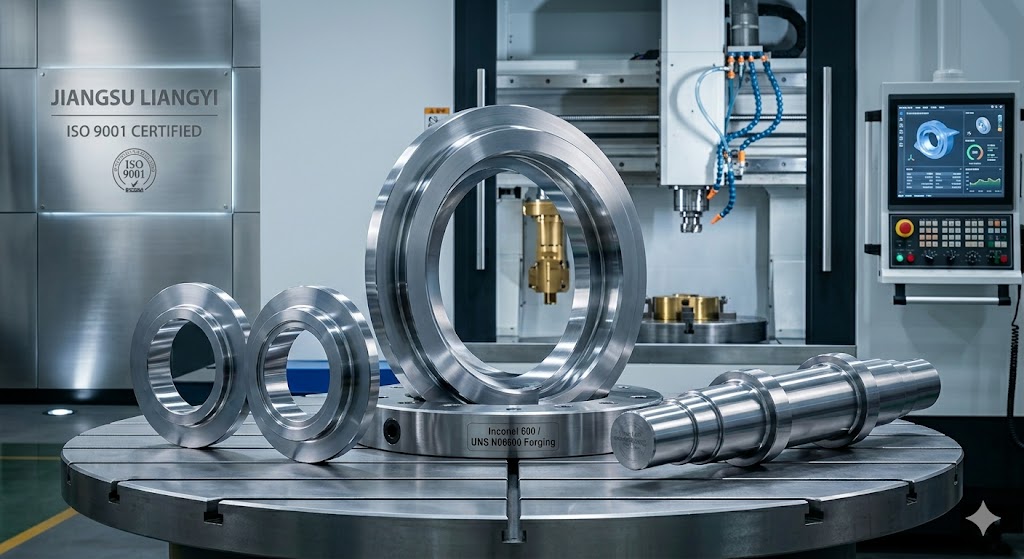
Established in 1997, Jiangsu Liangyi Co., Limited is an ISO 9001:2015 certified professional maker of Inconel 600 forging parts (also called Alloy 600, UNS N06600, W.Nr. 2.4816, NiCr15Fe, NCF 600) based in Jiangyin City, Jiangsu Province. Our 80,000 m² factory runs a full in-house production line: VIM + ESR + VAR triple melting → open die forging → seamless ring rolling → heat treatment → precision CNC machining → complete NDT testing. Single part weight ranges from 30 kg to 30,000 kg, annual production capacity is 120,000 metric tons, and our products are exported to over 50 countries.
Available Custom Inconel 600 Forged Product Range
We manufacture custom UNS N06600 forged parts in full shapes and specifications according to your drawings and technical requirements. Our main product line includes:
- Inconel 600 Forged Bars & Rods: Round bars (50 mm to 2000 mm diameter), square bars, flat bars, rectangular bars, step shafts, gear shafts and hollow bars, the length is up to 12 m
- Alloy 600 Seamless Rolled Rings: Forged gear rings, bearing rings, contoured rolled rings and custom ring blanks — the max OD is up to 6000 mm, weight is up to 30 tons per piece
- UNS N06600 Forged Hollow Components: Hubs, housings, shells, sleeves, bushes, heavy-wall cylinders, casings and seamless pipes
- Inconel 600 Forged Discs & Plates: Forged discs, disks, blocks, flanged blanks, tube sheets and baffle plates — the max diameter is up to 3000 mm
- Industry-Specific Custom Forgings: Valve parts, pump parts, nuclear reactor parts, oil and gas wellhead parts, turbine blades and pressure vessel forgings
Data Notice: The values below are compiled from published industry standards and reference literature (ASTM, INCO/Special Metals data sheets, ASM Handbook Vol.2). They represent typical values for solution-annealed Alloy 600 / UNS N06600. Actual values may vary by heat, section size and heat treatment. Always request test reports for your specific forgings.
Alloy 600 / UNS N06600 Forging Specification Matrix by Product Form
The following table consolidates our full production capability across all product forms. All dimensions are indicative; custom sizes outside these ranges may be achievable — please enquire.
| Product Form | Size Range | Weight Range | Surface / Delivery Condition | Applicable Standards |
|---|
| Round Bars & Rods | Ø 50–2000 mm × L up to 12,000 mm | 30 kg – 20,000 kg | As-forged; solution annealed; pickled; rough-turned; precision-turned (Ra 1.6–3.2 µm) | ASTM B564; AMS 5665; ASME SB-564 |
| Seamless Rolled Rings | OD 300–6000 mm; ID per drawing; H up to 1500 mm | 50 kg – 30,000 kg | As-rolled; solution annealed; rough-bored + OD turned; finish-machined both faces | ASTM B564; ASME SB-564; EN 10269 |
| Discs & Blanks | Ø 200–3000 mm × T 20–800 mm | 30 kg – 25,000 kg | As-forged; solution annealed; flat-ground both faces (Ra 3.2–6.3 µm) | ASTM B564; AMS 5665 |
| Shafts & Step Shafts | Ø 60–800 mm × L up to 15,000 mm | 50 kg – 18,000 kg | As-forged; rough-turned; semi-finish turned; keyways / splines per drawing | ASTM B564; DIN 17752 |
| Hollow Cylinders & Sleeves | OD up to 1200 mm; Wall thickness ≥ 30 mm; L up to 5000 mm | 50 kg – 12,000 kg | As-forged; bored + OD turned; honed ID (Ra 0.8–1.6 µm on request) | ASTM B564; ASME SB-564 |
| Tube Sheets & Baffle Plates | Ø 200–2500 mm × T 15–500 mm | 30 kg – 20,000 kg | Solution annealed; precision-machined both faces; hole-drilling per TEMA layout | ASME VIII Div.1; TEMA; ASTM B564 |
| Custom Near-Net Shapes | Per customer drawing (3D model preferred) | 30 kg – 30,000 kg | Rough-forged near-net shape; optional finish CNC machining to Ra 0.8 µm | Customer specification; ASTM B564 |
When ordering, specify: (1) product form and drawing reference, (2) finish condition needed — as-forged, solution annealed, or machined, (3) whether MTC 3.1 or 3.2 is needed, and (4) any NDT requirements (UT class, MT, PT). Providing this upfront reduces clarification rounds and accelerates quotation turnaround to within 24 hours.
Core Advantages of Inconel 600 (UNS N06600) Forgings
Inconel 600 is a non‑magnetic high‑temperature superalloy made of nickel, chromium and iron, and it is used for extreme working environments. Its special material matrix provides top‑level performance for main forging parts:
1. Outstanding High-Temperature Stability
Keeps excellent mechanical strength and oxidation resistance at continuous operating temperatures up to 1095°C (2000°F), with short-term peak temperature resistance up to 1149°C. Resists thermal fatigue and creep deformation under cyclic high-temperature and high-pressure conditions — ideal for furnace, boiler and turbine applications.
2. Superior Corrosion & Oxidation Resistance
Its high nickel content (minimum 72%) provides excellent resistance to chloride stress corrosion cracking, caustic corrosion, and carburizing or oxidizing atmospheres at high temperatures. It performs better than standard stainless steels in harsh acidic, alkaline and halogen-containing environments.
3. Excellent Mechanical Strength & Workability
It combines high tensile and yield strength with excellent hot and cold workability, so that it is suitable for intricate open die forging, seamless ring rolling and precision machining. Heat treatment guarantees a uniform microstructure and steady mechanical properties even in large, heavy-section forgings.
4. Wide Compliance with International Standards
We make parts according to ASTM, ASME, NACE MR0175, DIN, EN and JIS standards based on customer requirements. They all meet the strict demands of global nuclear power, oil and gas, petrochemical and aerospace industries.
Inconel 600 (UNS N06600) Chemical Composition
We strictly control the chemical composition of every heat of Inconel 600 to guarantee consistent material performance. All values conform to ASTM B564 / ASME SB-564 and AMS 5665.
| Element | Weight % Range | Metallurgical Role | Test Standard |
|---|
| Nickel + Cobalt (Ni+Co) | 72.0 min | Primary austenite stabiliser; provides chloride SCC resistance and high-temperature strength | ASTM E354 |
| Chromium (Cr) | 14.0 – 17.0 | Forms protective Cr₂O₃ oxide layer; important for high-temperature oxidation and carburisation resistance | ASTM E354 |
| Iron (Fe) | 6.00 – 10.00 | Solid solution strengthener; controls cost. Higher Fe vs Inconel 625 reduces alloy cost while retaining most properties | ASTM E354 |
| Manganese (Mn) | 1.00 max | Sulfide former; ties up S to prevent hot-shortness during forging. Kept low to maintain corrosion resistance | ASTM E354 |
| Silicon (Si) | 0.50 max | Deoxidiser during melting. Excess Si promotes sigma phase precipitation during long-term high-temperature service | ASTM E354 |
| Copper (Cu) | 0.50 max | Low Cu needed for nuclear service to limit activation. Exceeding 0.5% can reduce resistance to some corrosive media | ASTM E354 |
| Carbon (C) | 0.15 max | Grain boundary carbide former. Critical: values between 0.04–0.15% are acceptable, but C must be controlled to avoid sensitisation in the 427–760°C range | ASTM E354 |
| Sulfur (S) | 0.015 max | Must be minimised — S segregates to grain boundaries and causes hot tearing during forging. Our VIM process routinely achieves S < 0.005% | ASTM E354 |
Carbon control is often poorly managed in Inconel 600 forgings. Although the standard allows up to 0.15% carbon, levels above 0.08% greatly raise the risk of sensitization when parts are welded or used between 427°C and 760°C. For nuclear parts or components to be welded on-site, we suggest a stricter maximum carbon limit of 0.05%, which we can achieve through VIM melting. This requirement must be written in your purchase order so it can be shown on the material test certificate.
Inconel 600 International Grade Equivalents & Standard Cross-Reference
Inconel 600 (UNS N06600) is designated under different national standards around the world. The table below maps all equivalent designations — critical for procurement teams sourcing across Europe, Japan, and other markets.
| Standard System | Designation | Governing Document | Key Spec Nuance vs. ASTM |
|---|
| USA (UNS) | N06600 / Alloy 600 (Inconel® 600) | ASTM B564 (forgings); AMS 5665; ASTM B168 (sheet/plate) | Baseline reference. C max 0.15%; Ni+Co min 72.0% |
| Germany (DIN / W.Nr.) | 2.4816 / NiCr15Fe | DIN 17752; DIN 17750; VdTÜV sheet 432 | C max 0.10% (slightly tighter than ASTM 0.15%); Fe typically 8–10% reported separately |
| EU / International (EN / ISO) | NiCr15Fe / NW 6600 | EN 10269; EN 10095; ISO 6208 | EN 10204 3.1/3.2 MTC required for PED-compliant pressure equipment in EU markets |
| United Kingdom (BS) | NA14 / HR5 | BS 3072 (sheet); BS 3075 (wire); BS 3076 (bar) | Mn max 1.0% same as UNS; historical designation now largely superseded by EN standards |
| Japan (JIS) | NCF 600 | JIS G4901; JIS G4902 | Ni min 72.0% same; C max 0.15% same; Cr range 14.0–17.0% same. JIS requires impact test at room temp for certain forms |
| France (AFNOR) | NC15Fe | NFA 36-607 | Compositionally equivalent; historical designation. EU/EN standards now applicable |
| Russia (GOST) | ЭИ868 / XH60BT | GOST 5632 | Note: ЭИ868 is compositionally similar but may include Ti up to 0.3% — not identical. Verify with chemical analysis if substituting |
| USA (Aerospace) | AMS 5665 / AMS 5540 | SAE AMS 5665 (bar, forgings); AMS 5540 (sheet) | Adds requirements for grain size (ASTM #5 or finer), tensile test direction (longitudinal and transverse), and sulfur ≤ 0.010% max (tighter than ASTM) |
When your order refers to DIN 2.4816 or JIS NCF 600, our factory can provide material test certificates that list both the original standard and its equivalent ASTM B564. To meet the EU Pressure Equipment Directive (PED 2014/68/EU), request an EN 10204 3.2 MTC with third‑party witness inspection. We work with BV, TÜV and Lloyd’s Register for this certification.
Mechanical Properties of Inconel 600 Forgings
All Alloy 600 forgings are heat-treated and tested to meet or exceed minimum property requirements. Full test reports are provided with every shipment.
Room Temperature Mechanical Properties (Solution Annealed Condition)
| Property | Min. Requirement | Typical Achieved | Test Standard |
|---|
| Yield Strength (Rp0.2) | 240 MPa (35 ksi) | 280–320 MPa | ASTM E8 |
| Tensile Strength (Rm) | 550 MPa (80 ksi) | 620–700 MPa | ASTM E8 |
| Elongation (A5) | 30% | 40–50% | ASTM E8 |
| Reduction of Area | — | 50–65% | ASTM E8 |
| Hardness | ≤ 217 HB | 140–180 HB | ASTM E10 |
| Charpy Impact (room temp) | ≥ 100 J (per JIS requirement) | 140–200 J | ASTM E23 / JIS Z 2242 |
Elevated Temperature Mechanical Properties
| Temperature (°C) | Min. Tensile Strength (MPa) | Min. Yield Strength (MPa) | Test Standard |
|---|
| 300 | 520 | 180 | ASTM E21 |
| 500 | 480 | 160 | ASTM E21 |
| 700 | 320 | 120 | ASTM E21 |
| 900 | 140 | 60 | ASTM E21 |
Physical & Thermal Properties of Inconel 600 — Engineering Reference Data
The following physical and thermal properties are essential for FEA modelling, heat transfer calculations, thermal expansion analysis, and machining parameter selection. Values are measured at or near room temperature unless otherwise stated.
| Property | Value | Unit | Test / Reference Standard | Engineering Design Implication |
|---|
| Density | 8.47 | g/cm³ (0.306 lb/in³) | ASTM E252 | 14% denser than 316L SS (8.00 g/cm³). Use for accurate FEA dead-load calculations and transport weight estimation; important for nuclear lift equipment load limits |
| Melting Range | 1354 – 1413 | °C (2470–2575°F) | DTA per ASTM E794 | The 59°C solidification range reflects liquid-to-solid two-phase region. This mushy zone is why we control VIM superheat to ±15°C — reducing macro-segregation that cannot be fully eliminated by ESR/VAR |
| Thermal Conductivity | 14.8 at 100°C / 18.3 at 500°C / 22.8 at 1000°C | W/(m·K) | ASTM E1461 | Roughly half of carbon steel. Heat dissipation from the cutting zone is slower — reducing machining speeds by ~30% vs carbon steel is recommended to prevent tool edge temperatures exceeding 600°C |
| Coefficient of Thermal Expansion (CTE) | 13.3 (20–100°C) / 14.4 (20–500°C) / 15.6 (20–1000°C) | µm/(m·K) | ASTM E228 | Very close to 316L SS (16 µm/(m·K)) — bolt-flange assemblies mixing Inconel 600 with 316L will see differential expansion of only ~2.5 µm/(m·K), substantially less than mixing with carbon steel (12 µm/(m·K)) |
| Specific Heat Capacity | 444 at 20°C / 519 at 500°C | J/(kg·K) | ASTM E1269 | Used in thermal mass calculations for transient heating/cooling cycles — e.g. determining hold time at heat treatment temperature to ensure full thermal soak in heavy-section forgings above 500 mm diameter |
| Electrical Resistivity | 1.03 | µΩ·m | ASTM B193 | High resistivity confirms non-magnetic, non-conductive character relative to steels. Suitable for applications needing electromagnetic transparency (e.g. near MRI or electromagnetic flow meters) |
| Elastic Modulus (Young's Modulus) | 207 | GPa (30 × 10⁶ psi) | ASTM E111 | 7% stiffer than 316L SS (193 GPa) — deflection under the same load is 7% less. Relevant for long shaft deflection calculations and tube bundle vibration analysis in heat exchangers |
| Poisson's Ratio | 0.29 | — | ASTM E132 | Standard input for FEA stress analysis; combined with Young's modulus defines the complete linear elastic stiffness tensor for isotropic models |
| Magnetic Permeability | 1.010 | µr (relative) | ASTM A342 | Essentially non-magnetic. Critical for nuclear applications where ferromagnetic inclusions could interfere with neutron flux control, and for subsea instrumentation where stray magnetic fields corrupt readings |
Thermal expansion is often underestimated when designing parts that cycle between room temperature and working temperature. At 500°C, a 1000 mm Inconel 600 shaft will expand by about 14.4 mm from its cold size. If the matching flange is carbon steel (CTE ≈ 12 µm/(m·K)), the difference over the same length is 2.4 mm. This must be allowed for in the joint design, otherwise bending stress will appear at the bolt holes. We can include CTE data in all our high-temperature test reports upon request.
Creep Rupture Strength & High-Temperature Fatigue Data
For applications in nuclear power, gas turbines, and high-temperature pressure vessels, short-term tensile data is insufficient. The following creep rupture and fatigue data governs actual part life under sustained loading at elevated temperature.
100-Hour Creep Rupture Strength (Stress to Cause Rupture in 100 Hours)
| Temperature (°C) | 100 h Rupture Strength (MPa) | 1,000 h Rupture Strength (MPa) | Larson-Miller Parameter (C=20) | Test Standard |
|---|
| 600 | 260 | 210 | 34,500 | ASTM E139 |
| 700 | 140 | 100 | 36,800 | ASTM E139 |
| 800 | 62 | 38 | 39,200 | ASTM E139 |
| 900 | 22 | 12 | 41,600 | ASTM E139 |
| 1000 | 8 | 4 | 44,200 | ASTM E139 |
High-Cycle Fatigue — Endurance Limit (Rotating Beam, R = −1)
| Test Temperature | Fatigue Endurance Limit at 10⁷ Cycles (MPa) | Surface Condition | Test Standard |
|---|
| Room temperature (20°C) | ~240 | Polished (Ra < 0.4 µm) | ASTM E466 |
| 300°C | ~220 | Polished | ASTM E466 |
| 600°C | ~180 | Polished | ASTM E466 |
| Room temperature (20°C) | ~170 | As-machined (Ra 3.2 µm) | ASTM E466 |
Creep is a type of failure that develops over time under constant load at high temperatures — it does not show up in short-term tensile tests. This is why power plant operators need a minimum design life of 100,000 hours for turbine and boiler parts. When designing Inconel 600 forgings for continuous use above 650°C, always determine wall thickness based on 100-hour rupture data with suitable safety factors (usually 1.5–2.5 times, depending on standards), not room-temperature tensile strength. The Larson-Miller parameter in the table above can be used to estimate values between test temperatures for any required lifetime.
Full Inconel 600 Forging Manufacturing Process & Quality Control
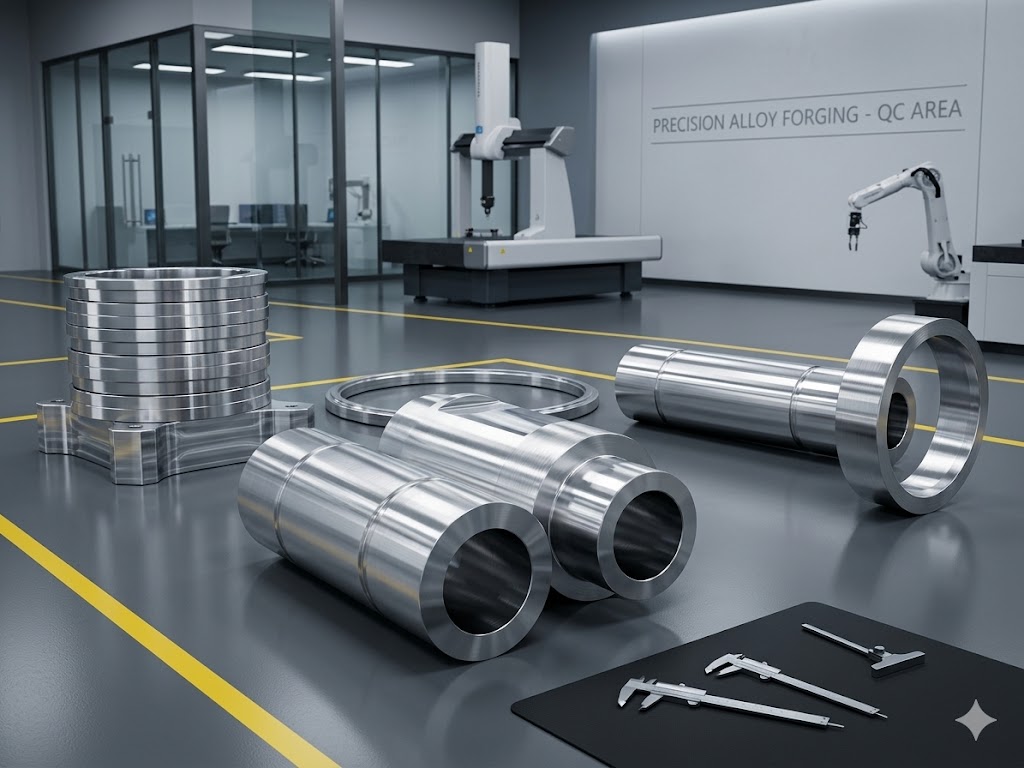
We control the whole production process in-house — from raw material melting to final inspection — making sure every UNS N06600 forging part has full traceability and consistent quality.
Premium Triple Melting Process (VIM + ESR + VAR)
All our Inconel 600 material is produced by a premium triple melt process to guarantee the great material purity, consistent chemical composition and zero internal defects:
- Vacuum Induction Melting (VIM): Strict control of chemical composition; removal of dissolved gases (H₂, N₂, O₂) and non-metallic inclusions. Superheat controlled to ±15°C to minimise segregation during ingot solidification
- Electroslag Remelting (ESR): Refines ingot matrix through controlled remelting under a conductive slag blanket; improves material density, eliminates porosity and improves surface quality. Reduces macro-segregation of Cr and Fe by 60–80% vs VIM-only
- Vacuum Arc Remelting (VAR): Final microstructure refinement under high vacuum; eliminates remaining segregation, micro-porosity and reduces harmful inclusions to sub-ppm levels. Required for nuclear-grade and aerospace-grade forgings
We establish a detailed Manufacturing and Quality Control Plan (MQCP) for every order. Full traceability for every heat and forging part is kept for a minimum of 10 years.
Precision Forging & Heat Treatment
- Forging Equipment: 2,000 T, 4,000 T and 6,300 T hydraulic forging presses; 1–5 T electro-hydraulic forging hammers; 1–5 M seamless ring rolling machines. Forging temperature strictly controlled at 899°C – 1232°C. Minimum forging ratio ≥ 4:1 for bars and discs; ≥ 3:1 for rings, ensuring complete break-up of cast dendritic structure
- Heat Treatment: Solution annealing at 927°C–1010°C, followed by rapid cooling (water quenching or forced air) to get improved mechanical properties and corrosion resistance. Furnace atmosphere controlled to prevent surface oxidation scale penetration
- Precision CNC Machining: In-house CNC turning, boring, and milling centre. Surface finish achievable: Ra 0.8 µm (finish-turned), Ra 3.2 µm (semi-finish), Ra 6.3 µm (rough-turned)
Strict Microstructure & Grain Size Control
- Uniform and clean microstructure at 100× and 500× magnification — free of harmful delta phase, primary carbide stringers, laves phase and acicular phase banding
- Consistent grain size of ASTM #7 or finer (per ASTM E112), with isolated grains up to ASTM #5 acceptable if randomly distributed; ALA grains up to ASTM #2 permissible if concentration ≤20% of section
- Zero acceptance for white spots with grain size difference over 1.5 ASTM, length over 8 mm, or associated with voids, dirt or dross
- Rejection for freckles with severity higher than Class 1-A per ASTM A604
Full Inspection & Certification Package
We provide 3 copies of dated certified test reports (MTC EN 10204 3.1 or 3.2 available) with each shipment, including: heat number and complete production records; chemical composition for each heat; room‑temperature and high‑temperature tensile properties; hardness; heat treatment chart; macro etch and microstructure inspection (with photos); NDT results (UT, MT, PT); and a compliance statement covering all applicable standards.
Inconel 600 Welding & Fabrication Guide — From the Factory Floor
Inconel 600 is regarded as an easy-to-weld alloy, but it has certain metallurgical risks that lead to on-site failures if overlooked. The guidance below comes from 29 years of supplying forgings to weld fabricators and investigations we have conducted for customers on post-weld failures.
Recommended Welding Processes & Filler Metals
| Welding Process | AWS Classification | Recommended Filler Metal | Best Used For | Notes |
|---|
| GTAW (TIG) | AWS A5.14 | ERNiCrFe-3 (Inconel Filler Metal 82) | Root passes, thin sections, precision welds in nuclear & aerospace applications | First choice for code-quality work. Produces lowest dilution. Preheat generally not required for sections < 25 mm |
| GMAW (MIG) | AWS A5.14 | ERNiCrFe-3 | Medium-to-heavy sections, high deposition rate production welding | Use spray transfer mode. Short-circuit transfer produces excessive spatter and cold-lap defects in nickel alloys — do not use |
| SMAW (MMA) | AWS A5.11 | ENiCrFe-2 (Inconel Electrode 182) or ENiCrFe-3 (Electrode 82) | Site/field welding where GTAW/GMAW equipment is impractical; repair welding | ENiCrFe-2 (Electrode 182) has slightly higher Fe and Mn — better for dissimilar metal joints to carbon steel |
| SAW (Submerged Arc) | AWS A5.14 | ERNiCrFe-3 with low-Si neutral flux | Cladding, overlay welding on large pressure vessel internals | Verify flux Si content: high-Si flux will elevate weld metal Si above 0.5%, reducing corrosion resistance |
Pre-Weld, In-Process & Post-Weld Requirements
- Preheat: Not needed for Inconel 600 under most conditions. Ambient temperature above 10°C is sufficient. Exception: preheat to 100°C for sections above 75 mm or when base metal temperature is below 5°C to prevent moisture condensation
- Interpass Temperature: Maximum 177°C (350°F). Exceeding this promotes hot cracking in the weld HAZ. Monitor with contact thermometer, not infra-red (emissivity of polished nickel alloy ≈ 0.12 — IR pyrometers give false low readings)
- Joint Preparation: Machine or grind to bright metal. Nickel alloys do not tolerate oxide films from thermal cutting — plasma or laser-cut edges must be ground back minimum 3 mm before welding
- Cleanliness: Degrease with acetone. Any sulfur-containing marking inks, cutting oils or lubricants that enter the weld pool will cause hot cracking — Inconel 600 has near-zero tolerance for S in the liquid state
- Post-Weld Heat Treatment (PWHT): Generally not needed for corrosion resistance. Solution annealing at 1010°C + rapid quench can restore optimum properties for heavily work-hardened welds or where sigma phase may form after long exposure at 600–800°C. For nuclear applications, PWHT requirements follow ASME BPVC Section III NB-4600
Inconel 600 Temperature Sensitivity Map — The Sensitisation Zone 0°C Safe (<427°C) ⚠ Sensitisation risk (427–760°C) Caution (760–927°C) Safe after anneal (>927°C) 1095°C
The Sensitisation Trap — what every fabricator must know: When Inconel 600 is heated or kept between 427°C and 760°C — including many heating cycles and slow cooling through this range — chromium carbides form along grain boundaries. This removes chromium from nearby areas, creating a sensitized layer prone to intergranular corrosion in oxidizing acids and polythionic acid, which is important in refineries during shutdowns. The risk increases with higher carbon content and longer time spent in this temperature range.Solutions:(1) Specify carbon ≤ 0.05% in your order;(2) Cool forgings as quickly as possible through 760°C to 427°C during heat treatment;(3) If post-weld annealing is needed, heat directly to 1010°C or higher without pausing at intermediate temperatures.
Environments and conditions where Inconel 600 is not the correct material choice, regardless of its general corrosion resistance:
- Concentrated sulfuric acid >50% at ambient temperature: Inconel 600 corrodes rapidly above ~30% H₂SO₄ concentration — select Alloy 20 (UNS N08020) or Hastelloy® B-3 instead
- Polythionic acid (H₂S₂O₃–H₂S₅O₆) environments: Formed during oil refinery shutdown when moisture contacts sulfide scales. Sensitised Inconel 600 will fail by intergranular stress corrosion cracking. For sour service shutdowns, use solution-annealed low-carbon (<0.03% C) material only
- High-concentration nitric acid (>70%): Inconel 600 offers only marginal resistance above 70% HNO₃ at elevated temperature — select Alloy 702 or titanium Grade 7 instead
- Molten sulfur above 200°C: Rapid sulfidation attack. No nickel-chromium alloy is suitable — use cobalt-based alloys or ceramic liners
- Fluoride-bearing solutions above 150°C: Hydrofluoric acid and fluoride salts attack the passive film of all nickel alloys including Inconel 600. Select Monel® 400 or Hastelloy® B-2 for HF service
- Carburising atmospheres with sulfur present: Sulfur degrades the protective oxide layer required to resist carburisation. Use alumina-forming alloys (e.g. Alloy 602CA) for H₂S + hydrocarbon gas at high temperature
Inconel 600 Corrosion Resistance — Quantitative Performance Data
General corrosion claims without supporting data are insufficient for materials engineers designing important parts. The following table provides measured corrosion rate data in common process environments, allowing engineers to make data-driven material selection decisions.
| Environment (Medium) | Concentration / Conditions | Temperature | Corrosion Rate (mm/yr) | Vs 316L SS (mm/yr) | Assessment |
|---|
| Sodium hydroxide (NaOH) | 50% concentration | Boiling (~140°C) | < 0.025 | 0.5–1.0 (sensitised 316L) | Excellent |
| Hydrochloric acid (HCl) | 0.5% concentration | Boiling (~101°C) | 0.12 | 12–25 | Good |
| Phosphoric acid (H₃PO₄) | 50% concentration | 80°C | < 0.05 | 0.10–0.25 | Excellent |
| Chloride stress corrosion cracking | MgCl₂, boiling 42% solution (standard SCC test) | 154°C | No cracking | Cracks in <1 h (304 SS) | Immune |
| Seawater (aerated) | Natural seawater, freely exposed | Ambient | < 0.003 | 0.05–0.10 (pitting) | Excellent |
| Sulfuric acid (H₂SO₄) | 10% concentration | 60°C | 0.80 | 0.50 (316L may be better) | Moderate — verify |
| Sulfuric acid (H₂SO₄) | 70% concentration | 60°C | > 10 | > 50 | Not suitable |
| High-temperature oxidation (air) | Dry air, continuous exposure | 1095°C | Scale < 0.1 mg/cm²·h | 316L max 870°C (fails above) | Excellent |
Material Authenticity Verification Protocol — How to Confirm You Received Genuine UNS N06600
Counterfeiting of high-value nickel alloys is a persistent risk in the global supply chain. This often involves replacing them with cheaper stainless steel or lower-grade alloys, along with fake material test certificates. The procedure below is used by quality engineers at our customers’ facilities to verify material authenticity. We share this openly because genuine N06600 will pass all these tests, and transparency protects both sides.
- Positive Material Identification (PMI) by XRF: A handheld XRF analyser should read Ni ≥72%, Cr 14–17%, Fe 6–10%. Any reading showing Cr >18% or Fe >12% indicates a mismatch with N06600 specification — likely an austenitic stainless steel substitute. PMI per ASTM E2296 takes under 60 seconds per point.
- Magnetic test: Genuine solution-annealed Inconel 600 is non-magnetic (permeability µr ≈ 1.010). A permanent magnet should show no attraction. Even weak magnetic attraction indicates either a different alloy or a cold-worked condition that needs re-annealing.
- Heat number traceability cross-check: The heat number on the MTC must match the stamped or etched marking on the forging. Request the original VIM/ESR/VAR melt records — a genuine manufacturer retains these for ≥10 years. If the supplier cannot produce melt-level records, do not accept the material.
- Carbon content chemistry verification: PMI/XRF cannot measure carbon accurately. For nuclear or sour service applications, request an independent combustion analysis (ASTM E1019) of a machined chip from the actual forging — not just from a separately produced test bar. Carbon must be ≤0.15% (≤0.05% if you specified it).
- Hardness spot check: Solution-annealed Inconel 600 should measure 140–180 HB. A reading below 130 HB may indicate a lower-grade soft alloy; above 217 HB indicates cold-worked condition, improper heat treatment, or a precipitation-hardening alloy mislabelled as 600.
- MTC format red flags: Be cautious if the MTC has no ASTM B564 reference, shows grain size as "acceptable" without an actual ASTM number (e.g., it should say "#7 or finer"), omits individual element percentages in favour of just "meets spec", or has identical test values across multiple heats (copy-paste fabrication).
At Jiangsu Liangyi, all forgings are marked with the heat number, material grade, and our factory code before delivery. Our MTC shows each chemical element to four decimal places for every heat, plus VIM and ESR/VAR melting log numbers, the specific forging press and heat treatment furnace IDs, and the name and certification number of the responsible metallurgist. If your current supplier’s MTC does not include all these details, contact us — we will show you what a full traceability package includes.
Verified Global Project Case Studies of Inconel 600 Forging Parts
Our Inconel 600 forging parts have been successfully used in important projects around the world since 2015. Below are verified project references:
Nuclear Power Project — Europe (2018)
Client: Leading European PWR EPC contractor
Pain Point: High-purity Inconel 600 forgings for reactor coolant pump systems; strict nuclear safety standards and zero-defect requirements.
Solution: Triple-melted Inconel 600 forged pump casings, impellers, rotors and seal chambers. 100% NDT. Full traceability per ASME BPVC Section III NB.
Outcome: Successfully installed in 2 PWRs; stable operation for over 6 years.
Oil & Gas Wellhead — Middle East (2020)
Client: Top Middle East oilfield service company
Pain Point: Sour-service resistant forgings for offshore Christmas trees — 15,000 psi rated, H₂S corrosion resistant.
Solution: Forged wellhead spool bodies manufactured to API 6A specification requirements, casing heads, tubing hangers and valve components. NACE MR0175 compliant.
Outcome: 2,500+ sets delivered with zero quality issues; 3× service life vs prior stainless steel.
Petrochemical Plant — North America (2021)
Client: Major North American ethylene producer
Pain Point: Corrosion-resistant forgings for EDC crackers and phenol condensers — high temperature and acidic media.
Solution: Custom forged heat exchanger tube sheets, baffle plates, reactor nozzles and transition cones with full mechanical and corrosion testing.
Outcome: Commissioned in 2 plants; maintenance frequency reduced 60%.
Thermal Power — Southeast Asia (2022)
Client: Leading Southeast Asian power utility
Pain Point: High-temperature Inconel 600 forgings for boilers and gas turbines — cyclic temperature and pressure loads.
Solution: Forged turbine blades, pump shafts, impellers, venturi bodies and boiler parts with elevated temperature performance testing.
Outcome: Installed in 3 plants; unplanned downtime reduced 45%.
Industrial Applications of Inconel 600 Forgings
- Nuclear Power: Pressurized Water Reactors (PWRs), Boiling Water Reactors (BWRs), reactor coolant pump parts, steam generator parts, pressurizer surge line tubes, reactor nozzles, containment seal chambers and nuclear waste flasks
- Oil & Gas: Onshore and offshore wellhead Christmas trees, casing/tubing heads and hangers, valve bodies/stems/balls/seat rings, choke valves, flow meter bodies and subsea pipeline parts
- Petrochemical & Chemical: Heat exchangers, pressure vessels, reactors, ethylene dichloride crackers, phenol condensers, furnace trays, carburizing furnace parts, soap manufacturing equipment and fatty acid vessels
- Power Generation: Gas and steam turbines, boilers, pump casings/impellers/shafts, flow measurement devices and high-temperature furnace parts
- Aerospace & Other: Engine parts, marine engineering equipment, pulp and paper processing equipment, food processing equipment
Inconel 600 vs Common Industrial Alloys: Material Selection Guide
Use the following comparison to choose the optimal alloy for your forging project based on temperature capability, corrosion environment, and cost constraints:
| Alloy Grade | Max Continuous Temp | Core Strengths | Key Limitations | Typical Applications |
|---|
| Inconel 600 (UNS N06600) | 1095°C (2000°F) | Best high-temp oxidation resistance among Fe-containing Ni alloys; excellent chloride SCC resistance; good weldability | Not suitable for concentrated H₂SO₄, HF, or polythionic acid | Nuclear power, high-temp furnace parts, chemical processing, sour oil and gas |
| 304 SS (UNS S30400) | 870°C (1600°F) | Lowest cost; good general corrosion resistance; excellent formability | Fails in chloride SCC; poor creep; max 870°C | General structural parts, non-corrosive low-pressure applications |
| 316L SS (UNS S31603) | 870°C (1600°F) | Better pitting resistance than 304 (Mo addition); good in mild chloride environments | Still fails chloride SCC above ~60°C with stress; limited creep life | Marine, food processing, low-temperature chemical processing |
| Inconel 625 (UNS N06625) | 980°C (1800°F) | Superior pitting and crevice corrosion resistance (Mo + Nb); higher mid-temperature strength; excellent seawater service | Lower max oxidation temp than 600; significantly higher cost (~2× Inconel 600) | Offshore oil and gas, seawater, high-pressure acid environments |
| Hastelloy® C-276 (UNS N10276) | 900°C (1650°F) | Broadest aqueous corrosion resistance of common Ni alloys; resists reducing and oxidising acids; excellent in FGD systems | Lower max temperature than Inconel 600; highest cost (~3× Inconel 600) | Pharmaceutical, flue gas desulfurisation, HCl/H₂SO₄/HF mixed acid environments |
| Inconel 718 (UNS N07718) | 650°C (1200°F) | Highest room-to-mid-temperature strength of all listed alloys; precipitation hardened; excellent fatigue resistance | Lower max service temperature; requires age hardening heat treatment; more difficult to forge for large sections | Aerospace turbine discs, downhole oil tools, high-strength fasteners |
Certifications & Compliance
Our Inconel 600 forging parts are made based on international standards and industry regulations:
- ISO 9001:2015 — Quality Management System Certification
- API 6A Specification — Products can be manufactured in accordance with API 6A requirements upon customer specification (not a company-level API monogram holder)
- ASME BPVC — Boiler and Pressure Vessel Code Compliance (Sections I, III, VIII)
- ASTM — Material and Testing Standards (B564, E8, E10, E21, E139, E112, A604, E252, E228, E1461)
- NACE MR0175 / ISO 15156 — Sour Service Compliance
- AMS 5665 — Products can be manufactured in accordance with AMS 5665 requirements upon customer specification and subject to scope confirmation
- DIN / EN / JIS — W.Nr. 2.4816 / NiCr15Fe / NCF 600 equivalent compliance
- MTC EN 10204 3.1 / 3.2 — Mill Test Certificate with full material traceability
- PED 2014/68/EU — Pressure Equipment Directive compliance available with Notified Body inspection
- Third-Party Inspection — BV, SGS, TUV, Lloyd's Register, Intertek fully supported
How to Order Inconel 600 Forgings — Step-by-Step RFQ Guide
Ordering custom nickel alloy forgings from overseas for the first time can seem complicated. Over 29 years we have simplified our inquiry process to make it as smooth as possible. Below is the full process from your first message to delivery at your dock.
1
Submit Your Enquiry (Day 0)
You can reach us by email at sales@jnmtforgedparts.com or by WhatsApp at +86-13585067993. Include the following: product form (bar, ring, disc, shaft, or custom), material (Inconel 600, Alloy 600, or UNS N06600), finish dimensions or rough forging dimensions, quantity (pieces or kg), applicable standard (ASTM B564, AMS 5665, DIN 2.4816, etc.), delivery condition (as-forged, solution annealed, or machined), and MTC type (EN 10204 3.1 or 3.2).
2
Quotation & Technical Review (Day 1)
Our technical sales team will get back to you within 24 business hours with the FOB unit price, the minimum order quantity (none—we accept orders of 1 piece), the lead time, a summary of the manufacturing plan, and any other technical questions you may have. Our metallurgist may ask for a 30-minute technical call if your drawing is hard to understand.
3
Order Confirmation & MQCP Issue (Day 3–5)
We will send you a Manufacturing and Quality Control Plan (MQCP) after we get your Purchase Order and deposit (usually 30% T/T). This document includes the standard and source of the raw materials, the parameters of the forging process, the heat treatment cycle, the stages of inspection, the hold and witness points for third-party inspection, and the layout of the MTC. Your team must review and approve the plan before production begins.
4
Production & Inspection (Week 2–5 depending on size)
VIM → ESR → VAR melt → forging → heat treatment → dimension test → NDT → mechanical testing. Witness inspection by your third-party inspector (BV, SGS, TUV etc.) is arranged at your specified hold points. Weekly production photos are shared via email or WhatsApp on request.
5
MTC Issue, Packing & Shipment (Final Week)
Before shipping, we will send you a certified MTC (EN 10204 3.1/3.2) for your approval. We pack forgings in wooden crates that meet export standards and have waterproof VCI film. Each part has its own label with the heat number, material grade, and order number on it. We ship goods FOB Jiangyin Port or CIF to your destination port, and we give you a tracking number. You can pay the remaining 70% with a T/T payment and a copy of the bill of lading.
6
After-Sales Technical Support (Ongoing)
Our metallurgist is available to answer questions arising during your incoming inspection, welding, or machining of the forgings. Traceability records are retained for 10 years — you can request re-copies of heat records at any time during this period.
What Information to Prepare for Quotation
- Material grade: Inconel 600 / Alloy 600 / UNS N06600 / W.Nr. 2.4816 / NCF 600
- Product form: bar, ring, disc, shaft, hollow cylinder, custom shape
- Dimensions: finish size or rough forging envelope (drawing preferred; sketch + dimensions acceptable)
- Quantity: number of pieces and/or total weight in kg
- Applicable standards: ASTM B564 / AMS 5665 / EN 10269 / JIS G4901 / customer spec
- Delivery condition: as-forged / solution annealed / pickled / machined to drawing
- MTC type: EN 10204 3.1 (manufacturer's own QA) or 3.2 (third-party witness)
- NDT requirements: UT class (e.g. ASTM A388 Level C), MT, PT — specify if required
- Special requirements: low carbon (C ≤ 0.05%), AMS 5665 grain size, NACE MR0175 sour service, nuclear-grade, etc.
- Required delivery date and destination port / Incoterm preference
What drives the price of Inconel 600 forgings — transparent cost factors: (1) Weight — nickel alloy raw material is priced per kg; heavier forgings cost proportionally more. (2) Shape complexity — non-round profiles (eccentric shafts, flanged parts, near-net custom shapes) need more die passes, longer press time and higher scrap rate. (3) Quantity — single-piece prototype costs 25–40% more per kg than a 20-piece batch due to fixed setup costs. (4) Heat treatment — VAR + solution anneal adds approximately 8–12% to forge-only cost. (5) Machining — finish machining to Ra 0.8 µm adds 15–25% over rough-forged supply. (6) Certification level — MTC 3.2 with Notified Body witness adds third-party cost (typically USD 300–800 per inspection visit). All these factors are itemised in our quotations so you know exactly what you are paying for.
Frequently Asked Questions (FAQ) About Inconel 600 Forgings
Alloy 600 and Inconel® 600 refer to the same material with the unified UNS number N06600. Inconel® is a registered trademark of Special Metals Corporation — it is the trade name, while Alloy 600 is the generic industry designation used in specifications. Our forgings meet all the material requirements associated with both designations.
The density of Inconel 600 (UNS N06600) is 8.47 g/cm³ (0.306 lb/in³), measured at room temperature per ASTM E252. This is about 14% denser than 316L stainless steel (8.00 g/cm³), which must be accounted for in FEA load calculations, lifting equipment sizing, and transportation weight planning.
The German DIN equivalent of Inconel 600 (UNS N06600) is W.Nr. 2.4816, also designated NiCr15Fe under ISO/EN standards. DIN 2.4816 has a slightly tighter carbon maximum of 0.10% versus 0.15% in ASTM B564. Our forgings can be certified to both specifications simultaneously — specify the DIN designation in your purchase order and we will issue MTC referencing both standards.
The recommended filler metal for welding Inconel 600 is ERNiCrFe-3 (commonly known as Inconel Filler Metal 82) for GTAW and GMAW processes per AWS A5.14. For SMAW (stick welding), use ENiCrFe-2 (Inconel Electrode 182) or ENiCrFe-3 per AWS A5.11. The maximum interpass temperature must not exceed 177°C (350°F). Preheat is generally not needed for sections under 25 mm thick at ambient temperatures above 10°C.
The recommended forging temperature range for Inconel 600 is 899°C (1650°F) to 1232°C (2250°F). Forging below 899°C may cause cold working and internal stress. Forging above 1232°C may lead to grain coarsening and incipient melting at grain boundaries. We strictly control forging temperature using calibrated contact thermocouples, and keep full temperature logs as part of the quality documentation for every order.
According to ASTM E139 testing, the 100-hour creep rupture strength of Inconel 600 at 700°C is about 140 MPa, and the 1,000-hour strength at the same temperature is roughly 100 MPa. At 800°C, these values fall to about 62 MPa (100 h) and 38 MPa (1,000 h). For designs under continuous loading above 650°C, always dimension parts based on creep rupture data with suitable safety factors (1.5–2.5× per applicable standards), rather than room-temperature tensile strength.
Even though Inconel 600 resists corrosion well, it is not suitable for these situations: sulfuric acid that’s more than 50% strong (use Alloy 20 or Hastelloy® B-3 instead); polythionic acid conditions when oil refineries are shut down (sensitized material could get intergranular SCC); nitric acid that’s more than 70% strong (use Alloy 702 or titanium Grade 7); molten sulfur above 200°C (use cobalt-based alloys or ceramics); solutions with fluoride above 150°C (use Monel® 400 or Hastelloy® B-2); and high-temperature carburizing environments with sulfur (use alumina-forming alloys like Alloy 602CA). We suggest getting in touch with our technical sales team before choosing materials for any of these situations.
We can produce Inconel 600 forgings with single-piece weight from 30 kg to 30,000 kg. Forged round bars: the max diameter is 2000 mm, length is up to 12 m. Seamless rolled rings: the max OD is 6000 mm. Forged discs and plates: the max diameter is 3000 mm. Forged shafts: the max length is 15 m. Hollow cylinders and sleeves: OD is up to 1200 mm. Custom near-net shapes are available per drawing.
Jiangsu Liangyi is certified to the ISO 9001:2015 Quality Management System. Our Alloy 600 / UNS N06600 forging parts are produced to ASTM B564, ASME SB-564, DIN 2.4816, JIS NCF 600, and NACE MR0175 as needed and per customer specifications. We can provide MTC EN 10204 3.1 and 3.2 certificates. We fully support third-party inspection and witness testing by BV, SGS, TUV, Lloyd's Register, and Intertek.
Standard lead time is 3–4 weeks for small batch orders (under 2,000 kg) and 4–6 weeks for large or custom forgings. We can speed up production for urgent orders, with lead time as short as 2 weeks. Lead time is confirmed with your quotation based on order quantity, drawing and current production schedule.
There is no strict minimum order quantity for Inconel 600 forgings. We accept orders from a single sample upward. Single-piece pricing is higher per kg due to fixed setup costs, but we do not turn away prototype or sample orders. We will provide transparent per-piece pricing at all quantities so you can make an informed decision.
As a leading China Inconel 600 forging manufacturer in Jiangyin, Jiangsu, Jiangsu Liangyi will provide high-quality custom Inconel 600 (Alloy 600, UNS N06600, W.Nr. 2.4816, NCF 600) forging parts. Whether you need a single sample or large volume mass production, we deliver on time with full traceability and professional technical support.
To request a quotation, send your drawing (PDF or DXF), material specification, quantity, and delivery requirement to sales@jnmtforgedparts.com. No drawing? A sketch with key dimensions and material grade is sufficient to start the conversation.
Jiangsu Liangyi manufactures forgings across the full range of nickel, cobalt, and special alloys. If Inconel 600 does not meet your specific application requirements, the following alternatives may be more suitable: