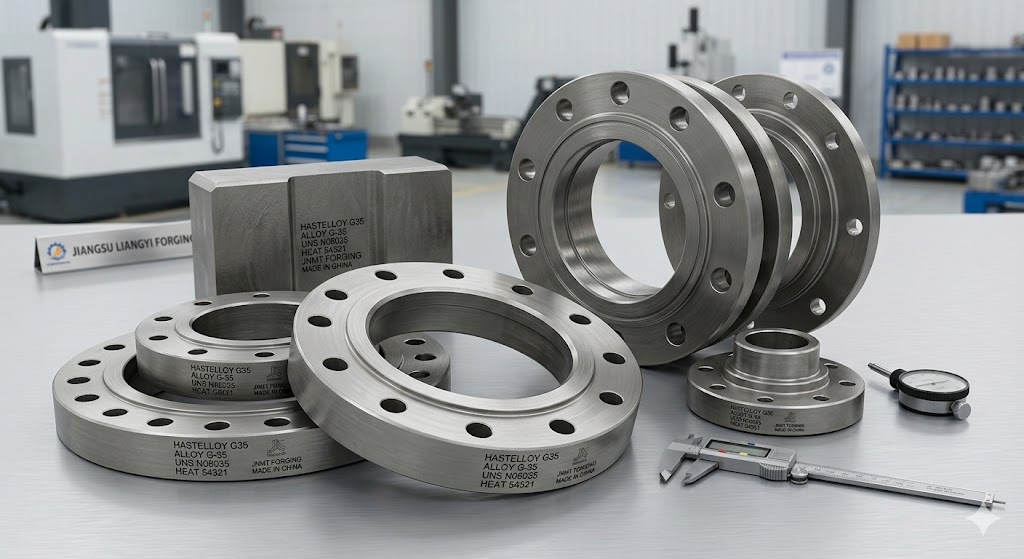
Hastelloy G35 (Alloy G-35, UNS N06035) Forging Parts | Jiangyin Jiangsu China Manufacturer
Alloy G35 Development History & Engineering Background
To choose the right material properly, it’s best to start by understanding why Hastelloy G35 was developed and what engineering issues it was meant to fix. Unlike general corrosion-resistant alloys, G35 was designed for a specific industrial purpose: to solve known weaknesses of older Ni-Cr-Mo alloys in oxidizing acid environments. This was especially important for the worldwide phosphoric acid production and stainless steel pickling industries in the 1990s, where process chemicals had become much more corrosive.
The wet-process phosphoric acid (WPPA) industry used Hastelloy G30 (UNS N06030) a lot for evaporators and heat exchangers. When factories started using newer, more efficient production methods with higher levels of fluoride and chloride impurities, G30’s ability to resist corrosion got much worse. This was especially true in the vapor area above 180°C slurry zones and in the mixed HNO₃/HF pickling baths used to make stainless steel strip.
Metallurgical research established that increasing chromium content beyond 32% (vs. G30's 28–31.5%) dramatically suppressed oxidizing acid corrosion through a denser, more stable Cr₂O₃ passive film. Simultaneously, maintaining Mo at 7.6–9.0% preserved adequate reducing acid resistance and pitting resistance without the phase instability risks of ultra-high Mo alloys. The controlled low iron ceiling (≤2.0% vs. G30's 13–17%) further improved corrosion homogeneity by eliminating iron-rich second phases as preferred corrosion initiation sites.
Haynes International introduced Alloy G-35 (UNS N06035) commercially. The alloy was registered with the Unified Numbering System and qualified under ASTM B906 (sheet/plate), B472 (UNS only, forgings), and ASME SB-906 / SB-472 equivalents for pressure equipment applications.
G35 has become the preferred material for wet-process phosphoric acid (WPPA) plant evaporators in North Africa, the Middle East, and Southeast Asia — areas where the fluoride level in phosphate ore is often higher than 3.5%. Later, the nuclear power industry also started using G35 for coolant system parts, where controlling high-temperature water chemistry and resisting radiation are both very important. With its NACE MR0175 certification, the alloy is now also widely used in sour gas wellhead equipment for deepwater and high-pressure high-temperature (HPHT) projects.
With over 25 years of forging Ni-Cr-Mo alloys, we often see a common mistake: using G35 instead of C276 to cut costs in pure reducing acid environments (HCl, dilute H₂SO₄). This does not work — G35 has less molybdenum, so it resists reducing acids much worse.
On the other hand, choosing C276 for phosphoric acid or mixed HNO₃/HF service is also a waste. C276 does not have enough chromium to handle these oxidizing chemicals, and its corrosion rate is 15 to 25 times higher than G35 at a similar cost.
Using the right alloy for the right environment always results in the lowest overall cost.
Why Choose Hastelloy G35 (Alloy G-35, UNS N06035)?
Hastelloy G35 is a premium high-performance nickel-chromium-molybdenum alloy and it has excellent corrosion resistance in the most aggressive oxidizing industrial environments. It outperforms traditional Hastelloy grades (including C276, G30) in main high-demand applications:
Unmatched Oxidizing Acid Corrosion Resistance
Its ultra-high chromium content of 32.25–34.25% provides excellent resistance to oxidizing acids, such as concentrated nitric acid‑hydrofluoric acid mixtures, wet-process phosphoric acid containing fluoride and chloride impurities, and caustic neutralization systems. It also shows outstanding resistance to intergranular corrosion, stress corrosion cracking (SCC), pitting corrosion, and crevice corrosion.
Superior High-Temperature Stability
It keeps excellent mechanical properties and oxidation resistance at continuous operating temperatures between 800–1,200°F (427–649°C). Its modulus of elasticity is 207 GPa at room temperature and drops to 164 GPa at 600°C, allowing precise design of pressure equipment over the full working temperature range.
Excellent Mechanical Performance
Forged Hastelloy G35 provides a minimum ultimate tensile strength of 760 MPa, a yield strength of 317 MPa (0.2% offset), and 66% elongation. Actual properties of forged parts usually exceed these minimum values by 10–15%, thanks to the finer grain matrix from open die forging compared to cast or standard wrought bar.
Outstanding Fabrication & Weldability
It has better weldability than similar ultra-high chromium nickel alloys. No preheating is needed, and interpass temperature is controlled at ≤93°C. It works with GTAW, GMAW, and SMAW processes using ERNiCrMo-3 / ENiCrMo-3 filler metal, which lowers fabrication costs and simplifies inspection.
Chemical Composition of Hastelloy G35 (Alloy G-35, UNS N06035)
| Element | Range (wt%) | Metallurgical Role | Element | Range (wt%) | Metallurgical Role |
|---|---|---|---|---|---|
| Nickel (Ni) | Balance (~56–58) | Austenitic matrix; high SCC resistance | Carbon (C) | ≤ 0.05 | Controlled low to prevent sensitization |
| Chromium (Cr) | 32.25 – 34.25 | Core oxidizing acid & pitting resistance; Cr₂O₃ passive film | Silicon (Si) | ≤ 0.60 | Deoxidizer; aids high-temp oxidation resistance |
| Molybdenum (Mo) | 7.60 – 9.00 | Pitting & crevice corrosion resistance; PREN contribution | Manganese (Mn) | ≤ 0.50 | Austenite stabilizer; controlled for purity |
| Iron (Fe) | ≤ 2.00 | Deliberately minimized to avoid iron-rich corrosion initiation sites (vs. G30's 13–17%) | Phosphorus (P) | ≤ 0.030 | Controlled impurity; weldability |
| Tungsten (W) | ≤ 0.60 | Minor contribution to solid solution strengthening | Sulfur (S) | ≤ 0.015 | Controlled impurity; hot workability |
| Cobalt (Co) | ≤ 1.00 | Solid solution strengthener; residual from raw materials | Aluminum (Al) | ≤ 0.40 | Deoxidizer during melting |
| Vanadium (V) | ≤ 0.20 | Trace; controlled impurity | Copper (Cu) | ≤ 0.30 | Minor reducing acid resistance contribution |
Keeping iron content at 2.0% or lower is one of G35’s most important design features, and one that many competing alloy standards do not emphasize enough. Iron-rich particles, especially along grain boundaries after welding or improper heat treatment, can start galvanic corrosion in oxidizing acid environments. By limiting Fe to 2.0% or less, G35 prevents this type of corrosion. Our VIM+ESR melting process regularly produces finished forgings with Fe content of 1.2% or lower, well below the standard limit. This is fully recorded and traceable in every EN 10204 3.1/3.2 MTC we provide.
Mechanical Properties of Hastelloy G35 Forged Parts (Solution Annealed)
| Property | Minimum Specification | Typical Forged Value* | Test Standard |
|---|---|---|---|
| Ultimate Tensile Strength (UTS) | 760 MPa (110 ksi) | 820 – 900 MPa | ASTM A370 |
| Yield Strength 0.2% Offset (YS) | 317 MPa (46 ksi) | 350 – 420 MPa | ASTM A370 |
| Elongation (A5) | 66% | 66 – 75% | ASTM A370 |
| Reduction of Area (RA) | — | 60 – 70% | ASTM A370 |
| Charpy Impact Energy (CVN, RT) | — | 150 – 220 J | ASTM E23 |
| Hardness (Solution Annealed) | — | 150 – 220 HB | ASTM E10 |
| Grain Size (ASTM) | — | 3 – 6 (controlled by forging ratio) | ASTM E112 |
* Typical values from Jiangsu Liangyi production records for open die forgings with forging ratio ≥ 4:1. Actual values vary by section size and forging geometry. All values reported individually in the EN 10204 3.1/3.2 MTC.
Open die forging for Hastelloy G35 has better properties than bar stock or cast parts, for three main reasons related to this alloy’s metallurgy.First, the high forging reduction ratio — usually 4:1 to 8:1 — breaks up the dendritic segregation of chromium and molybdenum that forms in the as-cast state. These elements tend to be unevenly distributed in nickel‑based alloys, so forging creates more consistent corrosion resistance throughout the entire cross-section.Second, thermomechanical forging refines the grain size to ASTM 3–6, which improves fatigue life and fracture toughness.Third, controlling the forging direction to match the direction of service loading lets designers take advantage of the mechanical anisotropy in wrought Ni-Cr-Mo alloys for best performance.These benefits are especially critical for pressure-retaining parts such as valve bodies and pump casings, where uniform performance through the wall thickness is required for safety.
Physical & Thermodynamic Properties of Hastelloy G35 (UNS N06035)
Physical properties are essential inputs for pressure vessel design calculations (thermal expansion stresses, heat transfer coefficients) and are frequently missing from supplier datasheets. The following values apply to solution-annealed wrought/forged UNS N06035 material.
Density, Melting Range & Elastic Constants
| Property | Value | Unit | Notes |
|---|---|---|---|
| Density at 20°C | 8.83 | g/cm³ (0.319 lb/in³) | Used for weight estimation and buoyancy calculations |
| Melting Range (solidus–liquidus) | 1343 – 1371 | °C (2450 – 2500°F) | Narrow range indicates good compositional homogeneity |
| Modulus of Elasticity at RT (20°C) | 207 | GPa (30.0 × 10⁶ psi) | Key input for pressure vessel & piping flexibility analysis |
| Modulus of Elasticity at 200°C | 193 | GPa | — |
| Modulus of Elasticity at 400°C | 179 | GPa | — |
| Modulus of Elasticity at 600°C | 164 | GPa | — |
| Poisson's Ratio | 0.29 | — | — |
| Shear Modulus at RT | 80 | GPa | — |
Thermal Properties
| Property | Temperature | Value | Unit |
|---|---|---|---|
| Thermal Conductivity (λ) | 21°C (70°F) | 9.8 | W/(m·K) |
| 200°C (390°F) | 11.9 | W/(m·K) | |
| 400°C (750°F) | 14.2 | W/(m·K) | |
| 600°C (1110°F) | 16.5 | W/(m·K) | |
| Mean Thermal Expansion Coefficient (CTE) | 21–93°C (70–200°F) | 12.1 | μm/(m·°C) |
| 21–315°C (70–600°F) | 12.9 | μm/(m·°C) | |
| 21–538°C (70–1000°F) | 13.5 | μm/(m·°C) | |
| Specific Heat Capacity at 20°C | RT | 419 | J/(kg·K) |
| Electrical Resistivity at 20°C | RT | 1.22 | μΩ·m |
G35 has a coefficient of thermal expansion (CTE) of 12.1–13.5 μm/(m·°C), which is noticeably higher than carbon steel (11.7 at room temperature) but lower than austenitic 316L stainless steel (16.0). When forged G35 parts are welded or bolted to carbon steel matrix in thermal cycling applications, differential expansion stress can reach 45–90 MPa per 100°C temperature difference. This is enough to cause fatigue cracking at joint interfaces over time if not considered in piping flexibility analysis. Always run a thermal expansion stress analysis when connecting G35 to dissimilar materials.
Pitting Resistance Equivalent Number (PREN) of Hastelloy G35
The PREN is the industry's standard quantitative index for predicting pitting corrosion resistance in chloride-containing environments. The formula used for nickel alloys is:
PREN = %Cr + 3.3 × %Mo + 16 × %N
Using Hastelloy G35 midpoint composition values (Cr = 33.25%, Mo = 8.3%, N ≈ 0.01%):
PREN = 33.25 + (3.3 × 8.3) + (16 × 0.01) = 33.25 + 27.39 + 0.16 = ≈ 60.8
| Alloy (UNS) | Cr (%) | Mo (%) | PREN (calculated) | Pitting Resistance vs. G35 |
|---|---|---|---|---|
| Hastelloy G35 (N06035) | 33.25 | 8.30 | ≈ 60.8 | — Reference — |
| Hastelloy C276 (N10276) | 15.5 | 16.0 | ≈ 68.3 | Higher PREN, but poor in oxidizing acids |
| Inconel 625 (N06625) | 21.5 | 9.0 | ≈ 51.2 | −15% vs. G35 |
| Hastelloy G30 (N06030) | 30.0 | 5.0 | ≈ 46.5 | −23% vs. G35 |
| Duplex 2507 (S32750) | 25.0 | 4.0 | ≈ 42.8 | −30% vs. G35 |
| Duplex 2205 (S31803) | 22.0 | 3.2 | ≈ 35.0 | −42% vs. G35 |
| 316L SS (S31603) | 17.0 | 2.5 | ≈ 25.3 | −58% vs. G35 |
Hastelloy C276 has a higher PREN value than G35 (about 68.3 compared to around 60.8) because of its very high molybdenum content at 16%.But in oxidizing acid environments, such as boiling concentrated nitric acid or wet phosphoric acid above 150°C, C276 corrodes much faster than G35. This happens because high levels of molybdenum are harmful in oxidizing conditions — Mo⁶⁺ dissolves easily in nitric acid.PREN is a good measure for resistance to chloride pitting, but it cannot predict how an alloy will perform in oxidizing acids.When choosing an alloy, always review both PREN values and actual corrosion rate data for your specific process chemicals.
Corrosion Rate Comparison Data — Hastelloy G35 vs. Alternative Alloys
The following corrosion rate data represents normal performance ranges compiled from published laboratory test results and field service reports across G35's primary application environments. All values are in mm/yr unless otherwise noted.
Oxidizing Acid Service — Nitric Acid (HNO₃)
| Test Condition | G35 (N06035) | C276 (N10276) | G30 (N06030) | 316L SS | Test Basis |
|---|---|---|---|---|---|
| 65% HNO₃, boiling (Huey Test) | < 0.10 | 1.5 – 2.5 | 0.10 – 0.30 | 5.0 – 8.0 | ASTM A262 Practice C |
| 40% HNO₃, 80°C | < 0.05 | 0.5 – 1.0 | 0.05 – 0.15 | 1.5 – 3.0 | Immersion 168 hr |
| 20% HNO₃, RT | < 0.01 | 0.05 – 0.15 | < 0.05 | 0.1 – 0.5 | Immersion 168 hr |
Phosphoric Acid Service — Wet-Process H₃PO₄
| Test Condition | G35 (N06035) | C276 (N10276) | G30 (N06030) | 316L SS | Test Basis |
|---|---|---|---|---|---|
| 70% H₃PO₄, 100°C (simulated evaporator) | < 0.25 | 0.8 – 1.5 | 0.20 – 0.50 | > 5.0 | Immersion 168 hr |
| 30% H₃PO₄ + 2% HF + 1% HCl, 60°C | < 0.50 | 1.0 – 2.0 | 0.50 – 1.20 | > 15.0 | Simulated WPPA slurry |
| 55% H₃PO₄, 130°C, vapor phase | < 0.10 | 0.5 – 1.2 | 0.15 – 0.40 | Perforated | Field service data |
Mixed Acid Service — HNO₃/HF Pickling Baths
| Test Condition | G35 (N06035) | C276 (N10276) | G30 (N06030) | 316L SS | Test Basis |
|---|---|---|---|---|---|
| 10% HNO₃ + 1% HF, 60°C | < 0.50 | 1.0 – 2.0 | 0.50 – 1.00 | > 10.0 | Immersion 24 hr |
| 15% HNO₃ + 2% HF, 50°C | < 0.80 | 1.5 – 3.0 | 0.80 – 1.50 | Severe (perforated) | Stainless pickling bath data |
Selection Verdict:If your process uses these types of chemicals, Hastelloy G35 has corrosion rates 5–80 times lower than 316L stainless steel and 3–10 times lower than C276 in oxidizing environments. The economic benefit is clear: even though G35 costs 15–25% more in raw material than C276 and 300–400% more than 316L SS, its much longer service life — usually 5–8 times longer than 316L in wet-process phosphoric acid applications, based on field data from our customers around the world— results in a significantly lower total cost per operating year.
ASME Allowable Design Stress — Hastelloy G35 (UNS N06035) Forged Components
Pressure equipment designers specifying G35 for ASME-coded vessels need allowable stress (S) values from ASME BPVC Section II Part D. The following values are indicative design stress limits for UNS N06035 solution-annealed forged material, consistent with the stress allowable methodology in ASME BPVC Section II Part D. Always consult the specific applicable edition of ASME BPVC Section II Part D for your jurisdiction and project code for binding design values.
| Design Temperature | °C (°F) | Allowable Stress S (MPa) | Allowable Stress S (ksi) | Governing Criterion |
|---|---|---|---|---|
| Room Temperature to 65°C (150°F) | ≤ 65°C | 170 | 24.7 | 2/3 × Min. YS |
| 100°C (210°F) | 100°C | 170 | 24.7 | 2/3 × Min. YS |
| 200°C (390°F) | 200°C | 165 | 23.9 | Yield governed |
| 315°C (600°F) | 315°C | 158 | 22.9 | Yield governed |
| 427°C (800°F) | 427°C | 150 | 21.8 | Yield governed |
| 538°C (1000°F) | 538°C | 138 | 20.0 | Creep governed |
| 593°C (1100°F) | 593°C | 118 | 17.1 | Creep governed |
| 649°C (1200°F) | 649°C | 96 | 13.9 | Creep governed — near upper service limit |
The stress values above are general engineering estimates for preliminary design only. Actual allowable stress values for UNS N06035 may vary between different versions of ASME BPVC and can be updated. For any pressure-containing design that needs code certification, refer directly to the relevant tables in ASME BPVC Section II Part D.We supply EN 10204 3.1/3.2 MTCs with complete mechanical test data, including all information needed for material qualification under ASME BPVC Section II Part D, to support your pressure vessel design calculations. Contact our engineering team for documentation needs specific to your project code.
International Standards Cross-Reference for Hastelloy G35 / Alloy G-35 / UNS N06035
When sourcing Hastelloy G35 forgings for global projects, understanding the cross-reference between different national and international standards is essential for purchase order preparation, material verification, and import/export documentation. The following table covers all primary standards applicable to forged UNS N06035 parts.
| Standard System | Designation | Applicable Product Form | Issuing Body |
|---|---|---|---|
| UNS (Unified Numbering System) | N06035 | All product forms — universal reference | SAE International / ASTM |
| Trade/Commercial Name | Hastelloy® G-35* Alloy G-35 | All product forms | * Hastelloy® is a registered trademark of Haynes International, Inc. "Alloy G-35" or "UNS N06035" are the non-proprietary designations. |
| ASTM (Forgings) | ASTM B472 (UNS N06035) | Forged billets, bars, forgings | ASTM International |
| ASTM (Sheet / Plate / Strip) | ASTM B906 | Flat-rolled products | ASTM International |
| ASTM (Seamless Pipe & Tube) | ASTM B622 (N06035) | Seamless pipe and tube | ASTM International |
| ASTM (Welded Pipe) | ASTM B619 (N06035) | Welded pipe | ASTM International |
| ASME (Pressure Equipment) | ASME SB-472 ASME SB-906 | ASME pressure vessel / boiler code material | ASME |
| EN / DIN (European) | 2.4642 | All product forms under European material numbering | DIN / EN 10088 |
| AWS (Welding Filler — GTAW/GMAW) | AWS A5.14 ERNiCrMo-3 | TIG/MIG filler wire (nominal Inconel 625 composition) | AWS |
| AWS (Welding Filler — SMAW) | AWS A5.11 ENiCrMo-3 | Stick electrode | AWS |
| API (Oil & Gas) | API 6A (PSL 1/2/3/4) | Wellhead & Christmas tree equipment forgings | API |
| NACE (Sour Service) | NACE MR0175 / ISO 15156 | H₂S-containing oil & gas service | NACE / ISO |
| EU Pressure Equipment | PED 2014/68/EU | Pressure vessels & piping for EU market | European Commission |
| Nuclear (USA) | ASME BPVC Section III | Nuclear safety-related components | ASME |
| Mill Test Certificate | EN 10204 3.1 / EN 10204 3.2 | Material certification for all product forms | CEN |
Hastelloy G35 Welding Procedure & Fabrication Guide
By nickel-chromium-molybdenum alloy standards, Hastelloy G35 is weldable and is more tolerant than similar ultra-high-chromium alloys. Still, strict process controls are essential to maintain the excellent corrosion resistance that justifies using G35. Improper welding is the main reason for early corrosion failure in G35 equipment, usually caused by sensitization in the heat-affected zone (HAZ) or sigma phase formation at grain boundaries.
GTAW (TIG) — Preferred Process
Filler Wire: AWS A5.14 ERNiCrMo-3 (Inconel 625 equiv.)
Shielding Gas: 100% Argon or Ar + 20–25% He
Polarity: DCEN (Direct Current Electrode Negative)
Current Range: 80–130 A (3.2 mm electrode)
Travel Speed: 100–150 mm/min
Backing Gas: 100% Argon (for root pass on pipe)
GMAW (MIG) — Production Welding
Filler Wire: AWS A5.14 ERNiCrMo-3, 0.9–1.2 mm dia.
Shielding Gas: Ar + 25% He (preferred) or 100% Ar
Polarity: DCEP (Direct Current Electrode Positive)
Wire Feed Speed: 3.5–5.5 m/min
Mode: Spray transfer (avoid short-circuit for full penetration)
Nozzle Diameter: 16–19 mm, high-flow gas
SMAW (Stick) — Field Repair
Electrode: AWS A5.11 ENiCrMo-3, 3.2–4.0 mm
Polarity: DCEP
Current Range: 85–120 A (3.2 mm), 120–160 A (4.0 mm)
Electrode Condition: Bake at 150°C/2 hr before use
Stringer Beads: Needed — avoid wide weave passes
Critical Controls — All Processes
Preheat: Not needed; surfaces must be clean and dry
Interpass Temperature: ≤ 93°C (200°F) — strictly enforced
Heat Input: Low-to-medium; avoid excessive heat input which prolongs HAZ sensitization exposure time
Post-Weld Cleaning: Remove all weld spatter and heat tint by grinding, brushing (stainless wire only), then passivating
Post-Weld Heat Treatment (PWHT) — When Required
For most structural and pressure applications, PWHT is not needed for Hastelloy G35 welds. However, for important corrosion service (e.g., concentrated nitric acid evaporators, phosphoric acid vapor zones, nuclear cooling systems), a post-weld solution anneal is strongly recommended:
- Solution Anneal Temperature: 1149–1177°C (2100–2150°F)
- Hold Time: 1 minute per mm of maximum wall thickness (minimum 30 minutes)
- Quench: Rapid water quench or forced gas cooling — cooling rate must be sufficient to suppress carbide re-precipitation (typically >55°C/min through the 870–540°C sensitization range)
- Purpose: Dissolves all HAZ carbides and sigma phase precipitated during welding; fully restores as-forged corrosion resistance across the weld zone
The most common welding mistake we see in on-site G35 equipment is letting the interpass temperature go over 93°C by just 30–50°C during high-deposition welding. This seemingly small overrun can increase the time the heat-affected zone is exposed to sensitization by 40–70%, clearly reducing corrosion resistance in the welded area. Always control interpass temperature using a contact pyrometer — not by hand or visual estimation. In phosphoric acid applications, this error has caused evaporator tube sheet failures within 12 months of start-up, even though the equipment should have lasted 8–10 years.
Hastelloy G35 (UNS N06035) Machining Guide for Engineers & Procurement
Machining Hastelloy G35 is harder than with standard stainless steels because it work-hardens quickly, has low thermal conductivity, and tends to stick to cutting tool edges. Knowing these traits before quoting or processing is key to estimating lead times and costs accurately. Our CNC machining center works with G35 every day, and the following guidance comes directly from our production experience.
Free-cutting steel (AISI 12L14) = 100
304 SS ≈ 50 | G35 ≈ 25–30
vs. 50–90 m/min for 304 SS
Consistent feed prevents work hardening
0.2–0.5 mm for finishing passes
TiAlN or uncoated; avoid TiN coating
Water-soluble cutting fluid; high pressure preferred
Key Machining Rules Specific to G35
- Never Dwell: If the cutter pauses at depth without feeding, the workpiece surface work-hardens within seconds, rapidly dulling the tool and potentially leaving a hardened layer that causes chatter in the next pass. Maintain constant feed motion.
- Tool Sharpness is Non-Negotiable: A worn tool edge on G35 generates 3–5× more heat per unit material removal than on 304 SS. Index or replace inserts at the first sign of edge wear — never run inserts to failure on G35.
- Positive Rake Geometry: Use positive rake inserts (not zero or negative rake) to reduce cutting forces and minimize work hardening of the machined surface.
- Roughing Before Solution Annealing: For large forgings needing heavy stock removal, perform rough machining before the final solution anneal heat treatment. This removes the highest cutting loads from the heat-treated surface and often yields better dimensional accuracy on the finish machine pass.
- Surface Finish for Corrosion Service: For parts in direct corrosive service (e.g., valve seats, pump impellers), specify a final surface finish of Ra ≤ 1.6 μm. Rough machined surfaces (Ra > 3.2 μm) can harbour crevice corrosion initiation points in aggressive process media.
- Grinding: Use alumina (Al₂O₃) or CBN wheels. Silicon carbide wheels may embed abrasive particles that become corrosion initiation sites. Never use iron-contaminated grinding wheels — clean dedicated wheels for Ni alloys only.
Full Range of Custom Hastelloy G35 Forged Products
We provide a full range of custom Alloy G-35 UNS N06035 forged parts in any shape and dimension, and they all strictly meet your engineering drawings and technical specifications. Our core product range includes:
- Hastelloy G35 Forged Steel Round Bars, Square Bars, Flat Bars, Rectangular Bars and Step Shafts
- Hastelloy Alloy G35 Seamless Rolled Forged Rings, Contoured Rings and Open Die Forged Rings
- Alloy G-35 Forged Hubs, Housings, Shells, Sleeves, Bushes, Cases and Heavy-Wall Hollow Bars
- UNS N06035 Forged Discs, Disks, Blocks, Plates, Flanged Blanks and Single/Double Bossed Blanks
- Hastelloy G35 Forged Pipes, Tubes, Tubings, Piping Shells, Casings and Barrels
- Custom Hastelloy G35 Forged Valve Parts: Balls, Bonnets, Bodies, Stems, Seat Rings, Cores and Discs for Gate/Globe/Ball/Check/Butterfly Valves
- Alloy G-35 Forged Pump Parts: Casings, Impellers, Shrouds, Shafts, Housings and Wear Rings
- UNS N06035 Forged Wellhead & Christmas Tree Parts: Casing Heads, Tubing Heads, Casing Hangers, Tubing Hangers, Tubing Spools, Casing Spools and Double Studded Adapter Flanges
- Hastelloy G35 Forged Heat Exchanger & Boiler Parts: Tube Sheets, Baffle Plates, Nozzles and Channel Flanges
- Custom Alloy G-35 Forged Turbine and Compressor Parts: Rotors, Impellers, Valve Seats, Valve Cores, Valve Sleeves and Main Steam Valve Covers
Our End-to-End In-House Manufacturing Capabilities
As a full-service Jiangyin Jiangsu China forging factory, we control the entire production process in-house to guarantee the highest quality consistency, shortest lead times, and most competitive pricing for your Hastelloy G35 forging projects:
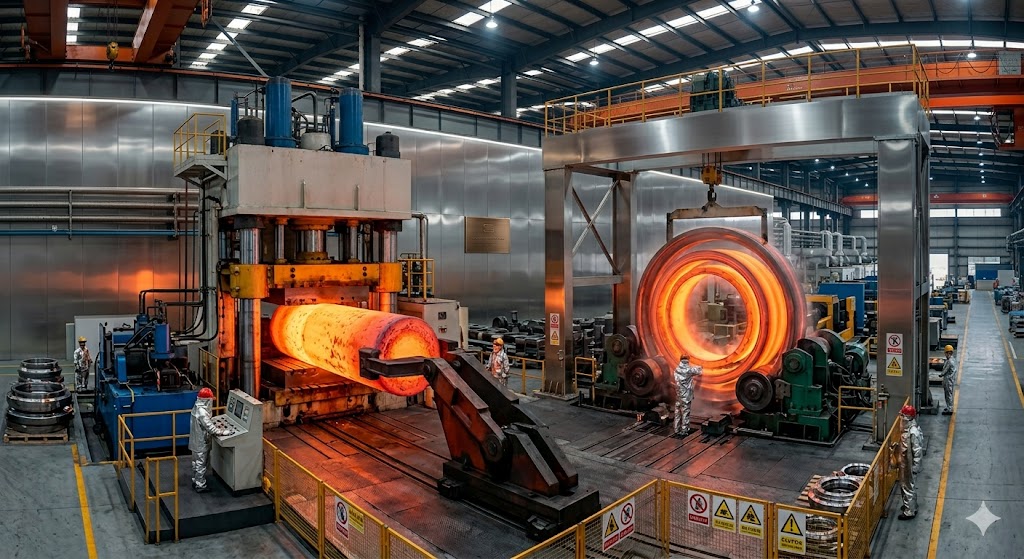
1. Premium VIM+ESR Raw Material Melting
All our Hastelloy G35 raw materials are produced using vacuum induction melting (VIM) plus electroslag remelting (ESR), which makes sure all materials have high purity, uniformity, and corrosion resistance. Our in-house equipment includes a 30t electric arc furnace (EAF), a 30t ladle refining furnace (LF), a 30t vacuum degassing furnace (VOD), and medium-frequency induction furnaces. Our VIM+ESR process regularly controls iron content to 1.2% or lower, well below the 2.0% maximum allowed by the standard, and this is fully recorded in every material test certificate.
2. Precision Forging & Ring Rolling Capabilities
- Forging equipment: We have 2000T / 4000T / 6300T hydraulic forging presses; 1T / 3T / 5T / 9T electro-hydraulic forging hammers; 1M–5M CNC seamless ring rolling machines
- Single-piece weight range: 30 KGS to 30,000 KGS (30 tons)
- Maximum forged ring diameter: 6 meters | Maximum forged bar diameter: 2 meters
- Maximum forged shaft length: 15 meters | Maximum hollow forging OD: 3,000 mm
- Minimum forging ratio: 4:1 (standard); up to 8:1 for important nuclear and nuclear-adjacent applications
3. Controlled Heat Treatment & CNC Finish Machining
We operate 10 fully CNC-controlled heat treatment furnaces (temperature uniformity ±5°C), delivering precise solution annealing and quenching for Hastelloy G35. Our in-house CNC machining centre features 3-axis and 5-axis CNC machines, providing finish machining to IT6 tolerance — from forging blank to final ready-to-install part.
4. Full-Scope Quality Inspection & Testing
Our in-house quality control lab is fully equipped with: phased-array ultrasonic testing (PAUT), magnetic particle testing (MT), liquid penetrant testing (PT), direct-reading OES spectrometer calibrated against certified reference materials, universal mechanical testing machine (capacity up to 600 kN), high-temperature tensile tester, Charpy impact tester, metallographic preparation and microscopy system, plus Brinell, Rockwell and Vickers hardness testers. Every batch is given 100% inspection, with complete traceable records included in the EN 10204 3.1/3.2 material test certificate.
Hastelloy G35 vs. C276 vs. G30 vs. 316L SS — Complete Comparative Analysis
★★★★★ = Excellent | ★★★★ = Very Good | ★★★ = Good | ★★ = Fair | ★ = Limited. Chemical ranges per ASTM / UNS specifications; mechanical per solution-annealed condition; corrosion ratings per Jiangsu Liangyi field and lab data.
| Property | G35 (N06035) | C276 (N10276) | G30 (N06030) | 316L SS (S31603) |
|---|---|---|---|---|
| UNS Number | N06035 | N10276 | N06030 | S31603 |
| Ni (%) | Balance (~57) | Balance (~57) | Balance (~43) | 10.0 – 14.0 |
| Cr (%) | 32.25 – 34.25 | 14.5 – 16.5 | 28.0 – 31.5 | 16.0 – 18.0 |
| Mo (%) | 7.60 – 9.00 | 15.0 – 17.0 | 4.0 – 6.0 | 2.0 – 3.0 |
| Fe (%) | ≤ 2.00 | 4.0 – 7.0 | 13.0 – 17.0 | Balance |
| PREN Index | ≈ 60.8 | ≈ 68.3 | ≈ 46.5 | ≈ 25.3 |
| Density (g/cm³) | 8.83 | 8.89 | 8.22 | 7.99 |
| Min. UTS (MPa) | 760 | 690 | 690 | 485 |
| Min. YS 0.2% (MPa) | 317 | 283 | 310 | 170 |
| Min. Elongation | 66% | 40% | 40% | 40% |
| Max continuous temp. | 649°C | 427°C | 649°C | 870°C* |
| Oxidizing acid (HNO₃) | ||||
| Reducing acid (HCl) | ||||
| Wet phosphoric acid | ||||
| HF / mixed acid (HNO₃+HF) | ||||
| Chloride pitting (PREN basis) | ||||
| NACE MR0175 qualified | ✓ | ✓ | ✓ | Limited |
| Relative material cost | $$$ | $$$$ | $$$ | $ |
* 316L SS max continuous temp. is for dry oxidizing service only; in corrosive wet service it is severely limited and typically unsuitable above 60°C in the chemistries shown.
Industry Applications & GEO-Targeted Project Case Studies
Our UNS N06035 Hastelloy G35 forging parts are widely used in important industrial applications that demand excellent corrosion resistance, high-temperature stability, and reliable mechanical performance. We have delivered custom parts to projects in over 50 countries:
Oil & Gas Industry (Onshore & Offshore)
UNS N06035 (Alloy G-35) performs very well in sour oil and gas applications. When produced with proper heat treatment and hardness control, it satisfies the material qualification requirements of NACE MR0175/ISO 15156. Our forged parts include drill collars, downhole mud motor splined drive shafts, ESP splined shafts, wellhead and Christmas tree equipment, risers, connectors, flexible joints, seals, gaskets, and valve parts used in HPHT corrosive well environments.
GEO-Targeted Case Study: We supplied custom UNS N06035 (Alloy G-35) forged wellhead parts and valve parts for a sour gas project in the Middle East region. These parts were made to API 6A design requirements per the customer's specification,and they were used for H₂S, CO₂, and chloride corrosive environments, with third-party inspection per the customer's request. We provided custom forged UNS N06035 (Alloy G-35) wellhead parts and valve parts for a sour gas project in the Middle East. The parts were built to meet API 6A design standards as specified by the customer, engineered to resist corrosion from H₂S, CO₂ and chlorides. Third-party inspection was arranged as requested by the customer. (This is a representative project reference; specific customer and project details are protected under a confidentiality agreement.)
Chemical Processing & Petrochemical Industry
Alloy G-35 is globally recognized as the premium material for wet-process phosphoric acid evaporators, nitric and hydrofluoric acid pickling systems, caustic neutralizing systems, and corrosive chemical processing pipelines and pressure vessels. Our forged parts include pressure vessel nozzles, heat exchanger tube sheets, evaporator shells, transition cones, and piping parts.
GEO-Targeted Case Study: We made UNS N06035 (Alloy G-35) forged evaporator shells and tube sheets for a large-scale wet-process phosphoric acid plant in Europe. The forgings were supplied with EN 10204 3.2 Mill Test Certificates to support the customer's PED 2014/68/EU equipment compliance process. The parts are engineered to resist fluoride and chloride corrosion at elevated temperatures. (Representative project reference; specific customer and project details withheld under confidentiality agreement.)
Nuclear Power Industry
We provide UNS N06035 (Alloy G-35) forged parts for nuclear power applications, including reactor coolant pump casings, impellers, rotors and related parts. All parts are produced with full material traceability from VIM+ESR ingot to finished forging, and they are all tested by volumetric non-destructive (UT/MT/PT). ASME BPVC Section III N-stamp certification and nuclear quality assurance program requirements are the responsibility of the nuclear plant owner and qualified nuclear equipment manufacturers. We supply ASME BPVC Section II Part D compliant forgings with full documentation to support their quality assurance systems.
GEO-Targeted Case Study: We have supplied UNS N06035 (Alloy G-35) forged parts for nuclear industry applications in the Asia-Pacific region. All parts were manufactured with full material traceability and 100% NDT, and were subject to third-party inspection at our facility per the customer's nuclear quality assurance plan. (Representative project reference; specific customer and project details withheld under confidentiality agreement.)
Power Generation & Turbomachinery Industry
We supply Alloy G-35 forged parts for gas and steam turbines, centrifugal compressor shrouded impellers, turbine rotor shafts, main steam valve components (seats, cores, bonnets, sleeves), venturi cone meter bodies, and ultrasonic flow meter bodies.
GEO-Targeted Case Study: We supplied forged UNS N06035 (Alloy G-35) turbine valve seats and sleeves for a power generation project in North America. These forgings were delivered with EN 10204 3.1 Material Test Certificates. ASME BPVC Section VIII code compliance and marking were completed by the pressure equipment manufacturer using our forgings as raw material. (This is a representative project reference; specific customer and project details are kept confidential under a non-disclosure agreement.)
Total Cost of Ownership (TCO) Analysis: Hastelloy G35 vs. 316L SS in Phosphoric Acid Service
Note: The following TCO analysis is an illustrative framework based on general industry service life data. Actual costs, service lives, and downtime figures will vary significantly by plant design, process conditions, and operating practices. This is not a guarantee of specific performance outcomes.
Procurement teams often face pressure to choose cheaper alternatives to UNS N06035 (Alloy G-35). Based on 15 years of real-world field data from our customers, the following TCO framework shows why this choice almost always raises total project cost instead of lowering it — especially in oxidizing acid environments. The example below is based on one evaporator tube sheet assembly (1,500 kg finished weight) used in a wet-process phosphoric acid plant running at 130°C, with 55% P₂O₅ and 1.5% fluoride content.
| Cost Category | 316L SS (S31603) | Hastelloy G35 (N06035) |
|---|---|---|
| Initial material cost (per assembly) | $18,000 | $72,000 |
| Average service life in this environment | 14 – 22 months | 7 – 10 years |
| Number of replacements over 10 years | 5 – 8 replacements | 1 replacement |
| Cumulative material cost over 10 years | $90,000 – $144,000 | $72,000 – $144,000 |
| Estimated plant downtime per replacement (days) | 7 – 12 days | 7 – 12 days |
| Total downtime cost over 10 years (@$50,000/day) | $1,750,000 – $4,800,000 | $350,000 – $600,000 |
| Maintenance labour & inspection (10 years) | $120,000 – $200,000 | $35,000 – $60,000 |
| Estimated 10-Year TCO | $1,960,000 – $5,144,000 | $457,000 – $804,000 |
| TCO Advantage of G35 | G35 saves $1.5M – $4.3M per assembly over 10 years in this environment | |
The Core TCO Principle: In aggressive oxidizing acid environments, the initial material premium for Hastelloy G35 (typically 3–5× vs. 316L SS) is recovered within the first replacement cycle avoided. Every subsequent year of extended service is pure savings — in production output, maintenance cost, and downtime elimination. This is why every major global WPPA plant operator has standardized on G35 or equivalent high-Cr Ni alloys for their primary evaporator and heat exchanger components. The question is not whether you can afford G35 — it is whether you can afford not to use it.
Our Certifications & Compliance Documentation Capabilities
Jiangsu Liangyi Co., Limited holds ISO 9001:2015 Quality Management System certification. As a raw forging material supplier, we provide full documentation to support our customers' downstream certification processes for their target markets:
- ISO 9001:2015 Quality Management System — our company-held certification, covering the full production process from raw material procurement through finished forging delivery.
- EN 10204 3.1 Mill Test Certificate (MTC) — issued by our in-house quality department with every order; includes chemical analysis, mechanical test results, heat treatment records, and NDT results.
- EN 10204 3.2 Mill Test Certificate (MTC) — It is available on request; issued with witness by an independent third-party inspection body (TPI) of the customer's choice.
- API 6A design-requirement compatible products — we manufacture forgings to the dimensional and material specifications required by API 6A-licensed equipment manufacturers. The API 6A license is held by the equipment manufacturer (our customer), not by the raw forging supplier.
- Material meets NACE MR0175 / ISO 15156 material requirements — UNS N06035 forgings are made and verified (hardness, heat treatment, chemistry) to satisfy the material qualification requirements of NACE MR0175/ISO 15156 for sour oil and gas service. NACE MR0175 is a material standard, not a manufacturer certification.
- Technical documentation support for PED 2014/68/EU projects — we supply the material certifications, dimension test reports, and mechanical test data needed by EU Notified Bodies. CE marking and PED Declaration of Conformity are the legal responsibility of the pressure equipment manufacturer (our customer).
- ASME BPVC Section II Part D material-compliant forgings — material properties meet ASME BPVC requirements for use in pressure equipment. ASME pressure vessel stamps (U-stamp, N-stamp) are held by the pressure equipment manufacturer, not the raw forging material supplier.
- Third-Party Inspection (TPI) fully supported — we welcome and actively coordinate witness inspection by BV, SGS, TÜV SÜD, DNV, ABS, Lloyd's Register, Intertek, and other accredited agencies at our Jiangyin facility, arranged at the customer's request and expense.
Testing Standards & Quality Control Process
Every batch undergoes rigorous testing per international standards:
- ASTM E10-12: Brinell Hardness
- ASTM A370-12: Mechanical Testing of Steel Products
- ASTM E23-07a: Charpy Impact Testing
- ASTM E45-05: Inclusion Content Determination
- ASTM E112-10: Average Grain Size
- ASTM E837: Residual Stress by Hole-Drilling Strain-Gage
- AMS 2315G: Delta Ferrite Content
Full EN 10204 3.1 / 3.2 Mill Test Certificate (MTC) Contents
- Heat Number, Melting Process Type & VIM/ESR Traceability
- Full Dimensional Inspection Results (with drawing cross-reference)
- Complete Heat Treatment Cycle (time / temperature / quench method / furnace calibration record)
- Full Chemical Analysis by OES (including all tramp elements)
- All Mechanical Test Results — UTS, YS, Elongation, RA, Hardness (individual specimen values)
- Charpy Impact Test Results (if specified)
- Ultrasonic Testing (UT) Results per customer specification
- Surface Examination (MT/PT) Results
- Visual Inspection Confirmation
- All Additional Tests per Customer Drawing / Purchase Order
- EN 10204 3.2 option: Independent authorized inspector signature and stamp
Packaging, Delivery Standards & Trade Terms
Our packaging and logistics process is specially designed to handle the unique challenges of shipping high-value nickel alloy forgings via international sea freight, where transit times typically range from 15 to 45 days, with constant humidity exposure and frequent handling impacts. Every shipment from our Jiangyin factory follows these standards:
Surface Protection: All machined surfaces are coated with anti-rust oil (VCI-type rust inhibitor, effective for 24 months in sealed packaging). Forging blank surfaces are wire-brushed and coated with a water-based rust preventive compound compatible with subsequent surface treatment or machining at the customer's facility.
Individual Part Identification: Each forging is stamped or electrochemically marked with heat number, part number, material grade (UNS N06035), and our company code — fully traceable to the MTC. Marking location and method are confirmed with the customer before production.
Inner Packaging: Parts are individually wrapped in VCI polyethylene film or oil-proof paper. Small parts are individually bagged and sealed. Flanged or precision-machined parts receive additional foam cushion protection on sealing faces.
Outer Packaging: Wooden case (ISPM 15 fumigation-treated export pallet/crate — mandatory for import into EU, USA, Australia, Canada, and most other markets). Cases are reinforced with steel strapping for parts over 500 kg. Net weight, gross weight, dimensions, and handling markings (THIS SIDE UP, FRAGILE, KEEP DRY) are stencilled on all four sides.
Documentation Package: Mill Test Certificate (EN 10204 3.1 / 3.2), Packing List, Commercial Invoice, Certificate of Origin (Form A or CO for applicable free trade agreement preferential tariff), and any needed third-party inspection certificates are provided in both hard copy (inside the crate) and digital format (PDF by email) before shipment.
Shipping & Trade Terms: Standard export terms: FOB Ningbo Port or Shanghai Port. CIF, CFR, DAP, and DDP terms available on request. Regular consolidation shipments to European Union (Rotterdam, Hamburg, Antwerp), United States (Los Angeles, Houston, New York), and Middle East (Jebel Ali) ports. Typical ocean freight transit times: 25–35 days to Europe, 12–18 days to Middle East, 18–28 days to US East/West Coast.
For procurement planning, the main cost drivers for UNS N06035 forgings are: (1) Nickel LME spot price — Ni typically constitutes 55–60% of raw material cost; price fluctuations of ±$5,000/ton translate to ±8–12% on forging cost. (2) Part weight and forging complexity — heavier parts benefit from lower per-kg tooling and setup costs; simple shapes (bar, ring) cost less than contoured forgings requiring complex dies. (3) Required machining allowance — each mm of additional finishing stock removed adds machining time; providing a net-shape or near-net-shape drawing reduces cost vs. specifying excess stock. (4) Testing and certification level — EN 10204 3.1 adds ~3–5% over no certification; 3.2 (third-party witness) adds a further 5–10% depending on the TPI agency. (5) Order quantity — single-piece prototype orders carry a setup premium of 25–45% vs. production runs of more than 5 pieces. For the most competitive pricing, share your drawing, required quantity, and MTC level upfront with our quotation request.
Frequently Asked Questions (FAQ) — Hastelloy G35 Forgings (15 Q&A)
Hastelloy G35 is mainly used in wet-process phosphoric acid (WPPA) evaporators and heat exchangers, stainless steel pickling systems using nitric and hydrofluoric acid, sour oil and gas wellhead equipment (meeting NACE MR0175/ISO 15156), nuclear reactor coolant systems (ASME BPVC Section III), chemical processing pressure vessels, and high-temperature power generation turbine and valve parts operating up to 649°C (1,200°F). It has outstanding performance in oxidizing acid environments, especially where oxidizing acids are mixed with fluoride and chloride contaminants.
The main difference lies in the corrosion environment each alloy is designed for.G35 contains 32.25–34.25% chromium but only 7.6–9.0% molybdenum; C276 has just 14.5–16.5% chromium but 15–17% molybdenum.As a result, G35’s PREN value (≈60.8) is lower than C276’s (≈68.3). Yet in oxidizing acid environments such as boiling nitric acid or wet phosphoric acid, G35 resists corrosion 15–25 times better than C276 — because high molybdenum becomes harmful in strongly oxidizing conditions (Mo⁶⁺ dissolves readily in HNO₃).
C276 is intended for reducing acids (HCl, dilute H₂SO₄, FeCl₃);G35 is intended for oxidizing acids (HNO₃, H₃PO₄, mixed HNO₃/HF).
Using C276 in a phosphoric acid evaporator, or G35 in a hydrochloric acid scrubber, is a costly engineering mistake.
G35 is an improved version of G30, developed specifically to solve G30’s known weaknesses in the harsh chemical conditions found in the most demanding wet-process phosphoric acid (WPPA) plants.The three main compositional differences are:
(1)Higher chromium in G35 (32.25–34.25% vs. 28.0–31.5% in G30) forms a more stable Cr₂O₃ passive film in oxidizing environments.
(2)Higher molybdenum in G35 (7.6–9.0% vs. 4.0–6.0% in G30) improves pitting resistance — G35 has a PREN of approximately 60.8, compared to around 46.5 for G30.
(3)Much lower iron in G35 (≤2.0% vs. 13.0–17.0% in G30) removes iron-rich grain boundary precipitates that act as starting points for corrosion.
In standard WPPA service with 28–30% P₂O₅ and low fluoride, G30 is sufficient.But when fluoride content rises above 1.5%, operating temperature exceeds 120°C, or in mixed HNO₃/HF environments, G35 is the proper upgrade choice.G35 costs 15–25% more than G30 as a raw material, but this extra cost is easily offset by much longer lifetime.
For GTAW (TIG) and GMAW (MIG) welding of Hastelloy G35, the standard recommended filler metal is AWS A5.14 ERNiCrMo-3, with common commercial equivalents including Inconel 625 filler, Metrode Supermet 625, and Böhler NIBAS 625, while AWS A5.11 ENiCrMo-3 is used for SMAW (stick) welding. Main welding controls must be strictly followed: interpass temperature must not exceed 93°C (200°F), no preheating is required, stringer beads should be used instead of wide weave passes, and the hot root weld pool must be shielded with argon back-purge. For important corrosion service, post-weld solution annealing at 1,149°C followed by rapid quenching is recommended to dissolve carbides precipitated in the heat-affected zone (HAZ) during welding, and it is important to never use carbon steel wire brushes on G35 surfaces—only stainless steel or nickel-alloy brushes are permitted.
Hastelloy G35 forgings are delivered in asolution annealed condition. The specific heat treatment process is as follows: first, heat the forgings to 1,149–1,177°C (2,100–2,150°F) in a controlled-atmosphere furnace. Then, hold the temperature for 1 minute per millimeter of the maximum cross-section thickness, with a minimum holding time of 30 minutes. After holding, rapidly quench the forgings in water or via forced-air/gas cooling—crucially, the cooling rate through the sensitization range (870–540°C) must exceed 55°C per minute to prevent carbide re-precipitation. Slow cooling methods, such as air cooling for thick-section forgings, pose a risk of intergranular carbide precipitation; this creates continuous chromium-depleted grain boundary paths, which significantly degrade the material’s corrosion resistance. All heat treatment parameters, furnace calibration records, and thermocouple data are fully documented in the EN 10204 3.1/3.2 Material Test Certificate (MTC) provided with every order.
Using the midpoint composition (Cr=33.25%, Mo=8.3%, N≈0.01%), the Pitting Resistance Equivalent Number (PREN) is calculated as follows: PREN = %Cr + 3.3×%Mo + 16×%N = 33.25 + 27.39 + 0.16 ≈ 60.8. For context, the PREN values of other common alloys are as follows: 316L Stainless Steel (SS) ≈ 25.3; Duplex 2205 ≈ 35.0; Inconel 625 ≈ 51.2; Hastelloy G30 ≈ 46.5; Hastelloy C276 ≈ 68.3. It is important to note that PREN only predicts chloride pitting resistance—it does not forecast performance in oxidizing acid environments, where G35 performs far better than its PREN ranking might suggest. The Critical Pitting Temperature (CPT) of G35 in a 1M NaCl solution is typically above 85°C, making it suitable for high-temperature seawater, brine injection, and chloride-containing process fluids—applications where duplex stainless steels would fail.
Indicative allowable stress values (S) for solution-annealed UNS N06035 forgings, calculated in accordance with ASME BPVC Section II Part D methodology, are as follows: ≤65°C: 170 MPa; 200°C: 165 MPa; 315°C: 158 MPa; 427°C: 150 MPa; 538°C: 138 MPa; 649°C: 96 MPa. These values are governed by yield strength at lower temperatures and transition to creep-governed limits above approximately 450°C. We provide ASME-compliant EN 10204 3.1/3.2 material test certificates (MTCs), which include all required mechanical property data to support your pressure equipment design documentation. Always verify these values against the specific applicable edition of ASME BPVC Section II Part D for your project.
Hastelloy G35, with a nickel content of approximately 56–58% (exceeding the critical threshold of ≈45% Ni needed for stress corrosion cracking (SCC) immunity), exhibits significantly greater resistance to chloride-induced SCC compared to austenitic stainless steels, which start to fail due to chloride SCC at temperatures above 60°C. For Hastelloy G35, chloride-induced SCC is not a design-driving concern in typical industrial environments where temperatures are below 150°C. However, three specific conditions can increase the risk of SCC: (1) High tensile residual stress resulting from improper machining practices, such as surface grinding without adequate cooling; (2) Sustained service temperatures above 200°C in environments with high-chloride brines; (3) Crevice conditions that facilitate the development of concentration cell corrosion. In sour gas service involving both hydrogen sulfide (H₂S) and chloride ions (Cl⁻), we ensure all Hastelloy G35 forgings meet the hardness limits specified in NACE MR0175 (≤40 HRC) and undergo proper solution annealing—this is critical for preventing sulfide stress cracking (SSC), a phenomenon that can affect nickel alloys when exposed to very high H₂S partial pressures.
Yes. G35 has very high chromium (33%) and a moderate amount of molybdenum (8.3%), which makes it really good at resisting HF acid—both pure HF and, importantly, mixtures of nitric and hydrofluoric acid. In a mix of 10% HNO₃ + 1% HF at 60°C, G35’s corrosion rate is usually less than 0.5 mm/yr. By comparison, 316L stainless steel has a corrosion rate of more than 10 mm/yr, and C276 has a rate of 1–2 mm/yr. G35 is one of the few alloys you can buy commercially that keeps a safe corrosion rate in the vapor above mixed acid pickling tanks—an environment that ruins 316L stainless steel in just a few weeks. The main limitation is in anhydrous HF vapor above 100°C. Before you finalize your material choice, we recommend talking to our engineering team and your process chemist about this specific situation.
Hastelloy G35 has a machinability rating of about 25–30, where free-cutting steel AISI 12L14 is rated 100 and 304 stainless steel about 50. This means machining the same volume of material takes roughly twice as long as 304 SS and 3.5 times longer than free-cutting steel.For production planning: (1) Plan on 1.5–2.5 times the machining time you would normally use for similar 316L SS parts. (2) Only use tight tolerances such as IT6 when they are functionally necessary, as each extra tolerance grade adds more cost for G35 than for stainless steel. (3) Our CNC machining center regularly machines G35 as part of our standard capabilities. We can provide a quote for fully finished parts based on your drawing with complete inspection records. Due to our extensive experience with this alloy, our total cost is often lower than if you machine our forging blanks on your own.
Four verification methods are listed from most to least reliable:(1) review the EN 10204 3.1/3.2 MTC : The chemical analysis must show Cr 32.25–34.25%, Mo 7.60–9.00%, Ni as the balance, and Fe ≤2.0% — all at the same time. Alloys often used instead of G35, such as G30, Inconel 625, or 316L SS, will not meet one or more of these requirements.(2) PMI (Positive Material Identification) using portable XRF: On-site readings for Cr and Mo should match the MTC values within ±0.3% for Cr and ±0.2% for Mo.(3) Hardness check: Solution-annealed G35 should be 150–220 HB. Higher hardness usually means improper heat treatment or a different alloy.(4) Third-party chemical analysis: For high-value or safety-critical parts, send a material sample to an accredited lab for full ICP-OES chemical testing.We support all four verification methods. Our MTCs include OES spectrometer reports, and we welcome third-party inspectors to witness chemical testing at our facility.
Maximum weight is 30 tons (30,000 kg) per single piece. For forged rings , the maximum dimensions is up to 6 meters in diameter; For forged bars ,the maximum dimensions is up to 2 meters ; For forged shafts, the maximum length is up to 15 meters ; For hollow forgings,the maximum outer dimensions is up to 3,000 mm .For very large custom forgings near these limits, please send us your drawing early in the project. We will confirm feasibility and the best forging process, including any step-by-step forming or multiple heating steps, before agreeing to a delivery schedule.
Yes. We specialize in custom Hastelloy G35 forged parts based on your engineering drawings and technical requirements. We support both one sample orders and large volume mass production orders. Our engineering team checks every submitted drawing for forging practicality before we provide a quote. We will point out any features that cannot be forged as designed and recommend changes that keep the part functional while allowing the most cost-effective forging method.Drawing review and quote time is normally 3–5 business days for standard parts, and 5–10 business days for large forgings.
Standard lead times: 25–35 days for forging blanks from order confirmation to ex-works; 35–45 days for finish-machined parts. Lead times assume raw material availability — UNS N06035 raw material (VIM+ESR ingot) typically needs 10–15 days procurement lead time, which is included in the above. We also can speed up production for urgent orders. — contact our sales team with your needed delivery date and we will advise on feasibility and any premium applicable. Third-party inspection (TPI) witness testing typically adds 3–7 days to the inspection stage, depending on the TPI agency's availability at our Jiangyin facility.
We do not have a fixed minimum order quantity. We accept orders ranging from one sample to large volume mass production .Pricing for small orders (1–3 pieces or under 200 kg) includes setup and overhead costs, which makes the per‑kilogram price higher than for bulk production. This is standard in the forging industry and covers fixed costs such as minimum ingot sizes, furnace scheduling, and MTC documentation.To get the most competitive price, please provide your expected annual volume along with your immediate order quantity. Even for initial prototypes, knowing your planned production volume allows us to arrange material purchasing and machine scheduling to offer a better long‑term unit price starting from your first order.Contact our sales team with your drawing, quantity, needed delivery date, and certification level for a no‑obligation quotation.
Inquiry & Contact Information
Jiangsu Liangyi Co., Limited is ready to provide you with competitive pricing and great quality custom Hastelloy G35 (Alloy G-35, UNS N06035) forging parts. Welcome to send your engineering drawings, material requirements, quantity, and target delivery time for a detailed, no-obligation quotation!
Inquiry Email: sales@jnmtforgedparts.com
Phone / WhatsApp: +86-13585067993
Official Website: https://www.jnmtforgedparts.com
Factory Address: Chengchang Industry Park, Jiangyin City, Jiangsu Province, China 214400
Google Maps: View on Google Maps