Hastelloy C276 Forgings | Alloy C-276 | UNS N10276 | China Leading Manufacturer
What is Hastelloy C276? — Expert Technical Summary
Hastelloy C276 (also designated Alloy C-276, UNS N10276, or W.Nr. 2.4819) is a nickel-molybdenum-chromium-tungsten superalloy that is regarded as one of the most versatile and corrosion-resistant alloys commercially available. It contains about 57% nickel, 15–17% molybdenum, 14.5–16.5% chromium, 3–4.5% tungsten, and 4–7% iron. Its very high molybdenum and tungsten content gives excellent protection against reducing acids such as hydrochloric and sulfuric acid, oxidizing environments, pitting, crevice corrosion, and stress corrosion cracking. Hastelloy C276 does not need post-weld heat treatment, so it works very well for intricate fabricated parts. It is used for sour oil and gas service, chemical processing, flue gas desulfurization, nuclear, pharmaceutical and marine applications at temperatures from −196°C to 650°C.
Jiangsu Liangyi Co., Limited, established in 1997, is an ISO 9001:2015 certified, experienced manufacturer and supplier of Hastelloy C276 (Alloy C-276, UNS N10276, W.Nr. 2.4819) open die forgings and seamless rolled forged rings. Our company is located in Jiangyin City, Jiangsu Province — 120 km from Shanghai Port, so that we can provide fast and cost-effective global shipping to North America, Europe, the Middle East, Southeast Asia, Australia and beyond.
We supply high-quality custom Hastelloy C276 forging parts to customers around the world, with full customization according to your drawings and technical requirements. Our parts are widely used for oil and gas, chemical processing, power generation, nuclear, pharmaceutical and marine industries where excellent corrosion resistance is essential.
Complete Range of Hastelloy C276 Forged Products
We manufacture a full portfolio of Hastelloy C276 forging parts manufactured to ASTM, ASME, API 6A, DIN, EN, JIS and NACE MR0175 standards. All shapes and sizes below are customizable to your drawings:
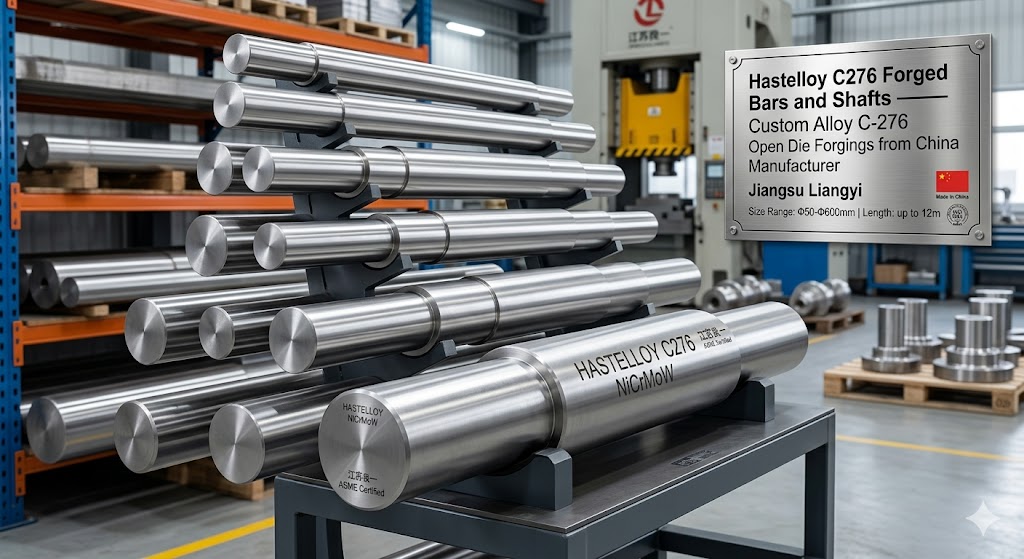
Hastelloy C276 Forged Bars and Shafts
Custom Hastelloy C276 forged round bars, square bars, flat bars, rectangular bars and hollow bars with diameters from 20 mm to 2,000 mm, lengths up to 15 meters, and single-piece weight up to 30 tons. We also produce intricate step shafts, gear shafts, turbine shafts and pump shafts with precision CNC machining.
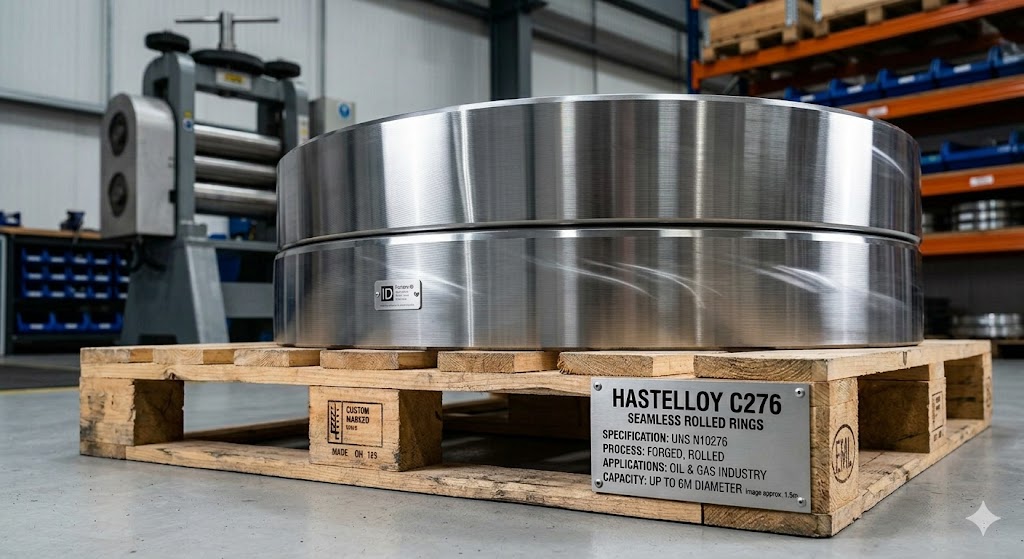
Hastelloy C276 Seamless Rolled Rings
Custom seamless rolled rings and open die forged rings with diameters from 100 mm to 6,000 mm, heights from 20 mm to 1,000 mm, and weights up to 30 tons. Ideal for high-pressure flanges, gear rings, bearing races, slewing rings and pressure vessel parts.
Hastelloy C276 Hollow Forgings & Sleeves
Alloy C-276 forged hubs, housings, shells, sleeves, bushes, hollow bars, pipes and casings with outer diameter up to 3,000 mm and wall thickness up to 500 mm. They are suitable for heavy-wall pressure equipment, heat exchangers and subsea applications.
Hastelloy C276 Discs, Plates & Flanged Components
UNS N10276 forged discs, blocks, plates, flanged blanks, blind flanges, weld neck flanges and double studded adapter flanges with maximum diameter up to 3 meters, weight up to 20 tons. Pressure ratings are up to 15,000 psi (ASME B16.5 / B16.47 / API 6A).
Hastelloy C276 Valve & Pump Components
Complete Hastelloy C276 forged valve balls, bonnets, bodies, stems, seat rings, cores and discs for ball valves, gate valves, check valves and globe valves. We also supply full Alloy C-276 pump parts, such as casings, impellers, shafts, housings and wear rings.
Custom Engineered Hastelloy C276 Forgings
Custom C276 forging parts including turbine shafts, compressor rotors, heat exchanger tube sheets, baffle plates, pressure vessel nozzles, wellhead equipment parts and TBM cutter rings. They are fully customized to your drawings and specifications.
Hastelloy C276 Forging — Complete Size Specifications at a Glance
The table below consolidates all available product size ranges in a single reference. All dimensions are achievable in a single forged piece without welding:
| Product Type | Diameter / Cross-Section Range | Length / Height | Max Single-Piece Weight | ASTM / ASME Standard |
|---|---|---|---|---|
| Round Bars | Ø20 mm – Ø2,000 mm | Up to 15,000 mm | 30 tons | ASTM B564 / SB-564 |
| Square / Flat Bars | 20 mm – 1,500 mm (side) | Up to 6,000 mm | 15 tons | ASTM B564 / SB-564 |
| Seamless Rolled Rings | Ø100 mm – Ø6,000 mm | 20 mm – 1,000 mm (height) | 30 tons | ASTM B564 / SB-564 |
| Hollow Forgings / Sleeves | OD up to 3,000 mm, Wall 20–500 mm | Up to 3,000 mm | 25 tons | ASTM B564 / SB-564 |
| Discs / Blocks / Plates | Ø50 mm – Ø3,000 mm | 10 mm – 800 mm (thickness) | 20 tons | ASTM B564 / SB-564 |
| Flanges (ASME B16.5 / B16.47) | Ø50 mm – Ø2,500 mm | Per standard pressure class | 15 tons | ASME B16.5 / B16.47 / API 6A |
| Heat Exchanger Tube Sheets | Ø200 mm – Ø3,500 mm | 20 mm – 500 mm (thickness) | 20 tons | ASME Section VIII / TEMA |
| Valve Bodies / Bonnets | Up to 1,000 mm (body diameter) | Per customer drawing | 5 tons | API 6A / ASME B16.34 |
| Custom Engineered Parts | Per customer drawing | Per customer drawing | 30 tons | Any applicable standard |
We also manufacture forgings in other high-performance nickel alloys: Inconel 625, Inconel 718, Monel 400 and Hastelloy C22.
Complete Material Properties of Hastelloy C276 (UNS N10276 / W.Nr. 2.4819)
Hastelloy C276 is a nickel‑molybdenum‑chromium‑tungsten superalloy that has excellent resistance to many corrosive environments, including reducing and oxidizing acids, chloride‑caused pitting and crevice corrosion, stress corrosion cracking, and sour gas (H₂S) environments. Unlike many other nickel alloys, Hastelloy C276 does not need post‑weld heat treatment to keep its corrosion resistance, so that it is the best choice material for making intricate parts.
Our Hastelloy C276 forging parts are made of top‑grade raw materials from certified global suppliers. We offer optional double melting (VIM+VAR) or triple melting (VIM+ESR+VAR) processes to guarantee extremely high material purity and even microstructure, which is vital for nuclear power, aerospace and high‑sour oil and gas uses.
Chemical Composition of Hastelloy C276 (UNS N10276) — Per ASTM B574
| Element | Weight % Range | Element | Weight % Range |
|---|---|---|---|
| Nickel (Ni) | Balance (~57%) | Cobalt (Co) | 2.5 Max |
| Molybdenum (Mo) | 15.0 – 17.0 | Carbon (C) | 0.010 Max |
| Chromium (Cr) | 14.5 – 16.5 | Silicon (Si) | 0.08 Max |
| Iron (Fe) | 4.0 – 7.0 | Manganese (Mn) | 1.00 Max |
| Tungsten (W) | 3.0 – 4.5 | Phosphorus (P) | 0.04 Max |
| Vanadium (V) | 0.35 Max | Sulfur (S) | 0.03 Max |
Heat Treatment & Mechanical Properties — Per ASTM B564
All our Hastelloy C276 forging parts is given solution heat treatment at 1,121°C (2,050°F) followed by rapid water quenching to guarantee improved corrosion resistance and mechanical properties:
- Minimum Yield Strength (0.2% Offset): 283 MPa (41 ksi)
- Minimum Ultimate Tensile Strength: 690 MPa (100 ksi)
- Minimum Elongation (in 2 in / 50 mm): 40%
- Hardness: 150–220 HB
Physical and Thermal Properties of Hastelloy C276 — Engineering Reference Data
The physical and thermal properties below are essential for engineering design calculations — from heat exchanger sizing to flange bolt load analysis. Note that C276 has much lower thermal conductivity than stainless steel, which directly affects heat exchanger design: larger surface areas or thinner tube walls are needed to reach the same heat transfer coefficient.
| Property | Value | Unit | Practical Design Note |
|---|---|---|---|
| Density | 8.89 | g/cm³ (0.321 lb/in³) | 11% heavier than 316L SS (7.99 g/cm³); factor into lifting and seismic load calculations |
| Melting Range | 1,325 – 1,370 | °C (2,417 – 2,498°F) | Narrow melting range facilitates casting and welding pool control |
| Specific Heat Capacity | 427 | J/kg·K at 20°C | Use for thermal mass calculations in cyclic heating applications |
| Thermal Conductivity | 10.2 | W/m·K at 100°C | 37% lower than 316L (16.3 W/m·K) — requires larger heat exchanger area for equivalent duty |
| Thermal Conductivity | 12.8 | W/m·K at 500°C | Increases with temperature — use interpolated value for accurate HX sizing at elevated temperatures |
| Thermal Expansion (CTE) | 11.2 | µm/m·°C (20–100°C) | Lower than 316L (16.0); reduces thermal stress at connections to dissimilar metals |
| Thermal Expansion (CTE) | 12.8 | µm/m·°C (20–500°C) | Use for piping expansion loop design in high-temperature service |
| Elastic Modulus (Young's Modulus) | 205 | GPa (29.8 Mpsi) at 20°C | Similar to 316L SS; use standard deflection and pressure vessel formulas without modification |
| Elastic Modulus at 500°C | 172 | GPa at 500°C | Reduction must be accounted for in high-temperature pressure vessel ASME Code calculations |
| Poisson's Ratio | 0.30 | — | Standard value for nickel alloys; consistent across temperature range |
| Electrical Resistivity | 1.30 | µΩ·m at 22°C | Higher than SS (0.75 µΩ·m); relevant for cathodic protection design in marine structures |
| Magnetic Permeability (µ) | ≤ 1.001 | µr (relative) | Essentially non-magnetic — ideal near MRI, reactor control instruments, NMR equipment |
Pitting Resistance Equivalent Number (PREN) of Hastelloy C276 — Industry-Leading Chloride Resistance
PREN is the most widely used single-number index for comparing the chloride pitting resistance of corrosion-resistant alloys. It is calculated from the chemical composition using the formula:
PREN Formula & Hastelloy C276 Calculation
For Hastelloy C276 (using midpoint composition values, N ≈ 0):
A PREN above 40 is generally considered suitable for seawater service. C276 at PREN ≈ 68 far exceeds this threshold — one of the highest values among commercial alloys, second only to Hastelloy C2000 and a few platinum-group-enhanced alloys.
| Alloy | UNS / Grade | PREN (approx.) | Typical Application Limit |
|---|---|---|---|
| 316L Stainless Steel | S31603 | ~24 | Fresh water, mild chlorides only |
| 904L Stainless Steel | N08904 | ~36 | Seawater at ambient temperature |
| 2205 Duplex SS | S32205 | ~35 | Seawater, moderate chlorides |
| 2507 Super Duplex SS | S32750 | ~42 | Seawater up to ~50°C |
| Inconel 625 | N06625 | ~51 | Seawater, moderate acid, offshore |
| Hastelloy C22 | N06022 | ~60 | Severe mixed acid, FGD |
| Hastelloy C276 | N10276 | ~68 | Most severe chloride & acid environments |
Global Equivalent Standards & Designations for Hastelloy C276
Hastelloy C276 goes by different designations depending on the engineering standards used in your country or industry. The table below is the most complete equivalent standards guide for C276, covering 7 major standard systems — use it when specifying C276 for projects following different national codes.
| Standard System | Designation | Country / Region | Typical Industry Use | Key Documents |
|---|---|---|---|---|
| UNS (ASTM / ASME) | N10276 | USA / Global | Oil & gas, pressure vessels, API equipment | ASTM B564, B574, B575, B622; ASME SB-564 |
| EN Material Number | 2.4819 | Europe (EU) | PED-compliant pressure equipment (CE marking) | EN 10095, EN 10028-7, PED 2014/68/EU |
| EN Chemical Symbol | NiMo16Cr15W | Europe (EU) | Engineering drawings and technical specifications | EN 10216-5, EN ISO 9723 |
| ASME Boiler & Pressure Vessel Code | SB-564 / SB-574 | USA / Global | ASME Section VIII Div. 1 & 2 pressure vessels | ASME BPVC Section II Part B |
| JIS (Japanese Industrial Standards) | NW 0276 | Japan | Japanese chemical plant and pressure vessel projects | JIS H 4551 |
| GOST (Russian Standards) | ЭИ983 (EI983) | Russia / CIS countries | Russian and post-Soviet industrial projects | GOST 5632-72 |
| BS (British Standard, historical) | NA13 | UK (legacy) | Legacy British projects; now replaced by EN | BS 3076:1989 |
| AFNOR (French Standard, historical) | NC17D | France (legacy) | Legacy French projects; now replaced by EN | NF A 36-209 (obsolete) |
Procurement Note: Always specify the UNS number (N10276) in your purchase order, not just the trade name "Hastelloy C276" — "Hastelloy" is a registered trademark of Haynes International and not a material specification. Requiring UNS N10276 per ASTM B574/B564 provides full legal and contractual specificity.
Hastelloy C276 Corrosion Resistance Data in Specific Chemical Environments
The corrosion rate data below comes from standard industry immersion tests. In industrial use, a rate below 0.13 mm/yr (less than 5 mpy) is usually rated “excellent”, and below 0.25 mm/yr (less than 10 mpy) “good”. All figures apply to solution‑annealed UNS N10276 plate or forged material. Real performance of forged parts may differ a little depending on surface finish and microstructure.
| Corrosive Medium | Concentration (wt%) | Test Temperature | Corrosion Rate | Assessment |
|---|---|---|---|---|
| Hydrochloric Acid (HCl) | 5% | Boiling (108°C / 226°F) | < 0.13 mm/yr | Excellent |
| Hydrochloric Acid (HCl) | 10% | 66°C / 150°F | < 0.13 mm/yr | Excellent |
| Hydrochloric Acid (HCl) | 20% | 52°C / 125°F | < 0.25 mm/yr | Good |
| Sulfuric Acid (H₂SO₄) | 10% | 79°C / 175°F | < 0.13 mm/yr | Excellent |
| Sulfuric Acid (H₂SO₄) | 30% | 66°C / 150°F | < 0.13 mm/yr | Excellent |
| Sulfuric Acid (H₂SO₄) | 70% | 66°C / 150°F | < 0.25 mm/yr | Good |
| Phosphoric Acid (H₃PO₄) | 85% (Concentrated) | 66°C / 150°F | < 0.13 mm/yr | Excellent |
| Hydrofluoric Acid (HF) | 20% | 79°C / 175°F | < 0.25 mm/yr | Good |
| Acetic Acid (Glacial) | 99% | 118°C / 244°F (Boiling) | < 0.13 mm/yr | Excellent |
| Ferric Chloride (FeCl₃, highly oxidizing) | 10% | 66°C / 150°F | < 0.13 mm/yr | Excellent |
| Sodium Hydroxide (NaOH) | 50% | 66°C / 150°F | < 0.13 mm/yr | Excellent |
| Chlorine Gas (Wet, Cl₂) | 100% | 38°C / 100°F | < 0.13 mm/yr | Excellent |
| Natural Seawater (flowing) | Ambient salinity ~3.5% | Ambient to 50°C | Nil (passive film) | Excellent |
| H₂S + CO₂ Sour Gas (per NACE MR0175) | Per application | Up to 177°C / 350°F | Nil (NACE compliant) | Excellent |
| Nitric Acid (HNO₃) | 10–40% | 66°C / 150°F | < 0.25 mm/yr | Good |
Critical Pitting Temperature (CPT) Comparison — Why C276 Dominates in Chloride Environments
The Critical Pitting Temperature (CPT) is the temperature at which pitting corrosion starts in a standard chloride test solution (6% FeCl₃, according to ASTM G48 Method C). It is the most useful measure for comparing how well different alloys resist chloride pitting. Hastelloy C276 performs better than all similar alloys in this test.
| Alloy | UNS | CPT in 6% FeCl₃ (ASTM G48C) | Practical Meaning |
|---|---|---|---|
| 316L Stainless Steel | S31603 | ~12°C (54°F) | Pits in ambient seawater |
| 904L Stainless Steel | N08904 | ~42°C (108°F) | Borderline for seawater service |
| 2507 Super Duplex SS | S32750 | ~55°C (131°F) | Suitable for most seawater conditions |
| Inconel 625 | N06625 | ~65°C (149°F) | Suitable for hot seawater |
| Hastelloy C22 | N06022 | ~75°C (167°F) | Excellent chloride resistance |
| Hastelloy C276 | N10276 | > 85°C (185°F) | Outstanding — resists pitting across virtually all industrial chloride service conditions |
⚠ Environments Where Hastelloy C276 Should NOT Be Used
Despite its broad applicability, C276 has known limitations in certain highly specific environments. Specifying C276 in these conditions will result in accelerated attack:
- Fuming / Concentrated Nitric Acid (HNO₃ > 70%): Strongly oxidizing conditions exceed C276's passive film stability. Use Hastelloy C22 (UNS N06022) or titanium Grade 2/7 instead.
- Oleum (Fuming Sulfuric Acid with dissolved SO₃): The excess SO₃ creates an extremely oxidizing environment. Use ceramic-lined or PTFE-lined equipment.
- Hot Concentrated Alkali above 300°C: C276 can develop stress corrosion cracking in concentrated NaOH at high temperatures. Use Alloy 600 (UNS N06600) or Alloy 690 (N06690).
- Molten Alkali Metals (Na, K, Li) and Molten Salts above 700°C: Outside C276's thermal stability range. Use Alloy 214 or ODS alloys.
When in doubt, contact our engineering team for a free corrosion environment analysis before finalizing material selection.
Hastelloy C276 vs C22 vs Inconel 625: Which Nickel Alloy is Right for Your Application?
The table below provides a data-driven comparison of the three most widely used nickel superalloys for severe-service forgings. Use this together with the PREN and CPT data provided earlier to make a full material selection.
| Property / Factor | Hastelloy C276 (UNS N10276) | Hastelloy C22 (UNS N06022) | Inconel 625 (UNS N06625) |
|---|---|---|---|
| Nickel Content | ~57% (Balance) | ~56% (Balance) | ~64% (Balance) |
| Molybdenum (Mo) % | 15–17% (Highest) | 12.5–14.5% | 8–10% |
| Chromium (Cr) % | 14.5–16.5% | 20–22.5% (Highest) | 20–23% |
| Tungsten (W) % | 3.0–4.5% | 2.5–3.5% | None |
| PREN Value | ~68 (Highest) | ~60 | ~51 |
| Resistance to Reducing Acids (HCl, H₂SO₄) | Excellent | Very Good | Good |
| Resistance to Oxidizing Acids (HNO₃) | Good | Excellent | Very Good |
| Pitting & Crevice Corrosion Resistance | Excellent (CPT >85°C) | Very Good (CPT ~75°C) | Good (CPT ~65°C) |
| H₂S / Sour Service (NACE MR0175) | Fully Compliant | Fully Compliant | Compliant |
| Post-Weld Heat Treatment (PWHT) | Not Required | Not Required | Not Required |
| Max Service Temperature (Corrosive) | 650°C / 1,200°F | 650°C / 1,200°F | 816°C / 1,500°F |
| Density | 8.89 g/cm³ | 8.69 g/cm³ | 8.44 g/cm³ |
| Primary Forging Standard | ASTM B564 / B574 | ASTM B564 / B575 | ASTM B564 / B446 |
| Relative Cost (Forged Parts) | Lower (Most Cost-Effective) | Medium | Medium–High |
| Best For | General severe corrosion, FGD, sour gas, HCl, seawater | Mixed acid environments, phosphoric acid, waste treatment | High-temp service, seawater, aerospace, cyclic fatigue |
Jiangsu Liangyi manufactures forgings in all three alloys. Contact our engineers for a free material selection consultation.
Why Hastelloy C276 Forgings Outperform Castings and Plate in Critical Applications
Buyers sometimes ask if cast C276 or rolled plate can perform the same at a lower cost. Based on our 27+ years of manufacturing experience and the metallurgy of nickel alloy processing, the answer is clear:for pressure-retaining parts, fatigue-critical parts and sour-service uses, forgings cannot be replaced by castings. Here is the comparison based on real data:
| Performance Factor | C276 Forging ✓ | C276 Casting | C276 Rolled Plate (Cut Ring) |
|---|---|---|---|
| Internal Porosity | None | Present — inherent in solidification | None |
| Non-Metallic Inclusions | Minimal (squeezed out) | Higher — trapped during solidification | Low |
| ASTM Grain Size | No. 4–6 (Fine) | No. 1–2 (Coarse) | Directional / varies |
| Fatigue Strength (vs forging baseline) | 100% (Baseline) | 60–70% | 75–85% |
| Tensile Strength Reliability | Consistent lot-to-lot | Variable (±15%) | Good |
| Volumetric UT Acceptance Rate | >99% (ASTM A388 Lvl 1) | ~70–80% | >95% |
| Mechanical Property Direction | Isotropic (grain flow follows shape) | Isotropic (but random dendrites) | Anisotropic (weaker in Z-direction) |
| ASME Section VIII Code Status | Fully listed (SB-564) | Listed but restricted design margin | Listed (SB-575 plate) |
| API 6A Suitability | Full compliance, PSL 1–4 | Restricted to PSL 1–2 only | Not suitable for wellhead bodies |
| NACE MR0175 Sour Service | Compliant as-forged + heat treated | Requires full post-cast heat treatment | Compliant with proper heat treatment |
| Custom Shape Capability | Excellent (near-net forging) | Excellent (complex shapes possible) | Limited to flat or simple ring shapes |
Hastelloy C276 Forging Hot-Working Parameters — From Our Production Floor
The process parameters below come from our actual production experience forging UNS N10276 over more than 27 years. Forging manufacturers rarely share this level of process detail — we provide it to help engineers create better purchasing specifications and understand why C276 forgings cost more than carbon or stainless steel forgings of the same size.
C276 Hot-Working Temperature Window (Critical)
- Optimal Forging Temperature Range: 1,121°C – 1,204°C (2,050°F – 2,200°F) — the narrow window where C276 is both soft enough to forge and above the temperature at which detrimental secondary phases precipitate.
- Minimum Final Forging Temperature: 954°C (1,750°F) — forging below this temperature creates excessive forging pressure and risks surface cracking due to the alloy's rapid work-hardening behavior.
- Reheat Frequency: C276 work-hardens about 1.8 times faster than 316L stainless steel during hot working, needing reheating every 10–15 press strokes for large sections. This is a primary reason why C276 forgings need more press time than equivalent stainless forgings.
- Minimum Total Reduction Ratio: 5:1 — needed to get ASTM grain size No. 4 or finer. A minimum reduction of 3:1 per heat is achievable using our 6,300T hydraulic press.
- Melting Segregation Risk: The high Mo content in C276 creates stronger dendritic segregation during solidification than in most Ni alloys. Our ingot homogenization treatment at 1,175°C before forging eliminates this segregation — critical for consistent corrosion resistance across the full forging cross-section.
- Tool Die Wear: C276's high flow stress at forging temperature causes 2–3 times faster die wear compared to carbon steel, necessitating more frequent die replacement and contributing to higher forging costs versus standard alloy grades.
Our Complete Hastelloy C276 Forging Production Process
We control every step of the whole production process to guarantee highest quality and on-time delivery:
- Raw Material Inspection: All incoming Hastelloy C276 ingots are tested for chemical composition (PMI + spectrometer) and mechanical properties before production begins.
- Steel Melting & Refining: 30t electric arc furnaces (EAF) + ladle refining furnaces (LF) + vacuum degassing furnaces (VOD). Optional VIM+VAR or VIM+ESR+VAR for ultra-high purity applications.
- Ingot Homogenization: Extended soaking at 1,175°C eliminates dendritic Mo segregation before forging — an important step most producers skip that guarantees consistent corrosion resistance throughout the section.
- Forging: 2,000T–6,300T hydraulic presses and 1T–9T electro-hydraulic hammers get minimum 5:1 total reduction ratio for ASTM grain size No. 4 or finer.
- Rough Machining: Initial CNC machining to remove scale and prepare for heat treatment.
- Solution Heat Treatment: 1,121°C ±14°C (2,050°F ±25°F) soak time per section thickness, followed by rapid water quench within 60 seconds of exit from furnace — important for maximizing Mo retention in solution.
- Precision Machining: CNC machining centers achieve tolerances up to ±0.01 mm and surface finishes as low as Ra 0.4 µm.
- Comprehensive NDT and Testing: 100% UT, PT, visual inspection, chemical analysis, mechanical testing and dimension test before shipment.
- Packaging and Shipping: VCI-paper rust prevention, wooden case export packaging, full documentation (MTC 3.1/3.2, packing list, CO, Bill of Lading) for delivery around the world.
Quality Control & Non-Destructive Testing (NDT)
At Jiangsu Liangyi, quality is our top priority. We follow a strict ISO 9001:2015 quality management system. All Hastelloy C276 forging parts fully meet the technical requirements of ASTM A388/A388M and EN 10204. For projects that need materials meeting API 6A or NACE MR0175/ISO 15156, our Hastelloy C276 material and heat treatment satisfy these standards, and third-party verification is available.
Every forging is given the following tests before delivery:
- 100% Visual Inspection (surface check)
- Non-Destructive Testing (NDT):
- Ultrasonic Testing (UT) — 100% volume inspection per ASTM A388
- Magnetic Particle Testing (MT) — surface defect detection per ASTM E709
- Dye Penetrant Testing (PT) — visible and fluorescent per ASTM E165
- Radiographic Testing (RT) — upon customer request per ASTM E94
- Metallurgical Testing: Macro and Micro Structure Analysis, ASTM Grain Size Determination per E112
- Mechanical Testing: Tensile, Charpy V-Notch Impact (down to −196°C), Hardness per ASTM E18
- Chemical Composition Verification (Spectrometer Analysis + PMI per ASTM E1476)
- Dimension Test (CMM for complex parts, coordinate measuring to ±0.005 mm)
We provide EN 10204 3.1 Mill Test Certificates (MTC) with all orders. EN 10204 3.2 certificates with independent third-party inspection (BV, SGS, TUV or Lloyd's Register) are available upon request .
Industrial Applications & Verified Project Cases
With excellent corrosion resistance up to 650°C (1,200°F) and cryogenic performance down to −196°C, our Hastelloy C276 forging parts serve the most demanding industrial sectors worldwide:
Oil & Gas Production (Sour Service — H₂S & CO₂)
Our Hastelloy C276 forged parts are suitable for high‑sour oil and gas service — wellhead equipment, casing hangers, tubing hangers, valves, flanges, risers and connectors. Hastelloy C276 (UNS N10276) meets NACE MR0175/ISO 15156 standards. C276 is the best choice material for API 6A PSL3/PSL4 wellhead parts in wells with H₂S, because it resists hydrogen‑induced cracking (HIC), sulfide stress cracking (SSC) and chloride pitting at the same time, conditions where duplex stainless steels and even some Inconel grades cannot perform reliably.
Location: Saudi Arabia, Middle East (Confidential — available on request under NDA)
Product: Hastelloy C276 forged casing hangers, tubing hangers and API 6A wellhead valve bodies
Standards: API 6A PSL3, NACE MR0175/ISO 15156, EN 10204 3.2
H₂S Content: 18% H₂S at 15,000 psi wellhead pressure
Quantity: 320 sets
Result: All part sets have been working continuously in 18% H₂S / 15,000 psi conditions for over 7 years with zero corrosion failures, zero replacements and no maintenance interventions attributable to material degradation.
Chemical Processing Industry
Alloy C-276 forgings are essential in chemical processing for heat exchangers, pressure vessels, tanks, evaporators, piping, flanges, pumps and valves that handle corrosive media such as sulfuric acid, hydrochloric acid, chlorine, phosphoric acid, acetic acid and organic solvents. Its ability to resist both reducing and moderately oxidizing environments makes C276 widely useful in a way no stainless steel can match.
Location: Germany, Europe (Confidential — available on request under NDA)
Product: Hastelloy C276 forged tube sheets and baffles for shell-and-tube heat exchangers
Standards: ASME Section VIII Div.1, DIN EN 10028, PED 2014/68/EU, EN 10204 3.2
Process Fluid: Mixed HCl + H₂SO₄ at 120°C
Quantity: 85 tube sheets up to 3.5 m diameter (2017 supply)
Result: Service life 3× longer than the 316L stainless steel components previously used; zero maintenance required in over 7 years of continuous operation.
Flue Gas Desulfurization (FGD) Systems
Hastelloy C276 is the best choice material for FGD systems in coal-fired power plants, including stack liners, absorbers, ducts, dampers, fans and spray nozzles. These wet scrubbing environments have a harsh mix of sulfuric acid (pH 1–3), chloride salts (up to 60,000 ppm Cl⁻) and temperatures from 50–80°C. This tough environment damages 316L in 12–18 months and causes crevice corrosion in duplex stainless steel in 2–3 years. C276 is the only practical alloy that can last more than 10 years in service.
Location: Germany, Europe (Confidential — available on request under NDA)
Product: Hastelloy C276 forged ducts, damper frames and flanges
Standards: DIN EN 10088, VGB-M 701, TÜV inspection
Cl⁻ Concentration in Scrubber: ~45,000 ppm at pH 1.8
Quantity: 128 forged components
Result: In continuous operation for 9+ years without any corrosion-related failure. Consecutive third-party inspections confirmed zero measurable wall thickness loss.
Nuclear Power Generation
UNS N10276 forgings are widely used and trusted in nuclear power plants around the world. C276 is the best choice material for reactor coolant system parts — pump casings, impellers, seal chambers, heat exchanger tube sheets and pressurizer parts — for four main reasons: (1) Its ultra-low carbon content (max 0.010%) stops sensitization and intergranular corrosion in high-temperature water; (2) It resists stress corrosion cracking (SCC) very well in high-purity primary coolant used in pressurized water reactors (PWR); (3) It is non-magnetic (µ ≤ 1.001) and will not affect the positioning of reactor control rods; (4) Its low cobalt content (max 2.5%) reduces Co-60 and Co-58 activation products, which would otherwise raise radiation levels for maintenance workers. Nuclear-grade C276 forgings need triple melting (VIM + ESR + VAR) to guarantee the cleanest material possible. All our nuclear-grade C276 forgings at Jiangsu Liangyi get 100% radiographic testing, full material traceability, and third-party supervision, meeting 10 CFR Part 50 Appendix B (USA), RCC-M (France) and HAF003 (China) standards.
Location: China (Confidential — available on request under NDA)
Product: Triple-melted (VIM+ESR+VAR) UNS N10276 forged reactor coolant pump shafts, seal chamber forgings and diffuser bodies
Standards: ASME Section III Class 1, RCC-M Level 1, HAF003, ASME N-Certificate
Special Requirements: Full NDA, 100% radiographic + ultrasonic testing per ASME Section V, signed material traceability from heat number to final component, zero-defect acceptance criteria
Result: In continuous operation since commissioning; multiple consecutive annual in-service inspections by the regulatory-approved inspector confirmed zero material anomalies.
Marine, Offshore & Seawater Desalination
Hastelloy C276 is one of the top alloys for marine and offshore uses that need both high strength and excellent resistance to seawater corrosion. Its CPT is higher than 85°C in seawater, so it stays fully protected at all normal ocean temperatures. 316L stainless steel breaks down in just a few months, 2507 super duplex can get crevice corrosion in still water, and even titanium may suffer galvanic corrosion when used with carbon steel structures. C276 has a PREN of about 68 and resists both general and localized corrosion, so that it is the best choice material for long-lasting, low-maintenance marine parts.
Key Marine and Offshore Applications for C276 Forgings: seawater desalination pump casings and impellers, offshore riser clamp connector bodies, subsea production tree parts (meeting API 17D), FPSO process equipment, ballast water treatment system valve bodies, mooring chain connectors, cathodic protection anode connection plates, and deep-sea ROV pressure housings.
Location: Gulf of Mexico, USA, deepwater (Confidential — available on request under NDA)
Product: Hastelloy C276 forged subsea connector bodies, clamp flanges and seal retainer rings
Standards: ISO 13628-7, API 17D, NACE MR0175 (15% H₂S), DNV-OS-F101, EN 10204 3.2 (BV inspection)
Special Testing: CTOD (Crack Tip Opening Displacement) fracture toughness at −18°C, hydrogen embrittlement evaluation per NACE TM0177
Quantity: 84 connector assemblies (2010–2011 supply)
Result: In continuous subsea service for 10+ years. Regular ROV inspections confirmed zero pitting, zero crevice corrosion and zero dimensional change — no component has been retrieved for replacement.
Pulp and Paper Industry (Kraft Process & Bleaching)
The kraft pulping process creates one of the most corrosive industrial environments — and Hastelloy C276 performs extremely well in these conditions.Kraft digesters run at 160–180°C using white liquor (concentrated NaOH + Na₂S, pH 13–14). This is quickly followed by chlorine dioxide (ClO₂) bleaching at pH 2–3 and 60–80°C.This cycle of strong alkaline and acidic chloride conditions quickly damages 316L stainless steel (usually failing within 12–18 months). Even 904L and duplex alloys show unacceptable corrosion in the chlorine-rich bleaching stages.C276 performs reliably in both stages: its high molybdenum and chromium content resist the alkaline sulfide environment, while its PREN of 68 provides excellent protection against oxidizing chloride conditions during bleaching.
Key Pulp and Paper Applications for C276 Forgings: kraft digester nozzles, flanges and manway covers; ClO₂ bleaching tower inlet distributors and agitator shafts; black liquor evaporator tube sheets; recovery boiler soot blower shafts; paper machine press roll journals running in acidic white water; and all parts exposed to the combined sulfide and chloride environment found only in kraft mills.
Location: Brazil, South America (Confidential — available on request under NDA)
Product: Hastelloy C276 forged digester nozzles, flanges, valve bodies, agitator shaft sections and bleach tower distributor rings
Standards: ASME Section VIII Div.1, ASME B16.5 Class 900#, EN 10204 3.1
Process Conditions: 170°C, 12 bar, white liquor (NaOH + Na₂S) + ClO₂ bleaching at pH 2.5
Quantity: 130+ forged components supplied in 2017
Result: It is still working well after more than 6 years with no parts replaced at all. Earlier 316L stainless steel parts had to be completely replaced every 14 to 18 months, which shows C276 greatly extends lifetime.
Pharmaceutical Manufacturing & Bioprocessing
Hastelloy C276 is widely used in pharmaceutical API manufacturing, where strong solvents, organic acids, chlorinated chemicals and high-purity water create conditions that stainless steel cannot handle. Unlike 316L, C276 does not release detectable amounts of iron or chromium ions in pharmaceutical-grade solvents — this is critical for keeping products pure.
When used in cGMP-compliant facilities, C276 forgings must meet extra requirements: surface finish (Ra ≤ 0.5 µm for mechanical polishing, Ra ≤ 0.38 µm for parts touching injectable drugs), full material batch traceability, and passivation according to ASTM A967. The ASME BPE standard covers the design and production of C276 parts for pharmaceutical applications.
Location: Ireland, Europe (Confidential — available on request under NDA)
Product: Hastelloy C276 forged agitator shafts, reactor nozzles, mixing impellers and heat exchanger tube sheets for 3 × 20,000L API synthesis reactors
Standards: ASME BPE-2022, cGMP (EU Annex 1 & US 21 CFR Part 211), FDA Drug Master File, EMA GMP guidelines, EN 10204 3.1
Surface Finish: Ra ≤ 0.38 µm (mechanically polished + electropolished, passivated per ASTM A967)
Quantity: 36 forged components
Result: Zero product contamination incidents attributable to material over multiple years of operation. Parts passed consecutive regulatory facility audits. No material-related deviations recorded in any batch manufacturing record.
The C276 Forging Procurement Guide: What Your Supplier Won't Tell You
After supplying Hastelloy C276 forgings to engineers in 50+ countries for more than 27 years, we have seen every procurement mistake and every supplier shortcut. This guide distills that experience into actionable intelligence that will protect your project and your budget:
1. How to Verify You Are Getting Genuine C276 (Not a Substitute)
Material substitution is the single biggest risk in sourcing specialty alloys from unknown suppliers. The most common substitutions for C276 are: cheaper 317L stainless steel, 904L stainless, or Alloy 28 — none of which meet UNS N10276 corrosion performance. These substitutions can pass visual inspection and even appear on fraudulent test certificates.
- Require PMI (Positive Material Identification) on 100% of parts — portable XRF or OES must show Mo content of 15–17% and Ni balance, not 316L/317L values (Mo 2–3%)
- Request the original mill test certificate from the ingot/bar manufacturer, not just from your forging supplier — verify the heat number traces to the original melt
- Verify Mo content specifically — Mo 15–17% in C276 vs Mo 2.5–3.5% in 317L and Mo 6–6.5% in 904L; this one element confirms or refutes identity
- Use a third-party lab — specify EN 10204 3.2, triggering independent TUV/SGS/BV review of the test certificates and the forging facility
2. What to Include in Your Purchase Order (PO) Specification
A poorly written PO is the root cause of most material and quality disputes. For C276 forgings, your PO must specify all of the following to be fully protected:
- Material: UNS N10276 per ASTM B574 (chemical) and ASTM B564 (forgings) — not just "Hastelloy C276"
- Melting Method: EAF+VOD (standard grade) or VIM+VAR (subsea/nuclear/cryogenic premium grade) — must be stated, not assumed
- Delivery Condition: Solution annealed, 1,121°C ±14°C, water quench — failure to specify allows "as-forged" delivery which will not pass NACE or corrosion tests
- Testing: 100% UT per ASTM A388 (specify acceptance level — Level 1 for critical, Level 2 for standard); PT per ASTM E165 Level 1; hardness per ASTM E18 on each piece
- Certificate: EN 10204 3.1 minimum for standard; 3.2 (third-party inspector) for ASME, API and NACE applications
- Grain Size: ASTM E112 grain size No. 4 or finer (optional but recommended for sour service and fatigue-critical parts)
- Charpy Impact: Specify test temperature if the part will be used in cryogenic service or extreme cold weather
3. What Drives the Price of Hastelloy C276 Forgings
Knowing what makes costs go up helps you negotiate well and not be surprised:
- Raw material cost: C276 is ~55–60% nickel + molybdenum by cost. Nickel trades at ~$15–18/kg and molybdenum oxide at ~$25–35/kg (April 2026 approximate). C276 raw material alone costs 8–12× carbon steel and 3–5× 316L stainless per kilogram.
- Melting premium: VIM+VAR material adds 20–30% to raw material cost vs EAF+VOD; this premium is justified for subsea, nuclear, and cryogenic applications.
- Forging complexity: Open die round bars are the most economical. Flanges, valve bodies and custom profiles with significant machining add 40–80% to cost.
- Surface finish requirement: Ra 0.4 µm pharmaceutical finish adds 25–40% to machining cost vs "rough machined" finish.
- Inspection level: EN 10204 3.2 + third-party UT adds 8–15% to total price but eliminates substitution and quality risk.
- Order timing: Nickel and molybdenum commodity prices fluctuate ±25% per quarter. Lock in prices with firm POs during low commodity cycles. We offer 90-day price holds for confirmed orders.
4. Red Flags When Evaluating a Chinese C276 Forging Supplier
- Cannot provide a specific forging equipment list with tonnages — "large presses" is not a specification
- Offers delivery in 7–10 days for custom forgings — C276 cannot be hot-worked, heat-treated and tested in under 15 days even for simple shapes
- Test certificate shows carbon content exactly 0.010% — the maximum limit, not a typical value from a quality melt
- No in-house UT equipment; outsources all NDT — creates chain-of-custody and inspector independence issues
- Price is more than 30% below the market average — raw material alone accounts for 60–70% of C276 forging cost; extreme discounts indicate material substitution risk
- Cannot demonstrate that products are manufactured to API 6A or NACE MR0175 material requirements, or cannot provide independent material test evidence
5. Common Engineering Specification Mistakes That Cost Money
- Specifying "as-forged": Always specify "solution annealed + water quenched" as the delivery condition for C276. As-forged material retains forging stresses and has inferior corrosion resistance.
- Omitting Charpy impact temperature: For C276 used below 0°C, specify −46°C or −196°C impact testing — the default room-temperature impact does not qualify cryogenic service.
- Accepting DPI Level 2 for sour service: NACE-compliant components require PT/MT Level 1 (zero linear indications) — Level 2 acceptance allows linear indications up to 3/16 inch, which is unacceptable in H₂S service.
- Not specifying 3.2 certificates for ASME Code construction: ASME Section VIII Div.1 needs material certified by an authorized inspector — EN 10204 3.1 (manufacturer self-certification) is insufficient for Code construction without additional documentation.
- Forgetting to specify hardness: Per NACE MR0175, C276 forgings in sour service must show hardness ≤ 35 HRC (329 HB). Request per-piece hardness records, not batch sampling.
Frequently Asked Questions (FAQ) About Hastelloy C276 Forgings
Hastelloy C276 (UNS N10276) is a nickel‑molybdenum‑chromium‑tungsten superalloy. Composition: Nickel (Ni) Balance ( about 57%), Molybdenum (Mo) 15–17%, Chromium (Cr) 14.5–16.5%, Iron (Fe) 4–7%, Tungsten (W) 3–4.5%, Cobalt (Co) max 2.5%, plus small amounts of manganese, vanadium, silicon, carbon, phosphorus and sulfur.Its high levels of molybdenum (15–17%) and tungsten (3–4.5%) together give it excellent corrosion resistance.
The Pitting Resistance Equivalent Number (PREN) of Hastelloy C276 is about 68. Here’s how we calculate it: PREN = %Cr + 3.3×%Mo + 16×%N = 15.5 + (3.3×16.0) = 68.3. This is one of the highest PREN values among all common alloys. To give you an idea of how it compares: 316L is around 24, 2507 Super Duplex is around 42, Inconel 625 is around 51, and Hastelloy C22 is around 60. A higher PREN means the alloy is better at resisting chloride pitting. Any alloy with a PREN over 40 is usually good for use in seawater, and C276’s PREN of about 68 is way above that level.
Hastelloy C276 has a density of 8.89 g/cm³ (0.321 lb/in³) . It is about 11% heavier than 316L stainless steel (7.99 g/cm³) and 13% heavier than carbon steel (7.85 g/cm³).To estimate the weight of a round bar: Weight (kg) = D² × π/4 × L × 8.89, where D is the diameter in meters and L is the length in meters.For a ring: Weight (kg) = π/4 × (OD² − ID²) × H × 8.89.Jiangsu Liangyi includes a weight certificate with every order. Contact us for a free estimate of weight and material cost.
No — Hastelloy C276 is basically non-magnetic, with a relative magnetic permeability of ≤ 1.001 µr. This is almost the same as a perfect paramagnetic material (µr = 1.000). Unlike austenitic stainless steels, which can become slightly magnetic after cold working, C276 does not turn magnetic after forging, cold working or machining. This makes it suitable for uses near MRI medical equipment, nuclear reactor control rod instruments, NMR analyzers, and any other setting where magnetic contamination must be prevented.
Hastelloy C276 works over a very wide temperature range, from cryogenic (−196°C / −321°F) to 650°C (1,200°F) for continuous use in corrosive conditions. For structural parts not exposed to corrosive materials, it can be used up to 1,038°C (1,900°F). Long-term exposure between 370°C and 650°C should be avoided to stop harmful metal structure changes. Heating to 1,121°C (2,050°F) for solution annealing followed by quick cooling fully brings back all its material properties.
Yes — C276 is one of the easiest nickel superalloys to weld. It does NOT need post-weld heat treatment (PWHT) to keep its corrosion resistance.Welding methods you can use: GTAW (TIG), GMAW (MIG), SMAW, SAW and plasma arc welding.Filler materials: AWS ERNiCrMo-4 wire for GTAW/GMAW, orENiCrMo-4 electrodes for SMAW.Thorough cleaning before welding is needed to remove surface oxides, sulfur and oil residues. Welding heat input should be kept low, with interpass temperature no higher than 177°C, to reduce grain growth.
C276 has known limitations: (1) Fuming nitric acid (HNO₃ > 70%) — use Hastelloy C22 or titanium; (2) Oleum (fuming H₂SO₄ with dissolved SO₃) — use PTFE-lined equipment; (3) Hot concentrated alkali (>300°C NaOH) — use Alloy 600 or 690; (4) Molten alkali metals and high-temperature oxidizing atmospheres (>650°C) — use Alloy 214 or 602CA. For any borderline environment, always conduct an immersion coupon test before committing to full-scale use.
C276 contains more molybdenum — 15–17%, compared to 12.5–14.5% in C22 — which makes it more resistant to reducing acids and pitting. C22 has higher chromium at 20–22.5%, so it resists oxidizing acids and nitric acid better. C276, with a PREN around 68, performs slightly better than C22 at about 60 when it comes to chloride pitting. C276 is also more affordable and easier to source. You should choose C22 when you have both strong oxidizing and reducing conditions at the same time, such as in phosphoric acid or mixed acid environments.
Always specify: (1) Material: UNS N10276 per ASTM B574/B564 (not just "Hastelloy C276" — a trademark, not a standard); (2) Melting method: EAF+AOD or VIM+VAR; (3) Heat treatment: Solution annealed, 1121°C ±14°C, water quench; (4) Testing: 100% UT per ASTM A388 Level 1, PT per ASTM E165, hardness per E18; (5) Certificate: EN 10204 3.1 minimum, 3.2 for critical; (6) PMI verification: 100% positive material identification on all parts. Failure to specify the UNS number has resulted in documented cases of 317L stainless substitution.
For standard sizes, our minimum order quantity (MOQ) is one piece. For custom sizes, it is 50 kg. We allow new customers to place small trial orders to verify quality before placing larger orders.
Standard sizes: 15–20 days. Custom forgings: 25–40 days depending on drawings and quantity. We also can speed up production (10–15 days) for urgent orders at a premium. Nuclear-grade VIM+VAR material typically needs an additional 10–15 days for raw material procurement.
We include an EN 10204 3.1 MTC covering chemical composition, mechanical properties and NDT with every order. EN 10204 3.2 certification with third‑party inspection by BV, SGS, TUV or Lloyd’s is available upon request. We are ISO 9001:2015 certified. Our parts are produced to meet API 6A requirements, and our Hastelloy C276 material complies with NACE MR0175/ISO 15156. PMI certificates, grain size reports, CVN Charpy impact reports and CTOD fracture toughness reports are provided for high‑end applications.
Yes. Complete in-house CNC machining, including turning, milling, drilling, boring, grinding, threading and surface treatment. Tolerances are to ±0.01 mm, surface finishes are to Ra 0.4 µm (or Ra 0.38 µm electropolished for pharmaceutical applications). Parts are delivered ready for installation with CMM dimensional report.
Yes — more than 50 countries including USA, Canada, Germany, UK, France, Netherlands, Italy, UAE, Saudi Arabia, Singapore, Australia, Brazil, South Korea and others. Sea freight, air freight and express (DHL/FedEx) are available. We handle all export documentation such as MTC, packing list, commercial invoice, certificate of origin, bill of lading, Form A (GSP). Terms: FOB Qingdao/Shanghai, CIF any major port, EXW factory.
Contact Your Trusted Hastelloy C276 Forging Manufacturer in China
Jiangsu Liangyi is your reliable partner for high-quality custom Hastelloy C276 forging parts. With over 27 years of specialized forging experience, advanced production and inspection equipment, and a dedicated engineering team, we provide the most cost-effective and high-performance solutions for your industrial applications.
We offer free technical consultation and quotation services. Send us your drawing, material specification, quantity and delivery requirements and our team will respond within 24 hours.
Inquiry Email: sales@jnmtforgedparts.com
Phone / WhatsApp: +86-13585067993 (24/7 service)
Website: https://www.jnmtforgedparts.com
Factory Address: Chengchang Industry Park, Jiangyin City, Jiangsu Province, China (120 km from Shanghai Port)