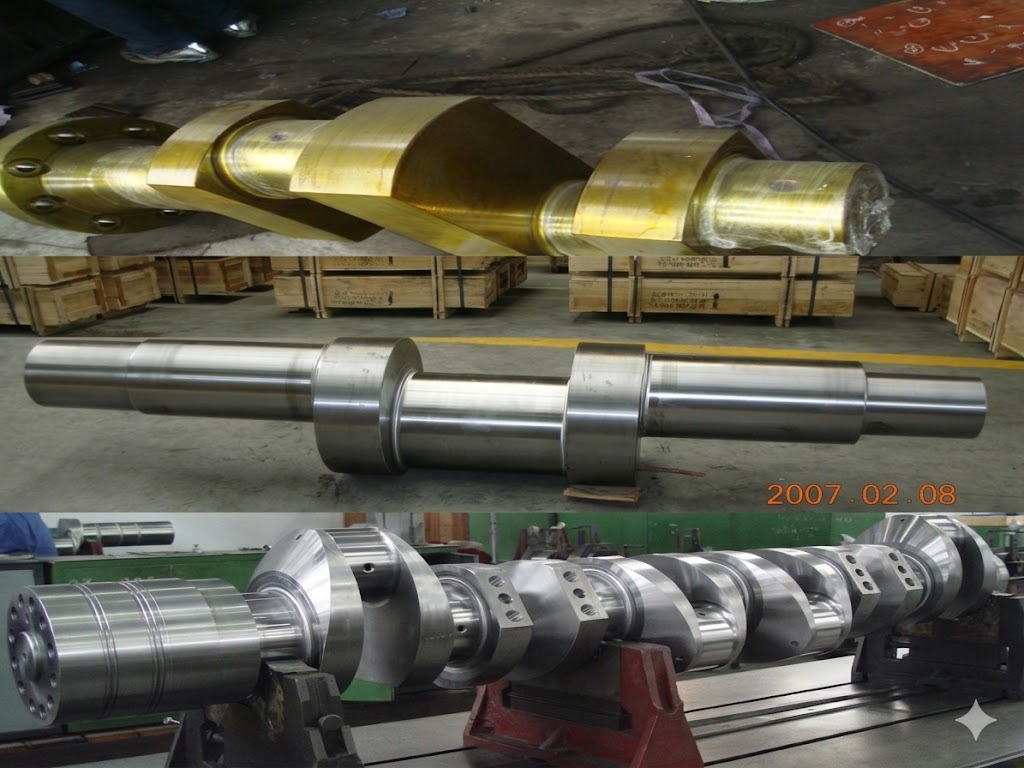
Quick Summary
What Buyers Need to Know Before Requesting a Quote
This page answers the major commercial and technical questions buyers usually ask before sending an RFQ: what forged steel crankshafts are used for, why forged is often preferred over cast in heavy-duty service, which material grades are available, what the manufacturing process looks like, what certificates can be supplied and what information is needed to receive an accurate quotation.
- Main product scope: custom forged steel crankshafts, forged eccentric shafts and project-based quotation support.
- Main technical questions addressed: forged vs cast comparison, material choice, manufacturing process, inspection and FAQ.
- Main manufacturing and certification references: Jiangsu Liangyi, ISO 9001:2015, EN10204 3.1/3.2, API 6A, ABS, DNV, BV, CCS, 42CrMo4, SAE 4140, 34CrNiMo6 and industrial forging.
- Main Uses: frac pumps, marine diesel engines, compressors, mining equipment, mechanical presses, can making machinery and heavy rotating equipment.
Company and Product Overview
About Our Forged Steel Crankshafts
Established in 1997, Jiangsu Liangyi Co., Limited is an ISO 9001:2015 certified China manufacturer of custom forged steel crankshafts and forged shafts for demanding industrial uses. Our factory covers about 80,000 square meters and integrates steel melting, open die forging, heat treatment, rough machining, finish machining and inspection within one manufacturing system.
This comprehensive approach is important to industrial buyers because forged crankshaft performance is not determined by shape alone. It depends on steel quality, forging ratio, grain flow control, heat treatment stability, machining precision and inspection standards. When these steps are managed under one system, traceability and consistency are easier to maintain across both sample and mass production.
We can make single-piece weight ranges from 30 kg to 30,000 kg and has an annual capacity of 120,000 tons. Our forged crankshafts and forged shafts are supplied to industries such as oil & gas, marine, mining, engineering machinery, metal forming, compressors and power generation. Production can be arranged according to customer 2D and 3D drawings, material specifications and inspection requirements.
What We Produce
Custom forged steel crankshafts, forged eccentric shafts and other heavy-duty rotating forged parts for main industries.
How We Produce
In-house melting, open die forging, heat treatment, CNC machining and NDT inspection under one quality system.
Why Buyers Choose This Route
Better quality traceability, fewer process gaps, stronger technical documents control and improved consistency for export projects.
Technical Comparison
Why Choose Forged Steel Crankshafts Instead of Cast Crankshafts
For heavy-duty rotating and reciprocating equipment, forged steel crankshafts are mainly used where reliability under cyclic load is more important than the lower upfront cost that cast alternatives may sometimes offer. The reason is straightforward: the internal structure of a forged part can usually be controlled more effectively than that of a cast part, especially when the use involves repeated stress reversals, torsional loading, shock and continuous operation.
Continuous Grain Flow and Better Fatigue Resistance
Open die forging helps refine and direct the metal flow more effectively than casting. It matters a lot for a crankshaft because life is heavily influenced by internal continuity and structural reliability. Better grain flow can improve the resistance against crack initiation under repeated loading.
Lower Internal Defect Risk
Compared with cast parts, forged crankshafts generally reduce the risk associated with porosity, shrinkage cavities and other casting-related discontinuities. This improves confidence in the part for high-value and safety-critical machinery.
Higher Strength Under Real Service Conditions
Forged crankshafts are often chosen for high torque, high pressure and impact-related service because their mechanical properties can be more uniform and more suitable for severe industrial duty cycles.
Longer Service Life and Lower Lifecycle Cost
Although the initial manufacturing route is more demanding, forged crankshafts can reduce shutdown frequency, maintenance interventions and replacement cost in the long run when the use is heavy-duty.
In short, forged steel crankshafts are not simply a good alternative; in many oilfield, marine, mining and press uses, they are the more technically appropriate solution because structural reliability and fatigue performance are central to machine uptime.
Industry Cases
Industrial Uses and Global Project Cases
Our custom forged steel crankshafts and forged shafts are manufactured for uses where fatigue strength, torsional rigidity, wear resistance, impact toughness and traceable documents are important. The following industries represent the most common uses for this product category.
Oil and Gas Industry: Frac Pumps, High Pressure Plunger Pumps, Triplex and Quintuplet Pumps
Oilfield pumping systems create high cyclic loading, severe torque fluctuation and demanding reliability requirements. Forged crankshafts used in frac pumps, high pressure plunger pumps, triplex pumps and quintuplet pumps must therefore combine sound internal structure, suitable alloy selection, correct heat treatment and complete inspection records. For these uses, buyers often request API-related documents and third-party inspection support in addition to mechanical performance.
Our forged crankshafts for oil and gas duty can be supplied for shale gas, traditional field service and pressure-related pumping systems. Depending on project specification, support can be consistent with API 6A, NACE MR0175 and EN10204 certificate requirements.
Marine Industry: Heavy Diesel Engines and Propulsion Systems
Marine crankshafts work under long continuous service, torsional vibration and strict maintenance planning. We produce forged crankshafts for heavy-duty Marine diesel engines, propulsion components and auxiliary power systems. Buyers place a high value on structural strength, grade-related documents, and long-term size stability.
Heavy machinery: Mud Pumps, Sludge Pumps and Machinery
Mining services often put parts in situations where they have to deal with grinding media, impact loads, and hard-to-reach places for maintenance. Forged crankshafts and shafts used in heavy machinery, mud pumps, sludge pumps, and mineral processing systems must be strong, tough, and able to last in hard conditions.
Metal Forming Machinery: Mechanical Presses, Eccentric Presses and Cold Heading Machines
High-speed cyclic machinery requires stable geometric shapes and predictable fatigue behavior. In presses and cold heading systems, the crankshaft is a main load-bearing motion part. We support forged crankshafts for forming systems where manufacturers need repeatable size accuracy, reliable grain flow and controlled machining quality.
Other General Industrial Uses
- Reciprocating gas compressors for petrochemical and natural gas transmission systems.
- High-speed printing machinery requires rotational accuracy and vibration control.
- Hydraulic motor and hydro-mechanical systems used in marine, mining and construction equipment.
- Can making and packaging machinery requiring durable crank or eccentric motion parts.
Regional Supply Notes
Regional Custom Solutions for Global Buyers
Buyers in different regions often use different standards, material naming conventions, certificate expectations and logistics priorities. This section highlights the main concerns raised by customers in major export markets.
North America
Common interests include ASTM and AISI grade matching, API-related documents for oilfield pumps, urgent maintenance schedules, compressor service and third-party inspection coordination.
Europe
European buyers mostly look for EN and DIN references, EN10204 3.1 or 3.2 certificates, Marine witness requirements, full traceability, and size accuracy.
The Middle East and Africa
Demands mainly focus on oilfield reliability, high-temperature services, material selection related to corrosion, reliable documentation and schedule support for large industrial projects, etc.
Asia Pacific
This region frequently requires flexibility for prototypes and repeated batches, mixed standard systems and support for automotive, industrial equipment and machinery manufacturing chains.
Australia and New Zealand
Mining, slurry handling, mineral processing and marine service are the dominant drivers, with strong interest in wear-resistant materials, impact toughness and shutdown-sensitive delivery timing.
Manufacturing Depth
Our Precision Forging and Manufacturing Process
Industrial buyers often compare crankshaft suppliers not only by price, but by how clearly they explain and control the manufacturing route. The process below preserves and strengthens the technical depth of the original article.
- Raw Material Melting and Certification: We use in-house melting routes including EAF, LF and VOD to control chemistry and gas content. This supports stronger consistency and traceability compared with a fragmented sourcing chain.
- Open Die Forging: Hydraulic presses and electro-hydraulic hammers are used to get the required shape evolution, deformation ratio and grain refinement strategy. Forging sequence and forging ratio are managed according to part geometry and target performance.
- Heat Treatment: Quenching, tempering, normalizing and annealing are chosen according to the material grade, section size and service requirement. Heat treatment is one of the most important variables affecting strength, hardness, toughness and fatigue behavior.
- Precision Machining: Turning, milling, grinding, drilling and related finish operations are provided according to customer drawings. Buyers can order rough-forged, semi-machined or fully finished crankshafts depending on their downstream process arrangement.
- Inspection and Traceability: Chemical analysis, mechanical testing, size inspection and 100% NDT such as UT, MT and PT can be included according to project needs. Documentation is prepared according to shipping and approval requirements.
Why Is Process Transparency Important
A clear process explanation helps buyers evaluate manufacturing control, traceability and quality risk management before placing an order. It also makes technical review easier when different suppliers are being compared.
Capability Snapshot
A Quick Look at Manufacturing Capability
This part gives procurement teams a quick overview of their capabilities in terms of size range, process route, machining scope, inspection support, and export-related document.
| Capability Item |
Available Range or Support |
Commercial Relevance |
| Single-piece weight |
30 kg to 30,000 kg |
Supports both sample parts and large heavy-duty industrial crankshafts |
| Maximum length |
15 meters |
Suitable for large marine and heavy equipment projects |
| Annual capacity |
120,000 tons |
Supports repeat supply and larger long-term programs |
| Manufacturing route |
Melting, forging, heat treatment, machining, inspection |
Improves traceability and process coordination |
| Inspection scope |
Chemistry, mechanical tests, UT, MT, PT, dimensions |
Matches industrial documentation expectations |
| Certificate support |
EN10204 3.1 / 3.2 and third-party coordination |
Useful for export projects and critical service approvals |
Buyer Value Points
Main Advantages of Our Forged Steel Crankshafts
Optimized Grain Flow Structure
Forging improves internal continuity and allows a more application-oriented grain flow path compared with cast alternatives.
Stable Mechanical Properties
Controlling forging and heat treatment helps to enhance the consistency of strength, toughness and fatigue-related properties.
Flexible Custom Manufacturing
Production can be custom as per drawing, material grade, heat treatment target, machining stage and inspection scope.
Traceability of Quality
Managing all steps in-house makes the documentation consistent and reduces coordination gaps between subcontractors.
Different Solution for Different Uses
We can offer different material and process for different uses such as oilfield, marine, mining or metal forming.
Certificate Accordance
We can provide EN10204 certificates and accept a third-party witness, thus helps us move more smoothly across international markets.
Material choice Guide
Available Material Grades and Selection Guide
Material choice is one of the most important decisions in a forged crankshaft project. Buyers often review the product category together with the steel grade because service load, toughness, hardenability, corrosion resistance and cost all influence the final choice.
| Material Category |
Main Grades |
Main Use Direction |
Main Benefit |
| Medium Carbon Alloy Steel |
SAE 4140, 42CrMo4, 1.7225, SAE 4130, SCM440 |
General industrial pumps, presses and rotating equipment |
Balanced strength, toughness and machinability |
| High Strength Alloy Steel |
4340, 34CrNiMo6, 4330V, 4330V Mod, 30CrNiMo8 |
Heavy-duty frac pumps, marine engines and mining service |
Higher strength and stronger fatigue potential |
| Case Hardening Steel |
8620, 16MnCr5, 17CrNiMo6, SCM420 |
Uses requiring hard surface and tough core |
Wear resistance with retained core toughness |
| Martensitic Stainless Steel |
410, 420, A182-F6a, A182-F6b |
Pump and valve related service |
Strength with moderate corrosion resistance |
| Austenitic and Duplex Stainless Steel |
304, 316, 316L, F51, F53, 904L, 254SMO |
Marine, petrochemical and corrosive environments |
Improved corrosion resistance |
| Nickel-Based Alloy |
Inconel, Monel, Hastelloy series |
Extreme temperature or severe corrosion environments |
Special-service durability |
Most Common Buyer Question
What is the best material for a forged steel crankshaft? The answer depends on the use. SAE 4140 and 42CrMo4 are common because they offer a strong balance of cost and performance. For more severe duty, 34CrNiMo6 and 4340 are frequently considered. For corrosive service, stainless steel or nickel-based alloys may be more suitable.
How We Support On Material Choice
We can review load condition, shock risk, pressure level, corrosion environment, sizes, heat treatment target and standard preference to help identify a more appropriate material route for your project.
Quality and Accordance
Quality Control and Global Certification Accordance
In forged crankshaft procurement, documentation is not a side topic; it is part of the product. EPC contractors and repair companies require evidence covering chemistry, heat treatment, mechanical properties, NDT status and size acceptance. Our quality system is built to support those expectations.
Standard Inspection Scope
- Chemical composition verification
- Mechanical property testing
- Heat treatment records
- Size inspection
- UT, MT and PT according to requirement
- Material traceability support
Certificate and Witness Options
- EN10204 3.1 mill test certificate
- EN10204 3.2 third-party witness certificate
- Inspection coordination with ABS, DNV, BV, LR, KR, NK and CCS as required
- Project-specific report packages and data book support
Common Standard Systems Referenced by Buyers
- Europe: EN, DIN, ISO and application-specific project requirements.
- North America: ASTM, AISI, API 6A, ASME and oilfield-related documentation expectations.
- Asia Pacific: JIS, KS, GB and mixed OEM standard systems.
- Marine projects: class-related or owner-related third-party witness and traceability controls.
RFQ Preparation Guide
How to Prepare a Better RFQ for a Forged Crankshaft Project
This section helps buyers prepare a clearer RFQ without reducing the technical depth of the page. A more complete inquiry package usually leads to faster review and a more accurate quotation.
- Send the drawing: Include 2D and 3D files whenever possible, with critical sizes clearly identified.
- Tell the use: Fracturing pumps, Marine engines, compressors, mud pumps, mechanical presses or other equipment that affects the process route.
- Tell material grade: If you are not sure, tell us the use and we can recommend a suitable material.
- Make the processing scope clear: Indicate which parts need rough forging, semi-processing, or full processing.
- Tell the inspection requirement: Specify UT, MT, PT, mechanical tests, EN10204 3.1 or 3.2 and any third-party witness expectations.
- Tell quantity and delivery destination: This helps evaluate production planning and logistics feasibility.
A clear RFQ improves quotation accuracy, shortens technical review time and reduces the risk of mismatch between buyer expectation and delivered scope.
Common Buyer Questions
Frequently Asked Questions About Forged Steel Crankshafts
What are forged steel crankshafts used for?
Forged steel crankshafts are used in heavy-duty equipment such as frac pumps, marine diesel engines, compressors, mud pumps, mechanical presses, mining equipment and other systems where fatigue resistance, torsional strength and service reliability are critical.
Why are forged crankshafts generally preferred over cast crankshafts in critical uses?
Forged crankshafts usually offer better grain flow, lower internal defect risk, more reliable fatigue behavior and stronger structural consistency than cast crankshafts, which is why they are commonly chosen for high-load and high-cycle service.
Can you produce forged crankshafts according to customer drawings?
Yes. We can produce the forged crankshafts according to customers' drawings.
What is the maximum size and weight you can produce?
According to the geometric shape and project requirements, we can manufacture single-forged crankshaft parts weighing up to 30 tons and with a length of up to 15 meters.
What documents can be supplied with forged crankshafts?
Depending on the project, documentation can include material certificates, heat treatment records, size reports, NDT reports and EN10204 3.1 or 3.2 certificates, with third-party witness coordination when required.
What is the main lead time for a custom forged steel crankshaft?
Lead time differs based on material grade, size, machining scope and inspection requirement. Sample orders may take 20 to 30 working days while larger production may take 30 to 45 working days. Specific delivery date depends on the order.
What are the differences between EN10204 3.1 and 3.2 certificates?
The manufacturer issues EN10204 3.1 with inspection data, and EN10204 3.2 has a third-party witness or inspection. The level of certificate needed depends on the project's requirements and the level of risk involved.
What information should we send to receive an accurate quotation?
Please send the drawing, uses, material grade or use condition, sizes or part weight, quantity, machining scope, inspection requirement and delivery destination. This helps shorten the review time and improve the accuracy of the quotation.