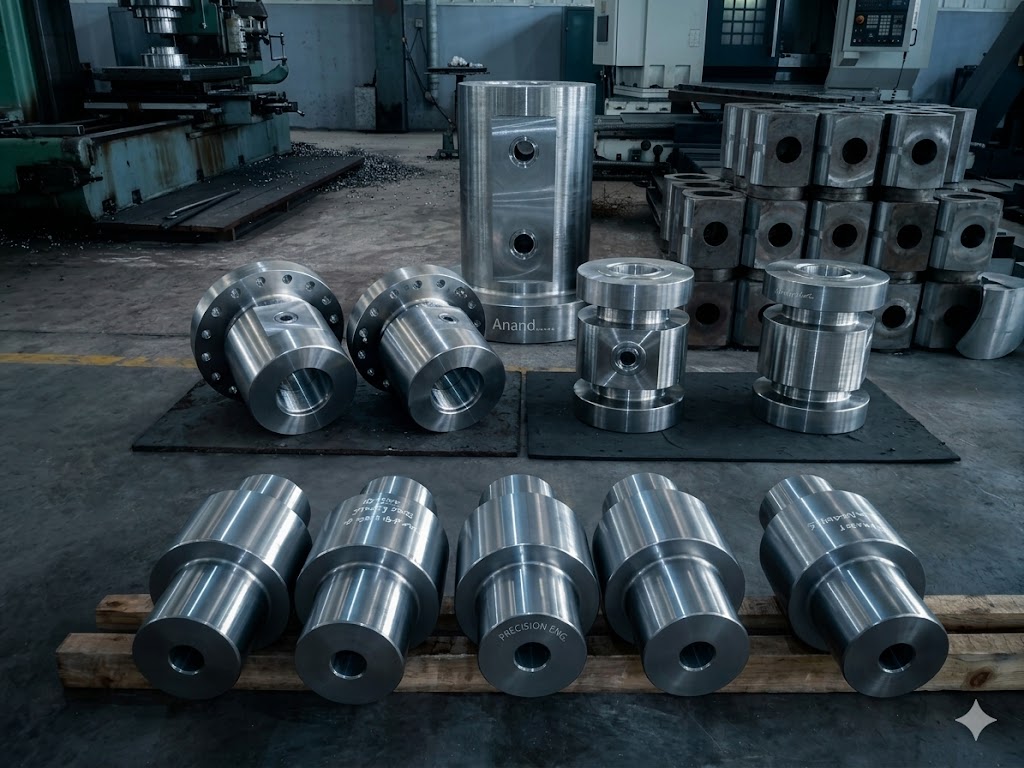
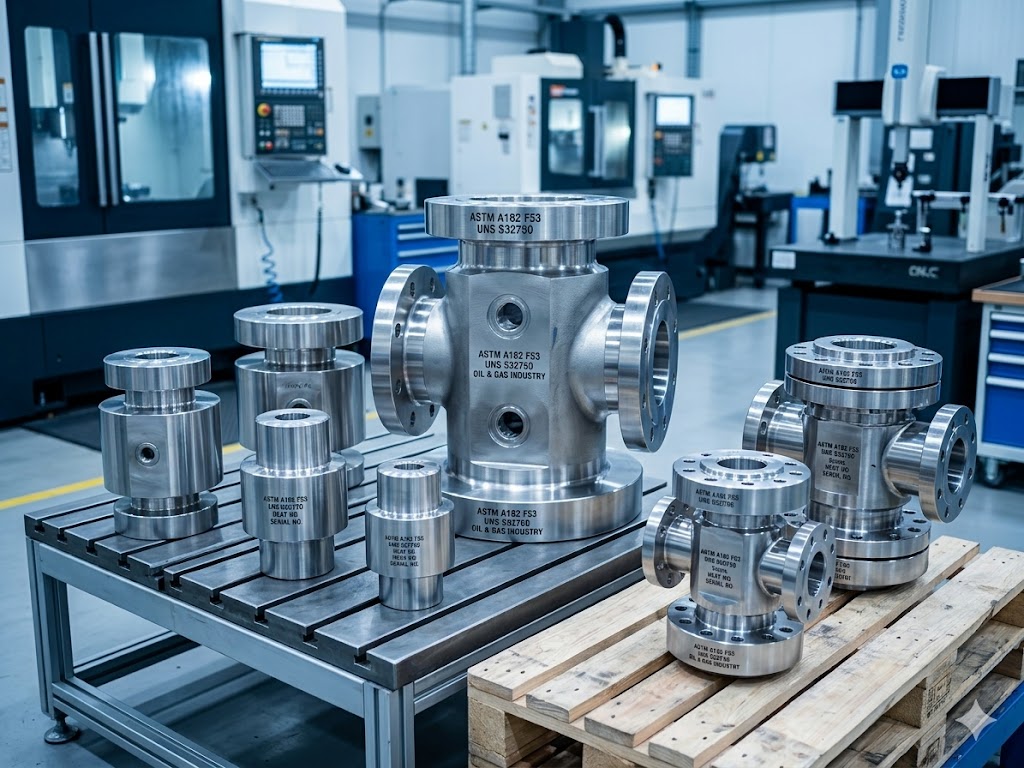
ASTM A182 Grade F53 / UNS S32750 / 2507 Super Duplex Stainless Steel Forged Parts
Quick Reference – Three Names, One Alloy:ASTM A182 Grade F53 (ASTM / ASME standard designation) = UNS S32750 (Unified Numbering System designation) = 2507 (trade designation, short for SAF 2507) = EN 1.4410 (European Euronorm designation) = SUS 329J4L (JIS designation).
All refer to the same super duplex stainless steel with a nominal composition of
25% Cr – 7% Ni – 4% Mo – 0.28% N and a PREN ≥ 41.
On this page, F53, UNS S32750, and 2507 are used
interchangeably and refer to identical material specifications.
Product Overview: ASTM A182 Grade F53 / UNS S32750 / 2507 Forged Parts
Jiangsu Liangyi Co., Limited is a China's leading ISO 9001:2015 certified manufacturer located in Chengchang Industry Park, Jiangyin City, Jiangsu Province, China. Our main products includeASTM A182 Grade F53, UNS S32750, and 2507 super duplex stainless steel open die forging parts and seamless rolled steel forged rings. With over 25 years of specialized forging experience, we provide a full production process from in-house steel melting, open die forging, controlled solution heat treatment to final CNC machining. All of our products fully meet ASTM A182, ASME, API, DIN, EN, JIS standards and client-specific technical drawings.
We support single-piece production from 30 kg to 30,000 kg with an annual manufacturing capacity of 120,000 tons, serving clients from more than 50 countries including the United States, Germany, Norway, Saudi Arabia, United Arab Emirates, Singapore, Australia, United Kingdom, Netherlands, Thailand, and Indonesia. Our full range of ASTM A182 Grade F53 forging products includes:
UNS S32750 (2507) seamless rolled forged rings, contoured rings, gear rings, and slewing bearing rings
2507 super duplex forged hubs, housings, shells, sleeves, bushes, casings, and heavy-wall hollow bars
UNS S32750 forged discs, disks, blocks, plates, flanged blanks, and single/double bossed blanks
A182 F53 / 2507 forged pipes, tubes, tubings, piping shells, barrels, and wellhead Christmas tree components
Custom F53 / UNS S32750 / 2507 forged parts for valves, pumps, compressors, heat exchangers, pressure vessels, and turbines
Explore our complete range of forged products on our Products Page.
UNS S32750 (2507 / F53) Material Properties & Performance Advantages
ASTM A182 Grade F53 (also designated UNS S32750 and commonly called 2507) is a premium super duplex stainless steel (SDSS).It is used for great mechanical strength of ferritic stainless steel and the excellent corrosion resistance of austenitic stainless steel. Its perfectly balanced alloy composition makes sure it can work well in the most extreme industrial settings, where there is a lot of heat, pressure, and corrosion.
Chemical Composition of UNS S32750 / 2507 / F53
The excellent performance of UNS S32750 (F53 / 2507) comes mainly from its high chromium, molybdenum, and nitrogen content, with a tightly controlled chemical composition that fully meet ASTM A182 standards:
Mechanical Properties of 2507 (UNS S32750 / F53) Forgings
All our ASTM A182 F53 / UNS S32750 / 2507 forged parts are used in a fully solution-annealed heat-treated condition, with strictly verified mechanical properties to make sure their matrix is strong and lifetime is long.
UNS S32750 / 2507 vs. 316L vs. 2205: Performance Comparison
Compared to standard austenitic stainless steels (316L) and conventional duplex stainless steels (2205/F51), ASTM A182 Grade F53 / UNS S32750 / 2507 has improved performance, so that it is the best choice material for extreme corrosive conditions.
Table 3 – F53 vs. 2205/F51 vs. 316L Performance Comparison
Performance Index
ASTM A182 F53 (Super Duplex)
2205/F51 (Duplex)
316L (Austenitic)
PREN Value
≥ 41
≥ 34
≥ 24
Critical Pitting Temperature (CPT)
≥ 50°C
≥ 35°C
≥ 15°C
Yield Strength
550 N/mm² min
450 N/mm² min
170 N/mm² min
Chloride Pitting & Crevice Corrosion Resistance
Excellent
Good
Moderate
Sour Service (H2S/CO2) Compatibility
Fully compliant with NACE MR0175 / ISO 15156
Limited sour service capability
Not suitable for sour service
Seawater Corrosion Resistance
Excellent (suitable for full seawater immersion)
Good (suitable for splash zones)
Moderate (not suitable for long-term immersion)
Specialized Forging & Heat Treatment Process for 2507 / UNS S32750 Steel
Super duplex stainless steel F53 / UNS S32750 / 2507 has extremely strict requirements for forging and heat treatment processes to avoid harmful intermetallic phase precipitation (such as sigma phase, chi phase, and chromium nitrides), which would severely reduce corrosion resistance and toughness. As a specialized F53 / UNS S32750 / 2507 forging manufacturer, we have developed a mature, fully controlled production process to make sure the great performance of every forged part. View our complete production and inspection equipment on our Equipment Page.
In-House Melting & Refining for 2507 / UNS S32750 Steel
We start from the raw material melting stage to ensure F53 steel has the highest purity and consistence. Following are advanced refining equipment we use :
Vacuum Induction Melting (VIM) + Argon Oxygen Decarburization (AOD) are used for primary melting, strictly controlling low carbon content and harmful element residuals (sulfur, phosphorus)
Vacuum Arc Remelting (VAR) / Electro Slag Remelting (ESR) are used for high-demand nuclear, offshore, and aerospace applications, improving steel density, composition uniformity, and eliminating internal defects
30t Electric Arc Furnace (EAF), Ladle Refining Furnace (LF), and Vacuum Degassing Furnace (VOD) are used for large-scale mass production, making sure all parts have stable quality.
Precision Open Die Forging & Ring Rolling of UNS S32750 / 2507
We strictly control the forging temperature range of F53 steel between 1050°C and 1230°C, with a minimum final forging temperature not lower than 980°C, to avoid harmful intermetallic phase precipitation. Our forging equipment includes:
2000T/4000T/6300T Hydraulic Forging Presses are used for open die forging, making sure the minimum forging ratio is 3:1 to refine grain distribution, improve mechanical properties, and delete internal segregation
1M/5M Seamless Ring Rolling Machines are used for F53 seamless rolled rings, achieving uniform deformation, near-net-shape forming, and reducing material waste and machining costs
0.75T–9T Electro Hydraulic Forging Hammers are used for small and medium-sized custom forgings, with strict dimensional control and flexible production scheduling
Controlled Solution Annealing Heat Treatment
We use a standardized solution annealing process for all F53 forged parts, making sure they all have a balanced 50/50 austenite-ferrite microstructure, maximized corrosion resistance and toughness, and meanwhile the residual stress is deleted.
Heating the forged parts to 1050–1100°C at a controlled rate
Holding at the target temperature for a sufficient time (typically 30–60 minutes per 25mm of section thickness) to guarantee full solution of all alloy elements
Rapid quenching in agitated water to room temperature to lock in the balanced duplex microstructure
We maintain complete time-temperature records for every heat treatment batch, with full traceability.
Precision CNC Machining & Finishing
We have a full set of advanced CNC machining centers, lathes, milling machines, drilling machines, and grinding equipment, making sure our finished F53 forged parts have tight dimensional tolerances up to IT6 level, and they can fully meet the assembly requirements of valves, pumps, compressors, and other precision industrial equipment.
Compliance & Industry Certifications for A182 F53 / UNS S32750 Forgings
Our ASTM A182 Grade F53 / UNS S32750 / 2507 forged parts are fully meet international standards and industry regulations, with complete certification support to meet the strict requirements of industrial projects around the world. We also offer a full range of other forged steel material grades on our Materials Page.
✅ ISO 9001:2015 Quality Management System (Certified)
API 6A Specification for Wellhead & Christmas Tree Equipment (Compliant Supply Capability)
NACE MR0175 / ISO 15156 Sour Service (Material Compliant)
NORSOK M-650 Offshore Material Standard (Qualification Capability)
ASME BPVC Section VIII Pressure Vessel Code (Compliant Supply)
Full Traceability & Inspection Documentation for F53 / 2507 Forgings
Every batch of our A182-F53 forged parts comes with complete mill test certification (MTC) EN10204 3.1 or 3.2 (third-party inspected), including:
Material designation, heat number, batch number, order number, and full traceability documentation from raw material to finished product
Complete chemical composition analysis report (both heat analysis and product analysis)
Full heat treatment records with detailed time-temperature curve
Mechanical property test results (tensile, impact, hardness, and high-temperature tensile if required)
Corrosion resistance test report (ASTM A262, ASTM G48, ASTM A923 if required)
Metallographic test report (microstructure, macrostructure, grain size, and austenite-ferrite phase ratio)
Nondestructive testing (NDT) records and inspector certification
3D dimensional inspection report, surface finish inspection record, cleaning verification, and packaging inspection record
Quality Assurance & Testing Protocols for 2507 Super Duplex Forgings
We conduct a full range of tests and inspections on every single piece of ASTM A182 F53 / UNS S32750 / 2507 forged parts to make sure all parts meet international standards and customer specifications, deleting any quality risks before delivery.
Full-Process Testing & Inspection for UNS S32750 / 2507 Parts
Raw Material Inspection: we check the raw materials with an optical emission spectrometer (OES) to see what chemicals are in them, ultrasonic testing (UT) to find internal defects, and a visual inspection.
Forging Process Inspection: Monitor real-time temperature by infrared thermometer, forging ratio control, and dimensional inspection during production
Heat Treatment Verification: Record full process by automated temperature control system, and microstructure inspection after heat treatment to ensure balanced austenite-ferrite ratio
Mechanical Property Testing: Test tensile (ASTM A370, E8/E8M), high temperature tensile (ASTM E21), Charpy V-Notch impact (ASTM A370, E23) and stress rupture (ASTM E139 if required)
Corrosion Resistance Testing: Test ASTM A262 intergranular corrosion , ASTM G48 pitting and crevice corrosion , and ASTM A923 duplex steel phase structure and corrosion
Metallographic Testing: Test microstructure (ASTM E407), macrostructure (ASTM E340, E381), and analysis grain size and austenite-ferrite phase ratio measurement
Nondestructive Testing (NDT): Test Ultrasonic (UT) ASTM A388, Magnetic Particle Testing (MT), Penetrant Testing (PT) ASTM A745, and MIL-STD-2154 if needed
Final Inspection: 3D dimension test by CMM (Coordinate Measuring Machine), surface finish inspection, cleaning verification, and packaging inspection
UNS S32750 / 2507 Industrial Applications & Global Project Cases
ASTM A182 Grade F53 / UNS S32750 / 2507 forged parts are used in extreme industrial conditions that nee both high mechanical strength and excellent resistance to chloride corrosion, pitting, crevice corrosion, and stress corrosion cracking. Our F53 forgings have been applied in projects across more than 50 countries around the world, with proven performance in the harshest working conditions.
2507 / UNS S32750 Forgings for Oil & Gas: Upstream, Midstream & Downstream
This is the largest application area of A182-F53 super duplex steel forgings, where the material's excellent resistance to sour service and high strength provide excellent value. Following are our proven GEO-targeted project cases:
Supplied A182-F53 forged blowout preventer (BOP) bodies, RAM blocks, annular components, and wellhead Christmas tree parts for ARAMCO offshore oilfield projects in Saudi Arabia. All parts met API 6A and NACE MR0175 standards, solving severe corrosion problems in high H2S/CO2 (15% H2S, 30% CO2) sour service environments
Provided F53 forged casing heads, tubing heads, casing hangers, tubing hangers, and tubing spools for multiple offshore projects in the North Sea (Norway/UK).All parts met NORSOK M-650 and NORSOK M-630 standards, and they worked well in ultra-high pressure up to 15,000 PSI and low temperatures down to -20°C
Provided A182-F53 forged drilling tools, risers, connectors, drill collars, and mud motor splined drive shafts for onshore and offshore oilfield projects in the United States (Gulf of Mexico) and Canada.All parts have excellent wear and corrosion resistance in extreme downhole conditions
F53 / 2507 Valve & Fluid Control System Components
We are a long-term strategic supplier of F53 forged valve parts to leading valve manufacturers around the world, and our products are used for petrochemical pipelines, LNG terminals, seawater desalination plants, and industrial fluid control systems. Following are the main applications .
We made custom forged A182-F53 valve bodies, bonnets, balls, stems, seat rings, discs, and closures for ball valves, gate valves, check valves, globe valves, and butterfly valves for LNG receiving terminals in Singapore and Malaysia. All parts had reliable performance in cryogenic (-40°C) and corrosive conditions
We supplied F53 high-performance butterfly valve (HPBV) shafts and parts for seawater circulating systems in Middle East desalination plants (Saudi Arabia, UAE). All parts had excellent resistance to seawater chloride corrosion and biofouling
We Made A182-F53 forged flow meter bodies, venturi cone meter components, and oil measurement valve spools for petrochemical pipelines in Europe (Germany, Netherlands), all parts had accurate dimensions and long-term corrosion resistance
Petrochemical, Power & Process Industries
A182-F53 super duplex steel forgings are the best choice material for pressure equipment in corrosive process environments.Following are the main applications .
We supplied F53 forged tube sheets, baffle plates, nozzles, channel flanges, shells, and pressure vessel nozzles for heat exchangers, pressure vessels, reactors, and boilers for large-scale petrochemical plants in Thailand and Indonesia, and all part had long lifetime in acidic and chloride-containing process media
We provided A182-F53 forged transition cones, flanged blanks, and custom parts for chemical plants in Germany and the Netherlands, and all parts meet PED 2014/68/EU and ASME BPVC Section VIII standards
We Made F53 forged pump casings, impellers, shafts, wear rings, and housings for industrial pumps and seawater pumps, and all parts had excellent resistance to erosion and corrosion in high-velocity fluid conditions
Nuclear Power & Power Generation
Our ASTM A182 F53 forgings meet the strict safety requirements of the nuclear power industry. Following are the main applications .
We supplied A182-F53 forged nuclear reactor coolant pump casings, containment seal chambers, and related components for multiple nuclear power plants in Asia, with full material traceability and the most stringent safety and performance testing
We provided F53 forged turbine and compressor labyrinth shaft seals, centrifugal compressor impellers, and shrouded impellers for thermal power plants and gas turbine systems in Europe and the Middle East
Marine, Offshore & Desalination Industries
With excellent seawater corrosion resistance, A182-F53 forgings are used for marine and offshore engineering, including shipbuilding systems, offshore platform parts, seawater desalination equipment, and submarine pipeline systems. We have supplied to clients in Australia, Norway, Singapore, and other coastal countries around the world.
Frequently Asked Questions (FAQ)
Yes — ASTM A182 Grade F53, UNS S32750, and 2507 are three different designations for the exact same super duplex stainless steel alloy:
ASTM A182 Grade F53 — the ASTM/ASME standard designation for the forged product form. It is used in purchase orders, mill test certificates, and engineering specifications that cite ASTM standards.
UNS S32750 — the Unified Numbering System designation for the base alloy composition (25%Cr–7%Ni–4%Mo–0.28%N). It is used across all product forms (bar, plate, pipe, forgings) and all ASTM/ASME specifications.
2507 (or SAF 2507) — a trade name originally coined by Sandvik, now universally used as a generic shorthand for this alloy. You will see "2507 forged rings" or "2507 flanges" used interchangeably with F53 and UNS S32750 in commercial contexts.
EN 1.4410 (X2CrNiMoN25-7-4) — the European EN equivalent; JIS SUS 329J4L — the Japanese equivalent; 022Cr25Ni7Mo4N — the Chinese GB/T equivalent.
When ordering forgings, specify ASTM A182 Grade F53 (or ASME SA-182 Grade F53) as the material standard , which guarantees the same alloy chemistry as UNS S32750 / 2507 plus the required mechanical property, heat treatment, and inspection requirements for forged product forms.
ASTM A182 F53 (UNS S32750) is a super duplex stainless steel, while F51 (UNS S31803) is a standard duplex stainless steel. F53 has higher chromium (24–26% vs 21–23%), molybdenum (3–5% vs 2.5–3.5%), and nitrogen content, so that it has a higher PREN value (≥41 vs ≥34), better pitting and crevice corrosion resistance, higher strength. F53 fully meets NACE MR0175 / ISO 15156 sour service requirements, and it is a better choice for much harsher corrosive environments than F51.
The recommended maximum continuous working temperature for ASTM A182 F53 is 315°C (600°F) in oxidizing environments. In reducing environments, the maximum operating temperature is lower.When exposed to temperatures between 300–900°C for extended periods, harmful intermetallic phases such as sigma phase and chi phase may precipitate, which drastically reduce the material’s toughness and corrosion resistance. Therefore, long‑term service in this temperature range is not recommended.For cryogenic applications, F53 can be used down to -50°C while maintaining excellent Charpy impact toughness.
Yes, ASTM A182 F53 fully meet NACE MR0175 / ISO 15156 standards for sour service environments. Its high chromium, molybdenum, and nitrogen content provides excellent resistance to sulfide stress cracking (SSC), hydrogen-induced cracking (HIC), and stress-oriented hydrogen-induced cracking (SOHIC), so that it the best choice material for oil and gas production equipment in high H2S/CO2 sour wells.
The standard heat treatment for ASTM A182 F53 forgings is solution annealing: forged parts are heated to 1050–1100°C and held sufficiently (typically 30–60 minutes per 25 mm of section thickness) to make sure all alloying elements getfull dissolution .This is followed by rapid quenching in agitated water down to room temperature.This process delivers a balanced 50/50 austenite‑ferrite microstructure and maximizes the material’s corrosion resistance and mechanical properties. Post‑weld heat treatment uses the same temperature range.
Yes, we specialize in custom ASTM A182 F53 forged parts based on client's detailed drawings, material requirements, quantity, and technical specifications. We can produce custom forgings with a single-piece weight from 30 kg to 30,000 kg, with full CNC machining, heat treatment, and testing support. Please send your detailed information to sales@jnmtforgedparts.com for a detailed quotation within 24 hours.
The European EN equivalent of ASTM A182 Grade F53 (UNS S32750) is EN 1.4410, listed asX2CrNiMoN25-7-4 under EN 10088, EN 10272 and EN 10028-7. In Germany, it is referred to by Werkstoffnummer W.Nr. 1.4410. Its Japanese JIS equivalent is SUS 329J4L , the Chinese GB/T equivalent is 022Cr25Ni7Mo4N, and the most widely recognized global trade name is SAF 2507 (from Sandvik / Outokumpu). All these designations represent the same super duplex stainless steel with a nominal composition of 25%Cr – 7%Ni – 4%Mo – 0.28%N. Refer to the complete international cross‑reference table above for full details.
Yes, ASTM A182 F53 can be welded using GTAW/TIG, GMAW/MIG, SMAW, or SAW processes. The recommended filler metal is AWS ER2594 (UNS S32594) wire for TIG/MIG welding, andE2594 electrode for SMAW — these are overalloyed relative to the base metal to compensate for nitrogen loss during welding. Main welding parameters include no preheat required, a maximum interpass temperature of 150°C, a heat input range of 0.5–2.5 kJ/mm, and the use of pure argon or Ar + 2% N₂ as shielding gas. If post-weld heat treatment (PWHT) is required by the design code, full solution annealing at 1050–1100°C plus water quench must be used, while low-temperature stress relief is not suitable for F53.
ASTM A182 F53 / UNS S32750 / 2507 and Inconel 625 (UNS N06625) are both used for highly corrosive applications, but they have different performance and cost profiles:
Corrosion resistance: Inconel 625 has a higher PREN (~51) versus F53 (≥41), so that it is the best chocie material for the most extreme chloride, oxidizing acid, and seawater splash environments ,especially above 80°C. F53 is fully adequate for most offshore, sour service, and seawater applications below 315°C at a significantly lower cost.
Strength: F53 has a higher yield strength (550 N/mm² min) than annealed Inconel 625 (~275 N/mm²), that means F53 forgings can be made with thinner walls for pressure-bearing applications.
Cost: Inconel 625 contains approximately 60% nickel and 9% molybdenum, which makes its raw material cost typically 4 to 6 times higher than that of F53. For most oil and gas, valve, and process industry applications, F53 provides more than 90% of the corrosion performance at just 20–25% of the material cost.
Weldability: They both can be welded well, but Inconel 625 is more forgiving with heat input; F53 needs strict interpass temperature control.
Recommendation: Choose F53 / UNS S32750 for offshore wellheads, valves, heat exchangers, and sour service applications where operating temperatures are below 315°C. Choose Inconel 625 for severely oxidizing acid service, high-temperature chloride environments above 80°C, or when seawater immersion temperatures exceed F53’s Critical Pitting Temperature (CPT).
Both F53 (UNS S32750 / SAF 2507) and F55 (UNS S32760 / Zeron 100) are super duplex stainless steels (SDSS) with similar nominal compositions and PREN ≥ 40. Following are their main differences:
Copper content: F55 / UNS S32760 contains 0.5–1.0% copper, which improves resistance to sulfuric and phosphoric acids. F53 / UNS S32750 has ≤ 0.5% copper, making it slightly better in chloride-dominant environments.
Tungsten: F55 / UNS S32760 contains 0.5–1.0% tungsten, which contributes to its corrosion resistance in reducing acid environments. F53 / UNS S32750 contains no tungsten.
PREN: Both ≥ 40–42, essentially equivalent pitting resistance for most practical applications.
Standards: F53 is covered by ASTM A182 (forgings), A479 (bar), A240 (plate). F55 is covered by the same ASTM family under UNS S32760. Both are listed in NACE MR0175 / ISO 15156.
Availability: F53 / UNS S32750 / 2507 is significantly more widely available and has a larger installed base than F55 / Zeron 100. Lead times for F53 forgings are generally shorter.
Recommendation: Specify F53 / UNS S32750 for standard offshore, oil & gas, and seawater applications; F55 / UNS S32760 should only be considered if the process fluid specifically requires acid resistance beyond F53's capability or if the design specification explicitly calls for Zeron 100.
PREN (Pitting Resistance Equivalent Number) is a calculated index used to rank the chloride pitting corrosion resistance of stainless steels. The standard formula is:
PREN = %Cr + 3.3 × %Mo + 16 × %N
For 2507 / UNS S32750 / F53, with a typical composition of 25.3%Cr + 3.9%Mo + 0.278%N:
PREN = 25.3 + (3.3 × 3.9) + (16 × 0.278) = 42.8
Why the ≥ 41 threshold matters:
Materials with PREN < 25 (e.g., 316L ≈ 24) are susceptible to pitting in seawater at ambient temperature.
Materials with PREN 34–40 (e.g., standard duplex 2205/F51 ≈ 35) are suitable for splash zones and moderately chloride-laden environments.
Materials with PREN ≥ 40 (super duplex: 2507/F53, Zeron 100/F55) are needed for full seawater immersion, offshore platform structural members, seawater injection systems, and subsea equipment.
NORSOK M-650 and many offshore operator specifications explicitly need PREN ≥ 40 for seawater-wetted surfaces and ≥ 41 for sour service important parts
Jiangsu Liangyi verifies and reports the actual PREN of every heat of F53 / UNS S32750 / 2507 material in the mill test certificate (MTC), calculated from the certified chemical composition analysis.
Yes — 2507 / UNS S32750 / F53 forgings are one of the premier materials for full seawater immersion service:
Critical Pitting Temperature (CPT) ≥ 50°C in 6% FeCl₃ solution per ASTM G48 Method A — in practice, actual service CPT in natural seawater (3.5% NaCl) is significantly higher, typically above 70–80°C, well above ambient seawater temperature.
Chloride concentration tolerance: Resistant to pitting in seawater chloride concentrations up to ~35,000 ppm (natural seawater) at temperatures below 50°C under unstressed conditions.
Crevice corrosion: ASTM G48 Method B Critical Crevice Temperature (CCT) ≥ 35°C for F53 / 2507, meaning it resists crevice attack in seawater at ambient temperature — unlike 316L (CCT ≈ 0°C) or even standard duplex 2205 (CCT ≈ 17°C).
Limitation: In stagnant, warm (>50°C), highly concentrated brine (>100,000 ppm Cl⁻), or with severe crevice geometry, even F53 / 2507 may experience pitting. In such extreme conditions, titanium Grade 2 or Inconel 625 may be needed.
F53 / UNS S32750 / 2507 is generally suitable for service down to -50°C, but it is not a primary cryogenic material. Following are main considerations:
Charpy impact at -46°C: ASTM A182 F53 forgings in solution-annealed condition typically get 80–130 J at -46°C (well above most code minimums of 27 J). Our Case #JL-F53-2023-047 achieved 112 J average at -46°C.
Lower limit: The material standard does not guarantee impact toughness below -50°C.The ferritic phase in duplex steels undergoes a ductile-to-brittle transition at cryogenic temperatures, making fully austenitic stainless steels (316L, 304L) or 9% nickel steel the preferred materials for LNG applications at -165°C.
LNG valve application: F53 / 2507 forged valve bodies and stems are commonly used in LNG receiving terminals for service at -40°C to -50°C — this is within its confirmed performance range. For the coldest parts of an LNG system (-165°C), 304L or 316L austenitic stainless or Invar is used instead.
NORSOK requirement: Many North Sea projects need Charpy testing at -46°C per NORSOK M-650. We routinely perform and certify this test for all F53 / UNS S32750 offshore forgings.
Material substitution (passing off cheaper stainless steel as F53 / UNS S32750 / 2507) is a known risk in the supply chain around the world. Here is how to protect yourself and how we guarantee authenticity:
Chemical composition by OES (Optical Emission Spectrometer): The most reliable field verification method. Chromium must be 24–26%, Molybdenum 3–5%, Nitrogen 0.24–0.32%. Common substitutes (316L, 2205) will fail on Mo and N content immediately.
PREN calculation: Calculate PREN from the MTC chemistry. If PREN < 41, the material does not meet F53 / UNS S32750 specification regardless of what the certificate states.
Hardness check: F53 / 2507 in solution-annealed condition: ≤ 270 HB (≤ 28 HRC). Values significantly below 220 HB may indicate a softer, lower-alloy substitute.
Heat number traceability: Every heat of genuine F53 must have a traceable heat number from steelmaker to forging to finished product. Request EN 10204 3.1 or 3.2 MTC from a recognized steelmaker (Outokumpu, Sandvik, Acerinox, Yieh United).
Third-party inspection: For important applications, specify EN 10204 3.2 MTC — witnessed by an independent inspection body (Bureau Veritas, SGS, TÜV, Intertek, DNV GL) at our factory.
Jiangsu Liangyi provides full heat number traceability from melt to finished forging, with OES composition results included in every MTC. Third-party witnessed inspection is available for all orders.
The price of F53 / UNS S32750 / 2507 forged parts depends on alloy content, order size, and certification needs. As a general market reference (ex-works China, rough forging condition, Q1 2024 basis):
Carbon steel (A105): Baseline × 1.0
Stainless 316L (A182 F316L): Approximately × 3.5–4.5 vs. carbon steel
Duplex 2205 (A182 F51): Approximately × 5.0–6.5 vs. carbon steel
Super Duplex F53 / UNS S32750 / 2507: Approximately × 7.5–10 vs. carbon steel; roughly 1.5–2× the price of 316L by weight
Inconel 625: Approximately × 25–35 vs. carbon steel — 3–4× the price of F53 / 2507
Factors that increase F53 / 2507 forging unit price: low order quantity (single piece), complex custom profile, machining, third-party inspection (EN 10204 3.2), API 6A PSL 3, NORSOK M-650, or ESR/VAR melt route.
Jiangsu Liangyi provides factory-direct pricing, typically 30–45% lower than European or North American forging facilities for equivalent quality and certification.This is supported by our project references: a 34% cost saving compared with a European mill in Case #JL‑F53‑2022‑118, and a 44% saving versus a German forging house in Case #JL‑F53‑2024‑031.
Contact sales@jnmtforgedparts.com with your specifications for a competitive quotation within 24 hours.
We have no strict minimum order quantity for F53 / UNS S32750 / 2507 forgings. We regularly accept one piece sample orders. Following are normallead times are:
Standard rough forgings (round bars, discs, rings — no complex machining): 4–8 weeks after order confirmation and drawing approval
Custom open die forgings with CNC finish machining:8–12 weeks .Actual lead time depends on clients drawings, dimensional tolerance, and surface finish requirements
Large forgings (>5,000 kg/piece) or ESR/VAR melt route:10–16 weeks due to extended melting, forging, and heat treatment cycles
Third-party witnessed inspection (EN 10204 3.2): Add 1–2 weeks for inspection body scheduling. We coordinate with Bureau Veritas, SGS, TÜV, DNV GL, and Intertek on behalf of clients.
Emergency / expedited orders: Available for select standard sizes in near-net-shape rough forging condition. Contact us to discuss availability of priority production slots.
We can keep semi-finished forging stock (round bars and ring blanks) in main F53 / 2507 sizes to cut lead time down to 2–4 weeks for repeat orders and long-term supply agreements. Please tell us how much you need each year so we can make a supply agreement just for you.
Jiangsu Liangyi holds the following factory certifications and works with all major international third-party inspection bodies:
Factory certifications held: ISO 9001:2015 (Quality Management), API 6A (Wellhead & Christmas Tree Equipment), PED 2014/68/EU (Pressure Equipment Directive — EU market), NACE MR0175 / ISO 15156 (Sour Service), NORSOK M-650 Rev.5 (Offshore Material Standard), ASME BPVC Section VIII (Pressure Vessel)
MTC types available: EN 10204 2.1 (Declaration of compliance), EN 10204 2.2 (Test report), EN 10204 3.1 (Mill certificate — validated by manufacturer's own QC), EN 10204 3.2 (Mill certificate — witnessed and validated by independent third party)
Third-party inspection bodies we regularly work with: Bureau Veritas (BV), SGS, TÜV Rheinland, TÜV SÜD, DNV GL, Lloyds Register (LR), Intertek, RINA, APAVE, China Classification Society (CCS)
Additional project-specific standards: We can also make and certify to ASME NCA-3800 (Nuclear Component Certificates), ATEX / IECEx (Explosive Atmospheres), and customer-specific inspection and test plans (ITP) upon request.
For all offshore and extreme oil & gas conditions, we recommend specifying EN 10204 3.2 with your preferred inspection body. We will coordinate inspection scheduling and provide all required documentation in advance.
F53 / UNS S32750 / 2507 is a tough, work-hardening material that needs specific machining practices. Our CNC machining capabilities for F53 forged parts include:
Dimensional tolerances: Standard IT7–IT8 (e.g., ±0.05–0.10 mm for bores and shafts); tight tolerance IT6 (e.g., ±0.015–0.025 mm) for valve seats, bearing bores, and seal faces available on request
Surface finish: As-machined Ra 3.2–6.3 µm (standard); Ra 1.6 µm (fine machined); Ra 0.8 µm (ground finish); Ra <0.4 µm (polished/electropolished) available for special applications
Roundness / cylindricity: it is ≤ 0.015 mm for precision bores and shafts
Flatness: it is ≤ 0.03 mm per 300 mm for precision flanges and tube sheet faces
Bore position accuracy (multi-hole patterns): it is≤ ±0.05 mm positional tolerance for drilled tube sheet patterns — as demonstrated in Case #JL-F53-2024-031, where 1,847 bores were held to ±0.038 mm max positional deviation
Thread machining: UN, UNF, UNEF, BSP, NPT, Metric threads; thread gauging to 2A/2B and 3A/3B class
F53 / 2507 machining tip: use sharp carbide or ceramic inserts, high-volume coolant, low cutting speeds, and avoid built-up edge — this alloy work-hardens more rapidly than conventional austenitic stainless steels. Our skilled machinists use dedicated tooling programs for UNS S32750 to ensure stable surface finishes and tight dimensional accuracy.
Jiangsu Liangyi's forging capability for F53 / UNS S32750 / 2507 covers a wide range:
Minimum single-piece weight: it is 30 kg — suitable for small valve bodies, flanges, hubs, and precision forgings
Maximum single-piece weight: it is 30,000 kg (30 tonnes) — suitable for large pressure vessel heads, heavy-wall cylinders, large ring forgings, and nuclear reactor components
Maximum diameter for ring/disc forgings: approximately Ø 3,500 mm outer diameter
Maximum length for bar/cylinder forgings: approximately 6,000 mm
Annual total capacity: 120,000 tonnes across all materials
Main equipment for large F53 forgings: 6,300-tonne hydraulic forging press (open die); 5-metre diameter seamless ring rolling mill; large-capacity solution annealing furnaces with 120-tonne load capacity
For forgings over 5,000 kg, we recommend specifying the VIM+AOD+ESR (Vacuum Arc Remelting) or VAR melting process to get full chemical homogeneity, minimize macro-segregation, and maximize through-thickness property uniformity. This is especially important for F53 / 2507 forgings meeting NORSOK M-650 and nuclear-grade needs.
All F53 / UNS S32750 / 2507 forged parts are packed and shipped according to international export standards to make sure parts arrive in perfect condition:
Standard packaging: Individual rust-prevention oil coating or VCI (Volatile Corrosion Inhibitor) film wrapping; wooden export pallet or wooden crate (ISPM 15 heat-treated wood for all export shipments); individual parts labelled with heat number, order number, piece number, and weight
Precision machined parts: Protective end caps on all machined bores, threads protected with plastic plugs, all machined faces wrapped with foam + plastic sheet; parts individually bagged in VCI poly bags before crating
Pickled & passivated surfaces: Bright pickled surfaces wrapped in clean non-chloride paper + VCI film; no direct contact with bare metal or steel strapping
Shipping methods: Sea freight (FCL or LCL) from Shanghai, Ningbo, or Tianjin port; air freight for urgent small orders; courier (DHL / FedEx) for document-only or very small sample shipments
Incoterms available: EXW (Ex Works Jiangyin), FOB (Shanghai / Ningbo), CIF, CFR, DAP — to suit client's logistics needs.
Export documentation: Commercial invoice, packing list, bill of lading, certificate of origin (Form A / CO), and EUR.1 movement certificate for shipments to the EU; all MTCs and inspection papers are in a sealed envelope with the shipment.
Jiangsu Liangyi accepts the following payment terms for F53 / UNS S32750 / 2507 forging orders:
Standard new clients: 30% T/T deposit upon order confirmation + 70% T/T before shipment (against copy of MTC and packing list)30% T/T deposit when the order is confirmed and 70% T/T before shipping (with a copy of the MTC and packing list).
Established clients (after 3+ successful orders):a 30% deposit and 70% against shipping documents (Bill of Lading) are required. For approved accounts, payment can also be made within 30 or 45 days of receiving an invoice.
Large orders (>USD 200,000): Irrevocable Letter of Credit (L/C) at sight — issued by a top-tier international bank, confirmed by our bank
Sample / prototype orders (<USD 5,000): 100% T/T in advance
Wire transfer: SWIFT T/T to our designated corporate bank account (details provided on proforma invoice)
We don't take PayPal or bank transfers from people. All transactions are done through official corporate banking channels, and there are official proforma invoices and commercial invoices to prove it.
Yes — we actively encourage material qualification testing before large production orders. Our sample and qualification programme for F53 / UNS S32750 / 2507 forgings includes:
Sample forgings: We can produce 1–3 pieces of forging profile that you need for qualification testing. Minimum sample order weight: 30 kg. Samples are produced from a certified production heat with full MTC documentation — not from off-cuts or scrap material.
Test coupon sets: For material qualification testing without producing full forgings, we can supply certified test coupons (round bars or plate sections cut from a qualified F53 / UNS S32750 heat) with EN 10204 3.1 MTC for client-side testing in their own laboratory.
NORSOK M-650 / API 6A Pre-Qualification: For projects that need NORSOK M-650 Rev.5 Qualification Test Record (QTR) or API 6A material qualification, we can run a full qualification campaign — including all mechanical tests, corrosion tests, metallographic tests, and weld procedure qualification ,and we can provide the complete QTR for client and operator review before production order placement.
Turnaround: Qualification samples normaly are shipped within 3–5 weeks of order. Full NORSOK QTR qualification campaign: 8–12 weeks including third-party witnessed testing.
We believe qualification testing is an essential investment that protects both parties. Contact sales@jnmtforgedparts.com to discuss your qualification requirements and we will prepare a qualification test plan within 48 hours.
UNS S32750 (F53 / 2507) Physical & Thermal Properties
ASTM A182 Grade F53 / UNS S32750 / 2507has great mechanical and corrosion resistance, it also has good physical and thermal properties that are important for engineering design, stress analysis, and material selection calculations. The following data is measured at room temperature (20°C) in the solution-annealed condition unless otherwise noted:
Design note: F53 has a lower thermal expansion coefficient than fully austenitic grades (e.g., ~16×10⁻⁶/°C for 316L), which lowers thermal stress in high-temperature cyclic service.Its higher thermal conductivity versus austenitic stainless steels also provides clear benefits in heat exchanger design, boosting overall heat transfer efficiency.
Equivalent Grades & International Standard Cross-Reference
There are three names for the same super duplex stainless steel alloy: ASTM A182 Grade F53, UNS S32750, and 2507. These names are used in different international standards.The table below helps engineers and procurement teams find grades that are the same when they are working with material specifications from Europe, Germany, the UK, Japan, or China. All grades listed below refer to the same super duplex stainless steel alloy with equivalent nominal composition (25Cr-7Ni-4Mo-0.28N):
Important note: While the grades mentioned above share the same nominal alloy composition, minor differences may exist between national standards in allowed composition ranges, mechanical property requirements, heat treatment conditions, and inspection criteria. Always confirm the applicable standard and its revision with your project engineer prior to final material selection. Jiangsu Liangyi can supply F53 forgings certified to any of the above standards upon request.
2507 / UNS S32750 Weldability & Welding Requirements
ASTM A182 Grade F53 / UNS S32750 / 2507 super duplex stainless steel has good but demanding weldability.Due to its high alloy content and the need to maintain a balanced austenite‑ferrite microstructure in both the weld metal and heat‑affected zone (HAZ), welding of F53 needs strict process control. If procedures are not proper they will result in excessive ferrite, sigma phase precipitation, or degraded corrosion resistance.
Recommended Welding Processes
GTAW / TIG (Gas Tungsten Arc Welding):it is the best method for root passes and thin-section welds because it can control the heat input and makes clean weld metal.
GMAW / MIG (Gas Metal Arc Welding): It is the best method for fill and cap passes on thicker sections. Use Ar + N₂ shielding gas.
SMAW / MMA (Shielded Metal Arc Welding): It is suitable for site welding and repair welding. Use low-hydrogen basic electrodes.
SAW (Submerged Arc Welding): Suitable for large-section welds in factory conditions. Requires careful flux selection and heat input control.
FCAW (Flux-Cored Arc Welding): It is used for positional welding with appropriate duplex-grade flux-cored wire.
Recommended Filler Metals
For welding ASTM A182 F53, the following filler metals (overalloyed relative to the base metal) are recommended to compensate for nitrogen loss during welding and make sure austenite content is enough in the weld metal:
Standard choice; 25Cr-9Ni-4Mo-0.25N overalloyed wire
SMAW electrode
AWS A5.4 E2594-XX
UNS S32594
Low-hydrogen basic coating; bake at 200–300°C before use
GMAW / MIG wire
AWS A5.9 ER2594
UNS S32594
Use Ar + 2% N₂ shielding gas to minimize nitrogen loss
SAW wire + flux
AWS A5.9 ER2594 + neutral flux
UNS S32594
Avoid basic fluxes that may increase carbon pickup
Dissimilar metal (to carbon steel)
AWS ER309LMo or Inconel 625
UNS S30986 / N06625
Use butter layer when joining to carbon steel substrates
Key Welding Parameters & Precautions
Preheat: Generally NOT required for F53. Preheating above 100°C is not recommended as it increases the risk of intermetallic phase formation.
Interpass Temperature: Must be kept strictly below 150°C (302°F). Use temperature-indicating crayons or infrared thermometer to verify.
Heat Input: Recommended range 0.5–2.5 kJ/mm. Excessive heat input promotes sigma phase and chi phase precipitation; insufficient heat input causes high ferrite content.
Post-Weld Heat Treatment (PWHT): If PWHT is needed by design code, apply the same If the design code requires PWHT, utilize the identical solution annealing cycle (1050–1100°C, water quench) as the base metal. F53 does not benefit from low-temperature stress relief (550–650°C), as this temperature range promotes sigma phase precipitation.
Shielding Gas: For TIG welding, use Ar or Ar + 2–3% N₂ for both torch gas and back purge gas to prevent nitrogen loss and surface oxidation.
Weld Procedure Qualification:All welding procedures must meet the standards set by ASME Section IX, AWS D1.6, or EN ISO 15614-1, and corrosion testing must be done according to ASTM A923 Method C or ASTM G48 Method A/B.
How to Order F53 / UNS S32750 / 2507 Forgings: Procurement Guide
To get an accurate quotation for custom ASTM A182 Grade F53 forged parts within 24 hours, please prepare and provide the following technical and commercial information when submitting your inquiry. The more detailed your requirements, the faster our quotation response will be:
Technical Requirements to Specify
Table 7 – Information Required for ASTM A182 F53 Forging Quotation
Category
Required Information
Example / Remark
Material Standard
Applicable ASTM / ASME / EN / other standard and revision
ASTM A182 Grade F53, Rev. 2023
Product Form
Forging type: round bar, ring, disc, block, custom shape
Seamless rolled ring, open die forged disc
Dimensions
OD × ID × Height (for rings); Diameter × Length (for bars); rough or finished machining dimensions
OD 800mm × ID 600mm × H 150mm (rough forging)
Weight per Piece
Estimated unit weight of forging (kg)
~250 kg per piece
Quantity
Number of pieces required; annual demand if repeat order
20 pieces per order, 4 orders per year
Heat Treatment
Condition required: solution annealed + water quenched (standard), or as-forged
ASTM G48 Method A/B, ASTM A923, or other specific tests
ASTM G48 Method A, 24h at 50°C, max 4.0 g/m²
NDT Requirements
Ultrasonic testing (UT) acceptance class, PT/MT if required
UT per ASTM A388, Class C
MTC Certification
EN 10204 3.1 (mill certificate) or 3.2 (third-party witnessed)
EN 10204 3.2, witnessed by Bureau Veritas
Applicable Codes
Project-specific codes: API 6A, NORSOK M-650, PED, NACE MR0175
API 6A, NACE MR0175, NORSOK M-650
Surface Finish
As-forged, shot blasted, machined, pickled & passivated, or specific Ra value
Machined to Ra 3.2 µm; outer surface pickled
Delivery Requirement
Required delivery date, port of loading, Incoterms
Ex-Works Jiangyin; ETA 8 weeks ARO
Drawing / 3D Model
PDF drawing or STEP/IGES 3D model (if custom machined parts required)
Attach DXF/PDF drawing to inquiry email
Lead Times & MOQ for UNS S32750 / 2507 / F53 Forgings
Standard forgings (round bars, rings, discs): it is 4–8 weeks after order confirmation and drawing approval, depending on weight and quantity
Complex custom forgings with full machining: it is 8–14 weeks depending on machining complexity, NDT requirements, and inspection schedule
Emergency / expedited orders: We can speed up production for urgent orders. Contact us to discuss priority production slots
Minimum order quantity (MOQ): No strict MOQ — we accept one piece sample orders.
Surface Finish & Delivery Condition Options
As-forged (black scale): Forging scale not removed; used when further customer machining is planned
Shot blasted: Scale removed by steel shot blasting; standard delivery condition for most rough forgings
Rough machined: Machined to leave 3–10mm allowance per side for final customer machining
Finish machined: CNC machined to final drawing dimensions with specified tolerances (up to IT6)
Pickled & passivated: Chemical treatment in HNO₃ + HF acid solution to remove heat tint, restore passive layer, and get bright silver surface; recommended for corrosive service parts
Electropolished: Available on request for ultra-clean surface applications (pharmaceutical, semiconductor)
F53 / UNS S32750 / 2507 Forging Delivery Case Studies
Below are three verified delivery cases for ASTM A182 Grade F53 / UNS S32750 / 2507 super duplex forged parts, selected from our production and shipping records.These examples demonstrate how Jiangsu Liangyi solved key industry challenges for international clients—including tight delivery schedules, stringent technical requirements, and complex third-party inspections—for F53 super duplex stainless steel forgings. All dimensional data, heat numbers, and inspection records are archived in our quality system and available for review upon request.
🇳🇴 Norway · North Sea · Offshore
Case #JL-F53-2023-047 | North Sea Offshore Wellhead Components – Norway
Client Profile: A Tier-1 European subsea equipment maker that makes wellhead Christmas tree assemblies for a big Norwegian operator in the Barents Sea.The client had already had trouble with another Chinese supplier who kept rejecting F53 forgings because they didn't pass ASTM G48 pitting corrosion tests and had too much ferrite in them. This caused the project to be delayed by 14 weeks and cost a lot more than planned.Problems for the Client
Client Pain Points
Previous supplier failed the ASTM G48 Method A test, with weight loss exceeding the 4.0 g/m² limit at 50°C for 24 hours across three consecutive production batches. This was traced to improper solution annealing temperature and insufficient quenching rate.
Ferrite content in the weld HAZ was measured at 68–72 FN, while the target range per NORSOK M-650 Rev.5 is 35–65 FN, indicating excessive heat input during internal welding trials.
A hard deadline required forged blanks to be delivered to the client’s machining facility in Stavanger, Norway, within 10 weeks of order placement, with zero tolerance for further delays due to rig hire commitments.
Full NORSOK M-650 Rev.5 Qualification Test Record (QTR) documentation and DNV-witnessed EN 10204 3.2 inspection were mandatory.
Order Specifications
Parameter
Detail
Material
ASTM A182 Grade F53 / UNS S32750 / EN 1.4410
Product Form
Open die forged flanged blanks (double bossed)
Quantity
24 pieces
Dimensions (rough forging)
OD 680mm × ID 210mm × H 185mm; unit weight ≈ 420 kg/pc
Total order weight
~10,080 kg
Heat Number
JL-2307-F53-A (VIM+AOD+ESR melt route)
Forging Ratio
≥ 4.5:1 (documented per forging plan)
Heat Treatment
Solution annealed 1080°C ± 5°C, hold 3.5h, agitated water quench (<60s transfer time)
ASTM G48 Method A (50°C, 24h, 6% FeCl₃): Weight loss 1.8 g/m² — well below 4.0 g/m² limit; zero pitting observed at 20× magnification
ASTM A923 Method C: No detrimental intermetallic phases detected
Ultrasonic Testing (UT, ASTM A388): All 24 pieces accepted, no recordable indications
Outcome
All 24 forged blanks passed DNV GL‑witnessed final inspection on Day 62 after order placement.Air freight for the 3 critical parts was dispatched on Day 63, while the remaining 21 pieces were shipped FOB Shanghai by sea on Day 65.All parts arrived at the client’s machining facility within the promised 10‑week window.The client recorded zero rejections during final machining and dimensional inspection, and has since placed 6 repeat orders for F53 forgings, totaling more than 380 pieces.
🇦🇪 Saudi Arabia · Sour Service · API 6A
Case #JL-F53-2022-118 | API 6A BOP RAM Blocks – Saudi Arabia (Sour Service)
Client Profile: A Houston-headquartered blowout preventer (BOP) OEM with manufacturing operations in Saudi Arabia, supplying a BOP stack for an ultra-deep (4,800m TVD) sour gas well operated by a national oil company in the Empty Quarter region. The well conditions: H₂S partial pressure 0.18 MPa (≫ NACE MR0175 threshold of 0.0003 MPa), CO₂ partial pressure 0.42 MPa, wellhead working pressure 15,000 PSI (103.4 MPa), downhole temperature 178°C.
Client Pain Points
Previous forgings from a European mill had a lead time of 28–32 weeks, with unit costs well above the client’s budget for 36 RAM block bodies. The client required a reliable alternative supplier with API 6A PSL 3 manufacturing capability.
The customer’s engineering team specified that hardness must not exceed 28 HRC (equivalent to ~270 HB) at any location on any cross-section, in accordance with NACE MR0175 / ISO 15156-3, to prevent sulfide stress cracking (SSC) in H₂S service. Several Chinese suppliers had already failed to meet this requirement in earlier qualification trials.
Full API 6A Annex F factory acceptance testing (FAT) was mandatory, including complete material traceability from melt to finished forging with an unbroken heat-number chain.
With section thicknesses up to 148 mm, the RAM blocks demanded verification of through-thickness mechanical properties, not just surface-level testing.
Order Specifications
Parameter
Detail
Material
ASTM A182 Grade F53 / UNS S32750, NACE MR0175 / ISO 15156-3 compliant
Product Form
Custom open die forged RAM block bodies (complex profile)
JL-2209-F53-B & JL-2209-F53-C (two production heats, VIM+AOD melt route)
Forging Ratio
≥ 5:1 longitudinal direction (documented per API 6A Annex F)
Heat Treatment
Solution annealed 1075°C ± 5°C, hold 5.5h (based on 148mm section), polymer-quenched + agitated water over-quench
Surface Condition
Rough machined (5mm allowance per face), critical bores finish machined to H7 tolerance
Applicable Standard
ASTM A182-22, API 6A 21st Ed. PSL 3, NACE MR0175 / ISO 15156-3
MTC Certification
EN 10204 3.2, witnessed by Bureau Veritas (BV) Houston
Main Tests Performed & Results
Through-Thickness Hardness Traverse (per NACE MR0175): 36 traverses across all pieces, maximum recorded value 24.8 HRC (248 HB) — fully meet 28 HRC / 270 HB limit with margin; zero exceedances
Charpy V-Notch (at -20°C, longitudinal + transverse): Longitudinal avg 138 J; transverse avg 104 J — all exceeded API 6A PSL 3 minimum of 54 J
SSC Resistance (NACE TM0177 Method A, 720h): Zero cracks observed on all test specimens at 85% SMYS applied stress in H₂S-saturated brine (pH 3.5)
Ferrite Content: 44–58 FN across all measurement points — balanced microstructure confirmed
Ultrasonic Testing (UT, API 6A Annex F): 100% volumetric coverage; all 36 pieces accepted with no recordable linear indications
Magnetic Particle Testing (MT): All accessible surfaces examined; no relevant indications
Dimensional Inspection (CMM): All critical dimensions within ±0.15mm of nominal; parallelism and perpendicularity within 0.08mm
Outcome
All 36 RAM block forgings were fully delivered in 16 weeks from order — compared to 28–32 weeks offered by the European mill. Unit pricing was 34% lower than the European supplier’s quote, with matching quality and certification.Bureau Veritas (Houston) issued zero non-conformance reports (NCRs) during witnessed inspection.The BOP stack was commissioned on schedule, and the client later named Jiangsu Liangyi their preferred supplier for F53 and F51 forged valve and BOP components across all global projects.
🇩🇪 Germany · PED IV · Heat Exchanger
Case #JL-F53-2024-031 | PED-Certified Heat Exchanger Tube Sheets – Germany
Client Profile: A leading German pressure vessel and heat exchanger manufacturer supplying shell‑and‑tube heat exchangers for a chlor‑alkali chemical plant in the Netherlands.Tube side process fluid: saturated chlorine gas (Cl₂) at 85°C and 4.2 bar(g); shell side: dilute HCl condensate at 70°C. A design life of 25 years with only annual planned maintenance was needed, making material selection and documentation quality important for approval by the plant’s insurance provider.
Client Pain Points
The client had received tube sheet forgings from a domestic German forging house but the unit price was €68,000 per tube sheet (4 required) — representing 41% of total heat exchanger cost; the client needed to reduce material cost without compromising PED 2014/68/EU Category IV compliance or TÜV certification eligibility
The tube sheet required a drilled layout: 1,847 tube holes of Ø25.4 mm on a 31.75 mm triangular pitch across a 960 mm diameter face. All bores needed finish machining to H8 tolerance with Ra ≤ 1.6 µm. Earlier production with a Southeast Asian supplier showed 0.12–0.18 mm positional deviation on 15–20% of holes, caused by unstable CNC fixturing for large, thin‑disc forgings.
The Netherlands plant insurer needed a Critical Pitting Temperature (CPT) test per ASTM G150 in addition to the standard ASTM G48 test, with minimum CPT ≥ 55°C — a more demanding requirement than the material standard minimum of 50°C
All 4 tube sheet forgings needed TÜV Rheinland witnessed inspection under PED Article 14 Module D1, needing our factory to hold a valid PED 2014/68/EU Quality Assurance certification at time of inspection
Order Specifications
Parameter
Detail
Material
ASTM A182 Grade F53 / UNS S32750 / EN 1.4410
Product Form
Open die forged discs (tube sheet blanks), finish machined
Macrostructure Test (ASTM E340): Sound, uniform deformation confirmed across full diameter; no center porosity, segregation bands, or pipe defects
Microstructure (ASTM E407): Balanced austenite-ferrite (48% ferrite by point count, ASTM E562); ASTM grain size No. 5–6; no sigma phase, chi phase, or secondary austenite detected
Tensile & Impact (ASTM A370): YS 583 MPa, UTS 826 MPa, Elongation 34%; Charpy at 20°C avg 187 J — all well above ASTM A182 minimums
Ultrasonic Testing (UT, EN 10228-4 Quality Class 3): 100% scan of full disc volume; no indications exceeding Class 3 acceptance criteria
Dimensional Inspection (CMM, Zeiss Contura G2): 100% bore position inspection — maximum positional deviation across all 1,847 bores: 0.038mm (vs. ±0.10mm tolerance); flatness of tube sheet faces: 0.06mm
Outcome
TÜV Rheinland witnessed inspection was completed on Day 74 after order placement, with zero NCRs and zero dimensional rejects. All 4 tube sheets were shipped CIF Rotterdam on Day 77.Total supply cost was 44% below the quotation from a German domestic forging supplier, with equivalent quality, certification, and machining scope. The plant insurer approved the heat exchangers based on a CPT test result of 62°C, exceeding the required minimum of 55°C per the insurer’s internal standard. The units entered service in Q2 2024 and successfully passed their 12-month inspection with no corrosion found in the tube-to-tubesheet joint zones.
Related Products & Grades: F53, UNS S32750, 2507 & More
In addition to ASTM A182 Grade F53 super duplex steel forgings, we also supply a full range of forged steel products in various material grades, including carbon steel, alloy steel, stainless steel, nickel alloys, and tool & die steel, they all meet ASTM, AMS, AISI, DIN, EN, JIS, and API standards. Following are our related products .
Super Duplex Stainless Steel Forgings: A182 Grade F53 / UNS S32750 / 2507 (this page), F55 / UNS S32760 / Zeron 100, F44 / UNS S31254 / 254SMO
Standard Duplex Stainless Steel Forgings: A182 Grade F51 / UNS S31803 / 2205, A182 Grade F60 / UNS S32205
Explore our full material range on our Materials Page, and view our global project references on our Reference Page.
Contact Us for a Detailed Quotation
Jiangsu Liangyi Co., Limited is your trusted China-based professional manufacturer of high-quality ASTM A182 Grade F53 / UNS S32750 / 2507 super duplex stainless steel forged parts. We will provide clients with competitive factory prices, superior quality, fast delivery, and custom forging solutions designed to your specific project requirements.
Welcome to send your custom drawings, material specifications, quantity requirements, and technical documents to our email for a detailed quotation within 24 hours!