Asian Thermal Power Plants
Supplied F91 valve bodies, bonnets and steam piping components for multiple 600MW and 1000MW supercritical power plants in China, India and Southeast Asia.
Last updated: · Content reviewed by Jiangsu Liangyi Technical Engineering Team
Jiangsu Liangyi Co., Limited, strategically located in Chengchang Industry Park, Jiangyin City, Jiangsu Province, China, is a professional ISO 9001:2015 certified manufacturer of ASTM A182-F91, ASME SA182 F91, ASME SA336 F91, ASME SA336 P91, A 335 Grade P91 and SA 335 Grade P91 open die forging parts and seamless rolled steel forged rings. With over 25 years of manufacturing experience and an 80,000㎡ production facility in China's industrial heartland, we supply high-quality F91 forged components to customers in more than 50 countries worldwide.
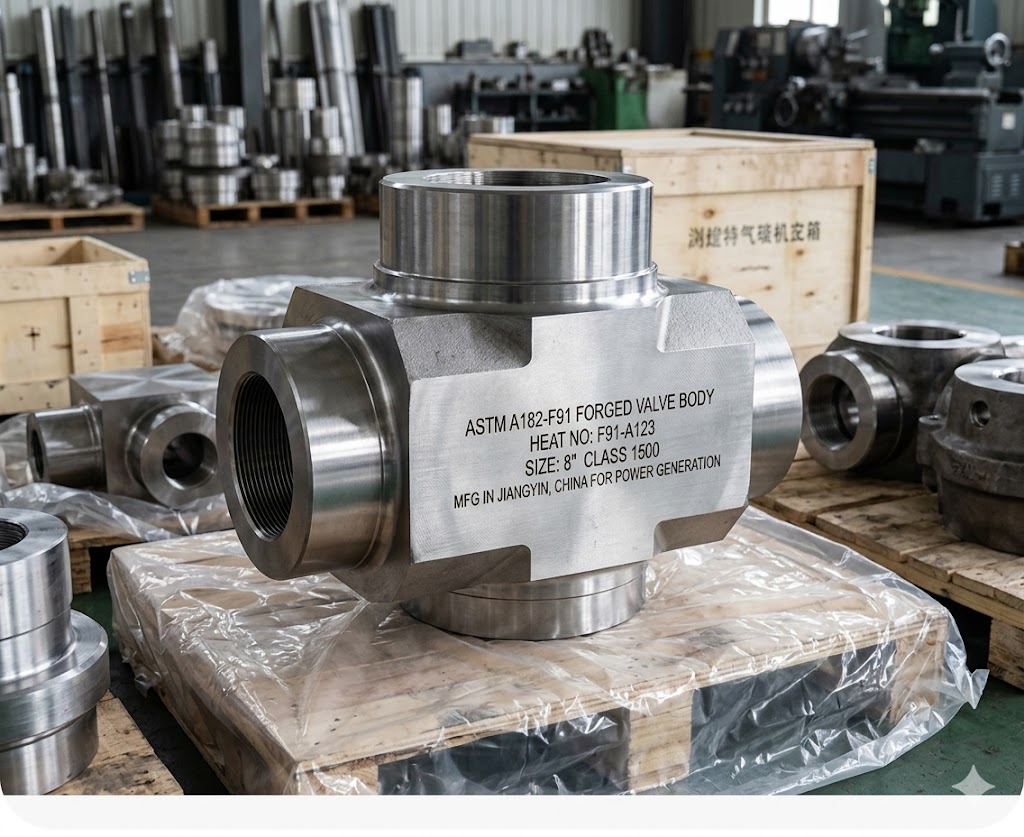
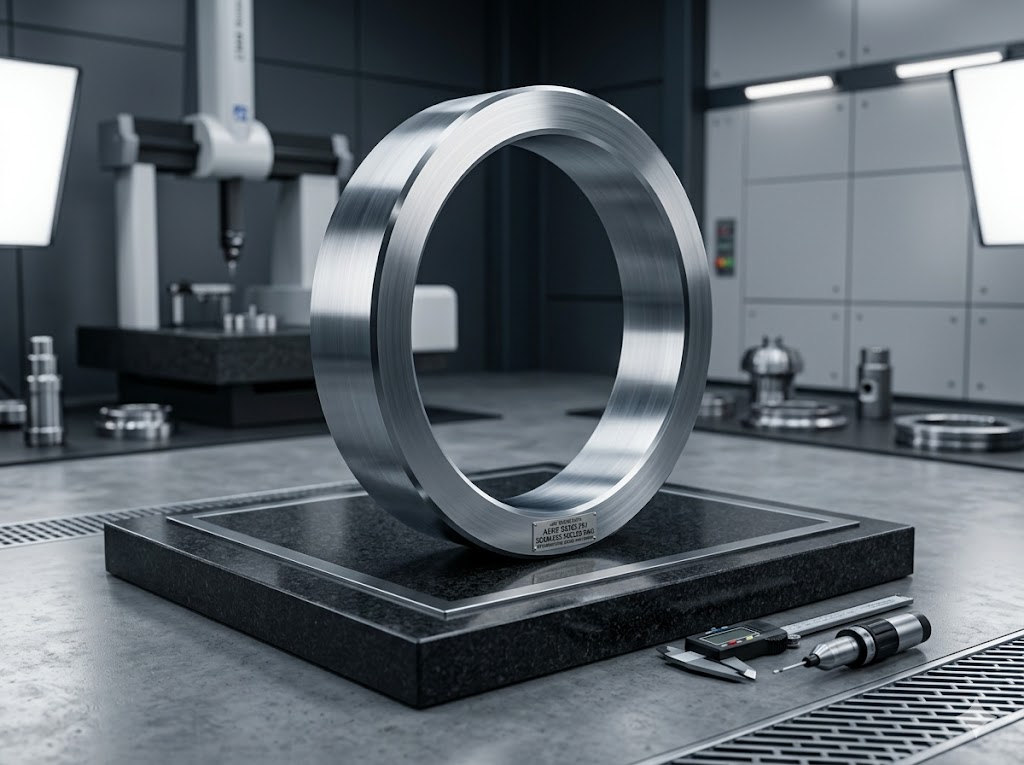
ASTM A182-F91 is a high-chromium (9% Cr) martensitic alloy steel with carefully balanced additions of molybdenum (Mo), vanadium (V) and niobium (Nb). This unique chemical composition gives F91 steel exceptional elevated-temperature mechanical properties, excellent creep resistance up to 640 °C, and superior resistance to hydrogen embrittlement under high pressure.
As the industry-standard material for supercritical and ultra-supercritical (USC) power generation equipment, F91 steel has replaced traditional carbon steels and low-alloy steels in modern power plants, so that it has higher operating temperatures and pressures, which significantly improve energy efficiency and reduce carbon emissions.
At our Jiangyin manufacturing facility, we can manufacture a comprehensive range of shapes and forms using F91 alloy steel to meet your most demanding industrial requirements. And we make parts with weights range from 30kg up to 30,000kg per single piece with an annual output of 120,000 tons.
Our Chinese-manufactured F91 forged parts are widely used in industries that require components to operate under extreme conditions of high temperature, high pressure and corrosive environments.
F91 steel is the most important material for modern supercritical and ultra-supercritical (USC) power plants operating at 550-640°C and 18-30 MPa steam conditions. Following are main area our F91 forgings are extensively used in:
Our ASTM A182-F91 forged steel valve components are designed to withstand the most severe service conditions in power plants and industrial processes:
F91 alloy steel is ideal for high-temperature and high-pressure applications in the oil, gas and petrochemical sectors:
Our high-quality F91 forged components meet the stringent quality and safety requirements of nuclear power plants:
Supplied F91 valve bodies, bonnets and steam piping components for multiple 600MW and 1000MW supercritical power plants in China, India and Southeast Asia.
Manufactured F91 high-pressure piping fittings and valve components for oil refineries and natural gas processing plants in Saudi Arabia and UAE.
Provided F91 seamless rolled rings and turbine components for combined-cycle power plants in Germany, France and the United Kingdom.
F91 steel is recognized by various international standards and is known by the following designations:
The global push toward higher thermal efficiency in coal-fired power generation during the 1980s and 1990s created an engineering challenge that conventional pressure vessel steels could not solve. Moving from subcritical steam conditions (538 °C / 16 MPa) to supercritical (566 °C / 24 MPa) and then to ultra-supercritical (USC) conditions (600–620 °C / 27–30 MPa) demands dramatically higher creep strength in the pressure-retaining components — headers, valve bodies, turbine casings and piping — that carry superheated steam for 200,000+ hours of service life.
The dominant material of the previous generation, 2.25Cr-1Mo steel (Grade F22), becomes structurally inadequate above approximately 570 °C. Its creep rupture strength at 600 °C drops to roughly 35 MPa at 100,000 hours — far too low for the wall thicknesses that USC plant economics demand. Simply using thicker F22 walls is not a viable solution: heavier components increase the thermal mass, lengthen startup and shutdown times, and introduce unacceptable thermal fatigue risk during cycling operation.
The 9Cr-1Mo-V-Nb alloy system that became ASTM A182-F91 was originally developed at Oak Ridge National Laboratory (USA) in a collaborative programme with the Japanese National Institute for Materials Science and European power engineering institutes. The key metallurgical insight was that adding precisely balanced quantities of vanadium (V), niobium (Nb) and nitrogen (N) to a 9% chromium martensitic steel creates a dual precipitation-hardening mechanism: MX-type carbonitrides (primarily VN and NbC) pin sub-grain boundaries and dislocation networks at high temperatures, while M23C6 carbides on prior-austenite grain boundaries resist grain boundary sliding. Together, these mechanisms give F91 a 100,000-hour creep rupture strength at 600 °C of approximately 90 MPa — more than 2.5× higher than F22 — while retaining good weldability and similar coefficient of thermal expansion to ferritic steels.
This combination of properties made F91 the reference material for supercritical power plant construction from the mid-1990s onward, and it remains the most widely specified 9% Cr steel in both new-build USC plants and the repair/replacement market for existing supercritical units.
Selecting the correct alloy grade is one of the most consequential decisions in high-temperature plant design. The table below compares F91 against the most common alternative grades across key engineering parameters:
| Property | F91 9Cr-1Mo-V-Nb | F22 2.25Cr-1Mo | F92 9Cr-2W-V-Nb | F11 1.25Cr-0.5Mo | F5 5Cr-0.5Mo |
|---|---|---|---|---|---|
| Max continuous service temp. | 600 °C | 570 °C | 625 °C | 530 °C | 595 °C |
| Min. yield strength (RT) | 415 MPa | 310 MPa | 440 MPa | 275 MPa | 205 MPa |
| Creep rupture strength 600 °C / 10⁵ h | ~90 MPa | ~35 MPa | ~110 MPa | ~12 MPa | ~55 MPa |
| Thermal expansion coeff. (20–600 °C) | 12.6 × 10⁻⁶ K⁻¹ | 14.5 × 10⁻⁶ K⁻¹ | 12.3 × 10⁻⁶ K⁻¹ | 13.5 × 10⁻⁶ K⁻¹ | 12.8 × 10⁻⁶ K⁻¹ |
| PWHT requirement | Mandatory (760–780 °C) | Usually required | Mandatory (760–780 °C) | Recommended | Recommended |
| Weldability | Good (strict protocol) | Excellent | Good (strict protocol) | Excellent | Good |
| Material cost (relative) | Medium | Low | High (+30–50% vs F91) | Low | Low-medium |
| Global availability | Excellent | Excellent | Limited | Good | Good |
| Primary applications | USC power, oil & gas, nuclear | Hydrocrackers, pressure vessels | Advanced USC hottest sections | Conventional power, steam piping | Refineries, oxidising atmospheres |
* Creep rupture values are average published data; actual design allowables per applicable code (ASME BPVC Section II Part D, EN 13480, etc.) should always be used for design calculations.
Disclaimer: Brand names in the filler metal table (Böhler, ESAB, Lincoln Electric, etc.) are listed for informational reference only. Jiangsu Liangyi has no commercial affiliation with these manufacturers. Always verify current product approvals and classifications with the filler metal manufacturer before use. Consult your welding engineer or procedure qualification records for final filler metal selection.
All our F91 forged materials are melted using electric furnace process (EAF) followed by argon oxygen decarburization (AOD) or Vacuum Oxygen Decarburization (VOD) to ensure ultra-low impurity levels and superior steel quality.
| Element | Minimum | Maximum |
|---|---|---|
| Carbon (C) | 0.08 | 0.12 |
| Chromium (Cr) | 8.0 | 9.5 |
| Manganese (Mn) | 0.3 | 0.6 |
| Molybdenum (Mo) | 0.85 | 1.05 |
| Vanadium (V) | 0.18 | 0.25 |
| Nitrogen (N) | 0.03 | 0.07 |
| Nickel (Ni) | - | 0.4 |
| Silicon (Si) | - | 0.5 |
| Aluminum (Al) | - | 0.04 |
| Phosphorus (P) | - | 0.025 |
| Sulfur (S) | - | 0.015 |
| Property | Value |
|---|---|
| 0.2% Yield Strength (Rp0.2) | ≥ 450 N/mm² |
| Minimum Yield Strength | 415 MPa |
| Tensile Strength (Rm) | 620 - 850 N/mm² |
| Minimum Tensile Strength | 585 N/mm² |
| Elongation (A5) | min. ≥ 20% |
| Impact Strength (Transverse, Charpy V-notch) | min. 40 J |
| Temperature (°C) | 1% Creep Limit (MPa) | Stress Rupture Properties (MPa) | |||
|---|---|---|---|---|---|
| 10⁴ h | 10⁵ h | 10⁴ h | 10⁵ h | 2×10⁵ h | |
| 500 | 253 | 213 | 289 | 255 | 245* |
| 550 | 161 | 132 | 200 | 164 | 153 |
| 600 | 98 | 77 | 122 | 90 | 81 |
| 650 | 56 | --- | 68 | 48 | 43* |
* Extrapolated values
| Temperature (°C) | 20 | 200 | 400 | 550 | 600 |
|---|---|---|---|---|---|
| Thermal Expansion Coefficient (10⁻⁶ K⁻¹) | 10.5 | 11.1 | 11.9 | 12.5 | 12.6 |
| Elastic Modulus (GPa) | 217 | 207 | 191 | 174 | 167 |
All our F91 forged parts undergo precise heat treatment to achieve the required mechanical properties and microstructure:
| Quenching and Tempering | Post-Weld Heat Treatment | |
|---|---|---|
| Hardening | Tempering | |
| 1040 °C to 1080 °C Cooling in oil (For thickness < 80mm, controlled atmosphere air cooling may be used) | 760 °C to 780 °C Holding time: 2 min per 1mm thickness, minimum 60 min Cooling in still air | 740 °C to 770 °C Holding time: 2 min per 1mm thickness, minimum 60 min Cooling in still air |
Every F91 forging produced at our Jiangyin facility undergoes rigorous quality testing to ensure compliance with international standards:
Every F91 forging that leaves our Jiangyin facility is the product of an eight-stage integrated manufacturing process — from raw steel melting through to final documentation. Unlike trading companies that buy forgings from third-party mills and re-sell them, Jiangsu Liangyi controls the entire production chain in-house, giving our customers direct traceability from heat number to finished component.
High-purity steel scrap, pre-selected by grade and analysed for tramp element content, is charged into our 50-tonne electric arc furnace and melted at temperatures above 1,600 °C. Primary oxygen lancing and slag practice are used to reduce phosphorus to below 0.025% and sulfur to below 0.020% during the oxidising phase. The resulting liquid steel is tapped at the correct carbon aim into the ladle for secondary refining.
The molten steel is transferred to our AOD vessel or VOD unit for precise alloy trimming. This stage is uniquely critical for F91 because four elements must be controlled within very narrow windows simultaneously: Carbon (0.08–0.12%) for optimum martensite stability; Aluminium (< 0.04%) to ensure nitrogen remains available for VN precipitation; Nitrogen (0.03–0.07%) as an essential strengthening element; and Vanadium (0.18–0.25%) to form stable MX precipitates. The AOD/VOD process allows us to achieve all four targets simultaneously with a precision of ±0.005% on carbon and ±0.003% on nitrogen — a level of control not achievable in a conventional EAF alone.
The refined steel is cast into ingots ranging from 1 tonne to 50 tonnes depending on final forging size, using bottom-pour casting to minimise oxide inclusions. Ingots are stripped hot and charged directly into soaking pits for homogenisation annealing at 1,180–1,220 °C for 8–16 hours. This step dissolves dendritic segregation of chromium, molybdenum and vanadium that occurs inevitably during solidification, ensuring the forged product has uniform alloy distribution throughout its cross-section — a factor that critically affects the consistency of heat treatment response and long-term creep behaviour.
Hot forging is performed using our 2,000-tonne, 4,000-tonne or 6,300-tonne hydraulic presses at a forging start temperature of 1,100–1,180 °C. Multiple forging passes with controlled reduction are applied to: break down the coarse as-cast austenite grain structure; close internal voids and shrinkage porosity inherited from the ingot; and develop the required directionality of grain flow in the finished part. For F91, we target a minimum total forging reduction ratio of 3:1 (typically 4:1–6:1 for critical valve and turbine components) and a final ASTM grain size of 5 or finer, confirmed by metallographic examination. The finishing temperature is carefully controlled above 950 °C to prevent forging into the two-phase (austenite + ferrite) region that would result in heterogeneous microstructure.
For ring-shaped components, the forged disc is pierced on our hydraulic press and pre-formed into a ring blank before transfer to our 5-metre radial-axial ring rolling machine. Ring rolling applies continuous compressive deformation in both the radial and axial directions simultaneously, producing rings with circumferential grain flow that is aligned with the primary hoop stress direction — the optimal orientation for pressure vessel and flange applications. Our ring rolling capability covers OD from 500 mm to 6,000 mm and heights from 50 mm to 1,500 mm.
This is the most critical step in the entire manufacturing process. All F91 forgings are heat treated in our ten computer-controlled electric resistance furnaces, each equipped with multiple calibrated Type-K thermocouples positioned at the top, middle and bottom of the load. Temperature uniformity within the working zone is maintained within ±10 °C throughout the holding period. Normalising at 1,040–1,080 °C transforms the deformed microstructure into a uniform austenite, which then fully transforms to martensite during controlled cooling. Subsequent tempering at 760–780 °C precipitates the M23C6 and MX particles that give F91 its characteristic creep resistance. The entire temperature–time cycle for each furnace load is recorded digitally and printed as part of the heat treatment certificate supplied with the MTC.
After heat treatment and rough machining to near-final dimensions, all F91 forgings undergo comprehensive NDE: Ultrasonic Testing (UT) per ASTM A388 using straight-beam and angle-beam techniques, covering 100% of the forging volume; Magnetic Particle Testing (MT) for surface and near-surface linear defects; and Liquid Penetrant Testing (PT) for open-surface discontinuities on machined faces. Acceptance criteria are per the applicable product standard (ASTM A182, ASTM A336 or customer specification). Any indication that fails the acceptance criterion is cause for rejection — no concession procedure is permitted for F91 forgings destined for pressure-retaining applications.
Final dimensional verification is performed using calibrated measurement tools traceable to national standards. The complete documentation package for each heat is compiled, including: EN 10204 3.1 Mill Test Certificate (signed by our authorised QC Manager); chemical composition analysis; mechanical test results; heat treatment records; NDE reports; and dimensional inspection report. Customers requiring an EN 10204 3.2 certificate may nominate their own independent inspector to countersign — we will cooperate fully. All records are retained for a minimum of 15 years and are available for customer audit at any time.
Our press and ring rolling capacity allows us to produce F91 forgings across the widest size range available from a single-source manufacturer in China. The table below summarises the maximum dimensions achievable for each product form:
| Product Form | Max OD / Width | Max Length / Height | Weight Range | Minimum Order |
|---|---|---|---|---|
| Round Bars | 2,000 mm | 8,000 mm | 30 kg – 20,000 kg | 1 pc |
| Square / Flat Bars | 800 × 800 mm | 6,000 mm | 30 kg – 15,000 kg | 1 pc |
| Seamless Rolled Rings | 6,000 mm OD | 1,500 mm height | 50 kg – 25,000 kg | 1 pc |
| Hollow Components (Hubs, Sleeves, Casings) | 3,000 mm OD | 4,000 mm | 100 kg – 30,000 kg | 1 pc |
| Discs / Plates / Blocks | 3,000 mm | 500 mm thick | 50 kg – 25,000 kg | 1 pc |
| Valve Bodies (Open Die) | 1,500 mm | Per drawing | 20 kg – 10,000 kg | 1 pc |
| Custom Machined Forgings | Per drawing | Per drawing | 10 kg – 30,000 kg | 1 pc |
For enquiries outside these ranges or for multi-piece forging assemblies, please contact our engineering team directly. We are experienced in sourcing oversized ingot material through our established mill relationships.
One of the most common causes of premature failure in F91 components in service is not the base material itself — it is incorrect welding practice. F91 is classified as a weldable alloy, but "weldable" does not mean "forgiving." Every parameter in the welding cycle, from preheat to final PWHT cooling rate, has a direct impact on the long-term creep performance and fracture resistance of the welded joint. The guidelines below reflect current best practice per ASME Code Case 2328, EPRI TR-115524 and the accumulated knowledge of our engineering team from 25+ years of supplying F91 forgings to power plant fabricators worldwide.
| Welding Process | AWS Classification | Trade Examples | Notes |
|---|---|---|---|
| GTAW / TIG (root pass) | ER90S-B9 (AWS A5.28) | Böhler Thermanit MTS 3, ESAB OK Autrod 13.27 | Preferred for root passes; low heat input; excellent puddle control |
| SMAW / MMA (fill & cap) | E9015-B9 / E9018-B9 (AWS A5.5) | Böhler Thermanit MTS 3, Lincoln Electric Murex P91 | Bake electrodes at 300–350 °C for 1 hr before use; store in dry oven |
| SAW (heavy sections) | EB9 wire + matching flux | Böhler EB9 + BB910 flux, Lincoln Electric LA-90 | Strictly control heat input; wide beads promote Type IV cracking risk |
| FCAW | E91T1-B9 (where qualified) | Lincoln Primacore LW-91 | Less common; verify PWHT response per Procedure Qualification Record (PQR) |
Unlike carbon steel or low-alloy steels where PWHT is "recommended," for F91 it is absolutely mandatory with no exceptions. The reason is fundamental to the alloy's metallurgy: immediately after welding, the weld metal and heat-affected zone contain a mixture of untempered martensite and retained austenite. Untempered F91 martensite is extremely brittle (hardness can reach 450+ HBW) and susceptible to hydrogen-assisted cracking at ambient temperature. PWHT at 740–770 °C transforms this microstructure into a properly tempered martensite with the precipitate distribution required for creep performance, reduces residual welding stresses, and brings hardness within the code-permitted range (≤ 250 HBW).
A component that has been welded without PWHT, or with PWHT at an incorrect temperature, must be considered non-conforming and should be re-heat-treated (full normalise + temper) before entering service. Jiangsu Liangyi strongly recommends that all customer welding procedures and PWHT specifications be reviewed by a qualified metallurgical engineer before fabrication begins, and we are available to provide technical consultation at no charge to our F91 forging customers.
Type IV cracking is the most technically important and operationally dangerous failure mode specific to 9% chromium martensitic steels including F91 and P91. Unlike weld metal cracking or fusion line defects — which are typically discovered during fabrication inspection — Type IV cracking develops slowly during high-temperature service, often becoming detectable only after 50,000–100,000 hours of operation, well into the design service life of the plant.
The cracking occurs specifically in the fine-grained outer heat-affected zone (HAZ) — the narrow band of parent material that was heated to temperatures between the Ac1 transformation point (~820 °C) and approximately 1,000 °C during welding. In this zone, the prior-austenite grains are very fine (ASTM grain size 9–11) because only partial reaustenitisation occurred. During the subsequent PWHT, M23C6 carbides in this zone dissolve and reprecipitate in a coarser morphology that provides less effective creep strengthening than in the fully normalised parent metal. The result is a narrow band of reduced creep strength, bounded by stronger material on both sides, that concentrates creep strain until micro-voids nucleate on grain boundaries and eventually coalesce into a macro-crack parallel to the weld.
While Type IV cracking is primarily a welding and fabrication issue, the quality of the F91 base material supplied to the fabricator plays a significant role in the ultimate susceptibility. At Jiangsu Liangyi we address this through:
Proper packaging and logistics management are as important as manufacturing quality when it comes to receiving F91 forgings in good condition at your facility. Corrosion damage during ocean shipping, dimensional distortion from inadequate support, or documentation errors at customs can cause project delays that far exceed the value of the forging itself. At Jiangsu Liangyi, we treat packaging and export as an integral part of our manufacturing service, not an afterthought.
Immediately after final dimensional inspection and before packaging, all F91 forged surfaces are cleaned by shot blasting or mechanical wire brushing to Sa 2 or St 3 standard, then coated with heavy-duty rust-preventive oil (a rust-preventive oil meeting DIN 51502 / ISO 6743-7 requirements (e.g., Castrol Rustilo DWX 30 or equivalent product)) applied by brush or dipping. Precision-machined surfaces receive an additional layer of VCI (Volatile Corrosion Inhibitor) film wrapping to prevent electrochemical corrosion in the moisture-laden ocean shipping environment. For components requiring long-term storage (> 6 months), wax-based compound coating is applied in addition to the VCI film.
Our Jiangyin factory is about 80 km away from Shanghai Yangshan Deep-Water Port, which is the biggest container port in the world. It is also about 60 km from Nanjing Port, which handles breakbulk and project cargo for big forgings. Because of this geographic advantage, our customers can choose the cheapest shipping method for the size of their order:
We support all major Incoterms 2020: EXW (ex-works Jiangyin), FOB Shanghai or Nanjing, CFR, CIF (any destination port), and DAP (buyer's named destination). Every F91 shipment is accompanied by a complete documentation set including: Commercial Invoice, Packing List, Bill of Lading, EN 10204 3.1 Mill Test Certificate (3.2 available with customer-nominated independent inspector), Certificate of Origin (Form A GSP, RCEP or regular CO), Heat Treatment Records, NDE Reports (UT, MT, PT), and Dimensional Inspection Report. For nuclear power applications, additional documentation including Certified Design Documentation (CDD) and QA-level traceability records can be provided upon request.
From steel melting and forging to heat treatment and precision CNC machining, we control the entire production process at our Jiangyin factory. This ensures consistent quality, shorter lead times and competitive pricing for our global customers.
We have modern equipment, such as 2000T, 4000T and 6300T hydraulic forging presses, 1-5 ton electro-hydraulic hammers, 5-meter seamless ring rolling machines and ten computer-controlled heat treatment furnaces.
We use a quality management system that is certified by ISO 9001:2015, and we send out a standard EN 10204 3.1 mill test certificate with every shipment. Customers can choose their own independent third-party inspector, and we will fully cooperate and give them access to all production and testing records at no extra cost.
We are located in Jiangyin, close to Shanghai Port, and we ship to all major ports around the world. Our experienced export team takes care of all the paperwork, customs clearance, and logistics to make sure your order gets to you on time.
ASTM A182-F91 steel can be used continuously at temperatures up to 600°C (1112°F) for long-term service. For short-term exposure, it can withstand temperatures up to 640°C. Above these temperatures, the creep strength and oxidation resistance decrease significantly.
F91 and P91 have the same chemical composition and mechanical properties. The difference is in the product form and standard specification:
Yes, we can provide fully machined F91 forged parts according to your drawings and technical specifications. Our in-house CNC machining facilities can produce parts with tight tolerances and excellent surface finish. We can also provide hardfacing services with Stellite 6/21 for valve components.
Typical lead times for F91 forgings are 4–6 weeks for standard shapes and 6–8 weeks for custom machined parts. For urgent orders, we can expedite production to meet your project deadlines. Please contact our sales team for specific lead time information.
Jiangsu Liangyi is certified to ISO 9001:2015 quality management system. Every F91 shipment is supplied with a standard EN 10204 3.1 mill test certificate — signed by our authorised Quality Control representative — covering chemical composition, mechanical test results and heat treatment records. Customers who require an EN 10204 3.2 certificate (countersigned by an independent inspector) are welcome to nominate their own approved third-party inspection (TPI) body to attend our facility; we will cooperate fully with their inspection requirements. All in-house chemical and mechanical testing is performed using calibrated instruments, with records available for customer review.
Per ASTM A182, the F91 grade chemical composition (weight %) is: Carbon 0.08–0.12%, Chromium 8.0–9.5%, Molybdenum 0.85–1.05%, Vanadium 0.18–0.25%, Nitrogen 0.03–0.07%, Manganese 0.3–0.6%, with maximum limits of Nickel ≤ 0.40%, Silicon ≤ 0.50%, Aluminium ≤ 0.04%, Phosphorus ≤ 0.025% and Sulfur ≤ 0.015%. These tightly controlled alloying additions are what give F91 its exceptional creep strength at elevated temperatures.
F91 forgings require a two-stage heat treatment to achieve the required martensitic microstructure and mechanical properties:
Correct heat treatment is critical — improperly treated F91 parts are prone to premature creep failure in high-temperature service.
Jiangsu Liangyi is your trusted China-based manufacturer of high-quality ASTM A182-F91 forged steel parts. We are committed to providing superior products, competitive prices and excellent customer service to clients worldwide.
Please send us your custom drawing, material requirements, quantity and delivery schedule for a detailed quotation. Our technical team will review your requirements and provide a comprehensive solution within 24 hours.