AMS 6515 Forged Forging Parts | 25+ Years China Professional Manufacturer & Supplier
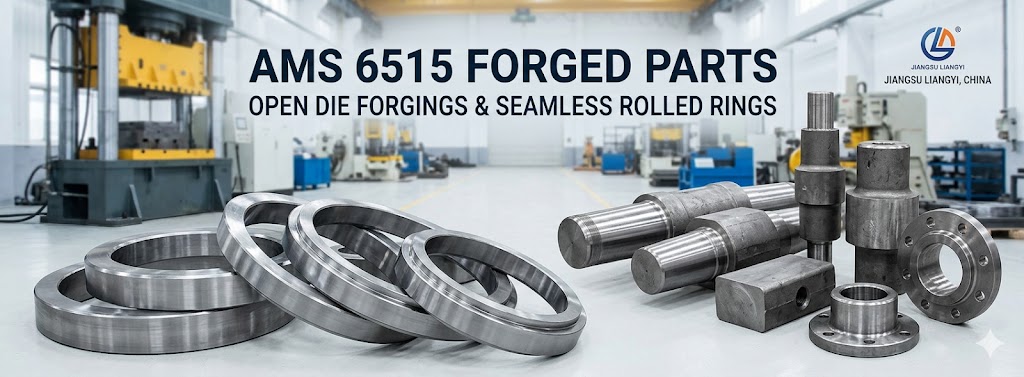
Jiangsu Liangyi Co., Limited is a professional ISO 9001:2015 certified China manufacturer of AMS 6515 open die forging parts and seamless rolled steel forged rings, with over 25 years of industry experience. We provide a full range of AMS 6515 forging solutions from steel melting, precision forging, controlled heat treatment to final CNC machining. All parts are made based on client drawings and technical requirements, and they all fully meet international AMS, ASTM, API and EN standards.
Our AMS 6515 forged parts are exported to more than 50 countries across Europe, North America, the Middle East, Asia Pacific and Africa, serving critical industrial applications with exceptional mechanical performance, strict dimensional accuracy and full material traceability. As a leading AMS 6515 forging manufacturer in China, we support both small-batch custom prototypes and large-volume mass production for global clients.
What is AMS 6515 Maraging Steel? A Manufacturer's Deep Technical Perspective
AMS 6515 is a SAE International aerospace material specification for an ultra-high-strength iron-nickel-cobalt maraging steel containing approximately 18% nickel and 12% cobalt. Unlike conventional high-strength steels, which derive their strength primarily from carbon-martensite formation, AMS 6515 maraging steel achieves its mechanical properties through an entirely different metallurgical mechanism: precipitation hardening of an essentially carbon-free iron-nickel lath martensite matrix.
The Strengthening Mechanism: Why Maraging Steel Behaves Unlike Any Other Steel
When AMS 6515 steel is solution annealed and cooled to room temperature, it transforms from austenite into a soft, highly ductile lath martensite structure — the exact opposite of the hard, brittle martensite formed in carbon steels. This annealed martensite matrix, with a hardness of only RC 30/35, is what makes AMS 6515 so remarkably easy to machine despite its extraordinary final strength potential.
The true strengthening occurs during the subsequent aging treatment at 480°C. At this temperature, nanoscale intermetallic precipitate phases nucleate and grow throughout the martensite matrix. The primary strengthening phases in AMS 6515 are Ni₃(Mo,Ti) and Ni₃Ti precipitates. These precipitates, typically 5–20 nanometers in diameter, create dense strain fields that block dislocation motion, producing a massive increase in yield strength with essentially no macroscopic dimensional change.
✅ Why 12% Cobalt Makes AMS 6515 Uniquely Valuable
Compared with the 8% cobalt content in AMS 6514 (18Ni 250), AMS 6515 contains a higher 12% cobalt level and delivers two key functions. First, cobalt raises the martensite start (Ms) temperature, so it is possible to get a more complete martensite transformation on cooling and to reduce the possibility of residual austenite being present in thick parts. Second, cobalt lowers the solubility of molybdenum within the martensite base structure during the aging process. This pushes more molybdenum into the precipitate phase and slows down precipitate grain growth, creating a finer precipitate layout with higher quantity density. It also brings a better balance of strength and fracture toughness when compared to grades with lower cobalt content. This is exactly why AMS 6515 is still the preferred material when a single part needs both ultra-high strength and stable toughness at the same time.
VIM+VAR Melting: Why It Is Non-Negotiable for AMS 6515
AMS 6515 must be produced via the VIM+VAR double vacuum melting route for the following reasons:
- Hydrogen control: Maraging steels are highly susceptible to hydrogen-induced delayed fracture. The VIM process, combined with VOD degassing, consistently achieves hydrogen levels below 2.0 ppm in the finished heat — levels that conventional EAF+LF processing cannot reliably guarantee.
- Oxygen and nitrogen control: Non-metallic inclusions from oxygen and nitrogen dramatically reduce fatigue life. Double vacuum melting reduces total oxygen content to below 20 ppm and nitrogen to below 30 ppm, versus 50–100+ ppm for atmospheric melting.
- Chemical homogeneity: The VAR step eliminates macro-segregation inherent in large conventionally cast ingots, producing a refined, directionally solidified structure with uniform distribution of Ni, Co, Mo and Ti — essential for consistent aging response throughout large-diameter forgings.
Core Performance Advantages of AMS 6515 for Forged Components
Ultra-High Strength with Genuine Toughness
Aged AMS 6515 delivers tensile strength well above 1500 MPa in fully aged condition while maintaining excellent fracture toughness — a combination unattainable in conventional quench-and-temper alloy steels, which sacrifice toughness sharply once tensile strength exceeds 1300 MPa.
Near-Zero Distortion During Heat Treatment
The entire strengthening treatment — aging at 480°C — produces dimensional changes typically less than 0.05% linearly. Precision-machined surfaces can be held to final tolerance before aging, eliminating post-aging grinding operations required for conventional high-strength steel components.
Exceptional Machinability in Delivery Condition
In the annealed condition (RC 30/35), AMS 6515 machines with cutting speeds and tool life comparable to 4340 at HRC 28, despite its vastly superior final properties — a major factor in reducing total production cost for complex components.
Outstanding Stress Corrosion Cracking (SCC) Resistance
In salt spray, H₂S-saturated brine and high-pressure downhole environments, AMS 6515 outperforms quench-and-temper alloy steels of equivalent strength by a wide margin, making it the preferred material for critical oilfield and chemical process components.
Excellent Weldability
With near-zero carbon content (0.03% max), AMS 6515 requires no preheat above room temperature for welding. Weld heat-affected zones form the same soft annealed martensite as the base metal, making AMS 6515 one of the most weldable ultra-high-strength steels available.
Consistent Batch-to-Batch Repeatability
Because AMS 6515's strength derives from a narrow precipitation reaction at a fixed temperature, the material's final properties are far less sensitive to section size, quench rate and process variability than quench-and-temper steels — enabling highly predictable mechanical properties across production batches.
AMS 6515 vs. Similar High-Strength Steel Grades — Engineering Comparison
Selecting the right material grade requires understanding not only headline strength values but the full picture of processability, cost and service performance:
| Property / Factor | AMS 6515 (18Ni C-Type) | AMS 6514 (18Ni 250) | AMS 6512 (18Ni 200) | AISI 4340 (Conv. H&T) |
|---|---|---|---|---|
| Co Content | 12% | 8% | 8.5% | None |
| Ni Content | 18.5% | 18% | 18% | 1.65–2.0% |
| Carbon Content | 0.03% max | 0.03% max | 0.03% max | 0.38–0.43% |
| Tensile Strength (Spec Min.) | 1140 MPa | 1720 MPa | 1380 MPa | 1000–1400 MPa (variable) |
| Delivery Hardness (Machinability) | RC 30/35 (excellent) | RC 30/35 (excellent) | RC 30/35 (excellent) | HB 270–320 (moderate) |
| Heat Treatment Distortion | Near-zero (<0.05%) | Near-zero | Near-zero | High (quench required) |
| SCC Resistance | Excellent | Good | Good | Moderate |
| Weldability (No Preheat?) | Yes (room temp) | Yes | Yes | No (preheat 175–230°C) |
| Melting Route Required | VIM + VAR | VIM + VAR | VIM + VAR | EAF + LF (conventional) |
| Primary Application Fit | Aerospace tooling, oilfield shafts, nuclear, turbomachinery — strength + toughness | Rocket motor cases, max-strength aerospace structure | Plastic injection molds, die-casting tooling | General high-strength parts where SCC not critical |
⚠ Engineering Selection Note
Over many years we have fielded enquiries where engineers initially specify AMS 6514 (18Ni 250) solely on its higher minimum tensile strength, only to find that the lower fracture toughness and reduced SCC resistance cause field failures in thick sections or corrosive environments. For most oil & gas downhole tools, nuclear reactor components and large aerospace structural forgings above 100 mm in section thickness, AMS 6515 provides a superior total-life performance profile despite its lower strength specification. We recommend discussing your specific operating stress, environment and section size with our engineering team before finalising grade selection.
Our AMS 6515 Hot Forging Process: What Happens Inside Our Factory
Hot Working Temperature Window: Why Every Degree Matters
AMS 6515 maraging steel has a tightly controlled hot working temperature window: 900°C to 1150°C. This window is narrower than for many conventional alloy steels, and the reasons for both limits are important:
- Upper limit (1150°C maximum): Above this temperature, rapid austenite grain growth occurs in AMS 6515. Abnormal grain growth in maraging steel is particularly damaging because it cannot be fully corrected by normalising — only by re-forging with additional reduction. In our facility, heating furnace temperatures are monitored by calibrated thermocouples, and part surface temperature is verified by optical pyrometer on all large forgings before each forging press stroke.
- Lower limit (900°C minimum, working limit ~950°C): Below 900°C, the austenite phase becomes increasingly resistant to deformation, and the risk of adiabatic shear banding and internal cracking rises significantly. We monitor and stop re-heating sequences well before the surface temperature drops to this critical threshold.
Minimum Forging Reduction Ratio: The 4:1 Requirement and Why It Exists
Our process specification requires a minimum forging reduction ratio of 4:1 for all AMS 6515 structural forgings. Below 3:1, residual as-cast dendritic structure from the VAR electrode can persist in the forging cross-section, manifesting as slightly higher inclusion density and degraded transverse impact values. At 4:1 and above, the as-cast structure is fully broken down and a uniform equiaxed grain structure is consistently achieved. For critical aerospace forgings where clients specify grain size ASTM 4 minimum, we target 6:1 or greater.
Die Lubrication: A Detail Other Suppliers Do Not Discuss
Standard graphite-in-water die lubricants contain sulfur compounds at concentrations of 50–200 ppm sulfur. For AMS 6515 maraging steel, this is a significant concern: sulfur in contact with maraging steel at forging temperatures can diffuse into grain boundaries in the surface layers, causing intergranular embrittlement and surface cracking. In our facility, all die lubricants used for AMS 6515 operations are certified sulfur-free (total sulfur below 5 ppm, verified by XRF analysis of each lubricant batch).
Post-Forge Cooling: Still Air, Not Accelerated
After final forging, AMS 6515 components are cooled in still air to room temperature. Water quenching or forced-air cooling is explicitly prohibited in our process specification. The rapid surface cooling leads to large thermal gradients between the surface and the core and differential contraction stresses that may induce subsurface cracking that can be detected only through UT inspection.
✅ Our AMS 6515-Specific Forging Process Controls Summary
- Hot working temperature window: 900°C – 1150°C, pyrometer-verified on large forgings
- Minimum forging reduction ratio: 4:1 standard, 6:1 for grain-size-specified aerospace orders
- Die lubricant: certified sulfur-free (<5 ppm S, XRF-verified per batch)
- Post-forge cooling: still air only, never water or forced air
- Billet traceability: heat number marked on every billet before furnace entry
AMS 6515 Heat Treatment: A Step-by-Step Engineering Guide
Solution Annealing (Mandatory First Step)
Cycle: Heat to 820°C ± 10°C. Hold for a minimum of 1 hour per 25 mm of maximum cross-section thickness, absolute minimum 1 hour. Cool in still air or furnace to room temperature.
Why this step matters: Solution annealing dissolves any precipitates formed during hot working and homogenises the matrix chemistry, producing a fully annealed soft martensite (RC 30/35) — the uniform starting condition for aging. Forgings delivered from us in the annealed condition carry a heat treatment record as part of the MTC documentation.
Our furnace control: All solution annealing furnaces are fitted with calibrated thermocouples and temperature regulators, and receive regular maintenance and calibration under our ISO 9001:2015 quality management system. We regularly check temperature consistency by using multi-point thermocouple testing, to ensure the whole working area keeps a temperature tolerance within ±10°C.
Aging / Precipitation Hardening (Strength Development)
Cycle: Heat to 480°C ± 5°C. Hold for 3 hours (thin sections ≤50 mm) to 6 hours (thick sections >150 mm). Cool in still air.
Why 480°C is the critical temperature: Below 450°C, the Ni₃(Mo,Ti) precipitation reaction is kinetically too slow at practical hold times, causing underaging. Above 510°C, precipitate coarsening begins within 3 hours, causing overaging — a loss of strength accompanied by a disproportionate loss of toughness. Our dedicated aging furnaces are calibrated to ±5°C at the part surface, achieved through load thermocouples positioned adjacent to parts.
Double Aging (For Maximum Toughness Applications)
Cycle: Step 1: 820°C / 1hr / AC (re-solution anneal). Step 2: 510°C / 3hr / AC (pre-age). Step 3: 480°C / 3hr / AC (final age).
When to specify: For nuclear components, large-diameter (>300 mm) aerospace forgings or any application where maximum fracture toughness is required alongside high strength. Double aging produces a more uniform precipitate size distribution through the section, improving fracture toughness at equivalent tensile strength. Available on request, quoted per additional processing time.
Post-Machining Stress Relief (Optional)
Cycle: 350°C ± 15°C / 1–2 hours / AC or furnace cool.
When to use: For very tight-tolerance components (<±0.05 mm) that undergo significant metal removal after aging. A light stress relief at 350°C — well below the aging temperature — removes residual machining stresses without causing any precipitation or property change. Particularly recommended for high-precision turbine disc bores and flow meter body bores.
⚠ Critical Overaging Warning
Overaging of AMS 6515 at temperatures above 510°C, or at correct temperature with excessive hold time, produces a characteristic failure pattern: tensile strength drops moderately (50–150 MPa) but fracture toughness can drop catastrophically. A tensile test may still pass the AMS 6515 specification minimum — masking the problem — while toughness has been severely compromised. Always request actual furnace time-temperature charts as part of the MTC, not just a statement that heat treatment was performed.
Full Range of AMS 6515 Forged Products We Manufacture
We produce a complete line of custom AMS 6515 forged steel products with single-piece weight capacity from 30 KGS to 30,000 KGS, and maximum forging ratio up to 8:1 to ensure optimal grain flow and mechanical properties throughout the section.
AMS 6515 Forged Bars, Rods & Step Shafts
Custom AMS 6515 forged round bars, square bars, flat bars, step shafts and threaded rods, with maximum forging diameter up to 2,000 mm and maximum length up to 15,000 mm. All bars receive 100% UT testing and full MTC 3.1/3.2. Ideal for aerospace fasteners, turbine shaft blanks, drilling tool mandrels and general structural components. See our Products page for the full range.
AMS 6515 Seamless Rolled Forged Rings
Custom AMS 6515 seamless rolled rings and open die forged rings, with maximum outer diameter up to 6,000 mm and single-piece weight up to 30,000 KGS. Ring rolling produces a continuous circumferential grain flow pattern metallurgically superior to rings cut from bar stock, improving fatigue life in the hoop direction. Applications: turbine casings, valve seat rings, labyrinth seals, bearing races and pressure vessel flanges.
AMS 6515 Hollow Forgings, Sleeves & Heavy-Wall Cylinders
Heavy-wall AMS 6515 hollow forgings, sleeves, bushes, casings, hollow bars and cylinders, with outer diameter up to 3,000 mm and fully customisable wall thickness. All hollow forgings receive full-wall UT to verify zero internal defects. Applications: nuclear reactor coolant pump casings, downhole motor housings, high-pressure valve bodies and hydraulic cylinder bodies.
AMS 6515 Forged Discs, Plates & Blanks
High-precision AMS 6515 forged discs, disks, plates, blocks and custom near-net-shape blanks, with maximum diameter up to 2,500 mm. Our discs are forged with controlled reduction to balance axial versus radial grain flow, optimising fatigue resistance in both directions. Applications: turbine wheels, compressor impellers, valve discs, pressure vessel end caps and tooling blocks.
Custom AMS 6515 Forged Near-Net-Shape Components
Fully customised AMS 6515 forged parts per client drawings: valve balls, bonnets, bodies, cores and spools; pump impellers, wear rings and shaft sleeves; turbine blades and blisks; flanges, connectors, aerospace tooling bodies and fixture plates. Our forging equipment supports the most demanding custom forging designs.
Industry Applications & Global Project Experience
Our AMS 6515 forged parts serve clients in the most demanding industrial sectors worldwide. The following case descriptions reflect our production experience and the types of applications our customers bring to us.
Aerospace Structural & High-Performance Tooling (Europe & North America)
The Engineering Challenge
Aerospace components require exceptional strength-to-weight ratio, consistent fatigue resistance, strict material traceability and full compliance with AMS aerospace standards. Conventional alloy steels cannot meet the extreme performance requirements of critical aerospace structures, high-performance tooling mandrels and jig bodies used in autoclave composite manufacturing.
AMS 6515 Solution
We supply precision AMS 6515 aerospace forgings to European and North American aerospace manufacturers, including critical structural components, tooling mandrels, jigs, fixtures and aerospace fastener blanks. All our AMS 6515 aerospace forgings are produced with VIM+VAR double vacuum melting, full heat number traceability from melt to finished part, and comply with AMS aerospace material standards. Key advantages observed in service: high-temperature yield strength retention above 150°C (critical for autoclave tooling), low and consistent aging distortion enabling tight-tolerance finish machining after heat treatment, and excellent fatigue life attributed to the low inclusion density achievable with VIM+VAR material.
Oil & Gas Downhole Drilling Tools (Middle East & North America)
The Engineering Challenge
Oil and gas equipment operates in harsh high-pressure, high-temperature, H₂S-containing downhole environments. Components require exceptional stress corrosion cracking (SCC) resistance, high fatigue strength and long service life to reduce costly non-productive time events. Mud motor splined drive shafts, electrical submersible pump (ESP) motor shafts and high-pressure valve components are frequently replaced in conventional alloy steel due to SCC-driven fatigue failures.
AMS 6515 Solution
We provide custom AMS 6515 oil and gas forgings for onshore and offshore projects in the Middle East, North America and Southeast Asia. Core products include downhole mud motor splined drive shafts, ESP motor splined shafts, and a full range of valve components — balls, bonnets, bodies, stems, seat rings and cores — fully compliant with API 6A oilfield standards. AMS 6515's combination of high tensile strength in the aged condition and superior K₁scc (stress corrosion cracking threshold stress intensity) versus conventional 4340 alloy steel makes it the material of choice for H₂S-environment downhole tools where service life extension is the primary engineering objective.
Nuclear & Thermal Power Generation (Asia & Europe)
The Engineering Challenge
Nuclear and thermal power generation equipment requires exceptional safety, long-term structural stability and fatigue performance in high-temperature, high-pressure operating conditions. Components must comply with strict international nuclear and power industry standards and have full material traceability. Nuclear clients additionally require compliance with their own quality assurance requirements.
AMS 6515 Solution
Our AMS 6515 power generation forgings serve thermal power plants and nuclear power facilities. Applications include nuclear reactor coolant pump rotors, impellers, casings and seal chambers, as well as power plant steam turbine control valve discs, main steam valve seats, valve spindles and stems. All AMS 6515 power generation forgings receive full mechanical testing, 100% volumetric UT and complete MTC documentation. For nuclear clients, we provide the quality records package required by their site quality plan — the specific format and content of these records is agreed per client requirements at order stage. We do not hold any nuclear-specific quality programme certification as a standard; this is arranged on a project-by-project basis per client specifications.
Turbomachinery — Centrifugal Compressor Impellers (Global)
The Engineering Challenge
High-speed centrifugal compressor impellers operating at peripheral velocities above 450 m/s require a material that combines adequate yield strength to resist centrifugal stress, high fatigue endurance at blade root stress concentrations, dimensional stability during aging (to maintain balance quality after finish machining), and machinability to achieve complex 3D blade geometry within ±0.03 mm profile tolerance. In non-titanium designs, this combination effectively requires a maraging steel.
AMS 6515 Solution
We supply AMS 6515 forged disc blanks pre-forged to a near-net profile that minimises subsequent material removal. The near-zero aging distortion of AMS 6515 allows clients to finish-machine blade profiles before aging, then apply only a minimal final correction pass — reducing total machining time and scrap risk versus machining from a conventionally forged blank after aging. Applications include turbo centrifugal compressor impellers, compressor rotors, turbine discs, labyrinth shaft seals, guide rings and seal rings for clients across Europe, the Americas, Japan and South Korea.
Flow Control & Precision Measurement Equipment (Global)
The Engineering Challenge
Venturi cone meter bodies and ultrasonic flow meter housings for fiscal metering must maintain bore dimensional tolerances of ±0.05 mm after installation in high-pressure pipelines (up to 420 bar) operating at temperatures from -60°C to +150°C. Any distortion of the primary sensing geometry causes measurement error with significant commercial consequences.
AMS 6515 Solution
Our AMS 6515 hollow forged meter body blanks are supplied with a reduced machining allowance versus conventional alloy steel forgings, due to the superior dimensional predictability of the controlled forging and aging process. Finished bore roundness on production parts is consistently verified by CMM to tight TIR specifications. Applications include venturi cone meter bodies, ultrasonic flow meter bodies, oil measurement valve spools, boiler heat exchanger tube sheets, pressure vessel nozzles and cryogenic butterfly valve shafts.
AMS 6515 Chemical Composition — Element-by-Element Analysis
Our AMS 6515 steel conforms to the official AMS 6515 specification issued by SAE International. Understanding why each element is present helps engineers evaluate material substitutions and weld repair procedures:
| Element | Nominal / Limit | Metallurgical Role & Why the Limit Exists |
|---|---|---|
| Nickel (Ni) | 18.50% | Primary solid-solution element. Stabilises austenite and ensures the martensite start temperature (Ms ≈ 150°C) is appropriate for air cooling to room temperature. Below 17%, incomplete transformation; above 20%, excessive austenite stability. |
| Cobalt (Co) | 12.0% | Reduces Mo solubility in martensite, driving more Mo into Ni₃(Mo,Ti) precipitates during aging. Slows precipitate coarsening. Raises the Ms temperature. At 12% Co versus 8% in AMS 6514, precipitate density increases substantially — directly increasing yield strength at equivalent aging time. |
| Molybdenum (Mo) | 4.8% | Primary precipitation hardener — the principal contributor to the massive strength increase on aging via Ni₃Mo / Ni₃(Mo,Ti) precipitate formation. Also provides solid-solution strengthening at elevated temperature and enhances corrosion resistance. |
| Titanium (Ti) | 1.40% | Secondary precipitation hardener, forming Ni₃Ti and mixed Ni₃(Mo,Ti) precipitates. Strengthens the precipitate phase and increases the precipitate dissolution temperature, extending the usable service temperature range. |
| Aluminum (Al) | 0.10% | Deoxidiser during melting. Small additions also contribute minor precipitation hardening via NiAl formation during aging. Al must remain below 0.15% to avoid excessive oxide inclusion formation. |
| Boron (B) | 0.003% | Micro-alloying addition. Segregates to austenite grain boundaries during solution annealing and suppresses intergranular fracture. Even at 30 ppm, B measurably improves Charpy impact values in thick-section forgings. |
| Zirconium (Zr) | 0.01% | Grain boundary stabiliser and deoxidiser. Combines with sulfur and oxygen to form stable ZrS and ZrO₂ compounds, reducing MnS stringer formation that acts as a fatigue crack initiation site. |
| Carbon (C) | 0.03% max | Intentionally minimised. Carbon forms TiC carbides that remove Ti from the precipitation hardening reaction, reducing aging response. Also reduces toughness and weldability. The 0.03% limit makes AMS 6515 effectively a carbon-free steel from a hardening mechanism standpoint. |
| Manganese (Mn) | 0.10% max | Strictly limited. High Mn forms MnS inclusion stringers that reduce transverse toughness and fatigue endurance. Kept below 0.10% to minimise inclusion volume fraction. |
| Silicon (Si) | 0.10% max | Minimised because Si forms silicate inclusions that degrade toughness. Al and Zr are used for deoxidation instead. |
| Phosphorus (P) | 0.01% max | Harmful impurity. Segregates to grain boundaries and causes aging embrittlement. Limit is 10× tighter than typical alloy steel specifications due to the sensitivity of low-carbon martensite grain boundaries to P. |
| Sulfur (S) | 0.01% max | Harmful impurity. Forms MnS inclusions detrimental to fatigue performance. Strict control to below 0.01% is required for high-cycle fatigue applications. |
AMS 6515 Mechanical Properties — Standard and Typical Production Values
The table below presents both the AMS 6515 specification minimum requirements and typical values achieved in production, based on our production testing records:
| Property | Condition | AMS 6515 Spec Min. | Typical Production Range | Test Standard |
|---|---|---|---|---|
| Ultimate Tensile Strength | Aged (480°C/3hr) | 1140 MPa (165 ksi) | 1520–1700 MPa | ASTM E8 |
| 0.2% Proof Stress (Yield) | Aged | 827 MPa (120 ksi) | 1450–1630 MPa | ASTM E8 |
| Elongation (A₅) | Aged | 18% (annealed condition) | 10–14% (aged) | ASTM E8 |
| Reduction of Area | Aged | Not specified | 55–65% | ASTM E8 |
| Charpy V-Notch Impact | Aged, longitudinal | Not specified | 80–140 J at 20°C | ASTM E23 |
| Hardness | Annealed (delivery) | RC 30–35 | RC 32–34 (typical) | ASTM E18 |
| Hardness | Aged (480°C / 3hr) | Not specified | RC 50–54 | ASTM E18 |
📋 Note on AMS 6515 Specification Minimum vs. Typical Aged Values
The AMS 6515 specification minimum of 1140 MPa tensile is defined for the standard aged condition. Annealed AMS 6515 forgings tested as-received (before aging) will typically show 900–1050 MPa tensile — below the specification minimum — because the specification is written for the aged condition. After aging at 480°C, typical values significantly exceed the specification minimum. If your application requires a specific strength window, our engineering team can discuss optimised aging parameters.
Welding & Joining Guidelines for AMS 6515 Maraging Steel
AMS 6515 is one of the most weldable ultra-high-strength steel grades available. Its near-zero carbon content eliminates the risk of hard, brittle HAZ martensite formation. However, specific requirements differ from conventional steel welding practice.
Recommended Welding Processes
- GTAW (TIG): Preferred for precision weld repairs, thin sections (<20 mm), root passes and all situations where weld quality is paramount. Use DCEN polarity. Argon or Ar/He shielding gas at 99.999% purity — trace oxygen contamination can cause weld porosity in high-Ni maraging steels.
- GMAW (MIG) with spray transfer: Acceptable for production welding on sections above 20 mm. Short-circuit (dip) transfer is not recommended for structural welds in AMS 6515 due to the risk of fusion defects at the fusion line in high-Ni alloys.
- Electron Beam Welding (EBW): Optimal for aerospace applications — narrowest HAZ, lowest distortion, highest joint efficiency (typically 95–100% of base metal after post-weld aging). Requires vacuum chamber but strongly recommended for critical structural aerospace welds.
Filler Metal, Preheat & Post-Weld Heat Treatment
- Filler metal: Use matching AMS 6459 18Ni maraging steel wire. Never use standard ER70S carbon steel filler — high Ni dilution into a carbon steel weld metal produces an unpredictably brittle microstructure.
- Preheat: 25°C minimum (room temperature — no elevated preheat required). Major advantage over 4340, which requires 175–230°C preheat. Ensure parts are free of condensation before welding.
- Interpass temperature: Maximum 150°C. Prolonged exposure above 150°C during multi-pass welding can begin partial aging in the HAZ, producing a hardness gradient.
- Post-Weld Heat Treatment: Re-age at 480°C ± 5°C for 5 hours after all welding. This recovers weld zone tensile properties to 85–95% of base metal values. For maximum weld zone toughness: full re-solution anneal (820°C / 1hr / AC) then re-age — recommended for all structural aerospace and nuclear welds.
⚠ Hydrogen Embrittlement Risk After Acid Cleaning or Electroplating
AMS 6515 in the aged condition is susceptible to hydrogen embrittlement. After any acid pickling, phosphate coating, cadmium plating, zinc plating or other hydrogen-generating surface treatment, parts must be baked at 190°C ± 15°C for a minimum of 4 hours within 2 hours of the treatment. This applies regardless of section size. Failure to bake can cause delayed subsurface hydrogen-induced cracking appearing days to weeks after plating.
Our Quality Control & Manufacturing Capability
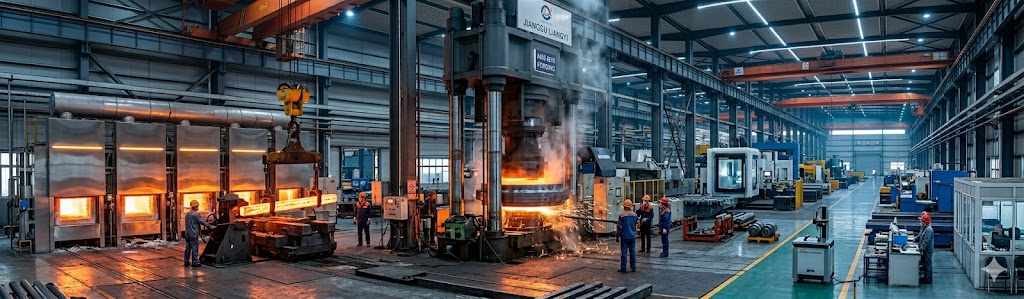
As an ISO 9001:2015 certified AMS 6515 forging manufacturer in China with over 25 years of experience, we have built a production system that covers every process step under one roof — from melting through final inspection — governed by a disciplined quality management system.
Manufacturing Equipment
- Forging Equipment: 2000T, 4000T and 6300T hydraulic forging presses; 1T, 3T, 5T and 9T electro-hydraulic forging hammers; 1M–5M diameter seamless ring rolling machines
- Melting & Refining: 30T electric arc furnace (EAF), 30T ladle refining furnace (LF), vacuum degassing furnace (VOD), medium-frequency induction furnaces; VIM+VAR double vacuum melting capability for premium alloys including AMS 6515
- Heat Treatment: 10 programmable heat treatment furnaces with calibrated temperature control and regular thermocouple calibration under ISO 9001:2015, supporting annealing, normalising, quenching and aging treatment
- CNC Machining: CNC lathes, milling machines and machining centres; CMM dimensional verification capability
Our Quality Gate System for AMS 6515 Forgings
Gate 1: Incoming Material Verification
All VIM+VAR ingots receive incoming chemical analysis on our optical emission spectrometer (OES) on receipt. Results are compared against the supplier's heat certificate and the AMS 6515 specification limits. Any heat with any element outside specification is immediately quarantined and rejected regardless of the supplier's certificate. Hydrogen content is reported on the VIM heat certificate and reviewed at this stage.
Gate 2: Post-Forging Dimensional & Visual Inspection
Every forging is dimensionally verified against the forging drawing. A 100% visual surface inspection for cracks, laps, folds and surface defects is performed. Large forgings above 200 kg receive a macro-etch cross-section survey on a representative cut-off ring to verify grain structure and forging ratio adequacy.
Gate 3: Post-Heat-Treatment Mechanical Testing & NDT
After heat treatment, each production batch receives: tensile test per ASTM E8, Brinell hardness survey (minimum 5 points per piece), Charpy V-notch impact at 20°C (3 specimens per heat), and 100% volumetric UT. Surface NDT: 100% MT or PT as applicable. All test specimens are taken from integral test prolongations on the actual production forging — not from separately forged test blocks.
Gate 4: Final Dimensional, Marking & Documentation Review
Final dimensional inspection against delivery drawing. Permanent traceability marking: heat number, purchase order number, part number, melt specification (AMS 6515), heat treatment code. Complete MTC package review: chemical analysis, mechanical test results, heat treatment records, NDT reports, dimensional report. Delivery cleared only when all four gates are signed off by our qualified quality inspector and reviewed by the quality manager.
Common AMS 6515 Forging Defects & How We Prevent Them
🔴 Defect 1: Hydrogen-Induced Cracking (HIC)
Cause: Hydrogen above 2.5 ppm in the melted ingot, or introduced during post-forge acid pickling without subsequent baking. In aged AMS 6515, hydrogen diffuses to areas of high triaxial stress and causes intergranular fracture delayed by hours to weeks after processing.
Our prevention: VOD degassing controlled to minimise dissolved hydrogen; hydrogen content reported on VIM heat certificate and reviewed on incoming material. Post-pickling baking mandatory per our process specification. 100% UT after aging detects any internal cracking before delivery.
🔴 Defect 2: Abnormal Grain Growth in Thick Sections
Cause: Forging at temperatures above 1150°C, producing patches of very coarse grain structure that severely reduces fatigue life and impact toughness. Unlike conventional steels, this cannot be fully corrected by normalising.
Our prevention: Strict pyrometer-verified temperature control; maximum furnace temperature limited to 1145°C; forging sequence designed to avoid strain localisation; post-forge macro etch on large forgings to verify grain uniformity before proceeding to heat treatment.
🟡 Defect 3: Incomplete Precipitation Hardening (Underaging)
Cause: Aging furnace temperature below 475°C at the part surface — commonly from overloaded furnaces or uncalibrated thermocouples. Tensile strength may still pass specification minimum, while actual toughness has been compromised.
Our prevention: Load thermocouples adjacent to the actual part, not just in the furnace atmosphere. Hardness survey on every piece after aging: any piece below target hardness is re-aged and re-tested.
🟡 Defect 4: Surface Sulfur Contamination Cracking
Cause: Standard die lubricants containing sulfur at >10 ppm. Sulfur penetrates the surface at forging temperatures and segregates to grain boundaries, causing intergranular cracking detected by MT or PT on the final machined surface.
Our prevention: Certified sulfur-free die lubricants (<5 ppm S by XRF) for all AMS 6515 forging operations. Lubricant batches tested on receipt and retained samples held for 12 months.
AMS 6515 Forging Storage, Handling & Preservation
Storage Requirements
- Indoor storage only. AMS 6515 with any machined or shot-blasted surface is susceptible to atmospheric rust within 48–72 hours in humid conditions.
- Temperature: 10–35°C. Avoid proximity to heat sources that could accelerate corrosion inhibitor evaporation from VCI wrapping.
- Humidity: Below 60% RH. For long-term storage (over 3 months), apply VCI (Vapor Corrosion Inhibitor) film wrapping within 2 hours of the last machining or inspection operation.
- Avoid contact with copper, brass or zinc fixtures — safe at ambient temperature but can cause liquid metal embrittlement if parts are subsequently reheated above 600°C while in contact. Use steel or plastic separators.
Handling Precautions
- Use nylon slings or steel slings with PVC sleeve protection for lifting. Steel chains in direct contact with precision-machined surfaces can cause stress concentration marks that act as fatigue crack initiators.
- Mark forgings with non-metallic ink markers on non-critical surfaces only. Metal stamping acceptable on designated marking pads — never on load-bearing surfaces.
Sea Freight Packaging
All AMS 6515 forgings shipped by sea receive: individual VCI film wrapping (minimum 150 μm), silica gel desiccant at 3 kg per m³ of crate volume, wooden crate with waterproof lining and anti-vibration foam padding for parts above 100 kg. Crate labelling matches MTC documentation for full traceability.
AMS 6515 Procurement Checklist — For Engineers & Buyers
Based on years of experience with global enquiries, we have compiled the specification points most frequently omitted from purchase orders but that directly affect what you receive:
- Specify VIM+VAR melting explicitly. "AMS 6515" alone does not universally mandate VIM+VAR. Write: "Melting route: VIM+VAR. Supplier must provide VIM heat certificate and VAR remelting certificate as part of MTC."
- Specify EN 10204 3.1 MTC minimum. For aerospace or nuclear: specify 3.2 (third-party witness). Confirm the 3.2 witness agency is acceptable to your organisation before ordering.
- Specify UT acceptance class with reference standard. State the acceptance class and reference standard (e.g. AMS 2631 Class C). "UT tested" alone without a class reference is unenforceable as an acceptance criterion.
- Specify minimum ASTM grain size if required by your application. For aerospace and nuclear: ASTM 4 minimum is commonly required. If not specified, the default is no grain size requirement.
- Specify inclusion rating if required. Reference ASTM E45 Method A and state the maximum acceptable grade per series. Request the inclusion report as part of the MTC package.
- Specify delivery condition clearly: "Annealed" (RC 30/35, ready for client-side machining and aging) OR "Annealed + Aged" (fully heat-treated to final properties). Ambiguous orders can result in incorrect condition on receipt.
- Request actual heat treatment records as part of MTC, not just a statement that heat treatment was performed — actual furnace time-temperature charts with thermocouple positions and calibration dates.
- Confirm minimum forging reduction ratio. State "minimum 4:1 forging reduction ratio" for standard applications; "minimum 6:1" for grain-size-critical parts. Request a process certification statement confirming the ratio achieved.
- Specify mechanical test specimen location: "From integral test prolongation on the actual production forging" — not from a separately forged test block, which can give unrepresentative properties.
- Confirm hydrogen bake requirement if any post-delivery acid pickling, plating or anodising is planned on the finished parts. Request that the supplier include a hydrogen baking instruction sheet in delivery documentation.
Frequently Asked Questions About AMS 6515 Forgings
AMS 6515 is an SAE International aerospace material specification for an 18% nickel, 12% cobalt, carbon-free maraging steel. The term "maraging" derives from "martensitic" + "aging": the steel forms a soft, tough lath martensite on cooling from solution annealing, then develops its ultra-high strength through precipitation of nanoscale Ni₃(Mo,Ti) intermetallic phases during low-temperature aging at 480°C — with essentially no dimensional change during the hardening process.
VIM+VAR (Vacuum Induction Melting + Vacuum Arc Remelting) is required for three reasons: (1) Hydrogen control — maraging steel is sensitive to hydrogen embrittlement; VIM+VAR achieves H₂ below 2 ppm, which conventional EAF+LF processing cannot reliably guarantee; (2) Inclusion minimisation — double vacuum melting reduces oxygen to below 20 ppm, dramatically reducing non-metallic inclusions that act as fatigue crack initiation sites; (3) Chemical homogeneity — VAR produces a segregation-free ingot with uniform distribution of Ni, Co, Mo and Ti across the full cross-section. Always request the VIM heat certificate and VAR remelting certificate as part of your MTC package.
All three are 18% nickel maraging steels. AMS 6512 (18Ni 200) has 8.5% Co and is primarily used for plastic injection molds and tooling. AMS 6514 (18Ni 250) has 8% Co and is used for aerospace rocket motor cases and maximum-strength structural members. AMS 6515 has 12% Co — the highest in the family — providing the best balance of ultra-high strength and fracture toughness, making it preferred for applications where both properties must be sustained simultaneously: aerospace tooling, downhole drilling tools, nuclear pump rotors and high-speed compressor impellers.
Standard cycle: (1) Solution anneal at 820°C ± 10°C, hold minimum 1 hour per 25 mm of section, cool in still air or furnace. (2) Age at 480°C ± 5°C, hold 3 hours (thin sections <50 mm) to 6 hours (thick sections >150 mm), cool in still air. No quenching at any stage — this produces near-zero dimensional distortion. For maximum toughness (nuclear, thick-section aerospace): double aging (820°C/1hr/AC → 510°C/3hr/AC → 480°C/3hr/AC) is recommended.
Our minimum order quantity is 1 piece — we regularly produce single prototype forgings for development orders. Standard lead time is 20–35 working days covering VIM+VAR material procurement, forging, heat treatment, full mechanical testing, NDT, MTC preparation and packing. Urgent orders with available stock material can be completed in 10–15 working days. Large forgings above 5,000 kg may require 45–60 days due to VIM+VAR ingot lead time.
We are ISO 9001:2015 certified. Standard documentation includes EN 10204 3.1 Mill Test Certificate covering the VIM heat certificate, VAR remelting certificate, full chemical analysis, mechanical test results, heat treatment records with furnace charts, NDT reports and dimensional inspection report. EN 10204 3.2 certificates with third-party co-signature (SGS, BV, TUV, Lloyd's Register or client-nominated agency) are available on request. For nuclear and specialised applications, the documentation package content is agreed per client requirements at order stage.
Yes — AMS 6515 welds well due to its near-zero carbon content. Key requirements: (1) GTAW (TIG) or GMAW with AMS 6459 maraging steel filler wire; (2) Minimum preheat 25°C (room temperature — no elevated preheat needed, unlike 4340); (3) Maximum interpass temperature 150°C; (4) Post-weld aging at 480°C ± 5°C for 5 hours recovers weld zone properties to 85–95% of base metal; (5) For maximum weld zone toughness: full re-solution anneal then re-age; (6) Bake at 190°C / 4 hours after any acid pickling or electroplating to prevent hydrogen embrittlement.
Maximum capabilities: Seamless rolled rings — outer diameter up to 6,000 mm, single-piece weight up to 30,000 KGS. Forged round bars — diameter up to 2,000 mm, length up to 15,000 mm. Hollow forgings — outer diameter up to 3,000 mm. Forged discs — diameter up to 2,500 mm. Maximum single-piece weight for custom shapes: 30,000 KGS. All large forgings include full-section UT to verify internal integrity.
From our experience reviewing incoming enquiries, the five most common mistakes are: (1) Not specifying VIM+VAR explicitly — allowing suppliers to use single-vacuum VIM only; (2) Accepting "UT tested" without a class reference — leaving no enforceable acceptance criterion; (3) Not specifying delivery condition (annealed vs. aged) — leading to incorrect properties on receipt; (4) Not requesting actual heat treatment records in the MTC — allowing unverifiable aging conditions; (5) Not specifying minimum forging reduction ratio — resulting in incomplete breakdown of as-cast structure in thick-section forgings.
Yes — our in-house CNC machining workshop provides complete solutions from raw forging to finished machined parts. For AMS 6515, we recommend machining in the annealed condition (RC 30/35) for all rough and semi-finish operations, leaving only final finishing for after aging. The small dimensional change during aging (typically 0.03–0.05%) can be predicted and accounted for in the machining allowance planning. Our machining capability covers tolerances to IT6 class for bore diameters, with surface roughness Ra ≤ 0.8 μm available for sealing and bearing surfaces.
Store indoors at 10–35°C, below 60% relative humidity. Apply VCI film wrapping within 2 hours of final machining or inspection. Do not allow direct contact between AMS 6515 and copper, brass or zinc materials — these are safe at ambient temperature but cause liquid metal embrittlement if parts are later reheated above 600°C while in contact. Use steel or plastic separators between parts and any copper-alloy fixtures. For sea freight, use wooden crates with waterproof lining, VCI wrapping and silica gel desiccant at 3 kg per m³ of crate volume.
Yes. We accept DXF, DWG, STEP, IGES and PDF drawing formats. Our engineering team provides a free Design for Manufacturability (DFM) review to optimise the forging process, reduce machining allowance and lower total cost. For complex geometries, the forging process sequence is analysed before committing to production tooling. Send drawings to sales@jnmtforgedparts.com for a detailed quotation within 24 working hours.
Contact Us for Custom AMS 6515 Forging Solutions
Jiangsu Liangyi Co., Limited is your technically experienced, ISO 9001:2015 certified AMS 6515 forging manufacturer and supplier in China. Our engineering team is available to review your application requirements, advise on material grade selection, forging process design and heat treatment optimisation — before you place an order, free of charge.
Send us your drawings (DXF, DWG, STEP, IGES or PDF), material specification, delivery condition, order quantity and inspection requirements — and receive a detailed technical quotation within 24 working hours.