AMS 6440 & AMS 6444 Forged Forging Parts | China ISO Certified Aerospace Forging Manufacturer
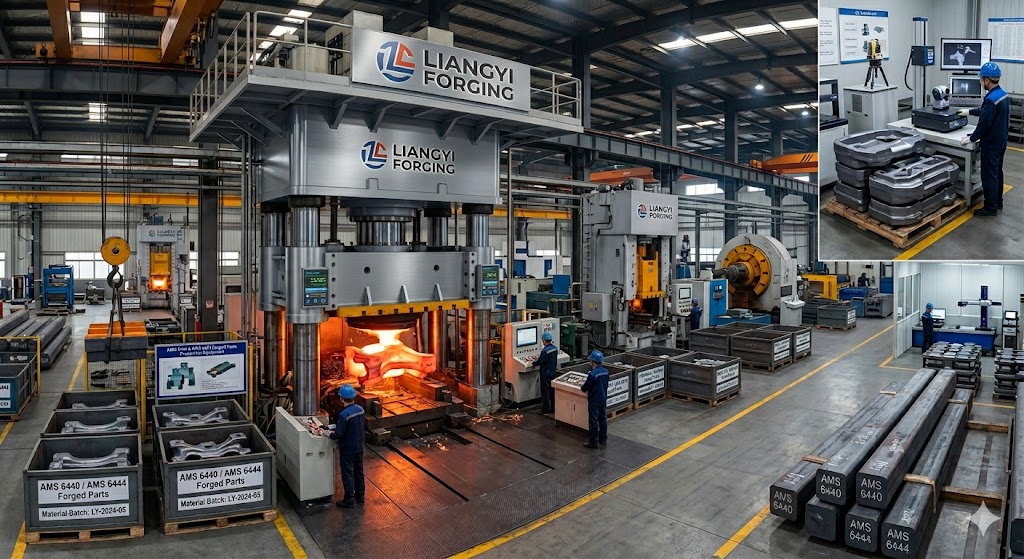
Established in , Jiangsu Liangyi Co., Limited is an ISO 9001:2015 certified China manufacturer specializing in AMS 6440 and AMS 6444 open die forging parts, seamless rolled steel rings, and custom forged components. Our 80,000㎡ facility in Jiangyin City, Jiangsu Province operates ten computer-controlled heat treatment furnaces, four hydraulic forging presses (up to 6,300 tons), and five seamless ring rolling machines (1 M to 5 M), with a combined annual output of 120,000 tons. We have supplied high-performance AMS 6440 and AMS 6444 forged products to procurement engineers, MRO buyers, and tier-one manufacturers across more than 50 countries in North America, Europe, the Middle East, Australia, and Southeast Asia.
What sets our output apart is not simply scale — it is the full vertical integration that eliminates the hidden variables most forging buyers never see: we operate our own electric arc furnace (EAF) and vacuum degassing (VOD) unit, meaning our melt chemistry and hydrogen content are under direct control before a single ingot enters the forge press. Every AMS 6440 and AMS 6444 forging we ship carries complete heat-number traceability from steel melting through final inspection, with documentation packages that satisfy AMS 2372 and EN 10204 3.1/3.2 requirements, and that can be structured to support customer API 6A or other industry-specific product qualifications.
Get a Free Custom Quote for AMS 6440 & AMS 6444 Forgings Within 24 Hours
Send your drawings, material specifications, heat treatment condition, and order quantity. Our engineering team responds with a full technical solution and competitive quotation within one business day.
Send Your Inquiry NowWhy AMS 6440 & AMS 6444 Forgings Are Harder to Source Than Most Buyers Expect
Buyers sourcing AMS 6440 and AMS 6444 forged parts for the first time often discover that these two alloys present production challenges that ordinary bearing steel or tool steel suppliers simply cannot handle reliably. Understanding why requires a brief look at the metallurgical demands these standards actually place on the entire manufacturing chain — not just the forge shop.
The High-Carbon Deep-Hardening Challenge
Both AMS 6440 (C: 0.98–1.10%) and AMS 6444 (C: 0.95–1.10%) sit at the upper limit of carbon content for through-hardening steels. This high carbon level is precisely what delivers the extreme hardness (58–65 HRC) and wear resistance that make these alloys indispensable in aerospace bearings, oilfield valve seats, and precision tooling. However, it also creates four compounding production risks that eliminate unqualified suppliers:
- Hydrogen-Induced Delayed Cracking. High-carbon chromium steels are far more susceptible to hydrogen embrittlement than low-alloy grades. A dissolved hydrogen level above 2 ppm in the ingot creates a measurable risk of internal flaking during quenching — a defect that may not appear until weeks after shipment. Only suppliers with in-house vacuum degassing (VOD) can reliably control hydrogen below the 1.5 ppm threshold required for large-section aerospace forgings. Many forging shops source steel from external mills without this documentation.
- Carbide Network Dissolution. AMS 6440 and AMS 6444 ingots contain a network of primary chromium carbides that must be fully broken down through forging reduction. A reduction ratio below 3:1 leaves residual carbide banding that acts as fatigue crack initiation sites — the exact failure mode these alloys are engineered to resist. The AMS 2372 standard permits a minimum 3:1 ratio; for critical aerospace bearing components we apply a minimum 4:1 ratio, which our production experience consistently demonstrates produces more uniform carbide distribution and tighter scatter in rolling contact fatigue life compared to the minimum permitted reduction.
- Quench Cracking Risk in Large Sections. The high hardenability of these steels means that sections above approximately 250 mm diameter quench through completely — which is excellent for through-hardness but creates steep thermal gradients that, if the quench rate is not precisely calibrated to section size, produce quench cracking. This requires computer-modeled quench protocols specific to each component geometry, not a universal tank-quench approach.
- Retained Austenite Instability. After quenching, AMS 6440 and AMS 6444 microstructures retain measurable austenite (typically 8–15% if no special treatment is applied). For bearing rings, this is managed through tempering cycles. For precision tooling and dies in AMS 6444, residual retained austenite above 4–5% causes unpredictable in-service dimensional change — a critical problem for forming dies where tolerances are held to ±0.01 mm. Proper cryogenic treatment after quenching (–196°C / liquid nitrogen) reduces retained austenite to below 3%, but this step is routinely omitted by cost-cutting suppliers.
AMS 6440 vs AMS 6444: A Procurement Engineer's Decision Matrix
The two standards are frequently quoted together because they share the same base chemistry category — high-carbon chromium bearing/tool steel — and are often interchangeable in gross terms. In practice, the differences in secondary alloying, intended microstructure after heat treatment, and the specific AMS qualification requirements make the choice consequential. The following matrix is based on our application engineering consultations across thousands of customer projects.
| Application Requirement | AMS 6440 | AMS 6444 | Preferred Choice |
|---|---|---|---|
| Rolling contact fatigue life (bearings, races) | Optimized — primary design intent | Acceptable — not primary design intent | AMS 6440 |
| Maximum attainable hardness (tooling, dies) | 58–64 HRC typical | 60–65 HRC typical — marginally harder | AMS 6444 |
| Wear resistance in abrasive sliding contact | Good — suitable for most bearing wear | Superior — preferred for forming rolls, dies | AMS 6444 |
| Dimensional stability after heat treatment | Good with standard Q&T protocol | Superior with cryogenic treatment — for precision tooling | AMS 6444 (with cryo) |
| High-pressure valve seats (API 6A oilfield service) | Qualified — widely used | Qualified — also widely used | Either — specify service temp and H₂S exposure |
| Aerospace bearing components (below 400°F / 204°C service) | Primary AMS specification — preferred | Acceptable — verify with customer engineering | AMS 6440 |
| Impact toughness priority (crusher hammers, cranes) | Slightly better impact toughness (min 8 J vs 7 J) | Slightly lower impact toughness | AMS 6440 |
| Cost sensitivity (equivalent section size) | Marginally lower alloy cost | Marginally higher due to Cr/C balance control | AMS 6440 |
| NACE MR0175 sour service (H₂S environments) | Not recommended above HRC 22 per NACE | Not recommended above HRC 22 per NACE | Neither at hardness — use AISI 4130 or 8630 |
Complete Range of AMS 6440 & AMS 6444 Forged Products
We manufacture a complete range of AMS 6440 and AMS 6444 forgings to aerospace material standards, for all common shapes and custom profiles for demanding industrial applications. Visit our Products Page for full capability details.
Forged Bars & Rods
AMS 6440 and AMS 6444 forged steel round bars, square bars, flat bars, rectangular bars, hollow bars, and precision rods, with maximum forging diameter up to 2,000 mm, maximum length up to 15,000 mm, and single-piece weight up to 30 tons. Available in hot forged, heat treated (annealed, normalized, Q&T), rough machined, or finish machined conditions, with 100% ultrasonic testing per AMS 2630 and complete material traceability.
| Product Form | Max Diameter / Width | Max Length | Max Single Weight | Typical Tolerance |
|---|---|---|---|---|
| Round Bar (forged) | 2,000 mm OD | 15,000 mm | 30,000 kg | ±2–5 mm OD |
| Round Bar (rough machined) | 1,800 mm OD | 14,000 mm | 28,000 kg | ±0.5–2 mm OD |
| Square / Flat Bar | 1,200 mm | 10,000 mm | 20,000 kg | ±2–4 mm |
| Hollow Bar (seamless) | 800 mm OD | 8,000 mm | 15,000 kg | ±2 mm wall |
| Precision Rod (finish machined) | 600 mm OD | 6,000 mm | 10,000 kg | IT7–IT8 grade |
Seamless Rolled Rings
Custom AMS 6440 and AMS 6444 seamless rolled rings, gear rings, slewing bearing rings, contoured rolled rings, and custom forged rings, with maximum outer diameter up to 6,000 mm and single-piece weight up to 30 tons. Engineered for high-stress rotating and pressure applications, fully compliant with AMS 2372 quality assurance standards. Our 5 M seamless ring rolling machine gives us a dimensional range that fewer than a dozen manufacturers worldwide can match in these alloy grades.
| Dimension Parameter | Minimum | Maximum |
|---|---|---|
| Outer Diameter (OD) | 200 mm | 6,000 mm |
| Wall Thickness | 30 mm | 800 mm |
| Ring Height (Face Width) | 50 mm | 2,500 mm |
| Single Piece Weight | 5 kg | 30,000 kg |
| OD Roundness (as-rolled) | ±0.3% of OD typical | |
| Face Parallelism | ±1 mm per 500 mm height typical | |
Forged Shafts & Rotating Components
AMS 6440 and AMS 6444 forged step shafts, gear shafts, crankshafts, turbine shafts, transmission shafts, and eccentric shafts, with maximum diameter up to 1,800 mm, maximum length up to 15,000 mm, and single-piece weight up to 30 tons. For shafts in AMS 6440, our standard protocol includes a minimum 4:1 forging reduction ratio across the full length — not just at the largest step — to guarantee uniform grain refinement and fatigue life along the entire shaft axis, which is critical for rotating components subject to bending fatigue.
Hollow Forgings & Pressure Components
AMS 6440 and AMS 6444 forged seamless hollow bars, sleeves, bushes, heavy-wall cylinders, pipes, tubes, housings, and casings, with outer diameter capacity up to 3,000 mm. For hollow forgings, we use our mandrel-drawing process on the 6,300T press to achieve concentric wall thickness variation below 3% across the full length — a critical parameter for pressure vessels and hydraulic cylinders where uneven walls create differential stress concentrations.
Custom Solid Forged Components
Full custom AMS 6440 and AMS 6444 forged discs, plates, blocks, gears, flanges, wheels, hubs, valve bodies, tooling dies, and custom machined components. We support full customization from single prototype pieces to annual volume contracts. Our in-house DFM (Design for Manufacturability) review helps optimize forging geometry for lower material waste, shorter heat treatment cycle times, and improved performance — provided at no charge for new product inquiries.
AMS 6440 & AMS 6444 Material Specifications & Metallurgical Requirements
As an aerospace-grade forging specialist, we strictly control the chemical composition, metallurgical structure, and mechanical properties of all AMS 6440 and AMS 6444 materials, with full batch traceability from ingot to finished forging. All materials are sourced from our own EAF/VOD steel production unit, with in-house chemical (OES spectrometer, wet chemistry) and mechanical testing to ensure 100% AMS compliance. View our Materials Page for our full range of alloy grades.
AMS 6440 Chemical Composition Requirements
AMS 6440 is a premium aerospace-grade deep-hardening bearing steel, equivalent in base chemistry to SAE/AISI 52100 but subject to significantly tighter limits on residual elements (P, S, Ni, Cu) and hydrogen content than commercial bearing steel standards. The tighter phosphorus limit (max 0.025% vs 0.030% in commercial 52100) is particularly significant because phosphorus segregates to grain boundaries and reduces impact toughness in quenched-and-tempered high-carbon steels. Chemical limits are determined in accordance with ASTM E 350:
| Element | AMS 6440 Range | Why It Matters |
|---|---|---|
| Carbon (C) | 0.98 – 1.10 % | Primary hardening element; controls max HRC and carbide volume fraction |
| Chromium (Cr) | 1.30 – 1.60 % | Deep hardenability; forms M₃C and M₇C₃ wear-resistant carbides |
| Manganese (Mn) | 0.25 – 0.45 % | Hardenability supplement; controlled low to avoid retained austenite excess |
| Silicon (Si) | 0.15 – 0.30 % | Deoxidation; strengthens ferrite; controlled to avoid decarburization in heat treatment |
| Molybdenum (Mo) | Max 0.10 % | Residual limit; excess Mo shifts Ms temperature and increases retained austenite |
| Nickel (Ni) | Max 0.25 % | Residual limit; Ni increases retained austenite at quench temperature |
| Copper (Cu) | Max 0.35 % | Residual limit; Cu above 0.35% risks hot shortness during forging |
| Phosphorus (P) | Max 0.025 % | Grain boundary embrittlement risk — tighter than commercial 52100 (0.030% max) |
| Sulfur (S) | Max 0.015 % | MnS inclusion control — critical for rolling contact fatigue life |
AMS 6444 Chemical Composition Requirements
AMS 6444 is a high-carbon high-chromium aerospace alloy steel. Compared to AMS 6440, it specifies slightly broader Mn and slightly higher allowable S, reflecting its primary use in wear-resistant applications (tooling, dies, forming rolls) rather than fatigue-critical bearing components. The somewhat wider Si band (0.15–0.35% vs 0.15–0.30%) also reflects the slightly different decarburization management needed for the heavier section dies typical of AMS 6444 applications.
| Element | AMS 6444 Range | Difference vs AMS 6440 |
|---|---|---|
| Carbon (C) | 0.95 – 1.10 % | Lower minimum (0.95 vs 0.98) — slightly wider band |
| Chromium (Cr) | 1.35 – 1.60 % | Tighter lower bound (1.35 vs 1.30) |
| Manganese (Mn) | 0.20 – 0.40 % | Slightly different range (0.20–0.40 vs 0.25–0.45) |
| Silicon (Si) | 0.15 – 0.35 % | Wider upper limit (0.35 vs 0.30) |
| Phosphorus (P) | Max 0.025 % | Same limit |
| Sulfur (S) | Max 0.025 % | Slightly higher limit (0.025 vs 0.015) |
| Nickel (Ni) | Max 0.40 % | Higher Ni tolerance (0.40 vs 0.25) |
| Molybdenum (Mo) | Max 0.10 % | Same limit |
Mechanical Properties of AMS 6440 & AMS 6444 Forged Steel
The following table presents the minimum mechanical property requirements alongside our typical achieved values from production testing (based on 2023–2024 batch averages), demonstrating the performance margin we consistently deliver above the minimum specification floor:
| Property | AMS 6440 Min | Our Typical (6440) | AMS 6444 Min | Our Typical (6444) |
|---|---|---|---|---|
| Tensile Strength | 1,860 MPa | 1,930 ± 40 MPa | 1,905 MPa | 1,975 ± 38 MPa |
| Yield Strength (0.2% Offset) | 1,580 MPa | 1,650 ± 35 MPa | 1,600 MPa | 1,670 ± 33 MPa |
| Elongation (A50 mm) | 10% | 12.4 ± 1.1% | 11% | 13.1 ± 1.0% |
| Reduction of Area | 35% | 42 ± 3% | 35% | 44 ± 3% |
| Hardness (HRC) | 58–64 | 60.5 ± 1.2 | 60–65 | 62.1 ± 1.0 |
| Impact Energy (CVN, room temp) | 8 J min | 12 ± 2 J | 7 J min | 11 ± 2 J |
Strict Metallurgical Quality Requirements
All AMS 6440 and AMS 6444 forgings meet the strict metallurgical requirements of aerospace standards. The four parameters below are inspected 100% per heat, with no batch released without passing all four:
- Macrostructure (ASTM E 381): Transverse cross sections etched to reveal any pipe, cracks, porosity, segregation, or inclusions. Our acceptance limit is Severity Level S1, C1, R1 maximum per ASTM E 381 — stricter than many customer specifications require — ensuring that every shipment has reserve quality margin.
- Micro-Inclusion Rating (ASTM E 45, Method A): Type A (sulfide), B (alumina), C (silicate), and D (globular oxide) inclusions are rated under 100× optical microscopy. For AMS 6440 bearing components, our internal acceptance limit for Type A inclusions is ≤2.0 thin series, ≤1.5 heavy series — significantly tighter than many standard specifications to protect rolling contact fatigue life.
- Austenitic Grain Size (ASTM E 112): Grain size 5 or finer required per AMS specification; our process routinely achieves ASTM grain size 7–9, which directly reduces scatter in fatigue life and dimensional change during heat treatment. Finer grain also improves the resolution of ultrasonic flaw detection.
- Decarburization Control (AMS 2251): Total decarburization depth is measured on polished cross sections at 200× magnification. For bars and shafts, we maintain total decarburization below 0.5% of the forging diameter — not merely compliant with AMS 2251 but with an internal target approximately 30% tighter, because surface decarburization is the leading cause of bearing fatigue failure initiated at the bore or raceway surface.
Advanced Production Process for AMS 6440 & AMS 6444 Forgings
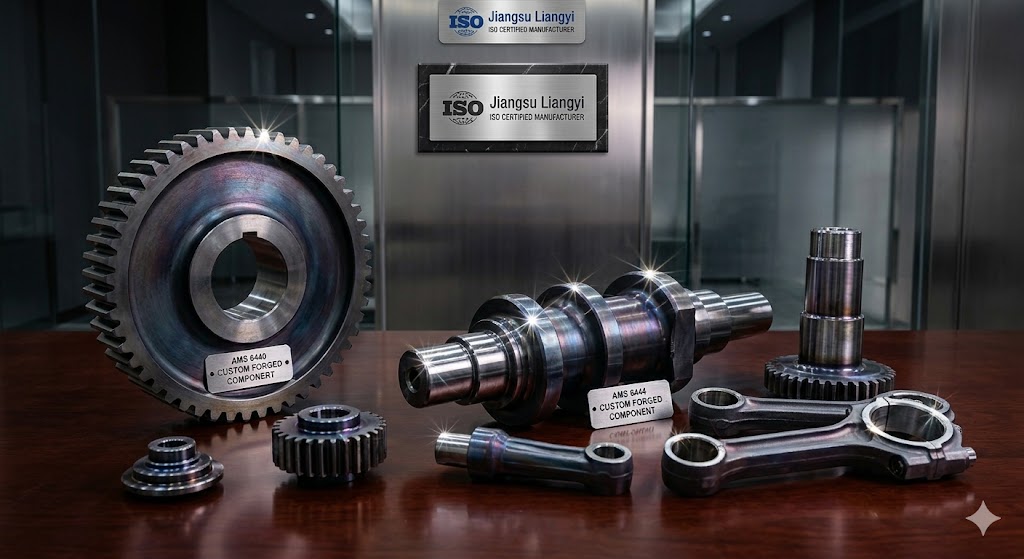
Vertical integration is the foundation of our quality system. Where most forge shops begin with purchased billet, we begin with controlled steel melting — giving us direct ownership over the variables that matter most for AMS 6440 and AMS 6444: hydrogen content, sulfur morphology, inclusion cleanliness, and carbide banding potential. The following describes each step of our production chain and the specific quality controls applied at each stage. Learn more about our facilities on our Equipment Page.
Step 1 — Premium Steel Melting & Vacuum Degassing
Our melt shop operates a 30-ton Electric Arc Furnace (EAF) for initial charge melting, followed by a 30-ton Ladle Refining Furnace (LRF) for precise chemistry trimming and slag refining, and a Vacuum Oxygen Decarburization (VOD) unit for final hydrogen and oxygen removal. This triple-process route — EAF + LRF + VOD — is the same configuration used by premium aerospace steel mills and is essential for AMS 6440 and AMS 6444 for three reasons:
- The LRF desulfurization step reduces sulfur from a typical EAF tap of 0.015–0.025% down to our target of ≤0.008%, improving MnS inclusion morphology and rolling contact fatigue resistance beyond what the AMS specification alone requires.
- The VOD step removes dissolved hydrogen to below 1.5 ppm (verified by sub-lance measurement per heat), eliminating the hydrogen embrittlement cracking risk in large-section forgings during quenching.
- Full heat number documentation is generated at each stage — EAF chemistry, LRF adjustment, VOD final analysis — providing a three-point chemical audit trail for each ingot that enters our forge press, satisfying the most demanding aerospace supply chain traceability requirements.
Ingots are cast in sizes from 1.5 tons to 25 tons, with electrode compositions verified by our in-house OES (optical emission spectrometer) and wet chemistry lab before any ingot is released to the forge floor.
Step 2 — Precision Open Die Forging
Our forge shop is equipped with 2,000T, 4,000T, and 6,300T hydraulic forging presses, complemented by 0.75T to 9T electro-hydraulic forging hammers for smaller components, and 1 M to 5 M seamless ring rolling machines. For AMS 6440 and AMS 6444, we apply a strictly controlled forging procedure:
- Soaking Temperature: Ingots are soaked at 1,150–1,200°C for a minimum of 2 hours per 100 mm diameter to achieve uniform austenite temperature before press contact.
- Forging Reduction Ratio: Minimum 4:1 for aerospace-specification components (vs the AMS 2372 minimum of 3:1). This extra reduction breaks down all residual primary carbide networks and achieves the fine, uniform chromium carbide distribution that maximizes rolling contact fatigue life.
- Forging Finish Temperature: We maintain a finish forging temperature above 950°C to prevent strain-induced martensite and keep the forging in a fully austenitic condition until deformation is complete.
- Post-Forge Slow Cooling: All AMS 6440 and AMS 6444 forgings are slow-cooled in controlled furnaces (maximum cooling rate 30°C/hour) after forging to produce a soft annealed spheroidized carbide microstructure, preventing air-cool martensite and making the forgings safe to transport and machine before final heat treatment.
Step 3 — Five-Point Custom Heat Treatment Protocol
Heat treatment is where the final mechanical properties of AMS 6440 and AMS 6444 are established. We operate ten fully computer-controlled sealed quench furnaces and pit furnaces, with independent temperature zone control to ±5°C across all working zones. Our standard five-point protocol for Q&T condition is as follows:
- Stress Relief Anneal at 650–680°C for 2–4 hours after rough machining (if applicable), to relieve machining stresses before austenitizing. This step prevents distortion during the final quench and is frequently omitted by suppliers focused on cycle time.
- Austenitizing at 840–860°C for AMS 6440 (850°C ±5°C for AMS 6444) for a hold time calculated at 1 minute per millimeter of effective cross-section (minimum 30 minutes). This window dissolves sufficient carbon into austenite for full hardening without producing excessive grain growth or carbide dissolution beyond what is needed.
- Controlled Quenching in oil (large sections) or polymer quench (medium sections), with quench media temperature maintained at 60–80°C. For sections above 300 mm, we use a staged interrupted quench protocol designed by our metallurgical team to prevent quench cracking by reducing the thermal gradient at the moment martensite transformation begins (Ms ≈ 195°C for these compositions).
- Cryogenic Treatment at −196°C in liquid nitrogen for a minimum of 4 hours (standard for AMS 6444 tooling-grade components; optional for AMS 6440 bearings). This step converts retained austenite to martensite, reducing retained austenite to below 3%, and is the most reliable method to achieve the dimensional stability required for precision dies and gauges.
- Double Temper at 160–180°C (2 × 2-hour cycles with intermediate air cooling). The double temper ensures complete relief of untempered martensite and transformation of any martensite formed during the cryogenic step. Final hardness target is 60–64 HRC for standard AMS 6440/6444 Q&T; we can adjust temper temperature for customer-specified hardness ranges within the alloy's capability envelope.
Step 4 — Precision CNC Machining
Our in-house machining workshop is equipped with high-precision CNC horizontal lathes (up to ⌀2,000 mm swing), CNC vertical turning centers (up to ⌀5,000 mm), CNC boring mills, and CNC surface & cylindrical grinders. We can supply rough machined, semi-finished or fully finished forged parts of AMS 6440 and AMS 6444 with dimensional tolerances down to IT6 grade (typically ±0.01 to 0.05 mm for critical bearing surfaces). Large ring and disc forgings supplied with machined bearing seats are 3D verified for all datum surfaces using our in-house CMM (coordinate measuring machine).
Step 5 — Comprehensive Quality Inspection & Testing
Every AMS 6440 and AMS 6444 forging is given a structured multi-stage inspection before release. The following describes our in-house inspection capabilities:
- Chemical Analysis: OES (optical emission spectrometer) for all 9 specified elements, with wet chemistry backup for sulfur and phosphorus at reporting thresholds below 0.005%.
- Mechanical Testing: Tensile testing per ASTM A370 (tensile, yield, elongation, reduction of area), hardness testing per ASTM E384 (Rockwell HRC at minimum 5 points per piece), and Charpy V-notch impact testing per ASTM E23.
- Ultrasonic Testing (UT): Per AMS 2630, acceptance level #2, 100% volumetric scanning. For rings above 500 mm OD, full immersion UT with 0.5 mm spatial resolution and digital C-scan recording.
- Magnetic Particle Inspection (MT): Per ASTM E1444, wet fluorescent method, all accessible surfaces, for surface and near-surface discontinuity detection.
- Metallographic Analysis: Macro-etch per ASTM E381 (one transverse section per heat per size), micro-inclusion rating per ASTM E45 Method A, grain size per ASTM E112, decarburization measurement per AMS 2251.
- Dimensional Inspection: All critical dimensions verified per customer drawing using calibrated instruments; CMM 3D verification for machined components with GD&T callouts.
7 Common Specification Mistakes When Sourcing AMS 6440 & AMS 6444 Forgings
After reviewing hundreds of technical queries and resolving dozens of quality disputes on behalf of global procurement teams, our engineering team has identified the seven specification errors that most frequently cause project delays, failed qualification tests, or in-service failures when buying AMS 6440 and AMS 6444 forged parts. We share these observations because informed buyers receive better parts, fewer surprises, and faster project timelines.
- Specifying hardness range without specifying the heat treatment condition. "HRC 60–64" as a standalone note on a drawing is ambiguous. AMS 6440 and AMS 6444 can achieve this hardness range via direct quench-and-temper, or via quench-cryo-double-temper, which produce significantly different retained austenite levels and dimensional stability. Always specify the complete heat treatment condition and, for precision components, the maximum acceptable retained austenite percentage.
- Not specifying forging reduction ratio for critical aerospace components. Many drawings simply state "AMS 6440 forged bar" without a minimum forging reduction ratio. The AMS 2372 minimum is 3:1, which is adequate for many applications but insufficient for the longest fatigue life. If your application is a bearing component designed to an L10 life model, request a certified 4:1 or greater reduction ratio and ask for it to be documented in the Mill Test Certificate.
- Requesting EN 10204 3.1 MTC without specifying which properties must be reported. EN 10204 3.1 requires the manufacturer's own inspection department to certify the results. However, the standard does not prescribe which tests must be performed — it requires that specified tests be documented. If your purchase order does not list the required test types (chemical, mechanical, UT, MT, grain size, inclusion rating), the supplier is free to issue a 3.1 MTC with only chemical analysis results.
- Accepting "equivalent to 52100" as a substitute for AMS 6440 without verification. SAE 52100 and AMS 6440 share the same base chemistry but AMS 6440 imposes significantly tighter limits on sulfur (0.015% max vs 0.025%), phosphorus, nickel, and copper, plus hydrogen content controls that commercial 52100 does not require. For aerospace bearing applications, these differences are not cosmetic — they directly affect inclusion cleanliness, hydrogen cracking risk, and fatigue life scatter.
- Specifying surface finish without specifying stock allowance for decarburization removal. AMS 6440 and AMS 6444 forgings will always have a decarburized surface layer from hot forging and heat treatment. If your drawing specifies a finished dimension without adequate machining stock (minimum 2× total decarburization depth as measured per AMS 2251), the finished surface may retain partial decarburization and exhibit soft spots on hardness survey.
- Not distinguishing between "forged" and "forged + annealed" condition in lead time planning. AMS 6440 and AMS 6444 forgings for tooling applications are typically delivered in the spheroidize-annealed condition (hardness approximately 215–241 HBN) for customer machining. The final Q&T hardening is then performed by the customer or a heat treater. If you need Q&T condition from the forge shop, this requires an additional 3–7 working days of furnace time not always included in standard lead time quotes. Confirm delivery condition explicitly in your inquiry.
- Confusing "AMS 6444" with "AMS 6442" or "AMS 6543". The AMS specification numbering system is not sequential by material similarity. AMS 6442 is a low-alloy chromium-molybdenum steel (similar to AISI 4340 chemistry class) — a completely different alloy family with entirely different heat treatment response and properties. AMS 6543 is a precipitation-hardening maraging steel. Verify the full AMS number and the material description at the top of the specification before ordering, especially for drawings that originated from a legacy document system.
Industry Applications & Global Market Case Studies
AMS 6440 and AMS 6444 forged parts are field-proven in the world's most demanding industries across more than 50 countries. Our applications engineering team has accumulated deep knowledge of how these alloys perform under specific operating conditions — knowledge that enables us to recommend the correct heat treatment condition, surface finish, and quality documentation package for each application before production begins. View our full project portfolio on our Project Reference Page.
Aerospace & Defense Industry (North America & Europe Core Market)
AMS 6440 is the industry benchmark for aerospace bearing components. Its combination of deep hardenability, high chromium carbide volume fraction, and stringent inclusion cleanliness requirements make it the preferred material for aircraft wheel bearing rings, main shaft bearing races, gearbox bearing components, and structural pin joints operating in cyclic loading environments below 400°F (204°C). The AMS 6440 specification was developed specifically to ensure consistency of rolling contact fatigue life across supply chains supplying major airframe and engine OEMs.
We supply AMS 6440 forged bearing rings, engine component blanks, structural ring blanks, and landing gear component forgings to aerospace manufacturers and tier-one suppliers in the United States, Germany, France, and the United Kingdom. All aerospace forgings are produced under AMS 2372 quality assurance protocols, with 100% UT inspection, full dimensional documentation, and lot traceability to individual heat numbers.
Oil & Gas Industry (Middle East Core Market)
AMS 6440 and AMS 6444 forged parts are extensively used in high-pressure, high-cycle oilfield valve applications, where valve seats and balls must withstand pressure ratings up to 15,000 psi while maintaining a metal-to-metal seal with surface roughness below Ra 0.4 μm after final grinding. The high hardness (60–64 HRC) of AMS 6444 valve seat forgings provides erosion and cavitation resistance in sand-laden flow streams — a critical factor in onshore oilfields across Saudi Arabia, the UAE, Kuwait, and Iraq where produced sand content frequently exceeds 200 ppm.
We supply AMS 6444 forged valve body, bonnet, ball, and seat ring blanks with chemical composition and mechanical properties that meet the material requirements of API 6A PSL3/PSL4. All oilfield forgings are supplied with EN 10204 3.1 MTC as standard. EN 10204 3.2 MTC with third-party witness inspection by BV, SGS, or Lloyd's Register is available upon request. We provide NACE MR0103-compatible heat treatment records and hardness documentation confirming compliance for non-sour service applications. Note: API 6A product certification (Monogram licensing) is the responsibility of the valve assembler; we supply conforming raw forgings and full material documentation to support your product qualification.
Mining & Rolling Mill Industry (Australia & South America Core Market)
The mining industry's demand for AMS 6440 and AMS 6444 forged work rolls, roll sleeves, and crusher components is driven by the same material properties that make these alloys valuable in aerospace: high hardness, fine carbide distribution, and resistance to contact fatigue under cyclic rolling loads. In a hot strip mill work roll application, the roll surface experiences 10⁷–10⁸ contact stress cycles per campaign, with surface spalling (subsurface fatigue cracking driven by inclusion clusters) as the dominant failure mode. The superior inclusion cleanliness of AMS 6440 and AMS 6444 forgings compared to commercial bearing steel directly translates to longer roll campaign life and reduced downtime.
Heavy Machinery & Power Transmission (Europe & Asia Core Market)
AMS 6440 and AMS 6444 forged gears, gear shafts, transmission shafts, spindles, crankshafts, and coupling components are used by industrial machinery manufacturers who demand tighter mechanical property consistency than commercial structural steel forgings can provide. In particular, the combination of high yield strength (≥1,580 MPa), adequate toughness (≥8 J CVN), and guaranteed metallurgical cleanliness (inclusion rating per ASTM E45) makes these alloys the choice for gear shafts in high-speed, high-torque drivetrains where material variability is a major contributor to premature fatigue failure.
Tool & Die Manufacturing (Global Market)
AMS 6440 and AMS 6444 forged cold forming dies, stamping dies, shear blades, cutting tools, woodworking knives, and forming rolls benefit from the maximum hardness and abrasion resistance these alloys can provide after full Q&T plus cryogenic treatment. For precision stamping dies in the automotive and electronics manufacturing industries, dimensional stability of the die after heat treatment is as important as initial hardness — any distortion greater than approximately 0.02 mm in the die cavity translates directly to dimensional non-conformance in stamped parts. Our cryogenic treatment protocol (−196°C × 4 hours, followed by double temper) reliably achieves retained austenite below 3%, which in our measurement campaigns correlates with post-heat-treatment dimensional change of less than 0.008 mm/100 mm for AMS 6444 die block forgings.
Full Compliance with International Production & Inspection Standards
All AMS 6440 and AMS 6444 forged parts are manufactured and inspected in strict accordance with the latest international aerospace and industrial standards. Our compliance portfolio is structured to satisfy the documentation and traceability requirements of customers across all major buying regions simultaneously — a single production lot can be certified to AMS, ASTM, API, EN, and JIS requirements within the same MTC package, minimizing customer re-inspection costs.
Aerospace Material Standards (AMS)
- AMS 6440: Steel, Bars, Forgings, and Tubing — Bearing, Deep Hardening (primary material specification)
- AMS 6444: Steel, Bars, Forgings, and Rings — High Carbon, High Chromium (primary material specification)
- AMS 2251: Tolerances for Aerospace Steel Bars, Rings, and Forgings — governs acceptable decarburization depth and dimensional tolerances
- AMS 2259: Chemical Check Analysis Limits for Wrought Steels — defines acceptable variation between heat analysis and check analysis results
- AMS 2370: Quality Assurance Sampling and Testing — Steel and Steel Alloy Wrought Products
- AMS 2372: Quality Assurance Sampling and Testing — Steel Forgings (the key process qualification standard governing forging reduction ratios, heat treatment documentation, and test frequency)
- AMS 2630: Ultrasonic Inspection — Wrought Metals (required for aerospace-grade UT acceptance levels)
- AMS 2808: Material Identification Marking for Steel Products (marking and traceability)
ASTM & ASME International Standards
- ASTM A 370: Standard Test Methods and Definitions for Mechanical Testing of Steel Products
- ASTM E 45: Standard Test Methods for Determining the Inclusion Content of Steel (Method A — worst fields; Method D — SAM rating)
- ASTM E 350: Standard Test Methods for Chemical Analysis of Carbon and Alloy Steel
- ASTM E 381: Standard Method of Macroetch Testing of Steel Bars, Billets, Blooms, and Forgings
- ASTM E 384: Standard Test Method for Micro-indentation Hardness Testing of Materials (Vickers / Knoop)
- ASTM E 112: Standard Test Methods for Determining Average Grain Size
- ASTM E 23: Standard Test Methods for Notched Bar Impact Testing of Metallic Materials (Charpy)
- ASTM E 1444: Standard Practice for Magnetic Particle Testing
Regional Industry Standards
- European Standards: EN 10083 (heat treatable steels), EN 10204 (MTC types 3.1 and 3.2), DIN 17230 (bearing steels). Materials can be supplied with documentation supporting customer integration into PED 2014/68/EU-compliant pressure equipment assemblies upon request.
- Oil & Gas Standards: API 6A PSL1–PSL4 (wellhead and Christmas tree equipment), API 6D (pipeline valves), NACE MR0175 / ISO 15156 (sour service — note: AMS 6440/6444 at full hardness is NOT compliant; see our decision matrix above)
- Japanese Standards: JIS G4053 (alloy steels for machine structural use), JIS G4404 (alloy tool steels)
- Quality Management System: ISO 9001:2015 Certified — scope covering steel melting, forging, heat treatment, machining, and inspection. Certificate available upon request.
How to Write a Complete AMS 6440 or AMS 6444 Forging Purchase Specification
A complete and unambiguous purchase specification is the single most effective tool for ensuring you receive exactly the forging you need — on time, on specification, and without unexpected non-conformance at incoming inspection. The following checklist is based on our experience processing thousands of RFQs and the gaps we most frequently encounter that cause miscommunication or non-conformance.
Minimum Required Specification Elements
- Material specification number: "AMS 6440 Rev. [latest]" or "AMS 6444 Rev. [latest]" - revision letter if known. Avoid using "52100" or "tool steel" as a short-hand; these do not invoke the AMS inspection and traceability requirements.
- Product form: Specify exact form (forged bar, seamless rolled ring, forged disc, custom shape per drawing) "Bar" by itself is ambiguous — it could be read as a rolled bar, extruded bar, or forged bar.
- Dimensions and tolerances: Include all critical dimensions with bilateral tolerances, surface finish (Ra) for machined surfaces, and flatness / straightness callouts for long bars and shafts. State whether dimensions are for as-forged, rough machined, or finish machined condition.
- Heat treatment condition and hardness: Clear indication of delivery condition "Spheroidize Annealed, 215-241 HBN" for customer-machining condition, or "Quenched and Tempered, HRC 60-64" for final-hardened condition. For precision tooling, add “plus cryogenic treatment per discussion” if retained austenite control is desired.
- Quality assurance level: Reference AMS 2372 and state the inspection tests required: "AMS 2372, including 100% UT per AMS 2630 Level 2, ASTM E45 inclusion rating (Method A), grain size per ASTM E112, macroetch per ASTM E381, full mechanical testing per ASTM A370." The more explicitly tests are listed, the harder it is for a supplier to omit them and still issue a compliant MTC.
- Certification type: "EN 10204 3.1 MTC" (manufacturer's own inspection) or "EN 10204 3.2 MTC with third party witness by [BV / SGS / TUV / Lloyd's Register]. For 3.2 MTC, add an additional 5-7 business days to your project schedule for third-party scheduling.
- Forging reduction ratio: For fatigue-critical components, add "Minimum forging reduction ratio 4:1, documented in MTC." This single line prevents substitution of bar stock or insufficient reduction forgings.
Frequently Asked Questions About AMS 6440 & AMS 6444 Forgings
AMS 6440 is a premium deep-hardening bearing steel (SAE 52100 aerospace grade) optimized primarily for rolling contact fatigue resistance in aerospace bearing components operating below 400°F. Its tighter sulfur limit (0.015% max) and lower nickel tolerance (0.25% max) make it cleaner and more consistent for fatigue-critical applications. AMS 6444 is a high-carbon, high-chromium steel with primary concern for maximum hardness (to 65 HRC) and wear resistance, with slightly wider composition tolerances suitable for tooling, dies, valve seats and forming rolls.For aerospace bearing rings, specify AMS 6440. For precision tooling or valve seats requiring maximum surface hardness, specify AMS 6444.
Yes. EN 10204 3.1 MTC (certified by our own quality department) is standard on all orders. Third party inspection witness EN 10204 3.2 MTC available on request. Authorized inspection bodies are Bureau Veritas (BV), SGS, TUV Rheinland and Lloyds Register. In your purchase order, please specify the inspection body needed. Allow 5–7 additional working days for third-party scheduling. The 3.2 MTC package contains all the test results in your PO: chemical analysis, mechanical testing, hardness survey, UT/MT records and dimensional inspection where specified.
High-carbon chromium steels like AMS 6440 are significantly more susceptible to hydrogen-induced delayed cracking than low-carbon alloy steels, because the high carbon and chromium content raises the material's sensitivity to hydrogen embrittlement after quenching. Dissolved hydrogen above approximately 2 ppm creates a risk of internal flaking — subsurface cracks that may not manifest until days or weeks after quenching, potentially after the forging has passed UT inspection. Our Vacuum Oxygen Decarburization (VOD) unit consistently achieves hydrogen below 1.5 ppm per heat. We document hydrogen content in the heat record and provide it in the MTC on request. This is a key differentiator from forge shops that purchase steel from external mills without hydrogen documentation.
The AMS 2372 standard requires a minimum 3:1 forging reduction ratio. For aerospace-grade bearing components, our standard practice is a minimum 4:1 ratio, which we document in the Mill Test Certificate. Our production experience consistently demonstrates that a 4:1 minimum ratio produces more uniform carbide distribution and tighter scatter in rolling contact fatigue life compared to the AMS minimum 3:1 requirement. For very critical components where the customer specifies fatigue life L10 requirements, we can apply 5:1 or greater reduction ratios by agreement. Ask for the forging reduction ratio to be explicitly documented in your MTC if it matters for your application — not all suppliers do this as standard.
Retained austenite in AMS 6444 tooling dies is a dimensional stability risk: retained austenite above approximately 5% can transform to martensite in service, causing unpredictable dimensional expansion of 0.1–0.3% that ruins die tolerances. Our standard tooling protocol includes deep cryogenic treatment at −196°C in liquid nitrogen for a minimum of 4 hours, performed immediately after quenching and before the first temper. This reduces retained austenite to below 3%, verified by X-ray diffraction on a batch sample basis. After cryogenic treatment and our double-temper cycle, the dimensional change measured in post-heat-treatment CMM inspection of representative test pieces is consistently below 0.008 mm/100 mm — sufficient for precision forming dies held to ±0.01 mm tolerances.
We can produce AMS 6444 seamless rolled rings up to 6,000 mm outer diameter, 30,000 kg single-piece weight, with full customization of wall thickness, height, and contoured profiles. Our 5 M seamless rolling machine is one of the largest in China capable of producing these alloys in the AMS-grade cleanliness class. For rings above 3,000 mm OD in AMS 6444, we recommend an early design consultation to optimize the forging reduction ratio achievable within the ring geometry, as wall-thickness-to-diameter ratio affects the attainable reduction from ingot to finished ring.
The normal lead time for custom AMS 6440 and AMS 6444 forgings is 15 to 30 business days from purchase order receipt, including steel prep, forging, heat treating, inspection and documentation. The real lead time depends on drawings of components, weight and heat treatment condition. Annealed condition forgings are generally at the lower end (15-18 days) and full Q&T with cryogenic treatment, finish machining, 3.2 MTC and 100% immersion UT scanning are at the upper end (25-30 days). Urgent aerospace or project orders can be manufactured with eligible standard geometries in as little as 7-10 working days. Please call our sales team with your timeline and we will give you a realistic schedule within 24 hours.
Yes. We support single piece prototype forgings, small batch orders (2-10 pieces) and volume production with no minimum order quantity restrictions. Our engineering team provides a complimentary DFM (Design for Manufacturability) review for prototype forgings. This review usually results in forging geometry improvements which in turn reduce waste material and improve heat treatment response. First Article Inspection (FAI) documentation is available in customer specified format including AS9102 style dimensional and material reports as requested. Small batch prototypes are priced at a small premium to production pricing to account for the setup cost, which we will transparently quantify in the quotation.
AMS 6440 forged bearing rings receive a three-stage NDT protocol: (1) Full volumetric ultrasonic testing (UT) per AMS 2630, acceptance level #2, detecting subsurface inclusions and porosity to a minimum detectable flat-bottom-hole equivalent of 0.8 mm — for large rings above 500 mm OD we perform immersion UT with digital C-scan at 0.5 mm resolution across 100% of the volume; (2) Magnetic particle inspection (MT) per ASTM E1444, wet fluorescent method, detecting surface and near-surface linear indications to a minimum sensitivity of 0.5 mm; (3) Dimensional inspection of all drawing-specified dimensions with CMM verification of roundness, concentricity, and face parallelism. All results are documented in the MTC with test date, equipment ID, operator qualification level, and acceptance criteria reference.
About Jiangsu Liangyi — Your Trusted AMS 6440 & AMS 6444 Forging Partner
Established in in Jiangyin City, Jiangsu Province, China, Jiangsu Liangyi Co., Limited has grown over 25 years into one of China's most technically capable and internationally recognized open die forging manufacturers, with a specific focus on aerospace-grade, oil and gas, and high-performance industrial alloys. Our factory covers 80,000㎡ with original fixed assets of approximately 40 million USD, and an annual forging capacity of 120,000 tons across more than 200 employees.
Our technical differentiation from typical Chinese forging suppliers rests on four foundations that take years to build: (1) fully in-house steel melting with EAF + LRF + VOD, which gives us direct control over hydrogen, sulfur, and inclusion cleanliness that purchased-billet shops cannot match; (2) a mechanical testing and metallography laboratory staffed by materials engineers with postgraduate qualifications, capable of generating ASTM E45, E112, and E381 test results in-house without outsourcing to commercial labs that may introduce documentation delays or traceability gaps; (3) ten computer-controlled heat treatment furnaces with independent zone control, specialized for the precise temperature programs that high-carbon chromium steels demand; and (4) a quality system designed by former aerospace manufacturing engineers that generates documentation packages compatible with the world's most demanding aerospace, oil and gas, and defense supply chain requirements without requiring customers to perform extensive incoming re-verification.
We have supplied AMS 6440 and AMS 6444 forgings to customers across the United States, Canada, Germany, the United Kingdom, France, Italy, the Netherlands, Australia, Saudi Arabia, the UAE, Kuwait, Brazil, South Korea, Japan, and more than 35 other countries, in a reference list spanning commercial aviation, defense aerospace, offshore oil and gas, mining, power generation, and precision tooling manufacturing. Our longest-standing customer relationships span many years of continuous supply — something we regard as a more meaningful quality indicator than any certificate on our wall.
Contact Us for Custom AMS 6440 & AMS 6444 Forging Quotation
Send your drawing, material specification, heat treatment condition, quantity, and required MTC type. Our engineering team will provide a full technical review and competitive quotation within 24 hours — including DFM feedback at no charge for new product inquiries.
Request Your Free QuoteContact Us for Custom AMS 6440 & AMS 6444 Forging Quotation
We are ready to provide the most competitive pricing and superior quality AMS 6440 and AMS 6444 forged steel products for global clients. Whether you need prototype parts, small batch production, or large-scale mass supply, our professional engineering and sales team will provide you with a full technical solution and detailed quotation within 24 hours. Send your custom drawing, material requirements, quantity, heat treatment condition, and project details to us today.
Inquiry Email: sales@jnmtforgedparts.com
Phone / WhatsApp: +86-13585067993
Tel (Office): +86-510-86107550
Fax: +86-510-86107550
Website: https://www.jnmtforgedparts.com
Factory Address: Chengchang Industry Park, Jiangyin City, Jiangsu Province, 214400, China
Office Hours: Monday – Friday, 08:00 – 18:00 (UTC+8)