AMS 5660 & AMS 5661 Forging Parts — China Professional Manufacturer & Supplier
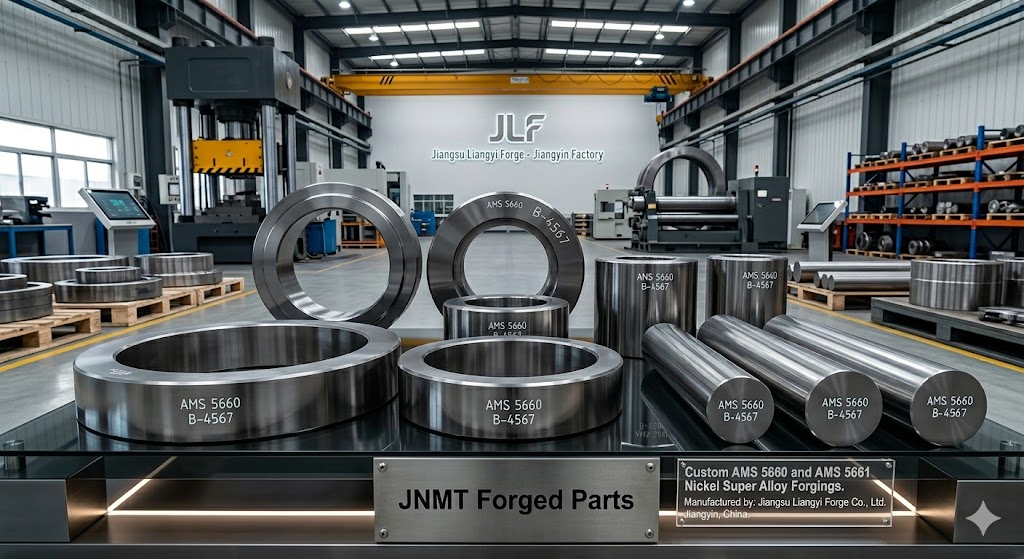
Jiangsu Liangyi, founded in 1997 and based in Jiangyin, China, is an ISO 9001:2015 certified producer of custom forgings made to these specifications. We supply parts ranging from 30 kg up to 30 tons, with full in‑house heat treatment, non‑destructive testing, and EN10204 3.1/3.2 material test certificates. Our products are exported to more than 50 countries around the world.
Established in 1997, Jiangsu Liangyi Co., Limited is an ISO 9001:2015 certified professional manufacturer specializing in AMS 5660 and AMS 5661 forgings, open die forgings, and seamless rolled rings. Strategically located in Chengchang Industrial Park, Jiangyin City – the core high-end forging industrial cluster in Jiangsu Province, China – we bring over 25 years of specialized experience in nickel-based superalloy forging.
We supply custom AMS 5660 and AMS 5661 forged parts to customers in more than 50 countries, serving the aerospace, power generation, nuclear power, oil & gas, and industrial compressor industries. Full material traceability is provided for every batch, supported by EN10204 3.1/3.2 mill test certificates as standard. All products are manufactured in compliance with international standards including AMS, ASTM, ASME, EN, API, and RCC-M.
What is AMS 5660 & AMS 5661 Nickel-Iron-Chromium Super Alloy?
AMS 5660 and AMS 5661 are age-hardenable nickel‑iron‑chromium superalloys defined by Aerospace Material Specification (AMS) standards, widely regarded as the premier choice for critical high‑temperature structural components.Both alloys are precisely alloyed with titanium and aluminum to form gamma‑prime (γ′) precipitates for hardening, plus molybdenum for solid‑solution strengthening, giving AMS 5660 AMS 5661 forgings outstanding high‑temperature mechanical performance.
This alloy family was first developed in the 1960s as a cost‑effective alternative to high‑nickel superalloys for large cross‑section forgings in stationary power generation.By replacing a large share of nickel with iron (approximately 37–42% Fe as the balance element), it achieves significantly lower raw material costs while retaining excellent high‑temperature properties up to 600°C.The higher iron content also greatly improves hot forgeability, allowing production of large turbine discs over 1500 mm in diameter with uniform mechanical properties across the entire section — a key advantage that high‑nickel alloys struggle to match in forgings weighing more than 500 kg.
Core Technical Difference Between AMS 5660 and AMS 5661
AMS 5660 and AMS 5661 follow the same chemical composition and identical mechanical property requirements at both room and high temperatures. Their main differences lie in product form, intended use, and strictness of non-destructive inspection (NDI).
AMS 5660 is the general-purpose standard for wrought bars, forgings, and semi-finished parts used in static and semi-static structural components.AMS 5661 is optimized for high-grade forged rings, turbine blade fasteners, and high-speed rotating parts in gas and steam turbines. It imposes tighter requirements on ultrasonic testing (UT) and grain flow control to ensure reliable fatigue performance under cyclic loading.
AMS 5660 — General-Purpose Specification
Covers wrought bars, forgings, and semi-finished products. Suitable for static and semi-static structural parts including valve bodies, casings, flanges, and general turbine components.Ultrasonic testing conforms to AMS 2630 Class A as standard.Grain size required to be ASTM No. 5 or finer.Permits a slightly wider tolerance for minor surface defects on non-critical surfaces.
AMS 5661 — Premium Quality Specification
Specifically designed for forged rings, turbine blade fasteners, and high-speed rotating components.Requires premium ultrasonic testing in accordance with AMS 2630 Class AA, with a stricter acceptance standard (flat-bottom hole #3 or smaller).Grain flow must be oriented strictly along the principal stress direction.Grain size shall be ASTM No. 6 or finer for critical rotating parts.Surface finish requirements are more rigorous for fatigue-sensitive applications.
Key Material Advantages of AMS 5660 AMS 5661 Forgings
- Outstanding high-temperature yield strength and creep resistance at continuous operating temperatures up to 1110°F (600°C), with 100,000-hour stress rupture life exceeding 350 MPa at 538°C
- Excellent hot forging workability due to optimized iron content (~37–42%), enabling complex near-net-shape forming for large custom AMS 5660 open die forging parts exceeding 1500mm diameter and 10,000 kg single-piece weight
- Superior low-cycle fatigue (LCF) resistance exceeding 10,000 cycles at 1% total strain range at 538°C, and high-cycle fatigue (HCF) endurance limit of approximately 480 MPa at 10⁷ cycles at room temperature
- Good oxidation resistance in air up to 870°C for short-term excursions, and excellent resistance to hot corrosion in sulfur-bearing combustion environments typical of land-based gas turbines
- Notch sensitivity ratio (notched/unnotched stress rupture strength) consistently above 1.0 at service temperatures, indicating freedom from notch-weakening behavior — critical for threaded fasteners and stress concentration geometries
- Products manufactured in accordance with aerospace (AMS), power generation (ASTM/ASME), nuclear (RCC-M, ASME BPVC III), and oil & gas (API, NACE MR0175) standards
Metallurgical Strengthening Mechanisms & Alloying Element Roles in AMS 5660 AMS 5661
For engineers specifying this alloy in critical applications, understanding the metallurgical strengthening mechanisms of AMS 5660 AMS 5661 forgings is essential. The alloy’s outstanding high-temperature strength comes from three complementary strengthening mechanisms that act in synergy across its service temperature range:
Gamma-Prime (γ') Precipitation Hardening — Primary Strengthening Mechanism
The primary strengthening mechanism in AMS 5660/5661 is the precipitation of coherent, ordered face-centered cubic (FCC) gamma-prime (γ′) particles of the Ni₃(Al,Ti) type within the nickel‑iron austenitic matrix.During the final precipitation age‑hardening treatment at 1325–1375°F (718–746°C) for 24 hours, finely dispersed γ′ precipitates nucleate and grow to an optimal diameter of roughly 10–30 nm.These coherent precipitates hinder dislocation motion via the anti-phase boundary (APB) energy mechanism, requiring dislocations to move in pairs (super‑dislocations) to cross the precipitates. This greatly raises the critical resolved shear stress required for plastic deformation at high temperatures.
The volume fraction of γ′ in AMS 5660/5661 is about 12–18%, intentionally lower than in higher‑nickel superalloys such as Waspaloy (~25%) or René 41 (~40%).This moderate γ′ fraction represents the key metallurgical trade‑off that gives the alloy its excellent forgeability.A lower γ′ solvus temperature (~980°C, compared to ~1030°C for Waspaloy) creates a wider hot working window above the γ′ solvus, where the material is much softer and more ductile.For large forging processes, this wider processing window is critical to maintaining adequate deformation temperature across the entire cross‑section, especially in thick‑section disc and ring forgings where the core cools more slowly than the surface.
Solid-Solution Strengthening — Matrix Reinforcement
Molybdenum (5.0–7.0%) and chromium (11.0–14.0%) form substitutional solid solutions in the nickel‑iron austenitic matrix, generating local lattice strain fields that obstruct dislocation glide and climb at high temperatures.With an atomic radius 13.6% larger than nickel, molybdenum is especially effective at lowering dislocation mobility above 500°C, where diffusion‑driven creep becomes the main deformation mechanism.Together, this solid‑solution strengthening accounts for roughly 15–20% of the alloy’s total high‑temperature yield strength.
Grain Boundary Strengthening & Boron Microalloying
A critical yet often overlooked part of AMS 5660/5661 metallurgy is the function of microalloying elements, especially boron (0.010–0.020%).Boron segregates preferentially to grain boundaries during solidification and heat treatment, serving two key purposes:
(1)It slows grain-boundary diffusion, suppressing the formation of intergranular creep cavities and greatly improving stress-rupture life.
(2)It makes the bonds between grains stronger, which keeps cracks from forming between grains when they are under stress for a long time.
A small drop in boron content below the required 0.010% minimum can make stress-rupture performance much worse.This means that being able to control the chemical makeup of the melt is very important.
Role of Each Key Alloying Element in AMS 5660/5661 Forging Performance
- Nickel (41.0–43.5%): Forms the austenitic FCC matrix, stabilizes the γ' precipitate phase, and provides inherent oxidation and corrosion resistance. The specific nickel range is optimized to balance γ' volume fraction with sufficient iron content for forgeability
- Chromium (11.0–14.0%): Provides primary oxidation and hot corrosion resistance by forming a protective Cr₂O₃ oxide layer, and contributes to solid-solution strengthening
- Titanium (2.2–2.75%): Primary γ' former — occupies the Al-site in Ni₃(Al,Ti) precipitates, controlling γ' volume fraction and solvus temperature. The Ti:Al ratio determines γ' stability and coarsening resistance at service temperatures
- Molybdenum (5.0–7.0%): Provides potent solid-solution strengthening, enhances creep resistance by reducing dislocation climb rate, and contributes to pitting corrosion resistance in chloride environments
- Aluminum (0.35% max): Co-former of γ' phase with Titanium. The very low Al content relative to Ti indicates predominantly Ti-rich γ', giving slightly different coarsening kinetics compared to Al-rich γ' alloys
- Iron (Remainder, ~37–42%): Partially substitutes for nickel in the matrix, dramatically reducing raw material cost and lowering the γ' solvus temperature, which widens the hot forging window and enables successful forging of very large cross-sections
- Carbon (0.10% max): Forms MC-type primary carbides (TiC) that pin grain boundaries and prevent excessive grain growth during solution treatment, and M₂₃C₆-type secondary carbides that reinforce grain boundary strength during aging
- Boron (0.010–0.020%): Segregates to grain boundaries, dramatically improving stress rupture life and creep ductility by retarding intergranular cavity nucleation. Essential for long-term service reliability
Cross-Specification Equivalents & OEM Designations for AMS 5660 AMS 5661
When procuring AMS 5660 AMS 5661 forging parts for international projects, engineers frequently need to cross-reference equivalent specifications across different standardization systems. The following table provides a comprehensive cross-reference guide:
| Standard System | Specification / Designation | Application Notes |
|---|---|---|
| AMS (SAE International) | AMS 5660 (General) / AMS 5661 (Premium) | Primary aerospace & industrial specifications |
| ASTM | ASTM B637 Grade 706 | Precipitation-hardened nickel alloy bars, forgings, rings |
| ASME | ASME SB-637 Grade 706 (Code Case N-829) | Nuclear & pressure vessel applications per ASME BPVC |
| GE Power | B50TF22 (General) / B50TF23 (Premium) | GE gas turbine & steam turbine forging specs |
| Siemens Energy | TLV 9381-12 | Siemens gas turbine component specifications |
| DIN / EN | W.Nr. 2.4955 | European designation (Werkstoffnummer) |
| AFNOR (France) | NC 42 Fe Nb | French national standard designation |
| China GB | GH2706 / GH4706 | China national standard for deformed (GH2706) and aged (GH4706) conditions |
| Russia GOST | ХН42МБТЮ (KhN42MBTYu) | Russian Cyrillic designation system |
Note: The above OEM designations are listed for cross-reference purposes only. All trademarks and specification numbers are the property of their respective owners. Listing does not imply endorsement, authorization, or affiliation.
Custom AMS 5660 AMS 5661 Forging Products & Manufacturing Capabilities
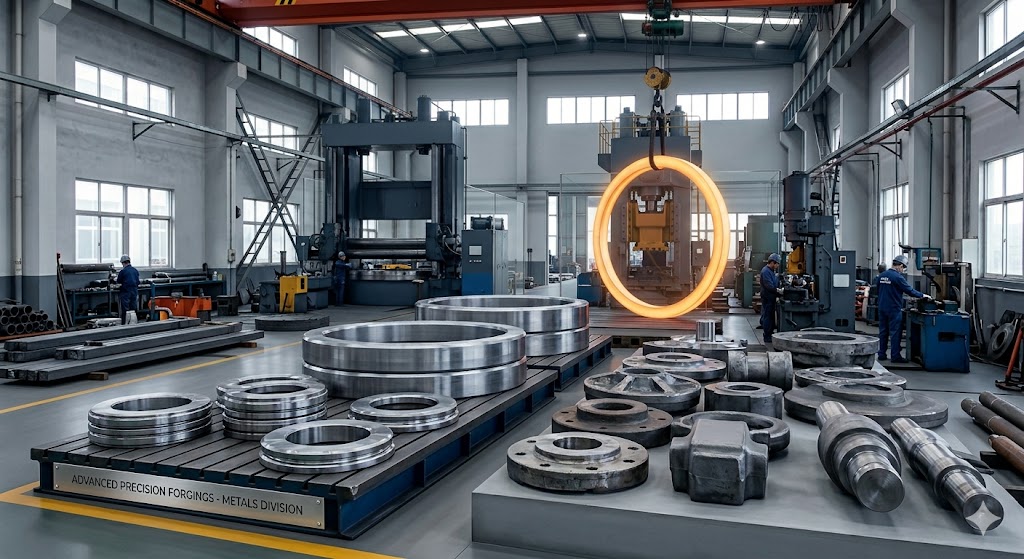
We make custom AMS 5660 AMS 5661 forging parts based on customer drawings, technical specs, and industry standards. The weights of single pieces range from 30 kg to 30 tons, and the full dimensional control is kept throughout the whole production process. Following are our main products :
- AMS 5660 AMS 5661 Forged Bars: Round bars, square bars, flat bars, rectangular bars, and step rods, with maximum diameter up to 2000mm, ideal for turbine blades, compressor blades, fasteners, and structural components
- AMS 5661 Seamless Rolled Rings: Forged seamless rings, contoured rings, gear rings, and seal rings, with maximum outer diameter up to 6 meters, designed for turbine casings, guide rings, and pressure vessel components
- AMS 5660 AMS 5661 Hollow Forgings: Forged sleeves, bushes, casings, hollow bars, pipes, and tubes, with maximum outer diameter up to 3000mm, for valve bodies, heat exchanger components, and pressure housings
- AMS 5660 AMS 5661 Solid Forgings: Forged discs, disks, blocks, plates, hubs, and impellers, with maximum diameter up to 3000mm, for turbine discs, valve discs, and pump components
- AMS 5660 AMS 5661 Shaft Forgings: Forged turbine shafts, valve spindles, rotor shafts, and step shafts, with maximum length up to 15 meters, for power generation and industrial rotating equipment
Dimensional Tolerance & Forging Allowance Standards
All AMS 5660 AMS 5661 forgings are produced to dimensional tolerances meeting EN 10243-1 (Class F for closed-die forgings) or customer-specific requirements.For open die forgings, we apply EN 10243-2, with a typical machining allowance of 5–15 mm per side.For precision-machined parts, we hold critical dimension tolerances up to ±0.05 mm and surface finishes of Ra 1.6 μm or better.
Forging Process Engineering & Hot Working Parameters for AMS 5660 AMS 5661
Producing high-quality AMS 5660 AMS 5661 forgings requires tight control of forging parameters, which are uniquely determined by the alloy’s metallurgical properties.With over 25 years of hands-on experience with this alloy system, we have developed optimized forging process windows that consistently deliver forgings with uniform microstructure and excellent mechanical performance.
Hot Working Temperature Window & Forging Temperature Control
The ideal hot working temperature range for AMS 5660/5661 is 1850–2050°F (1010–1120°C).The initial forging temperature is usually set at 2050°F (1120°C), about 140°C above the γ' solvus temperature (~980°C), ensuring all strengthening precipitates are fully dissolved and the material is in its softest state.
The minimum finish forging temperature must be kept above 1700°F (927°C).Forging below this temperature risks strain-induced cracking from partial γ' precipitation during deformation, which sharply reduces ductility. We use intermediate reheating between passes to keep the billet in the best temperature range for large open die forgings over 500 kg.Each reheating cycle is carefully controlled at 2025°F (1107°C), and the minimum time it must be held is one hour for every 100 mm of cross-sectional thickness.To keep grain boundary oxidation to a minimum, the number of reheats is kept to a minimum, usually no more than four to five cycles per forging run.
Forging Ratio & Grain Refinement Requirements
To achieve the fine-grained microstructure required by AMS standards — ASTM grain size No. 5 or finer for AMS 5660, and No. 6 or finer for premium AMS 5661 applications — a minimum total forging ratio of 3:1 is required from the original ingot to the final forged shape.For critical rotating parts such as turbine discs, we use a minimum forging ratio of 4:1 to ensure full recrystallization and complete elimination of the as-cast dendritic structure. Grain refinement is achieved through controlled dynamic recrystallization during forging.Each deformation pass must exceed a critical strain level (typically >15% reduction per pass) at a strain rate of 0.1–10 s⁻¹ to initiate recrystallization.Deformation below this threshold creates unrecrystallized “dead zones” with coarse, elongated grains that can act as fatigue crack initiation sites. Our CNC forging manipulators and programmable hydraulic presses enable precise control over strain distribution, reducing dead zones and ensuring consistent grain refinement throughout the forging.
Directional Grain Flow Control for AMS 5661 Premium Forgings
For premium AMS 5661 forgings used in rotating turbine applications, directional grain flow control is mandatory.Grain flow must be oriented parallel to the principal stress directions in the final component:circumferentially for rings, radially for discs, and longitudinally for shafts. We achieve this through carefully designed sequences of upsetting, drawing, punching, and ring rolling,which progressively align grain flow while refining grain size at the same time. Macro-etched cross-sections (in accordance with ASTM E381) are prepared from each production lot to verify continuous grain flow and confirm no flow separation, folding, or cross-flow exists.
AMS 5660 AMS 5661 Forging Heat Treatment & Metallurgical Process Control
To ensure consistent mechanical properties, material stability, and long service life of AMS 5660 AMS 5661 forgings , all our parts undergo a standardized three-stage heat treatment process in our on-site, precision temperature-controlled furnaces. Complete heat treatment records and full process traceability are maintained for every batch.
- Solution Treatment — 1975–2025°F (1080–1107°C) / 2 hours / Air Cool: This stage involves heating the forging above the γ' solvus temperature to fully dissolve all gamma‑prime precipitates back into the supersaturated matrix.A 2‑hour soak ensures complete dissolution, even in heavy cross‑sections.Air cooling is rapid enough to prevent premature γ' precipitation.Furnace temperature uniformity of ±14°C (±25°F) throughout the working zone is critical for consistent results.
- Stabilization Heat Treatment — 1425–1475°F (774–802°C) / 2–4 hours / Air Cool: This stage precipitates M₂₃C₆‑type chromium‑rich carbides and eta (η) phase (Ni₃Ti) at grain boundaries to enhance grain boundary strength and creep‑rupture resistance.It also forms coarse γ' particles (50–100 nm), which act as heterogeneous nucleation sites for fine strengthening γ' during the final aging step.This creates a bimodal γ' size distribution that uniquely improves both high‑temperature strength and creep resistance.
Holding time is adjusted based on section thickness: 2 hours for ≤150mm, 3 hours for 150–300mm, 4 hours for >300mm. - Precipitation Age Hardening — 1325–1375°F (718–746°C) / 24 hours / Controlled Cool: This stage precipitates fine γ' particles (10–30 nm) that provide most of the alloy’s room and elevated temperature strength.The extended 24‑hour hold ensures uniform γ' volume fraction across the full cross‑section, even in the core of thick forgings.A controlled cooling rate after aging — typically furnace cooling to 1200°F then air cooling — avoids thermal shock stresses in large forgings.
All finished AMS 5660 AMS 5661 forged parts undergo rigorous visual inspection and non-destructive testing (NDT), and are guaranteed free of cracks, flakes, seams, segregation, non-metallic inclusions, and other discontinuities.Grain size examination is performed in accordance with ASTM E112, ensuring a minimum of ASTM No. 5 for AMS 5660 and ASTM No. 6 for AMS 5661 critical rotating components.
Chemical Composition & Mechanical Properties of AMS 5660 AMS 5661
Standard Chemical Composition of AMS 5660 AMS 5661
| Chemical Element | Weight Content Range (%) | Metallurgical Role |
|---|---|---|
| Nickel (Ni) | 41.0 – 43.5 | Austenitic matrix former, γ' stabilizer |
| Chromium (Cr) | 11.0 – 14.0 | Oxidation/corrosion resistance, solid-solution strengthener |
| Titanium (Ti) | 2.2 – 2.75 | Primary γ' former, controls precipitate volume fraction |
| Molybdenum (Mo) | 5.0 – 7.0 | Solid-solution strengthener, creep resistance |
| Aluminum (Al) | 0.35 max | γ' co-former with Ti, oxidation resistance |
| Carbon (C) | 0.10 max | MC/M₂₃C₆ carbide former, grain boundary strengthening |
| Silicon (Si) | 1.0 max | Deoxidizer during melting |
| Manganese (Mn) | 0.8 max | Deoxidizer, sulfur scavenger |
| Copper (Cu) | 0.5 max | Tramp element, kept low to avoid hot shortness |
| Phosphorus (P) | 0.04 max | Detrimental tramp element, impairs grain boundary strength |
| Sulfur (S) | 0.04 max | Detrimental tramp element, causes hot shortness during forging |
| Boron (B) | 0.010 – 0.020 | Grain boundary cohesion, stress rupture life enhancement |
| Iron (Fe) | Remainder (~37–42) | Cost reduction, improved forgeability, widens hot working window |
Room Temperature Mechanical Properties of AMS 5660 AMS 5661 Forged Bars
| Mechanical Property | Minimum Requirement | Test Standard |
|---|---|---|
| Ultimate Tensile Strength | 1180 MPa (171 ksi) | ASTM E8 |
| Yield Strength (0.2% Offset) | 835 MPa (121 ksi) | ASTM E8 |
| Elongation at Break | 15% | ASTM E8 |
| Reduction of Area | 25% | ASTM E8 |
| Hardness | HB 302–375 (HRC 31–40) | ASTM E10 / E18 |
Elevated Temperature & Stress Rupture Properties of AMS 5660 AMS 5661 Forgings
Since AMS 5660 AMS 5661 forging parts are primarily specified for high-temperature service, understanding elevated temperature properties is critical for design engineers:
Elevated Temperature Tensile Properties
| Test Temperature | UTS (MPa) | 0.2% YS (MPa) | Elongation (%) | Test Standard |
|---|---|---|---|---|
| Room Temperature (20°C) | 1200–1350 | 850–1050 | 16–22 | ASTM E8 |
| 400°C (752°F) | 1100–1250 | 820–980 | 15–20 | ASTM E21 |
| 500°C (932°F) | 1050–1200 | 790–950 | 14–19 | ASTM E21 |
| 538°C (1000°F) | 1020–1180 | 770–930 | 14–18 | ASTM E21 |
| 600°C (1112°F) | 950–1100 | 730–880 | 13–18 | ASTM E21 |
| 650°C (1202°F) | 850–1000 | 680–820 | 12–17 | ASTM E21 |
Stress Rupture & Creep Properties
| Test Temperature | Stress (MPa) | Min Rupture Life (hours) | Min Elongation (%) |
|---|---|---|---|
| 538°C (1000°F) | 690 MPa (100 ksi) | 23 | 4 |
| 538°C (1000°F) | 620 MPa (90 ksi) | 60 | 4 |
| 538°C (1000°F) | 550 MPa (80 ksi) | 200 | 5 |
| 600°C (1112°F) | 480 MPa (70 ksi) | 23 | 4 |
| 650°C (1202°F) | 345 MPa (50 ksi) | 23 | 4 |
These stress-rupture values represent the minimum required by specification. Our actual production results consistently exceed these minimums by 30–50%, thanks to optimized EAF+LF+VOD clean steel melting, controlled forging procedures, and precisely calibrated heat treatment cycles.
Industry Applications & Global GEO Project Cases of AMS 5660 AMS 5661 Forging Parts
AMS 5660 AMS 5661 forging parts are the preferred material for critical high-temperature, high-pressure, and high-load components in global heavy industries:
Gas & Steam Turbine Power Generation (Global Market Coverage)
As the most common application for AMS 5660 AMS 5661 forgings, our components are engineered for both industrial gas turbines (F‑class, H‑class) and thermal power steam turbines (subcritical, supercritical, and ultra‑supercritical units), offering excellent creep resistance at 600°C. This alloy’s balance of high strength, moderate cost, and superior forgeability makes it the leading choice for large turbine components that cannot be practically produced from higher‑nickel alloys due to forging size constraints.
Core products include:
- AMS 5660 AMS 5661 forged turbine blades, compressor blades, and blade root bars
- AMS 5660 forged turbine discs, impellers, blisks, and rotor components — single-piece disc forgings up to 1800mm diameter
- AMS 5661 forged double-ended studs, turbine fasteners, bolting, and hardware
- AMS 5660 AMS 5661 forged turbine guide rings, seal rings, labyrinth rings, and casing rings
- AMS 5660 AMS 5661 forged turbine diaphragm nozzles and stationary blade components
- AMS 5660 AMS 5661 forged turbine casings, valve bodies, and pressure boundary components
- AMS 5660 AMS 5661 forged power plant main steam valve (MSV), control valve (CV), and reheat valve (CRV) discs, seats, spindles, stems, sleeves, and bonnets
GEO Project Case: We have supplied more than 200 batches of AMS 5660 turbine valve seats and AMS 5661 turbine blade bolts for 660MW ultra-supercritical thermal power plants across Vietnam, Thailand, Indonesia and Pakistan. All products comply with ASME B16.34 and have accumulated over 40,000 hours of stable operation in high-temperature steam service.
Nuclear Power Industry (China & Asia Pacific Market)
Our nuclear-grade AMS 5660 and AMS 5661 forgings satisfy the strict safety criteria of nuclear power facilities, produced in compliance with RCC-M and ASME BPVC Section III nuclear standards.Nuclear applications require the highest material purity, making vacuum degassing (VOD) essential to control hydrogen (<2 ppm), oxygen (<30 ppm), and nitrogen (<50 ppm), preventing hydrogen-induced flaking over the 60-year design life.
Core nuclear applications include:
- Steam generator flow limiter Venturi forgings and divider plates
- Pressurizer surge line forged tubes and pressure boundary components
- Reactor coolant system nozzles and primary coolant pump flywheels
- Nuclear fuel handling system latch housings and rod travel housings
- Generator rotor end rings, stack plate forgings, and bearing housings
- Nuclear containment plates, rings, closure heads, and waste flasks
- Reactor pressure vessel (RPV) shell components, transition cones, and lifting components
GEO Project Case: Manufactured custom AMS 5660 AMS 5661 nuclear grade forgings including reactor nozzles and steam generator components for domestic China nuclear power projects, with 100% ultrasonic inspection and full material test documentation per nuclear project requirements.
Aerospace & Aviation Industry (Europe & North America Market)
Our AMS 5660 AMS 5661 aerospace forgings fully comply with AMS aerospace material standards, featuring strict grain flow control and stringent non-destructive inspection (NDI) requirements.In aerospace, this alloy excels in large structural engine components where Inconel 718 would demand unreasonably large forging presses, and where Waspaloy’s narrower forging window raises the risk of manufacturing defects. Following are main aerospace applications:
- Aircraft gas turbine engine compressor discs and rotor components
- Aerospace engine turbine blade forgings and blade root bars
- Aerospace fasteners, studs, and bolts for engine assemblies
- Engine casing rings, seal rings, and structural forgings
- Exhaust section components and afterburner structural rings
GEO Project Case: We have supplied precision AMS 5660 forged bars and AMS 5661 seamless rolled rings to European aerospace engine manufacturers.All products are fully AMS compliant, with 100% NDT inspection and complete material traceability, used for civil aviation gas turbine engine components.
Oil & Gas & Industrial Compressor Industry (Middle East Market)
Our AMS 5660 AMS 5661 forgings are widely used in high-pressure gas compressors, wellhead equipment, and pipeline valves, offering excellent corrosion resistance in harsh sour service environments.The alloy’s resistance to sulfide stress cracking (SSC) makes it suitable for NACE MR0175 / ISO 15156 compliant applications in H₂S-containing environments up to 150°C. Following are main applications:
- Gas compressor rotor discs, impellers, and blade components
- High-pressure valve bodies, seats, stems, bonnets, and sleeves rated up to ASME Class 2500
- Compressor casing flanges, seal rings, and fasteners
- Wellhead equipment pressure boundary components and hangers
- Subsea manifold and tree components for deepwater applications
GEO Project Case: We have delivered custom AMS 5661 double-ended studs, seal rings, and valve parts for large-scale natural gas compressor projects in Saudi Arabia, the UAE, and Oman.These components comply with NACE MR0175 for sour service and are engineered for 15,000 psi high-pressure operating conditions.
Common Forging Defects & Prevention Strategies for AMS 5660 AMS 5661
Manufacturing high-quality AMS 5660 AMS 5661 forging parts requires proactive prevention of defects specific to this alloy system:
Strain-Age Cracking (Most Critical Risk)
Strain-age cracking happens when the alloy is bent, stretched or exposed to extreme heat while γ' is forming (between 650–850°C). During forging, if the workpiece temperature drops below the γ' solvus (~980°C) while we’re still shaping it, the mix of outside pressure and internal stress from γ' formation can make the grain boundaries too weak to handle, leading to tiny cracks along the grain edges—cracks that can only be found with ultrasonic testing. To prevent this, we continuously check the temperature with a pyrometer during every forging step, reheat the workpiece when its surface temperature gets close to 950°C, and control how fast it cools after forging (no more than 100°C per hour between 850–650°C for forgings over 300mm thick).
Macrosegregation & Freckle Formation
In large ingots, the movement of liquid metal caused by density differences between the solid and liquid parts can lead to a type of uneven material distribution called "freckles" — thin lines of small, uniform grains that have more Ti, Mo, and C. These freckles create small areas with different material properties and are likely places where fatigue cracks start. Our prevention methods: control the solidification speed (making sure the solidification front moves faster than 2 mm/min), use an optimized ratio of ingot diameter to height, and choose the right melting process (standard EAF+LF+VOD; VIM+VAR or VIM+ESR processes are available for aerospace-grade needs).
Hydrogen Flaking
Dissolved hydrogen can cause flat, round internal cracks (flakes) during cooling, especially in thick parts. We keep hydrogen below 2 ppm using VOD treatment, and cool ingots slowly and steadily (no more than 25°C per hour between 300–100°C) to let hydrogen escape before it reaches levels that cause damage.
Overheating & Incipient Melting
The solidus temperature is about 1260°C (2300°F), but in areas with uneven material composition, titanium-rich phases can start melting locally at temperatures as low as 1200°C (2192°F), which permanently damages the grain boundary structure. Our multi-zone furnaces hold temperature within ±10°C accuracy, and thermocouple records are kept as permanent quality documents for each forging lot.
Machining & Welding Considerations for AMS 5660 AMS 5661 Forged Parts
Machining Guidelines for AMS 5660/5661 Forgings
AMS 5660 AMS 5661 forging parts in the fully aged condition (HB 302–375) present moderate machining difficulty — similar to other precipitation-hardened nickel alloys but significantly easier than cobalt-based super alloys. Recommended parameters:
- Turning: Carbide insert (C-2/C-3 grade), 25–40 m/min cutting speed, 0.15–0.30 mm/rev feed, 1.5–3.0 mm depth of cut. Flood coolant (high-pressure 70+ bar preferred) to minimize work hardening
- Milling: Carbide end mills, 20–35 m/min, 0.08–0.15 mm/tooth feed. Climb milling preferred. Avoid dwelling to prevent localized heat buildup
- Drilling: Cobalt HSS or carbide drills, 8–15 m/min, 0.05–0.12 mm/rev feed. Peck drilling with 0.5xD peck depth mandatory for holes deeper than 3xD
- Grinding: Silicon carbide or CBN wheels, light cuts (0.01–0.03 mm/pass) with sufficient coolant to prevent grinding burns that create tensile residual stresses on fatigue-critical surfaces
Welding & Repair Welding of AMS 5660/5661 Forgings
AMS 5660/5661 can be welded using GTAW (TIG), electron beam, or plasma arc welding with matching filler wire (AMS 5831 or equivalent). The moderate γ' content (12–18%) gives better weldability than higher-γ' alloys, but two critical risks remain:
- Solidification cracking in the fusion zone: Caused by low-melting-point NiTi-enriched eutectic films. Controlled by tight Ti limits in filler wire and low heat input (<1.0 kJ/mm)
- Strain-age cracking in the HAZ: The most critical risk, occurring during PWHT. Prevention requires: (1) pre-weld solution treatment, (2) controlled post-weld heating rate (max 50°C/hour through aging range), and (3) minimizing residual stresses through proper joint design and welding sequence
Post-weld heat treatment (full three-stage cycle) is mandatory for all structural welds. All welds are 100% inspected by PT and UT to AMS 2630 Class A or AA acceptance criteria.
Material Selection Guide: AMS 5660/5661 vs. Competing Super Alloys for Forging Applications
Selecting the optimal super alloy requires balancing temperature capability, strength, forgeability, cost, and availability:
| Parameter | AMS 5660/5661 | Inconel 718 (AMS 5662/5663) | Waspaloy (AMS 5707/5708) | A-286 (AMS 5731/5732) |
|---|---|---|---|---|
| Max Service Temperature | 600°C (1112°F) | 650°C (1202°F) | 760°C (1400°F) | 540°C (1000°F) |
| Room Temp UTS (min) | 1180 MPa | 1240 MPa | 1280 MPa | 895 MPa |
| Room Temp YS (min) | 835 MPa | 1035 MPa | 795 MPa | 585 MPa |
| γ' Volume Fraction | 12–18% | 15–20% (γ'+γ'') | ~25% | ~5% |
| Forgeability Rating | Excellent | Good | Moderate | Excellent |
| Max Practical Forging Weight | 30 tons | 10 tons | 5 tons | 20 tons |
| Relative Raw Material Cost | 1.0x (baseline) | 1.3–1.5x | 2.0–2.5x | 0.6–0.7x |
| Weldability | Good (with PWHT) | Good (with PWHT) | Difficult | Good |
Advanced Manufacturing & Full-Process Quality Control for AMS 5660 AMS 5661 Forgings
We have a complete in-house production line for AMS 5660 AMS 5661 forging parts, covering steel melting, forging, heat treatment, precision machining, and full inspection:
Full-Scale Forging & Heat Treatment Equipment
- 2000T, 4000T, 6300T, and 8500T hydraulic forging presses, with 1T–9T electro-hydraulic forging hammers
- 50T and 15T CNC forging manipulators, 1M–5M seamless ring rolling machines
- In-house steel melting: 30t EAF, 30t LF, 30t VOD, and medium frequency induction furnaces, ensuring premium raw material quality
- Complete heat treatment fleet: φ2×12m pit furnace, φ8×3×3m table resistor furnace, 1.5×0.8×1.5m box furnace, and large gas furnaces up to 16×2.5×2.5m, with ±10°C furnace uniformity
Quality Control & Inspection System (ISO 9001:2015)
Every batch undergoes strict multi-stage inspection with full test records and mill test certificates:
- Chemical analysis laboratory: Direct-reading spectrometer and carbon-sulfur analyzer for 100% element verification of every steel heat, with tramp element control (P, S, Cu, Pb, Sn, As, Sb, Bi) to aerospace-grade cleanliness
- Mechanical testing: Universal tensile testing (600kN), high-temperature creep/stress rupture testing (up to 750°C), Charpy impact, and hardness testing (Brinell, Rockwell, Vickers) at room and elevated temperatures
- In-house metallurgical laboratory: Grain size per ASTM E112, non-metallic inclusions per ASTM E45 (Method A), delta ferrite measurement, and γ' precipitate size distribution analysis
- NDT center: UT with phased array capability per ASTM A388 and AMS 2630 Class A/AA, MT per ASTM E1444, PT per ASTM E165, by SNT-TC-1A qualified NDT operators
- Precision dimensional control: CMM coordinate measuring machines with 3D scan reporting capability for complex geometries
Why Choose Jiangsu Liangyi for Your AMS 5660 AMS 5661 Forging Needs?
- 25+ Years of Specialized Super Alloy Forging Expertise: Focused on nickel-based super alloy forging since 1997, with extensive AMS 5660 AMS 5661 forging parts manufacturing experience for global power generation, nuclear, aerospace, and oil & gas customers
- One-Stop Custom Forging Solution: Full in-house capabilities from steel melting (EAF+LF+VOD), forging (8500T press), heat treatment (multi-zone controlled furnaces), precision machining (CNC turning, milling, grinding) to final inspection, eliminating middlemen and ensuring full process control
- Deep Metallurgical Expertise: Hands-on expertise in γ' precipitation control, grain flow optimization, strain-age cracking prevention, and hydrogen flaking avoidance — knowledge that directly translates to consistently superior forgings exceeding minimum specification requirements
- China Forging Industrial Cluster Advantage: Strategically located in Jiangyin, Jiangsu — China's core high-end forging cluster, with complete supply chain support, ensuring fast lead times and competitive pricing
- Strict International Standard Compliance: Products manufactured in accordance with AMS, ASTM, ASME, EN, API, RCC-M, and NACE MR0175, with ISO 9001:2015 quality system certification and EN10204 3.1/3.2 mill test certificates provided as standard
- Global Export Experience: Exported to 50+ countries across Europe, North America, Middle East, Asia Pacific, and Africa, with deep understanding of regional requirements and regulations
- High Customization Flexibility: Custom forgings from 30kg precision components to 30-ton heavy forgings, manufactured to customer drawings, technical specifications, and project requirements
Frequently Asked Questions About AMS 5660 AMS 5661 Forging Parts
What is the difference between AMS 5660 and AMS 5661?
AMS 5660 and AMS 5661 both cover the same nickel‑iron‑chromium superalloy, with the same chemical makeup and mechanical properties. The main difference is that AMS 5660applies to general‑purpose forgings, tested with standard UT to AMS 2630 Class A and a grain size of ASTM No. 5 or finer. AMS 5661 is the higher‑grade standard for rotating turbine parts. It requires UT to AMS 2630 Class AA, a grain size of ASTM No. 6 or finer, and controlled grain flow direction for better fatigue resistance.
What is the maximum size and weight of AMS 5660 AMS 5661 forging parts you can manufacture?
We produce custom AMS 5660 and AMS 5661 forging parts with single-piece weights ranging from 30 kg to 30 tons. We make forged bars up to 2000 mm in diameter, seamless rolled rings up to 6 meters in outer diameter, and shaft forgings up to 15 meters long. All custom sizes are made according to customer drawings and requirements.
Can you provide customized heat treatment for AMS 5660 AMS 5661 forgings?
Yes. We provide standard three-stage heat treatment according to AMS requirements, modified direct-age cycles for better LCF resistance, stress relief treatments, and special OEM-specific heat treatment programs. Full heat treatment records, thermocouple charts, and temperature logs are supplied for every batch. Furnace temperature uniformity is kept within ±10°C.
What certification and documentation can you provide?
We issue EN10204 3.1 mill test certificates as standard, and can provide EN10204 3.2 third‑party witnessed certification upon request. Our documentation package includes: chemical composition report, room and high‑temperature mechanical test reports, stress rupture test report (if required), heat treatment records with thermocouple charts, NDT reports (UT/MT/PT), dimensional inspection report, grain size analysis to ASTM E112, non‑metallic inclusion rating to ASTM E45, and full material traceability from melting to delivery.
What is the typical lead time?
25–35 days for small/medium batches (<2 tons), 45–60 days for large heavy forgings. Breakdown: steel melting 7–10 days, forging and heat treatment 10–15 days, machining 5–10 days, final inspection and documentation 3–5 days. Expedited production available for urgent requirements.
What industries use AMS 5660 and AMS 5661 forging parts?
Four major industries: (1) gas and steam turbine power generation — turbine blades, discs, fasteners, valve components; (2) nuclear power — reactor vessel components, steam generator forgings per RCC-M/ASME BPVC III; (3) aerospace — engine compressor discs, casing rings, fasteners per AMS; (4) oil & gas — high-pressure valve bodies, compressor impellers, wellhead equipment per NACE MR0175.
What is the recommended forging temperature range?
The best temperature range for hot forming is 1850–2050°F (1010–1120°C). The starting forging temperature is 2050°F (1120°C), and the lowest temperature allowed for finishing forging is 1700°F (927°C). The γ' solvus temperature is about 1796°F (980°C). All main forming must be finished above this γ' solvus temperature. Forging below 1650°F (900°C) is not allowed, as it raises the risk of strain-age cracking.
Can AMS 5660 AMS 5661 forgings be welded?
Yes, we use GTAW (TIG) or electron beam welding with matching filler wire (AMS 5831). Pre-weld solution treatment is recommended. All structural welds require full three-stage heat treatment after welding. A controlled post-weld heating rate (max 50°C/hour through the aging range) is very important to avoid strain-age cracking in the heat-affected zone.
What are the cross-specification equivalents?
These include ASTM B637 Grade 706, ASME SB-637 (Code Case N‑829), GE B50TF22/B50TF23, Siemens TLV 9381‑12, DIN W.Nr. 2.4955, AFNOR NC 42 Fe Nb, Chinese GB GH2706/GH4706, and Russian GOST ХН42МБТЮ. Individual OEMs may set extra requirements beyond the basic standards.
What steel melting practice do you use?
Our standard production process uses Electric Arc Furnace (EAF) + Ladle Refining (LF) + Vacuum Oxygen Decarburization (VOD), which produces clean steel with hydrogen below 2 ppm, sulfur below 0.005%, and phosphorus below 0.015%. For aerospace or nuclear-grade requirements, we can supply ingots made by VIM+VAR or VIM+ESR from certified partners.
Contact Us for Custom AMS 5660 AMS 5661 Forging Parts Quotation
Jiangsu Liangyi Co., Limited is ready to provide competitive pricing and superior quality AMS 5660 AMS 5661 forging parts for your global industrial projects. Send your custom drawings, material specifications, quantity requirements, and project details for a detailed quotation within 24 hours!
Inquiry Email: sales@jnmtforgedparts.com
Phone/WhatsApp: +86-13585067993
Official Website: https://www.jnmtforgedparts.com
Factory Address: Chengchang Industry Park, Jiangyin City, Jiangsu Province, China