AISI 347 (UNS S34700 / Grade 347) Forged Stainless Steel Parts
Jiangsu Liangyi Co., Limited is a professional ISO 9001:2015 certified manufacturer of AISI 347 (UNS S34700 / Grade 347) open die forgings and seamless rolled rings, located in Jiangyin City, Jiangsu Province, China. Founded in 1997, we have accumulated more than 25 years of forging expertise and deliver high-quality AISI 347 forged components manufactured to the material and dimensional requirements of ASTM, API 6A, and ASME standards, serving customers in more than 50 countries across North America, Europe, Asia, and the Middle East.
Our fully integrated in-house production — spanning steelmaking, forging, heat treatment, CNC machining, NDT, and final certification — enables us to deliver custom AISI 347 forgings from 30 kg to 30,000 kg with an annual capacity of 120,000 metric tons. Our 80,000 m² facility in Jiangyin is equipped with 2,000–6,300 ton hydraulic presses, 0.75–9 ton electro-hydraulic hammers, and 5-meter seamless ring rolling machines capable of producing rings up to 6 m outside diameter.
AISI 347 (UNS S34700 / Grade 347) — Key Specifications at a Glance
AISI 347 Forged Product Shapes & Manufacturing Capabilities
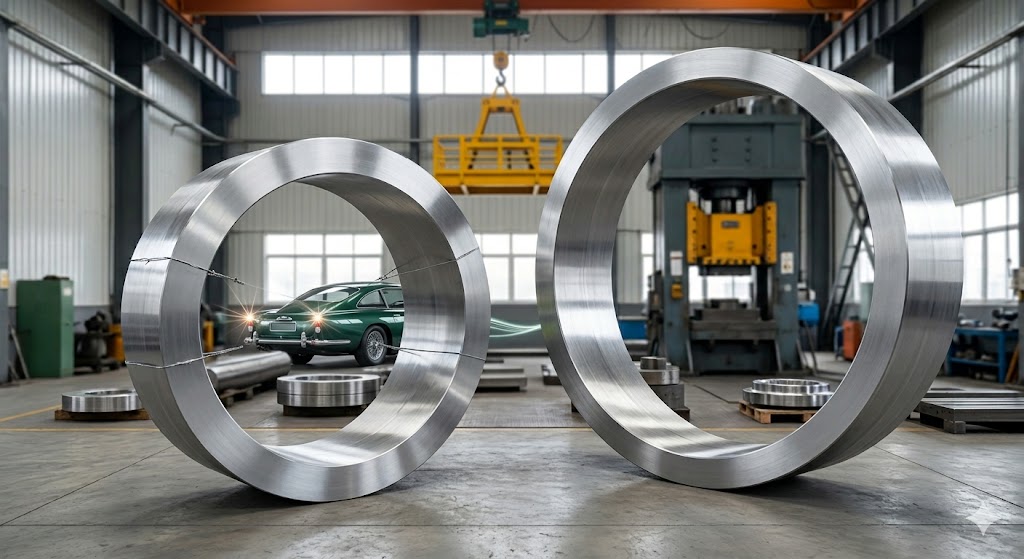
AISI 347 seamless rolled rings (up to 6 m OD, 30 tons per piece) produced by Jiangsu Liangyi, Jiangyin, Jiangsu, China
We manufacture a comprehensive range of AISI 347 stainless steel forgings in shapes and sizes to satisfy the most demanding project specifications. All forged products begin from certified AISI 347 (UNS S34700) ingot or billet with full material traceability.
Forged Bars & Rods
- Round bars — up to 2,000 mm diameter
- Square bars, flat bars, rectangular bars
- Step shafts, gear shafts, crankshafts
- Custom forged rods up to 15 m long
- Hollow bars and thick-wall tubes
Seamless Rolled Rings
- Seamless rolled rings — up to 6 m OD
- Gear rings, slewing bearing rings
- Contoured / profiled rolled rings
- Heavy rings up to 30 metric tons
- Custom forged rings per customer drawings
Hollow Components
- Hubs, housing shells, sleeves, bushings
- Pipes, tubes, cylinders — up to 3,000 mm OD
- Heavy-wall pressure vessel shells
- Pump barrels and compressor casings
- Reactor nozzles and vessel heads
Flat & Custom Products
- Discs, blocks, and plates
- Flanges, tube sheets, baffle plates
- Impellers, valve bodies, pump covers
- Custom forgings per customer drawings or 3D model
- CNC machined finish-to-dimension components
What Is AISI 347 Stainless Steel? — Metallurgy & Mechanism Explained
The Sensitization Problem — And Why Niobium Solves It
To understand why AISI 347 exists, you must first understand sensitization. When unstabilized austenitic stainless steels such as AISI 304 are heated into the range of 427–816°C — which occurs in heat-affected zones (HAZ) during welding and during any sustained high-temperature service — carbon dissolved in the austenite migrates to grain boundaries and combines with chromium to form chromium carbide (Cr₂₃C₆). Each carbide particle removes chromium from a narrow zone on either side of the grain boundary, locally reducing the chromium concentration below the ~10.5% threshold required for passivation. The result is a network of chromium-depleted zones that are no longer corrosion resistant — a condition called sensitization.
A sensitized component may pass all standard dimensional and mechanical inspections yet fail catastrophically in service through intergranular corrosion — where corrosive media attack preferentially along grain boundaries, causing the grains to fall away. This is not a theoretical risk: it is a well-documented failure mode responsible for numerous industrial accidents in petroleum refineries, chemical plants, and nuclear facilities.
Both AISI 347 (Nb-stabilized) and AISI 321 (Ti-stabilized) were developed to solve the sensitization problem, but they behave differently in welding. Titanium has a strong affinity for nitrogen as well as carbon, and Ti nitrides can form a surface slag during arc welding, reducing effective titanium in the weld pool and HAZ below the level needed for full stabilization. Niobium, by contrast, does not form stable nitrides under normal welding conditions; its stabilizing action is more reliable and predictable across a wider range of welding heat inputs. This is why AISI 347 — not 321 — is the industry standard for as-welded high-temperature service, and why API 6A, ASME, and most refinery specifications cite 347 specifically.
Our 25+ years of manufacturing experience confirms this: customers who switch their high-temperature valve bodies and heat exchanger tube sheets from AISI 321 to AISI 347 consistently report fewer in-service corrosion incidents.
AISI 347 vs Other Stainless Steels — Full Comparison Table
| Property | AISI 347 | AISI 304 / 304L | AISI 321 | AISI 316 / 316L |
|---|---|---|---|---|
| Stabilizing Element | Niobium (Nb) | None | Titanium (Ti) | Molybdenum (Mo) |
| UNS Designation | S34700 | S30400 / S30403 | S32100 | S31600 / S31603 |
| Sensitization Resistance | Excellent — immune | Poor after welding / high-temp | Good — Ti can burn off in weld | Poor (same as 304) |
| As-Welded Service (no PWHT) | Yes — standard practice | Risky at high temp | Good but less reliable | Risky at high temp |
| Polythionic Acid SCC Resistance | Excellent | Very poor (sensitizes) | Good | Very poor (sensitizes) |
| High-Temperature Strength (>550°C) | Excellent | Fair | Good | Good |
| Creep Rupture Strength | Superior | Fair | Good | Good |
| Max Continuous Service Temp | 870°C (1600°F) | 870°C (limited by sensitization) | 870°C | 870°C |
| Chloride Pitting Resistance (PREN) | ~17–19 (no Mo) | ~17–19 | ~17–19 | ~24–28 (Mo adds ~10) |
| Chloride SCC Resistance | Fair (austenitic) | Fair | Fair | Slightly better but not immune |
| General Corrosion in Oxidizing Acids | Excellent | Excellent | Excellent | Good |
| Weldability | Excellent — no PWHT needed | Good (PWHT needed for high-temp) | Good (Ti loss in weld) | Good (PWHT needed for high-temp) |
| Typical Cost vs 304 | +8–15% (Nb premium) | Baseline | +5–10% (Ti premium) | +20–35% (Mo premium) |
| Primary Application Driver | High-temp + as-welded + PTA-SCC | General corrosion resistance | High-temp — less critical welding | Chloride environments |
Key Technical Advantages of AISI 347
- Sensitization Immunity: Niobium preferentially combines with carbon (NbC formation energy −144 kJ/mol vs. −75 kJ/mol for Cr₂₃C₆) to keep chromium fully dissolved in the austenite matrix, eliminating grain-boundary depletion permanently
- Polythionic Acid SCC Immunity: Since AISI 347 cannot sensitize, it cannot suffer PTA-SCC — the primary reason it is mandated in petroleum refinery process heaters, reformers, and hydrotreaters worldwide
- Superior Creep Rupture Strength: NbC precipitates act as barriers to dislocation motion at elevated temperature, improving 100,000-hour rupture stress by 15–25% over AISI 304 at 600–700°C
- As-Welded Service Without PWHT: Eliminates post-weld annealing operations, reducing fabrication cost by 15–30% for welded assemblies
- Broad Oxidation Resistance: Continuous service to 870°C (1600°F) in oxidizing atmospheres, intermittent to 925°C (1700°F)
- Excellent Fabricability: Readily formed, welded, and machined using standard austenitic stainless steel techniques
- Good General Corrosion Resistance: Comparable to AISI 304 in most aqueous and chemical environments
AISI 347 Physical, Thermal & Electrical Properties
These physical and thermophysical properties of AISI 347 (UNS S34700) are important for engineering calculations including thermal stress analysis, heat transfer design, and structural finite element modeling of high-temperature components. Values are for annealed condition at specified temperatures.
| Property | Value | Temperature | Unit |
|---|---|---|---|
| Density | 8.0 | 20°C | g/cm³ |
| Elastic Modulus (Young's Modulus) | 193 | 20°C | GPa |
| Elastic Modulus | 172 | 300°C | GPa |
| Elastic Modulus | 155 | 500°C | GPa |
| Poisson's Ratio | 0.29 | 20°C | — |
| Specific Heat Capacity | 500 | 20°C | J/(kg·K) |
| Thermal Conductivity | 15.2 | 100°C | W/(m·K) |
| Thermal Conductivity | 18.5 | 500°C | W/(m·K) |
| Thermal Conductivity | 21.5 | 800°C | W/(m·K) |
| Mean Thermal Expansion Coefficient | 16.9 × 10⁻⁶ | 20–100°C | /°C |
| Mean Thermal Expansion Coefficient | 17.5 × 10⁻⁶ | 20–300°C | /°C |
| Mean Thermal Expansion Coefficient | 18.0 × 10⁻⁶ | 20–500°C | /°C |
| Mean Thermal Expansion Coefficient | 18.7 × 10⁻⁶ | 20–700°C | /°C |
| Electrical Resistivity | 0.73 | 20°C | μΩ·m |
| Magnetic Permeability (annealed) | ~1.02 | 20°C | μ/μ₀ (non-magnetic) |
AISI 347's thermal expansion coefficient of 17.5–18.7 × 10⁻⁶/°C is approximately 1.5 times that of carbon steel (~12 × 10⁻⁶/°C). This significant difference must be accounted for in designs involving AISI 347 components connected to or constrained by carbon steel structures. At a temperature swing of 600°C, an AISI 347 pipe 10 meters long will expand approximately 112 mm more than an equivalent carbon steel pipe. Expansion joints, bellows, or flexible connectors must be designed accordingly to prevent thermal fatigue cracking at joints.
AISI 347 Corrosion Resistance — Environment-by-Environment Guide
Understanding the corrosion behavior of AISI 347 in specific service environments is critical for material selection. The following guide, based on published corrosion data and our manufacturing experience serving refinery, nuclear, and chemical processing customers since 1997, summarizes the grade's performance across the most common industrial environments.
| Environment | AISI 347 Performance | Notes / Mechanism |
|---|---|---|
| Atmospheric corrosion (industrial/marine) | Excellent | Chromium passive film provides full protection; no degradation in standard industrial atmospheres |
| Dilute oxidizing acids (HNO₃ up to 65%) | Excellent | Stable passive film; widely used in nitric acid plant equipment; superior to 316 in this environment |
| Dilute reducing acids (HCl, H₂SO₄) | Poor | Chloride and sulfate anions break down passive film; not recommended; use Alloy 625 or Hastelloy C-276 |
| Concentrated HNO₃ (>65%) | Fair to good | Performance depends on concentration and temperature; 304L may be superior in certain conditions |
| High-temperature oxidizing atmospheres (air) | Excellent to 870°C | Chromium oxide scale protective; intermittent service to 925°C acceptable |
| High-temperature carburizing atmospheres | Fair | Niobium reduces sensitization risk but carbon pickup at surface can still occur; use 309 or 310 for severe carburizing |
| High-temperature sulfidizing atmospheres | Fair | H₂S + high temp causes sulfide-induced corrosion; AISI 347 acceptable to ~500°C; duplex or nickel alloys for higher temp |
| Polythionic acid (H₂SₓO₆, refinery) | Immune | Cannot sensitize → cannot suffer PTA-SCC; industry standard for refinery heater tubes, reactor internals, reformers |
| Chloride-containing aqueous (seawater, brines) | Moderate | Susceptible to pitting and crevice corrosion without Mo; PREN ~17–19; 316 / 2205 duplex preferred for chloride-heavy service |
| Chloride stress corrosion cracking (SCC) | Susceptible above ~60°C | All austenitic grades are susceptible to Cl-SCC; duplex or nickel alloys required if Cl-SCC is the design-limiting failure mode |
| Organic acids (acetic, formic, citric) | Good to excellent | Good performance in dilute organic acids at moderate temperatures; suitable for food and pharmaceutical applications |
| Nuclear coolant water (PWR, BWR) | Excellent | Sensitization immunity critical in nuclear primary circuit; used in reactor internals, pump casings, and steam generator components to ASME Section III |
| Cryogenic temperatures (down to −196°C) | Good | Austenitic, no ductile-brittle transition; maintains toughness at cryogenic temps; 304L/316L more commonly specified for LNG |
Important Limitation — Chloride Environments: AISI 347 does not contain molybdenum and therefore has the same chloride pitting resistance as AISI 304 (PREN ≈ 17–19). If your application involves significant chloride concentration, elevated temperature aqueous chloride solutions, or seawater immersion as the primary service environment, AISI 316L (PREN ≈ 24–28), super duplex stainless steel 2507 (PREN ≈ 38–42), or nickel alloys should be considered. Our engineering team can help you identify the most cost-effective material for your specific combination of temperature, concentration, and stress conditions.
AISI 347 International Grade Equivalents
AISI 347 (UNS S34700) has matching grades across all main international standard systems. When sourcing forgings from China for projects in Europe, Japan or other regions with local industry rules, Jiangsu Liangyi can provide parts with EN 10204 3.1 or 3.2 factory test reports, which prove the material meets chemical and mechanical rules of multiple standards at the same time. There are small differences in the upper limits of phosphorus, sulfur and nitrogen among different standards, while the basic material makeup and service performance stay equivalent.
| Standard System | Grade / Designation | Material Number | C max | Cr | Ni | Nb |
|---|---|---|---|---|---|---|
| USA — AISI / UNS | 347 / S34700 | — | 0.08% | 17–19% | 9–12% | 10×C – 1.00% |
| Europe — EN / DIN | X6CrNiNb18-10 | 1.4550 | 0.08% | 17–19% | 9–12% | 8×C – 1.00% |
| Japan — JIS | SUS347 | — | 0.08% | 17–19% | 9–13% | 10×C – 1.00% |
| United Kingdom — BS | 321S51 / 347S51 | — | 0.08% | 17–19% | 9–12% | 10×C – 1.00% |
| China — GB/T | 0Cr18Ni11Nb | — | 0.08% | 17–19% | 9–13% | 8×C – 1.00% |
| France — AFNOR | Z6CNNb18-11 | — | 0.08% | 17–19% | 9–12% | 8×C – 1.00% |
| Sweden — SS | 2338 | — | 0.08% | 17–19% | 9–12% | 8×C – 1.00% |
Nb minimum difference: Note that ASTM (AISI 347) requires Nb ≥ 10×C, while EN 1.4550 requires Nb ≥ 8×C. In practice, Jiangsu Liangyi produces all AISI 347 material to the more stringent 10×C minimum to satisfy both standards simultaneously, avoiding the need for separate heats when supplying customers across different regional markets.
AISI 347 vs AISI 347H — Complete Technical Comparison
AISI 347H (UNS S34709) is the high-carbon variant of AISI 347, specifically designed to maximize creep strength at temperatures above 550°C. Understanding when to specify standard 347 versus 347H is one of the most common material selection decisions in high-temperature process equipment design.
| Parameter | AISI 347 | AISI 347H |
|---|---|---|
| UNS Designation | S34700 | S34709 |
| Carbon (C) Range | 0.00–0.08% (max 0.08%) | 0.04–0.10% (controlled higher) |
| Chromium (Cr) | 17.00–19.00% | 17.00–19.00% |
| Nickel (Ni) | 9.00–12.00% | 9.00–13.00% |
| Niobium (Nb) | 10×C – 1.00% | 8×C – 1.00% |
| Grain Size Requirement | No specific requirement | ASTM No. 7 or coarser (coarser = better creep) |
| Tensile Strength (min) | 515 MPa | 515 MPa |
| Yield Strength 0.2% (min) | 205 MPa | 205 MPa |
| Creep Strength at 600°C | ~75 MPa (100,000h rupture) | ~90–95 MPa (100,000h rupture) |
| Creep Strength at 700°C | ~25 MPa (100,000h rupture) | ~32–35 MPa (100,000h rupture) |
| Primary Temperature Range | <550°C (general use) | >550°C (creep-limited design) |
| Typical ASME Code Use | Section VIII pressure vessels | Section VIII Div 1/2; Section III nuclear |
| Typical Applications | Valves, pumps, rings, general industrial | Boilers, superheaters, reformers, cracker furnaces |
| Cost Premium vs 347 | Baseline | +5–10% (tighter C control, grain size qualification) |
Use AISI 347H when: (1) Design temperature exceeds 550°C (1022°F) and creep or stress-rupture is a design-limiting criterion; (2) The applicable code (ASME Section VIII, API 530) references higher allowable stresses that only 347H can meet at the operating temperature; (3) Component lifetime exceeds 100,000 operating hours at elevated temperature; (4) The component is a boiler superheater header, reformer tube sheet, or cracker furnace fitting.
Use standard AISI 347 when: Operating temperature is below 550°C, the primary concern is sensitization prevention in as-welded assemblies, or the application is general industrial (valves, flanges, pump casings) not subject to code-mandated creep limits. Standard 347 is less expensive and easier to source globally.
Jiangsu Liangyi manufactures both AISI 347 and AISI 347H forgings with the appropriate carbon control, grain size qualification, and high-temperature mechanical testing.
Industrial Applications of AISI 347 Forged Parts
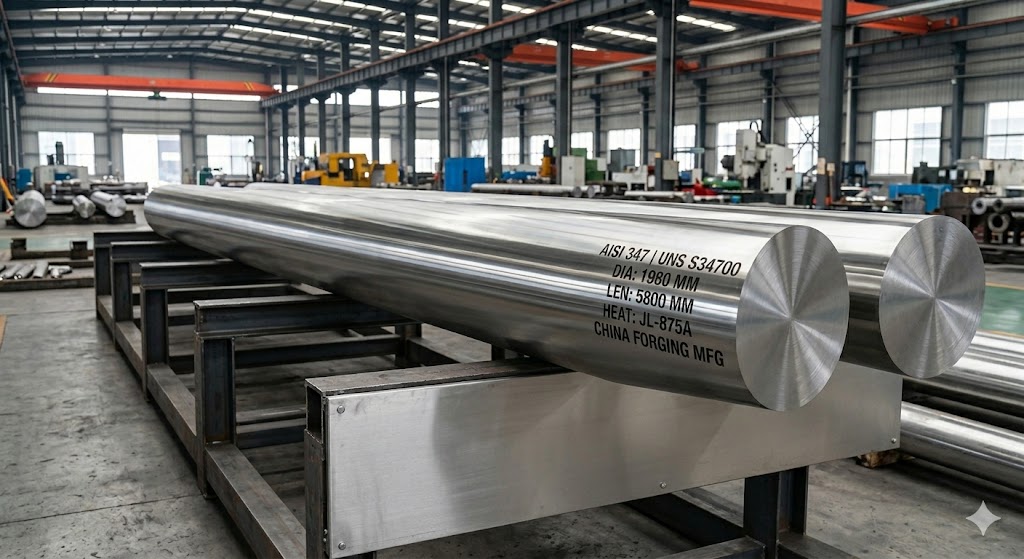
AISI 347 forged round bars (up to 2,000 mm diameter) manufactured by Jiangsu Liangyi, Jiangyin, Jiangsu, China
UNS S34700 forgings are the material of choice wherever sensitization, polythionic acid SCC, high-temperature creep, or as-welded corrosion resistance are the design-limiting failure modes. Jiangsu Liangyi has supplied AISI 347 forgings to industrial projects in more than 50 countries. The following section details specific applications, the material requirements each application imposes, and real project examples from our delivery history.
Oil & Gas Exploration and Production
AISI 347 is extensively used in oil and gas upstream equipment for two distinct reasons: its resistance to sour gas (H₂S) environments in downhole tools, and its intergranular corrosion resistance for surface wellhead and tree components. We manufacture wellhead components in accordance with API 6A requirements, and our forgings have been pressure-tested to 15,000 psi working pressure by customers' qualified inspection bodies.
- Downhole tools: Mud motor splined drive shafts, ESP motor splined shafts, drill collar connections — applications requiring strength, corrosion resistance, and the ability to be welded in the field without PWHT
- Wellhead equipment: Christmas tree body forgings, wellhead spool bodies, casing heads, tubing heads — manufactured to API 6A, 5,000–15,000 psi working pressure classes
- Valve components: Valve bodies, bonnets, stems, seat rings for ball valves, gate valves, check valves, and globe valves used in production gathering and processing systems
- Flanges and connectors: Double studded adapter flanges, integral mud flanges, studded crosses, tubing hangers, casing hangers, spacer spools
- Subsea equipment: Subsea tree bodies, manifold forgings, connector bodies — where long-term corrosion resistance without maintenance access is critical
Delivered Project: Over 500 metric tons of AISI 347 forged wellhead spool bodies and valve bodies for a major offshore oilfield development in Saudi Arabia and UAE. Forgings manufactured to API 6A dimensional and material requirements; material meets NACE MR0175/ISO 15156 chemistry and hardness criteria for sour service; working pressure verified to 10,000 psi by customer's qualified inspection body. Third-party material inspection by Bureau Veritas. Delivery completed on schedule over an 18-month project window.
Nuclear Power Generation
The nuclear power industry represents one of the most demanding applications for AISI 347: components must maintain structural integrity, corrosion resistance, and dimensional stability over 40+ year design lifetimes under elevated temperature and pressurized water coolant. AISI 347's inherent sensitization immunity is critical in these environments. Our forgings for nuclear applications are produced under our ISO 9001:2015 quality management system with enhanced traceability controls, and are supplied with full EN 10204 3.1 or 3.2 mill test certificates. Final nuclear component qualification is performed by our customers' ASME-authorized inspection bodies and Nuclear Steam Supply System (NSSS) suppliers.
- Nuclear reactor coolant pump (RCP) casings, pump shells, and suction nozzle bodies
- Containment seal chambers, reactor pressure vessel nozzles, and reactor internals
- Steam generator channel heads, tube sheets, and support structures
- Primary coolant piping supports, valve bodies, and pump motor casings
- Spent fuel pool equipment and handling tools
Delivered Project: Supplied AISI 347 reactor coolant pump casing forgings and steam generator channel head nozzles for three 600 MW thermal power units in Southeast Asia. Forgings supplied with EN 10204 3.2 mill test certificates, covering full chemical analysis, mechanical testing, heat treatment records, and NDT results; third-party material inspection by TÜV Rheinland at our factory. Customer's authorized nuclear inspection body performed final component qualification per project specifications. All three units passed commissioning testing without defect finding related to forging material.
Valve Manufacturing Industry
The valve manufacturing sector is one of the highest-volume applications for AISI 347 forgings globally. Critical valves — those whose failure would cause process shutdown, safety incidents, or environmental release — are routinely specified in AISI 347 for high-temperature service. The grade's excellent machinability (better surface finish than many lower-alloy grades due to the fine niobium carbide distribution) combined with its proven corrosion resistance makes it the preferred substrate for precision-machined seat rings and stems.
- Valve bodies, bonnets, and pressure-containing parts for globe, gate, ball, butterfly, and check valves
- Precision-machined valve balls, stems, seat rings, and discs where dimensional stability after machining is critical
- Butterfly valve main shafts requiring fatigue strength and corrosion resistance simultaneously
- Cryogenic valve bodies and components (tested at −196°C with Charpy V-notch qualification)
- HPBV Flowseal cryogenic high-performance butterfly valve shafts, H-type two-way and back-pressure valve components
Delivered Project: Supplied precision-machined AISI 347 valve stems, seat rings, and body forgings to a leading valve manufacturer in the United States over a 5-year framework agreement. Components used in critical petrochemical processing units including delayed cokers, fluid catalytic crackers (FCC), and hydrocracking units — all environments where PTA-SCC immunity is a mandatory design requirement. Meeting API 607 and API 602 standards; zero field failures reported across 3,000+ valves in service.
Petrochemical & Petroleum Refining
The petroleum refining industry is, arguably, the industry where AISI 347's unique combination of properties has saved the most money and prevented the most accidents. Petroleum refinery process units — hydrotreaters, reformers, hydrodesulfurizers, cokers — all produce polythionic acids (H₂SₓO₆) during shutdowns when sulfide scale contacts air moisture. AISI 347 is immune; AISI 304 and 316 are not. The cost of replacing a sensitized and PTA-SCC-damaged heat exchanger tube sheet or reformer header dwarfs the material premium of AISI 347.
- Process heater tubes and tube sheets in catalytic reformers and hydrotreaters (PTA-SCC immune)
- Heat exchanger tube sheets, channel flanges, and baffle plates for high-temperature service
- Reactor vessels, pressure vessel nozzles, and connecting flanges
- Venturi cone meter bodies and ultrasonic flow meter spool bodies for high-temp process measurement
- Column trays, vessel internals, and distributor piping in distillation units
Delivered Project: Manufactured 45 AISI 347 heat exchanger tube sheets (maximum diameter 2,400 mm, maximum weight 8,200 kg each) for a large integrated petrochemical complex in Germany. Service conditions: 430°C, hydrogen-rich atmosphere with H₂S, sulfur compounds. Previous AISI 304 tube sheets had failed within 18 months due to sensitization and PTA-SCC; AISI 347 replacements are now in their 7th year of service without incident. Supplied with EN 10204 Type 3.2 mill test certificates (third-party co-signed by TÜV inspector); material meets the composition and mechanical requirements of AD 2000-W2.
Turbomachinery & Rotating Equipment
Turbomachinery applications impose simultaneous demands that few materials can satisfy: high strength at elevated temperature, fatigue resistance under cyclic loading, dimensional stability under centrifugal forces, and corrosion resistance in process gas streams. AISI 347's superior creep rupture properties compared to AISI 304 at temperatures above 500°C make it preferred for impellers, diffusers, and rotating components in centrifugal compressors and high-temperature pumps.
- Centrifugal compressor impellers and shrouded impellers — precision-balanced, bored and finish-machined to ISO 1940 G6.3 or better
- High-temperature centrifugal pump casings, covers, barrels, and wear rings
- Pump shafts, impellers, and diffuser rings for boiler feed, hydrocarbon, and process service
- Transition cones and gas turbine components in heat recovery steam generators (HRSG)
- Expander wheels and turbine diaphragms in organic Rankine cycle (ORC) and waste heat recovery systems
Delivered Project: Produced 12 AISI 347 centrifugal compressor impellers for a European turbomachinery OEM over three years. Impellers operate at 15,000 RPM, 650°C, in a cracked gas process stream. Forging reduction ratio ≥6:1 to ensure fine, uniform grain structure; machined to ±0.02 mm profile tolerance; final dynamic balance to ISO 1940 G1.0. Post-delivery performance review: zero impeller failures across all 12 units after 3+ years of operation.
Power Generation — Fossil Fuel & Biomass
AISI 347 has been used in fossil fuel power generation equipment for decades, particularly in boiler superheaters, reheater headers, and steam turbine admission valve bodies. As power generation moves toward higher efficiency (requiring higher steam temperatures and pressures), AISI 347 and 347H are increasingly specified for components that previously used lower-alloy ferritic steels.
- Superheater and reheater headers in once-through boilers and drum boilers
- Main steam and hot reheat valve bodies, including turbine stop valves and control valves
- Turbine bypass valve bodies and steam conditioning valve bodies
- Heat exchanger pressure parts in heat recovery steam generators (HRSG)
- Flue gas desulfurization (FGD) system pump casings and valve bodies exposed to sulfurous acid
Delivered Project: Supplied 24 AISI 347 main steam stop valve body forgings and 48 turbine control valve body forgings for a 600 MW supercritical coal-fired power unit in India. Design conditions: 571°C, 246 bar main steam. Forgings manufactured to ASME Section II Part A material requirements and ASME B31.1 piping code material specifications; solution annealed and water-quenched; 100% UT to ASTM A388. All forgings met ASME allowable stress values; unit commissioned on schedule.
Marine & Offshore
Marine environments combine chloride-containing saltwater with elevated temperature in exhaust systems, creating one of the most aggressive corrosion environments encountered in engineering. AISI 347 is used where the primary degradation mode is oxidation or sensitization rather than chloride pitting — for example, in marine exhaust systems and turbine gas paths where temperature is the dominant factor and direct seawater contact is limited.
- Marine diesel engine exhaust systems, turbocharger housings, and exhaust manifolds (high-temp oxidation environment, not chloride-wet)
- Shipboard fired heater components and heat recovery systems
- Offshore platform process valve bodies and heat exchanger components above deck
- LNG carrier cargo pump casings where both cryogenic toughness and weld zone integrity are needed
- Naval and commercial vessel propulsion system components
Delivered Project: Manufactured AISI 347 marine exhaust system components — turbocharger housing forgings, exhaust manifold flanges, and expansion joint rings — for shipbuilding companies in South Korea and Japan. Components supplied with EN 10204 3.2 mill test certificates; material composition, mechanical properties, and NDT results reviewed and accepted by DNV GL third-party inspector at our factory. Parts successfully passed 4-year service review across 30+ vessels.
Aerospace & Defense
Aerospace applications demand the highest quality forgings, with zero tolerance for material defects, tight dimensional tolerances, and complete material traceability from raw material to finished part. AISI 347 is used in aircraft engine components, exhaust systems, and structural parts where its combination of high-temperature strength, oxidation resistance, and non-magnetic behavior (important in some navigation and sensor systems) is required.
- Aircraft engine exhaust system components, afterburner rings, and jet pipe supports
- Hydraulic actuator bodies and valve manifolds for flight control systems
- Environmental control system (ECS) heat exchanger components
- Landing gear structural forgings and actuator housings
- Precision fasteners, pins, and bushings for high-temperature structural joints
Delivered Project: Supplied precision AISI 347 engine exhaust ring forgings and hydraulic manifold blocks for two European aerospace supply chain manufacturers. All material lot-traced from EAF heat number to finished part serial number; Charpy impact tested at −60°C; dimensional CMM measured to 0.01 mm; full material traceability documentation provided per customer quality requirements. Zero non-conformance reports raised over 3-year supply period.
AISI 347 (UNS S34700) Material Specifications
Chemical Composition Limits
| Element | Min (%) | Max (%) | Role in Steel |
|---|---|---|---|
| Carbon (C) | — | 0.08 | Must be kept low; NbC formation sequesters C and prevents Cr₂₃C₆ sensitization |
| Silicon (Si) | — | 1.00 | Deoxidizer; improves high-temperature oxidation resistance |
| Manganese (Mn) | — | 2.00 | Austenite stabilizer; improves hot workability |
| Phosphorus (P) | — | 0.045 | Impurity; limited to avoid hot shortness and reduce grain-boundary segregation |
| Sulfur (S) | — | 0.015 | Impurity; controlled for improved toughness and corrosion resistance |
| Chromium (Cr) | 17.00 | 19.00 | Primary passivating element; forms protective Cr₂O₃ oxide layer |
| Nickel (Ni) | 9.00 | 12.00 | Austenite stabilizer; improves toughness, ductility, and corrosion resistance |
| Niobium (Nb) | 10×C | 1.00 | Stabilizing element — forms stable NbC; prevents sensitization and PTA-SCC; improves creep strength |
| Iron (Fe) | Balance | Balance | Base matrix |
Mechanical Properties — Delivery Condition (Solution Annealed)
| Property | Min | Max | Test Standard |
|---|---|---|---|
| Tensile Strength (Rm) | 510 MPa (74 ksi) | 740 MPa (107 ksi) | ASTM E8 |
| 0.2% Proof Stress (Rp0.2) | 205 MPa (30 ksi) | — | ASTM E8 |
| Elongation (A, 50 mm gauge) | 40% | — | ASTM E8 |
| Reduction of Area | 50% | — | ASTM E8 |
| Hardness | — | 230 HB (240 HV) | ASTM E10 / E92 |
| Charpy V-notch Impact (if specified) | Typically ≥100 J at RT | — | ASTM E23 |
Elevated Temperature Tensile Properties
The following data shows how AISI 347 tensile and yield strength degrade with increasing temperature — essential for pressure vessel, piping, and valve design calculations. Values are typical averages for solution-annealed wrought product.
| Temperature | 0.2% Yield Strength (min) | Tensile Strength (min) | Elongation (min) |
|---|---|---|---|
| 20°C (68°F) | 205 MPa | 510 MPa | 40% |
| 200°C (392°F) | 150 MPa | 430 MPa | 35% |
| 300°C (572°F) | 130 MPa | 400 MPa | 33% |
| 400°C (752°F) | 120 MPa | 380 MPa | 32% |
| 500°C (932°F) | 110 MPa | 360 MPa | 30% |
| 600°C (1112°F) | 100 MPa | 310 MPa | 28% |
| 700°C (1292°F) | 90 MPa | 220 MPa | 25% |
| 800°C (1472°F) | 75 MPa | 130 MPa | 22% |
AISI 347 Welding Technical Guide
AISI 347 is one of the most weldable austenitic stainless steels in industrial use. Its niobium stabilization eliminates the post-weld heat treatment requirement that complicates field fabrication of AISI 304 assemblies. The following welding guidance is based on AISI/AWS standards and Jiangsu Liangyi's experience as a forging supplier to weld-fabricated assemblies in 50+ countries.
Recommended Filler Metals
- ER347 / E347: Matching Nb-stabilized filler — preferred for all critical applications, maximum corrosion resistance in HAZ, best creep-matched weld metal
- ER308L: Acceptable for non-critical welds at lower temperatures; lower carbon reduces sensitization risk but no Nb stabilization — avoid for high-temp service above 400°C
- ER309L: For dissimilar metal welds joining AISI 347 to carbon steel or low-alloy steel; higher Cr and Ni buffer composition
- ER310: For high-temperature service above 800°C where creep rather than sensitization is the concern; less common
Welding Process Parameters
- Processes: TIG/GTAW (preferred for root passes and precision work), MIG/GMAW, SMAW, SAW, FCAW
- Preheat: Not required for most thicknesses; preheat to 10–15°C minimum to remove surface moisture in ambient temperatures below 5°C
- Interpass Temperature: Maximum 150°C — excessive heat input promotes distortion and delta ferrite formation
- Heat Input: Moderate; avoid excessive heat input that increases distortion; multiple passes with lower heat input per pass preferred over single-pass high-heat welds
- Post-Weld Heat Treatment (PWHT): Not required for most applications — the primary advantage of AISI 347 over 304. Optional stabilizing anneal at 870–900°C + air cool for the most severe corrosive environments
- Shielding Gas (TIG/MIG): 100% Argon or Ar + 2% N₂; avoid CO₂-containing mixtures that increase carbon pickup
Although AISI 347 is immune to general sensitization, it can suffer a specific weld-zone corrosion called "knife-line attack" (KLA). This occurs in a very narrow band immediately adjacent to the fusion line — approximately 0.1–0.5 mm wide — where the peak welding temperature was high enough (above ~1300°C) to dissolve NbC back into solution during welding, but the subsequent cooling was too fast for NbC to reprecipitate, leaving a briefly sensitizable zone. KLA is rarely a practical problem in most environments, but in very aggressive oxidizing acids at high temperature (concentrated H₂SO₄, mixed acids), it can cause localized failures. The mitigation is a post-weld stabilizing anneal at 870–900°C for 1–2 hours, which allows NbC to reprecipitate throughout the HAZ. Jiangsu Liangyi can advise on whether a stabilizing anneal is warranted for your specific service environment.
Jiangsu Liangyi Manufacturing Process for AISI 347 Forgings
Our fully integrated manufacturing process — from raw steelmaking through forging, heat treatment, machining, and inspection — gives us unique control over every variable that determines final forging quality. Unlike forging houses that buy billets from third-party mills, we control our own alloy chemistry from the electric arc furnace, eliminating the supply chain risks that cause composition non-conformances, traceability gaps, and heat treatment inconsistencies.
- Raw Material Verification — Chemistry Before Forging
Every incoming AISI 347 ingot or billet is tested by OES (optical emission spectrometry) in our in-house laboratory before entering production. We verify all composition elements including the critical Nb/C ratio (must be ≥10×C). Any heat failing specification is quarantined before production begins. This step eliminates the most common root cause of non-conforming forgings: incorrect incoming material that passes visual inspection but fails chemistry. - In-House Steelmaking — EAF + LF + VOD
Raw scrap material is melted for the first time in our 30-ton electric arc furnace (EAF). The 30-ton ladle refining furnace (LF) precisely adjusts chemical composition to exact standard limits and performs desulfurization to maintain sulfur content below 0.010%, substantially enhancing material toughness. The 30-ton vacuum degassing furnace (VOD) removes dissolved hydrogen, nitrogen and oxygen to make high-purity steel with few internal defects. The raw ingots are cast and solidified with controlled cooling conditions and then transported to the forging shop for further processing. - Forging — Grain Refinement & Defect Closure
AISI 347 ingots are heated to the forging temperature range of 1,150–1,230°C in our gas-fired furnaces. Forging is performed using 2,000–6,300 ton hydraulic presses (for bars, discs, blocks, and heavy custom shapes) or 0.75–9 ton electro-hydraulic forging hammers (for stepped shafts and medium shapes). Seamless rolled rings are produced on our 5-meter ring rolling mill, capable of rings up to 6 m OD and 30 tons. We maintain forging finishing temperature above 900°C minimum to prevent hot cracking and ensure complete recrystallization of the austenite. Minimum forging reduction ratio is 3:1 (typically 4:1–8:1) to ensure complete breakdown of cast ingot structure. - Solution Annealing — Restoring Full Corrosion Resistance
After forging, AISI 347 components are solution annealed at 1,010–1,065°C in our ten controlled-atmosphere furnaces, followed by water quenching within 3 minutes of removal from the furnace. This rapid quench is critical: it prevents any chromium carbide from reprecipitating during slow cooling, ensuring the maximum possible corrosion resistance in the final product. We record and certify all heat treatment parameters (furnace ID, temperature, soak time, quench media, part weight) in the mill test certificate. Optional stabilizing anneal at 870–900°C is available for components where knife-line attack is a concern. - CNC Machining — Precision to Drawing
Our CNC machining center performs turning, boring, milling, drilling, and grinding operations on forged blanks to produce components meeting customer drawings. Typical dimensional tolerances achievable: ±0.1 mm for standard machined surfaces, ±0.02 mm for precision bores and sealing faces, ±0.01 mm for special applications. Rings are balanced to ISO 1940 G6.3 or G2.5 upon request. All machined dimensions are verified by CMM (coordinate measuring machine) and reported in the inspection certificate. - Final Inspection & Certification — Nothing Leaves Without Documented Evidence
Every AISI 347 forging undergoes a systematic inspection sequence: (a) Visual inspection according to ASTM standards; (b) Checking dimensions against the drawing; (c) Hardness testing at a minimum of 3 places per piece; (d) Ultrasonic testing (UT) according to ASTM A388 or the customer’s requirements; (e) Surface testing using magnetic particle (MT) or liquid penetrant (PT); (f) Final OES chemical analysis on a test coupon from the same heat; (g) Tensile, yield, elongation, and reduction of area tests on material from the same heat. Results are put together into EN 10204 Type 3.1 (signed off by our QC team) or Type 3.2 (co-signed by a third party) mill test certificates, which are provided with every delivery.
Quality Control, Testing Standards & Certifications
Quality at Jiangsu Liangyi is not a final inspection check — it is built into every process step. Our ISO 9001:2015 quality management system is structured around process control at source rather than detection of defects after the fact. The following table summarizes our complete quality testing program for AISI 347 forgings.
Microstructure & Metallographic Testing
- Cleanliness examination per ASTM E45, Method D — maximum allowable rating: 2 thin, 1½ heavy for all inclusion types
- Grain size per ASTM E112: average prior austenitic grain size ASTM No. 5 or finer; individual grains to ASTM No. 3 acceptable if isolated and surrounded by fine grains
- Delta ferrite evaluation using Fischer Feritscope or metallographic image analysis — controlled to specification limits to avoid embrittlement in high-temperature service
- Sensitization test per ASTM A262 Practice E (copper/copper sulfate/sulfuric acid) — available upon customer request for critical applications where intergranular corrosion immunity must be demonstrated, not just assumed from composition
Nondestructive Testing (NDT) Methods
- Ultrasonic Testing (UT): Immersion UT or contact UT per ASTM A388 — full volumetric scan for internal defects including laminations, inclusions, and shrinkage; acceptance criteria per customer specification or ASTM A788
- Liquid Penetrant Testing (PT): Per ASTM E165 — detects surface-breaking cracks, seams, and laps on machined surfaces
- Magnetic Particle Testing (MT): N/A for paramagnetic austenitic 347 in annealed condition (μ ≈ 1.02); PT used instead
- Radiographic Testing (RT): Available on request for complex-geometry forgings where UT coverage is geometrically limited
- Positive Material Identification (PMI): XRF or OES spot-check on 100% of pieces in critical orders — confirms correct alloy grade, eliminates mix-up risk
Applicable Material & Testing Standards — Forgings Manufactured to These Requirements
Jiangsu Liangyi manufactures AISI 347 forgings to the material, dimensional, and testing requirements of the following standards. We are not a standards certification body; we supply forgings with EN 10204 3.1 or 3.2 mill test certificates documenting that all chemical, mechanical, and NDT results meet the applicable standard requirements.
- ASTM A182: Forged or Rolled Alloy and Stainless Steel Pipe Flanges, Forged Fittings, and Valves — Grade F347
- ASTM A336: Steel Forgings, Alloy, for Pressure and High-Temperature Parts — Class F347
- ASTM A473: Stainless Steel Forgings — Grade 347
- ASTM A276 / A479: Stainless Steel Bars and Shapes
- ASTM A388: Ultrasonic Testing of Heavy Steel Forgings
- ASTM E8/E8M: Tension Testing of Metallic Materials
- ASTM E10 / E92: Brinell and Vickers Hardness Testing
- ASTM E23: Notched Bar Impact Testing (Charpy)
- ASTM E112: Grain Size Measurement
- ASTM E45: Determination of Inclusion Content
- ASTM E139: Conducting Creep, Creep-Rupture, and Stress-Rupture Tests of Metallic Materials
- ASTM A262: Detecting Susceptibility to Intergranular Attack (sensitization test)
- API 6A: Specification for Wellhead and Christmas Tree Equipment
- ASME Section VIII Div. 1 & 2: Rules for Construction of Pressure Vessels
- ASME Section III: Rules for Construction of Nuclear Facility Components
- NACE MR0175 / ISO 15156: Materials for Use in H₂S-Containing Environments in Oil and Gas Production
- EN 10204 Type 3.1 / 3.2: Material Test Certificates
- AD 2000 W2: German Pressure Vessel Code
Material Selection Guide — When to Choose AISI 347
AISI 347 is not the right choice for every application. Choosing it correctly — and knowing when another grade performs better — is a sign of genuine engineering expertise. The following guide is based on our experience supplying forgings for thousands of projects across oil & gas, nuclear, petrochemical, and power generation industries.
✓ Choose AISI 347 When:
- Component will be welded and placed in service without post-weld heat treatment
- Service temperature is 427–870°C (sensitization range continuous exposure)
- Polythionic acid SCC immunity is required (refineries, reformers, hydrotreaters)
- High-temperature creep strength must exceed AISI 304 capability
- ASME or API code specifies F347 / Grade 347 explicitly
- Nuclear component must resist sensitization over 40+ year design life
- Component cycles between high and low temperature (sensitization range multiple crossings)
✗ Consider Alternatives When:
- Primary failure mode is chloride pitting — use AISI 316L or duplex 2205 (higher PREN)
- Component is permanently immersed in seawater — use super duplex 2507 or Alloy 625
- Chloride stress corrosion cracking is design-limiting — use duplex or nickel alloys
- Service is pure cryogenic (−160°C LNG) — use 304L or 316L (lower C, simpler specification)
- Budget is primary driver and no sensitization risk exists — 304L is equivalent at lower cost
- Reducing acid (HCl, H₂SO₄) is the primary corrosive — use Hastelloy C-276 or Alloy 20
⚡ Consider AISI 347H When:
- Operating temperature exceeds 550°C and creep is a design criterion
- Component is a boiler superheater, reformer tube sheet, or cracker furnace part
- ASME allows higher stress values for 347H at operating temperature
- Design life exceeds 100,000 hours at elevated temperature
- Long-term stress-rupture data is required for design justification
Common Specification Mistakes When Ordering AISI 347 Forgings
After 25+ years of manufacturing AISI 347 forgings for global customers, our engineering team has identified several recurring specification mistakes that cause project delays, re-testing, or performance problems. We share these observations as a service to our customers:
The ASTM standard specifies Nb ≥ 10×C as a minimum, but doesn't set a minimum carbon. Theoretically, a heat with C = 0.01% and Nb = 0.10% meets the 10×C rule but has so little NbC that stabilization at high temperature is marginal. When ordering for high-temperature service above 650°C, specify a minimum carbon of 0.04% (pushing the supplier toward the 347H composition range) or explicitly invoke ASTM A182 Grade F347H where appropriate. Alternatively, specify Nb minimum of 0.50% regardless of carbon content for robust stabilization.
EN 10204 Type 3.1 is a mill test certificate signed by the manufacturer's own authorized inspector. Type 3.2 requires co-signature by an independent third-party inspector (TÜV, BV, SGS, etc.). For components in safety-critical applications — nuclear, offshore, pressure vessels under PED (Pressure Equipment Directive) Category III or IV — Type 3.2 is often required by code. We frequently see customers accept Type 3.1 certificates from suppliers, then discover their end-client requires 3.2 and must arrange expensive re-inspection or re-certification. Specify your required certificate type at the RFQ stage.
AISI 347 contains no molybdenum, giving it the same chloride pitting resistance as AISI 304 (PREN ≈ 17–19). We regularly receive inquiries for AISI 347 valve bodies for seawater-cooled heat exchangers or offshore saltwater pump casings — applications where chloride pitting is the primary failure mode. AISI 347 will not outperform 304 in these environments. The correct specification is AISI 316L (PREN ~24), duplex 2205 (PREN ~34), or super duplex 2507 (PREN ~42) depending on chloride concentration, temperature, and pH. Selecting AISI 347 for its "high-end stainless" perception — rather than for its specific sensitization-immunity benefit — wastes money without improving performance.
AISI 347 forgings can be supplied as-forged (no heat treatment), stress-relieved, or solution-annealed-and-quenched. The solution-annealed condition is required to achieve the published minimum mechanical properties and maximum corrosion resistance. "As-forged" AISI 347 contains deformed microstructure, higher residual stress, and potentially some sensitized zones formed during slow cooling from forging temperature. Always specify "solution annealed at 1,010–1,065°C, water quenched" unless there is a specific technical reason to accept another condition. This should appear in both your purchase order and the required mill test certificate.
ASTM A388 (UT of Heavy Steel Forgings) defines multiple acceptance levels — Supplementary Requirement S1 through S5 — with different sensitivity and acceptance criteria. An order for "UT per ASTM A388" without specifying the class gives the manufacturer maximum discretion. For pressure-containing forgings, we recommend specifying at minimum S2 (0.5-inch flat bottom hole reference reflector); for nuclear or safety-critical components, S4 or S5 may be appropriate. Defining the UT acceptance level at the RFQ stage prevents disputes at inspection stage and ensures the forging is ultrasonically suitable for your application before it leaves our factory.
Why Choose Jiangsu Liangyi as Your AISI 347 Forging Partner?
- 25+ Years of Specialized Experience Since 1997: More than two decades focused on stainless steel and alloy steel forgings for global industrial markets — not a generalist fabricator, but a specialist forging manufacturer with deep domain knowledge of alloy behavior, heat treatment, and testing
- Fully Integrated In-House Production: EAF steelmaking → forging → heat treatment → CNC machining → NDT → certification, all under one roof. Deletes supply chain interfaces where quality and traceability are lost
- Advanced Forging Equipment: 2,000–6,300 ton hydraulic presses, 5-meter seamless ring rolling machine (rings to 6 m OD, 30 tons), 0.75–9 ton electro-hydraulic hammers — covering the full range from 30 kg precision components to 30,000 kg heavy forgings
- ISO 9001:2015 Certified Quality System: Rigorous process-control approach — not inspection-based quality control — with complete heat and lot traceability from EAF heat number to finished forging serial number
- In-House Laboratory: OES spectrometer for full chemistry verification, mechanical testing equipment (tensile, hardness, impact), metallographic preparation, UT equipment — no outsourcing of critical quality tests
- Global Market Expertise: We understand the documentation, certification, and regulatory requirements of customers in the USA, EU, Middle East, Japan, South Korea, and other markets — not just Chinese domestic standards
- 50+ Countries Served: Proven track record of successful export logistics, customs documentation, and international shipping for time-critical project deliveries
- Third-Party Inspection Cooperation: Established working relationships with SGS, Bureau Veritas, TÜV Rheinland, Lloyd's Register, DNV GL, Intertek, and ABS — we know how to support third-party inspection efficiently to minimize project delays
- Responsive Technical Support: 24-hour response to technical inquiries; experienced application engineers who understand oil & gas, nuclear, and petrochemical specifications, not just metallurgy
- Competitive Pricing Without Quality Compromise: China-based manufacturing cost structure with international quality standards — the combination that has sustained 25+ years of repeat business from global customers
How to Request a Quote — What Information We Need
To prepare an accurate and detailed quotation for your AISI 347 forging requirement, please provide the following information. The more detail you include at the RFQ stage, the faster and more accurately we can respond — typically within 24 hours for standard requests.
Technical Requirements
- Material: AISI 347 or 347H, applicable ASTM standard (A182 F347, A336, A473, etc.)
- Dimensions: OD, ID, length/height, finished weight (or rough forging weight if known)
- Quantity: Number of pieces and/or total weight required
- Heat Treatment: Solution annealed + water quench (standard), or other condition
- Mechanical Properties: List any additional requirements beyond ASTM minimums (higher yield, Charpy at specific temperature, etc.)
- NDT: UT class (ASTM A388 level), MT/PT requirement, RT if required
- Surface Condition: Black (as-forged), machined, or finished-to-drawing
Commercial & Quality Requirements
- Certificate Type: EN 10204 3.1 (standard) or 3.2 (third-party co-signed)
- Third-Party Inspection: Name of inspection body and specific witness or review points
- Delivery Timeline: Required delivery date or lead time constraint
- Destination: Country/port of destination for shipping cost estimation
- End-Use Application: Industry and service conditions (temperature, pressure, medium) — helps our team confirm material suitability
- Drawings: Please attach PDF or DWG drawings for machined components; rough forging dimensions for un-machined supply
Please send your inquiry with above information to sales@jnmtforgedparts.com or via WhatsApp to +86-13585067993. We reply to all technical inquiries within 24 hours and to all quotation requests within 48 hours.
Frequently Asked Questions — AISI 347 (UNS S34700) Forgings
AISI 347H (UNS S34709) is the high-carbon variant of AISI 347, with carbon controlled to 0.04–0.10% versus ≤0.08% for standard 347. The higher carbon content produces more stable and numerous NbC precipitates at grain boundaries, which act as obstacles to dislocation climb at elevated temperatures — the mechanism of creep. At 650°C, the 100,000-hour rupture stress of 347H is approximately 20–25% higher than standard 347. ASME also requires ASTM No. 7 or coarser prior austenitic grain size for 347H, which further improves creep resistance (coarser grains reduce the grain boundary area through which creep deformation occurs). Specify 347H whenever your operating temperature exceeds 550°C and creep or stress-rupture is a design criterion.
Polythionic acid stress corrosion cracking (PTA-SCC) occurs in sensitized austenitic stainless steels when polythionic acids (H₂SₓO₆, x = 3–6) contact stressed metal. These acids form during refinery shutdown when sulfide scale on hot equipment surfaces is exposed to moisture and oxygen. A sensitized grain boundary — depleted in chromium below the passivation threshold — cannot resist the polythionic acid attack, and the combination of tensile residual stress from welding and anodic dissolution at sensitized grain boundaries drives intergranular cracking. AISI 347 resists PTA-SCC because its niobium stabilization prevents the formation of chromium-depleted zones: niobium bonds to carbon before chromium can. A non-sensitized grain boundary is not vulnerable to polythionic acid, regardless of acid concentration. This is why API and refinery engineering standards specify AISI 347 (not 304 or 316) for reformer tubes, hydrotreater reactors, and process heater outlet headers.
Yes — and this is one of AISI 347's primary commercial advantages over unstabilized grades. During welding, the heat-affected zone (HAZ) is transiently exposed to the sensitization temperature range (427–816°C). In AISI 304, this causes Cr₂₃C₆ formation and grain-boundary chromium depletion. In AISI 347, niobium's thermodynamic preference for carbon (NbC formation energy −144 kJ/mol vs −75 kJ/mol for Cr₂₃C₆) ensures that carbon bonds to niobium, not to chromium — leaving chromium in solution throughout the HAZ. The weld can go into service in the as-welded condition for the vast majority of applications. Recommended filler: ER347 (matching composition). Optional stabilizing anneal at 870–900°C is available for the most aggressive oxidizing acid environments where knife-line attack risk must be eliminated. Typical welding parameters: TIG root pass, SAW or SMAW fill passes; interpass temperature ≤150°C; argon or Ar+2%N₂ shielding.
AISI 347 (UNS S34700) corresponds to: DIN/EN 1.4550 (EN designation X6CrNiNb18-10) in European standards, JIS SUS347 in Japanese standards, BS 321S51 or 347S51 in British standards, and GB/T 0Cr18Ni11Nb in Chinese national standards. A minor compositional difference: ASTM requires Nb ≥ 10×C while EN 1.4550 requires Nb ≥ 8×C; Jiangsu Liangyi produces all material to the more stringent ASTM 10×C minimum, making it compliant with both standards. When your project requires compliance with European pressure vessel codes (PED, AD 2000) using EN 10204 Type 3.2 certificates, we can supply AISI 347 certified simultaneously as DIN 1.4550 — no separate heats or special ordering required.
AISI 347 is rated for continuous oxidizing service to 870°C (1600°F) and intermittent service to 925°C (1700°F). Its niobium stabilization prevents sensitization throughout the sensitization range of 427–816°C. However, above 600°C, sigma phase (a brittle Fe-Cr intermetallic compound) can begin to form in AISI 347 heats with chromium content at the upper end of the specification range; sigma embrittlement is rarely a practical concern in service but should be evaluated for extremely long-duration service at 600–900°C. Above 870°C, the chromium oxide scale provides diminishing oxidation protection due to scale spalling during thermal cycling. For applications requiring prolonged service above 870°C, AISI 309 (Cr 22–24%) or AISI 310 (Cr 24–26%) provide superior oxidation resistance. For creep-limited design above 550°C, specify AISI 347H rather than standard 347.
The primary ASTM standards for AISI 347 (UNS S34700) forgings are: ASTM A182/A182M (Forged or Rolled Alloy and Stainless Steel Pipe Flanges, Forged Fittings, and Valves) — Grade F347; ASTM A336/A336M (Steel Forgings, Alloy, for Pressure and High-Temperature Parts) — Class F347; and ASTM A473 (Stainless Steel Forgings) — Grade 347. Bar stock falls under ASTM A276 and A479. For nuclear applications, customers' authorized inspection bodies apply ASME Section III requirements. UT testing of forgings follows ASTM A388; impact testing follows ASTM E23; tensile testing follows ASTM E8/E8M. Jiangsu Liangyi is experienced in manufacturing AISI 347 forgings to these material and dimensional standards and can provide EN 10204 3.1 or 3.2 mill test certificates documenting full chemical, mechanical, and NDT results.
Open die forging transforms cast ingot into wrought material by three fundamental metallurgical mechanisms. First, grain refinement: forging above the recrystallization temperature breaks down the coarse dendritic solidification structure of cast AISI 347 (typical grain size: ASTM No. 00 to No. 2) into fine equiaxed recrystallized grains (ASTM No. 4–7), improving fatigue resistance, impact toughness, and resistance to brittle fracture. Second, defect closure: the high compressive stresses of press forging (up to 6,300 tons at Jiangsu Liangyi) collapse and weld shut internal shrinkage porosity and microporosity from solidification — defects that ultrasonic inspection cannot always detect at small sizes but that become fatigue initiation sites under cyclic loading. Third, grain flow alignment: controlled hot working creates fibrous grain flow aligned with the part geometry, so the highest-strength grain-flow direction coincides with the primary service stress direction. Forged AISI 347 typically achieves 15–25% higher fatigue strength, 20–30% better Charpy impact toughness, and more uniform property distribution through the cross-section compared to cast equivalents.
Yes. We cooperate with all major international third-party inspection bodies including SGS, Bureau Veritas (BV), TÜV Rheinland, Lloyd's Register, DNV GL, Intertek, and ABS. Third-party inspection can be arranged at our Jiangyin factory at any stage of production — raw material verification, forging dimensional check, heat treatment witness, mechanical testing witness, NDT witness, or final dimensional and visual. We provide advance production scheduling so your inspector can plan attendance. EN 10204 Type 3.2 certificates — co-signed by both our QC and the third-party inspector — are issued for all witnessed inspections. Our quality team coordinates all third-party inspection logistics to minimize project delays.
For standard AISI 347 forgings (bars, discs, rings, blocks) in common size ranges, the lead time is 4–6 weeks from order confirmation. For custom machined components, the lead time is 6–8 weeks. For large-diameter seamless rolled rings (OD >3,000 mm) or very heavy forgings (>10,000 kg), the lead time is 8–12 weeks. For components that need EN 10204 3.2 certification with third-party inspection co-signature, the lead time will need an additional 1–2 weeks for inspection coordination and documentation. Expedited production — compressing standard timelines by 1–2 weeks — is available for urgent project needs; please flag urgency at inquiry stage. We issue a production schedule at order confirmation and provide weekly progress reports. On-time delivery performance: >95% across our 2025 delivery history.
Please provide the following for a quote within 24 hours: (1) Material specification – AISI 347 or 347H, applicable ASTM standard (A182 F347, A336, A473); (2) Dimensions – OD, ID (if hollow), length/height, weight per piece; (3) Quantity – number of pieces and approximate total weight; (4) Heat treatment – solution annealed + water quench (standard), or other condition; (5) Mechanical testing requirements – any requirements beyond ASTM minimums such as elevated temperature tensile, Charpy at specified temperature, or creep rupture; (6) NDT requirements - UT acceptance class (ASTM A388), MT/PT, RT if required, PMI; (7) Certificate type - EN 10204 3.1 or 3.2, third party inspection body if required; (8) Delivery deadline and destination country. Quotations in PDF or DWG format speed up the process and cut down on back-and-forth. Mail to sales@jnmtforgedparts.com or WhatsApp +86-13585067993.
Contact Us for Your AISI 347 Forging Quotation
Jiangsu Liangyi is your trusted AISI 347 (UNS S34700 / Grade 347) forging manufacturer in Jiangyin, Jiangsu, China. Since 1997, we have built our reputation on delivering the highest quality forgings at competitive prices with consistent on-time delivery to customers in more than 50 countries.
Whether you require standard AISI 347 bars, seamless rolled rings, heavy pressure vessel nozzles or precision CNC machined finished components, our experienced engineering and production teams can help your project from specification review through final shipment. All technical questions will be answered within 24 hours.Get Your Quote Today .
Request a Quotation Todaysales@jnmtforgedparts.com
+86-13585067993
www.jnmtforgedparts.com
Chengchang Industry Park, Jiangyin City,
Jiangsu Province, China 214400