AISI 317LMN (UNS S31726 / Grade 317LMN / SUS 317 LMN) Forged Forging Parts | China Professional Manufacturer
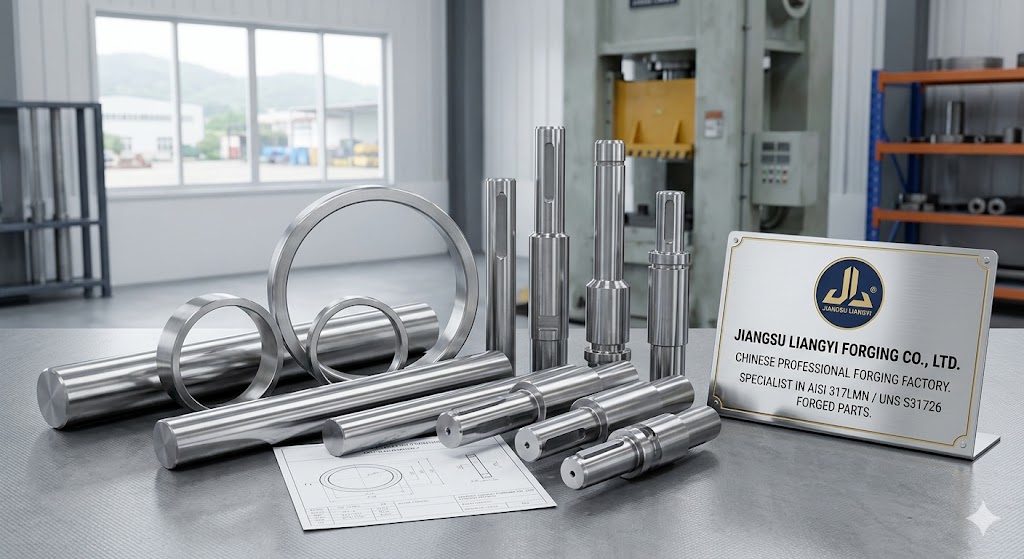
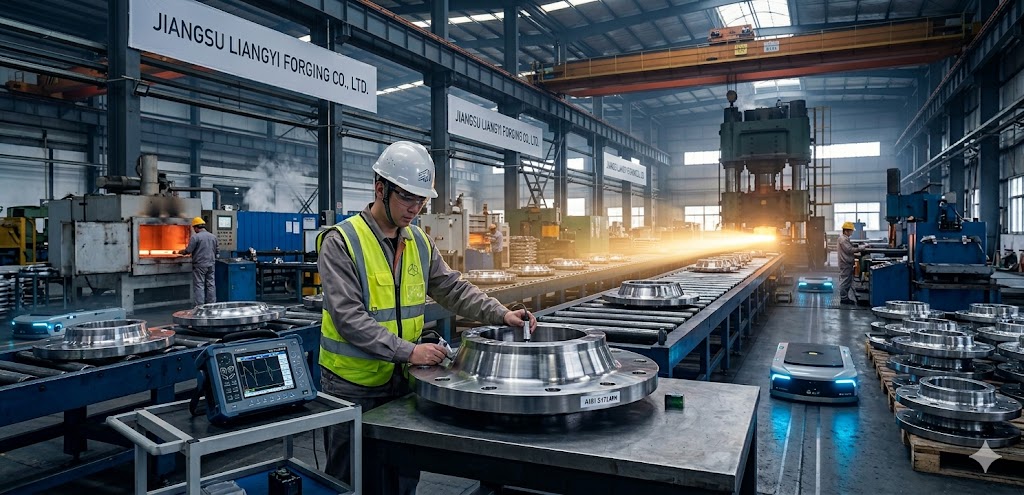
Founded in 1997, Jiangsu Liangyi Co., Limited is an ISO 9001:2015 certified professional forging manufacturer specializing in AISI 317LMN (UNS S31726, Grade 317LMN, SUS 317 LMN, TP 317LMN) open die forgings and seamless rolled rings. Located in Jiangyin City, Jiangsu Province — China's most concentrated precision forging manufacturing base — our 80,000㎡ facility houses six 1,000–5,000-ton hydraulic presses, two ring rolling mills with up to 6,000mm OD capacity, and a dedicated 10-furnace heat treatment line. With an annual production capacity of 120,000 tons and over 25 years of continuous specialization in corrosion-resistant stainless steel and nickel alloy forgings, we serve global engineering procurement in oil & gas, nuclear power, chemical processing, valve manufacturing and heavy industrial sectors.
Our AISI 317LMN stainless steel forgings are selected by global engineering firms for the most demanding corrosive service applications — environments where standard 316L and 317L fail prematurely through pitting, crevice corrosion or intergranular attack. With a Pitting Resistance Equivalent Number (PREN) of ≥30, 317LMN delivers performance in the same tier as many super-austenitic alloys at significantly lower cost. We have exported to clients in more than 50 countries including the USA, Germany, France, Norway, Saudi Arabia, UAE, South Korea, Japan, Brazil and Australia, with each order supported by full EN 10204 3.1 material documentation and available third-party certification.
Material Overview: AISI 317LMN (UNS S31726) — Metallurgy, Composition & Why It Outperforms Standard Austenitic Grades
AISI 317LMN is a low-carbon, nitrogen-strengthened, high-molybdenum austenitic stainless steel developed to close the performance gap between conventional 300-series stainless steels and expensive super-austenitic or nickel-based alloys. The designation encodes its key features: 317 indicates the base alloy class (higher Cr-Ni-Mo than 316), L confirms the extra-low carbon restriction (≤0.03%), M denotes the high molybdenum content (4.0–5.0%), and N signals the intentional nitrogen addition (0.10–0.20%). Together, these four alloying strategies create a material that simultaneously resists pitting, crevice corrosion and intergranular attack while maintaining high mechanical strength — without the magnetic permeability of duplex stainless steels.
The Science Behind PREN ≥30: Why Molybdenum and Nitrogen Work Together
The corrosion resistance of austenitic stainless steel is quantified by the Pitting Resistance Equivalent Number, calculated as:
PREN Formula: PREN = %Cr + 3.3×%Mo + 16×%N
Applying this formula to AISI 317LMN with typical controlled composition (18.5% Cr, 4.5% Mo, 0.15% N):
PREN = 18.5 + (3.3 × 4.5) + (16 × 0.15) = 18.5 + 14.85 + 2.40 = 35.75
This places 317LMN firmly above the PREN 30 threshold that defines meaningful resistance to seawater and concentrated chloride environments — outperforming 316L (~24) and 317L (~26) by a factor that translates directly into service life extension of 3× or more in real-world corrosive applications. The contribution of nitrogen (×16 multiplier) means each 0.01% of controlled nitrogen adds as much corrosion resistance as an additional 0.16% of chromium, at essentially no material cost.
Role of Each Alloying Element in AISI 317LMN Performance
| Element | Content in 317LMN | Primary Metallurgical Function | Consequence If Absent or Reduced |
|---|---|---|---|
| Chromium (Cr) | 18.00–19.00% | Forms passive Cr₂O₃ surface film; primary corrosion barrier against oxidizing environments | Loss of general corrosion and oxidation resistance; film breakdown at lower chloride concentrations |
| Molybdenum (Mo) | 4.20–4.80% | Stabilizes the passive film against chloride attack; re-passivates pitting initiation sites; primary driver of PREN | Catastrophic drop in pitting resistance; PREN drops below 26 if Mo reduced to 317L level |
| Nickel (Ni) | 14.50–16.50% | Stabilizes the austenitic FCC crystal structure; provides low-temperature toughness; improves acid resistance | Risk of martensitic transformation during cold forming; loss of sub-zero toughness |
| Nitrogen (N) | 0.12–0.18% | Solid-solution strengthener (+30–50 MPa yield); enhances passive film stability; occupies lattice sites that would otherwise host sigma phase nucleation | Yield strength drops to 316L levels; sigma phase precipitation risk increases at 600–900°C range |
| Carbon (C) | ≤0.025% (our control) | Kept at ultra-low level to prevent sensitization — Cr₂₃C₆ carbide precipitation at grain boundaries depletes chromium below 12% locally | Intergranular corrosion failure at heat-affected zones; rejection by nuclear and pressure vessel codes requiring L-grade |
| Manganese (Mn) | 1.00–2.00% | Secondary austenite stabilizer; partial nickel substitute; improves hot workability for large-section forging | Reduced hot ductility; increased risk of hot tearing during open die forging of large cross-sections |
| Sulfur (S) | ≤0.010% (our control) | Controlled at ultra-low level; sulfide inclusions act as pitting initiation sites | Each 0.01% increase in S measurably reduces CPT by 2–5°C and increases pitting density in chloride immersion tests |
Microstructural Advantage of Forged vs Cast 317LMN
The manufacturing route has a profound effect on the actual in-service performance of 317LMN, beyond what chemical composition alone predicts. In the as-cast condition, 317LMN solidifies with a coarse dendritic structure (ASTM grain size 0–1), chemical microsegregation of Mo and Cr across the dendrite arms, and inevitable microporosity and shrinkage defects at the casting core. These features directly degrade corrosion resistance because Mo-depleted dendritic cores reach local PREN values of 20–22, far below the bulk PREN of the alloy.
Our open die forging process applies cumulative forging ratios of 4:1 to 8:1, which:
- Mechanically breaks down the dendritic structure and homogenizes the Mo/Cr distribution, eliminating microsegregation
- Refines grain size to ASTM 4–7 (typical final grain size 25–70 μm), improving both corrosion resistance and fatigue life simultaneously
- Closes all internal porosity under the 3D compressive stress state of forging — verified by 100% volumetric UT to acceptance level B per ASTM A388
- Aligns the grain flow with the part geometry, so that the high-strength crystallographic directions coincide with the principal stress axes in service
The practical result is that our forged 317LMN components achieve CPT values 8–12°C higher than equivalent cast components of the same nominal composition, and fatigue endurance limits 25–35% above cast equivalents in rotating bending fatigue tests.
Manufacturing Intelligence: We deliberately control our sulfur content to ≤0.010% (versus the ASTM standard maximum of 0.030%), because in-house corrosion testing on our production lots confirms that reducing S from 0.025% to 0.010% increases average CPT in 6% FeCl₃ by approximately 4–6°C — equivalent to adding another 1.2–1.8% Mo in its effect on pitting resistance.
AISI 317LMN vs 316L vs 317L vs 904L vs 2205 Duplex: Which Grade Should You Specify?
Selecting the right stainless steel grade for a forged component involves balancing corrosion resistance, mechanical strength, cost and fabrication constraints. Below is our technical comparison based on published standards and our own production experience across all five grades. This comparison is intended to help procurement engineers and materials engineers make confident grade decisions for specific service environments.
| Property / Criterion | 316L (UNS S31603) | 317L (UNS S31703) | 317LMN (UNS S31726) | 904L (UNS N08904) | 2205 Duplex (UNS S32205) |
|---|---|---|---|---|---|
| Cr Content (%) | 16–18 | 18–20 | 17–20 | 19–23 | 21–23 |
| Mo Content (%) | 2.0–3.0 | 3.0–4.0 | 4.0–5.0 | 4.0–5.0 | 2.5–3.5 |
| Ni Content (%) | 10–14 | 11–15 | 13.5–17.5 | 23–28 | 4.5–6.5 |
| N Content (%) | ≤0.10 | ≤0.10 | 0.10–0.20 | — | 0.10–0.22 |
| PREN (typical) | ~24 Fair | ~26 Fair | ≥30 Good | ~36 Best | ~35 Best |
| CPT in 6% FeCl₃ (°C) | 15–20 | 20–25 | 35–45 | 50–60 | 45–55 |
| Min Yield Strength (MPa) | 170 | 205 | 280 (≥310 our guarantee) | 220 | 450 |
| Low-Temp Toughness (–196°C) | Good | Good | Excellent | Excellent | Fair |
| Non-Magnetic (annealed) | Yes | Yes | Yes | Yes | No (ferromagnetic) |
| Weldability | Excellent | Excellent | Excellent | Good | Good |
| Large-Section Forgability | Excellent | Excellent | Excellent | Good | Good |
| Relative Material Cost | 1.0× (baseline) | ~1.3× | ~1.6× | ~2.5× | ~1.2× |
| Nuclear Power Application | Suitable | Suitable | Preferred | Suitable | Not Preferred |
| NACE MR0175 Sour Service | Yes | Yes | Yes | Yes | Conditional |
Engineering Decision Guide: Choose 317LMN over 316L/317L when your process fluid contains >5,000 ppm chloride, operating temperature exceeds 40°C, or your previous 316L components have shown pitting failures within 3 years. Choose 904L or 2205 only when the environment demands PREN >35 AND cost is not the primary constraint. 317LMN occupies the most cost-effective position in the PREN 30–35 performance window — more than 35% less expensive than 904L for equivalent corrosion resistance in most chloride service environments.
Full Range of AISI 317LMN (UNS S31726) Forged Products — Specifications & Manufacturing Capabilities
We manufacture a complete portfolio of custom AISI 317LMN forged forging parts in all standard and custom shapes, with single-piece weight capacity from 30kg to 30,000kg. Every product line is supported by in-house machining, heat treatment and NDT — so you receive finished, certified components from a single source. Explore our complete manufacturing capabilities on our Products page.
AISI 317LMN Forged Bars, Rods & Shafts
We supply precision open-die forged round bars, square bars, flat bars and rectangular bars in AISI 317LMN, as well as custom-geometry stepped shafts, gear shafts, crankshafts, turbine shafts and flanged shafts. Unlike cold-drawn bar stock, all our bars are hot-forged and individually heat-treated, providing superior internal soundness and grain refinement throughout the full cross-section — which is critical for fatigue-loaded rotating components.
| Parameter | Forged Round Bar / Shaft | Forged Flat Bar / Plate |
|---|---|---|
| Max Diameter / Width | Up to ⌀2,000mm | Up to 2,000mm |
| Max Length | Up to 15,000mm | Up to 6,000mm |
| Min Length / Weight | MOQ 30 kg | MOQ 30 kg |
| Forging Condition | Solution annealed + water quenched | Solution annealed + water quenched |
| Surface Finish | As-forged, rough-turned, or mirror-finish (Ra ≤0.8μm) | As-forged, milled, or ground |
| Dimensional Tolerance | EN 10243 or customer drawing | EN 10243 or customer drawing |
| NDT Testing | 100% UT per ASTM A388 / EN 10228-4 | 100% UT per ASTM A388 |
| Typical Applications | Pump shafts, valve stems, fastener blanks, heat exchanger tubesheets, downhole tool mandrels | Vessel plates, flow meter bodies, structural blocks, baffle blanks |
UNS S31726 Seamless Rolled Forged Rings
Our seamless ring rolling process begins with a pre-forged round blank that is pierced and then progressively rolled between a mandrel and main roll, while axial rolls control height. This process produces a fully continuous grain flow around the circumference of the ring — unlike welded or sawn rings — which is the primary reason seamless forged rings achieve superior fatigue life and pressure containment capability for rotating machinery, wellhead flanges and pressure vessel nozzle rings.
| Parameter | Specification |
|---|---|
| Max Outer Diameter (OD) | Up to 6,000mm |
| Min Outer Diameter | From 200mm |
| Max Height (face width) | Up to 1,200mm |
| Min Wall Thickness | ≥25mm (larger diameters); ≥15mm for smaller rings |
| Max Single-Piece Weight | Up to 30,000 kg |
| Ring Profile | Rectangular, contoured (T-section, L-section), near-net-shape custom profiles |
| Dimensional Standard | EN 10243-1, ASTM A484, or customer drawing |
| OD Tolerance | ±2mm (standard); ±1mm (precision finish-turned) |
| Roundness (circularity) | ≤0.5% of OD (standard ring rolling); ≤0.2% after finish turning |
| Typical Applications | Wellhead flange rings, casing head bodies, ring joint gaskets, turbine casing rings, valve seat rings, bearing races, reactor vessel flanges |
Large-Ring Specialization: Our dual ring rolling mills support diameters from 200mm to 6,000mm without switching facilities, giving us the unique ability to roll a matched set of nozzle rings, shell flanges and closure rings for the same pressure vessel project on the same campaign — ensuring consistent material heat, uniform properties and identical heat treatment lot records across all mating components.
Grade 317LMN Forged Hollow Components, Sleeves & Cylinders
Seamless hollow forgings are produced by a combination of piercing, drawing and mandrel forging operations, which deliver full grain-flow continuity through the wall thickness — the decisive structural advantage over turned-down solid bar or welded pipe constructions for pressure-containing components. Wall thickness uniformity is controlled by progressive mandrel sizing passes, with wall thickness variation typically ≤2% of nominal wall for production lots.
- Hollow hubs, housings, shells and sleeves: Max OD up to 3,000mm, custom wall thickness from 30mm to 400mm
- Heavy-wall cylinders and pressure vessel shells: Max OD 2,500mm, max length 4,000mm, wall thickness up to 250mm
- Hollow bars and seamless tube blanks: OD from 80mm to 600mm, bore from 30mm upward
- All hollow forgings delivered in solution-annealed, quenched condition with 100% UT volumetric inspection and bore surface PT/MT inspection
- Available in as-forged, rough-bored, finish-machined (bore/OD/faces) or fully CNC-completed condition
SUS 317 LMN Forged Discs, Plates & Blocks
Forged discs and blocks for critical applications such as valve bodies, pump casings, tube sheets and manifold blanks are produced using open die forging with controlled reduction ratios that eliminate the as-cast centerline segregation present in plate cut from ingot. The forging process guarantees that the geometric center of the disc — the location most prone to segregation and porosity in cast or rolled products — is subjected to at least the same degree of plastic deformation as the outer rim, ensuring uniform properties from surface to center.
- Max forged disc diameter: 2,000mm; max forged block length: 3,000mm
- Thickness range: 20mm to 800mm (for blocks); min disc height 50mm
- Flatness tolerance: ≤2mm/m (standard); ≤1mm/m (precision-faced)
- All discs and blocks individually heat-treated and UT-tested; no batch heat treatment of mixed sizes
- Customer-specified ultrasonics acceptance levels available: API 6A Appendix F, ASTM A388 level B, EN 10228-3 Q1–Q4
Custom AISI 317LMN Valve & Pump Forged Components
Valve and pump components represent the highest-volume application of AISI 317LMN forgings in our production. We have refined our forging and machining process for these geometries over decades, with dedicated die sets for common valve body configurations and standardized CNC programs for recurring component families. This specialization allows us to offer competitive pricing and short lead times for the components below while maintaining full custom engineering capability for non-standard designs.
Valve Forged Components
- Valve bodies (gate, globe, ball, check, butterfly, cryogenic)
- Valve bonnets and pressure caps
- Valve stems and spindles (up to ⌀300mm × 3,000mm)
- Ball valve balls (floating and trunnion-mounted)
- Valve seat rings and hard-face seat blanks
- Valve discs, wedges and closure members
- API 6A and API 6D wellhead valve components
- Subsea valve bodies to 10,000 psi WP
Pump Forged Components
- Centrifugal pump casings (split and barrel type)
- Pump impellers (open, semi-open, closed profile)
- Pump shafts and sleeves
- Pump wear rings and throttle bushings
- Barrel pump inner casings and outer barrels
- Turbo compressor impellers and shrouded impellers
- API 610 and ISO 13709 pump components
- ESP (electric submersible pump) shaft forgings
Our AISI 317LMN Forging Process — From Steel Melt to Finished Component
Unlike commodity forging factories that purchase semi-finished bar stock and re-forge it, we control the entire manufacturing chain from steel melting through finished part delivery. This vertically integrated approach gives us complete traceability, eliminates the risk of material substitution, and allows us to optimize each process step specifically for 317LMN's metallurgical requirements — which differ from standard austenitic grades due to the higher Mo content and nitrogen addition.
Step 1 — Steel Melting: 30t EAF + LF + VOD Triple-Refining Process
We melt AISI 317LMN using a 30-ton Electric Arc Furnace (EAF) for initial scrap melting, followed by Ladle Furnace (LF) refining for precise alloy addition and desulfurization, and Vacuum Oxygen Decarburization (VOD) for carbon removal to ≤0.025% while preserving the nitrogen addition at 0.12–0.18%. The VOD step is uniquely important for 317LMN: it allows us to simultaneously achieve ultra-low carbon and precisely controlled nitrogen in the same heat — a combination that would be impossible through conventional AOD refining alone. Each heat produces a full spectrographic analysis record, which becomes part of the permanent EN 10204 3.1 MTC for every forging from that heat.
Step 2 — Ingot Casting & Homogenization Annealing
Refined liquid steel is bottom-poured into pre-heated ingot molds (15t to 30t depending on forging plan) to minimize turbulence and gas entrapment. Cast ingots undergo homogenization annealing at 1,150–1,200°C for 12–24 hours (proportional to ingot cross-section) in our walking-beam furnace before forging. This diffusion annealing step significantly reduces the Mo and Cr dendritic microsegregation present in the as-cast state, ensuring that the pre-forging ingot already has 60–70% of its eventual compositional homogeneity — which dramatically reduces the forging reduction ratio required to achieve full homogenization in the finished forging.
Step 3 — Hot Forging: 1,000–5,000t Hydraulic Press Operations
AISI 317LMN is forged in the temperature range of 1,050–1,200°C, with our press operators trained to monitor and maintain this window throughout the operation. The higher Mo content of 317LMN compared to 316L/317L slightly narrows the hot workability window and increases forging force requirements by 15–20% — which is why access to our 5,000-ton hydraulic press is essential for large cross-section 317LMN forgings where smaller forges would require excessive intermediate reheats that coarsen the grain. Reheating between passes is performed in our regenerative-burner car-bottom furnaces, which recover 40% of thermal energy and allow precise soak temperature control within ±10°C.
Step 4 — Ring Rolling (for Forged Rings)
Prepared ring blanks are transferred hot to our ring rolling mills. The main roll and mandrel progressively reduce wall thickness while the ring diameter expands under controlled tangential and axial rolling forces. Ring rolling speed, reduction ratio per pass and intermediate temperature are all monitored by our rolling operators and CNC controllers. The circumferential grain flow produced by ring rolling is the fundamental reason seamless forged rings have fatigue lives 3–5× longer than equivalent rings fabricated by welding rolled plate into a cylinder — a well-documented performance difference in ASTM standards and API specifications for pressure-containing rings.
Step 5 — Solution Annealing & Water Quenching
All 317LMN forgings are solution-annealed at 1,040–1,100°C in our continuous roller-hearth or periodic car-bottom furnaces. Temperature uniformity within ±5°C is verified by calibrated thermocouples and quarterly furnace surveys per AMS 2750. Soaking time is strictly calculated at 2.5 minutes per mm of maximum section thickness — for a 400mm section forging, this means a 1,000-minute (16.7-hour) minimum soak. Immediately upon completion, forgings are water-quenched within 60 seconds of furnace exit. This rapid cooling rate is critical: it suppresses sigma phase (Fe-Cr-Mo intermetallic) and chromium carbide precipitation that would otherwise occur during slow cooling through the 850–650°C sensitization range, both of which severely degrade corrosion resistance.
Step 6 — Non-Destructive Testing (NDT) & Mechanical Testing
After heat treatment, all forgings undergo mandatory testing before any machining is performed: 100% volumetric ultrasonic testing (UT) using immersion or contact methods per ASTM A388/EN 10228-3; visual inspection of all accessible surfaces per ASTM A962; liquid penetrant testing (PT) of machined surfaces per ASTM E165; and mechanical test coupon sampling per the heat treatment lot plan. Mechanical test results (tensile, yield, elongation, impact at room temperature and sub-zero if required) are recorded and included in the final MTC. Any forging not meeting all acceptance criteria is rejected — not downgraded or re-tested.
Step 7 — CNC Machining to Final Dimensions (Optional)
Customers may order forgings in as-forged, rough-machined or fully-finished condition. Our in-house machining workshop operates CNC turning centers (max ⌀2,500mm swing), horizontal boring mills (max table size 3,000×4,000mm), CNC milling centers, deep-hole drilling machines (boring up to L/D = 20:1) and 5-axis machining centers. All machining is programmed from customer-supplied 2D drawings or 3D CAD models (STEP/IGES accepted). Final dimensional inspection is performed on calibrated CMMs with full dimensional report issued to customer drawing tolerances. Surface finish is verified with contact profilometers — Ra 0.8μm or better achievable on precision bores and sealing faces.
Step 8 — Documentation, Certification & Shipment
Every shipment is accompanied by a complete documentation package: EN 10204 3.1 MTC with heat number, chemical analysis, mechanical test results, heat treatment records, NDT test reports and dimensional inspection report. For third-party inspection orders, the TPI inspector (BV, SGS, DNV, Lloyd's Register or customer-nominated agency) witnesses testing and co-signs the EN 10204 3.2 certificate. Export packaging uses fumigated wooden crates with VCI rust-prevention film wrapping, certified for international maritime shipment. Lead time for sea freight to major ports: 25–35 days to North America/Europe from forging order confirmation.
Corrosion Performance Data: AISI 317LMN in Real Industrial Environments
Published PREN values are useful for initial grade screening, but real selection decisions require corrosion performance data from actual service environments and standardized laboratory tests. Below we share performance data from our production lots and industry literature to help engineers understand where AISI 317LMN delivers measurable advantage over 316L and 317L, and where it approaches the performance ceiling requiring more expensive alloys.
Critical Pitting Temperature (CPT) and Critical Crevice Temperature (CCT) Data
| Test Environment / Standard | 316L | 317L | 317LMN (Our Forgings) | 904L |
|---|---|---|---|---|
| CPT in 6% FeCl₃, ASTM G48 Method C (°C) | 15–20 | 20–25 | 35–45 | 55–65 |
| CCT in 6% FeCl₃, ASTM G48 Method D (°C) | 0–5 | 5–10 | 20–30 | 35–45 |
| Pitting potential Epit in 3.5% NaCl at 25°C (mV vs SCE) | +200 to +280 | +280 to +350 | +380 to +480 | +520 to +600 |
| Corrosion rate in 10% H₂SO₄ at 60°C (mm/year) | 8–15 | 4–8 | 1.5–3.5 | 0.8–1.8 |
| Corrosion rate in 10% HCl at 25°C (mm/year) | 30–60 | 15–30 | 5–12 | 2–6 |
| Salt spray resistance, ASTM B117 at 35°C (hours to first pit) | 200–400 | 400–700 | 1,000–1,800 | >2,000 |
| Seawater service (3.5% NaCl at 25°C) corrosion behavior | Pitting within weeks | Pitting within months | Stable passive film, no pitting | Stable passive film |
Practical Service Environment Guidance
Environments Where 317LMN Excels vs 316L/317L
- Chloride concentrations >5,000 ppm at temperatures above 40°C
- Seawater cooling systems (coastal and offshore facilities)
- Dilute sulfuric acid (5–15%) at 40–80°C with chloride contamination
- Phosphoric acid process equipment with F⁻ and Cl⁻ contaminants
- Bleach and hypochlorite handling in paper/pulp mills
- Offshore oilfield produced water containing H₂S and CO₂
- Desalination plant pressure vessels and heat exchangers
- Flue gas desulfurization (FGD) scrubber components
Temperature Limits & Thermal Stability
- Cryogenic service: Fully tested to −196°C (LNG temperature); impact energy remains >80J at −196°C — superior to duplex grades
- Ambient to 300°C: Full design mechanical properties maintained; passive film fully stable
- 300–450°C: Acceptable for short-term service; some sensitization risk with cumulative exposure — specify L-grade MTC and verify carbon ≤0.025%
- 450–850°C: Sigma phase and carbide precipitation range — avoid sustained exposure; design must prevent long hold times in this range
- Above 850°C: Rapid re-dissolution of sigma phase; used for forging and annealing
- Max continuous service temperature (oxidizing): 870°C (intermittent: 925°C)
Global Industry Applications & GEO-Targeted Project Cases
AISI 317LMN (UNS S31726) forged parts are the material of choice for industries demanding superior corrosion resistance, high mechanical strength and reliable long-term service life in aggressive process environments. Below we present our core industry applications with specific technical context and representative project cases from our key global markets. All project details are shared at a general level to respect client confidentiality.
Oil & Gas Industry — Upstream, Midstream & Subsea Applications
The oil and gas industry is the single largest consumer of AISI 317LMN forgings globally, driven by increasing HPHT reservoir conditions, rising H₂S content in production streams, and the aggressive produced water chemistry in deepwater and unconventional shale plays. Standard 316L wellhead components in chloride-rich, sour service environments often fail by pitting or stress corrosion cracking within 18–36 months. Our AISI 317LMN forgings — with full NACE MR0175 / ISO 15156 compliance, 100% UT inspection and EN 10204 3.2 third-party certification — are specified by global engineering firms as the replacement solution that extends service life to 8–12 years in equivalent conditions.
Key Products & Applications
- Wellhead & Christmas Tree Equipment: Casing head bodies, tubing hanger forgings, Christmas tree spool bodies, adapter flanges, studded crosses, mud flanges — all manufactured to API 6A Product Specification Level (PSL) 2 or PSL 3G material and testing requirements
- Subsea Equipment: Subsea tree bodies, connector hubs, flowline end termination (FLET) forgings, manifold bodies for up to 690 bar (10,000 psi) working pressure service in seawater-flooded annuli
- Downhole Tools: Drill collar subs, ESP motor shafts, mud motor rotor shafts, stabilizer bodies, jar housings — where the combination of high torque fatigue loading and corrosive drilling fluid chemistry makes 317LMN's high-strength, corrosion-resistant combination uniquely valuable
GEO Project Cases
- Middle East Market (Saudi Arabia, UAE, Kuwait): Supplied 317LMN forged wellhead components and Christmas tree valve bodies for major national oil company onshore carbonate oilfield projects in the region, where produced water chloride content exceeds 150,000 ppm and bottom-hole temperature reaches 180°C. Previous 316L components showed pitting failures within 18 months. Our 317LMN forgings, now in continuous service for 7+ years in the same wells, have recorded zero corrosion-related maintenance events. All components manufactured to NACE MR0175 / ISO 15156 sour service material requirements and API 6A PSL 2 specification, with full EN 10204 3.1 documentation.
- North America Market (USA — Permian Basin, Eagle Ford; Canada — Montney): Delivered 317LMN forged double studded adapter flanges, mud flanges and studded crosses for multi-well pad completions in Texas, New Mexico and British Columbia. Specified by the operator after 316L adapters required replacement at 2-year intervals due to crevice corrosion at flange face gasket contact zones in H₂S-containing completion fluid. All components manufactured to API 6A specification requirements and ASME BPVC Section VIII material requirements.
- South America Market (Brazil — Pre-Salt, Offshore Santos Basin): Delivered 317LMN forged ESP shaft forgings (OD 65mm, L 4,200mm, 32 pieces per campaign) for deepwater pre-salt oil production for a major South American national oil company. The pre-salt reservoir produces extremely saline formation water (TDS >300,000 ppm) with CO₂ partial pressure up to 30 bar and H₂S in trace concentrations — an environment that destroys carbon steel and attacks 316L within months. All components manufactured to the customer's internal material specification requirements with full EN 10204 3.2 third-party inspection documentation.
- Europe — North Sea (Norway, UK): Supplied 317LMN forged subsea manifold branch tees, flowline connectors and isolation valve bodies for an FPSO topside tie-back project on the Norwegian Continental Shelf for a major international oil company. All components delivered with accredited third-party EN 10204 3.2 certification, NACE MR0175 / ISO 15156 compliance documentation and full material traceability from ingot to finished forging.
Nuclear Power Industry — Safety-Critical Applications
The nuclear power industry imposes the most rigorous material qualification requirements of any industrial sector. AISI 317LMN is selected for nuclear applications specifically because it combines the corrosion resistance required for primary and secondary coolant circuit components with the non-magnetic properties essential for magnetic flux measurement systems, and the high toughness required for seismic qualification. Our nuclear power forgings are manufactured under an enhanced quality plan with additional witness point inspections, hold points and documentation requirements beyond standard commercial forgings.
Key Products & Applications
- Primary Coolant Circuit: Reactor coolant pump (RCP) casings, impellers and seal housings; primary coolant pump motor bracket forgings; pressure boundary nozzle forgings for reactor pressure vessel (RPV) penetrations
- Secondary Coolant & Auxiliary Systems: Steam generator tube plate forgings, auxiliary feedwater pump casings, containment isolation valve body forgings, letdown valve bodies and pressure control valve bodies
- Structural & Internals: Fuel assembly guide tube forgings, core barrel flange rings, reactor vessel closure head lifting lug forgings
GEO Project Cases
- Asia Pacific Market (China, South Korea): Supplied 317LMN forged reactor coolant pump (RCP) casing segments, containment isolation valve bodies and seal chamber blocks for Gen III+ nuclear power plant projects. All forgings manufactured under an enhanced nuclear quality plan aligned with ASME NQA-1 quality assurance program requirements, with 100% volumetric UT to ASME Section V acceptance standards and full material traceability from heat number through final machined component. Grain size verified at ASTM 4–7 on metallographic specimens from production test coupons.
- Europe Market (France, Finland): Delivered 317LMN forged auxiliary system valve bodies and pressure boundary forgings for advanced pressurized water reactor (PWR) auxiliary cooling systems for a major European nuclear power operator. All components manufactured to PED 2014/68/EU material and manufacturing requirements, EURATOM regulatory documentation requirements, and EN 10204 3.2 third-party certified by an accredited inspection body.
Valve & Flow Control Industry
Industrial valve manufacturers are among our most consistent long-term clients, particularly those producing valves for chemical processing, desalination, pulp and paper, and LNG service. 317LMN's combination of forgeability into complex near-net-shape geometries (which reduces machining waste of an expensive alloy), superior corrosion resistance versus cast 316L bodies, and suitability for valve components manufactured to API 6D, PED 2014/68/EU and ISO 17292 requirements makes it the rational choice for medium-to-large bore valves in corrosive service.
GEO Project Cases
- Europe Market (Germany, Netherlands, Italy): Supplied 317LMN forged gate valve bodies (DN200–DN600, PN100–PN250), ball valve bodies (DN50–DN400), butterfly valve discs and stems for chemical processing plants in the Rhine-Ruhr industrial corridor and Rotterdam refinery complex. Previous cast 317L bodies showed crevice corrosion at the seat pocket undercut within 3–4 years in sulfuric acid service with 3,000–8,000 ppm Cl⁻ contamination. Our forged 317LMN bodies, with finer grain and higher actual PREN from controlled composition, have shown zero corrosion failure in 5+ year service in the same process lines. All components manufactured to PED 2014/68/EU material requirements with EN 10204 3.2 third-party documentation available.
- Global LNG Market (Australia, Qatar, USA, South Korea): Manufactured cryogenic high-performance butterfly valve (HPBV) shafts and disc assemblies in AISI 317LMN for LNG liquefaction and regasification terminals. LNG service requires reliable sealing integrity and impact toughness at −163°C (−261°F). Our 317LMN HPBV shafts are impact-tested at −196°C (exceeding service temperature requirement by 33°C) with minimum Charpy V-notch energy of 80J, providing a substantial safety margin against brittle fracture in emergency depressurization events.
Heat Exchanger & Pressure Vessel Industry
Shell-and-tube heat exchangers, reactors and pressure vessels in chemical, petrochemical and pharmaceutical service frequently require 317LMN for tube sheet, nozzle and flange forgings — even when the shell material is 316L or carbon steel — because the tube-to-tubesheet joint is the most corrosion-vulnerable location, subject to crevice corrosion between the tube OD and tubesheet bore and concentration of aggressive species at the interface.
GEO Project Cases
- Southeast Asia (Thailand, Malaysia, Singapore): Supplied 317LMN forged tube sheets (max ⌀1,800mm × 180mm thick), reactor nozzles, channel flanges and transition cone forgings for multi-effect evaporator trains in a Thai sulfuric acid recovery plant and pharmaceutical API manufacturing facilities in Singapore. Specified to JIS G 3214 SUSF 317LN with full ASME BPVC Section VIII Div.1 code compliance for MAWP 25 bar service.
- Oceania (Australia): Delivered 317LMN forged pressure vessel shell rings, end cap forgings and nozzle insert forgings for mineral acid handling vessels in nickel and copper hydrometallurgy operations in Queensland and Western Australia. Service conditions included 60–80°C dilute sulfuric acid with high chloride content from seawater process water — conditions that completely eliminate 316L as an option and make 317LMN the most cost-effective compliant material. Full Australian Standards AS 1210 / AS 4458 documentation provided.
Pump & Turbomachinery Industry
Centrifugal pumps, axial compressors and turbines handling corrosive process fluids place extreme demands on material: high cyclic fatigue loading from rotating operation, erosion from particle-laden fluids, and corrosion from the process fluid — all simultaneously. 317LMN uniquely addresses all three failure modes: superior corrosion resistance, high yield strength (minimizing stress amplitude in fatigue-critical sections), and excellent erosion-corrosion resistance due to the hardening effect of nitrogen on the passive film under flow conditions.
- Forged turbo centrifugal compressor impellers for sour gas, CO₂ and chloride-contaminated hydrocarbon streams in refinery and LNG service
- Shrouded impellers for high-head multistage centrifugal pumps in desalination service (seawater RO feed pumps, high-pressure pump housings)
- Pump shaft forgings for API 610 process pumps: OD up to 280mm, length up to 4,000mm, with final ground finish Ra ≤0.4μm on journal bearing surfaces
- Complete pump casing forgings (split casing, double-casing) for multistage boiler feed pumps in coastal power plants with seawater cooling water systems
- All rotating components: runout verified ≤0.02mm TIR after final machining; dynamic balancing to ISO 1940 Grade G2.5 available
Machining Guide for AISI 317LMN — What Every Engineer & Buyer Should Know
AISI 317LMN is classified as a moderately difficult-to-machine alloy — significantly more challenging than carbon steel and somewhat more demanding than standard 316L, primarily because of the nitrogen-strengthened austenitic matrix and higher Mo content which increases work-hardening rate. Understanding these machining characteristics helps procurement and engineering teams set realistic tolerance expectations, plan machining costs accurately and avoid common pitfalls that lead to scrapped parts.
Machining Challenges Specific to 317LMN vs 316L
- Higher work-hardening rate: The work hardening rate increases by approximately 15-20% with the addition of nitrogen compared to 316L. Thus shallow cuts or dwell of the cutting tool will produce a hardened surface layer which will accelerate tool wear in subsequent passes. Recommended practice: positive and continuous chip flow, no tool dwell on the work.
- Increased cutting forces: Higher Mo and N content increases the alloy's hot hardness, requiring cutting forces 20–25% higher than 316L at the same cutting parameters. Plan for higher machine rigidity requirements and lower depth-of-cut recommendations for long, slender shaft forgings.
- Heat generation: 317LMN's lower thermal conductivity compared to carbon steel causes heat to concentrate at the cutting edge. High-pressure through-tool coolant at 70 bar or above is strongly recommended for deep drilling and boring operations to prevent built-up edge formation.
- Recommended cutting parameters (general guidance): Carbide grade PVD-coated (TiAlN or TiAlCrN) for turning at Vc = 80–120 m/min; solid carbide or indexable inserts for milling at Vc = 60–100 m/min; PVD-coated HSS or carbide for drilling at Vc = 12–25 m/min. Feed rates 30–40% lower than carbon steel equivalents.
Our Machining Advantage: Because we perform finish machining in-house immediately after heat treatment on the same forging, we know the exact hardness and microstructure of each piece before cutting begins. We adjust our CNC programs for the as-measured hardness (180–220 HB), minimizing tool wear and ensuring dimensional compliance on first operation. This eliminates the common problem of machined-to-drawing forgings that arrive at a job shop with unknown heat treatment history and cause unpredictable machining results.
Surface Finish Capabilities for AISI 317LMN Forgings
| Surface Finish | Ra Value | Typical Application | Achievable In-House? |
|---|---|---|---|
| As-forged / Rough-turned | Ra 6.3–25 μm | Raw forging for further machining at customer's facility | Yes |
| Semi-finish machined | Ra 1.6–6.3 μm | Pre-machined stock leaving machining allowance per customer specification | Yes |
| Finish machined | Ra 0.8–1.6 μm | Standard finished surfaces for pressure vessel flanges, valve bodies | Yes |
| Fine finish machined | Ra 0.4 μm | Bearing journal surfaces, sealing faces, precision valve stems | Yes |
| Ground / Honed bore | Ra 0.2–0.4 μm | Hydraulic cylinder bores, precision pump sleeves, rotary seal running surfaces | Yes |
| Mirror polish (electropolish) | Ra ≤0.1 μm | Pharmaceutical / food grade contact surfaces, optical inspection surfaces | By arrangement |
Chemical Composition of AISI 317LMN (UNS S31726) Forging Steel
The chemical composition of our AISI 317LMN (Grade 317LMN) forged steel is strictly controlled within the ranges specified in ASTM A182, ASTM A403 and EN 10088-3 standards, with full melt analysis provided in every EN 10204 3.1 mill test certificate. We use a 30t EAF + LF + VOD triple-refining process to achieve ultra-low impurity content — in particular, our sulfur control target of ≤0.010% (vs ASTM maximum of 0.030%) and our carbon ceiling of 0.025% (vs ASTM maximum of 0.030%) represent our manufacturing commitment to delivering forgings that consistently perform above the minimum standard requirement in the most aggressive service environments.
| Element | ASTM A182 Requirement | Our Controlled Aim Range | Why This Matters |
|---|---|---|---|
| Carbon (C) | 0.03% Max | 0.025% Max | Ultra-low C prevents sensitization (intergranular corrosion) in HAZ after welding |
| Manganese (Mn) | 2.00% Max | 1.00%–2.00% | Austenite stabilizer; improves hot workability of high-Mo composition |
| Silicon (Si) | 0.75% Max | 0.30%–0.75% | Deoxidizer; controlled low to minimize ferrite formation risk in large forgings |
| Chromium (Cr) | 17.00%–20.00% | 18.00%–19.00% | Primary corrosion barrier; contributes PREN = %Cr coefficient directly |
| Nickel (Ni) | 13.50%–17.50% | 14.50%–16.50% | Austenite stabilizer; provides cryogenic toughness and acid resistance |
| Molybdenum (Mo) | 4.00%–5.00% | 4.20%–4.80% | Highest PREN contributor (×3.3); critical for pitting and crevice corrosion resistance |
| Phosphorus (P) | 0.04% Max | 0.03% Max | Tramp element; segregates to grain boundaries and degrades hot ductility |
| Sulfur (S) | 0.03% Max | 0.010% Max | MnS inclusions act as pitting initiation sites; our ultra-low S target measurably increases CPT by 4–6°C |
| Nitrogen (N) | 0.10%–0.20% | 0.12%–0.18% | Solid-solution strengthener (+30–50 MPa yield); PREN contributor (×16 multiplier); sigma phase retardant |
| Iron (Fe) | Balance | Balance | — |
Mechanical Properties & Heat Treatment of AISI 317LMN Forged Parts
All our AISI 317LMN forged parts are delivered in the solution annealed and water-quenched condition, unless the customer specifies an alternative (such as stress-relieved condition for post-machining dimensional stability). Our in-house 10-furnace continuous heat treatment line provides precise temperature control within ±5°C — verified by quarterly AMS 2750 furnace surveys — which is the critical process parameter for achieving uniform, fully stabilized properties across the entire forging cross-section, regardless of section size.
Standard Mechanical Property Requirements & Our Guaranteed Values
| Mechanical Property | ASTM A182 Minimum | Our Typical Guaranteed Value | Test Standard | Specimen Location |
|---|---|---|---|---|
| Tensile Strength (Rm) | 580–800 MPa | 620–750 MPa | ASTM E8 / ISO 6892-1 | Longitudinal, ¼T from OD |
| Yield Strength 0.2% (Rp0.2) | ≥ 280 MPa | ≥ 310 MPa | ASTM E8 / ISO 6892-1 | Longitudinal, ¼T from OD |
| Elongation (A5%) | ≥ 35% | ≥ 40% | ASTM E8 / ISO 6892-1 | Longitudinal, ¼T from OD |
| Reduction of Area (Z%) | ≥ 45% | ≥ 55% | ASTM E8 / ISO 6892-1 | Longitudinal, ¼T from OD |
| Impact Energy KV (+20°C) | ≥ 100 J | ≥ 120 J | ASTM E23 / ISO 148-1 | Transverse |
| Impact Energy KV (−196°C) | Not standard | ≥ 80 J (our guarantee for cryogenic orders) | ASTM E23 / ISO 148-1 | Transverse |
| Brinell Hardness (HBW) | ≤ 250 HBW | 180–220 HBW | ASTM E10 / ISO 6506-1 | Surface |
| Ferrite Content | Not standard | < 0.5 FN (our production average) | Feritscope / ASTM A800 | Multiple locations |
| Grain Size (ASTM) | Not standard | ASTM 4–7 (our typical) | ASTM E112 | Metallographic coupon |
Why Our Yield Strength Exceeds the ASTM Minimum by 10%+: The ASTM A182 minimum yield of 280 MPa was established for the full composition range of 317LMN including heats at the lower nitrogen boundary (0.10% N). By consistently producing heats at 0.12–0.18% N through our controlled VOD refining process, we achieve the nitrogen solid-solution strengthening benefit in every heat — giving our customers a minimum 30–50 MPa yield strength advantage versus minimum-specification material, at no additional cost. This directly translates to a higher allowable working stress in ASME pressure vessel design calculations.
Heat Treatment Protocol
- Solution annealing temperature: 1,040°C – 1,100°C (target center: 1,060–1,080°C for optimal dissolution of Mo-rich second phases)
- Soaking time: 2.5 minutes per mm of maximum section thickness (minimum 60 minutes for any forging); example: 200mm section = 500 min soak minimum
- Temperature uniformity verification: Multiple calibrated thermocouples + quarterly furnace surveys per AMS 2750 Grade 2 (±8°C uniformity)
- Quench method: Water quench within 60 seconds of furnace exit for sections ≤150mm; forced-circulation water spray quench for sections 150–400mm; large section (>400mm) cooling by high-velocity water spray with monitored cooling rate
- Post-machining stress relief (optional): Available at 400–450°C for 2 hours/25mm section, for customers requiring minimum distortion in finish-machined components. Note: this does not fully restore solution-annealed microstructure and is only appropriate when the machined geometry is far from design stress limits.
- Full heat treatment records: Furnace chart, thermocouple calibration certificate and heat treatment traveler provided with every shipment MTC
Quality Control, NDT Testing & International Compliance Standards
Jiangsu Liangyi implements a 100% end-to-end quality management system covering every UNS S31726 forging from incoming raw material verification through final documentation package. Our ISO 9001:2015 certified quality management system is not an administrative overlay — it is a manufacturing discipline embedded in every production step, with mandatory hold points, traceability records and independent QC verification at each critical process gate. Our in-house laboratory is equipped with an OES spectrometer (Spectromax), 1,000kN universal testing machine, Charpy impact tester, Brinell and Rockwell hardness testers, metallographic preparation station and a suite of NDT equipment for UT, PT and MT testing.
Incoming Material Verification
Before any forging begins, all incoming raw materials (ingots, billets, scrap) are verified by our in-house spectrometer against the ordered heat chemistry. We reject any heat that falls outside our tightened internal chemistry limits — even if it meets the broader ASTM standard range — because our production experience shows that heats at the extreme edges of the ASTM range consistently underperform in corrosion testing. This means we absorb the cost of material rejection to protect our customer's end-product quality.
Non-Destructive Testing (NDT) — Mandatory for All 317LMN Forgings
- Ultrasonic Testing (UT): 100% volumetric UT inspection for all forgings after heat treatment, performed by Level II UT operators certified per EN ISO 9712 or ASNT SNT-TC-1A. Method: contact pulse-echo technique per ASTM A388/A388M (or immersion UT per ASTM A609 for complex shapes). Acceptance level: ASTM A388 Level B standard (reportable discontinuities >50% of DAC); API 6A Appendix F or EN 10228-3 Q3/Q4 available. Calibration: DAC curves established on ASTM E127 reference blocks with 3mm FBH; instrument calibration logged before every inspection shift.
- Visual Inspection (VT): 100% visual inspection of all accessible surfaces per ASTM A962 requirements by certified inspectors; written acceptance record with surface condition description; all surfaces free from cracks, cold shuts, laps, seams, hot tears and harmful surface defects as defined by the applicable product standard.
- Liquid Penetrant Testing (PT): Available for all machined and ground surfaces, performed per ASTM E165 / EN ISO 3452-1 using fluorescent or visible penetrant. Level II PT operators certified per EN ISO 9712. Typical acceptance: linear indications not permitted; rounded indications: per ASTM E433 reference photographs. PT is mandatory for all valve seat sealing surfaces and pressure-containing bore machined surfaces supplied to nuclear and API 6A specifications.
- Magnetic Particle Testing (MT): Available for machined surfaces of forgings that have not been confirmed fully non-magnetic. Per ASTM E1444 / EN ISO 17638. Note: properly solution-annealed 317LMN forgings typically have ferrite content <0.5 FN and are effectively non-magnetic, but we perform a Feritscope verification on all nuclear power forgings to confirm FN <1.0 before PT vs MT selection.
- Ferrite Measurement: Feritscope measurement per ASTM A800 at minimum 5 surface locations for all nuclear power forgings; results included in MTC.
- Positive Material Identification (PMI): XRF or OES PMI available on all finished forgings as a final verification step before shipment, cross-referenced against the production MTC chemistry. Available as standard for nuclear and subsea orders; available on request for all other orders.
Third-Party Inspection (TPI) Support
We provide full witness and surveillance support for third-party inspection by your nominated agency. We have prior working experience with inspectors from Bureau Veritas (BV), SGS, DNV GL, Lloyd's Register, Intertek, TÜV Rheinland, CCIC and CSEI. The TPI inspector witnesses mechanical testing, reviews heat treatment charts, witnesses NDT inspections and co-signs the EN 10204 3.2 certificate. We provide TPI inspectors with a dedicated inspection bay, calibrated equipment, full production records and a cooperating QC team — no inspection delays from our side.
International Standards Compliance
Our AISI 317LMN forgings are manufactured to meet the material, dimensional and testing requirements of the following major international standards. These are the specifications we routinely supply against:
- Material: ASTM A182 (F317LMN), ASTM A370 (mechanical testing), ASTM A388 (UT inspection), ASTM E8/E23/E10 (testing methods)
- Oil & Gas: API 6A material and dimensional requirements (wellhead and Xmas tree equipment), API 6D (pipeline valves), API 610 (centrifugal pumps), NACE MR0175 / ISO 15156 (sour service material requirements)
- Pressure Equipment: PED 2014/68/EU material and manufacturing requirements, ASME BPVC Section VIII Div. 1 & 2 (pressure vessels), ASME Section III (nuclear), PD 5500 (UK unfired pressure vessels)
- European Standards: EN 10088-3 (stainless steel semi-finished products), EN 10213 (applicable specifications), EN 10228-3/4 (NDT of forgings), EN ISO 9712 (NDT personnel certification), EN 10204 (material certificates)
- Japanese Standards: JIS G 3214 (stainless steel forgings — SUSF 317LN), JIS Z 2244 (Vickers hardness)
- Australian Standards: AS 1210 (pressure vessels), AS 4458 (pressure equipment manufacture)
Why Global Engineers Choose Jiangsu Liangyi for AISI 317LMN Forgings
There are dozens of forging manufacturers in China offering stainless steel forgings. Below we explain, in transparent and specific terms, what genuinely differentiates us for AISI 317LMN — so you can make an informed sourcing decision based on technical substance rather than marketing language.
1. Full Vertical Integration From Melt to Machined Part
We control the complete manufacturing chain: steel melting (EAF + LF + VOD), ingot casting, homogenization annealing, forging (1,000–5,000t presses), ring rolling (up to 6,000mm OD), heat treatment (10-furnace line), NDT testing (UT/PT/MT, in-house lab), and CNC machining (up to ⌀2,500mm turning, 5-axis milling). This means zero dependency on sub-suppliers for any process step — and complete, unbroken traceability from the original steel melt to the finished certified component. Most forging factories purchase semi-finished bar stock or billets and do not control the upstream melting quality.
2. AISI 317LMN Is a Core Specialty Grade, Not an Occasional Product
317LMN is one of the highest-volume alloy grades in our production mix, not an occasional special order. This means our metallurgists, forge operators, heat treatment technicians and QC inspectors have accumulated thousands of production cycles with this specific grade — they know its forging temperature windows, quench rate requirements, typical UT response patterns and machining behavior in detail. This practical, grade-specific experience cannot be replicated by a general-purpose forging factory producing 317LMN twice a year.
3. Tighter Internal Chemistry Controls Than ASTM Minimum
Our production commitment to C ≤0.025% and S ≤0.010% (versus ASTM maximums of 0.030% each) is not just a specification claim — it is enforced by our incoming material rejection policy and verified by OES spectrometry on every heat before forging begins. These tighter controls measurably improve actual corrosion performance (CPT +4–6°C from ultra-low S control alone) and sensitization resistance in service, compared to material supplied at the ASTM maximum limits.
4. Large-Section Capability Without Sub-Contracting
Our 5,000-ton hydraulic press and 6,000mm-capacity ring rolling mill allow us to produce large 317LMN forgings — rings above 3,000mm OD, discs above 1,500mm diameter, shaft forgings above 1,000mm diameter — that most forging manufacturers must sub-contract or decline entirely. For large capital project equipment, having a single supplier who can produce matched large-section components from the same steel heat ensures consistent material properties and simplifies documentation consolidation.
5. Experience With Nuclear and Subsea Quality Documentation Requirements
We have manufactured 317LMN forgings to nuclear power quality plan requirements (aligned with ASME NQA-1 and ASME Section III documentation practices) and to the enhanced documentation requirements of major subsea engineering projects across multiple campaigns. This experience means we understand the additional documentation structures, hold point schedules, NDE witness requirements and material traceability standards that these projects demand — and we can staff and execute them without learning on your project's timeline and budget.
6. Transparent Technical Communication & Fast RFQ Response
Metallurgical engineers in our sales team review the RFQs before we respond to them. This ensures that our quotations address the real technical requirements rather than the default standard parameters. We respond to detailed RFQs within 24 hours with a quotation that includes not just price and lead time, but our recommended forging plan, heat treatment specification, proposed NDT acceptance criteria and documentation package — so you can evaluate our proposal on a fully technical basis from day one.
Frequently Asked Questions (FAQs) About AISI 317LMN Forgings
Below are the most common technical and commercial questions we receive from global engineers and procurement teams about AISI 317LMN (UNS S31726) forged parts. We have answered them with the same directness we use with our own clients.
317LMN has 4.0–5.0% Mo versus 3.0–4.0% for 317L and 2.0–3.0% for 316L, plus a mandatory nitrogen addition of 0.10–0.20% not present in 317L or 316L at significant levels. This combination raises PREN from ~24 (316L) and ~26 (317L) to ≥30 for 317LMN — a 25–45% improvement in pitting resistance that translates to a Critical Pitting Temperature (CPT) of 35–45°C versus 15–20°C for 316L. The nitrogen addition also raises yield strength by 30–50 MPa without reducing ductility.
Upgrade from 316L or 317L to 317LMN when: (1) your process fluid chloride concentration exceeds 5,000 ppm; (2) operating temperature exceeds 40°C in any chloride-containing environment; (3) you have experienced pitting or crevice corrosion failures with 316L or 317L components within 5 years; (4) the service environment includes H₂S requiring NACE MR0175 compliance with additional corrosion resistance margin; (5) you need cryogenic service to −196°C where duplex grades are excluded.
The 2205 duplex offers a higher PREN (~35), approximately 60% higher yield strength and is often slightly cheaper per kilogram, due to lower Ni content. But in these specific circumstances, 317LMN is preferable to 2205:
- Low-temperature service: 317LMN maintains full impact toughness to −196°C (LNG temperature). 2205 duplex has a ductile-to-brittle transition that begins around −50°C and is generally not code-approved below −46°C per ASME BPVC.
- Non-magnetic requirement: 317LMN is fully austenitic and non-magnetic in the annealed state. 2205 duplex is ferromagnetic due to its 40–50% ferrite content — excluding it from MRI equipment, sensitive instrumentation, and nuclear reactor flux measurement environments.
- Weld fabrication complexity: 317LMN welds comparably to standard 316L and requires no controlled interpass temperature management. 2205 requires strict heat input control, interpass temperature limits and may require PWHT qualification in some code applications.
- Complex forging geometries: 317LMN's fully austenitic structure gives it superior hot ductility for thin-wall, complex-profile forgings where duplex's higher hot strength can cause forging cracks at the same press energy.
Choose 2205 duplex when yield strength is the primary driver and low-temperature toughness is not required. Choose 317LMN when cryogenic service, non-magnetic properties, complex geometry formability or austenitic code acceptance are the deciding factors.
Our MOQ for custom AISI 317LMN forgings is 30 kg for small components. There is no maximum — our largest single 317LMN forgings have been 26-ton reactor vessel nozzle rings. We support both prototype development (1–2 pieces) and series production (hundreds of pieces). For small quantities of expensive alloy like 317LMN, we sometimes group multiple small orders from different customers into the same melting heat, allowing cost-sharing of the melting fixed cost while maintaining 100% individual traceability per piece through unique heat stamp marking. This is always disclosed to and approved by all relevant customers before proceeding.
CPT is the lowest temperature at which stable pitting corrosion initiates in a standardized chloride test solution (6% FeCl₃ per ASTM G48 Method C). Below the CPT, the passive film repassivates any local attack and the material remains corrosion-free. Above the CPT, pitting propagates rapidly and irreversibly. For our AISI 317LMN forgings, CPT is typically 35–45°C (compared to 15–20°C for 316L and 20–25°C for 317L).
Practical meaning: if your process fluid chloride concentration and temperature combination places you above 316L's CPT but below 317LMN's CPT, then 317LMN is the correct grade selection. A common example is offshore cooling water service (seawater, ~35,000 ppm Cl⁻) at 40°C — this is above 316L's CPT (failure within months), near or below 317LMN's CPT (stable service for years), and well below 904L's CPT (overkill at 2.5× the material cost). 317LMN occupies precisely this performance window for the majority of industrial corrosive service applications.
Standard lead times from order confirmation:
- Raw forgings (as-forged + heat treated + UT tested + MTC): 25–35 days
- Rough-machined forgings: 30–40 days
- Fully CNC-finished components: 35–50 days depending on machining complexity
- Orders requiring third-party inspection (TPI): Add 5–10 days for TPI scheduling
Expedited production is available and we can discuss specific critical-path requirements. For very urgent single-piece orders on a standard geometry (round bar, ring), we can sometimes deliver heat-treated forgings within 15 days by prioritizing the heat allocation, expediting raw material procurement and running overtime on heat treatment. Expedited machining for simple geometries (flat-faced ring, turned bar) within 20–25 days is feasible. We are transparent about what is achievable and will not accept a delivery commitment we cannot keep.
Yes. AISI 317LMN (UNS S31726) is listed in NACE MR0175 / ISO 15156-3 as an acceptable material for sour oil and gas service. The fully austenitic microstructure (no ferrite, no martensite) of properly solution-annealed 317LMN provides inherent resistance to hydrogen-induced stress cracking (HISC) and sulfide stress corrosion cracking (SSCC) — the two primary failure mechanisms in H₂S service for susceptible materials. Compliance requirements under NACE MR0175:
- Delivered in solution-annealed condition (mandatory — cold-worked or sensitized condition excluded)
- Hardness ≤ 22 HRC (approximately 236 HBW) — our production average is 180–220 HBW, well within limit
- No restriction on yield strength level for austenitic grades in NACE MR0175
- MTC to certify annealed condition and hardness compliance
We routinely supply 317LMN forgings with NACE MR0175 / ISO 15156-3 compliance documentation for wellhead components, subsea valve bodies and downhole tool applications in H₂S-containing environments. The combination of NACE compliance and PREN ≥30 makes 317LMN the dominant material choice for high-chloride sour service where both H₂S attack and pitting corrosion are simultaneous concerns.
Solution annealing at 1,040–1,100°C followed by rapid water quenching is the only correct heat treatment for 317LMN in corrosive service. Here is why each step is important:
- Solution annealing temperature range: At temperatures below 1,040°C, chromium carbides (Cr₂₃C₆) and sigma phase (Fe-Cr-Mo intermetallic) may not fully dissolve, leaving chromium-depleted zones adjacent to these precipitates — the source of intergranular corrosion attack. Above 1,100°C, grain growth becomes excessive (ASTM grain size coarser than 3), reducing fatigue life and toughness. The 1,040–1,100°C window is the only range that achieves full dissolution without grain coarsening.
- Soaking time: Insufficient soak time leaves the forging core below the target temperature, especially for large sections. Our 2.5 min/mm rule ensures that even the geometric center of the largest forging cross-section reaches equilibrium temperature before the quench clock starts.
- Why water quench, not air cool: 317LMN's high Mo content significantly raises the nose of the sigma phase precipitation C-curve. During air or slow cooling from solution temperature, the material passes through the 700–900°C sensitization range slowly enough for sigma phase and Cr₂₃C₆ to precipitate — even for short residence times. Water quenching bypasses this temperature range in <60 seconds, freezing the fully austenitic, precipitate-free structure at room temperature. A 317LMN forging that has been slow-cooled from annealing temperature will fail sensitization tests and is unacceptable for corrosive service — regardless of its chemical composition.
Yes, we provide complete CNC machining from as-forged to fully finished condition in-house. Our machining equipment includes:
- CNC turning centers: Max swing ⌀2,500mm; max turning length 8,000mm; CNC contouring for complex shaft geometries
- Horizontal boring mills: Max table 3,000mm × 4,000mm; boring bar diameter up to 200mm; L/D boring ratio up to 15:1
- 5-axis machining centers: For complex impeller, valve body and nozzle geometries requiring simultaneous 5-axis interpolation
- Deep-hole drilling: Gun drilling up to L/D = 20:1; bore diameter 20–150mm
- Internal grinding / honing: Bore diameter 50–600mm; achievable Ra ≤0.2μm
Achievable tolerances: IT6 (±0.008mm for ⌀50mm bore) on precision bores and journals; ±0.02mm on face lengths; ±0.5mm on overall dimensions from customer drawing. All machined components dimensionally verified by CMM with full dimensional report issued. Surface finish verified by calibrated contact profilometer. We accept 2D drawings (DXF, DWG, PDF) and 3D CAD models (STEP, IGES, Parasolid).
Standard documentation package with every shipment includes:
- EN 10204 3.1 Mill Test Certificate (MTC): Heat number, product identification, full chemical analysis (OES spectrometer), mechanical test results (tensile, yield, elongation, reduction of area, impact, hardness), heat treatment records (furnace chart, thermocouple calibration certificate, soaking time record), UT inspection report (instrument calibration record, operator certification, acceptance criteria, all indications recorded), visual inspection report, PT/MT inspection report where applicable
- Material Traceability Record: Links the finished forging piece number to the original steel heat number, ingot number, forging heat number, heat treatment lot number and all intermediate process records — one document that covers the complete manufacturing chain
- Dimensional Inspection Report: Per customer drawing, with all critical dimensions measured and recorded by CMM
- Packing List and Bill of Lading documentation
Available on request at additional cost:
- EN 10204 3.2 Certificate: All of the above, co-signed by accredited third-party inspector (BV, SGS, DNV, Lloyd's Register, Intertek, TÜV Rheinland)
- NACE MR0175 / ISO 15156 compliance statement
- PED 2014/68/EU Declaration of Conformity (issued by customer's Notified Body based on our EN 10204 3.2 documentation package — we provide all required material data)
- API 6A PSL documentation package (chemical, mechanical, NDT and dimensional records structured to API 6A PSL 2 or PSL 3 requirements)
- ASME NQA-1 nuclear quality plan documentation
- PMI (Positive Material Identification) report
- Metallographic examination report (grain size, phase identification)
- Corrosion test report (CPT per ASTM G48, sensitization test per ASTM A262 Practice E)
To receive a complete, accurate quotation with no ambiguity or later cost adjustments, please provide the following information when contacting us:
- Material grade: AISI 317LMN / UNS S31726 / Grade 317LMN (confirm if SUS 317 LMN or TP 317LMN is the reference designation required for your documentation)
- Product form: Ring, bar, disc, hollow forging, special shape — with rough forging envelope dimensions or finished part drawing
- Quantity and weight: Number of pieces, individual weight (estimated or calculated); specify if prototype/trial order or production series
- Supply condition: As-forged, rough-machined, fully machined to drawing
- Material standard and heat treatment: ASTM A182 or EN 10088-3; solution annealed + quenched (standard); any special condition requirements
- NDT requirements: UT acceptance level (ASTM A388 Level B, API 6A Appendix F, EN 10228-3 Q3/Q4, etc.); PT/MT requirements; TPI requirement and preferred agency
- Documentation: EN 10204 3.1 (standard) or 3.2 (specify TPI agency); any special compliance documentation (NACE, PED, API, ASME)
- Delivery port and required delivery date
- Drawings or CAD models: 2D engineering drawings (PDF/DXF) or 3D models (STEP/IGES) if ordering machined components
Send your inquiry to sales@jnmtforgedparts.com or WhatsApp +86-13585067993. Our metallurgical engineer will review your inquiry and respond with a complete technical and commercial proposal within 24 business hours.
Request a Quotation for Custom AISI 317LMN Forging Solutions
Jiangsu Liangyi Co., Limited is your specialist China-based manufacturer of AISI 317LMN (UNS S31726, Grade 317LMN, SUS 317 LMN, TP 317LMN) forged parts, with over 25 years of continuous specialization in corrosion-resistant stainless steel and nickel alloy forgings serving global clients in 50+ countries. We provide fully customized forging solutions from complete technical review of your drawing and specification, through production and testing, to full certified documentation package — with competitive pricing and on-time delivery as a standing commitment.
We strongly encourage engineers and procurement teams to contact us with technical questions before formal RFQ. Our metallurgical team can provide grade selection advice, forging feasibility review, material specification verification and cost-saving suggestions (near-net-shape forging, machining allowance optimization, heat grouping for small orders) at no charge — because clients who understand exactly what they need place cleaner orders and receive better results.
Contact Information
📧 Inquiry Email: sales@jnmtforgedparts.com
📞 Phone / WhatsApp: +86-13585067993
🌐 Website: https://www.jnmtforgedparts.com
📍 Address: Chengchang Industry Park, Jiangyin City, Jiangsu Province 214400, China
For the fastest quotation response, attach your drawing, confirm quantity, specify required delivery date and delivery port, and list the documentation standard required. Our sales and technical team will respond to your inquiry within 24 hours on business days.
Browse our full corrosion-resistant alloy forging range on our Materials page, review our forging and inspection equipment capabilities on our Equipment page, and view representative global project references on our Reference page.