AISI 310 (UNS S31000) & 310S (UNS S31008) Forged Forging Parts | ISO 9001:2015 Certified Manufacturer — Complete Technical Guide
Key Facts at a Glance
- Material: AISI 310 (UNS S31000) & AISI 310S (UNS S31008) — fully austenitic, high-Cr, high-Ni stainless steel
- Chromium / Nickel: 24.0–26.0% Cr / 19.0–22.0% Ni (identical for both grades)
- Carbon: ≤ 0.25% (AISI 310) vs. ≤ 0.08% (AISI 310S — low-carbon, superior weldability)
- Max. Continuous Service Temp.: 1050°C (1922°F) — oxidizing atmosphere
- Max. Intermittent Service Temp.: 1150°C (2102°F)
- Tensile Strength: ≥ 580 MPa (84 ksi) | Yield Strength: ≥ 280 MPa (40 ksi) | Elongation: ≥ 50%
- Manufacturer Quality Certification: ISO 9001:2015
- Products Manufactured to Standards: ASTM A961, ASME SA-961, EN 10228, JIS G3214, API 6A technical requirements, NACE MR0175 material requirements
- Manufacturer: Jiangsu Liangyi Co., Limited — Jiangyin City, Jiangsu Province, China (25+ years specialised experience)
- Global Supply: 50+ countries — Europe, Middle East, North America, Asia Pacific, Africa
- Order Range: 30 kg – 30 tons / piece | Lead time: 15–45 days
Page Summary: This page is a complete technical reference for AISI 310 and AISI 310S forged components, published by Jiangsu Liangyi Co., Limited — an ISO 9001:2015 certified forging manufacturer based in Jiangyin City, Jiangsu Province, China, with 25+ years of specialised experience. Content covers: material metallurgy and oxide layer formation mechanisms, a full 310 vs. 310S comparison, chemical composition, mechanical properties, how forging compares to casting for this alloy, exclusive forging process parameters, material selection framework versus competing alloys (304, 316, 321, Alloy 800H, 253MA), common failure mode analysis and prevention, AISI 310S welding guidelines, total life-cycle cost analysis, global industry applications and supply experience, quality control procedures, and regional documentation support for customers in Europe, Middle East, North America, and Asia Pacific.
About AISI 310 / 310S High-Temperature Austenitic Stainless Steel Forgings
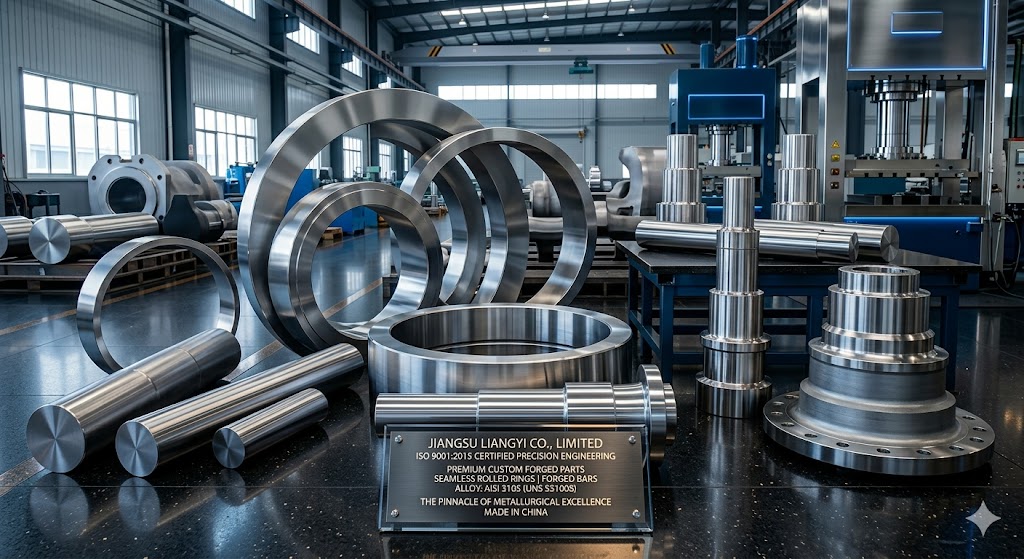
Jiangsu Liangyi Co., Limited is a professional ISO 9001:2015 certified manufacturer of AISI 310, AISI 310S, UNS S31000, UNS S31008, and Grade 310 open die forging parts and seamless rolled forged rings. Located in Chengchang Industry Park, Jiangyin City, Jiangsu Province, China, our facility operates dedicated heavy-duty hydraulic presses ranging from 1,000 to 8,000 tonnes, a full in-house CNC machining centre, and a dedicated heat treatment shop equipped with atmosphere-controlled furnaces. With over 25 years of specialised experience in high-alloy stainless steel forgings, we supply AISI 310 forged components to industrial customers in more than 50 countries across Europe, the Middle East, North America, Asia Pacific, and Africa.
Our products are manufactured to meet the technical requirements of international standards including ASTM A961, ASME SA-961, EN 10228, JIS G3214, and API 6A. Third-party inspection is available at customer's request through independent bodies such as Bureau Veritas (BV), SGS, TUV, DNV, Lloyd's Register, and Intertek. All forgings are supplied with Mill Test Certificates (MTC) per EN 10204 3.1 as standard; 3.2 certification is available via the customer's nominated third-party inspector.
AISI 310 is a high-chromium (24–26%), high-nickel (19–22%) austenitic stainless steel, globally recognised as the industry standard for exceptional high-temperature oxidation resistance, thermal creep strength, and corrosion resistance in harsh, high-sulfur, or oxidizing environments. AISI 310S (UNS S31008) is the low-carbon variant — its reduced carbon ceiling of 0.08% dramatically improves weldability and reduces intergranular corrosion risk after welding.
The Metallurgy Behind AISI 310's High-Temperature Performance — Why This Alloy Works
To specify AISI 310 forgings with confidence, it is essential to understand the metallurgical mechanisms that make this alloy perform where others fail. This section provides engineering-level insight that most suppliers do not publish — the "why" behind the properties.
The Cr₂O₃ Oxide Layer — AISI 310's Primary Defence Mechanism
The exceptional oxidation resistance of AISI 310 at temperatures above 800°C is primarily governed by the selective oxidation of chromium at the alloy surface to form a dense, adherent chromium oxide (Cr₂O₃) layer. This scale grows by solid-state diffusion, and because chromium diffusivity in the oxide is orders of magnitude lower than in the base metal, the layer is self-limiting — it reaches a critical thickness and then grows extremely slowly, acting as a diffusion barrier that prevents further oxygen access to the substrate.
The 25% chromium level in AISI 310 is not arbitrary. Metallurgical research has consistently established that the minimum chromium content required for complete selective oxidation (exclusive Cr₂O₃ formation without iron oxide co-precipitation) in austenitic stainless steels at temperatures above 900°C is approximately 20–22%. AISI 310's 25% Cr provides a generous margin above this threshold, ensuring that even after extended chromium depletion from the sub-surface zone, the remaining bulk alloy retains enough chromium reservoir to regenerate the protective oxide layer after mechanical damage or thermal cycling.
The 20% nickel content plays two complementary roles: it stabilises the austenitic (FCC) crystal structure across the full service temperature range, and it improves the adherence of the Cr₂O₃ layer to the substrate by reducing the coefficient of thermal expansion mismatch between the scale and the metal — a critical factor in cyclic high-temperature applications where oxide spallation is a primary failure mechanism in lower-alloy grades.
⚙️ Engineering Insight: Why the AISI 310 Oxide Layer Outperforms AISI 304 and 316 at 900°C+
AISI 304 (18% Cr) and AISI 316 (16–18% Cr) form a mixed (Fe,Cr)₂O₃ / Fe₃O₄ oxide scale above 700°C rather than a pure Cr₂O₃ layer. This mixed oxide grows 5–15× faster and is mechanically weaker, leading to rapid metal loss through scale spallation. In our supply experience with European thermal processing customers, AISI 310S forged components in furnace service at 1000–1050°C consistently show oxidation metal loss rates several times lower than equivalent AISI 321 cast components in the same service positions — a performance gap that compounds significantly over a multi-year service interval.
Grain Boundary Carbide Precipitation — The Critical Difference Between 310 and 310S
When austenitic stainless steels are held or cooled slowly through the temperature range of 450–850°C — the so-called "sensitisation range" — carbon dissolved in the austenite matrix migrates to grain boundaries and combines with chromium to form M₂₃C₆ chromium carbides (primarily Cr₂₃C₆). This reaction depletes the grain boundary regions of chromium to below the 12% threshold required for passivity, creating a chromium-depleted zone that is highly susceptible to intergranular corrosion and stress corrosion cracking.
For AISI 310 (max 0.25% C), the risk of sensitisation is significant whenever the alloy passes through this temperature range during fabrication, welding, or slow post-forging cooling. AISI 310S (max 0.08% C) dramatically reduces this risk because far less carbon is available to form carbides. Quantitatively, the time-temperature-sensitisation (TTS) curve for AISI 310S is shifted approximately one full decade to the right compared to AISI 310 — meaning AISI 310S can be held in the sensitisation range roughly ten times longer before equivalent carbide precipitation occurs. This is why AISI 310S is the mandatory choice for any component that cannot receive full solution annealing after welding.
Sigma Phase Embrittlement — A Hidden Risk That Sets Expert Forgers Apart
Between approximately 600°C and 900°C, AISI 310 alloys are susceptible to the formation of sigma (σ) phase — a hard, brittle intermetallic compound rich in chromium and iron. Unlike sensitisation, which is primarily a corrosion concern, sigma phase is a mechanical hazard: components embrittled by it can fail catastrophically by brittle fracture with almost no plastic deformation, even at room temperature during shutdown or maintenance.
Sigma phase formation kinetics in AISI 310 are significantly faster than in lower-chromium grades (304, 316) due to its higher chromium and nickel content. In our process control experience, AISI 310 forgings that are allowed to cool too slowly from solution annealing temperature can accumulate detectable sigma phase within a few hours. This is why our heat treatment protocol mandates rapid cooling from solution anneal (1050–1100°C) to below 450°C within a controlled maximum time window for thick cross-sections — a parameter derived from our internal empirical data and validated against ASTM A923 screening criteria.
⚠️ Procurement Warning: How to Identify Substandard AISI 310 Forgings
In our 25 years of market experience, three metallurgical defects appear repeatedly in AISI 310 forgings from suppliers who lack specialised process knowledge for high-alloy austenitic steels:
- Sigma phase embrittlement: Detected by hardness mapping (localised spikes above 250 HV in solution-annealed material are a red flag) and confirmed by ASTM A923 Method C Charpy impact testing (values below 50 J in solution-annealed condition indicate sigma phase presence).
- Sensitisation: Detected by ASTM A262 Practice E (Strauss test) — grain boundary attack in the etched microstructure is direct evidence of chromium carbide precipitation and a sign of improper heat treatment or cooling control.
- Abnormal coarse grain structure: Forgings produced at excessive temperature above 1180°C or with insufficient total reduction ratio develop unrefined, abnormally large grains (ASTM grain size number below 3), resulting in degraded fatigue life. Metallographic examination at 100× magnification on a representative cross-section reveals this immediately. Insist on grain size certification per ASTM E112 in all MTC documentation.
AISI 310 vs. AISI 310S — Complete Engineering Comparison
The table below provides the definitive side-by-side comparison engineers need when choosing between AISI 310 (UNS S31000) and AISI 310S (UNS S31008) for forged components. Both grades share identical chromium and nickel content — the decision is driven entirely by carbon content and its consequences for weldability and sensitisation resistance.
| Property / Characteristic | AISI 310 (UNS S31000) | AISI 310S (UNS S31008) |
|---|---|---|
| Max. Carbon Content | 0.25% | 0.08% (Low-Carbon) |
| Chromium (Cr) | 24.0–26.0% | 24.0–26.0% |
| Nickel (Ni) | 19.0–22.0% | 19.0–22.0% |
| Manganese (Mn) | ≤ 2.00% | ≤ 2.00% |
| Silicon (Si) | ≤ 1.50% | ≤ 1.50% |
| High-Temp. Creep Strength (900°C) | Higher — more carbon strengthens grain boundaries at elevated temp. | Slightly lower (~8–12% lower creep rupture stress at 900°C) |
| Weldability | Moderate — risk of sensitisation in HAZ without full PWHT (solution anneal) | Excellent — standard choice for all welded fabrications |
| Sensitisation Risk (600–850°C) | Significant | Minimal — TTS curve shifted ~10× to longer times |
| Sigma Phase Susceptibility | Moderate (both grades equivalent) | Moderate (both grades equivalent) |
| Max. Continuous Service Temp. | 1050°C (1922°F) | 1050°C (1922°F) |
| Max. Intermittent Service Temp. | 1150°C (2102°F) | 1150°C (2102°F) |
| Min. Tensile Strength (Annealed) | 580 MPa (84 ksi) | 515 MPa (75 ksi) |
| Min. 0.2% Yield Strength | 280 MPa (40 ksi) | 205 MPa (30 ksi) |
| Min. Elongation (A50) | 50% | 40% |
| Magnetic Behaviour | Non-magnetic (austenitic) | Non-magnetic (austenitic) |
| UNS Designation | S31000 | S31008 |
| EN / W.Nr. Equivalent | 1.4841 | 1.4845 |
| JIS Equivalent | SUS310 | SUS310S |
| GB (China) Equivalent | 06Cr25Ni20 | 022Cr25Ni22 |
| Recommended Filler Metal (GMAW/GTAW) | ER310 / AWS A5.9 | ER310 / AWS A5.9 |
| Best Application Fit | Static structural parts, non-welded components, oil & gas forgings | Welded furnace structures, thermal processing equipment, assemblies requiring welding |
Material Specifications & Applicable Manufacturing Standards
Our quality management system operates under ISO 9001:2015 certification. Our AISI 310 and 310S forged parts are manufactured to meet the requirements of the following international standards, with full mill test certificates (MTC) per EN 10204 3.1 provided with every batch:
Note: Third-party inspection services listed above are arranged by and at the cost of the customer. Jiangsu Liangyi cooperates fully with all nominated inspection bodies and provides access to our facilities, production records, and test equipment for witness inspection.
Chemical Composition (per ASTM A961 / ASME SA-961)
| Element | AISI 310 (UNS S31000) | AISI 310S (UNS S31008) | Engineering Significance |
|---|---|---|---|
| Chromium (Cr) | 24.0–26.0% | 24.0–26.0% | Primary oxidation resistance; Cr₂O₃ layer formation above 800°C |
| Nickel (Ni) | 19.0–22.0% | 19.0–22.0% | Austenite stabiliser; improves oxide adhesion; reduces thermal expansion mismatch |
| Carbon (C) | 0.25% max. | 0.08% max. | The defining difference: governs sensitisation risk and weldability |
| Manganese (Mn) | 2.00% max. | 2.00% max. | Austenite stabiliser; deoxidiser during melting |
| Phosphorus (P) | 0.045% max. | 0.045% max. | Controlled to minimise hot-shortness risk during forging |
| Sulfur (S) | 0.030% max. | 0.030% max. | Low S required to prevent hot cracking and maintain toughness |
| Silicon (Si) | 1.50% max. | 1.50% max. | Improves resistance to carburising atmospheres; secondary oxidation benefit |
| Iron (Fe) | Balance | Balance | Matrix element |
Mechanical Properties (Solution Annealed, per ASTM A961)
| Property | AISI 310 Minimum | AISI 310S Minimum | Test Standard |
|---|---|---|---|
| Tensile Strength (UTS) | 580 MPa (84 ksi) | 515 MPa (75 ksi) | ASTM A370 / ASTM E8 / ISO 6892-1 |
| 0.2% Proof / Yield Strength | 280 MPa (40 ksi) | 205 MPa (30 ksi) | ASTM A370 / ISO 6892-1 |
| Elongation (50 mm GL) | 50% min. | 40% min. | ASTM A370 / ISO 6892-1 |
| Reduction in Area | ≥ 40% (typical) | ≥ 40% (typical) | ASTM A370 |
| Hardness | 80 HRB max. / 185 HB max. | 95 HRB max. / 217 HB max. | ASTM E10 / ASTM E18 / ISO 6506-1 |
| Charpy V-Notch Impact (Room Temp.) | ≥ 100 J (typical) | ≥ 100 J (typical) | ASTM E23 / EN 10045-1 |
All mechanical testing is performed on calibrated universal testing equipment. High-temperature tensile testing (at 650°C, 800°C, 1000°C) is available upon customer request for power generation and process industry applications.
Why AISI 310 Forging Is Superior to AISI 310 Casting — The Engineering Case
For AISI 310 high-temperature applications, the choice between forging and casting has profound consequences for service life, safety, and total cost. The following analysis is drawn from our own component experience and widely published metallurgical literature.
🔵 AISI 310 Forging Advantages
- Grain structure refined by plastic deformation — typical ASTM grain size 5–8 (vs. 1–3 for castings)
- Continuous grain flow lines aligned with part geometry — improved fatigue resistance
- 20–30% higher tensile and yield strength than equivalent castings
- 40–60% higher fatigue life at equivalent stress amplitudes
- Virtually zero porosity — unlike castings which carry inherent shrinkage and gas porosity
- Uniform, predictable mechanical properties throughout cross-section
- Suitable for NACE MR0175 sour service material requirements
- Compliant with API 6A and ASME VIII technical requirements — castings are often excluded
🔴 AISI 310 Casting Limitations
- Inherent solidification shrinkage creates micro-porosity in thick cross-sections
- Dendritic grain structure — large, randomly oriented grains with segregated alloying elements at boundaries
- Chromium and nickel segregation reduces local corrosion resistance below nominal composition
- 30–40% lower fatigue limit compared to forged equivalents
- Requires more extensive NDT (RT mandatory) to detect internal voids
- Often excluded from API 6A pressure testing requirements
📊 Service Life Comparison — Our Customer Supply Experience
European thermal processing customers who have transitioned from AISI 310 cast walking beams to our AISI 310S forged walking beams for steel annealing furnace service at 1000–1050°C (with daily thermal cycling) have consistently reported significantly longer service intervals before replacement. The cast components typically failed through thermal fatigue cracking originating at internal shrinkage pores, while our forged replacements have demonstrated substantially extended service life in the same operating positions. This improvement in service durability more than offsets the higher initial unit cost of forgings within the first or second replacement cycle.
Full Range of AISI 310 Forged Products & Custom Manufacturing Capabilities
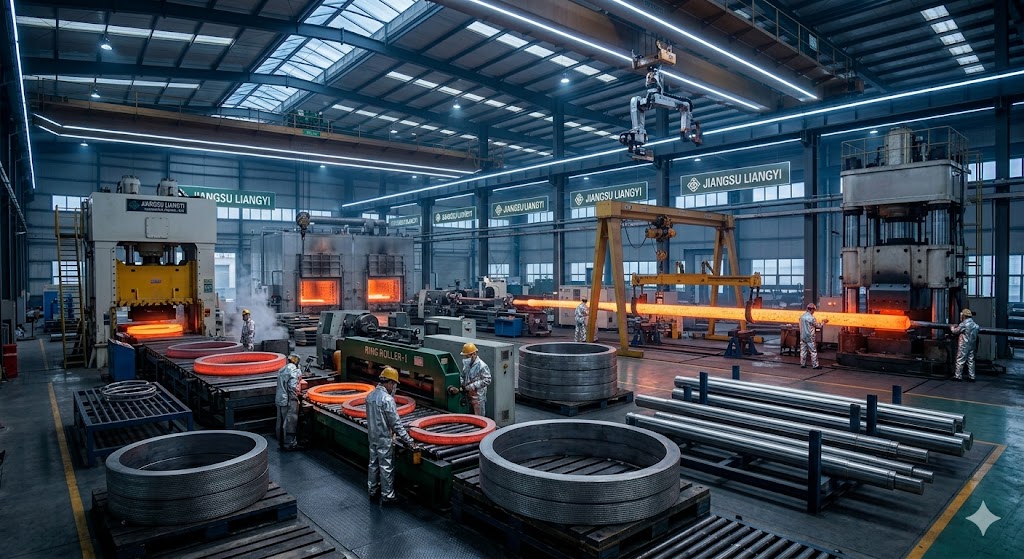
We manufacture custom AISI 310 / 310S forged steel products in a comprehensive range of shapes and dimensions, strictly in accordance with international standards and customer 2D/3D engineering drawings. We provide a full range of service, from raw steel billet incoming inspection, multi-directional open die forging, seamless ring rolling, and atmosphere-controlled heat treatment, to precision CNC machining and final comprehensive inspection.
Core AISI 310 Forged Product Categories & Dimensional Capabilities
- Forged Bars & Rods: AISI 310 forged round bars, square bars, flat bars, rectangular bars, and hollow bars. Maximum forging diameter: 2000 mm. Maximum length: 12 m. Single-piece weight: up to 30 tons.
- Seamless Rolled Forged Rings: AISI 310S seamless rolled rings, gear rings, flanged rings, T-section rings, and complex contoured rings. Maximum OD: 6000 mm. Maximum height: 1500 mm. Single-piece weight: up to 30 tons.
- Forged Shafts & Spindles: Custom AISI 310 forged stepped shafts, gear shafts, valve spindles, splined drive shafts, turbine shafts, and pump shafts. Maximum diameter: 1800 mm. Maximum length: 15 m. Single-piece weight: up to 30 tons.
- Custom Forged Components: AISI 310 forged discs, plates, blocks, hubs, housings, shells, sleeves, bushings, tube sheets, baffle plates, nozzle forgings, and fully machined custom forgings delivered ready for assembly.
Our Forging Process for AISI 310 — Controlled Parameters
AISI 310 is a demanding-to-forge alloy. Its high chromium and nickel content creates a narrow hot-working window and elevated susceptibility to hot cracking if process parameters are not tightly controlled. The following process specifications are drawn from our own 25 years of empirical process development with this alloy:
- Step 1 — Incoming Billet Qualification Every AISI 310 billet undergoes mandatory optical emission spectrometry (OES) chemical analysis on arrival. Billets failing any compositional parameter, or where carbon content exceeds an internal threshold for orders requiring superior weldability, are rejected before forging. Incoming ultrasonic testing is also performed to detect internal segregation or lamination prior to committing material to the forging schedule.
- Step 2 — Controlled Heating to Forging Temperature For cross-sections above 200 mm, the AISI 310 billets are heated at a controlled rate not exceeding 100°C/hour and with a minimum soak at 1150°C to ensure complete temperature homogeneity. Maximum forging start temperature: 1180°C. Minimum finish temperature for forging: 900°C. Forging below 900°C risks introducing deformation-induced phases in the surface layers. Our operators return billets to the furnace before surface temperature drops below 950°C, verified by thermocouple measurement at each reheat cycle.
- Step 3 — Multi-Directional Open Die Forging (≥ 60% Reduction Ratio) We apply multi-directional forging — upsetting followed by drawing — to achieve a minimum total reduction ratio of approximately 60%. This is critical for AISI 310 because the as-cast columnar grain structure from the original ingot must be fully broken down. ASTM grain size 5 or finer is our internal target for all critical-service forgings, confirmed by metallographic examination of witness test coupons from the same heat.
- Step 4 — Solution Annealing at 1050–1100°C + Rapid Quench All AISI 310 forgings are solution annealed at 1050–1100°C for a minimum of 1 hour per 25 mm of cross-section, followed by rapid water quenching. This treatment: (a) dissolves M₂₃C₆ carbides formed during cooling from forging temperature; (b) eliminates sigma phase accumulated during the forging thermal cycle; (c) produces the uniform single-phase austenite microstructure specified in ASTM A961. Furnace temperature uniformity is controlled to ±10°C, verified by calibrated multi-zone thermocouples with recorded data available for each lot.
- Step 5 — Precision CNC Machining to Final Dimensions Full in-house CNC turning and milling capability delivers finished forgings to your engineering drawing tolerances. AISI 310's work-hardening rate is 40–60% higher than mild steel, and we use tooling specifically selected for austenitic stainless steels to ensure consistent surface quality. All programs are verified by first-article inspection (FAI) with a full dimensional report before batch production commences.
Material Selection Guide: AISI 310 vs. Competing High-Temperature Alloys
The table below provides an honest, engineering-first comparison of AISI 310 against the alloys it most commonly competes with in the 600–1100°C service range. Our goal is to help you specify the right material — not necessarily the one with the highest price margin.
| Alloy | Max. Continuous Temp. | Key Strength vs AISI 310 | Key Limitation vs AISI 310 | Relative Cost (vs 310 = 1.0) | Best Fit Application |
|---|---|---|---|---|---|
| AISI 310 (S31000) | 1050°C | Benchmark | Benchmark | 1.0× | Static structural high-temp. parts, oil & gas, power generation |
| AISI 310S (S31008) | 1050°C | Superior weldability; no sensitisation risk | Slightly lower creep strength above 900°C | 1.0–1.05× | Welded furnace structures, assemblies requiring field welding |
| AISI 304 (S30400) | 870°C | Lower cost; widely available | Oxidises rapidly above 800°C; not suitable for 900°C+ service | 0.45–0.55× | Applications below 750°C — not a replacement for 310 at high temp. |
| AISI 316 (S31600) | 870°C | Better pitting resistance (Mo addition) | Mo vaporises above 900°C — degraded oxidation resistance at high temp. | 0.55–0.70× | Corrosion resistance at moderate temps; not suitable above 850°C |
| AISI 321 (S32100) | 900°C | Titanium-stabilised — no sensitisation | Lower Cr and Ni — significantly lower oxidation resistance above 900°C | 0.75–0.85× | Moderate elevated temp. with welding; not for 900°C+ continuous service |
| Alloy 800H (N08810) | 1100°C | Excellent long-term creep strength above 900°C; better carburisation resistance | 30–50% higher cost; narrower forging window; requires specialist machining | 2.5–3.5× | Petrochemical reformer tubes; steam headers in long-duration creep service |
| 253MA (S30815) | 1100°C | Rare earth additions give exceptional cyclic oxidation resistance; excellent spalling resistance | 40–60% higher cost; less widely available as forgings | 2.0–2.8× | Heavily cycled furnace components; environments where scale spalling is the dominant failure mode |
| Alloy 601 (N06601) | 1200°C | Outstanding alumina-forming oxidation resistance above 1050°C | 2–4× cost; nickel-base — difficult to forge; primarily plate/tube | 4.0–6.0× | Furnace muffles, radiant tubes operating continuously above 1100°C |
🎯 Our Engineering Position — When AISI 310 Forgings Are the Right Answer
Based on our supply experience across 50+ countries, AISI 310 / 310S forged components represent the optimal cost-performance choice when three conditions are simultaneously met: (1) service temperature is in the range of 800–1050°C, (2) the operating atmosphere is oxidizing or mildly sulfidizing (not strongly carburising or nitriding), and (3) component geometry makes casting structurally unsuitable (fatigue loading, complex stress states, or pressure-code requirements). Above 1050°C in continuous service, or in strongly carburising atmospheres, we will proactively recommend Alloy 800H or 253MA as alternatives — because specifying the right material saves our customers more money over the service life than any price negotiation ever can.
AISI 310S Forged Component Welding Guidelines — Technical Reference
AISI 310S forged components frequently require on-site or shop welding for installation into larger fabricated assemblies. The following guidelines represent our consolidated recommendations based on ASME Section IX, AWS D1.6, and EN ISO 15614-1 welding procedure principles.
Recommended Filler Metals
- Primary recommendation: AWS A5.9 ER310 (for GTAW/TIG and GMAW/MIG). This filler closely matches the AISI 310 base metal composition and provides a deposit with 3–8 FN (Ferrite Number) — the minimum ferrite required to avoid hot cracking during solidification.
- Alternative for heavily restrained joints: AWS A5.9 ER312 or ER309L may be considered where additional ferrite (10–20 FN) helps prevent hot cracking in highly restrained thick-section welds. Note that ER309L deposits have lower chromium content than the base metal — evaluate corrosion resistance requirements before use.
- Do not use: ER308L, ER316L, or any filler with less than 22% Cr — these create a weaker, lower-alloy weld deposit that becomes the structural weak point at elevated temperatures.
- Flux selection (SMAW / SAW): Use neutral or slightly basic fluxes (basicity index BI ≥ 1.5) to minimise silicon pick-up in the weld pool. Excessive silicon (above 1.8% in weld metal) promotes sigma phase formation in the HAZ during subsequent high-temperature service.
Preheat, Interpass Temperature, and Post-Weld Treatment
Preheat Requirements
- AISI 310S: No preheat required for material thickness below 25 mm in ambient conditions (above 10°C)
- For sections > 25 mm or in cold environments (below 5°C): preheat to 50°C minimum to remove moisture
- Do not preheat above 100°C — elevated preheat slows cooling through the sensitisation range and increases carbide precipitation risk
Interpass Temperature & Post-Weld Treatment
- Maximum interpass temperature: 175°C
- Conventional stress relief (600–700°C): MUST NOT be applied — this temperature range causes both sensitisation and sigma phase formation in austenitic stainless steels
- Where solution annealing after welding is required: 1050–1100°C + rapid water quench is the correct approach
⚠️ Critical Warning: The "Stress Relief" Trap for AISI 310 Welded Assemblies
A common fabrication error is applying a conventional "stress relief" heat treatment — typically 600–700°C for 1–2 hours — to welded AISI 310 assemblies by analogy with carbon steel practice. This temperature range sits directly within both the sensitisation range (450–850°C) and the sigma phase formation range (600–900°C). Applying this treatment will simultaneously sensitise the heat-affected zone and potentially precipitate sigma phase in the weld metal, leading to dramatically reduced corrosion resistance and potential brittle fracture in service. There is no ASME or EN standard that recommends stress relief heat treatment for austenitic stainless steels in the 600–700°C range. If residual stress relief is required, full solution annealing at 1050–1100°C with rapid water quench, or mechanical stress relief methods, are the correct approaches.
Total Life-Cycle Cost Analysis — Why AISI 310 Forgings Are the Lowest Long-Term Cost Choice
The procurement price of AISI 310 forged components is higher than AISI 304 or AISI 316 alternatives, and higher than equivalent castings. However, for applications in the 800–1050°C operating range, total life-cycle cost analysis consistently demonstrates AISI 310 forgings to be the most economical choice when all costs — including replacement frequency, downtime, and inspection — are included. The table below reflects directional data from our customer supply experience.
| Cost Category | AISI 304 / AISI 321 (at 900°C) | AISI 310 Casting (at 900°C) | AISI 310S Forging — Jiangsu Liangyi |
|---|---|---|---|
| Typical Service Life at 950°C Cyclic | 8–14 months | 12–18 months | Significantly longer — typically 3–4× vs AISI 321 |
| Replacements Over 5 Years | 4–7 sets | 3–5 sets | 1–2 sets (in reported customer experience) |
| Unit Material Cost (relative) | 0.5× | 0.8× | 1.0× |
| Total Material Cost Over 5 Years | 2.0–3.5× | 2.4–4.0× | 1.0–2.0× |
| NDT Inspection Frequency Required | Frequent (rapid degradation) | Every 6–9 months | Annual (stable service life) |
| Estimated 5-Year Total Cost of Ownership | High | Medium-High | Lowest (baseline) |
Note: Data above reflects directional experience from multiple European thermal processing customer accounts operating continuous furnace equipment at 920–1000°C. Actual figures vary by operating temperature, cycling frequency, and local labour costs. We recommend a detailed engineering review before making material selection decisions based on cost alone.
Global Industry Applications & Regional Supply Experience
Our AISI 310 and 310S forged steel parts are the preferred choice for critical industrial sectors requiring exceptional high-temperature resistance, oxidation resistance, and corrosion resistance. The following sections describe our core application segments and general supply experience by region and industry.
Oil & Gas Industry (Middle East & Africa Core Market)
High-temperature, high-pressure, sour-service oilfield environments impose a combination of stresses that few materials can withstand for extended periods: elevated temperatures in wellhead and downhole components, H2S partial pressures requiring NACE MR0175 / ISO 15156 compliant materials, and elevated chloride concentrations. AISI 310 forged components address all three challenges simultaneously.
Core product range for oil & gas: forged valve bodies, valve bonnets, stems, seat rings, wellhead component forgings, casing heads, tubing hangers, dual studded adapter flanges, downhole drilling tool housings, and electric submersible pump (ESP) shaft forgings. These products are manufactured to meet the technical requirements of API 6A specifications, with all chemical and mechanical requirements of NACE MR0175 / ISO 15156 met by the alloy and heat treatment condition.
Regional Supply Experience: We have provided AISI 310 forged wellhead and valve components to customers supporting oil and gas operations in the Middle East and West Africa, including sour-service projects with NACE MR0175 compliant materials. Components have been manufactured to API 6A technical requirements, with third party inspection support from international inspection bodies arranged by our customers. We also have experience in supplying AISI 310S forged components for catalytic and process equipment of North African refinery projects.
Thermal Processing & Industrial Furnaces (European Core Market)
AISI 310S is the global industry standard material for high-temperature thermal processing equipment. Core applications include furnace walking beams, pusher frame components, burner nozzle flanges, recuperator connection flanges, annealing cover flanges and support rings, muffle tube flanges, fluidized bed furnace distributor plates, and continuous casting equipment wear inserts.
PED 2014/68/EU sets regulatory requirements for pressure-bearing furnace components in the European Union. Our products can be manufactured to meet the relevant material and mechanical requirements of this directive. Customers requiring formal PED conformity assessment and CE marking must arrange this through an EU-based Notified Body. We cooperate fully with Notified Body auditors and provide all required technical documentation, production records, and test data.
Regional Supply Experience: We have supplied AISI 310S forged furnace components — including walking beams, burner nozzle flanges, annealing covers, and support rings — to customers in the European steel, automotive heat treatment, and cement industries. Our European customers have reported service lives substantially longer than what was achieved with lower-alloy cast alternatives in equivalent service positions.
Power Generation Industry (North America & Asia Pacific Core Market)
Power generation applications impose rigorous mechanical integrity, dimensional stability, and traceability requirements. Our core product range for thermal power includes: coal gasifier refractory anchor rings, pulverized coal burner tip forgings, tube hanger fittings, pressure vessel nozzle forgings, and heat exchanger tube sheets. All products are supplied with ASTM A961 / ASME SA-961 material certification and can be manufactured to dimensional standards including ASME B16.5.
Regional Supply Experience: We have supplied AISI 310 forged high-temperature combustion system components to power generation customers in North America and Asia Pacific, for coal-fired plant service at temperatures up to 1100°C (2012°F). We also supply AISI 310 forged mechanical components for power plant auxiliary equipment in South and Southeast Asia. All components are supplied with complete ASME-format Material Test Reports (MTRs).
Valve Manufacturing & General Industrial Sectors (Global Market)
We supply AISI 310 forged valve bodies, bonnets, stems, seat rings, and closure members for ball valves, gate valves, check valves, globe valves, and high-performance butterfly valves (HPBV). Valve forgings are manufactured to meet ASTM A961 material requirements and the dimensional requirements of applicable valve standards (API 6A or API 603 technical specifications for the complete valve assembly).
Beyond valves, our AISI 310 forgings are used in turbomachinery components, centrifugal compressor internals, industrial pump casings and impellers, heat exchanger tube sheets, and food and pharmaceutical processing equipment. The fully austenitic microstructure also makes AISI 310 suitable for certain cryogenic applications where the absence of a ductile-to-brittle transition temperature is required.
Full-Process Quality Control & Comprehensive Testing System
Our quality management system operates under ISO 9001:2015 certification. The following testing and inspection sequence is applied to every production lot of AISI 310 forgings:
- Stage 1 — Incoming Raw Material: OES chemical analysis (10-element standard suite plus carbon by combustion analysis) on every billet. Ultrasonic testing of all incoming billets above 200 mm diameter for internal segregation and lamination. All results logged with full heat number traceability.
- Stage 2 — In-Process Dimensional Control: First-piece-off dimensional inspection after each machining operation. CMM verification for critical dimensions on customer-specified parts or per AQL sampling for standard production.
- Stage 3 — Non-Destructive Testing (NDT): Magnetic Particle Testing (MT) per ASTM E709 / EN ISO 17638; Dye Penetrant Testing (PT — visible and fluorescent) per ASTM E165 / EN ISO 3452-1; Ultrasonic Testing (UT) per ASTM A388 / EN 10228-3 (100% volumetric available for critical orders); Radiographic Testing (RT) per ASTM E1030 / EN 10228-2 where geometry permits. NDT coverage level is agreed with the customer in the Inspection and Test Plan (ITP) prior to production commencement.
- Stage 4 — Metallurgical Testing: Macro structure examination per ASTM E340; Micro structure examination at 100× and 500× magnification; Grain size determination per ASTM E112; Sigma phase screening per ASTM A923 Method A (metallographic) on each heat.
- Stage 5 — Mechanical Property Testing: Room temperature tensile test per ASTM A370; 0.2% proof strength; Elongation and reduction in area; Charpy V-Notch impact test at room temperature; Hardness mapping per drawing requirements.
- Stage 6 — Corrosion Testing (where specified): Intergranular corrosion testing per ASTM A262 Practice E for AISI 310S components where weld-in-service is specified; ASTM A923 sigma phase screening available on request.
Every completed lot is released against a fully populated Inspection and Test Plan (ITP) signed by our QC manager. Third-party inspection witness and sign-off is available through the customer's nominated independent inspection body (BV, SGS, TUV, DNV, Lloyd's Register, or Intertek). Final documentation includes: MTC EN 10204 3.1 (3.2 via customer-nominated TPI), full NDT reports, dimensional inspection report, heat treatment records (time-temperature charts), and individual part serial number traceability.
Global Regional Documentation Support & Customer Services
We understand that different regional markets have different documentation requirements, preferred inspection body relationships, and logistics preferences. We provide tailored support to help our customers meet their regional compliance needs — while being clear about what we can provide directly versus what requires involvement of third parties in the customer's jurisdiction.
- European Market (UK, Germany, France, Italy, Spain, Netherlands, Nordics, Eastern Europe): Products manufactured to meet EN 10228 and ASTM A961 material requirements. Full EN 10204 3.1 MTC provided; 3.2 available via customer-nominated European inspection body (TUV, BV Europe, DNV GL, Lloyd's Register EMEA, etc.). For PED 2014/68/EU applications, we provide complete technical documentation to support your Notified Body conformity assessment. CE marking requires a Notified Body located in the EU — we cooperate fully with any body your team nominates.
- Middle East & Africa Market (Saudi Arabia, UAE, Kuwait, Qatar, Oman, Bahrain, Nigeria, Egypt, South Africa): Products manufactured to meet API 6A technical requirements and NACE MR0175 / ISO 15156 material requirements. We cooperate with customer-nominated third-party inspection by international inspection bodies with Gulf region offices. We provide Arabic and English bilingual technical documentation on request.
- North American Market (USA, Canada, Mexico): Products manufactured to ASTM A961 / ASME SA-961 standard; full ASME-format Material Test Reports (MTRs) provided; NIST-traceable calibration certificates for all measuring equipment used in testing are available. USD-denominated payment terms including LC and TT available.
- Asia Pacific Market (Japan, South Korea, Australia, Singapore, Thailand, Malaysia, Vietnam, India): Products manufactured to JIS G3214, KS D3709, or ASTM A961 as applicable. Material equivalency documentation for Japanese JIS or Korean KS standards available. Multi-language technical support (English, Korean, Japanese) available for engineering-level communication.
We accept custom orders from 30 kg to 30 tons per piece. Standard lead times are 15–25 days for repeat-item orders and 30–45 days for complex new custom designs. Emergency expedite production (7–14 days) may be available for critical replacement parts — contact our sales team directly to confirm feasibility.
Frequently Asked Questions — AISI 310 Forging Parts
AISI 310 can be used continuously at up to 1050°C (1922°F) in oxidizing atmospheres, and intermittently at up to 1150°C (2102°F). This performance is governed by two metallurgical limits: (1) above approximately 1050°C in continuous service, the Cr₂O₃ oxide layer begins to grow faster than it self-repairs, leading to accelerating oxidation loss; (2) above approximately 900°C in long-duration service, sigma phase formation in the matrix can cause embrittlement. These two limits together define the practical service ceiling for AISI 310 in most industrial applications.
The sole compositional difference is the maximum carbon content: 0.25% for AISI 310 vs. 0.08% for AISI 310S. The choice rule is straightforward: if your component will be welded, always specify AISI 310S — it has negligible sensitisation risk in the heat-affected zone. If your component is a non-welded, static high-temperature structural part, AISI 310 is acceptable and offers slightly higher creep strength above 900°C. When in doubt, specify AISI 310S — its negligible extra cost is always justified by the improved fabrication safety margin.
Forging refines the grain structure through plastic deformation, creating a fine-grained, homogeneous microstructure with grain flow lines aligned to the component geometry — typically ASTM grain size 5–8, versus 1–3 for castings. This results in 20–30% higher tensile strength, 40–60% higher fatigue life, and virtually zero porosity compared to equivalent AISI 310 castings. Cast AISI 310 contains inherent solidification shrinkage micro-porosity and dendritic segregation of Cr and Ni — both create local weak points under cyclic thermal or mechanical loading. For pressure-code components and high-temperature cyclic service parts, AISI 310 castings are often excluded by the applicable code or standard.
Our quality management system is ISO 9001:2015 certified. Our AISI 310 and 310S forged parts can be manufactured to meet the requirements of ASTM A961, ASME SA-961, EN 10228, JIS G3214, and API 6A technical specifications. Materials meet the chemical and mechanical requirements of NACE MR0175 / ISO 15156. Every batch comes with MTC EN 10204 3.1 as standard; 3.2 inspection is available via customer-nominated independent inspection bodies (BV, SGS, TUV, DNV, etc.).
AISI 310 offers excellent oxidation resistance in the 800–1050°C range and costs significantly less per kilogram than Alloy 800H (UNS N08810). Alloy 800H has superior long-term creep rupture strength above 900°C and better resistance to carburising atmospheres — it is the preferred choice for petrochemical reformer tubes where maintaining dimensional stability under sustained creep loading over 100,000 hours is the design driver. For most industrial furnace and thermal processing components where oxidation metal loss is the primary failure mode, AISI 310 delivers excellent service life at a meaningfully lower material cost. We always evaluate your specific conditions before recommending one over the other — and will honestly recommend Alloy 800H when the application genuinely justifies it.
The standard filler for both AISI 310 and 310S is AWS A5.9 ER310 for GTAW (TIG) and GMAW (MIG). The ER310 filler must be selected to provide a deposit Ferrite Number (FN) of 3–8 — the minimum ferrite required to prevent hot cracking during solidification. Avoid ER308L, ER316L, or any filler with less than 22% Cr — these produce a weaker weld deposit that becomes the structural weak link at elevated service temperatures. Maximum interpass temperature: 175°C. Do NOT apply conventional stress relief (600–700°C) — this causes sensitisation and sigma phase formation in austenitic stainless steels. If post-weld heat treatment is required, solution annealing at 1050–1100°C with rapid water quench is the correct approach.
Three failure modes dominate in substandard AISI 310 forgings: (1) Sigma phase embrittlement — caused by slow cooling through 600–900°C due to inadequate heat treatment control; detected by ASTM A923; prevented by rapid cooling from solution anneal temperature within a controlled time window. (2) Sensitisation — M₂₃C₆ carbide precipitation from improper cooling; detected by ASTM A262 Practice E; prevented by proper solution annealing and by specifying AISI 310S for welded components. (3) Coarse grain structure — from insufficient forging reduction ratio or excessive forging temperature above 1180°C; detected by metallographic examination; prevented by our minimum 60% reduction ratio and strict temperature window control. All three are undetectable by visual inspection alone — metallographic certification is essential.
Per ASTM A961 / ASME SA-961: AISI 310 (UNS S31000) contains 24.0–26.0% Chromium, 19.0–22.0% Nickel, max 0.25% Carbon, max 2.00% Manganese, max 0.045% Phosphorus, max 0.030% Sulfur, max 1.50% Silicon, and balance Iron. AISI 310S (UNS S31008) is chemically identical in all elements except Carbon, which is reduced to max 0.08%. The high chromium (25%) and nickel (20%) content — roughly double and triple the levels in AISI 304 — are the fundamental basis for AISI 310's exceptional high-temperature performance.
Yes — 100% volumetric UT is available for critical-service orders and is agreed in the Inspection and Test Plan (ITP) before production. Our NDT programme includes: Magnetic Particle Testing (MT) per ASTM E709; Dye Penetrant Testing (PT — both visible and fluorescent) per ASTM E165; Ultrasonic Testing (UT) per ASTM A388 / EN 10228-3; Radiographic Testing (RT) per ASTM E1030 / EN 10228-2 for complex geometries. Additional: ASTM A262 Practice E intergranular corrosion test for AISI 310S welded components; ASTM A923 sigma phase screening on request. Third-party witness inspection for any NDT stage is available through customer-nominated independent bodies.
AISI 310 is fully austenitic, meaning it has an FCC crystal structure and is essentially non-magnetic (relative magnetic permeability µᵣ ≈ 1.002–1.010) in the properly solution-annealed condition. Forging does not convert austenite to martensite in AISI 310 because its high nickel content (19–22%) gives it an extremely stable austenite — the Md₃₀ temperature is well below -60°C for this grade. This distinguishes it from AISI 304, which can become weakly magnetic after significant cold work. The only conditions that could introduce a minor magnetic response in AISI 310 are heavy cold deformation (not applicable to forgings) or sigma phase formation (which our controlled heat treatment prevents).
Contact Us for a Custom AISI 310 Forging Parts Quotation
Jiangsu Liangyi Co., Limited is your trusted, long-term China-based ISO 9001:2015 certified manufacturer of AISI 310, AISI 310S, UNS S31000, UNS S31008, and Grade 310 forged forging parts. Whether your requirement is standard open-die forged bars, seamless rolled rings, or a fully custom machined forging for a critical industrial project — our engineering team is ready to review your drawings, provide DFM feedback, and issue a detailed quotation within 48 hours of receiving your specifications.
To receive a quotation, please provide: your 2D/3D engineering drawing (PDF, DXF, DWG, STEP, or IGES), required material grade (AISI 310 or 310S), quantity, delivery port or address, required delivery date, applicable manufacturing standard (ASTM A961, EN 10228, API 6A, etc.), and any special inspection or documentation requirements. All enquiry information is kept strictly confidential.
📞 Phone / WhatsApp: +86-13585067993
🌐 Website: https://www.jnmtforgedparts.com
📍 Factory Address: Chengchang Industry Park, Jiangyin City, Jiangsu Province, China
✅ What Happens After You Send Your Enquiry
- Within 4 hours: An application engineer will acknowledge receipt and confirm your enquiry details
- Within 48 hours: A detailed quotation including unit price, lead time, required documentation, and recommended forging process will be issued
- Within 5 business days (if requested): A formal DFM (Design for Manufacturability) review report with forging optimisation recommendations, at no charge
- At any stage: Free technical consultation on material selection, welding guidelines, heat treatment, or documentation requirements — no purchase obligation required