AISI 309H (UNS S30909 / Grade 309H) Forged Parts | China Leading Open Die Forging Manufacturer
AISI 309H (UNS S30909) — Key Specifications at a Glance
About AISI 309H (UNS S30909) Stainless Steel Forgings & Jiangsu Liangyi
Founded in 1997, Jiangsu Liangyi Co., Limited is an ISO 9001:2015 certified open die forging manufacturer headquartered at Chengchang Industry Park, Jiangyin City, Jiangsu Province, China. Our 80,000 m² integrated manufacturing facility combines in-house electric arc furnace (EAF) steelmaking, open die forging, ring rolling, solution annealing heat treatment, CNC precision machining, and a fully equipped metrology and NDT laboratory under one roof — giving us complete process control and full material traceability from liquid steel to final certified component.
We hold an annual forging production capacity of 120,000 metric tons, supported by an equipment fleet that includes 2,000T, 3,150T, 4,000T, and 6,300T hydraulic forging presses; 1T, 3T, 5T, and 9T electro-hydraulic forging hammers; and dedicated ring rolling mills capable of producing seamless rings up to 6,000 mm outer diameter. With a team of more than 500 employees including 60+ qualified metallurgical, mechanical, and quality engineers, we have over 25 years of continuous experience manufacturing high-alloy forgings for demanding industries worldwide.
Among the specialty materials we routinely forge, AISI 309H (UNS S30909 / Grade 309H) is one of our most technically significant: a high-carbon austenitic stainless steel specifically engineered for structural service at temperatures up to 1100°C. Since 2003, we have manufactured and exported AISI 309H forged parts to clients in more than 50 countries, including the United States, Canada, Germany, the United Kingdom, France, Italy, the Netherlands, the United Arab Emirates, Saudi Arabia, Australia, Singapore, Japan, and South Korea. Our projects span oil & gas wellheads, nuclear power plant internals, petrochemical reactors, industrial furnace components, and heavy-duty valve bodies for critical high-temperature service.
Steelmaking Capacity
30t EAF + LF + VOD/AOD refining. Full chemistry control with OES verification. Vacuum degassing available for ultra-clean steel requirements.
Forging Press Range
2,000T – 6,300T hydraulic presses. 1T – 9T electro-hydraulic hammers. Ring rolling mills to 6,000 mm OD. Min. forging ratio: 3:1 (standard), 4:1+ (critical applications).
Heat Treatment
Fully automatic solution annealing furnaces with PID temperature control, ±5°C furnace uniformity. Thermocouples calibrated to national metrology standards. Full time-temperature charts provided with every MTC.
Inspection & Certification
In-house UT (PAUT), PT, CMM, OES spectrometer, tensile/impact/hardness testing. EN10204 3.1 standard; 3.2 with SGS/BV/TUV available.
Metallurgy of AISI 309H: Why the "H" Grade Designation Matters for Engineers
Many engineers choose 309 stainless steel for high-temperature parts without fully knowing the key differences between standard 309, low-carbon 309L and high-carbon 309H grades. The H marking on AISI 309H is not just a promotional name; it is an official ASTM classification set in ASTM A479/A479M, which means the carbon content is strictly kept within the fixed higher range of 0.04–0.10 weight percent. This narrow content range brings major changes to material structure and performance, and directly decides whether a part can work reliably at high temperatures for a long time, or break down early due to creep deformation or stress relaxation.
The Role of Carbon in Austenitic Stainless Steel at High Temperatures
In the austenitic stainless steel matrix, carbon serves a fundamentally different function than it does in carbon or low-alloy steels. At temperatures above approximately 600°C, the primary deformation mechanism shifts from dislocation glide (which dominates at room temperature) to grain boundary sliding and vacancy diffusion — the mechanisms collectively responsible for creep. Carbon atoms, both dissolved in the austenite matrix and as fine chromium carbide (M₂₃C₆) precipitates at grain boundaries, act as obstacles to this grain boundary sliding. The result is a significant increase in creep rupture strength and a reduction in the minimum creep rate at service temperature — which is precisely what structural components in furnaces, heat exchangers, and high-temperature valves require over service lifetimes of 100,000 hours or more.
In our experience manufacturing AISI 309H forgings for nuclear and petrochemical clients, the most common design error we see is the substitution of 309L for 309H in long-term high-temperature applications, motivated by a perception that 309L's lower carbon makes it a "safer" material. In reality, for any application where a component is expected to carry sustained stress above 400°C for tens of thousands of hours, 309H is the technically correct choice. The intergranular corrosion advantage of 309L is only relevant in the sensitization temperature range (425–870°C) after welding without proper post-weld heat treatment — a condition that should not exist in properly heat-treated forgings. If your design temperature exceeds 400°C for sustained loads, specify 309H.
Carbide Precipitation, Sensitization, and How Solution Annealing Resolves Both
The same carbon that gives 309H its creep strength advantage creates a challenge during processing: if the alloy is slowly cooled through the temperature range of 425–870°C (the "sensitization range"), chromium migrates from the austenite matrix to the grain boundaries where it combines with carbon to form chromium-rich carbides (primarily Cr₂₃C₆). This locally depletes the chromium concentration adjacent to grain boundaries below the 12% minimum required to maintain passivity, creating a condition known as sensitization — characterized by reduced corrosion resistance along grain boundaries and, in extreme cases, intergranular attack.
The solution is well-established: solution annealing followed by rapid quenching. By heating AISI 309H to 1040–1100°C, all chromium carbides dissolve back into the austenite matrix, creating a fully homogeneous solid solution. Rapid water quenching then "freezes" this microstructure before carbides can re-precipitate, yielding a component with both maximum corrosion resistance and a supersaturated solid solution ready to provide creep strength at elevated service temperatures. At Jiangsu Liangyi, this is our standard delivery condition for every AISI 309H forging, verified by metallographic examination of test samples from each heat.
Grain Structure: Why Forging Reduction Ratio Is Non-Negotiable for 309H
Unlike carbon and low-alloy steels, austenitic stainless steels such as AISI 309H do not go through a ferritic-to-austenitic phase transformation on cooling. This means that the fine-grained microstructure achievable in carbon steels through normalizing or quench-and-tempering is simply not available for austenitic grades. The forging process itself is the primary and, in most cases, the only mechanism to achieve grain refinement and eliminate cast-structure defects in austenitic stainless steel components.
This is why forging reduction ratio is not merely a commercial specification for AISI 309H — it is a fundamental process control parameter. At Jiangsu Liangyi, we specify and document a minimum forging reduction ratio of 3:1 for standard applications and 4:1 or greater for critical pressure-boundary and rotating components. Ratios below 2.5:1 leave residual dendritic segregation banding (carbon, chromium, and nickel-rich zones alternating with depleted zones) and unhealed porosity that reduce ductility, impact toughness, and fatigue life — deficiencies that may not be apparent in routine mechanical property testing but will manifest as premature failure in service.
Sigma Phase: The Hidden Risk in 309H High-Temperature Service
One metallurgical phenomenon that is frequently overlooked in 309H specifications — and that distinguishes a technically knowledgeable forging supplier from a commodity one — is sigma (σ) phase formation. Sigma phase is a hard, brittle, chromium-rich intermetallic compound that can precipitate in high-chromium austenitic stainless steels when held in the temperature range of 600–900°C for extended periods. In AISI 309H, with its 22–24% chromium content, sigma phase is thermodynamically stable within this range and can form within hours if the alloy is not properly processed.
Sigma phase precipitation reduces both room-temperature ductility (impact toughness can drop by more than 80%) and corrosion resistance. More insidiously, in components intended for high-temperature service, sigma phase that forms during manufacturing can re-dissolve during service at temperatures above 950°C but re-precipitate again during each cooling cycle — creating a long-term degradation mechanism. At Jiangsu Liangyi, we control sigma phase through optimized forging cooling schedules, rapid post-anneal quenching, and systematic metallographic verification using ASTM A262 Practice A screening on production samples. We are one of very few Chinese forging manufacturers to routinely perform and document sigma phase verification as part of our standard quality control process.
Full Range of Custom AISI 309H Forged Parts We Supply
We manufacture custom AISI 309H (UNS S30909) forged parts to your CAD drawings, material specifications, and applicable industry standards. Our single-piece weight range is 30 kg to 30,000 kg, and all forgings are available with EN10204 3.1/3.2 mill test certificates and full NDT reports. Unlike mills that supply standard bar stock, we produce engineered forgings with controlled grain flow, verified forging reduction ratios, full heat treatment, and 100% volumetric inspection as standard practice.
AISI 309H Forged Bars, Rods & Billets
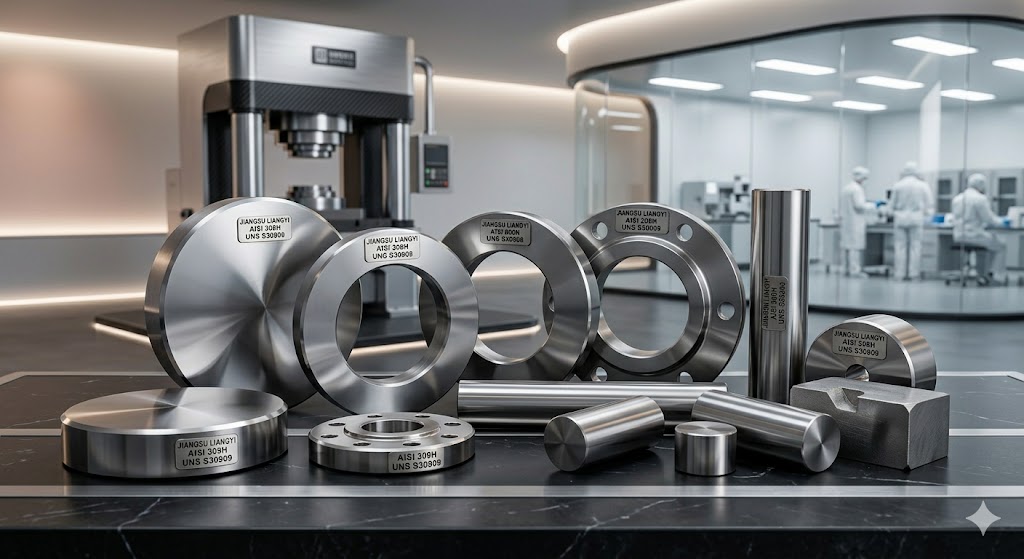
We supply AISI 309H forged round bars, square bars, flat bars, rectangular bars, hollow bars, and custom profiled rods with a maximum diameter up to 2,000 mm and maximum length up to 15,000 mm. Forged bars from Jiangsu Liangyi are engineered forging products — not hot-rolled or cold-drawn commercial bar — with documented forging reduction ratios that guarantee the superior internal grain structure, density, and directional property uniformity required for critical machined components including valve stems, fastener blanks, pump shafts, structural pins, and machining stock for precision components. All forged bars comply with ASTM A276, ASTM A479, and ASME SA-479. Explore our forged bar product range.
AISI 309H Seamless Rolled Forged Rings
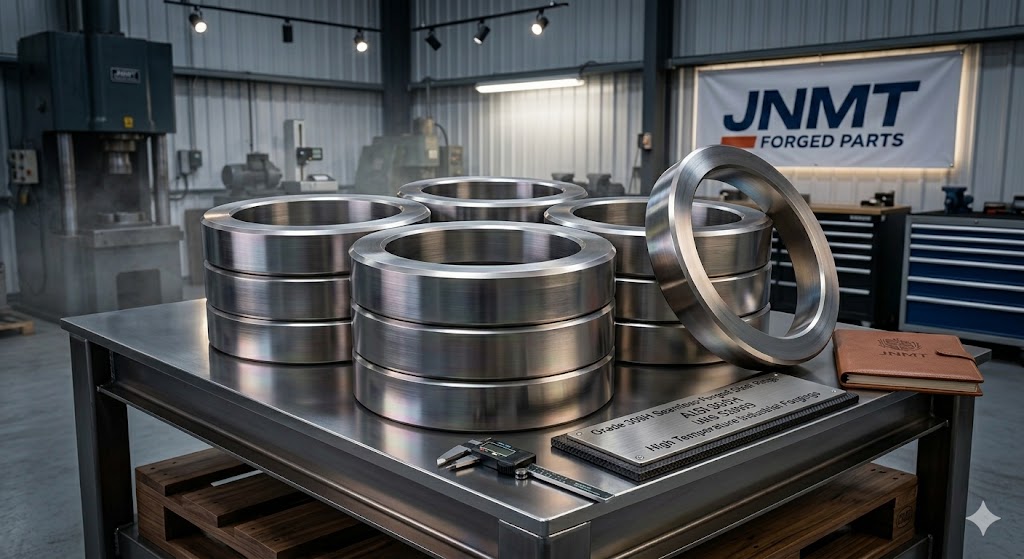
Our Grade 309H seamless rolled rings — produced on radial-axial ring rolling mills — represent one of the most technically demanding product categories we manufacture. Ring rolling is a net-shape or near-net-shape process that produces seamless rings with continuous grain flow circumferentially aligned to the ring geometry, which is the optimal orientation for components subjected to hoop stress, such as pressure vessel shells, containment rings, bearing races, and valve seat rings. Maximum outer diameter: 6,000 mm. Maximum ring height: 3,000 mm. Single-piece weight: up to 30 metric tons.
We produce contoured, shaped, and profiled rings in addition to rectangular cross-section rings, reducing downstream machining costs for complex cross-sections. All rings undergo full post-rolling solution annealing, 100% ultrasonic testing (UT) per EN 10228-3, and dimensional inspection. Ring geometry is verified with calibrated OD/ID measurement systems and CMM at final inspection. Learn more about our ring rolling capabilities.
AISI 309H Forged Shafts & Long Rotating Components
We produce custom UNS S30909 forged shafts with a maximum length of 15,000 mm and a maximum weight of 30,000 kg. These parts include step shafts, gear shafts, turbine shafts, pump shafts, valve spindles, hollow shafts, and splined drive shafts. Long shaft forgings present specific manufacturing challenges in austenitic stainless steel: getting consistent forging reduction along the full shaft length, controlling temperature gradients during multi-heat forging sequences, and guaranteeing UT accessibility through large section thicknesses. Our engineering team develops customized forging sequences for complex shaft geometries, documented in a formal forging process plan that is provided to customers upon request. View our forged shaft manufacturing capabilities.
Custom AISI 309H Forged Components (Per Drawing)
Beyond standard geometric shapes, we manufacture fully custom AISI 309H forged and machined components to your engineering drawings, including: forged flanges (raised face, ring-type joint, weld neck, blind); tube sheets for heat exchangers; valve bodies, bonnets, and bodies for gate, globe, ball, butterfly, and check valves; impellers and wear rings for high-temperature pumps; pressure vessel heads and dished ends; disc and hub blanks for turbomachinery; containment seal chambers for nuclear applications; and complex custom geometries requiring multi-axis CNC machining to final dimensions. Our one-stop supply chain — from steel melting through certified finished component — eliminates multiple supplier handoffs and provides a single point of quality accountability for your most critical high-temperature forgings.
Why Open Die Forging Outperforms Casting for AISI 309H High-Temperature Components
When a procurement team is sourcing AISI 309H components, the decision between forging and casting often comes down to initial price — and castings frequently appear cheaper at first quotation. However, for high-temperature structural applications in oil & gas, nuclear power, and petrochemical service, this comparison is technically misleading. The mechanical inferiority of cast austenitic stainless steel relative to forged equivalents is well-documented in materials science literature and codified in industry standards. Here is why:
Microstructural Superiority of Forged 309H
The as-cast microstructure of AISI 309H solidifies as a coarse-grained columnar-dendritic structure with significant interdendritic segregation. During solidification carbon, chromium and nickel segregate between dendritic cores and inter-dendritic regions, leading to compositional banding with wavelengths of 200-800 micro-meters. In addition, microshrinkage porosity and dissolved gas pores are inherent features of the casting which cannot be eliminated by heat treatment alone.
The open die forging process mechanically destroys this cast structure. The high compressive forces applied during forging — up to 6,300 tons at our facility — break up dendritic arms, redistribute segregated alloying elements through thermomechanical mixing, weld shut micro-porosity under hydrostatic compressive stress, and produce a refined, equiaxed austenitic grain structure with uniform composition. The result is a forging that is fundamentally denser, more chemically homogeneous, and mechanically isotropic than any casting of equivalent composition.
| Property / Characteristic | AISI 309H Open Die Forging | AISI 309H Casting (CF-10 Equiv.) |
|---|---|---|
| Tensile Strength | ≥515 MPa (ASTM A479) | ≥485 MPa (ASTM A351) |
| Fatigue Strength (10⁷ cycles) | ~25–40% higher than casting | Baseline |
| Impact Toughness (Charpy, RT) | Typically 15–30% higher | Baseline |
| Internal Porosity | Eliminated by forging reduction | Inherent; requires RT/UT inspection to detect |
| Chemical Homogeneity | Uniform (forging breaks dendrites) | Dendritic segregation inherent |
| UT Inspectability | Excellent (fine, equiaxed grain) | Difficult (coarse columnar grain scatters UT) |
| Grain Flow | Aligned to component geometry | Random (solidification direction only) |
| Applicable Code for Pressure Boundary | ASME B&PV Code (all divisions) | Limited in highest-integrity nuclear applications |
Industry Code Requirement: ASME Boiler & Pressure Vessel Code Section III (Nuclear Components) and API 6A (Wellhead Equipment) both mandate forged construction for the most critical pressure-boundary components, specifically because the mechanical reliability of castings in these applications cannot match forged equivalents at equivalent safety margins.
AISI 309H (UNS S30909) Chemical Composition — Element-by-Element Analysis
Our AISI 309H forged steel meets ASTM A479/A479M and AISI standards. Chemical composition is verified by direct-reading optical emission spectrometer (OES) on each production heat, with results certified in the EN10204 3.1 MTC. Below is the specification range for each element, along with the metallurgical function each element serves in the alloy — information that is not typically provided by commodity suppliers but is essential for engineers making material selection decisions.
| Element | ASTM A479 Spec. (wt%) | Typical Heat Aim (wt%) | Metallurgical Role in AISI 309H |
|---|---|---|---|
| Carbon (C) | 0.04 – 0.10 | 0.06 – 0.09 | Main H-grade element. Carbide precipitation at grain boundaries suppresses creep at elevated temperatures. Too low: insufficient creep strength. Too high: risk of sensitization during slow cooling. The 0.04–0.10% window is engineered for maximum high-temperature performance after correct heat treatment. |
| Chromium (Cr) | 22.0 – 24.0 | 22.5 – 23.5 | Primary oxidation resistance element. Cr ≥ 22% guarantees the formation of a dense, adherent Cr₂O₃ oxide scale stable up to 1100°C. Also provides solid-solution strengthening of the austenite matrix and contributes to corrosion resistance in aqueous environments. |
| Nickel (Ni) | 12.0 – 15.0 | 12.5 – 14.0 | Austenite stabilizer. Prevents the formation of ferrite or martensite in the microstructure, guaranteeing a fully austenitic structure that is non-magnetic and keeps ductility at cryogenic to elevated temperatures. Higher Ni content also improves carburization resistance in reducing atmospheres. |
| Manganese (Mn) | 2.00 Max | 1.20 – 1.80 | Secondary austenite stabilizer and deoxidizer during steelmaking. Combines with sulfur to form MnS inclusions, reducing the risk of hot-short cracking during forging. Controlled below 2% to avoid negative impact on corrosion resistance at very high temperatures. |
| Silicon (Si) | 1.00 Max | 0.40 – 0.80 | Improves oxidation resistance by contributing to the formation of the protective surface oxide scale, particularly in steam and hot-gas environments. Higher silicon (approaching 1.0%) provides additional resistance to carburizing atmospheres. Controlled to minimize ferrite formation potential. |
| Phosphorus (P) | 0.045 Max | ≤0.025 (internal aim) | Residual impurity from steelmaking. Segregates to austenite grain boundaries, reducing high-temperature ductility and creep ductility. Our AOD/VOD refining process consistently achieves P ≤ 0.025%, significantly below the ASTM maximum, improving long-term creep and impact performance. |
| Sulfur (S) | 0.030 Max | ≤0.010 (internal aim) | Residual impurity that forms MnS inclusions, which reduce transverse ductility, toughness, and fatigue resistance. Our ladle refining practice consistently achieves S ≤ 0.010%, resulting in cleaner steel with superior isotropic mechanical properties compared to standard commercial heats. |
| Iron (Fe) | Balance | Balance | Base matrix element providing structural support for the austenite phase and host lattice for all alloying elements. |
Every heat of AISI 309H produced at our facility goes through dual chemical verification: a ladle analysis (heat analysis) taken from the liquid steel during refining, and a product analysis (check analysis) performed by direct-reading OES on a sample taken from the actual forging. Both analyses are reported on the EN10204 3.1 MTC. For important nuclear and pressure vessel applications, we additionally perform carbon verification by combustion analysis (LECO method) to guarantee carbon content is precisely within the 0.04–0.10% window — the single most important element in the 309H specification.
AISI 309H Mechanical Properties & Elevated-Temperature Performance Data
All AISI 309H forged parts from Jiangsu Liangyi are delivered in the solution-annealed condition (1040–1100°C + water quench). Mechanical properties are tested from heat-treated test coupons representing each forging heat, with results certified on the EN10204 3.1 MTC. The following data encompasses both room-temperature requirements (ASTM A479 minimum values) and indicative elevated-temperature properties — the latter being critical data that is rarely provided by standard material certificates but is essential for high-temperature design.
Room-Temperature Mechanical Properties (Minimum Requirements per ASTM A479)
| Mechanical Property | ASTM A479 Minimum | Typical Achieved (Jiangsu Liangyi Heats) |
|---|---|---|
| Tensile Strength (UTS) | 515 MPa | 550 – 650 MPa |
| 0.2% Yield Strength (YS) | 205 MPa | 230 – 290 MPa |
| Elongation at Break (50 mm gauge) | 30% minimum | 40 – 55% |
| Reduction of Area | 50% minimum | 60 – 75% |
| Brinell Hardness (HB) | 187 maximum | 140 – 175 HB typical |
| Charpy Impact Energy (RT) | Not required by ASTM A479* | ≥150 J typical (27 J minimum at −20°C per EN 10222-5 if specified) |
*Charpy impact testing is not mandated by ASTM A479 as a base requirement but can be specified by the customer. We perform Charpy impact testing per ASTM A370 or EN ISO 148-1 when required by the purchase order or applicable standard.
Elevated-Temperature Yield Strength (Indicative Values — Solution-Annealed Condition)
The following elevated temperature 0.2% yield strength data for AISI 309H are typical of the solution annealed condition. These values are derived from published ASME Section II Part D allowable stress tables and peer-reviewed literature. The actual values will depend on the exact chemistry, heat treatment parameters and section thickness. Upon request, our technical staff can provide elevated-temperature property data for selected materials for critical design applications.
| Test Temperature | 0.2% Yield Strength (indicative) | UTS (indicative) | Design Notes |
|---|---|---|---|
| 20°C (Room Temp.) | ≥205 MPa | ≥515 MPa | ASTM A479 certified values |
| 200°C | ~175 – 195 MPa | ~480 – 530 MPa | Slight thermal softening onset |
| 400°C | ~155 – 175 MPa | ~450 – 500 MPa | Creep becomes design-relevant above this temperature |
| 600°C | ~120 – 145 MPa | ~370 – 420 MPa | Creep and stress relaxation are primary failure modes |
| 700°C | ~100 – 125 MPa | ~300 – 360 MPa | Use ASME allowable stress (creep-governed) for design |
| 800°C | ~70 – 90 MPa | ~200 – 260 MPa | Short-term structural use; sigma phase risk zone |
| 900°C | ~45 – 65 MPa | ~120 – 170 MPa | High-temperature creep rupture governs design |
| 1000°C | ~25 – 40 MPa | ~70 – 110 MPa | Oxidation scale integrity becomes critical |
Core Performance Advantages of AISI 309H Forgings
- Outstanding oxidation resistance to 1100°C continuous / 1150°C intermittent — 22–24% Cr forms a stable Cr₂O₃ scale that resists breakdown in air, steam, and flue gas environments at high temperatures
- Superior creep and stress rupture strength above 400°C — controlled high-carbon content (0.04–0.10%) provides grain boundary carbide pinning that dramatically reduces creep rates compared to 309 or 309L grades at equivalent temperatures and stresses
- Excellent resistance to carburization and sulfidation — high Cr content and dense surface oxide provide first-line defense against carburization in hydrocarbon-rich process atmospheres (petrochemical reformers, pyrolysis furnaces)
- Non-magnetic in the forged, solution-annealed condition — fully austenitic microstructure without residual delta ferrite, important for applications in magnetic-field-sensitive environments such as nuclear reactors and MRI-adjacent facilities
- Excellent corrosion resistance in aqueous and mild chemical environments — high Cr content provides superior resistance to pitting, crevice corrosion, and general corrosion in atmospheric, water, and dilute acid environments at ambient temperature
- Long-term microstructural stability — with correct solution annealing and rapid quenching, 309H forgings keep their fine-grained, phase-stable austenitic matrix throughout long-term high-temperature service with no embrittlement from sigma phase or carbide over-ageing, provided service temperatures remain above 870°C or below 425°C (outside the sensitization range)
- Good weldability — despite the higher carbon content relative to 309L, solution-annealed 309H can be welded with appropriate filler metals (309H or 309LMo filler), with post-weld solution annealing recommended for corrosion-critical applications
Heat Treatment of AISI 309H Forgings: Solution Annealing Explained in Depth
The heat treatment of AISI 309H (UNS S30909) forgings is technically more demanding than for ferritic or martensitic stainless steels, and the consequences of incorrect heat treatment are severe and in some cases irreversible. At Jiangsu Liangyi, heat treatment is treated as a critical manufacturing process step with the same rigor as forging itself — not as a routine finishing operation.
Solution Annealing: Temperature, Time, and Quench Rate
The usual heat treatment for AISI 309H is solution annealing, which involves heating to a desired temperature of 1040–1100°C, holding for adequate time and rapid quenching. Each of the three parameters — temperature, time, and quench rate — is independently critical:
- Temperature: 1040–1100°C. The lower limit (1040°C) is the minimum temperature at which all chromium carbides (M₂₃C₆) can be fully dissolved back into the austenite matrix within a practical soaking time. Below 1040°C, residual undissolved carbides remain at grain boundaries, reducing both corrosion resistance and toughness. The upper limit (1100°C) is dictated by grain growth: austenitic stainless steel lacks a solid state phase transformation for grain size refinement on cooling, so any grain growth occurring at solution annealing temperature is irreversible. Above 1100°C grain growth in 309H can result in grain sizes greater than ASTM grain size number 3 which reduces impact toughness, UT inspectability and fatigue resistance. Our furnace setpoint accuracy is ±5°C, verified by continuous thermocouple recording calibrated to national metrology standards.
- Hold Time: Minimum 1 hour per 25 mm of maximum cross-section. The soaking time must be sufficient to achieve temperature equilibrium throughout the section and to allow full dissolution of carbides by diffusion. For large-section forgings (>500 mm section thickness), this can require soak times of 20 hours or more. We calculate hold time from the point at which the surface thermocouple (not the furnace thermocouple) confirms that the surface has reached the target temperature, allowing additional soak time for thermal equalization through the section.
- Quench Rate: Water quench at ≥5°C/sec through the sensitization range (870–425°C). The quench must be rapid enough to prevent chromium carbide re-precipitation during cooling. For small to medium sections (<100 mm), water quenching achieves this easily. For large-section forgings, the center of the section may cool more slowly than the surface even during water quenching — this is the primary technical challenge in heat treating large austenitic stainless forgings and requires careful quench path analysis, which we perform as part of our large-forging engineering process. All quench operations are documented with surface temperature measurements taken at regular intervals during the quench.
Heat Treatment Documentation and Verification
Every heat treatment operation at Jiangsu Liangyi generates a printed time-temperature chart from our fully automatic furnace data logging system. This chart shows furnace temperature, load thermocouple temperatures, hold start and end times, quench initiation time, and quench completion temperature. This chart is retained in our quality records and a copy is included in the documentation package with every order. Heat treatment furnaces are calibrated with thermocouples traceable to national metrology standards, and temperature uniformity surveys are performed periodically to verify furnace performance within our specified ±5°C tolerance band.
AISI 309H vs 309 vs 309L vs 310S vs 321H: High-Temperature Stainless Steel Grade Comparison & Selection Guide
Choosing the right austenitic stainless steel grade for a high-temperature forging application requires understanding the specific performance trade-offs between available grades. The following comparison covers the most frequently specified high-temperature austenitic stainless grades in the context of forged components:
| Property / Characteristic | AISI 309H (UNS S30909) | AISI 309 (UNS S30900) | AISI 309L (UNS S30908) | AISI 310S (UNS S31008) | AISI 321H (UNS S32109) |
|---|---|---|---|---|---|
| Carbon Content | 0.04–0.10% | ≤0.08% | ≤0.03% | ≤0.08% | 0.04–0.10% |
| Cr / Ni (nominal) | 23% / 13% | 23% / 13% | 23% / 13% | 25% / 20% | 18% / 10% |
| Max Continuous Service Temp. | 1100°C | 980°C | 900°C | 1150°C | 850°C |
| Creep Strength (600–900°C) | Excellent | Good | Fair | Excellent | Good (Ti stabilized) |
| Oxidation Resistance | Very High | High | Moderate | Highest | Moderate |
| Carburization Resistance | Good | Good | Fair | Very Good | Fair |
| Intergranular Corrosion Resistance (welded) | Good (after PWHT) | Good (after PWHT) | Excellent (no PWHT) | Good (after PWHT) | Excellent (Ti-stabilized) |
| Sigma Phase Risk (600–900°C) | Moderate (high Cr) | Moderate | Moderate | High (very high Cr) | Low |
| Weldability | Good | Good | Excellent | Good | Excellent |
| Relative Material Cost (forgings) | Medium — Best Value for 400–1100°C | Medium | Medium | High (higher Ni) | Medium |
Engineering Selection Guide — Which Grade for Which Application?
- Choose AISI 309H when: service temperature is 400–1100°C; sustained creep loads are present; long service life (>50,000 hours) is needed; oxidation resistance in air/steam/flue gas is the primary environmental challenge; budget is a consideration relative to 310S. This is the correct choice for the vast majority of high-temperature industrial forging applications.
- Choose AISI 309 when: service temperature is below 980°C; loading is primarily pressure containment with limited sustained stress; lower carbon is acceptable because the component will not see long-term creep loading. 309 is interchangeable with 309H for many structural applications below 400°C.
- Choose AISI 309L when: components will be welded without post-weld heat treatment and must resist intergranular corrosion in the as-welded condition; service temperature is below 400°C; sustained high-temperature creep strength is not required. Do not use 309L for long-term service above 400°C under sustained load.
- Choose AISI 310S when: service temperature exceeds 1100°C; carburizing or strongly oxidizing atmospheres need the highest possible oxidation resistance; budget allows for the higher alloy cost. 310S has higher Ni (20%) that significantly increases material cost relative to 309H.
- Choose AISI 321H when: titanium stabilization is required to prevent sensitization after welding at service temperatures of 425–870°C, and creep performance at moderate high temperatures (up to ~850°C) is sufficient. 321H is the best choice in some power generation applications for its weldability combined with moderate creep strength.
AISI 309H Forging Industry Applications, Engineering Requirements & Global Project Experience
Since 2003, Jiangsu Liangyi has supplied AISI 309H forged components to more than 50 countries for a wide range of high-temperature industrial applications. The following section provides industry-by-industry technical detail on the specific engineering challenges that AISI 309H addresses in each sector — information based on our direct project experience with clients in these industries.
Oil & Gas Industry: Wellhead, Downhole & Subsea Applications
The oil & gas industry specifies AISI 309H for use in equipment designed to operate in high temperature, high pressure (HTHP) well environments where temperatures may reach more than 200°C at the wellhead and 300°C at depth, together with sour (H2S-containing) production fluids and chloride-rich brines. Key engineering requirements for these applications are API 6A for wellhead and Christmas tree equipment, NACE MR0175/ISO 15156 for sour-service material requirements (hardness ≤ 22 HRC / 248 HV required for the applicable material category) and ASME B16.34 for pressure class rating. AISI 309H solution annealed austenitic stainless steel with hardness ≤22 HRC complies with the chemical and hardness requirements of NACE MR0175/ISO 15156 for use in H₂S containing environments — check applicability with your project specification.
We have supplied AISI 309H forged valve bodies, bonnets, stems, seat rings, ball blanks, Christmas tree components, casing heads, tubing heads, hanger bodies, and downhole tool body forgings for onshore and offshore projects to customers serving markets in the Middle East, North America, Southeast Asia, and South America. Our forgings can be manufactured to meet the material, traceability, and documentation requirements specified by the customer's purchase order for oil & gas applications. Any project-specific qualification requirements (including API documentation levels or additional third-party inspection requirements) should be confirmed in your inquiry so that we can confirm capability and provide an accurate technical proposal.
Nuclear Power Industry: Reactor Internals & Pressure-Boundary Components
The nuclear power industry represents perhaps the most technically demanding application for any forging material. AISI 309H forged components are used in pressurized water reactors (PWR) and boiling water reactors (BWR) for reactor internal components, coolant pump casings and flanges, containment seal chambers, heat exchanger tube sheets, main coolant valve bodies, and structural support components within the primary pressure boundary.
Nuclear power applications impose the most rigorous documentation and material traceability requirements of any industry. Key requirements for nuclear-grade forgings typically include: material traceability to individual heats (no lot blending); 100% volumetric UT inspection with calibrated reference blocks; certified material testers and qualified NDE personnel; and full documentation retention for component lifetime (60+ years). While Jiangsu Liangyi operates under ISO 9001:2015 quality management and maintains full material traceability and heat treatment documentation systems, customers with nuclear-specific quality assurance requirements (such as those governed by ASME Section III NCA-3800, 10 CFR Part 50 Appendix B, RCCM, or KTA standards) should contact us to discuss how our documentation capabilities align with their project-specific QA requirements prior to placing orders.
Petrochemical & Chemical Processing Industry
In petrochemical refining and chemical processing, AISI 309H is the workhorse material for components operating at the intersection of high temperature, oxidizing or carburizing atmospheres, and significant mechanical stress. Applications include: steam reformer tube supports and header forgings (700–900°C in H₂/CO/steam mixtures); ethylene cracking furnace component supports; fluid catalytic cracking (FCC) unit valve bodies and internals; hydrocracker and hydrotreater high-temperature valve body forgings; sulfur recovery unit (Claus process) equipment; and high-temperature piping flanges and fittings for refinery hot-oil circuits.
A particularly important application in this sector is high-temperature valve body forgings for severe service valves used in refinery and chemical plant critical applications. We are a direct supplier to valve manufacturers in the United States, Germany, Italy, the United Kingdom, France, and South Korea, producing custom forged valve bodies, bonnets, stems, seat rings, discs, and butterfly valve shaft blanks in AISI 309H to ASME B16.34 pressure class ratings from Class 150 through Class 2500.
Power Generation Industry: Thermal & Waste-to-Energy
In thermal power generation, Grade 309H forged components are used in superheater and reheater header forgings (operating at metal temperatures of 550–650°C), high-temperature steam valve bodies and fittings, industrial gas turbine auxiliary component forgings, and combustion chamber structural components. Waste-to-energy (WTE) plants — which operate with particularly aggressive flue gas compositions including HCl, SO₂, and alkali chlorides — rely on 309H for its resistance to chloride-induced high-temperature corrosion in this challenging environment.
We provided AISI 309H forgings to power generation projects in Germany, France, UK, Australia, Singapore and Japan, working with original equipment manufacturers (OEMs) and engineering, procurement and construction (EPC) contractors in Europe and the Asia Pacific.
Valve Manufacturing Industry: Custom Forged Valve Components
Valve manufacturing is one of our largest market segments for AISI 309H forged components, reflecting the critical role that high-temperature valves play in every process industry. We manufacture custom forged valve bodies and components for gate valves, globe valves, ball valves, butterfly valves, check valves, and control valves in pressure classes ranging from ASME Class 150 through Class 4500, covering body bore diameters from DN15 (1/2") through DN600 (24") and larger in special applications.
Our experience with valve body forgings means we understand the specific geometric and quality requirements that distinguish valve body forgings from general-purpose forgings: the need for precision bore concentricity, controlled surface roughness in sealing face areas, specific grain flow orientation relative to pressure-boundary loading axes, and the tight dimensional tolerances required for machined sealing surfaces. We work from customer DXF/DWG/STEP CAD drawings and produce detailed forging process plans for each new part number, which are reviewed and approved with the customer before production begins.
AISI 309H Forging Production Process at Jiangsu Liangyi — Step by Step
Our AISI 309H forged parts are manufactured from AISI 309H in a vertically integrated production process, from melting the raw material to final certified component dispatch. Vertical integration is not just a commercial advantage, it is a quality advantage. If a manufacturer controls all production stages, defects cannot be hidden between suppliers, material traceability is unbroken and process parameters can be optimized along the entire manufacturing chain rather than in isolation at each stage.
EAF Steelmaking
30t electric arc furnace primary melting from certified scrap and alloying elements. Target: C, Cr, Ni, Mn within coarse specification range.
LF + AOD/VOD Refining
Ladle refining for slag-metal interface chemistry control. AOD/VOD desulfurization to S ≤ 0.010%. Fine chemistry adjustment to final aim. OES verification before tapping.
Ingot Casting & Soaking
Bottom-poured ingot casting with controlled pouring rate and hot-top practice. Soaking pit at 1180–1230°C for homogenization. Thermal imaging of ingot surface before transfer to press.
Open Die Forging / Ring Rolling
Multi-heat forging on 2,000–6,300T press with controlled temperature window (finish forging ≥950°C). Ring rolling on radial-axial mills. Verified reduction ratio ≥3:1.
Solution Annealing
1040–1100°C in automatic furnaces (±5°C). Hold time per section thickness. Rapid water quench. Full time-temperature chart printed and archived per ISO 9001:2015 quality records.
CNC Machining
Rough machining → intermediate inspection → finish machining on 3–5 axis CNC centers, lathes, boring mills. Tight tolerances per customer drawings.
NDT + Final Inspection
100% UT (PAUT), PT, dimensional CMM, OES chemistry check, mechanical testing. All results documented and certified in MTC package.
Forging-Specific Quality Control for AISI 309H
In addition to the normal quality control, we have implemented several control measures in our forging process for AISI 309H in accordance with the specific metallurgical properties of this alloy:
- Forging temperature monitoring: Thermocouple monitoring of furnace and surface temperature before each press stroke for multi-heat forging operations. If the surface temperature falls below the 950°C minimum finish forging temperature during a long forging sequence, the forging is returned to the furnace for reheating before continuing — never forged cold.
- Forging reduction ratio documentation: Calculated and recorded for each forging from ingot cross-section area to final forged cross-section area. For important applications, intermediate section measurements are taken after each forging step to confirm cumulative reduction. Results are retained in our quality record system.
- Sigma phase screening: Metallographic samples from each production heat are examined at 200–500× magnification for sigma phase, delta ferrite, and abnormal grain size. Results are reported on the metallographic examination report included in the documentation package upon customer request.
- Ferrite content measurement: For applications where ferrite content must be controlled (e.g., nuclear applications requiring fully austenitic structure, or applications in magnetic-field-sensitive environments), we perform Ferritescope measurement per AWS A4.2 to verify ferrite number ≤2 FN. Standard AISI 309H in solution-annealed condition is typically FN 0.
NDT Methods & Acceptance Criteria for AISI 309H Forged Parts
Non-destructive testing (NDT) of AISI 309H forgings presents a number of technical challenges that are different from carbon steel forgings. These challenges are a direct result of the austenitic microstructure of the material. It is important that engineers understand these challenges so that they may specify NDT requirements on purchase orders. Applying carbon steel NDT standards directly to austenitic stainless forgings may result in false rejects or missed indications.
Ultrasonic Testing (UT) — Key Technical Considerations for Austenitic Stainless
Ultrasonic testing is the primary volumetric inspection method for AISI 309H forgings, per ASTM A388 (standard UT practice for steel forgings) and EN 10228-3 (UT of austenitic and austenitic-ferritic stainless steel forgings). However, the coarse-grained austenitic microstructure of 309H — if grain size is not properly controlled through adequate forging reduction — scatters and attenuates ultrasonic waves significantly more than fine-grained carbon steel, reducing the maximum achievable sensitivity and maximum testable section thickness.
This is another reason why maintaining minimum forging reduction ratios matters: adequate forging reduction refines grain size into the range where conventional UT at 2–4 MHz frequencies can achieve the required sensitivity. At Jiangsu Liangyi, we optimize UT frequency and probe selection for AISI 309H on a section-thickness basis, and we use phased array ultrasonic testing (PAUT) for complex geometries and large sections where conventional single-element UT may have limitations. Our UT personnel are qualified per our internal quality system, with qualifications documented in our ISO 9001:2015 quality records. Customers requiring personnel certified to ASNT SNT-TC-1A Level II or EN ISO 9712 Level 2 specific schemes should confirm this requirement in their purchase order.
Standard NDT Scope for AISI 309H Forged Parts
| NDT Method | Applicable Standard | Scope / Coverage | Notes for 309H |
|---|---|---|---|
| Ultrasonic Testing (UT) | ASTM A388 / EN 10228-3 / ASME Section V Art. 4 | 100% volumetric scan of forging body | Grain size control critical. PAUT available for complex sections. Calibration blocks in same material required. |
| Liquid Penetrant Testing (PT) | ASTM E165 / ASME Section V Art. 6 / EN 10228-2 | 100% accessible external surfaces | Preferred surface method for austenitic SS (non-magnetic, so MT not applicable). Water-washable or post-emulsifiable penetrant per customer specification. |
| Magnetic Particle Testing (MT) | ASTM E709 / ASME Section V Art. 7 | N/A for standard 309H (non-magnetic) | Not applicable to fully austenitic 309H. If residual delta ferrite is present (unusual), limited MT sensitivity may be possible — but PT is always preferred. |
| Radiographic Testing (RT) | ASTM E94 / ASME Section V Art. 2 | Specific configuration per customer/code requirement | Available for specific geometries (hollow sections, complex transitions). RT is supplementary to UT for forgings — not a substitute for volumetric UT. |
| Dimensional Inspection (CMM) | Customer drawing / ISO 2768 | 100% dimensional verification of all critical features | Three-coordinate measuring machine (CMM) for precision features. Report provided with MTC package. |
| Chemical Analysis (OES) | ASTM A751 / EN 10308 | Per heat (product analysis on each forging lot) | Direct-reading OES spectrometer. Carbon verified by combustion analysis (LECO) for critical applications. Results on MTC. |
| Mechanical Testing (Tensile + Hardness) | ASTM A370 / EN ISO 6892-1 | Per heat or lot as specified by applicable standard | Test coupons from same heat, same heat treatment charge as production forgings. Full report on MTC. |
Procurement Guide for AISI 309H Forged Parts: What Engineers and Buyers Should Know
Based on 25+ years of working with procurement engineers, materials engineers, and project managers from 50+ countries, we have compiled a practical guide to the key technical and commercial questions to ask when sourcing AISI 309H forgings — questions that separate technically capable manufacturers from commodity suppliers quoting on paper specifications alone.
1. Can the Manufacturer Verify the Minimum Forging Reduction Ratio?
Ask any candidate supplier for their documented forging reduction ratio for your specific part. A manufacturer with genuine technical capability will be able to tell you the ingot section area they start with, the final forged section area, and the resulting reduction ratio — and will have a process plan documenting this. A supplier who cannot answer this question clearly is likely producing forgings with inadequate reduction ratios, which means residual cast structure and potential mechanical property deficiencies that will not show up in routine material certificate testing.
2. Is the Heat Treatment Documented with Actual Time-Temperature Records?
For AISI 309H, the correct solution annealing temperature (1040–1100°C) and rapid quench are non-negotiable. Ask for a sample heat treatment record (time-temperature chart) from a recent production batch. This chart should show the actual furnace and load thermocouple temperatures over time, not just a certificate stating "solution annealed at 1080°C." If the supplier's heat treatment process is controlled well enough to produce these records as standard, that is a strong indicator of process quality. If they cannot provide these records, consider this a significant risk signal.
3. Does the Supplier Have In-House UT Capability Calibrated for Austenitic Stainless?
As discussed in the NDT section above, UT of austenitic stainless forgings requires specific technique development — calibration blocks in the same material, appropriate frequency selection, and experience with the material's acoustic characteristics. Ask whether the supplier performs UT in-house or subcontracts to a third-party NDT laboratory, and ask what calibration block material and reference reflector sizes they use. In-house UT capability with proper austenitic SS calibration is significantly preferable to outsourced UT, as it allows real-time production decisions during forging and machining.
4. What Are the Supplier's Internal Chemical Composition Aims Versus ASTM Minimums?
A capable AISI 309H manufacturer will have internal chemistry aim ranges that are tighter than the published ASTM specification limits — particularly for critical elements such as sulfur, phosphorus, and carbon. At Jiangsu Liangyi, for example, our internal P aim is ≤0.025% versus the ASTM maximum of 0.045%, and our S aim is ≤0.010% versus the ASTM maximum of 0.030%. These tighter internal aims result in cleaner steel with better mechanical properties and UT inspectability, but they are not mandated by the specification. A supplier willing to disclose their internal chemistry aims — and who meets tighter targets consistently — is providing a materially superior product compared to one producing to specification minimum.
5. What Documentation Is Provided with the Forgings?
For AISI 309H forgings in critical service, you should expect a complete documentation package including: EN10204 3.1 MTC (or 3.2 with TPI countersignature); heat treatment time-temperature charts; UT examination report with scanning plan and calibration records; PT examination report; dimensional inspection report with CMM data; chemical composition certificate with both heat and product analysis; and mechanical test report (tensile, hardness, impact if specified). If any of these documents are missing or unavailable, the forging documentation trail is incomplete for critical service applications.
Technical Information to Include in Your Inquiry for Fastest Quotation
- Material specification: AISI 309H / UNS S30909 / ASTM A479 (or other applicable standard)
- Component drawing (DXF / DWG / STEP / PDF) showing all dimensions, tolerances and important features
- Forging drawing if different from machined drawing (envelope dimensions, stock allowance)
- Applicable industry standard (API 6A, ASME Section III, EN 10222-5, etc.)
- Applicable industry standard and documentation level (e.g., EN 10228-3 Quality Level S3, or any project-specific API or NACE requirements)
- Required certifications (EN10204 3.1 or 3.2; TPI agency if 3.2)
- Quantity, required delivery date, and destination port / Incoterms
- Any special requirements (impact testing, sigma phase check, ferrite content measurement, NACE MR0175 compliance, etc.)
With all the information in your first inquiry, we guarantee that our technical and commercial team will respond within 24 hours with a precise technical proposal and a fixed quotation.
Marking, Packaging & Global Delivery
All finished AISI 309H forged parts from Jiangsu Liangyi are marked by low-stress dot stamping (or vibro-engraving for thin-section components) unless otherwise specified. Marking content includes: manufacturer identification (Jiangsu Liangyi), material grade (AISI 309H / UNS S30909), heat number, purchase order number, part number, and serial number for individual component traceability. Marking locations are specified on the drawing or agreed with the customer prior to production.
Standard packing is VCI (volatile corrosion inhibitor) paper wrapping against machined surfaces, anti-rust oiling of external surfaces, heavy duty wooden crate or steel pallet for large components, fumigation treatment (ISPM 15 compliant) for international shipping. Custom foam padded crating with individual component retention is provided for precision machined components with tight tolerances or sensitive sealing surfaces.
Our delivery terms are FOB Shanghai, FOB Tianjin, CIF (any major port in the world), DDP/DDU. Our freight logistics team has relationships with the major ocean freight carriers and freight forwarders to all the major ports around the world including Houston, Los Angeles, Rotterdam, Hamburg, Antwerp, Dubai (Jebel Ali), Melbourne, Singapore and Yokohama. Normal lead time for custom AISI 309H stainless steel forgings is 20-35 days from order confirmation and drawing approval, expedited production is available for urgent project requirements.
Frequently Asked Questions (FAQ) About AISI 309H Forged Parts
AISI 309H (UNS S30909) is a high-carbon variant of the AISI 309 austenitic stainless steel family. The "H" designator (defined in ASTM A479) indicates a controlled carbon range of 0.04–0.10 wt% — significantly higher than standard 309's maximum of 0.08% and providing a higher lower limit. This elevated, controlled carbon content stabilizes chromium carbides at austenite grain boundaries at elevated temperatures, suppressing grain boundary sliding (the dominant creep mechanism above 600°C) and giving 309H substantially superior long-term creep rupture strength compared to standard 309. For applications with sustained loading above 400°C and service lives of 50,000+ hours, 309H is the technically correct specification; standard 309 will creep more rapidly under equivalent conditions and may require more conservative design stress allowances.
The fundamental difference is carbon content and the engineering trade-offs that result. AISI 309H has carbon of 0.04–0.10%; AISI 309L has maximum carbon of 0.03%. The higher carbon of 309H provides superior creep strength for long-term service above 400°C but creates sensitization risk (grain-boundary chromium depletion) if the alloy is slowly cooled through 425–870°C without proper heat treatment. Solution annealing + rapid quench eliminates sensitization in forgings, making 309H the better choice for heat-treated components in high-temperature service. 309L's ultra-low carbon minimizes sensitization risk in the as-welded condition, making it better for components welded without post-weld heat treatment. The critical practical rule: if your design involves sustained stress above 400°C and long service life, specify 309H. If your primary concern is weld-heat-affected-zone corrosion resistance without PWHT, specify 309L.
AISI 309H is rated for continuous service up to 1100°C in oxidizing atmospheres (air, combustion gas, steam). The 22–24% chromium content forms a dense, adherent chromium oxide (Cr₂O₃) scale that provides excellent oxidation resistance at this temperature. For intermittent (cyclic) service with repeated thermal cycling through wide temperature ranges, the practical upper limit reduces to approximately 1050–1080°C, as thermal cycling stresses cause the protective oxide scale to crack and spall during cooling, exposing fresh metal. For carburizing or sulfidizing process atmospheres, the actual performance limit depends strongly on the atmosphere composition — contact our technical team with your specific process conditions for application assessment. Note that mechanical design stress limits at these temperatures are governed by ASME allowable stress tables for creep-governed design, not by room-temperature mechanical properties.
At room temperature, AISI 309H forgings per ASTM A479 have minimum UTS of 515 MPa, minimum 0.2% YS of 205 MPa, and minimum elongation of 30%. At elevated temperatures (indicative values, solution-annealed condition): at 400°C, YS is approximately 155–175 MPa; at 600°C, YS is approximately 120–145 MPa; at 700°C, YS is approximately 100–125 MPa; at 900°C, YS is approximately 45–65 MPa. For creep-governed design above 400°C, the applicable design stresses are taken from ASME Section II Part D allowable stress tables (Sₓ values), which are based on creep rupture data rather than yield strength. The 100,000-hour creep rupture strength of 309H at 700°C is approximately 50–65 MPa, which is significantly higher than equivalent 309L values. Our technical team can provide application-specific material data for your design calculations.
Forged AISI 309H components are mechanically superior to cast equivalents in every property relevant to high-temperature pressure service. The forging process mechanically destroys the as-cast dendritic microstructure, eliminates micro-porosity and gas pores, redistributes alloying element segregation, and produces a refined, equiaxed grain structure with grain flow aligned to the component geometry. The result is typically 25–40% higher fatigue strength, 15–30% better impact toughness, and significantly superior creep crack initiation resistance compared to equivalent castings. Equally important: the fine, equiaxed grain structure of forgings is far more amenable to reliable ultrasonic inspection than the coarse, columnar grain structure of castings. This is not just a material performance argument — industry codes (ASME B&PV Code Section III, API 6A) mandate forged construction for the most critical pressure-boundary components specifically because forgings provide higher reliability at equivalent design margins.
The standard heat treatment for AISI 309H forgings is solution annealing: heating to 1040–1100°C, soaking for minimum 1 hour per 25 mm section thickness to achieve full carbide dissolution, followed by rapid water quenching. Three parameters are equally critical: temperature (below 1040°C, carbides don't fully dissolve; above 1100°C, irreversible grain coarsening occurs — unlike carbon steels, grain growth in austenitic SS cannot be reversed by further heat treatment), soaking time (insufficient time at temperature leaves undissolved carbides), and quench rate (insufficient quench rate allows carbides to re-precipitate during cooling, causing sensitization). At Jiangsu Liangyi, all three parameters are controlled and documented for every heat treatment charge, with printed time-temperature charts included in every order's documentation package. Furnaces use thermocouples calibrated to national metrology standards with periodic temperature uniformity verification.
Yes. EN10204 3.1 mill test certificates (MTC) are provided as standard with every order, covering chemical composition (heat and product analysis), mechanical test results (tensile, yield strength, elongation, reduction of area, hardness), heat treatment records, and NDT results (UT, PT). EN10204 3.2 certificates — requiring third-party witness inspection and countersignature — are available on request. We work routinely with SGS, Bureau Veritas (BV), TUV SUD, TUV Rheinland, Lloyd's Register, DNV, RINA, and Applus+. Customer-nominated inspectors are also accommodated. Stage inspection witness at any production step (forging, heat treatment, NDT, final inspection) can be arranged in advance. All documents are provided in English; other languages available upon request for specific countries.
Jiangsu Liangyi produces AISI 309H (UNS S30909) forgings according to ASTM A479/A479M, ASTM A276/A276M, ASME SA-479, ASME SA-182, EN 10222-5 (forgings for pressure vessels), EN 10228-3 (UT of austenitic stainless steel forgings), and DIN/JIS/GB or equivalent standards as required. We are ISO 9001:2015 certified for our quality management system. For oil & gas projects we are able to produce forgings to the material, traceability and documentation requirements of API 6A when specified by the customer purchase order; the applicable PSL level and any additional qualifications are subject to customer specification. When specified, forgings meeting the chemistry and hardness requirements of NACE MR0175/ISO 15156 are available. Please include your applicable standards and project requirements with your inquiry for an accurate technical proposal.
Jiangsu Liangyi produces AISI 309H forged parts in single-piece weight ranging from 30 kg to 30,000 kg. Size ranges per product: forged round bars up to 2,000 mm diameter and 15,000 mm length; seamless rolled rings up to 6,000 mm max OD and 3,000 mm max height with single piece weight up to 30 tons; forged shafts up to 15,000 mm length and 30,000 kg weight; forged discs and plates up to 4,000 mm diameter. For components outside these ranges or with special geometrical requirements, contact our technical team to assess feasibility. We can also work through our established partnerships with major Chinese specialty steel mills to source and forge ultra-large single-heat ingots (up to ~60 tons gross weight) for exceptional single-piece weight requirements.
For standard applications, Jiangsu Liangyi’s minimum forging reduction ratio of AISI 309H is 3:1 and for critical nuclear and high-pressure oil & gas applications, it is 4:1 or greater. The reduction ratio is the ratio of the starting cross-section area (ingot) to the final forged cross-section area and quantifies the degree of mechanical working applied to the material. For austenitic stainless steels like 309H, which have no solid-state phase transformation on cooling (unlike carbon steels), the forging process is the primary mechanism for grain refinement and elimination of cast-structure defects. Insufficient reduction ratio leaves residual dendritic segregation and micro-porosity that reduce fatigue life, creep initiation resistance, and ultrasonic inspectability. ASTM A788 (general requirements for steel forgings) specifies minimum reduction ratios for pressure-containing applications; many nuclear and API codes specify higher minimums. We document forging reduction ratio in our forging process record and make this data available to customers on request.
Sigma (σ) phase is a hard, brittle, chromium-rich intermetallic compound that can precipitate in high-chromium austenitic stainless steels — including AISI 309H — when held in the temperature range 600–900°C for extended periods. Sigma formation severely reduces room-temperature ductility and impact toughness (Charpy energy can drop more than 80%) and reduces corrosion resistance. At Jiangsu Liangyi, we control sigma phase through: (1) Optimized forging cooling schedules that minimize dwell time in the 600–900°C formation range; (2) Rapid water quenching after solution annealing, achieving a cooling rate ≥5°C/sec through the formation range — freezing the fully austenitic microstructure before sigma can nucleate; (3) Systematic metallographic examination of production samples at 200–500× magnification to verify absence of sigma phase in the final product; (4) ASTM A262 Practice A screening (electrolytic etch to reveal sigma) available on request for critical nuclear and petrochemical applications. This level of metallurgical process control is not standard practice among commodity forging suppliers — it reflects our technical depth in austenitic stainless steel forgings.
The standard lead time for custom AISI 309H (UNS S30909) forged parts is 20–35 working days from order confirmation and approved drawings, which covers steelmaking, forging, heat treatment, machining, NDT, final inspection, documentation, and packaging. The real lead time depends on part drawings, size, and quantity — our technical team will provide a specific delivery schedule with the formal quotation. We can also speed up production for urgent orders.Contact us directly with your timeline requirements. We offer FOB Shanghai, FOB Tianjin, CIF (all major international ports), and DDP/DDU Incoterms. Ocean freight transit times to major destinations: US East Coast — 28–35 days; US West Coast — 18–22 days; Rotterdam — 28–32 days; Dubai — 18–22 days; Sydney — 20–25 days; Singapore — 8–12 days. We can arrange air freight for small, urgent components.
Request a Custom AISI 309H Forged Parts Quotation
Jiangsu Liangyi Co., Limited is your trusted supplier of custom AISI 309H (UNS S30909 / Grade 309H) forged parts. Our in-house capabilities span EAF steelmaking, open die forging on presses up to 6,300 tons, ring rolling to 6,000 mm OD, fully automatic solution annealing heat treatment with calibrated temperature control, 3–5 axis CNC precision machining, PAUT/PT non-destructive testing, and certified EN10204 3.1/3.2 documentation — all under ISO 9001:2015 quality management.
We provide detailed, no-obligation technical quotations within 24 hours of receiving your inquiry with complete drawing and specification information. Our bilingual (English/Chinese) technical and sales team includes qualified metallurgists and forging process engineers who can assist with material selection, design-for-forging review, applicable standard selection, and value engineering recommendations before you commit to an order. If you are uncertain whether your application requires 309H or another high-temperature alloy, contact us with your service conditions and we will provide a technical recommendation at no charge.
Send Your Inquiry Now — Response Within 24 Hours📧 Technical & Sales Inquiry: sales@jnmtforgedparts.com
📞 Phone / WhatsApp (24/7 for urgent inquiries): +86-13585067993
🌐 Website: https://www.jnmtforgedparts.com
📍 Factory: Chengchang Industry Park, Jiangyin City, Jiangsu Province 214400, China
📠 Fax: +86-510-86107550