2.4650 (NiCo20Cr20MoT) Forging Parts — China Custom Manufacturer
Last updated: · Published:
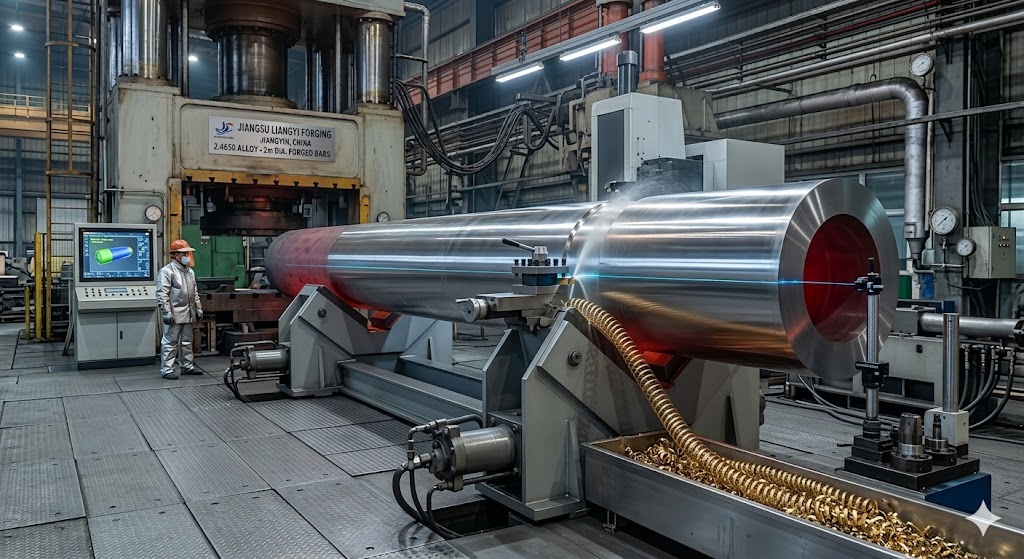
Jiangsu Liangyi is a leading China manufacturer of high-quality 2.4650 (NiCo20Cr20MoT) open die forging parts and seamless rolled steel forged rings. With over 25 years of experience in the forging industry, our factory in Jiangyin, Jiangsu Province produces custom 2.4650 super alloy components that meet international standards and customer specifications. We have supplied our premium NiCo20Cr20MoT forgings to clients in more than 50 countries worldwide.
2.4650 (NiCo20Cr20MoT) — Key Facts at a Glance
Why 2.4650 (NiCo20Cr20MoT) Is the Preferred Super Alloy
2.4650 is a high-performance nickel‑cobalt‑chromium precipitation‑hardened superalloy with outstanding yield strength, creep resistance and oxidation resistance at temperatures up to 600 °C.It is widely used for importatn parts in power generation, aerospace and industrial gas turbines, where reliable performance under extreme conditions is needed. The alloy gains its strength through controlled aging, which forms gamma‑prime (γ′) phases from added molybdenum, titanium and aluminum, giving it excellent mechanical properties at high temperatures.
Alloy Design — Role of Each Element in 2.4650
Understanding how each alloying element improves the performance of 2.4650 (NiCo20Cr20MoT) is very important when choosing and specifying materials. Its well-balanced chemical composition gives it a special mix of high strength, creep resistance and stable performance in high-temperature environments.
| Element | Content | Metallurgical Role |
|---|---|---|
| Nickel (Ni) | 46.9–54.2% | Base element. Forms the austenitic (FCC) matrix, provides inherent corrosion resistance and stabilizes the γ′ precipitate structure at high temperatures. |
| Cobalt (Co) | 19–21% | Raises the γ′ solvus temperature, increasing creep strength. Reduces stacking fault energy, which improves resistance to dislocation cross-slip under sustained load. |
| Chromium (Cr) | 19–21% | Forms a protective Cr₂O₃ oxide scale on the surface, providing oxidation and hot corrosion resistance up to 600 °C. Also contributes solid-solution strengthening. |
| Molybdenum (Mo) | 5.6–6.1% | Potent solid-solution strengthener of the γ matrix. Increases high-temperature yield strength and creep rupture life. Also improves resistance to pitting corrosion. |
| Titanium (Ti) | 1.9–2.4% | Primary γ′ former. Combines with nickel and aluminum to form Ni₃(Al,Ti) precipitates — the main strengthening phase responsible for high-temperature strength and hardness. |
| Aluminum (Al) | 0.3–0.6% | Co-former of γ′ phase alongside titanium. Also promotes formation of a protective Al₂O₃ sub-layer beneath the chromia scale, enhancing long-term oxidation resistance. |
| Carbon (C) | 0.04–0.08% | Forms grain-boundary carbides (M₂₃C₆, MC) that pin grain boundaries, preventing grain-boundary sliding during creep. Must be carefully controlled to avoid embrittlement. |
| Boron (B) | ≤ 0.005% | Micro-addition that segregates to grain boundaries, strengthening them and improving creep rupture life and ductility. Effective at parts-per-million levels. |
The impurity elements — iron, manganese, silicon, phosphorus and sulfur — are kept to strict minimums to keep grain-boundary integrity and prevent the formation of detrimental phases such as sigma (σ) or Laves during long-term service exposure.
Alloy Cross-Reference & Equivalent Designations
Engineers often search for 2.4650 under different naming conventions. Following are maps equivalent designations across international standards:
| System | Designation |
|---|---|
| W.Nr. (Werkstoff) | 2.4650 |
| DIN Symbolic | NiCo20Cr20MoT |
| UNS | N07783 |
| Trade Name | Alloy 783 |
| Applicable Standard | DIN EN 10090 |
2.4650 vs Other Super Alloys — Performance Comparison
Engineers often need to compare 2.4650 (NiCo20Cr20MoT) with other nickel‑based super alloys when they choose materials for turbines and high‑temperature uses. The table below compares main properties side by side to help you make the right material choice.
| Property | 2.4650 (NiCo20Cr20MoT) | Inconel® 718 (2.4668) | Waspaloy® (2.4654) | A-286 (1.4980) |
|---|---|---|---|---|
| UNS Number | N07783 | N07718 | N07001 | S66286 |
| Max Service Temp | 600 °C | 650 °C | 870 °C | 540 °C |
| Tensile Strength (RT) | ≥ 970 MPa | ≥ 1,240 MPa | ≥ 1,280 MPa | ≥ 860 MPa |
| 0.2% Proof Strength (RT) | ≥ 570 MPa | ≥ 1,035 MPa | ≥ 795 MPa | ≥ 590 MPa |
| Elongation | ≥ 30% | ≥ 12% | ≥ 25% | ≥ 15% |
| Density | ~8.35 g/cm³ | ~8.19 g/cm³ | ~8.19 g/cm³ | ~7.94 g/cm³ |
| Cobalt Content | 19–21% | ≤ 1% | 12–15% | — |
| Main Advantage | Excellent ductility & low thermal expansion | Highest strength, wide availability | Best creep resistance at 700–870 °C | Lowest cost, Fe-based |
| Typical Use | IP/LP turbine discs, valve stems, compressor blades | HP turbine discs, fasteners, downhole tools | HP turbine blades & discs, combustion chambers | LP turbine fasteners, exhaust systems |
Key takeaway: 2.4650 performs better than Inconel® 718 and Waspaloy® in ductility (≥ 30% compared to 12–25%) and has a low coefficient of thermal expansion, which lowers thermal fatigue on parts exposed to repeated heating and cooling cycles. Its high cobalt content (20%) increases the γ′ solvus temperature and improves creep resistance compared to cobalt-free materials such as A-286. For uses below 600 °C that need a good mix of strength, ductility and dimensional stability, 2.4650 is often the best choice.
Available 2.4650 (NiCo20Cr20MoT) Forging Shapes & Sizes
As a professional maker of 2.4650 forging , we provide a full range of NiCo20Cr20MoT forging steel products in all kinds of shapes and sizes to meet different industrial requirements. Following are our production capabilities:
- Forged Bars: Round bars, square bars, flat bars and rectangular bars up to 2 meters in diameter
- Seamless Rolled Rings: Custom forged rings up to 6 meters in diameter and 30 tons in weight
- Hollow Components: Hubs, housings, shells, sleeves, bushes and hollow bars up to 3,000 mm OD
- Discs & Plates: Forged discs, blocks and plates up to 3 meters in diameter
- Pipes & Tubes: Seamless forged pipes, tubes, tubings and casings
- Custom Components: Intricate shapes manufactured to your exact drawings
Production Specifications Summary
- Weight Range: 30 kg to 30,000 kg
- Maximum Diameter: 6 meters (rings), 2 meters (bars)
- Maximum Length: 15 meters (shafts)
- Standards: DIN, EN, ASTM, customer-specific
- Surface Finish: As-forged, rough machined, semi-finished, or fully machined
We also offer a full range of machining services to deliver finished 2.4650 forged parts that are ready for assembly. Learn more about our full range of forged products or explore other nickel alloy forging materials we process.
Industrial Applications & Real-World Case Studies
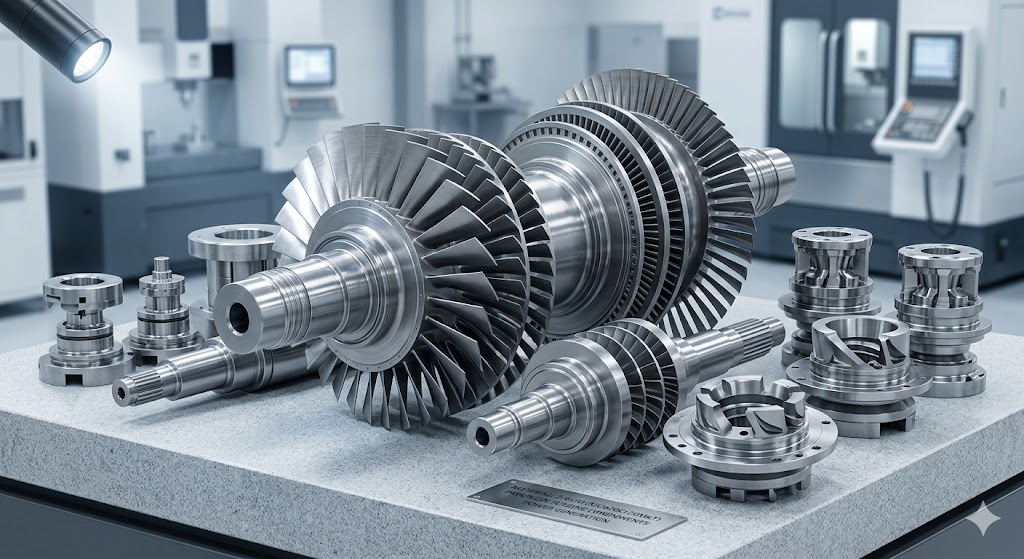
Our 2.4650 (NiCo20Cr20MoT) forgings are widely used in important applications where high-temperature strength and long-term reliability are important. The alloy has high yield strength (≥ 570 MPa), excellent creep resistance and good oxidation behavior at temperatures up to 600 °C , so that it is suitable for many industries. Following is a summary of these industries:
Main Application Cases
Power Generation Industry
- Gas Turbine Components: Turbine blades, turbine discs, turbine impellers and turbine blisks for combined-cycle power plants in Asia and Europe
- Steam Turbine Parts: Control reheat valve discs, valve spindles/stems/rods, valve seats, valve cores and valve sleeves for thermal power plants
- Turbine Casings: LPT 1st and 2nd stage turbine casings for industrial gas turbines
- Main Steam Valve Parts: Main steam valve covers, bonnets and sleeves for 600 MW and above power units
Aerospace & Defense (Material Supply)
- Aircraft Engine Parts: Compressor blades, discs and shafts — forging material and semi-finished supply for aerospace part manufacturers
- Fastening Systems: High-strength double-headed studs, bolts and bolting material for aerospace applications
Industrial Gas & Oil Industry
- Gas Compressor Parts: Compressor blades and discs for industrial gas compression systems
- High-Temperature Valves: Valve parts for high-temperature and high-pressure process applications
Other Critical Applications
- Turbine Sealing Systems: Guide rings, seal rings, labyrinth rings, packing seal diaphragms and rotor end rings
- Turbine Nozzles: Diaphragm nozzles for steam and gas turbines
Advanced Manufacturing Process for 2.4650 (NiCo20Cr20MoT)
At our Jiangyin factory, we utilize state-of-the-art manufacturing processes to produce the highest quality 2.4650 super alloy forgings. Our production capabilities are supported by advanced forging equipment including a 6,300-ton hydraulic press and a 5-meter seamless rolling machine. Following is an overview of our production workflow.
Approved Melting Methods
The following methods are internationally approved for melting 2.4650 (NiCo20Cr20MoT) forging ingots, each of them has specific metallurgical advantages:
- Electric Air Furnace (EAF + AOD/VOD): Standard production route with alloy elaboration for cost-effective melting
- Vacuum Induction Melting (VIM): Delivers superior material purity and precise chemistry control
- Electroslag Remelting (ESR): Refines the as-cast microstructure for improved homogeneity and cleanliness
- Vacuum Arc Remelting (VAR): Produces the highest metallurgical quality for critical aerospace and turbine applications
The choice of melting route depends on the end-use specification. Aerospace and premium turbine applications typically require VIM+VAR or VIM+ESR double-melted material for maximum reliability.
Forging Process Window & Deformation Control
Proper control of the forging process is important for 2.4650 (NiCo20Cr20MoT) to get a consistent, fine-grained microstructure free from segregation and δ-phase banding. Our metallurgical team strictly controls the following parameters:
| Parameter | Specification | Purpose |
|---|---|---|
| Heating Temperature | 1,050–1,150 °C | Above γ′ solvus to enable plastic flow, below incipient melting |
| Start Forging Temp | ≥ 1,020 °C | Ensures sufficient ductility for initial deformation |
| Finish Forging Temp | ≥ 900 °C | Prevents cold cracking; maintains recrystallization driving force |
| Per-Pass Reduction | 15–30% | Sufficient strain per pass to trigger dynamic recrystallization |
| Total Reduction Ratio | ≥ 3:1 | Breaks up as-cast dendritic structure and closes internal porosity |
| Cooling After Forging | Air cool or controlled furnace cool | Prevents thermal shock cracking in large cross-sections |
For seamless rolled rings, ingots are first upset forged and punched, then rolled to size on our 5‑meter ring rolling machine. The radial‑axial rolling process ensures even wall thickness, fine grain matrix that follows the ring shape, and tight dimensional accuracy, which greatly reduces the material left for later machining.
Precision Heat Treatment Process
2.4650 (NiCo20Cr20MoT) is given a precise two-stage heat treatment process to achieve improved mechanical properties. The treatment forms gamma-prime (γ′) precipitates that are responsible for the alloy's high strength and hardness:
- Stage 1 — Solution Annealing: Parts are heated to 1,149 °C (2,100 °F) and then rapidly water-quenched. This dissolves any existing precipitates and homogenizes the microstructure.
- Stage 2 — Precipitation Hardening (Aging): Aged at 799 °C (1,470 °F) for 24 hours followed by air cooling. This controlled aging forms the strengthening gamma-prime phases.
This process makes sure that our 2.4650 forged parts achieve the required strength, hardness and ductility for their intended applications. All heat treatment cycles are documented with temperature-time graphs per customer and industry requirements.
Material Properties of 2.4650 (NiCo20Cr20MoT)
The following table shows the standard chemical composition and room-temperature mechanical properties of 2.4650 (NiCo20Cr20MoT) according to DIN EN 10090 and other international standards. All mechanical tests are carried out following ISO 6892-1 for tension testing and ISO 6506-1 for hardness testing.
Chemical Composition (wt.%)
| Element | Composition Range (%) |
|---|---|
| Nickel (Ni) | 46.9 – 54.2 (balance) |
| Chromium (Cr) | 19 – 21 |
| Cobalt (Co) | 19 – 21 |
| Molybdenum (Mo) | 5.6 – 6.1 |
| Titanium (Ti) | 1.9 – 2.4 |
| Aluminum (Al) | 0.3 – 0.6 |
| Iron (Fe) | ≤ 0.7 |
| Manganese (Mn) | ≤ 0.6 |
| Silicon (Si) | ≤ 0.4 |
| Carbon (C) | 0.040 – 0.080 |
| Phosphorus (P) | ≤ 0.020 |
| Sulfur (S) | ≤ 0.0070 |
| Boron (B) | ≤ 0.0050 |
Mechanical Properties (Room Temperature, After Heat Treatment)
| Property | Minimum Value | Test Method |
|---|---|---|
| Tensile Strength (Rm) | 970 MPa | ISO 6892-1 |
| 0.2% Proof Strength (Rp0.2) | 570 MPa | ISO 6892-1 |
| Elongation at Fracture (A) | 30% | ISO 6892-1 |
| Hardness (HB) | 280–320 HB | ISO 6506-1 |
Actual values obtained at our facility typically exceed these minimums. We supply complete mill test certificates documenting all test results for each heat and lot.
Physical Properties
The physical constants of 2.4650 (NiCo20Cr20MoT) are important for engineering design calculations including thermal stress analysis, FEA modeling and turbine rotor dynamics. The following values apply to the solution-annealed and aged condition:
| Property | Value | Condition / Note |
|---|---|---|
| Density | 8.35 g/cm³ (0.302 lb/in³) | At 20 °C |
| Melting Range | 1,280–1,350 °C (2,336–2,462 °F) | Solidus–Liquidus |
| Elastic Modulus (E) | ~218 GPa (31.6 × 10⁶ psi) | At 20 °C |
| Thermal Conductivity | ~11.4 W/(m·K) | At 100 °C |
| Thermal Expansion (CTE) | ~12.4 × 10⁻⁶ /°C | 20–100 °C range |
| Thermal Expansion (CTE) | ~13.8 × 10⁻⁶ /°C | 20–600 °C range |
| Specific Heat Capacity | ~420 J/(kg·K) | At 20 °C |
| Electrical Resistivity | ~1.24 μΩ·m | At 20 °C |
| Magnetic Permeability | ~1.001 (non-magnetic) | At 20 °C, after aging |
Design note: The relatively low coefficient of thermal expansion (CTE) of 2.4650 is one of its main engineering advantages. Compared to Inconel® 718 (~13.0 × 10⁻⁶ /°C at 20–100 °C) and especially austenitic stainless steels (~16–17 × 10⁻⁶ /°C), the lower CTE reduces thermally induced stresses in components subjected to repeated heating and cooling cycles, improving fatigue life in turbine discs and valve assemblies.
Elevated Temperature Mechanical Properties
Since 2.4650 (NiCo20Cr20MoT) is designed for service up to 600 °C, understanding how its strength degrades with temperature is essential for component design. The table below shows typical minimum mechanical properties at elevated temperatures after standard heat treatment:
| Temperature | Tensile Strength (Rm) | 0.2% Proof Strength (Rp0.2) | Elongation (A) |
|---|---|---|---|
| 20 °C (RT) | ≥ 970 MPa | ≥ 570 MPa | ≥ 30% |
| 300 °C | ~920 MPa | ~540 MPa | ~28% |
| 400 °C | ~900 MPa | ~520 MPa | ~26% |
| 500 °C | ~870 MPa | ~490 MPa | ~24% |
| 600 °C | ~800 MPa | ~450 MPa | ~20% |
Values at high temperatures are typical and may change based on the actual heat and heat treatment process. For confirmed high-temperature properties, special tests can be arranged according to customer needs. Creep and stress‑rupture data for long‑term service life prediction are available upon request.— please contact our engineering team.
Corrosion, Oxidation & Environmental Resistance
2.4650 (NiCo20Cr20MoT) provides good environmental resistance suitable for its working temperature range. Knowing how it resists corrosion helps engineers choose the right surface treatments and coatings when needed.
Oxidation Resistance
The high chromium content (19–21%) allows 2.4650 to form a dense, stable chromia (Cr₂O₃) protective layer in oxidizing environments up to 600 °C. The added aluminum (0.3–0.6%) helps form an alumina layer below the surface that works as a diffusion barrier, slowing oxide growth during long-term use. In clean air, the alloy oxidizes slowly and is suitable for continuous operation at its designed temperature.
Hot Corrosion Resistance
In gas turbine environments, combustion byproducts containing sodium, sulfur, and vanadium compounds can damage the protective oxide layer — this is called Type I and Type II hot corrosion. 2.4650 offers moderate hot corrosion resistance due to its chromium content.For highly corrosive gas turbine conditions (such as burning heavy fuel oil), protective coatings like MCrAlY are often recommended to extend part life.
Aqueous Corrosion
The mix of nickel, chromium and molybdenum gives 2.4650 good general corrosion resistance in many water-based and chemical environments, similar to other high-nickel alloys. Its 6% molybdenum content improves resistance to pitting and crevice corrosion in environments with chloride. However, this alloy is mainly chosen for its high-temperature mechanical properties, not for its resistance to water-based corrosion.
Machinability & Weldability of 2.4650
Machinability
Like most precipitation-hardened nickel super alloys, 2.4650 (NiCo20Cr20MoT) is hard to machine. Its high strength, tendency to harden during cutting, and low heat conductivity create challenges during machining. The guidelines below apply:
- Tooling: Carbide (coated WC-Co) or ceramic inserts are recommended. High-speed steel (HSS) tools wear out quickly and are not suitable for this alloy.
- Cutting Speeds: Lower than for stainless steels — typically 15–40 m/min for turning with carbide, depending on depth of cut and tool geometry.
- Coolant: Flood coolant is essential to dissipate heat from the cutting zone and prevent work-hardened surface layers.
- Work Hardening: Avoid dwelling at the cutting edge; use positive rake geometry and keep tools sharp to cut through the work-hardened layer rather than riding on top of it.
- Machining Condition: Best machinability is achieved in the solution-annealed condition. If final machining is performed after aging (280–320 HB), reduced cutting parameters and more rigid setups are required.
Our factory performs all machining operations in-house with CNC lathes, mills and boring machines specifically configured for nickel super alloy machining, guaranteeing consistent dimensional accuracy and surface finish.
Weldability
2.4650 (NiCo20Cr20MoT) can be welded using conventional fusion welding processes including TIG (GTAW), MIG (GMAW) and electron beam welding. The following are the key considerations:
- Pre-Heat: Generally not needed, but the base material should be at ambient temperature (≥ 15 °C) and thoroughly cleaned of oils, oxides and contaminants.
- Filler Metal: Matching composition filler wire is recommended to keep mechanical properties across the weld joint.
- Post-Weld Heat Treatment (PWHT): Full solution annealing and re-aging is required after welding to restore the precipitation-hardened strength. Without PWHT, the heat-affected zone (HAZ) will have degraded properties.
- Weld Cracking: The alloy has moderate susceptibility to strain-age cracking (SAC). Controlled heat input, proper joint design and immediate PWHT reduce this risk.
For large forged parts, repair welding may be performed to address localized surface defects subject to customer approval and specification requirements. All welds are given full NDT inspection (UT, PT) per applicable standards.
Comprehensive Quality Assurance & Testing
We are an ISO 9001:2015 certified2.4650 forging manufacturer in China, and we have strict quality control in place at every step of the production process, from checking the raw materials when they arrive to melting, forging, heat treatment, machining, and shipping the finished product. There is a detailed inspection report that comes with each finished NiCo20Cr20MoT forged product. It includes:
- Complete identification: material number, designation, order number and drawing number
- Heat number, heat chemical analysis and melting method documentation
- Comprehensive heat treatment certificate with temperature-time graphs
- Nondestructive testing (NDT) records including ultrasonic testing (UT), magnetic particle testing (MT) and liquid penetrant testing (PT)
- Full mechanical test results at room temperature per ISO 6892-1 and ISO 6506-1
- Residual stress measurement results (for process qualification)
- Dimensional and visual inspection reports
- NDT inspector qualification records and cleaning verification
We provide EN 10204 3.1 material test certificates as standard for every order.
EN 10204 3.2 certificates are available upon request, which require independent third‑party witnessed inspection. We can also arrange third‑party inspection through customer‑approved agencies. You are welcome to view our full range of forging materials including other nickel alloys, stainless steels and alloy steels, or view our equipment and facilities.
Why Choose Jiangsu Liangyi as Your 2.4650 Forging Partner?
- 25+ Years of Experience: Established in 1997, we have extensive experience in making high-quality super alloy forgings for the power generation, aerospace and oil & gas industries
- Advanced Manufacturing Facilities: We have modern equipment, such as a 6,300-ton hydraulic press, 5-meter seamless rolling machine and complete heat treatment facilities.
- Complete In-House Capabilities: We provide a full range of services, from steel melting, forging, heat treatment, CNC machining to NDT inspection.
- Global Export Experience: Our products are exported to more than 50 countries across North America, Europe, Asia and the Middle East
- Custom Solutions: We produce custom parts according to your exact drawings, specifications and material grades
- Competitive Pricing: As a direct Chinese manufacturer, we offer competitive prices without compromising quality
- Timely Delivery: Efficient production planning guarantees on-time delivery — typical lead time 4–12 weeks depending on complexity
- Technical Support: Our experienced metallurgical and mechanical engineering team provides professional technical support throughout your project
Frequently Asked Questions About 2.4650 (NiCo20Cr20MoT) Forgings
Contact Us for 2.4650 (NiCo20Cr20MoT) Forging Quotation
We are committed to providing the best price and superior quality 2.4650 (NiCo20Cr20MoT) forged steel materials for global clients. As a leading 2.4650 forging supplier in Jiangsu, China, we have the expertise and capabilities to meet your most demanding requirements.
Welcome to send your custom drawing, material requirement and quantity for a detailed quotation. Our sales team will respond to your inquiry within 24 hours.
Get Your Free Quotation Now