2.4602 (NiCr21Mo14W) Forging Parts | China Leading Open Die Forging Manufacturer
2.4602 (NiCr21Mo14W) forging parts are custom-manufactured open die forgings and seamless rolled rings produced from a nickel-chromium-molybdenum-tungsten superalloy (Ni balance, 20–22.5% Cr, 12.5–14.5% Mo, 2.5–3.0% W) with a PREN value typically above 56 — one of the highest among commercially available wrought nickel alloys. They are engineered for environments where standard stainless steels and lower-grade nickel alloys fail: H₂S sour service wellheads, FGD absorbers, nuclear reactor coolant systems, seawater desalination pumps, pharmaceutical API reactors, and subsea equipment in high-chloride or mixed-acid service.
Quick Facts: 2.4602 (NiCr21Mo14W) Forging Parts — Jiangsu Liangyi Co., Limited
- Manufacturer: Jiangsu Liangyi Co., Limited — ISO 9001:2015 certified, Jiangyin City, Jiangsu Province, China
- Material: 2.4602 / NiCr21Mo14W (DIN/EN designation); similar tradenames: Hastelloy® C-2000, Nicrofer® 6020 hMo
- PREN Value: ≥ 56 (Pitting Resistance Equivalent: Cr + 3.3×Mo + 16×N)
- Experience: 25+ years in open die forging and seamless ring rolling
- Annual Capacity: 120,000 tons
- Max Single-Piece Weight: Up to 30 tons (bars & rings) | Up to 20 tons (discs)
- Key Standards: ASTM B564, EN 10269, DIN 17744, ASME — Production to API 6A material & dimensional requirements available. EN10204 3.1/3.2 available
- Industries: Oil & gas, nuclear power, FGD, petrochemical, seawater desalination, pharma, subsea, waste incineration
- Export Markets: 50+ countries — Europe, North America, Middle East, Southeast Asia, Oceania
- Contact: sales@jnmtforgedparts.com | +86-13585067993
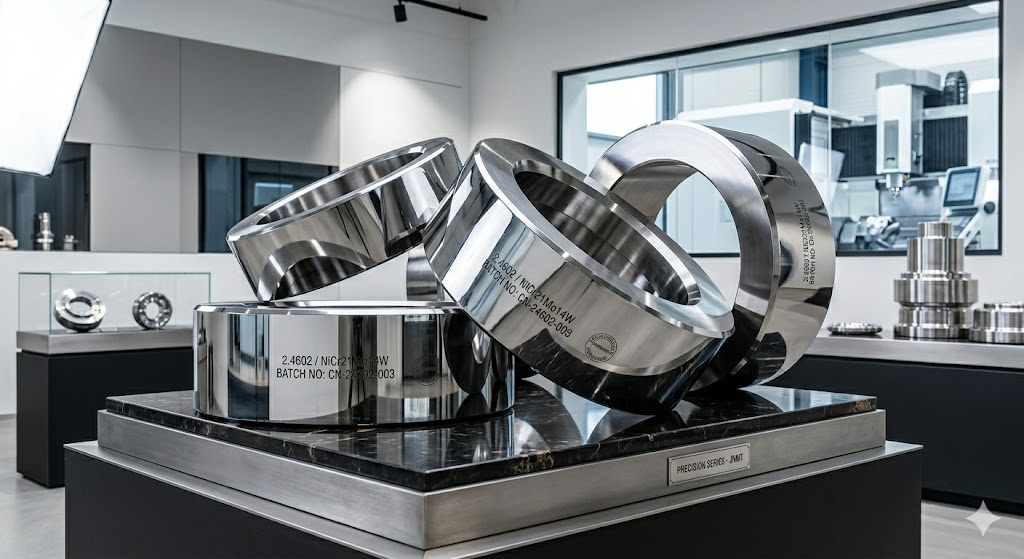
Jiangsu Liangyi Co., Limited is a professional ISO 9001:2015 certified manufacturer of 2.4602 (NiCr21Mo14W) open die forging parts and seamless rolled steel forged rings based in Jiangyin City, Jiangsu Province, China. With over 25 years of specialized industry experience, full in-house production capabilities, and an annual manufacturing capacity of 120,000 tons, we are an established global supplier of custom NiCr21Mo14W forged components, serving clients across more than 50 countries in the oil & gas, nuclear power, petrochemical, environmental protection, seawater desalination, and power generation industries.
2.4602 (also commercially known as NiCr21Mo14W) is a premium high-corrosion resistant nickel-chromium-molybdenum-tungsten superalloy, precisely engineered to deliver exceptional stability in oxidizing, reductive, and mixed acid environments. Our China-made 2.4602 forging parts are manufactured to ASTM B564, EN 10269, DIN 17744, and ASME material specifications; products can be produced to API 6A dimensional and material requirements, with complete EN10204 3.1/3.2 mill test certification available for every production batch. Explore our full range of forged products on our official website.
Why Choose 2.4602 (NiCr21Mo14W) Alloy For Your Critical Industrial Components?
As a China-based specialist in nickel alloy forging, we have optimized our 2.4602 (NiCr21Mo14W) production process to maximize the alloy’s inherent performance advantages, making it the preferred material choice for extremely harsh working conditions:
- Unmatched Corrosion Resistance: The 20.00–22.50% chromium content delivers excellent high-temperature oxidation resistance, while 12.50–14.50% molybdenum paired with 2.50–3.00% tungsten provides superior resistance to pitting corrosion, crevice corrosion, and chloride-induced stress corrosion cracking (SCC) — significantly outperforming 316L stainless steel and standard nickel alloys in acidic and sour service (H₂S-containing) environments.
- Broad Chemical Environment Compatibility: Our NiCr21Mo14W forged parts maintain stable performance in both strong oxidizing acids (e.g., concentrated nitric acid) and reducing acids (e.g., hydrochloric acid, sulfuric acid), as well as mixed corrosive media, making them ideal for chemical processing plants and flue gas desulfurization (FGD) applications.
- Excellent Mechanical Properties: After professional solution heat treatment at 1100–1150°C with water quench, our 2.4602 forgings offer high tensile strength, outstanding ductility (elongation ≥45%), and good creep resistance at elevated temperatures, suitable for both static pressure components and high-speed rotating equipment.
- Premium Melting Process Options: We produce 2.4602 raw material via three industry-leading melting methods:
- Method A (AM/VR): Air melt + vacuum refined — ideal for general industrial applications with balanced performance and cost
- Method B (VIM/VAR): Vacuum induction melted + vacuum arc refined — for nuclear-grade, aerospace, and ultra-high-reliability critical applications
- Method C (AM/VAR): Air melt + vacuum arc refined — optimized for high-pressure oil & gas and sour service components
Key Differentiator vs. Competitor Alloys: Compared to Hastelloy® C276, 2.4602 (NiCr21Mo14W) carries significantly higher chromium (20–22.5% vs. 14.5–16.5%), giving it a decisive edge in oxidizing acid environments such as hot concentrated nitric acid and mixed nitric/sulfuric acid systems. Compared to alloy C22, 2.4602 offers comparable Mo content but with a simpler, more stable microstructure at elevated temperatures, reducing the risk of secondary phase precipitation in heavy-section forgings. Contact our technical team for a detailed material selection guide tailored to your project.
2.4602 (NiCr21Mo14W) vs. Common Nickel Alloys — Composition & Performance Comparison
Selecting the right nickel alloy for a critical forged component requires understanding exactly where each alloy excels and where it has limitations. The table below compares 2.4602 against the three most frequently specified alternatives in our customers’ projects — Hastelloy® C276, Hastelloy® C22, and Inconel® 625. All assessments are based on nominal alloy compositions and established corrosion engineering principles. This comparison table is developed entirely from our engineering team’s project experience and is not reproduced from any material supplier datasheet.
| Property / Alloy | 2.4602 (NiCr21Mo14W) | Hastelloy® C276 (2.4819) | Hastelloy® C22 | Inconel® 625 (2.4856) |
|---|---|---|---|---|
| Ni Content | Balance (~57%) | Balance (~57%) | Balance (~56%) | Balance (~62%) |
| Cr Content | 20–22.5% | 14.5–16.5% | 20–22.5% | 20–23% |
| Mo Content | 12.5–14.5% | 15–17% | 12.5–14.5% | 8–10% |
| W Content | 2.5–3.0% | 3–4.5% | 2.5–3.5% | — |
| Typical PREN | ≥ 56 | ≈ 71 | ≈ 61 | ≈ 51 |
| Oxidizing Acid Resistance (HNO₃) | Excellent | Good | Excellent | Moderate |
| Reducing Acid Resistance (HCl, H₂SO₄) | Excellent | Excellent | Excellent | Good |
| Mixed Acid / FGD Environment | Excellent | Very Good | Excellent | Moderate |
| Pitting & Crevice Resistance (Cl⁻) | Very Good | Excellent | Excellent | Good |
| Weldability in Heavy Forgings | Good | Good | Excellent | Excellent |
| High-Temp Strength (>600°C) | Moderate | Moderate | Moderate | Excellent |
| Relative Material Cost | Medium-High | High | High | Medium |
| Primary Forging Applications | FGD, oil & gas, nuclear, desalination, pharma | Offshore, strongly reducing acids | Waste incineration, pharma, mixed acid | Subsea, high-temp pressure vessels |
* PREN = Cr + 3.3×Mo + 16×N. Values are indicative for standard nominal composition. Actual values depend on heat chemistry. Contact us for project-specific material selection guidance.
Full Range of China Custom 2.4602 (NiCr21Mo14W) Forged Products
As a leading Chinese open die forging factory with advanced production facilities, we manufacture a comprehensive range of 2.4602 (NiCr21Mo14W) forging products in custom shapes and dimensions, strictly produced to your engineering drawings and technical specifications.
China Custom 2.4602 Forged Bars & Rods
- 2.4602 forged round bars, square bars, flat bars, rectangular bars, step shafts, splined drive shafts, and pump shafts
- Max forging diameter up to 2 meters, single-piece weight up to 30 tons, length up to 15 meters
- Full compliance with international standards, with 100% ultrasonic testing (UT) and hardness inspection for every bar
China Custom NiCr21Mo14W Seamless Rolled Forged Rings
- NiCr21Mo14W seamless rolled rings, contoured forged rings, gear rings, flange blanks, valve seat rings, and bearing rings
- Large-size ring capacity up to 6 meters in outer diameter, single-piece weight up to 30 tons
- Ideal for high-pressure flanges, valve components, and rotating equipment parts in oil & gas and power generation industries
China Custom 2.4602 Hollow Forgings & Piping Components
- 2.4602 forged sleeves, bushes, hollow bars, seamless pipes, tubing shells, casings, heavy wall cylinders, and wellhead housings
- Outer diameter capacity up to 3000 mm, with custom wall thickness and length available
- Perfect for downhole drilling tools, reactor nozzles, and pressure vessel components in corrosive environments
China Custom NiCr21Mo14W Discs, Plates & Blocks
- NiCr21Mo14W forged discs, disks, blocks, plates, flanged blanks, tube sheets, and baffle plates
- Outside diameter up to 3000 mm, single-piece weight up to 20 tons, thickness up to 500 mm
- Widely used in heat exchangers, pressure vessels, boilers, and valve components
China Custom 2.4602 Valve & Flow Control Forgings
- 2.4602 forged valve balls, bonnets, bodies, stems, seat rings, cores, and discs for ball valves, check valves, gate valves, globe valves, cryogenic butterfly valves, and back pressure valves
- Custom forged flow meter bodies, venturi cone meter bodies, oil measurement valve spools, and choke valve components
- Available with Stellite hardfacing, ENP coating, and chrome plating for enhanced wear and corrosion resistance
China Custom NiCr21Mo14W Pump & Rotating Equipment Forgings
- NiCr21Mo14W forged pump casings, impellers, shafts, housings, wear rings, and barrels
- 2.4602 forged gas/air compressor rotors, turbine impellers, shrouded impellers, and nuclear reactor coolant pump components
- Precision forged to ensure high dynamic balance and stable performance in high-speed rotating equipment
China Custom 2.4602 Oil & Gas Upstream Forgings
- 2.4602 forged drilling pipes, drill rods, drilling collars, downhole drilling tools, mud motor shafts, risers, connectors, and flanges
- NiCr21Mo14W forged casing heads, tubing heads, casing hangers, tubing hangers, tubing spools, casing spools, and Christmas tree components
- Produced to API 6A material and dimensional requirements on request, with NACE MR0175/ISO 15156 sour service versions available for H₂S-containing environments
2.4602 (NiCr21Mo14W) Alloy Chemical Composition & Mechanical Properties
We strictly control the chemical composition of every heat of 2.4602 (NiCr21Mo14W) alloy to ensure it meets the highest international standards, with full chemical analysis reports provided for every production batch.
| Element | Standard Content Range (Weight %) | Role in Corrosion Resistance |
|---|---|---|
| Nickel (Ni) | Balance (~57%) | Austenitic matrix; resistance to neutral and reducing media |
| Chromium (Cr) | 20.00 – 22.50% | Passive film formation; resistance to oxidizing acids and high-temperature oxidation |
| Molybdenum (Mo) | 12.50 – 14.50% | Pitting and crevice corrosion resistance; stability in reducing chloride environments |
| Iron (Fe) | 2.00 – 6.00% | Cost-reducing matrix element; controlled to prevent sensitization |
| Tungsten (W) | 2.50 – 3.00% | Enhances pitting resistance and solid solution strengthening at elevated temperature |
| Cobalt (Co) | 2.50% Maximum | Incidental; restricted to ≤0.10% for nuclear applications |
| Carbon (C) | 0.10% Maximum | Kept low to prevent carbide precipitation and sensitization at welds |
| Silicon (Si) | 0.08% Maximum | Ultra-low limit prevents formation of corrosion-susceptible silicide phases |
| Manganese (Mn) | 0.50% Maximum | Deoxidizer; controlled to prevent MnS inclusion formation |
| Phosphorus (P) | 0.02% Maximum | Restricted to minimize hot cracking risk during forging |
| Vanadium (V) | 0.35% Maximum | Incidental trace element; monitored per heat |
Heat Treated Mechanical Properties (Delivery Condition)
- Yield Strength (Rp0.2): ≥ 310 MPa
- Tensile Strength (Rm): 690 – 950 MPa
- Elongation (A5): ≥ 45%
- Hardness: Customizable based on specific project requirements
All finished 2.4602 forged materials are guaranteed to be free from blisters, cracks, slag inclusion, forging folds, mill scale, corrosion damage, and any other defects that may affect component performance and service life.
2.4602 (NiCr21Mo14W) Forging Heat Treatment — Parameters & Technical Rationale
Heat treatment is not a finishing step for 2.4602 forgings — it is a metallurgical reset. Heavy-section open die forgings accumulate significant residual stress and localized microstructural heterogeneity during the forging process. Without a precisely controlled heat treatment cycle, molybdenum-rich intermetallic phases (mu-phase, P-phase) and chromium carbides can nucleate at grain boundaries, creating sensitized zones that act as initiation sites for intergranular corrosion. Our heat treatment protocols are developed from decades of in-house experience with large-tonnage 2.4602 forgings.
| Parameter | Standard Condition | Heavy-Section (>150mm) Condition |
|---|---|---|
| Solution Temperature | 1100 – 1150°C | 1120 – 1150°C (upper range preferred) |
| Heating Rate | ≤ 100°C/hr from 600°C | ≤ 60°C/hr from 600°C to minimize thermal gradient |
| Hold Time at Temperature | 1 min per mm cross-section, minimum 30 min | 1.5 min per mm, minimum 90 min, verified by thermocouple |
| Cooling Method | Rapid water quench (transfer < 30 seconds) | Forced water quench; transfer < 20 seconds for pieces >500mm diameter |
| Quench Water Temperature | ≤ 40°C | ≤ 30°C with water circulation |
| Post-Quench Verification | HB hardness check both ends of every bar | Hardness + metallographic grain size; ASTM G28 Method A intergranular corrosion test on request |
Why transfer time from furnace to quench tank is critical: 2.4602 begins precipitating Mo-rich secondary phases when held between 650°C and 1000°C. In a large forging, the surface cools faster than the core during air transfer. If the core temperature lingers in this sensitization window for more than 30–60 seconds, corrosion resistance degrades — and this degradation is invisible to standard hardness or tensile testing. Our furnaces are positioned directly adjacent to quench tanks, with automated transfer systems achieving <20-second transfer for pieces up to 30 tons. This is not a specification — it is an operational capability, and it directly determines whether the corrosion resistance values in the datasheet are actually present in your finished component.
Forging Ratio Control — Why It Matters for 2.4602
The forging ratio is the cross-sectional area of the starting ingot divided by the cross-sectional area of the finished forging. For 2.4602, sufficient forging ratio is critical because the as-cast VIM/VAR ingot contains dendritic segregation zones where Mo and W concentrate unevenly. Only adequate mechanical deformation during open die forging breaks down these segregated dendrites and distributes alloying elements homogeneously through the cross-section.
- Minimum Forging Ratio for Bars/Shafts: ≥ 4:1 (our standard); ≥ 6:1 for nuclear-grade components as referenced in RCC-M / ASME NQA-1
- Minimum Forging Ratio for Rings: ≥ 3:1 combined deformation from billet-to-mandrel punching plus ring rolling
- Effect on Properties: A forging ratio of 4:1 vs. 2:1 typically improves Charpy impact energy by 20–35% and reduces ultrasonic noise floor by 3–5 dB, improving UT inspection sensitivity
- Our Practice: Ingot dimension, billet dimension, and final forging dimension are documented on every production order; calculated forging ratio is included in the EN10204 3.1 traceability record
2.4602 (NiCr21Mo14W) Welding & Fabrication Guidance for Forged Components
Most material datasheets stop at mechanical properties. Most forging supplier pages stop at delivery condition. Very few address what happens after the forging leaves the factory — and for 2.4602, the welding step is where the corrosion resistance either survives or is permanently compromised. The following guidance is drawn from our team’s direct involvement in fabrication review meetings with customers across chemical, nuclear, and offshore sectors. It is not standard textbook content — it is the specific advice our metallurgists give to customers who call us after a welded 2.4602 assembly fails its corrosion test.
Recommended Filler Metal
When welding 2.4602 (NiCr21Mo14W) forged components to themselves or to other nickel alloy or stainless steel components, the filler metal selection is critical and non-obvious:
| Weld Joint Configuration | Recommended Filler Metal | AWS Classification | Key Consideration |
|---|---|---|---|
| 2.4602 to 2.4602 | Matching Ni-Cr-Mo filler (e.g., Inconel® Filler 622) | ERNiCrMo-10 | Matching composition; minimal dilution effect |
| 2.4602 to Hastelloy® C276 | Hastelloy® C-276 filler wire | ERNiCrMo-4 | Provides adequate corrosion resistance across both base metals |
| 2.4602 to 316L stainless steel | Inconel® 625 filler (overalloyed approach) | ERNiCrMo-3 | Overalloying compensates for dilution from 316L; do NOT use 316L filler — the diluted weld zone will be the first point of corrosion failure |
| 2.4602 to carbon steel (dissimilar) | Inconel® 82 or 182 (butter layer) + matching filler | ERNiCr-3 / ENiCrFe-3 | Butter layer on carbon steel side first; prevents carbon migration into nickel alloy weld zone |
Welding Process Parameters for 2.4602
- Preferred Welding Processes: GTAW (TIG welding) for root passes and thin sections; GMAW (MIG) for fill passes on heavy-wall components; SMAW acceptable for field repair with matched electrodes
- Preheat: None required for ambient-temperature base material. If the forging has been stored in a cold environment (<5°C), warm to ambient before welding to prevent condensation on the joint surface
- Interpass Temperature: Maximum 150°C — this is the single most commonly violated parameter in 2.4602 fabrication. At interpass temperatures above 150°C, the HAZ (heat-affected zone) begins to dwell in the sensitization range for sufficient time to nucleate Mo-rich intermetallic phases. Use a contact thermometer between passes, not an infrared gun (emissivity errors on nickel alloy surfaces are significant)
- Heat Input: Keep heat input low — target 0.5–1.5 kJ/mm. Slow, high-heat passes on 2.4602 produce wider HAZ zones with greater risk of sensitization and residual stress concentration
- Shielding Gas: 100% argon for GTAW root passes; 70% Ar / 30% He for GMAW fill passes (helium addition improves penetration and reduces porosity risk at higher deposition rates)
- Post-Weld Cleaning: All weld spatter, oxide scale, and heat tint must be removed by pickling (HNO₃/HF acid solution), mechanical grinding with alumina or ceramic abrasives (never use steel grinding wheels — iron contamination causes pitting on the weld surface), or electropolishing. Heat tint removal restores the passive Cr₂O₃ film damaged by weld heat
Why Post-Weld Heat Treatment (PWHT) is NOT recommended for 2.4602: Unlike carbon and low-alloy steels, 2.4602 (NiCr21Mo14W) must NOT undergo conventional stress relief PWHT at temperatures below the solution annealing range (1100–1150°C). Any thermal exposure between 500°C and 1000°C — including the temperatures commonly used for PWHT of carbon steel weldments (600–750°C) — will actively sensitize 2.4602 by precipitating Mo-rich mu-phase and P-phase at grain boundaries. If a customer’s pressure vessel code requires PWHT on a vessel containing both carbon steel components and 2.4602 nozzles, the 2.4602 nozzles must be thermally isolated from the PWHT cycle. If full solution annealing of the completed fabrication is possible, it is the preferred route for restoring maximum corrosion resistance. Contact our technical team for project-specific welding procedure qualification support.
2.4602 (NiCr21Mo14W) Quantitative Corrosion Resistance Reference Data
The following corrosion rate benchmarks are provided as engineering reference based on standard immersion testing methodology (ASTM G31) and established industry corrosion engineering data for properly solution-annealed 2.4602 material. Actual in-service corrosion rates depend on temperature, flow velocity, surface condition, and concentration fluctuations. Always conduct project-specific coupon testing for critical applications.
| Corrosive Medium | Test Condition | 2.4602 Corrosion Rate | 316L SS Reference Rate | Engineering Assessment |
|---|---|---|---|---|
| 10% HCl (Hydrochloric Acid) | 60°C, immersion 72h | < 0.13 mm/yr Low Risk | > 20 mm/yr Severe Attack | 2.4602 outperforms 316L by >150× in HCl service |
| 30% H₂SO₄ (Sulfuric Acid) | 60°C, immersion 72h | < 0.10 mm/yr Low Risk | 5–15 mm/yr Severe Attack | Suitable for continuous sulfuric acid service |
| 65% HNO₃ (Hot Nitric Acid) | Boiling, ASTM G28 Method B | < 0.50 mm/yr Acceptable | 0.5–2.0 mm/yr (marginal) | High Cr content provides decisive advantage over C276 |
| FGD Absorber Slurry (pH 3–5, 8% Cl⁻) | 60°C, 1000h exposure | No measurable pitting Excellent | Pitting initiation within 200h Fail | Industry-proven for FGD absorber internals worldwide |
| Seawater (3.5% NaCl) | 80°C, crevice geometry, 1000h | No crevice corrosion Excellent | Crevice attack within 500h Fail | Qualified for high-temperature seawater pump service |
| H₂S Sour Gas Service | NACE MR0175/ISO 15156 requirements | No SSC cracking Compliant | Carbon steel: severe SSC Fail | Produced to meet the material requirements of NACE MR0175/ISO 15156 for sour service |
Total Cost of Ownership (TCO) Analysis: Why 2.4602 (NiCr21Mo14W) Forgings Pay for Themselves
The most common objection we hear from procurement managers is: "2.4602 is 8–12× the unit price of 316L stainless steel. Can you justify that cost premium?" The honest answer is that for applications in corrosive environments — specifically chloride-containing, acid, or H₂S media — the question is not whether 2.4602 is worth it. The question is whether you can afford the lifecycle cost of a cheaper material. Below is a worked TCO example based on a real project scenario, with anonymized client data.
TCO Worked Example: FGD Absorber Pump Shaft
Application: Centrifugal pump shaft operating in FGD absorber slurry (pH 4.2, 12,000 ppm Cl⁻, 65°C continuous duty). Two pump trains, each requiring one shaft of 80mm diameter × 1,200mm length, total 4 shafts per plant (2 operating, 2 standby).
| Cost Factor | 316L Stainless Steel | 2.4602 (NiCr21Mo14W) |
|---|---|---|
| Unit material + forging cost (per shaft, FOB China) | ~USD 800 | ~USD 7,200 |
| Initial cost for 4 shafts | USD 3,200 | USD 28,800 |
| Typical service life in this environment | 6–9 months (pitting failure) | 10+ years (no corrosion failure observed) |
| Replacement cycles over 10 years | 13–20 replacements per shaft | 0 replacements (same shafts in service) |
| Material cost over 10 years (4 shafts) | USD 41,600 – 64,000 | USD 28,800 (no replacement) |
| Unplanned downtime per replacement event | 4–8 hours pump isolation + crane & alignment | Zero |
| Estimated downtime cost per event (FGD system off-line) | USD 5,000–15,000 per event (regulatory & operational) | USD 0 |
| Downtime cost over 10 years (conservative) | USD 65,000 – 200,000 | USD 0 |
| Labour cost for replacements (maintenance team, 10 yr) | USD 20,000–40,000 | USD 0 |
| Total 10-Year Cost (conservatively estimated) | USD 126,600 – 304,000 | USD 28,800 |
| 10-Year Cost Advantage of 2.4602 | USD 97,800 – 275,200 savings with 2.4602 over 10 years — a return on premium investment of 3.4× to 9.6× | |
What this TCO analysis does not capture: The above numbers exclude secondary costs that are genuinely difficult to quantify but are real: (1) Emergency procurement premium when a 316L shaft fails during peak production — expedited sourcing of replacement parts commonly adds 40–80% to the unit price; (2) Environmental compliance penalties if FGD system downtime causes SO₂ emissions to exceed permitted limits; (3) HSE incident risk during emergency hot-works maintenance; (4) Supplier qualification audit costs for each replacement batch. When these factors are included, the real 10-year cost of using 316L in corrosive service is typically 8–15× the cost of using 2.4602 from day one. The data in this analysis is based on aggregated project experience from our customer base and is provided for decision-support purposes only — actual costs will vary by plant configuration and operating contract terms.
2.4602 (NiCr21Mo14W) Forging Standards Reference — Specific Standard Numbers
When placing an order for 2.4602 forged components, specifying the correct standard number — not just the material designation — ensures your procurement team, QA department, and our production team are aligned on the same acceptance criteria.
| Standard Number | Standard Body | Scope & Product Form | Key Requirements Covered |
|---|---|---|---|
| ASTM B564 | ASTM International | Nickel alloy forgings (all forms) | Chemical composition, mechanical properties, heat treatment, NDE, marking |
| ASTM B574 | ASTM International | Low-carbon Ni-Cr-Mo alloy rod (bar) | Composition, tensile, hardness; complements B564 for bar products |
| ASTM A388 | ASTM International | Ultrasonic examination of heavy steel forgings | UT acceptance criteria; applied to all our 2.4602 forgings as standard |
| ASTM G28 Method A & B | ASTM International | Intergranular corrosion susceptibility testing | Detects sensitization from improper heat treatment; available on request |
| EN 10269 | European Standard (CEN) | Nickel alloys for parts for pressure applications at elevated and/or low temperatures | Composition, mechanical properties, heat treatment state, testing |
| DIN 17744 | Deutsches Institut für Normung | Nickel alloys — technical delivery conditions for semi-finished products and parts | Material designation 2.4602; composition limits, property requirements |
| API 6A (21st Edition) | American Petroleum Institute | Wellhead and Christmas tree equipment forgings | PSL 1–4 requirements; material class DD/EE/FF/HH for sour service |
| NACE MR0175 / ISO 15156 | NACE International / ISO | Materials for H₂S-containing environments | Hardness limits, SCC resistance; required for sour service qualification |
| ASME Section II Part B (SB-564) | ASME | Nonferrous material specifications for ASME pressure vessels | Equivalent to ASTM B564; referenced in ASME pressure vessel code; U-stamp authorization is held by the vessel fabricator, not the forging supplier |
| EN 10204 Type 3.1 | European Standard (CEN) | Mill test certificate — standard delivery | Certified by our authorized inspector; provided for every production batch as standard |
| EN 10204 Type 3.2 | European Standard (CEN) | Mill test certificate — third-party witnessed | Countersigned by customer’s inspector or accredited body (BV, SGS, TUV, LRQA); available on request |
NACE MR0175 / ISO 15156 Sour Service Compliance for 2.4602 Forgings: For wellhead and downhole applications where H₂S partial pressure exceeds the NACE threshold, our 2.4602 forgings meet all three compliance requirements: (1) Hardness ≤ 35 HRC / 331 HBW at all cross-section locations; (2) Tensile strength within 690–950 MPa as specified in DIN 17744; (3) Produced via AM/VAR or VIM/VAR melting to minimize sulfide inclusions. We provide full NACE MR0175 compliance documentation and can arrange third-party SSC testing (ASTM G39 / NACE TM0177 Method A) on request.
Our China Manufacturing Advantages for 2.4602 (NiCr21Mo14W) Forgings
As a top-tier Chinese open die forging manufacturer with 25+ years of specialized experience, we offer unmatched end-to-end production capabilities for your 2.4602 (NiCr21Mo14W) forging projects:
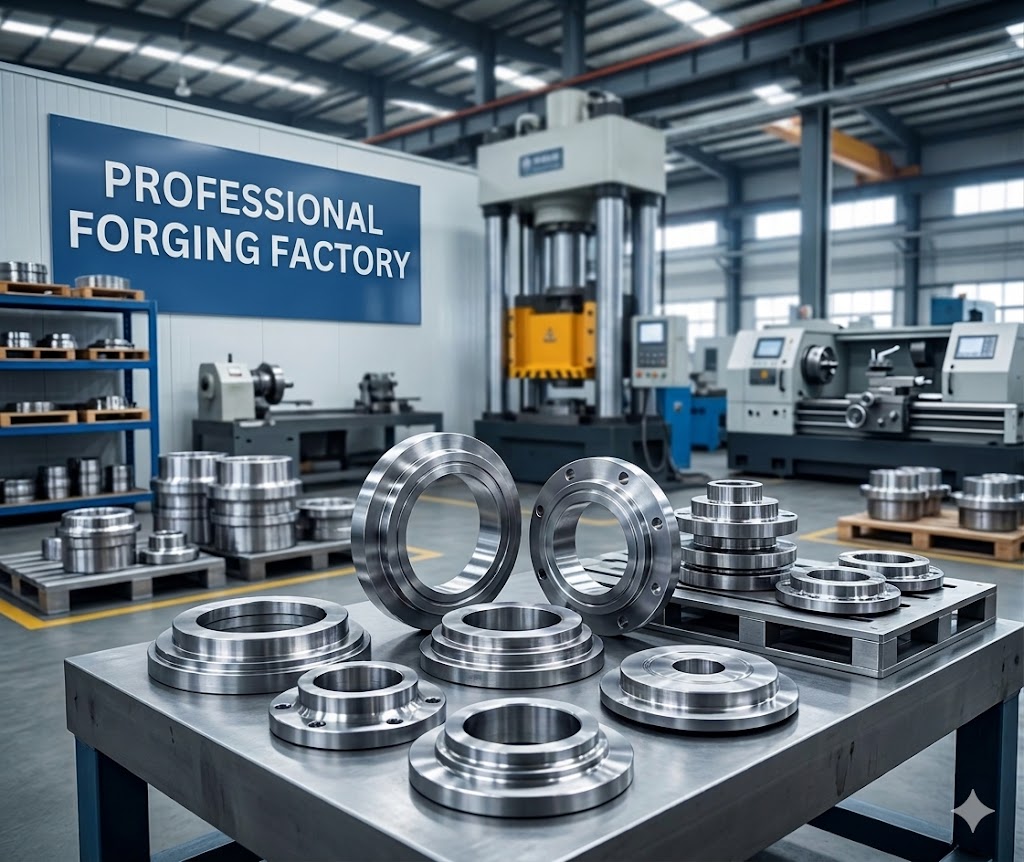
Full In-House Production Chain
- Steel Melting: 30t electric arc furnace (EAF), 30t ladle refining furnace (LF), VOD vacuum degassing furnace, and medium frequency induction furnaces
- Forging Equipment: 2000T/4000T/6300T hydraulic forging presses, 0.75T–9T electro-hydraulic forging hammers, and 1M–5M seamless ring rolling machines
- Heat Treatment: Ten industrial heat treatment furnaces with precision temperature control (±5°C), dedicated quench tanks with automated transfer achieving <20-second furnace-to-quench transfer
- Machining: Advanced CNC machining centers for precision finishing of custom forged components
View our complete production equipment list.
Strict Quality Control & Advanced Testing Facilities
- Nondestructive Testing (NDT): Ultrasonic testing (UT), magnetic particle testing (MT), penetrant testing (PT)
- Chemical Analysis: Direct-reading spectrometer for precise element composition testing
- Mechanical Testing: Universal tensile testing machine, high/low temperature tensile tester, hardness tester, impact testing machine
- Metallographic Testing: High-power metallographic microscope for grain size and inclusion analysis
Global Export & Certification Advantages
- ISO 9001:2015 certified factory. Products manufactured to ASTM B564, EN 10269, DIN 17744, ASME, and JIS material specifications. Production to API 6A dimensional and material requirements is available on request
- 25+ years of export experience, serving clients in Europe, North America, Middle East, Southeast Asia, Australia, and 50+ countries
- Full EN10204 3.1/3.2 mill test certification; third-party inspection (BV, SGS, TUV) available upon request
- Flexible production from 30kg small-batch prototypes to 30,000kg heavy-duty industrial components
Dimensional Tolerance & Surface Finish Capabilities for 2.4602 Machined Forgings
Forging is only the beginning. Many of our customers require their 2.4602 forged blanks to be delivered as finish-machined or semi-finish-machined components ready for direct assembly. Our in-house CNC machining center capabilities for 2.4602 (NiCr21Mo14W) are as follows:
| Dimension / Feature | Achievable Tolerance (Standard) | Achievable Tolerance (Precision) | Typical Application |
|---|---|---|---|
| Outside Diameter (OD) — bars, shafts | IT8 (h8/H8) | IT6 (h6/H6) | Pump shafts, valve stems, downhole tools |
| Inside Diameter (ID) — hollow forgings, sleeves | IT9 | IT7 | Bearing housings, seal bores, pressure cylinder IDs |
| Flatness & Parallelism — tube sheets, flanges | 0.10 mm / 300 mm | 0.05 mm / 300 mm | Heat exchanger tube sheets, reactor flanges |
| Concentricity / Runout — rotary components | 0.05 mm TIR | 0.02 mm TIR | Pump impellers, compressor rotors |
| Surface Roughness (Ra) — general machined | Ra 3.2 μm (N8) | Ra 1.6 μm (N7) | Standard mechanical surfaces, flanges |
| Surface Roughness (Ra) — sealing/process surfaces | Ra 1.6 μm (N7) | Ra 0.8 μm (N6) | FGD pump contact faces, seawater valve seats |
| Surface Roughness (Ra) — pharmaceutical/food grade | Ra 0.8 μm | Ra 0.4 μm (electropolished) | Pharma reactor internals, API process equipment |
| Thread Machining (internal & external) | 6g/6H tolerance class | 4h/4H tight tolerance | Wellhead connectors, subsea threaded connections |
| Dimensional inspection report | Full first article inspection (FAI) report with CMM measurement to NIST-traceable calibration standards, available for every precision-machined component | Available on all orders | |
Note: 2.4602 (NiCr21Mo14W) is an austenitic nickel superalloy with a strong work-hardening tendency during machining. Our CNC programs for 2.4602 are specifically optimized for this characteristic — using sharp carbide or PCD tooling, lower cutting speeds than carbon steel, higher feed rates, and continuous flood coolant — to avoid built-up edge, work-hardened surface layers, and subsurface tensile residual stress that could compromise corrosion fatigue performance in cyclic loading applications.
2.4602 (NiCr21Mo14W) Forging Parts Applications & Global Project Case Studies
Thanks to its exceptional corrosion resistance, mechanical stability, and wide environmental compatibility, our China-made 2.4602 (NiCr21Mo14W) forging parts are widely used in the most demanding industrial applications worldwide.
Oil & Gas Sour Service Wellhead Project (Middle East)
Project Location: Onshore oil field, Middle East
Project Pain Point: A flagship onshore oil field required wellhead components that could withstand 15,000 psi extreme pressure and high H₂S (sour gas) content, where traditional carbon steel and 316L stainless steel components suffered from severe corrosion and short service life.
Our Solution: We supplied custom 2.4602 (NiCr21Mo14W) forged wellhead components manufactured to API 6A material and dimensional specifications, including tubing heads, casing hangers, integral mud flanges, high-pressure valve bodies, and valve stems. All components were produced via AM/VAR melting, with NACE MR0175 compliance and 100% UT/MT inspection.
Project Outcome: The NiCr21Mo14W components have been in stable operation for over 3 years with zero unplanned maintenance, reducing the client’s annual wellhead maintenance costs by 60% and extending component service life by 3× compared to the previous material.
Nuclear Power Reactor Coolant System Project (Asia)
Project Location: Commercial nuclear power plant, Asia
Project Pain Point: A large-scale commercial nuclear power plant required safety-class reactor coolant pump components that could maintain stable performance in high-temperature, high-pressure, and radiation-exposed environments, with strict nuclear-grade quality and traceability requirements.
Our Solution: We manufactured 2.4602 (NiCr21Mo14W) forged nuclear reactor coolant pump casings, impellers, and containment seal chambers via the premium VIM/VAR double vacuum melting process. All components passed strict nuclear-grade ultrasonic testing, full traceability documentation, and third-party nuclear industry certification.
Project Outcome: The components were successfully installed and commissioned, meeting all nuclear safety standards and delivering stable performance in the reactor coolant system.
Nuclear-Grade 2.4602 Forgings — RCC-M and ASME NQA-1 Controls: For nuclear safety-class components, our 2.4602 forgings are produced under significantly elevated quality controls: (1) Melting route: exclusively VIM/VAR — eliminating gas porosity and reducing oxide inclusions to sub-ppm levels; (2) Cobalt restriction: Co ≤ 0.10% (vs. standard 2.50% maximum) to minimize neutron activation; (3) Forging ratio: minimum 6:1 documented reduction for complete dendrite breakdown; (4) Traceability: full heat traceability from ingot melt certificate to final component, records maintained minimum 40 years; (5) NDE level: 100% UT per ASTM A388 tightest acceptance level, plus 100% PT on all accessible surfaces. Third-party nuclear inspection by APAVE, Bureau Veritas Nuclear, or TUV is coordinated as part of our standard nuclear project workflow.
Flue Gas Desulfurization (FGD) Plant Project (Southeast Asia)
Project Location: Coal-fired power plant, Southeast Asia
Project Pain Point: A large coal-fired power plant’s FGD system faced severe corrosion of flow control and piping components from acidic flue gas, high chloride content, and mixed corrosive media, leading to frequent shutdowns for component replacement.
Our Solution: We delivered a full set of NiCr21Mo14W forged components for the FGD plant, including venturi cone meter bodies, valve seat rings, corrosion-resistant piping shells, baffle plates, and spray nozzles, all optimized for the FGD environment with precision machined surfaces.
Project Outcome: The 2.4602 alloy components extended the FGD system’s service life by 2× compared to the previous 316L stainless steel components, reducing annual maintenance costs by 50% and eliminating unplanned shutdowns.
Why 316L Stainless Steel Fails in FGD Absorbers — and Why 2.4602 Does Not: In a typical limestone-gypsum wet FGD system, the absorber slurry operates at pH 3.5–5.5 with chloride concentrations commonly exceeding 10,000 ppm — and in coastal plants using seawater-based cooling, up to 80,000 ppm. At these chloride concentrations, 316L stainless steel (PREN ≈ 24) loses its passive film on any surface imperfection or weld heat-affected zone within months of service. The failure mode is a simultaneous combination of pitting corrosion (chloride-induced passive film breakdown) and crevice corrosion (under deposits and at flange gasket faces), accelerated by the sulfur dioxide-derived sulfurous acid in the slurry. 2.4602 (NiCr21Mo14W) resists this combined attack because its PREN of ≥56 — more than double that of 316L — means the passive film remains thermodynamically stable even at chloride concentrations far exceeding those in any operating FGD system. In over two decades of supplying FGD components in China, Southeast Asia, and Europe, Jiangsu Liangyi has not recorded a single pitting failure on a properly heat-treated 2.4602 forged component in FGD service.
Petrochemical Pressure Vessel & Heat Exchanger Project (Europe)
Project Location: Petrochemical plant, Europe
Project Pain Point: A leading European petrochemical plant required custom forged components for high-temperature, high-corrosion chemical processing reactors and heat exchangers, which needed to withstand mixed acid environments and ASME Section II SB-564 material specifications and Section VIII dimensional requirements.
Our Solution: We supplied custom 2.4602 (NiCr21Mo14W) forged tube sheets, nozzles, channel flanges, pressure vessel shells, and reactor internals to ASME Section II SB-564 material specifications, with EN10204 3.2 certification and third-party inspection by TUV.
Project Outcome: Components have been in stable operation for over 2 years, meeting all corrosion resistance and pressure performance requirements, establishing a long-term cooperative relationship with the European client.
Waste Incineration & Environmental Protection Project (Oceania)
Project Location: Municipal waste incineration plant, Australia
Project Pain Point: A municipal waste incineration plant in Australia required corrosion-resistant components for its flue gas treatment and sewage conditioning systems, facing highly corrosive mixed acid and halogen-containing environments.
Our Solution: We provided custom 2.4602 (NiCr21Mo14W) forged valve bodies, piping components, and reactor internals, optimized for the waste incineration environment’s unique corrosive conditions.
Project Outcome: The components reduced the plant’s component replacement frequency from every 12 months to every 36 months, significantly lowering operating costs.
Seawater Desalination Plant Project (Middle East)
Project Location: Multi-stage flash (MSF) desalination plant, Gulf region
Project Pain Point: A large-scale MSF desalination plant operator in the Gulf region was experiencing accelerated corrosion of pump shaft sleeves, impellers, and seawater intake valve bodies. The combination of high-salinity Gulf seawater (up to 50,000 ppm chloride), operating temperatures reaching 120°C in the brine heater stages, and intermittent H₂S from biogenic sources in seabed intake water was exceeding the corrosion resistance envelope of the duplex stainless steel (2205) components originally specified.
Our Solution: We supplied 2.4602 (NiCr21Mo14W) forged pump shafts, wear ring sleeves, impeller hubs, and seawater injection valve bodies. All components were produced from AM/VAR melt with forging ratio ≥ 4:1, solution annealed at 1130°C with water quench, and finished to Ra ≤ 1.6μm on all seawater-contact surfaces to minimize biofouling adhesion.
Project Outcome: Following 18 months of continuous operation across four plant trains, no measurable corrosion or dimensional change was detected on any 2.4602 forged component during scheduled maintenance inspection — a complete elimination of the quarterly corrosion-related component replacement events previously experienced with 2205 duplex stainless steel.
Pharmaceutical Chemical Reactor Project (Europe)
Project Location: Active pharmaceutical ingredient (API) manufacturing plant, Germany
Project Pain Point: A German pharmaceutical manufacturer required reactor vessel internals — tube sheets, nozzle flanges, and agitator shaft blanks — for a multi-product API synthesis reactor processing alternating batches of strongly acidic (HCl/HNO₃ mixed acid, pH < 1) and mildly alkaline (pH 9–10) reaction mixtures at temperatures up to 150°C. The previous Hastelloy® B-3 components performed adequately in the acidic steps but showed surface oxidation in alkaline oxidizing rinse cycles. The plant required a single material reliable across the full pH swing without material change-out between product campaigns.
Our Solution: We recommended and supplied 2.4602 (NiCr21Mo14W) forged tube sheets and agitator shaft blanks — selected specifically because its high chromium (20–22.5%) provides the oxidizing-environment stability that Hastelloy® B-3 lacks, while its high molybdenum (12.5–14.5%) maintains reducing-acid resistance in the HCl/HNO₃ process steps. All forgings were produced to VIM/VAR melt quality, solution annealed, and polished to Ra ≤ 0.8μm (pharmaceutical-grade finish) on all product-contact surfaces. Full EN10204 3.2 certification was provided.
Project Outcome: The 2.4602 components passed the plant’s 6-month qualification campaign across 47 production batches with no corrosion findings. The manufacturer has since standardized 2.4602 as the preferred material for all new corrosion-critical reactor internals in their European facilities.
Subsea & Offshore Equipment Project (North Sea)
Project Location: Subsea production system, North Sea
Project Pain Point: A subsea equipment manufacturer required forged valve bodies and connector hubs for a subsea production tree rated to 10,000 psi and designed for a 25-year service life at 3,000m water depth. At this depth, chloride concentration in the produced water stream reaches 180,000 ppm — well above the threshold at which 316L, duplex 2205, and some Inconel® 625 components can sustain crevice corrosion under gasket seats over multi-decade service periods.
Our Solution: We manufactured 2.4602 (NiCr21Mo14W) forged valve body blanks and connector hub rings via the VIM/VAR melting route, with 100% ultrasonic testing per ASTM A388 at the tightest acceptance level, EN10204 3.2 third-party certification by Bureau Veritas, and dimensional inspection reports traceable to NIST-calibrated measurement standards. Forging geometry was optimized to minimize machining setups required by the customer’s precision machining workshop.
Project Outcome: The 2.4602 forged components were installed as part of the subsea tree assembly and completed a 2-year post-installation survey with no corrosion anomalies detected during ROV-based external inspection. The project outcome demonstrated full compatibility with subsea produced water service requirements, and the forging specification has been retained for future component procurement reference.
Strict Quality Control & Testing Standards for 2.4602 (NiCr21Mo14W) Forgings
We implement a comprehensive full-process quality management system for every batch of 2.4602 (NiCr21Mo14W) forging parts, from raw material incoming inspection to final product delivery, ensuring 100% traceability and full compliance with your specifications.
100% Ultrasonic Examination (UT) Requirements
Every finished 2.4602 forging undergoes full ultrasonic testing per ASTM A388 standards, with the following acceptance criteria:
- Unacceptable Defects:
- Cracks of any size
- Fault indications corresponding to a flat-bottomed hole (FBH) > φ3mm
- Fault indications corresponding to a FBH ≥ φ1.5mm with a length ≥ 30mm
- Reportable Defects:
- Fault indications corresponding to a FBH ≥ φ2mm
- Fault indications corresponding to a FBH ≥ φ1.5mm with measurable length
Mandatory Testing For Every Production Batch
- Chemical composition analysis: 1 test per heat (direct-reading spectrometer)
- HB hardness test: 2 tests per bar (one on each end)
- Macrographic examination: 2 tests per bar (one on each end)
- Grain size test: both ends of 1 bar from each lot
- Room temperature tensile strength test: 1 test per lot
- High temperature tensile strength test: 1 test per temperature and lot
- Non-destructive testing: 100% UT inspection for all finished parts; MT/PT available upon request
Material Selection Guide: When to Choose 2.4602 vs. Alternative Nickel Alloys
One of the most frequent questions our technical team receives is: "We need a corrosion-resistant nickel alloy forging — is 2.4602 the right choice, or should we consider C276, C22, or 625?" Below is our practical decision framework, developed from 25+ years of supplying corrosion-critical forgings across multiple industries.
✓ Choose 2.4602 (NiCr21Mo14W) when:
- Your environment involves mixed oxidizing + reducing acid conditions — FGD absorber slurry, mixed HNO₃/HCl, or nitric/sulfuric acid blends
- Your medium contains hot concentrated nitric acid (>50% concentration, >40°C) — C276’s low Cr is not suitable here; 2.4602’s high Cr gives it a decisive advantage
- You need NACE MR0175 / ISO 15156 sour service compliance without special heat treatment beyond standard solution annealing
- Your application involves high-chloride seawater at elevated temperature (40–120°C) — avoiding the crevice corrosion failures seen with duplex stainless steel
- Your project is in nuclear power and you need a Co-restricted alloy (≤0.10%) with VIM/VAR melt traceability
- You need a single alloy across pH 1–10 swing (pharmaceutical synthesis reactors)
- Budget is a factor and you need lower cost than C22 while still achieving excellent mixed-environment performance
→ Consider Hastelloy® C276 (2.4819) instead when:
- Your primary corrosive medium is a strong reducing acid at high concentration — concentrated HCl above 30%, or concentrated H₂SO₄ at high temperature — where C276’s higher Mo (15–17%) gives a measurable advantage over 2.4602
- You are in strongly reducing chloride environments at temperatures above 100°C where maximum Mo content is the priority
- Budget is flexible and you want the highest available PREN value (~71) for maximum pitting resistance margin
→ Consider Inconel® 625 (2.4856) instead when:
- Your primary requirement is high-temperature oxidation resistance and creep strength above 600°C — 625 has significantly better high-temperature mechanical stability than 2.4602
- Your application is aerospace, gas turbine, or combustion hardware where 625’s superior fatigue properties are primary drivers
- Corrosion resistance requirement is moderate and you want to reduce material cost relative to 2.4602
- You need weld overlay / cladding — 625 is the most widely qualified Ni-alloy for weld overlay applications
If your application involves an unusual combination of conditions, contact our technical team. We maintain an internal corrosion database of over 200 field case histories and are happy to provide a no-charge material selection consultation for qualified industrial projects.
Lead Time, MOQ, and Packaging for 2.4602 (NiCr21Mo14W) Forging Orders
We understand that procurement timelines are as critical as technical specifications in most industrial projects. Below is transparent, realistic guidance for our 2.4602 (NiCr21Mo14W) forging products. Lead times are calculated from receipt of order confirmation and approved drawings; transit time to destination port is excluded.
📦 Standard Products — Lead Time
- Forged bars (standard dimensions): 4–6 weeks
- Seamless rolled rings (standard OD range): 5–7 weeks
- Forged discs and plates: 5–7 weeks
- Includes: forging, heat treatment, UT inspection, EN10204 3.1 certification
🔨 Custom Components — Lead Time
- Custom geometry forgings + CNC rough machining: 8–12 weeks
- Precision-finish machined components: 10–14 weeks
- Nuclear-grade (VIM/VAR, Co-restricted, extended NDE): 12–18 weeks
- Expedited production available — contact us with your deadline
📌 Minimum Order Quantity (MOQ)
- Prototype / R&D samples: from 1 piece / 30 kg
- Small batch production: from 3–5 pieces or 500 kg
- No strict MOQ on standard commercial orders — single-piece critical components and high-volume runs both accepted
- Blanket orders with scheduled delivery accepted
🚢 Packaging & Export
- All 2.4602 forgings are rust-proofed with anti-corrosion oil and wrapped in moisture-barrier film
- Packed in ISPM-15 certified heat-treated wooden crates for international sea freight (EU, US, AU compliant)
- Heavy components (≥ 5 tons): steel-reinforced flat rack containers with certified lifting lug design
- Incoterms: EXW, FOB Shanghai/Tianjin, CIF destination — all terms available
- Export documents: commercial invoice, packing list, bill of lading, mill test certificate, certificate of origin (FORM A / CO)
7 Common Mistakes When Specifying and Procuring 2.4602 (NiCr21Mo14W) Forgings
Over 25 years of supplying 2.4602 (NiCr21Mo14W) forgings to customers across 50+ countries, our technical team has seen the same procurement and specification errors recur across different industries and geographies. These mistakes are not obvious — experienced engineers and procurement professionals make them. We share them here because understanding these pitfalls before you place your order will save you time, money, and potentially a corrosion failure in service.
Mistake 1: Specifying the material designation without specifying the melting route. An order that reads “2.4602 per DIN 17744” without specifying the melting method (AM/VR, AM/VAR, or VIM/VAR) is legally fulfilled by air-melted material. For nuclear applications, NACE sour service, or subsea 25-year design life, air-melted 2.4602 may not achieve the cleanliness, homogeneity, or fatigue performance your application demands. Always specify: “2.4602 per DIN 17744, melting route VIM/VAR” (or AM/VAR for oil & gas) in your purchase order and material specification. We will never substitute a lower melt-quality unless you have explicitly told us it is acceptable.
Mistake 2: Accepting a mill test certificate without checking the heat treatment record. EN10204 3.1 certificates are not standardized in layout — different mills present the information differently, and the heat treatment section can be missing or vague. A certificate that lists “solution annealed” without stating the actual temperature, hold time, and cooling method tells you nothing useful. When accepting a 2.4602 3.1 certificate, verify that it explicitly states: solution annealing temperature (should be 1100–1150°C), hold duration (adequate for cross-section), and cooling method (water quench). If it simply says “heat treated to standard,” that is insufficient — ask for the heat treatment chart printout from the furnace data logger. Our certificates include all three parameters as standard.
Mistake 3: Specifying hardness but not specifying the hardness test location. Hardness varies across a large 2.4602 forging cross-section due to cooling rate differences during quenching. A hardness test on the forging surface (which cooled fastest) will typically give a lower, more favorable reading than the centre. For NACE MR0175 sour service compliance, the hardness limit (≤35 HRC / 331 HBW) must be demonstrated at the most unfavorable location — typically the end-face of a bar or the mid-radius of a disc. If your purchase specification only says “hardness per NACE MR0175,” without specifying the test location, a non-compliant centre-section may ship undetected. Specify: “Hardness testing at surface AND at quarter-thickness AND at centre of each bar/disc end face.”
Mistake 4: Using 2.4602 chemical composition alone as the acceptance criterion without requiring intergranular corrosion testing. Chemical composition within DIN 17744 limits does not guarantee freedom from sensitization if the heat treatment was incorrect or if the forging was re-heated above 500°C after solution annealing (e.g., during a straightening operation). For critical FGD, nuclear, or pharmaceutical applications, specify ASTM G28 Method A (24h boiling in ferric sulfate-sulfuric acid) or Method B (120h boiling in 50% nitric acid) as an acceptance test on the material heat. ASTM G28 testing costs approximately USD 150–400 per heat test and directly verifies whether the delivered microstructure is sensitized. We perform G28 testing in-house and routinely offer it as an add-on for critical orders.
Mistake 5: Requesting surface finish on the RFQ but not specifying the measurement standard. “Ra 1.6 surface finish” sounds precise, but Ra alone does not fully characterize a surface relevant to corrosion performance. Two surfaces with identical Ra can have very different Rz (peak-to-valley height) values — and it is Rz that determines whether crevice corrosion can initiate under a deposit or gasket in service. For FGD pump shafts and seawater valve seating faces, specify both Ra AND Rz (we recommend Rz ≤ 10 μm for high-chloride sealing surfaces), and specify the measurement cutoff length (typically λc 0.8 mm or 2.5 mm per ISO 4288). This costs nothing extra to specify and prevents future disputes about surface acceptance.
Mistake 6: Not confirming cobalt content for nuclear applications until after forging is complete. Standard DIN 17744 allows Co ≤ 2.50% in 2.4602. For nuclear service where neutron activation of cobalt is a radiation protection concern (all PWR and BWR primary circuits, and most research reactors), the actual Co limit is ≤ 0.10% — a 25× tighter restriction. Cobalt content is set at the melting stage and cannot be changed after the ingot is poured. If you specify a nuclear order without stating the Co restriction, you will receive standard-grade material that is chemically compliant with DIN 17744 but not suitable for nuclear service. Always include “Co ≤ 0.10% maximum, VIM/VAR melt” in your nuclear forging purchase specification before the melting campaign is started.
Mistake 7: Ordering “as-forged” bars and assuming solution annealing can be done locally after receipt. We regularly receive calls from customers who have received as-forged 2.4602 bars (sometimes from a third party), attempted to perform solution annealing in a local commercial heat treatment shop, and then experienced corrosion failures in service. The problem is almost always quench speed: a commercial heat treatment shop optimized for carbon steel tooling may have furnaces positioned 50–100m from the quench tank. Transferring a heavy 2.4602 forging across that distance takes 60–120 seconds — far longer than the <30 second window required to avoid sensitization. For 2.4602, the heat treatment is only as good as the transfer time. Order your 2.4602 forgings in solution-annealed condition from a facility where furnaces and quench tanks are co-located. We specifically built our heat treatment infrastructure with this requirement in mind.
Technical Glossary: Key Terms for 2.4602 (NiCr21Mo14W) Forging Specifications
Procurement managers, project engineers, and technical buyers who are not corrosion metallurgists by training frequently encounter unfamiliar terminology when reviewing 2.4602 material specifications, test reports, and supplier documentation. The following glossary defines the most commonly misunderstood terms in 2.4602 forging procurement, in plain engineering language.
| Term | Plain-Language Definition | Why It Matters for 2.4602 |
|---|---|---|
| PREN (Pitting Resistance Equivalent Number) | A calculated number = Cr + 3.3×Mo + 16×N that estimates an alloy’s resistance to pitting corrosion in chloride environments. Higher PREN = more pitting-resistant. | 2.4602 PREN ≥56; 316L PREN ≈24. The gap explains why 2.4602 survives in FGD and seawater where 316L fails rapidly. |
| Sensitization | A metallurgical damage condition where chromium carbides or Mo-rich intermetallic phases precipitate at grain boundaries during slow cooling through 500–1000°C, depleting the surrounding matrix of Cr and Mo and creating narrow corrosion-susceptible zones. | The primary reason why heat treatment of 2.4602 must include rapid water quench, not air cooling. Sensitized 2.4602 can fail by intergranular corrosion even though its bulk chemistry is unchanged. |
| Solution Annealing | Heating a metal to a temperature where all carbides and secondary phases dissolve back into solid solution, followed by rapid quenching to “freeze” the alloy in its most corrosion-resistant state. | For 2.4602, solution annealing at 1100–1150°C + water quench is the mandatory final heat treatment. It is what the datasheet corrosion values are measured on. |
| SCC (Stress Corrosion Cracking) | A failure mechanism where a susceptible alloy under tensile stress in a specific corrosive environment develops cracks, even though neither the stress nor the environment alone would cause failure. Chloride SCC of austenitic stainless steel in hot chloride solutions is a common example. | 2.4602’s high Ni content (balance, ~57%) makes it highly resistant to chloride-induced SCC compared to 300-series stainless steels, which are SCC-susceptible above about 50°C in chloride solutions. |
| HISC (Hydrogen-Induced Stress Cracking) | A form of cracking where atomic hydrogen from cathodic protection systems or from H₂S service diffuses into a high-strength alloy and causes brittle fracture under applied or residual tensile stress. | Relevant for subsea 2.4602 components connected to cathodic protection systems. 2.4602 in solution-annealed condition with yield strength within the standard 690–950 MPa range is generally considered HISC-resistant; cold-worked material above 120 ksi (827 MPa) may require assessment per DNV-RP-F112. |
| SSC (Sulfide Stress Cracking) | Cracking of susceptible materials in H₂S-containing environments (sour service) driven by atomic hydrogen generated by the H₂S corrosion reaction. NACE MR0175/ISO 15156 defines which alloys and hardness levels are acceptable. | 2.4602 can be produced to meet the material requirements of NACE MR0175/ISO 15156 when produced to hardness ≤35 HRC. This makes it suitable for wellheads, Christmas trees, and downhole tools in H₂S-containing fields. |
| EN10204 3.1 vs. 3.2 | EN10204 is a European standard governing inspection certificates for metallic products. Type 3.1 = certificate validated by the manufacturer’s authorized inspection representative. Type 3.2 = certificate also countersigned by an independent inspection body representing the purchaser (e.g., Bureau Veritas, SGS, TUV). | 3.1 is standard delivery. 3.2 is required by many EPC contractors, pressure vessel codes (PED, ASME), and nuclear quality assurance programs. Always specify your certificate requirement before production starts — adding 3.2 after production requires the inspector to witness a repeat of the tests. |
| Mu-phase (μ-phase) | An intermetallic compound (Fe,Co)₂Mo₅W with a complex hexagonal structure that precipitates at grain boundaries in Ni-Cr-Mo alloys when held in the temperature range 700–1000°C. Rich in Mo and W, its formation depletes the surrounding matrix of these elements. | The primary intermetallic phase responsible for sensitization-related corrosion degradation in 2.4602 if heat treatment is improper. Detected by ASTM G28 testing or transmission electron microscopy (TEM) of thin foils at grain boundaries. |
| VIM/VAR | Vacuum Induction Melting followed by Vacuum Arc Remelting. A double-vacuum melting process that produces ingots with sub-ppm gas content, minimal oxide inclusions, and highly uniform elemental distribution throughout the cross-section. | Required for nuclear-grade 2.4602 and recommended for subsea design life >20 years, NACE sour service with H₂S partial pressure above 0.34 bar (5 psi), and aerospace applications where fatigue scatter must be minimized. |
| Forging Ratio | The ratio of the starting ingot cross-sectional area to the finished forging cross-sectional area. A forging ratio of 4:1 means the final cross-section is one quarter the area of the starting ingot — i.e., the material was reduced by 75%. | A minimum forging ratio of 4:1 is required for standard 2.4602 forgings; 6:1 for nuclear-grade. Higher ratios break down ingot segregation zones and produce more homogeneous microstructure and better toughness — but also require more starting material and more press capacity. |
Frequently Asked Questions (FAQs) About 2.4602 (NiCr21Mo14W) Forgings
2.4602 (NiCr21Mo14W) is a nickel-chromium-molybdenum-tungsten superalloy with nickel as the balance element, 20–22.5% chromium, 12.5–14.5% molybdenum, and 2.5–3.0% tungsten. Designed for extreme corrosion resistance across a uniquely wide range of chemical environments — including both strong oxidizing acids (nitric acid) and strong reducing acids (hydrochloric acid, sulfuric acid), as well as mixed acid and chloride-containing media. Its PREN value typically exceeds 56, placing it among the most corrosion-resistant commercially available wrought nickel alloys. It is widely used in chemical processing, oil & gas, FGD, nuclear power, seawater desalination, pharmaceutical manufacturing, and waste incineration applications worldwide.
The key difference is chromium content: 2.4602 contains 20–22.5% Cr versus only 14.5–16.5% Cr in Hastelloy® C276. This higher chromium makes 2.4602 significantly more resistant to oxidizing acid environments (e.g., hot nitric acid, mixed HNO₃/HCl) where C276 may not perform adequately. C276 compensates with slightly higher molybdenum (15–17%) which gives it an edge in strongly reducing media at high concentrations. For mixed acid environments — particularly FGD, waste incineration, and pharmaceutical reactors where the medium alternates between oxidizing and reducing conditions — 2.4602 is typically the superior choice because its higher Cr provides oxidizing resistance that C276 lacks, while its 12.5–14.5% Mo still delivers excellent reducing-acid resistance.
2.4602 (NiCr21Mo14W) forgings are solution annealed at 1100–1150°C, with a hold time of approximately 1 minute per millimeter of effective cross-section (minimum 30 minutes), followed by rapid water quenching with a furnace-to-quench transfer time of less than 30 seconds for standard sections — and less than 20 seconds for sections exceeding 500mm diameter. This treatment is critical: if the forging cools too slowly through the 650–1000°C sensitization temperature range, Mo-rich intermetallic phases and chromium carbides precipitate at grain boundaries, creating zones of significantly reduced corrosion resistance that are not detectable by standard mechanical testing.
Yes. As a professional China custom forging manufacturer, we specialize in producing 2.4602 (NiCr21Mo14W) forged parts strictly according to your custom engineering drawings and technical specifications. We support full custom production from 30kg small-batch prototypes to 30,000kg heavy-duty industrial components, with complete in-house CNC machining, heat treatment, and testing capabilities. Our engineering team reviews all customer drawings before production confirmation and provides a DFM (design for manufacturability) review on request. Contact us to discuss your specific project requirements.
Our factory is ISO 9001:2015 certified. Our 2.4602 (NiCr21Mo14W) forging parts are manufactured to ASTM B564, EN 10269, DIN 17744, and ASME Section II SB-564 material specifications. Production to API 6A dimensional and material requirements is available on request. EN10204 Type 3.1 mill test certificates are provided for every production batch as standard. EN10204 Type 3.2 certificates (countersigned by customer’s authorized inspector or accredited body) are available upon request. Third-party inspection by Bureau Veritas, SGS, TUV, Intertek, or APAVE can be arranged. For sour service oil & gas applications, we provide NACE MR0175 / ISO 15156 compliance documentation.
For 2.4602 (NiCr21Mo14W) forged bars: maximum diameter 2 meters, maximum length 15 meters, maximum single-piece weight 30 tons. For seamless rolled rings: maximum outer diameter 6 meters, maximum single-piece weight 30 tons. For forged discs and plates: maximum diameter 3 meters, maximum thickness 500mm, maximum single-piece weight 20 tons. For hollow forgings and heavy-wall cylinders: maximum outer diameter 3,000mm with custom wall thickness. All maximum dimensions are subject to specific geometry review — contact us with your drawing for a production feasibility assessment.
Standard forged bars and seamless rolled rings in common dimensions are typically ready for shipment within 4–6 weeks from order confirmation. Custom geometry forgings with CNC rough machining take 8–12 weeks; precision-finished components take 10–14 weeks. Nuclear-grade components with VIM/VAR melt, extended NDE, and qualification testing typically require 12–18 weeks. There is no strict minimum order quantity — we supply single-piece critical components as well as high-volume production batches. Prototype and R&D samples start from 1 piece / 30 kg.
Our 2.4602 (NiCr21Mo14W) forged parts serve a broad spectrum of industries: oil & gas (sour service wellheads, downhole tools, Christmas tree components), nuclear power (reactor coolant pump casings, impellers, containment seal chambers), flue gas desulfurization / FGD (absorber internals, venturi meters, spray nozzles), chemical & petrochemical processing (pressure vessel shells, heat exchanger tube sheets, reactor nozzles), seawater desalination (pump shafts, impeller hubs, valve bodies for MSF and RO plants), pharmaceutical API manufacturing (reactor internals, agitator shafts), subsea and offshore (valve bodies, connector hubs for high-chloride produced water service), waste incineration, and power generation.
Get Your Custom 2.4602 (NiCr21Mo14W) Forging Parts Quotation Today
Jiangsu Liangyi Co., Limited is your trusted China-based manufacturer and supplier of high-quality 2.4602 (NiCr21Mo14W) forging parts. With full in-house capabilities from steel melting, open die forging, seamless ring rolling, heat treatment, to precision machining, we deliver one-stop custom forging solutions for global industrial projects of any scale.
Whether you need standard 2.4602 forged bars and rings, custom complex NiCr21Mo14W components to your engineering drawings, or nuclear-grade VIM/VAR melt forgings with material traceability documentation suitable for RCC-M and ASME NQA-1 program review, our experienced technical team will provide a detailed quotation, production plan, and professional material selection support — typically within 24–48 hours of receiving your inquiry.
Contact us today for a free, no-obligation quotation for your 2.4602 (NiCr21Mo14W) forging project:
Inquiry Email: sales@jnmtforgedparts.com
Phone / WhatsApp: +86-13585067993
Official Website: https://www.jnmtforgedparts.com
Factory Address: Chengchang Industry Park, Jiangyin City, Jiangsu Province, China
Trademark Notice: Hastelloy® is a registered trademark of Haynes International, Inc. Inconel® is a registered trademark of Special Metals Corporation. Nicrofer® is a registered trademark of VDM Metals GmbH. These trademarks are referenced on this page for material comparison and technical reference purposes only and do not imply any affiliation with, sponsorship by, or endorsement from the respective trademark owners.
Standards Reference Notice: References to ASTM, EN, DIN, ASME, API, NACE, ISO, RCC-M, and other standards on this page indicate that products can be manufactured to the material, dimensional, and testing requirements specified in those standards. Jiangsu Liangyi Co., Limited holds ISO 9001:2015 quality management system certification. API Monogram licensing, ASME U-stamp authorization, and nuclear quality assurance program qualification (RCC-M, ASME NQA-1) are subject to customer-led pre-qualification audit and are not independently held factory certifications unless separately confirmed in writing.
Technical Data Notice: Corrosion rate data, TCO estimates, and performance comparisons on this page are provided as engineering reference only. Actual performance depends on specific operating conditions. Customers are responsible for independent verification for their specific applications.
Sitemap · jnmtforgedparts.com · © 2025 Jiangsu Liangyi Co., Limited. All rights reserved.