ISO 9001:2015 Certified 25+ Years Experience Exported to 50+ Countries 30,000 kg Max Weight API 6A | ASME | CE | NACE
About 2.4600 (NiMo29Cr) Forging Material
Jiangsu Liangyi is a professional ISO 9001:2015 certified manufacturer of 2.4600 (NiMo29Cr) open die forging parts and seamless rolled steel forged rings from Jiangsu, China. With over 25 years of focused manufacturing experience in nickel alloy forgings, we have become a reliable global supplier of high-performance 2.4600 parts for main industrial uses around the world.
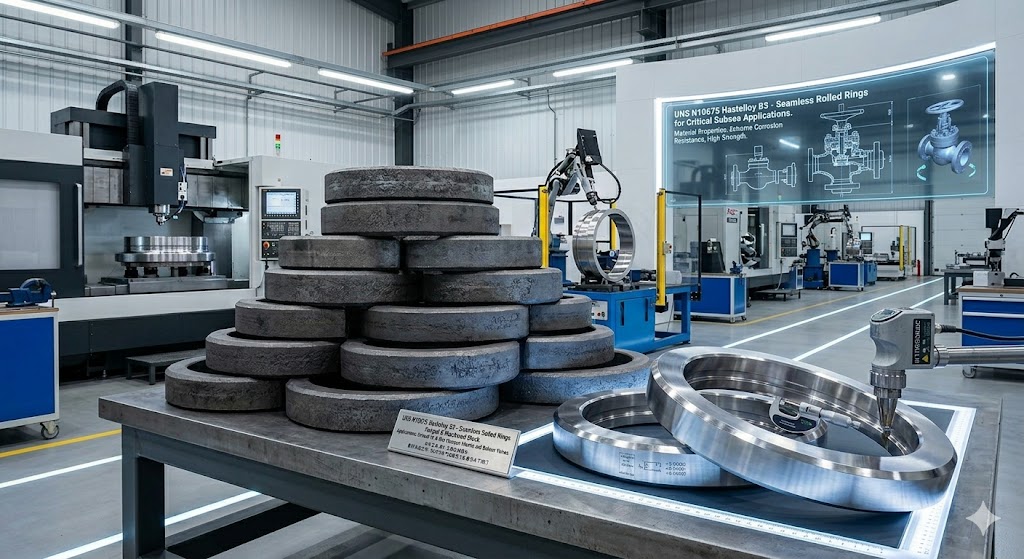
2.4600, also known as NiMo29Cr, is an advanced nickel‑molybdenum‑chromium alloy that has improvements over the earlier Hastelloy B‑2. It has excellent resistance to hydrochloric acid at all concentrations and temperatures from room conditions up to boiling point, so that it is the best choice material for extremely harsh corrosive environments in chemical processing, oil and gas, and nuclear power. This alloy has the UNS designation N10675.
2.4600 vs. Hastelloy B-2 — Key Differences
| Property | 2.4600 (NiMo29Cr) | Hastelloy B-2 |
|---|
| Thermal stability | Excellent — low intermetallic phase formation | Moderate — susceptible to Ni₄Mo precipitation |
| Weld HAZ ductility | Superior — retains toughness after welding | Lower — requires post-weld heat treatment |
| Stress-corrosion cracking resistance | Excellent | Good |
| HCl resistance (all concentrations) | Excellent | Excellent |
| Preferred for welded fabrications | Yes | With caution |
Key Advantages of 2.4600 (NiMo29Cr) Over Other Alloys
- Great hydrochloric acid resistance: Outperforms stainless steels and other nickel alloys at all concentrations and temperatures up to the boiling point.
- Excellent multi-acid resistance: Withstands sulfuric, acetic, formic and phosphoric acids in reducing conditions.
- Excellent pitting and crevice corrosion resistance: Works reliably in chloride-bearing and halide-bearing media.
- Concentrated acid resistance: Resists concentrated sulfuric acid which attacks zirconium alloys severely.
- Excellent formability: High ductility enables it easy to be formed, machined and welded.
- Improved thermal stability: Significantly better than Hastelloy B-2 — reduces intermetallic phase formation during welding and heat treatment, preserving ductility and toughness.
- Halide resistance: Withstands chloride-bearing solutions and fluoride-bearing media.
Important Application Note: 2.4600 (NiMo29Cr) is not recommended for use in environments containing ferric or cupric salts, as these oxidizing substances can cause faster corrosion. Oxidizing acids such as nitric acid should also be avoided. Our experienced engineering team based in Jiangyin, Jiangsu Province provides professional material selection advice for your specific application needs.
Advanced Manufacturing Process for 2.4600 Forgings
At our state-of-the-art manufacturing facility in Jiangyin, Jiangsu Province, China, we employ the most advanced metallurgical processes to produce high-quality 2.4600 forgings with consistent mechanical properties and fine-grained internal matrix. Our strategic location near Shanghai Port guarantees efficient shipping with short transit times around the world.
Step 1 — Premium Melting Processes
All 2.4600 forging billets are produced using double or triple vacuum melting to guarantee the highest purity, minimal segregation and precise chemistry control:
- Vacuum Induction Melting (VIM): Primary melt producing clean, homogeneous ingots with tight chemical composition tolerances.
- Electro-Slag Re-melting (ESR): Secondary refining that removes inclusions and improves internal soundness and surface quality.
- Vacuum Arc Re-melting (VAR): Tertiary melt providing the highest cleanliness level required for nuclear and aerospace-grade parts.
Step 2 — Precision Hot Forging
Our advanced forging equipment — including 2,000T to 6,300T hydraulic presses, a 5-metre ring rolling machine and 1–5 ton electro-hydraulic hammers — allows accurate thermomechanical processing.Hot forming is carried out within the best temperature range to create a uniform fine-grained internal matrix, which is key to getting the highest corrosion resistance and mechanical strength from finished 2.4600 alloy forging.
Step 3 — Solution Heat Treatment & Quenching
All 2.4600 forgings go through a strictly controlled solution annealing process, followed by fast water quenching. This dissolves all secondary phases and keeps the alloy in its best single-phase microstructure, guaranteeing the highest corrosion resistance and ductility. Our ten modern heat treatment furnaces can handle single parts weighing up to 30 tons.
Step 4 — Inspection & Testing
Every forging passes a full battery of destructive and non-destructive tests — from ultrasonic testing and liquid penetrant inspection to tensile, impact and hardness testing — before being released for delivery with a full EN 10204 3.1 or 3.2 certificate.
2.4600 Forging Product Capabilities & Specifications
We produce a full range of 2.4600 (NiMo29Cr) forged steel products in all kinds of shapes and sizes to meet your specific project requirements. Our manufacturing capabilities cover parts from 30 kg up to 30,000 kg with an annual production capacity of 120,000 tonnes.
Forged Bars & Rods
- Round bars: Ø50 mm to Ø2,000 mm
- Square bars: 50×50 mm to 1,500×1,500 mm
- Flat bars: 20×100 mm to 500×2,000 mm
- Rectangular bars
- Step shafts and gear shafts
- Length up to 15 metres
Seamless Rolled Rings
- Outer diameter: 500 mm to 6,000 mm
- Height: 50 mm to 1,500 mm
- Wall thickness: 50 mm to 500 mm
- Standard and contoured profile rings
- Gear rings and bearing rings
- Weight up to 30 tonnes
Hollow Forgings
- Sleeves and bushes
- Hubs and housings
- Shells and casings
- Hollow bars and heavy-wall cylinders
- Forged pipes and tubes
- Outer diameter up to 3,000 mm
Other Forged Components
- Discs and plates: up to Ø3,000 mm
- Blocks and blanks: up to 20 tonnes
- Flanges and bosses
- Valve parts (bodies, stems, balls)
- Pump parts (casings, impellers, shafts)
- Custom forged parts per drawings
We can make all 2.4600 forged parts as-forged, rough machined, or finish machined, depending on your drawings and specifications.Our CNC machining equipment in-house makes sure that parts fit tightly and have a smooth surface finish, so they can be used or put together right away.
Chemical Composition of 2.4600 (NiMo29Cr) — EN 10088 / ASTM B564
We strictly control the chemical composition of 2.4600 (NiMo29Cr / UNS N10675) during our advanced melting processes to make sure all parts have stable corrosion resistance and mechanical properties. Every shipment includes a complete chemical analysis report that is fully traceable to the heat number.
Table 1 — Chemical Composition of 2.4600 (NiMo29Cr), wt %
| Element | Weight % (min – max) | Element | Weight % (max) |
|---|
| Nickel (Ni) | 51.3 – 71.0 (balance) | Aluminum (Al) | 0.50 |
| Molybdenum (Mo) | 27.0 – 32.0 | Vanadium (V) | 0.20 |
| Iron (Fe) | 1.0 – 3.0 | Copper (Cu) | 0.20 |
| Chromium (Cr) | 1.0 – 3.0 | Titanium (Ti) | 0.20 |
| Tungsten (W) | 0 – 3.0 | Niobium (Nb) | 0.20 |
| Manganese (Mn) | 0 – 3.0 | Silicon (Si) | 0.10 |
| Cobalt (Co) | 0 – 3.0 | Phosphorus (P) | 0.030 |
| Carbon (C) | 0 – 0.010 | Sulfur (S) | 0.010 |
The very low carbon content (max. 0.010 wt %) is a distinguishing characteristic of 2.4600 compared with older nickel alloys. Combined with the 27–32 wt % molybdenum content, it delivers the alloy's excellent resistance to reducing acid environments.
Mechanical Properties of 2.4600 Forgings — Solution Annealed & Quenched Condition
Our 2.4600 forged parts are supplied in the solution heat-treated and water-quenched condition to guarantee improved mechanical performance and corrosion resistance. All mechanical properties are verified through rigorous testing in our accredited in-house laboratory before each delivery.
Table 2 — Room-Temperature Mechanical Properties of 2.4600 (NiMo29Cr), Min. Values
| Property | Minimum Value | Test Standard / Condition |
|---|
| 0.2% Proof Strength (Rp0.2) | 300 MPa | Room temperature, ASTM E8 |
| Ultimate Tensile Strength (Rm) | 740 MPa | Room temperature, ASTM E8 |
| Elongation (A5) | 40% | Room temperature, 50 mm gauge |
| Reduction of Area (Z) | 50% | Room temperature |
| Brinell Hardness | ≤ 241 HBW | ASTM E10 |
Elevated-temperature mechanical property testing up to 500 °C is available upon request. Our full testing facilities make sure that every 2.4600 forging meets or exceeds the requirements of EN 10269, ASTM B564, ASTM B462 and customer-specific specifications.
Physical & Thermal Properties of 2.4600 (NiMo29Cr)
Beyond mechanical strength, engineers choosing materials for extreme‑environment equipment use accurate physical and thermal data to model heat transfer, predict thermal expansion stresses, and calculate part weights. The measured values below for 2.4600 (NiMo29Cr / UNS N10675) represent material produced at our Jiangyin facility in the solution‑annealed and water‑quenched condition.
Table 3 — Physical & Thermal Properties of 2.4600 (NiMo29Cr) at Room Temperature
| Property | Value | Unit | Test Condition |
|---|
| Density | 9.22 | g/cm³ | 20 °C |
| Melting Range | 1370 – 1418 | °C | Solidus – Liquidus |
| Specific Heat Capacity (Cp) | 373 | J / (kg·K) | 20 °C |
| Thermal Conductivity (λ) | 11.1 | W / (m·K) | 20 °C |
| Thermal Conductivity (λ) | 13.8 | W / (m·K) | 200 °C |
| Mean Coefficient of Thermal Expansion (α) | 10.0 × 10⁻⁶ | K⁻¹ | 20 – 200 °C |
| Mean Coefficient of Thermal Expansion (α) | 11.0 × 10⁻⁶ | K⁻¹ | 20 – 400 °C |
| Electrical Resistivity (ρ) | 137 | μΩ·cm | 20 °C |
| Young's Modulus (E) | 213 | GPa | 20 °C |
| Young's Modulus (E) | 190 | GPa | 300 °C |
| Poisson's Ratio (ν) | 0.31 | — | 20 °C |
| Magnetic Permeability | ≤ 1.001 | μ/μ₀ | Essentially non-magnetic |
What These Physical Properties Mean for Your Design
- High density (9.22 g/cm³): Slightly heavier than standard stainless steels — engineers should account for this in weight-critical structural calculations, particularly for large-diameter seamless rolled rings.
- Low thermal expansion coefficient (10.0 × 10⁻⁶ K⁻¹): About 30% lower than austenitic stainless steels, which makes 2.4600 forgings well suited to assemblies with stainless steel counterparts — thermal expansion mismatch stresses are minimised.
- Moderate thermal conductivity (11.1 W/m·K): Lower than copper alloys or titanium alloys, but adequate for heat exchanger tube sheet and channel flange applications in acid service where superior corrosion resistance takes priority over heat transfer rate.
- Non-magnetic behaviour: The essentially non-magnetic nature of 2.4600 makes it suitable for applications near sensitive instrumentation or magnetic resonance equipment where stray magnetic fields must be minimised.
- High Young's Modulus (213 GPa): Comparable to standard nickel alloys — provides good stiffness for pump shafts, valve stems and rotating parts that must resist deflection under load.
International Standards & Global Equivalents for 2.4600 (NiMo29Cr)
Procurement engineers, project managers and inspection agencies around the world use different naming systems for the same alloy. The table below brings together all major international standards for 2.4600 (NiMo29Cr / UNS N10675)forgings and related product types, removing the risk of material confusion in global purchasing. All our forgings can be certified to any of the standards listed below.
Table 4 — International Standard Designations for 2.4600 (NiMo29Cr)
| Standard Body | Standard / Designation | Product Form | Remarks |
|---|
| EN / DIN (Europe) | 2.4600 · NiMo29Cr | All forms | EN 10095, EN 10269 (fasteners), EN 10272 (bars) |
| ASTM / UNS (USA) | UNS N10675 | Forgings | ASTM B564 (forgings), ASTM B462 (flanges & fittings) |
| ASTM (USA) | UNS N10675 | Bar & Rod | ASTM B335 (rod & bar) |
| ASTM (USA) | UNS N10675 | Plate / Sheet | ASTM B333 (plate, sheet, strip) |
| ASTM (USA) | UNS N10675 | Seamless tube | ASTM B622 (seamless pipe & tube) |
| ASME (Pressure Vessels) | UNS N10675 | Forgings / Plate | ASME SB-564, SB-333, SB-335, SB-462 |
| ISO | NW 0675 | All forms | ISO 9723 (bars), ISO 9725 (forgings) |
| API (Oil & Gas) | UNS N10675 | Forgings | API 6A (wellhead equipment), API 17D (subsea) |
| NACE (Sour Service) | UNS N10675 | All forms | NACE MR0175 / ISO 15156 — sour service compliant |
| Russian GOST | ХН65МВ / ЭП567 | Nearest equivalent | Not identical — verify chemistry before substitution |
| Japanese JIS | NW 0675 | Bar / forging | JIS H 4551 (bar), cross-check with customer spec |
Procurement tip: When placing an order, please specify both the UNS designation (N10675) and the product-form standard (such as ASTM B564 for forgings), along with the needed type of inspection certificate (EN 10204 3.1 or 3.2). This avoids uncertainty in international supply chains and guarantees the correct heat treatment condition — solution annealed and water quenched — is clearly stated on the MTC. Our sales team based in Jiangyin has extensive experience handling multi-standard project specifications and can recommend the best combination for your application.
Corrosion Resistance Data for 2.4600 (NiMo29Cr) Forgings
The following corrosion performance data is provided for engineering reference, based on laboratory immersion tests and published industry data for solution‑annealed UNS N10675. Actual field performance may differ depending on flow velocity, surface condition, temperature cycling, and trace contaminants. We strongly recommend performing corrosion coupon tests under your specific process conditions before the final material is chosen. Our engineering team in Jiangsu, China can assist with material evaluation and test program design.
Hydrochloric Acid (HCl) — The Primary Application Environment
2.4600 (NiMo29Cr) was specially developed to provide excellent resistance to hydrochloric acid over the full concentration range — from dilute solutions up to concentrated 37% HCl — even at high temperatures near boiling point. Standard austenitic and super‑austenitic stainless steels cannot match this performance; they usually fail quickly in HCl above 5% concentration at elevated temperatures.
Table 5 — Indicative Corrosion Rate of 2.4600 in Hydrochloric Acid (HCl), Immersion Test
| HCl Concentration | Temperature (°C) | Corrosion Rate (mm/year) | Performance Rating |
|---|
| 10% | 25 (ambient) | < 0.05 | Excellent |
| 10% | 66 (boiling) | < 0.10 | Excellent |
| 20% | 25 | < 0.05 | Excellent |
| 20% | 80 | < 0.25 | Very Good |
| 20% | Boiling (108°C) | < 0.50 | Good |
| 37% (concentrated) | 25 | < 0.10 | Excellent |
| 37% (concentrated) | 60 | < 0.50 | Good |
Sulfuric Acid (H₂SO₄) — Reducing Conditions
In reducing (non‑oxidizing) sulfuric acid service, 2.4600performs well at concentrations up to about 60% and temperatures up to 80 °C. Its performance drops quickly above 60% concentration or when oxidizing impurities are present. For concentrated H₂SO₄ above 80%, our engineering team recommends alternative alloys and can provide comparative corrosion data upon request.
Table 6 — Indicative Corrosion Rate of 2.4600 in Sulfuric Acid (H₂SO₄), Reducing Conditions
| H₂SO₄ Concentration | Temperature (°C) | Corrosion Rate (mm/year) | Performance Rating |
|---|
| 10% | 66 | < 0.10 | Excellent |
| 30% | 66 | < 0.13 | Excellent |
| 50% | 66 | < 0.25 | Very Good |
| 60% | 80 | < 0.50 | Good — evaluate with coupon test |
| 96% (concentrated) | 25 | < 0.13 | Very Good (passivation) |
Jiangsu Liangyi Field Intelligence: What Our 25 Years of Delivery Experience Tells Us
Over the past 25 years, we have supplied more than 4,000 tonnes of 2.4600 (NiMo29Cr) forgings to chemical plants across Europe, Asia and the Middle East. Our engineering team has gathered real‑world performance insights that go beyond published laboratory results. The most frequent cause of early corrosion failures reported by customers is not alloy quality, but process contamination. In particular, iron‑ion contamination from corroded upstream carbon steel equipment introduces Fe³⁺ into normally reducing HCl fluids, which can quickly turn a stable 2.4600 surface into one that corrodes actively. We regularly advise customers to use full 2.4600 isolation starting at the acid injection point, or to install sacrificial iron‑scavenger cartridges before 2.4600 equipment sections.
Phosphoric Acid, Acetic Acid & Formic Acid
In phosphoric acid service, 2.4600 performs reliably at concentrations up to 85% and temperatures up to 80 °C, as long as no oxidizing contaminants are present. This is a practical concern because commercial phosphoric acid often contains trace fluorides and chlorides that speed up corrosion in alloys with lower resistance. In glacial acetic acid and formic acid service, 2.4600 is practically immune to corrosion across all process‑relevant concentrations and temperatures, so that it is the best choice material for organic acid processing equipment used in the pharmaceutical and fine chemicals industries.
Heat Treatment Parameters for 2.4600 (NiMo29Cr) Forgings
For 2.4600 (NiMo29Cr), proper heat treatment is not optional — it turns a mechanically processed nickel‑molybdenum billet into a forging with optimized corrosion resistance. The parameters below are used at our Jiangyin production facility and meet ASTM B564 and EN 10269 requirements for UNS N10675.
Solution Annealing (Standard Condition)
Table 7 — Solution Annealing Parameters for 2.4600 (NiMo29Cr) Forgings
| Parameter | Specification | Remarks |
|---|
| Solution annealing temperature | ≥ 1065 °C (1950 °F) | Minimum — actual temperature confirmed by thermocouple |
| Soak time (section-dependent) | 1 min per mm of section thickness, min. 30 min | Ensures full dissolution of secondary phases |
| Furnace atmosphere | Air, inert gas or reducing atmosphere | Avoid sulfur-bearing atmospheres — causes hot corrosion |
| Quench medium | Water quench — immersion within 30 seconds of furnace exit | Critical: slow cooling through 870–425 °C causes Ni₄Mo precipitation |
| Post-quench hardness | ≤ 241 HBW | Values above 241 HBW indicate incomplete solution or quench delay |
| Post-weld heat treatment (PWHT) | Generally not required for 2.4600 | Unlike NiMo28 alloys — 2.4600 retains ductility in as-welded condition |
Why the 30-Second Quench Rule Is Critical for 2.4600
Nickel‑molybdenum alloys have a special metallurgical trait: they can become brittle if cooled too slowly through 870–425 °C (1600–800 °F). Within this range, the ordered Ni₄Mo intermetallic phase forms and grows along grain boundaries, sharply lowering ductility and impact toughness — and more importantly, weakening the corrosion resistance that defines the alloy. At our Jiangyin plant, we have installed a dedicated water‑quench system right next to each furnace outlet. Every heat cycle is recorded with thermocouple readings and quench‑entry timestamps, which are attached to the EN 10204 3.1 certificate as part of the heat‑treatment record. This full traceability assures customers that every 2.4600 forging from our factory gets proper heat treatment, not just nominal processing.
Hot Forging Temperature Window
At our Jiangyin facility, hot working of 2.4600 billets is carried out within a strictly controlled temperature range of 1,000–1,200 °C (1,830–2,190 °F).Processing above 1,200 °C may cause incipient grain boundary melting due to the high molybdenum content. Working below 1,000 °C leads to excessive work hardening and can create residual stresses that cannot be fully relieved by later solution annealing.Our press operators use pyrometer readings and automatic ram-speed adjustment to keep the billet in this optimal range during the entire forging process — a professional standard built on 25 years of nickel alloy forging experience in Jiangyin.
Machining & Fabrication Guide for 2.4600 (NiMo29Cr) Forgings
Machining nickel‑molybdenum alloys needs a different approach compared with standard stainless steels. Due to the high work‑hardening rate and thermal conductivity properties of 2.4600, dedicated tooling, spindle speeds and feed rates are required to get a good surface finish, while avoiding surface work hardening and excessive tool wear. The guidance below comes from our in‑house CNC machining experience in Jiangyin, accumulated from thousands of 2.4600 parts.
General Machining Principles
The Four Rules of Successful 2.4600 Machining
- Rule 1 — Keep the tool moving: Dwelling or rubbing without cutting causes work hardening of the surface within seconds. Never allow the tool to rub without cutting — always maintain a positive chip load.
- Rule 2 — Use sharp tools and replace frequently: Worn tools generate heat and pressure that work-harden the surface ahead of the cut. Replace or re-grind carbide inserts after no more than 60–90 minutes of actual cutting time on 2.4600.
- Rule 3 — Use flood coolant without exception: Thermal conductivity of 2.4600 is lower than steel — heat concentrates at the cutting zone. Flood coolant (water-soluble or neat oil) is mandatory. Dry machining is not acceptable.
- Rule 4 — Take heavier cuts at lower speed: The counterintuitive strategy for nickel alloys — deeper cuts at lower cutting speeds generate less surface work hardening than shallow, high-speed passes. This is the opposite of what works well for stainless steel.
Recommended Cutting Parameters for 2.4600
Table 8 — Indicative CNC Machining Parameters for 2.4600 (NiMo29Cr)
| Operation | Tool Material | Cutting Speed (m/min) | Feed (mm/rev or mm/tooth) | Depth of Cut (mm) |
|---|
| Rough turning | Cemented carbide (K-grade) with TiAlN coating | 20 – 35 | 0.25 – 0.50 | 3.0 – 6.0 |
| Finish turning | Cemented carbide (K-grade) | 25 – 45 | 0.10 – 0.20 | 0.5 – 1.5 |
| Rough milling | Solid carbide end mill or cemented carbide inserts | 15 – 25 | 0.10 – 0.20 per tooth | 2.0 – 5.0 |
| Finish milling | PVD-coated solid carbide | 20 – 40 | 0.05 – 0.12 per tooth | 0.3 – 1.0 |
| Drilling | Solid carbide or cobalt HSS (backup) | 8 – 15 | 0.05 – 0.12 per rev | Full diameter |
| Tapping / Threading | Cobalt HSS or solid carbide | 3 – 6 | Per thread pitch | Full thread depth |
| Grinding | Aluminium oxide (38A or 32A) wheel | 22 – 28 (wheel surface) | 0.005 – 0.015 in-feed per pass | 0.01 – 0.05 |
Note: These parameters serve as initial recommendations for Jiangsu Liangyi’s CNC machining of solution‑annealed 2.4600 forgings. Actual optimal settings will vary based on machine rigidity, coolant supply, insert geometry and part design. For large 2.4600 forgings delivered rough‑machined or finish‑machined from our Jiangyin plant, our machining team uses proprietary in‑house programs developed and refined exclusively for this alloy over many years. This makes sure customers get machined surfaces consistently free of smearing, work hardening and built‑up edge defects.
Surface Finishing Options Available from Jiangsu Liangyi
Table 9 — Surface Condition Options for 2.4600 Forgings
| Condition | Surface Ra (typical) | Application |
|---|
| As-forged (scale removed) | 12.5 – 50 μm | Customer performs own machining; lowest unit cost |
| Rough machined (+ / − 3 mm stock on surfaces) | 6.3 – 12.5 μm | Reduces customer machining time; most common for large forgings |
| Semi-finish machined (+ / − 1 mm stock) | 3.2 – 6.3 μm | Tight tolerances needed on limited surfaces |
| Finish machined to drawing | 0.8 – 3.2 μm (Ra) | Drop-in ready components; flange faces, bore surfaces, sealing areas |
| Ground / lapped (special) | 0.2 – 0.8 μm | Valve seats, precision bearing surfaces, seal faces |
Industrial Applications & Project Cases of 2.4600 Forging Parts
2.4600 (NiMo29Cr) forgings are widely used across industries that demand exceptional corrosion resistance combined with high mechanical strength. As a top Chinese manufacturer based in Jiangsu Province, Jiangsu Liangyi has supplied thousands of 2.4600 parts to customers in more than 50 countries around the world.
Oil & Gas Industry
2.4600 is extensively used in upstream and downstream oil and gas operations where parts are exposed to highly corrosive environments containing hydrogen sulfide, chlorides, carbon dioxide and acidic fluids. NACE MR0175 compliance makes it especially suitable for sour-service applications.
Project Case: Middle East Offshore Sour Gas Field Development
We supplied over 500 pieces of 2.4600 forged casing heads, tubing heads, casing hangers, tubing spools and spacer spools for a big offshore sour gas field development project in the Persian Gulf. These parts are used at working pressures up to 15,000 psi and temperatures ranging from −60 °C to 180 °C, and they work reliably for a long time in severe sour service conditions (NACE MR0175 compliant).
Other oil and gas applications include:
- Drilling pipes, drill rods and drilling collars
- Downhole drilling tools and mud motor splined drive shafts
- Electrical submersible pump (ESP) motor shafts
- Risers, connectors, flexible joints and seals
- Double studded adapter flanges and integral mud flanges
- Subsea valves, manifolds and flow control parts
- Oil measurement valve spools and ultrasonic flow meter bodies
Chemical Processing Industry
2.4600 has excellent reducing-acid resistance, so that it is the best choice material for chemical processing equipment handling hydrochloric acid, sulfuric acid and other aggressive chemicals at elevated temperatures and pressures where stainless steels fail rapidly.
Project Case: European Hydrochloric Acid Production Plant (Germany)
We produced2.4600 forged pressure vessel nozzles, transition cones, heat exchanger tube sheets, baffle plates and channel flanges for a large chemical plant manufacturing 30% hydrochloric acid.These parts have been working stably for more than 8 years with no measurable corrosion damage, greatly reducing the customer’s maintenance costs and unplanned downtime.
Other chemical processing applications include:
- Reactor vessels and pressure vessel parts
- Shell-and-tube heat exchangers and boilers
- Piping systems and process piping in HCl and H₂SO₄ service
- Pump casings, impellers and shafts
- Venturi cone meter bodies
- Acid storage tanks and processing equipment
Nuclear Power Generation Industry
2.4600 forgings are very important in nuclear power systems, where reliability, safety and long-term corrosion resistance are the most important things. All nuclear-grade parts are made to the strictest quality standards, with complete traceability and third-party inspection.
Project Case: Southeast Asian Nuclear Power Plant — Coolant System parts
We supplied precision-machined 2.4600 forged nuclear reactor coolant pump casings, impellers and containment seal chambers for a 1,000 MW nuclear power plant in Southeast Asia. All parts met the strictest nuclear industry quality standards and passed all needed safety inspections including third-party witness testing.
Conventional Power Generation Industry
In addition to nuclear power, 2.4600 is used in thermal and combined-cycle power plants for parts exposed to high temperatures and corrosive flue gases, including flue gas desulfurisation (FGD) scrubber systems.
Power generation applications include:
- Gas and steam turbine valve seats, cores and sleeves
- Main steam valve covers, bonnets and spools
- Gas and air compressor rotors and impellers
- Boiler parts and heat exchangers
- Flue gas desulfurization (FGD) system parts
Valve Manufacturing Industry
2.4600 is the best choice material for high-performance valves operating in corrosive, high-pressure and high-temperature environments in the chemical, petrochemical and oil and gas industries.
Project Case: Global Valve Manufacturer — Long-Term Supply Program
We have a long-term supply deal with a top valve maker that lasts for many years. Each year, we send them more than 2,000 forged valve balls, bodies, bonnets, stems, seat rings and discs.Around the world, these parts are used in ball valves, gate valves, check valves, and butterfly valves for chemical and petrochemical purposes.
Why Choose Jiangsu Liangyi as Your 2.4600 Forging Partner in China
As a professional 2.4600 forging manufacturer with over 25 years of nickel alloy experience, we offer clear advantages that make us the preferred choice for global customers. Our facility in Jiangyin, Jiangsu Province is 80 km far away from Shanghai for efficient worldwide shipping.
China Manufacturing Advantages with Jiangsu Liangyi
- Cost-Effective Solutions: Competitive factory-direct pricing without compromise on material quality or dimensional accuracy.
- Fully Integrated Capabilities: From VIM/ESR/VAR melting to rough and finish CNC machining — all processes performed in-house under one quality system.
- Advanced Equipment: 2,000T–6,300T hydraulic presses, 5 M ring rolling machine and a complete NDT/mechanical test lab.
- Large Production Capacity: 120,000 tonnes annual capacity guarantees on-time delivery for both prototype and large production orders.
- Strategic Location: Jiangyin, Jiangsu Province — 80 km from Shanghai Port — enables fast, cost-effective international logistics.
- Expert Engineering Team: Over 100 professional engineers and metallurgists specialising in nickel and special alloy forgings.
- Quality First: Every 2.4600 forging goes through rigorous inspection and dimensional verification before dispatch.
Quality Assurance & Certifications
At Jiangsu Liangyi, quality is strictly controlled in every stage of the manufacturing process — from raw material selection and chemistry verification through forging, heat treatment, machining and final NDT inspection.
Our Certifications
- ISO 9001:2015 Quality Management System
- API 6A — Wellhead and tree equipment
- ASME Section VIII — Pressure vessel parts
- CE Certification (PED 2014/68/EU)
- NACE MR0175 Compliance — Sour service applications
Comprehensive Testing Capabilities
- Tensile testing at room and elevated temperatures (up to 500 °C)
- Charpy V-notch impact testing (−196 °C to +350 °C)
- Hardness testing (Brinell, Rockwell, Vickers)
- Macro-etching for grain matrix evaluation
- Ultrasonic testing (UT) per ASTM A388 / EN 10307
- Liquid penetrant inspection (LPI) per ASTM E165 / EN ISO 3452
- Magnetic particle inspection (MPI) per ASTM E709 / EN ISO 9934
- Dimensional and visual inspection
- Chemical composition analysis (OES and wet chemistry)
- Metallographic examination and grain size determination
Our inspection personnel are qualified to ASNT Level II and Level III standards. We supply complete mill test certificates (MTC) to EN 10204 3.1 as standard. EN 10204 3.2 (third-party witnessed inspection) is also available upon request.
Custom 2.4600 Forging Services & Delivery
We specialize in custom 2.4600 forging solutions based on clients specific project requirements. Whether you need a single sample or large-volume mass production, our manufacturing facility in Jiangsu, China has the capacity, equipment and expertise to deliver on time.
Our Customisation Capabilities
- Custom shapes and sizes per customer drawings or 3D models (DXF / STEP / IGES accepted)
- Various surface finishes: as-forged, rough machined or finish machined to drawing tolerances
- Special heat treatment processes (annealing, aging, stress relieving)
- Coating and overlay services (electroless nickel plating, chrome plating, Stellite hardfacing)
- Customer-specific NDT requirements (TOFD, phased-array UT, radiography)
- Third-party inspection and certification (TÜV, Bureau Veritas, Lloyd's, SGS, DNV)
Delivery Information
- Standard Lead Time: 4–6 weeks for standard products
- Custom Forgings: 6–8 weeks depending on drawings and size
- Expedited Delivery: Available upon request for urgent orders — contact us to discuss
- Shipping Terms: FOB Shanghai, CIF or DDU to your destination port
- Packaging: Standard export packaging suitable for sea freight, air freight or road transport
How to Place an Order — Ordering Guide
To get an accurate quotation within 24 hours, please provide the following information when contacting our sales team at sales@jnmtforgedparts.com or via WhatsApp at +86-135-8506-7993:
Table 10 — Information Required for a 2.4600 Forging Quotation
| Information Required | Example / Notes | Priority |
|---|
| Material designation | 2.4600 / NiMo29Cr / UNS N10675 | Essential |
| Product form | Seamless rolled ring / open die forged bar / forged disc | Essential |
| Dimensions | OD × ID × H for rings; Ø × L for bars (or attach drawing) | Essential |
| Quantity | Number of pieces and approximate total weight | Essential |
| Applicable standard | ASTM B564 / EN 10269 / customer-specific spec | Essential |
| Supply condition | As-forged / rough machined / finish machined to drawing | Important |
| Inspection requirements | EN 10204 3.1 / 3.2, UT class, TPI agency name | Important |
| Required delivery date | Target delivery or project milestone date | Important |
| Destination port / Incoterms | FOB Shanghai / CIF Rotterdam / DDU Houston | For freight quotation |
| Technical drawing or 3D model | DWG / PDF / STEP / IGES format accepted | For machined components |
The more detail you provide upfront, the more detailed and competitive our quotation will be. For custom projects with multiple parts or special testing requirements, we recommend scheduling a brief video call with our technical sales team — available Monday to Friday 08:00–18:00 CST from our Jiangyin office.
Frequently Asked Questions About 2.4600 (NiMo29Cr) Forgings
2.4600 (NiMo29Cr / UNS N10675) is an improved, third-generation version of the older NiMo28 alloy (UNS N10665). Its main engineering advantage is much better thermal stability. 2.4600 has added iron and chromium that greatly lower the formation of brittle Ni₄Mo intermetallic phases in the heat-affected zone (HAZ) during welding and at temperatures between 700–870 °C. This gives parts better ductility and strength after welding without needing heat treatment after welding. Both alloys provide excellent resistance to hydrochloric acid at all concentrations, but 2.4600 is the better choice for any welded parts or uses with repeated temperature changes.
2.4600 can be used at temperatures up to about 500 °C (932 °F) for most structural uses. However, it works best for corrosion protection in low-oxygen environments at temperatures up to the boiling point of the acid being used.Above 500 °C, the material may lose stability as sigma-phase or other metal compounds form inside.If you need exact maximum temperature suggestions based on your working environment and chemicals, our engineering team in Jiangsu, China can give you professional advice.
Yes. 2.4600 can be welded very well using GTAW (TIG), GMAW (MIG) and SMAW (stick) methods. Suggested filler metals include NiMo29Cr matching wire or ERNiMo-10.Unlike the older NiMo28 alloy, 2.4600 usually does not need post-weld heat treatment (PWHT) because of its better thermal stability, though it still helps for thick pressure vessel parts.You should control the interpass temperature to a maximum of 150 °C and keep good cleanliness during welding. Our team can provide welding procedure specifications (WPS) and filler metal advice when you need it.
All 2.4600 forgings come with a standard EN 10204 3.1 mill test certificate (MTC), which includes chemical composition, mechanical test results, and heat treatment records.EN 10204 3.2 certificates — verified by an approved third-party inspection group — are available upon request with no extra lead time for scheduled orders.We can also provide API 6A, ASME, NACE MR0175, and CE-PED documents as needed, and support third-party inspection by TÜV, Bureau Veritas, Lloyd's Register, SGS, Intertek, or any agency chosen by the customer.
We do not have a strict minimum order quantity. We supply single parts for prototype or R&D use, as well as large production runs of several tonnes. Naturally, the unit price is more competitive for larger orders, thanks to lower costs in melting and forging at scale.Contact us with your sizes, quantity and required standards for a quote — we aim to reply within 24 hours from our factory in Jiangsu, China.
2.4600 (NiMo29Cr) is an alloy designed for low-oxygen environments. It should not be used with oxidizing substances such as ferric ions (Fe³⁺), cupric ions (Cu²⁺), or oxidizing acids like nitric acid (HNO₃), as these will speed up corrosion.Even small amounts of ferric chloride in hydrochloric acid flows can greatly shorten the service life of this alloy.If your application involves changing or mixed oxidizing and low-oxygen conditions, we suggest consulting our engineering team for other nickel alloy options such as 2.4856 (NiCr22Mo16Ti) or 2.4610 (NiMo16Cr15W).
The minimum solution annealing temperature for 2.4600 (NiMo29Cr / UNS N10675) is 1,065 °C (1,950 °F), followed by quick water cooling. The holding time is about 1 minute for each millimetre of part thickness, with a minimum of 30 minutes no matter how thick the part is. Fast water cooling — with the part going into the cooling tank within 30 seconds after leaving the furnace — is very important to stop brittle Ni₄Mo intermetallic phases from forming during cooling between 870–425 °C. At Jiangsu Liangyi, every heat treatment cycle is recorded with furnace temperature data and quench entry time stamps, all included in the EN 10204 3.1 certificate provided with each forging.
2.4600 (NiMo29Cr) and 2.4856 (NiCr22Mo16Ti, often called C-276) work best in completely different corrosion environments.2.4600 performs extremely well in strong reducing acid environments — especially hydrochloric acid at any concentration — because its very high molybdenum content (27–32%) gives unbeatable protection.2.4856, on the other hand, has high chromium (15–17%) and is made for environments with both oxidizing and reducing conditions, where resistance to pitting and general corrosion is needed.If your process only uses reducing acids such as HCl or H₂SO₄ in reducing conditions, 2.4600 is usually the better and more cost-effective choice.If your environment changes between oxidizing and reducing conditions, or includes oxidizing materials with chlorides, 2.4856 is generally more suitable.Our engineering team can check your process chemicals and suggest the best alloy for your specific use.
We supply 2.4600 forgings in five surface conditions: (1) as-forged with scale removed, (2) rough machined with about 3 mm material left on all surfaces, (3) semi-finish machined with 1 mm material left, (4) finish machined to your drawing sizes and tolerances, and (5) precision ground or lapped for valve seats, seal faces and precision bearing surfaces.For finish-machined parts, typical surface roughness we can reach is Ra 0.8–3.2 μm on turned surfaces and Ra 0.2–0.8 μm on ground surfaces.All machining is done at our in-house CNC shop in Jiangyin using programs made just for NiMo29Cr alloys, with full flood coolant at all times to avoid work hardening.
Jiangsu Liangyi exports 2.4600 (NiMo29Cr) forgings to over 50 countries around the world. Our main export markets include Germany, the Netherlands, the UK, France, Italy and Spain in Europe; the US, Canada and Mexico in North America; Saudi Arabia, UAE and Kuwait in the Middle East; India, South Korea, Japan and Singapore in Asia; and Australia and New Zealand in Oceania.Typical sea shipping times from Shanghai Port are 20–25 days to European ports including Hamburg, Rotterdam and Antwerp, 18–22 days to US East Coast ports such as Houston and Baltimore, 12–15 days to Middle East ports like Jebel Ali and Dammam, and 8–10 days to Southeast Asian ports including Singapore and Port Klang.Air freight is offered for urgent small orders at good prices. All shipments are FOB Shanghai by default, and we also provide CIF, CFR and DDU terms.
Related Nickel Alloy Forging Materials
While 2.4600 (NiMo29Cr) is the best choice for strong reducing acid environments, Jiangsu Liangyi makes a full range of high-performance nickel alloy forgings and seamless rolled rings.If your application uses oxidizing conditions, higher working temperatures, or mixed corrosive materials, one of the following alloys may work better — and our engineering team will help you choose the right one.
This is the most widely used nickel alloy for mixed oxidizing and reducing environments. It has excellent protection against pitting, crevice corrosion and stress-corrosion cracking in materials containing chlorides. It is the preferred choice for flue gas scrubbers, chemical reactors and offshore equipment.
View 2.4856 Forgings This is an improved version of the NiCrMo alloy family, with better high-temperature strength and oxidation resistance.It can be used in oxidizing atmospheres at temperatures up to 1,050 °C. It is used in heat treatment furnace parts, industrial heating systems and high-temperature chemical reactors.
View 2.4819 Forgings This alloy is made to work in the widest range of chemical environments, both oxidizing and reducing.Added tungsten improves resistance to reducing acids, while chromium provides protection against oxidizing acids.It is an excellent all-around choice when the chemical conditions in your process change or are not clear.
View 2.4610 Forgings This high-performance alloy has great corrosion resistance and strong creep strength at high temperatures up to 980 °C.It is widely used for gas turbine combustion parts, industrial heating equipment and high-temperature pressure vessels.
View 2.4668 Forgings Browse All Nickel Alloy Forging Materials →