2.4360 2.4361 NiCu30Fe Forging Parts — China Leading NiCu30Fe Open Die Forging Manufacturer
Product Overview & Material Specification
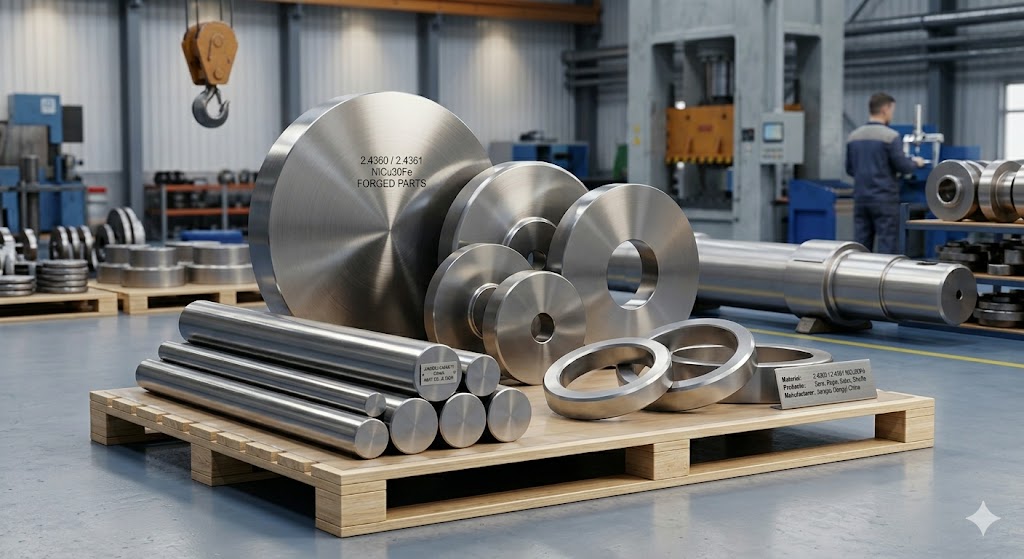
Jiangsu Liangyi is a professional ISO 9001:2015 certified manufacturer of 2.4360, 2.4361, NiCu30Fe (also called ASTM B164, UNS N04400) open die forging parts and seamless rolled steel forged rings, based in Jiangyin, Jiangsu, China. With more than 25 years of industry experience, we offer complete forging services from steel melting, open die forging, seamless ring rolling, precision heat treatment to CNC machining, all made according to ASTM, EN, DIN and JIS international standards. We can make products to meet API 6A requirements if customers ask for it. Our 2.4360, 2.4361 and NiCu30Fe forged parts are sold to over 50 countries in North America, Europe, the Middle East, Southeast Asia and Australia, and every delivery comes with full EN10204 3.1/3.2 Mill Test Certificates. 2.4360 and 2.4361 are standard grades for NiCu30Fe nickel-copper alloy under the EN/DIN standard: 2.4360 is often used for solid bars, hollow bars, pipes, housings and heavy-wall parts, while 2.4361 is better suited for seamless rolled rings, valve parts, flanges and high-precision circular parts. Both have the same excellent mechanical and corrosion-resistant properties. As a top forging manufacturer in China, Jiangsu Liangyi ensures steady quality and reliable performance for all NiCu30Fe forged parts. NiCu30Fe is part of the nickel-copper alloy family, which has been used in important engineering uses since the early 1900s. This alloy was developed to use the complete mixability of nickel and copper, creating a single-type material that has nickel’s corrosion resistance plus copper’s heat conductivity and anti-fouling features. Unlike precipitation-hardened nickel alloys such as NiCr19NbMo (alloy 718, W.Nr. 2.4668) or NiCr20Co13Mo (W.Nr. 2.4654), NiCu30Fe gets its mechanical properties only through solid-solution strengthening. This makes it easier to work with during hot processing — a big advantage for open die forging and seamless ring rolling.
International Standard Cross-Reference for 2.4360 / 2.4361 NiCu30Fe
| Standard System | Grade Designation | Applicable Specification |
|---|---|---|
| EN / DIN (Germany) | 2.4360 / 2.4361 (NiCu30Fe) | EN 10095, DIN 17743, DIN 17754 |
| ASTM / UNS (USA) | UNS N04400 / ASTM B164 | ASTM B164 (Rod & Bar), B127 (Plate/Sheet), B165 (Pipe/Tube) |
| BS (UK) | NA 13 | BS 3072, BS 3073, BS 3074 |
| AFNOR (France) | NU 30 | NF A54-302 |
| JIS (Japan) | NW 4400 | JIS H 4551, JIS H 4552 |
| GOST (Russia) | МНЖМц 28-2.5-1.5 | GOST 492-2006 |
| ISO | NiCu30Fe | ISO 9723, ISO 9724, ISO 9725 |
Metallurgical Science & Strengthening Mechanisms of NiCu30Fe
Crystal Structure & Solid-Solution Strengthening
Both pure nickel and pure copper have an FCC crystal structure with very similar atomic sizes (Ni: 1.246 Å, Cu: 1.278 Å — a difference of only about 2.5%). This small mismatch lets copper atoms easily replace nickel atoms in the crystal structure, creating small internal stresses that slow down dislocation movement. This gives the alloy a steady, moderate strength increase over pure nickel, without the brittle behavior that can come from ordered intermetallic phases. Adding 1.0–2.5% iron boosts strength further by creating more lattice distortion, while small amounts of aluminum and titanium work as deoxidizers during melting. They also form tiny oxide or nitride particles that help stabilize grain boundaries during hot forming. Since NiCu30Fe cannot be strengthened by precipitation hardening, its strength in the annealed state is fairly consistent. Engineers only get higher strength versions through controlled cold working such as cold drawing or cold rolling. For open die forgings, the standard annealed condition is the normal delivery state, with tensile strength of 517–655 N/mm² and yield strength of 172–345 N/mm². This condition offers the best balance of strength, ductility, and corrosion resistance.
Grain Structure Control During Forging
In our forging process, we pay close attention to grain refinement for NiCu30Fe. During open die forging at 1038–1200°C, the plastic deformation applied breaks down the coarse, tree-like crystal structure of the raw ingot through dynamic recrystallization. The key factor here is the forging ratio — meaning the ratio between the original cross-section area and the final cross-section area. For 2.4360 NiCu30Fe forgings, we keep a minimum forging ratio of 3:1 for bars and shafts, and 4:1 or higher for critical parts such as nuclear pump casings and offshore valve bodies. This ensures a fine, uniform grain structure (usually ASTM grain size 4–7) across the entire section, which leads to better mechanical properties, clearer ultrasonic test results, and longer fatigue life.
Effect of Iron Content on Microstructure
The iron content in NiCu30Fe (1.00–2.50%) has an important role beyond simply strengthening the material.Iron improves the alloy’s resistance to erosion and corrosion caused by fast‑flowing seawater.This is why NiCu30Fe performs better than low‑iron nickel‑copper alloys (such as NiCu30, W.Nr. 2.4360 with no extra iron) in heavy‑duty marine parts like pumps and propellers. Too much iron over the allowed limit, however, can form iron-rich structures when the alloy cools slowly from high temperatures, which may weaken its corrosion resistance. Our melting process uses an Electric Arc Furnace (EAF) together with Ladle Refining Furnace (LF) and Vacuum Degassing (VOD) to keep iron content accurately controlled within 1.00–2.50%, usually within ±0.05%.
Full Range of Custom Forging Capabilities
We manufacture 2.4360, 2.4361, NiCu30Fe forging parts in custom shapes, dimensions and specifications, with single-piece weight capacity from 30kg up to 30 tons. Following are our main product range:
- Forged Bars: 2.4360 forged steel round bars, square bars, flat bars, rectangular bars and step rods (max diameter up to 2000mm)
- Forged Rings: 2.4361 forged seamless rolled rings, contoured rings, gear rings and custom forged rings (max diameter up to 6000mm)
- Forged Hollow Components: 2.4360 forged hubs, housings, shells, sleeves, bushes, casings and seamless hollow bars (max OD up to 3000mm)
- Forged Flat Components: NiCu30Fe forged discs, disks, blocks, plates, tube sheets and flanged blanks (max diameter up to 4000mm)
- Forged Tubular Products: 2.4360 forged pipes, tubes, tubing barrels, pressure vessel shells and reactor nozzles (custom length up to 15 meters)
- Forged Valve Components: 2.4361 forged valve bodies, stems, balls, bonnets, seat rings and other custom valve components (can be manufactured to API 6D/6A requirements upon request)
- Forged Shafts: NiCu30Fe forged shafts, pump shafts, propeller shafts, turbine shafts and compressor rotors (max length up to 15 meters)
Forging Process Engineering & Quality Methodology for NiCu30Fe
Stage 1: Ingot Melting & Refining
We produce NiCu30Fe ingots in our 30‑ton Electric Arc Furnace (EAF), using carefully chosen pure nickel cathodes, electrolytic copper, and low‑sulfur iron. The melted alloy is then moved to a 30‑ton Ladle Refining Furnace (LF) to fine-tune its composition and remove sulfur. Sulfur must be kept below 0.020%, because it forms low‑melting nickel sulfide (Ni₃S₂) layers at grain boundaries, which lead to cracking during forging. A final vacuum degassing step in our VOD furnace removes hydrogen and nitrogen to stop holes from forming in the finished forging. After VOD treatment, hydrogen is usually below 2 ppm and oxygen below 30 ppm.
Stage 2: Ingot Heating & Temperature Control
NiCu30Fe forgings need to be heated very carefully because they don't conduct heat as well as carbon steel (around 50 W/m·K at room temperature). This means that if you heat large ingots too quickly, the temperature inside them can change quickly, which can cause cracks from thermal stress. Our standard heating process uses two gradual steps: heating slowly at ≤80°C per hour from room temperature to 600°C, then at ≤120°C per hour to the target forging temperature of 1100–1180°C, with a minimum holding time of 1 hour for every 100mm of section thickness. We do not heat above 1200°C, because NiCu30Fe starts to show early melting at grain boundaries above about 1230°C, due to the relatively low solidus temperature of the nickel‑copper system.
Stage 3: Open Die Forging Operations
During forging, we keep the working temperature between 1038°C and 1200°C. At the same temperature, NiCu30Fe is harder to deform than austenitic stainless steel, so that it usually needs 15–25% more forging pressure. That is why we use our 6300T and 8500T hydraulic presses for large NiCu30Fe forgings. The forging plan includes several upset‑draw cycles to reach the required forging ratio and fully refine the grain structure. We control the final forging temperature above 900°C to avoid too much work hardening and internal stress. To make seamless rolled rings on our 5M ring rolling machine, we first punch and upset the ring blank from a forged cylinder. Then we roll it to size while keeping an eye on the wall thickness and diameter at all times.
Stage 4: Controlled Cooling After Forging
NiCu30Fe doesn't change its internal matrix when it cools down, unlike carbon steels, so there is no risk of making hard martensite. However, the speed at which something cools still affects the amount of stress inside it, and for thick parts, it can also affect the formation of small secondary phases. Our standard method is air cooling for sections under 200mm, and controlled slow cooling with insulation covers for sections over 200mm. For critical parts, we use built-in thermocouples to monitor the cooling rate.
Industry Applications & Global Project Case Studies
2.4360, 2.4361 and NiCu30Fe nickel-copper alloy have excellent mechanical properties, high toughness and very good corrosion resistance in tough industrial environments. The material provides long service life in hydrofluoric acid, sulphuric acid, non-oxidizing diluted acids, alkalis, salt solutions, organic acids, and dry gases such as oxygen, chlorine, hydrogen chloride, sulphur dioxide and carbon monoxide. It is completely resistant to stress corrosion cracking caused by chlorine.Note: This material is not recommended for use in environments with oxidizing components such as iron salts or copper salts. Below are our core application scenarios and proven global project cases:
Oil & Gas Onshore & Offshore Applications
Our 2.4361 NiCu30Fe forged parts are the top choice for high-pressure, sour-service oil and gas production systems around the world. We have supplied custom 2.4361 forged valve balls, valve bodies, valve stems, seat rings, wellhead spool bodies, casing heads, tubing heads, casing hangers and tubing hangers for many offshore oil and gas projects in the Middle East, the North Sea and the Gulf of Mexico. These parts have a rated working pressure up to 15,000 psi and meet NACE MR0175/ISO 15156 material standards for sour service. We also provide double studded adapter flanges, integral mud flanges, Christmas tree parts and downhole drilling tool parts for key extraction systems. As an experienced forging supplier from China, we understand the strict requirements of the oil and gas industry. In sour-service uses, NiCu30Fe is chosen because it does not develop sulfide stress cracking (SSC) or hydrogen-induced cracking (HIC) in environments with H₂S. The alloy’s FCC crystal matrix and lack of BCC phases make it naturally resistant to hydrogen embrittlement. This is a big plus compared to duplex stainless steels and precipitation-hardened nickel alloys, which may have BCC or ordered phases that hydrogen can hurt.
Chemical & Petrochemical Processing Applications
NiCu30Fe’s excellent corrosion resistance makes it the best choice for harsh chemical processing environments. Our NiCu30Fe forged centrifuge parts are widely used in salt processing plants across Southeast Asia. Our 2.4360 forged reactor nozzles, channel flanges, tube sheets, baffle plates and pressure vessel shells have been used in hydrofluoric acid production lines, sulfuric acid recycling systems, evaporation plants and crystallizers for wastewater treatment facilities in Germany, the United States and Southeast Asia. We also make custom forged parts for petrochemical centrifuges, mixing equipment, pipeline systems and heat exchangers, with stable performance in corrosive chemical liquids. Our factory in Jiangsu focuses on making high-quality NiCu30Fe forgings for chemical applications. In hydrofluoric acid (HF) alkylation units, NiCu30Fe is the only metal material that works reliably at all HF concentrations up to its boiling temperature. The alloy prevents corrosion rates from going above 0.1 mm/year in pure HF and 0.5 mm/year in water-based HF solutions with concentrations of up to 48% at 79°C.
Nuclear & Thermal Power Generation Applications
We are a trusted supplier of 2.4360 and 2.4361 forged parts for nuclear power and thermal power projects across East Asia and Europe. Our nuclear-grade 2.4360 forged parts include pump casings, impellers, rotor shafts and seal chambers, made to meet customers’ nuclear quality standards, with full material traceability and third-party inspection support. For thermal power plants, our 2.4360 forged high-pressure feed-water heater shells, tube sheets and coolers are used in many large-scale power plants in Asia, ensuring stable long-term operation in high-temperature, high-pressure water and steam conditions. Our production base in China can make precision 2.4360 forgings for power generation use.
Marine & Shipbuilding Industry Applications
Our NiCu30Fe forged parts show proven long‑lasting performance in corrosive seawater and marine environments. We have supplied NiCu30Fe forged marine propeller shafts, valve parts for fire systems, seawater pumps and piping to international shipyards in South Korea, Singapore and Europe. Marine classification society approval can be arranged upon request. Our 2.4360 forged parts are also widely used for offshore platform fire systems, desalination plants and marine auxiliary equipment, and they have excellent resistance to seawater corrosion and marine growth. As a leading forging manufacturer located in Jiangsu, we provide reliable NiCu30Fe parts for marine applications worldwide. The copper content in NiCu30Fe gives it natural anti‑fouling protection against marine life. The slow release of copper ions from the surface stops barnacles, mussels and algae from attaching, which is a clear advantage over stainless steels and pure nickel alloys in seawater piping. In flowing seawater up to 2.5 m/s, our NiCu30Fe forged parts keep corrosion rates below 0.025 mm/year. This means a service life of more than 40 years for parts with standard corrosion allowance.
General Industrial & Specialty Applications
- Gas and air compressor rotors, shrouded impellers and main shafts for industrial turbo compressor systems
- Centrifugal pump casings, impellers, pump shafts, wear rings and housings for industrial and chemical pump applications
- Cryogenic and high-performance butterfly valve main shafts, spindles and components for low-temperature and high-pressure service
- Downhole drilling tool mud motor splined drive shafts and electrical submersible pump (ESP) motor splined shafts
- Venturi cone meter bodies, ultrasonic flow meter bodies and oil measurement valve spools for flow control systems
- Mechanical seal discs, transition cones, swept branch outlets and custom forged fittings for pipeline systems
- Offshore technology components including capacitors, pipelines, plating equipment and marine valve fittings
Chemical Composition of 2.4360 / 2.4361 NiCu30Fe Forged Alloy
| Chemical Element | Symbol | Weight Content Range | Metallurgical Role |
|---|---|---|---|
| Nickel | Ni | Min 63.00% | Primary base element; provides corrosion resistance in reducing acids and alkalis; forms FCC matrix |
| Copper | Cu | 28.00% – 34.00% | Solid-solution strengthener; enhances resistance to HF acid and seawater; provides anti-fouling properties |
| Iron | Fe | 1.00% – 2.50% | Improves resistance to high-velocity seawater erosion-corrosion; additional solid-solution strengthening |
| Carbon | C | Max 0.15% | Minor strengthening; excess carbon can form carbides at grain boundaries reducing ductility and weldability |
| Manganese | Mn | Max 2.00% | Deoxidizer and desulfurizer during melting; binds sulfur as MnS to prevent hot shortness |
| Silicon | Si | Max 0.50% | Deoxidizer; improves castability; excess silicon reduces weld quality |
| Aluminum | Al | Max 0.50% | Deoxidizer; can form minor Al₂O₃ inclusions that pin grain boundaries during forging |
| Titanium | Ti | Max 0.30% | Deoxidizer and nitrogen scavenger; forms TiN particles that refine grain structure |
| Sulfur | S | Max 0.020% | Strictly limited — excess sulfur forms Ni₃S₂ causing hot cracking during forging and welding |
Physical Properties & Thermal Data of NiCu30Fe
| Physical Property | Value | Test Condition / Notes |
|---|---|---|
| Density | 8.83 g/cm³ | At 20°C (68°F) |
| Melting Range | 1300 – 1350°C (2370 – 2460°F) | Solidus to liquidus |
| Specific Heat Capacity | 427 J/(kg·K) | At 20°C |
| Thermal Conductivity | 21.8 W/(m·K) | At 20°C |
| Thermal Conductivity | 34.6 W/(m·K) | At 500°C |
| Coefficient of Thermal Expansion | 13.9 × 10⁻⁶ /°C | 20–100°C |
| Coefficient of Thermal Expansion | 14.8 × 10⁻⁶ /°C | 20–300°C |
| Coefficient of Thermal Expansion | 15.6 × 10⁻⁶ /°C | 20–500°C |
| Electrical Resistivity | 0.51 μΩ·m | At 20°C |
| Modulus of Elasticity | 179 GPa (26,000 ksi) | At 20°C |
| Modulus of Elasticity | 168 GPa | At 300°C |
| Curie Temperature | 40 – 65°C (approx.) | Slightly ferromagnetic below this temperature |
| Magnetic Permeability | 1.002 – 1.30 | Varies with composition, cold work, and temperature |
Heat Treatment Standards & Mechanical Properties
Standard Heat Treatment Processes for 2.4360 2.4361 Forgings
All our NiCu30Fe forged parts undergo strictly controlled heat treatment to ensure optimal mechanical properties and microstructure stability, in line with EN and ASTM standards:
- Solution Heat Treatment: Standard working temperature range 1292°F to 1652°F (700°C to 900°C), with consistent air cooling after treatment. For high-performance important parts, solution treatment at 1670°F (910°C) is available with minimal property modulation and full microstructure control.
- Soft Annealing: Working temperature range 1292°F to 1652°F (700°C to 900°C), with optimal annealing temperature at 1500°F (815°C), followed by controlled slow cooling to deliver excellent machinability and dimensional stability for subsequent CNC processing.
- Hot Forming Process: Hot bending, hot rolling and hot forming operations are performed in the temperature range of 1900°F to 2192°F (1038°C to 1200°C), followed by mandatory post-forming heat treatment to restore the material's corrosion resistance and mechanical properties.
- Stress Relieving: For parts with complex shapes or that need extensive machining, we can perform stress relieving at 540–600°C (1000–1110°F) for 1 hour per 25mm of section thickness, then cool in air. This reduces internal stresses without noticeably changing mechanical properties.
Mechanical Properties of 2.4360 NiCu30Fe Forged Parts
| Mechanical Property | Standard Value Range |
|---|---|
| Tensile Strength (Room Temperature) | 517 – 655 N/mm² (75 – 95 ksi) |
| 0.2% Offset Yield Strength | 172 – 345 N/mm² (25 – 50 ksi) Minimum |
| Elongation (in 50mm gauge length) | 35% – 60% Minimum |
| Reduction of Area | 40% – 70% Typical |
| Hardness (Hot Rolled Condition) | 125 – 215 HB30 |
| Hardness (Hot Forged & Annealed Condition) | 110 – 140 HB Maximum |
| Impact Toughness (Charpy V-notch, 20°C) | ≥150 J Typical |
| Impact Toughness (Charpy V-notch, -196°C) | ≥100 J Typical |
| Fatigue Endurance Limit (10⁸ cycles, R=-1) | ~240 N/mm² (Annealed condition) |
Elevated Temperature Mechanical Properties
| Temperature | Tensile Strength | Yield Strength (0.2%) | Elongation |
|---|---|---|---|
| 20°C (68°F) | 550 N/mm² | 240 N/mm² | 45% |
| 100°C (212°F) | 530 N/mm² | 220 N/mm² | 43% |
| 200°C (392°F) | 505 N/mm² | 200 N/mm² | 40% |
| 300°C (572°F) | 475 N/mm² | 185 N/mm² | 38% |
| 400°C (752°F) | 400 N/mm² | 170 N/mm² | 35% |
| 480°C (900°F) | 310 N/mm² | 155 N/mm² | 32% |
| 540°C (1000°F) | 250 N/mm² | 140 N/mm² | 30% |
Corrosion Resistance Engineering Guide for NiCu30Fe
Corrosion Performance in Specific Media
| Corrosive Medium | Concentration | Temperature | Corrosion Rate (mm/year) | Suitability |
|---|---|---|---|---|
| Hydrofluoric Acid (HF) | All concentrations | Up to boiling | <0.5 | Excellent — preferred material |
| Sulphuric Acid (H₂SO₄) | Up to 80% | Room temperature | <0.5 | Good in deaerated conditions |
| Sulphuric Acid (H₂SO₄) | Up to 80% | Boiling | 0.5 – 1.3 | Acceptable with corrosion allowance |
| Hydrochloric Acid (HCl) | Up to 15% | Room temperature | <0.5 | Good in deaerated conditions |
| Phosphoric Acid (H₃PO₄) | All concentrations | Up to boiling | <0.5 | Good |
| Sodium Hydroxide (NaOH) | Up to 50% | Up to boiling | <0.025 | Excellent |
| Seawater (flowing) | — | Ambient | <0.025 | Excellent — 40+ year service life |
| Seawater (stagnant) | — | Ambient | <0.05 | Very good |
| Dry Chlorine Gas (Cl₂) | Anhydrous | Up to 500°C | <0.1 | Excellent |
| Hydrogen Chloride Gas (HCl) | Dry | Up to 450°C | <0.1 | Excellent |
| Nitric Acid (HNO₃) | Any | Any | >10 | NOT suitable — severe attack |
| Ferric Chloride (FeCl₃) | Any | Any | >5 | NOT suitable — oxidizing agent |
Stress-Corrosion Cracking (SCC) Resistance
NiCu30Fe is naturally resistant to chloride‑induced stress corrosion cracking (Cl‑SCC), which is one of its most useful engineering features. Unlike austenitic stainless steels such as 316L or 304, which crack easily in warm chloride water, NiCu30Fe can be used safely in chloride environments at any temperature within its working range. This resistance comes from its high nickel content (≥63%) and FCC crystal structure, which stop the crack‑accelerating chemical reactions that cause SCC in stainless steels. NiCu30Fe also resists sulfide stress cracking (SSC) in sour gas (H₂S) conditions, so it meets NACE MR0175/ISO 15156 standards for sour‑service oil and gas use.
Galvanic Compatibility Guide
When NiCu30Fe is connected to different metals in a conductive fluid such as seawater, galvanic corrosion can happen. In seawater’s galvanic series, NiCu30Fe sits between passive stainless steels and 70/30 copper‑nickel alloys. It works well with titanium, passive stainless steels (316L, 2205), and other nickel alloys. However, pairing it with active metals like carbon steel, aluminum alloys, or zinc will speed up corrosion of the less noble metal. When designing systems with mixed materials, we suggest using insulating gaskets and coatings to stop galvanic contact, or choosing materials within 100 mV of each other in the galvanic series.
Welding & Machining Technical Guide for NiCu30Fe Forgings
Recommended Welding Processes & Parameters
| Parameter | GTAW (TIG) | GMAW (MIG) | SMAW (MMA) |
|---|---|---|---|
| Filler Metal (AWS) | ERNiCu-7 | ERNiCu-7 | ENiCu-7 |
| Filler Metal (EN ISO) | S Ni 4060 (NiCu30Mn3Ti) | S Ni 4060 | E Ni 4060 |
| Shielding Gas | 100% Argon | Argon + 25% Helium | — |
| Preheat (thickness <25mm) | Not required | Not required | Not required |
| Preheat (thickness ≥25mm) | 50–100°C recommended | 50–100°C recommended | 100°C recommended |
| Maximum Interpass Temperature | 150°C | 150°C | 150°C |
| Post-Weld Heat Treatment | 870–925°C, air cool — recommended for stress-critical or corrosion-critical applications | ||
Machining Guidelines for NiCu30Fe Forgings
NiCu30Fe in the annealed state (110–140 HB) is fairly easy to machine, similar to 316L austenitic stainless steel, but it work-hardens more easily and is prone to galling. The guidelines below come from our 25 years of practical experience machining thousands of NiCu30Fe forgings:
- Turning: Use carbide inserts (ISO K10–K20 grade) with positive rake angles. Recommended cutting speed: 30–50 m/min for roughing, 60–80 m/min for finishing. Feed rate: 0.2–0.4 mm/rev for roughing, 0.05–0.15 mm/rev for finishing. Apply plenty of water-soluble, sulfur-free coolant to avoid work hardening on the surface.
- Drilling: Use cobalt HSS (M35/M42) or carbide drills with 130–135° point angle. Reduce cutting speed to 15–25 m/min. Apply steady feed pressure — intermittent feed (pecking) can cause work hardening of the hole surface and premature drill breakage.
- Milling: Climb milling is preferred over conventional milling to minimize work hardening. Use carbide end mills with 4–6 flutes, cutting speed 25–45 m/min, feed per tooth 0.08–0.15 mm.
- Threading: Thread cutting is preferred over thread rolling for NiCu30Fe. Use TiN-coated HSS taps for blind holes, and single-point threading on CNC lathes for large diameters. Apply sulfur-free tapping compound.
Material Selection Guide: NiCu30Fe vs Other Nickel Alloys
| Selection Criteria | NiCu30Fe (2.4360 / 2.4361) | NiCr22Mo9Nb (alloy 625, W.Nr. 2.4856) (2.4856 / NiCr22Mo9Nb) | NiMo16Cr15W (alloy C-276, W.Nr. 2.4819) (2.4819 / NiMo16Cr15W) | NiFe30Cr21Mo3 (alloy 825, W.Nr. 2.4858) (2.4858 / NiFe30Cr21Mo3) |
|---|---|---|---|---|
| Reducing Acid Resistance | Excellent (especially HF) | Good | Excellent | Good |
| Oxidizing Acid Resistance | Poor | Good | Excellent | Good |
| Seawater / Chloride Resistance | Excellent | Excellent | Excellent | Good |
| Cl-SCC Resistance | Immune | Immune | Immune | Good (not immune) |
| Max Service Temperature | ~480°C | ~980°C | ~650°C | ~540°C |
| Relative Forging Cost | 1.0× (baseline) | 2.5–3.5× | 3.5–5.0× | 1.5–2.0× |
| Forging Difficulty | Moderate | High | Very High | Moderate |
| Weldability | Good | Good | Good | Good |
| Typical Application | HF plants, seawater, sour gas | Subsea, aerospace, flue gas | Chemical processing, waste treatment | Acid tanks, piping, heat exchangers |
Dimensional Tolerances & Surface Finish Standards
All 2.4360, 2.4361, NiCu30Fe forging parts are manufactured to internationally recognized dimensional tolerance standards. The applicable tolerance class depends on the product form and the customer's specified requirements:
| Product Form | Applicable Standard | Typical Tolerance Class | Achievable Tolerance (as-forged) |
|---|---|---|---|
| Open Die Forgings (general) | EN 10243-1 / DIN 7527 | F class (precision) or E class (standard) | ±2mm to ±8mm depending on dimension |
| Seamless Rolled Rings | EN 10230 / ASTM A788 | As-rolled tolerance | OD: ±1%, Wall: ±5%, Height: ±3mm |
| Forged Bars (round) | EN 10060 / ASTM A484 | Hot rolled tolerance | Diameter: +3/-0 mm (≤200mm), +6/-0 mm (>200mm) |
| Forged Discs & Blocks | EN 10243-1 | E class (standard) | Thickness: ±3mm, Diameter: ±5mm |
| Rough Machined (after CNC) | Customer specification | — | ±0.5mm to ±1.0mm typical |
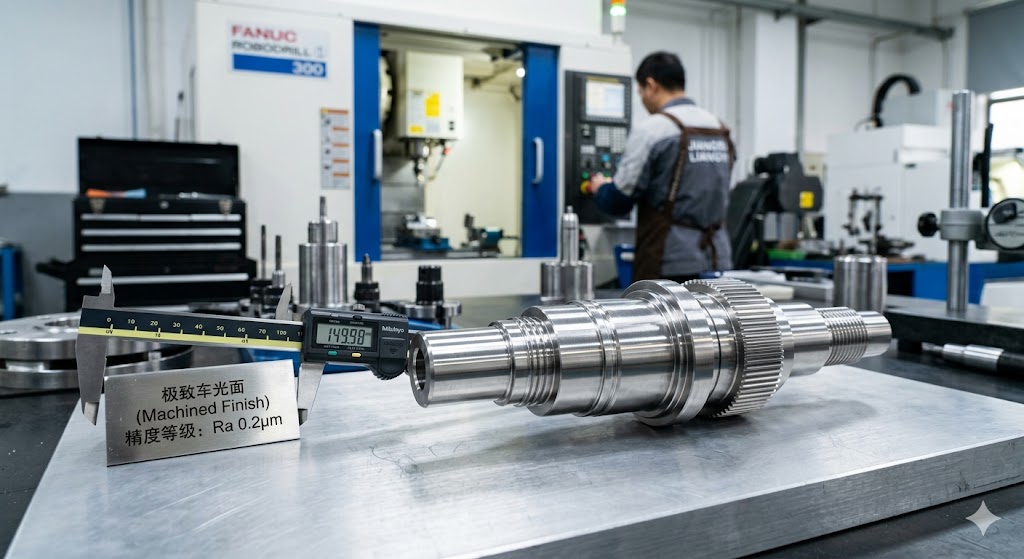
| Finish Machined | ISO 2768 / Customer drawing | ISO 2768-mK or better | ±0.05mm to ±0.2mm depending on feature |
Surface Finish & Post-Processing Options
We offer our NiCu30Fe forgings in different surface types: as-forged (a surface formed by hot working with a thin layer, usually Ra 12.5–25 μm after removing that layer), rough machined (Ra 6.3–12.5 μm, good for you to do the final machining later), semi-finish machined (Ra 3.2–6.3 μm), and finish machined (Ra 0.8–3.2 μm for sealing surfaces, bearing journals and precision holes). For marine and chemical uses, we can also provide forgings with pickled and passivated surface treatment to remove hidden iron pollution and make the initial protective oxide layer work better.
Advanced Manufacturing & Quality Control Facilities
Our 80,000 m² factory in Jiangyin, Jiangsu, China uses modern forging, heat treatment and testing equipment. This ensures top quality and stable performance for every 2.4360, 2.4361 and NiCu30Fe forged part we make. As a professional forging manufacturer in China, we spend heavily on advanced equipment and quality control systems to meet the strictest international standards.
Full Forging Production Equipment
- 2000T, 4000T, 4500T, 6300T and 8500T Hydraulic Forging Presses
- 1T, 2T, 3T, 5T and 9T Electro Hydraulic Forging Hammers
- 1M and 5M CNC Seamless Ring Rolling Machines
- 15T and 50T Automatic Forging Manipulators
- 30T Electric Arc Furnace (EAF), 30T Ladle Refining Furnace (LF) and 30T Vacuum Degassing Furnace (VOD) for premium steel melting
Precision Heat Treatment Equipment
- φ2×12m Pit Furnace for long shaft and bar heat treatment
- φ8×3×3m Table Resistor Furnace for large ring and disc components
- 1.5×0.8×1.5m Box Resistor Furnace for small precision parts
- Multiple large-scale gas furnaces (up to 16×2.5×2.5m) for batch and large component heat treatment
- All furnaces equipped with multi-zone digital temperature control (±5°C accuracy) and automatic recording systems for full traceability
Comprehensive Quality Control & Inspection System
All our 2.4360, 2.4361, NiCu30Fe forging parts undergo strict multi-stage inspection throughout the production process, including:
- Raw material chemical composition analysis with direct-reading spectrometer (OES) and portable XRF for incoming material verification
- 100% Non-Destructive Testing (NDT) including Ultrasonic Testing (UT) per EN 10228-3 or ASTM A388, Magnetic Particle Testing (MT) per EN 10228-1, and Liquid Penetrant Testing (PT) per EN 10228-2
- Full mechanical property testing including tensile strength, yield strength, elongation, reduction of area, and hardness testing per ASTM A370 or EN ISO 6892-1
- Charpy V-notch impact testing at room temperature, sub-zero temperatures (down to -196°C for cryogenic applications), and elevated temperatures per ASTM E23 or EN ISO 148-1
- Metallographic microstructure analysis including grain size determination per ASTM E112, inclusion rating per ASTM E45, and phase identification
- PMI (Positive Material Identification) testing with handheld XRF on 100% of NiCu30Fe forgings to prevent material mix-ups
- Intergranular corrosion testing per ASTM G28 when required by customer specifications
- Third-party inspection can be arranged through internationally recognized agencies such as BV, SGS, TÜV and others upon customer request
Frequently Asked Questions
Get Custom Quotation for 2.4360 2.4361 NiCu30Fe Forging Parts
Jiangsu Liangyi is dedicated to providing high‑quality custom 2.4360, 2.4361 and NiCu30Fe forged parts at competitive prices, with on‑time delivery and full technical support for customers worldwide. We welcome you to send your custom drawings, material needs, order quantity and technical specifications for a quick and detailed quote. As a professional manufacturer in Jiangyin, Jiangsu, China, we have the ability and experience to meet your most demanding forging needs. Our metallurgical engineering team can help with material selection, forging process design and heat treatment requirements to ensure the best performance in your specific use.
Inquiry Email: sales@jnmtforgedparts.com
Phone / WhatsApp: +86-13585067993
Official Website: www.jnmtforgedparts.com
Factory Address: Chengchang Industry Park, Jiangyin City, Jiangsu Province, China