2.4675 (NiCr23Mo16Cu) Forged Parts | China Leading Manufacturer & Global Supplier
Founded in 1997, Jiangsu Liangyi Co., Limited is an ISO 9001:2015 certified professional manufacturer, specializing in high-performance 2.4675 (NiCr23Mo16Cu) open die forgings and seamless rolled rings. Based in Jiangyin City, Jiangsu Province, China, we run a modern 80,000-square-meter factory with fixed assets of 40 million USD and an annual production capacity of 120,000 tons. We provide a full range of service from steel melting, forging and heat treatment to CNC machining. All our products meet international standards including ASTM, ASME, EN, DIN, API 6A, JIS and NACE MR0175, as well as custom drawings from customers. Our 2.4675 (NiCr23Mo16Cu) forgings are exported to over 50 countries in Europe, North America, the Middle East, Southeast Asia, Australia and other parts of Asia, supporting main industrial projects around the world.
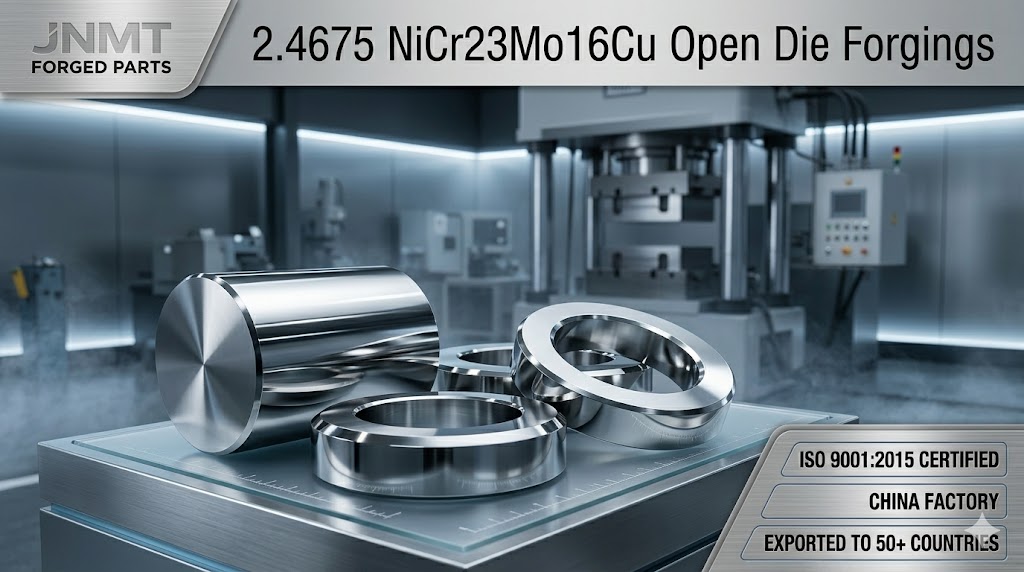
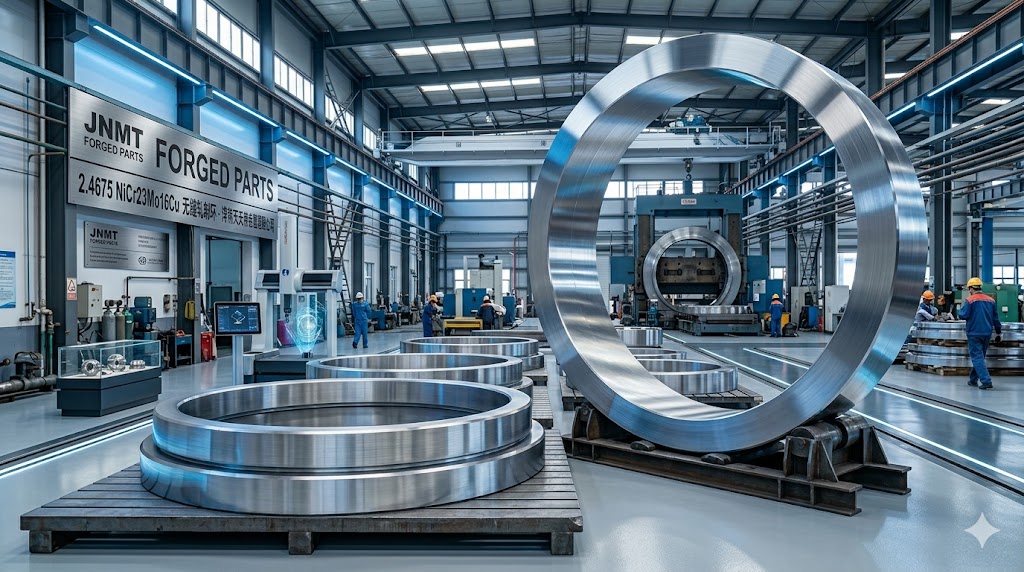
Full Range of 2.4675 (NiCr23Mo16Cu) Forged Products
We leverage our over 25 years of forging expertise and advanced forging equipment to make custom 2.4675 (NiCr23Mo16Cu) forged parts with single-piece weight ranging from 30KGS to 30,000KGS, fully meeting the different needs of heavy industrial clients around the world. Our full product range includes:
Core NiCr23Mo16Cu Forged Product Categories
- 2.4675 Forged Bars & Rods: Round, square, flat, rectangular and hollow bars.The max diameter is up to 2 meters, the max weight is up to 30 tons. They all meet EN10204 3.1/3.2 standards
- 2.4675 Seamless Rolled Forged Rings: Gear rings, slewing bearing rings, contoured rings and custom forged rings. The max diameter is up to 6 meters, the max weight is up to 30 tons. And they are the best choice material for pressure and rotating applications
- 2.4675 Forged Shafts: Step shafts, gear shafts, turbine rotor shafts, pump shafts, valve stems. The max length is up to 15 meters, the max diameter is up to 1800mm.They are tested by UT before delivery.
- 2.4675 Valve & Oil & Gas Forgings: Valve bodies, bonnets, seat rings, balls, casing heads, tubing hangers, wellhead parts.They all meet API 6A material and dimensional requirements (API 6A product certification is provided by the licensed valve assembler)
- 2.4675 Custom Forged Components: Sleeves, pipes, shells, discs, plates, flanges, cylinders, tube sheets, impellers, and custom parts machined to client drawings
All our 2.4675 (NiCr23Mo16Cu) forged products are provided with full material traceability and customizable heat treatment, surface treatment, and precision machining services.
2.4675 vs Competing Nickel Alloys: Full Engineering Comparison
One of the most common questions we receive from procurement engineers and project managers is: "Why choose 2.4675 instead of C-276, C-22, or 625?" The answer is never one-size-fits-all — it depends on your specific corrosive environment, operating temperature, mechanical load requirements, and budget constraints. Below is our honest engineering assessment, based on over 25 years of supplying nickel-chromium-molybdenum (Ni-Cr-Mo) alloy forgings to chemical, oil and gas, and nuclear clients in more than 50 countries:
| Comparison Factor | 2.4675 / C-2000 (N06200) | C-276 / 2.4819 (N10276) | C-22 / 2.4602 (N06022) | 625 / 2.4856 (N06625) | C-4 / 2.4610 (N06455) |
|---|---|---|---|---|---|
| Oxidizing Acid Resistance | ★★★★★ Excellent | ★★★ Moderate | ★★★★ Very Good | ★★★ Moderate | ★★★ Moderate |
| Reducing Acid Resistance | ★★★★★ Excellent | ★★★★★ Excellent | ★★★★ Very Good | ★★★ Moderate | ★★★★ Very Good |
| H₂SO₄ Resistance (all conc.) | ★★★★★ Best-in-class | ★★★ Good | ★★★★ Very Good | ★★ Fair | ★★★ Good |
| HF Acid Resistance | ★★★★★ Best-in-class (Cu effect) | ★★★ Good | ★★★ Good | ★ Poor | ★★★ Good |
| Chloride SCC Resistance | ★★★★ Very Good | ★★★★★ Excellent | ★★★★★ Excellent | ★★★★ Very Good | ★★★★★ Excellent |
| High-Temperature Strength | ★★★ Good (up to 450°C) | ★★★ Good | ★★★ Good | ★★★★★ Best-in-class | ★★★ Good |
| Weldability | ★★★★ Very Good | ★★★★ Very Good | ★★★★ Very Good | ★★★★★ Excellent | ★★★★★ Excellent (no Nb) |
| Forgeability | ★★★ Moderate (work-hardens fast) | ★★★ Moderate | ★★★ Moderate | ★★★★ Good | ★★★★ Good |
| Relative Material Cost | ★★★ High | ★★★ High | ★★★ High (W content) | ★★★ High (Nb content) | ★★★★ Slightly lower (no W, no Cu) |
| Best-Fit Application | Dual acid environments, HF/H₂SO₄ plants, chemical multiservice | Reducing environments, chloride media, flue gas desulfurization | Mixed oxidizing/reducing environments, waste incineration | Seawater, high-temperature, aerospace, fatigue applications | Reducing acids, thermal stability, low-carbon welded structures |
2.4675 vs Titanium Alloys vs Super Duplex Stainless Steel: When to Choose Which
Beyond the Ni-Cr-Mo alloy family, procurement engineers frequently face a three-way decision between 2.4675 (NiCr23Mo16Cu), titanium alloys (Grade 2 / Grade 5), and super duplex stainless steels (2507 / Zeron 100). Each material wins in different scenarios. Here is our engineering perspective, built from actual project decisions across more than 50 countries:
✅ Choose 2.4675 (NiCr23Mo16Cu) When:
- Your process handles both oxidizing and reducing acids (e.g., H₂SO₄ + HF mixtures in alkylation units)
- Operating temperature is above 150°C in acid media where titanium passivation fails
- Part needs forging to complex shape — titanium needs specialized hot forging infrastructure
- Project specifications call for NACE MR0175 compliance for sour service and you need HB ≤ 200
- Budget permits nickel alloy pricing but long service life offsets lifecycle cost vs cheaper alternatives
- You need large section sizes (>200mm): titanium thick sections are commercially rare; 2.4675 can be forged to 30T
⚖️ Consider Titanium (Grade 2 / Gr.5) When:
- Environment is pure oxidizing acid (nitric acid, fuming H₂SO₄) at moderate temperatures (<120°C)
- Weight reduction is critical (Ti density ~4.5 g/cm³ vs 2.4675 at ~8.9 g/cm³)
- No HF or reducing acid is present (HF attacks titanium aggressively)
- Component is sheet-formed or tube-based rather than a heavy forging
⚖️ Consider Super Duplex SS (2507) When:
- Primary concern is chloride SCC resistance in seawater or brine (not acid corrosion)
- Mechanical strength requirements are high and budget is constrained (2507 is 40–60% cheaper than 2.4675)
- Operating temperature stays below 280°C (sigma phase embrittlement risk above this)
- Acid concentration is low to moderate — super duplex is not suitable for strong acid immersion
2.4675 (NiCr23Mo16Cu) Material Equivalents and Standard Cross-Reference
The Werkstoff-Nr. 2.4675 designates the nickel-chromium-molybdenum-copper alloy NiCr23Mo16Cu, which is internationally recognized under multiple standardization systems. Understanding these equivalents is important for specifying the correct material across global projects:
| Standard System | Designation / Number | Notes |
|---|---|---|
| German / European (DIN EN) | W.Nr. 2.4675 / NiCr23Mo16Cu | Primary designation used in this page |
| American (UNS / ASTM) | UNS N06200 | ASTM B574, B575, B619, B622, B626 grades |
| Trade Name (Haynes International) | Hastelloy C-2000® | Original commercial designation by Haynes Intl. |
| ISO Standard | NiCr23Mo16Cu (ISO 9723) | ISO wrought nickel alloy designation |
| British Standard | NA — use UNS N06200 | BS PD 970 cross-reference to UNS N06200 |
| Closest C-276 Comparison | W.Nr. 2.4819 / UNS N10276 / Hastelloy C-276® | Different alloy: C-276 has ~4% W, no Cu; 2.4675 has Cu, no W — see FAQ for details |
W.Nr. 2.4675 NiCr23Mo16Cu UNS N06200 Hastelloy C-2000 ISO NiCr23Mo16Cu
When sourcing 2.4675 forgings, always confirm the UNS N06200 designation with your supplier's Mill Test Certificate (MTC) to guarantee exact chemical composition compliance, especially for projects under NACE MR0175, API 6A, or ASME pressure vessel codes.
Main Performance Properties of 2.4675 (NiCr23Mo16Cu) Nickel Alloy
2.4675 (also known as NiCr23Mo16Cu and Hastelloy C-2000, UNS N06200) is a high-performance nickel-chromium-molybdenum alloy with excellent corrosion resistance and structural stability in extreme industrial environments. Its core advantages include:
- Outstanding Corrosion Resistance: Excellent resistance to reducing and oxidizing acids, including sulfuric acid, hydrofluoric acid, dilute hydrochloric acid, and mixed acid media with chloride ions; great resistance to pitting corrosion, crevice corrosion, and chloride-induced stress corrosion cracking (SCC), even at elevated temperatures
- Wide Temperature Adaptability: Stable mechanical properties and oxidation resistance from cryogenic temperatures up to 450°C, suitable for both high-temperature and cryogenic industrial applications
- Excellent Mechanical Properties: High tensile strength (min. 750 MPa), good ductility (min. 40% elongation), and excellent fatigue resistance, the best choice material for heavy-load rotating equipment and pressure-bearing parts
- Superior Weldability & Formability: Good welding and forging performance, can be processed into intricate shapes through open die forging and seamless rolling, meeting custom design requirements
- Dual Acid Environment Advantage: Unique among Ni-Cr-Mo alloys for combining both oxidizing acid resistance (from high Cr content: 22-24%) and reducing acid resistance (from high Mo content: 15-17%), plus the added benefit of Cu (1.3-1.9%) enhancing resistance to dilute sulfuric and hydrofluoric acids
These properties make 2.4675 (NiCr23Mo16Cu) the best choice material for important parts in harsh corrosive and high-pressure industrial environments around the world.
Full Production Process & Quality Control for 2.4675 Forgings
We apply a full range of production processes for 2.4675 (NiCr23Mo16Cu) forgings, from raw material melting to final inspection, making sure every part meets the strictest international quality standards.
Premium Melting & Forging Process
To make sure our 2.4675 alloy forgings have the highest quality and performance stability, we adopt standardized melting routes, with optional advanced remelting for important applications:
Standard Melting Route
- Basic Electric Furnace (EF)
- Argon Oxygen Decarburization (AOD) / Vacuum Oxygen Decarburization (VOD)
- Electroslag Remelting (ESR) / Vacuum Arc Remelting (VAR)
Premium Melting Route (Nuclear & Aerospace)
- Vacuum Induction Melting (VIM)
- Electroslag Remelting (ESR) / Vacuum Arc Remelting (VAR)
- Optional Secondary Vacuum Arc Remelting (VAR)
Our forging workshop is equipped with 2000T/4000T/6300T hydraulic forging presses, 0.75‑9T electro‑hydraulic forging hammers, and 1‑5 meter seamless rolling machines, which makes sure our 2.4675 alloy parts have a consistent grain matrix and strong mechanical properties. We also have 10 special heat treatment furnaces for standardized solution and aging treatment of 2.4675 alloy, which keeps the material performance stable.
Strict Quality Inspection & Nondestructive Testing
Every batch of 2.4675 (NiCr23Mo16Cu) forgings is given full-process quality inspection, with advanced in-house testing equipment including nondestructive testing, chemical composition testing, mechanical property testing, and metallographic testing equipment. Our inspection standards include:
- 100% Visual Inspection and Ultrasonic Testing (UT) based on ASTM A388/388M standards for all forgings after heat treatment
- Magnetic Particle Testing (MT), Penetrant Testing (PT), and Radiographic Testing (RT) available on request
- Chemical composition analysis via direct-reading spectrometer, making sure they all meet 2.4675 alloy standard requirements
- Room and high-temperature mechanical property testing, including tensile strength, yield strength, elongation, and impact toughness
- Full material traceability for all batches, with EN10204 3.1 / 3.2 Mill Test Certificates (MTC) provided with every shipment
Chemical Composition of 2.4675 (NiCr23Mo16Cu) Alloy
| Element | Content Range (wt%) | Element | Content Range (wt%) |
|---|---|---|---|
| Nickel (Ni) | 51.0 – 61.7 (Balance) | Cobalt (Co) | 0 – 2.0 |
| Chromium (Cr) | 22.0 – 24.0 | Aluminum (Al) | 0 – 0.5 |
| Molybdenum (Mo) | 15.0 – 17.0 | Silicon (Si) | 0 – 0.080 |
| Copper (Cu) | 1.3 – 1.9 | Phosphorus (P) | 0 – 0.025 |
| Iron (Fe) | 0 – 3.0 | Carbon (C) | 0 – 0.010 |
| Manganese (Mn) | 0 – 0.010 | Sulfur (S) | 0 – 0.010 |
Mechanical Properties of 2.4675 (NiCr23Mo16Cu) Forgings
All our 2.4675 (NiCr23Mo16Cu) forged parts are delivered with standardized solution heat treatment, with guaranteed mechanical properties meeting the following standards (room temperature):
| Mechanical Property | Minimum Standard Value | Typical Test Value |
|---|---|---|
| Tensile Strength (Rm) | 750 MPa | 780 MPa |
| Yield Strength (Rp0.2) | 345 MPa | 370 MPa |
| Elongation (A5) | 40% | 62% |
| Hardness | — | HB 150–190 |
Material Qualification Test Coupons (QTC) Standard
- QTC is used to verify the mechanical properties of each 2.4675 forging or bar product, with full traceability to the corresponding heat number
- Minimum one QTC is provided for each heat / per heat-treat lot, with additional test coupons available for third-party inspection
- QTC is obtained from the ¼ T envelope location of the thickest section of the forging, consistent with the actual forging process and heat treatment
Heat Treatment Parameters for 2.4675 (NiCr23Mo16Cu) Forgings
Heat treatment is not a formality for 2.4675 — it is the single step that determines whether the alloy's corrosion resistance lives up to its specification or fails in service. At Jiangsu Liangyi, we treat every heat treatment cycle as a metallurgical engineering decision, not a production routine. Here is what we actually control and why it matters:
Solution Annealing: The Only Accepted Heat Treatment for 2.4675
Unlike precipitation-hardenable nickel alloys, 2.4675 (NiCr23Mo16Cu) does not gain any benefit from aging treatment. The only purpose of its heat treatment process is solution annealing: to dissolve all secondary phases (especially Mo-rich sigma phase and carbides) formed during the forging process, and to restore the alloy’s fully austenitic single-phase microstructure. If full solution annealing is not achieved, the issue cannot be fixed by re-treatment once the forging is put into service.
| Parameter | Standard Forgings | Large Section (>200mm thickness) | Nuclear / Critical Grade |
|---|---|---|---|
| Solution Anneal Temperature | 1,080 – 1,120 °C | 1,100 – 1,130 °C | 1,110 – 1,130 °C |
| Hold Time (at temperature) | 1 min per mm of section thickness, min. 30 min | 1.5 min per mm, min. 60 min | 2 min per mm, min. 90 min |
| Quench Method | Water quench (rapid immersion) | Water quench with agitation | Water quench, TÜV/SGS witnessed |
| Transfer Time (furnace → quench) | < 60 seconds | < 45 seconds | < 30 seconds |
| Quench Water Temperature | < 40 °C | < 35 °C | < 30 °C (continuously monitored) |
| Post-Quench Hardness Check | HB ≤ 206 (per lot) | HB ≤ 206 (each piece) | HB ≤ 200 (each piece, full surface map) |
Forging Ratio Control & ASTM E112 Grain Size
The mechanical properties and microstructural integrity of 2.4675 forgings are directly governed by the total forging reduction applied from the original ingot. We keep strict forging ratio control as a primary quality metric — not a secondary check:
- Minimum forging ratio for standard components: ≥ 4:1 (total reduction from ingot), ensuring full break-up of cast dendritic structure and closure of internal porosity
- Forging ratio for sour-service / nuclear-grade parts: ≥ 6:1, applied progressively in multiple heats to prevent deformation-induced cracking in this work-hardening alloy
- Target grain size (ASTM E112): Grain Size No. 5 – 8 (average diameter 65 – 22 µm) for standard forgings; Grain Size No. 6 – 8 for nuclear and rotating equipment applications
- Grain uniformity verification: Metallographic cross-sections taken at ¼T, ½T, and ¾T positions for each heat-treat lot, reviewed against our internal reference photomicrograph library
- 2.4675 work-hardening note: This alloy work-hardens about 2 times faster than austenitic stainless steel during forging. Inter-pass reheating is mandatory every 15–25% reduction on large forgings (>500kg) to prevent surface cracking and maintain forgeability. Our operators are trained to read surface condition, not just temperature readouts.
Quantified Corrosion Performance of 2.4675 (NiCr23Mo16Cu) Forgings
Most supplier pages on nickel alloys stop at "excellent corrosion resistance." We do not. Below is what 2.4675's corrosion performance actually looks like in numbers — the data that your corrosion engineer needs to justify material selection in project documentation.
Corrosion Rate Data in Key Industrial Media
The following corrosion rate data is representative of solution-annealed 2.4675 (NiCr23Mo16Cu) in standardized immersion test conditions. Actual in-service rates depend on flow velocity, concentration gradients, and temperature cycling:
| Corrosive Medium | Concentration & Temperature | 2.4675 Rate (mm/yr) | C-276 Rate (mm/yr) | 316L SS Rate (mm/yr) |
|---|---|---|---|---|
| Sulfuric Acid (H₂SO₄) | 10%, 80°C | < 0.05 | 0.08 – 0.15 | > 1.2 |
| Sulfuric Acid (H₂SO₄) | 50%, 60°C | < 0.10 | 0.12 – 0.20 | > 5.0 |
| Hydrofluoric Acid (HF) | 20%, 50°C | < 0.08 | 0.10 – 0.18 | > 2.5 |
| Hydrochloric Acid (HCl) | 5%, 50°C | < 0.05 | < 0.05 | > 3.0 |
| Phosphoric Acid (H₃PO₄) | 85%, 80°C | < 0.15 | 0.20 – 0.35 | > 2.0 |
| Mixed Acid (H₂SO₄ + HF) | 5% H₂SO₄ + 5% HF, 60°C | < 0.12 | 0.18 – 0.30 | > 8.0 |
| Seawater (aerated) | 3.5% NaCl, 80°C | < 0.01 | < 0.01 | 0.05 – 0.12 |
Note: All rates are presented in mm/year (millimeters per year). The data is representative of solution-annealed wrought forms under static immersion conditions. If your specific project involves dynamic flow, velocity-accelerated corrosion, or mixed acid environments, please contact our technical team with your process parameters to obtain a customized corrosion assessment.
Pitting Resistance Equivalent Number (PREN) Comparison
The PREN value quantifies a material's theoretical resistance to pitting and crevice corrosion in chloride-containing environments. The formula for Ni-Cr-Mo alloys is: PREN = %Cr + 3.3 × %Mo + 30 × %N. For 2.4675 vs main parts:
| Alloy | W.Nr. / UNS | %Cr | %Mo | PREN (approx.) | Primary Strength |
|---|---|---|---|---|---|
| 2.4675 (NiCr23Mo16Cu) | UNS N06200 | 23 | 16 | ~76 | Dual oxidizing + reducing resistance, Cu bonus |
| C-276 (NiMo16Cr15W) | UNS N10276 | 15 | 16 | ~68 | Reducing acids, chloride media |
| C-22 (NiCr21Mo14W) | UNS N06022 | 21 | 13 | ~64 | Oxidizing acids, good versatility |
| 625 (NiCr22Mo9Nb) | UNS N06625 | 22 | 9 | ~52 | High strength, seawater, fatigue resistance |
| Super Duplex 2507 | UNS S32750 | 25 | 4 | ~43 | Chloride SCC resistance, lower cost |
| 316L Stainless Steel | UNS S31603 | 17 | 2.5 | ~25 | General corrosion, mild environments only |
Global Industry Applications & GEO Project Cases
Our 2.4675 (NiCr23Mo16Cu) forged parts are widely used in extreme industrial applications across more than 50 countries around the world, with proven project performance in the following main industries and regions:
Oil & Gas Industry (Middle East, North America, Southeast Asia)
We supply a full range of 2.4675 forged parts for onshore and offshore oil and gas projects, including wellhead equipment, Christmas tree parts, valve bodies, bonnets, stems, seat rings, balls, casing hangers, tubing hangers, drill collars, riser connectors, and sour service parts.They are made based on API 6A material and dimensional specifications and NACE MR0175 / ISO 15156 hardness and heat treatment requirements.
Typical Application Scope: We have provided custom 2.4675 (NiCr23Mo16Cu) wellhead forgings, valve body blanks, and seamless rolled rings to EPC contractors, valve manufacturers, and equipment integrators. These businesses work in offshore and onshore oil and gas fields across the Middle East, North America, and Southeast Asia. These parts are often used in environments that need to resist 15,000 psi high pressure, sour service H₂S media, and high-chloride formation water. The material hardness has been checked and meets the requirements of NACE MR0175 / ISO 15156-3.
Chemical & Petrochemical Industry (Europe, North America, East Asia)
Our 2.4675 forged parts are the best choice material for chemical processing equipment, including pressure vessels, heat exchangers, reactors, tube sheets, baffles, nozzles, pump bodies, impellers, valve parts, and flow meter bodies, used in sulfuric acid, hydrofluoric acid, organic chemical, and pharmaceutical production lines.
Typical Application Scope: We have made 2.4675 (NiCr23Mo16Cu) heat exchanger tube sheets, pressure vessel nozzles, and corrosion-resistant pump body forgings. These are for equipment manufacturers and EPC contractors that work with chemical and petrochemical plants in Germany, the Netherlands, the USA, and Japan. These parts are often used in sulfuric acid, hydrofluoric acid, and mixed acid process lines. Compared to other lower-alloy options, this alloy’s ability to resist both oxidizing and reducing corrosion helps greatly extend the service life of the equipment.
Nuclear Power Industry (Europe, Asia, Middle East)
We make 2.4675 forged parts for industrial and power generation equipment suppliers that serve nuclear power plants. These parts include reactor coolant pump casings, impellers, rotors, containment seal chambers, valve bodies, and key piping parts. All these parts are made under our ISO 9001:2015 quality system. For clients who need nuclear safety classification (HAF003 / ASME NQA-1 / ISO 19443), they can arrange their own certified Quality Surveillance (QS) or third-party inspection.
Typical Application Scope: We have supplied 2.4675 (NiCr23Mo16Cu) forged parts to industrial equipment manufacturers and sub-tier suppliers. These suppliers serve nuclear power plant construction and maintenance projects across the UK, China, and the UAE. All forgings meet the mechanical, chemical, and non-destructive examination (NDE) requirements specified in our clients' quality plans. For clients who need nuclear-level quality assurance (HAF003, ASME NQA-1, or equivalent), they conduct their own third-party quality surveillance during production at our facility.
Power Generation & Turbomachinery Industry (Asia, Europe, Australia)
Our 2.4675 forged parts are widely used in thermal power plants, combined-cycle power plants, and industrial rotating equipment, including gas and steam turbine valve seats, cores, sleeves, bonnets, centrifugal compressor impellers, rotors, pump shafts, and butterfly valve main shafts.
Typical Application Scope: We have supplied 2.4675 (NiCr23Mo16Cu) turbine valve part forgings and centrifugal compressor impeller blanks to rotating equipment original equipment manufacturers (OEMs) and EPC contractors. These clients provide services for power generation projects across Australia, Indonesia, and Germany. The material has creep resistance up to 450°C and excellent thermal cycle stability, so that it is the best choice material for high-pressure valve bodies and compressor parts used in combined-cycle and industrial gas turbine installations.
NACE MR0175 / ISO 15156 Compliance for 2.4675 (NiCr23Mo16Cu) Sour Service Forgings
For oil and gas clients in the Middle East, North Sea, Gulf of Mexico, and Southeast Asian deepwater fields, the question is almost always: "Does 2.4675 qualify under NACE MR0175 / ISO 15156, and under what environmental limits?" Here is the specific technical answer — not marketing language.
NACE MR0175 / ISO 15156-3 Qualification Basis for 2.4675
2.4675 (UNS N06200) is addressed under ISO 15156-3 (NACE MR0175), Table A.1 as a nickel-based alloy for sour service in oil and gas production environments. Its qualification parameters are:
| Parameter | Limit / Requirement | Jiangsu Liangyi Compliance |
|---|---|---|
| Hardness Limit | HRC ≤ 40 (HB ≤ 381) for solution-annealed condition | We target HB 150–190 (typical). Every piece hardness-tested and recorded on MTC. |
| Heat Treatment Condition | Solution annealed + water quenched (no cold work >5% after final anneal) | Standard practice. No straightening or cold forming after final heat treatment. |
| H₂S Partial Pressure | No specified upper limit for Ni alloys in ISO 15156-3 (unlike carbon steel) | Suitable for all H₂S partial pressures. Suitable for ultra-sour wells (>700 kPa pH₂S). |
| Chloride Concentration | No upper chloride limit specified for Ni alloys in ISO 15156-3 | Qualified for brine, seawater injection, and high-chloride formation water environments. |
| Temperature | Up to 232°C (450°F) for Ni alloys under ISO 15156-3 | Full compliance within this envelope. |
| pH Range | No lower pH limit for Ni alloys in ISO 15156-3 | Suitable for low-pH condensate and acid gas environments. |
| Documentation Required | Chemical analysis + hardness test per piece or per heat | EN10204 3.1 MTC (standard); EN10204 3.2 MTC with 3rd-party witness (on request). |
Welding Guide for 2.4675 (NiCr23Mo16Cu) Forgings
2.4675 is generally considered weldable without special precautions compared to precipitation-hardened nickel alloys — but "weldable" does not mean "weld it like stainless steel." The alloy's high Mo content and Cu addition create specific requirements that, when ignored, produce weld zones that corrode faster than the base metal.
Recommended Filler Metals for 2.4675
| Welding Process | Recommended Filler | AWS Classification | Notes |
|---|---|---|---|
| GTAW (TIG) | Hastelloy C-2000 matching wire / ERNiCrMo-17 | AWS A5.14 ERNiCrMo-17 | Primary recommendation. Matching filler preserves corrosion resistance across weld zone. |
| SMAW (Stick) | ENiCrMo-17 coated electrode | AWS A5.11 ENiCrMo-17 | For field welding and repair. Slightly lower Cu than base metal — acceptable for most applications. |
| GMAW (MIG) | ERNiCrMo-17 | AWS A5.14 ERNiCrMo-17 | Use pure argon or Ar+He shielding. CO₂ additions prohibited. |
| SAW (Submerged Arc) | ERNiCrMo-17 with matching flux | AWS A5.14 ERNiCrMo-17 | Limited to flat position only for heavy forgings. Heat input strictly controlled to <15 kJ/cm. |
| Dissimilar Joint (to 316L) | ERNiCrMo-3 (625-type) | AWS A5.14 ERNiCrMo-3 | Buffer layer approach: first pass with ERNiCrMo-3, subsequent passes with ERNiCrMo-17. |
Critical Welding Parameters to Control
- Preheat: Not needed for 2.4675 in solution-annealed condition (base metal < 100°C). However, remove any moisture, oil, or grease from the weld zone — any hydrogen source is unacceptable in Ni-based alloy welds.
- Interpass Temperature Limit: ≤ 120°C. Exceeding this limit allows secondary phase precipitation in the heat-affected zone (HAZ), which degrades corrosion resistance. Use thermocouple verification — not just visual inspection.
- Heat Input: Keep total heat input below 15 kJ/cm. High heat input increases grain growth in the HAZ and promotes Mo-rich sigma phase precipitation. Use stringer beads, not weave patterns.
- Post-Weld Heat Treatment (PWHT): For standard structural welds in non-corrosive service, PWHT is not needed. For corrosion-critical applications (chemical process equipment, sour service), perform a full solution anneal at 1,080–1,120°C + water quench after welding. This is the only PWHT that restores corrosion resistance — stress relief annealing alone does not work for this alloy.
- Shielding Gas: Pure argon (Ar) for root passes; Ar + 25% He for fill and cap passes (improves penetration and weld pool fluidity). Never use CO₂ or Ar+CO₂ mixtures — CO₂ causes carbon pickup and sensitization.
- Cleaning Between Passes: Wire brush with a dedicated stainless steel brush (never shared with carbon steel brushes). Remove all slag, spatter, and scale before each subsequent pass.
CNC Machining Guide for 2.4675 (NiCr23Mo16Cu) Forged Parts
2.4675 (NiCr23Mo16Cu) is classed as a hard-to-machine (DTM) material , in the same group as Hastelloy C‑276 and Inconel 718. It hardens quickly while being cut — about five times faster than softened 316L stainless steel — and can also cause material to build up on cutting tools. Using machining settings made for stainless steel will lead to broken tools, surface hardening, and inaccurate dimensions on 2.4675 parts. Our in‑house CNC machining team has developed the following settings from over 25 years of working with nickel alloys:
| Operation | Cutting Speed (Vc m/min) | Feed Rate (mm/rev) | Depth of Cut (mm) | Tool Recommendation |
|---|---|---|---|---|
| Rough Turning | 15 – 25 | 0.20 – 0.35 | 2.0 – 5.0 | Carbide insert, ISO grade M20–M30, TiAlN coating, negative rake |
| Finish Turning | 20 – 35 | 0.08 – 0.15 | 0.3 – 1.0 | PVD-coated carbide, sharp cutting edge, positive rake, nose radius 0.4mm |
| Face Milling | 20 – 30 | 0.05 – 0.10 per tooth | 1.0 – 3.0 | Carbide inserts, minimum 60° lead angle, light cuts preferred |
| Drilling | 8 – 15 | 0.05 – 0.12 | Full diameter | Solid carbide drill, TiAlN coating, through-coolant mandatory for L/D > 4 |
| Boring (final) | 15 – 25 | 0.05 – 0.10 | 0.2 – 0.5 | CBN insert for finish bore; achieve Ra ≤ 0.8µm with single pass |
| Threading | 5 – 10 | Per thread pitch | Multiple spring passes | Carbide thread insert, thread milling preferred over single-point for fine threads |
Three Rules That Prevent Machining Problems with 2.4675
- Rule 1 — Never dwell the tool: 2.4675 work hardens right away. If the cutting tool stops, even for a short time, while touching the part surface, such as during tool changes in turning, the touched area will harden to a depth of 0.1–0.3mm. The next cutting pass will hit this hard layer and cause faster tool wear. All our CNC programs include required tool lift and re‑cut steps to avoid any pausing.
- Rule 2 — Coolant is structural, not optional: 2.4675 produces very high cutting temperatures because it does not conduct heat well, at about 10.8 W/m·K compared to 15 W/m·K for 316L. Without high-pressure flood coolant or through-spindle coolant for drilling, cutting temperatures at the tool-chip contact can go above 700°C, which speeds up wear on carbide tools. We use sulfur-free and chloride-free cutting fluid at a minimum pressure of 70 bar for all internal coolant paths. Chlorinated cutting fluids are not allowed for 2.4675, as chloride left on machined surfaces can cause crevice corrosion during use.
- Rule 3 — Never machine after cold work: If a 2.4675 forging is straightened, shaped or deformed at room temperature after its final heat treatment, the hardened surface layer must be removed by re‑annealing before final machining. Cutting a cold‑worked 2.4675 surface to its final size leaves a stressed surface layer that greatly speeds up stress corrosion cracking in chloride environments.
Frequently Asked Questions (FAQ) for 2.4675 (NiCr23Mo16Cu) Forgings
Our 2.4675 (NiCr23Mo16Cu) forgings meet international standards including ASTM, ASME, EN, DIN, API 6A material requirements, JIS, and NACE MR0175. We have ISO 9001:2015 quality certification. We can also produce parts based on your own technical standards and drawing requirements. All products meet EN10204 3.1 Mill Test Certificates as standard.
We can manufacture 2.4675 forged parts with single-piece weight ranging from 30KGS to 30,000KGS. For seamless rolled rings, the maximum diameter is up to 6 meters; for forged shafts, the maximum length is up to 15 meters; for forged bars, the maximum diameter is up to 2 meters.
We provide EN10204 3.1 Mill Test Certificates (MTC) for all shipments, and EN10204 3.2 third-party certified MTC is available on request. We can also provide UT/MT/PT/RT NDT reports, chemical composition analysis reports, mechanical property test reports, and PMI test reports as needed.
Yes, we provide a full range of service from forging, heat treatment to precision CNC machining. We can machine 2.4675 forged parts based on your final drawing requirements, with surface finish up to Ra 0.8µm. We also provide hardfacing, coating, and other surface treatment services.
The standard lead time for custom 2.4675 forgings is 3-4 weeks for small batches, and 4-6 weeks for large or intricate parts. We can also speed up production for urgent orders, with lead time adjusted according to your specific needs.
We export our 2.4675 (NiCr23Mo16Cu) forged products to over 50 countries around the world, including all European countries, the USA, Canada, Mexico, Brazil, Saudi Arabia, UAE, Kuwait, Iran, Australia, New Zealand, South Korea, Japan, India, and all Southeast Asian countries. We provide global shipping and door-to-door delivery services.
2.4675 (NiCr23Mo16Cu / Hastelloy C‑2000, UNS N06200) and Hastelloy C‑276 (W.Nr. 2.4819 / UNS N10276) are both high‑performance nickel‑chromium‑molybdenum alloys, but they are different materials. The main difference is that 2.4675 has 1.3–1.9% copper and a higher chromium content of 22–24%, which makes it better at resisting both oxidizing and reducing acids at the same time. Hastelloy C‑276 uses around 4% tungsten instead of copper, so it works best in reducing environments and chloride conditions. 2.4675 is usually the better choice when you need resistance to both sulfuric acid and hydrofluoric acid together. Please provide your exact working environment when asking for a quote.
Third-Party Inspection & Witnessed Testing for 2.4675 Forgings
Buying high-value nickel alloy forgings from overseas almost always needs a third-party inspection company. This is either needed by the buyer, needed for project standards (API 6A, ASME Section III, PED 2014/68/EU), or for customs clearance. Jiangsu Liangyi Co., Limited has long-term partnerships with all major international inspection companies, and we welcome on-site witnessed inspection at any step of production.
Supported Third-Party Inspection Bodies
What We Support During Third-Party Inspection Visits
- Pre-production review: Review of Inspection and Test Plan (ITP), material certification, and forging procedure specification (FPS) before any production begins
- In-process witness: Witnessed forging, heat treatment charge loading, furnace temperature chart review, quench water temperature logging, and hardness testing immediately after quench
- Final dimensional inspection: Inspector-witnessed CMM measurement, dimensional report sign-off against client drawing
- NDT witnessed tests: UT, MT, PT, RT — all performed by our qualified NDT personnel according to written procedures, with inspector witness and report co-signature available
- Chemical and mechanical testing witness: Witnessed coupon sampling, witnessed spectrometer analysis, and witnessed tensile/impact testing in our on-site laboratory
- Document review and MTC sign-off: Inspector review and co-signature of EN10204 3.2 Mill Test Certificate before final approval
We request that inspection appointment notices be provided at least 72 hours in advance for standard inspection visits, and 5 working days in advance for multi-stage witnessed tests. Our English-speaking QA coordinator is the single point of contact for all inspection bodies — no language barrier, no coordination delays.
Packaging, Export & Global Shipping Standards for 2.4675 Forgings
Nickel alloy forgings represent significant investment per kilogram. Damage in transit — salt corrosion, mechanical impact, moisture ingress — translates directly into project delays and replacement costs. Our packaging protocol is designed to deliver 2.4675 forged parts to your site in exactly the condition they left our factory floor:
All machined or bright-surface 2.4675 forgings are cleaned to remove cutting fluid residue (chloride-free process), then coated with a removable VCI (Volatile Corrosion Inhibitor) oil film. VCI film maintains protection for 24 months in sealed packaging. For raw-forged surfaces, we apply a water-based rust inhibitor suitable for nickel alloys.
Each forging is individually wrapped in VCI poly film (minimum 0.1mm thickness), sealed with corrosion-inhibiting tape. Threaded connections, precision bores, and finished faces receive additional protection with thread protectors (plastic or steel) and foam pad inserts to prevent contact damage.
All export crates are made of kiln‑dried wood with ISPM 15 certification, marked with the international heat‑treatment stamp. They can be imported into the USA, EU, Australia, Canada and all IPPC countries without needing fumigation at the destination. The safe load of each crate is at least twice the actual weight of the parts. Heavy forgings over 500kg use steel‑reinforced bases with forklift slots and lifting eyes for cranes.
Each forging is held firmly inside the crate with wooden wedges and steel straps to stop movement of more than ±5mm in any direction during ocean shipping. For ring-shaped forgings, we fit inner wooden supports to keep the rings from becoming oval when crates are stacked. For shaft forgings longer than 3 meters, extra support blocks are added every 1 meter to prevent bending during transport.
A waterproof document pouch sealed to the inside crate wall contains: EN10204 3.1/3.2 MTC originals, packing list, dimensional inspection report, NDT reports, and heat treatment charts. This ensures documentation survives even if the external shipping paperwork is lost — critical for customs clearance and site acceptance.
We use FCL (full container load) or LCL (less than container load) sea shipping for standard orders, and air freight for urgent small orders. We prepare all export customs documents including HS code, commercial invoice, packing list, certificate of origin and fumigation certificate. We can ship under FOB Tianjin/Shanghai/Ningbo or CIF/DDP to your destination port, based on your preferred trade terms. Average sea transit time is 18–25 days to Europe, 20–30 days to the Middle East, and 22–35 days to North America.
Minimum Order Quantity, Pricing Logic & Order Policy
We are a manufacturer, not a trading company — which means our commercial policies are built for real project procurement, not catalogue sales. Here is exactly how we handle orders of different sizes:
| Order Type | MOQ | Typical Lead Time | What We Need from You |
|---|---|---|---|
| Single custom forging (sample / prototype) | 1 piece — no minimum quantity requirement | 3–5 weeks | Drawing (PDF/DWG/STEP), material standard, required certifications |
| Small batch (<5 pieces / <1 ton) | 1 piece minimum | 3–4 weeks | Drawing + material spec + delivery port |
| Standard production batch (5–50 pieces) | No formal MOQ — priced per piece with batch efficiency | 4–6 weeks | Drawing + BOM + delivery schedule + inspection requirements |
| Annual frame contract (repeat orders) | Negotiated blanket PO structure available | Reduced to 2–3 weeks with pre-reserved capacity | Annual volume forecast + drawings + approved vendor documentation |
| Project supply (50+ pieces / turnkey) | No MOQ — project pricing with dedicated project manager | Schedule by project milestone | Full project specification package, ITP, required third-party inspection body |
Inquiry & Contact Information
Jiangsu Liangyi Co., Limited is your trusted China manufacturer and global supplier of high-quality 2.4675 (NiCr23Mo16Cu) forged parts. Whether you need standard forged bars, seamless rolled rings, or custom parts, we can provide you with competitive pricing, great quality, and professional technical support. Welcome to send your custom drawing, material requirement, quantity, and project details for a detailed quotation within 24 hours!
Regional Time Zone Support
Europe, Middle East, Africa: 09:00–17:00 UTC+1
North America, South America: 20:00–04:00 UTC+8
Asia, Australia, Oceania: 08:00–18:00 UTC+8
Factory Address
Chengchang Industry Park
Jiangyin City, Jiangsu Province
China, 214400