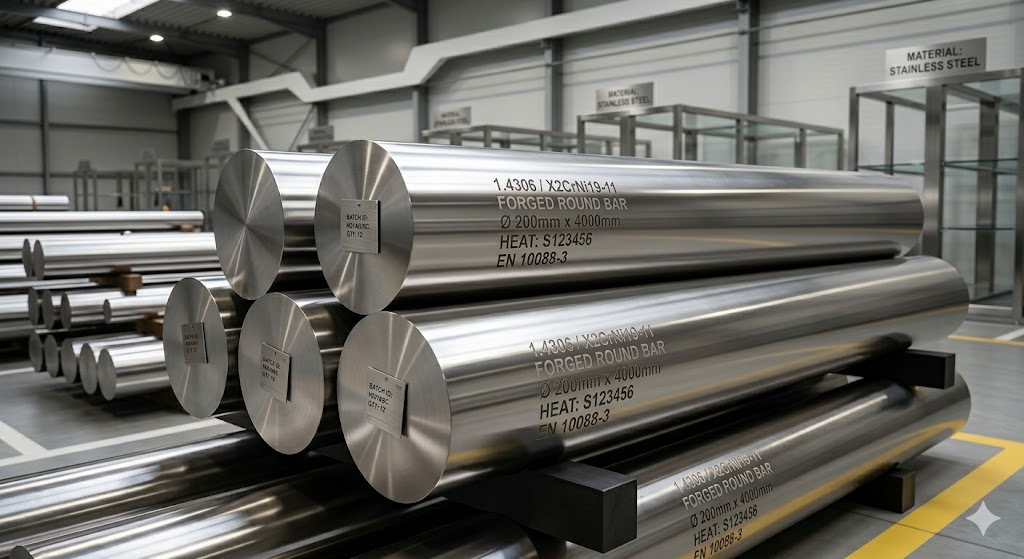
1.4306 Forged Round Bars
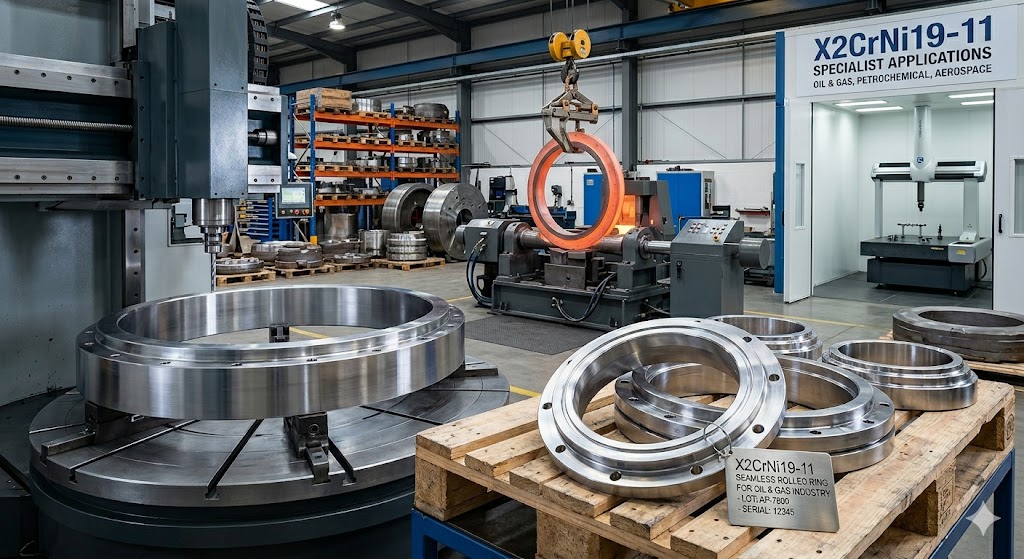
X2CrNi19-11 Seamless Rolled Rings
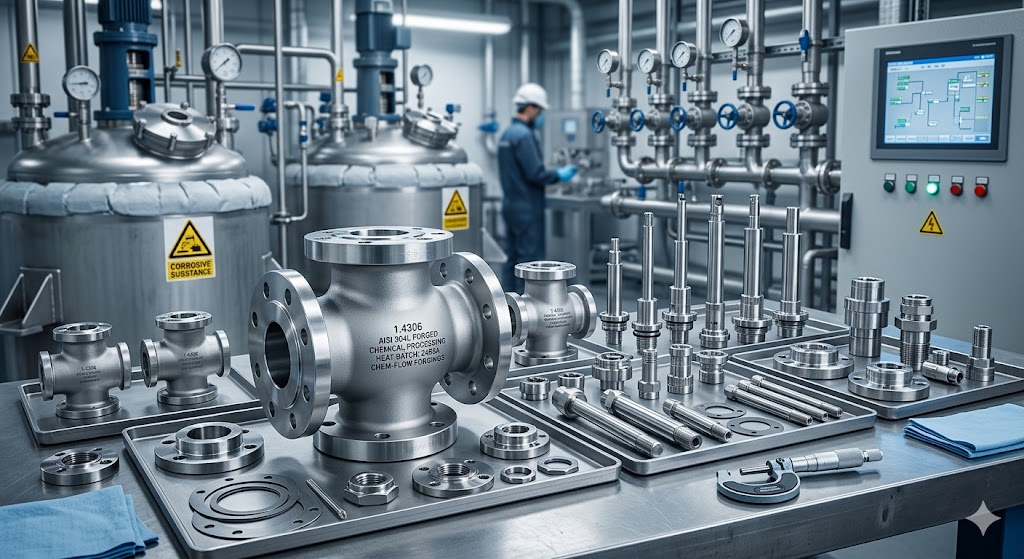
1.4306 Forged Valve Components
Established in 1997, Jiangsu Liangyi Co.,Limited is an ISO 9001:2015 certified professional manufacturer specializing in 1.4306 (X2CrNi19-11) open die forging parts and seamless rolled rings. Located in Jiangyin City, Jiangsu Province — the heart of China's precision forging industry — we operate an 80,000㎡ manufacturing campus equipped with 6300T hydraulic forging presses, a 5-metre seamless ring rolling machine, vacuum heat treatment furnaces, and a fully independent metrology and testing laboratory. With 120,000 tons of annual production capacity and 29 years of accumulated process know-how, we supply custom 1.4306 stainless steel forgings to engineering procurement contractors, valve manufacturers, oil & gas operators, and OEM customers across more than 50 countries.
In practice, one of the most common mistakes buyers make when specifying material for corrosion-critical forgings is treating 1.4306 (X2CrNi19-11) and 304L (1.4307) as interchangeable. They are not. While both share an ultra-low carbon ceiling of 0.03%, 1.4306 carries meaningfully higher chromium (18–20% vs. 17.5–19.5%) and nickel (10–12% vs. 8–10.5%) floors, together with a deliberate nitrogen addition of up to 0.11%. That combination matters in practice: the extra nitrogen compensates for the lost carbon strengthening, raises the pitting resistance equivalent (PRE), and suppresses sensitisation during slow post-weld cooling — problems that surface operators regularly encounter when 1.4307 forgings are welded into heavy-wall assemblies without post-weld heat treatment. For applications running in nitric acid service, organic acid duty, or sour-gas environments where chloride levels fluctuate, the metallurgical gap between these two grades is not academic — it is the difference between an asset that performs as designed and one that demands unplanned maintenance within the first service interval.
Our Quality Certification & Standards Capability
Jiangsu Liangyi Co.,Limited holds ISO 9001:2015 Quality Management System certification, issued and maintained under annual third-party audit by an internationally accredited certification body. Our quality management system covers the complete production scope: raw material procurement and incoming inspection, forging and heat treatment, in-house mechanical and chemical testing, dimensional inspection, and EN 10204 3.1 certificate issuance.
Beyond our ISO 9001 quality system, we manufacture forgings to meet the technical requirements of a wide range of international standards — including EN 10088, EN 10250-4, ASTM A182/A336, and API 6A material and dimensional specifications — per the requirements of each customer's project documentation. Where customers require third-party inspection witnesses (TÜV, Bureau Veritas, SGS, DNV, Lloyd's Register, or Intertek), we coordinate their attendance as part of the production schedule. We do not hold API 6A, PED 2014/68/EU, or ISO 14001 company certifications; customers requiring those specific certifications should verify compliance requirements with their own project engineering team.

ISO 9001:2015
Quality Management System
(Our held certification)
Note for procurement teams: We are happy to supply EN 10204 3.1 material test certificates, arrange third-party EN 10204 3.2 inspection, and produce to the technical requirements of API 6A, PED 2014/68/EU, or ASME standards as specified in your project documents. If your project requires our company to hold a specific certification not listed above, please confirm with us before placing an order.
1.4306 (X2CrNi19-11) Forged Steel Product Range | Custom Shapes & Specifications
We supply X2CrNi19-11 stainless steel forgings across the complete spectrum of open die and ring rolling geometries, from prototype samples through high-volume production runs. Every product leaves our facility with a verified chemical identity (spectrometer-confirmed against the heat certificate), a dimensional report, and the applicable mechanical test data — not just the mill certificate. Single-piece weight coverage spans 30 kg to 30,000 kg, enabling us to fulfil orders ranging from small precision components to large pressure vessel shells within the same quality management framework.
Forged Bars, Shafts & Stepped Components
X2CrNi19-11 forged round bars are produced from dedicated heats rather than cut from hot-rolled bar stock. The distinction matters: an open die forged bar manufactured with a minimum forging ratio of 4:1 exhibits a refined, elongated grain structure aligned along the working axis, delivering substantially higher through-thickness tensile strength and fatigue resistance than its rolled equivalent. We supply round bars from ∅50 mm to ∅1,200 mm, square bars up to 800 × 800 mm, flat bars up to 2,000 mm wide, and stepped or contoured shafts to customer drawing. Wall-section hollow bars, gear shafts, and splined drive shafts for ESP motor assemblies are produced with bore tolerances held to H7/h6 after rough machining, allowing customers to proceed directly to finish-grind without an intermediate straightening cycle.
A particular strength of our bar production is the ability to control sulphur content below 0.005% on request — well inside the EN 10088-3 ceiling of 0.015%. Low sulphur dramatically reduces MnS inclusion density, which is the primary initiation site for pitting corrosion in stainless steel bar products used in sour-gas and chloride-containing media.
Seamless Rolled Rings, Flanged Rings & Custom Contoured Rings
Our 5-metre radial-axial ring rolling machine produces seamless rolled rings in 1.4306 with outer diameters from 200 mm to 5,000 mm, heights from 50 mm to 1,200 mm, and wall thicknesses engineered to match the stress profile of the end assembly. Unlike forged discs that are subsequently bore-machined to produce a ring blank, our rolled rings begin as a pierced and punched blank that is expanded on the mandrel under controlled radial and axial pressure. The result is a circumferentially oriented, uniform grain structure with no centre-segregation risk — a critical advantage for applications where the ring functions as a pressure-retaining boundary, such as reactor shell flanges, heat exchanger channel flanges, and high-pressure wellhead spool bodies.
Beyond standard flat rings, we produce gear rings with pre-machined tooth profiles, contoured rings with profiled cross-sections (T-section, L-section, or custom), double studded adapter flanges (DSAF), integral mud flanges, flanged outlets, studded crosses, and single/double bossed blanks for the oil and gas wellhead sector. All flanged ring forgings comply with EN 10250-4 and can be produced to ASME B16.5 or customer-specified pressure ratings.
Hollow Forgings, Sleeves, Housings & Valve Bodies
Hollow 1.4306 forgings — including hubs, housings, sleeves, bushes, casings, pump barrels, and valve bodies — are produced through a combination of upsetting, punching, and mandrel forging operations on our hydraulic press line. This sequential deformation process eliminates the porosity and compositional segregation that is inherent in cast equivalents, yielding components with superior pressure integrity for high-cycle fatigue applications in chemical process pumps, cryogenic valves, and reactor internals.
For valve body forgings specifically, we maintain in-house CNC rough-machining capability, allowing us to deliver near-net-shape components with 3–5 mm stock on all machined faces. This shortens our customers' cycle time by eliminating the outsourced roughing operation that would otherwise sit on their critical path. Bore tolerances after our rough machining are held to ±0.5 mm for further finish machining by the customer, or to final dimensions on request when full machining service is specified.
Forged Discs, Plates, Tube Sheets & Blocks
X2CrNi19-11 forged discs and tube sheets represent one of our highest-volume product families, driven by demand from heat exchanger manufacturers across Europe, Southeast Asia, and the Middle East. We produce discs from ∅100 mm to ∅3,500 mm diameter and up to 600 mm thick in a single heat. For tube sheets, we apply a dedicated flatness protocol: after solution annealing, each tube sheet is surveyed with a CMM across a minimum 9-point measurement grid, with flatness and parallelism within ±0.5 mm/m guaranteed for sheets under 2 metres diameter. Thickness tolerance across the face is held to ±1.5 mm, avoiding the rework that results from high-spots encountered during tube-to-sheet expansion or welding.
Large forged blocks and plates — used for manifold bodies, flow meter housings, valve blocks, and structural machine bases — are produced with thickness up to 500 mm and maintained at a minimum forging reduction of 3:1 to ensure freedom from internal shrinkage cavities. All blocks over 1 tonne are ultrasonically tested to SEP 1921 Grade C/c as standard before shipment.
Forged Pipes, Tubes & Pressure-Purpose Tubular Components
1.4306 forged tubular components — piping shells, nozzle necks, and transition cones — are produced for boiler, heat exchanger, and high-pressure reactor service where seamless tube mill supply cannot meet the wall thickness or diameter combinations required. Our tubular forgings are fully compliant with EN 10216-5 (seamless steel tubes for pressure purposes, stainless steel) and EN 10217-7 (welded steel tubes for pressure purposes, stainless steel tubes). We produce nozzle forgings with minimum wall thickness per ASME B31.3 and supply them rough-machined with weld preparation bevels to EN ISO 9692-1 or ASME B16.25, reducing the customer's fit-up time on site.
Industry Applications & Verified Project Cases of 1.4306 (X2CrNi19-11) Forgings
The case for choosing forged 1.4306 (X2CrNi19-11) over cast or rolled alternatives is strongest when three conditions coincide: corrosive service media, cyclic pressure or thermal loading, and a compliance environment that demands full material traceability. All five of the industries described below meet those criteria. Our project cases below are drawn from actual deliveries and are not generic marketing narratives — the technical challenges, process responses, and outcome metrics cited reflect real decisions made on real production floors.
Valve Manufacturing — LNG, Chemical Pipeline & Industrial Control Applications
We manufacture a complete range of X2CrNi19-11 forged valve components for valve OEMs supplying to the energy, petrochemical, and water treatment sectors. According to ASME B16.34, the product range includes valve balls, bonnets, bodies, stems, seat rings, cores, discs, butterfly valve spindles, and body-bonnet sealing rings for 2-way ball valves, check valves, gate valves, globe valves, and cryogenic high-performance butterfly valves (HPBV) rated from Class 150 to Class 2500.
One technical problem that keeps coming up in this application family is keeping impact toughness at cryogenic service temperatures. According to EN 10088-3, test specimens machined from the forging must have a minimum average Charpy impact energy of 40 J at the temperature specified by the valve design standard. This is for valves that can handle liquefied natural gas (LNG) or liquefied industrial gases at temperatures as low as -196°C. Our heat treatment process, which includes solution annealing at 1,050°C ± 20°C for at least 2.5 minutes per millimeter of ruling section and then water quenching, always gives us impact values over 120 J at -196°C in our 1.4306 heats. This gives us a big safety margin and makes sure that all batches are the same.
A tier-1 European valve manufacturer engaged us to supply 1.4306 forged valve stems (∅40–180 mm), seat rings (OD 80–320 mm), and body forgings (up to 85 kg each) for their HPBV cryogenic product line destined for LNG regasification terminals across Germany, the United Kingdom, and Italy. The specification must meet EN 10253-4 dimensional tolerances, PED 2014/68/EU Module H documentation (required by the valve manufacturer as duty holder), ASTM A370 mechanical testing at -196°C, and 100% liquid penetrant testing (LPT) per ASTM E165.
We qualified the heat under a first-article inspection protocol, producing test forgings from three separate locations within the ingot — head, mid-body, and tail — to demonstrate uniformity. All positions met or exceeded the tensile strength floor of 500 N/mm², yield strength floor of 180 N/mm², elongation floor of 45%, and -196°C impact floor of 60 J. Production deliveries have totalled more than 120,000 qualified parts over a three-year supply relationship, with zero recorded quality deviations reaching final inspection.
Oil & Gas — Wellhead Equipment, Subsurface Tools & Midstream Components
In the upstream oil and gas sector, 1.4306 stainless steel forgings occupy the space between standard carbon steel (insufficient corrosion resistance in moderate-sour service) and duplex stainless steels (cost-prohibitive for the vast majority of wellhead connection and metering applications). The grade performs well in H₂S partial pressures below the NACE MR0175 / ISO 15156 threshold for austenitic stainless steels and in chloride concentrations typically encountered in produced water handling systems where pH is maintained above 4.5.
Our oil and gas forging scope includes: Christmas tree body forgings, wellhead spool bodies, casing heads, tubing heads, casing hangers, tubing hangers, spacer spools, tubing head adapters, and oil measurement valve components for fiscal metering skids — produced to API 6A dimensional and material requirements per customer project specification. For downhole applications, we supply mud motor splined drive shafts, ESP motor splined shafts, and directional drilling tool housings, where the combined requirements of corrosion resistance, high fatigue strength, and tight dimensional tolerances on spline profiles demand forging (not machining from bar stock).
For a large-scale onshore oilfield development project in Saudi Arabia, an international EPC contractor specified X2CrNi19-11 seamless rolled rings, tubing heads, and casing hangers for 96 wells, with a combined order weight of approximately 280 tonnes. The service conditions involved CO₂ partial pressures up to 0.8 MPa and H₂S partial pressures up to 0.003 MPa in produced water with chloride content reaching 85,000 ppm — conditions that ruled out standard 304 or 316 stainless steel and placed 1.4306 at the upper practical boundary of austenitic grade suitability.
We produced the heats using an EAF+AOD+VOD triple-refining route to get sulphur content below 0.003% and phosphorus below 0.020% — both meeting the API 6A PSL3 requirements specified by the customer. Non-metallic inclusion testing per ASTM E45 Method A confirmed inclusion ratings below Grade 1 in all categories. The finished components passed hydrostatic testing at 1.5× rated working pressure per the customer's API 6A PSL3 inspection plan, with TÜV appointed by the customer as the third-party inspection authority for final release. All parts have been in continuous service for more than five years with no recorded corrosion failures or mechanical rejections.
Nuclear Power — Reactor Coolant System & Safety-Class Components
Nuclear power represents the most demanding quality environment in which 1.4306 forgings operate. Beyond the standard mechanical and corrosion property requirements, nuclear-class forgings must meet grain size restrictions (typically ASTM grain size 5 or finer to guarantee predictable ultrasonic inspection response), delta ferrite content limits (generally 3–8% to balance hot cracking resistance with toughness), and full end-to-end material traceability that satisfies both the French RCC-M and American ASME Section III codes.
We supply custom 1.4306 forgings for nuclear reactor coolant pump casings, primary system piping nozzles, containment penetration sleeves, reactor internals support structures, and reactor pressure vessel (RPV) nozzle safe-ends. The production of nuclear-class forgings at our facility follows a dedicated quality plan prepared jointly with the customer's nuclear quality engineer before the first heat is ordered — covering raw material qualification, melt route approval, forging process plan, heat treatment procedure qualification, and the complete inspection and testing sequence.
We were engaged to produce 1.4306 stainless steel pump casings and seal chamber forgings for the reactor coolant pump (RCP) system of a domestic 1,000 MWe pressurised water reactor project. The design specification required that all forgings be produced from ESR (electroslag remelted) ingots to achieve ≤ Grade 1.0 cleanliness per ASTM E45, ASTM grain size ≥ 5 throughout the cross-section, delta ferrite content between 3.5% and 7.0% measured per AMS 2315, tensile strength ≥ 520 N/mm² at room temperature and ≥ 440 N/mm² at 300°C, and a fully documented heat-by-heat traceability record to satisfy the RCC-M Class 1 documentation requirements specified by the customer's nuclear QA plan.
We qualified our ESR production route through a dedicated qualification ingot campaign, generating three forged test pieces that were destructively sectioned and tested at multiple positions. All properties were achieved within a narrow statistical band, confirming the process stability required for nuclear-class supply. The casings were subjected to 100% UT to RCC-M volume scanning grids, 100% MT and PT on all accessible surfaces, and dimensional verification against a customer-supplied CMM program. Parts passed all inspections on first submission, with zero concessions or derogations raised.
Pressure Vessels & Heat Exchangers — Tube Sheets, Nozzles & Shell Components
The decision to specify 1.4306 forgings in preference to 316L in heat exchanger construction is typically driven by service-fluid composition rather than temperature alone. Where the process fluid contains dilute organic acids — acetic acid, formic acid, or their combinations — at temperatures between 80°C and 200°C, and where the coolant side may carry river water or moderately chloride-bearing cooling water, 1.4306 offers a more favourable corrosion performance-per-dollar outcome than the molybdenum-bearing 316L grades, because the primary corrosion vector is acid attack on the tube sheet face rather than pitting on the tube OD.
Our heat exchanger forging scope covers tube sheets from ∅200 mm to ∅3,500 mm and up to 300 mm thick, shell flanges, nozzle necks with weld-prep bevels, baffle support rings, channel head closures, and transition cones. We also produce the larger integral tube sheet-shell forging combinations where the tube sheet and the first shell section are forged as one piece to eliminate the circumferential weld at the tubesheet-to-shell joint — a significant risk reduction measure for services where weld HAZ sensitisation cannot be fully prevented by PWHT.
A Malaysian petrochemical plant operator engaged a European heat exchanger fabricator to supply three shell-and-tube units for an acetic acid concentration service. The process fluid contained 35–65% acetic acid at 140–175°C, with the cooling medium being seawater-cooled industrial water with chloride content reaching 1,800 ppm. The tube sheet specification required 1.4306 per EN 10028-7, with individual piece weights up to 8.2 tonnes, OD 2,650 mm, and thickness 210 mm — dimensions that exceeded the rolling capacity of most ring mills and needed open die disc forging instead.
We manufactured the forgings from 18-tonne ESR ingots, applying an upset-draw-upset deformation sequence to achieve a minimum forging reduction of 4:1 across the full cross-section. Solution annealing at 1,055°C for a 9-hour soak (to ensure full dissolution of any carbide precipitates formed during the slow-cool transit from the forging temperature) was followed by a forced-air quench, confirmed by embedded thermocouple data showing the critical 850–450°C range was traversed in under 6 minutes. Final tensile, hardness, and impact results at room temperature and +100°C exceeded EN 10028-7 minima by 12–18%. The units have been in continuous service since commissioning without any recorded corrosion-related stoppages.
Pumps & Turbomachinery — Impellers, Casings & Rotating Components
Centrifugal pump casings and impellers in 1.4306 are specified where the pumped fluid is mildly corrosive but the throughput volumes and continuous duty cycles make maintenance outages economically damaging. The grade is particularly suitable for chemical process pumps in dilute acid duty, pharmaceutical process pumps where 316L is over-specified, water injection pump casings for produced water re-injection (PWRI) in offshore platforms, and distillation reflux pump systems handling mixtures of organic solvents and water.
From a manufacturing standpoint, closed impeller forgings present the most demanding process challenge in this category: the complex internal flow geometry must be forged as an open die blank to accurate wall-thickness control, then rough-machined on a 5-axis CNC machining centre before the hydraulic performance of the flow passages can be qualified by the pump OEM's aerodynamicist. We maintain a stock of commonly used 1.4306 disc blanks (∅150–800 mm, 30–200 mm thick) to support customers who need rapid prototyping turnaround when a new impeller design enters development.
A leading North American turbomachinery OEM engaged us to supply X2CrNi19-11 closed impeller forgings for their 6-stage centrifugal compressor line used in gas gathering and refrigeration duty. The impellers operate at tip speeds up to 380 m/s and must sustain 10⁷ fatigue cycles without crack initiation, requiring a material with tensile strength ≥ 600 N/mm², yield strength ≥ 250 N/mm² in the forged and solution-annealed condition (achievable in 1.4306 through controlled nitrogen content in the upper half of the specification window), Brinell hardness ≤ 215, and absence of harmful delta ferrite phases confirmed by AMS 2315G measurement.
We adopted a single-heat production strategy — all impeller blanks for a given compressor train forged from one ingot — to delete the inter-heat variability risk that could produce slightly mismatched stiffness between stages. The forging was performed at a controlled temperature window of 1,100–1,200°C, with the final pass delivered in the 950–1,000°C range to refine grain without introducing excessive distortion. Over four years of supply, we have delivered more than 2,400 qualified impeller blanks to this customer with a first-pass dimensional acceptance rate of 99.3%.
Chemical Processing — Reactor Internals, Agitator Components & Pipeline Fittings
Chemical plant operators selecting forgings for reactor internals, stirrer shafts, and flanged pipeline connections in organic acid, aldehyde, or dilute mineral acid service frequently find that 1.4306 outperforms 316L in pure acetic or formic acid duty, while costing less and being easier to source as forgings in larger sizes. The reason is metallurgical: in oxidising acid environments where chloride is absent or low, the superior chromium content of 1.4306 provides an equivalent or better passive film stability compared to the Mo-bearing 316L grade, without the cost premium that molybdenum commands on the LME.
Our chemical processing forging deliveries include agitator shaft forgings up to 8 metres length (supplied as multiple sections with screw-type or flanged couplings), reactor manway cover forgings, large-bore pipe union forgings for pharmaceutical clean-in-place (CIP) systems, column section rings for packed distillation columns, and custom forged connectors for modular chemical skid assemblies. All product in this category carries full EN 10204 3.1 material certificates traceable to the heat analysis, with spectrometer re-confirmation performed in our laboratory on every forging before release.
1.4306 (X2CrNi19-11) Material Specifications, Properties & Grade Comparisons
Understanding what 1.4306 (X2CrNi19-11) delivers in service — not just what it says on the certificate — requires looking at three dimensions simultaneously: chemical composition (what it is made of), mechanical properties (how it behaves under load), and physical/thermal properties (how it responds to the operating environment). The tables below present the complete material picture derived from both EN standard limits and our production heat data. Where our typical achieved values differ meaningfully from the EN floor, we have noted both, because the difference between a grade that barely meets the minimum and one that comfortably exceeds it often determines whether a component passes first inspection or generates a costly non-conformance.
Chemical Composition — EN 10088-3 Limits vs. Our Typical Achieved Values
Raw material is produced from dedicated heats using EAF+AOD+VOD triple-refining as standard, with ESR (electroslag remelting) available on request for nuclear-class, high-cleanliness, or large-section applications where the EN 10088 inclusion ceiling is insufficient. Composition is verified by optical emission spectrometer on samples cut from the heat ingot before forging commences, with a positive material identification (PMI) check on every finished forging before release.
| Element | EN 10088-3 Limit | Our Typical Value | Metallurgical Significance |
|---|---|---|---|
| Carbon (C) | Max 0.030% | 0.015 – 0.025% | Ultra-low C prevents chromium carbide precipitation at grain boundaries (sensitisation), which would otherwise destroy corrosion resistance in the heat-affected zone of welds |
| Silicon (Si) | Max 1.00% | 0.30 – 0.60% | Controlled to the lower half of the range to preserve toughness and avoid sigma-phase formation during prolonged high-temperature exposure |
| Manganese (Mn) | Max 2.00% | 1.20 – 1.70% | Acts as an austenite stabiliser and deoxidiser; combined with low sulphur guarantees minimal MnS inclusion density |
| Chromium (Cr) | 18.00 – 20.00% | 18.80 – 19.50% | Primary passive film former; higher Cr directly increases PRE (Pitting Resistance Equivalent) and acid corrosion resistance beyond standard 304L |
| Nickel (Ni) | 10.00 – 12.00% | 10.40 – 11.20% | Stabilises the austenitic microstructure, suppresses martensite formation during cold deformation, and improves cryogenic toughness |
| Nitrogen (N) | Max 0.11% | 0.05 – 0.10% | The main differentiator vs. 304L: N substitutes for C in solid solution strengthening, raising yield strength by 20–30 N/mm² without compromising ductility or corrosion resistance |
| Phosphorus (P) | Max 0.045% | 0.020 – 0.030% | Controlled well below the EN ceiling to preserve toughness, particularly at cryogenic temperatures and in nuclear-class components |
| Sulphur (S) | Max 0.015% | 0.002 – 0.006% | Our achieved S level is 2–5× lower than the EN limit, significantly reducing MnS inclusion density and improving pitting initiation resistance in chloride environments |
Mechanical Properties — Solution Annealed Condition per EN 10250-4
The mechanical properties below apply to the solution annealed and quenched delivery condition. Forgings are solution annealed at 1,000–1,100°C with a soak time calculated to ensure full carbide dissolution throughout the ruling section, followed by rapid cooling (water quench for sections >50 mm, forced air for thinner sections) to prevent sensitisation. We strictly avoid residence in the 450–850°C sensitisation range during heat treatment, with thermocouple-monitored time-temperature records retained for every heat treatment batch.
| Property | EN Standard Minimum | Our Typical Achieved | Test Standard |
|---|---|---|---|
| Tensile Strength (Rm) | 500 – 750 N/mm² | 540 – 680 N/mm² | ASTM A370 / EN ISO 6892-1 |
| Yield Strength (Rp0.2) | ≥ 180 N/mm² | 210 – 260 N/mm² | ASTM A370 / EN ISO 6892-1 |
| Elongation (A) | ≥ 45% | 48 – 58% | ASTM A370 / EN ISO 6892-1 |
| Reduction of Area (Z) | ≥ 55% (transverse) | 60 – 72% | ASTM A370 |
| Hardness | ≤ 215 HB | 150 – 190 HB | ASTM E10 / EN ISO 6506-1 |
| Charpy Impact (RT) | ≥ 100 J (longitudinal) | 140 – 200 J | ASTM E23 / EN ISO 148-1 |
| Charpy Impact (-196°C) | ≥ 40 J (per design std.) | 110 – 160 J | ASTM E23 / EN ISO 148-1 |
| Delta Ferrite Content | ≤ 10% (standard) or per spec | 3 – 7% | AMS 2315G / Fischer Feritscope |
Physical & Thermal Properties
Physical properties govern how a forging responds to temperature gradients during service cycling and to thermal shock during emergency shutdowns. The values below are characteristic of 1.4306 in the solution annealed condition and differ meaningfully from carbon steel in both thermal expansion coefficient and thermal conductivity — differences that must be accounted for in thermal stress calculations for heat exchanger and pressure vessel designs.
| Physical Property | Value | Condition / Temperature |
|---|---|---|
| Density | 7.90 g/cm³ | 20°C |
| Elastic Modulus (E) | 200 GPa | 20°C |
| Elastic Modulus (E) | 172 GPa | 300°C |
| Thermal Expansion Coefficient | 16.0 × 10⁻⁶ /K | 20 – 100°C |
| Thermal Expansion Coefficient | 17.5 × 10⁻⁶ /K | 20 – 400°C |
| Thermal Conductivity | 15 W/(m·K) | 20°C |
| Thermal Conductivity | 18 W/(m·K) | 300°C |
| Specific Heat Capacity | 500 J/(kg·K) | 20°C |
| Electrical Resistivity | 0.73 × 10⁻⁶ Ω·m | 20°C |
| Magnetic Permeability | < 1.02 (non-magnetic) | Solution annealed |
Comprehensive Grade Comparison: 1.4306 vs. 304L vs. 316L — When to Choose Which
Procurement engineers frequently ask us whether 1.4306 is truly worth specifying when 304L or 316L are more widely available as mill-form products. The answer depends entirely on service conditions. The table below reflects the practical guidance we give customers based on 29 years of application experience — not simply a table of specification differences, but a decision tool aligned with real-world performance.
| Performance Parameter | 1.4306 (X2CrNi19-11) | 1.4307 (304L) | 1.4404 (316L) |
|---|---|---|---|
| Chromium Content | 18.00 – 20.00% | 17.50 – 19.50% | 16.50 – 18.50% |
| Nickel Content | 10.00 – 12.00% | 8.00 – 10.50% | 10.00 – 13.00% |
| Molybdenum Content | None | None | 2.00 – 2.50% |
| Nitrogen Addition | Yes — up to 0.11% | No | No (in standard 316L) |
| PRE (Pitting Resistance) | ~20–22 (Cr + 3.3Mo + 16N) | ~17–19 | ~24–27 |
| Minimum Yield Strength | 180 N/mm² (N-enhanced) | 170 N/mm² | 170 N/mm² |
| Organic Acid Resistance | ✔ Excellent (acetic, formic) | ⚠ Moderate | ✔ Good |
| Chloride Pitting Resistance | ⚠ Moderate | ⚠ Moderate | ✔ Good (due to Mo) |
| Cryogenic Toughness (-196°C) | ✔ Excellent | ✔ Good | ✔ Good |
| Sensitisation Resistance | ✔ Excellent (ultra-low C + N) | ✔ Good (ultra-low C) | ✔ Good (ultra-low C) |
| Relative Raw Material Cost (forgings) | Medium (reference) | Low (–8 to –12%) | High (+25 to +40%) |
| Best Application Fit | Acid service, LNG, nuclear, nitric acid, sour gas (moderate) | General corrosion service, food, pharma, ambient-temp water | Chloride environments, seawater-cooled heat exchangers, coastal structures |
The practical implication: if your service fluid is a chloride-dominated environment (seawater cooling, offshore brine injection, coastal atmospheric exposure), 316L is the better choice. If your service is organic acid, dilute mineral acid, or sour gas at moderate H₂S levels where austenitic grades are still permissible, and if the design requires PWHT-free welding and cryogenic toughness, 1.4306 is the correct specification — and typically costs 25–40% less than 316L for the same forging geometry.
How We Manufacture 1.4306 (X2CrNi19-11) Forgings — Our Full Process
Understanding the manufacturing sequence that produces a high-quality 1.4306 forging helps engineering buyers evaluate supplier capability with greater precision than a factory brochure allows. The process described below is our actual production sequence — not a generic "how forgings are made" narrative — and the control parameters cited are drawn from our validated process procedures.
Step 1 — Raw Material Procurement & Incoming Inspection
We only buy 1.4306 stainless steel ingots and billets exclusively from qualified steel mills operating EAF+AOD+VOD triple-refining routes. Before any ingot enters our production workflow, our incoming quality engineer reviews the mill's heat analysis certificate against our internal acceptance criteria — which are tighter than the EN 10088 specification in respect of sulphur (max 0.008% vs. EN's 0.015%), phosphorus (max 0.025% vs. EN's 0.045%), and nitrogen (min 0.04% to guarantee meaningful solid solution strengthening). If the heat analysis is marginal in any element, we conduct an independent OES spectrometer check in our own laboratory before accepting the heat. Ingots failing our incoming criteria are returned or conditionally accepted for lower-criticality applications only.
Step 2 — Heating & Temperature Control
Ingots and billets are charged into our gas-fired pit furnaces or walking-beam furnaces with temperature uniformity certified to ±15°C across the working zone. For 1.4306, the forging temperature window is 1,100–1,230°C, with a target of 1,150°C at the start of deformation to guarantee adequate hot ductility without incurring excessive grain growth. Soak time is calculated at 1.5 minutes per millimetre of cross-section diameter to guarantee through-heat uniformity before the ingot exits the furnace.
One important constraint unique to austenitic stainless steels that many general forgers underestimate: the material must not be deformed below 900°C, because below this temperature the flow stress rises rapidly and the risk of surface cracking increases disproportionately. We monitor surface temperature using infrared pyrometers positioned at the press intake, and any ingot that falls below 950°C is returned to the reheat furnace rather than forced through an additional press stroke — a discipline that eliminates surface-origin defects that only become visible after final machining.
Step 3 — Open Die Forging or Ring Rolling
For bar, disc, and hollow product forms, deformation is carried out on our 6,300-tonne hydraulic forging press using a planned sequence of upsetting (reducing height, increasing diameter to break down as-cast dendrite structure), drawing-out (reducing cross-section, refining grain in the axial direction), and repeat passes to accumulate forging reduction. Our target minimum cumulative reduction ratio is 4:1 for critical applications and 3:1 for general engineering product — calculated from ingot cross-section to finished forging cross-section.
For ring product forms, the process begins with an upsetting and punching operation on the press to produce a pierced blank, which is then transferred to our 5-metre radial-axial ring rolling mill. The mandrel roll controls the ID, the main roll controls the OD, and the two axial rolls control the height. Rolling continues with a programmed reduction-per-pass schedule until the ring reaches target dimensions, confirmed by laser diameter gauging on the mill table. The result is a circumferentially refined, wrought fibre structure — fundamentally different from a cut ring machined from a disc forging.
Step 4 — Solution Annealing Heat Treatment
All 1.4306 forgings are subjected to solution annealing immediately after forging to dissolve any carbide or sigma-phase precipitates formed during the forging cool-down, and to relieve residual forging stresses. Our heat treatment furnaces are PLC-controlled with independent thermocouple monitoring at a minimum of four zones, producing a temperature uniformity record for every batch. Annealing temperature for 1.4306 is set at 1,050 ± 20°C, with minimum soak time at temperature of 2 minutes per millimetre of ruling section (minimum 30 minutes, maximum governed by grain growth risk).
Quenching is performed by water immersion for sections greater than 40 mm, with the quench tank temperature controlled below 30°C before each charge. The immersion time is calculated to ensure the surface temperature has dropped below 300°C within 4 minutes — verified by embedded thermocouple records. This rate is fast enough to prevent chromium carbide re-precipitation during cooling, which is the thermal event that causes intergranular corrosion in improperly heat-treated 18/10 stainless steel.
Step 5 — Rough Machining (Where Specified)
Customers who specify near-net-shape or fully machined delivery receive their forgings through our in-house CNC turning and milling department, which operates FANUC-controlled multi-axis lathes and machining centres. Rough machining stock allowances follow ASME or EN machining allowance tables unless customer drawings specify otherwise. All machined surfaces are clearly identified on a First Article Inspection (FAI) report that accompanies the first production delivery of every new part number, confirming that the as-machined dimensions are within the specified tolerances and that no sub-surface defects are exposed during machining.
Step 6 — Comprehensive Quality Testing & Inspection
Testing is performed in-house using calibrated, annually re-certified equipment. The standard testing package for 1.4306 forgings includes chemical composition verification (OES), mechanical testing (tensile, yield, elongation, reduction of area), hardness (Brinell), and visual/dimensional inspection. Enhanced testing packages — including Charpy impact at sub-ambient temperatures, delta ferrite content, grain size determination, ASTM E45 inclusion rating, UT volumetric scanning, MT/PT surface crack detection, and residual stress measurement — are applied per customer specification or our default critical-application protocol.
Step 7 — Certification, Marking & Packaging
Every finished forging is permanently marked by stamping or electrochemical etching with the heat number, material designation, our factory identification code, and the applicable standard number — ensuring full traceability throughout the supply chain. The EN 10204 3.1 material test report is issued by our quality manager and cross-references the heat certificate, all test results, heat treatment records, NDT records, and dimensional report. Documents are provided in digital PDF format with original signatures and company seal, and retained in our quality archive for a minimum of 10 years.
Production & Testing Standards for 1.4306 (X2CrNi19-11) Forged Parts
Global industrial customers buying forgings face a documentation landscape that spans European EN standards, American ASTM/ASME codes, oil-and-gas API specifications, and nuclear safety regulations — often simultaneously on the same project. Our quality management system is structured to satisfy all four regulatory families within a single integrated production and inspection flow, without the customer needing to manage separate qualified vendors for European and American documentation.
Applicable Material & Forging Production Standards
Our 1.4306 (X2CrNi19-11) forgings are produced based on the following standards, with the applicable document referenced on every EN 10204 certificate we issue:
- EN 10088-1 / -2 / -3 / -4 / -5 — Stainless steels: classification, delivery conditions for flat products, semi-finished products, bars and rods, and structural sections. Our base material specification and chemical composition requirements are drawn from this series.
- EN 10250-4 — Open steel die forgings for general engineering purposes, stainless steels. Governs dimensional tolerances, surface condition, and testing requirements for all open die forged product forms.
- EN 10028-7 — Flat products made of steels for pressure purposes, stainless steels. Applied for tube sheet, disc, and plate forgings destined for pressure vessel applications.
- EN 10272 — Stainless steel bars for pressure purposes. Referenced for forged bar products used in pressure equipment service.
- EN 10216-5 — Seamless steel tubes for pressure purposes, stainless steel tubes. Applied to tubular forging product forms.
- EN 10253-3 / -4 — Butt-welding pipe fittings, stainless steel. Referenced for flanged and piping part forgings.
- ASTM A182 / ASME SA-182 — Forged or rolled alloy and stainless steel pipe flanges, forged fittings, and valves for high-temperature service. For customers requiring ASME documentation.
- ASTM A336 / ASME SA-336 — Alloy steel forgings for pressure and high-temperature parts. Referenced for large pressure vessel part forgings.
- API 6A (22nd Edition) — Specification for wellhead and Christmas tree equipment. We manufacture forgings to API 6A dimensional and material requirements per customer project specification. API 6A product qualification and company certification responsibility rests with the wellhead equipment manufacturer as the API license holder.
- PED 2014/68/EU — Pressure Equipment Directive. We support customers in meeting PED requirements by providing EN 10204 3.1 / 3.2 material test certificates, traceable heat treatment records, and NDT reports. CE marking and PED Module H compliance responsibility lies with the customer as the pressure equipment duty holder, not with us as material supplier.
Testing Methods & Why Each Matters
A certificate that simply states "tested per EN 10250-4" without identifying the specific test methods and equipment calibration status provides limited assurance. The table below identifies every test we routinely perform or can perform on request, the specific standard governing each test, and the engineering reason the test is included in critical-service inspection plans:
| Test | Standard | Purpose & Engineering Relevance |
|---|---|---|
| Tensile / Yield / Elongation | ASTM A370 / EN ISO 6892-1 | Confirms minimum design strength floors; our results include the actual test-piece location within the forging |
| Charpy Impact (RT and low temp) | ASTM E23 / EN ISO 148-1 | Important for cryogenic valve, LNG, and nuclear applications where brittle fracture initiation energy must be quantified |
| Hardness (Brinell / Rockwell) | ASTM E10 / EN ISO 6506 | Confirms heat treatment effectiveness; out-of-range hardness is the earliest indicator of residual sensitisation or sigma-phase formation |
| Chemical Composition (OES) | ASTM E1086 / EN 10351 | Performed in our lab on each forging — not just the heat certificate — to detect mix-up risk in multi-heat production batches |
| Delta Ferrite Content | AMS 2315G / Fischer Feritscope | Ferrite above 10% risks sigma-phase transformation during elevated-temperature service; below 3% can increase hot-cracking susceptibility in welds |
| Grain Size Determination | ASTM E112 | Consistent fine grain (ASTM 5 or finer) guarantees consistent UT response and predictable fatigue behaviour; required for nuclear-class forgings |
| Inclusion Content Rating | ASTM E45 Method A | Quantifies non-metallic inclusion density; directly correlates with fatigue initiation risk in rotating components and high-cycle pressure cycling |
| Ultrasonic Testing (UT) | EN 10228-3 / ASTM A388 | Volumetric scanning detects internal shrinkage, lamination, or inclusion clusters not visible on the surface; performed on all forgings >50 kg as standard |
| Magnetic Particle / Liquid Penetrant | EN 10228-1 / ASTM E709 / E165 | Surface and near-surface crack detection; LPT is used for 1.4306 (non-magnetic); MT only where delta ferrite content is elevated |
| Residual Stress (Hole-Drill) | ASTM E837 | Required for precision rotating components (impellers, shafts) to confirm that heat treatment has relaxed forging residual stresses below the endurance limit |
| Intergranular Corrosion (IGC) | ASTM A262 Practice E | Oxalic acid etch and Huey test to confirm freedom from sensitisation; applied on request for corrosion-critical applications |
EN 10204 3.1 inspection certificates are issued as standard on all deliveries, signed by our Quality Manager. For customers requiring 3.2 documents, we arrange inspection by TÜV, Bureau Veritas, SGS, DNV, or Lloyd's Register per customer instruction. The full certificate package includes: heat analysis, remelting route, mechanical test results (identified by forging number and test specimen location), heat treatment time-temperature chart, NDT records with coverage diagrams, dimensional report, and material marking confirmation photograph.
Why Engineering Buyers Choose Jiangsu Liangyi for 1.4306 (X2CrNi19-11) Forgings
The stainless steel forging market is not short of suppliers who claim compliance, capacity, and quality. What separates us from the general market is specific: 29 years of exclusive focus on open die forging and seamless ring rolling (we do not produce cast, fabricated, or rolled plate alternatives), a production infrastructure that was built for heavy-section critical components rather than adapted from a general engineering shop, and a quality culture that treats the test result — not the certificate — as the measure of performance.
Founded in 1997 exclusively as an open die forging operation, our process knowledge in stainless steel grades is not general metalworking experience transferred to forgings — it is 29 years of solving specific problems that arise uniquely in the forging of austenitic and super-austenitic grades: controlling delta ferrite, managing sensitisation risk during slow-cool, preventing hot-short cracking in high-nickel heats, and producing large-section components with uniform through-thickness properties. This experience is encoded in our process procedures and carried by an engineering team averaging 15 years per member.
Unlike many forging suppliers who source billets from third-party steel mills, perform only the forging operation, and rely on sub-contracted heat treatment and machining, our 80,000㎡ campus integrates all critical steps under one ISO 9001:2015 quality management system. Raw material procurement, in-house OES verification, hydraulic press forging, ring rolling, heat treatment (with our own controlled-atmosphere furnaces), rough machining, full in-house mechanical testing, and certificate preparation all occur within one quality-controlled environment. This eliminates the inter-company hand-off points where traceability breaks down and non-conformances can be obscured.
Our 6,300-tonne hydraulic forging press and 5-metre ring rolling mill define what we can produce without compromises. When a customer specifies a 25-tonne tube sheet forging or a 4,800 mm OD ring, we do not outsource those parts to a facility with a different quality system and production culture — we produce them in-house, on equipment sized to the task. The practical consequence: dimensional precision, surface finish, and mechanical uniformity on large critical components are controlled by the same people, the same procedures, and the same quality culture as the smallest components in the order.
At 120,000 tonnes annual production capacity across all materials, we can accommodate the full quantity requirements of large infrastructure projects — offshore platform wellhead packages, high-specification energy infrastructure programs, or LNG terminal valve population programs — without the lead time escalation that occurs when a supplier's committed capacity is exceeded by an incoming order. Our capacity planning team maintains a rolling 90-day production schedule that customers can reference when planning delivery milestones for their project schedules.
We hold ISO 9001:2015 certification as our quality management system foundation, with our production processes designed to meet the technical requirements of EN, ASTM/ASME, and API 6A standards per customer specification — without requiring separate company-level API or PED certifications from us as material supplier. Our export documentation team processes customs, export licensing, and commercial invoice requirements for Europe, North America, the Middle East, and Southeast Asia routinely. Buyers who have previously encountered shipping delays or documentation errors when importing forgings from China will recognise the value of a logistics team that has resolved these challenges at scale — not for the first time on their project.
As a manufacturer — not a trading company acting as intermediary between the customer and the actual forging shop — our prices reflect direct production costs without distributor margin layered on top. Standard lead time from order confirmation to readiness for shipment is 15–35 working days, depending on forging weight and the testing package specified. We publish our lead time honestly at the quotation stage, including the specific constraint that determines it (raw material availability, furnace scheduling, or testing throughput), and we contact customers proactively if circumstances change during production rather than discovering a delay at the shipping date.
Every inquiry received by our sales team is reviewed by our engineering department before a quotation is issued. If the specified material, dimensions, standards, or testing requirements present a known production challenge or compliance ambiguity — a surface roughness callout that cannot be met after solution annealing, a heat treatment requirement that conflicts with the mechanical property minimums, or a nondestructive test method that is not applicable to the product form — we raise that issue at the quotation stage with a proposed resolution, rather than discovering it after production commences. This discipline saves customers the time and cost of non-conformance discovery, concession negotiations, and delivery extension requests that are otherwise endemic in complex forging procurement.
Frequently Asked Questions About 1.4306 (X2CrNi19-11) Forgings
1.4306 (X2CrNi19-11) is an acid-resistant austenitic stainless steel developed specifically for applications where standard 304 (1.4301) or 304L (1.4307) does not provide adequate corrosion resistance. The "X2" prefix in the European designation indicates an ultra-low carbon content — maximum 0.03% — which is the same limit as 304L. However, 1.4306 goes further: it carries a higher chromium floor (18.0% minimum vs. 17.5% in 1.4307) and a significantly higher nickel floor (10.0% minimum vs. 8.0% in 1.4307), plus a deliberate nitrogen addition of up to 0.11% that is absent in 304L.
In practical terms, the higher chromium content raises the Pitting Resistance Equivalent (PRE) of the passive film, making 1.4306 more resistant to attack in oxidising acid environments. The higher nickel content ensures the microstructure remains fully austenitic at all temperatures within the service window, without relying on the lower-alloyed 304L's tendency to form a small amount of deformation-induced martensite at sub-ambient temperatures. The nitrogen addition compensates for the reduced solid-solution strengthening that results from the very low carbon content, producing yield strength values of 210–260 N/mm² in our production heats versus the 170–200 N/mm² typical of 304L forgings. For applications in nitric acid service, pharmaceutical manufacturing, LNG cryogenic service, and post-weld applications where PWHT is not possible, these differences are operationally significant.
The decision framework our engineering team applies is: (1) identify the primary corrosion mechanism in service, (2) determine the compliance environment (EN, ASTM, API, nuclear), and (3) compare the total cost of ownership — not just the raw material price — across the candidate grades.
Choose 1.4306 when: the service fluid is an organic acid (acetic, formic, propionic), dilute nitric acid, or a moderately corrosive aqueous environment; when the design needs PWHT-free welding to avoid sensitisation risk; when cryogenic service down to -196°C is needed with documented impact toughness; or when the project specification explicitly calls for X2CrNi19-11 under EN 10088.
Choose 304L (1.4307) when: the service is general non-aggressive aqueous environments, food processing, ambient-temperature pharmaceutical duty, or general structural applications in non-corrosive environments — and where cost minimisation is the primary driver.
Choose 316L (1.4404) when: the service involves significant chloride concentration (seawater, brine, coastal atmospheric exposure), reducing acid environments where molybdenum provides tangible pitting resistance benefit, or offshore installations where the NORSOK M-650 specification or equivalent demands a minimum PRE above 24. The 25–40% cost premium over 1.4306 is justified when the chloride pitting risk makes 18/10 grades unsuitable.
If you are uncertain, contact our technical team with your service conditions — we will provide a recommendation with engineering rationale.
Our 1.4306 (X2CrNi19-11) forgings are produced based on European EN standards including EN 10088 series (material specification), EN 10250-4 (open die forgings), EN 10028-7 (pressure vessels), EN 10272 (bars for pressure purposes), EN 10216-5 and EN 10217-7 (tubular forms), and EN 10253 series (butt-welding pipe fittings). PED 2014/68/EU compliance documentation is issued under Module H of the Directive.
For American-standard projects, we produce and document to ASTM A182 (forged pipe flanges and fittings), ASTM A336 (pressure vessel part forgings), ASTM A276 (stainless steel bar), and ASME Section VIII Division 1 material standards. For oil and gas wellhead forgings, we produce to API 6A chemical composition, mechanical property, and dimensional requirements per the customer's specification level (PSL1, PSL2, or PSL3). API 6A product release documentation (test reports, dimensional records, hydrostatic test records) is prepared per the customer's Quality Plan; the API 6A company license is held by our customer as the wellhead equipment manufacturer.
If your project specification references a standard not listed above — NORSOK M-630, RCC-M for nuclear, GOST/ASTM dual-cert for post-Soviet market projects, or JIS for Japanese clients — contact us with the specific document reference and we will confirm our qualification status before you commit.
EN 10204 3.1 inspection certificates are supplied as standard on every delivery. These are signed by our own Quality Manager, who is independent of production under our ISO 9001:2015 quality management system, and include the full test record: heat analysis, product analysis from OES check, mechanical test results with specimen identification, heat treatment records with thermocouple data, NDT results, and dimensional/visual report.
EN 10204 3.2 certificates involve the participation of a customer-nominated or independently nominated Notified Body or third-party inspection authority at defined stages of production. The standard witness points we accommodate include: raw material identification at incoming inspection, first-piece approval for forging geometry, witness of mechanical testing in our laboratory, review of heat treatment records, and final dimensional and visual inspection before release. We keep active working relationships with TÜV SÜD, Bureau Veritas, SGS, DNV GL, Lloyd's Register, and Intertek, and can coordinate their attendance within the production schedule. The additional lead time for 3.2 inspection is typically 5–10 working days beyond our standard completion date, depending on the inspection authority's scheduling availability.
Our standard lead time from order confirmation (PO and drawing approval received) to forging ready for shipment is 15–35 working days. The factors that determine where your specific order falls within that range are: (1) raw material availability — if we hold stock of a heat that meets your composition requirements, production can start immediately; if a dedicated melt is required, add 10–15 working days for the ingot to arrive from the steel mill; (2) forging complexity — a straight round bar or flat disc is faster to forge than a complex contoured ring with tight OD/ID tolerance bands; (3) heat treatment throughput — our furnace scheduling runs on a 5-day cycle and we can typically accommodate a new batch within 5 working days of forging completion; (4) testing scope — standard mechanical testing is performed in our lab within 3 working days of specimen preparation; NDT, grain size, IGC testing, and third-party 3.2 inspection add 5–15 working days depending on scope.
For urgent project requirements, we operate an expedited production track that prioritises specific orders within the press schedule, furnished heat treatment cycle, and laboratory queue. Expedited delivery surcharges vary by urgency level and are quoted transparently at order placement.
Our maximum single-piece forging weight in 1.4306 is 30,000 kg (30 tonnes), achievable for large open die disc or hollow forging forms on our 6,300-tonne hydraulic press. For seamless rolled rings, the maximum is governed by ring diameter rather than weight: we produce up to 5,000 mm OD.
There is no fixed minimum order quantity in terms of number of pieces or kilograms, but practical economics govern small-quantity orders: a single forging below 50 kg may need a minimum charge that reflects fixed tooling, set-up, and testing costs rather than the raw material value alone. We are transparent about this at the quotation stage. For prototype and first-article work — where one or three pieces are needed to validate a design before committing to production volume — we actively encourage early engagement because the production process qualification is identical regardless of quantity, and the prototype delivery becomes the first step of the production qualification record.
Solution annealing is not optional for 1.4306 — it is the heat treatment step that transforms a structurally adequate forging into a corrosion-resistant component. During the forging process, the material inevitably experiences temperature gradients as individual passes cool the surface faster than the core. In the 450–850°C temperature range, chromium migrates to grain boundaries and reacts with carbon to form chromium carbide (Cr₂₃C₆), depleting the surrounding matrix of the chromium content needed to keep the passive film. This sensitisation phenomenon creates a narrow band of material along each grain boundary that is highly susceptible to intergranular corrosion attack — and it is detectable by the ASTM A262 oxalic acid etch test used by materials inspectors.
Solution annealing at 1,000–1,100°C re-dissolves those carbides back into the austenitic matrix, restoring a uniform chromium distribution. Rapid quenching then "freezes" the microstructure in the solution-annealed state by preventing carbide re-precipitation during the cool-down. For 1.4306 specifically, the ultra-low carbon content (≤0.03%) reduces but does not eliminate the sensitisation risk — the risk is still present in heavy-section forgings where the centre cools slowly through the sensitisation range. Our furnace protocol calculates the soak time and quench rate specifically for the ruling section of each batch, not as a generic parameter, and the thermocouple data confirming compliance is included in every heat treatment certificate.
Yes — 1.4306 (X2CrNi19-11) is an established material for LNG cryogenic service, and its fully austenitic structure (achieved through the higher nickel content relative to standard 304) means it does not undergo the ductile-to-brittle transition that limits the sub-ambient service temperature of ferritic and martensitic steels. The Charpy impact energy of properly solution-annealed 1.4306 forgings at -196°C typically ranges from 110 to 160 J in our production heats — well above the 40 J minimum typically specified by LNG valve and equipment standards, and above the 60 J floor imposed by BS EN 13480 for Class 1 cryogenic piping components.
Two conditions are needed for reliable cryogenic service: (1) the forging must be in the solution-annealed and quenched condition — not stress-relieved at a lower temperature that might re-precipitate carbides or sigma phase; and (2) delta ferrite content should be maintained below 8%, because higher ferrite fractions can transform to the brittle sigma phase during prolonged exposure at temperatures in the 500–800°C range during fabrication (welding, PWHT). We measure and certify both conditions on cryogenic-service forgings as standard.
EAF (Electric Arc Furnace) + AOD (Argon Oxygen Decarburisation) + VOD (Vacuum Oxygen Decarburisation) is our standard triple-refining route, which produces heats with very low sulphur (<0.008% typical), controlled phosphorus (<0.025% typical), and tight carbon control well within the EN 0.030% ceiling. This route is appropriate for the vast majority of industrial applications, including PED pressure vessel service, API 6A wellhead equipment, and standard cryogenic valve components.
ESR (Electroslag Remelting) is an additional secondary refining step performed after the primary melt, in which the ingot is re-melted through a slag bath that acts as a chemical filter, removing oxide and sulphide inclusions that remain in triple-refined material. The result is a significantly cleaner ingot — typically ASTM E45 inclusion rating ≤0.5 in all categories versus ≤1.5 for triple-refined — and a more uniform compositional profile without the macro-segregation bands that can form along the centreline of large-diameter conventional ingots.
Specify ESR when: your application is nuclear class (RCC-M, ASME Section III), the part will be ultrasonically inspected to a tight acceptance level (e.g., SEP 1921 Grade C/c), fatigue life is design-critical (high-speed rotating components, pressure-cycling vessels), or the forging section exceeds 400 mm and centreline segregation presents a risk for heavy-wall pressure applications. We will recommend ESR proactively if our review of your application suggests it is warranted.
We can generate a meaningful quotation from a surprisingly small amount of initial information — you do not need a complete drawing package to get a price indication. The minimum information that enables us to provide a useful estimate is: (1) the product form (bar, ring, disc, hollow, tube sheet, or custom shape); (2) approximate dimensions — for a ring, OD, ID, and height; for a bar, diameter and length; for a disc, diameter and thickness; (3) quantity required; (4) applicable standards and compliance documentation requirements; and (5) the required delivery date or project milestone.
If you have a drawing, please attach it in DXF, PDF, or STEP format and include any heat treatment, testing, and certification requirements from the project specification. Our engineering team reviews every inquiry before issuing a quotation, and if we identify any technical concerns with the specified requirements — material or dimensional incompatibilities with standard practice — we will flag them with proposed solutions in our response. Standard response time is within 24 hours for email or WhatsApp inquiries.
We operate primarily as a made-to-order manufacturer, because the dimensional variability of custom forgings makes carrying finished goods inventory impractical — a 250 mm diameter bar at 1,000 mm length has little value to a customer who needs 240 mm diameter at 1,200 mm. However, we do maintain a rolling stock of semi-finished 1.4306 round bar and disc blanks in common diameter ranges (80–500 mm diameter, 100–600 mm thick), which allows us to fulfil urgent small-quantity orders against a 5–10 working day lead time rather than the standard 15–35 days.
For customers with recurring requirements on a predictable project schedule — valve manufacturers placing monthly call-off orders, for example — we offer a blanket order arrangement where we commit raw material and press time in advance against a quarterly forecast, reducing lead time to the machining and testing portion of the cycle only.
Finished 1.4306 forgings are packaged in wooden crates or steel-frame cradles, dimensioned for the specific part and load-rated for sea freight container stacking. Machined surfaces and thread profiles are protected with rust-inhibiting oil or VCI (Vapour Corrosion Inhibitor) film, and each crate is marked with the gross weight, centre of gravity, and lifting point locations for safe port handling. The packing list and certificate package are placed inside the crate in a waterproof envelope and an identical set is couriered separately to the consignee in advance of the shipment.
We ship via full-container load (FCL) or less-than-container load (LCL) sea freight for most European, Middle Eastern, and North American destinations, with typical transit times of 18–32 days to Northern European ports, 25–35 days to US East Coast ports, and 12–18 days to Middle Eastern ports. Air freight is available for urgent small-quantity shipments. We provide door-to-port export documentation including commercial invoice, packing list, certificate of origin, and bill of lading, and can coordinate with a customer-nominated freight forwarder or arrange freight on the customer's behalf.
Request a Custom 1.4306 (X2CrNi19-11) Forging Quotation
Our engineering team responds to every inquiry within 24 hours. Whether you have a full drawing package or just an initial requirement, we provide a detailed technical evaluation and competitive quotation — no commitment required.