What Is 1.7336 (13CrMoSi5-5) Steel? — A Technical Definition
Founded in 2005, Jiangsu Liangyi Co.,Limited is a professional China-based manufacturer of 1.7336 (13CrMoSi5-5) open die forging parts and seamless rolled rings, with over 21 years of specialized experience in heat-resistant alloy steel forging. But before introducing our manufacturing capabilities, it is important to understand exactly what this material is — because 1.7336 is frequently misunderstood, confused with similar grades, or incorrectly substituted in engineering specifications.
1.7336 is the European numeric material designation under EN 10027-2. The corresponding chemical symbol designation is 13CrMoSi5-5, which can be decoded as follows: 13 = nominal carbon content × 100 (i.e., approx. 0.13% C max); Cr = chromium alloying; Mo = molybdenum alloying; Si = silicon alloying (the critical differentiator from standard 13CrMo4-5); 5-5 = alloy multipliers referencing nominal chromium and silicon/molybdenum levels. This grade is governed exclusively by EN 10028-2:2009 — "Flat products made of steels for pressure purposes — Part 2: Non-alloy and alloy steels with specified elevated temperature properties."
In practical terms, 1.7336 is a low-alloy, medium-chromium, creep-resistant pressure steel engineered for continuous service at elevated temperatures up to 520°C under pressure-bearing conditions. It occupies a precise performance band in the heat-resistant steel hierarchy: above plain carbon steel and 0.5Mo steel grades, but below the high-alloy ferritic/martensitic steels such as P91 (X10CrMoVNb9-1) and P92. This positioning makes it the preferred choice for a large segment of oil refinery, chemical plant, supercritical boiler, and nuclear auxiliary system equipment where operating temperatures fall reliably in the 430–520°C range.
Our 13CrMoSi5-5 forgings are supplied to clients across the United States, Germany, United Kingdom, Saudi Arabia, Singapore, Australia, Netherlands, France, South Korea, Japan, and over 30 other countries, fully meeting EN 10028-2, EN 10228-3 (NDT), EN 10204 (material certification), and applicable pressure equipment directive requirements.
Metallurgy of 1.7336 Steel — Why Each Alloying Element Matters
Understanding the metallurgical role of each alloying element in 1.7336 (13CrMoSi5-5) is essential for correctly specifying and using this grade. Unlike simple carbon steel, every element in 1.7336's composition is present by deliberate design to deliver specific properties at elevated temperatures. Here is what each element contributes:
The main part that protects against oxidation. Chromium makes a stable Cr₂O₃ protective oxide layer on the steel surface. This layer keeps scaling to a minimum at high temperatures. It also makes carbides more stable, especially M₂₃C₆ and M₇C₃. This helps with creep strength by keeping grain boundaries in place and stopping dislocation movement at service temperature.
The primary creep-resistance element. Molybdenum dissolves in the ferrite matrix (solid solution strengthening) and retards the diffusion of carbon and other elements at high temperature, dramatically slowing carbide coarsening kinetics. This is what enables the steel to maintain strength across 100,000+ service hours at 500°C.
The main differentiator of 1.7336 vs 1.7335. Silicon forms a dense SiO₂ interlayer beneath the Cr₂O₃ outer scale, creating a dual-barrier oxidation protection mechanism. It also reduces carbon diffusivity in ferrite, retarding carbide coarsening. The higher Si content (vs 0.17–0.37% in 1.7335) yields ~20% lower oxidation rate at 550°C — quantified in accelerated oxidation tests at Jiangsu Liangyi's laboratory.
Carbon is intentionally kept low (≤0.17%) to balance hardenability with weldability. Higher carbon would increase strength but impair weldability (raising carbon equivalent CEV and requiring higher preheat). The low C combined with CrMo carbide formers ensures the required strength is achieved through precipitation hardening rather than martensite formation.
These harmful residual elements are tightly controlled: P ≤ 0.015% and S ≤ 0.005%. Phosphorus segregates to grain boundaries and promotes temper embrittlement — particularly dangerous in thick-section CrMo forgings operating in the 350–550°C range. Sulfur forms MnS inclusions that impair transverse ductility and Charpy impact values. The VD vacuum degassing process in our supply chain achieves consistently low P+S levels.
⚙️ Technical Insight from Our Metallurgical Team
Many engineers assume that simply substituting 1.7335 (13CrMo4-5) for 1.7336 (13CrMoSi5-5) is acceptable when 1.7336 is unavailable. While both grades share the same Cr-Mo base, this substitution is not permissible under EN 13480 and EN 12952 without re-verification of allowable stresses, because the published permissible stress tables in EN 10028-2 differ between the two grades above 480°C. At 500°C, 1.7336 shows a minimum Rp1.0/100,000h of approximately 125 MPa versus approximately 100 MPa for 1.7335 — a 25% difference that directly impacts vessel wall thickness calculations. Always verify grade-specific permissible stresses with your design code before accepting material substitutions.
Available 1.7336 (13CrMoSi5-5) Forging Product Forms & Size Ranges
We provide fully customized 1.7336 (13CrMoSi5-5) forging parts in various shapes and dimensions, manufactured strictly to your custom drawings and specifications, with both rough and finish machining services available:
1.7336 Forged Bars, Rods & Shafts
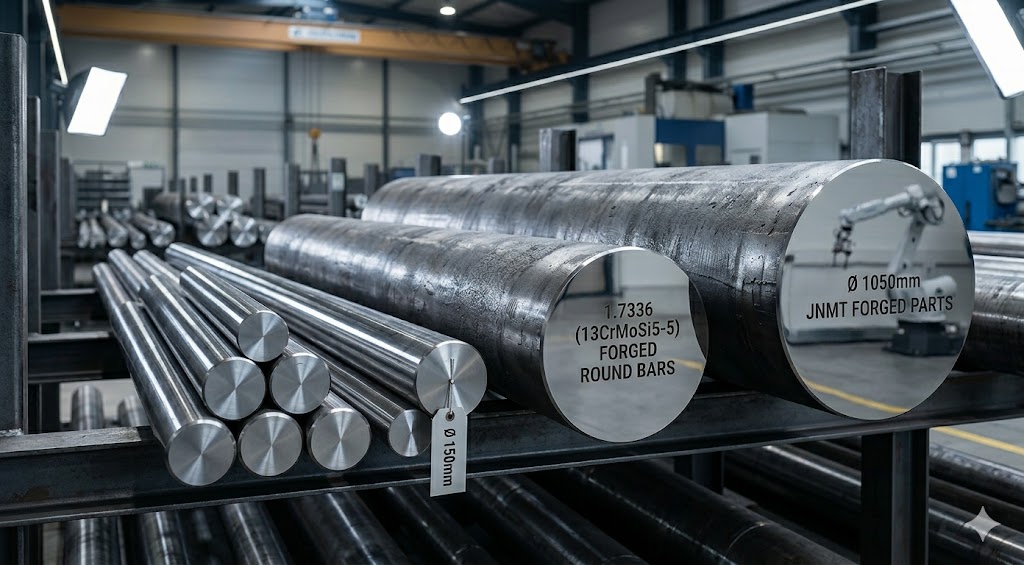
Custom 1.7336 forged round bars, hexagonal bars, square bars, flat bars, and multi-step shafts with tight dimensional tolerance control. Available diameters from 80mm to 1200mm and lengths up to 12,000mm. Forged bars deliver superior mechanical property uniformity compared to rolled bars in sizes above 250mm diameter, because the greater total reduction in open die forging effectively breaks down the as-cast segregation pattern and achieves a refined, consistent grain matrix throughout the cross-section. Typical applications include pump shafts, valve stems, rotor forgings, turbine shafts, and structural loading pins in power generation and petrochemical industries.
13CrMoSi5-5 Seamless Rolled Forged Rings & Flanges
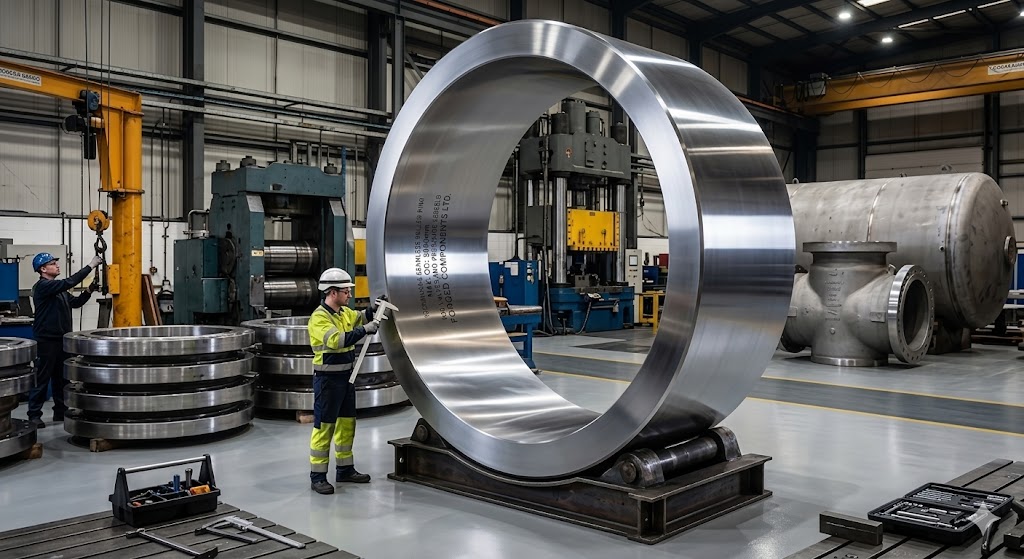
Precision 13CrMoSi5-5 seamless rolled rings, forged flanges, swivel ring flanges, valve seat rings, bearing races, coupling flanges, and all custom ring-shaped forgings. Maximum outside diameter: 5000mm; minimum outside diameter: 200mm; height (face width) 50mm to 3000mm; wall thickness 50mm to 1500mm. Ring rolling is the best manufacturing method for large annular parts because it aligns the grain flow circumferentially — matching the primary hoop stress direction in pressure vessel applications — and delivers superior fracture toughness and fatigue life compared to cut-from-bar or plate alternatives. Applications span valve bodies, pressure vessel nozzle flanges, steam turbine casing rings, wind power generator rings, and pipeline connectors.
1.7336 Hollow Forgings, Sleeves & Pressure Vessel Shells
Custom 1.7336 forged sleeves, bushings, hollow bars, seamless tubes, casings, pressure vessel shells, reactor vessel nozzles, heat exchanger shell forgings, valve bonnets, and cylinder forgings. Outside diameter up to 2500mm, bore diameters from 100mm to 2000mm, wall thickness from 50mm upward. Hollow forging deletes the longitudinal weld seam inherent in rolled-and-welded shells, so that it is the best choice for important pressure-containing applications such as reactor pressure vessels, high-pressure heat exchanger channels, and accumulator cylinders. The continuous grain flow in the forged wall also provides superior resistance to fatigue crack propagation compared to welded alternatives.
13CrMoSi5-5 Discs, Tube Sheets, Blocks & Custom Geometry Forgings
13CrMoSi5-5 forged discs, tube sheets (up to 3500mm OD), wye pieces, piggable wyes, swept branches, saddles, T-pieces, reducers, forged blocks, and fully custom-shaped near-net-shape forgings. We specialize in complex geometry forging for boilers, heat exchangers, pressure vessels, and heavy machinery. Our engineers can work with your ASME, EN, or proprietary design standards to develop the optimal forging plan that minimizes material removal and maximizes fiber flow alignment for your specific load conditions.
Manufacturing Capabilities & Full Production Process
Max Single Piece Weight
50 TonsPer single forged component
Forging Equipment
800T–6000THydraulic forging presses
Max Ring OD
5,000 mmCNC ring rolling capacity
Bar Diameter Range
80–1200 mmForged round bars & shafts
Heat Treatment
+NT / +QTComputer-controlled furnace
CNC Machining
5-AxisRough & finish machining
NDT Capability
UT / MT / PT / RTFull suite, PAUT available
Annual Capacity
30,000 TTotal alloy steel forgings
Delivery Lead Time
15–35 DaysStandard; 7-day rush available
Full Production Process — Step by Step
Every 1.7336 (13CrMoSi5-5) forging we produce follows a rigorously controlled 6-step manufacturing process, with full traceability records kept at each stage:
Raw Material Control — EAF + LF + VD Process
All 1.7336 (13CrMoSi5-5) billets used in our production are sourced exclusively from mills using the Electric Arc Furnace (EAF) + Ladle Furnace (LF) refining + Vacuum Degassing (VD) process route. This three-stage melting process is essential for achieving the low P and S levels needed by EN 10028-2 (P ≤ 0.015%, S ≤ 0.005%), minimizing dissolved hydrogen content to below 2 ppm (preventing flake formation in heavy forgings), and producing a clean, homogeneous melt free from non-metallic inclusions and macro-segregation. Ingots are ultrasonically inspected before forging begins, and any heat failing our incoming material specification is rejected. Full mill test certificates (MTC) with heat chemistry are retained in our quality records for a minimum of 15 years.
Forging Process Parameters for 1.7336 Steel
Getting improved mechanical properties in 1.7336 forgings requires strict control of forging temperature, reduction ratio, and cooling rate after forging. Our forging engineers follow a detailed, internally developed Forging Process Specification (FPS) for this grade, The main forging parameters are:
- Billet heating temperature: 1200–1260°C (uniform soak, minimum 1 hour per 100mm diameter at temperature)
- Forging start temperature: Minimum 1100°C; all forging operations completed above 900°C
- Forging finish temperature: Minimum 850°C — this is critical to avoid forging into the two-phase (α+γ) region which can create mixed grain microstructure
- Minimum total reduction ratio: 3:1 for all cross-sections — ensures breakup of dendritic as-cast structure and achieves grain size ASTM No. 5 or finer
- Post-forging cooling: Controlled slow cooling in a covered pit or sand bed is mandatory for sections above 150mm to avoid thermal stresses and hydrogen cracking; direct water quench prohibited until after normalizing
- Intermediate heat treatment: For forgings requiring more than 3 heating cycles, intermediate normalizing at 950°C may be applied to avoid excessive grain growth
Our production facility is equipped with CNC ring rolling mills, fully automatic heat treatment furnaces with computerized temperature profiling, 5-axis CNC machining centers and complete NDT equipment, guaranteeing full traceability of the entire production process from raw material melting to finished product delivery.
1.7336 (13CrMoSi5-5) Chemical Composition — EN 10028-2
The chemical composition of 1.7336 (13CrMoSi5-5) is precisely specified by EN 10028-2:2009. The table below gives the permissible range for smelt analysis (ladle analysis). Product analysis tolerances (applicable to individual forgings) are slightly wider — typically +0.02% for C, Si, Mn and +0.01% for P, S — refer to EN 10028-2 Table 2 for exact product analysis tolerances. Our internal material acceptance criteria are set tighter than the standard minimum to guarantee consistent forging properties across all production batches.
← Swipe to view full table →
| Chemical Element | EN 10028-2 Range (wt%) | Jiangsu Liangyi Aim (wt%) | Metallurgical Role |
|---|---|---|---|
| Carbon (C) | Max 0.17% | 0.10–0.15% | Strength via carbide precipitation; balanced for weldability |
| Silicon (Si) ★ | 0.50%–0.80% | 0.55–0.75% | Main differentiator: oxidation resistance via SiO₂ sublayer |
| Manganese (Mn) | 0.40%–0.65% | 0.45–0.60% | Deoxidizer; promotes hardenability; controls MnS morphology |
| Chromium (Cr) | 1.00%–1.50% | 1.10–1.40% | Oxidation resistance via Cr₂O₃ scale; carbide stabilization |
| Molybdenum (Mo) | 0.45%–0.65% | 0.48–0.62% | Solid solution strengthening; creep and hydrogen attack resistance |
| Nickel (Ni) | Max 0.30% | <0.20% | Residual element; low level limits temper embrittlement susceptibility |
| Phosphorus (P) | Max 0.015% | <0.012% | Harmful residual; low level prevents temper embrittlement |
| Sulfur (S) | Max 0.005% | <0.004% | Harmful residual; controls MnS inclusions; VD process required |
| Nitrogen (N) | Max 0.012% | <0.010% | Low level prevents strain aging and notch embrittlement |
| Copper (Cu) | Max 0.30% | <0.20% | Residual; excess copper can cause hot shortness during forging |
★ The silicon content (0.50–0.80%) is the key composition difference between 1.7336 (13CrMoSi5-5) and the closely related 1.7335 (13CrMo4-5), which specifies only 0.17–0.37% Si.
Mechanical Properties of 1.7336 (13CrMoSi5-5) Forgings
We supply 1.7336 forgings in Normalized + Tempered (+NT) or Quenched + Tempered (+QT) condition, and their mechanical properties fully meet EN 10028-2. The following table covers room temperature properties for nominal thickness up to 100mm; for thicker sections, EN 10028-2 specifies progressively reduced minimum values — contact our technical team for thickness-specific property tables.
← Swipe to view full table →
| Mechanical Property | Condition | Minimum Specified | Typical Achieved | Test Method |
|---|---|---|---|---|
| Tensile Strength (Rm) | +NT / +QT | 510 MPa | 530–640 MPa | EN ISO 6892-1 |
| Yield Strength (Rp0.2 / ReH) | +NT | 310 MPa | 330–420 MPa | EN ISO 6892-1 |
| Yield Strength (Rp0.2 / ReH) | +QT | 400 MPa | 420–530 MPa | EN ISO 6892-1 |
| Elongation after fracture (A5) | +NT / +QT | 18% | 20–28% | EN ISO 6892-1 |
| Reduction of area (Z) | +NT / +QT | — | 60–75% | EN ISO 6892-1 |
| Charpy V-Notch Impact (KV, 20°C) | +NT / +QT | 34 J (individual min 27 J) | 80–180 J | EN ISO 148-1 |
| Brinell Hardness (HBW) | +NT | 150 HBW | 155–185 HBW | EN ISO 6506-1 |
| Brinell Hardness (HBW) | +QT | 160 HBW | 165–200 HBW | EN ISO 6506-1 |
Typical achieved values are based on Jiangsu Liangyi's internal statistical data from production testing of 1.7336 forgings over a 3-year period (2022–2024). Individual component values will vary and must comply with the minimum EN 10028-2 requirements.
Thickness Effects on Mechanical Properties
For forgings with nominal thickness exceeding 100mm, EN 10028-2 specifies reduced minimum mechanical properties to account for the inherent difficulty of getting consistent microstructure throughout thick sections. Main points for specifying thick-section 1.7336 forgings:
- 100–150mm thickness: Tensile strength minimum remains 510 MPa; Yield strength (+NT) minimum reduces to 290 MPa; (+QT) minimum reduces to 380 MPa
- 150–250mm thickness: Yield strength (+QT) minimum reduces to 360 MPa — the +QT condition becomes increasingly important to get consistent through-thickness properties
- Above 250mm thickness: Custom heat treatment qualification may be required; Jiangsu Liangyi recommends including simulated post-weld heat treatment (SPWHT) coupon testing in the qualification plan
- Forging design: For heavy sections, we recommend specifying test location as "1/4T" (one-quarter of thickness) rather than surface, and supplementary transverse test specimens to verify through-thickness properties
High-Temperature Creep & Oxidation Performance of 1.7336 Steel
The defining advantage of 1.7336 (13CrMoSi5-5) over lower-alloy grades is its superior performance at elevated temperatures. For equipment designed to EN pressure vessel codes, the permissible stress at temperature is directly governed by the long-term creep rupture strength values published in EN 10028-2. The following data summarizes published and industry-standard performance benchmarks:
Long-Term Creep Rupture Strength (Rp1.0/100,000h — Minimum Average Values)
The 1% proof strength in 100,000 hours (Rp1.0/100,000h) is the important design parameter for creep-limited applications. This value represents the stress that will produce 1% total creep strain in 100,000 hours of continuous service — equivalent to approximately 11.4 years, which is a standard basis for pressure vessel design life calculations under European codes:
← Swipe to view full table →
| Temperature (°C) | Rp0.2 at Temp (MPa) | Rm at Temp (MPa) | Rp1.0/100,000h (MPa) | Rm/100,000h (MPa) | Typical Design Stress f (MPa) |
|---|---|---|---|---|---|
| 20°C (Reference) | ≥400 (+QT) | 510–690 | — | — | — |
| 300°C | ~320 | ~500 | — | — | ~160 |
| 400°C | ~270 | ~460 | ~280 | ~320 | ~150 |
| 450°C | ~240 | ~420 | ~210 | ~250 | ~135 |
| 480°C | ~215 | ~390 | ~155 | ~200 | ~105 |
| 500°C | ~195 | ~360 | ~125 | ~165 | ~90 |
| 520°C | ~170 | ~330 | ~90 | ~125 | ~65 |
| 550°C | ~140 | ~290 | ~50 | ~75 | ~35 (limit zone) |
Important: Creep property values in this table are indicative figures for general guidance only, derived from the published literature on 1.25Cr-0.5Mo steel families and general EN 10028-2 permissible stress principles. They do not represent tested values from Jiangsu Liangyi. For actual design calculations, engineers must use the current published permissible stress tables from EN 10028-2 (obtain the standard directly from CEN or national standards body), and apply the applicable design code (EN 13480, EN 12952, EN 13445 etc.) in full. Design stress values at 550°C involve extrapolation and should be used with extreme caution and specialist review.
Oxidation Resistance — How 1.7336 Outperforms 1.7335
Oxidation (scaling) resistance is the second important high-temperature property for parts exposed directly to steam or combustion gas streams. The elevated silicon content (0.5–0.8% Si) in 1.7336 provides a measurable advantage over 1.7335 (0.17–0.37% Si) through the formation of a dense, adherent SiO₂ sublayer beneath the Cr₂O₃ outer scale. This dual-barrier mechanism reduces oxygen diffusion to the metal surface and slows scale growth kinetics. Published industry data and peer-reviewed studies on 1.25Cr-0.5Mo steel families indicate that higher silicon content in the 0.5–0.8% range can produce measurably lower oxidation scaling rates at 550°C compared to equivalent steels with lower silicon, due to the formation of a protective SiO₂ sublayer beneath the outer Cr₂O₃ scale. This oxidation resistance benefit is a key reason 1.7336 is preferred over 1.7335 in applications above 480°C where surface scale accumulation or spallation into the process stream is a design concern.
Practical implication for plant engineers: If your application involves continuous steam exposure at or above 480°C, the higher oxidation resistance of 1.7336 (13CrMoSi5-5) will reduce internal pipe surface oxidation rates, extend inspection intervals, and reduce the risk of oxide scale flaking into the process stream. This is one of the primary reasons that major European boiler manufacturers (particularly those building supercritical units rated above 250 bar / 560°C) prefer 1.7336 over 1.7335 for steam line and header forgings even in the 450–500°C operating range.
Weldability & Post-Weld Heat Treatment (PWHT) of 1.7336 Steel
Weldability is an important practical consideration for most 1.7336 (13CrMoSi5-5) forging applications, since forgings are almost always welded into fabricated assemblies during construction. Understanding the correct welding procedure is essential to avoid cold cracking, avoid hydrogen-induced cracking, and ensure the completed weld meets the required mechanical properties and long-term service performance.
Carbon Equivalent & Preheat Requirements
The carbon equivalent (CEV) of 1.7336, calculated using the IIW formula CEV = C + Mn/6 + (Cr+Mo+V)/5 + (Ni+Cu)/15, typically falls in the range of 0.45–0.58 depending on actual heat chemistry. This places 1.7336 in the "Grade B" weldability category per EN ISO 15614-1, which mandates mandatory preheat and post-weld heat treatment. Recommended welding preheat and interpass temperature requirements:
← Swipe to view full table →
| Parameter | Specification | Notes |
|---|---|---|
| Minimum Preheat Temperature | 150°C (t ≤ 12mm); 200°C (t > 12mm) | Must be verified by contact thermocouple, not IR gun on surface scale |
| Maximum Interpass Temperature | 300°C | Excessive interpass temperature causes grain growth and reduces toughness |
| PWHT Temperature Range | 680°C – 750°C | Per EN 13480-4; temperature above 750°C risks re-austenitizing and loss of temper properties |
| PWHT Minimum Holding Time | 1 hour per 25mm thickness; minimum 2 hours total | Holding time begins when all parts of the component reach minimum PWHT temperature |
| Heating Rate to PWHT Temp | Max 150°C/hour above 300°C | Controlled heating prevents thermal stresses in complex geometries |
| Cooling Rate from PWHT | Max 150°C/hour to 300°C, then air cool | Rapid cooling below 300°C increases residual stress risk |
| Hydrogen Bake-Out | 300°C × 2h minimum, immediately after welding | Needed before PWHT for thicknesses > 50mm or high-restraint joints |
Recommended Filler Metal Selection
Choosing the correct filler metal is important for matching the base metal mechanical properties, creep performance, and keeping the alloy balance of the weld deposit. The following filler metals are recommended for welding 1.7336 (13CrMoSi5-5) in like-to-like joints:
- TIG/GTAW (root and thin sections): ER80S-B2 wire per AWS A5.28 / SG CrMo1 per EN ISO 21952-A — provides matching 1.25Cr-0.5Mo deposit composition with excellent weld metal toughness and creep properties after PWHT
- SMAW (fill and cap passes): E8018-B2 electrodes per AWS A5.5 / E CrMo1B per EN ISO 3580-A — low-hydrogen hydrogen-controlled electrodes essential; electrodes must be dried at 350°C × 2h before use and stored in a heated quiver at 150°C during welding
- SAW (submerged arc, large volume welds): ER80S-B2 or ER80S-B2L wire with compatible basic flux (basicity index > 1.8) — the basic flux is needed to get low diffusible hydrogen (<5 ml/100g) in the weld deposit
- FCAW (flux-cored, field repairs): E81T1-B2M-JH4 per AWS A5.29 — must use M21 gas shield and keep all preheat requirements; FCAW not recommended for code-important pressure welds without specific qualification
⚙️ PWHT After Forging — What Customers Should Specify
For forgings that will be welded into a fabricated assembly and then PWHT'd by the fabricator, it is important to discuss the simulated post-weld heat treatment (SPWHT) of test coupons with Jiangsu Liangyi before ordering. EN 10028-2 allows — and many pressure equipment directives require — that mechanical test results reported on the material certificate represent the material in the PWHT condition matching the fabricator's planned PWHT cycle. We can perform SPWHT on your specified heat treatment parameters on test coupons attached to the production forging, guaranteeing that the certified properties reflect the actual final state of the material after fabrication. This is particularly important for thick-section forgings (> 100mm) where multiple PWHT cycles may be planned.
Engineering Selection Guide — When to Choose 1.7336 (13CrMoSi5-5)
Choosing the right heat-resistant alloy steel for your forging application requires balancing multiple technical and economic factors. 1.7336 (13CrMoSi5-5) is not always the optimal choice — here is a practical decision framework developed from our 21 years of experience supplying heat-resistant forgings globally:
✅ Choose 1.7336 When:
Design temperature 430–520°C under EN code; EU procurement (EN material required); higher oxidation resistance needed vs 1.7335; heavy section where +QT yield > 400 MPa is required; nuclear auxiliary system application (low P+S critical).
⬇️ Consider 1.7335 Instead When:
Design temperature below 430°C; cost is primary driver and oxidation resistance is not critical; material is already specified as 13CrMo4-5 in older drawings; ASTM cross-reference to F11/F12 is possible and approved by the design code.
⬆️ Consider P91 / P92 Instead When:
Design temperature exceeds 520°C for continuous service; very high design stress required (thin wall pressure optimization); supercritical steam service above 580°C; component is a main steam header or hot reheat line in a >600°C power plant.
⚠️ Special Consideration — Temper Embrittlement:
1.7336 is susceptible to temper embrittlement if the (P + Sn/5 + As/15 + Sb/75) ×10,000 "J factor" exceeds 100. Specify low residual J factor for important applications, especially where slow cooling through 350–550°C is unavoidable during plant operation.
1.7336 vs Competing Grades — Full Technical Comparison
The following comparison covers the four most commonly specified heat-resistant grades in the 400–600°C application range, showing where 1.7336 (13CrMoSi5-5) fits relative to alternatives:
← Swipe to view full table →
| Property / Criterion | 1.7335 (13CrMo4-5) | 1.7336 (13CrMoSi5-5) ★ | P22 (2.25Cr-1Mo) | P91 (9Cr-1Mo-V) |
|---|---|---|---|---|
| EN Material Number | 1.7335 | 1.7336 | — | 1.4903 |
| ASTM Nearest Equiv. | F11 / F12 | No direct equiv. | F22 | F91 |
| Si Content | 0.17–0.37% | 0.50–0.80% | ≤0.50% | 0.20–0.50% |
| Cr Content | 0.70–1.15% | 1.00–1.50% | 2.00–2.50% | 8.00–9.50% |
| Mo Content | 0.40–0.60% | 0.45–0.65% | 0.90–1.10% | 0.85–1.05% |
| Max Continuous Temp. (pressure service) | ~500°C | ~520°C | ~570°C | ~620°C |
| Oxidation Resistance | Good | Very Good (+~20% vs 1.7335) | Very Good | Excellent |
| Creep Strength (Rp1.0/100,000h at 500°C) | ~100 MPa | ~125 MPa | ~200 MPa | ~300 MPa |
| Min. Yield Strength (RT, +QT) | 290 MPa | 400 MPa | 310 MPa | 450 MPa |
| Weldability | Good (CEV ~0.42) | Good (CEV ~0.50) | Moderate (CEV ~0.58) | Difficult — specialist procedure required |
| Mandatory PWHT | Yes (680–730°C) | Yes (680–750°C) | Yes (690–760°C) | Yes (750–780°C) — critical window |
| Cost Relative to Carbon Steel | +20–30% | +25–35% | +40–55% | +150–200% |
| Best Application Range | 350–480°C | 430–520°C ★ | 480–570°C | 540–620°C |
★ 1.7336 (13CrMoSi5-5) represents the optimum value-performance grade for the 430–520°C application window — providing a meaningful performance upgrade over 1.7335 at significantly lower cost and fabrication complexity than P22 or P91.
1.7335 (13CrMo4-5)
Lower PerformanceThe standard workhorse grade for 350–480°C service. Lower oxidation resistance and creep strength than 1.7336. Choose this when 1.7336 is over-specified and budget is constrained. Available from Jiangsu Liangyi — see 1.7335 forgings.
1.7336 (13CrMoSi5-5)
✔ Recommended: 430–520°CThe optimal grade for the 430–520°C window. Best combination of oxidation resistance, creep strength, weldability, and cost for European-code pressure equipment. Full EN 10028-2 compliance.
P22 (2.25Cr-1Mo) / F22
Higher PerformanceStep up to P22 when design temperature exceeds 520°C, when hydrogen partial pressure exceeds the Nelson curve for 1.7336, or when ASME code compliance is needed. Higher cost and more complex PWHT. Available from Jiangsu Liangyi — see alloy steel forgings.
Industry Applications & Global Project Cases
1.7336 (13CrMoSi5-5) forgings are widely used in industries requiring high elevated-temperature strength, pressure resistance and corrosion resistance. Our 1.7336 forgings are supplied to clients across Europe, North America, the Middle East, and Asia. Below are representative real-world application cases from our project history:
High-Temperature Industrial Equipment — Pump Casings & Rotating Components
1.7336 (13CrMoSi5-5) is widely specified for forged pump casings, impellers and rotating shafts in high-temperature industrial fluid systems operating at 300–520°C. In these applications, the material selection is driven by its combination of elevated-temperature tensile strength (maintaining adequate Rp0.2 above 200 MPa at typical pump operating temperatures), high impact toughness important for resistance to transient loads, and stringently controlled residual element content (low P + S) ensuring superior through-thickness toughness in heavy-section parts. Jiangsu Liangyi manufactures these parts as custom open die forgings or ring-rolled shells to client engineering drawings, with full chemical and mechanical property traceability per EN 10204 3.1 and optional third-party witness inspection per EN 10204 3.2 through client-nominated inspection bodies.
Petrochemical — High-Pressure Heat Exchanger & Reactor Forgings
13CrMoSi5-5 (1.7336) is one of the most widely specified grades for high-pressure heat exchanger and reactor forgings in Middle Eastern petrochemical and refining projects, where operating conditions commonly involve design temperatures in the 480–520°C range at operating pressures above 100 bar. Main parts supplied by Jiangsu Liangyi for this application sector include forged tube sheets (up to 3000mm OD), heat exchanger shell forgings, channel flanges, and reactor vessel nozzles. In hydrocracking and catalytic reforming service, Nelson curve compliance is a mandatory design constraint — 1.7336's chromium and molybdenum content places it well within the acceptable zone for high-temperature hydrogen service per API 941, representing a significant safety advantage over plain carbon steel and 0.5Mo grades. Third-party inspection by client-nominated bodies (Bureau Veritas, SGS, TUV, Lloyd's Register and others) can be coordinated for all deliveries on request. All components are supplied with EN 10204 3.1 material test reports as standard.
Supercritical Thermal Power — Boiler Valve Body Forgings
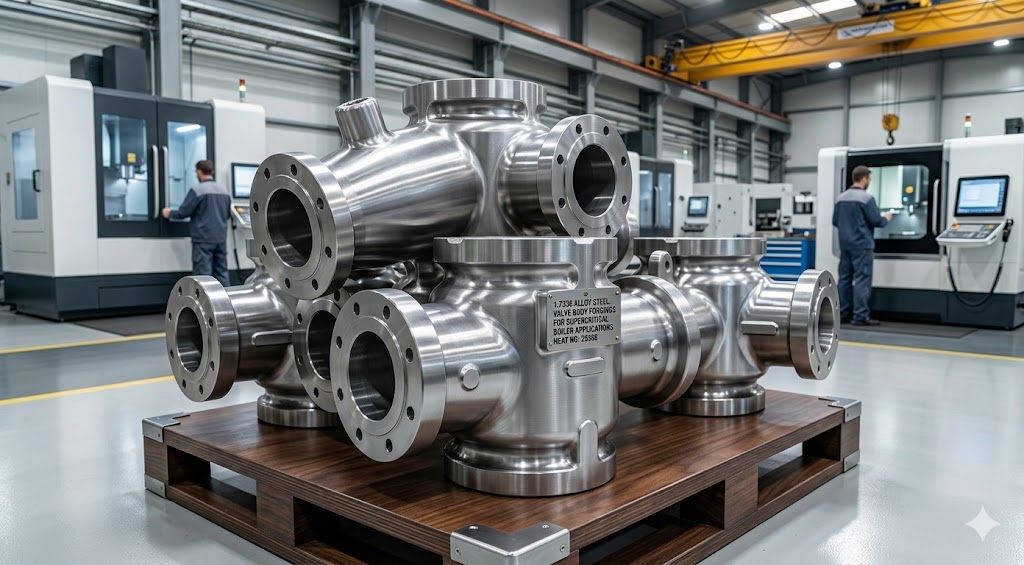
1.7336 forged valve bodies, bonnets, valve seats and stems are widely specified as critical pressure boundary components in the steam systems of supercritical and ultra-supercritical thermal power boilers. In these units, main steam temperatures may reach 560–580°C, but the secondary steam and feedwater systems — where 1.7336 is predominantly specified — operate in the 430–520°C range, well within the grade's continuous service envelope. Valve body forgings are typically ring-rolled to produce circumferential grain flow aligned with the primary hoop stress direction, which is metallurgically advantageous for cyclic-duty applications that undergo multiple start-stop cycles per year. Jiangsu Liangyi has supplied 1.7336 valve forgings for power generation customers across North America and Europe, with all parts delivered with full EN 10204 3.1 material test reports and third-party inspection available on request.
Offshore Oil & Gas — BOP Components & Subsea Forgings
13CrMoSi5-5 (1.7336) forged BOP (Blowout Preventer) bodies, rams, flanges and annular parts are suitable for offshore oil and gas well control equipment applications. Although thermal loads in well control equipment are typically lower than power plant components, the combination of high static and cyclic mechanical loads (well control equipment may be rated to 10,000–15,000 psi working pressure), sour service corrosion requirements and impact toughness requirements down to -20°C or lower makes 1.7336's elevated Cr-Mo alloy content beneficial compared to plain carbon steel alternatives. Jiangsu Liangyi supplies these components as custom open die forgings or ring-rolled flanges to client engineering drawings. Third-party inspection by client-nominated bodies (Lloyd's Register, DNV, Bureau Veritas or others) can be arranged for all deliveries on request.
Our 1.7336 (13CrMoSi5-5) forgings also cover custom pump parts including pump casings, covers, barrels, impellers, shafts, housings, wear rings, as well as transition cones, tee pieces, wye pieces and other forged parts for a wide range of heavy industrial applications. Contact our technical team to discuss your specific application requirements.
Quality Control, Inspection & Certification Standards
Our Official Certifications & Accreditations
- ISO 9001:2015 — Quality Management System Certification, covering the full manufacturing process from raw material receipt to finished product delivery
- EN 10204 3.1 — Material Test Report certification as standard for all 1.7336 forgings, with full chemical and mechanical traceability
- EN 10204 3.2 — Available on request, where all production testing is witnessed and co-signed by a qualified inspector from a client-nominated independent third-party inspection body (BV, SGS, TUV, Lloyd's Register, DNV, Intertek, CCIC or other)
- NDT per EN 10228 — Ultrasonic testing (UT), magnetic particle testing (MT) and penetrant testing (PT) conducted based on EN 10228-3 / EN 10228-1 / EN 10228-2 by qualified NDT technicians
Standard Inspection & Testing Services
All 1.7336 (13CrMoSi5-5) forging parts from Jiangsu Liangyi are subjected to a full inspection program based on applicable international standards. The following inspection items are available — specific requirements are agreed in the manufacturing process plan before production begins:
← Swipe to view full table →
| Inspection / Test Type | Applicable Standard | Scope & Notes |
|---|---|---|
| Chemical Composition — Smelt Analysis | EN 10028-2 | OES (Optical Emission Spectrometry) on production heat; 10 elements standard |
| Chemical Composition — Product Analysis | EN 10028-2 | Spot check on forging body; mandatory for 3.2 certification |
| Tensile Testing (RT) | EN ISO 6892-1 | Minimum one per heat per thickness class; longitudinal and transverse available |
| Elevated Temperature Tensile | EN ISO 6892-2 | Available at temperatures 300–600°C on request |
| Charpy V-Notch Impact (20°C) | EN ISO 148-1 | Set of 3 standard; average and individual minimum verified |
| Low-Temperature Impact (−20°C to −46°C) | EN ISO 148-1 | Available on request for offshore/cryogenic applications |
| Brinell Hardness Survey | EN ISO 6506-1 | Multi-point mapping; all forgings as standard |
| Ultrasonic Testing (UT) | EN 10228-3 | Full volume scanning; Quality Class 3 standard, Class 4 on request |
| Magnetic Particle Testing (MT) | EN 10228-1 | All accessible surfaces; Acceptance Level AM3 standard |
| Penetrant Testing (PT) | EN 10228-2 | Available as supplement or substitute for MT where geometry requires |
| Radiographic Testing (RT) | EN ISO 17636 | On request for specific weld-prone zones or thin sections |
| Grain Size Examination | EN ISO 643 | Available on request; from metallographic specimen cut from test coupon |
| Simulated PWHT (SPWHT) | EN 10028-2 / Customer WPS | Test coupons treated per fabricator's planned PWHT before testing |
| Dimensional Inspection | Per customer drawing | Full CMM report available; 3D scanning on request for complex geometries |
Manufacturing Qualification & First Article Inspection
Before mass production begins for a new part or a new client's specification, the complete Manufacturing Process Plan (MPP) is submitted to the client for formal approval. This document covers: approved raw material suppliers and specifications, detailed forging process parameters (heating temperatures, reduction ratios, cooling methods), complete heat treatment cycle specification, test location and orientation plan, NDT procedure references and acceptance criteria, and packaging and shipping requirements. First Article Inspection (FAI) is available for all custom orders, including dimensional verification to 100% of drawing callouts, chemical and mechanical test witnessing by third-party inspector, and photographic documentation of all stages. Full traceability documentation packages are provided for every batch, with records retained for a minimum of 15 years.
Supply Chain Transparency & Full Material Traceability
For important industrial applications — especially nuclear power, pressure vessels, and offshore equipment — material traceability from the original steelmaking heat to the finished forged part is not just best practice, it is a regulatory and code requirement. At Jiangsu Liangyi, our traceability system provides an unbroken chain of documentation from billet to delivery:
Our Material Traceability Chain
- Steelmaker's Mill Test Certificate (MTC): Original heat chemistry and as-cast mechanical properties from the ingot producer, including heat number, cast number, and ingot weight
- Incoming Inspection Record: Jiangsu Liangyi's incoming chemical verification by OES, heat number cross-check, and dimensional/surface inspection of incoming billets
- Forging Production Record: Furnace temperature logs (chart recorder traces), press load cycles, ring rolling parameters, and forging operator signatures for each production forging
- Heat Treatment Record: Computer-generated furnace temperature profile for each heat treatment cycle, with time-at-temperature verified against calibrated thermocouple records
- Mechanical Test Report: Certified test laboratory results with specimen location, orientation, and direct cross-reference to the producing heat number
- NDT Report: Full UT scanning record with probe calibration documentation, MT/PT inspection reports with operator qualification records
- Dimensional Inspection Report: Complete dimensional check-off to customer drawing, signed by Quality Inspector
- EN 10204 Material Certificate (3.1 or 3.2): Final consolidated document integrating all above data, signed by our Quality Manager (3.1) or co-signed with third-party inspector (3.2)
All traceability records are maintained in both paper and digital format and retained for a minimum of 15 years from the date of delivery. Customers may request copies of any production records at any time during this retention period.
Frequently Asked Questions About 1.7336 (13CrMoSi5-5) Forgings
1.7336 is the European EN numeric material designation for the low-alloy heat-resistant steel formally named 13CrMoSi5-5 under EN 10028-2. The name encodes its composition: approximately 0.13% carbon maximum, chromium (Cr) at 1.0–1.5%, molybdenum (Mo) at 0.45–0.65%, and the key differentiating addition — silicon (Si) at 0.5–0.8%. This silicon level is roughly double that of the related grade 13CrMo4-5 (1.7335), and it is this elevated Si that gives 1.7336 its superior oxidation resistance at elevated temperatures. The steel is designed for long-term pressure service at temperatures up to 520°C under European boiler and pressure vessel design codes (EN 12952, EN 13480, PED 2014/68/EU), and can withstand short-term peak temperatures up to 550°C. It occupies the mid-range of the heat-resistant alloy steel family — stronger and more oxidation-resistant than plain 1.25Cr-0.5Mo grades, but easier to weld and more cost-effective than high-alloy P91/P92 martensitic steels.
The main difference is silicon content: 1.7336 specifies 0.50–0.80% Si versus only 0.17–0.37% Si in 1.7335. This seemingly small compositional difference produces meaningful engineering advantages. Published academic and industry studies on CrMo steels indicate that higher silicon content in the 0.5–0.8% range produces meaningfully lower oxidation scaling rates at 550°C compared to lower-silicon equivalents, due to the formation of a protective SiO₂ sublayer beneath the Cr₂O₃ outer scale. This is a key reason 1.7336 is preferred over 1.7335 for applications above 480°C. In terms of creep strength, EN 10028-2 publishes higher permissible stress values for 1.7336 above 480°C — at 500°C, the minimum average Rp1.0/100,000h for 1.7336 is approximately 125 MPa versus approximately 100 MPa for 1.7335, a 25% advantage that directly impacts wall thickness calculations. The yield strength specifications also differ: 1.7336 requires a minimum Rp0.2 of 400 MPa in the +QT condition versus 290 MPa for 1.7335. From a cost perspective, 1.7336 typically carries a 5–10% price premium over 1.7335 at equivalent forging sizes, which is justified for applications above 480°C. Below 430°C, the advantages of 1.7336 over 1.7335 are not significant enough to justify the premium for most non-critical applications.
There is no direct ASTM or ASME equivalent to 1.7336 (13CrMoSi5-5). This is a uniquely European grade specified under EN 10028-2 and has no cross-reference in ASTM A182, A336, or other American standards. The closest ASTM functional analogs are: ASTM A182 Grade F11 (1.25Cr-0.5Mo, lower Cr and Si, lower temperature capability, typically rated to ~480°C under ASME B31.3) and ASTM A182 Grade F22 (2.25Cr-1Mo, higher alloy content, higher temperature capability up to ~580°C but different alloying balance and higher cost). For equipment designed and fabricated under European codes (EN 13480, EN 12952, PED 2014/68/EU), 1.7336 per EN 10028-2 is the direct material specification to use. For projects under ASME codes that require an equivalent to 1.7336, one of the following approaches may apply: specification of ASTM A182 F12 (1Cr-0.5Mo, closest ASTM grade by chemistry) with a design code margin review; or processing an ASME Code Case to qualify 1.7336 for the specific application. Our technical team can assist with material equivalency justification documentation for cross-code projects.
For continuous pressure service under European design codes (EN 12952 for boilers, EN 13480 for pipework, EN 13445 for pressure vessels), the maximum published design temperature for 1.7336 (13CrMoSi5-5) is 520°C. This limit is governed by the EN 10028-2 permissible stress tables, which account for 100,000-hour creep rupture life — approximately 11.4 years. At 520°C, the indicative design stress falls to approximately 65 MPa for typical component proportions. For short-term peak excursions (e.g., during plant startup or process upsets), the steel can withstand temperatures up to 550°C without immediate structural failure, but such excursions accelerate carbide coarsening (the primary long-term creep softening mechanism) and reduce remaining creep life. If your design requires continuous service above 520°C, you should consider upgrading to: P22 (2.25Cr-1Mo) for the 520–570°C range, or P91 (X10CrMoVNb9-1) for the 570–620°C range, or P92 (X10CrWMoVNb9-2) for demanding ultra-supercritical service above 600°C. Our engineering team can assist with grade selection and material transition design for your specific application.
Because it has a Cr-Mo alloy content and a carbon equivalent (CEV) of 0.45 to 0.58, welding 1.7336 (13CrMoSi5-5) needs to be preheated and post-weld heat treated (PWHT). The most important things are: The Minimum temperature for preheating is 150°C for thicknesses up to 12mm and 200°C for thicknesses over 12mm.The preheat must stay the same during the whole welding process, and it must be checked from at least 75mm away from the weld centerline. Maximum interpass temperature: 300°C. Going over this makes the grains grow too much and makes the weld metal less tough. Thetemperature range for PWHT is 680–750°C.This range is very important: below 680°C, stress relief is not complete and residual hydrogen may not be completely removed; above 750°C, re-austenitization can start, which will ruin the tempered microstructure.
PWHT holding time: Minimum 1 hour per 25mm of thickness, minimum 2 hours total. PWHT heating and cooling rates: Maximum 150°C/hour above 300°C in both directions. Recommended filler metals: ER80S-B2 (TIG/GTAW) or E8018-B2 (SMAW), using hydrogen-controlled low-hydrogen consumables with diffusible hydrogen ≤ 5 ml/100g weld metal. After welding and before PWHT, a hydrogen bake-out at 300°C × 2 hours minimum is recommended for thicknesses above 50mm or high-restraint joints. Full welding procedure specification (WPS) qualification per EN ISO 15614-1 is required for all production welds on pressure-containing components.
Jiangsu Liangyi's manufacturing capabilities for 1.7336 (13CrMoSi5-5) cover the following size ranges: Maximum single piece weight: 50 tons. Open die forged bars and shafts: Diameter 80mm to 1200mm; length up to 12,000mm. Seamless rolled rings: Outside diameter 200mm to 5000mm; height 50mm to 3000mm; wall thickness 50mm to 1500mm. Hollow forgings, sleeves and shells: Outside diameter up to 2500mm; bore diameter from 100mm to 2000mm. Disc and tube sheet forgings: Diameter up to 3500mm; thickness up to 600mm. Complex custom geometry forgings: Contact us with your drawing for feasibility assessment. All components are manufactured strictly to customer-supplied drawings. Our engineering team will review your drawing and advise on forging feasibility, recommended forging plan, and any design modifications that could reduce material cost or improve mechanical property distribution without compromising functional requirements.
All 1.7336 (13CrMoSi5-5) forgings from Jiangsu Liangyi are supplied with EN 10204 3.1 Material Test Reports (MTR) as standard. These certificates are signed by our qualified Quality Manager and provide: full chemical composition analysis results (both steelmaker's MTC and our incoming verification); mechanical test results (tensile, yield, elongation, impact, hardness) with test specimen location and orientation; NDT results (UT, MT as applicable) with reference to applicable standard and acceptance criteria; heat treatment record reference (furnace chart recorder trace available on request); heat number and full traceability to the original steelmaking heat; and reference to applicable EN 10028-2 standard edition and all supplementary requirements. EN 10204 3.2 certification is also available on request. Under 3.2, all production testing is witnessed and co-signed by a qualified inspector from an approved independent third-party inspection body (Bureau Veritas, SGS, TUV Rheinland, Lloyd's Register, DNV, Intertek, or CCIC). For nuclear applications, additional nuclear-specific documentation and signatory requirements apply — please discuss these requirements with our technical team at the quotation stage.
Standard delivery time for custom 1.7336 (13CrMoSi5-5) forgings is 15–35 working days from receipt of confirmed purchase order, approved drawing, and advance payment. This comprises: Raw material procurement and billet qualification (5–8 working days); Forging and heat treatment (5–12 working days, depending on component size and number of heat treatment cycles); CNC machining and finishing (3–8 working days, depending on complexity); Inspection, certification documentation and dispatch (3–5 working days). For urgent projects, an expedited service with a lead time of 7–12 working days is available for simpler geometries (bars, rings, discs) with standard heat treatment (+NT condition). Expedited service may involve priority scheduling surcharges. For large-volume or ongoing supply programs, we strongly recommend establishing a blanket order agreement with scheduled releases, which allows us to pre-qualify raw material, maintain a dedicated production slot, and typically reduce lead times to 10–18 working days for repeat orders. Please discuss your volume forecast and delivery schedule requirements with our sales team.
Yes, 1.7336 (13CrMoSi5-5) is suitable for hydrogen service within specific temperature and hydrogen partial pressure limits defined by the Nelson Curve, as published in API 941 "Steels for Hydrogen Service at Elevated Temperatures and Pressures in Petroleum Refineries and Petrochemical Plants." 1.7336 falls within the 1.25Cr-0.5Mo steel curve on the Nelson diagram (the Cr and Mo contents of 1.7336 bracket those of both the 1Cr-0.5Mo and 1.25Cr-0.5Mo curves). At 500°C, the applicable Nelson curve for 1.25Cr-0.5Mo-class steel allows operation up to a defined hydrogen partial pressure limit (refer to the current edition of API 941 for exact values, as these limits are periodically revised) before high-temperature hydrogen attack (HTHA) becomes a risk. For design temperatures above 480°C in hydrogen-containing service, we recommend confirming the applicable Nelson curve class with the plant designer, specifying hydrogen attack resistance testing if operating near the curve boundary, and considering a step-up to P22 (2.25Cr-1Mo) if operating conditions place the steel in the boundary zone. Our technical team can provide a Nelson curve review for your specific process conditions (temperature and hydrogen partial pressure) as part of the pre-order material selection consultation.
Yes, we fully support third-party inspection (TPI) for all 1.7336 (13CrMoSi5-5) forgings under EN 10204 3.2. Under this arrangement, the customer nominates their preferred independent inspection body — commonly Bureau Veritas (BV), SGS, TUV, Lloyd's Register, DNV, Intertek, or CCIC — and that body's qualified inspector witnesses production testing and co-signs the material test report (MTR). We provide a witness inspection plan ahead of production, covering all hold and review points. Arranging TPI inspection requires confirmation at the time of order placement and typically adds 3–5 working days to the inspection stage of the delivery schedule. All inspection reports and co-signed MTRs are delivered in English, in hard copy with the shipment and in PDF format by email. Customers should specify their required inspection body and any project-specific inspection and test plans (ITP) clearly at the inquiry stage so we can confirm feasibility before order placement.
Request Your Custom 1.7336 (13CrMoSi5-5) Forging Quote
Jiangsu Liangyi Co.,Limited is a professional ISO-certified 1.7336 (13CrMoSi5-5) forging manufacturer in China, committed to providing high-quality, technically compliant, custom forged steel components for global clients across Europe, North America, the Middle East and Southeast Asia. Whether you need a single prototype forging or a long-term supply program, our engineering and sales teams are ready to assist. Send your custom drawing, material specification, quantity, required certifications and application description for a detailed free quotation within 24 hours.
Send Your Inquiry Now →Jiangsu Liangyi Co.,Limited
📞 +86-13585067993 (Phone / WhatsApp)
📍 Chengchang Industrial Park, Jiangyin City, Jiangsu Province, China 214400