17-7PH (UNS S17700, AISI 631) Forging Parts — Custom Manufacturer in Jiangsu, China
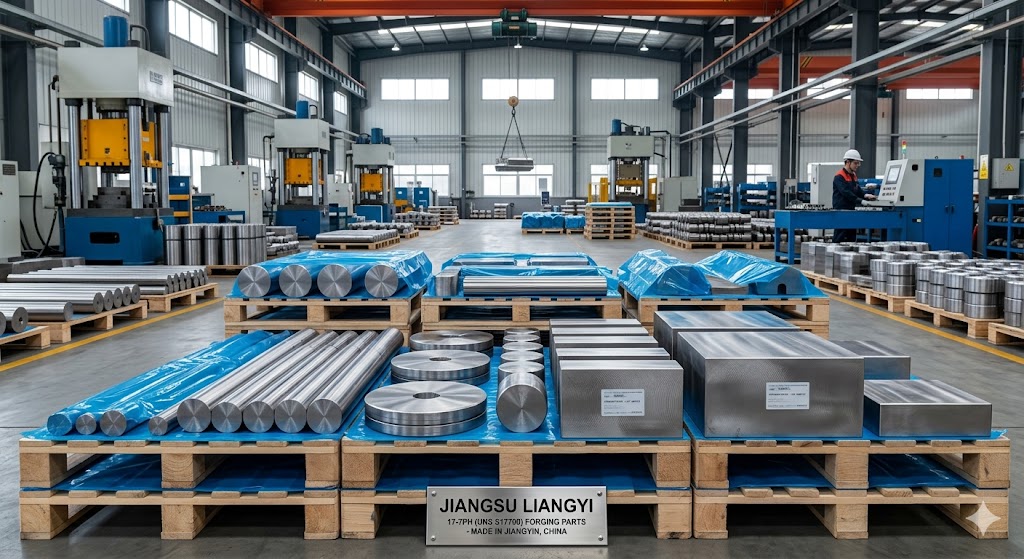
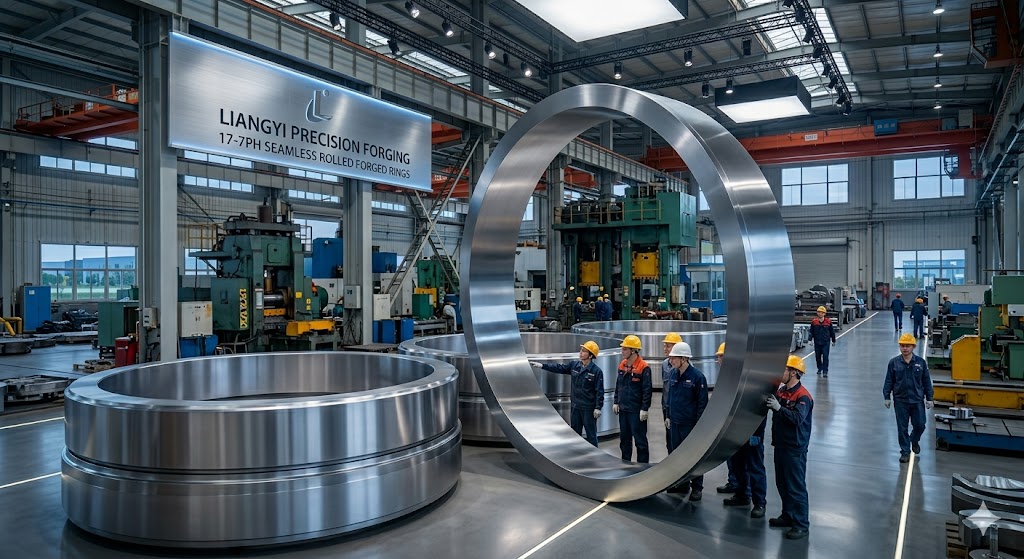
Jiangsu Liangyi Co., Limited is a professional ISO 9001:2015 certified manufacturer of 17-7PH (UNS S17700, AISI 631, SUS 631, 17-7 PH, 17/7 PH, Grade 631) forging parts, fully compliant with ASTM A564/A705 Grade 631 standards. Established in 1997, our 80,000 m² factory in Chengchang Industry Park, Jiangyin City, Jiangsu Province, China, has over 25 years of experience in custom open die forging and seamless rolled ring manufacturing, with an annual production capacity of 120,000 tons. We supply 17-7PH forged components in full precipitation hardening conditions — including H900, H950, H1050, TH1050 and RH950 — to customers in over 50 countries worldwide. Get a free custom quote today!
17-7PH Forging Supplier — Key Facts at a Glance
- Material Grade: 17-7PH / UNS S17700 / AISI 631 / SUS 631 / EN 1.4568 / X7CrNiAl17-7
- Applicable Standards: ASTM A564/A705, AMS 5528/5529/5568, ASME SA-564, EN 10088-3
- Manufacturer: Jiangsu Liangyi Co., Limited — Jiangyin, Jiangsu, China (est. 1997)
- Factory Area: 80,000 m² | Annual Capacity: 120,000 tons
- Single-Piece Weight: 30 KG to 30,000 KG
- Max Ring OD: 6 meters | Max Shaft Length: 15 meters | Max Disc OD: 3,000 mm
- Certifications: ISO 9001:2015 | EN 10204 3.1 MTC (standard) | EN 10204 3.2 available upon request
- Third-Party Inspection: Can be arranged through independent inspection agencies upon customer request
- Export Markets: 50+ countries — North America, Europe, Middle East, Asia-Pacific
Our Core Advantage for 17-7PH Forgings: We provide end-to-end solutions from steel melting (30 t EAF + LF + VOD), precision forging (2,000 T – 6,300 T hydraulic presses, 5 M seamless rolling machines), custom heat treatment (10 computer-controlled furnaces), CNC machining to full quality inspection (well-equipped in-house lab), with single-piece forging capacity ranging from 30 KG to 30,000 KG. We ensure full control over material quality and dimensional accuracy for every 17-7PH forging part we produce.
Metallurgy & Development History of 17-7PH Stainless Steel
Origin and Development
17-7PH was developed by Armco Steel Corporation (now AK Steel / Cleveland-Cliffs) in the early 1950s as part of the first generation of precipitation hardening stainless steels. The alloy was designed to solve a fundamental engineering challenge: how to combine the corrosion resistance of austenitic stainless steels with the high strength of martensitic grades, while maintaining excellent formability during manufacturing and minimal dimensional distortion during final hardening. The designation "17-7PH" derives from its nominal composition — 17 % chromium, 7 % nickel — with "PH" standing for precipitation hardening.
Unlike the earlier martensitic PH grade 17-4PH (developed around 1948), which uses copper as the primary precipitation hardener, 17-7PH uses aluminum (0.75–1.50 %) to form fine NiAl (nickel-aluminum) intermetallic precipitates. This compositional strategy creates a fundamentally different phase transformation pathway — the semi-austenitic mechanism — that gives 17-7PH its unique combination of properties.
Semi-Austenitic Phase Transformation Mechanism
It is important to know how 17-7PH works as a metal for proper forging, heat treatment, and application engineering, . The alloy goes through three steps of change that are different from any other PH stainless steel:
- Stage 1 — Solution Annealing (Condition A): When heated to 1,066 °C (1,950 °F) and air cooled, 17-7PH retains a predominantly austenitic (FCC) crystal structure at room temperature. This is because the nickel and chromium balance is adjusted so that the martensite start (Ms) temperature lies just below room temperature (approximately −55 °C to −30 °C in the fully annealed condition). In this state, the material is soft (≤ 92 HRB), highly ductile (≥ 20 % elongation) and easily formed or machined into complex shapes.
- Stage 2 — Austenite Conditioning: The retained austenite must be destabilized before age hardening. This is achieved by one of three methods:
- T-treatment: Re-heating to 760 °C (1,400 °F) for 90 minutes causes partial precipitation of chromium carbides at grain boundaries, which locally depletes the austenite of chromium and nickel, raising the Ms temperature above room temperature. On subsequent cooling, the austenite transforms to martensite.
- R-treatment: Sub-zero cooling to −73 °C (−100 °F) for 8 hours directly transforms the metastable austenite to martensite through cryogenic-induced transformation, without the need for intermediate carbide precipitation.
- C-treatment: Cold working (rolling, drawing or cold forging) to a minimum of 40–60 % deformation mechanically induces the austenite-to-martensite transformation through strain-induced martensite formation.
- Stage 3 — Precipitation Hardening (Age Hardening): The conditioned martensite is aged at 482–566 °C (900–1,050 °F) for 60–90 minutes. During aging, fine NiAl (B2-ordered) intermetallic precipitates form coherently within the martensitic matrix. These nanoscale precipitates (typically 2–10 nm diameter) create strong resistance to dislocation motion, dramatically increasing strength and hardness while the corrosion-resistant chromium remains in solid solution.
Crystal Structure at Each Stage
In Condition A, 17-7PH has a face-centered cubic (FCC) austenitic structure with typical lattice parameter a ≈ 3.595 Å. After austenite conditioning, the matrix transforms to body-centered tetragonal (BCT) martensite with c/a ratio ≈ 1.01. During precipitation hardening, the B2-ordered NiAl precipitates (a ≈ 2.887 Å) form coherently within the BCT matrix, creating lattice strain fields that impede dislocation glide and climb. This coherent precipitation mechanism produces very uniform hardening with minimal scatter in mechanical test results — a key quality advantage for critical forging applications.
International Equivalent Grade Cross-Reference for 17-7PH
17‑7 PH is covered by multiple international standards.The cross‑reference table below helps procurement engineers select the correct material designation when sourcing from different regions.Please note that while these grades are functionally equivalent, slight chemical differences may exist between standards. Our engineering team can confirm full equivalence to meet your project specification.
| Standard System | Designation | Standard / Specification |
|---|---|---|
| USA (AISI) | 631 | AISI 631 |
| USA (UNS) | S17700 | UNS S17700 |
| USA (ASTM) | Grade 631 | ASTM A564/A705, A693, A313 |
| USA (AMS) | AMS 5528 / 5529 / 5568 / 5644 / 5678 | AMS (Aerospace) |
| USA (ASME) | SA-564 Type 631 | ASME SA-564 |
| Europe (EN) | 1.4568 / X7CrNiAl17-7 | EN 10088-3 |
| Germany (DIN) | X7CrNiAl17-7 / 1.4568 | DIN 17224 |
| Japan (JIS) | SUS 631 | JIS G4303 / G4304 / G4305 |
| China (GB) | 0Cr17Ni7Al | GB/T 1220 / GB/T 3280 |
| UK (BS) | 301S81 | BS 970 |
| France (AFNOR) | Z8CNA17-07 | NF A35-573 |
| Sweden (SS) | SS 2388 | SS 14 2388 |
| ISO | X7CrNiAl17-7 | ISO 15510 |
Full Range of 17-7PH (UNS S17700) Forged Steel Products
We manufacture a complete portfolio of UNS S17700 forgings in custom sizes and specifications, fully matching your technical drawings and project requirements. Our product range covers all standard and custom forging shapes for critical industrial applications, with full traceability for every batch:
- 17-7PH Forged Bars & Rods: Round bars, square bars, flat bars, rectangular bars and step bars, with max diameter up to 2,000 mm, compliant with ASTM standards. View our full forged bar capabilities
- UNS S17700 Seamless Rolled Rings & Forged Rings: Custom seamless rolled rings, gear rings, seal rings and contoured rings, with max diameter up to 6 meters and single weight up to 30 tons.They are the best choice material for turbine and valve applications.
- 17-7PH Forged Shafts: Turbine shafts, pump shafts, marine propeller shafts, splined drive shafts and gear shafts, with max length up to 15 meters and full UT inspection guaranteed.
- SUS 631 Forged Hollow Parts: Hubs, housings, shells, sleeves, bushes, casings, hollow bars, and heavy-wall cylinders with an outside diameter of up to 3,000 mm for use in pressure vessels and heat exchangers.
- AISI 631 Forged Discs, Plates & Blocks: Turbine discs, impeller blanks, die blocks, valve discs and custom forged blocks, with max diameter up to 3,000 mm and full heat treatment.
- Custom 17-7PH Forged Valve & Pipeline Parts: Valve bodies, valve stems, valve seat rings, valve balls, bonnets, flanges, tube sheets and nozzles for oil & gas and petrochemical projects.
Why Choose 17-7PH Precipitation Hardening Stainless Steel Forgings?
17-7PH is a semi-austenitic precipitation-hardening stainless steel. It still keeps austenitic when annealed, but changes to martensite after controlled heat treatment. This unique dual-phase matrix delivers excellent performance in main forging applications, especially under severe operating conditions.
- Ultra-High Strength & Hardness: It achieves tensile strength up to 1,380 MPa after standard precipitation hardening, far exceeding conventional 304/316 stainless steel, and it has excellent hardness retention at elevated temperatures up to 482 °C (900 °F).
- Minimal Distortion During Heat Treatment: 17-7PH doesn't change shape much (≤ 0.02 mm) during age hardening, unlike martensitic stainless steels. This makes it the best choice for precision forgings that need to fit tightly. Typical linear growth is only 0.0004 in/in during the full TH1050 cycle.
- Excellent Corrosion Resistance: Delivers corrosion resistance comparable to 304 austenitic stainless steel in most atmospheric and mild corrosive environments, with superior stress corrosion cracking (SCC) resistance. The chromium content (16–18 %) guarantees a stable, self-healing passive oxide layer.
- Outstanding Fatigue & Creep Resistance: Excellent fatigue properties (approximately 40 % improvement over 304) for rotating parts like turbine blades and impellers, with creep life exceeding 100,000 hours at 450 °C. The coherent NiAl precipitates effectively pin dislocations under cyclic loading.
- Superior Formability in Annealed Condition: Easily forged and formed into intricate shapes in the annealed state (Condition A), then hardened to high strength levels with simple one-step or two-step heat treatment processes. Annealed elongation ≥ 20 % allows deep drawing, spinning and cold heading before final hardening.
- Magnetic Behavior Control: 17-7PH is non-magnetic in Condition A (austenitic) and becomes magnetic after conditioning and aging (martensitic). This dual magnetic state can be leveraged for non-destructive quality verification of heat treatment response using simple magnetic testing.
Compared to 17-4PH, the most common precipitation hardening stainless steel, 17-7PH has better high-temperature performance, higher fatigue strength and superior toughness at sub-zero cryogenic temperatures, so that it is the best choice material for aerospace, cryogenic and high-speed rotating applications. Contact our engineering team for forging design optimization!
17-7PH vs. 17-4PH vs. 15-5PH vs. PH13-8Mo — Multi-Grade Technical Comparison
Choosing the right precipitation hardening stainless steel for a forging project needs understanding the trade-offs between strength, toughness, corrosion resistance, cost and processability. The following comprehensive comparison table covers the four most commonly specified PH stainless steels for forging applications, based on our 25+ years of production experience:
| Property | 17-7PH (S17700) | 17-4PH (S17400) | 15-5PH (S15500) | PH13-8Mo (S13800) |
|---|---|---|---|---|
| UNS Number | S17700 | S17400 | S15500 | S13800 |
| Phase Structure | Semi-austenitic → Martensitic | Martensitic | Martensitic | Martensitic |
| Hardening Element | Aluminum (NiAl) | Copper (ε-Cu) | Copper (ε-Cu) | Aluminum (NiAl) |
| Max Service Temp. | 482 °C (900 °F) | 427 °C (800 °F) | 427 °C (800 °F) | 427 °C (800 °F) |
| Max Tensile Strength | 1,380 MPa (CH900) | 1,310 MPa (H900) | 1,310 MPa (H900) | 1,480 MPa (H950) |
| Cryogenic Toughness | Superior | Moderate | Good | Excellent |
| Fatigue Strength | Excellent | Good | Good | Excellent |
| Corrosion Resistance | Comparable to 304 | Comparable to 304 | Slightly better than 17-4PH | Best among PH grades |
| HT Distortion | Minimal (≤ 0.02 mm) | Low | Low | Low |
| Formability (Annealed) | Excellent (austenitic) | Moderate (martensitic) | Moderate (martensitic) | Moderate (martensitic) |
| Weldability | Good (PWHT required) | Good (PWHT required) | Good (PWHT required) | Good (PWHT required) |
| Relative Cost | Medium-High | Medium | Medium | High |
| Best Suited For | Aerospace, cryogenic, springs, high-fatigue | General industrial, valves, shafts | Nuclear, aerospace structural | Aerospace landing gear, high-toughness |
17-7PH Forging Parts — Industry Applications & Verified Project Cases
Our AISI 631 forged parts are widely used in important industrial sectors that demand high strength, dimensional stability, corrosion resistance and long lifetime. All our projects fully meet international standards, with third-party inspection certification available:
Aerospace Industry
Project Case: Custom 17-7PH gas compressor turbine blade forgings (1.2 m long) and structural fasteners for a European aerospace tier-1 supplier. The customer used 304 stainless steel before, but it didn't last long enough and bent when it got too hot. Our 17-7PH forgings, which were delivered in CH900 condition, passed all the tests for aerospace materials and had no defects after two years of use.
Main products: Turbine blades, compressor parts, fasteners, structural forgings, spring washers, retaining rings, actuator housings, and bearing races.
Power Generation Industry
Project Case: Supplied UNS S17700 forged steam turbine discs (2.8 m diameter), impellers, blisks, guide rings and labyrinth seal rings for three Asian 600 MW thermal power plants. The parts needed stable long-term performance under continuous high-temperature and high-pressure operating conditions. Our 17-7PH forgings, delivered in TH1050 condition, passed full high-temperature creep testing and 100 % UT/MT/PT inspection, with a designed service life of over 20 years.
Core products: Turbine discs, impellers, rotor parts, guide rings, labyrinth seal rings, blade root attachments, compressor casings and fasteners.
Oil & Gas and Petrochemical Industry
Project Case: We made forged valve parts out of AISI 631 (17-7PH) for a national oil company's onshore oil and gas field project in the Middle East. These parts included valve stems, seat rings, valve bodies, bonnets, and balls.These parts had to be able to handle high pressures of up to 15,000 psi, sour service conditions with H₂S partial pressure above 0.05 psi, and well fluids that could corrode them.We made our 17-7PH forgings in accordance with the API 6A and NACE MR0175 / ISO 15156 standards. They can be hardfaced with Stellite® 6 or 21.NACE required that hardness be strictly controlled to no more than 33 HRC, and the parts worked for three years without any failures. Our 17-7PH forged tube sheets, channel flanges, pressure vessel shells, and heat exchanger parts are used for petrochemical projects in Southeast Asia. They are very resistant to corrosive chemicals and high-temperature steam.
Nuclear Power Industry
Project Case: We made custom SUS 631 (17-7PH) forged reactor coolant pump rotors, impellers, casing shells, and containment seal chambers for a nuclear power plant project in the US.The materials used to make these parts had to be very pure (sulfur ≤ 0.010%, phosphorus ≤ 0.015%), and the production process had to be fully traceable.Our 17-7PH forgings passed all the necessary material tests, and we can trace them all the way from melting the steel to the final inspection.
Marine & Downhole Drilling Industry
Project Case: We sent a world-class European shipbuilder 8-meter-long forged marine propeller shafts made of UNS S17700 (17-7PH).These parts had to be able to withstand a lot of wear and tear in harsh marine conditions, with an endurance limit of at least 550 MPa at 10⁷ cycles.Our 17-7PH forged shafts passed full 2,000-hour salt spray testing and ultrasonic inspection, as required by the customer. We also offer custom anti-corrosion surface treatments. We also make ESP motor shafts, 17-7PH downhole drilling tool mud motor splined drive shafts, and other drilling parts for oilfield use that work great in corrosive downhole environments and have great impact resistance.
General Industrial & Special Applications
Our 17‑7PH forgings are also widely used for centrifugal compressor impellers, pump casings, impellers and wear rings, moulds and die blocks, food processing blades, cryogenic equipment parts (operating down to −196 °C in liquid nitrogen service), as well as springs and diaphragms for industrial machinery. We also supply custom 17‑7PH forgings for the medical device and semiconductor industries, with high‑purity material available upon request for applications requiring an ultra‑clean microstructure.
Chemical Composition of 17-7PH (UNS S17700) — ASTM A564/A705
All our 17-7PH forging materials meet ASTM A564/A705 UNS S17700 standards, with strict chemical composition testing by optical emission spectrometry (OES) for every steel heat in our in-house chemical lab. The standard chemical composition range is as follows:
| Element | Weight % Range | Role in Alloy |
|---|---|---|
| Carbon (C) | 0.09 % Maximum | Solid solution strengthener; kept low to minimize carbide formation and maintain corrosion resistance |
| Chromium (Cr) | 16.00 – 18.00 % | Primary corrosion resistance element; forms stable Cr₂O₃ passive layer |
| Nickel (Ni) | 6.50 – 7.75 % | Austenite stabilizer; participates in NiAl precipitation hardening |
| Aluminum (Al) | 0.75 – 1.50 % | Key precipitation hardener; forms coherent NiAl (B2) intermetallic precipitates during aging |
| Manganese (Mn) | 1.00 % Maximum | Deoxidizer; mild austenite stabilizer |
| Silicon (Si) | 1.00 % Maximum | Deoxidizer; mild solid solution strengthener |
| Phosphorus (P) | 0.040 % Maximum | Residual impurity; kept low to prevent temper embrittlement |
| Sulfur (S) | 0.030 % Maximum | Residual impurity; kept low to prevent hot shortness and improve transverse ductility |
| Iron (Fe) | Balance | Base matrix element |
Physical & Thermal Properties of 17-7PH Stainless Steel
The following physical property data is essential for forging process design, thermal analysis, finite element modeling (FEA) and engineering calculations. Values are provided for Condition A (annealed) and Condition TH1050 (precipitation hardened) where applicable:
| Property | Value (Condition A) | Value (Condition TH1050) | Unit |
|---|---|---|---|
| Density | 7.81 | 7.81 | g/cm³ |
| Melting Range | 1,400 – 1,440 | °C | |
| Modulus of Elasticity (E) | 204 | 204 | GPa |
| Shear Modulus (G) | 77 | 77 | GPa |
| Poisson's Ratio | 0.27 – 0.30 | — | |
| Thermal Conductivity (100 °C) | 16.4 | 16.4 | W/(m·K) |
| Thermal Conductivity (500 °C) | 21.5 | 21.5 | W/(m·K) |
| Mean CTE (20–100 °C) | 11.0 | 10.8 | µm/(m·°C) |
| Mean CTE (20–500 °C) | 11.6 | 11.4 | µm/(m·°C) |
| Specific Heat Capacity | 460 | 460 | J/(kg·K) |
| Electrical Resistivity | 0.83 | 0.80 | µΩ·m |
| Magnetic Permeability | ≈ 1.0 (non-magnetic) | Ferromagnetic | — |
| Curie Temperature | N/A (austenitic) | ≈ 650 | °C |
Important for forging design: 17-7PH has relatively low thermal conductivity: 16.4 W/m·K at 100 °C, compared with 51 W/m·K for carbon steel.As a result, 17-7PH forgings heat and cool much more slowly than carbon or low-alloy steels. This must be considered when setting heat treatment furnace cycles for large cross-sections — generally requiring 1 hour of soaking per 25 mm of ruling section. It also affects the selection of forging preheating and inter-pass temperatures, to prevent thermal cracking in large open-die forgings.
Heat Treatment Science & Guaranteed Mechanical Properties of 17-7PH Forgings
We offer 17-7PH forging parts in all standard heat treatment conditions, with custom heat treatment processes available to match your project's specific mechanical property requirements. Our in-house ten heat treatment furnaces guarantee strict temperature control and consistent heat treatment results for every batch.
Detailed Heat Treatment Conditions for 17-7PH Forgings
Condition A (Mill Annealed / Solution Annealed)
Solution annealing is performed at 1,066 ± 14 °C (1,950 ± 25 °F), with a holding time of at least 30 minutes per 25 mm of section thickness, followed by air cooling or water quenching to room temperature. In this Condition A, the microstructure is mostly austenitic (FCC), and the temperature at which martensite starts is lower than room temperature. Condition A has great formability (elongation ≥ 20%, hardness ≤ 92 HRB), which makes it perfect for complicated forging, cold forming, and machining.
Condition TH 1050 (T-Treatment + Age Hardened at 1,050 °F)
This is the most widely used condition for general industrial applications. The full heat treatment cycle is:
- Solution treat at 1,066 °C (1,950 °F), air cool to room temperature.
- Re-heat to 760 °C (1,400 °F) for 90 minutes (austenite conditioning — T-treatment), air cool to below 15 °C within 1 hour. During this step, chromium carbides precipitate at grain boundaries, depleting the austenite matrix of carbon and chromium, raising the Ms temperature above room temperature and triggering the austenite → martensite transformation on cooling.
- Age harden at 566 ± 5.5 °C (1,050 ± 10 °F) for 90 minutes, air cool. Fine NiAl precipitates form coherently in the martensitic matrix, producing peak hardness and strength.
Condition RH 950 (R-Treatment + Age Hardened at 950 °F)
For higher strength applications needing better hardness:
- Solution treat at 1,066 °C (1,950 °F), air cool to room temperature.
- Sub-zero cool to −73 °C (−100 °F) for a minimum of 8 hours (cryogenic austenite conditioning — R-treatment). The retained austenite transforms to martensite through thermal activation at cryogenic temperatures, without the carbide precipitation step used in the T-treatment.
- Age harden at 510 ± 5.5 °C (950 ± 10 °F) for 60 minutes, air cool.
The R-treatment produces higher strength than TH1050 because: (a) lower aging temperature preserves finer, more coherent NiAl precipitates, and (b) cryogenic conditioning avoids chromium carbide precipitation, leaving more chromium in solid solution for better corrosion resistance.
Condition CH 900 (Cold Worked + Age Hardened at 900 °F)
This condition delivers the highest tensile strength for aerospace and high-performance spring applications:
- Solution treat at 1,066 °C, air cool.
- Cold work to a minimum of 40–60 % reduction (strain-induced martensite formation).
- Age harden at 482 °C (900 °F) for 60 minutes, air cool.
The combined effect of cold‑work strengthening (higher dislocation density) and precipitation hardening enables 17‑7PH to reach its maximum tensile strength of ≥ 1,380 MPa and hardness up to 44 HRC.
This tempered condition is typically used for flat springs, diaphragms, bellows, and strip‑shaped forgings where cold forming can be effectively applied.
Our computer‑controlled furnaces, equipped with load‑mounted thermocouples for real‑time monitoring, prevent over‑aging in every production batch.
Guaranteed Mechanical Properties by Heat Treatment Condition
| Heat Treatment Condition | Tensile Strength (Rm) Min. | Yield Strength (Rp0.2) Min. | Elongation (A) Min. | Reduction of Area (Z) Min. | Hardness |
|---|---|---|---|---|---|
| Condition A (Annealed) | 1,035 MPa (150 ksi) | 380 MPa (55 ksi) | 20 % | — | ≤ 92 HRB |
| Condition TH 1050 (Aged) | 1,170 MPa (170 ksi) | 965 MPa (140 ksi) | 6 % | 25 % | 38 HRC / 352 HB |
| Condition RH 950 (Aged) | 1,280 MPa (185 ksi) | 1,030 MPa (150 ksi) | 6 % | 25 % | 41 HRC / 388 HB |
| Condition CH 900 (Aged) | 1,380 MPa (200 ksi) | 1,170 MPa (170 ksi) | 4 % | — | 44 HRC |
Typical achievable values in our production consistently exceed the ASTM minimum requirements. For example, our TH1050 condition 17-7PH forgings typically achieve 1,230–1,300 MPa tensile strength, 1,020–1,100 MPa yield strength, 8–12 % elongation and 35–45 % reduction of area, providing substantial margin above specification minimums.
Forging Process Engineering for 17-7PH Stainless Steel
Proper forging practice is essential to achieve the ideal microstructure and mechanical properties in 17‑7PH components.Drawing on over 25 years of production experience with this alloy, we have developed optimized forging parameters that consistently deliver high‑quality forgings.
Forging Temperature Parameters
- Recommended Forging Temperature Range: 1,150 – 1,230 °C (2,100 – 2,250 °F). The optimal window is 1,180 – 1,200 °C for best combination of workability and grain refinement.
- Maximum Forging Start Temperature: The maximum recommended forging temperature is 1,230 °C (2,246 °F).Exceeding this temperature may cause incipient melting at grain boundaries, especially in aluminum-rich segregation zones, and excessive delta‑ferrite formation. These defects permanently reduce transverse ductility and impact toughness.
- Minimum Forging Finish Temperature: The lowest temperature that is safe for forging is 925 °C (1,700 °F). Below this temperature, the alloy's ability to resist plastic deformation quickly goes up.Martensite that forms too soon because of strain can cause mixed microstructures that don't react the same way during later heat treatment.
- Reheating: If the forging temperature falls below 950 °C during multi-pass forging, the workpiece must be returned to the furnace and re-soaked at 1,180 °C for a minimum of 30 minutes per 25 mm of section before continuing deformation. Our furnaces are equipped with radiation pyrometers and contact thermocouples for continuous temperature monitoring during the forging process.
Deformation Ratio & Grain Refinement
For 17‑7PH, a minimum total forging reduction ratio of 3:1 is needed — ≥ 3S for solid forgings and ≥ 3U for upset forgings. This fully breaks up the as‑cast dendritic matrix and develops a consistent, fine‑grained microstructure. For important aerospace and nuclear applications, we typically use a forging ratio of 4:1 to 6:1 combined with multi‑directional cross‑forging.This ensures ASTM grain size No. 5 or finer uniformly across all directions.
Our forging sequence for large 17-7PH parts typically involves:
- Ingot Upsetting: Initial upset to break open the cast center porosity and center-line pipe, followed by drawing to intermediate billet.
- Cross-Forging: Multi-directional forging (upset → draw → 90° rotate → upset → draw) to refine grain matrix in all three principal directions and minimize mechanical property anisotropy.
- Final Shaping: Precision die forging or open die forging to near-net shape, with controlled final deformation at the lower end of the forging temperature range (950–1,050 °C) to maximize grain refinement through dynamic recrystallization.
- Post-Forge Cooling: Air cooling in still air. Unlike carbon and low-alloy steels, 17-7PH does not need controlled slow cooling after forging — the alloy is fully austenitic and non-hardening on air cooling from forging temperature.
Common Forging Defects in 17-7PH & Prevention
- Delta-Ferrite Stringers: This issue is caused by excessively high forging temperatures (> 1,230 °C) or slow cooling through the 1,100–1,200 °C range.Prevention: strict control of upper forging temperature and sufficient final deformation below 1,100 °C.Our in‑process magnetic testing measures delta‑ferrite content at the intermediate billet stage, with a target of ≤ 1% according to the Schaeffler diagram.
- Hot Cracking: 17-7PH has a relatively narrow hot workability range compared to 304/316. Sulfur and phosphorus impurities at grain boundaries are the primary crack initiators. Prevention: premium-quality steel melting (S ≤ 0.015 %, P ≤ 0.025 % for critical forgings), avoiding heavy deformation below 950 °C, and applying controlled strain rates on our servo-hydraulic presses.
- Uneven Grain Structure: Caused by insufficient forging ratio (< 3:1), localized dead zones during forging, or inadequate cross-forging. Prevention: multi-directional forging with cumulative ratio ≥ 4:1, FEA simulation of forging process to identify and eliminate dead zones, and metallographic verification at the intermediate stage.
- Surface Oxidation & Scale Pitting: The aluminum in 17-7PH forms a tenacious Al₂O₃ oxide scale at forging temperatures that can embed into the surface during deformation. Prevention: protective atmosphere (nitrogen blanket) during preheat for precision forgings, aggressive hydraulic descaling between forging passes, and post-forge machining allowance of ≥ 5 mm per surface.
Machining Guidelines for 17-7PH Forgings
17-7PH can be machined in all heat treatment conditions, but machinability varies significantly depending on the microstructural state. Based on our integrated forging-to-machining production experience, we recommend the following strategies:
Machinability Rating by Condition
- Condition A (Annealed): Machinability rating is about 45–50% of B1112 free-cutting steel. The austenitic matrix makes long, stringy chips and gets a lot harder. You need rigid setups, sharp tools, and good rake angles. This condition is best for rough machining before the part is heated.
- Condition TH1050 / RH950 (Hardened): Machinability improves to approximately 30–35 % of B1112. The martensitic structure produces shorter, more controllable chips. Harder cutting tools (cemented carbide, ceramic or CBN) are recommended. Surface finish is generally better than in Condition A due to reduced work hardening tendency.
- Condition CH900 (Hardest): Most difficult to machine (approximately 20–25 % of B1112). At 44 HRC, CBN or ceramic inserts are strongly recommended. Grinding may be more economical than turning for finishing operations.
Recommended Cutting Parameters
| Parameter | Condition A (Rough) | Condition TH1050 (Finish) |
|---|---|---|
| Cutting Speed (Vc) | 30 – 50 m/min | 20 – 40 m/min |
| Feed Rate (f) | 0.15 – 0.30 mm/rev | 0.08 – 0.15 mm/rev |
| Depth of Cut (ap) | 2.0 – 5.0 mm | 0.5 – 2.0 mm |
| Tool Material | Coated carbide (TiAlN/AlCrN) | Coated carbide or CBN |
| Coolant | High-pressure flood coolant (≥ 20 bar) | High-pressure flood coolant |
| Tool Nose Radius | 0.8 – 1.2 mm | 0.4 – 0.8 mm |
Welding Guidelines & Filler Metal Selection for 17-7PH
17-7PH can be successfully welded via most conventional fusion welding processes, but proper procedure development is important to avoid weld zone defects and property degradation. Main welding considerations are based on our production experience:
Recommended Welding Processes
- GTAW (TIG): Preferred for precision applications. Use low heat input (≤ 1.5 kJ/mm), stringer beads only — no weaving. Interpass temperature ≤ 150 °C.
- GMAW (MIG): Acceptable for larger weldments. Use short-circuit or pulsed spray transfer for best control. Interpass temperature ≤ 150 °C.
- Electron Beam Welding (EBW): Excellent for important aerospace applications. Produces narrow HAZ with minimal distortion. Vacuum environment eliminates aluminum oxidation issues.
Filler Metal Selection
- Matching Filler (AWS A5.9 ER630 / 17-4PH wire): Most commonly used when the weld joint must achieve near-parent-metal strength after PWHT. Final joint strength will depend on PWHT condition.
- AWS A5.9 ER308L: Used when the weld must remain ductile without PWHT, or when welding 17-7PH to austenitic stainless steels. Lower joint strength but excellent toughness.
- AWS A5.11 ENiCrFe-3 (Inconel 182) / ENiCrMo-3 (Inconel 625): Used for dissimilar metal joints (17-7PH to carbon steel or low-alloy steel). Provides excellent crack resistance and thermal expansion compatibility.
Post-Weld Heat Treatment (PWHT)
All welded 17-7PH forgings must go through full re-solution annealing at 1,066 °C, followed by the matching conditioning and aging process (TH1050, RH950, etc.), to fully recover mechanical properties and corrosion resistance in the weld area and heat-affected zone (HAZ). Local post-weld heat treatment or aging-only processing is not recommended because these methods can cause uneven hardness and an unstable microstructure in the heat-affected zone of the parts.
Corrosion Resistance & Environmental Performance Data of 17-7PH
17-7PH offers corrosion resistance similar to Type 304 austenitic stainless steel, which works well for most air, fresh water, and mild chemical environments. But like all precipitation-hardened stainless steels, its corrosion resistance depends heavily on heat treatment condition, surface finish, and the specific corrosive environment.
Corrosion Performance by Environment
| Environment | Corrosion Resistance | Notes / Limitations |
|---|---|---|
| Atmospheric (urban, rural, industrial) | Excellent | Self-healing Cr₂O₃ passive layer; no surface rust in typical exposures |
| Freshwater / Steam | Excellent | Suitable for continuous immersion at temperatures up to 482 °C |
| Mild Acids (dilute HNO₃, citric, acetic) | Good | Comparable to Type 304; passivation treatment recommended |
| Marine / Seawater Splash Zone | Good to Moderate | Subject to pitting and crevice corrosion in warm, stagnant seawater (> 25 °C); cathodic protection or coatings recommended for continuous immersion |
| Chloride-Containing Solutions (> 200 ppm Cl⁻) | Moderate | Susceptible to pitting above critical pitting temperature (CPT ≈ 15–20 °C); avoid crevice geometries in chloride service |
| Reducing Acids (HCl, H₂SO₄) | Poor | Not recommended; 17-7PH is not designed for reducing acid service — use duplex or super-austenitic grades instead |
| Sour Service (H₂S / NACE MR0175) | Conditional | Acceptable with hardness restricted to ≤ 33 HRC (Condition TH1050); not suitable in RH950 or CH900 conditions per NACE requirements |
| Caustic / NaOH (> 5 %) | Poor | Subject to caustic stress corrosion cracking above 80 °C; not recommended for concentrated caustic service |
Pitting Resistance Equivalent Number (PREN)
The PREN for 17-7PH is calculated as: PREN = %Cr + 3.3×%Mo + 16×%N ≈ 17.0 (with 0 % Mo and nominal 0 % N). This PREN value is comparable to Type 304 (PREN ≈ 18–20) and significantly lower than Type 316 (PREN ≈ 24–26) or duplex 2205 (PREN ≈ 35). For chloride-rich environments requiring higher pitting resistance, consider upgrading to Custom 455 (PREN ≈ 15.5 + Mo benefit), PH13-8Mo (with 2.2 % Mo, PREN ≈ 24) or duplex grades.
Stress Corrosion Cracking (SCC) Resistance
17-7PH shows excellent resistance to chloride stress corrosion cracking (SCC) in TH1050 and RH950 conditions, much better than 304 and 316 austenitic grades which often suffer from this problem. This is because the martensitic structure of hardened 17-7PH is naturally more resistant to transgranular SCC than the austenitic structure of 304/316. However, in the R-condition (before aging), the parts may be sensitive to intergranular SCC because chromium carbides form at grain boundaries during the T-treatment process. Full aging treatment brings chromium back to a balanced state and removes this risk.
Surface Treatment & Finishing Options for 17-7PH Forgings
We offer a full range of surface treatments to improve the performance and appearance of 17-7PH forging parts:
- Passivation: Soak the parts in 20–50% nitric acid or citric acid solution to remove free iron particles from the surface and strengthen the chromium-rich protective oxide layer. This is recommended for all 17-7PH forgings after machining. We use copper sulfate testing to check passivation quality for every batch.
- Electropolishing: Electrochemical material removal that produces a mirror-smooth, ultra-clean surface (Ra ≤ 0.2 µm). Improves corrosion resistance compared to mechanically polished surfaces. Ideal for pharmaceutical, semiconductor and food processing applications.
- Shot Peening: Introduces compressive residual stress in the surface layer (depth 0.2–0.5 mm), significantly improving fatigue life for rotating components. Recommended for aerospace turbine blades, shafts and spring applications. Peening intensity controlled by Almen strip measurement.
- Hard Chrome Plating: Electrodeposited chromium layer (25–250 µm) for wear resistance (hardness 68–72 HRC). Used for hydraulic cylinders, pump plungers and wear surfaces.
- PVD / CVD Coatings: TiN, TiAlN, CrN or DLC coatings for extreme wear resistance and low friction. Applied by specialized coating partners for applications including valve seats, bearing surfaces and tooling.
- Anti-Corrosion Packaging Treatment: VCI (Volatile Corrosion Inhibitor) film wrapping, rust-preventive oil coating and desiccant packaging for long-distance sea freight. All export forgings receive this treatment as standard.
Common Failure Modes in 17-7PH Forgings & Prevention Strategies
Understanding potential failure mechanisms is important for proper design, manufacturing and application of 17-7PH forging parts. Based on our engineering experience and published failure analysis literature, the following failure modes are most commonly encountered:
1. Hydrogen Embrittlement (HE)
17-7PH in the hardened state (especially RH950 and CH900 conditions with hardness > 40 HRC) is prone to hydrogen embrittlement if exposed to cathodic charging during electroplating, acid pickling, or hydrogen-containing service environments. The signs include delayed brittle fracture with intergranular crack patterns. Prevention:Bake the parts at 190 °C (375 °F) for at least 24 hours within 4 hours after any electroplating or acid exposure (following ASTM B849 standards); avoid hardness exceeding 39 HRC for cathodically protected parts; use low-hydrogen melting processes (VOD/VAR) for critical forgings.
2. Aluminum Oxide Film & Weld Zone Challenges
The aluminum in 17-7PH easily forms a dense oxide film (Al₂O₃) on its surface, so thatit can resist corrosion. But this oxide film can get in the way of the weld's fusion when welding, which can cause problems like incomplete fusion or porosity. To avoid this, it is best to clean the area where you will be welding very well (for example, with a wire brush or grinding) to get rid of the oxide film and any other dirt. Using a protective atmosphere, like argon, while welding can also help keep the weld zone from re-oxidizing.
3. Over-Aging & Under-Aging
Over-aging happens when the aging temperature or time goes beyond the standard requirements. This makes NiAl precipitates grow too large to stay tightly bonded with the material structure, so they no longer strengthen the parts effectively, and hardness falls below the required level. Under-aging occurs when not enough time or temperature is used, leading to incomplete precipitation and uneven hardness in different parts of the material. To prevent these issues, we use accurate furnace temperature control, monitor with load thermocouples, and test hardness at several points following our quality control process.
4. Stress Corrosion Cracking in Sour Service
When used in sour environments that contain H₂S, 17-7PH must meet the hardness limits in NACE MR0175/ISO 15156, which is ≤ 33 HRC to resist environmental cracking. Using the parts in RH950 or CH900 conditions with hardness over 40 HRC in sour service will cause quick sulfide stress cracking (SSC). To prevent this, choose the TH1050 condition and check the hardness of each part for sour service uses, and do not use shot peening as it raises surface hardness over the NACE limit.
5. Fatigue Failure from Surface Defects
Surface defects such as forging laps, seams, grinding burns and tool marks work as stress concentration points and starting places for fatigue cracks. Because 17-7PH is a high-strength material, it is very sensitive to notches, so even small surface flaws can greatly shorten fatigue life. To prevent this, we perform 100% surface inspection using MT/PT after final machining, control surface roughness to Ra ≤ 1.6 µm for fatigue-critical parts, apply shot peening to create compressive stress on the surface, and strictly control grinding settings to avoid grinding burns, with no temper colors allowed in visual checks.
Our Full Production Process & Strict Quality Control
We use a full-process quality control system on every SUS 631 forging part, from melting the raw steel to inspecting and delivering the finished product. Every batch of our production process meets the standards set by ISO 9001:2015, and we can trace every step of the process back to its source:
- Raw Material Melting & Inspection: All 17-7PH steel is melted in our 30 t EAF + LF + VOD steelmaking equipment, with full chemical composition analysis (OES + LECO) and inclusion testing (ASTM E45 Method A) before forging. Vacuum degassing ensures hydrogen ≤ 2.0 ppm and oxygen ≤ 30 ppm for every heat.
- Precision Forging: We forge the parts on our 2,000 T – 6,300 T hydraulic forging presses and electro-hydraulic hammers, with controlled forging temperature between 1,150–1,230 °C. We use a minimum forging ratio of 3:1 and multi-directional cross-forging to create uniform fine grain structure. Continuous pyrometer temperature monitoring makes sure we follow our forging process requirements.
- Rough Machining: Pre-machining to remove forging scale and excess material, with dimensional inspection before heat treatment. Minimum 5 mm per surface machining allowance to remove any decarburized or oxidized surface layer.
- Custom Heat Treatment: Precise heat treatment in our computer-controlled furnaces, with full temperature recording, load thermocouple monitoring and mechanical property testing for every batch.
- Finish Machining (Optional): CNC finish machining to your drawing specifications, with tight tolerance control up to ±0.01 mm on our vertical/horizontal lathes, boring mills and machining centers.
- Full Quality Inspection: Non-destructive testing (UT/MT/PT) performed by trained and qualified NDT inspectors, dimensional inspection, hardness testing (Brinell/Rockwell/Vickers) and full mechanical property testing (tensile, impact, hardness) before delivery.
- Certification & Packaging: Full mill test certificate (EN 10204 3.1/3.2) documenting chemical composition, heat treatment record, mechanical properties and NDT results. Custom packaging for sea/air transportation, with VCI anti-rust treatment for long-distance shipping.
Quality Inspection Capabilities for 17-7PH Forged Parts
Our in-house inspection lab is equipped with advanced testing equipment, making sure every 17-7PH forging part meets your quality requirements. The following is our inspection equipment:
- Chemical composition analysis: optical emission spectrometer (OES) for full element testing; combustion analyzers for C, S, N, O determination
- Mechanical testing: universal testing machines (tensile), Charpy impact testers, Brinell/Rockwell/Vickers hardness testers
- Metallographic lab: optical microscopes for grain size, inclusion rating and microstructure evaluation; image analysis software for quantitative metallography
- Non-destructive testing: ultrasonic testing (UT), magnetic particle testing (MT), liquid penetrant testing (PT)
- Precision dimensional inspection: CMM (coordinate measuring machine) for 3D geometric dimension verification
- Special testing: corrosion testing (salt spray, intergranular corrosion), ferrite content measurement. High-temperature creep/stress rupture testing available through qualified external testing laboratories
Applicable Standards & Specifications for 17-7PH Forgings
Our 17-7PH forgings fully meet the international standards and customer-specific specifications, following are these main standards:
Material & Product Standards
- ASTM A564 / A564M — Standard Specification for Hot-Rolled and Cold-Finished Age-Hardening Stainless Steel Bars and Shapes
- ASTM A705 / A705M — Standard Specification for Age-Hardening Stainless Steel Forgings
- ASTM A693 — Standard Specification for Precipitation-Hardening Stainless and Heat-Resisting Steel Plate, Sheet, and Strip
- ASME SA-564 — Equivalent to ASTM A564 for ASME Boiler and Pressure Vessel Code applications
- AMS 5528 — Steel, Corrosion and Heat Resistant, Sheet, Strip, and Plate (17-7PH, Condition A)
- AMS 5529 — Steel, Corrosion and Heat Resistant, Sheet, Strip, and Plate (17-7PH, Condition TH1050)
- AMS 5568 — Steel, Corrosion and Heat Resistant, Wire (17-7PH)
- AMS 5644 — Steel, Corrosion and Heat Resistant, Bars, Wire, and Forgings (17-7PH)
- EN 10088-3 — Stainless Steels — Technical Delivery Conditions for Semi-Finished Products, Bars, Rods, Wire, Sections and Bright Products of Corrosion Resisting Steels
- JIS G4303 / G4304 / G4305 — Stainless Steel Bars / Hot-Rolled Plates / Cold-Rolled Plates (SUS 631)
- GB/T 1220 — Stainless Steel Bars (Chinese national standard, 0Cr17Ni7Al)
Quality & Process Standards We Can Produce To
- ISO 9001:2015 — Quality Management System (certified)
- EN 10204 — Metallic Products — Types of Inspection Documents (3.1 MTC standard; 3.2 available upon request)
- API 6A — Specification for Wellhead and Tree Equipment (production capability; API Monogram not held — available through customer-arranged third-party verification)
- NACE MR0175 / ISO 15156 — Materials for Use in H₂S-Containing Environments in Oil and Gas Production (hardness-controlled production)
- ASME SA-388 — Standard Practice for Ultrasonic Examination of Steel Forgings
- ASTM A275 — Standard Practice for Magnetic Particle Examination of Steel Forgings
- ASTM E165 — Standard Practice for Liquid Penetrant Testing
Certifications & Third-Party Inspection
All our 17-7PH forging parts include EN 10204 3.1 mill test certificates (MTC) as standard. These certificates show full chemical composition, heat treatment records, mechanical test results, and non-destructive testing reports. If you need them, we can provide EN 10204 3.2 third-party witness inspection by independent inspectors you choose. Our production follows the ISO 9001:2015 quality management system, and we can manufacture to ASTM, ASME, DIN, EN, and JIS international standards. Ask us for a sample mill test certificate!
For customers who need extra quality assurance, we welcome factory audits and can work with your chosen third-party inspection group during production. Every forging part has full material traceability from the original melt to final shipment.
Frequently Asked Questions About 17-7PH Forging Parts
What is 17-7PH stainless steel and what is it used for in forging applications?
17-7PH (UNS S17700 / AISI 631) is a semi-austenitic precipitation-hardening stainless steel. It can reach tensile strengths up to 1,380 MPa through controlled heat treatment. It is mainly used for high-strength, corrosion-resistant forged parts in aerospace (turbine blades, fasteners, springs), power generation (turbine discs, impellers), oil & gas (valve stems, seat rings, bonnets), petrochemical, marine and nuclear industries. This alloy meets ASTM A564/A705 Grade 631 and AMS 5528/5529/5644 standards. Its main benefits include very low distortion during heat treatment (≤ 0.02 mm), good formability when annealed, and corrosion resistance similar to Type 304 stainless steel.
What is the difference between 17-7PH and 17-4PH forgings?
The main differences are: (1) Phase structure — 17-7PH is semi-austenitic (austenitic in annealed state, transforms to martensite after conditioning), while 17-4PH is fully martensitic; (2) Hardening element — 17-7PH uses aluminum (NiAl precipitates), 17-4PH uses copper (ε-Cu precipitates); (3) Max service temperature — 17-7PH can serve up to 482 °C vs. 427 °C for 17-4PH; (4) Fatigue strength — 17-7PH is approximately 40 % higher; (5) Cryogenic toughness — 17-7PH is superior; (6) Formability — 17-7PH has excellent formability in Condition A (austenitic), 17-4PH has moderate formability (martensitic); (7) Cost — 17-7PH is 15–25 % more expensive. Choose 17-7PH for aerospace, cryogenic, high-fatigue and precision-tolerance applications. Choose 17-4PH for general industrial applications where cost is a priority.
What heat treatment conditions are available for 17-7PH forgings?
We provide all of the usual 17-7PH heat treatment conditions: Condition A is soft and formable at 1,066 °C and has a hardness of ≤ 92 HRB. Condition TH1050 is the most common industrial condition and has a hardness of 38 HRC. Condition RH950 is cryogenically treated and aged at 510 °C, which makes it stronger (41 HRC). Condition CH900 is cold worked and aged at 482 °C, which makes it the strongest (44 HRC). For special property needs, you can choose your own aging temperature within the range of 482–566 °C. Our heat treatment furnaces are computer-controlled with precise temperature uniformity.
Can you supply custom 17-7PH forging parts according to our drawings?
Yes, we make custom 17-7PH forged parts based on your technical drawings and specifications. We can make parts of any shape, size, heat treatment condition, or machining need, and they can weigh anywhere from 30 kg to 30,000 kg. We make custom-shaped forgings, forged bars (up to 2,000 mm in diameter), seamless rolled rings (up to 6 m in diameter), forged shafts (up to 15 m in length), hollow parts (up to 3,000 mm in diameter), discs, blocks, valve bodies, and more. Our engineers will help you improve the forging design so that it is better for production, grain flow, and cost. They will even use FEA forging simulation if they need to.
What is the lead time for custom 17-7PH forging parts from your China factory?
Standard lead time for custom 17-7PH forged parts is 3–4 weeks for raw forgings, including steel melting, forging and heat treatment. For fully machined and heat-treated parts, the lead time is 4–6 weeks. For urgent orders, we can offer faster production in as little as 2 weeks, depending on part complexity and material availability. Large or complex orders, such as forgings needing high material purity or detailed third-party inspection, may take 8–12 weeks. We provide weekly progress reports with photos for all orders.
Do you export 17-7PH forging parts to global markets?
Yes, we export our 17-7PH forged parts to more than 50 countries around the world, including the United States, Germany, UK, France, Italy, Netherlands, Australia, Singapore, UAE, Saudi Arabia, Japan, South Korea, India, Brazil and others. We have rich experience in international shipping under FOB, CIF and DDP Incoterms, customs clearance and export paperwork, and support sea freight, air freight and express delivery. All export orders use VCI anti-corrosion packaging and come with complete material traceability documents.
What quality certifications do Jiangsu Liangyi's 17-7PH forgings carry?
Every 17-7PH forging we make includes an EN 10204 3.1 mill test certificate that records chemical composition, heat treatment history, mechanical properties, and NDT test results.EN 10204 3.2 third‑party witness inspection can be arranged using your chosen inspection agency if requested. Our factory is certified to ISO 9001:2015 quality management system. Production can follow ASTM A564/A705, ASME SA-564, DIN, EN, and JIS international standards.
What is the maximum single-piece weight and size for 17-7PH forgings?
Our maximum single-piece weight for 17-7PH forgings is 30,000 KG (30 metric tons). Maximum sizes: seamless rolled rings up to 6 meters outside diameter, forged shafts up to 15 meters long, forged discs or blocks up to 3,000 mm in diameter, and hollow parts up to 3,000 mm outside diameter.Our forging equipment includes 2,000 T, 3,150 T and 6,300 T hydraulic presses, as well as a 5 M radial-axial ring rolling machine. If you need sizes larger than these limits, please contact our engineering team. We can usually support special requests by using custom die design and multi-step forging processes.
Can 17-7PH forgings be used in sour service (H₂S) environments?
Yes, but with important restrictions. According to NACE MR0175/ISO 15156, 17-7PH can be used in sour service (H₂S-containing environments) only in Condition TH1050 , with hardness no higher than 33 HRC. Higher-strength conditions (RH950 at 41 HRC and CH900 at 44 HRC) are not allowedfor sour service, as they go beyond the NACE hardness limit and can suffer sulfide stress cracking (SSC). For sour service orders, we test the hardness of every part 100% and record compliance with NACE MR0175 hardness requirements on the mill test certificate.
Is 17-7PH magnetic?
It depends on the heat treatment condition.In Condition A (solution annealed), 17-7PH has a mostly austenitic (FCC) crystal structure and is non-magnetic, with magnetic permeability around 1.0.After austenite conditioning (T‑treatment, R‑treatment or cold working) and precipitation hardening, its structure changes to martensite (BCT) and the material becomes magnetic.This two‑way magnetic behavior is useful for quality control — simple magnetic testing can confirm that heat treatment has been done correctly.
What is the forging temperature range for 17-7PH?
The recommended forging temperature range for 17-7PH is 1,150–1,230 °C (2,100–2,250 °F), with the best range at 1,180–1,200 °C. The maximum starting temperature must not go above 1,230 °C to avoid partial melting and too much delta-ferrite forming.The minimum finishing temperature is 925 °C (1,700 °F) to stop martensite from forming too early under stress. A forging ratio of at least 3:1 is needed to get uniform fine grains. For critical aerospace and nuclear forgings, we use multi-directional cross-forging at a ratio of 4:1–6:1 to reach ASTM grain size 5 or finer.
Inquire About Custom 17-7PH Forging Parts — Jiangyin, Jiangsu, China Factory
Jiangsu Liangyi Co., Limited is your reliable China forging supplier of high-quality 17-7PH (UNS S17700, AISI 631, SUS 631) forging parts. We welcome you to send your custom technical drawings, material requirements, heat treatment specifications and order quantity for a detailed, competitive quotation. Our sales and engineering team will respond to your inquiry within 24 hours.
Inquiry Email: sales@jnmtforgedparts.com
Phone / WhatsApp: +86-135-8506-7993
Official Website: https://www.jnmtforgedparts.com
Factory Address: Chengchang Industry Park, Jiangyin City, Jiangsu Province, China 214400