1.6932 Forging Product Gallery
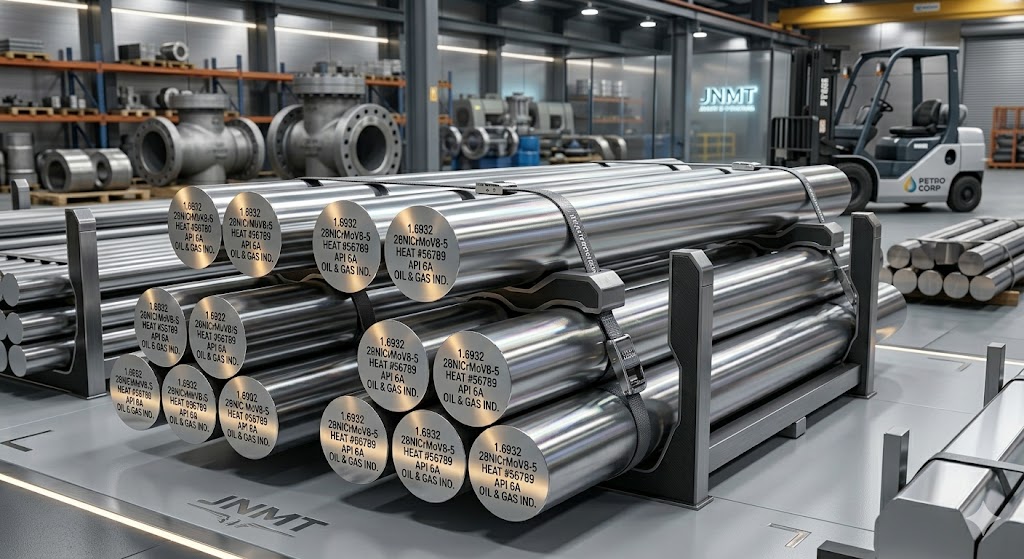 1.6932 Forged Round Bars
1.6932 Forged Steel Bars
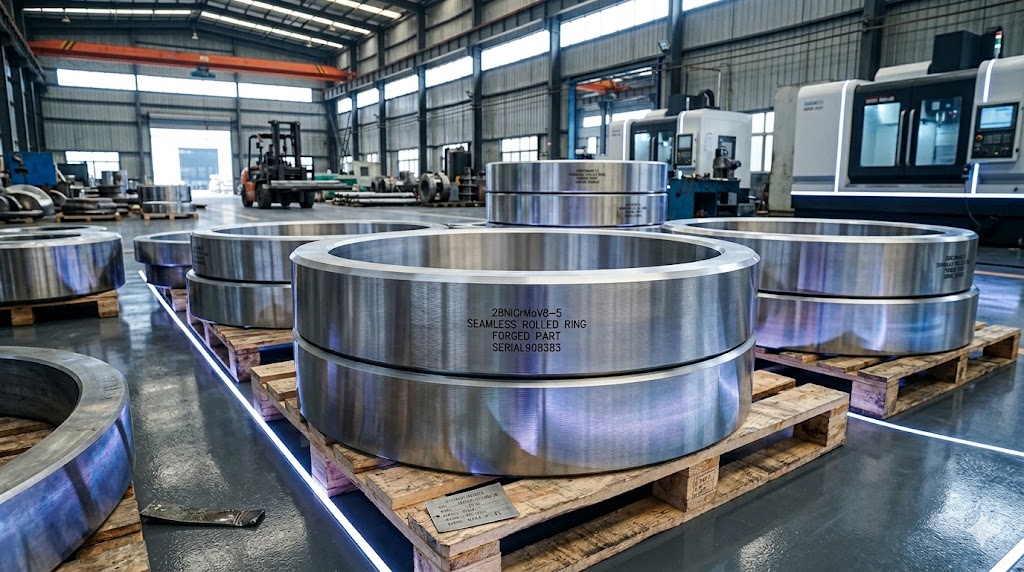 28NiCrMoV8-5 Rolled Rings
28NiCrMoV8-5 Seamless Rolled Rings
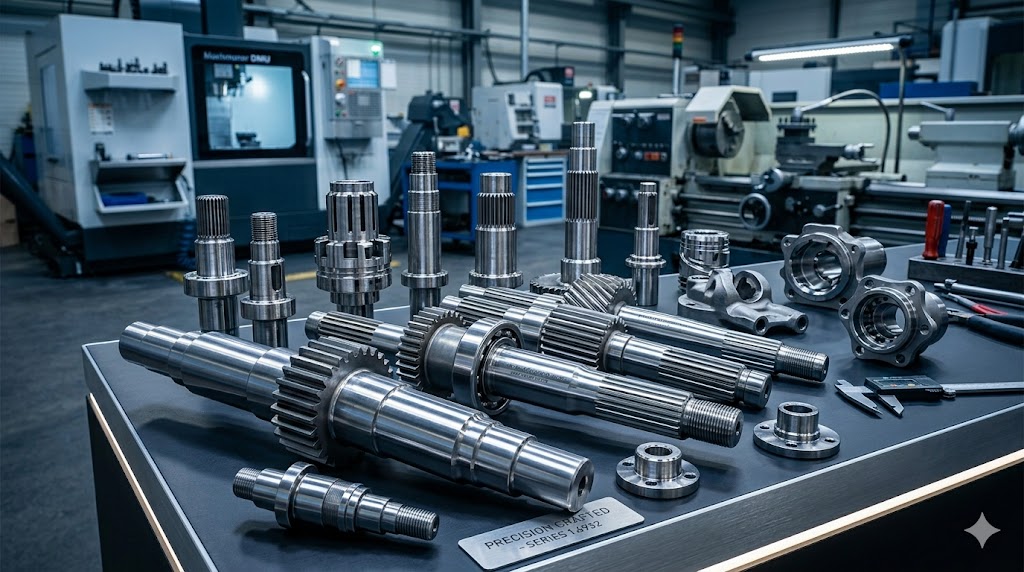 1.6932 Custom Forged Components
Custom 1.6932 Forged Components
1.6932 (28NiCrMoV8-5) Steel Forging Overview
Jiangsu Liangyi is a professional China-based manufacturer of high-quality 1.6932 steel (also known as 28NiCrMoV8-5, 28NiCrMoV85, 28NiCrMoV8.5) open die forging parts and seamless rolled steel forged rings, with ISO 9001:2015 certification and 25+ years of forging experience for global industrial clients.
As a premium universal quenched and tempered (QT) alloy steel compliant with EN 10083-3 standard, 1.6932 offers exceptional performance: outstanding high toughness (even at deep cryogenic temperatures down to -40°C) and superior uniform strength properties, enabled by its optimized vanadium-alloyed chemical modification. This high-performance steel grade is the preferred choice for critical heavy-load components, with the largest application in mechanical engineering (high-strength structures) and the global oil and gas sector, where extreme working conditions demand reliable and durable material performance.
Available 1.6932 Forging Forms & Custom Shapes
We manufacture custom 28NiCrMoV8-5 forged components in a full range of shapes and specifications, fully compliant with EN, ASTM, API international standards and your custom drawings. Our production range covers from 30KG to 30000KG per piece, with flexible size capabilities:
- Forged steel bars: 1.6932 round bars, square bars, flat bars, rectangular bars and step rods (max diameter 600mm, max length 12000mm)
- Seamless rolled rings: 28NiCrMoV8-5 forged rings, gear rings, flanges, swivel rings and contoured rolled rings (max outer diameter 5000mm)
- Hollow components: 1.6932 forged hubs, housings, shells, sleeves, bushes, casings and thick-walled hollow bars
- Solid forged parts: 28NiCrMoV8-5 discs, disks, blocks, plates and custom forged blanks
- Industry-specific components: forged gear shafts, valve bodies, pump components, wellhead parts, drilling tools and heavy machinery parts
Explore our full product range or learn more about our alloy steel material grades for your industrial projects.
28NiCrMoV8-5 (1.6932) Steel Chemical Composition (EN 10083-3 Standard)
In 1.6932 production, composition control starts at steelmaking — not at the laboratory after casting. Each heat is melted in a controlled atmosphere furnace, refined via ladle furnace (LF) and vacuum degassing (VD), then verified by optical emission spectrometry (OES) before any forging begins. EN 10083-3 defines the permitted ranges; our internal aim points are tighter, targeting the mid-range for primary elements and strict upper limits for residuals. The table below shows the standard composition alongside the metallurgical reason each element is specified — something generic material databases rarely explain. See our steelmaking and testing equipment for full traceability capability details.
| Element | Range (EN 10083-3) | Why It Matters in This Grade |
|---|---|---|
| Carbon (C) | 0.24% – 0.32% | Primary strengthener. Set deliberately below 0.33% to balance martensite hardness with toughness and limit carbon equivalent — improving weldability in large-section forgings. |
| Nickel (Ni) | 1.8% – 2.1% | The key element for sub-zero toughness. Ni lowers the ductile-to-brittle transition temperature and strengthens the austenite matrix without reducing toughness. At ~2%, it is the primary reason 1.6932 achieves ≥60 J at −40°C. |
| Chromium (Cr) | 1.0% – 1.5% | Provides hardenability for large cross-sections, forms stable carbides (Cr₇C₃) that resist tempering softening, and improves mild corrosion resistance. |
| Molybdenum (Mo) | 0.35% – 0.55% | Critical for suppressing temper embrittlement — a failure mode in Ni-Cr steels tempered in the 450–550°C range. Mo also enhances deep-section hardenability and creep resistance. |
| Vanadium (V) | 0.050% – 0.15% | The defining microalloying element of this grade. Fine VC/VN precipitates pin austenite grain boundaries during forging and austenitization, then partially dissolve and re-precipitate as secondary hardening carbides during tempering. Net result: a finer, tougher tempered martensite microstructure versus equivalent grades without V. |
| Manganese (Mn) | 0.15% – 0.4% | Kept at lower levels than standard structural steels to control the Mn/S ratio and reduce MnS stringer formation, which degrades transverse toughness in forged bars. |
| Silicon (Si) | 0% – 0.4% | Deoxidizer during steelmaking. Above 0.4%, Si negatively affects toughness; it is controlled as a residual element, not intentionally added at high levels. |
| Phosphorus (P) | Max. 0.035% (our aim: ≤0.020%) | Harmful tramp element; segregates to prior austenite grain boundaries during solidification, embrittling the steel. Our steelmaking targets ≤0.020% for oil and gas grades. |
| Sulfur (S) | Max. 0.035% (our aim: ≤0.010% for NACE-spec) | Forms MnS inclusions reducing transverse ductility and impact toughness. Standard grades target ≤0.015%; for NACE MR0175-compliant production, sulfur is controlled to ≤0.010% as part of the full material specification. |
| Iron (Fe) | Balance (~94.5–96.4%) | Base element. Remainder after all alloying elements. |
* Swipe left/right on mobile | All heat-level chemistry verified by OES before forging; records retained for full material traceability per EN10204 3.1.
Mechanical Properties of Quenched & Tempered 1.6932 (28NiCrMoV8-5) Forgings
The mechanical properties table below reflects what 1.6932 (28NiCrMoV8-5) delivers in the quenched and tempered (QT) condition per EN 10083-3 — but numbers need context to be useful. First, they are minimum guaranteed values for a defined reference section; our typical heat results run 5–15% above the minimums. Second, all values are test-piece results — when designing for large forgings (OD >300mm), a cross-section derating factor should be applied at the engineering stage because through-section uniformity decreases as section size increases. Third, hardness is the practical field-verification parameter: because hardness is easily checked on machined surfaces, we target a consistent 275–305 HBW band across the full cross-section for most 1.6932 orders. Full batch test data is provided in the EN10204 3.1 Mill Test Certificate, with test piece location and orientation documented.
| Mechanical Property | Guaranteed Standard Value (QT Condition) |
|---|---|
| Brinell Hardness | 270 – 310 HBW (Customizable based on tempering process) |
| 0.2% Offset Yield Strength (Rp0.2) | ≥ 690 MPa |
| Ultimate Tensile Strength (Rm) | ≥ 865 MPa |
| Elongation After Fracture (A5) | Min. 14% |
| Reduction in Area (Z, Longitudinal) | Min. 18% |
| Impact Energy (KV, ISO-V, Transverse) | Min. 60 J at -40°C |
| Austenitic Grain Size | ASTM 5 or finer |
* Swipe left/right on mobile | † Elongation and reduction-in-area are longitudinal (L) test piece values; transverse (T) values are typically 10–15% lower and should be specified separately if required.
Tempering temperature is the primary lever for adjusting the strength-toughness balance. By adjusting the tempering cycle within our qualified window, we can shift hardness from approximately 255 HBW (higher tempering temperature, maximum toughness) up to 330 HBW (lower tempering temperature, maximum strength). Custom hardness targets outside 270–310 HBW should be agreed before order placement so that heat treatment qualification can be factored into the delivery schedule.
1.6932 Forging Heat Treatment & Strict Quality Control
ISO 9001 certified, we offer a full suite of quality control processes from raw material steel making to final inspection to make sure that each 28NiCrMoV8-5 forging part meets your specifications, international standards and industry-specific regulations.
Standardized Heat Treatment Process
Our heat treatment furnaces are fully surveyed and calibrated per AMS 2750 standards, guaranteeing strict temperature control and consistent heat treatment effect for every 1.6932 forging. Following are the standard quenching and tempering processes:
- Full austenitization at 850-880°C, with precise temperature holding time based on section thickness
- Controlled liquid quenching (water or polymer quenchant) to achieve optimal martensitic microstructure
- Precision tempering at 580-650°C, tailored to your required strength, hardness and toughness balance
- Controlled cooling process to eliminate residual stress and prevent deformation
- Optional sub-zero treatment, stress-relief annealing, or normalizing treatment as per your technical requirements
We will provide full confirmation of the actual mechanical properties of the delivered 28NiCrMoV8-5 forging material, with full traceability for each heat treatment batch.
Rigorous Material Testing & Certification
All our 1.6932 forged parts undergo 100% inspection and mandatory testing, with official test certificates issued in accordance with EN10204 3.1 standards (EN10204 3.2 third-party inspection certificate is available upon request). Our core testing procedures include:
- Precision chemical composition analysis via optical emission spectrometer
- Room temperature tensile mechanical property testing (yield strength, tensile strength, elongation, reduction of area)
- Low-temperature impact toughness testing at -40°C or custom specified temperatures
- Brinell hardness testing across full section
- Metallographic grain size testing and microstructure analysis
- 100% ultrasonic inspection (UT) along the full length of forged bars and full volume of custom parts, compliant with ASTM A388, EN 10228-3, with acceptance criteria meeting API 6A PSL 3&4 requirements for oil and gas applications
- Magnetic particle inspection (MT) and liquid penetrant inspection (PT) for surface defect detection, compliant with ASTM E165, ASTM E709 standards
- Full dimensional inspection with precision measuring equipment, including CMM for complex machined components
- Full traceability documentation for every heat number and forging batch, from raw material to finished product
Key Applications of 1.6932 (28NiCrMoV8-5) Forgings
Thanks to its excellent combination of high strength, good hardenability, superior low-temperature toughness, and stable performance in heavy load conditions, 1.6932 steel is widely used in the following core industries and applications:
Oil & Gas Industry
- Wellhead and Christmas tree components
- Downhole tools and drilling equipment parts
- Frac pump fluid end modules and valve bodies
- Pressure-containing parts manufactured to API 6A PSL acceptance criteria (upon customer specification)
- Subsea equipment components
- Sour service components meeting NACE MR0175 / ISO 15156 requirements (controlled hardness & sulfur upon specification)
Mining & Heavy Machinery
- Raise boring machine cutter holders and main shafts
- Drill rods and mining equipment structural parts
- Crusher components and gearbox parts
- Heavy load-bearing pins and shafts
- Excavator and bulldozer critical components
Mechanical Engineering
- High-strength gear shafts and pinion shafts
- Gearbox and transmission components
- Crankshafts and connecting rods
- Heavy-duty hydraulic cylinder parts
- High-load structural and machine parts
Power Generation & Fluid Control
- Valve bodies, bonnets and stems for high-pressure valves
- Pump impellers, pump shafts and casing parts
- Hydro power generation equipment components
- Steam turbine auxiliary parts
- Marine engine and shipbuilding components
Why Global Buyers Source 1.6932 Forgings from Jiangsu Liangyi
There are dozens of forging suppliers in China. The question experienced procurement engineers ask is not "can you make it?" but "can you make it consistently, certify it properly, and support us when something needs resolving?" Here is what concretely differentiates our 1.6932 production.
We Control Our Own Melt — Not Purchased Billet
Our steelmaking furnace is the starting point for every 1.6932 order, which means composition, inclusion cleanliness, and degassing quality are set by us — not by an upstream supplier we cannot influence. For a grade like 1.6932 where sulfur, phosphorus, and dissolved hydrogen directly determine large-section toughness, this in-house melt capability is the single most important quality differentiator we have. Buyers sourcing from traders who purchase open-market billet have no equivalent leverage on these critical upstream variables.
Documented Heat Treatment — Time-Temperature Records on Every MTC
Our heat treatment furnaces are calibrated per AMS 2750 pyrometry requirements. Every 1.6932 batch is recorded with actual time-temperature profiles — not just nominal parameters. When we issue an EN10204 3.1 MTC, the actual austenitization and tempering temperatures are documented alongside mechanical test results, so your engineering team can verify the process, not just the output numbers. This level of heat treatment traceability is rare at our price point.
25+ Years of Ni-Cr-Mo-V Grade Process Knowledge
We have been forging vanadium-alloyed Ni-Cr-Mo grades since 1997. In that time we have developed internally qualified process parameters for 1.6932 across the full section size range — from 80mm diameter bars to 500mm diameter heavy rings. We know where this grade performs predictably and where additional process attention is needed; this knowledge is embedded in our production planning, not rediscovered afresh on each new order.
Per-Heat EN10204 3.1 MTCs — No Bundling, Full Traceability
Every individual heat of 1.6932 receives its own MTC. We do not bundle multiple heats onto a single certificate or issue master certificates covering multiple orders. Each MTC is traceable to a specific heat number, specific forging batch, specific heat treatment record, and specific test piece results. For oil and gas and mining customers subject to client or regulatory audit, this granularity is non-negotiable — and we provide it as standard practice.
Production Envelope Covering Most Industrial Specifications
Forged bars to 600mm diameter. Seamless rings to 5,000mm OD. Custom open die forgings from 30 kg to 30,000 kg. Our press and ring rolling capacity means we can produce a 60 kg valve body and a 12,000 kg gearbox housing in the same material under the same ISO 9001 quality system — an important consideration for OEMs who source multiple 1.6932 components for the same machine and need a single, auditable supply point for material traceability.
English Technical Communication — No Interpretation Layer
From initial drawing review and material grade confirmation, through production status updates, to MTC review and export documentation — our engineers communicate in English. We read and understand the technical language in your purchase orders, inspection test plans, and material specifications. This eliminates the ambiguity that causes quality disputes when technical requirements pass through multiple translation layers between buyer and supplier.
Sourcing 1.6932 Forgings from China: What Experienced Buyers Check
Procurement engineers who regularly buy alloy steel forgings internationally know that the gap between a supplier's technical claims and the actual delivered quality is where risk concentrates. The following is our candid assessment of what to verify — and what we specifically provide — when evaluating a 1.6932 forging source.
The Three Most Common Quality Failures with Imported 1.6932 Forgings
Based on direct feedback from buyers who moved to us after problems with previous suppliers, the recurring failure modes in the market are:
- Composition substitution: The ordered grade (1.6932) is partially or fully replaced with a lower-alloy grade (e.g., 42CrMo4 or 34CrNiMo6) without disclosure. Parts look identical visually and can pass basic hardness checks, but fail impact testing or show inadequate center hardness in large sections. Our mitigation: heat-level OES spectrometry on every MTC, covering all 10 composition elements. Buyers with verification concerns can commission independent analysis from a cut piece before machining — we actively support this.
- Insufficient vacuum degassing: Forgings from EAF heats without VD contain elevated dissolved hydrogen and higher inclusion density. In 1.6932 this causes hydrogen flaking in bars above 150mm and unexpectedly low transverse Charpy values. Our mitigation: all 1.6932 heats are VD-treated to target dissolved H₂ <2 ppm before casting. Post-forging controlled cooling and 100% UT inspection are the verification backstops.
- Heat treatment shortcuts: Under-soaking during austenitization, or reduced tempering time to compress lead time, produces non-uniform microstructure — mixed martensite and bainite, or retained austenite in segregated zones — causing hardness scatter and toughness below specification. Our mitigation: soak times are calculated per section size and documented in the heat treatment record, which is summarized on the MTC. Mechanical test shortfalls trigger re-treatment and re-test at no cost to the buyer.
How to Write a 1.6932 Purchase Order That Protects Your Quality Requirements
A clearly written PO eliminates the ambiguity that causes quality disputes. For 1.6932 forgings, we recommend explicitly stating the following in your purchase order:
- Material standard and grade: "EN 10083-3 — 1.6932 (28NiCrMoV8-5), quenched and tempered (QT) condition" — not just a hardness target or material name in isolation.
- Chemical composition reference: "Composition per EN 10083-3 Table 3; OES results reported on MTC per heat." For NACE service, add: "S ≤0.010%, P ≤0.020%, hardness ≤22 HRC across full section."
- Test specimen location: If center-of-section properties are important (typical for sections >200mm), state: "Mechanical test specimens to be taken from T/4 depth, longitudinal and transverse." This is not the default — stating it explicitly triggers the appropriate sampling plan.
- NDE specification: "100% UT per ASTM A388 [or EN 10228-3], acceptance level [specify]; MT per ASTM E709 on all machined surfaces." Never leave the acceptance level blank — it creates ambiguity that typically resolves in the supplier's favor.
- Certification type: "EN10204 3.1 MTC required" or "EN10204 3.2 by [nominated TPI body] required." The latter needs early coordination so we can schedule the inspector's visit to coincide with live testing.
Technical FAQ: 1.6932 (28NiCrMoV8-5) Forgings — Answered by Our Engineering Team
1.6932 (28NiCrMoV8-5) is a quenched and tempered Ni-Cr-Mo-V alloy steel standardized under EN 10083-3. The four-element alloy system is what distinguishes it: Nickel (~2%) lowers the ductile-to-brittle transition temperature for reliable sub-zero toughness; Chromium (~1.25%) and Molybdenum (~0.45%) together provide deep hardenability for large cross-sections and suppress temper embrittlement; and Vanadium (~0.10%) refines the austenite grain during forging and creates secondary hardening carbides during tempering that improve fatigue strength and toughness simultaneously. The result is a grade that achieves ≥865 MPa tensile strength and ≥60 J Charpy impact at −40°C in sections up to 250mm — a combination that simpler Cr-Mo or Cr-Mo-V steels cannot reliably match. It is widely used for wellhead and frac pump components, raise boring machine shafts, large gear shafts, and high-pressure valve bodies worldwide.
Per EN 10083-3, 1.6932 composition is: C 0.24–0.32%, Si 0–0.40%, Mn 0.15–0.40%, Ni 1.80–2.10%, Cr 1.00–1.50%, Mo 0.35–0.55%, V 0.050–0.15%, P ≤0.035%, S ≤0.035%, balance Fe. In our production we target tighter internal aim points: P ≤0.020%, S ≤0.015% for standard grades (≤0.010% for NACE-specified orders), with residuals (Cu, Sn, As) controlled to minimize temper embrittlement susceptibility. Every heat is verified by optical emission spectrometry before forging commences, and results are reported on the EN10204 3.1 MTC. The designation "28NiCrMoV8-5" decodes as: 28 = nominal carbon ×100 (i.e., ~0.28% C); NiCrMoV = principal alloying elements in order of significance; 8 and 5 are multipliers for Ni and Mo contents per the EN 10027-1 naming convention.
In the standard QT condition per EN 10083-3, 1.6932 forgings must achieve: Tensile Strength (Rm) ≥865 MPa, 0.2% Proof Strength (Rp0.2) ≥690 MPa, Elongation (A) ≥16%, Reduction in Area (Z, longitudinal) ≥50%, Charpy impact (KV, ISO-V, transverse) ≥60 J at −40°C, Brinell Hardness 270–310 HBW, and grain size ASTM ≥5. These are guaranteed minimums; our typical results for bars under 200mm run 900–950 MPa Rm, 730–780 MPa Rp0.2, and 80–120 J impact — well above the floor. For large sections (>300mm diameter), center properties will be lower than test-piece values due to the through-section thermal gradient during quenching; design engineers should apply appropriate section derating factors and can specify center-of-piece test specimens on the MTC if center properties are structurally critical.
Yes — custom geometry is the norm for our 1.6932 orders. We work from customer drawings (DWG, DXF, PDF, STEP) and produce near-net-shape open die forgings or rough-machined blanks before final CNC machining. Our geometry capability covers: forged bars up to 600mm diameter and 12,000mm length; seamless rings up to 5,000mm OD; hollow forgings up to 800mm bore diameter; and custom disk, block, and plate forgings up to 2,000mm diameter. Single piece weight: 30 kg to 30,000 kg. When you send a drawing, our process engineers evaluate feasibility, propose a forging route (ingot size, reduction ratio, forging sequence) and provide a DFM note if any geometry creates challenges for grain flow or thermal management — at no charge as part of the quotation.
Every shipment includes an EN10204 3.1 Mill Test Certificate (MTC) signed by our authorized quality representative. This document covers: heat number and full OES composition (all elements per EN 10083-3 plus residuals); tensile test results (Rm, Rp0.2, A, Z) per ASTM A370 or EN ISO 6892-1; Charpy impact results (three specimens) at the specified temperature; Brinell hardness readings across the section; grain size per ASTM E112; UT test results per ASTM A388 or EN 10228-3; and heat treatment record summary. Our ISO 9001:2015 certification means these procedures and equipment calibrations are audited annually by an accredited third party. EN10204 3.2 co-inspection by your nominated body (SGS, BV, TÜV, Intertek, etc.) is available upon arrangement. UT acceptance criteria per API 6A PSL 3/4 can be applied upon customer specification.
Lead times for 1.6932 break down by production stage: steelmaking and ingot (3–5 days), forging and intermediate annealing (3–7 days by weight and complexity), QT heat treatment cycle (3–5 days including furnace loading, cycles, and controlled cool-down), testing and certification (3–5 days for mechanical testing and UT), and machining if required (5–15 days by complexity). Practical totals: as-forged or rough-machined bars and rings: 15–22 days. Finish-machined complex components: 28–40 days. Very large single-piece forgings (>10,000 kg): 35–50 days. Expedited scheduling is available — we can compress queue priority and testing turnaround — but heat treatment minimum cycle times cannot be shortened without compromising microstructure quality. Share your timeline upfront and we will give you a realistic assessment before order confirmation.
For sub-zero service: yes, definitively. The ~2% nickel content combined with vanadium grain refinement produces a tempered martensite microstructure with a ductile-to-brittle transition well below −40°C. Our standard production guarantees ≥60 J ISO-V transverse at −40°C; for Arctic or near-cryogenic applications we can produce and test at −60°C or −80°C with optimized heat treatment — this must be agreed at order stage to plan the test program. For H₂S sour service under NACE MR0175 / ISO 15156: 1.6932 can be produced to the material-level requirements — hardness ≤22 HRC (≤248 HBW) and sulfur ≤0.010% — upon specific customer PO specification. NACE MR0175 compliance is a material-condition standard, not a certification held by either the forging supplier or the buyer; responsibility for verifying that the assembled component operates within the standard's defined corrosion environment parameters (pH, H₂S partial pressure, temperature) belongs to the equipment designer. We document and verify the material parameters; application suitability determination is an engineering design function.
These grades are frequently compared in material selection. Here is a practical engineering summary: vs. AISI/SAE 4340: 4340 has higher carbon (0.38–0.43%) and no vanadium. This gives higher achievable hardness after direct quench but worse sub-zero toughness (typical Charpy at −40°C for 4340 is 30–50 J vs. ≥60 J for 1.6932) and lower uniformity in large sections. 4340 is also more susceptible to hydrogen embrittlement at high hardness. vs. EN 30CrNiMo8 (1.6580): Higher carbon (0.26–0.34%) and similar Ni-Cr-Mo alloying without V; excellent hardenability and maximum achievable strength, but the absence of vanadium means less grain refinement and typically lower and less consistent toughness at −40°C in sections above 150mm. Preferred for maximum hardness after surface treatment over through-section toughness. vs. EN 34CrNiMo6 (1.6582): Lower Ni (~1.5%) and no V; adequate for moderate low-temperature applications to −20°C, easier to source globally, but clearly inferior to 1.6932 for guaranteed −40°C impact toughness or large-section uniform hardness. Select 1.6932 when your specification requires ≥60 J impact at −40°C in sections above 100mm with ≥865 MPa tensile strength.
A RFQ that gives us everything we need to quote without follow up includes: (1) Drawing or geometry - dimensioned PDF or DXF with tolerances and surface finish. If no drawing has been made, a rough sketch with main dimensions and an estimate of weight will suffice to start. (2) Material standard and condition – mark “EN 10083-3 / 1.6932 / 28NiCrMoV8-5 / QT” or provide custom hardness target if not standard 270-310 HBW. (3) Quantity – number of pieces and/or total kg. Batch size is a function of unit price and delivery scheduling.(4) Test and certification requirements — EN10204 3.1 MTC is standard; specify if EN10204 3.2 co-inspection, specific test temperatures, center test specimens, additional NDE methods, or hardness survey across section are required. (5) Special material conditions — state explicitly if NACE MR0175 / ISO 15156 material compliance is required (triggers S ≤0.010% and hardness ≤22 HRC controls); if post-weld heat treatment stability is needed (triggers double tempering); or if the component is for a coded pressure vessel. (6) Delivery requirement — target date and destination port. Send to sales@jnmtforgedparts.com — our team responds within 24 hours for standard inquiries.
Get Your Custom 1.6932 Forging Quote Today
Whether you need standard 1.6932 forged bars/rolled rings, or custom complex machined components, we can provide you with high-quality products and professional service. Send us your drawings and requirements, and our technical team will get back to you with a detailed quote within 24 hours.