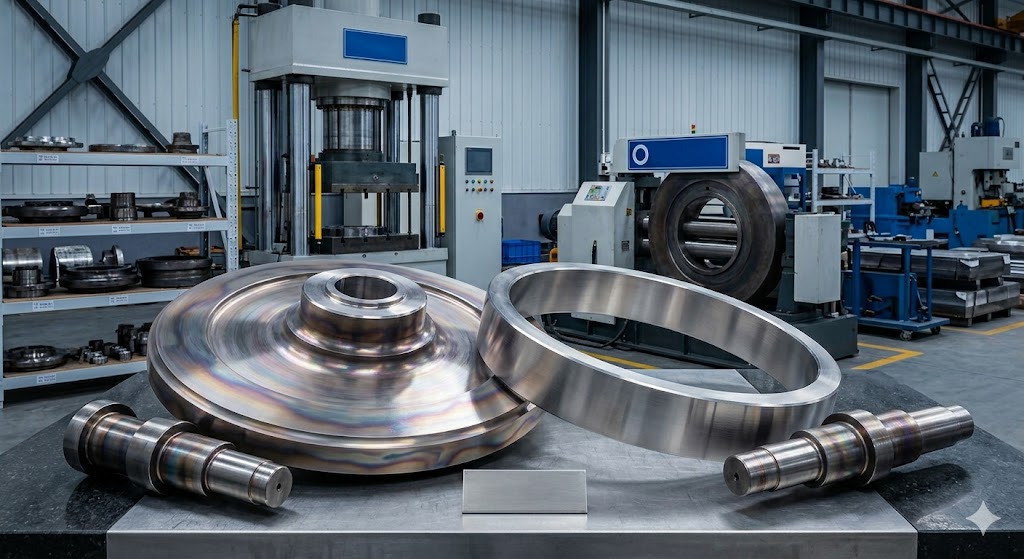
About Jiangsu Liangyi: Specialist Manufacturer of 1.6356 / X2NiCoMoTi18-12-4 Forgings
Jiangsu Liangyi Co., Limited is an ISO 9001:2015 certified specialist forging manufacturer based in Jiangyin City, Jiangsu Province, China, with over 25 years of dedicated experience in processing high-performance alloy steels for critical industrial applications. Among our most technically demanding materials is the 1.6356 / 1.6355 / X2NiCoMoTi18-12-4 maraging precipitation hardening steel — a grade that demands precise metallurgical understanding, controlled forging conditions, and a disciplined two-stage heat treatment protocol that tolerates no shortcuts.
Unlike general-purpose stainless steels, 1.6356 is not a material that any forging shop can process reliably. Its ultra-low carbon matrix requires vacuum-quality ingot, its aging response is sensitive to thermal cycling history, and its high nickel and cobalt content increases the cost of errors at every process stage. Over the past 25 years, Jiangsu Liangyi has invested specifically in the equipment, process documentation, and metallurgical expertise required to produce 1.6356 forgings that consistently meet — and regularly exceed — the specifications written by German, French, American, and Middle Eastern engineering standards bodies.
We export 1.6355 and X2NiCoMoTi18-12-4 forgings to more than 50 countries and regions, with repeat orders from engineering procurement teams in nuclear power, subsea oil & gas, industrial gas turbines, and high-speed rotating machinery. Every piece we ship carries a full EN 10204 3.1 material traceability chain — from vacuum-degassed ingot heat number to finished component dimensional record.
Metallurgy of 1.6356 Steel: Why This Material Achieves Ultra-High Strength Without Brittleness
Understanding what makes 1.6356 / X2NiCoMoTi18-12-4 exceptional requires looking beyond the data sheet and into the atomic-scale mechanisms that govern its behaviour. Most ultra-high-strength steels achieve their strength by exploiting carbon-based hardening — increasing carbon content, which dramatically raises strength but causes brittleness, reduces weldability, and limits toughness at low temperature. Maraging steels take a fundamentally different path.
The Maraging Principle: Strength Without Carbon
The name "maraging" is a contraction of martensite and aging. The steel is first solution-treated to produce a soft, ductile iron-nickel martensite with essentially zero carbon content (≤0.03%). This martensite is not the brittle, high-carbon martensite familiar from tool steels. It is a body-centred cubic (BCC) phase that is relatively soft — typically 32–35 HRC — but already has excellent toughness and is trivially easy to machine or form. At this stage, the alloying elements (cobalt, molybdenum, titanium) are held in supersaturated solid solution inside the BCC lattice.
During the subsequent aging step at 480–520°C, these dissolved atoms are thermodynamically driven to precipitate as fine, coherent intermetallic compounds. In 1.6356 / X2NiCoMoTi18-12-4, the dominant strengthening precipitates are Ni₃Ti and Ni₃Mo, supplemented by Fe₂Mo and smaller amounts of Fe₇Mo₆ at longer aging times. These precipitates are nanoscale — typically 2–10 nm in diameter — and because they are crystallographically coherent with the BCC matrix, they introduce a dense internal stress field that acts as a powerful barrier against dislocation glide. The result is a hardness jump from 32–35 HRC to 50–54 HRC, and a tensile strength increase from roughly 900 MPa to 1379 MPa, with elongation remaining above 18%.
The Role of Each Alloying Element in 1.6356
- Nickel (Ni, 17.0–19.0%): The main stabilizing element of the martensite. High nickel suppresses the martensite start temperature (Ms) to close to room temperature, thus ensuring complete transformation on cooling. It also prevents reversion of austenite during aging, which would make the component softer and shorten fatigue life. In addition, the high nickel content of the material gives the excellent corrosion resistance and cryogenic toughness that differentiates 1.6356 from the classical alloy steels.
- Cobalt (Co, 11.0–13.0%): Often misunderstood as a "filler" element, cobalt plays two critical roles. First, it lowers the solubility of molybdenum in the BCC martensite at aging temperature, dramatically accelerating Mo-based precipitation kinetics. Second, cobalt raises the Ms temperature, counteracting the tendency of high nickel to excessively depress martensite transformation and leave residual austenite. The result of these two effects is a faster, more complete aging response and higher achievable strength.
- Molybdenum (Mo, 4.80–5.50%): A primary strengthening precipitate contributor. Mo participates in Ni₃Mo formation and also improves pitting and crevice corrosion resistance by stabilising the passive film. In sour gas (H₂S) environments, molybdenum significantly suppresses sulfide stress cracking susceptibility — a key reason why 1.6356 is preferred over lower-Mo alternatives in API 6A sour service valve and wellhead applications.
- Titanium (Ti, 0.75–1.10%): The primary precipitate-former, driving Ni₃Ti nucleation. Ti precipitation produces the greatest increment in hardness per unit weight addition of any element in this system. Because titanium also reacts with carbon and nitrogen to form stable carbides and nitrides, it essentially eliminates the risk of sensitisation — a form of grain-boundary corrosion that affects conventional stainless steels during welding or elevated-temperature service. This is part of why 1.6356 maintains excellent corrosion resistance even in the weld heat-affected zone.
- Carbon (C, ≤0.03%): Deliberately minimised. Any carbon above this threshold risks forming Ti and Mo carbides that deplete the matrix of these strengthening elements, reducing precipitation hardening response. More critically, high carbon in the HAZ of a weld would cause brittle martensite formation on cooling — precisely the failure mode that maraging steels are designed to avoid. The ultra-low carbon content is what gives 1.6356 its unusually good weldability for a high-strength steel.
- Aluminum (Al, 0.05–0.15%): Acts as a deoxidiser during steelmaking and refines grain structure. At these levels, Al contributes to formation of nanoscale NiAl precipitates that supplement the primary strengthening mechanism during aging.
Most procurement engineers specify hardness minimums; far fewer specify hardness maximums. In 1.6356, overaging above 520°C or extending aging beyond 6 hours causes precipitate coarsening — the nanoscale Ni₃Ti particles grow beyond coherence, losing their effectiveness as dislocation barriers. Strength drops, and simultaneously, coarsened precipitates at grain boundaries become initiation sites for stress corrosion cracking. At Jiangsu Liangyi, our automated heat treatment furnaces hold aging temperature to ±5°C with continuous chart recording. We record both temperature and time as mandatory MTC data — not as optional information — because overaging in service-critical parts is a silent failure mode that a hardness check alone may not detect.
Material Designation Cross-Reference & Selection Guide
1.6356 / 1.6355 / X2NiCoMoTi18-12-4: All Equivalent Designations
Engineers, procurement teams, and inspection bodies across different countries use different naming conventions for this steel grade. The following table confirms that all designations refer to the same material and can be used interchangeably in technical specifications:
| Standard System | Designation | Notes |
|---|---|---|
| DIN EN (Germany / EU) | 1.6356 | Primary material number — used in European engineering drawings and purchase orders |
| DIN EN (Germany / EU) | 1.6355 | Alternative material number — technically identical, fully interchangeable |
| DIN EN (Germany / EU) | X2NiCoMoTi18-12-4 | Full chemical symbol designation showing key alloying elements and nominal contents |
| DIN EN (short / variant spellings) | X2NiCoMoTi18.12.4 · X2NiCoMoTi18124 | Hyphen-free variants frequently used in database search and part numbering systems |
| Material Family (generic) | 18Ni Maraging Steel / PH Stainless Steel | Generic classification used in materials science literature and academic publications |
| Key Composition Reference | Ni 17–19% · Co 11–13% · Mo 4.8–5.5% · Ti 0.75–1.1% | Principal alloying elements confirming grade identity when full designation is unavailable |
How to Choose: 1.6356 vs Other High-Strength Steels for Forged Parts
1.6356 / X2NiCoMoTi18-12-4 is a premium-cost material. Selecting it correctly — rather than defaulting to it or avoiding it out of unfamiliarity — requires comparing it against the most common alternatives used in industrial forgings. The table below is based on Jiangsu Liangyi's engineering experience across hundreds of custom forging projects:
| Property / Criterion | 1.6356 / X2NiCoMoTi18-12-4 This Grade | 17-4PH (1.4542) | 15-5PH (1.4545) | 18Ni 300 Maraging | Inconel 718 |
|---|---|---|---|---|---|
| Tensile Strength | 1379 MPa | ~1170 MPa | ~1310 MPa | ~2000 MPa | ~1380 MPa |
| Yield Strength | ≥ 1200 MPa | ~1000 MPa | ~1170 MPa | ~1900 MPa | ~1100 MPa |
| Elongation | ≥ 18% | ~10% | ~10% | ~8% | ~12% |
| Max Service Temp. | 450 °C | ~300 °C | ~320 °C | ~300 °C | ~700 °C |
| H₂S Sour Service | Excellent | Moderate | Good | Limited | Excellent |
| Weldability | Good (low C) | Good | Good | Moderate | Good |
| Machinability (solution) | Excellent | Good | Good | Good | Difficult |
| Distortion on Aging | Minimal | Minimal | Minimal | Minimal | Moderate |
| Relative Material Cost | High | Medium | Medium-High | Very High | Very High |
| Best Application Fit | Nuclear, sour gas, high-temp turbine, compressor | General PH applications, moderate corrosion | Aerospace, moderate-sour service | Aerospace ultra-high-strength | High-temp gas turbine, jet engine |
If your application requires tensile strength above 1200 MPa combined with H₂S exposure, long-term operation above 350°C, or a design life exceeding 40 years (nuclear and offshore infrastructure), 1.6356 is typically the correct choice and a cost-justified one. If your application is at moderate temperatures (below 300°C), with non-sour corrosion requirements, and cost pressure is significant, 17-4PH H900 is often the right alternative. Our engineering team provides free material selection consultations for all RFQs — contact us at sales@jnmtforgedparts.com with your operating conditions.
Global Standards Compliance for 1.6356 / X2NiCoMoTi18-12-4 Forgings
Jiangsu Liangyi manufactures 1.6356, 1.6355 and X2NiCoMoTi18-12-4 forged parts in full compliance with the major industrial standards of all key export markets. We maintain the corresponding technical procedures and calibrated testing equipment for each standard, and our quality engineers regularly participate in third-party standard update training to stay current with revision releases.
- European Union & Germany — DIN EN, PED 2014/68/EU: The base material standard for 1.6356 / 1.6355 is the DIN EN steel designation system. All pressure bearing components for EU markets are manufactured under Pressure Equipment Directive (PED) 2014/68/EU including verification of design pressure class, material traceability and conformity documentation.
- North America — ASTM, AMS, API 6A: Mechanical property requirements and test methods are aligned with ASTM standards for grades not designated by ASTM and are cross-referenced with AMS aerospace material specifications where appropriate. API 6A compliance is required for oil & gas wellhead equipment, including sour service (SSC) testing to NACE MR0175 / ISO 15156.
- Nuclear Power — RCC-M (France) and ASME Section III (USA): Our 1.6356 forgings can be produced to meet RCC-M nuclear equipment procurement specifications, including full material traceability, witnessed production inspections, and NDE to RCC-M class requirements. For US nuclear projects referencing ASME Section III, we supply complete EN 10204 3.2 documentation packages to support client-side ASME code compliance. Formal nuclear supplier qualification under RCC-M requires project-specific pre-qualification — please contact us to discuss your project's qualification pathway.
- Marine — DNV GL, Lloyd's Register (LR), ABS: Marine-grade 1.6356 forged shafts and structural components can be supplied with third-party witnessing by DNV GL, Lloyd's Register (LR), or ABS surveyors, arranged on request. The surveyor witnesses chemical testing and mechanical testing at our facility and co-signs the inspection documentation. The client or their project manager nominates the classification society.
- EN 10204 Certification: Every shipment of 1.6355 / X2NiCoMoTi18-12-4 forgings is accompanied by an EN 10204 3.1 Mill Test Certificate (MTC), covering: heat chemical analysis (OES spectrometer), mechanical tests (tensile, hardness, Charpy CVN at −46°C and +20°C), heat treatment time-temperature records, dimensional inspection, and NDE results. EN 10204 3.2 certification by an accredited third-party inspection body (TÜV, Bureau Veritas, SGS, Intertek, etc.) is available on request and routinely provided for nuclear and offshore orders.
Chemical Composition of 1.6356 / X2NiCoMoTi18-12-4
The chemical composition of 1.6356 is engineered with extraordinary precision. The tight tolerances on each alloying element — particularly the maximums on carbon, silicon, and manganese — reflect the metallurgical discipline required to achieve a purely martensitic, clean matrix in which precipitation hardening can operate at its theoretical maximum effectiveness.
| Chemical Element | Content (wt%) | Primary Metallurgical Function |
|---|---|---|
| Carbon (C) | ≤ 0.03% | Kept ultra-low to preserve clean martensite, avoid Ti/Mo carbide formation, and ensure weldability and SCC resistance |
| Silicon (Si) | ≤ 0.10% | Deoxidiser in steelmaking; limited to prevent embrittlement of the martensitic matrix |
| Manganese (Mn) | ≤ 0.10% | Minimised to avoid MnS inclusion formation, which degrades fatigue life and corrosion resistance |
| Phosphorus (P) | ≤ 0.01% | Tramp element; segregates to grain boundaries causing temper embrittlement; strictly controlled at melt stage |
| Sulfur (S) | ≤ 0.01% | Tramp element; forms MnS stringers that reduce transverse toughness and initiate H₂S-induced cracking; controlled by vacuum degassing |
| Nickel (Ni) | 17.0% – 19.0% | Martensite stabiliser; cryogenic toughness provider; corrosion resistance base; controls Ms temperature |
| Cobalt (Co) | 11.0% – 13.0% | Accelerates Mo precipitation kinetics; raises Ms temperature; suppresses austenite reversion during aging |
| Molybdenum (Mo) | 4.80% – 5.50% | Primary precipitate-former (Ni₃Mo); enhances pitting and crevice corrosion resistance; critical for SSC resistance |
| Titanium (Ti) | 0.75% – 1.10% | Dominant strengthening precipitate-former (Ni₃Ti); scavenges C and N to prevent sensitisation; largest strength contribution per wt% |
| Aluminum (Al) | 0.05% – 0.15% | Deoxidiser; grain refiner; contributes NiAl precipitates during aging; controls inclusion morphology |
Heat Treatment & Mechanical Properties of 1.6356 / X2NiCoMoTi18-12-4 Forgings
Verified Mechanical Property Data
The following mechanical properties are achieved after our standard two-stage heat treatment protocol. All values are backed by traceable test results documented in the EN 10204 3.1 MTC for each production heat:
| Mechanical Property | Condition | Temperature | Typical Value | Test Method |
|---|---|---|---|---|
| Hardness | Solution treated only | 20 °C | 32 – 35 HRC | EN ISO 6508-1 |
| Hardness | After aging (3–4 h) | 20 °C | 50 – 54 HRC | EN ISO 6508-1 |
| Tensile Strength Rm | Aged | 20 °C | 1379 MPa | EN ISO 6892-1 |
| 0.2% Proof Stress Rp0.2 | Aged | 20 °C | ≥ 1200 MPa | EN ISO 6892-1 |
| Elongation A5 | Aged | 20 °C | ≥ 18% | EN ISO 6892-1 |
| Reduction of Area Z | Aged | 20 °C | ≥ 50% | EN ISO 6892-1 |
| Charpy CVN Impact Energy | Aged | 20 °C | ≥ 100 J | EN ISO 148-1 |
| Charpy CVN Impact Energy | Aged | −46 °C | ≥ 60 J | EN ISO 148-1 (API 6A requirement) |
| Modulus of Elasticity E | Aged | 20 °C | ~190 GPa | Reference value |
| Density | All conditions | — | ~8.0 g/cm³ | Reference value |
Heat Treatment Engineering Guide for 1.6356 / X2NiCoMoTi18-12-4 Forgings
Heat treatment is the defining manufacturing step for 1.6356. Getting it right requires more than following a temperature range on a data sheet — it requires understanding the metallurgical purpose of each step, recognising the time-temperature interactions that can degrade properties, and having the furnace equipment and process discipline to execute consistently. Below is Jiangsu Liangyi's detailed process protocol, developed and refined over hundreds of production heats.
- Pre-Heat Treatment Inspection & Setup
Before any heat treatment begins, each 1.6356 forging is ultrasonically tested (UT) in the as-forged condition to detect any internal flaws that might propagate during thermal cycling. Dimensional verification confirms that forging has achieved specified rough dimensions. All heat treatment records — furnace calibration certificates, thermocouple calibration records, load configuration diagrams — are compiled and approved by our QA engineer before loading begins.
- Solution Treatment: 820–850 °C, Controlled Atmosphere
Parts are loaded into our atmosphere-controlled solution treatment furnaces (nitrogen or argon backfill to prevent surface oxidation of the high-nickel matrix). Heating rate is controlled to ≤ 150°C/h for large cross-sections above 200 mm to avoid thermal gradient cracking. Soak time is calculated as a minimum of 1 hour per 25 mm of maximum cross-section thickness, ensuring complete dissolution of all secondary phases. Temperature uniformity across the load is verified by multiple thermocouples distributed at top, middle, and bottom zones, all maintained within ±10°C of the target. At the end of soak, parts are rapidly extracted and cooled — by forced air for sections below 150 mm, or oil quench for heavier sections — to below 32°C within 60 minutes, preventing any partial re-precipitation during slow cooling.
- Cryogenic Treatment (Optional, for Critical Applications)
For nuclear and aerospace applications requiring absolute assurance of zero retained austenite, parts can be subjected to a cryogenic treatment at −75°C for 2 hours between solution treatment and aging. Although retained austenite is rarely a concern at the high cobalt content of 1.6356, this additional step provides documented metallurgical proof for nuclear safety cases. This step is performed on request and documented in the MTC.
- Aging (Precipitation Hardening): 480–520 °C, 3–4 Hours
Aged at precisely 480–520°C in our 10 fully automatic aging furnaces, with temperature uniformity controlled to within ±8°C across the load (verified by multi-point thermocouple mapping). Temperature is continuously logged by calibrated type K thermocouples and the complete time-temperature chart is archived as part of the permanent production record. The 3–4 hour soak window is selected based on section thickness: lighter sections (under 100 mm) are typically aged for 3 hours; heavier sections (over 200 mm) are held for 4 hours to ensure complete precipitation throughout the cross-section. After aging, parts are air-cooled in still air — forced cooling is avoided as it can introduce surface residual stresses that may compromise fatigue life in rotating components.
- Post-Heat Treatment Hardness Verification
Every 1.6356 part is tested for Rockwell C hardness after aging. Readings are taken at a minimum of 3 locations per piece — including both surface and, where sampling allows, subsurface positions — to confirm that the target 50–54 HRC range has been achieved uniformly. Any part outside the target range is reviewed by our metallurgist: parts below 50 HRC are candidates for re-aging; parts consistently below 48 HRC after two aging cycles indicate a solution treatment or ingot chemistry issue requiring root-cause investigation. Parts above 54 HRC — indicating possible overheating or excessive aging — are rejected, as this condition correlates with reduced toughness and elevated stress corrosion cracking susceptibility.
Corrosion Behaviour and H₂S Sour Service Resistance of 1.6356 Steel
Corrosion resistance is a critical performance dimension of 1.6356 / X2NiCoMoTi18-12-4, and it operates through multiple complementary mechanisms that are fundamentally different from conventional stainless steels. Understanding these mechanisms helps engineers specify the correct material condition and surface finish for their specific corrosive environment.
General Corrosion and Pitting Resistance
The high nickel content (17–19%) of 1.6356 contributes to excellent general corrosion resistance in neutral to mildly acidic environments. The molybdenum content (4.80–5.50%) significantly enhances resistance to pitting and crevice corrosion by stabilising the passive chromium oxide film against chloride attack. While 1.6356 is not a conventional chromium stainless steel and does not contain chromium at passivation-level concentrations, its high Mo and Ni combination nonetheless produces a corrosion resistance profile comparable to 316L stainless in many industrial environments — at three times the strength.
Sulfide Stress Cracking (SSC) and H₂S Resistance
The most demanding corrosion challenge for 1.6356 forgings in oil & gas service is sulfide stress cracking (SSC) — a form of hydrogen embrittlement driven by H₂S-generated atomic hydrogen diffusing into the steel lattice. SSC susceptibility increases sharply with hardness and strength, which is why conventional high-strength steels above 22 HRC are excluded from sour service per NACE MR0175 / ISO 15156. The hardness limit of 36 HRC for conventional corrosion-resistant alloys under NACE MR0175 would appear to exclude 1.6356 at its aged condition of 50–54 HRC.
However, high-nickel precipitation hardening alloys of this composition family have their own qualification pathway under NACE MR0175 / ISO 15156-3 as nickel-base alloys (rather than conventional steels), based on composition and heat treatment verification. The high nickel and molybdenum content fundamentally changes the hydrogen trapping and diffusion mechanism compared to iron-base steels, providing SSC resistance at elevated hardness levels — a critical advantage for high-pressure wellhead and downhole tooling applications in H₂S-containing reservoirs. We recommend that clients verify the applicable NACE MR0175 / ISO 15156-3 qualification route for their specific operating conditions; our technical team can assist with the documentation package upon request.
Corrosion in Nuclear and High-Purity Water Environments
In nuclear primary coolant circuits, the corrosion challenge is different: not acid or H₂S, but sustained exposure to high-purity water at 290–320°C under radiation flux. The ultra-low carbon content of 1.6356 (≤0.03%) and the absence of chromium depletion zones (because there is no sensitisation mechanism in maraging steels) means that grain boundary corrosion and intergranular stress corrosion cracking are effectively eliminated — making this steel well-suited to long-cycle PWR coolant environments.
Weldability and Joining Guide for X2NiCoMoTi18-12-4 Steel
For a high-strength steel achieving 1379 MPa tensile strength, 1.6356 is remarkably weldable — a direct consequence of its ultra-low carbon content. This section provides practical guidance for welding engineers working with 1.6356 / X2NiCoMoTi18-12-4 components manufactured by Jiangsu Liangyi, including recommended processes, filler selection, and post-weld treatment.
Recommended Welding Processes
- TIG (GTAW — Gas Tungsten Arc Welding): The preferred process for most applications. Use matching-composition filler wire in the solution-annealed condition (nominally X2NiCoMoTi18-12-4 or equivalent maraging filler). Use inert argon shielding (99.99% purity) with back-purging on tubular and hollow components. Heat input should be kept below 1.5 kJ/mm to minimise HAZ growth and avoid overheating the base metal above the solution treatment temperature.
- Electron Beam Welding (EBW): Preferred for precision components (turbine blades, seal rings) where narrow HAZ and minimal distortion are critical. EBW's vacuum environment eliminates gas porosity risk and provides the lowest heat input of any fusion welding process. Used routinely for 1.6356 aerospace and nuclear components at Jiangsu Liangyi's contracted precision machining partners.
- MIG (GMAW): Acceptable for lower-criticality structural welds. Higher heat input requires more careful interpass temperature control (maximum 100°C interpass) to prevent HAZ width from reaching the base metal solution temperature locally.
Post-Weld Heat Treatment (PWHT)
After welding X2NiCoMoTi18-12-4, the weld metal and HAZ will have experienced partial dissolution of the aging precipitates and possible local transformation to austenite. To restore full mechanical properties across the weld joint, a full re-solution treatment followed by complete re-aging is strongly recommended for critical applications. The sequence is:
- Weld in the solution-annealed (soft) condition where geometry permits
- Post-weld NDE (dye penetrant + radiographic or ultrasonic testing)
- Full re-solution treatment at 820–850°C (if geometry and distortion tolerance allow) — eliminates all thermal history variations across weld and HAZ
- Re-aging at 480–520°C for 3–4 hours — restores full precipitation hardening response uniformly
- Final hardness verification + NDE after PWHT
For components where full re-solution is impractical after welding (large structures, embedded components), an aging-only PWHT at 480–520°C will partially restore strength in the HAZ, but the weld fusion zone will not achieve the full base material properties without prior solution treatment. This should be accounted for in the joint design safety factor.
Non-Destructive Testing (NDT) & Quality Control Protocol
Quality control for 1.6356 forgings is a multi-layer process that begins with raw material verification and concludes with a final dimensional audit before shipping. Our inspection philosophy is grounded in the principle that no manufacturing step should add cost to a defective piece — meaning every step of the process includes a quality gate before proceeding to the next. Below is our standard inspection protocol for 1.6356 / X2NiCoMoTi18-12-4 critical forgings:
| Inspection Stage | Method | Standard / Acceptance Criteria | Purpose |
|---|---|---|---|
| Incoming Ingot / Billet | OES (Optical Emission Spectrometry) | DIN EN composition limits; C ≤ 0.03%, P/S ≤ 0.01% | Verify chemistry of vacuum-degassed ingot before forging begins |
| As-Forged (Billet) | Ultrasonic Testing (UT) — contact or immersion | EN 10228-3 Class 3 or ASTM A388; no indications ≥ 3 mm ERS (Equivalent Reference Size) | Detect internal pipe, segregation, or cracking from the forging process before heat treatment |
| After Solution Treatment | Hardness check (HRC) | 32–35 HRC (confirms complete solution; above 35 HRC signals incomplete homogenisation) | Verify solution treatment effectiveness before committing to aging cycle |
| After Aging | Hardness check (HRC) — min. 3 positions per piece | 50–54 HRC; any piece outside range is quarantined for engineering review | Confirm precipitation hardening has proceeded correctly |
| After Aging | Mechanical testing (destructive, test coupon) | Tensile Rm ≥ 1379 MPa, Rp0.2 ≥ 1200 MPa, A5 ≥ 18%, Z ≥ 50%; Charpy CVN per drawing requirement | Traceable proof that mechanical properties meet order specification |
| Final Machined Surface | Magnetic Particle Testing (MT) or Liquid Penetrant Testing (PT) | EN 10228-1/2 or ASTM E709/E165; zero linear indications on critical surfaces | Detect surface-breaking cracks, laps, or folds introduced during forging or machining |
| Finished Component | Final UT (if specified) | As per client drawing and standard — typically EN 10228-3 Class 3 or better | Final confirmation of internal soundness in the machined condition |
| Dimensional Inspection | CMM (Coordinate Measuring Machine) / Calibrated gauges | Drawing tolerances; traceable to national standards | Dimensional conformance before shipping; all critical dimensions recorded in inspection report |
Jiangsu Liangyi operates a fully in-house materials testing laboratory equipped with: optical emission spectrometer (OES) for 10-element chemical analysis; servo-hydraulic universal testing machines for tensile testing; Charpy CVN impact testing machines; Rockwell hardness testers; pulse-echo ultrasonic flaw detectors; UV magnetic particle inspection stations; and optical metallographic microscopy for grain size and microstructure assessment. Critical-application orders can be inspected by client-nominated third-party inspection bodies (TÜV SÜD, Bureau Veritas, SGS, Intertek, Applus, DNV GL, etc.) at our facility at any stage of production.
Full Range of Custom 1.6356 / X2NiCoMoTi18-12-4 Forged Product Forms
Jiangsu Liangyi manufactures 1.6356, 1.6355 and X2NiCoMoTi18-12-4 forgings across the complete spectrum of forged product forms, from simple round bars to complex multi-step shafts, contoured rings, and near-net-shape custom components. All product forms are available fully customised to client drawings, with rough-machined, semi-finished, or finish-machined delivery options.

Forged Bars & Custom Shafts
We supply 1.6356 forged round bars, square bars, flat bars, and rectangular bars in the full range of cross-sections, as well as custom step shafts, splined drive shafts, turbine shafts, pump shafts, valve spindles, and multi-diameter precision shafts. Maximum capability: bar diameter up to Ø 2 m, maximum length up to 15 m, single piece weight up to 30 t. All bars are forged with a minimum reduction ratio of 4:1 from the ingot cross-section to ensure thorough grain refinement and closure of any axial porosity, with 100% longitudinal and transverse ultrasonic testing coverage.
Seamless Rolled Forged Rings
Our 1.6355 seamless rolled rings are produced on our radial-axial ring rolling mills, which allow precise independent control of radial and axial rolling forces to achieve uniform wall thickness, accurate height, and controlled grain flow in the circumferential direction — the orientation that governs fatigue life in rotating ring components. Maximum capability: OD up to Ø 6 m, ring height from 50 mm to 2,500 mm, wall thickness from 30 mm to 1,000 mm, single piece weight up to 30 t. Available as flat rings, flanged rings, contoured rings (T-section, L-section, profiled), gear rings, seal rings, labyrinth rings, valve seat rings, bearing rings, and custom rolled contours from client drawings.
Hollow Forged Components & Pressure Parts
We produce X2NiCoMoTi18-12-4 seamless hollow forgings — including sleeves, thick-wall cylinders, bush forgings, heavy-wall tubes, pump casings, valve bodies, barrel forgings, and reactor nozzle preforms — by piercing and mandrel forging from solid billets. This process preserves the circumferential grain flow required for pressure-bearing hollow sections and eliminates the risk of axial weld seam defects inherent in welded tube assemblies. Wall thickness uniformity is controlled to within ±2% of nominal, and full volumetric UT is performed in the hollow condition.
Forged Discs, Plates & Custom Blanks
Our X2NiCoMoTi18-12-4 forged discs, plates, blocks, and flanged boss blanks are produced from upset-forged slab preforms with controlled multi-direction forging sequences to achieve near-isotropic mechanical properties — meaning that longitudinal, transverse, and short-transverse strength and toughness values are as uniform as possible. This is critical for turbine disks and compressor impeller blanks, where stress fields in service are three-dimensional. Available custom thickness: 20 mm to 800 mm; maximum diameter up to Ø 3 m.
Complete Forged Valve & Pump Components
We manufacture a full line of 1.6356 and X2NiCoMoTi18-12-4 forged valve parts — valve bodies, bonnets, balls, stems, seat rings, discs, plugs — for ball valves, gate valves, globe valves, check valves, butterfly valves, and high-pressure choke valves in API 6A and ASME class ratings. We also supply complete pump components: impellers, shafts, casings, covers, wear rings, diffusers, and barrel assemblies for industrial centrifugal pumps, nuclear reactor coolant pumps (RCP), and downhole electric submersible pumps (ESP). All valve and pump components are available in machined condition with dimensional reports and full MTC.
Custom Manufacturing Capabilities & Production Process for 1.6356 Forged Parts
Our factory is equipped with advanced forging equipment and testing facilities that cover the complete manufacturing chain for 1.6356, 1.6355 and X2NiCoMoTi18-12-4 forgings, from raw material procurement to finished, certified component delivery.
- Integrated Steel Sourcing & Incoming Material Control: We buy exclusively from vacuum-induction melted + vacuum-arc remelted (VIM+VAR) or electroslag remelted (ESR) suppliers, ensuring low inclusion content, uniform chemistry and predictable forging response in 1.6356 ingots. Before processing every incoming ingot is chemically checked with our in-house OES spectrometer. Supplier approval records of our ingot sources are on file and available for review by our nuclear and offshore client procurement teams.
- Precision Open Die Forging — 2,000 to 6,000-ton Hydraulic Press Fleet: Our hydraulic forging presses operate with programmable stroke control, allowing precise management of the reduction ratio and forging temperature at each pass. For 1.6356, we forge within the window of 950–1150°C, finishing above the recrystallisation temperature to avoid deformed microstructure while ensuring a final forging ratio of ≥ 4:1 from ingot to finished blank. This controlled reduction refines the as-cast dendritic grain structure, eliminates shrinkage porosity, and improves the homogeneity of alloying element distribution — all of which directly translate to more consistent mechanical properties and improved fatigue life compared to cast material at the same composition.
- Radial-Axial Ring Rolling: Our ring rolling mills use servo-hydraulic control for independent radial and axial force application, allowing production of rings with controlled ovality (< 0.5% of OD), consistent height tolerance (±2 mm for rings above 1 m OD), and accurate wall thickness (±1.5% of nominal). Rings are rolled in the 950–1100°C temperature window and immediately transferred to the heat treatment charge to minimise time at temperature.
- 10 Atmosphere-Controlled Heat Treatment Furnaces: Ranging from 0.5 m³ to 15 m³ working volume, with temperature uniformity controlled to within ±8°C across the working zone verified by multi-point thermocouple mapping, and continuous data logging throughout every heat treatment cycle. The nitrogen or argon atmosphere option prevents surface oxidation of the high-nickel 1.6356 matrix during solution treatment, ensuring bright, scale-free surfaces after heat treatment.
- Precision CNC Machining: We provide final machining to drawing tolerances as tight as ±0.02 mm using our 5-axis machining centres and CNC turning centres with up to 6 m between centres. This covers all finish machining of turbine blades, compressor impellers, valve components, and precision shaft features. Hard machining of aged 1.6356 (50–54 HRC) uses PCBN (polycrystalline cubic boron nitride) tooling for surface-critical features.
- Manufacturing Process Plan (MPP): For nuclear, aerospace, and first-article orders, we submit a detailed Manufacturing Process Plan (MPP) to the client's engineering department for approval before production begins. The MPP specifies: ingot sourcing and qualification, forging schedule with temperature and reduction records, heat treatment parameters and furnace certification, testing plan with test coupon location map, inspection hold points, and MTC content. This systematic pre-production documentation review eliminates ambiguities and ensures complete alignment between our process and the client's design intent.
Global Industry Applications & Verified Project Cases
The following project case summaries are drawn from Jiangsu Liangyi's actual supply history. Technical details are provided where not covered by NDA obligations, to give engineers a concrete understanding of how 1.6356 / X2NiCoMoTi18-12-4 forgings perform in real operating environments.
Case Study 1: French PWR Nuclear Power — Reactor Coolant Pump Components
Operating environment: PWR primary coolant water at 290°C, 15.5 MPa system pressure, under radiation dose rates up to 1 × 10⁶ Gy cumulative over design life. Required compliance: RCC-M M3000 series for forgings, inspected under the RCCM class MC1 procurement category with third-party witness by the design authority's inspector.
Components supplied: X2NiCoMoTi18-12-4 (1.6355) forged reactor coolant pump (RCP) rotor impellers, pump casing lower half-shells, containment mechanical seal housings, and primary circuit nozzle forgings. Each component was individually solution-treated and aged with continuous furnace recording, subjected to 100% volumetric UT to RCC-M acceptance criteria, and delivered with full EN 10204 3.2 MTC witnessed by the client-nominated independent inspection body. All components passed factory acceptance testing and were accepted without rejection by the client's quality team prior to installation.
Case Study 2: North American Shale Gas — ESP Shafts & Mud Motor Drive Components
Operating environment: H₂S partial pressure up to 0.05 MPa (50 mbar), chloride concentration up to 200,000 ppm, downhole temperature up to 175°C, operating depth 3,500–5,500 m. Required compliance: API 6A PSL3G for all pressure-retaining components, NACE MR0175/ISO 15156-3 for sour service qualification.
Components supplied: 1.6356 forged electric submersible pump (ESP) motor splined shafts (Ø 45–85 mm × 1.2 m), mud motor rotor splined drive shafts (Ø 60–120 mm × 2.5 m), and multistage pump impeller hubs. All components were supplied aged to 50–52 HRC (controlled to the lower end of the range for maximum SSC resistance), with CVN impact tests at −46°C, SSC test coupons tested per NACE TM0177 Method A, and full magnetic particle testing on all keyway and spline features. The material's superior hardness uniformity and SSC resistance over conventional alloy steel grades were the primary basis for client selection.
Case Study 3: Middle East National Oil Company — Subsea Christmas Tree Valve Bodies
Operating environment: Offshore sour gas service, ambient temperature range −5°C to +45°C surface, subsea 4°C, system pressure 690 bar (10,000 psi), H₂S content 3.5 mol%. Required compliance: API 6A PR2 product specification level, EFC (European Federation of Corrosion) Publication No. 17 for sour service forgings, witnessed by the operator's TPIA (Third Party Inspection Agency).
Components supplied: Valve bodies (6" × 10,000 psi rated), bonnets and gate elements for subsea gate valves and needle valves on production Christmas Tree assemblies. The client’s material engineer selected 1.6356 over 316L stainless and duplex 2507 because it can simultaneously satisfy the NACE MR0175 sour service requirement and the API 6A PR2 tensile strength minimum of 1034 MPa, which neither 316L nor 2507 can. Components passed full factory acceptance testing including hydrotest at 1.5× rated working pressure, and were delivered to the offshore installation contractor on schedule for a deepwater field development.
Case Study 4: Germany — Centrifugal Compressor Rotor & Impeller Supply
Operating environment: High-pressure natural gas compression service at 250 bar discharge pressure, tip speed 480 m/s, continuous operation at 12,000 RPM, ambient temperature −20°C to +50°C. Required compliance: EU PED 2014/68/EU Category IV, manufacturer's internal specification based on EN 13445 pressure vessel standard, DIN EN material qualification.
Components supplied: X2NiCoMoTi18-12-4 forged centrifugal compressor rotor forgings, fully machined shrouded impellers, labyrinth shaft seals, and balance piston discs. Critical engineering challenge on this project: the client required overspeed burst safety at 120% of maximum continuous speed with no evidence of yielding in the bore — requiring a guaranteed minimum bore yield strength at elevated operating temperature. All production test coupons met the client's specified yield strength requirements at temperature, providing the required design margin. Components were accepted after full factory acceptance testing and delivered on schedule for the compressor train commissioning programme.
Case Study 5: Southeast Asia — Gas Turbine Disk & Seal Ring Supply
Operating environment: Industrial gas turbine hot section, continuous operation at 1,050°C combustion gas temperature (component temperature 400–430°C at disk rim), cyclic thermal loading over 3,000 start-stop cycles per year. Required compliance: Turbine OEM proprietary specification derived from AS/NZS and ASTM standards.
Components supplied: 1.6356 forged turbine compressor-stage disk forgings (Ø 800 mm, 120 kg), labyrinth seal rings, and blisk (bladed disk) preforms for 4 thermal power plant sites in Indonesia and Vietnam. The selection rationale for 1.6356 over lower-strength alternatives: at 400–430°C, the material retains approximately 85% of its room-temperature yield strength (≥ 1,020 MPa at temperature), compared to 17-4PH which retains only 65% and Inconel 718 which retains 90% but at three times the material cost. 1.6356 provided the optimal balance of cost and high-temperature performance for this mid-temperature turbine application.
Additional global applications include high-pressure storage tanks, rocket motor case components, marine propulsion shafts, helicopter transmission structural fittings, high-performance racing engine valve train components, precision planet gear carriers, heavy-duty cylindrical roller bearing cages, and safety-critical compression springs for industrial pressure relief valves.
Procurement Guide: How to Specify and Order 1.6356 / X2NiCoMoTi18-12-4 Forgings
Procuring 1.6356 forgings for the first time — or switching supplier — involves a number of technical and commercial specifications that are unique to this material and its demanding applications. This guide is intended to help procurement engineers and materials buyers structure a technically complete RFQ (Request for Quotation) that avoids the most common specification gaps that cause delays and misunderstandings.
Essential Information for an Accurate RFQ
- Material designation: Specify the exact DIN EN designation (1.6356 or 1.6355 or X2NiCoMoTi18-12-4). If your design drawing uses a different designation, include a cross-reference table or note confirming equivalence.
- Delivery condition: Specify whether you require the forging as-forged (rough), solution-treated only, solution-treated + aged (fully hardened), rough-machined to forging drawing, or finish-machined to part drawing. Heat treatment condition affects price, lead time, and machinability for any client-side finishing operations.
- Drawing or dimensional specification: Give a dimensioned drawing (PDF, DXF or 3D model) with all dimensions of the forging envelope, important finished dimensions, tolerances and any stock zones that are not included. Seamless rings OD, ID, height, and wall thickness tolerances specify separately.
- Mechanical property requirements: State the minimum required Rm, Rp0.2, A5, Z, and hardness — and any temperature conditions (e.g., CVN at −46°C for API 6A sour service). If your spec deviates from standard DIN EN values, advise our engineering team so we can assess feasibility.
- Standards and code compliance: Please list all applicable standards (DIN EN, API 6A PSL level, NACE MR0175 requirement, PED category, ASME class, RCC-M class, DNV GL notation) to properly configure the quality plan and to identify all mandatory test types and inspection points.
- Certification requirement: Specify EN 10204 3.1 (standard) or 3.2 (third-party witnessed). For 3.2, advise whether you will nominate the inspection body or prefer one from our approved panel (TÜV SÜD, Bureau Veritas, SGS, Intertek, Applus RTD).
- NDE scope: Specify the NDE methods required (UT class, MT/PT coverage %, RT if applicable) and the applicable standard and acceptance class. For critical rotating or pressure-bearing components, we recommend specifying 100% UT to EN 10228-3 Class 3 as a minimum.
- Quantity and delivery schedule: Include both the immediate quantity and any forecast annual volumes, as VIM+VAR ingot lot planning influences lead time. For repeat orders, we can arrange call-off contracts with agreed lead time guarantees.
Typical Lead Times for 1.6356 Forgings
| Component Type | Typical Lead Time (weeks) | Key Lead Time Driver |
|---|---|---|
| Standard bars / rings (under 500 kg, from stock ingot) | 6 – 8 weeks | Heat treatment + testing scheduling |
| Medium custom forgings (500 kg – 5 t) | 8 – 12 weeks | Ingot procurement + forging + heat treatment + NDE |
| Large custom forgings (> 5 t, rings to Ø 6 m) | 12 – 16 weeks | VIM+VAR ingot casting lead time + extended heat treatment |
| Nuclear / RCC-M grade (any size) | 16 – 24 weeks | Pre-production documentation approval + witness inspection scheduling |
| Finish-machined components (all sizes) | Lead time above + 2–4 weeks | Machining scheduling and dimensional inspection |
Frequently Asked Questions About 1.6356 / X2NiCoMoTi18-12-4 Steel Forgings
1.6356 (also known as 1.6355 or X2NiCoMoTi18-12-4) is a high-strength maraging precipitation hardening stainless steel defined by the German DIN EN standard. It is an 18% nickel maraging steel alloyed with cobalt (11–13%), molybdenum (4.8–5.5%), and titanium (0.75–1.1%). After a two-stage heat treatment (solution treatment at 820–850°C followed by aging at 480–520°C), it achieves tensile strength of 1379 MPa and hardness of 50–54 HRC while maintaining excellent ductility (elongation ≥ 18%) and corrosion resistance. It is widely used in nuclear power, oil & gas, turbine, and industrial compressor industries.
1.6356 and 1.6355 are entirely equivalent designations for the same steel grade — X2NiCoMoTi18-12-4 — within the DIN EN standard system. They share identical chemical composition limits, mechanical property requirements, and heat treatment specifications. Both material numbers appear in engineering specifications, purchase orders, and mill test certificates, and are accepted as fully interchangeable by all major European and international certification bodies. There is no metallurgical, processing, or performance difference between parts ordered to 1.6356 versus 1.6355.
After solution treatment at 820–850°C and quenching, all alloying elements (Co, Mo, Ti) are held in supersaturated solid solution within a soft BCC iron-nickel martensite matrix. During aging at 480–520°C, thermodynamic driving forces cause these elements to nucleate as nanoscale intermetallic precipitates — primarily Ni₃Ti and Ni₃Mo — that are coherent with the surrounding matrix. These 2–10 nm precipitates create intense local elastic stress fields that obstruct dislocation movement, dramatically increasing hardness (32–35 HRC to 50–54 HRC) and tensile strength without reducing ductility. This is fundamentally different from carbon-based hardening: no brittle carbon martensite is formed, which is why 1.6356 achieves ultra-high strength with 18%+ elongation — a combination impossible with conventional alloy steels.
The standard heat treatment for X2NiCoMoTi18-12-4 consists of two mandatory steps: (1) Solution treatment at 820–850°C, with a minimum soak time of 1 hour per 25 mm of section thickness, in a controlled atmosphere furnace, followed by rapid cooling (forced air or oil quench) to below 32°C within 60 minutes to ensure complete martensite transformation — achieving 32–35 HRC. (2) Aging at 480–520°C for 3–4 hours (adjusted for section thickness), in a furnace certified to ±8°C temperature uniformity, followed by still air cooling — precipitating Ni₃Ti and Ni₃Mo strengthening phases to achieve 50–54 HRC and 1379 MPa tensile strength. Post-aging hardness verification is mandatory; parts outside the 50–54 HRC window are quarantined and reviewed.
1.6356 / X2NiCoMoTi18-12-4 forged parts are used across critical industries requiring extreme reliability: nuclear power (reactor coolant pump impellers, pressure vessel nozzles, RCP seal housings); oil & gas (API 6A wellhead valve bodies, ESP motor shafts, mud motor drive shafts in H₂S sour service); gas and steam turbines (compressor disks, blisks, labyrinth seals, guide vanes); industrial compressors (centrifugal rotor forgings, shrouded impellers at tip speeds above 450 m/s); petrochemical plants (high-pressure reactor internals, column internals); marine propulsion (high-torque shafts); aerospace (structural fittings, landing gear components); and precision machinery (planet gear carriers, high-speed spindle elements).
Yes. X2NiCoMoTi18-12-4 (1.6356) belongs to the family of high-nickel precipitation hardening alloys that have their own qualification pathway under NACE MR0175 / ISO 15156-3, separate from conventional carbon and low-alloy steels. Unlike conventional steels restricted to 22 HRC maximum for sour service, high-nickel maraging alloys of this composition can qualify for use at elevated hardness in defined H₂S and temperature environments, because the high nickel and molybdenum content fundamentally changes hydrogen trapping behaviour. Clients should verify the applicable qualification route with reference to ISO 15156-3 for their specific operating conditions; Jiangsu Liangyi can supply NACE TM0177 Method A SSC test coupons and CVN impact data at −46°C as part of an API 6A sour service documentation package on request.
Jiangsu Liangyi's manufacturing limits for 1.6356 / X2NiCoMoTi18-12-4 forgings: forged bars up to Ø 2 m diameter and 15 m length; seamless rolled rings up to Ø 6 m OD, ring height 50 mm–2,500 mm, wall thickness 30 mm–1,000 mm; forged shafts and custom open die components up to 30 t single piece weight; forged discs up to Ø 3 m diameter and 800 mm thickness. Press capacity: 2,000–6,000-ton hydraulic presses. All large forgings above 5 t are processed under a specific large-section heat treatment protocol with additional thermocouple monitoring to confirm temperature uniformity at the centre of the cross-section.
X2NiCoMoTi18-12-4 is weldable with proper process control, which is uncommon for steels at this strength level. The ultra-low carbon content (≤0.03%) eliminates sensitisation and prevents formation of brittle carbon martensite in the heat-affected zone. Recommended processes: TIG (GTAW) with matching filler wire and argon shielding, or electron beam welding (EBW) for precision applications. Weld in the solution-annealed condition where possible. Post-weld, perform a full re-solution treatment + re-aging cycle to restore complete mechanical properties across the weld joint. Avoid welding in the fully aged condition without subsequent PWHT — the HAZ will contain zones of partially dissolved precipitates that reduce fatigue life if left unrestored.
1.6356 (X2NiCoMoTi18-12-4) outperforms 17-4PH in three main aspects: tensile strength (1379 MPa vs ~1170 MPa for 17-4PH H900), maximum continuous service temperature (450°C vs ~300°C), and H₂S sour service resistance (NACE MR0175 qualified at full hardness vs limited for 17-4PH above 33 HRC). 1.6356 also has better elongation (≥ 18% vs ~10% for 17-4PH), meaning better resistance to catastrophic brittle fracture under impact. The trade-off: 1.6356 carries a significantly higher material cost due to the high cobalt and nickel content. For applications in nuclear, deep sour gas, or high-temperature turbine environments, 1.6356 is the technically correct choice; for general-purpose PH applications at moderate conditions, 17-4PH is the economical alternative.
Every shipment includes a full EN 10204 3.1 Mill Test Certificate (MTC) signed by our authorised Quality Manager, covering: heat chemical analysis (OES, 10 elements), mechanical test results (tensile Rm/Rp0.2/A5/Z, Rockwell hardness, Charpy CVN at specified temperature), heat treatment time-temperature records with furnace calibration reference, dimensional inspection report with measured vs. nominal comparison, and NDE results (UT per EN 10228-3, MT/PT per EN 10228-1/2). EN 10204 3.2 certification — signed by an independent accredited third-party inspection body such as TÜV SÜD, Bureau Veritas, SGS, Intertek, or Applus — is available on request and routinely provided for nuclear, subsea, and aerospace-grade orders.
Typical lead times: 6–8 weeks for standard bars and rings under 500 kg from stocked ingot; 8–12 weeks for medium custom forgings (500 kg–5 t) requiring fresh ingot procurement; 12–16 weeks for large forgings above 5 t or rings up to Ø 6 m (VIM+VAR ingot casting lead time is the main driver); 16–24 weeks for nuclear RCC-M or offshore 3.2-witnessed orders due to pre-production documentation approval and witness inspection scheduling. Rush production is available for critical replacement and emergency orders — contact our sales team directly by phone or email for urgent enquiries.
Yes, 1.6356 forgings can accept several surface treatments. Shot peening (to EN 13445 or AMS 2430 specification) is commonly applied to fatigue-critical rotating components (turbine disks, compressor impellers) to introduce compressive residual stress at the surface, extending high-cycle fatigue life by 30–60% compared to unpeened surfaces. Hard chrome plating is used on bearing journals and sealing surfaces for wear resistance. Electroless nickel plating provides additional corrosion protection for components in chloride-rich environments. Gas nitriding at temperatures below the aging temperature (below 480°C) can be used to increase surface hardness to above 60 HRC for wear-critical applications without affecting core mechanical properties. Hydrogen embrittlement risk should be assessed before any electrolytic plating process; baking at 190°C for 4+ hours post-plating per AMS 2759/9 is recommended.