1.4501 (X2CrNiMoCuWN25-7-4) Forging Parts | China Jiangyin Professional Super Duplex Stainless Steel Forgings Manufacturer
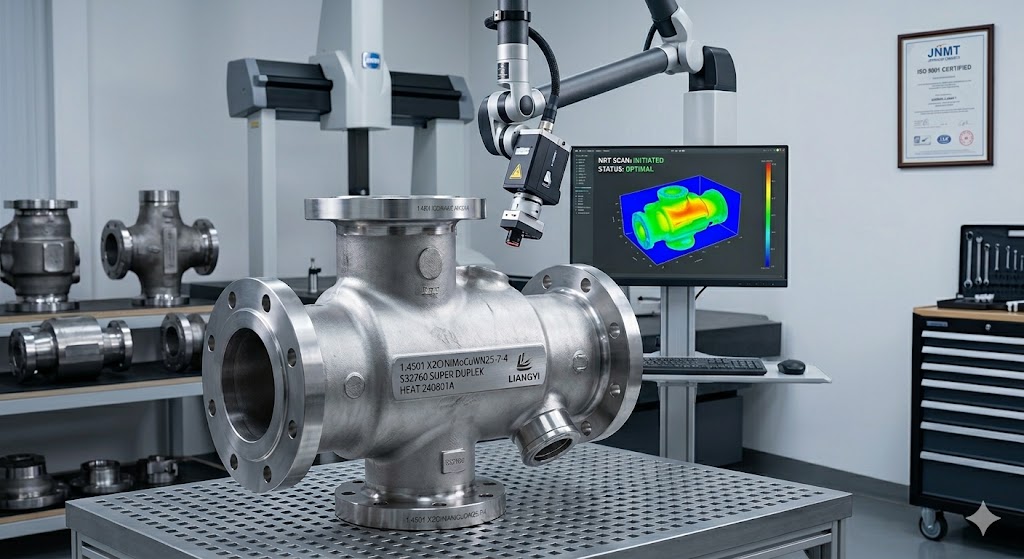
About Jiangsu Liangyi: Your Trusted 1.4501 Forging Partner from Jiangyin China
Located in Chengchang Industry Park, Jiangyin City — the geographic and industrial heart of the Yangtze River Delta forging corridor — Jiangsu Liangyi Co., Limited is a professional ISO 9001:2015 certified manufacturer of 1.4501 (X2CrNiMoCuWN25-7-4) open die forging parts and seamless rolled rings. We have been continuously supplying super duplex stainless steel forgings to global engineering projects since 1999 — over 25 years of accumulated technical expertise in an alloy that most forging shops treat with caution.
Jiangyin is not an incidental location. The city hosts over 200 active forging enterprises and sits at the intersection of direct rail and river logistics to Shanghai port — a supply chain advantage that compresses delivery lead times and raw material sourcing costs for our clients worldwide. Our factory covers 80,000 ㎡ with USD 40 million in fixed assets, housing two 6,000-ton hydraulic open die forging presses, 5-meter seamless ring rolling machines, 10 precision heat treatment furnaces with ±5℃ automatic temperature control, and a fully equipped in-house inspection center.
We are not a trading company. Every forging quoted, produced, tested, and certified is manufactured within our own facility under direct quality management system control. Our technical team includes metallurgical engineers specializing in duplex and super duplex stainless steel behavior — professionals who can discuss sigma phase kinetics, PREN calculations, and corrosion mechanism specifics with your materials engineers before order confirmation. This is the depth of engagement we bring to every 1.4501 project.
What is 1.4501 (X2CrNiMoCuWN25-7-4) Super Duplex Stainless Steel? A Metallurgical Perspective
1.4501 (X2CrNiMoCuWN25-7-4) is a high-alloy super duplex stainless steel defined under EN 10088-3 and equivalent to UNS S32760 (commercially known as Zeron 100, a trade designation of Rolled Alloys). It belongs to the super duplex family — alloys with a PREN (Pitting Resistance Equivalent Number) exceeding 40 — and is distinguished from standard 2205 duplex (PREN ≈ 35) and even from the widely used 2507 super duplex (PREN ≥ 40) by the deliberate addition of two elements absent in most duplex grades: tungsten (W) and copper (Cu).
The designation "X2CrNiMoCuWN25-7-4" encodes the nominal alloy chemistry directly: ultra-low carbon (X2 = C ≤ 0.03%), approximately 25% chromium, 7% nickel, 4% molybdenum, with copper and tungsten as further alloying elements. The microstructure at room temperature after correct solution annealing and water quenching consists of approximately 50% austenite (γ) and 50% ferrite (δ) — the balanced two-phase structure from which all duplex stainless steel performance derives.
Why the 50/50 Phase Balance Is Not Just a Target — It Is a Performance Mechanism
The superior corrosion resistance and mechanical strength of duplex stainless steels arise specifically because neither phase alone provides all properties. The ferrite phase contributes high yield strength (due to solid solution strengthening by chromium and molybdenum) and resistance to chloride stress corrosion cracking (SCC) — a catastrophic failure mode that destroys austenitic stainless steels (316L, 904L) in warm chloride service. The austenite phase provides ductility, toughness, and resistance to hydrogen-induced cracking. When phase balance drifts significantly outside the 40–60% ferrite range, properties deteriorate disproportionately: a 70% ferrite structure loses most of its toughness; a 30% ferrite structure loses much of its SCC resistance and yield strength advantage. This is why phase balance verification after every heat treatment batch is non-negotiable in our quality system.
The PREN Formula and What It Actually Means for 1.4501
PREN is the industry's primary numerical index for comparing pitting corrosion resistance across stainless steel grades. For alloys containing tungsten, the correct formula is:
PREN = %Cr + 3.3 × (%Mo + 0.5 × %W) + 16 × %N
Applying nominal chemistry for 1.4501 (25% Cr, 3.5% Mo, 0.75% W, 0.25% N):
PREN = 25 + 3.3 × (3.5 + 0.5 × 0.75) + 16 × 0.25 = 25 + 13.49 + 4.0 = 42.5
The tungsten contribution (0.5 × 0.75 = 0.375% effective Mo-equivalent) adds approximately 1.24 PREN points compared to a grade with the same composition but no tungsten. This is the quantitative basis for 1.4501's superiority over 2507 in the most demanding environments. PREN ≥ 40 classifies a material as "super duplex." PREN ≥ 42 places 1.4501 at the very top tier of commercially available super duplex grades.
Critically, PREN is a bulk chemistry calculation. In practice, the locally effective PREN — what the material actually achieves at a given microstructural location — depends entirely on how uniformly alloying elements are distributed. This is where the forging-over-casting advantage becomes quantifiable: as-cast super duplex structures exhibit chromium and molybdenum microsegregation, with depleted zones reaching PREN values of 35–38, effectively austenitic-grade corrosion resistance in those locations. Forging and solution annealing homogenizes the chemistry, bringing local PREN within ±1–2 points of the bulk calculated value across the entire cross-section.
1.4501 (X2CrNiMoCuWN25-7-4 / S32760) — Verified Technical Reference Data
Core Performance Advantages of 1.4501 Forged Steel vs Other Material Families
- vs 316L Austenitic: Approximately 2× the yield strength (≥530 MPa vs ≥220 MPa). Dramatically better resistance to chloride-induced stress corrosion cracking — 316L is essentially unsuitable for warm (>60°C) chloride service. 1.4501 provides full structural integrity.
- vs 904L / 6Mo Austenitic: Similar corrosion resistance class but 1.4501 has almost 2× the yield strength allowing thinner wall designs and lighter assemblies. 6Mo grades have PREN ≈ 43, but no yield strength advantage to austenitic steel.
- vs 2205 Standard Duplex: PREN of 1.4501 (≥42) is approximately 7 points higher than 2205 (≈35), translating to measurably better pitting resistance in aggressive chloride environments above 40°C. Yield strength is roughly comparable.
- vs 2507 Super Duplex: The tungsten and copper additions in 1.4501 provide superior performance in acidic reducing media and higher high-temperature strength. Both offer comparable chloride resistance in seawater service.
- vs Inconel / Hastelloy Nickel Alloys: 1.4501 can get similar corrosion resistance in many chloride-dominated applications at a fraction of the raw material cost. For mixed acid environments (particularly HCl + H₂SO₄ at moderate concentrations), nickel alloys may still be required.
- vs Titanium Grade 2/5: In seawater and oxidizing acid environments, titanium can outperform 1.4501. However, titanium is significantly more difficult and expensive to forge, cannot be readily welded without specialized inert-atmosphere equipment, and has lower strength per unit cost.
1.4501 vs 2507 Super Duplex Stainless Steel: Engineering-Level Comparison
This is consistently the most technically important decision engineers face when specifying super duplex forgings. The comparison is not simply "which has a higher PREN" — it involves understanding the actual service environment, the failure mechanisms you are guarding against, and the real-world processing differences between the two grades.
| Property / Criterion | 1.4501 (X2CrNiMoCuWN25-7-4 / S32760) | 2507 (X2CrNiMoN25-7-4 / S32750 / 1.4410) | Advantage |
|---|---|---|---|
| EN Number | 1.4501 | 1.4410 | — |
| UNS Number | S32760 | S32750 | — |
| Chromium (Cr %) | 24.0–26.0 | 24.0–26.0 | Equal |
| Nickel (Ni %) | 6.0–8.0 | 6.0–8.0 | Equal |
| Molybdenum (Mo %) | 3.0–4.0 | 3.0–5.0 | 2507 slight edge (Mo only) |
| Tungsten (W %) | 0.5–1.0 ✓ | None | 1.4501 |
| Copper (Cu %) | 0.5–1.0 ✓ | ≤ 0.5 | 1.4501 |
| Nitrogen (N %) | 0.20–0.30 | 0.24–0.32 | 2507 slight edge (N only) |
| Calculated PREN (nominal) | ≥ 42 ✓ | ≥ 40 | 1.4501 |
| Min. Yield Strength (Rp0.2) | ≥ 530 MPa | ≥ 550 MPa | 2507 (minor) |
| Min. Tensile Strength (Rm) | 730–930 MPa | 800–1000 MPa | 2507 (minor) |
| Resistance to Sulfuric Acid (H₂SO₄) | Superior — Cu suppresses active dissolution ✓ | Good, but Cu-limited | 1.4501 |
| Resistance to Phosphoric Acid (H₃PO₄) | Superior — Cu addition beneficial ✓ | Good | 1.4501 |
| High-Temperature Strength (>250°C) | Superior — W stabilizes carbides ✓ | Good | 1.4501 |
| Chloride / Seawater Pitting Resistance | Slightly superior (PREN ≥42 vs ≥40) ✓ | Excellent (PREN ≥ 40) | 1.4501 (marginal) |
| Sigma Phase Sensitivity during Forging | High — requires strict process control | High — similar sensitivity | Equal (both require care) |
| Weldability | Good | Good | Equal |
| Relative Material Cost | Higher (W + Cu additions) | Lower ✓ | 2507 |
| Primary Use Case | Acidic reducing media, H₂SO₄ duty, high-temperature HPHT service | Chloride/seawater environments, general super duplex service | Application-dependent |
Practical Selection Guidance from 25 Years of Duplex Forging Experience
Choose 1.4501 when your service medium includes sulfuric acid (even in trace concentrations), phosphoric acid, mixed acid systems, or any environment where copper's passivation-promoting role provides measurable benefit. Also select 1.4501 for service temperatures consistently above 250°C where tungsten's carbide-stabilizing effect maintains strength. If your PREN requirement based on chloride concentration, temperature, and pH calculation yields a minimum of 41–42, only 1.4501 reliably clears this bar.
Choose 2507 when your application is predominantly seawater or chloride-dominated without significant reducing acid content, and where material cost is a project constraint. 2507's PREN ≥ 40 is sufficient for most offshore and marine applications. If your engineer's PREN calculation requires only 40–41, 2507 provides this at lower cost with equivalent reliability.
If uncertain: Our technical team routinely performs corrosion environment analysis for clients — evaluating chloride concentration, temperature, pH, flow velocity, presence of H₂S, CO₂, and acid species — to provide a data-based material recommendation before you commit to either grade.
Full Range of 1.4501 Forging Parts We Manufacture
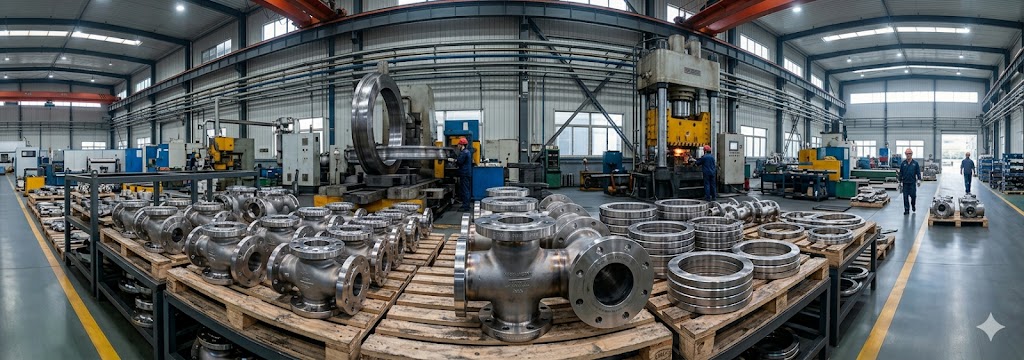
We produce custom 1.4501 forging parts in all standard and non-standard geometric forms according to your engineering drawings and technical requirements. Our single-piece weight capacity spans from 30 KGS to 30,000 KGS, with maximum seamless rolled ring outer diameter up to 6,000 mm and shaft length up to 15 meters. All production is against client-supplied drawings or jointly developed specifications — we do not hold inventory of standard catalog items, as every super duplex forging is engineered to its specific application.
- 1.4501 Forged Round Bars & Shafts: Solid round bars, step bars, spindles, axle shafts, turbine shafts, pump shafts and valve spindles. Maximum diameter 2,000 mm, maximum length 15 meters. Available in rough-forged, turned, or semi-machined condition.
- X2CrNiMoCuWN25-7-4 Seamless Rolled Rings: Cylindrical rings, gear rings, flanged rings, contoured profile rings, and bearing rings. Maximum outer diameter 6,000 mm. The seamless ring rolling process produces a circumferential grain flow that maximizes tangential mechanical properties — the optimal configuration for pressure-retaining ring components.
- 1.4501 Hollow Forgings & Sleeves: Heavy wall cylinders, hollow bars, sleeves, bushings, liner rings and bushes. Maximum outer diameter 3,000 mm. Produced by piercing and mandrel forging — no welding, no seams, 100% solid metallurgical integrity throughout the wall.
- 1.4501 Forged Discs, Blocks & Plates: Round discs, square blocks, rectangular plates, blanks, and flanged bosses up to 2,000 mm diameter. Used as pressure vessel tube sheets, reactor baffles, pump manifold blocks, and raw material for subsequent CNC machining to near-net shape.
- 1.4501 Forged Pressure Vessel Components: Custom shells, reactor casings, tube sheets, baffle plates, nozzles, dished ends and channel flanges for boilers, shell-and-tube heat exchangers, reactors and pressure vessels operating under ASME VIII or PED requirements.
- 1.4501 Forged Valve Bodies & Bonnets: Ball valve bodies, gate valve bodies, globe valve bodies, check valve bodies, butterfly valve bodies and BOP valve bodies. Valve bonnets, yokes, stems, balls, seat rings, discs and closures. Produced to meet client-specified standards including API 6A, API 6D, ASME B16.34 material and dimensional requirements when specified in the purchase order and confirmed at order stage.
- 1.4501 Forged Pump Components: Pump casings, impellers, diffusers, shaft sleeves, wear rings, stuffing box covers and bearing housings for centrifugal, axial, and multistage high-pressure pumps.
- Custom 1.4501 Forgings to Drawing: Any geometry not listed above — provide your 2D drawing or 3D model (STEP/IGES/DWG), material specification, applicable standard, and required mechanical property level. We will provide a complete DFM review and manufacturing proposal within 5 working days.
Chemical Composition of 1.4501 (X2CrNiMoCuWN25-7-4): Element-by-Element Engineering Analysis
It is important for quality engineers and materials specifiers to understand the role of each of the alloying elements in 1.4501. The composition limits in EN 10088-3 are not arbitrary ranges – the minimum and maximum content of each element is determined on the basis of its specific contribution to corrosion resistance, mechanical properties, phase balance and processability. Prior to forging, each heat of incoming raw material is fully analyzed in our laboratory by PMI (Positive Material Identification) spectrometry.
| Element | Content Range (wt%) | Why This Range — Engineering Rationale | What Happens if Out of Range |
|---|---|---|---|
| Carbon (C) | 0.00–0.03 | Ultra-low C prevents chromium carbide (Cr₂₃C₆) precipitation at grain boundaries during welding and slow cooling. Carbide precipitation depletes adjacent matrix of chromium, causing "sensitization" and catastrophic intergranular corrosion. | C > 0.03%: sensitization risk during welding; brittle carbide networks reduce impact toughness. C deliberately this low allows welding without post-weld annealing in most cases. |
| Chromium (Cr) | 24.00–26.00 | Primary passive film former. Cr forms a self-healing Cr₂O₃ rich oxide film (2–3 nm thick) that is the foundation of all stainless steel corrosion resistance. Minimum 24% required for super duplex classification; 25% nominal provides margin above the critical threshold. | Cr < 24%: PREN falls below 40, grade loses super duplex classification. Cr > 26%: increased sigma phase formation kinetics, risk of brittle Cr-rich intermetallics precipitating faster during cooling. |
| Nickel (Ni) | 6.00–8.00 | Primary austenite stabilizer. Without sufficient Ni, the structure would be fully ferritic. Ni content is balanced against Cr and Mo to get the target 50/50 phase ratio. Ni also improves low-temperature toughness. | Ni < 6%: ferrite content exceeds 60%, toughness deteriorates. Ni > 8%: austenite exceeds 60%, yield strength and SCC resistance decline. |
| Molybdenum (Mo) | 3.00–4.00 | Second most important pitting inhibitor after Cr. Mo (3.3× PREN weighting) partitions preferentially to the ferrite phase, dramatically raising the ferrite phase's local PREN. Mo also strengthens the passive film in reducing (oxygen-deficient) environments like crevices. | Mo < 3%: PREN drops below 40 threshold. Mo > 4%: accelerates sigma phase formation; sigma phase is a Fe-Cr-Mo intermetallic that, even at 1–2% volume fraction, severely embrittles the steel and depletes the surrounding matrix of corrosion-protecting elements. |
| Tungsten (W) | 0.50–1.00 | Unique to 1.4501 vs 2507. W contributes +0.5×W to the Mo-equivalent in the PREN formula — adding ~1.2 PREN points at nominal content. W also raises the high-temperature softening resistance of the ferrite phase, improving strength above 250°C where Mo alone loses effectiveness. | W < 0.5%: PREN falls below nominal 42, loses differentiation from 2507. W > 1.0%: risk of W-rich Laves phase precipitation during slow cooling; Laves phase causes embrittlement similar to sigma phase. |
| Nitrogen (N) | 0.20–0.30 | N is the most cost-effective PREN-boosting element (16× weighting in formula). It partitions strongly to the austenite phase, dramatically raising the austenite phase's local PREN to match the ferrite phase (which is enriched in Cr and Mo). N also acts as a potent solid solution strengthener and austenite stabilizer, partially replacing the more expensive Ni. | N < 0.20%: austenite phase PREN falls significantly; corrosion resistance becomes uneven across phases. N > 0.30%: supersaturation risk, chromium nitride (Cr₂N) precipitation during cooling which sensitizes the matrix. |
| Copper (Cu) | 0.50–1.00 | Unique to 1.4501 vs 2507. Cu suppresses active dissolution in reducing acids, particularly sulfuric acid (H₂SO₄) and phosphoric acid (H₃PO₄), by stabilizing the passive film in environments where Cr-based passivity alone would break down. This is the primary reason 1.4501 outperforms 2507 in acid chemical plant service. | Cu < 0.5%: acid corrosion resistance advantage over 2507 is lost. Cu > 1.0%: risk of Cu-rich ε-phase precipitation during slow cooling in thick sections, causing localized embrittlement. |
| Manganese (Mn) | 0.00–1.00 | Improves hot workability during forging by controlling sulphur (as MnS inclusions are more benign than FeS at grain boundaries). Also provides minor austenite stabilization. Mn-N interaction can increase N solubility in the melt. | Mn > 1.0%: excessive MnS inclusions become pitting initiation sites in service, reducing effective corrosion resistance below the PREN-calculated value. |
| Silicon (Si) | 0.00–1.00 | Primarily a melt deoxidizer. Si also improves oxidation resistance at high temperatures. Moderate Si improves hot workability. | Si > 1.0%: significantly accelerates sigma phase and chi phase formation during processing, severely shortening the safe thermal processing window. |
| Phosphorus (P) | 0.00–0.03 | P is a harmful impurity with no beneficial function in corrosion-resistant alloys. It segregates to grain boundaries during solidification, causing grain boundary embrittlement and reducing weldability. | P > 0.03%: grain boundary cracking risk during forging and welding. Even 0.02–0.03% P can measurably reduce impact toughness at low temperatures. |
| Sulphur (S) | 0.00–0.01 | S is controlled at an extremely low level (≤0.01%) in 1.4501 because sulphide inclusions (MnS) are preferential pitting initiation sites — they dissolve at the inclusion-matrix interface, creating local chemistry that nucleates pitting corrosion. Ultra-low S is mandatory for PREN ≥ 42 performance to be realized in practice. | S > 0.01%: MnS inclusions cause the actual pitting initiation potential to be significantly lower than the PREN-calculated value, effectively negating the expensive alloying investment. |
| Iron (Fe) | Balance | Base matrix element providing the BCC ferritic and FCC austenitic crystal lattice structure into which all alloying elements dissolve. | — |
Specialized Heat Treatment for 1.4501 Forgings: Why Every Parameter Matters
Heat treatment of 1.4501 super duplex stainless steel is not a generic annealing operation — it is a precisely engineered metallurgical process that can either fully realize or completely destroy the alloy's designed performance. In our 25 years of manufacturing super duplex forgings, we have seen projects fail at the heat treatment stage due to inadequate temperature control, insufficient soak time, or delayed quenching. This section explains our process and why each parameter is set the way it is.
⚠ The Sigma Phase Warning: What Most Suppliers Do Not Tell You
Sigma phase (σ) is a brittle, tetragonal Fe-Cr-Mo intermetallic compound that forms preferentially at ferrite-austenite interfaces when 1.4501 is exposed to temperatures between 700°C and 1,000°C. At the worst-case temperature of approximately 850°C, sigma phase nucleates within 3–5 minutes in super duplex stainless steels due to their high Cr and Mo content — this is dramatically faster than in 2205 standard duplex where sigma formation takes 30–60 minutes at the same temperature. The consequences of even 1–2 vol% sigma phase are severe: Charpy impact energy can drop by 50–80%, the steel becomes unsuitable for low-temperature service, and the chromium- and molybdenum-depleted zones surrounding sigma phase particles reduce local PREN by 5–8 points, creating vulnerable pitting sites. This is precisely why our heat treatment process is not simply "anneal and quench" — it is a rigorously documented and time-controlled manufacturing step with metallographic verification for every batch.
Standard Solution Annealing Process for 1.4501 Forging Parts
Furnace Preparation & Thermocouple Calibration
Before each heat treatment batch, furnace zone temperatures are verified with calibrated K-type thermocouples. Our furnaces hold ±5°C temperature uniformity across the entire working zone. For forgings with maximum cross-section exceeding 300 mm, contact thermocouples are attached directly to the forging surface to monitor actual part temperature (not furnace ambient). Sulfur-containing furnace atmospheres are prohibited — even trace SO₂ can cause grain boundary attack on super duplex steels at annealing temperatures.
Heating to 1,080–1,120°C (The Dissolution Window)
The solution annealing temperature window for 1.4501 is deliberately narrow. The lower bound of 1,080°C is set by the need to completely dissolve sigma phase, chi phase, secondary austenite (γ₂), and chromium nitride precipitates — all of which require this minimum temperature for full dissolution. The upper bound of 1,120°C prevents excessive austenite grain growth, which degrades low-temperature toughness. For large forgings (>500 mm cross-section), we apply a thermal equalization soak at 900°C for 30 minutes before final heating to ensure the entire section reaches uniform temperature before entering the critical dissolution range — entering the 700–1,000°C sigma-forming range non-uniformly and slowly is a known risk in thick-section duplex processing.
Hold Time Calculation (1 Minute per mm, Minimum 30 Minutes)
Soak time is calculated at 1 minute per millimeter of maximum cross-sectional thickness, with an absolute minimum of 30 minutes regardless of part size. This is not a conservative safety margin — it is the engineering minimum required to achieve temperature uniformity throughout the section and ensure all precipitate phases are fully dissolved. Our furnace control systems log actual soak time at temperature continuously; any excursion outside the temperature window automatically extends the soak timer. Over-soaking beyond 3× the calculated minimum time is also avoided, as extended time at 1,080–1,120°C can cause selective grain coarsening of the austenite phase that is difficult to reverse.
Rapid Water Quenching (60-Second Maximum Transfer Time)
The forging must be transferred from furnace to quench tank within 60 seconds maximum. This is the single most critical timing requirement in the entire heat treatment cycle. As soon as the forging surface begins to cool below 1,000°C, sigma phase nucleation begins within minutes. Our quench tanks are positioned within 5 meters of the furnace doors, and crane operators execute the transfer as an uninterrupted priority operation. Quench water temperature is maintained below 40°C at quench start, with active agitation systems to eliminate steam vapor blanket formation on the forging surface — the steam blanket dramatically reduces local cooling rates and is a common cause of variable phase balance across large forgings. For forgings exceeding 30,000 KGS, we calculate the minimum water volume required to maintain cooling rate throughout the quench duration.
Metallographic Verification of Phase Balance
After each heat treatment batch, a test coupon (processed identically to the production forgings) is sectioned, mounted, polished, and etched with electrolytic KOH solution or Beraha's reagent to selectively reveal the ferrite and austenite phases. Ferrite area fraction is measured using calibrated image analysis software on a minimum of 5 fields at 200× magnification. Acceptable range: 40–60% ferrite. Results outside this range trigger mandatory re-analysis and, where possible, re-processing. Complete ferrite measurement data is recorded in the EN 10204 3.1 MTC accompanying every batch.
Guaranteed Mechanical Properties of Finished 1.4501 Forgings (Delivery Condition)
| Mechanical Property | Guaranteed Value | Typical Achieved Value * | Test Method |
|---|---|---|---|
| Tensile Strength Rm | 730–930 MPa | 780–860 MPa | EN ISO 6892-1 |
| 0.2% Proof Strength Rp0.2 | ≥ 530 MPa | 560–620 MPa | EN ISO 6892-1 |
| Elongation A₅ | ≥ 25% | 28–34% | EN ISO 6892-1 |
| Impact Energy KV (at −20°C) | ≥ 45 J | 65–100 J | EN ISO 148-1 |
| Hardness | ≤ 290 HB | 255–280 HB | EN ISO 6506-1 |
| Ferrite Phase Content | 40–60% (verified) | 46–54% | ASTM E562 / Image Analysis |
* Typical achieved values are based on our production records across representative batch tests. Individual results will vary based on forging dimensions, heat chemistry within specification, and section position of test specimen. Guaranteed minimum values are contractually warranted.
Why Forged 1.4501 Outperforms Cast Components: The Metallurgical Case
Procurement teams occasionally raise the question of whether cast super duplex components — often lower in initial quote price — are technically equivalent to forgings for critical service. For 1.4501 in demanding applications, the answer is unambiguously no, and the reasons are rooted in fundamental solidification metallurgy.
1. Segregation and Local PREN Variation in Castings
When molten 1.4501 steel solidifies, chromium, molybdenum, tungsten, and nitrogen distribute non-uniformly between the solid and liquid phases as the solidification front advances — a process called microsegregation. The first solid to form is relatively depleted in Mo and N, while the interdendritic liquid becomes enriched. After complete solidification, the cross-section contains a dendritic structure with local chemistry varying by several percentage points across distances of 50–500 micrometers. In practical terms, the interdendritic zones may have a local PREN of only 35–38 — effectively standard duplex grade corrosion resistance — embedded within a bulk alloy specified at PREN ≥ 42. These zones are precisely where pitting and crevice corrosion initiate in service.
Forging mechanically disrupts and homogenizes this dendritic structure. Combined with solution annealing, the forging process eliminates microsegregation and produces a uniform element distribution where local PREN deviates by less than ±1–2 points from the bulk calculated value across the entire cross-section.
2. Porosity and Internal Integrity
Solidification of high-alloy steels in cast form inherently produces internal porosity (both micro-shrinkage and hydrogen-related porosity) at the dendritic boundaries. In pressure-retaining components, this porosity represents structural weakness and potential leak paths. Hot isostatic pressing (HIP) can close much of this porosity but adds significant cost and cannot correct segregation. The forging process applies multi-directional compressive stress during hot working that mechanically closes internal voids and bonds them under pressure — producing a component where 100% ultrasonic testing reveals the dense, uniform internal structure that critical service demands.
3. Grain Flow and Directional Properties
Open die forging and seamless ring rolling develop controlled grain flow patterns aligned with the primary stress directions of the final component. A forged flange, for example, has circumferential grain flow in the flange ring and axial flow in the hub — orientations that maximize strength and fatigue resistance in the directions the component is loaded in service. Cast microstructures have no preferred grain orientation, and properties are statistically isotropic (and lower on average than the best-direction properties of a forging).
✓ The Practical Bottom Line for Procurement Engineers
For 1.4501 components in oil & gas wellhead equipment, pressure vessels, power generation, and any service where corrosion failure or mechanical failure carries safety consequences — forgings are the technically correct specification. The incremental cost of a forging over a casting, when amortized over the service life difference (measured in years to decades of additional reliable service life), invariably makes the forging the lower total-cost-of-ownership choice. We are happy to provide technical documentation supporting forging specification for your project's material review process.
Industry Applications & Global Project Cases of 1.4501 Forging Parts
Our 1.4501 (X2CrNiMoCuWN25-7-4) forging parts serve in critical applications across six primary industries in more than 50 countries. Below we describe each application domain with the specific corrosion and mechanical challenges the environment presents and how 1.4501's properties address those challenges.
Oil & Gas: Upstream Wellhead, Midstream Pipeline & Downstream Refinery
Oil and gas is the largest single application sector for super duplex forgings, driven by three converging challenges: aggressive produced-water chemistry (high chloride, H₂S, CO₂), high-pressure high-temperature (HPHT) wellhead conditions, and the catastrophic cost of component failure in remote offshore locations. 1.4501 addresses all three.
Produced water from oil and gas wells commonly contains 50,000–250,000 mg/L chloride (seawater is approximately 19,000 mg/L), combined with dissolved H₂S and CO₂ at temperatures reaching 120–180°C — conditions that cause stress corrosion cracking of 316L in hours and pitting of 2205 within months. 1.4501's resistance to chloride-induced SCC is derived from its ferrite phase, which is essentially immune to this failure mode. Its high PREN (≥42) ensures the critical pitting temperature in this environment is not exceeded at normal operating temperatures.
Project case examples from our production records:
- Supplied 1.4501 forged BOP bodies, RAM blocks and annular components for onshore wellhead projects in the Arabian Peninsula; material met client-specified pressure rating, dimensional, and sour service NACE MR0175 hardness requirements as per purchase order specifications
- Manufactured X2CrNiMoCuWN25-7-4 forged casing heads, tubing heads, casing hangers and Christmas tree gate valve bodies for offshore oil platforms in the North Sea (UK sector), where HPHT conditions (150°C, 690 bar) combined with seawater exposure demanded the highest-tier super duplex material with full EN 10204 3.2 third-party inspection documentation
- Provided 1.4501 forged valve bodies (6" class 600 gate valves) for long-distance gas pipelines in Central Europe, where condensate water with 8% CO₂ and 50 ppm H₂S precluded standard carbon steel with inhibitor injection
- Supplied 1.4501 forged pump casings and impellers for produced water injection (PWI) systems in Southeast Asia — PWI service is among the most aggressive for stainless steels due to dissolved oxygen in reinjected water combined with high chloride content
Chemical & Petrochemical Processing: Acid Environments Where 1.4501's Cu Pays Off
Chemical process equipment represents the application domain where 1.4501's copper addition most clearly differentiates it from 2507. Sulfuric acid is produced, transported, and used in enormous quantities in the global chemical industry — it is the world's most produced industrial chemical by volume. Concentrated H₂SO₄ (above approximately 65%) passivates most stainless steels adequately. However, dilute-to-intermediate concentration H₂SO₄ (5–65% at elevated temperatures) is in the active corrosion range for standard duplex steels, where dissolution rates can be measured in mm/year.
The copper content of 1.4501 (0.5–1.0%) stabilizes the passive film in this critical H₂SO₄ concentration range by depositing a thin copper-enriched film that blocks the active dissolution reaction. Published corrosion data demonstrates that 1.4501 exhibits corrosion rates of <0.1 mm/year in 10% H₂SO₄ at 80°C, while 2507 in the same environment shows rates of 0.5–2.0 mm/year — a 5–20× difference that directly translates to equipment service life.
Project case examples:
- Manufactured X2CrNiMoCuWN25-7-4 forged tube sheets (1,200 mm diameter, 180 mm thick, 18,000 tube holes), baffle plates and channel flanges for large-scale sulfuric acid cooler heat exchangers in a German chemical group's H₂SO₄ manufacturing complex — these components operate in contact with hot (90°C) intermediate-concentration H₂SO₄ vapors continuously
- Supplied 1.4501 forged pump casings, impellers and shaft sleeves for phosphoric acid transport pumps at a fertilizer plant in Morocco — H₃PO₄ environments are similarly aggressive and benefit from 1.4501's Cu content
- Provided 1.4501 forged reactor nozzles, shell sections, and agitator shaft forgings for a fine chemical synthesis plant producing chlorinated organic compounds — the presence of HCl in the process stream combined with elevated temperature (80°C) ruled out all duplex grades except super duplex
Nuclear Power: Full Process Traceability as a Non-Negotiable Requirement
Power generation applications impose documentation and traceability requirements that go far beyond standard industrial projects. For power sector clients, every 1.4501 forging we produce is subject to complete and unbroken documentation traceability from the steel mill's original heat certificate through every processing step — forging press records, furnace temperature logs (time-stamped, equipment-calibrated), inspection results with instrument calibration certificates, and final EN 10204 3.1 MTC — all maintained in permanent quality records available for client QA audit.
- Supplied 1.4501 forged pump casings, seal chambers, and safety system valve bodies for power generation projects in Asia — produced with enhanced documentation packages including hold point and witness point inspections by the client's QA representatives per client-specified quality plans
- Manufactured 1.4501 forged primary circuit valve bodies for a research reactor facility in Europe, produced under EN 13480 Class I pressure equipment requirements with 100% RT and UT nondestructive testing
Marine Engineering & Desalination: Seawater as the Ultimate Corrosion Test
Natural seawater at temperatures above 30°C is one of the most corrosive aqueous environments commonly encountered in engineering. The combination of approximately 19,000 mg/L chloride, biological organisms (which create anaerobic micro-environments beneath biofilm layers — highly aggressive for pitting initiation), and temperature makes material selection critical. 1.4501 with PREN ≥ 42 exceeds the minimum threshold of PREN ≥ 40 recommended for reliable pitting resistance in warm seawater (>35°C) service. Applications include:
- Multi-effect distillation (MED) and multi-stage flash (MSF) evaporator components for seawater desalination plants, where temperature reaches 70°C in the first stages and brine chloride concentration exceeds twice seawater levels
- Seawater lift pump casings, impellers and lineshaft components for offshore platform firewater systems and seawater injection headers
- Subsea valve bodies and actuator components for deepwater oil and gas facilities, where cathodic protection is not always fully effective and the cold temperature (2–4°C) at seafloor imposes additional low-temperature toughness requirements
- Shipboard seawater cooling system valve bodies and pump components for LNG carriers and naval vessels
Pulp & Paper Industry: The Original Super Duplex Application Domain
The pulp and paper industry was historically one of the first adopters of duplex stainless steels in the 1970s–1980s, driven by the highly corrosive chemistry of kraft pulping liquors. The kraft process uses a hot (160–170°C) aqueous solution of sodium hydroxide and sodium sulfide (white liquor) to dissolve lignin from wood fibers. This alkaline, sulfide-containing, high-temperature medium causes stress corrosion cracking of austenitic stainless steels and pitting of standard grades. Super duplex 1.4501 provides the combined alkali resistance, SCC immunity, and mechanical strength required for:
- Digester pressure vessels (nozzle forgings, manway flanges, and feed/discharge valve bodies) operating at 160°C and 10 bar in white liquor service
- Liquor circulation pump casings and impellers handling black liquor (spent pulping liquor) with abrasive suspended solids combined with aggressive chemistry
- Bleaching stage piping valve bodies and nozzle flanges, where chlorine dioxide (ClO₂) and sodium hypochlorite create oxidizing chloride environments that would rapidly pit standard duplex grades
- Recovery boiler auxiliary components in contact with concentrated smelt and dissolved solid streams
Full-Process Quality Control System for 1.4501 Forging Parts
Our quality management system for 1.4501 super duplex forgings is not simply ISO 9001:2015 compliance paperwork — it is a technically substantive program built around the specific failure risks of super duplex stainless steel manufacturing. Each control point addresses a real, documented failure mode that we have seen occur when this alloy is processed with insufficient care.
Stage 1 — Raw Material Sourcing & Incoming Inspection
We source 1.4501 steel ingots exclusively from steel mills with demonstrated super duplex melting capability — specifically mills that use vacuum oxygen decarburization (VOD) or argon oxygen decarburization (AOD) combined with electroslag remelting (ESR) for larger ingots. VOD/AOD is required to achieve carbon below 0.03% and precise nitrogen content of 0.20–0.30% without contamination. ESR provides additional ingot cleanliness by removing oxide inclusions and reducing sulphur to the ≤0.01% level required for maximum pitting resistance.
Every incoming heat of steel ingots undergoes full-element optical emission spectrometry (OES) in our laboratory before release to the forging shop — including Cr, Ni, Mo, W, Cu, N, Mn, Si, C, P, and S. Heat analysis certificates from the steel mill are not accepted as incoming inspection substitutes; we verify independently. Heats that do not conform to EN 10088-3 requirements for 1.4501 chemistry are rejected and returned — this has occurred in practice, and our policy is non-negotiable.
Stage 2 — Forging Process Control & Temperature Monitoring
The forging process for 1.4501 is constrained by a narrower temperature window than carbon steel or austenitic stainless steel. Our established process parameters:
- Heating before forging: 1,150–1,200°C for the initial heating. This dissolves any carbides or nitrides precipitated during ingot storage and ensures the material is fully in the two-phase field where hot ductility is maximized.
- Forging temperature window: 950–1,200°C. Forging must not continue below 950°C — below this temperature, the material enters the embrittlement-prone range where σ, χ, and α' (475°C embrittlement precursor) phases begin to form rapidly during deformation, causing internal cracking and surface laps. Our forging presses are equipped with optical pyrometers that monitor billet surface temperature continuously; operators are trained to return the workpiece to the furnace for reheating before the surface temperature drops to 1,000°C.
- Forging reduction ratio: Minimum 3:1 for all 1.4501 forgings (total cross-sectional area reduction from ingot to finished forging). Higher reduction ratios (up to 8:1 for bars) are used where geometry permits, providing superior homogenization of the cast ingot structure.
- Forging direction control: For shaped forgings (discs, rings, shafts), the forging sequence is planned to achieve multi-directional deformation — ensuring grain flow refinement in all three principal axes, not only in the primary reduction direction.
Stage 3 — Heat Treatment Control with Continuous Temperature Logging
We have 10 heat treatment furnaces, all equipped with calibrated thermocouples, certified to Class 2 accuracy (±4°C or ±0.75% of reading, whichever is the greater) according to EN 13976-1. As per our ISO 9001:2015 quality management system calibration schedule, furnace temperature uniformity surveys are performed at regular intervals. Each 1.4501 heat treatment automatically produces and archives a time-temperature chart as part of the permanent production record. This chart is reproduced in the MTC 3.1 EN 10204 provided to the customer.
Stage 4 — Nondestructive Testing
All finished 1.4501 forgings are subjected to the following NDT program before dimensional inspection and final acceptance:
- 100% Volumetric UT (Ultrasonic Testing): Full volumetric scanning per EN 10308 or ASTM A388. Detection capability: Flat-bottomed hole (FBH) ∅2mm or better in accordance with client or applicable standard requirements. Our UT operators are trained and qualified in accordance with our ISO 9001:2015 quality management system requirements.
- 100% Surface MT (Magnetic Particle Testing): Applied to all ferritic/duplex components. Detects surface-breaking and near-surface discontinuities (cracks, laps, seams) with sensitivity per EN ISO 9934-1. MT is preferred over PT for duplex stainless as its ferromagnetic ferrite phase allows efficient magnetization.
- Liquid Penetrant Testing (PT): Applied per EN ISO 3452 as supplementary or alternative to MT where geometry makes MT impractical. Also used to verify weld repair areas if any.
- Positive Material Identification (PMI): X-ray fluorescence (XRF) screening of every finished forging surface to confirm material identity matches the specified heat before packaging and shipment.
Stage 5 — Mechanical Testing, Phase Balance & Chemical Analysis
Every production batch of 1.4501 forgings is accompanied by a test coupon (representative piece processed identically to production forgings) from which the following are performed and documented:
- Tensile test (ambient temperature): Rm, Rp0.2, A, Z
- Charpy V-notch impact test at −20°C: KV (minimum 3 specimens, average and minimum individual values reported)
- Vickers hardness conversion to Brinell (HB) at minimum 3 locations
- Full OES chemical composition analysis (12 elements per EN 10088-3 requirements for 1.4501)
- Ferrite content measurement by metallographic image analysis (reported as area % ferrite)
- Microstructural examination and photomicrography at 200× magnification: structure description, grain size, absence of deleterious phases (sigma, chi, carbide networks) confirmed and documented
Stage 6 — Dimensional Inspection, Marking & Export Packaging
All dimensional characteristics are verified against the client's approved drawing using calibrated measuring instruments traceable to national standards. For critical dimensions and GD&T callouts, coordinate measuring machine (CMM) inspection is available. Each finished 1.4501 forging is hard-stamped (low-stress stamp) with: heat number, forging number, material designation (1.4501 / X2CrNiMoCuWN25-7-4), Jiangsu Liangyi trade mark, client purchase order reference, and applicable standard. Standard seaworthy export packaging (plywood casing with moisture absorbers, rust-preventive oil on machined surfaces) is applied to all ocean freight shipments.
Machining, Welding & Fabrication Guidance for 1.4501 Super Duplex Forgings
This section addresses practical engineering questions that arise when clients receive 1.4501 rough forgings and proceed to machining, welding, or further fabrication. Our technical team provides pre-shipment consultation on these topics for every significant project.
CNC Machining of 1.4501 Forged Components
1.4501 is significantly more challenging to machine than austenitic stainless steel (316L) or carbon steel, primarily due to its high yield strength (≥530 MPa), work-hardening tendency, and abrasiveness from the hard ferrite phase. Key machining parameters from our experience:
- Cutting speed: Reduce by 30–40% compared to 316L parameters. Excessive cutting speed generates heat that causes work hardening of the machined surface layer — which then resists subsequent tool passes and accelerates tool wear.
- Feed rate: Use positive cutting geometry with sharp, coated carbide inserts (TiAlN or TiCN coatings for super duplex). Maintain a sufficient chip load to cut below the work-hardened surface layer — insufficient feed rate causes the tool to rub rather than cut, dramatically increasing surface hardening and tool wear.
- Coolant: Flood cooling with high-sulfur cutting oil or water-soluble coolant (high lubricity grade) is essential. Never machine 1.4501 dry — tool life will be unacceptably short and surface quality compromised.
- Depth of cut: Take deeper cuts with lower spindle speed rather than shallow cuts at high speed. Shallow cuts increase the proportion of time the tool spends in the work-hardened zone.
- Post-machining surface finish: Any machined surface that will be in corrosive service should achieve Ra ≤ 3.2 μm (preferably Ra ≤ 1.6 μm for crevice-prone configurations). Rough machined surfaces create crevice-like micro-topography that concentrates aggressive chemistry and reduces effective corrosion resistance below the PREN-predicted value.
Welding Guidance for 1.4501 Forged Components
1.4501 is weldable using standard TIG (GTAW), MIG (GMAW), and SAW processes, but requires more disciplined parameter control than austenitic or standard duplex steels. The primary welding risk is the same as during heat treatment: unintentional sigma phase formation in the heat-affected zone (HAZ) if interpass temperature is allowed to rise above 150°C or if cooling is too slow through the 700–1,000°C range.
- Filler material: Use matching super duplex consumables — AWS ER2594 (for GTAW/GMAW) or equivalent. Do not use 2205 filler with 1.4501 base metal; the resulting weld metal will have PREN ≈ 35, a severe performance downgrade at the weld joint.
- Interpass temperature limit: 150°C maximum. Monitor with contact thermocouple between passes. Allow the weld to cool to below 150°C before depositing the next pass — this is not optional.
- Heat input: 0.5–2.5 kJ/mm range. Very low heat input (thin, fast passes) risks too rapid cooling with insufficient austenite reformation in the HAZ; very high heat input prolongs time in the sigma-forming range.
- Post-weld heat treatment: Solution annealing at 1,080–1,120°C followed by water quenching is recommended for critical pressure-containing welds or any weld joint that will be in aggressive corrosive service. Post-weld annealing restores the 50/50 phase balance in the HAZ (which is temporarily disrupted by the weld thermal cycle) and dissolves any sigma phase that formed. Where post-weld annealing is not practicable (e.g., large assembled structures), the heat input discipline above becomes even more critical.
- Backing gas: Argon backing gas (99.997% purity minimum) must be maintained on the root side of TIG welds to prevent nitrogen loss and oxidation — loss of nitrogen from the weld root metal dramatically reduces the austenite phase's local PREN.
When to Specify 1.4501: A Material Selection Decision Framework
Choosing super duplex 1.4501 over less expensive alternatives is a decision that should be driven by objective engineering criteria. This framework is based on the questions our technical team asks when evaluating client applications:
Environmental Factors — Use 1.4501 When:
- Chloride concentration exceeds 5,000 mg/L at operating temperatures above 50°C (PREN ≥ 40 threshold applies — this rules out 2205 and 316L)
- Service involves sulfuric acid, phosphoric acid, or other reducing acids in any concentration, particularly above 40°C (1.4501's Cu content provides measurable advantage over 2507)
- H₂S partial pressure exceeds 0.3 kPa (3 mbar) combined with chloride — this defines sour service per NACE MR0175/ISO 15156; super duplex is compliant within defined hardness limits
- Crevice corrosion is a design risk (narrow gaps <0.5 mm in chloride-containing media) — higher PREN grades perform better in crevice geometry
- Stress corrosion cracking of austenitic stainless steel has been experienced or is a design concern — the ferrite phase in 1.4501 is fundamentally resistant to chloride SCC
Mechanical Factors — Use 1.4501 When:
- Design wall thickness is constrained by weight limits or space — 1.4501's high yield strength (≥530 MPa vs ≥220 MPa for 316L) allows nearly 2.5× thinner walls for the same pressure rating, enabling lighter and more compact equipment
- Operating temperature exceeds 250°C (1.4501's W addition maintains strength advantage over 2507 at elevated temperature)
- Fatigue loading is a design consideration — the higher yield strength and surface compressive residual stresses from forging improve fatigue life vs cast equivalents
- Low-temperature toughness to −50°C is required without post-weld heat treatment
When a Lower Grade May Be Sufficient:
- Pure seawater service at temperatures below 30°C with no reducing acid component — 2507 PREN ≥ 40 is adequate and less expensive
- Moderately aggressive chloride service (1,000–5,000 mg/L, below 50°C) — 2205 duplex (PREN ≈ 35) with adequate wall thickness may be cost-effective
- Mildly corrosive service at ambient temperature — 316L or duplex 2205 with proper inhibition may suffice
Frequently Asked Questions About 1.4501 Forging Parts
Here are some of the most technical substantive questions we receive from materials engineers, project engineers and procurement managers across the globe on 1.4501 (X2CrNiMoCuWN25-7-4) super duplex stainless steel forgings. Each answer is based on our direct manufacturing experience, not generic published data.
1.4501 (S32760) contains tungsten (W 0.5–1.0%) and copper (Cu 0.5–1.0%) absent in 2507 (S32750). Tungsten raises PREN from ≥40 (2507) to ≥42 (1.4501) and enhances high-temperature strength above 250°C. Copper suppresses active dissolution in reducing acids — particularly sulfuric acid (H₂SO₄) and phosphoric acid (H₃PO₄) — where 2507 may suffer accelerated corrosion. Choose 1.4501 for acid chemical plant service, mixed acid environments, high-temperature (>250°C) service, or where maximum PREN is required. Choose 2507 for predominantly chloride/seawater service without acidic reducing media, or where material cost must be minimized — 2507's PREN ≥ 40 is sufficient for most offshore and marine applications and it is generally priced 5–10% lower than 1.4501.
Sigma phase (σ) is an Fe-Cr-Mo intermetallic compound that precipitates in the 700–1,000°C temperature range in super duplex steels. Even 1–2 vol% sigma can reduce Charpy impact energy by 50–80% and reduce local PREN by 5–8 points through Cr/Mo depletion of the surrounding matrix. Critically, sigma nucleation in 1.4501 begins within 3–5 minutes at 850°C — far faster than in standard 2205 duplex. Our prevention measures: (1) strict forging temperature control — never forge below 950°C; (2) immediate reheating if the part surface cools to 1,000°C during forging; (3) solution annealing at 1,080–1,120°C to fully dissolve any sigma formed during forging; (4) rapid water quench with maximum 60-second furnace-to-quench transfer time; (5) metallographic verification of sigma-free structure for every heat treatment batch. Our heat treatment temperature logs and metallographic records are included in every EN 10204 3.1 MTC.
Forged 1.4501 consistently outperforms cast 1.4501 for corrosion resistance due to elimination of solidification microsegregation. As-cast 1.4501 has dendritic chromium and molybdenum concentration gradients — interdendritic zones may have local PREN values of 35–38 (standard duplex grade) embedded within a bulk PREN ≥ 42 alloy. These segregated zones are the initiation sites for pitting and crevice corrosion in service. The forging process mechanically homogenizes this structure, combined with solution annealing producing a uniform element distribution where local PREN deviates only ±1–2 points from the bulk value. Additionally, forging eliminates internal porosity (a source of leak paths and stress concentration in pressure-retaining components) and develops beneficial grain flow aligned with service loading direction. For critical service applications, specifying forged 1.4501 rather than cast is the technically defensible choice.
Yes — approximately 90% of our 1.4501 forgings are produced against client-supplied drawings. We accept 2D drawings (PDF, DWG, DXF), 3D models (STEP, IGES, SAT, SolidWorks, CATIA), or detailed dimension specifications. Our DFM (Design for Manufacturability) review addresses the specific characteristics of super duplex stainless steel forgings: minimum wall thickness recommendations for section uniformity, forging draft angles to avoid stress concentration, optimal forging direction relative to the component's primary stress axis, and identification of any design features that would require separate welding (which we seek to eliminate through integral forging where technically feasible). DFM review is provided at no charge and typically completed within 5 working days of receiving drawings. Please send to sales@jnmtforgedparts.com.
There is no strict MOQ. We accept single-piece prototype orders from 30 KGS and large production batches to 30,000 KGS per piece. Size capabilities: forged bars up to 2,000 mm diameter; seamless rolled rings up to 6,000 mm outer diameter; forged shafts up to 15 meters length; hollow forgings up to 3,000 mm outer diameter. For small-quantity orders, we are transparent about the economics: raw material minimum heat size, setup amortization, and test coupon requirements mean that per-piece price for single prototypes is higher than for production quantities. We provide clear cost-versus-quantity breakdowns in all quotations so procurement teams can make informed decisions.
Standard documentation supplied with every 1.4501 forging batch: EN 10204 3.1 mill test certificate (MTC) covering chemical composition (full 12-element analysis), all mechanical properties (Rm, Rp0.2, A, KV at −20°C, hardness), ferrite content (%), heat treatment time-temperature record with furnace certification reference, forging process confirmation, dimensional inspection summary, NDT (UT and MT/PT) results with technique records, and full material traceability to steel mill original heat certificate. EN 10204 3.2 third-party inspection by a client-nominated TPI (Bureau Veritas, DNV, SGS, Intertek, TÜV, Lloyd's, etc.) is available and recommended for critical applications. Additional available documentation: NACE MR0175 / ISO 15156-3 material hardness compliance statement for sour service (confirming finished forging hardness ≤ 36 HRC); compliance declaration to client-specified application standards where applicable. Contact us to discuss documentation requirements for your specific project.
Standard lead time for custom 1.4501 forgings is 20–35 working days from purchase order to finished, certified product ready for shipment. Key variables: (1) Raw material availability — 1.4501 ingots are specialty items not held in large inventory; if our current stock does not cover your heat, mill lead time of 2–4 weeks may be required; (2) Part complexity and size — large rings (>3,000 mm) requiring multiple ring rolling passes and large section forgings (>15,000 KGS) take longer than simple bars; (3) Inspection requirements — EN 10204 3.2 TPI witness inspections require coordination with the TPI agency's schedule; (4) Machining scope — rough forged or rough turned condition is fastest; full CNC machining to drawing adds time depending on complexity. We provide a committed delivery schedule with each quotation. For project-critical schedules, we recommend discussing material lead time before finalizing delivery date commitments to your end client.
Yes, 1.4501 is specified in NACE MR0175 / ISO 15156-3 as an acceptable material for sour service applications, provided that the hardness of the base metal, weld metal and heat-affected zone does not exceed 36 HRC (320 HV30). Our finished 1.4501 forgings are generally between 255 and 280 HB (or roughly 27–29 HRC) in the solution-annealed condition, well within the NACE limit. Also, NACE MR0175 limits the maximum operating temperature and H2S partial pressure for duplex stainless steels — your materials engineer should verify that your specific service conditions fall within the qualified envelope for this grade. NACE MR0175 documentation in compliance can be provided with the MTC package.
Request a Quotation for 1.4501 (X2CrNiMoCuWN25-7-4) Forging Parts
Jiangsu Liangyi is committed to being a technically credible, long-term manufacturing partner for your 1.4501 forging requirements — not a one-time transactional supplier. Our technical team is prepared to engage with your materials engineers, project engineers, and quality managers from pre-order design consultation through final EN 10204 3.1 documentation review. We understand that the components we produce are often going into applications where failure is not an option, and we manufacture accordingly.
To receive a quotation, please provide: drawing (2D or 3D), material specification (EN 10088-3 1.4501 or ASTM equivalent S32760), applicable application or material standard (EN 10088-3, ASTM A182, or any client-specified standard), required mechanical properties and certification level (EN 10204 3.1 or 3.2), quantity, and any special requirements (NDT level, marking, packaging). Response within 24 working hours, detailed technical proposal within 5 working days.
Jiangsu Liangyi Co., Limited — Official Contact Information
Technical Inquiry & Quotation: sales@jnmtforgedparts.com
Phone / WhatsApp: +86-13585067993
Official Website: https://www.jnmtforgedparts.com
Factory Address: Chengchang Industry Park, Jiangyin City, Jiangsu Province, China 214400
Factory Certification: ISO 9001:2015 Quality Management System
Document Capability: EN 10204 3.1 MTC (standard) | EN 10204 3.2 TPI (on request)
Material Standards We Manufacture To: EN 10088-3 | ASTM A182 | EN 10272 | DIN 17440
Application Standard Compliance: Available per client PO specification — please specify your required standard at enquiry stage
Sitemap: https://www.jnmtforgedparts.com/sitemap.xml
Export Experience: 50+ countries | Middle East | Europe | Southeast Asia | North America | Oceania | South America