14438 X2CrNiMo18-15-4 Forged Steel Parts | Professional China Manufacturer & Global Supplier
✔ ISO 9001:2015✔ MTC per EN 10204 3.1✔ 25+ Years✔ 50+ Countries✔ PREN ≈ 28–32✔ UNS S31703Max Ø 6000 mm / 30 T
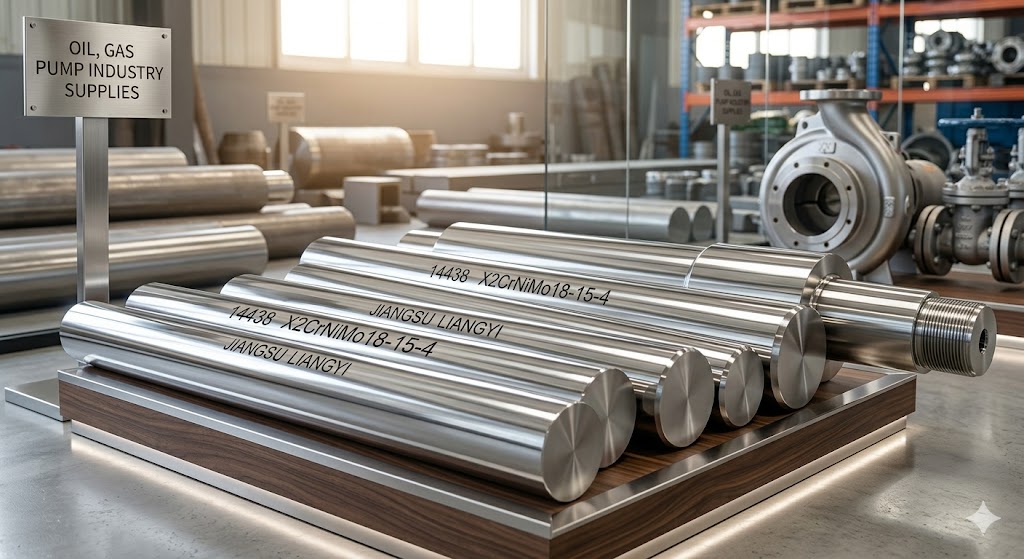
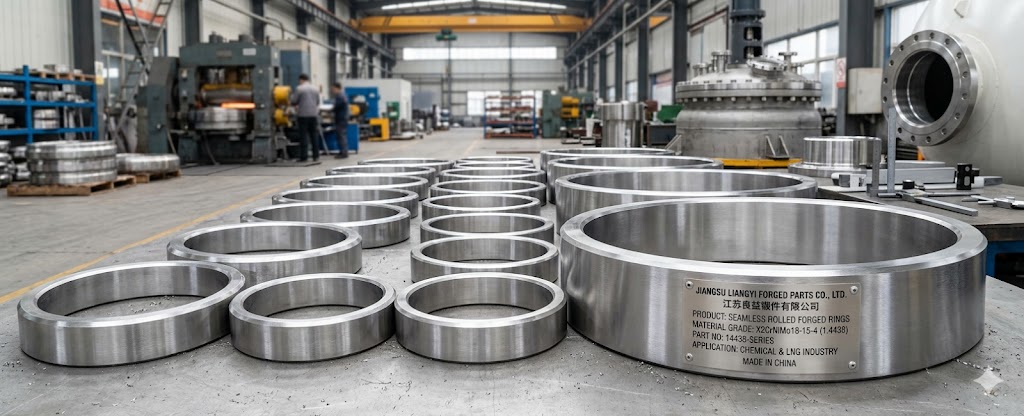
14438 X2CrNiMo18-15-4 Forged Bars & Shafts — Oil & Gas / Pump Industry14438 X2CrNiMo18-15-4 Seamless Rolled Rings — Chemical / LNG Industry
Company Overview
Company Overview & Capabilities
Jiangsu Liangyi Co., Limited is a leading China-based manufacturer and exporter of 14438 (X2CrNiMo18-15-4) austenitic stainless steel forged products, established in Jiangyin City, Jiangsu Province with over 25 years of continuous forging production experience. We are not a trading company — every forging is produced entirely in-house from raw ingot through to finished, inspected, and documented delivery.
Our customer base spans global EPC contractors, multinational oil & gas operators, chemical engineering companies, and specialized pump & valve manufacturers across more than 50 countries in Europe, North America, the Middle East, Southeast Asia, East Asia, and Australia. All products leave our facility under ISO 9001:2015 quality management certification. We issue EN 10204 3.1 Material Test Certificates (manufacturer's own authorized inspection representative) for all orders as standard — covering full chemistry, mechanical tests, heat treatment records, and NDT results.
📍 Manufacturing Location — Strategic Export Position
Our plant is located in Jiangyin City, Jiangsu Province, China (GPS: 31.9209°N, 120.2863°E), 80 km from Shanghai port. This enables cost-effective sea freight worldwide and air freight via Shanghai Pudong International Airport for urgent consignments, with typical transit times of 25–35 days to European ports and 18–22 days to Middle East ports.
Material Introduction
What Is 14438 / X2CrNiMo18-15-4?
14438 is the European Steel Register number assigned to the alloy whose chemical designation is X2CrNiMo18-15-4. The designation encodes its key alloying elements: the prefix X denotes a high-alloy steel (alloying elements > 5%), Cr18 indicates approximately 18% chromium, Ni15 approximately 15% nickel, and Mo4 approximately 4% molybdenum. The 2 prefix signifies ultra-low carbon content of ≤0.030%.
This alloy belongs to the super austenitic stainless steel family — a category positioned above conventional 300-series grades (such as 316L and 317L) in terms of alloying content and corrosion resistance, but below the 6% molybdenum super-austenitics (such as 254SMO / 1.4547 and AL-6XN). Within this intermediate tier, 14438 represents a cost-effective high-performance option where 316L is insufficient but full 6Mo-grade pricing is unnecessary.
Its combination of elevated nickel (13–16%), higher molybdenum (3–4%), and strictly controlled low carbon makes 14438 the engineer's first choice when the working environment involves chloride concentrations exceeding approximately 1,000 ppm Cl⁻, pH below 4, temperatures above 50°C in corrosive service, or application requirements that explicitly prohibit sensitization risk.
Metallurgy
Metallurgy Deep Dive — Why Each Alloying Element Matters
Most datasheets list chemistry without explaining the engineering reasoning behind each element. Understanding why each element is present in 14438 enables better material selection decisions and helps engineers justify the specification to procurement teams.
Chromium (Cr): 17.5 – 19.5%
Chromium is the foundation of all stainless steels. At concentrations above ~10.5%, it forms a self-healing passive oxide layer (Cr₂O₃) on the steel surface that provides fundamental corrosion protection. In 14438, the chromium content of 17.5–19.5% is comparable to standard 316L, but its effectiveness is dramatically amplified by the elevated molybdenum content. Chromium also contributes directly to the PREN (Pitting Resistance Equivalent Number) on a 1:1 basis. Each 1% increase in chromium raises PREN by 1 point.
Nickel (Ni): 13.0 – 16.0% — Significantly Higher Than 316L
This is where 14438 most visibly departs from 316L (which contains 10–14% Ni). The elevated nickel content in 14438 serves three critical functions: (1) it fully stabilizes the austenitic microstructure, eliminating any risk of ferrite or martensite formation even after heavy deformation or cryogenic exposure; (2) it improves resistance to stress corrosion cracking (SCC) in chloride-bearing environments — the known vulnerability of lower-nickel austenitics; and (3) it maintains excellent impact toughness at cryogenic temperatures down to -196°C, qualifying the material for LNG service without any special thermal treatment.
Molybdenum (Mo): 3.0 – 4.0% — The Pitting Fighter
Molybdenum is the single most important element distinguishing 14438 from 316L. While 316L contains 2.0–2.5% Mo, 14438 specifies 3.0–4.0% Mo — a 50–100% increase. Molybdenum reinforces the passive film specifically at pitting initiation sites, acting as a selective blocker of Cl⁻ ion adsorption. In the PREN formula, each 1% of Mo contributes 3.3 pitting resistance points — making Mo three times more effective per percentage point than chromium. The result is that the 1.5% Mo advantage of 14438 over standard 316L translates to approximately +5 PREN points, a difference that in practice separates reliable performance from accelerated pitting failure in seawater and brine service.
Carbon (C): ≤ 0.030% — Sensitization Prevention
The "L" in 316L and "2" prefix in X2CrNiMo18-15-4 both indicate ultra-low carbon. When carbon exceeds ~0.030% in austenitic stainless steels, welding or exposure to temperatures of 450–850°C causes carbon to preferentially precipitate as chromium carbide (Cr₂₃C₆) at grain boundaries. This depletes the adjacent grain boundary zone of chromium below the ~10.5% passivation threshold, creating a sensitized microstructure vulnerable to intergranular corrosion attack. By strictly controlling C to ≤0.030%, 14438 maintains full corrosion resistance even after welding, without requiring post-weld solution annealing in most applications.
Nitrogen (N): ≤ 0.10%
Nitrogen in 14438 is controlled as a ceiling (≤0.10%) rather than a minimum, which differentiates it from the high-nitrogen grades (e.g., EN 1.4429 / 316LN). However, even at residual levels of 0.03–0.07% typically encountered in EAF-melted heats, nitrogen contributes meaningfully to the PREN (16× coefficient in the PREN formula) and to austenite phase stability. Nitrogen also partially compensates for carbon removal by maintaining solid-solution strengthening, which would otherwise be reduced by the ultra-low carbon requirement.
Manganese (Mn): ≤ 2.0% and Silicon (Si): ≤ 1.0%
Manganese and silicon are controlled as maximum levels. Both are deoxidizers used during steelmaking. In 14438, Mn is kept low because elevated Mn can accelerate sigma phase formation during heat treatment holds. Si is restricted to avoid precipitation of silicon-rich intermetallic phases that reduce toughness in heavy section forgings. Neither element contributes positively to corrosion resistance in this alloy system.
✅ Engineering Takeaway
The metallurgical logic of 14438 is straightforward: more molybdenum + more nickel + ultra-low carbon = significantly better pitting resistance, stress corrosion cracking resistance, and weldability compared to 316L, at a material cost premium of typically 25–45% depending on market molybdenum prices. This premium is almost always justified in critical service applications where premature corrosion failure would mean unplanned shutdown, environmental release, or safety incident.
Corrosion Resistance Analysis
PREN Calculation & Corrosion Resistance Analysis
The Pitting Resistance Equivalent Number (PREN) is the most widely used engineering index for predicting relative pitting corrosion resistance of stainless steels. It is calculated as:
PREN = %Cr + 3.3 × %Mo + 16 × %N
A higher PREN indicates better resistance to pitting in chloride environments. The PREN also broadly correlates with the Critical Pitting Temperature (CPT) — the temperature at which pitting initiates in a standard test solution (e.g., 6% FeCl₃). As a practical rule, an increase of approximately 2–3 PREN points raises CPT by roughly 10°C.
PREN Calculation for 14438 X2CrNiMo18-15-4
Using mid-range chemistry values (Cr 18.5%, Mo 3.5%, N 0.05%):
This PREN of approximately 30.85 positions 14438 well above 316L (PREN ≈ 23–26) and 317L (PREN ≈ 28–30), making it suitable for applications where standard stainless grades have demonstrated pitting failures. The following chart compares PREN across common stainless steel grades:
PREN Comparison — 14438 vs Common Stainless Steel Grades (Approximate Mid-Range Values)
Grade
EN / UNS
Cr (%)
Mo (%)
Ni (%)
N (%)
PREN (approx.)
CPT Approx.
304L
1.4307 / S30403
18.5
—
9.5
—
18–20
< 0°C
316L
1.4404 / S31603
17.0
2.2
12.0
—
23–26
15–25°C
317L
1.4438 / S31703
19.0
3.2
13.5
—
28–30
25–35°C
14438 (X2CrNiMo18-15-4)
1.4438 / S31703
18.5
3.5
14.5
0.05
28–32
30–40°C
904L
1.4539 / N08904
21.0
4.5
25.0
0.10
36–40
40–60°C
2205 Duplex
1.4462 / S32205
22.5
3.2
5.7
0.17
33–38
35–50°C
254 SMO
1.4547 / S31254
20.0
6.1
18.0
0.20
42–46
≥ 70°C
⚠ PREN Limitation — Critical Chloride Threshold
PREN is a comparative index, not an absolute guarantee. General industry experience places the safe operating boundary for 14438 at chloride concentrations below approximately 5,000–8,000 ppm Cl⁻ at temperatures below 60°C with neutral to mildly acidic pH. For seawater service (typically 19,000 ppm Cl⁻), 14438 is acceptable for shorter-duration contact (e.g., occasional seawater injection) but 904L or 6Mo grades should be considered for continuous seawater immersion service. Always validate material selection against actual service conditions including temperature, pH, oxygen content, and H₂S partial pressure.
Material selection for critical forgings is not simply a matter of choosing the highest alloy available. Engineering performance, cost, machinability, weldability, and long-term availability all factor into the decision. The comparison below is based on Jiangsu Liangyi's 25 years of production experience across all these grades.
Comparative Performance Matrix — 14438 vs Common Alternative Grades
Property
316L
317L
14438
904L
2205 Duplex
Pitting Resistance (PREN)
23–26
28–30
28–32
36–40
33–38
SCC Resistance (Cl⁻)
Moderate
Good
Good–Very Good
Excellent
Very Good
Intergranular Corrosion (welded)
L-grade: Good
L-grade: Good
Excellent (≤0.030%C)
Excellent
Good
Cryogenic Toughness (−196°C)
Excellent
Excellent
Excellent
Excellent
Poor (not suitable)
Yield Strength (MPa)
≥ 170
≥ 205
≥ 200
≥ 220
≥ 450
Weldability
Excellent
Very Good
Very Good
Good
Moderate
Machinability
Good
Good
Good
Moderate
Moderate
Forgeability
Excellent
Very Good
Very Good
Moderate
Moderate
Relative Forging Cost
1.0× (baseline)
1.2–1.4×
1.3–1.5×
2.0–2.5×
1.3–1.5×
Suitable for LNG / Cryo
✔ Yes
✔ Yes
✔ Yes (to −196°C)
✔ Yes
✘ No
Suitable for Nuclear
✔ Yes
✔ Yes
✔ Yes (preferred)
Limited
Rarely
When to Choose 14438 Over 316L
✅ Specify 14438 When:
Chloride content > 500 ppm Cl⁻ in service fluid
Operating temperature > 40°C in chloride-bearing media
Presence of H₂S (sour service) combined with chlorides
Crevice corrosion risk at flanged joints or threaded connections
Intergranular attack is a concern for welded assemblies
Design life > 20 years in chemical or offshore environment
Nuclear-grade material traceability is required
Cryogenic service down to −196°C (LNG)
Client specification or EPC standard explicitly requires 317L / 1.4438
⚠ Consider an Alternative When:
Chloride content < 200 ppm with neutral pH and ambient temperature (316L may suffice)
High mechanical strength is primary requirement: yield > 400 MPa (consider 2205 duplex)
Continuous seawater immersion > 12 months (consider 904L or 6Mo)
High-temperature oxidizing service > 300°C (consider 310S or Inconel)
Reducing acid service without chlorides at very high concentration (consider Hastelloy)
Material Data
Chemical Composition of 14438 (X2CrNiMo18-15-4)
The following composition limits apply per EN 10088-3 (stainless steel bars and semi-finished products) and EN 10222-5 (stainless steel pressure vessel forgings). Jiangsu Liangyi verifies each incoming heat against these limits by in-house OES spectrometry, with actual results documented in the EN 10204 3.1 MTC.
Chemical Composition — 14438 / X2CrNiMo18-15-4 (% by mass, per EN 10088-3)
All 14438 ingots and billets are sourced from qualified steel mills that operate EAF + AOD/VOD refining to achieve the ultra-low carbon (≤0.030% C) and sulfur (≤0.015% S) requirements of EN 10088-3. Upon arrival at our facility, every incoming heat is independently re-verified by our in-house OES spectrometer against the mill certificate. Any heat that falls outside specification limits is rejected before entering production. Actual chemistry results are included in the EN 10204 3.1 MTC issued with every order.
Mechanical Data
Mechanical Properties of 14438 Forged Parts
The following minimum mechanical properties are specified for 14438 / X2CrNiMo18-15-4 forgings in solution-annealed and water-quenched condition. These are the standard minimum guaranteed values per EN 10222-5. Actual test results for each heat and lot are recorded in the EN 10204 3.1 MTC provided with delivery.
Minimum Mechanical Properties — 14438 / X2CrNiMo18-15-4 Forgings (Solution Annealed, Room Temperature, per EN 10222-5)
Property
Symbol
Specification Minimum
Test Standard
Tensile Strength
Rm
≥ 500 MPa
ASTM E8 / ISO 6892-1
0.2% Proof Strength
Rp0.2
≥ 200 MPa
ASTM E8 / ISO 6892-1
1.0% Proof Strength
Rp1.0
— (when specified)
ISO 6892-1
Elongation at Break
A
≥ 40%
ASTM E8 / ISO 6892-1
Reduction of Area
Z
≥ 50%
ASTM E8 / ISO 6892-1
Charpy Impact Energy
KV₂
≥ 60 J at +20°C
ASTM E23 / ISO 148-1
Charpy Impact (Cryogenic)
KV₂
Per project specification
ASTM E23 (cryo bath)
Brinell Hardness
HBW
≤ 215 HBW
ASTM E10 / ISO 6506-1
Effect of Section Size on Mechanical Properties
Unlike age-hardenable alloys, 14438 shows very low sensitivity to section size variation in mechanical properties, because its strength derives primarily from solid-solution strengthening rather than precipitation reactions. However, in extremely heavy sections (diameter > 800mm or ring height > 500mm), the center zone may exhibit slightly reduced toughness values compared to surface specimens due to the slower cooling rate during water quenching. Jiangsu Liangyi evaluates this risk for each large forging and can provide supplemental center-zone test specimens on request.
🌡 Cryogenic Performance Note
A key engineering advantage of fully austenitic grades such as 14438 is the absence of a ductile-to-brittle transition temperature (DBTT). Unlike ferritic, martensitic, or duplex stainless steels — all of which show sharply reduced toughness at sub-zero temperatures — the fully austenitic FCC crystal structure of 14438 continues to absorb impact energy reliably at temperatures as low as −196°C (liquid nitrogen temperature). This is verified in Jiangsu Liangyi's production QC through mandatory cryogenic Charpy testing for all LNG-designated forgings, with typical results exceeding 80 J at −196°C against any required minimum.
Heat treatment is not a secondary step for 14438 forgings — it is the critical process that determines whether the forging will achieve its design corrosion resistance. An improperly heat-treated 14438 forging can exhibit pitting susceptibility comparable to an ordinary 304 grade, regardless of how perfect the chemistry is. Understanding the science behind solution annealing is essential for any buyer or specifier.
Why Solution Annealing Is Mandatory
During forging operations, the billet material experiences temperatures in the range of 1050–1200°C followed by non-uniform cooling as the forging transfers between press and heat treatment furnace. This thermal history can cause three types of microstructural damage that must be eliminated by subsequent solution annealing:
Sigma phase (σ) precipitation — an intermetallic compound of Fe and Cr that forms in the temperature range 600–900°C, dramatically reducing both toughness and corrosion resistance
Residual forging stress — thermal and mechanical stresses locked into the forging that can combine with service loads to initiate stress corrosion cracking below the theoretical yield strength
Reducing atmosphere causes surface decarburization and scale formation
Quench Medium
Water (forced agitation)
Air cool or slow quench causes sigma / carbide re-precipitation on cooling through 600–900°C
Quench Delay
< 60 seconds transfer time
Longer transfer causes precipitation onset in the 900–1000°C range during air transit
Section Temperature at Quench Entry
> 1000°C at surface
Surface precipitation if temp drops below 1000°C before quench immersion
🏭 Jiangsu Liangyi Heat Treatment Capability
Our dedicated heat treatment furnaces are equipped with multi-zone temperature control, programmable ramp-and-soak controllers with full chart recording, and an integrated water quench tank with agitation for rapid, uniform quench. Heat treatment charts showing actual soak temperature and time are included in the documentation package provided with every delivery. Thermocouple calibration records are maintained per ISO 9001:2015 requirements.
Post-Weld Heat Treatment (PWHT) — Is It Required?
For standard pressure vessel and piping applications, post-weld heat treatment (PWHT) is generally not required for 14438, because the ultra-low carbon content (≤0.030%) prevents sensitization during welding. However, for thick-section weldments (wall thickness > 50mm) where residual welding stress and multi-pass heat input are significant, post-weld solution annealing at 1020–1060°C followed by rapid quench may be warranted depending on service conditions. For any safety-critical or pressure-bearing application, the weld procedure specification (WPS) should be reviewed and approved by the responsible welding engineer for the project, with reference to the applicable construction code (PED, ASME VIII, AS 4041, etc.).
Fabrication Guide
Weldability & Filler Metal Selection
14438 X2CrNiMo18-15-4 has very good weldability by all common fusion welding processes. Its ultra-low carbon content eliminates sensitization risk in single-pass welds and keeps intergranular corrosion susceptibility low even for multi-pass procedures with moderate heat input. The following guidance is based on standard industry practice for high-alloy austenitic stainless steel weld fabrication.
Recommended Filler Metal Grades
Filler Metal Selection for 14438 X2CrNiMo18-15-4 Welding
Welding Process
Recommended Filler
AWS Classification
EN Classification
Notes
GTAW (TIG)
ER317LMo
AWS A5.9 ER317LMo
EN ISO 14343-A: W 18 15 3 L
Preferred for root passes and thin sections; superior weld pool control
GMAW (MIG)
ER317LMo
AWS A5.9 ER317LMo
EN ISO 14343-A: G 18 15 3 L
Use for fill and cap passes on medium/heavy sections; lower deposition cost than TIG
SMAW (MMA)
E317LMo-16
AWS A5.4 E317LMo-16
EN ISO 3581: E 18 15 3 L R
Field welding and repair; rutile-type electrodes preferred for positional work
SAW (Submerged Arc)
ER317LMo + neutral flux
AWS A5.9 ER317LMo
EN ISO 14343-A: S 18 15 3 L
Heavy section cladding and overlay; verify flux basicity index ≥ 1.0
FCAW (Flux-Cored)
E317LT1-4
AWS A5.22 E317LT1-4
EN ISO 17633-A: T 18 15 3 L R M
High productivity for positional welds; verify shielding gas — 98% Ar + 2% CO₂
Why Over-Alloyed Filler Metal Is Critical
A frequent and costly error when welding 14438 is choosing 316L filler metal (ER316L), simply because it is easier to source and cheaper. This practice is technically wrong and may cause corrosion failure during actual use. In welding, the molten weld pool blends the filler metal, base metal and flux ingredients together. The dilution rate normally runs 20–35% for GTAW root passes, making the final weld metal have much lower molybdenum content than both the raw filler and base material. ER317LMo filler contains about 3.0–4.0% Mo, while 316L filler only has 2.0–2.5% Mo. Using ER317LMo keeps the molybdenum level in the diluted weld close to that of 14438 base material, so the weld zone can retain the same corrosion resistance.
Welding Procedure Essential Points
Pre-heat: Not required for section thickness ≤ 25mm. For thicker sections, warm to 15–25°C minimum (prevent condensation, not for metallurgical purposes)
Interpass temperature: Maximum 150°C — measured 25mm from weld centerline using contact pyrometer or infrared thermometer
Heat input: Limit to 1.5 kJ/mm maximum to control HAZ sensitization risk and minimize distortion
Shielding gas (GTAW): 100% Argon or Ar + 2–5% H₂ for improved weld bead profile; CO₂ additions must be below 2.5% to avoid carbon pickup
Back purging: Use 100% Ar back-purging for all TIG root passes to prevent oxidation (sugaring) on the weld root side — this is mandatory for corrosion-critical applications
Post-weld cleaning: Pickle and passivate weld area with 10–15% HNO₃ + 1–2% HF solution at 40–60°C for minimum 30 minutes, followed by thorough water rinse — this restores the passive oxide film disrupted by welding heat
Fabrication Guide
Machining Parameters & Best Practices for 14438 Forged Parts
14438 X2CrNiMo18-15-4 is machinable using standard CNC equipment, but specific parameter choices are necessary to manage its main machining challenge: work hardening. Austenitic stainless steels — especially high-nickel grades — work-harden rapidly in the cutting zone. If the tool dwells, rubs, or takes insufficient depth of cut, the material beneath the tool hardens faster than the tool cuts, leading to tool wear acceleration, poor surface finish, and dimensional inaccuracy. The following parameters are based on Jiangsu Liangyi's in-house machining experience across thousands of 14438 forged parts.
Dwelling or rubbing the tool: Never pause a cut mid-surface. Always keep the tool moving. If a CNC program requires a tool stop, retract and re-engage rather than pause in contact with the workpiece. Surface work hardening occurs with rubbing, not with material removal, producing a hardened layer which speeds up subsequent tool wear.
Insufficient depth of cut in finishing passes: Finish passes on 14438 should maintain ≥ 0.3mm depth of cut. Lighter passes cause rubbing against the work-hardened layer from the previous pass. If tighter tolerances are needed, use sharp tools with positive rake rather than reducing depth of cut.
Inadequate coolant: Austenitic stainless steel has low thermal conductivity (approximately 14 W/m·K versus 50 W/m·K for carbon steel). This means heat generated in the cutting zone stays local rather than dissipating into the workpiece. Heavy flood coolant — minimum 8% emulsion concentration, applied directly at the cutting edge — is not optional; it is the primary method of preventing built-up edge, tool cratering, and thermally induced dimensional drift.
Using worn tooling: Replace inserts at the first sign of wear. Worn tools rub rather than cut, generating surface work hardening and poor finish. For 14438, use fresh inserts or reconditioned solid carbide tools whenever surface quality is critical.
Products
Full Range of 14438 Forged Product Forms
Forged Round Bars & Step Shafts
Open-die forged from 14438 ingot, heat treated and rough machined. Available in solid round bars, hollow bars, forged shafts, step shafts, and long shafts for pump shafts, compressor shafts, valve stems, drive shafts, and rotating components in oil & gas and chemical industries.
Ø 50 – 2000 mmUp to 30 T / pieceBlack / Rough / Finish
Seamless Rolled Forged Rings
Produced by ring rolling after initial upsetting and mandrel punching, eliminating weld seams entirely. Includes plain rings, contoured rings, flange rings, gear rings, and bearing races. Uniform circumferential grain flow maximizes hoop strength.
OD 300 – 6000 mmHeight up to 1500 mmNo Weld Seams
Forged Discs, Plates & Blocks
Flat or near-net-shape forgings for valve bodies, tube sheets, baffles, pressure vessel covers, flanges, and end caps. Available in round (disc), square, rectangular, and custom polygonal planforms. All produced by open-die forging for full material density.
Custom PlanformThickness 20 – 800 mm100% UT Tested
Forged Sleeves, Housings & Casings
Cylindrical hollow forgings including sleeves, bushings, hubs, pump casings, valve bonnets, compressor housings, and nuclear equipment shells. Produced by combination of upsetting, back extrusion, and ring rolling depending on geometry and dimension ratio.
Bore Ø 50 – 2500 mmWall Thickness 15–300 mmHollow / Open Die
Custom Near-Net-Shape Forgings
Complex geometry forgings produced to customer CAD drawings to minimize machining stock and reduce lead time. Includes transition cones, wellhead bodies, Christmas tree components, meter bodies, Y-pieces, tee blocks, and special-shaped structural components.
Per Customer DrawingDFM Consultation3D Model Review
Applications
Industry Applications & Typical Component Examples
🛢 Oil & Gas — Upstream & Midstream
Wellhead forged bodies, Christmas tree block valves, DSA flanges (drill-stem assembly), high-pressure gate valve bodies (ANSI 2500# and above), valve stems and seats for sour service (H₂S + CO₂ + Cl⁻), ESP (Electrical Submersible Pump) motor shafts, downhole tool mandrels, and subsea connector housings. Export projects include North Sea FPSO topside equipment, Middle East sour gas processing, and deepwater Gulf of Mexico wellhead assemblies.
⚛ Nuclear Power Industry
14438 / X2CrNiMo18-15-4 is referenced in nuclear material standards (RCC-M M3321, ASME SA-182 F317L) and is used in nuclear-adjacent components including pump casings, seal chambers, and instrumentation sleeves. Nuclear-grade supply typically requires project-specific quality assurance qualification beyond standard ISO 9001; buyers should confirm applicable QA requirements and manufacturer qualification status with their project's responsible engineer before ordering for nuclear safety-classified service.
🧪 Chemical & Petrochemical Processing
Heat exchanger tube sheets (both fixed and floating head designs), shell-side baffles, pressure vessel nozzle forgings, flanges for aggressive process lines (acetic acid, sulfuric acid, phosphoric acid), reactor end closures, column internals, and high-pressure autoclave bodies. Operating conditions typically include temperatures of 80–200°C with acidic process fluids containing 500–5,000 ppm Cl⁻.
🥶 Cryogenic Engineering & LNG
LNG pump shafts and impellers, cryogenic ball valve bodies and balls (operating at −162°C), cryogenic gate valve stems, liquid nitrogen containment flanges, cold box pressure vessel covers, and brazed aluminum heat exchanger manifold forgings. The fully austenitic structure of 14438 guarantees > 80 J impact energy at −196°C — a performance level no ferritic or duplex grade can match.
⚙ Pump, Valve & Rotating Equipment
Centrifugal pump casings (multistage, between-bearing, and vertically suspended types), pump impellers and diffusers for corrosive duty, compressor seal rings, turbine packing glands, agitator shaft sleeves, and high-pressure valve housings for aggressive media. Pump OEMs in Europe, Japan, and Korea regularly specify 14438 forgings from Jiangsu Liangyi as the standard material for seawater and chemical duty pumps.
🌊 Marine, Desalination & Other
Desalination plant high-pressure pump housings (SWRO and MSF), seawater lift pump impellers, marine propulsion bearing sleeves, offshore platform firewater pump shafts, paper mill digester flanges, pharmaceutical bioreactor end closures, and food processing heat exchanger tube sheets where CIP (Clean-in-Place) cleaning involves hypochlorite solutions that attack standard 316L.
Standards Reference
Equivalent Standards & Global Cross-Reference
Engineers specifying 14438 across different project standards and national specifications frequently need to cross-reference the grade. The table below covers all major international equivalents. Note that while chemical compositions are similar, minor differences in allowable ranges exist — always verify the specific standard required by your project specification before placing orders.
14438 X2CrNiMo18-15-4 International Equivalent Standards and Designations
Standard System
Designation / Grade
Applicable Specification
Product Forms Covered
European (EN)
1.4438 / X2CrNiMo18-15-4
EN 10088-3, EN 10222-5
Bars, forgings, plates, tubes
UNS (USA)
S31703
ASTM A276, A484, A182
Bars, flanges, fittings, forgings
ASTM — Flanges & Fittings
F317L (high Mo)
ASTM A182 / ASME SA-182
Flanges, fittings, valve bodies
ASTM — Bars
317L (Grade S31703)
ASTM A276 / ASME SA-276
Bars, shapes
ASTM — Pressure Vessels
317L (S31703)
ASTM A240 (plate), A688 (tube)
Plate, sheet, tube
ISO
X2CrNiMo18-15-4
ISO 15510
General identification
French (NF)
Z2 CND 18-15
NF A35-574
Bars, forgings
Japanese (JIS)
SUS317L (similar)
JIS G4303 / G4304
Bars, plate (note: Mo range may differ)
API (reference only)
Material used in API 6A / 6D applications
API 6A, API 6D
End-user product qualification per API — not manufacturer certification
NACE / ISO (material listing)
Listed material for sour service
NACE MR0175 / ISO 15156-3
Material is listed; project-specific compliance is buyer's responsibility
Nuclear (European — reference)
X2CrNiMo18-15-4
RCC-M M3321
Material standard reference only; nuclear QA qualification is project-specific
Nuclear (USA — reference)
SA-182 F317L
ASME Section III, Div. 1
Material standard reference only; N-Certificate held by authorized constructors
Manufacturing
Manufacturing Process & Production Equipment
All 14438 X2CrNiMo18-15-4 forged products at Jiangsu Liangyi are produced through the following controlled production flow. Raw material is sourced from qualified steel mills; our in-house process covers the complete chain from incoming inspection through forging, heat treatment, machining, NDT, documentation, and export:
1
Raw Material — Ingot Sourcing & Incoming Inspection14438 ingots and billets sourced exclusively from qualified steel mills that operate EAF + AOD/VOD refining to achieve the ultra-low carbon and sulfur requirements of EN 10088-3. Every incoming heat lot is re-verified by our in-house OES spectrometer before acceptance into production. Rejected heats are returned to the mill — no non-conforming material enters our forge.
2
Ingot Preparation & HeatingAccepted ingots are cut to forging weight and loaded into our pre-heating furnaces. Heating to forging temperature (1050–1200°C) is controlled by thermocouple and pyrometer. Temperature soak time is calculated per section size to ensure uniform through-temperature before press contact.
3
Forging — Hydraulic Presses & HammersOpen-die and closed-die forging using our in-house hydraulic presses and forging hammers. All forging conducted with surface temperature monitoring. Total forging reduction ratio minimum 3:1 for bars, minimum 5:1 for rings. Forging temperature range 1050–1200°C; 14438 must not be forged below 950°C to avoid hot tearing.
4
Ring Rolling — Dedicated Ring Rolling MillsRing rolling conducted after initial upsetting and mandrel piercing. Provides circumferential grain flow that significantly enhances hoop strength and fatigue resistance compared to machining rings from solid bar. Wall thickness uniformity tolerance ≤ 1.5% of nominal wall.
5
Heat Treatment — Solution AnnealingDedicated heat treatment furnaces with multi-zone temperature control. Full solution annealing at 1020–1080°C with holding time calculated per section thickness. Immediate transfer (< 60 sec) to agitated water quench tank. Full heat treatment chart documentation retained and provided with every order.
6
Rough Machining — CNC Turning & Milling CentersIn-house CNC turning centers, CNC vertical lathes, and horizontal machining centers. Rough machining to drawing dimensions with 3–5mm stock remaining on critical surfaces. All machined surfaces prepared for subsequent NDT access.
7
NDT Inspection — UT & PTUltrasonic testing (UT) per ASTM A388 / EN 10228-3 for all forgings above 100mm section. Liquid penetrant testing (PT) per ASTM E165 / EN 10228-2 on all machined surfaces. Complete dimensional inspection. NDT performed by qualified personnel.
8
Final Inspection, Documentation & ExportThird party inspection available upon request (SGS, BV, TÜV, LR, DNV, ABS). EN 10204 3.1 MTC compilation: chemistry, mechanical tests, heat treatment records, NDT reports, dimensional report & marking photo. All forgings are stamped with a heat number and ink stencilled for full traceability.
Quality & Certification
Inspection Standards, NDT & Quality Certificates
Every 14438 forging order from Jiangsu Liangyi is supported by a comprehensive documentation package. Standard commercial orders are accompanied by an EN 10204 3.1 Material Test Certificate (MTC) — issued by the manufacturer's authorized inspection representative — covering all tests performed. For orders requiring third-party witnessed certification (EN 10204 3.2), customers may nominate their preferred inspection body; we will coordinate witness inspection accordingly. Nuclear-grade or other special quality assurance programs require project-specific agreement at the quotation stage.
Standard Inspection Scope — 14438 Forged Products (EN 10204 3.1 MTC)
Test / Inspection
Standard
Frequency
Acceptance Criterion
Chemical Analysis (OES)
ASTM E354 / EN 10088-3
Per heat
Within EN 10088-3 / project spec limits
Chemical Verification (ICP-OES)
ASTM E1473
When specified by customer
Confirms OES results on Cr, Ni, Mo, C, S
Tensile Test (Room Temp.)
ASTM E8 / ISO 6892-1
Per heat per forging lot
Rm ≥ 500 MPa, Rp0.2 ≥ 200 MPa, A ≥ 40%
Charpy Impact (Room Temp.)
ASTM E23 / ISO 148-1
Per heat per forging lot
KV₂ ≥ 60 J average, ≥ 40 J individual
Charpy Impact (Cryogenic)
ASTM E23 (cryo)
When specified
Per project design temperature requirements
Brinell Hardness
ASTM E10 / ISO 6506-1
Per forging (100%)
≤ 215 HBW
Grain Size
ASTM E112
Per heat
ASTM No. 3 or finer (when specified)
Microstructure Examination
ASTM A262 / E407
When specified
Fully austenitic; no sigma phase
Intergranular Corrosion Test
ASTM A262 Practice E
When specified
No ditching (sensitization-free)
Ultrasonic Testing (UT)
ASTM A388 / EN 10228-3
100% for sections > 100mm
Class 3 or better per EN 10228-3
Liquid Penetrant Testing (PT)
ASTM E165 / EN 10228-2
All machined surfaces
Class SP3 per EN 10228-2
Dimensional Inspection
Customer drawing
100%
Per drawing tolerances (ISO 2768 or tighter)
📋 Third-Party Inspection — Arranged on Request
Customer-nominated third-party inspection is welcome at all production stages. We have worked with inspectors from SGS, Bureau Veritas (BV), TÜV Rheinland, Lloyd's Register (LR), DNV, ABS, and CCIC on previous orders. Customers should nominate their preferred inspection body at the order stage so that witness hold points can be incorporated into the production schedule. Remote video inspection is available for customers unable to travel. Please note that holding an approved supplier listing with any specific inspection body is subject to that body's own registration requirements — confirm directly with your chosen TPI if a pre-existing vendor qualification is required by your project.
Buyer's Guide
Ordering Checklist — What to Specify When Ordering 14438 Forgings
Incomplete specifications are the most common cause of delayed quotations and order discrepancies. The checklist below covers everything our engineering team needs to issue an accurate, prompt quotation and produce a conforming forging the first time. Check each item before sending your RFQ.
Material standard: Specify EN 10088-3 / EN 10222-5 (European), ASTM A182 F317L / A276 S31703 (US), or project-specific material specification with revision number
Product form: Round bar / step shaft / seamless ring / disc / plate / sleeve / custom shape — include rough sketch or 3D model if possible
Key dimensions: Overall envelope dimensions (OD, ID, length/height/thickness) with tolerances; machining stock requirements (black or rough-machined or finish-machined)
Weight estimate: Estimated finished weight per piece (helps us optimize ingot size and forging ratio)
Quantity & delivery: Number of pieces; required delivery destination (port / city / Incoterms); required delivery date
Heat treatment condition: Confirm solution annealed + water quenched; specify any additional temper or aging if applicable
Mechanical property requirements: Specify minimum Rm, Rp0.2, elongation, Charpy energy, hardness — include test temperature for cryogenic applications
Certificate type: EN 10204 3.1 (standard) or 3.2 (third-party witness); specify certifying body if required
NDT requirements: UT class, PT class, acceptance level; reference standard (ASTM A388, EN 10228-3 Class, etc.)
Third-party inspection: Specify inspection body and witness points (chemistry, heat treatment, mechanical testing, dimensional, final release)
Special requirements: NACE MR0175 material compliance reference (buyer verifies final sour service qualification per project); marking requirements (stamping, stencil, paint, low-stress); preservation and packaging instructions; any customer-specific QA plan or surveillance requirements
Application service conditions: (Optional but recommended) — service fluid, temperature, pressure, chloride content, H₂S partial pressure. This allows our engineers to confirm material suitability and flag any potential issues before production.
💡 Pro Tip for Faster Quotations
Sending a dimensioned PDF drawing — even a hand sketch scanned to PDF — reduces quotation turnaround from 2–3 business days to same-day in most cases. For complex shapes, an IGES or STEP 3D model allows us to run a forgability assessment and propose the most cost-effective forging approach before committing to tooling.
Why Jiangsu Liangyi
Why Choose Jiangsu Liangyi as Your 14438 Forging Partner
🏭
True In-House ManufacturerWe are not a trading company or agent. Every step from ingot procurement through forging, heat treatment, machining, NDT, and documentation is performed at our Jiangyin facility. No subcontracting of any process stage — full traceability and control.
🔬
Deep 14438 Metallurgical Expertise25+ years forging high-alloy austenitic stainless steels. Our metallurgical team understands the sigma phase risk window, PREN optimization, and the exact heat treatment parameters needed to deliver fully compliant 14438 microstructure — not just compliance by chemistry alone.
📐
Largest Capacity for This Grade in ChinaMaximum OD 6000mm for rings; single piece up to 30 tons. This enables us to supply large reactor vessel components, FPSO valve bodies, and heavy pump casings that most forging shops cannot attempt in 14438.
📋
Documentation ExcellenceEN 10204 3.1 MTC as standard — issued by our authorized inspection representative, covering actual chemistry, actual mechanical test results, heat treatment chart, NDT reports, and dimensional record. EN 10204 3.2 (third-party witnessed) available by arranging a customer-nominated inspection body. Enhanced QA documentation for special applications is subject to project-specific agreement at quotation stage.
🌍
Proven Global Export Track Record14438 forgings supplied to customers in the oil & gas, chemical, LNG and power generation sectors in Europe, Middle East, North America, Asia and Australia. Customer references are available to qualified buyers upon request under an NDA.
⏱
Reliable Lead Times & CommunicationTypical lead time 30–90 days depending on complexity. Clear weekly production updates provided. Issues flagged immediately — we do not discover problems at delivery. Dedicated English-speaking technical sales team available by email and WhatsApp.
💰
Competitive Total Cost of OwnershipChina-based manufacturing provides 20–40% cost advantage versus European or North American sources for equivalent quality. Combined with reduced inspection failures and rework, customers report lower total procurement cost over multi-year supply agreements compared to regional alternative sources.
🤝
Flexible Commercial TermsSmall batch, sample orders, and blanket purchase orders all accepted. Stocking programs available for high-volume repeat customers. Sample pieces at representative quantities can be produced for material qualification testing before main order commitment.
🔍
Open to Witness InspectionCustomer and third-party inspectors are always welcome at our facility. We have coordinated witness inspection with SGS, BV, TÜV, LR, DNV, ABS, and CCIC inspectors on previous orders and are experienced in accommodating hold-point witness requirements within production schedules. Facility visits for new customers can be arranged in advance.
These questions are drawn from our 25 years of technical dialogue with engineers, procurement teams, and quality managers worldwide. If your question is not addressed below, please contact our technical team directly.
What is the exact PREN of 14438 X2CrNiMo18-15-4 and why does it matter?
The PREN (Pitting Resistance Equivalent Number) is calculated as PREN = %Cr + 3.3×%Mo + 16×%N. For 14438 using mid-range chemistry (Cr 18.5%, Mo 3.5%, N 0.05%), PREN ≈ 18.5 + 11.55 + 0.80 = 30.85. The range across the full specification window is approximately 28–32. PREN matters because it predicts relative resistance to pitting corrosion in chloride environments. As a practical guide, steels with PREN < 25 are not suitable for chloride-containing process environments; PREN 28–35 suits moderate chloride service (500–5,000 ppm Cl⁻); PREN > 40 is needed for seawater continuous immersion. 14438 at PREN ≈ 31 is therefore well-suited to oilfield brine, chemical process streams, and brackish water service that would cause rapid pitting failure in standard 316L (PREN ≈ 24).
Is 14438 (X2CrNiMo18-15-4) the same as 317L stainless steel?
Yes and no. 14438 / X2CrNiMo18-15-4 is the European designation for what in the US system is covered as UNS S31703, which broadly corresponds to ASTM 317L (low-carbon). Both share similar chromium (17–20%), nickel (11–15%), and molybdenum (3–4%) ranges and the low-carbon (≤0.030%) requirement. However, 14438 specifies a higher nickel minimum (13.0%) compared to ASTM 317L's minimum of 11.0%, which is significant for cryogenic toughness and SCC resistance. Always check the specific minimum Ni requirement in your project specification — if cryogenic service is involved, specify 14438 / EN 10222-5 rather than generic 317L / ASTM A182 to ensure the higher nickel floor is guaranteed.
What is the correct solution annealing temperature for 14438 forgings and why is the quench so critical?
14438 forgings require solution annealing at 1020–1080°C followed by immediate water quenching. At these temperatures, any sigma phase (formed during 600–900°C exposure) and chromium carbides re-dissolve back into the austenite matrix, restoring full corrosion resistance and toughness. The quench must be rapid (water, not air or oil) because 14438 passes through the precipitation zone (600–900°C) on cooling — slow cooling through this range allows sigma and carbide re-precipitation. Transfer from furnace to quench tank must be completed in under 60 seconds. Any section still above 1000°C when it enters the water quench will be adequately protected; sections that cool to below 900°C before quench immersion risk precipitate formation. The actual heat treatment record (time, temperature, quench) is included in the EN 10204 3.1 MTC provided with every delivery from Jiangsu Liangyi.
Can 14438 be used in sour service (H₂S) per NACE MR0175?
Yes, 14438 X2CrNiMo18-15-4 is listed in NACE MR0175 / ISO 15156-3, Table A.2 as an acceptable austenitic stainless steel for use in H₂S-containing oilfield environments, subject to the following conditions: solution-annealed condition, hardness ≤ 22 HRC (≈ 237 HBW), and environmental limits on H₂S partial pressure and chloride concentration as defined in the standard. The high nickel (≥13%) and low carbon (≤0.030%) content of 14438 provides much better resistance to sulfide stress cracking (SSC) than standard 316L, particularly at high chloride concentrations where the lower nickel content of 316L becomes a problem. The environment is not limited by chemistry, it is limited by the standard. Always check the specific conditions of application in the current revision of NACE MR0175 / ISO 15156-3.
What filler metal should be used when welding 14438 X2CrNiMo18-15-4 forgings?
The correct filler metal for welding 14438 X2CrNiMo18-15-4 is AWS ER317LMo (TIG/MIG) or AWS E317LMo-16 (SMAW). These filler metals contain 3.0–4.0% Mo — matching or slightly exceeding the base metal Mo content — which compensates for Mo dilution in the weld pool and ensures the weld deposit achieves equivalent corrosion resistance to the base material. Using 316L filler (ER316L) is technically incorrect because its 2.0–2.5% Mo content, after dilution with base metal, produces a weld deposit with insufficient Mo for equivalent pitting resistance. Interpass temperature must be maintained below 150°C, and back-purging with argon is mandatory for root passes in corrosion-critical service.
How does 14438 compare to duplex 2205 for corrosion service?
14438 and 2205 duplex have comparable PREN values (14438: ≈31, 2205: ≈33–36), so their pitting corrosion resistance is broadly similar in isothermal chloride service. However, they differ significantly in other areas: (1) Cryogenic service — 14438 fully austenitic structure maintains excellent toughness at −196°C, while 2205 duplex becomes brittle below approximately −50°C and is not permitted for cryogenic LNG service. (2) Yield strength – 2205 has approximately double the yield strength of 14438 (≥450 MPa vs ≥200 MPa) and is therefore preferred when wall thickness reduction is the primary design driver. (3) Weldability – 14438 is easier to weld with less sensitivity to heat input and no risk of phase imbalance in HAZ.(4) Cost — both grades carry similar raw material premiums over 316L; 14438 generally has lower fabrication cost due to simpler welding requirements.
What surface condition options are available for 14438 forged bars and rings?
Jiangsu Liangyi supplies 14438 forgings in three surface conditions: (1) Black (as-forged) — oxide scale on surface, suitable for customers performing their own machining; (2) Rough-machined — scale removed by turning, surface Ra typically 12.5–25 µm, with 3–5mm machining stock remaining on critical surfaces; (3) Finish-machined — machined to customer drawing dimensions and tolerances, Ra specified per drawing (typically 3.2 or 1.6 µm for sealing faces). Passivation (pickling with HNO₃/HF solution or electropolishing) can be applied as an additional surface treatment to restore the passive oxide film and remove any iron contamination from machining tools.
What are the recommended machining parameters for 14438 forged bars?
14438 X2CrNiMo18-15-4 machines similarly to 316L but requires more attention to work hardening management. Key parameters for CNC turning: cutting speed 80–120 m/min (rough) or 100–150 m/min (finish), feed 0.25–0.40 mm/rev (rough) or 0.10–0.20 mm/rev (finish), depth of cut minimum 1.5mm to cut below work-hardened layer, PVD-coated K20 carbide inserts, flood coolant at 8% emulsion minimum. Critical rules: never dwell or rub the tool on the surface; never pause mid-cut; always maintain positive tool engagement; replace worn inserts immediately; never reduce depth of cut below 0.3mm on finish passes. For drilling, reduce cutting speed by 30% vs turning, use peck drilling for depths over 3× diameter, and maintain full flood coolant at drill tip.
What storage and handling precautions apply to 14438 forgings?
14438 X2CrNiMo18-15-4 forgings must be handled in a way that protects the surface quality and prevents contamination: (1) Do not ever store or lift with carbon steel wire slings or uncoated steel racks — iron contamination from carbon steel will cause rust staining and localized corrosion of the stainless surface. Use nylon slings, rubber padded fixtures or special stainless steel lifting equipment. (2) Store separately from carbon and low-alloy steel components in a dry, covered area. (3) Mark with low-stress die stamps (5×5 point matrix stamp, not sharp V-stamp) or use paint stencil/electrochemical etching to avoid stress concentration points in service. (4) Apply VCI (Vapour Corrosion Inhibitor) paper wrapping for sea freight shipments to prevent humidity-induced staining of machined surfaces. Jiangsu Liangyi applies standard VCI packaging on all export orders.
Contact Jiangsu Liangyi — Get Your 14438 Forging Quotation
Send your drawing, specification, and quantity to our technical sales team for a prompt, detailed quotation. We will review your requirements, confirm material suitability, and provide a production schedule — typically within 24–48 business hours for standard requests.
We support sample orders, small batch production, mass production, and long-term blanket purchase agreements for 14438 X2CrNiMo18-15-4 forged parts with EN 10204 3.1 certification and full nuclear-grade or cryogenic-grade documentation packages available upon request.