1.3974 (X2CrNiMnMoNNb23-17-6-3) Forged Parts | China ISO 9001:2015 Forging Manufacturer
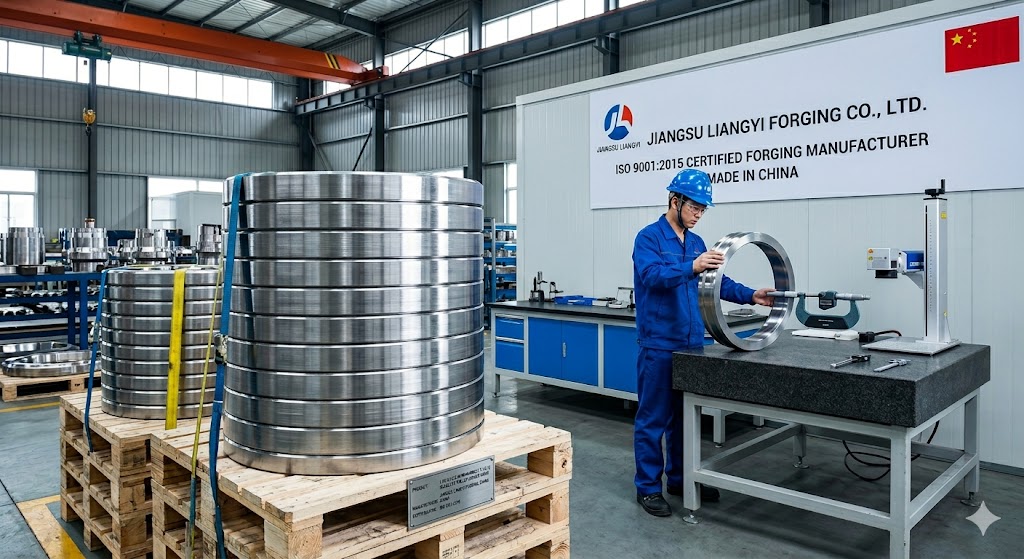
Established in , Jiangsu Liangyi Co., Limited is an ISO 9001:2015 certified China leading manufacturer of custom 1.3974 (X2CrNiMnMoNNb23-17-6-3) open die forgings and seamless rolled forged rings. With 29+ years of specialized forging experience, an 80,000 ㎡ modern production facility, and an annual manufacturing capacity of 120,000 tons, we supply precision 1.3974 forged steel components to industrial customers in over 50 countries. Our comprehensive service covers premium steel melting, precision open die forging, controlled heat treatment, CNC machining, and full quality inspection — supporting compliance with ASTM, EN, DIN, API 6A/6D, ASME BPVC, and NACE MR0175, with third-party inspection available for DNV and LR requirements upon customer request.
What Is 1.3974 (X2CrNiMnMoNNb23-17-6-3) Steel? Metallurgical Background & Development Rationale
1.3974, formally designated X2CrNiMnMoNNb23-17-6-3 under the European EN steel numbering system, is a high-alloy, fully austenitic, permanently non-magnetic stainless steel developed specifically to solve a problem that no conventional austenitic grade adequately addresses: delivering reliable, permanent non-magnetic performance in large-section forged components — at weights up to 30 metric tons — subjected to severe mechanical loads, aggressive corrosive media, and extreme temperatures.
Standard austenitic stainless steels such as 304 or 316L, while nominally non-magnetic in the annealed condition, can develop localized ferromagnetic zones during cold working, heavy forging deformation, or cryogenic temperature exposure. In nuclear reactor housings, marine propulsion shafts operating near sensitive navigation instruments, or downhole drilling assemblies with electromagnetic measurement-while-drilling (MWD) tools, even a momentary or localized magnetic response is unacceptable. 1.3974 was engineered to eliminate this risk at the microstructural level rather than relying solely on post-production verification.
The alloy achieves this through three simultaneous metallurgical strategies that distinguish it from simpler non-magnetic grades:
Strategy 1: Austenite Stabilization by Nitrogen
Nitrogen (0.30–0.50 wt%) is eight times more potent than nickel as an austenite stabilizer on a per-weight basis. The high nitrogen content in 1.3974 dramatically suppresses the martensite start temperature (Ms) to well below −200°C, ensuring the austenitic FCC crystal structure remains completely stable under any industrial forging or cryogenic service condition. Nitrogen simultaneously increases yield strength through solid-solution strengthening without compromising toughness.
Strategy 2: Mn Substitution Reduces Ni While Preserving Austenite
Replacing a portion of the typically required nickel content with manganese (4.50–6.50 wt%) maintains full austenite stability while lowering the alloy's raw material cost sensitivity to nickel price volatility. Manganese also increases the solubility of nitrogen in the melt, enabling the high nitrogen content to be achieved without nitrogen porosity defects during the ingot solidification phase — a critical process control advantage in large-section forging stock production.
Strategy 3: Nb Grain Boundary Stabilization
Niobium (0.10–0.30 wt%) combines preferentially with carbon to form NbC carbide precipitates, suppressing sensitization (chromium carbide precipitation at grain boundaries) that would otherwise occur in the heat-affected zones during welding or slow cooling from elevated temperatures. This is particularly critical in large-section forgings where cooling rates through the sensitization temperature range (450–850°C) cannot always be controlled as tightly as in thin sheet products. Niobium also pins grain growth during high-temperature forging, contributing to the fine grain size (ASTM E112 Grade 6 or finer) requirement.
Chemical Composition of 1.3974 Steel: Element-by-Element Technical Analysis
The chemical composition of 1.3974 (X2CrNiMnMoNNb23-17-6-3) is not an arbitrary choice of percentages – each range of elements is deliberately designed for a particular metallurgical purpose. Engineers specifying this grade for demanding applications need to understand these relationships.
1.3974 Composition at a Glance (EN Standard): C ≤ 0.03% | Si ≤ 1.00% | Mn 4.50–6.50% | P ≤ 0.025% | S ≤ 0.010% | Cr 21.00–24.50% | Ni 15.50–18.00% | Mo 2.80–3.40% | N 0.30–0.50% | Nb 0.10–0.30% | W 0.10–0.30%
| Element | EN Standard Range | Jiangsu Liangyi Target | Primary Metallurgical Function |
|---|---|---|---|
| Carbon (C) | ≤ 0.03% | ≤ 0.025% | Ultra-low C minimizes chromium carbide (Cr₂₃C₆) precipitation risk during post-weld cooling and heavy-section slow cooling, maximizing intergranular corrosion resistance. "L" grade equivalent. |
| Silicon (Si) | ≤ 1.00% | 0.40–0.70% | Deoxidation during steelmaking. Controlled below 1.00% to avoid promoting sigma phase formation (Si accelerates sigma precipitation) which would degrade both corrosion resistance and non-magnetic properties. |
| Manganese (Mn) | 4.50–6.50% | 5.00–6.00% | Austenite stabilizer (partial Ni substitute), increases N solubility in melt to prevent porosity, suppresses ferrite formation. High Mn raises the N₂ saturation pressure limit, enabling the 0.30–0.50% N specification without gas bubble defects. |
| Phosphorus (P) | ≤ 0.025% | ≤ 0.020% | Residual element. Controlled as low as possible to prevent hot shortness during forging and reduce susceptibility to intergranular corrosion. Segregates to grain boundaries during solidification. |
| Sulfur (S) | ≤ 0.010% | ≤ 0.005% | Residual element. Forms MnS inclusions that initiate pitting corrosion. Strictly minimized in 1.3974 to protect the high PREN value benefit. Critical for nuclear and marine applications with stringent pitting requirements. |
| Chromium (Cr) | 21.00–24.50% | 22.00–23.50% | Primary contributor to oxidation and corrosion resistance via passive oxide (Cr₂O₃) film formation. Combined with N and Mo for PREN calculation. At 21–24.5%, provides dramatically superior pitting resistance vs. 316L (16–18% Cr). |
| Nickel (Ni) | 15.50–18.00% | 16.00–17.50% | Primary austenite stabilizer, provides excellent low-temperature toughness, improves weldability. Combined with high Mn and N to maintain complete austenite stability even after severe plastic deformation during forging operations. |
| Molybdenum (Mo) | 2.80–3.40% | 3.00–3.30% | Contributes 3.3× its weight to PREN value (PREN = %Cr + 3.3×%Mo + 16×%N). Dramatically improves resistance to pitting and crevice corrosion in chloride environments (seawater, brines, H₂S/CO₂ environments). Essential for oil & gas and marine applications. |
| Nitrogen (N) | 0.30–0.50% | 0.35–0.45% | The most critical alloying element for 1.3974's dual performance signature: (1) contributes 16× its weight to PREN for exceptional pitting resistance; (2) provides the highest austenite stabilization efficiency per weight of any practical alloying element, ensuring permanent non-magnetic performance. Also increases yield strength ~100 MPa per 0.1% N added. |
| Niobium (Nb) | 0.10–0.30% | 0.15–0.25% | Preferentially bonds with carbon to form stable NbC precipitates, preventing Cr₂₃C₆ sensitization. Pins austenite grain boundaries during hot forging at 950–1150°C to maintain fine grain size. Critical for maintaining ASTM E112 Grade 6 or finer in large-section forgings where thermal gradients are unavoidable. |
| Tungsten (W) | 0.10–0.30% | 0.15–0.25% | Supplementary contributor to corrosion resistance, particularly in reducing acid environments. Acts synergistically with Mo to improve crevice corrosion resistance. Also contributes to solid-solution strengthening at elevated temperatures, extending the alloy's useful strength range in high-temperature service conditions. |
Material Purity & Metallographic Control Standards
Our 1.3974 composition control at Jiangsu Liangyi is better than the minimums required by EN standards. Each heat of production is subjected to complete spectrometric (OES) analysis at the furnace and final ladle stage, with a secondary check on forged product samples. For each batch the following standards of purity and microstructure are strictly applied:
- Material Purity (Inclusion Rating): Determined per DIN 50602-K1 standard. Sum characteristic value K1 ≤ 2.0 per 1,000 mm² field area, with a minimum of 4 fields tested per heat. This ensures that oxide, sulfide, and silicate inclusions — which can initiate both pitting corrosion and fatigue cracks — are below the threshold required for nuclear and critical rotating equipment applications.
- Delta Ferrite Content: Strictly controlled below 5% (volume fraction), determined in accordance with ASTM E45/Method A (Worst Field Method) at 100× magnification, on longitudinal polished specimens from finished forgings. This is significantly stricter than the ≤8% or even ≤10% sometimes accepted for conventional austenitic grades, because even small amounts of ferrite create localized magnetically permeable zones that compromise the non-magnetic performance requirement. Our production melt chemistry is designed to target ≤2% ferrite in practice.
- Grain Size: Controlled to ASTM E112 Grade 6 or finer (ASTM grain size number ≥6, corresponding to average grain diameter ≤89 μm). Coarser grain structures are unacceptable because they reduce fatigue strength, increase ultrasonic testing (UT) noise levels — making defect detection less reliable — and can cause anisotropic mechanical properties in large forgings. Our precise Nb addition and controlled forging deformation ratio (minimum 4:1 reduction ratio) maintain consistent fine grain throughout the entire forging cross-section.
- Tramp Element Surveillance: Cu, Pb, Sn, As, Sb, Bi are monitored as tramp elements in every heat. For nuclear-industry applications, Co content can be additionally controlled below 0.10% to minimize activation under neutron irradiation, per customer project specification.
1.3974 Steel Grade Comparison: vs. 316L, 904L, 254SMO, 1.3952 & Duplex Grades
Engineers selecting a non-magnetic or high-corrosion-resistance stainless steel grade for forged components frequently encounter several candidate materials. The following comparison is based on Jiangsu Liangyi's 29+ years of practical forging and metallurgical experience with all these grades, providing a frank technical assessment of where 1.3974 excels, where alternatives may suffice, and where 1.3974 is the only viable option.
| Property / Criterion | 1.3974 (X2CrNiMnMoNNb23-17-6-3) | 316L (1.4404) | 904L (N08904) | 254SMO (S31254) | 1.3952 (X2CrNiN18-10) | 2205 Duplex (1.4462) |
|---|---|---|---|---|---|---|
| PREN Value | 42–46 Best | 23–26 Low | 32–35 Moderate | 42–44 Excellent | 17–19 Low | 34–38 Good |
| Permanent Non-Magnetic (μr <1.01) | Yes — Guaranteed | Not Reliable | Conditional | Generally Yes | Generally Yes | No — Duplex |
| Tensile Strength Rm (MPa, RT) | ≥ 500 MPa | ≥ 480 MPa | ≥ 490 MPa | ≥ 650 MPa | ≥ 490 MPa | ≥ 620 MPa |
| 0.2% Proof Strength Rp0.2 (MPa, RT) | ≥ 185 MPa | ≥ 170 MPa | ≥ 220 MPa | ≥ 310 MPa | ≥ 190 MPa | ≥ 450 MPa |
| Seawater Pitting Resistance | Excellent | Poor | Moderate | Excellent | Poor | Good |
| Low-Temperature Impact Toughness | Excellent | Excellent | Excellent | Excellent | Excellent | Moderate |
| Large Section Forgeability (>5T) | Good (with controls) | Excellent | Good | Moderate | Excellent | Moderate |
| Nuclear Grade Suitability | Primary Choice | Secondary | Rare | Rare | Secondary | Not Used |
| Relative Material Cost (Indicative) | High (3–5× 316L) | Baseline | 2–3× 316L | 3–4× 316L | 1.2–1.5× 316L | 1.5–2× 316L |
Engineering Selection Insight: 1.3974 is the material of choice when two or more of the following requirements must be simultaneously met: (1) permanent non-magnetic performance verified to μr <1.01 in large forged sections; (2) PREN ≥40 for severe chloride or H₂S corrosion environments; (3) low-temperature service below −50°C with high impact energy requirements; (4) comprehensive nuclear-industry traceability documentation required by the customer's licensing authority (e.g., supporting RCC-M or ASME III customer qualification). If only one of these criteria applies, a lower-cost alternative may be technically sufficient. If two or more apply together, 1.3974 is typically the only grade that simultaneously satisfies all requirements without engineering compromise.
Corrosion Resistance of 1.3974 Forged Steel: PREN Analysis & Media-Specific Performance
PREN Calculation and Significance
The Pitting Resistance Equivalent Number (PREN) is the industry-standard formula for predicting pitting corrosion resistance in chloride-containing environments:
PREN = %Cr + 3.3 × %Mo + 16 × %N
For 1.3974 at median composition (Cr 22.75%, Mo 3.10%, N 0.40%):
PREN = 22.75 + (3.3 × 3.10) + (16 × 0.40) = 22.75 + 10.23 + 6.40 = 39.38 to 45.5 (range based on composition)
This PREN of ~39–46 places 1.3974 in the "highly pitting-resistant" category, significantly exceeding the PREN ≥40 threshold generally required for reliable performance in fully aerated seawater service at ambient temperatures.
Critical Pitting Temperature (CPT) and Critical Crevice Temperature (CCT)
Laboratory test data from our internal metallurgical qualification testing — conducted in accordance with ASTM G48 Method C and ASTM G48 Method D — demonstrates the following performance characteristics of properly solution-annealed 1.3974 forgings:
| Corrosion Test | Test Medium | 1.3974 Result | 316L Result (Reference) |
|---|---|---|---|
| Critical Pitting Temperature (CPT) | 6% FeCl₃ solution (ASTM G48-C) | > 50°C | 15–22°C |
| Critical Crevice Temperature (CCT) | 6% FeCl₃ solution (ASTM G48-D) | > 30°C | 0–5°C |
| Intergranular Corrosion Resistance | Boiling 65% HNO₃ (Huey Test, ASTM A262-E) | Pass (≤0.5 g/m²·h) | Typically passes (similar) |
| Stress Corrosion Cracking (SCC) | Boiling 42% MgCl₂ | Resistant (fully austenitic high-N) | Susceptible |
| H₂S Corrosion (SSC) | NACE TM0177 (H₂S/NaCl/acetic acid) | Compliant (NACE MR0175) | Conditionally compliant |
Corrosion Performance in Specific Industrial Media
- Seawater and Marine Environments: 1.3974's PREN >40 and low sulfur content (S ≤0.005% at Jiangsu Liangyi's target) provide resistance to seawater pitting at temperatures up to approximately 35°C without cathodic protection. For permanently submerged components or those in warm tropical seawater (>30°C), cathodic protection is recommended in conjunction with 1.3974. This contrasts sharply with 316L, which typically requires cathodic protection at any seawater temperature above 15°C.
- H₂S/CO₂ Sour Service (Oil & Gas): The fully austenitic, high-Ni structure of 1.3974 provides inherently better sulfide stress cracking (SSC) resistance than duplex grades at equivalent yield strength levels, because the FCC austenite lattice is less sensitive to hydrogen embrittlement than the BCC ferrite phase present in duplex steels. 1.3974 forgings are routinely certified to NACE MR0175 / ISO 15156 Part 3 for sour service downhole components.
- High-Temperature Oxidizing Acids: The combination of 21–24.5% Cr and ultra-low carbon (≤0.03%) provides excellent resistance to nitric acid (HNO₃) across a wide concentration range, a property exploited in nuclear fuel reprocessing plant components where 1.3974 forgings contact concentrated nitric acid streams at elevated temperatures.
- Chloride-Containing Process Streams: Compared to 904L (PREN ≈32–35), 1.3974's higher PREN of 42–46 extends the safe operating envelope for chloride concentration and temperature significantly. Process engineers replacing 904L with 1.3974 in heat exchanger tube sheets and channel flanges have reported elimination of previously recurring pitting failures in high-chloride condensate streams.
Non-Magnetic Performance of 1.3974 Forgings: Technical Specifications & Verification Methods
The "non-magnetic" claim is one of the most frequently misunderstood specifications in stainless steel forging procurement. At Jiangsu Liangyi, we apply a rigorous, multi-level approach to verifying and guaranteeing non-magnetic performance that goes well beyond simply selecting a nominally austenitic grade.
Understanding Magnetic Permeability in Forgings
Magnetic permeability (μr, relative to vacuum) is the correct engineering parameter for quantifying magnetic behavior — not "magnetic" vs. "non-magnetic" as binary categories. The key thresholds for industrial applications are:
| Relative Permeability (μr) | Classification | Typical Application Requirement |
|---|---|---|
| 1.000 (vacuum) | Perfectly non-magnetic | Reference baseline |
| < 1.005 | Effectively non-magnetic | Nuclear reactor internals, MWD drilling tools, precision marine navigation housings |
| 1.005–1.010 | Near non-magnetic | General marine shafts, less critical electrical applications |
| 1.010–1.100 | Slightly magnetic | Typically unacceptable for non-magnetic applications |
| > 1.100 | Magnetically significant | Will cause interference in sensitive instruments |
Properly processed 1.3974 forgings from Jiangsu Liangyi consistently achieve μr <1.005 in all zones of the forging, including the surface-adjacent layers that undergo the highest shear strain during open die forging operations. This is verified through:
- Delta Ferrite Metallographic Analysis: ASTM E45/Method A at 100× magnification on longitudinal specimens cut from the most deformed zones of each forging. Target: <5% delta ferrite (volume fraction). Actual measured values in our production typically average <2%.
- Magnetic Particle Testing (MT): 100% MT inspection on all final machined surfaces per ASME V or EN 10228-1, which simultaneously serves as a sensitive screen for any localized ferromagnetic zones that would attract magnetic particles and indicate microstructural anomalies.
- Direct Permeability Measurement (on request): For critical nuclear or instrumentation applications, direct magnetic permeability measurement using a calibrated permeability meter (e.g., Förster Magnetoscop-type instrument or equivalent calibrated permeability meter) can be performed on designated sample areas of the finished forging to provide quantitative μr values recorded in the inspection certificate.
Critical Note for Procurement Engineers: Specifying "austenitic stainless steel" or even "1.3974 grade" without additionally specifying the delta ferrite limit (≤5% per ASTM E45/Method A) and the magnetic permeability verification method does not guarantee non-magnetic performance in large-section forgings. Heavy forging deformation, particularly in sections exceeding 200mm thickness, can induce localized strain-induced martensite transformation even in nominally austenitic compositions if the nitrogen content and Mn content are at the lower end of the standard specification range. Always request the full non-magnetic verification protocol as part of your purchase order technical requirements.
Mechanical Properties of 1.3974 Forged Parts: Room Temperature, Elevated Temperature & Low Temperature
1.3974 Forged Parts — Guaranteed Minimum Mechanical Properties (Solution Annealed +AT condition, Room Temperature): Tensile Strength Rm ≥ 500 MPa | 0.2% Proof Strength Rp0.2 ≥ 185 MPa | Elongation A5 ≥ 40% | Reduction of Area Z ≥ 60%
Room Temperature Mechanical Properties
| Mechanical Property | EN Standard Minimum | Jiangsu Liangyi Typical (Reference) | Test Standard |
|---|---|---|---|
| Tensile Strength (Rm) | ≥ 500 MPa | 540–620 MPa | ISO 6892-1 / ASTM E8 |
| 0.2% Proof Strength (Rp0.2) | ≥ 185 MPa | 210–260 MPa | ISO 6892-1 / ASTM E8 |
| Elongation (A5) | ≥ 40% | 45–55% | ISO 6892-1 / ASTM E8 |
| Reduction of Area (Z) | ≥ 60% | 65–75% | ISO 6892-1 / ASTM E8 |
| Hardness (Brinell, HBW) | No specified minimum | 160–200 HBW | ISO 6506 / ASTM E10 |
| Charpy V-Notch Impact Energy (20°C) | To be agreed | ≥ 120 J (transverse) | ISO 148-1 / ASTM E23 |
| Charpy V-Notch Impact Energy (−196°C) | To be agreed | ≥ 60 J (transverse) | ISO 148-1 / ASTM E23 |
Elevated Temperature Mechanical Properties (Indicative Reference Values)
1.3974's nitrogen-strengthened austenitic structure retains a significant fraction of room-temperature strength at elevated service temperatures. The following indicative values are provided as engineering reference for designers — actual values must be verified for specific applications and should be agreed in the purchase order:
| Test Temperature | Rp0.2 (MPa, indicative) | Rm (MPa, indicative) | A5 (%) |
|---|---|---|---|
| Room Temp. (20°C) | 210–260 | 540–620 | 45–55 |
| 100°C | ~175–210 | ~490–560 | ≥ 38 |
| 200°C | ~155–185 | ~450–520 | ≥ 35 |
| 300°C | ~140–165 | ~420–490 | ≥ 32 |
We can provide actual measured high-temperature tensile test results for each production heat upon request. For applications requiring design values (allowable stress intensities), ASME Section II Part D or EN 13480-compliant design data can be supplied as part of the material certification package for critical pressure-containing applications.
Advanced Melting & Forging Process for 1.3974 Steel: Challenges, Controls & Our Solutions

1.3974 is one of the most technically challenging grades to forge correctly in large sections. Its combination of high nitrogen (which raises flow stress and work-hardening rate), high manganese (which changes solidification behavior), and the strict non-magnetic and purity requirements creates a multi-constraint production problem that separates experienced specialist manufacturers from general forging shops. Here is how Jiangsu Liangyi's 29+ years of experience addresses each challenge:
Melting Process Options: Matching Process to Application
The choice of melting route for 1.3974 is not merely an academic exercise — it directly determines the achievable cleanliness level, inclusion rating, and ultimately the non-magnetic consistency and fatigue life of the forged component. We offer five production-qualified melting routes:
EAF (Electric Arc Furnace) — Standard Industrial Grade
Used for non-critical industrial applications where cost efficiency is prioritized. Achieves DIN 50602-K1 sum ≤ 3.0. Suitable for general valve bodies, structural spacers, and pump housings where non-magnetic performance and corrosion resistance are required but nuclear or marine classification documentation is not.
EAF + LF + VD (Electric Arc Furnace + Ladle Refining + Vacuum Degassing)
The most popular route for demanding industrial applications. The composition of critical elements (N, Nb, Mo) can be controlled to ±0.02% by ladle refining. Vacuum degassing removes the dissolved hydrogen (<2 ppm) and reduces the oxygen content. This improves the inclusion cleanliness to DIN 50602-K1 sum ≤ 2.0. Recommended for oil & gas and marine applications.
EAF + ESR (Electric Arc Furnace + Electro Slag Remelting)
ESR remelting passes the primary ingot through a liquid slag pool, removing oxide inclusions and producing a directionally solidified, high-uniformity secondary ingot. Achieves K1 sum ≤ 1.5. The preferred route for large forged rings (>2m diameter) used in critical rotating applications where fatigue life and ultrasonic testability (clean UT) are paramount. Used for nuclear pump casings and marine propulsion components.
EAF + PESR (Electric Arc Furnace + Protective Atmosphere Electro Slag Remelting)
PESR conducts the ESR remelting process under controlled nitrogen atmosphere rather than air, allowing precise control of nitrogen pickup to the target 0.35–0.45% N specification within ±0.01%. Critical for 1.3974 because nitrogen loss during conventional ESR in air can cause inconsistent N content between the top and bottom of large remelted ingots. Preferred for forgings where the non-magnetic specification requires verified N content uniformity across the full cross-section.
VIM + PESR (Vacuum Induction Melting + Protective Atmosphere ESR) — Nuclear Grade
The highest-purity available melting route, suitable for supporting customer-led RCC-M nuclear-industry qualification and aerospace-grade applications. VIM under vacuum eliminates oxygen and nitrogen from the primary melt with precision, and PESR remelting re-introduces nitrogen to the exact target specification. Achieves DIN 50602-K1 sum ≤ 0.5. Maximum achievable cleanliness and compositional homogeneity for the most demanding applications.
Open Die Forging: The Five Critical Control Points for 1.3974
Our forging engineers have identified five process variables that are disproportionately important for achieving consistent non-magnetic, clean, fine-grained 1.3974 forgings at large scale. These are actively monitored and controlled in our 6,300-ton forging press production line:
1. Billet Soaking Uniformity
1.3974 ingots are soaked at 1,180–1,200°C for a minimum of 1 hour per 100mm of cross-section thickness in our gas-fired pusher furnaces (temperature uniformity ±10°C verified by multi-zone thermocouples). Insufficient soaking produces temperature gradients that cause differential deformation — the forging surface cools faster than the center, leading to surface cracking and non-uniform grain size through the cross-section.
2. Minimum Forging Finish Temperature: 950°C
1.3974's high work-hardening rate (approximately 2× that of 316L due to nitrogen solid-solution effects) means that forging below 950°C rapidly increases flow stress to levels that risk surface cracking. Our operators use calibrated optical pyrometers and timed forging schedules to ensure no forging stroke occurs below 950°C. Any billet that cools below 980°C is returned to reheat before the next forging pass.
3. Minimum Deformation Ratio: 4:1
A minimum forging reduction ratio of 4:1 is needed to break down the as-cast dendritic ingot matrix, close any residual micro-porosity, and get ASTM E112 Grade 6 or finer grain size throughout the full cross-section. For forged rings produced on our ring rolling mills, the equivalent deformation is verified by wall thickness reduction ratio calculations and confirmed by grain size testing of through-thickness specimens.
4. Immediate Post-Forging Water Quench
Immediately following the final forging pass, 1.3974 forgings are transferred to the solution annealing furnace (or directly water-quenched in the case of direct forge quenching) without delay. Any slow cooling through the 850–450°C sensitization temperature range risks sigma phase or chi phase precipitation, which degrades both corrosion resistance and fracture toughness in these heavily alloyed austenitic compositions. Our shop floor layout is specifically designed to minimize transfer time between the forging press and the heat treatment furnace.
5. Solution Annealing Temperature: 1,050–1,100°C
Standard solution annealing (+AT) for 1.3974 is carried out at 1,050–1,100°C for a minimum hold time of 30 min/25mm of maximum cross-section thickness. This temperature window is a delicate balance: too low (<1,020°C) and NbC precipitates will not fully dissolve, leaving free carbon and a risk of sensitization; too high (>1,120°C) and grain growth will accelerate beyond the ASTM Grade 6 limit, especially in thin sections. Rapid water quenching immediately following the hold period ensures all sigma phase remains in solution. Complete heat treatment cycle records (heating rate, setpoint, actual furnace temperatures at all zones, hold duration, quench time) are recorded and included in the EN 10204 3.1/3.2 MTC.
Weldability of 1.3974 Forged Steel: Practical Guidance for Engineers
1.3974 forged components are regularly welded to piping, flanges, and other forged components in final assemblies. The alloy's weldability is rated as "good" when appropriate procedures are followed, but several characteristics require careful attention that differ from standard 316L welding practice:
Main Weldability Characteristics
- No Pre-Heating Required — Avoid It: Unlike ferritic or martensitic stainless steels, 1.3974 should never be pre-heated before welding. Pre-heating slows the cooling rate through the sensitization temperature range, increasing the risk of chromium carbide and sigma phase precipitation adjacent to the weld. Ambient temperature welding is correct procedure.
- Strict Interpass Temperature Control (≤150°C): Maintaining the interpass temperature below 150°C is the single most important weld procedure control for 1.3974. Exceeding this limit accumulates heat in the joint area, slowing cooling through the sensitization range. This is particularly challenging in multi-pass butt welds of thick sections (>50mm), where forced air cooling between passes may be needed.
- Low Heat Input Preferred: Use the lowest heat input consistent with achieving full fusion. TIG (GTAW) welding with heat input ≤1.5 kJ/mm is preferred for sections up to 20mm. For heavier sections, SMAW or SAW with heat input ≤2.0 kJ/mm and strict interpass control is acceptable. High heat input FCAW or SAW with multiple wire configurations should be avoided without specific WPS qualification for 1.3974.
- Filler Metal Choice: The most commonly specified filler metal for welding 1.3974 is EN ISO 18274 Grade S Ni 6625 (ERNiCrMo-3, nickel-chromium-molybdenum alloy filler, 625-type composition). This nickel-alloy filler is over-alloyed relative to 1.3974, providing a weld metal with corrosion resistance exceeding the parent material and avoiding hot cracking risk. For applications where a matching stainless filler is mandatory, a specifically qualified composition approximating 1.3974 chemistry with 3–5% additional Mo and N content should be used to compensate for dilution effects.
- Post-Weld Heat Treatment (PWHT): For non-critical industrial applications, PWHT is often omitted due to the ultra-low carbon (≤0.03%) and Nb stabilization that together prevent sensitization. For nuclear-grade, marine class-witnessed, or H₂S sour service applications, post-weld solution annealing at 1,050–1,080°C followed by water quenching is recommended to fully restore the homogeneous austenitic microstructure in the weld HAZ. We provide engineering support in reviewing your WPS/PQR documentation for 1.3974 welded assemblies upon request.
Full Range of Custom 1.3974 Forged Products: Specifications & Capabilities
Jiangsu Liangyi manufactures the complete range of custom 1.3974 (X2CrNiMnMoNNb23-17-6-3) forged parts with single-piece weights from 30KGS to 30,000KGS. All products are produced from our own qualified in-house melted and cast stock, giving us full traceability from raw material element to finished inspected forging. Our core product forms include:
1.3974 Forged Bars, Rods & Shafts
We supply high-integrity X2CrNiMnMoNNb23-17-6-3 forged round bars, square bars, flat bars, hexagonal bars, step shafts, splined shafts, turbine shafts, pump shafts, propulsion shafts, and gear shafts. Dimensional range: diameter from 50mm to 2,000mm, length up to 15,000mm. All forged bars are produced with a minimum reduction ratio of 4:1 from the original ingot cross-section, with 100% UT per EN 10228-3 Class C or ASTM A388, and available with EN 10204 3.1/3.2 MTC. Straightness tolerance: ≤1mm/m unless otherwise specified. Our forged shaft products are widely used for marine propulsion shafts (third-party witnessed to DNV or LR requirements, arranged upon customer request), ESP motor drive shafts (produced to API 11S system dimensional and material requirements, per customer specification), pump shafts, valve stems, and structural tie rods in critical systems across 50+ countries.
X2CrNiMnMoNNb23-17-6-3 Seamless Rolled Forged Rings
Our state-of-the-art seamless ring rolling capability — with 1m and 5m ring rolling mills — produces 1.3974 seamless forged rings from 200mm to 6,000mm outer diameter, wall thickness from 30mm upward, height up to 3,000mm, and weight up to 30,000KGS per ring. Product forms include flat rings, profiled/contoured rings (T-section, L-section, rectangular), gear rings, bearing rings, valve seat rings, containment rings, flanged bosses, and nuclear reactor containment seal rings. The seamless ring rolling process achieves circumferential fiber orientation aligned with the part geometry — the single most important structural advantage of rolled rings over plate-cut rings or fabricated weld assemblies for rotating pressure-bearing applications. All rings undergo 100% UT (EN 10228-4 Class B or ASTM A531), MT, and visual/dimensional inspection before release.
1.3974 Forged Hollow Components: Sleeves, Housings & Hollow Bars
We produce precision 1.3974 forged sleeves, bushes, casings, hollow bars, shells, tubular housings, and pipe spools using the mandrel forging process on our 6,300-ton forging press. Bore diameter from 50mm to 1,500mm, OD up to 2,500mm, wall thickness from 25mm to 600mm. The mandrel forging process ensures 100% forging penetration to the bore surface — impossible to achieve in block forgings of similar OD — producing superior bore surface grain flow and mechanical integrity compared to core-drilled hollow bars. Applications include nuclear reactor coolant pump housings, pump barrel forgings, downhole motor casings, compressor casings, and pressure vessel nozzle forgings.
X2CrNiMnMoNNb23-17-6-3 Forged Discs, Plates & Blocks
Our 1.3974 forged discs, pancake forgings, rectangular blocks, and custom-shaped flat forgings are produced with diameter up to 3,000mm, thickness up to 800mm. Minimum reduction ratios and grain size requirements are as strictly applied as for round forgings. Key applications include heat exchanger tube sheets (with drilled tube hole patterns available from our CNC boring mills), baffle plates, check valve discs, blinding flanges, test blocks for procedure qualification, and structural plates for non-magnetic equipment frames and instrument housings. Ultrasonic testing is performed per ASTM A578 Level C or EN 10228-3 Class C in both the longitudinal and transverse directions for heavy disc and block forgings.
1.3974 Forgings Global Industrial Applications: Sector-by-Sector Technical Case Studies
The following application descriptions are based on actual Jiangsu Liangyi project experience delivering 1.3974 forged components to customers across six continents. We have anonymized specific customer names where confidentiality requirements apply, but the technical specifications, standards, and application contexts are factually accurate.
Nuclear Power Industry: Reactor Coolant Pump (RCP) Casings & Containment Seal Chambers
Among the most technically demanding forgings we produce, 1.3974 nuclear reactor coolant pump casings, bodies, volute casings, and containment seal chambers are supplied for pressurized water reactor (PWR) projects in France, China, and other countries with active nuclear new-build programs. These forgings directly contact primary coolant water at approximately 290–320°C and 155 bar pressure, in proximity to the reactor core where maintaining non-magnetic performance is essential to avoid interference with neutron flux measurement instruments.
Our nuclear-industry 1.3974 production is designed to support customer-led qualification under RCC-M Section S and ASME BPVC Section III where the end-user or EPC contractor holds the applicable nuclear license. We provide: VIM+PESR melting route for maximum purity (DIN 50602-K1 sum ≤ 0.5); cobalt content controlled ≤0.10% to minimize neutron activation; full heat-by-heat material documentation packages for review by the customer-appointed third-party nuclear inspector (such as TÜV, APAVE, or equivalent); and a complete material data package traceable from raw ingot heat number to finished component. All tramp elements (Cu, Pb, Sn, As, Bi, Sb) are individually quantified and reported. The final nuclear qualification acceptance rests with the customer and applicable regulatory authority.
Marine & Offshore: Propulsion Shafts, Propeller Shafts & Rudder Stocks
Marine vessels including research ships, hydrographic survey vessels, naval submarines, and offshore support vessels frequently require non-magnetic propulsion shafts to avoid compass deviation and to prevent interference with hull-mounted sonar arrays. 1.3974 forged marine shafts from Jiangsu Liangyi have been delivered to shipbuilders in Norway, South Korea, Germany, and China for vessels ranging from 50m research ships to 300m oceanographic survey vessels.
Our marine shaft forgings can be produced with DNV GL or Lloyd's Register (LR) third-party inspection witnessing of all applicable production stages (forging, heat treatment, mechanical testing, NDT, final dimensional inspection), arranged through the customer's nominated classification society surveyor. All inspection and test documentation required by DNV-ST-B203 or equivalent LR Rules is prepared and provided with the shipment. Shafts exceeding 6 meters in length are straightness-checked on our precision roller table to ≤0.5mm/m before final machining, which reduces wasted CNC machining time on distorted forgings. Surface condition is inspected per DNV-ST-B203 (formerly DNV OS-B101) requirements, with any surface discontinuity exceeding the acceptance criteria ground and re-inspected before release.
Oil & Gas Downhole: MWD/LWD Non-Magnetic Drill Collars & ESP Motor Components
The oil and gas industry's demand for 1.3974 non-magnetic forged steel components is driven primarily by directional drilling (DD) and measurement-while-drilling (MWD) / logging-while-drilling (LWD) operations, where magnetometer sensors in the drill string bottom-hole assembly (BHA) measure the earth's magnetic field to determine borehole trajectory. Any ferromagnetic drill collar material within approximately 2–4 collar sections (6–12 meters) of the magnetometer sensor will cause a magnetic interference (tool-face error) that degrades directional accuracy to unacceptable levels.
Our 1.3974 forged mud motor splined drive shaft forgings — produced to OD tolerances of ±0.5mm and bore concentricity within 0.3mm — have been delivered to drilling tool manufacturers in Houston (USA), Aberdeen (UK), Stavanger (Norway), and Dubai (UAE) for deployment in Saudi Arabia, Qatar, the UAE, Oman, the North Sea, the Gulf of Mexico, and Permian Basin HPHT wells. Our electrical submersible pump (ESP) motor splined shaft forgings serve the same non-magnetic function in pump-drive motor stacks deployed at depths exceeding 5,000m, where corrosion resistance to the combined H₂S, CO₂, and chloride-laden produced water environment must be maintained for 2–5 year run-lives between well workovers.
Valve Industry: Cryogenic & High-Pressure Non-Magnetic Valve Components
The combination of permanent non-magnetic performance, excellent cryogenic impact toughness, and superior pitting corrosion resistance makes 1.3974 particularly well-suited for cryogenic non-magnetic valve applications — a niche where the design engineer simultaneously needs the valve body to be non-magnetic (for electromagnetically clean process environments), cryogenically tough (for LNG service at −165°C), and corrosion-resistant (for seawater cooling jackets or wet gas service).
We manufacture 1.3974 forged valve balls, bodies, bonnets, seat rings, gate discs, cage retainers, and valve stems compliant with API 6D, API 6A, and ASME B16.34. Dimensional tolerances on forged valve balls: sphericity within 0.10mm, surface finish Ra ≤ 0.8 μm achievable after final grinding and lapping. These are supplied to premier valve manufacturers in Germany, Italy, the USA, and South Korea for installation in LNG terminals, LPG processing plants, cryogenic distillation columns, and electromagnetic compatibility (EMC)-sensitive industrial facility piping systems.
Turbomachinery & Rotating Equipment: Compressor Impellers & Pump Components
Turbo centrifugal compressors and high-pressure multistage pumps handling corrosive process gases and liquids in petrochemical, chemical processing, and offshore applications increasingly specify 1.3974 as the impeller material when the combination of high tip-speed (requiring Rm >500 MPa for stress capability), corrosion resistance (against process condensates, acid washes, and trace halides), and non-magnetic performance (for active magnetic bearing compatibility) must be simultaneously satisfied.
Our 1.3974 forged impeller blanks, shrouded impeller rough forgings, pump barrel forgings, and pump shaft forgings are produced with dynamic balance test readiness — all rotating component blanks are machined to a diameter tolerance that ensures residual imbalance after rough turning is within the correction capacity of balancing equipment per ISO 1940-1 Grade G6.3. Full material traceability and hydrogen embrittlement freedom documentation (vacuum degassing records from the EAF+LF+VD melting process) are provided for all compressor impeller forgings, as hydrogen-induced delayed fracture is a well-documented failure mode in high-strength rotating components that must be proactively controlled.
Pressure Vessels & Heat Exchangers: Tube Sheets, Nozzles & Transition Cones
In petrochemical plant heat exchangers handling corrosive process fluids — particularly in acid gas treatment (amine units, Claus sulfur recovery) and seawater-cooled condensers — 1.3974 forged tube sheets, channel flanges, nozzle forgings, and transition cones are specified to handle simultaneous corrosion attack from the process-side (H₂S, CO₂, amines, organic acids) and the cooling-side (seawater chlorides) without the reliability penalty of bimetallic clad designs.
We have delivered 1.3974 tube sheet forgings up to 3,200mm diameter for seawater coolers in Singapore, Malaysia, and the UAE, with drilled tube hole patterns (12,000+ individual tube holes) CNC-bored to H7 tolerance for titanium tube-to-tube sheet roll-expanded joints. All tube sheet forgings include through-thickness UT per ASTM A578 Level C before and after drilling, with weld deposition areas additionally UT-scanned to ASME V Article 5 acceptance. Compliance documentation covers ASME BPVC Section VIII Division 1, PED 2014/68/EU, and local authority design registrations as required.
Full-Process Quality Control & Certification for 1.3974 Forgings
Our ISO 9001:2015 certified quality management system for 1.3974 forged parts applies the principle of prevention over detection — every critical process parameter is controlled upstream rather than inspected downstream. The following describes our complete quality control sequence, from raw material receipt to final delivery:
Stage 1: Incoming Raw Material Qualification
All 1.3974 ingot stock produced from our in-house melting operations is subject to a structured qualification process before release to the forging shop. This includes: full OES spectrometric analysis versus EN composition requirement; visual and dimensional inspection of ingot geometry; surface conditioning (scalping/grinding) to remove any surface oxide or hot tear defects from the casting process; and an ingot-level UT scan for central pipe or shrinkage voids that could propagate into the finished forging cross-section. No ingot failing any of these checks proceeds to forging without documented engineering disposition.
Stage 2: In-Process Forging Controls
Each forging operation is conducted against a documented Forging Route Card that specifies: initial billet temperature and soak duration; furnace setpoint and uniformity verification; forging sequence and number of passes; minimum finish temperature; deformation ratio at each pass; and the reheating schedule if additional passes are required. Deviations from the Forging Route Card require a formal non-conformance report (NCR) and engineering disposition before the forging can proceed to heat treatment. Our 6,300-ton forging press is equipped with load and stroke monitoring, enabling post-hoc verification that the specified deformation ratios were actually achieved in every forging pass.
Stage 3: Heat Treatment Furnace Qualification & Record Keeping
Our 10 industrial heat treatment furnaces are calibrated and temperature surveyed periodically in accordance with internationally recognized pyrometry standards (equivalent to AMS 2750 requirements) with temperature uniformity verified to ±10°C throughout the working zone. Each production heat treatment cycle is automatically recorded by our multi-channel data logging system, capturing: furnace zone temperatures at minimum 1-minute intervals; actual part surface temperature (via contact thermocouple on witness blocks); total soak duration at setpoint; quench transfer time (target: <30 seconds from furnace exit to quench tank water contact for 1.3974); and quench water temperature. These records are retained and reproduced in the EN 10204 3.1/3.2 MTC for each order.
Stage 4: Comprehensive NDT Inspection Suite
Every 1.3974 forged part undergoes the following mandatory NDT inspection sequence before dimensional inspection and final acceptance:
- Ultrasonic Testing (UT): 100% immersion or contact UT per EN 10228-3 or ASTM A388, typically to Class C or better. Our automated UT scanning system (for rings and discs) records the complete C-scan map of each component, providing permanent electronic documentation of the internal integrity of every part shipped.
- Magnetic Particle Testing (MT): 100% MT on all machined surfaces, simultaneously serving as surface crack detection and non-magnetic performance screening. Any indication attracting magnetic particles on 1.3974 forgings triggers an investigation of the local delta ferrite content and, if necessary, re-heat treatment or rejection.
- Liquid Penetrant Testing (PT): Performed on finished machined surfaces for forgings where MT is inconclusive (complex geometry) or where the purchase order specifies PT in addition to MT.
- Dimension Test: Full dimensional verification against the customer drawing or specification, performed on calibrated CMM (Coordinate Measuring Machine) equipment for complex geometries, with measurement uncertainty documented per ISO/IEC 17025 principles. All important dimensions (bore diameter, OD, concentricity, flatness, thread gauging) are individually recorded in the dimensional inspection report included with the MTC.
- Visual Inspection: 100% visual inspection of all accessible surfaces under adequate lighting (min. 500 lux), with all relevant surface conditions (forging lap, seams, cold shuts, grinding marks deeper than tolerance, mechanical damage) identified and dispositional per the applicable acceptance standard.
Stage 5: Mechanical Testing & Chemical Verification
Mechanical test specimens are taken from the qualification zone of each forging (or from a separately forged test coupon of the same heat and heat treatment batch, per the applicable standard). All individual test values — not just averages — are reported in the MTC. Standard test package for 1.3974 includes:
- Tensile test (Rm, Rp0.2, A5, Z) at room temperature — minimum one per heat per heat treatment batch
- Hardness test (Brinell HBW) at minimum three locations on the forging surface
- Charpy V-notch impact test (3 specimens per test temperature, minimum one test temperature unless otherwise specified)
- Full chemical analysis including all 11 primary elements and tramp element surveillance
- Delta ferrite metallographic determination (ASTM E45/Method A)
- Grain size determination (ASTM E112)
- Intercrystalline corrosion test (e.g., ASTM A262 Practice E) where specified
- High-temperature tensile test at specified service temperature — on request
Full Inspection Items in EN 10204 3.1/3.2 Mill Test Certificate
- Heat Number, cast/charge number, and melting process route identification
- Full dimensional inspection report with all critical dimensions
- Complete heat treatment cycle records (all furnace temperature zones, soak time, quench method and timing)
- Full chemical analysis including tramp element results
- Complete mechanical test results with all individual specimen values
- Hardness test results (all individual measurement points)
- Ultrasonic testing report with scanning procedure reference and acceptance standard
- Magnetic particle / Penetrant testing report
- Delta ferrite content determination results
- Grain size determination results
- Visual inspection and surface condition confirmation
- Marking/identification confirmation (heat number, part number, material grade, weight)
- Results of any additional tests specified in the purchase order or applicable standard
All 1.3974 forged products are ISO 9001:2015 certified. EN 10204 3.1 MTC is supplied as standard with all shipments. EN 10204 3.2 third-party witnessed certificates (SGS, BV, TÜV, DNV, LR, or specified inspector) are available by order specification. Comprehensive material documentation packages to support customer-led RCC-M or ASME III qualification are available for VIM+PESR melting route orders, with advance planning.
Surface Treatment Options for 1.3974 Forged Parts
The as-forged surface of 1.3974 components is not the final surface condition for most applications. The correct surface treatment is essential not only for aesthetics but for restoring and maximizing the passive oxide film that is responsible for 1.3974's exceptional corrosion resistance. At Jiangsu Liangyi, we offer the following surface treatment options as part of our complete finishing service:
Pickling and Passivation
Standard practice for 1.3974 forgings after final machining. Pickling removes any iron contamination, heat tint, or thermally grown oxide from the forging and machining operations using a mixed HNO₃/HF acid bath (concentration and temperature controlled per AMS 2700 or ASTM A380). Passivation in HNO₃ solution then maximizes the chromium oxide passive film thickness and uniformity across the entire surface. Passivation condition is verified by free iron test (ASTM A380 copper sulfate test or equivalent) on each batch. This step is mandatory for maximum corrosion performance in seawater, H₂S, or high-chloride service environments.
Electropolishing
For applications in pharmaceutical, food processing, or ultra-pure process environments where the surface finish must meet Ra ≤ 0.4 μm or smoother requirements, electropolishing provides controlled micro-material removal that simultaneously smooths the surface, removes embedded iron particles, and enriches the surface chromium/nickel ratio, producing a highly passive surface superior to mechanically polished surfaces of equivalent Ra value. Available for components up to approximately 1,500mm OD within our electropolishing tank capability.
Shot Blasting / Bead Blasting
For as-forged rough forgings or large components where acid pickling is impractical due to size, controlled shot blasting with stainless steel shot (to prevent iron contamination) followed by passivation provides an acceptable surface preparation for most industrial service conditions. Surface finish achievable: Ra approximately 3.2–6.3 μm. This is the standard surface preparation for large forged rings and blocks before rough machining operations.
Global Supply & Export Service for 1.3974 Forged Parts
As a leading China 1.3974 forging manufacturer with over 25 years of export experience and an established logistics network spanning 50+ countries, our export service is designed to remove complexity from your global sourcing process:
- Zero-Compromise Customization: Every 1.3974 forging is produced to your specific technical drawings, material specifications, and applicable international standards — from a single trial piece to annual blanket orders. No minimum order quantity (MOQ) requirement for first-article or qualification orders.
- Guaranteed Lead Times: Standard custom orders: 25–35 days from order confirmation to ready-for-shipment. Expedited service (15 days) available for standard product types with confirmed raw material availability. Blanket order programs with call-off lead times as short as 7 days for pre-forged, heat-treated stock from our dedicated inventory buffer.
- Multimodal Global Logistics: Sea freight (FCL/LCL from Shanghai/Tianjin ports), air freight, and international express available. We handle all export documentation: commercial invoice, packing list, certificate of origin (CO, Form A/Form E/Form B as applicable for your destination country's trade agreement preferences), fumigation certificate, commodity inspection certificate (CIQ), and dangerous goods certification where applicable. Our in-house export documentation team has processed shipments to over 50 countries and is familiar with country-specific import requirements for forged steel components.
- Third-Party Inspection Coordination: We can arrange independent third-party inspection witnessing through SGS, Bureau Veritas, TÜV Rheinland, TÜV SÜD, Intertek, Lloyd's Register, DNV, or your nominated inspection body at our factory, typically with 5–7 business days' advance notice.
- 24/7 After-Sales Technical Support: Our multilingual technical team (English, Chinese, Spanish) provides ongoing support for material certification queries, weld procedure qualification assistance, in-service failure analysis, and re-order technical alignment. Full material traceability from heat number to finished forging dimension is maintained for a minimum of 10 years after delivery (or longer for nuclear applications per regulatory requirements).
- Flexible Payment Terms: T/T (wire transfer), L/C at sight, D/P, and project-specific payment milestone structures all accepted. We work with international trade finance banks familiar with Chinese manufacturing export procedures to minimize your payment risk and processing time.
Quick Reference Summary — 1.3974 (X2CrNiMnMoNNb23-17-6-3) Forged Parts by Jiangsu Liangyi: European EN standard, fully austenitic, permanently non-magnetic stainless steel forging grade. PREN 42–46 (outstanding pitting resistance). Magnetic permeability μr <1.005 guaranteed. Delta ferrite <5% (ASTM E45/Method A verified). Tensile strength ≥500 MPa, Rp0.2 ≥185 MPa, elongation ≥40%. Key alloying: Cr 21–24.5%, Ni 15.5–18%, Mn 4.5–6.5%, Mo 2.8–3.4%, N 0.30–0.50%, Nb 0.10–0.30%. Solution annealed +AT at 1,050–1,100°C, water quenched. Forged from 30KGS to 30,000KGS, bars to 2m OD, rings to 6m OD. ISO 9001:2015 certified. EN 10204 3.1/3.2 MTC available. Lead time 15–35 days. Applications: nuclear-industry components (customer RCC-M qualification supported), marine shafts (DNV/LR third-party inspection available), oil & gas downhole (API 6A, NACE MR0175), cryogenic valves (API 6D), turbomachinery impellers, pressure vessels (ASME BPVC VIII). Contact: sales@jnmtforgedparts.com | +86-13585067993.
Frequently Asked Questions (FAQ) About 1.3974 Forged Parts
1.3974 (X2CrNiMnMoNNb23-17-6-3) has no direct ASTM/UNS equivalent. Its closest relatives are 254SMO (UNS S31254) and 904L (UNS N08904), but 1.3974 is distinctly different in three key ways: (1) it uses manganese (4.50–6.50%) as a partial nickel substitute to enable higher nitrogen solubility; (2) its nitrogen content (0.30–0.50%) is significantly higher than either 254SMO or 904L, providing both superior austenite stability (permanent non-magnetic performance in heavy forgings) and higher PREN contribution; (3) niobium (0.10–0.30%) is added for grain boundary stabilization and sensitization prevention — neither 254SMO nor 904L contains niobium. The result is a grade with a PREN of 42–46 and guaranteed permanent non-magnetic performance (μr <1.005) in large-section forgings — a combination not reliably achievable with any ASTM standard grade.
1.3974 achieves permanent non-magnetic performance (relative permeability μr <1.005) through its fully austenitic FCC crystal structure, stabilized against martensite or ferrite transformation by the combined effect of high nitrogen (0.30–0.50%), manganese (4.50–6.50%), and nickel (15.50–18.00%) content. Unlike standard 304/316L grades which can develop localized strain-induced martensite during cold working or heavy forging, 1.3974's high nitrogen content depresses the martensite start temperature (Ms) to well below −200°C, making transformation thermodynamically impossible under any industrial processing condition. Verification at Jiangsu Liangyi involves: (1) delta ferrite determination per ASTM E45/Method A at 100× magnification on longitudinal specimens — target <5%; (2) 100% magnetic particle testing (MT) on all machined surfaces; (3) direct magnetic permeability measurement by calibrated permeability meter (Förster Magnetoscop or equivalent) on request for critical nuclear and downhole applications.
Jiangsu Liangyi's production capability for 1.3974 forgings: single-piece weight 30KGS to 30,000KGS. Forged bars/shafts: max. OD 2,000mm, max. length 15,000mm. Seamless rolled rings: max. OD 6,000mm, wall thickness from 30mm upward, height up to 3,000mm. Forged discs and blocks: max. diameter 3,000mm, max. thickness 800mm. Hollow components (mandrel forged): bore diameter 50mm to 1,500mm, OD to 2,500mm. All custom sizes per your technical drawings are available. We produce our own qualified raw material in-house from ingots up to 30 tons per charge, enabling seamless single-heat supply of large forgings without welded or pieced construction.
The recommended forging temperature window for 1.3974 (X2CrNiMnMoNNb23-17-6-3) is 1,150°C start to 950°C minimum finish temperature. Billets are soaked at 1,180–1,200°C for minimum 1 hour per 100mm cross-section before forging. The 950°C minimum finish temperature is strictly enforced because 1.3974's high nitrogen content raises the work-hardening rate approximately 2× that of 316L — below 950°C, flow stress escalates rapidly and surface cracking risk becomes significant. After forging, immediate transfer to the solution annealing furnace at 1,050–1,100°C followed by water quenching eliminates any sigma phase or sensitization risk from the forging thermal cycle. No forging is performed in our shop without a documented Forging Route Card specifying these temperature controls.
Yes, 1.3974 has good weldability with proper procedures. Key requirements: (1) No pre-heating — avoid it, as it slows cooling through the sensitization range; (2) Maintain interpass temperature ≤150°C for multi-pass welds; (3) Use low heat input (TIG/GTAW preferred at ≤1.5 kJ/mm for thin sections; SAW at ≤2.0 kJ/mm for heavy sections); (4) Recommended filler metal: EN ISO 18274 S Ni 6625 (ERNiCrMo-3, 625-type nickel alloy composition) — over-alloyed versus parent material for reliable corrosion resistance without hot cracking; (5) For nuclear or critical service, post-weld solution anneal at 1,050–1,080°C + water quench. 1.3974 should never be welded with 308L or 316L filler materials, as these will produce an under-alloyed, corrosion-deficient weld metal at the dilution ratios typical of 1.3974 parent material. We provide WPS/PQR review assistance upon request.
Yes. EN 10204 3.1 MTCs covering full chemical analysis (including tramp elements), complete mechanical test results (all individual specimen values), heat treatment cycle records, NDT results (UT, MT/PT reports), and dimensional inspection confirmation are standard for all 1.3974 forgings. EN 10204 3.2 certificates with third-party independent witnessing are available upon order specification through TÜV Rheinland, TÜV SÜD, SGS, Bureau Veritas (BV), Lloyd's Register (LR), DNV, Intertek, or your specified inspection body. For nuclear-industry orders, we can provide comprehensive material data packages — including full chemical records, process qualification documentation, and non-conformance records — to support the customer's own RCC-M or ASME Section III qualification process. The final nuclear approval rests with the applicable licensed customer and regulatory authority. Inspector access to all stages of production (melting, forging, heat treatment, testing, NDT, final inspection) can be arranged with 5–7 business days' advance notice.
Standard lead time for custom 1.3974 forged parts is 25–35 days from order confirmation: raw material melting & ingot production (7–10 days), forging (3–5 days), heat treatment (2–3 days), rough machining (3–5 days), quality inspection & NDT (3–5 days), MTC preparation & export documentation (2–3 days). For urgent orders, 15-day expedited service is available for standard product types where qualified raw material stock is available. For nuclear-grade VIM+PESR route orders, add 14–21 days for the additional melting and qualification documentation cycle. Blanket order programs with pre-qualified raw material and standing call-off agreements can reduce effective lead time to 7 days for repeat standard products.
1.3974 dramatically outperforms 316L in every corrosion category. PREN comparison: 1.3974 = 42–46 vs. 316L = 23–26 (1.3974 is approximately 75% higher). Critical Pitting Temperature (CPT) in 6% FeCl₃ (ASTM G48-C): 1.3974 >50°C vs. 316L 15–22°C. Crevice corrosion resistance in seawater: 1.3974 is safe to ~35°C without cathodic protection; 316L requires cathodic protection above ~15°C. Stress corrosion cracking (SCC) resistance in hot MgCl₂: 1.3974 resistant (fully austenitic high-N); 316L susceptible. H₂S resistance (NACE MR0175): 1.3974 compliant; 316L conditionally compliant with restrictions. These differences reflect the fundamental chemistry gap: 1.3974 contains ~5× the nitrogen content of 316L, more than twice the chromium benefit per PREN formula, and 2× the molybdenum content. For applications requiring seawater or H₂S corrosion resistance in forged components, 1.3974 provides a reliability margin that 316L cannot approach at equivalent section sizes.
Contact Jiangsu Liangyi for Custom 1.3974 Forged Parts Quotation
Jiangsu Liangyi Co., Limited is your specialist China partner for high-integrity 1.3974 (X2CrNiMnMoNNb23-17-6-3) forged parts. Whether your requirement is a single trial piece for material qualification testing, a small batch for equipment overhaul spares, or a volume annual supply program for a production line, our technical sales team can provide a detailed technical and commercial proposal within 24 hours of receiving your inquiry with complete specifications.
To obtain the most accurate quotation, please share the following information with your inquiry: material grade and applicable standard; forging type and product form (bar, ring, disc, hollow); finished dimensions or drawing; weight per piece and total quantity; required certifications (EN 10204 3.1 or 3.2, third-party inspector identity); applicable design code or international standard; special requirements (nuclear grade, non-magnetic verification method, additional testing).
Inquiry Email: sales@jnmtforgedparts.com
Phone / WhatsApp: +86-13585067993
Official Website: https://www.jnmtforgedparts.com
Factory Address: Chengchang Industry Park, Jiangyin City, Jiangsu Province, China
Response Time: Quotation within 24 hours | Technical consultation available 7 days / 24 hours