 Jiangsu Liangyi Forgings
 1.3912 (Ni36) Forging Parts | ISO 9001:2015 Certified China Manufacturer & Supplier
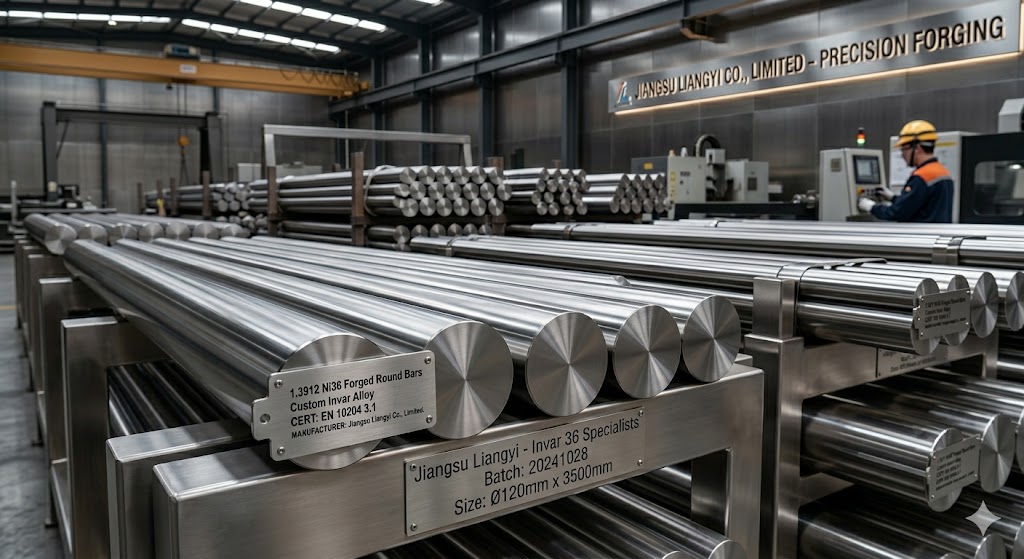
Jiangsu Liangyi Co., Limited is a 25+ years ISO 9001:2015 certified professional manufacturer of 1.3912 (Ni36) Invar alloy forging parts, located in Jiangyin City, Jiangsu Province, China — one of China's most established heavy forging industrial bases. From our 80,000㎡ production facility, equipped with hydraulic forging presses up to 6,000 tons and a fully computerized closed-loop quality management system, we supply ultra-precision Ni36 forged components to over 1,200 global clients across 50+ countries.
We specialize exclusively in difficult-to-forge, low-thermal-expansion nickel-iron alloys. Unlike general forging shops that treat Ni36 as one material among hundreds, our engineering team has accumulated over two decades of hands-on expertise specifically in 1.3912 forging metallurgy — understanding how forging temperature windows, deformation ratios, cooling rates, and annealing cycles interact to produce consistent CTE performance across every heat. Our Ni36 forging parts are fully compliant with SAE AMS 2154, EN 10204 3.1/3.2, ASTM B753, API 6A, DIN 17745, and JIS G 4303.
What is 1.3912 (Ni36) Invar Alloy? A Metallurgist's Explanation
The material designation 1.3912 follows the European DIN EN numerical system, where the prefix "1." identifies iron-based alloys and the suffix ".3912" locates this specific composition within the nickel-iron low-expansion group. It is commercially equivalent to Invar 36, ASTM F-96, NILO Alloy 36, and the UNS designation K93600. The defining characteristic is a tightly controlled nickel content of 35.0–38.0% Ni (we hold ours to 35.5–36.5% for enhanced CTE consistency), with iron as the balance.
The Physics Behind the Invar Effect: Why 36% Nickel is the Critical Composition
The remarkably low thermal expansion of Ni36 is not a coincidence of alloying — it is a direct consequence of quantum-mechanical ferromagnetism. In iron-nickel alloys near the 36% Ni composition, the material sits close to its ferromagnetic Curie temperature (~230°C). As temperature rises from ambient, two competing volumetric effects occur simultaneously:
- Normal phonon lattice expansion: Like all metals, the Fe-Ni lattice expands as thermal vibration increases bond distances — this alone would give CTE values of ~12 × 10⁻⁶/°C.
- Spontaneous magnetovolume contraction: As temperature rises toward the Curie point, the spontaneous magnetization of the ferromagnetic Fe-Ni matrix decreases. This loss of magnetic ordering causes a slight lattice contraction (the magnetostrictive volume effect) that runs opposite to thermal expansion.
At exactly ~36% Ni, these two effects are nearly equal and opposite across a broad temperature window from roughly -60°C to +100°C, producing a net CTE of only 1–2 × 10⁻⁶/°C. Shift the Ni content by even 2–3% and this balance is broken: at 30% Ni the CTE rises to ~5 × 10⁻⁶/°C; at 42% Ni the material loses its Invar behavior entirely. This is why our chemical control to ±0.5% Ni is not a commercial preference — it is a metallurgical necessity.
Key Engineering Advantages of 1.3912 Ni36 Forged Components
- Ultra-low CTE of ≤1.8 × 10⁻⁶/°C at 20°C — approximately 1/10 of carbon steel and 1/7 of austenitic stainless steel, enabling sub-micron dimensional repeatability across operating temperature cycles
- Stable cryogenic performance — CTE remains below 1.0 × 10⁻⁶/°C at LNG temperatures (-162°C), making Ni36 the preferred alloy for cryogenic containment flanges and instrumentation
- Non-magnetic in annealed condition — critical for MRI, electromagnetic instrumentation, and electron beam lithography tooling where magnetic interference would compromise precision
- Excellent machinability compared to other nickel alloys — forged Ni36 machines cleanly with standard carbide tooling and does not work-harden as aggressively as Inconel or Hastelloy, making it cost-effective for precision final machining
- Weldable by TIG, MIG, and electron beam methods — with proper pre-heat (150–200°C) and post-weld stress relief, Ni36 welds maintain near-parent-metal CTE properties
- Long-term dimensional stability — properly annealed Ni36 forgings exhibit no measurable dimensional creep or phase transformation over decades at ambient temperature, a property critical for calibration masters and satellite structures
1.3912 Ni36 Thermal Expansion Coefficient at Different Temperatures
One of the most common engineering errors is assuming a single CTE value for 1.3912 Ni36 across all temperatures. In practice, the mean CTE of Ni36 varies significantly with temperature range. The following data represents our measured values from production heats tested via dilatometry per ASTM E228, not theoretical estimates:
| Temperature Range | Mean CTE (× 10⁻⁶/°C) | Dimensional Change per 100°C per 1000mm | Typical Application Zone |
|---|---|---|---|
| -270°C to -200°C (deep cryogenic) | ≈ 0.3 – 0.6 | 0.03 – 0.06 mm | Superconducting magnet structures |
| -162°C to -60°C (LNG / cryogenic) | ≈ 0.5 – 1.0 | 0.05 – 0.10 mm | LNG flanges, cryogenic valves |
| -60°C to 20°C (sub-ambient) | ≈ 0.8 – 1.2 | 0.08 – 0.12 mm | Outdoor precision instruments |
| 20°C to 100°C (ambient — typical service) | ≈ 1.2 – 1.8 | 0.12 – 0.18 mm | Aerospace tooling, EV fixtures |
| 100°C to 200°C (elevated) | ≈ 3.0 – 7.0 | 0.30 – 0.70 mm | Caution: Invar effect weakening |
| Above 230°C (post-Curie) | ≈ 10.0 – 13.0 | 1.00 – 1.30 mm | Not recommended for precision use |
1.3912 Ni36 vs Other Low-CTE Alloys: Which Should You Choose?
Engineers sourcing precision low-expansion materials often evaluate 1.3912 Ni36 alongside similar alloys. Each has distinct strengths and limitations. Here is an objective comparison based on our two decades of manufacturing experience with all these materials:
1.3912 Ni36 (Invar 36)
CTE: ≤1.8 × 10⁻⁶/°C (20–100°C)
Best for: Broad ambient-to-cryogenic applications, aerospace tooling, LNG systems, EV fixtures, precision gauges
Forgeability: Excellent — large complex shapes achievable
Cost: Moderate — widely available ingot supply
Limitation: Invar effect collapses above 230°C; susceptible to hydrogen embrittlement in acidic environments
Kovar / 1.3981 (Ni29Co17)
CTE: ≈5.0–5.5 × 10⁻⁶/°C (20–200°C)
Best for: Glass-to-metal seals, hermetic electronic packages — CTE matches borosilicate glass
Forgeability: Limited — primarily used as sheet, rod, or small-diameter bar
Cost: Higher due to cobalt content
Limitation: Higher CTE than Ni36; not suitable for large precision structures
Ni42 / 1.3917 (Fe-42Ni)
CTE: ≈4.5–5.0 × 10⁻⁶/°C (20–100°C)
Best for: Leadframe alloys, shadow masks, applications requiring intermediate CTE matching silicon
Forgeability: Good
Cost: Similar to Ni36
Limitation: CTE is 2–3× higher than Ni36; not suitable where extreme dimensional stability is required
Super Invar (Fe-32Ni-5Co)
CTE: ≈0.3–0.5 × 10⁻⁶/°C (20°C)
Best for: Highest-precision applications where even Ni36's CTE is too high
Forgeability: Difficult — cobalt addition makes hot working more demanding
Cost: Significantly higher — cobalt premium
Limitation: Very narrow temperature window of ultra-low CTE; brittle tendency; limited supplier base
Carbon Fiber Reinforced Polymer (CFRP)
CTE: 0 to 2 × 10⁻⁶/°C (fiber direction, quasi-isotropic laminates higher)
Best for: Ultra-lightweight structures where metallic tooling weight is prohibitive
Forgeability: N/A — composite layup
Cost: Very high for structural tooling grade
Limitation: Anisotropic CTE, moisture absorption degrades dimensional stability, no forging capability
Titanium Alloys (Ti-6Al-4V)
CTE: ≈8.6 × 10⁻⁶/°C
Best for: High-strength, low-weight structural parts — not for low-CTE applications
Forgeability: Excellent
Cost: High
Limitation: CTE is 5× higher than Ni36 — not a low-expansion material
For the vast majority of precision industrial applications — aerospace composite tooling, LNG cryogenic equipment, EV battery manufacturing fixtures, semiconductor process equipment, and precision calibration standards — 1.3912 Ni36 provides the best balance of ultra-low CTE, forgeability, weldability, machinability, and cost. Super Invar is only justified when sub-micron absolute dimensional tolerance is required over decades, and CFRP tooling cannot replace Ni36 where metallic stiffness, surface durability, or thermal conductivity is required.
Full Range of 1.3912 Ni36 Forging Products We Manufacture
We produce a complete line of custom 1.3912 Ni36 forging products covering all standard forged forms and custom geometries. Dimensional tolerances are held to ±2mm as-forged, with finish-machined options available to ±0.005mm for precision tooling applications. Every product is manufactured under our full-process quality control system with dedicated documentation.
Max single-piece weight
Max ring OD diameter
Max forged bar diameter
Max forged shaft length
Ni36 Forged Bars, Rods & Step Shafts
Our 1.3912 Ni36 forged bar range covers round bars, square bars, flat bars, rectangular bars, hexagonal bars, and custom step shafts. Maximum round bar diameter: 2,000mm (2m). Maximum shaft length: 15,000mm (15m). Single-piece weight up to 30 metric tons. We forge to a minimum forge ratio of 3:1 on all bar products to ensure full breakdown of the cast VIM+VAR ingot structure and achieve a uniform, fine-grained microstructure throughout the cross-section — a critical factor for CTE homogeneity in large-diameter bars used as composite tooling bases or calibration reference standards.
Each heat is accompanied by a full EN 10204 3.1 Mill Test Certificate (MTC) including ICP-OES chemical analysis, tensile and hardness test results, heat treatment records, and NDT clearance. Step shafts and custom profiles are produced with dedicated program-controlled numerical forging sequences for dimensional repeatability.
1.3912 Ni36 Seamless Rolled Forged Rings
Our seamless ring rolling capability for 1.3912 Ni36 is among the largest in China, reaching outer diameters up to 6,000mm (6m) and single-ring weights up to 30 tons. Ring rolling achieves a superior radially oriented grain flow pattern that is not possible with plate or block forgings — the circumferential grain alignment maximizes hoop strength, fatigue resistance, and dimensional stability under cyclic pressure loading, making rolled rings the optimal form for LNG flange rings, valve seat rings, aerospace frame rings, and rotating machine rings.
We produce flat-face rings, shaped/contoured rings (L-section, T-section, flanged), gear rings, and precision-bore rings. Ring rolling of Ni36 needs strict control of rolling temperature (we keep 950–1100°C throughout the rolling pass sequence) and mandrel feed rate to prevent uneven deformation, which our experienced operators manage through real-time process monitoring. Compliant with SAE AMS 2154 for aerospace ring applications.
Ni36 Forged Sleeves, Hollow Bars & Cryogenic Pipe Bodies
For applications requiring hollow geometry — instrument housings, valve bodies, cryogenic pipe sections, bearing sleeves — we manufacture 1.3912 Ni36 forged hollow bars, sleeves, bushes, casings, and short pipe bodies. Hollow forgings for Ni36 are produced by punching and reaming a solid forged billet, or by ring rolling a short-height ring to produce a hollow cylinder, depending on wall thickness and length requirements. This route produces far superior mechanical properties and CTE uniformity compared to deep boring from a solid bar, as the metal flow in a hollow forging is aligned with the tube geometry.
All hollow forgings undergo 100% immersion ultrasonic testing (UT) per ASTM A388 / EN 10228-3, magnetic particle testing (MT), and penetrant testing (PT) to detect internal laminations, inclusions, and surface-breaking defects. Full NDT documentation is provided as standard for oil and gas applications; API 6A dimensional compliance is available when specified by clients.
1.3912 Ni36 Forged Discs, Plates & Tooling Blocks
Forged Ni36 discs, plates, and rectangular blocks are the primary raw material form for aerospace composite autoclave tools, precision calibration plates, optical bench structures, and semiconductor equipment frames. We supply discs from 200mm to 3,000mm in diameter, and rectangular blocks up to 3,000 × 2,000mm in plan dimensions, with thickness from 20mm to 800mm. Unlike hot-rolled Ni36 plate (which has limited thickness and residual rolling stresses), our forged plates are produced by multi-directional upset and draw forging of a large ingot, achieving uniform through-thickness grain structure and minimizing internal stress — critical for dimensional stability after final precision machining.
Custom OEM 1.3912 Ni36 Precision Forged Components
Beyond standard bar, ring, and plate forms, we manufacture net-shape and near-net-shape custom OEM forged components directly to client engineering drawings. Our capabilities include forged flanges, forged brackets, forged manifold bodies, satellite structural nodes, optical telescope mirror cells, and large precision jig frames. We provide full design-for-manufacturability (DFM) review at no charge, covering forging parting line optimization, stock allowance planning, die design, and process routing — helping clients reduce raw material waste and machining cost by up to 35% compared to machining from oversized bar or plate.
Chemical Composition of 1.3912 (Ni36) — Standard vs Our Tightly Controlled Range
The chemical composition of 1.3912 Ni36 is deceptively simple on paper — primarily iron and nickel — but the engineering implications of even minor composition deviations are significant. Our metallurgy team has established internal control limits that are tighter than the EN 10204 standard in every element, driven by 25+ years of empirical data correlating composition to CTE performance. The following explains why each element matters.
| Element | EN 10204 Standard Range | Our Controlled Range | Why This Element Matters |
|---|---|---|---|
| Nickel (Ni) | 35.00% – 38.00% | 35.50% – 36.50% | The primary CTE control element. Even 1% excess Ni shifts CTE upward by ~0.3 × 10⁻⁶/°C and raises the Curie temperature, narrowing the low-CTE window. |
| Carbon (C) | Max 0.10% | Max 0.05% | Carbon at elevated levels promotes carbide precipitation at grain boundaries, reducing ductility and causing localized CTE variation in large cross-sections. |
| Cobalt (Co) | Max 1.00% | Max 0.50% | Small Co additions can improve CTE stability in Super Invar, but in standard Ni36 uncontrolled Co causes batch-to-batch CTE inconsistency and increases material cost unnecessarily. |
| Manganese (Mn) | Max 0.60% | 0.30% – 0.50% | Mn is controlled as a hot workability improver and desulfurizer. Too low risks hot tearing during forging; too high forms Mn-sulfide inclusions detectable by UT. |
| Chromium (Cr) | Max 0.50% | Max 0.20% | Cr is not intentionally added. Residual Cr from scrap charge must be minimized as it disrupts the Fe-Ni magnetic ordering that produces the Invar effect. |
| Molybdenum (Mo) | Max 0.50% | Max 0.20% | Similar to Cr: residual Mo from scrap. Mo segregates to grain boundaries during solidification, causing local CTE hotspots in large ingots unless tightly controlled. |
| Silicon (Si) | Max 0.35% | Max 0.25% | Si is added in small amounts as a deoxidizer during VIM melting. Excess Si forms brittle silicides that impair machinability and reduce fatigue life of finished components. |
| Phosphorus (P) | Max 0.025% | Max 0.015% | P segregates to grain boundaries during solidification and causes grain boundary embrittlement (temper embrittlement) at service temperatures above 300°C and after welding. |
| Sulfur (S) | Max 0.025% | Max 0.010% | S is the most harmful tramp element in Ni36. It combines with Ni to form low melting Ni3S2 films at grain boundaries and if not controlled below 0.010% causes hot shortness during forging. |
| Iron (Fe) | Balance | Balance | Fe matrix provides the magnetic ordering responsible for the Invar effect. High-purity electrolytic iron is used in our charge mix to minimize tramp element introduction. |
Mechanical Properties, Heat Treatment, and Microstructure Control
All 1.3912 Ni36 forging parts from Jiangsu Liangyi are delivered in the fully annealed and descaled condition unless otherwise specified. Full annealing at 830–850°C followed by controlled air cooling or furnace cooling to room temperature achieves three critical objectives: (1) complete recrystallization to an equiaxed grain structure, eliminating forging stress; (2) dissolution of any carbide precipitates formed during deformation; and (3) establishment of the proper ferromagnetic domain structure that produces optimal Invar-effect CTE behavior.
| Mechanical Property | EN Standard Minimum | Our Typical Achieved Values | Test Standard |
|---|---|---|---|
| Yield Strength (Rp0.2) | Min 240 MPa (35 KSI) | 250–310 MPa (36–45 KSI) | ISO 6892-1 / ASTM E8 |
| Tensile Strength (Rm) | 430–550 MPa (62–80 KSI) | 450–520 MPa (65–75 KSI) | ISO 6892-1 / ASTM E8 |
| Hardness | Max HB 135 | HB 110–130 (typical) | ISO 6506-1 / ASTM E10 |
| Elongation A50mm | Min 30% | 38–45% (typical) | ISO 6892-1 / ASTM E8 |
| Reduction of Area (Z) | Min 60% | 65–75% (typical) | ISO 6892-1 / ASTM E8 |
| Charpy Impact Energy (at -40°C) | Not standardized (test on request) | ≥80 J (typical annealed) | ISO 148-1 / ASTM E23 |
| ASTM Grain Size | Not standardized | ASTM No. 4–7 (depending on section size) | ASTM E112 metallographic |
Why Heat Treatment Parameters Are More Critical in Ni36 Than in Standard Steels
In ordinary carbon or alloy steels, heat treatment variations of ±20°C have minimal impact on final properties. For 1.3912 Ni36, this tolerance is much tighter. Our computer-controlled batch annealing furnaces maintain temperature uniformity within ±5°C throughout the load, verified by multiple calibrated thermocouples and recorded on a continuous chart. If annealing temperature falls below 820°C, recrystallization is incomplete, leaving residual forging stress that causes dimensional instability after precision machining. If annealing temperature exceeds 870°C, grain coarsening begins, reducing fatigue strength without meaningfully improving ductility.
The cooling rate after annealing is equally critical: too-rapid cooling from the annealing temperature can induce internal stresses in large cross-sections, while controlled slow cooling (≤60°C/hour through the 500–300°C range) minimizes stress buildup and ensures uniform magnetic domain orientation — directly affecting the Invar-effect CTE performance of the finished part.
Our 1.3912 Ni36 Forging Manufacturing Process: Step by Step
Producing consistent, high-quality 1.3912 Ni36 forging parts requires mastery of the entire production chain — from ingot chemistry to final documentation. Here is how our process works, with the specific quality gates we apply at each stage:
We purchase virgin nickel cathode (≥99.9% Ni purity) and high-purity electrolytic iron as primary VIM charge materials. Before each melt, the full charge batch undergoes XRF spectrometric screening to detect tramp elements (Cr, Mo, Cu, Pb, Sn, As) that would compromise Invar behavior. Charge certificates are retained in the batch production record for full material traceability to the source.
The charge is melted under hard vacuum (≤0.1 Pa) in our VIM furnaces. Vacuum melting eliminates oxygen, nitrogen, and hydrogen pickup that causes gas porosity and embrittlement in Ni36. The precise Ni target (35.5–36.5%) is hit through weight-controlled additions, with final melt chemistry verified by in-furnace OES sampling before tapping. The VIM ingot is cast into round electrode form for subsequent remelting.
For standard industrial Ni36 applications, cleanliness requirement is met by VIM+VAR (double melting). For aerospace, cryogenic and precision instrumentation applications requiring maximum homogeneity we perform VIM + ESR + VAR (triple melt): ESR (Electroslag Remelting) removes non-metallic inclusions and reduces the sulfur content to less than 0.005%. VAR (Vacuum Arc Remelting) gives fine-grained directional solidification with near-zero macro-segregation. Triple melted Ni36 forgings consistently meet ASTM E45 cleanliness ratings of A1/B1/C1 or better.
Before forging, large Ni36 ingots are homogenized at 1180–1200°C for 8–24 hours (proportional to ingot cross-section diameter) to dissolve remaining nickel-rich dendrite cores and achieve compositional uniformity throughout. This step is often omitted by lower-cost manufacturers but is critical for CTE consistency in large-section forgings. Post-homogenization, ingots are cut to planned forging billet lengths and reheated to forging temperature.
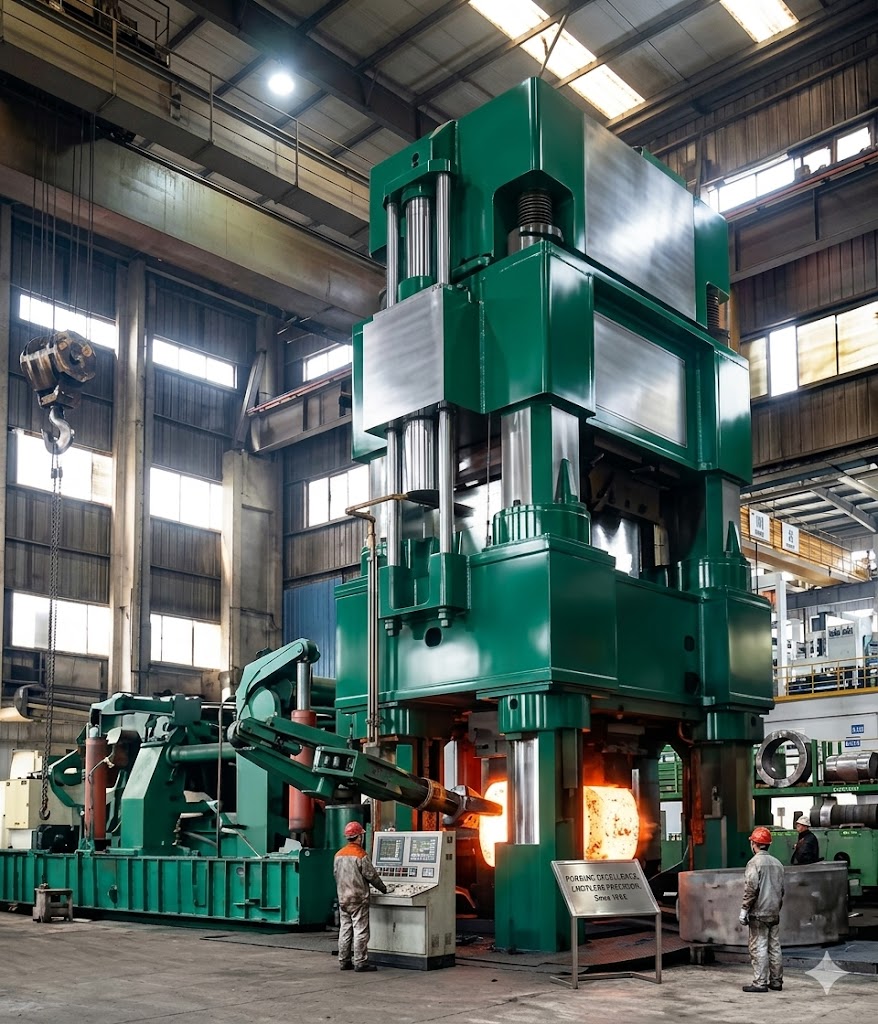
Ni36 billets are forged in the temperature window of 950°C – 1150°C on our hydraulic presses (capacity 1,000T, 2,500T, 4,000T, and 6,000T). The forging finish temperature must not drop below 900°C to avoid excessive flow stress and potential deformation cracking — Ni36 becomes noticeably less ductile below this temperature. Our operators monitor surface temperature by optical pyrometer throughout the forging process. For ring rolling, rings are rolled at 1,000–1,100°C with controlled feed rates to ensure uniform ring height and controlled OD/ID ratio. Minimum forging ratio for bars: 3:1. For rings: wall reduction of ≥50%.
All Ni36 forgings are annealed at 830–850°C in our computer-controlled electric batch furnaces, with a soak time calculated by the formula: 1 hour per 25mm of maximum cross-section thickness (minimum 2 hours). Temperature uniformity within the load is maintained to ±5°C throughout the soak period, verified by multiple calibrated thermocouples. Cooling is performed in still air for sections under 200mm or controlled furnace cooling (≤60°C/hr) for larger cross-sections to minimize thermal stress. All heat treatment data — furnace ID, thermocouple readings, soak time, cooling profile — is recorded and included in the MTC documentation.
Every 1.3912 Ni36 forging undergoes three layers of NDT: (1) Immersion UT (Ultrasonic Testing) per ASTM A388 or EN 10228-3, detecting internal inclusions, laminations, and flaws as small as Ø2mm equivalent reflector at full cross-section coverage; (2) MT (Magnetic Particle Testing) per ASTM E709 for ferromagnetically active Ni36 detecting surface and near-surface cracks; (3) PT (Penetrant Testing) per ASTM E165 for surface-open defect confirmation on machined surfaces or precision bores. NDT operators hold Level II certification per ASNT SNT-TC-1A.
Before release, each forging undergoes: full dimensional inspection with calibrated vernier, CMM (for precision parts), and ring gauges; hardness verification at minimum 3 points per forging; positive material identification (PMI) XRF spot-check on finished surface; visual examination for surface condition and marking completeness. The heat number is stamped or low-stress marked on every forging and cross-referenced to a full traceability dossier covering ingot heat, melt certificate, forging record, heat treatment chart, NDT reports, and final inspection data sheet.
Global Industry Applications of 1.3912 Ni36 Forging Parts by Region
1.3912 Ni36 forgings serve a remarkably diverse set of high-precision industries. What unites every application is a single engineering requirement: dimensional stability must be maintained regardless of temperature fluctuation. Here is how our products solve specific engineering problems by region and industry:
European Aerospace & Defense: Composite Autoclave Tooling
Target Markets: Germany, France, United Kingdom, Italy, Spain, Netherlands
In European aerospace manufacturing — where composite aircraft structures are produced to stringent EN and EASA aerospace specifications — composite aircraft structures (wing skins, fuselage panels, empennage components) are cured in autoclaves at temperatures of 120–180°C under pressures of 5–7 bar. The tooling molds and mandrels that hold these carbon fiber layups must expand at nearly the same rate as the CFRP part itself during the cure cycle; otherwise, differential thermal expansion between the tool and the part causes spring-in dimensional errors in the cured composite, requiring expensive rework or scrapping.
1.3912 Ni36 is the reference material for composite autoclave tooling because its CTE of ~1.5 × 10⁻⁶/°C closely matches the in-plane CTE of quasi-isotropic CFRP laminates (~2–3 × 10⁻⁶/°C), drastically reducing tool-induced spring-in errors versus traditional steel or aluminum tooling. We have supplied Ni36 forged tooling plates, mandrels, and structural frames for over 50 commercial aircraft and satellite programs in Europe. Our plates are machined with large-envelope 5-axis CNC machines after our forgings are stress-relieved, ensuring surface flatness of ≤0.05mm per meter — critical for aerodynamic surface accuracy.
North American Automotive & Electric Vehicle Manufacturing
Target Markets: United States, Canada, Mexico
The precision demands of modern electric vehicle manufacturing — particularly battery cell assembly, module stacking, and pack integration — have driven rapid adoption of Ni36 forged fixtures by North American OEMs and their tier-1 suppliers (across North American EV and traditional automotive manufacturing programs). EV battery manufacturing requires maintaining cell-to-cell and module-to-module dimensional relationships to tolerances of ±0.05mm over long production runs in factory environments that cycle from 15°C (early morning startup) to 35°C (peak production floor temperatures).
Conventional carbon steel or aluminum fixtures expand 12–24 μm per 1°C per meter of fixture length — enough to push assembly tolerances out of specification across a 20°C temperature swing. Ni36 fixtures expand only 1–2 μm per 1°C per meter, keeping battery cell positioning within tolerance regardless of factory temperature variation. We supply custom Ni36 forged bars, plates, and precision-bored blocks for fixture construction to over 30 North American automotive manufacturers and precision engineering firms, with full ASTM material certification and CMM dimensional reports on finished components.
Middle East LNG & Oil and Gas: Cryogenic Structural Components
Target Markets: Saudi Arabia, United Arab Emirates, Qatar, Kuwait, Oman
Liquefied natural gas (LNG) is stored and transported at -162°C — a temperature at which ordinary carbon steel becomes brittle and stainless steels contract significantly. Flanges, pipe support rings, valve seat rings, and instrument housings in LNG facilities must maintain their geometry and seal integrity across the full temperature range from ambient installation temperature (+40°C in Middle East climates) to LNG service temperature (-162°C) — a 200°C delta that would expand/contract a standard carbon steel meter bar by 2.4mm. 1.3912 Ni36 components change by only 0.20mm across the same range, preventing seal face misalignment, flange bolt-circle distortion, and instrumentation zero-drift.
We supply Ni36 forged rings, flanges, sleeves, and instrumentation housings to Middle East oil and gas projects compliant with API 6A, API 6D, and ASME B16.5 standards. We have supplied components for over 20 large-scale LNG projects in the region, serving major oil and gas infrastructure projects across the Gulf region. Our ISO 9001:2015 certification and EN 10204 3.1/3.2 MTC documentation meet the standard qualification requirements for international industrial project chains.
Asia Pacific Semiconductor & Precision Instrumentation
Target Markets: Japan, South Korea, Singapore, Taiwan, Southeast Asia
Semiconductor wafer fabrication equipment — lithography systems, ion implanters, chemical vapor deposition (CVD) reactors — requires stage and chuck structures that remain dimensionally stable to sub-nanometer levels across the cleanroom operating temperature range. While CFRP is used for the lightest structures, large machine frames and precision reference stages often require metallic Ni36 for its combination of rigidity, thermal stability, machinability, and ability to be precision ground to optical surface quality.
In the Asia Pacific region, our Ni36 forged round bars, flat bars, and forged blocks are machined into precision coordinate measuring machine (CMM) reference frames, optical bench structures, calibration gauge masters, and electron-beam equipment chambers for clients in the semiconductor and electronics precision manufacturing sector. We supply to over 80 precision manufacturers across Japan, South Korea, Taiwan, and Singapore, with export documentation compliant with JIS and GB standards.
Australian LNG Infrastructure & Scientific Research
Target Markets: Australia, New Zealand
As a major LNG exporter globally, Australia is a main market for cryogenic-grade 1.3912 Ni36 components used in the construction of LNG terminals and instrumentation. In addition to LNG, Ni36 forged plates and rings are also used by Australian research institutions, including major government research institutes and university physics laboratories, for the construction of cryostats, support structures for superconducting magnets and experimental equipment for low-temperature physics. Ni36's dimensional stability at liquid nitrogen (-196°C) and liquid helium (-269°C) temperatures makes it indispensable for precision scientific instrumentation.
We also supply custom Ni36 forged components for Australian mining and resources sector clients for precision downhole measurement and navigation instruments used in drilling operations, where extreme temperature cycling between surface (ambient) and borehole conditions demands dimensional stability throughout the measurement cycle.
Why Global Engineers Choose Jiangsu Liangyi for 1.3912 Ni36 Forgings
There are dozens of forging manufacturers in China. Very few have the combination of Ni36-specific metallurgical expertise, large-format forging capability, and rigorous quality documentation that demanding aerospace, LNG, and semiconductor applications require. Here is what genuinely differentiates us:
- Ni36-dedicated metallurgy expertise since 1997: We have been forging difficult nickel-iron low-expansion alloys for over 25 years. Our process engineers understand the specific challenges of Ni36 — hot shortness, the forging temperature window, annealing precision, CTE measurement protocol — not from textbooks but from thousands of production heats.
- Largest ring rolling capability for Ni36 in China: Our ring rolling mills handle Ni36 seamless rings up to 6m OD. This is significantly larger than most competitors can achieve in this alloy, which requires careful temperature management during the rolling pass sequence.
- Triple-melted Ni36 available on demand: Most manufacturers only offer VIM+VAR (double melt). We can provide VIM+ESR+VAR triple-melted Ni36 forgings for applications requiring highest internal cleanliness, used by aerospace and cryogenic clients globally.
- Tight nickel control at 35.5–36.5% vs. the standard's 35–38%: This tighter internal standard directly translates to more consistent CTE performance across production heats — measurable by the client on their finished machined components.
- Zero-error documentation system: Our dedicated quality documentation team cross-checks every MTC field against production data before issue. In 25+ years, we have had zero MTC correction requests from third-party inspection agencies — a record we are proud of and that our clients verify.
- DFM support at no charge: We review every client drawing for forgeability before accepting an order, identifying potential issues (undercuts that require machining, section changes that cause uneven deformation, grain flow requirements for fatigue-critical parts) and proposing optimized solutions before production begins.
- Bilingual English/Chinese engineering communication: Our technical sales team responds in English within 4 hours during business hours, with detailed technical responses — not generic catalog quotes. We understand what OEM engineers need: specific answers to specific engineering questions.
Frequently Asked Questions About 1.3912 Ni36 Forging Parts
1.3912 Ni36 Invar alloy is a binary iron-nickel alloy containing precisely 35.5–36.5% nickel. Its ultra-low CTE of ≤1.8 × 10⁻⁶/°C is caused by the Invar effect: near the Curie temperature (~230°C), the spontaneous magnetovolume expansion of its ferromagnetic Fe-Ni matrix partially cancels out the normal phonon-driven lattice expansion. At approximately 36% Ni, these two competing effects are most balanced, producing near-zero net thermal expansion between -60°C and 100°C. A nickel content deviation of even 1–2% breaks this balance and significantly raises the CTE — which is why we control Ni to ±0.5% of the target 36% composition. Primary applications include aerospace composite autoclave tooling, LNG cryogenic flanges and rings, EV battery assembly fixtures, precision calibration masters, semiconductor process equipment, and satellite structural components.
The CTE of 1.3912 Ni36 varies considerably with temperature: at LNG cryogenic temperatures (-162°C to -60°C) the mean CTE is approximately 0.5–1.0 × 10⁻⁶/°C; at ambient range (-60°C to 20°C) approximately 0.8–1.2 × 10⁻⁶/°C; at typical industrial service temperatures (20°C to 100°C) approximately 1.2–1.8 × 10⁻⁶/°C; at elevated temperatures (100°C to 200°C) the Invar effect begins weakening rapidly, CTE rises to 3–7 × 10⁻⁶/°C; above the Curie temperature (~230°C), CTE jumps to ~12–13 × 10⁻⁶/°C comparable to carbon steel. For precision design calculations, always use the mean CTE value for the actual operating temperature range of your part — not the single-point 20°C value. We can provide heat-specific dilatometry data per ASTM E228 upon request.
Our 1.3912 Ni36 forgings comply with: SAE AMS 2154 — aerospace forging inspection and documentation; EN 10204 — material certification including 3.1 (manufacturer's inspection) and 3.2 (independent third-party); ASTM B753 — Ni-Fe low expansion alloy wrought products; API 6A — wellhead and Christmas tree equipment (oil and gas, manufactured to client-specified API 6A dimensional and material requirements); DIN 17745 — nickel and nickel alloy wrought products; JIS G 4303/4308 — Japanese industrial standards for bars and wire. We also manufacture to customer-proprietary specifications with full DFM review. Third-party witness inspection by SGS, Bureau Veritas (BV), TÜV, DNV, or Lloyd's Register is available for any order.
Our maximum production dimensions for 1.3912 Ni36: Forged round bars: up to 2,000mm (2m) diameter, up to 15,000mm (15m) length; Seamless rolled rings: up to 6,000mm (6m) outer diameter, with wall thickness down to 100mm (OD/wall ratio ≤15); Forged discs and plates: up to 3,000mm diameter or 3,000 × 2,000mm rectangular, 20–800mm thickness; Single-piece weight: up to 30 metric tons (66,139 lbs). All large-section Ni36 forgings over 300mm cross-section are produced from triple-melted (VIM+ESR+VAR) ingots as standard, and include full NDT (UT, MT) with 100% cross-section coverage documentation. Smaller sections can use double-melt (VIM+VAR) material as standard unless triple melt is specified.
Forging is the superior manufacturing route for 1.3912 Ni36 for three fundamental engineering reasons: (1) Microstructure homogeneity: Forging with a minimum 3:1 reduction ratio completely breaks down the as-cast VIM+VAR dendritic ingot structure into a fine, equiaxed grain microstructure with uniform CTE across the entire cross-section. Castings retain dendritic segregation that causes CTE variation of up to ±0.3 × 10⁻⁶/°C across a single part — unacceptable for precision tooling. (2) Mechanical integrity: Forged Ni36 has 30–40% higher yield strength, better fatigue life and improved impact toughness than cast material of the same composition, while still maintaining the required low CTE.(3) Directional grain flow: In forged bars and rings, grain flow is aligned along the dominant stress direction of the part (axially in bars, circumferentially in rings), maximizing fatigue and load-bearing performance in service.
Standard documentation package (all orders): EN 10204 3.1 Mill Test Certificate covering ICP-OES heat chemical analysis (10 elements), tensile test results (Rm, Rp0.2, A%, Z%), Brinell hardness (minimum 3 readings per forging), UT report per ASTM A388 with scan coverage map, MT report per ASTM E709, forging heat treatment chart with time-temperature record, dimensional inspection report, and positive material identification (PMI) XRF certificate. Available on request: EN 10204 3.2 with third-party witness (SGS, BV, TÜV, DNV); CMM precision dimensional report; metallographic microstructure analysis report; CTE measurement certificate per ASTM E228 or ISO 11359-2; Charpy impact test results at specified temperatures; corrosion test reports. All documents are issued in English with full traceability linking every page to the heat number stamped on the forging.
Yes — 1.3912 Ni36 is weldable by TIG (GTAW), MIG (GMAW), and electron beam (EBW) methods using matching Ni36 or Ni36-grade filler wire. But there are some precautions that are necessary. (1) Pre-heat to 150–200°C before welding to prevent hydrogen-induced cold cracking in the heat affected zone; (2) Low heat input – High heat input causes grain growth in HAZ, which increases CTE locally and decreases the ductility of the joint; (3) Post-weld stress relief – Annealing after welding at 830–850°C recovers the optimal CTE in the weld zone; (4) Avoid restrained welding– Ni36 has a low elastic modulus and high ductility, but it is sensitive to high restraint stress concentration that can cause cracking of weld HAZ. We can provide welding procedure specifications (WPS) and our engineering team can recommend joint design for CTE critical welded assemblies.
The melt route directly affects internal cleanliness and compositional homogeneity of the Ni36 ingot before forging: VIM (Vacuum Induction Melting) alone — controls composition precisely and eliminates gas porosity, but macro-segregation in the ingot centerline can persist in large ingots. VIM + VAR (double melt) — VAR (Vacuum Arc Remelting) provides controlled directional solidification, breaking up macro-segregation and improving inclusion ratings. Suitable for general industrial and oil and gas applications. VIM + ESR + VAR (triple melt) — ESR (Electroslag Remelting) between VIM and VAR adds a second stage of inclusion removal via the active slag system (reducing sulfur to below 0.005%) and further homogenizes composition. The subsequent VAR then provides final directional solidification of the ESR ingot. Triple melt is required for aerospace-grade Ni36 forgings (SAE AMS 2154 Class A), large cross-section cryogenic components where CTE homogeneity across the full section is critical, and any application where Charpy impact properties at cryogenic temperatures must be certified.
Request a Custom 1.3912 Ni36 Forging Quote
Engineering-Grade Response Within 24 Hours
Jiangsu Liangyi's technical sales team — comprising metallurgical engineers with hands-on Ni36 forging experience — is ready to review your drawings, advise on optimal melt route and forging form for your application, and provide a detailed, itemized engineering quotation within 24 hours of receiving your specifications.
Please send us: your engineering drawing or sketch (PDF or DXF), material specification (EN standard or equivalent), key requirements (CTE tolerance, NDT class, certification standard, required documentation package), target quantity (prototype or production volume), and your delivery requirement. We will confirm feasibility, optimal manufacturing route, price, and lead time by return.
Inquiry Email: sales@jnmtforgedparts.com
Phone / WhatsApp: +86-13585067993
Official Website: https://www.jnmtforgedparts.com
Factory Address: Chengchang Industry Park, Jiangyin City, Jiangsu Province 214400, China