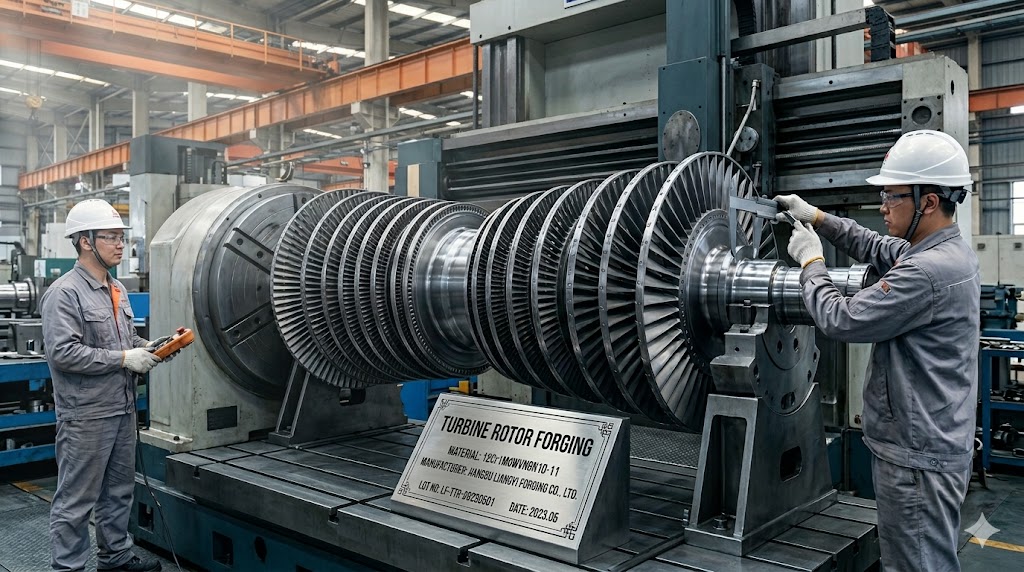
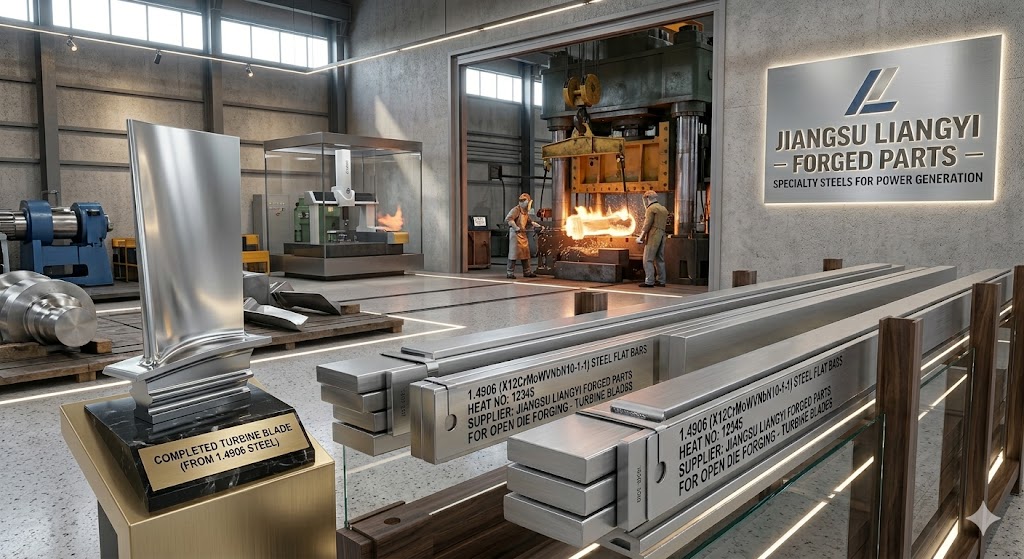
Jiangsu Liangyi Co., Limited, established in 1997 and located in Chengchang Industry Park, Jiangyin City — the heart of China's forging industry cluster in Jiangsu Province — is a professional ISO 9001:2015 certified manufacturer specializing in high-quality 12CrMoWVNbN10-11 (1.4906, X12CrMoWVNbV10-1-1) open die forging parts.
With over 25 years of production experience and advanced manufacturing facilities including 6,300-ton hydraulic presses and 5-meter seamless rolling machines, we produce 1.4906 steel components ranging from 30 kg to 30,000 kg that meet the most stringent international standards including ASTM, EN and DIN specifications.
Our 12CrMoWVNbN10-11 forged products are exported to more than 50 countries across Europe, North America, Asia, Australia and the Middle East, serving power generation plants, turbine manufacturers and heavy machinery industries worldwide with reliable Chinese manufacturing quality.
Metallurgical Background: Why 12CrMoWVNbN10-11 Was Developed
To fully appreciate what makes 12CrMoWVNbN10-11 (1.4906) a unique engineering material, it helps to understand the historical and metallurgical context in which it was created. The global push for higher-efficiency power plants in the 1990s — aimed at reducing CO₂ emissions per kilowatt-hour — required steam temperatures well beyond 600°C. Conventional 9% chromium steels such as P91 and P92 were approaching their practical limits. A new class of 10–12% Cr steel was needed.
The Strengthening Mechanisms at Work
Three distinct metallurgical mechanisms give 1.4906 its outstanding high-temperature performance:
Solid-solution strengthening from Tungsten (W): At 0.95–1.05%, tungsten substitutes for molybdenum in the iron lattice but diffuses far more slowly at elevated temperatures. This sluggish diffusion rate directly retards dislocation climb — the primary mode of creep deformation. Tungsten addition effectively extends the useful creep life at any given stress and temperature.
Nitrogen-enhanced precipitation strengthening: Nitrogen (N) at 0.045–0.060% — a narrow, tightly controlled range — stabilizes fine MX-type carbonitride particles (NbCN, VN) that pin grain boundaries and sub-grain structures against coarsening. These nano-scale precipitates are the workhorses of long-term creep resistance. Too little N and the precipitates are insufficient; too much N risks delta ferrite formation and embrittlement.
Lath martensite microstructure: After hardening at 1070–1100°C and the double tempering cycle, 1.4906 develops a tempered lath martensite structure with a hierarchical arrangement of prior austenite grain boundaries → packet boundaries → block boundaries → lath boundaries. This multi-scale barrier architecture is uniquely effective at resisting dislocation movement under sustained high-temperature loading.
Why Aluminum Must Be Strictly Controlled
One counterintuitive aspect of 1.4906's chemistry is the very low aluminum limit (Al ≤ 0.010%). In most steels, aluminum is a routine deoxidizer. In 1.4906, aluminum competes with nitrogen to form AlN instead of the desired MX carbonitrides. Even small excesses of Al above 0.010% will measurably reduce the density of strengthening precipitates, directly degrading creep performance. At Jiangsu Liangyi, Al content is routinely controlled to below 0.008% using vacuum degassing (VOD) to protect the nitrogen balance.
The Role of the Tight Carbon Range
Carbon content is strictly controlled within a narrow range of 0.11–0.13%, far more stringent than the requirements of most alloy steel standards. The lower limit of 0.11% guarantees adequate martensitic hardenability and stable tensile strength. Meanwhile, the upper limit of 0.13% restricts the precipitation of chromium carbides along grain boundaries, which would otherwise degrade toughness and corrosion resistance. This carbon content control is realized via accurate EAF melting and LF ladle refining processes at our steelmaking plant in Jiangyin.
Jiangsu Liangyi Manufacturing Insight: Every heat of 12CrMoWVNbN10-11 produced at our Jiangyin facility undergoes spectrometric analysis at the EAF tap, after LF refining, and again after VOD degassing — three independent compositional checks before casting. We monitor the N/Al ratio and aim for N to be at least 5 times Al so that nitrogen makes MX precipitates instead of being used up by aluminum.
Why Choose 12CrMoWVNbN10-11 (1.4906) Steel
12CrMoWVNbN10-11 (1.4906) is a high-performance martensitic stainless steel that is specifically used for high-temperature and high-pressure applications up to 620°C. It has significant advantages over traditional materials like F91 and 9Cr steel:
Superior High-Temperature Strength
It has excellent creep resistance and rupture strength at temperatures up to 620°C, so that it can work well for a long time in power plant operations and extend maintenance intervals compared to conventional 9Cr grades.
Enhanced Fatigue Resistance
Better resistance to thermal fatigue and cyclic loading — important for turbine parts operating under variable load conditions and frequent start-stop cycles in modern flexible power dispatch environments.
Excellent Oxidation Resistance
The 10.2–10.6% chromium content provides good oxidation and steam corrosion resistance. The Cr₂O₃ scale formed is protective to ~620°C, reducing spallation and extending turbine blade service life.
Superior Weldability vs Austenitic Grades
Lower thermal expansion coefficient than austenitic stainless steels (18-8 types) reduces thermal mismatch stress at welds. Martensitic steels also offer better thermal fatigue resistance in the HAZ under cyclic temperature conditions.
International Standards Cross-Reference for 12CrMoWVNbN10-11 (1.4906)
Engineers sourcing 1.4906 forgings from different countries may encounter this material under different standard designations. The following cross-reference table is based on our engineering team's multi-decade experience supplying to global power projects. Note that while the materials below are functionally similar or close, they are not chemically identical — always verify composition requirements with your project specification.
Standard Body
Designation
Product Form
Notes
EN / DIN (European)
X12CrMoWVNbV10-1-1 / 1.4906
Bars, forgings, bolting
Primary governing standard. EN 10269 (fasteners), EN 10302 (semi-finished). Most common designation in European tenders.
VdTÜV (German TÜV)
Werkstoffblatt (WB) 452/3
Forgings, bars
Original qualification data sheet; needed by many German and European turbine OEMs as primary reference for 1.4906 forgings.
ASTM / ASME (USA)
Grade 122 / P122 / T122 (UNS K91271)
Tubes, pipes, forgings
Closest ASTM analog (12Cr-2W-V-Nb-Cu). Main differences: Grade 122 adds Cu (0.30–0.70%) and has slightly higher W (1.50–2.50%). Not a direct substitute — confirm with project spec.
ASME (USA)
SA-182 F122 (forgings)
Flanges, fittings, valves
ASME code case for high-Cr 12W steel forgings. Used in US nuclear secondary circuit designs. Verify applicable code case number with your ASME inspector.
BS / PD (UK)
PD 5500 / BPVC reference to EN
Pressure vessels
UK post-Brexit standards increasingly reference EN designations directly. Most UK power projects accept EN 10269 / 1.4906 with EN 10204 3.1 certification; EN 10204 3.2 with third-party inspection is available on request.
Project-Specific (Global)
Per customer material spec (MDS)
All forms
Major turbine OEMs and EPC contractors maintain proprietary material data sheets (MDS) with tighter composition sub-ranges. Jiangsu Liangyi can review and confirm compliance with customer-supplied MDS on a project-by-project basis — contact our technical team with your specific requirements.
Procurement Note: When ordering 1.4906 forgings against a project specification, always state: (1) the governing standard and revision; (2) whether EN 10204 3.1 (standard) or 3.2 (third-party witness inspection, available on request) is required; (3) any customer-specific sub-requirements for N, Al, or delta ferrite limits that go beyond the standard range. Our sales team will confirm compliance scope with your exact MDS before order confirmation.
Available 1.4906 Forging Shapes & Forms
We manufacture a full range of 12CrMoWVNbN10-11 forged steel products in all kinds of shapes and sizes up to 30 tons, custom-made to your exact drawings and specifications from our Jiangyin factory:
Basic Forged Bars
Round bars (up to 2,000 mm diameter)
Square bars and rectangular bars
Flat bars for turbine blade production
Solid rods and billets
Hollow bars and tubes
Complex Forged Components
Seamless rolled rings (up to 6,000 mm diameter)
Hubs, housings and pressure vessels
Sleeves, bushes and bushings
Discs, disks and blocks
Plates, sheets and flanged blanks
Pipes, tubes and casings
12CrMoWVNbN10-11 Turbine Components
Our X12CrMoWVNbV10-1-1 steel from Jiangsu Liangyi is used for the most important parts in gas and steam turbine systems:
Gas and steam turbine rotor shafts (up to 15 meters long)
Turbine blades and vanes for high-pressure stages
Steam turbine discs and wheels
Turbine guide rings and seal rings
Labyrinth rings and packing seals
Diaphragm and seal rings
Rotor end rings and casing rings
High-temperature valve spindles, stems and rods
Double-headed studs and high-strength fasteners
Gas compressor blades and impellers
1.4906 Forging Parts — Global Applications
12CrMoWVNbN10-11 steel from our Jiangyin manufacturing facility is the best choice material for high-temperature power generation equipment worldwide:
European Ultra-Supercritical Power Plants
Supplied 1.4906 turbine blades and rotor shafts to ultra-supercritical coal-fired and combined-cycle power plants across Western and Central Europe, operating at steam temperatures up to 610°C with long-term field performance records.
Asian Power Generation
Major supplier of X12CrMoWVNbV10-1-1 steam turbine discs and valve parts to power plants in China, India, Japan and South Korea, supporting large-scale energy transition and decarbonization goals.
Middle East Gas Turbines
We supplied 12CrMoWVNbN10-11 gas turbine parts for natural gas and combined-cycle power plants across the Middle East, all parts are used for extreme desert conditions with high ambient temperatures and dust-laden environments.
North American Industrial Power
Supplied 1.4906 turbine parts and high-temperature valve forgings for industrial and combined-cycle power generation facilities in North America, providing complete EN 10204 3.1 documentation and tailored material traceability packages to meet project requirements.
Combined Cycle (CCGT) Plants
Essential material for modern combined-cycle power systems globally, providing excellent fatigue resistance under cyclic loading from frequent start-stop operation demanded by grid-balancing roles.
Industrial Gas Turbines & Cogeneration
Supplied 1.4906 compressor blades and rotor shafts for industrial gas turbines in oil and gas processing, petrochemical plants and district heating cogeneration (CHP) facilities across four continents.
X12CrMoWVNbV10-1-1 (1.4906) Chemical Composition
The precise chemical composition of 12CrMoWVNbN10-11 (1.4906) forged steel ensures its exceptional high-temperature properties. All materials are tested using advanced optical emission spectrometers (OES) in our Jiangyin quality control laboratory to guarantee compliance:
Element
Symbol
Content (wt%)
Metallurgical Function
Carbon
C
0.11 – 0.13
Martensite hardenability; carbide formation for precipitation strengthening
Silicon
Si
≤ 0.12
Deoxidizer (minimal); kept low to avoid delta ferrite
Stabilizes fine MX carbonitrides (VN, NbCN) — critical for long-term creep strength
Niobium
Nb
0.040 – 0.060
Forms NbC and NbCN MX precipitates; strong grain boundary pinning
1.4906 Physical Properties at Elevated Temperatures
Physical (thermophysical) properties are essential for structural analysis, thermal stress calculations, finite element modeling (FEM), and turbine design. The following values for 12CrMoWVNbN10-11 (1.4906) are based on tests done in our Jiangyin lab and compared with published European data. They are typical of our production material:
Density
Density at 20°C: 7.75 g/cm³. As the temperature rises, the density drops slightly because of thermal expansion. At 600°C, it is about 7.55 g/cm³. The standard value for structural weight calculations is 7.75 g/cm³ at room temperature.
Elastic Modulus (Young's Modulus)
Temperature (°C)
Elastic Modulus E (GPa)
Note
20 (RT)
210
Reference condition
200
200
—
300
194
—
400
186
—
500
175
—
600
162
Use with caution — creep governs design at this temperature
Mean Thermal Expansion Coefficient
Values below represent the mean linear thermal expansion coefficient from 20°C to the stated temperature (×10⁻⁶ /K):
Temperature Range (°C)
Mean α (×10⁻⁶ /K)
20 – 100
10.5
20 – 200
10.8
20 – 300
11.1
20 – 400
11.5
20 – 500
11.9
20 – 600
12.3
The relatively low thermal expansion coefficient of 1.4906 (~12.3 ×10⁻⁶ /K at 600°C) compared to austenitic grades (~18 ×10⁻⁶ /K) is a significant practical advantage: it reduces thermal stress in thick-section turbine parts during transient heat-up and cool-down cycles.
Thermal Conductivity & Specific Heat
Temperature (°C)
Thermal Conductivity λ (W/m·K)
Specific Heat cp (J/kg·K)
20
25.5
480
100
26.0
498
200
26.8
515
300
27.5
535
400
27.8
555
500
27.4
580
600
26.3
620
The high thermal conductivity (~26–28 W/m·K) relative to austenitic stainless steels (~15 W/m·K) allows faster and more consistent heat transfer through thick forging cross-sections during heat treatment and operation — an important factor in achieving uniform mechanical properties across large turbine rotor forgings.
1.4906 Forging Heat Treatment Process
All our 12CrMoWVNbN10-11 forging parts are given precise heat treatment in our in-house computer-controlled furnaces at our Jiangyin facility to achieve optimal mechanical properties and microstructure:
Step 1 — Hardening (Austenitizing + Quenching)
Temperature: 1070 – 1100°C Cooling method: Air or liquid quenching Result: Complete martensite structure throughout the entire cross section Grain size target: ASTM E 112 > 3.0 (finer grain = better toughness; coarser grain = better creep — the 1070–1100°C range is optimized to balance both)
Step 2 — Double Tempering Process
Minimum two distinct tempering stages are mandatory to ensure complete martensite transformation and minimal residual stress: — Stage 1: 570°C for 4 hours, air or liquid cooling — Stage 2: ≥ 700°C with sufficient holding time (minimum 2h; scaled to section thickness) Slow, controlled cooling rates after each tempering stage further reduce internal stresses and prevent new martensite formation.
Step 3 — Stress Relief Annealing (Conditional)
Mandatory after any straightening process. Performed at 30 K below the final tempering temperature with controlled slow cooling. Purpose: eliminate dimensional instability from straightening residual stresses while preserving the tempered microstructure achieved in Step 2.
Critical Warning: Sub-standard tempering temperature (e.g., tempering below 700°C to "save time") is the most common cause of premature 1.4906 component failure. Insufficient PWHT produces a partially tempered martensite with inadequate toughness and unpredictable creep behavior. Jiangsu Liangyi's computer-controlled furnaces automatically record and archive complete time-temperature traces for every heat treatment batch.
Mechanical properties are determined after all heat treatment steps, including any stress relieving. Tests are conducted on both the hardest and softest bars per melt and heat treatment batch in our Jiangsu quality control laboratory:
Property
Requirement / Typical Value
Unit
0.2% Yield Strength (Rp0.2)
750 – 830
N/mm²
Tensile Strength (Rm)
870 – 970
N/mm²
Elongation (lo = 5d)
≥ 14
%
Reduction of Area
≥ 55
%
Impact Energy (V-notch, longitudinal)
≥ 50 (average), ≥ 35 (minimum)
J
Hardness
270 – 310
HB
Delta Ferrite Content
< 5%
% vol.
Grain Size
> 3.0 (ASTM E 112)
—
Purity Grade (DIN 50602-K1)
K1 ≤ 2.0 on 1000 mm²
—
Quality Assurance: For cross sections > 200 cm², properties are tested both at the center and at the edge of the bar. Property differences across the cross section (except toughness) shall not exceed 5%.
High-Temperature Mechanical Properties of 1.4906
Room-temperature data tells only part of the story. For turbine engineers, the behavior of 12CrMoWVNbN10-11 (1.4906) at actual service temperatures is the important design input. The following values are representative of Jiangsu Liangyi's production material, based on our elevated-temperature testing program and validated against EN/VdTÜV reference data. Values are typical/indicative; design calculations must use applicable code allowables from the governing standard.
0.2% Proof Strength and Tensile Strength at Elevated Temperature
Temperature (°C)
0.2% Proof Strength Rp0.2 (N/mm²)
Tensile Strength Rm (N/mm²)
Elongation A (%)
20 (RT)
750 – 830
870 – 970
≥ 14
200
650 – 710
800 – 870
≥ 14
300
630 – 690
785 – 850
≥ 14
400
600 – 655
760 – 825
≥ 15
500
565 – 618
735 – 800
≥ 16
550
545 – 598
718 – 782
≥ 17
600
515 – 568
688 – 752
≥ 18
620
495 – 548
668 – 730
≥ 19
Main observation: the 0.2% proof strength retention of 1.4906 at 600°C (~515–568 N/mm²) is about 68% of its room-temperature value — a significantly better retention ratio than that of P91 at 600°C (~52–58% retention). This superior property retention directly translates to thinner wall sections, lighter parts, and less material needed per turbine unit.
Comparison of Strength Retention vs Temperature
Temperature (°C)
1.4906 Rp0.2 Retention (%)
P91 Rp0.2 Retention (approx. %)
400
~78%
~72%
500
~74%
~66%
550
~71%
~62%
600
~67%
~55%
620
~65%
~48% (near design limit)
Creep Rupture Strength of 12CrMoWVNbN10-11 (1.4906)
Creep rupture strength is the dominant design parameter for turbine parts operating in the 500–620°C range. Unlike tensile strength (which is measured in minutes), creep rupture data reflects material behavior over 100,000 hours (approximately 11.4 years) — the conventional minimum design life for base-load turbine parts.
100,000-Hour Creep Rupture Strength (Rp/10⁵)
Temperature (°C)
1.4906 Rp/10⁵ (MPa)
P91 Rp/10⁵ (approx. MPa)
1.4906 Advantage
550
150 – 165
~130 – 145
+15%
575
120 – 135
~95 – 110
+25%
600
95 – 108
~65 – 80
+40%
620
70 – 82
~40 – 52 (extrapolated)
+60%
The creep strength advantage of 1.4906 over P91 grows dramatically with temperature: at 550°C the advantage is about 15%, but at 620°C it exceeds 60%. This is the fundamental engineering reason why ultra-supercritical turbines designed for 600°C+ operation specify 1.4906 rather than P91.
How Creep Rupture Strength Affects Component Design
In practical terms, the 100,000-hour creep rupture strength determines the allowable stress for pressure-containing parts under the applicable design code (e.g., EN 13445, ASME Section I). A higher creep rupture strength at operating temperature directly allows:
Thinner wall sections in turbine casings and high-pressure pipes
Smaller cross-sections in rotor shafts and discs for equivalent safety margins
Higher operating pressures at the same temperature
Extended design service life (150,000–200,000 hours with appropriate inspection)
Important Design Note — Z-Phase Effect: The creep rupture strength values above are based on relatively short-term (typically 30,000–50,000 hours) extrapolations. For service lives beyond 100,000 hours at temperatures above 580°C, Z-phase precipitation progressively reduces creep strength. Jiangsu Liangyi recommends discussing long-term life assessments with your turbine OEM or materials consultant for A-USC applications. See our Z-Phase section below for details.
12CrMoWVNbN10-11 (1.4906) vs P91 — Full Material Comparison
Engineers regularly compare these two grades when specifying materials for high-temperature steam systems. Following is a complete, head-to-head reference:
Property / Feature
1.4906 (12CrMoWVNbN10-11)
P91 (X10CrMoVNb9-1 / 1.4903)
Material / UNS Number
1.4906
1.4903 / K91560
Chromium (Cr) %
10.2 – 10.6
8.0 – 9.5
Tungsten (W) addition
0.95 – 1.05% ✓
None ✗
Nitrogen (N) addition
0.045 – 0.060% ✓
Trace only
Max Service Temperature
620°C (1148°F)
~600°C (1112°F)
Tensile Strength (RT)
870 – 970 N/mm²
585 – 760 N/mm²
Yield Strength (RT)
750 – 830 N/mm²
≥ 415 N/mm²
Creep Strength @600°C/10⁵h
~95–108 MPa
~65–80 MPa
Hardness
270 – 310 HB
≤ 250 HB
Preheat for welding
250 – 300°C
150 – 200°C (simpler)
PWHT temperature
730 – 760°C
730 – 760°C (similar)
Z-phase susceptibility
Higher (10–12% Cr range more prone)
Lower (9% Cr range)
Density
7.75 g/cm³
7.75 g/cm³
Thermal expansion @600°C
12.3 ×10⁻⁶/K
12.1 ×10⁻⁶/K
Primary application
Ultra-supercritical / A-USC turbines
Supercritical power plants
Relative material cost
Higher (W, N additions)
Lower baseline
Engineering Summary: Choose 1.4906 when your steam temperature exceeds 600°C or when design life requirements demand the highest possible creep margins. Choose P91 for conventional supercritical plants (≤ 600°C) where its simpler welding procedure and lower cost are advantages. If in doubt, consult Jiangsu Liangyi's engineering team — we work with both grades and can advise based on your specific operating conditions.
Welding Guidelines for 12CrMoWVNbN10-11 (1.4906) Steel
12CrMoWVNbN10-11 (1.4906) is weldable, but it demands a more disciplined approach than lower-alloy steels due to its hardenable martensitic microstructure, high carbon equivalent, and the critical role of PWHT in restoring toughness and creep properties. Skipping or shortcutting any step in the following procedure creates a component that will fail — often catastrophically — in high-temperature service.
1
Joint Preparation and Incoming Inspection
Machine or grind joint faces to clean metal. Inspect the full joint area by magnetic particle testing (MT) or liquid penetrant (PT) to confirm freedom from laminations, laps, or cracks. Verify that both base material and filler metal certifications are on hand before beginning work. For dissimilar-metal welds (e.g., 1.4906 to low-alloy steel), obtain a qualified WPS from a welding engineer — the compositional difference creates HAZ complication requiring specialist design.
2
Preheat: 250 – 300°C Minimum, Through-Thickness
Use induction heating, electrical resistance, or ceramic pad heaters to heat the joint area to at least 250°C and no more than 300°C.
The preheat zone must extend at least 75 mm or 2.5 × the section thickness (whichever is greater) on both sides. Crucially, verify temperature through-thickness with contact thermometers or embedded thermocouples — surface pyrometry alone is insufficient for thick sections. Higher preheat than P91 is required because 1.4906's higher carbon equivalent creates a harder, more hydrogen-crack-sensitive as-welded martensite.
3
Filler Metal Selection and Low-Hydrogen Process
Use matching 1.4906-composition filler material for like-metal joints. For SMAW (stick welding), use basic-coated electrodes classified to the appropriate AWS/EN standard; bake electrodes at 350°C for minimum 2 hours immediately before use and keep in a heated quiver during welding. For GTAW (TIG), use high-purity shielding gas (Ar ≥ 99.998%) and dry, uncontaminated wire. For GMAW (MIG), verify the wire is clean and dry. Hydrogen below 5 ml/100g deposited metal (diffusible H5 classification) is the target — hydrogen is the primary cause of cold cracking in the hard as-welded HAZ.
4
Welding: Control Heat Input and Maintain Interpass Temperature
Maintain the interpass temperature strictly within 250–300°C throughout. Never allow the weld or HAZ to cool below the preheat temperature between passes — each cool-down cycle produces new, untransformed martensite that can crack. Control heat input to ≤ 2.0 kJ/mm to limit HAZ width and minimize Type IV susceptibility. Use string beads rather than wide weave passes. If interruption of welding is unavoidable, slow-cool the joint under insulation to room temperature, then inspect for cracks by MT/PT before resuming — re-preheating and re-baking filler metal will be required.
5
Hydrogen Bake-Out (if PWHT is delayed)
If PWHT cannot begin within 4 hours of weld completion, immediately soak the joint at 250°C for 4 hours minimum under insulation to allow residual hydrogen to diffuse out of the as-welded martensite. Do not allow the joint to cool to room temperature before bake-out — if it does, inspect for cracking before proceeding. The bake-out does NOT replace PWHT; it is a temporary protective measure only.
6
Post-Weld Heat Treatment (PWHT) — Mandatory
PWHT is non-negotiable for 1.4906 welded joints. Procedure: heat at a controlled rate of ≤ 150°C/h above 400°C to reach the PWHT temperature of 730 – 760°C. Hold for a minimum of 2 hours; add 30 minutes for each additional 25 mm of section thickness above 50 mm. Cool at ≤ 50°C/h until below 150°C, then free cooling in still air. Record the complete temperature-time cycle with chart recorders or data loggers and include in the final documentation package. Do not PWHT below 700°C — sub-critical PWHT produces tempered structures with inadequate creep and toughness properties.
7
Post-PWHT Inspection
After PWHT and cooling to room temperature, perform: (a) hardness traverse across the weld, HAZ, and base metal — HAZ hardness should be ≤ 350 HV10 (or per applicable code); (b) visual inspection; (c) MT or PT of the weld surface; (d) UT of the full weld volume per applicable construction code. Retain all records as part of the permanent joint file.
Jiangsu Liangyi Note: All weld repairs to our forged components are performed at our Jiangyin facility under qualified WPS, with full pre- and post-repair NDE and documentation. We do not supply 1.4906 forgings that have been field-welded without QC oversight. For field fabrication guidance specific to your project, contact our technical team.
Long-Term Service Behavior: Z-Phase, Type IV Cracking & Inspection Strategy
Power plant components are designed for service lives of 100,000 to 200,000+ hours. Understanding how 12CrMoWVNbN10-11 (1.4906) evolves over this timeframe is essential for lifecycle planning, inspection scheduling, and fitness-for-service assessments. Two microstructural phenomena deserve particular attention:
Z-Phase Precipitation: The Long-Term Creep Challenge
What is Z-Phase?
Z-phase (modified chromium nitride, composition CrNbN or Cr(V,Nb)N) is a thermodynamically stable intermetallic nitride that forms progressively in 10–12% Cr martensitic steels during service above approximately 560–580°C. It precipitates at the expense of the fine MX carbide/nitride particles (NbCN, VN) that are responsible for precipitation strengthening in the freshly heat-treated material.
The Z-phase problem unfolds in three stages over extended service life:
Stage 1 (0–30,000 hours): The as-heat-treated microstructure is dominated by fine, uniformly distributed MX precipitates (5–30 nm diameter). Creep strength is at its design maximum. No significant Z-phase is detectable.
Stage 2 (30,000–100,000 hours): Z-phase nucleates preferentially on the finest MX particles, beginning a coarsening-and-replacement process. The number density of strengthening particles gradually decreases, and creep rate begins to accelerate. This is the period where long-term creep data begins to diverge from short-term extrapolations.
Stage 3 (> 100,000 hours, > 600°C): The MX population has been significantly consumed by coarse Z-phase. Creep strength may be 20–35% lower than the initial value. Components operating in this regime require updated fitness-for-service calculations using actual long-term data rather than extrapolated values.
What Jiangsu Liangyi Does to Mitigate Z-Phase Effects
Complete elimination of Z-phase in standard martensitic 10–12% Cr steels is not currently possible — it is a thermodynamic inevitability at temperatures above ~570°C over long service. However, our manufacturing approach slows its onset and preserves creep strength for longer:
Tight N/Nb/V ratio control: We target nitrogen to niobium molar ratios that maximize VN formation relative to CrNbN (Z-phase precursor chemistry). This is only achievable through strict Al control (Al ≤ 0.008% in our practice, below the 0.010% specification maximum) to preserve available nitrogen for MX formation.
Optimized austenitizing temperature: Holding at the upper end of the 1070–1100°C hardening range maximizes Nb and V dissolution into the austenite matrix, enabling higher MX particle density upon tempering. More starting particles means the Z-phase coarsening process takes longer to deplete the strengthening precipitate population.
Grain size discipline: Maintaining grain size consistently at ASTM E 112 4–6 (not finer, not coarser) balances the competing requirements of creep resistance (coarser grain is better) and impact toughness (finer grain is better), while also providing an optimal grain boundary area for MX precipitation.
Type IV Cracking in Welded Joints
Type IV cracking is a type of creep failure that only happens in welded joints made of high-Cr martensitic steels. It happens in thefine-grained heat-affected zone (FGHAZ), which is a thin area at the edge of the HAZ that gets partially re-austenitized and over-tempered during welding, making the microstructure softer in that area. Under constant creep loading, this soft zone builds up damage more quickly, which eventually leads to a crack that runs parallel to the weld fusion line.
Type IV cracking is not a 1.4906-specific problem — it affects P91, P92 and all high-Cr martensitic steel welds. Main prevention and mitigation strategies include:
Minimizing HAZ width through controlled heat input (≤ 2.0 kJ/mm)
Using narrow-gap weld joint designs where the included angle is reduced
Avoiding weld repairs in high-stress zones without engineering review
Establishing a creep damage inspection protocol (e.g., replication metallography at 50,000, 80,000, and 100,000-hour intervals)
For critical welds, applying post-weld mechanical surface treatments to induce compressive residual stresses
Recommended Inspection Strategy for 1.4906 Components
Service Hours
Temperature
Recommended Actions
0 – 30,000
All
Baseline NDE per design code. No special microstructural surveillance required.
30,000 – 80,000
≤ 580°C
Standard inspection per maintenance plan. Creep life monitoring optional.
30,000 – 80,000
> 580°C
First replication metallography of weld HAZs. Hardness survey of known stress points.
80,000 – 150,000
> 580°C
Full fitness-for-service assessment using updated long-term creep data. Weld zone replication every 20,000 hours. Remnant life calculation.
> 150,000
> 600°C
Consult metallurgist. Z-phase inventory likely significant. Component replacement should be planned based on creep life calculation rather than first-principles.
Jiangsu Liangyi Technical Support: We provide material certification data, full records of heat treatment, and QC reports that serve as the base documentation for fitness-for-service evaluations over the part's lifetime. Keep all of the mill certificates and forging records. They are important for any lifecycle analysis of 1.4906 turbine parts.
Rigorous Quality Control & Inspection
Jiangsu Liangyi implements a full quality management system for all 1.4906 forged steel products at our Jiangyin factory, making sure every component meets international standards and customer requirements:
Material Quality Control
Three-point spectrometric analysis: at EAF tap, post-LF refining, and post-VOD degassing
Purity grade determined per DIN 50602-K1 (K1 ≤ 2.0 on 1000 mm²)
Delta ferrite content: < 5% (ASTM E 45/Method A, Worst Field Method)
Grain size inspection per ASTM E 112
N/Al ratio verification — our internal standard requires N ≥ 5×Al
Complete material traceability from melt to finished product
Non-Destructive Testing (NDT)
100% visual inspection of all forged surfaces
100% ultrasonic testing (UT) per SEP 1923, quality class 2b, using dual crystal search unit for full volume examination
Hardness testing per ISO 6506-1 (HBW 10/3000)
Magnetic particle testing (MT) and liquid penetrant testing (PT) available on request
Mechanical Testing Standards
Tensile testing: EN 10002 / ASTM E8M (room temperature and elevated temperature)
Impact testing: EN 10045 (V-notch specimens, longitudinal orientation)
High-temperature mechanical testing available on request
EN 10204 3.1 mill test certificate provided as standard with every order; EN 10204 3.2 (third-party witnessed) available on request
The most common technical and commercial questions from engineers and procurement teams worldwide:
12CrMoWVNbN10-11 (material number 1.4906, DIN designation X12CrMoWVNbV10-1-1) is a high-performance tempered martensitic stainless steel engineered for continuous service up to 620°C. Developed through European research programs in the 1990s, it extends the temperature capability of the established P91 family through tungsten (W) solid-solution strengthening and nitrogen (N)-stabilized MX precipitation hardening. It is the standard material for ultra-supercritical (USC) and advanced ultra-supercritical (A-USC) steam turbine components worldwide.
620°C (1148°F) is the qualified continuous service temperature for 1.4906 in most governing specifications. At this temperature, the 100,000-hour creep rupture strength is approximately 70–82 MPa — sufficient for the most demanding turbine blade and disc applications. Above 620°C, creep strength degrades rapidly and Z-phase precipitation becomes aggressive; 1.4906 is generally not specified above 625°C.
Z-phase (CrNbN / Cr(V,Nb)N) is a thermodynamically stable nitride that forms in 10–12% Cr martensitic steels above ~560°C in long-term service. It dissolves the fine MX carbide/nitride particles that provide precipitation strengthening, replacing them with fewer, coarser particles. This reduces creep strength by 20–35% over 100,000+ hours at temperatures above 580°C. Z-phase formation is a fundamental metallurgical limitation of the 10–12% Cr grade family. Jiangsu Liangyi mitigates it through tight N/Al ratio control and optimized austenitizing temperature, but cannot eliminate it entirely — this is a known behavior of the grade, not a manufacturing defect.
The key differences: 1.4906 has higher Cr (10.2–10.6% vs 8.0–9.5%), adds tungsten (W, 0.95–1.05%), adds nitrogen (N, 0.045–0.060%), has higher tensile strength (870–970 vs 585–760 N/mm²), and operates up to 620°C vs ~600°C for P91. At 600°C, 1.4906's 100,000-hour creep strength is approximately 40% higher than P91's. The trade-offs: 1.4906 requires higher preheat (250–300°C vs 150–200°C), is more costly due to W and N additions, and has greater Z-phase susceptibility in very long service above 580°C. See our detailed comparison table for full data.
Welding 1.4906 requires: (1) Preheat 250–300°C minimum, maintained through-thickness and throughout welding; (2) Low-hydrogen process — bake SMAW electrodes at 350°C/2h, use dry shielding gases; (3) Interpass temperature 250–300°C — never let the weld cool between passes; (4) Heat input ≤ 2.0 kJ/mm; (5) PWHT at 730–760°C, minimum 2 hours, heating rate ≤150°C/h above 400°C, cooling rate ≤50°C/h until below 150°C. PWHT is mandatory — never skip it. See our full welding guide above for step-by-step details.
There is no exact ASTM equivalent to EN 1.4906. The closest ASTM/ASME grade is Grade 122 / P122 / T122 (UNS K91271), which also contains 12% Cr and tungsten additions. However, Grade 122 includes copper (0.30–0.70%) absent in 1.4906, and has higher tungsten (1.50–2.50%). For European or international projects, specify 1.4906 per EN 10269 or VdTÜV WB 452/3. For ASME code designs, check which code case covers 1.4906 or equivalent for your component type.
Key values for FEM / structural analysis of 1.4906: Density 7.75 g/cm³; Elastic modulus 210 GPa at RT declining to ~162 GPa at 600°C; Thermal expansion coefficient ~10.5 ×10⁻⁶/K (20–100°C) to ~12.3 ×10⁻⁶/K (20–600°C); Thermal conductivity ~25.5 W/m·K (20°C) to ~26.3 W/m·K (600°C); Specific heat ~480 J/kg·K (20°C) to ~620 J/kg·K (600°C). For creep analysis, use allowable stresses from the applicable design code — do not use our indicative creep rupture values directly as design allowables.
Standard documentation: EN 10204 3.1 mill test certificate; full chemical analysis (OES); room-temperature mechanical test results; heat treatment time-temperature records; UT report per SEP 1923; hardness test report (ISO 6506-1); ASTM E 112 grain size report; delta ferrite report (ASTM E 45 Method A); DIN 50602-K1 purity assessment; dimensional inspection report. Available on request: elevated-temperature tensile test; sub-zero impact tests; EN 10204 3.2 with third-party witness inspection (requires coordination with an approved inspection body — please advise at time of order).
Type IV cracking is a long-term creep failure mode in the fine-grained heat-affected zone (FGHAZ) of high-Cr martensitic steel welds. The welding thermal cycle over-tempers the FGHAZ microstructure, creating a locally softened band with lower creep strength than the surrounding weld metal and base metal. Over 30,000–100,000+ service hours at elevated temperature, this soft zone accumulates creep damage preferentially, eventually forming a crack parallel and close to the weld fusion line. Prevention: control heat input (≤ 2.0 kJ/mm), use narrow-gap joint geometry, inspect HAZ zones by replication metallography at 30,000–50,000 hour intervals.
Jiangsu Liangyi supplies 12CrMoWVNbN10-11 forgings from 30 kg to 30,000 kg per piece. Maximum round bar diameter: 2,000 mm. Maximum seamless ring outer diameter: 6,000 mm. Maximum shaft length: 15 meters. Annual capacity: 120,000 tons. All shapes are custom-manufactured to customer drawings. Lead times vary by size and order volume — contact our sales team for current scheduling.
Our 1.4906 Forging Manufacturing Capabilities
Located in Jiangyin, Jiangsu Province — China's premier forging industry base — Jiangsu Liangyi operates one of the most complete vertically integrated 12CrMoWVNbN10-11 forging production facilities in China:
Forging Equipment
2,000-ton, 4,000-ton and 6,300-ton hydraulic open-die forging presses
3-ton and 5-ton electro-hydraulic forging hammers
1-meter and 5-meter seamless ring rolling machines
Ten computer-controlled heat treatment furnaces with data logging
Steel Making Facilities (Fully In-House)
30-ton electric arc furnace (EAF) — primary melting with tight carbon control
30-ton vacuum degassing furnace (VOD) — hydrogen removal and nitrogen control
2-ton medium frequency induction furnaces — small heat, specialty alloys
Capacity & Specifications
Single-piece weight range: 30 kg to 30,000 kg
Annual production capacity: 120,000 tons
Maximum shaft length: 15 meters
Maximum ring diameter: 6 meters
Complete in-house machining, NDT, and dimensional inspection
Request a Quote for 12CrMoWVNbN10-11 (1.4906) Forgings
Contact Jiangsu Liangyi Today
We welcome your inquiries for custom 12CrMoWVNbN10-11 (1.4906, X12CrMoWVNbV10-1-1) forged steel parts. Our experienced engineering team will provide you with a detailed technical and commercial quotation within 24 hours based on your drawings, material specifications, quality requirements, and quantity.