1.3964 (X2CrNiMnMoNNb21-16-5-3) Forging Parts | Custom Stainless Steel Forgings from Jiangyin Jiangsu China
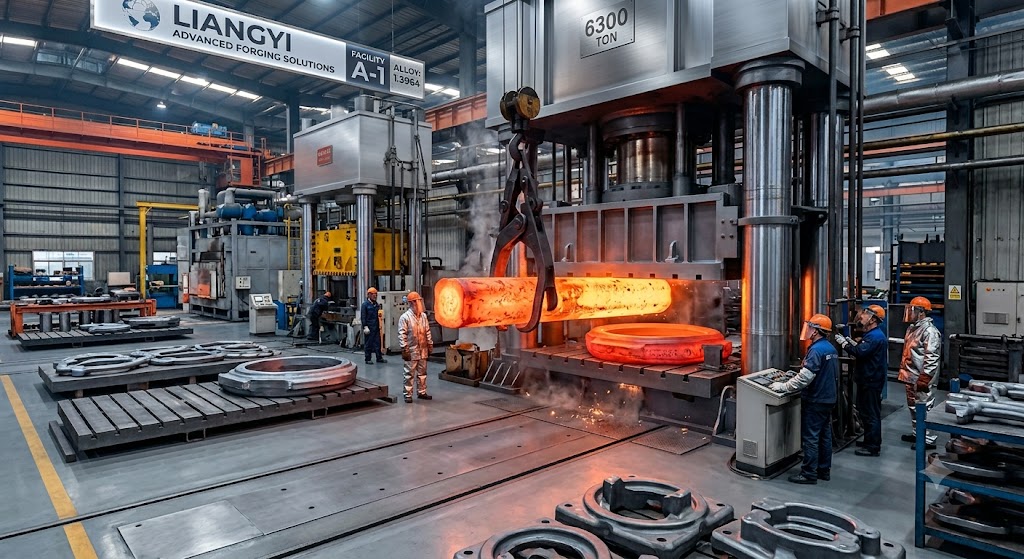
Jiangsu Liangyi Co., Limited is a vertically integrated ISO 9001:2015 certified 1.3964 forging parts manufacturer with 25+ years of uninterrupted production experience in Chengchang Industry Park, Jiangyin, Jiangsu, China. We are one of the very few facilities in China that controls every step of the X2CrNiMnMoNNb21-16-5-3 forging supply chain in-house: from EAF/LF/VOD melting and optional ESR remelting, through open die forging on 2000–6300 ton hydraulic presses, seamless ring rolling on 1–5 meter CNC mills, precision CNC machining (±0.05mm), heat treatment with ±5°C furnace accuracy, and full NDT — all within our 80,000 ㎡ Jiangsu facility. Single-piece weights range from 30 kg to 30,000 kg. Annual capacity reaches 120,000 tons. We export to 50+ countries with EN 10204 3.1/3.2 Mill Test Certificates, and have delivered 1.3964 stainless steel forgings to nuclear power, oil & gas, offshore, marine, turbomachinery, valve manufacturing, and chemical process customers across Europe, North America, Asia-Pacific, and the Middle East.
What Makes 1.3964 (X2CrNiMnMoNNb21-16-5-3) Different: A Metallurgical Engineering Perspective
1.3964, designated X2CrNiMnMoNNb21-16-5-3 under EN 10088-3, belongs to a specialized class of high-nitrogen austenitic stainless steels that exploit a "dual-hardening" mechanism unavailable in conventional 300-series alloys. Understanding this mechanism is essential for engineers making material selection decisions — and it is why Jiangsu Liangyi's Jiangsu factory applies stricter process controls for this alloy than for any other stainless steel in our portfolio.
The Nitrogen + Niobium Synergy: How 1.3964 Achieves Twice the Yield Strength of 316L
In conventional 316L, strengthening is limited to solid-solution hardening from Mo and Ni, and the resulting yield strength plateaus at around 170 MPa. In 1.3964 (X2CrNiMnMoNNb21-16-5-3), two separate mechanisms operate simultaneously: (1) Nitrogen (N at 0.20–0.35 wt%) pins mobile dislocations through interstitial solid-solution strengthening — nitrogen atoms occupy octahedral sites in the FCC lattice, creating asymmetric stress fields that impede dislocation glide far more effectively than substitutional atoms like Mo or Mn. Each 0.1 wt% N addition contributes approximately 85–95 MPa to yield strength in austenite. (2) Niobium (Nb up to 0.25 wt%) precipitates fine NbC and NbN particles along grain boundaries and within grains during controlled cooling after forging, providing a secondary precipitation-hardening contribution while simultaneously pinning austenite grain boundaries during hot working. The result: yield strength of ≥ 370 MPa (EN minimum) with Jiangsu Liangyi's factory-guaranteed ≥ 380 MPa — achieved entirely without cold work or aging, making the forging dimensionally stable under service conditions.
Manganese (4.00–6.00 wt%) serves a dual purpose that is often overlooked in standard datasheets: it expands the austenite phase field, which allows a higher nitrogen solubility limit in the melt (approximately 0.30 wt% at atmospheric pressure vs. only 0.06 wt% in Mn-free austenite). This is critical because Jiangsu Liangyi achieves the target N range of 0.25–0.30% without pressurized nitrogen gas injection — a simpler and more reproducible process than some competing methods. Mn also partially replaces Ni as an austenite stabilizer, reducing raw material cost while maintaining the fully austenitic (FCC) microstructure required for non-magnetic behavior and superior toughness.
Sigma Phase Risk: The Critical Temperature Window Every Engineer Must Know
One underappreciated risk with high-Cr, high-Mo austenitic grades is sigma (σ) phase precipitation, which occurs in the temperature range of approximately 650–950°C during slow cooling or prolonged exposure. Sigma phase is an Fe-Cr-Mo intermetallic compound that is both brittle and highly corrosion-susceptible; even 1–2 vol% precipitation can reduce impact toughness by 50% or more and dramatically lower PREN in the affected zones. In 1.3964 forgings, the elevated Cr (20.5–21.0%) and Mo (3.2–3.4%) content means the sigma nose on the TTT diagram is particularly prominent. Jiangsu Liangyi's solution: all 1.3964 forgings are water-quenched immediately from the annealing temperature (1065°C or 1121°C), bypassing the 650–950°C danger zone in under 3 minutes for forgings up to 300 mm section thickness. For very heavy sections (>400 mm), we use our high-flow-rate quench tank (water flow ≥ 800 L/min, inlet temperature maintained ≤ 40°C) to guarantee the cooling rate stays above the critical 2°C/s threshold throughout the cross-section. Every batch includes a post-quench sensitization check per ASTM A262 Practice E to confirm sigma-free structure before shipment.
Physical & Thermal Properties of 1.3964 Steel (Jiangsu Liangyi Reference Data)
The physical properties of 1.3964 (X2CrNiMnMoNNb21-16-5-3) are directly relevant to design calculations for pressure vessels, heat exchangers, and rotating machinery. The following values are based on our in-house measurements and cross-referenced with EN 10088-1 and published metallurgical literature for this alloy class:
| Physical Property | Value at 20°C | Value at 200°C | Value at 400°C | Unit |
|---|---|---|---|---|
| Density | 7.85 | 7.79 | 7.72 | g/cm³ |
| Modulus of Elasticity (E) | 195 | 185 | 172 | GPa |
| Thermal Conductivity (λ) | 13.5 | 16.2 | 19.0 | W/(m·K) |
| Thermal Expansion Coefficient (α) | 16.0 | 16.8 | 17.5 | ×10⁻⁶/K |
| Specific Heat Capacity (Cp) | 500 | 530 | 560 | J/(kg·K) |
| Electrical Resistivity (ρ) | 0.85 | 1.00 | 1.12 | μΩ·m |
| Magnetic Permeability (μ) | ≤ 1.005 | ≤ 1.005 | ≤ 1.005 | — |
| Poisson's Ratio (ν) | 0.30 | 0.31 | 0.31 | — |
The notably low magnetic permeability (≤ 1.005 at all temperatures and in deformed condition) makes 1.3964 forgings uniquely suitable for applications requiring non-magnetic structural components, such as nuclear instrumentation housings, MRI-related equipment frames, and electromagnetic flow meter bodies.
1.3964 Corrosion Resistance: PREN Calculation, Critical Pitting Temperature & SCC Performance
PREN ≥ 40: Calculation, Context, and What It Means in Practice
The Pitting Resistance Equivalent Number (PREN) is the single most widely referenced corrosion-screening parameter for stainless steels in chloride environments. The formula is:
PREN = %Cr + 3.3 × %Mo + 16 × %N
Using Jiangsu Liangyi's guaranteed composition midpoint (Cr = 20.75%, Mo = 3.30%, N = 0.275%), the calculated PREN = 20.75 + (3.3 × 3.30) + (16 × 0.275) = 20.75 + 10.89 + 4.40 = 36.0 minimum, typically 38–42 depending on actual heat chemistry. This significantly outperforms 316L (PREN ≈ 22–26) and is comparable to or better than 2205 duplex (PREN ≈ 33–38), while maintaining a fully austenitic — and therefore non-magnetic — microstructure.
| Grade | PREN (typical) | CPT in 1M NaCl (°C) | CCT in 1M NaCl (°C) | HISC Risk under Cathodic Protection |
|---|---|---|---|---|
| 1.3964 (X2CrNiMnMoNNb21-16-5-3) | 38–42 | >55 | >35 | None (fully austenitic) |
| 316L (1.4404) | 22–26 | ≈15–20 | ≈0–5 | None, but SCC risk in hot Cl⁻ |
| 2205 Duplex (1.4462) | 33–38 | ≈35–45 | ≈20–30 | Moderate–High (ferrite phase) |
| 904L (1.4539) | 36–40 | ≈45–55 | ≈25–35 | None, but high cost |
The critical advantage of 1.3964 forgings over 2205 duplex in offshore and subsea applications is immunity to Hydrogen-Induced Stress Cracking (HISC). The fully austenitic microstructure of 1.3964 has no ferrite phase to act as a hydrogen diffusion pathway, making it the preferred choice for CP-protected subsea connectors and riser clamps where duplex requires design restrictions per DNV-RP-F112.
1.3964 (X2CrNiMnMoNNb21-16-5-3) Global Standards Cross-Reference Table
One of the most frequent challenges for procurement engineers is identifying the correct designation across different national and international standards. 1.3964 does not have a direct, identical equivalent in ASTM, UNS, or JIS — a fact that creates significant confusion and occasionally results in incorrect material substitutions. The table below reflects Jiangsu Liangyi's 25+ years of cross-standard sourcing and export experience:
| Standard System | Designation | Key Differences from 1.3964 | Substitution Verdict |
|---|---|---|---|
| EN (European) | 1.3964 / X2CrNiMnMoNNb21-16-5-3 | Primary standard — Jiangsu Liangyi production basis | ✅ Identical |
| ASTM (closest) | XM-19 (S20910) | N range 0.20–0.40%; Nb not mandatory; Mn up to 6.5% | ⚠️ Near-equivalent; always verify Nb content in heat chemistry |
| UNS | S20910 (nearest) | Same caveats as XM-19; no direct 1.3964 UNS number exists | ⚠️ Partial match; confirm application requirements |
| DIN (German) | X2CrNiMnMoNNb21-16-5-3 | Preceded EN; identical composition | ✅ Identical |
| NF (French) | Z2CNMnN 21-16-5 | Earlier French designation; Nb not specified | ⚠️ Confirm Nb if required by end-use application |
| GOST (Russian) | No direct equivalent | Similar 08Kh21N16M3G5BN grades differ in Nb/N range | ❌ Not a direct substitute without full composition verification |
| JIS (Japanese) | No JIS equivalent | SUS316N lacks Mn/Nb levels required for 1.3964 | ❌ Not interchangeable |
Jiangsu Liangyi recommendation: For the order of 1.3964 forging parts for EN projects always specify EN material number 1.3964 and specify that the MTC should explicitly list C, N and Nb analysis values. Specifications that merely specify “high-nitrogen austenitic stainless” or “XM-19 equivalent” without verifying Nb content risk accepting non-conforming material that can pass tensile testing but fail intergranular corrosion testing per ASTM A262.
Jiangsu Liangyi China — 1.3964 Forging Shapes & Full Dimensional Capability Matrix
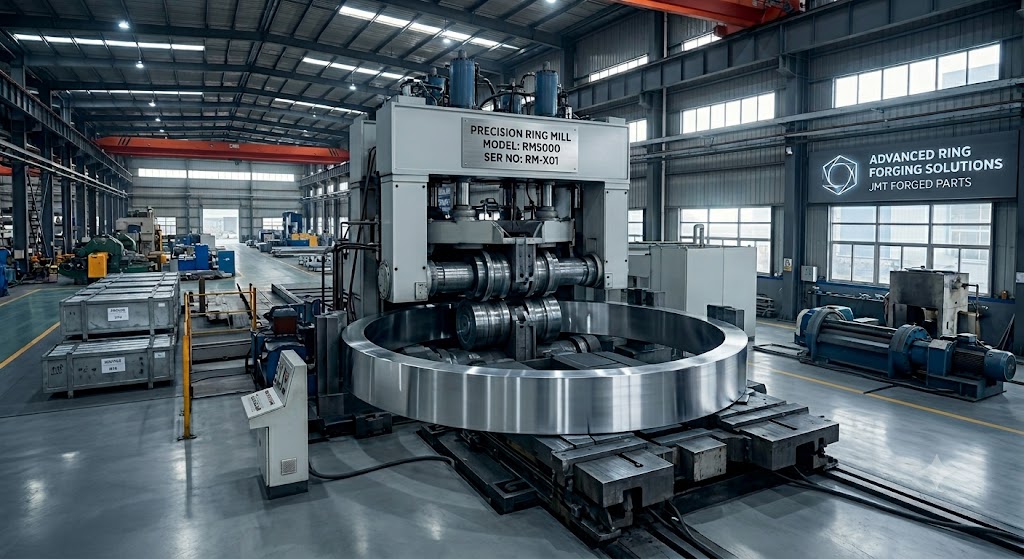
Jiangsu Liangyi's Jiangyin production line manufactures 1.3964 (X2CrNiMnMoNNb21-16-5-3) forged parts across five primary product categories. Every product type is produced with a minimum forging ratio of 3:1 — our internal specification, stricter than the typical 2:1 minimum at many China forging facilities. The 3:1 minimum ensures complete break-up of the as-cast dendritic structure, closes micro-porosity, and aligns the austenite grain flow with the part geometry for maximum fatigue and fracture toughness.
| Product Type | Dimension Range | Weight Range (kg) | Min. Forging Ratio | Typical Lead Time | Key Applications |
|---|---|---|---|---|---|
| Round Bars & Rods | Ø20–Ø800 mm × up to 15,000 mm L | 5–6,000 | 4:1 | 15–25 days | Shafts, spindles, valve stems, pump rods |
| Seamless Rolled Rings | OD Ø100–Ø6,000 mm; H 50–1,500 mm | 5–15,000 | 3:1 (ring rolling) | 20–35 days | Flanges, bearing rings, gear rings, nuclear tube sheets |
| Discs & Plates | Ø50–Ø5,000 mm; T 20–600 mm | 10–12,000 | 3:1 | 18–30 days | Tube sheets, blind flanges, diaphragms |
| Hollow Forgings / Sleeves | OD up to Ø3,000 mm; ID/OD ratio 0.3–0.85 | 30–10,000 | 3:1 | 25–40 days | Pressure vessel shells, pump casings, compressor cylinders |
| Open Die / Custom Shapes | Per customer drawing; max single piece 30,000 kg | 30–30,000 | 3:1 minimum | 30–45 days | Nuclear valve bodies, manifolds, impellers, custom flanged components |
1.3964 Forged Bars & Rods
- Round bars: Ø20–Ø800 mm; square, flat, rectangular also available
- Step shafts and gear shafts: up to 15 m total length; forging ratio ≥ 4:1
- Straightness tolerance: ≤ 1.5 mm/m (exceeds EN standard requirement)
- Available with CNC-turned OD, center drilling, and keyway machining
- Grain size ASTM ≥ 5 guaranteed on request for rotating machinery
1.3964 Seamless Rolled Rings
- OD Ø100–Ø6,000 mm; wall thickness as thin as 20 mm
- Contoured rings (gear profiles, flange steps) — in-house capability
- Wall thickness uniformity: ±1% of nominal (vs. ±2% industry standard)
- Ovality after rolling: ≤ 0.5% of OD
- EN 10204 3.1 or 3.2 MTC; TPI witnessing supported
1.3964 Hollow Forgings
- Seamless sleeves, bushes, and thick-wall cylinders
- Bore-to-OD ratio down to 0.30 (very heavy wall available)
- Suitable for pressure vessel shells per ASME BPVC VIII Div.1/2
- Bore rough-bored in-house to tolerance H7
- Hydrostatic pressure testing available at 1.5× design pressure
1.3964 Discs, Plates & Tube Sheets
- Forged discs Ø50–Ø5,000 mm; thickness 20–600 mm
- Drilled tube sheets per TEMA/ASME standards (tube pitch from 19 mm)
- OD tolerance ±1 mm; thickness tolerance ±0.5 mm
- Flatness: ≤ 0.5 mm TIR across full face
- Full-face UT mapping for tube-sheet integrity verification
1.3964 Heavy Forgings (>5,000 kg)
- Pump casings, valve bodies, nuclear pressure housings
- Single-piece weights up to 30,000 kg from our 6,300-ton press
- Forging procedure qualification (FPQ) available for nuclear programs
- Step-by-step forging log issued with each piece > 5,000 kg
- Full dimensional inspection by CMM with 3D report issued
1.3964 Forging Parts — Industry Applications: Engineering Reasons & Jiangsu Liangyi Case Studies
The following section goes beyond generic application lists to explain the specific engineering reasons why 1.3964 (X2CrNiMnMoNNb21-16-5-3) forged components are selected in each industry — and how Jiangsu Liangyi's Jiangsu factory has fulfilled these requirements for real customers. Design engineers, procurement teams, and project managers will find the technical context useful for material justification documentation.
Nuclear Power — Why 1.3964 Is the Specification Material
Nuclear coolant systems impose three simultaneous demands that eliminate most alloys: high strength under pressurized water (up to 155 bar, 325°C in PWR primary loops), non-magnetic behavior (to avoid electromagnetic interference with neutron flux instrumentation), and immunity to intergranular stress corrosion cracking (IGSCC) in borated, high-purity water. Standard 316L forgings have been documented to develop IGSCC at sensitized grain boundaries within 8–12 years of PWR service. The ultra-low carbon (<0.025% in Jiangsu Liangyi's specification) combined with Nb stabilization in 1.3964 prevents sensitization even after multiple thermal cycles, while high N content provides yield strength to allow thinner-walled designs that reduce neutron activation inventory.
- Reactor coolant pump impellers, rotors, and casings
- Pressure vessel nozzles & primary seal chambers
- Steam generator tube sheets (Ø up to 4,500 mm)
- Jiangsu Liangyi case: Supplied 1.3964 reactor coolant pump casings (Ø2,800mm, ~12,000 kg each) to a Tier-1 Chinese nuclear equipment OEM; produced per GB/T 20560 nuclear forging requirements; EN 10204 3.2 MTC with third-party witnessing available
- ESR-grade heats (S ≤ 0.003%, O ≤ 0.015%) available for Class 1 nuclear components
Offshore Oil & Gas — Subsea HISC Immunity
In deepwater subsea hardware (manifolds, flowline connectors, riser clamps), components are permanently under cathodic protection (CP) at −850 to −1,050 mV (Ag/AgCl). This CP potential causes hydrogen evolution and atomic hydrogen diffusion into the steel. In duplex steels, the high-strength ferrite phase traps hydrogen, causing HISC (Hydrogen-Induced Stress Cracking) addressed by DNV-RP-F112 with geometric design restrictions. 1.3964's fully austenitic structure has no ferrite, making it fundamentally immune to HISC — no special geometric restrictions, no reduced allowable stress, no limitations on stress concentration factors in CP environments.
- Subsea pipeline connectors & riser clamps (HISC-immune material)
- Wellhead equipment & tubing/casing hangers (to API 6A material requirements)
- Drilling tools & high-pressure valve components
- Jiangsu Liangyi case: Supplied 1.3964 seamless rolled rings (Ø3,500mm, wall 280mm) to a Norwegian subsea equipment manufacturer — application required HISC-immune material per DNV-RP-F112, excluding all duplex grades
- Complies with API 6A / ISO 15156 standards
Marine & LNG Propulsion — Long-Term Seawater Immunity
Seawater at 3.5% NaCl, temperatures 0°C–35°C (Arctic to tropical), plus bio-fouling and crevice conditions under gaskets creates an extremely aggressive corrosion environment. 316L forgings typically show measurable pitting within 2–5 years in immersed seawater service. 1.3964's CPT of >55°C in 1M NaCl means it maintains pitting immunity even in the warmest seawater with concentrated chlorides under crevice conditions. For LNG carrier propulsion shafts where both high fatigue strength (alternating stress >180 MPa at 10⁸ cycles in seawater) and seawater resistance are required, 1.3964 outperforms all 300-series and most duplex alternatives.
- Marine propulsion shafts & propeller hubs (meeting DNV/GL marine forging standard requirements)
- Offshore platform structural connectors & subsea wellhead components
- LNG carrier pump drive shafts (cryogenic toughness >45 J at −196°C)
- Jiangsu Liangyi case: Supplied 1.3964 step shafts (Ø320mm × 8,200mm L, 5,200 kg) to a South Korean propulsion integrator for LNG carrier CP pump drive shafts — 8-year first-overhaul interval requirement met
- Meets DNV/GL and other major marine classification society material requirements
Valve & Pump Manufacturing — Strength Enables Weight Reduction
High-integrity valves for nuclear and offshore service (to ANSI Class 1500–2500 and API 6A material requirements) require forged pressure-containing parts with exceptional dimensional stability under bolt-up loads and thermal cycling. The higher yield strength of 1.3964 vs. 316L allows wall thickness reductions of 20–35% in pressure-retaining valve bodies while maintaining the same ANSI pressure class — critical for weight-sensitive offshore topside equipment. The fine, uniform grain structure of Jiangsu Liangyi's 1.3964 forgings (ASTM grain size number ≥ 5) provides superior machinability compared to coarse-grained 316L, reducing hard tooling consumption by approximately 15–20% in finish-boring operations.
- High-pressure valve bodies, bonnets & stems (ANSI Class 600–2500)
- Pump impellers, casings & wear rings for seawater service
- Check valves, ball valves, and gate valves (ANSI B16.34/API 6D)
- Jiangsu Liangyi case: Annual supply of 5,000+ custom 1.3964 forged valve bodies and bonnets to a US Tier-1 valve OEM for API 6A wellhead service — material supplied to API 6A chemical composition and mechanical property requirements for 7+ consecutive years
Chemical Process & Heat Exchangers — Chloride-Rich Streams
Chloride-rich process streams — chlor-alkali electrolysis, seawater desalination brine, HCl synthesis, phosphoric acid production — routinely exceed the corrosion limits of 316L and even 317LMN. Elevated temperatures (>60°C), high Cl⁻ concentration (>10,000 ppm), and acidic pH require PREN > 35 to reliably prevent pitting. 1.3964 provides PREN ≥ 40 in a single-phase austenitic alloy that can be welded without phase balance concerns, unlike duplex grades where weld HAZ ferrite content requires careful control. For tube sheets, higher yield strength allows thinner face-side material or elimination of ligament reinforcement.
- Heat exchanger tube sheets (drilled in-house, Ø up to 4,500 mm)
- Chemical reactor pressure components & distillation column internals
- Chlor-alkali and seawater desalination equipment (ASME BPVC Section VIII)
- Jiangsu Liangyi case: Supplied 1.3964 forged tube sheets (Ø4,000mm, 8,800 kg) to a Jiangsu chlor-alkali equipment manufacturer — 4,200 tube holes drilled in-house at 25mm pitch, flatness ≤ 0.3mm, delivered in 38 days including machining
Turbomachinery — High-Stress Rotating Components
Centrifugal compressor impellers in hydrogen service, ammonia synthesis, and natural gas processing experience combination loading: centrifugal hoop stress >300 MPa at operating speed, aggressive process gas corrosivity, and elevated temperature (150–350°C). Standard austenitic grades fail the strength requirement; duplex grades introduce HISC risk in hydrogen-rich environments. 1.3964's yield strength ≥ 380 MPa combined with its stable fully austenitic structure under hydrogen-charging conditions makes it the preferred rotor material. Grain uniformity is especially critical: centrifugal stress concentrations at hub bores are sensitive to local grain-size variations. Jiangsu Liangyi guarantees ASTM grain size ≥ 5 (≤ 64 μm average diameter) verified by optical metallography per ASTM E112.
- Compressor impeller blanks & turbine disk forgings (DIN EN 10222-2)
- Rotating equipment structural parts for ammonia synthesis and H₂ service
- Gas turbine compressor rotor discs & shroud rings
- Jiangsu Liangyi case: Supplied 1.3964 compressor impeller blanks (Ø850mm, 1,200 kg) and seamless rolled shroud rings (Ø1,600mm) to a German turbomachinery OEM for ammonia synthesis gas service
1.3964 (X2CrNiMnMoNNb21-16-5-3) Chemical Composition — EN Standard vs. Jiangsu Liangyi Guaranteed Range
All 1.3964 forging parts produced at Jiangsu Liangyi's Jiangyin Jiangsu China factory are chemically analyzed by in-house OES (Optical Emission Spectrometer) and validated by wet chemistry for N and C before any forging begins. Each column below explains the engineering rationale for Jiangsu Liangyi's tighter control range:
| Element | Symbol | EN 10088-3 Range (wt%) | Jiangsu Liangyi Guaranteed Range (wt%) | Engineering Rationale for Jiangsu Liangyi Control Range |
|---|---|---|---|---|
| Carbon | C | Max. 0.030 | ≤ 0.025 | Ultra-low C prevents M₂₃C₆ carbide precipitation (sensitization) at grain boundaries during welding; protects IGC resistance per ASTM A262 |
| Silicon | Si | Max. 1.00 | 0.30–0.80 | Deoxidizer in melt; Si >1% promotes sigma phase; Jiangsu Liangyi controls to 0.30–0.80 to balance castability and sigma phase resistance |
| Manganese | Mn | 4.00–6.00 | 4.50–5.50 | Raises N solubility in melt (enabling 0.25–0.30% N at atmospheric pressure); wide Mn scatter causes inconsistent N content — Jiangsu Liangyi holds ±0.5% of midpoint for heat-to-heat consistency |
| Phosphorus | P | Max. 0.025 | ≤ 0.020 | P segregates to grain boundaries during solidification; reduces hot ductility during forging and lowers impact toughness |
| Sulfur | S | Max. 0.010 | ≤ 0.005 (ESR heats: ≤ 0.003) | S forms MnS inclusions — pitting initiation sites and hydrogen trapping sites; Jiangsu Liangyi standard ≤0.005%, ESR nuclear heats ≤0.003% |
| Chromium | Cr | 20.00–21.50 | 20.50–21.00 | Primary PREN contributor; Jiangsu Liangyi holds upper sub-range to maximize PREN while avoiding excess Cr that promotes sigma phase kinetics |
| Nickel | Ni | 15.00–17.00 | 15.50–16.50 | Primary austenite stabilizer; Ni <15% risks martensite under cold deformation; Ni >17% increases cost without performance benefit in this alloy system |
| Molybdenum | Mo | 3.00–3.50 | 3.20–3.40 | Strong PREN contributor (3.3× coefficient); provides crevice corrosion protection and elevated-temperature strength; Jiangsu Liangyi holds upper sub-range to maximize PREN |
| Nitrogen | N | 0.20–0.35 | 0.25–0.30 | Core strengthening element: each +0.1% N adds ~85–95 MPa yield strength; strongest PREN contributor (16× coefficient); Jiangsu Liangyi targets 0.27–0.28% center for consistent properties |
| Niobium | Nb | Max. 0.25 | 0.10–0.20 | Forms NbC/NbN precipitates that: (a) stabilize against sensitization at low C levels, (b) pin grain boundaries during hot working for fine final grain size, (c) provide secondary precipitation strengthening |
| Tungsten | W | Max. 0.25 | ≤ 0.10 | W is a residual element in this grade; higher W promotes sigma phase precipitation kinetics; Jiangsu Liangyi minimizes to ≤0.10% |
| Iron | Fe | Balance | Balance (low-residual scrap) | Jiangsu Liangyi uses controlled-residual scrap charge; Sn, Pb, As, Sb each ≤50 ppm for maximum hot ductility and cleanness |
1.3964 Forging Mechanical Properties — Delivery Condition (Solution Annealed + Water Quenched)
Jiangsu Liangyi supplies all 1.3964 (X2CrNiMnMoNNb21-16-5-3) forgings in the solution-annealed and water-quenched condition. Mechanical testing is performed on test coupons cut from the forging body — not from a separately forged test ring — per EN 10088-3 §8.5. All results are certified by Jiangsu Liangyi's laboratory; third-party witnessing by SGS/BV/TÜV available upon request:
| Property | Symbol | EN 10088-3 Minimum | Jiangsu Liangyi Factory Guarantee | Test Method | Sampling |
|---|---|---|---|---|---|
| Tensile Strength | Rm | 700–950 MPa | 720–930 MPa | GB/T 228.1 / ASTM E8 | 1 per heat per dimension group |
| 0.2% Proof Strength | Rp0.2 | ≥ 370 MPa | ≥ 380 MPa | GB/T 228.1 / ASTM E8 | Same as above |
| Elongation at Fracture (A5) | A | ≥ 14% | ≥ 15% | GB/T 228.1 / ASTM E8 | Same as above |
| Reduction of Area | Z | ≥ 40% | ≥ 42% | GB/T 228.1 / ASTM E8 | Same as above |
| Brinell Hardness | HBW | ≤ 290 | ≤ 280 (typical: 220–260) | GB/T 231.1 / ASTM E10 | 100% of pieces (surface test) |
| Charpy V-Notch Impact (20°C) | KV₂ | ≥ 80 J | ≥ 85 J avg. (3 specimens) | GB/T 229 / ASTM E23 | Set of 3 per heat |
| Charpy Impact at −196°C (option) | KV₂ | Not in EN standard | ≥ 45 J (Jiangsu Liangyi optional) | ASTM E23 (cryogenic) | Available on request for LNG |
| ASTM Grain Size | G | Not specified | ≥ 5 (Jiangsu Liangyi guarantee) | ASTM E112 / GB/T 6394 | 1 per heat for heavy forgings |
Elevated-temperature note: At 300°C, 1.3964 Rp0.2 is approximately 270–290 MPa (vs. ~240 MPa for 316L at the same temperature), maintaining its strength advantage through the typical pressure vessel and heat exchanger operating range. Creep data at >400°C available from our engineering team on request.
Jiangsu Liangyi Jiangsu — 1.3964 Forging Manufacturing Process: The Details That Make the Difference
Most forging datasheets describe a generic process. Jiangsu Liangyi's engineering team shares the specific process parameters and decisions developed over 25+ years of producing 1.3964 (X2CrNiMnMoNNb21-16-5-3) forgings — knowledge that directly explains why our products consistently outperform competitors on mechanical testing and corrosion evaluation.
Step 1 — Melting & Nitrogen Control: The Hardest Part of 1.3964 Production
Achieving nitrogen content of 0.25–0.30 wt% reproducibly is the primary technical challenge in 1.3964 melting. In a standard EAF without atmosphere control, maximum soluble N in austenitic stainless melt is approximately 0.06–0.08 wt% at atmospheric pressure — far below target. Jiangsu Liangyi's approach uses a two-stage solution: (1) LF (Ladle Furnace) with nitrogen gas stirring — N₂ bubbles are injected through porous plugs at the ladle bottom under controlled partial pressure, progressively increasing N content to 0.20–0.25 wt% over 45–60 minutes. (2) VOD (Vacuum Oxygen Decarburization) at controlled pressure (150–300 mbar during N-addition phase), allowing additional N absorption while reducing C to ≤0.025%. The result: final N content controllable to ±0.02% of target, verified by inline OES sampling every 8 minutes during refining. For nuclear-grade orders requiring S ≤ 0.003%, an additional ESR (Electroslag Remelting) step further reduces S, O, and inclusion density by >50% compared to conventional melted material. Jiangsu Liangyi operates two ESR furnaces (300 kg and 5,000 kg capacity) dedicated to high-purity specialty forgings.
Step 2 — Ingot Homogenization: Critical for 1.3964 More Than Any Other Grade
Due to high Mn content (4.5–5.5%), 1.3964 ingots show pronounced Mn-rich dendritic segregation in the as-cast condition. Mn-enriched dendrite cores can contain locally up to 6.5% Mn — above the EN maximum — while inter-dendritic zones may fall below 4.5%, causing locally insufficient nitrogen solubility and micro-porosity. Jiangsu Liangyi's homogenization practice: 1,200–1,220°C for 8–16 hours (depending on ingot diameter), followed by slow furnace cool to 900°C before transfer to the forge press. This dedicated homogenization step — which many lower-cost suppliers skip — is non-negotiable in our 1.3964 process because it eliminates the segregation banding that otherwise causes scatter in mechanical test results across large forgings.
Step 3 — Hot Working Temperature Window: Why We Stop at 1,050°C
The hot working window for 1.3964 is narrower than for 316L. Upper limit: approximately 1,240°C — above this, austenite grain growth is rapid (grain size doubles every 10°C above 1,250°C in this alloy). Lower limit: approximately 1,050°C — below this, sigma phase precipitation risk rises sharply. Sigma nucleates at deformation shear bands within the austenite and is invisible to the forge operator, but detected as brittle zones in post-forging impact testing. Jiangsu Liangyi's process control response: all 1.3964 forging operations are monitored by infrared pyrometer with a 1,050°C interlock alarm. If surface temperature falls below 1,060°C, forging stops and the piece returns to the reheating furnace for a verified 20-minute soak at 1,150°C before resuming. Large rings and discs are reheated a maximum of 3 times; pieces requiring a 4th reheat undergo additional metallographic examination before release.
Step 4 — Seamless Ring Rolling: Managing High-N Steel Ductility
The hot ductility of high nitrogen steels at rolling temperatures is worse than that of common austenitic grades because of increased lattice friction stress due to interstitial N atoms. Too-rapid radial feed in ring rolling initiates surface cracking at OD or ID surfaces. Jiangsu Liangyi's ring rolling procedure for 1.3964 seamless rolled rings: controlled mandrel feed rate of 0.5–1.5 mm per revolution (30–50% slower than our 316L rate), continuous pyrometer monitoring, and a maximum rolling time of 18 minutes between reheats for rings larger than Ø1,500 mm. The slower feed rate also improves wall thickness uniformity — our OD tolerance after rolling is ±0.5% of nominal OD vs. the industry standard ±1.0%. Post-rolling, rings are leveled on a hydraulic press within 30 minutes to minimize ovality before solution annealing.
Step 5 — Solution Annealing & Quenching: Two Temperature Options Explained
Jiangsu Liangyi offers two standard annealing conditions for 1.3964 forgings:
- Option A — Standard: 1,065°C ± 10°C, hold 1 hour per 25mm section thickness, water quench to ≤50°C within 3 minutes. Meets EN 10088-3 minimum mechanical properties; produces ASTM grain size 5–7; balanced strength and toughness. Furnace atmosphere: slightly reducing (CO:CO₂ ≈ 0.02) to prevent surface Cr depletion.
- Option B — High Corrosion Resistance: 1,120°C ± 10°C, hold 1–2 hours, water quench. Higher temperature redissolves any residual sigma phase or carbides more completely, maximizing PREN. Results in ~10 MPa lower Rp0.2 than Option A. Recommended for chemical process and sea water immersion applications. Our quench tank: water flow ≥800 L/min, inlet water ≤40°C, and cooling rate >2°C/s even at heavy section cores >400 mm.
Step 6 — CNC Machining: Specific Challenges With 1.3964 and How Jiangsu Liangyi Handles Them
1.3964 is significantly more difficult to machine than 316L due to higher yield strength and work-hardening rate (approximately 1.8× that of 316L during cutting). Jiangsu Liangyi's CNC workshop has developed specific cutting parameters for this alloy: cutting speed 80–110 m/min (vs. 140–180 m/min for 316L), feed 0.20–0.35 mm/rev, TiCN-coated carbide inserts with 5° positive rake angle, continuous flood coolant at 8–10 bar. These parameters reduce tool consumption ~35% compared to standard speeds while achieving Ra 1.6 μm or better. Tight tolerances (bore H7, OD h6) are achievable in-house — no subcontracting of machining, which is a significant quality risk for traceability-critical forgings.
1.3964 Weldability Guide: Filler Selection, Procedure & Post-Weld Requirements
A key practical advantage of 1.3964 over duplex stainless steels is straightforward weldability: no preheat required, no PWHT required for most applications, and no phase balance concerns in the weld HAZ. The following table provides Jiangsu Liangyi engineering team guidance based on our experience qualifying WPS/WPQR for nuclear, offshore, and pressure vessel applications:
| Welding Parameter | Recommendation for 1.3964 | Rationale |
|---|---|---|
| Filler Metal (TIG/GTAW) | ER320LR or matching composition (Cr 20–22%, Mo 3.0–3.5%, N 0.15–0.25%, C ≤ 0.020%) | Matching composition preserves PREN in weld metal; ER320LR over-alloyed in Mo for corrosion insurance |
| Filler Metal (MIG/GMAW) | ER316L (low corrosivity service) or ER320LR (seawater/nuclear/chemical) | ER316L acceptable where PREN matching is not critical; use ER320LR or matching for demanding environments |
| Preheat Temperature | None required (ambient ≥ +5°C) | Fully austenitic — no martensite risk; no hydrogen cracking susceptibility; preheat would increase sensitization risk |
| Interpass Temperature | ≤ 150°C maximum | Limits time in 650–900°C sensitization range during multi-pass welding; also limits HAZ grain growth |
| Post-Weld Heat Treatment | Not required; re-anneal at 1,065°C if maximum corrosion resistance required after welding | Low C + Nb stabilization prevents sensitization without PWHT; re-anneal dissolves any carbides in critical corrosion service |
| Shielding Gas | Ar or Ar + 2% N₂ (TIG/MIG) | 2% N₂ addition compensates for N evaporation loss at arc temperatures, maintaining weld metal nitrogen close to base metal level |
| Sensitization Verification | ASTM A262 Practice E (Strauss test) for corrosion-critical applications | Confirms no HAZ sensitization; important for nuclear and chemical process service after multi-pass welding |
Jiangsu Liangyi Quality System — What "100% Inspection" Actually Means for 1.3964 Forgings
Incoming Raw Material Control
Before any 1.3964 heat is melted, every raw material charge component (ferro-chromium, ferro-manganese, ferro-molybdenum, pure Ni, Nb pellets, and base scrap) is sampled and analyzed by OES spectrometer. Charge materials failing Jiangsu Liangyi's trace element limits (Sn, Pb, As, Sb each ≤ 50 ppm) are rejected. This incoming control — which adds 4–6 hours to the pre-melt timeline and is skipped by many lower-cost Chinese suppliers — is the foundation of our superior final composition control.
Complete NDT Matrix for Every 1.3964 Forging
- Ultrasonic Testing (UT): 100% volumetric scan per ASTM A609 / EN 10228-3; acceptance to Level 3 (no relevant indications exceeding 50% of reference notch). Contact angle beam and immersion UT available for critical cross-sections. Jiangsu Liangyi's internal UT rejection rate for 1.3964 is <0.3% — one of the lowest for this alloy in China.
- Dye Penetrant Testing (PT): 100% of machined surfaces per ASTM E165 / EN 10228-2, Level 1 acceptance (no linear indications > 2 mm). Fluorescent PT available for nuclear components.
- Magnetic Particle Testing (MT): NOT applicable to 1.3964 (non-magnetic). Purchase orders requesting MT on 1.3964 are proactively flagged and corrected before production start — a common error Jiangsu Liangyi catches on multi-material orders.
- 100% Hardness Survey: Every piece measured on ≥ 3 locations per piece. Pieces exceeding HBW 280 are quarantined for investigation (indicative of incomplete solution annealing or localized sigma phase).
- 100% Dimensional Inspection: All important dimensions (bore diameter, OD, flange face flatness) measured using calibrated instruments traceable to NIST/NIM. CMM inspection of complicate profiles.
Certification & Traceability System
All 1.3964 stainless steel forgings from Jiangsu Liangyi's Jiangsu China factory are supplied with Mill Test Certificate (MTC) EN 10204 3.1/3.2 with full Traceability from Raw Material Batch Number → Ingot Number → Forging Number → Heat Treatment Batch → Test Certificate → Piece Serial Number. Third-party inspection (SGS/BV/TÜV) is available on request. Each MTC includes: full chemical analysis (all 12 elements + trace elements on request), full mechanical test results, heat treatment record, NDT report numbers, dimensional inspection sign-off, and the authorizing inspector's name and stamp.
Total Cost of Ownership: Why 1.3964 Forgings Are Often More Economical Than 316L Over Equipment Lifecycle
The upfront material cost of 1.3964 forgings is 30–55% higher per kg than 316L. Here is why the lifecycle economics consistently favor 1.3964 in demanding service environments:
| Cost Factor | 316L Forging | 1.3964 Forging | 1.3964 Advantage |
|---|---|---|---|
| Material cost per kg (index) | 100 | 140–155 | Higher initial cost |
| Required wall thickness (same ANSI pressure class) | 100% | 65–75% | 25–35% less material weight due to higher Rp0.2 |
| Effective material cost for equivalent pressure rating | 100 | ~95–110 | Near parity when weight reduction is factored in |
| Corrosion inspection interval (seawater service) | Every 2–3 years | Every 8–10 years | ~$15,000–$50,000 inspection cost saving per interval per vessel |
| Expected service life before chloride pitting failure (offshore seawater) | 5–12 years | >25 years | 1–2 costly replacement cycles avoided |
| Post-weld heat treatment required in field | Sometimes needed (SCC prevention) | Not required | Saves $3,000–$20,000 per PWHT event (offshore access cost) |
| 10-year total cost of ownership (index, seawater service) | 100 | 70–85 | 15–30% lifecycle cost saving with 1.3964 |
The economics are most favorable in marine, offshore, and chemical process environments where replacement and inspection access costs dominate the lifecycle cost model. Jiangsu Liangyi's engineering team is happy to assist customers build the business case for material upgrade from 316L to 1.3964 for specific applications — contact us with your service conditions and design parameters.
8-Point Buyer's Checklist: How to Specify & Verify 1.3964 Forging Parts from China
According to the experience of Jiangsu Liangyi to receive the purchase orders and quality non-conformances from global customers, the following eight specification points are the most neglected. Addressing them before placing the order can save you costly disputes and shipment delays:
| # | Specification Point | Common Mistake | Jiangsu Liangyi Recommendation |
|---|---|---|---|
| 1 | Material Designation | Specifying "high-nitrogen SS" or "XM-19" without referencing EN 1.3964 explicitly | Specify EN 10088-3 Material No. 1.3964 (X2CrNiMnMoNNb21-16-5-3) in full on the PO |
| 2 | Niobium Requirement | Assuming Nb is always present — not all heats meet Nb 0.10–0.20% | Explicitly require Nb 0.10–0.20% in material specification; verify on MTC before acceptance |
| 3 | Nitrogen Minimum | Accepting MTC with N = 0.20% (EN minimum), giving PREN only ~36, not the ≥40 often assumed | Specify N ≥ 0.25% minimum if PREN ≥ 40 is required for your application |
| 4 | MTC Scope | Accepting EN 10204 2.2 (manufacturer's declaration) instead of 3.1 or 3.2 | Require EN 10204 3.1 as minimum; 3.2 for nuclear and offshore applications |
| 5 | Test Coupon Location | Accepting test results from separately forged test ring — not representative of the actual forging thermal history | Specify "test coupons machined from forging body per EN 10088-3 §8.5" |
| 6 | UT Acceptance Level | PO states "UT required" without specifying acceptance level or scan coverage | Specify ASTM A609 or EN 10228-3; acceptance Level 2 or 3; 100% volumetric coverage |
| 7 | Sensitization Testing | No sensitization test requested for weld-fabricated assemblies in corrosive service | For welded assemblies in corrosive service, require ASTM A262 Practice E on HAZ samples |
| 8 | Forging Ratio Certificate | Not verifying minimum 3:1 forging ratio — some suppliers achieve 2:1 or less | Require forging ratio certification with MTC, minimum 3:1 on critical cross-section |
Jiangsu Liangyi Jiangsu — Custom 1.3964 Forging Solutions: From Drawing to Delivery
Jiangsu Liangyi, a fully integrated manufacturer of 1.3964 forging parts, is located in Jiangyin, Jiangsu, China and offers complete custom engineering support from the earliest design phase. We don’t just “manufacture to drawing” — we look at designs for forgeability, look for dimensions where requested tolerances require machining (rather than forging), and suggest forging shape optimizations that reduce machining cost without affecting function. This DFM (Design for Manufacturability) review is at no charge and typically results in 8-15% savings on the first order finished machining cost for customers.
Forging Design Review (Free DFM)
- Identify draft angles, radii, and parting line locations that optimize die fill and forging grain flow
- Flag tolerances tighter than ±1 mm requiring post-forge machining — eliminates tolerance ambiguity
- Suggest forging allowances to minimize machining stock while meeting drawing requirements
- Verify forging ratio achievement on critical cross-section; issue forging ratio certification
- Provide estimated weight and price before commitment — no surprises at delivery
Material Customization Options
- Tight N range 0.26–0.30% for demanding offshore/nuclear applications (PREN consistently >40)
- ESR-grade heats (S ≤ 0.003%, O ≤ 0.015%) for nuclear Class 1 and high-fatigue rotating equipment
- Carbon ≤ 0.020% for weld-intensive assemblies requiring maximum IGSCC resistance
- Certified ASTM grain size ≥ 6 for rotating machinery components
- PMI (Positive Material Identification) by XRF on every finished piece — standard or optional
Heat Treatment Customization
- Standard anneal 1,065°C: balanced strength/toughness for structural applications
- High-corrosion anneal 1,120°C: maximum PREN for seawater and chemical process service
- Custom soak time for extra-heavy sections (>500 mm) ensuring full homogenization
- Accelerated quench protocol for sections >300 mm where sigma phase risk is elevated
- Post-anneal sensitization test (ASTM A262) issued with MTC on request
Inspection & Documentation
- EN 10204 3.1 (Jiangsu Liangyi lab), 3.2 (SGS/BV/TÜV witnessed), or dual-certified
- Customer-witnessed inspection at our Jiangyin factory (travel support available)
- Hydrostatic pressure test at 1.5× design pressure per ASME BPVC Section VIII
- Full traceability: heat number → ingot → forging → HT batch → test certificate → serial number
- PPAP package available for automotive/aerospace-adjacent customers
Why Choose Jiangsu Liangyi as Your 1.3964 Forging Parts Manufacturer in China Jiangsu?
The China forging market offers many suppliers claiming capability for specialty grades like 1.3964 (X2CrNiMnMoNNb21-16-5-3). The ability to present a 1.3964 MTC does not mean a supplier truly controls the process. What genuinely differentiates Jiangsu Liangyi from most China-based competitors for this specific alloy:
- In-House LF/VOD + ESR Melting: Most Chinese forging suppliers purchase ingots from steel mills with no visibility or control over the melting process. Jiangsu Liangyi melts in-house, targeting N 0.25–0.30% with ±0.02% heat-to-heat consistency — the single most important factor for consistent yield strength and PREN in 1.3964.
- Documented Sigma Phase Controls: Our forging temperature floor of 1,050°C with infrared interlock, and our water quench protocol (800 L/min flow, ≤40°C water inlet) specifically address the sigma phase risk unique to this high-Cr, high-Mo alloy. Very few China suppliers have these documented controls.
- 25+ Years & Hundreds of 1.3964 Heats Produced: We are not learning on your order. We have dedicated forging parameters for every product shape in this alloy — developed through real production experience, not theoretical procedure.
- No Subcontracting Policy: 100% of operations (melting, forging, heat treatment, machining, NDT) performed within our Jiangyin facility. No raw material or semi-finished goods leave our site for external processing — the only way to guarantee true traceability.
- 120,000 Tons Annual Capacity, 80,000 ㎡ Facility: Production capacity for single prototype pieces through to annual supply programs of 5,000+ pieces without capacity conflicts.
- Factory Acceptance Testing (FAT) Support: Dedicated customer inspection room at our Jiangyin factory. Major international TPI agencies including SGS, Bureau Veritas (BV), and TÜV are welcome to conduct inspection; customers may also send their own authorized inspector. Advance scheduling is requested.
- Engineering-Level Technical Support: Our team includes metallurgical engineers who support material qualification documentation, PED compliance, ASME code data reports, and welding procedure qualification.
- Proven Track Record: References available from nuclear OEMs in China, offshore equipment manufacturers in Norway and UK, valve OEMs in USA, and turbomachinery OEMs in Germany and France — available under NDA on request.
- Competitive China Factory-Direct Pricing: No middleman; direct sales from our Jiangsu factory with transparent pricing and detailed cost breakdowns on request.
- On-Time Delivery: Lead time 15–45 days per order size; milestone tracking with customer portal access for large programs.
Frequently Asked Questions — 1.3964 (X2CrNiMnMoNNb21-16-5-3) Forging Parts
The following Q&A section addresses detailed technical and commercial questions that procurement engineers and design teams most frequently raise. For questions not covered here, contact our engineering team at sales@jnmtforgedparts.com — we respond within 24 hours.
What exactly is 1.3964 steel and why is it called X2CrNiMnMoNNb21-16-5-3?
1.3964 is the EN material number under EN 10088-3 for X2CrNiMnMoNNb21-16-5-3. The systematic chemical designation decodes as: X = stainless steel; 2 = carbon ≤ 0.03%; Cr21 = chromium ~21%; Ni16 = nickel ~16%; Mn5 = manganese ~5%; Mo3 = molybdenum ~3%; N = nitrogen-bearing; Nb = niobium-stabilized. It is a fully austenitic, non-magnetic stainless steel strengthened primarily by interstitial nitrogen (0.20–0.35 wt%), achieving yield strength ≥ 370 MPa — over twice 316L — while maintaining excellent weldability, superior pitting corrosion resistance (PREN ≥ 40), and immunity to hydrogen-induced cracking. This combination makes it the material of choice for nuclear, offshore, marine, and chemical process industries worldwide.
Is 1.3964 the same as XM-19 or S20910 stainless steel?
1.3964 and XM-19 (UNS S20910) are near-equivalents but not identical. XM-19 does not mandate a minimum Nb content, has a slightly wider N range (0.20–0.40%), and allows Mn up to 6.5%. In practice, most XM-19 heats are Nb-free, reducing stabilization against sensitization compared to 1.3964. For EN-referenced projects (European nuclear, offshore), 1.3964 must be specified — XM-19 is not an accepted substitute. For North American applications, an XM-19 heat meeting the tighter 1.3964 composition requirements (Nb 0.10–0.20%, N 0.20–0.35%) may be acceptable, but this must be confirmed in the purchase specification. Jiangsu Liangyi produces to EN 1.3964 as the primary standard and can issue dual EN + ASTM certification upon request.
Can 1.3964 replace 2205 duplex steel in offshore and subsea applications?
In many offshore applications, yes — and 1.3964 offers distinct advantages over 2205: (1) HISC immunity: 1.3964's fully austenitic structure is not susceptible to hydrogen-induced stress cracking under cathodic protection, eliminating the geometric design restrictions required by DNV-RP-F112 for duplex in CP service. (2) Better low-temperature toughness: 1.3964 maintains Charpy impact energy >80 J down to −100°C; 2205 duplex shows a ductile-to-brittle transition around −40°C to −60°C. (3) Superior weldability: No post-weld ferrite percentage control required, no preheat needed. The trade-off: 2205's yield strength (≥450 MPa) slightly exceeds 1.3964 (≥370 MPa), so for highly strength-limited designs where HISC is not a concern, 2205 may be preferred. Contact Jiangsu Liangyi's engineering team with your specific application parameters for a formal substitution assessment.
Why does 1.3964 have 4–6% manganese — much higher than standard stainless steels?
The higher manganese content (4–6 wt %) plays an important metallurgical role by increasing the solubility of nitrogen in the austenite melt by about 5× compared with Mn-free austenitic grades. To obtain 0.25-0.30% N without high Mn would require either expensive pressurized injection of nitrogen or risk of nitrogen gas porosity during solidification. Jiangsu Liangyi adopts conventional LF/VOD process with nitrogen gas stirring at near-atmospheric pressure, using high Mn to achieve the desired N content, which is a more controllable and cost-effective route. Mn is also an austenite stabilizer (partially replacing Ni), and contributes to the formation of a fully austenitic, non-magnetic microstructure. The tighter range of 4.5–5.5% (vs. EN 4–6%) from Jiangsu Liangyi is optimized to help maximize nitrogen solubility while keeping Mn below the level where MnS inclusion morphology becomes unfavorable for fatigue performance.
What is the difference between EN 10204 3.1 and 3.2 Mill Test Certificates for 1.3964 forgings?
EN 10204 Type 3.1 is the "Specific Inspection Certificate" issued and signed by Jiangsu Liangyi's own authorized inspection representative (quality manager or metallurgical engineer), and certifies that the material has been tested in accordance with the specified standard and the results are in accordance with the purchase order requirements. Type 3.2 requires an additional countersignature from an independent third-party inspector (SGS, Bureau Veritas, TÜV) OR the customer's own authorized inspector who witnesses testing at Jiangsu Liangyi's Jiangyin facility. Type 3.2 is mandatory for nuclear (Class 1–3), PED Category III/IV pressure equipment, and most European offshore and naval applications. Jiangsu Liangyi provides 3.1 MTC as standard for all orders; 3.2 MTC is available on request — the customer arranges their preferred TPI agency (such as SGS, Bureau Veritas, or TÜV) to witness inspection at Jiangsu Liangyi's Jiangyin facility, with at least 10 working days' advance notice recommended.
Is 1.3964 suitable for cryogenic LNG service at −196°C?
Yes — 1.3964 performs excellently at cryogenic temperatures. Fully austenitic stainless steels maintain ductility at cryogenic temperatures due to their FCC crystal structure, which does not exhibit a ductile-to-brittle transition. Jiangsu Liangyi's 1.3964 forgings achieve Charpy V-notch impact energy ≥ 45 J at −196°C (liquid nitrogen temperature) as an optional guarantee for LNG applications, tested per ASTM E23 using a cryogenic impact fixture. The high nitrogen content has a modest negative effect on cryogenic impact toughness compared to lower-N grades (such as 304L), but values remain well above the 27 J minimum required for most cryogenic pressure vessel service standards. For LNG carrier propulsion shafts and pump casings requiring both cryogenic toughness and high yield strength, 1.3964 is a strong candidate. Specify "cryogenic impact test at −196°C per ASTM E23, minimum 45 J average" in your purchase order to activate this option.
Can Jiangsu Liangyi produce 1.3964 forgings for ASME code pressure vessels?
Yes Jiangsu Liangyi Forgings can support ASME BPVC Section VIII Div.1 and Div.2 pressure vessel fabrication. The main problem is that the material designation 1.3964 / X2CrNiMnMoNNb21-16-5-3 is not an ASME material designation in Section II Part A or Part D. Vessel fabricators generally use one of two methods: (1) Supply to ASTM A182 (XM-19 / S20910): Jiangsu Liangyi can certify material as meeting ASTM A182 Grade F XM-19 if the heat chemistry meets ASTM S20910 — using the published ASME allowables for S20910 at the design temperature. (2) ASME Code Case application: Apply for special design allowables with actual measured mechanical properties from Jiangsu Liangyi's MTC. For a specific material compliance plan, please contact our engineering team with your design parameters - Div.1 or Div.2, design temperature and pressure, ASME edition referenced.
What is the minimum order quantity (MOQ) and lead time for 1.3964 forging parts from Jiangsu Liangyi?
Jiangsu Liangyi has no fixed MOQ for 1.3964 forging parts. We accept orders for single prototype pieces (1 pc) through to high-volume programs of 5,000+ pieces per year. For single-piece or small-batch orders (1–10 pcs), we typically share a heat with other orders for the same or similar alloy, maintaining full traceability. For orders requiring a dedicated heat (mandatory for some nuclear applications), a minimum melt quantity of approximately 3,000 kg applies. Standard lead time is 15–45 days, depending on order complexity, heat treatment, and machining requirements. Expedited scheduling is available for urgent orders. For large programs (1,000+ pcs/year), Jiangsu Liangyi provides a dedicated production calendar with milestone confirmations and monthly delivery batches.
How to request a quotation for 1.3964 (X2CrNiMnMoNNb21-16-5-3) forging parts from Jiangsu Liangyi Jiangsu China?
To get a detailed quotation from Jiangsu Liangyi’s Jiangsu China factory, please send the following information to sales@jnmtforgedparts.com or WhatsApp +86-13585067993:(1) Drawing or dimensional specification (PDF/DWG/STEP preferred); (2) Material EN 1.3964 / X2CrNiMnMoNNb21-16-5-3 with any special composition requirements (N min, Nb range, C max) (3) Delivery condition (as-forged/rough-machined/finish-machined to drawing) (4) Amount and time needed for delivery. (5) MTC Type (EN 10204 3.1 or 3.2). (6) NDT Requirements. (7) Applicable Design Standard (ASME / EN / API).(8) Destination port. Jiangsu Liangyi's engineering and commercial team acknowledges within 8 business hours and issues a detailed DFM review + commercial quotation within 2–3 business days. Urgent requests via WhatsApp receive same-day response.
Request a Free Quotation — 1.3964 (X2CrNiMnMoNNb21-16-5-3) Forging Parts from Jiangsu China
Jiangsu Liangyi is your trusted engineering partner for 1.3964 (X2CrNiMnMoNNb21-16-5-3) forging parts, operating from Chengchang Industry Park, Jiangyin, Jiangsu, China since 1999. Whether you are specifying a single prototype piece for nuclear qualification, a batch of seamless rolled rings for an offshore project, or an annual supply program for valve OEM production, our technical team will review your requirements in detail and provide a competitive, fully documented quotation with DFM feedback at no obligation.
Please send your drawing, specification, quantity, delivery destination, and applicable standards to our engineering sales team. We respond within 24 hours with a detailed quotation — including material compliance plan, optional material alternatives analysis, and forging ratio certification plan for your critical cross-section.