1.4548 X5CrNiCuNb17-4-4 Forging Parts | China Professional Manufacturer & Supplier
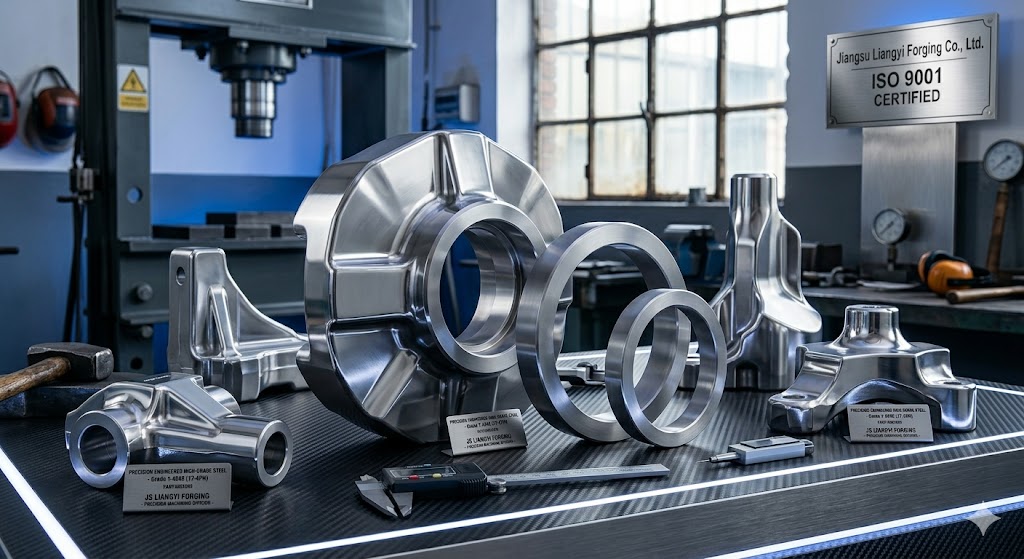
Jiangsu Liangyi Co., Limited is an ISO 9001:2015 certified professional maker of 1.4548 (X5CrNiCuNb17-4-4, X5CrNiCuNb1744, X5CrNiCuNb17.4.4) open die forging parts and seamless rolled steel forged rings. We are located in Jiangyin City, Jiangsu Province, in the main advanced forging industrial area of China’s Yangtze River Delta. With more than 25 years of focused forging experience, we supply custom high-performance 1.4548 X5CrNiCuNb17-4-4 forging parts to customers in over 50 countries in Europe, the Middle East, North America, Southeast Asia and Australia. All products are made to meet international standards (EN, ASTM, API, DIN) and customer drawing requirements. Our full manufacturing process includes steel melting, open die forging, seamless ring rolling, precise heat treatment, CNC machining and complete quality inspection. We can produce 1.4548 stainless steel forgings from 30 kg up to 35 tons per piece, with full material traceability. EN 10204 3.1 Mill Test Certificates (MTC) are provided as standard, and EN 10204 3.2 certification is available through customer-chosen third-party inspection. Our location close to Shanghai Port and Ningbo Port ensures fast global shipping and logistics for overseas clients.
About 1.4548 (X5CrNiCuNb17-4-4) Precipitation Hardening Stainless Steel
1.4548 (X5CrNiCuNb17-4-4) is a high-grade martensitic precipitation-hardening stainless steel, equivalent to AISI 630 (17-4PH). It has strong corrosion resistance, high yield strength, good wear resistance, and high notch impact strength at sub-zero temperatures. When heat treated to H1150 and H1025 conditions, the material keeps good machinability and formability even at low temperatures, so that it is the best choice material for many demanding industrial uses.
International Grade Cross-Reference: 1.4548 Equivalent Designations Worldwide
One of the most common questions from global procurement engineers is how 1.4548 X5CrNiCuNb17-4-4 corresponds to the grade names in their own regional standards. Unlike a direct textbook translation, the table below shows how our factory actually gets and processes orders from clients following different technical systems. The same alloy is known by different names, depending on whether the specification comes from a German engineering company, an American OEM, or a Japanese trading firm. Knowing these equivalents helps prevent material substitution mistakes and makes sure MTC documents list the exact grade your project requires.
| Standard System | Grade / Designation | Primary Application Region | Key Standard Document |
|---|---|---|---|
| EN (European) | 1.4548 / X5CrNiCuNb17-4-4 | Europe (Germany, Netherlands, Norway, France, Italy) | EN 10088-3, EN 10250-4 |
| ASTM / UNS (American) | S17400 / AISI 630 / 17-4PH | USA, Canada, Mexico, Brazil | ASTM A564, ASTM A693, AMS 5604 |
| JIS (Japanese) | SUS 630 | Japan, South Korea, Taiwan, Southeast Asia | JIS G4303, JIS G4318 |
| GOST (Russian / CIS) | 07Х16Н6 (approximate) | Russia, Kazakhstan, Ukraine, CIS states | GOST 5632 |
| GB (Chinese National) | 0Cr17Ni4Cu4Nb | China (domestic projects) | GB/T 1220, GB/T 14976 |
| BS (British — legacy) | 904 S17 (withdrawn, now aligned to EN) | UK (heritage specifications, older contracts) | BS 970 (obsolete), now EN 10088-3 |
| AMS (Aerospace) | AMS 5604 / AMS 5643 | USA aerospace, defence, and aviation OEMs | AMS 5604 (sheet/strip), AMS 5643 (bar) |
It is important to note that while these grade names are generally considered equivalent, small differences can exist between EN 10250-4 and ASTM A564 in niobium content control, surface quality requirements, and testing frequency. When your project needs to meet both standards at the same time — common in refinery joint ventures or multinational EPC projects — our technical team will apply the stricter requirements of the two on the MTC. This makes sure your forgings pass inspection from both sides without extra testing.Discuss dual-standard compliance with our team →
Core Material Advantages & Performance Highlights
The special chemical makeup of 1.4548 X5CrNiCuNb17-4-4 includes controlled levels of copper (Cu) and niobium (Nb). These alloying elements allow a precise precipitation hardening process, giving it mechanical properties much better than traditional martensitic stainless steels.
- Superior corrosion resistance comparable to austenitic 304 stainless steel, with excellent resistance to atmospheric, freshwater, and mild chemical corrosion
- Ultra-high yield strength (min 1,000 N/mm²) and hardness, with excellent fatigue resistance for long-term cyclic load applications
- Excellent low-temperature notch impact strength, suitable for cryogenic and low-temperature working conditions
- Outstanding weldability and machinability compared to other high-strength stainless steels, reducing post-forging processing costs
- Ideal for maritime and offshore environments, with proven performance in salt spray and humid industrial atmospheres
This grade is the best choice for uses that need better corrosion resistance and mechanical strength than standard martensitic steels, and it is widely used by engineers in industries worldwide. Note: This material can develop crevice corrosion when exposed to still seawater for long periods. For extreme deep-sea applications, we offer custom material adjustments and surface treatment solutions.
Full Range of Custom 1.4548 X5CrNiCuNb17-4-4 Forging Products
We manufacture a complete portfolio of custom 1.4548 X5CrNiCuNb17-4-4 forging products in all kinds of shapes and sizes, and all parts are produced based on EN, ASTM, API, and other international standard requirements. Following are our main product ranges:
Forged Bars & Rods
We produce 1.4548 forged steel round bars, square bars, flat bars, rectangular bars, step bars, and precision ground rods. The maximum diameter is up to 2,000 mm, with single-piece weight up to 35 tons. They are available in hot-forged, normalized, quenched and tempered, and precipitation-hardened conditions, so that they are the best choice material for fasteners, valve parts, machinery parts, and structural uses. We supply these bars to European machinery makers, North American fastener suppliers, and Middle East oilfield equipment factories. Explore our full forged bars range →
Seamless Rolled Forged Rings
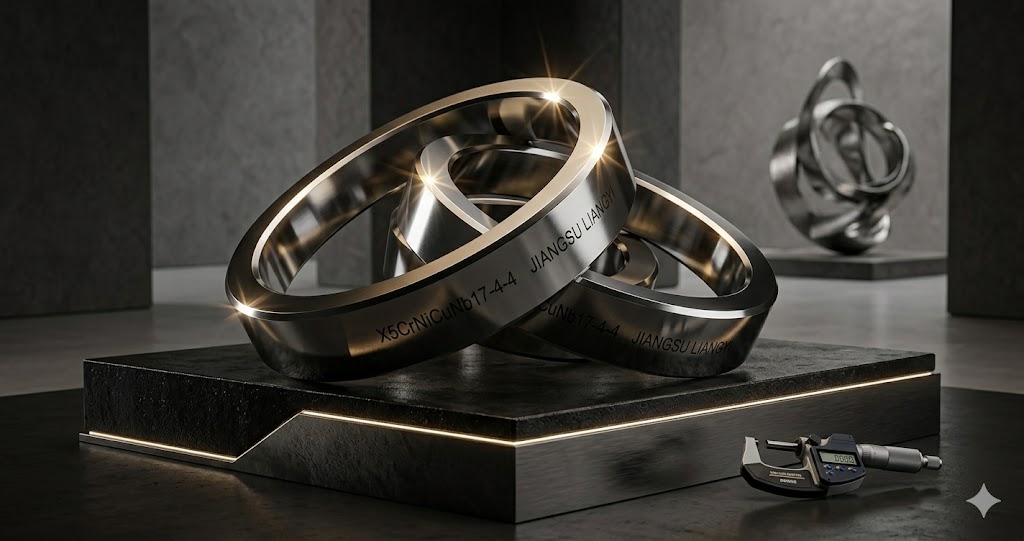
We produce X5CrNiCuNb17-4-4 seamless rolled forged rings, gear rings, valve seat rings, seal rings, labyrinth rings, guide rings,and custom shaped rolled rings. The maximum outer diameter is up to 6,000 mm, with single-piece weight up to 30 tons. Our seamless ring rolling process guarantees even material flow and consistent mechanical properties, with no welding defects, so that they are the best choice material for high-pressure valves, turbines, bearings, and flanges. We have supplied these rings to German valve makers, Norwegian offshore engineering firms, and power plants in Southeast Asia. View our seamless rolled rings capabilities →
Forged Shafts & Rotors
We produce 1.4548 forged turbine shafts, marine propeller shafts, gear shafts, splined drive shafts, pump shafts, valve stems, and custom step shafts. Maximum diameter is up to 1,800 mm, maximum length up to 15 meters, and single-piece weight up to 30 tons. All shafts receive 100% ultrasonic testing (UT) to guarantee internal quality. Heat treatment is customized to get the best balance of strength and toughness for each use. Our forged shafts are used in European shipbuilding projects, North American compressors, and energy industry pump equipment.
Seamless Hollow Forgings
We produce X5CrNiCuNb17-4-4 forged sleeves, bushes, bushings, hollow bars, heavy-wall cylinders, pipes, tubes, and casings. The maximum outer diameter is up to 3,000 mm with customizable wall thickness. Our seamless forging process removes weld seams, guaranteeing consistent corrosion resistance and pressure-bearing performance. These products are ideal for high-pressure hydraulic cylinders, valve bodies, heat exchanger shells, and downhole drilling tools. We supply these hollow forgings to American waterjet equipment makers and Australian mining machinery companies.
Custom Forged Components
We offer complete custom 1.4548 forged parts including discs, disks, blocks, plates, tube sheets, flanges, valve bodies, valve bonnets, valve balls, impellers, wellhead parts, and fully machined parts made to customer drawings. We support both small-batch prototype production and large-volume mass production. With full in-house machining capacity, we deliver finished parts ready for direct assembly. Request a custom forging quote →
Industry Applications & Global GEO Project Cases
Our 1.4548 X5CrNiCuNb17-4-4 forging parts are used for important high-load, corrosive, and extreme temperature applications across global industries. Following are real project performance in all big export markets:
Oil & Gas Onshore & Offshore Industry
As a trusted supplier to the global oil and gas industry, we manufacture X5CrNiCuNb17-4-4 forged wellhead equipment, Christmas tree parts, casing heads, tubing hangers, tubing spools, frac pump fluid end modules, blowout preventer (BOP) bodies, valve bodies, valve stems, valve seat rings, and choke valve parts. We make our oilfield forgings to meet the size and material requirements set by API 6A. For H2S sour service environments, we can also provide NACE MR0175 / ISO 15156 material compliance, and we can provide third-party testing reports upon request.
Global Project Case
We supplied more than 2,000 sets of1.4548 forged wellhead and Christmas tree parts for a large onshore oilfield development project in Saudi Arabia, Middle East. These forgings were produced to meet the chemical composition and mechanical property requirements of API 6A material classes and validated by third‑party inspection. They have been working reliably for over four years in high‑pressure sour service conditions. We also provided custom X5CrNiCuNb17-4-4 valve parts for North Sea offshore projects in Norway. These were made according to material specifications from project purchase orders referencing NORSOK standards, with third‑party inspection performed by the customer’s nominated inspection body.
Power Generation Industry
Our 1.4548 forged steam and gas turbine discs, turbine impellers, turbine blisks, rotor shafts, guide rings, seal rings, fasteners, and studs are widely used in thermal power plants, nuclear power facilities, hydropower projects and renewable energy systems. The material has excellent high-temperature fatigue resistance and long-term dimensional stability, so that it is the best choice material for important rotating parts in power generation equipment.
Global Project Case
We produced X5CrNiCuNb17-4-4 steam turbine discs and rotor shafts for 6×660 MW thermal power plants in Indonesia and Vietnam. All parts meet EN 10250-4 material standards, with precise heat treatment to guarantee consistent mechanical properties throughout the forging. They have been running reliably for more than 6 years. We have also supplied 1.4548 forged parts for pumps and machinery used in China’s domestic power and energy projects, with full material traceability and complete documentation to support our customers’ quality management systems.
Marine & Shipbuilding Industry
We produce custom 1.4548 forged marine propeller shafts, rudder stocks, valve stems, valve bodies, seal rings, and deck machinery parts for international shipbuilding and offshore engineering projects.All forgings are made to meet the material standards, dimensional tolerances, and mechanical property requirements specified by classification societies. Third‑party inspection is available from DNV, LR, BV, or other bodies nominated by the customer or shipyard.
Global Project Case
Our custom 1.4548 forged marine propeller shafts and valve parts have been used by leading commercial shipbuilders in Germany and the Netherlands. These parts pass strict salt spray corrosion tests and mechanical property checks, guaranteeing stable performance in the harsh North Atlantic environment. We also supplyX5CrNiCuNb17-4-4 forged parts for coastal engineering projects in Australia.
Industrial Hydraulic & High-Pressure Machinery Industry
We make X5CrNiCuNb17-4-4 forged parts for industrial machinery, like cylinders for ultra-high pressure waterjet cutting machines, sealing heads forintensifier pump, piston rods for hydraulic cylinders, homogenizer pistons, plungers, load cells, and high-pressure valve parts.Thanks to the material’s ultra-high yield strength and excellent wear resistance, the lifetime of these parts under high-pressure cyclic loading is significantly extended.
Global Project Case
Our 1.4548 forged ultra-high pressure hydraulic cylinders and intensifier pump parts are widely used by waterjet cutting equipment manufacturers in the US and Canada.With a minimum yield strength of 1,000 N/mm² in H900 condition plus excellent wear resistance, these forgings last far longer than standard martensitic stainless steel parts under high-pressure cyclic loading. This reduces maintenance frequency and lowers total lifecycle costs for end users.
Other Global Industrial Applications
Our 1.4548 X5CrNiCuNb17-4-4 forged parts are also widely used for chemical processing, petrochemical, aerospace, mining, pulp and paper, and construction machinery industries. Common uses include fasteners, gear parts, reactors, heat exchangers, and pressure vessels.We make custom forging solutions that fit your specific working conditions and the requirements of your area.
Production Standards, Material Specifications & Compliance
All of our 1.4548 X5CrNiCuNb17-4-4 forging parts meet international standards.Our production team has a lot of experience with these specifications and knows how to use them. We can also give you forgings with full documentation packages that are made to help you with your compliance and certification processes. Following are main standards referenced in our production:
- EN 10088-3:2005 — Stainless steels: Technical delivery conditions for semi-finished products, bars, rods, wire, sections and bright products of corrosion resisting steels for general purposes
- EN 10250-4:2000 — Open steel die forgings for general engineering purposes: Stainless steels
- EN 10088-1:2005 — Stainless steels: List of stainless steels
- EN 10088-5:2009 — Stainless steels: Technical delivery conditions for bars, rods, wire, sections and bright products of corrosion resisting steels for construction purposes
- EN 10088-4:2009 — Stainless steels: Technical delivery conditions for sheet/plate and strip of corrosion resisting steels for construction purposes
- ASTM A564 / A564M — Standard Specification for Hot-Rolled and Cold-Finished Age-Hardening Stainless Steel Bars and Shapes
- API 6A — Specification for Wellhead and Christmas Tree Equipment
- NACE MR0175 / ISO 15156 — Standard for Materials for Oil and Gas Production Environments Containing H2S
- PED 2014/68/EU — Pressure Equipment Directive Compliance
Chemical Composition of 1.4548 (X5CrNiCuNb17-4-4) Stainless Steel
| Chemical Element | Standard Content Range | Our Factory Control Range |
|---|---|---|
| Carbon (C) | Max. 0.07 % | Max. 0.06 % |
| Chromium (Cr) | 15.0 – 17.5 % | 15.5 – 17.0 % |
| Manganese (Mn) | Max. 1.0 % | Max. 0.8 % |
| Nickel (Ni) | 3.0 – 5.0 % | 3.5 – 4.5 % |
| Phosphorus (P) | Max. 0.025 % | Max. 0.020 % |
| Sulfur (S) | Max. 0.025 % | Max. 0.015 % |
| Silicon (Si) | Max. 1.0 % | Max. 0.8 % |
| Copper (Cu) | 3.0 – 5.0 % | 3.2 – 4.0 % |
| Niobium (Nb + Ta) | 0.15 – 0.45 % | 0.20 – 0.40 % |
Our factory applies tighter chemical composition controls than standard requirements, ensuring stable material properties and consistent batch quality—essential for large industrial projects.All our 1.4548 stainless steel forgings include complete chemical analysis reports as part of the EN 10204 3.1/3.2 MTC documentation.
Physical & Thermal Properties of 1.4548 (X5CrNiCuNb17-4-4)
Physical properties are often overlooked on product pages, yet they are the first data points structural and thermal engineers refer to when designing parts— whether calculating load deflection, modeling heat dissipation in turbine casings, or defining interference fits for shrink‑assembled rings. The values below are typical for 1.4548 X5CrNiCuNb17-4-4 in the solution‑annealed and aged condition, measured and verified in our metallurgical laboratory and cross‑checked against our long‑term production records. Slight variations may occur depending on the specific aging treatment and section thickness.
| Property | Value | Condition / Temperature | Unit |
|---|---|---|---|
| Density | 7.78 | Room temperature (20 °C) | g/cm³ |
| Elastic Modulus (Young's Modulus) | 197 | Room temperature (20 °C) | GPa |
| Shear Modulus | 77 | Room temperature (20 °C) | GPa |
| Poisson's Ratio | 0.27 | Room temperature | — |
| Thermal Conductivity | 16.3 | 20 °C | W/(m·K) |
| Thermal Conductivity | 21.5 | 400 °C | W/(m·K) |
| Mean Thermal Expansion Coefficient | 10.8 × 10⁻⁶ | 20 – 100 °C | /K |
| Mean Thermal Expansion Coefficient | 11.6 × 10⁻⁶ | 20 – 300 °C | /K |
| Specific Heat Capacity | 460 | 20 °C | J/(kg·K) |
| Electrical Resistivity | 0.74 × 10⁻⁶ | Room temperature | Ω·m |
| Magnetic Permeability | Ferromagnetic (µr > 1) | All heat treatment conditions | — |
A main advantage of 1.4548 X5CrNiCuNb17-4-4 that design engineers should note is that, unlike austenitic stainless steels such as 316L, this precipitation-hardening steel remains ferromagnetic in all heat-treated conditions. This is important for applications using magnetic clamping systems, eddy-current testing, or where magnetic properties influence sensor performance. For offshore wellhead equipment and subsea valve assemblies, this characteristic must be evaluated during the early design review phase. Our technical team can provide measured magnetic permeability values based on actual forgings from your order.
Mechanical Properties Across All Heat Treatment Conditions
The most useful thing about 1.4548 X5CrNiCuNb17-4-4 is that its mechanical performance isn’t set in stone — we can adjust it on purpose by choosing the right aging temperature during the precipitation hardening process. This flexibility is why this grade works well in many industries: a wellhead part that needs maximum hardness to resist erosion is aged at 480 °C (H900), while a structural bracket on a floating platform that needs more toughness and better notch ductility is aged at 620 °C (H1150). Our factory has four standard, calibrated aging processes for production, each with its own temperature-time plan, quench medium, and full mechanical test process. The table below shows the target mechanical property ranges we get for each condition on 1.4548 forged parts, based on our internal production records instead of just repeating the standard minimum values.
| Heat Treatment Condition | Aging Temperature & Time | Tensile Strength Rm (N/mm²) | 0.2% Yield Strength Rp0.2 (N/mm²) | Elongation A5 (%) | Reduction of Area Z (%) | Impact KV at 20°C (J) | Hardness (HRC) | Typical Application Scenario |
|---|---|---|---|---|---|---|---|---|
| H900 (Peak Strength) | 480 °C × 1 h, Air Cool | 1,240 – 1,380 | ≥ 1,000 | ≥ 10 | ≥ 40 | ≥ 120 | 38 – 44 | Oilfield Christmas tree valves, high-pressure pump shafts, erosion-resistant seats requiring maximum hardness |
| H1025 (Balanced) | 550 °C × 4 h, Air Cool | 1,070 – 1,170 | ≥ 965 | ≥ 12 | ≥ 45 | ≥ 135 | 33 – 38 | Turbine discs, gear rings, marine propeller shafts, components requiring a balanced combination of strength and toughness |
| H1150 (High Toughness) | 620 °C × 4 h, Air Cool | 930 – 1,030 | ≥ 725 | ≥ 16 | ≥ 50 | ≥ 155 | 28 – 32 | Structural flanges, pressure vessel components, offshore platform brackets requiring superior ductility and weldability |
| H1150+M (Double Aged, Max Toughness) | 760 °C × 2 h, Furnace Cool to 620 °C × 4 h, Air Cool | 860 – 970 | ≥ 655 | ≥ 18 | ≥ 55 | ≥ 175 | 26 – 30 | Subsea manifold components, LNG equipment, cryogenic service forgings where maximum fracture toughness outweighs the need for peak strength |
From our experience producing this material grade, here are a few important points to keep in mind: First, the H900 condition has the highest hardness, but it actually has the lowest fracture toughness among the four conditions. This might seem unexpected to engineers who are used to tool steels, and it’s because of the small, copper-rich precipitate structure formed at this aging temperature. Second, the H1150+M double-aging cycle (sometimes called the "overaged" condition) needs precise control over how the furnace cools between the two aging steps. If the cooling rate is too fast, it can partially dissolve the precipitates and lead to inconsistent results. Our automated furnace programming prevents this inconsistency. All mechanical test results are included in the EN 10204 3.1/3.2 MTC (Material Test Certificate) that comes with every shipment.View our heat treatment facilities →
Step-by-Step Manufacturing Process for 1.4548 X5CrNiCuNb17-4-4 Forging Parts
Knowing how a forging is made—from raw materials to the final, certified product—helps procurement engineers and project managers assess a supplier’s ability, plan delivery times, and anticipate the inspection checkpoints their projects require. Below is a description of the full production process we follow for every order of 1.4548 X5CrNiCuNb17-4-4 forging parts at Jiangsu Liangyi. Each production stage has documented quality control, and we can add inspection checkpoints for customer or third-party inspection at any stage by mutual agreement.
Stage 1 — Raw Material Incoming Inspection & Charge Preparation
Every production batch of 1.4548 stainless steel forgings starts with incoming inspection of scrap, ferro-alloys, and other alloying materials. We check the traceability documents for all these raw materials, and our laboratory tests the key alloying elements (Cr, Ni, Cu, Nb) in advance before charging the materials into the electric arc furnace. This early inspection prevents the risk of incorrect base chemical composition before we spend money on melting—this step is especially important when producing forgings that meet our stricter factory control ranges shown in the chemical composition table above.
Stage 2 — Primary Melting: Electric Arc Furnace (EAF) + Ladle Refining (LF) + Vacuum Degassing (VOD)
We melt the charge in our 30-ton electric arc furnace first, then move it to the ladle refining furnace (LF) to adjust the alloy composition precisely, remove slag, and make the temperature even. The main final step is vacuum oxygen decarburisation (VOD), which lowers the carbon content to below our factory’s 0.06% limit. At the same time, it reduces the levels of hydrogen and nitrogen. This three-step process — EAF + LF + VOD — makes 1.4548 stainless steel with fewer inclusions and lower hydrogen content than single-furnace methods. This directly improves the ultrasonic cleanliness class of the final forging. Then we cast the molten steel into ingots under controlled conditions, using a tundish shroud to stop it from being re-contaminated by the air.
Stage 3 — Ingot Soaking & Forging Heating
We move the cast ingots to mobile hearth soaking furnaces and heat them to the forging temperature range for 1.4548 X5CrNiCuNb17-4-4 at a precisely controlled heating rate. Heating too fast will cause thermal shock cracks on the ingot surface; forging at a temperature lower than required may lead to working the material in a partially two-phase state, which can result in internal lamination defects. Our centrally controlled furnace management system records the entire time-temperature history of each charge, and this record becomes part of the permanent production file.
Stage 4 — Open Die Forging or Seamless Ring Rolling
Depending on the geometry of the final product, the heated ingot is either processed on our 6,300-ton or 3,500-ton hydraulic forging press (used for producing bars, blocks, discs, shafts and custom-shaped parts) or transferred to our CNC ring rolling mill (used for making seamless rings with an outer diameter of up to 6,000 mm). Both processes are designed to achieve a sufficient total reduction ratio — in our practice, a minimum of 3:1 for 1.4548 forgings . This reduction helps break down the as-cast dendritic structure, close internal voids, and refine the grain size to the target ASTM grain size. Insufficient reduction ratio is the most common cause of ultrasonic test failures in precipitation hardening stainless steel forgings from lower-grade suppliers; our press capacity and forging plan are designed to avoid this issue.
Stage 5 — Post-Forge Annealing (Solution Treatment)
After forging is completed, 1.4548 X5CrNiCuNb17-4-4 forgings are solution annealed at around 1,040 °C, then water-quenched to room temperature. This step dissolves all precipitates formed during the forging process and brings the material to the standard "A" (annealed) state. From this state, the material can achieve predictable and uniform precipitation hardening effects when going through aging treatment. If forgings skip this step and directly proceed to aging from the as-forged state, there will be a much larger variation in hardness and yield strength test results — a problem we avoid by strictly following the correct process sequence.
Stage 6 — Rough Machining (as required)
For complicated shapes or when customers specify pre-machined dimensions before heat treatment, rough machining is done when the material is in the solution-annealed state. This is the best process sequence because the annealed material is easier to machine than the aged material. Besides, doing rough machining before aging means the aging distortion — which is usually very small for this grade — can be fixed by a final light finishing cut, instead of needing to remove material from a fully hardened part.
Stage 7 — Precipitation Hardening (Aging Heat Treatment)
We load the forgings into our precision electric heat treatment furnace to carry out the customer-specified aging cycle (H900, H1025, H1150, or H1150+M). We use multi-point thermocouple logging to verify the temperature uniformity across the load, and the entire process — including temperature ramp-up, hold, and cool-down — is recorded on a chart that comes with the MTC. For the H1150+M double-aging cycle, we control the furnace cooling rate between the two hold stages to ±5 °C per hour, ensuring that the precipitate distribution is consistent throughout the section thickness of heavy forgings.
Stage 8 — Comprehensive Non-Destructive Testing (NDT)
Every 1.4548 X5CrNiCuNb17-4-4 forging is given 100% ultrasonic testing (UT) according to ASTM A388 or EN 10228-3 acceptance standards, conducted by our Level II and Level III certified UT operators. Forgings with accessible surfaces also go through 100% magnetic particle testing (MT) in line with ASTM E709 or EN 10228-1. For forgings used in nuclear or critical aerospace applications, liquid penetrant testing (PT) and additional radiographic (RT) inspection can be added as agreed checkpoints. All non-destructive testing (NDT) records are kept and made available for third-party review.
Stage 9 — Dimensional Testing & Mechanical / Chemical Testing
We test dimension against the customer’s drawing using calibrated coordinate measuring machines (CMM), height gauges, and ring gauges. Mechanical tests (including tensile, impact, and hardness tests) are carried out on test pieces cut from the same heat and the same forging batch. We re-verify the chemical composition using a direct-reading spectrometer on a sample cut from the forging itself — not just relying on the ingot’s certificate.We also do metallographic tests to check the grain size and make sure there are no harmful phases. Before the forging can move on to the next stage of production, all test results must meet the required standards.
Stage 10 — Documentation, MTC Preparation & Customer Approval
We provide a full EN 10204 3.1 or 3.2 Mill Test Certificate (MTC) that includes the heat number, charge composition (comparing actual values with standard requirements), a summary of the forging process, records of the heat treatment time and temperature, all mechanical test results, a summary of non-destructive testing (NDT), a report on dimensional inspection, and links to relevant standards and purchase orders. An accredited third-party inspection body, like TÜV, Bureau Veritas, SGS, Intertek, DNV, or any other body chosen by the customer, must also sign the MTC for 3.2 certification. We can't start packing until the customer or a third-party inspector approves the MTC.
Stage 11 — Packing, Marking & Global Shipping
We clean the approved forgings and, if necessary, treat them with anti-corrosion oil before putting them in wooden crates or steel pallets that meet export standards. These packages are sized to match the weight and fragility of each forging. Every forging is clearly marked with the heat number, material grade, our factory code, and any customer-specified marks (such as color coding according to ASME B31.3 piping standards). Our factory is located in Jiangyin, about 130 km from Shanghai Yangshan Deep Water Port and 200 km from Ningbo-Zhoushan Port. This lets us use regular container services to all major global destinations. The typical transit time to European ports is 18 to 28 days, and to US East Coast ports, it is 25 to 35 days.
Advanced Forging, Heat Treatment & Quality Inspection Equipment
We have invested a lot on advanced forging, heat treatment, and quality inspection facilities and we strictly control every step of the whole production process to make sure that our 1.4548 X5CrNiCuNb17-4-4 forging parts have the highest quality and performance.
Advanced Forging Equipment
- 6 mobile hearth heating furnaces with loading capacity from 10 t up to 80 t, equipped with a centralized automatic control system for precise heating cycle management, avoiding overheating and grain coarsening of 1.4548 stainless steel
- 6,300-ton and 3,500-ton semi-automatic hydraulic forging presses, with 70 t, 36 t, 24 t, and 12 t high-precision forging manipulators, supporting open die forging of single-piece weight up to 35 tons
- 1–5 meter CNC seamless ring rolling machines, capable of producing large-diameter 1.4548 seamless rolled forged rings with uniform wall thickness and precise dimensional control
- Complete steel melting equipment including 30 t electric arc furnace (EAF), 30 t ladle refining furnace (LF), and vacuum degassing furnace (VOD), ensuring the purity of 1.4548 stainless steel material
Precision Heat Treatment Facilities
- 21 gas-fired heat treatment furnaces with loading capacity from 20 t up to 80 t and maximum length of 16 m, equipped with automatic programming and temperature control system
- 1 electric precision heat treatment furnace with maximum capacity of 20 tons, for precise precipitation hardening treatment of 1.4548 stainless steel
- Multiple quenching tanks (110 m³, 130 m³, 200 m³) with automatic cooling system, filled with water and polymer quenching medium, ensuring uniform cooling rate and consistent mechanical properties across the entire forging
- All heat treatment processes are fully recorded and traceable, with real-time temperature monitoring to meet the documentation requirements of oil and gas, power generation, and precision industrial projects
Comprehensive Quality Inspection & Testing Equipment
We implement a full-process quality control system, with 100% inspection for every batch of 1.4548 forging parts. Following are our inspection facilities :
- Full set of non-destructive testing (NDT) equipment: ultrasonic testing (UT), magnetic particle testing (MT), liquid penetrant testing (PT), and radiographic testing (RT) equipment
- Chemical composition analysis equipment: direct-reading spectrometer, carbon and sulfur analyzer, ensuring the accuracy of material chemical composition
- Mechanical property testing equipment: universal tensile testing machine, impact testing machine, hardness tester, high-temperature tensile testing machine
- Metallographic analysis equipment: metallographic microscope, grain size analyzer, to verify the internal microstructure of the material
Frequently Asked Questions (FAQ) About 1.4548 X5CrNiCuNb17-4-4 Forgings
1.4548 (X5CrNiCuNb17-4-4) and 1.4542 (X5CrNiCuNb16-4) are both precipitation hardening stainless steels. The main difference between them is their chromium and niobium content. 1.4548 has a higher chromium content (15.0–17.5%, compared to 15.0–17.0% for 1.4542) and a more strictly controlled niobium content. This makes 1.4548 have better corrosion resistance and more stable mechanical properties after heat treatment. As a result, 1.4548 is widely preferred for more demanding corrosive and high-load applications in European and global markets.
Yes, 1.4548 X5CrNiCuNb17-4-4 is the European EN standard that is the same as the AISI 630 (17-4PH) precipitation hardening stainless steel. They are very similar in terms of their chemical makeup, mechanical properties, and uses. 1.4548 is the standard grade for most European projects, while 17-4PH is popular in North America and Asia. We can make 1.4548 X5CrNiCuNb17-4-4 forging parts that meet the standards of both EN and ASTM.
We can make 1.4548 X5CrNiCuNb17-4-4 open die forgings with weights ranging from 30 kg to 35 tons per single-piece , forged bars with the maximum diameter up to 2,000 mm, rolled rings with the maximum outer diameter up to 6,000 mm , and forged shafts with the maximum length up to 15 meters . We can also make things in any size or shape you need based on your drawings and technical needs Contact us to discuss your project →
Yes, we can manufacture 1.4548 X5CrNiCuNb17-4-4 forgings that meet the NACE MR0175 / ISO 15156 material standards for sour service oil and gas applications. To make sure the material can resist sulfide stress cracking (SSC) in H2S-containing environments, we strictly control chemical composition, standardize the heat treatment process, and conduct rigorous hardness verification. Third-party material testing report (verified by a customer-designated inspection body) is also available per request.
The lead time for custom 1.4548 X5CrNiCuNb17-4-4 forging parts depends on the complexity, size, quantity and technical requirements of the parts. For standard forged bars and rings, the lead time is usually 3–4 weeks; for custom machined parts with complex shapes and heat treatment requirements, the lead time is usually 4–8 weeks. If your project is urgent, we can speed up production and provide priority delivery services.
Contact Us for Custom 1.4548 X5CrNiCuNb17-4-4 Forging Solutions
Jiangsu Liangyi Co., Limited is your reliable professional manufacturer and supplier of high-quality 1.4548 X5CrNiCuNb17-4-4 forging parts from China. We are located in Chengchang Industry Park, Jiangyin City, Jiangsu Province, with easy access to Shanghai Port and Ningbo Port. This allows us to provide efficient global delivery services to clients in Europe, the Middle East, North America, Southeast Asia, and other regions around the world. We provide a full range of service from steel melting, forging, heat treatment to precision CNC machining. All our services are fully tailored to your drawings, material specifications and project requirements. Whether you need small-batch prototype parts or large-scale mass production, we can provide high-quality 1.4548 stainless steel forgings at competitive prices.
You are welcome to send us your custom drawings, material specifications, quantity and project requirements to get a detailed and competitive quotation. Our technical team will reply to your inquiry within 24 hours.
Inquiry Email: sales@jnmtforgedparts.com
Phone / WhatsApp: +86-13585067993
Official Website: https://www.jnmtforgedparts.com
Factory Address: Chengchang Industry Park, Jiangyin City, Jiangsu Province, China
Get Your Custom Quote Today